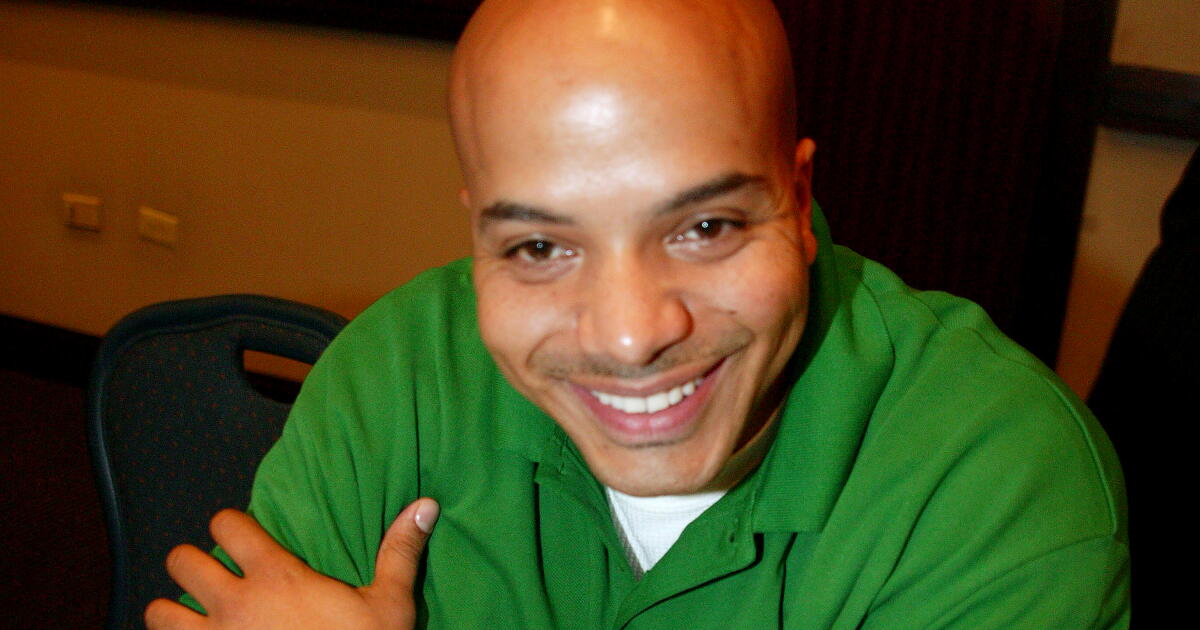
The man has been identified as 56-year-old Leighton Brown, an employee of the New York City Housing Authority.
According to local news, he was walking through east Brooklyn neighbourhood working an extra shift when the deadly incident occurred.
“We mourn deeply for the loss of Leighton Brown, a NYCHA employee who faithfully served Brooklyn residents and who was known for his warm personality,” the Office of the NYC Public Advocate wrote on social media.
The nor’easter has caused widespread power cuts. More than 160,000 households, nearly all in the north-eastern US, have lost electricity, according to tracker PowerOutage.
More than 2,400 flights were delayed and another 1,199 grounded on Saturday, according to FlightAware.
A full moon was projected to worsen coastal flooding. Streets and homes were inundated with floodwater in the coastal New Jersey communities of Surf City and Manasquan on Saturday.
Police in the US state of Mississippi have said that they believe a black woman was already dead before her body was “staged” and placed hanging in a tree.
The disclosure was made in court by a detective on Friday, who also said they believed Tasia Fortune, a mother of four, had been killed in a dispute related to drugs.
The 29-year-old’s body was found hanging from a tree at an abandoned home in Jackson in August.
The discovery sparked widespread fears in the majority-black city, due to the state’s deep history of racial violence and lynchings. After weeks of speculation and demands for information, police made multiple arrests.
In a news release, police said that the medical examiner had determined that Fortune’s death was a homicide and that “the scene and the hanging were staged”.
Officials have not stated the exact cause of death or shared why they believe the hanging was staged.
Fortune’s mother told the BBC that she remembers the coroner telling her: “we’re not treating this as [an] actual hanging.” Her daughter, they told her, was dead before being placed in the tree.
Spivey also recalled police telling her the incident was “drug related”.
Speaking to reporters outside the Jackson Police Department on Friday, Spivey described how she knows her daughter fought for her life till the very end.
“I know she did. I know my daughter,” Spivey told reporters. Fortune leaves behind four young children, ages 7, 5, 4 and 1, she added.
Dressed in a shirt that reads “Justice for Tasia Fortune”, Spivey stressed that she does not want to see any innocent people going to jail.
“I just hope they have the right people,” she said.
Three people have so far been arrested in relation to the case,all of whom are black, including Jarques Ratliff, 51, who has pleaded not guilty. He remains in custody in without bond.
A second person, Earnest Lloyd Jr, 25, was arrested in the case this week.
A third, 45-year-old Eric Clark, turned himself in to authorities on Friday and was charged with murder. He is scheduled to appear in court on Monday.
The 29-year-old’s death is one of several cases in recent years that has prompted lawmakers to call on the justice department and the FBI to investigate all hanging deaths of black people in the country.
Representative Ayanna Pressley, Democrat of Massachusetts, cites at least 10 documented incidents in her September letter to Congress, external, which contained over 50 signatures from US lawmakers.
The most recent incident happened in Prince George’s County, a majority-black suburb near Washington DC, on Sunday. It has been ruled a suicide.
What happened to the future we were promised? The vision that grew out of the 1990s techno-utopianism, when the internet was still a place of freedom and experimentation. Where are the infinite possibilities the early years of the millennium afforded, when social media meant AOL Instant Messenger and GeoCities, when our cellphones were not yet smart, and when personal tech evoked whimsy and excitement rather than anxiety and dread?
On a recent night in L.A., that digital optimism still existed. Here, at a clothing store on La Brea Avenue in the Fairfax District, something that felt lost was rediscovered. People were huddling around to play 1999’s “Crazy Taxi” on a Sega Dreamcast, or 2005’s “Tekken 5” on a PlayStation 2. They were surfing a perfectly re-created Y2K-era internet, and navigating an early version of Apple’s Photo Booth to snap selfies with a first-generation iSight webcam.
Paizley Lee created Dead Internet Theory to bring guests back to an era when tech evoked excitement rather than dread.
(Jason Armond / Los Angeles Times)
Yes, almost everyone was staring at screens, but almost no one was looking at their phone. Instead, the room felt alive and buzzing with energy. Technology was creating human connection rather than isolation.
Welcome to Dead Internet Theory, an event hosted by game designer Paizley Lee that’s both a celebration of vintage tech and a place to build community. The name is a tongue-in-cheek reference to the theory that the internet today is mostly bots, AI slop and corporate algorithms, while the human element is quickly disappearing from the web.
Lee started the event earlier this year after seeing how her friends reveled in hacking old hardware but had nowhere to show off their reimagined contraptions. She said Dead Internet Theory is a space to highlight “artists who don’t see the light of day,” a cyberpunk show-and-tell of sorts. “There’s a world of knowledge that comes from that person that can share and collaborate with another artist, and that’s really the future that we were promised, right then and there,” Lee said. “It’s the ‘Hey, look at what I made, look at what I’m interested in, and let’s share that.’ ”
Benjamin Palmer shows his project called Pan and Scan.
(Jason Armond / Los Angeles Times)
One of those artists sharing his work was Dan Ruth. Atop a low credenza, he displayed a black, leather suitcase that housed inside of it an old laptop attached to an external zip drive. On the laptop’s screen was a menu of various banned books — the Unabomber’s manifesto and “The Anarchist Cookbook” among them. Ruth had recently bought the trademark rights to the digital storage systems iOmega, Zip and Jaz. “They were what we all used in the ‘90s to transfer larger files,” he explained of the era before online storage and transfer infrastructure like Google Drive.
With his setup at the event, participants could choose whatever banned book they wanted and write it to a physical Zip disk (about the size of a saltine cracker) to keep forever. If Ruth’s installation is a bit provocative, his message is less controversial. At a time when servers are being shut down, physical media is being digitized out of existence, and the subscription model is supplanting personal ownership, Ruth believes this is a way to have data autonomy.
Guests play retro video games.
(Jason Armond / Los Angeles Times)
Lee’s own contribution to the evening is the full rainbow of Apple’s iMac G3 computers — those bubbly, teardrop-shaped desktops that debuted in 1998 to the famous “iCandy” ads displaying their colorful shells, and TV commercials scored to the Rolling Stones’ “She’s Like a Rainbow.” Over several months and multiple trips, Lee drove across the country collecting the G3s in their core five colors. And it wasn’t easy. She recalled sleeping in her car in the parking lot of a Cracker Barrel for a few nights because she had spent all her money on acquiring the computers.
It was the people Lee met in the months of gathering the G3s, however, that made it worth it: a single dad who collected vintage iMacs to bond with his son, an elementary school teacher who held onto the old computers because the school was going to destroy them.
“I met these really witchy, cool, queer programmers from MIT in Medford, Massachusetts, who invited me back for MIT Swap Fest, where I found Indigo,” said Lee, referring to another G3 color not part of the core five. “I met a guy who used to work in broadcast, and his wife just died of cancer. His mom moved in, and she has been trying to support him in getting rid of old things and not holding on to them too much.” Human moments made possible almost by the accident of holding onto a computer longer than most.
Lee’s pursuit of old tech hardware has always been, at its root, a means to meeting new people, hearing their stories and creating a relationship with them. “I care about people a lot,” she said. “I think every single person that touches any of my projects knows that I really care about people feeling good.”
Paizley Lee spent months collecting the full rainbow of iMac G3s.
(Jason Armond / Los Angeles Times)
With a mouse, Jaimie Wan clicks into the past.
(Jason Armond / Los Angeles Times)
When Lee finally acquired all five original colors (blueberry, strawberry, lime, tangerine and grape), plus all the additional colors (ruby, indigo, snow, graphite, sage and three limited edition colors), she began booting up the G3s computers to make sure they still worked. In the process, she discovered the forgotten digital detritus left on their hard drives: old resumes, photo albums, Word documents.
“It’s somebody’s life,” she said. “It feels weird to do anything with it, but it also feels weird to alter it.” In the end, she kept the old files and built a replica of the early ‘00s internet to live beside them on the computers. At Dead Internet Theory events, participants are given free reign to the G3s and slowly find clues Lee has left on their desktops that lead into a mystery game she created.
Back at the event, people flocked to the bank of iMac G3 computers. They clicked around, laughing, their eyes lighted up. “It’s really a trip seeing the old MacBooks,” said Shannon Stack after navigating one of the relics. “I remember having those in my elementary school classroom. Now, these are archival pieces. It’s freaky!”
Lee herself hovered around the computer bank, watching people interact with them and discovering the random documents left behind or playing one of Apple’s preset games. She asked a couple who had been tinkering around for over half-an-hour if they wanted a hint to her mystery. “No!” they respond excitedly.
While Dead Internet Theory has only been held in Los Angeles, Lee’s dream is to take it on the road. “I’ve got kids in Seattle, in Nashville, in Dallas that are emailing me and going, please bring it here,” she explained. The only thing stopping her was money, but that changed recently. A few weeks after the event on La Brea, she was approached by a sponsor. Now she’s making a tour happen, first with a pop-up event in New York City on Wednesday.
The event has become a place to gather and build community.
(Jason Armond / Los Angeles Times)
Recently, as Lee began driving across the country to set up, she stopped at a bed and breakfast near Red Lodge, Mont. When she learned the innkeeper had an old blueberry iMac G3 in her basement, she asked to take a look.
“I spent an hour getting her back on,” Lee said of rebooting the machine to give the innkeeper access. “And the face she made when it came back to life — literally priceless.”
The woman browsed through old photos of her daughters, their old school projects and other files forgotten over time. Afterward, the innkeeper gave Lee the computer, telling her it deserves a second life.
Duncan Sheik, who earned a Grammy nomination for his ubiquitous 1990s hit “Barely Breathing” and won a Tony Award for composing the music for “Spring Awakening,” died Thursday. He was 56.
“It is with profound sadness that we confirm the passing of Duncan Sheik,” a statement posted Friday on Sheik’s Instagram account read. “The world has a lost a singular talent, and deeply influential voice in music and theater…. Duncan’s artistry touched many and leaves an indelible mark on the cultural landscape.
“Duncan was a father, husband, son, brother, and friend. He will be remembered for his sensitivity, wit, inteligence, and depth of spirit he brought to those who knew and loved him.”
The statement added that “Duncan passed away last night surrounded by love.”
His mother, Suzanne Sheik, told the New York Times that her son died of organ failure. A statement posted to his Instagram account Thursday said that Sheik was “receiving medical care and remains in critical but stable condition.”
Sheik, a New Jersey native, went to Brown University, where he played in an early band with singer-songwriter Lisa Loeb. His 1996 self-titled debut LP was a hit on the strength of “Barely Breathing,” an exemplar of the upbeat coffeeshop rock that emerged in the wake of grunge on the pop charts. The single stayed on the Hot 100 for over a year, and the album went gold, earning earned him a Grammy nomination for male pop vocal performance.
Sheik’s followup, 1998’s “Humming,” featured rich orchestration, but he already had an eye on Broadway (his sister Kacie Sheik is a stage actor who has appeared in “Hair,” “American Idiot” and “Because of Winn-Dixie,” for which Duncan wrote the score).
He wrote his 2001 album “Phantom Moon” with poet and playwright Steven Sater, whom he’d again collaborate with on the score for the musical “Spring Awakening” — based on the play by German Expressionist Frank Wedekind, which won him a Tony Award — and “Alice by Heart.” His 2009 album “Whisper House” yielded a companion musical of the same name. He also composed the score for the 2004 film “A Home at the End of the World.”
While Sheik sought treatment for alcohol addiction after canceling a tour in 2011, his stage and studio career never slowed. Other major stage credits include hit productions of “American Psycho,” “Bob & Carol & Ted & Alice,” the thriller “Noir” and “The Secret Life of Bees,” along with Shakespeare’s “Twelfth Night” and “The Taming of the Shrew.” His last album, “Claptrap,” came out in 2022.
Sway Dasafo, a pioneering British Ghanaian rapper known for his lyric storytelling and championing of British music, has died. He was 44.
The rapper and producer’s death was announced Thursday on social media by the Mobo Awards, which celebrates music of Black origin. Dasafo’s friend Kash Ahmad confirmed to the BBC that he died at his home in Ghana. No cause of death was provided, but the outlet reported that Dasafo had been diagnosed with Hodgkin lymphoma in 2010 before going into remission later that year.
“We’re deeply saddened to hear of the passing of Sway,” Mobo wrote on Instagram. “Sway will always hold a special place in MOBO history.”
In 2005, Dasafo became the first unsigned artist to win the Mobo award for hip-hop act before he released an official album. He won over other established artists including 50 Cent and the Game off the strength of his mixtapes, “This Is My Promo” volumes one and two.
“Mixtapes effectively provide a diary of my life,” Dasafo told the Guardian in 2005. “They feature skits and interviews of me on radio. When people follow your story, they feel closer to you — it’s like a soap opera. People want to know what’s going to happen next.”
“It was a huge moment,” Mobo’s Instagram statement said of Dasafo’s win. “Not just for Sway, but for UK Hip Hop. At a time when British rappers were still fighting to be recognised alongside their US counterparts, his win made a real statement about the talent, creativity and potential coming out of the UK. … [W]e will always be proud that he was part of the MOBO story and of the history we shared together.”
Born Derek Andrews Safo on Sept. 5, 1982, in Hornsey, north London, to Ghanaian parents, Dasafo grew up primarily in England where he developed a love for literature and music. He started rapping as a hobby when he was 10 and was making beats on his computer at 13.
The versatile rapper got his start in groups such as Phynix Crew and One before going solo and releasing his series of mixtapes. Among his early hits were “Up Your Speed” and “Little Derek,” from his debut alum, “This Is My Demo,” which he released from his own label, Dcypha Productions.
“I’m a positive person and this positivity comes out in my music,” Dasafo said in his 2005 Guardian interview. “I don’t go round holding guns to people’s heads, so I won’t rap about holding guns to people’s heads. Trouble attracts trouble. If you rap about trouble, it will come to you.”
From early in his rap career, he expressed his desire to become a producer so he could sign and nurture other talent. Dasafo has collaborated with artists including Riz Ahmed, Ed Sheeran, Lupe Fiasco and Chamillionaire.
BBC Radio 1Xtra broadcaster Remi Burgz called Dasafo a “UK Rap pioneer” and “one of north London’s finest” during her program, according to the BBC.
“He was mine and many others’ first experience of U.K. rap [and] hip-hop in mainstream media,” she said. “He was a literal example of paving the way and showing that U.K. rap can take up space in music.”
Dasafo is survived by his two sons, Jalil and Ammar-Joseph, and twin daughters, Queen-Inaya and Queen-Imara.
A Peruvian journalist running for political office has been shot dead while out campaigning. Susy Aponte Polo, known as China Polo, was killed just a week after revealing she had received death threats over her investigation into a police chief.
Tone Capone, the Bay Area producer whose smash hit “I Got 5 On It” for Luniz defined his region’s hip-hop sound, has died. He was 59.
The producer’s death was first reported by KQED. Capone had most recently lived in Las Vegas. No cause of death was given.
Capone, born Anthony Douglas Gilmour in Berkeley, learned to DJ while attending Berkeley High School. He often performed at college and house parties with his close friend Nick Peace, who became an accomplished hip-hop producer as well. While Bay Area hip-hop was famously independent and insular, Capone produced singles for major-label groups like the R&B combo SWV and the Oakland group Capital Tax, rooted in his love of ‘70s soul and hard-edged funk.
His sound — soulful yet martial, with a distinct, emphatic downbeat — yielded some of the region’s most beloved and distinct hip-hop hits, including Mac Dre’s “Fire” and “Not My Job,” E-40’s “Ring It,” 3xKrazy’s “Keep It on the Real” and cuts by Celly Cel, Andre Nickatina and countless others.
He’ll be best known for Luniz’ 1995 hit “I Got 5 On It,” a slinky, spooky track riffing on the Club Nouveau song “Why You Treat Me So Bad,” which entered the canon of ageless west coast hip-hop. The song hit the Billboard top ten, and recently resurfaced in a slow, eerie remix for Jordan Peele’s 2019 horror film “Us.”
Capone’s slow-rolling sound also traveled well to Houston, he worked with Scarface, Devin the Dude and more. His productions on Scarface’s 1997’s “The Untouchable” helped it go platinum, with “Smile” sporting one of the last verses recorded by Tupac Shakur.
Brian Wolfe, a standout pitcher at Servite who played three seasons with the Toronto Blue Jays, has died at age 45, his wife shared Tuesday on Facebook.
“I’m am sorry to write this but after a really really difficult and torturous battle Brian Wolfe passed away early this morning,” Rachell Wolfe wrote.
No other details have been provided.
Wolfe was one of Orange County’s most dominant high school pitchers during the late 1990s. After going 8-0 with an ERA of 0.27 as a sophomore in 1997, he was the Friars’ ace the next two seasons.
Honored both years as a member of The Times’ All-Orange County team, Wolfe went 11-2 with a 1.37 ERA and a county-best 139 strikeouts as a junior and was 12-0 with a 1.30 ERA and nearly 100 strikeouts as a senior.
After committing to Cal State Fullerton in the fall of 1998, Wolfe opted to sign with the Minnesota Twins organization after being drafted in the sixth round (179th overall) the following summer. He spent the next several years working his way up through the minor leagues with the Twins, Milwaukee Brewers and Blue Jays before making his major league debut with Toronto as a relief pitcher in 2007.
Wolfe appeared in 72 games over three seasons with the Blue Jays, compiling a 5-5 record and a 3.81 ERA in 82.2 innings pitched. He became a free agent after the 2009 season and spent the next nine years playing in Japan with Nippon Professional Baseball, playing for the Hokkaido Nippon-Ham Fighters (including the 2013 season as teammates with Shohei Ohtani), Fukuoka SoftBank Hawks (winning the Japan League title in 2014 and 2015) and Saitama Seibu Lions.
Former MLB outfielder Brandon Barnes posted a tribute to Wolfe on Wednesday, calling his fellow Orange County native “one of my best friends and a mentor.”
Native authorities issue condolences after two adults and a child swept away by floodwaters in southwestern US state.
Published On 17 Sep 202617 Sep 2026
Indigenous authorities in the United States have said that three people have been killed in flooding in the southwestern state of New Mexico, where heavy rains left roadways blocked by water.
Navajo Nation President Buu Nygren said on Wednesday that police had responded to reports of people being swept away by floodwater at 12:30am (06:30 GMT) near the community of Newcomb in northwestern New Mexico.
Recommended Stories
list of 3 itemsend of list
Nygren said that two adults and a child were killed in the incident and offered condolences to the community, while advising residents to exercise caution in areas impacted by rainfall.
“There are no words that can ease the pain of losing a loved one so suddenly, and our hearts are especially heavy knowing that three lives were lost,” Nygren said. “To the family, relatives, and loved ones who are grieving today, we offer our deepest condolences. We pray that you are surrounded by strength, comfort, and the love of your family and community in the difficult days ahead.”
The National Weather Service (NWS) in Albuquerque, New Mexico, issued a special briefing on Tuesday warning of the possibility of widespread thunderstorms in the coming days. The service repeated those warnings on Wednesday, noting that moisture levels are expected to be at record levels for mid-September.
“A Flash Flood Watch is in effect for the western third of New Mexico and the South Central Mountains today,” NWS Albuquerque said in a social media post on Wednesday. “However, flash flooding could occur anywhere in central and northern New Mexico today.”
Heavy rainfall is predicted across parts of Arizona, New Mexico, Colorado and Utah through Thursday. Flash flood warnings were issued for parts of northwestern New Mexico, along with flash flood watches for large areas of central and northern Arizona.
The deaths on Wednesday come several weeks after three hikers were swept away and dozens were rescued after heavy rainfall caused flooding at the Grand Canyon, a popular destination for tourists and outdoor recreation in Arizona.
At least 51 people rescued as search operation continues off the island of Gavnos near Crete.
Published On 14 Sep 202614 Sep 2026
One person has died, 25 are missing and 51 people have been rescued after a boat carrying migrants sank off a Greek island near Crete, according to the country’s coastguard.
“Fifty-one were picked up by two boats that were in the area,” a coastguard spokesman said on Monday.
Recommended Stories
list of 3 itemsend of list
He said survivors had reported that 77 people were on board when the boat went down near the island of Gavdos.
Search and rescue efforts were ongoing, with four ships, boats, Frontex aircraft and a coastguard helicopter operating in the area, Greece’s public broadcaster ERT News reported.
The 51 rescued people were due to be brought to Crete, “where the prescribed procedures will be followed”, ERT reported.
After arriving in Crete, undocumented migrants generally face immediate arrest and temporary confinement before being transferred to closed detention camps on the Greek mainland. Under Greek law, individuals are subject to extended administrative detention, severe penalties and fast-track deportation.
Strong winds blowing through the area have been hampering the search operation, ERT said.
In late August, Greece’s ANA news agency published figures from the Ministry of Migration and Asylum that indicated that migrant arrivals in the country fell from about 61,000 in the year to August 2025 to 42,000 in the following 12 months – a decline of about 31 percent.
Greece’s conservative government in July suspended all asylum claims for migrants arriving by sea from North Africa for three months, a move it argued helped deter crossings.
The ban passed in parliament amid a surge in asylum seekers reaching Crete and after talks with Libya’s Benghazi-based government to stem the flow were cancelled in July.
The government remains at odds with regional authorities in Crete over a plan to build a permanent transit facility on the island. It is preparing draft legislation that would mandate imprisonment for people whose asylum claims are denied and require ankle monitors during a 30-day compliance period before deportation.
Authorities in Europe have tightened their immigration rules over recent years as far-right, anti-immigrant political parties have won increasing support throughout the continent.
Greece has been in discussions with Germany and several other European Union countries on setting up “return hubs” outside the bloc for processing migrants’ claims.
STOCKHOLM: Sweden’s national election results showed a dead heat on Sunday, with a partial count by the election authority indicating a one-seat majority for the opposition center-left bloc that could halt the Nordic nation’s drift away from its liberal heritage.
The bloc, headed by the Social Democrats’ party leader Magdalena Andersson, was expected to win 175 seats in the 349-seat parliament, the Riksdag, based on votes from 4,853 of Sweden’s 6,312 election districts, the election authority said.
The right-wing governing bloc of Prime Minister Ulf Kristersson was seen winning 174 seats, with ballot-counting continuing.
The election, while unlikely to change the course of Sweden’s pro-Western and pro-Ukraine stance, will decide whether Kristersson’s push toward a hard-right clampdown on migration continues.
Given the closeness of the race, the winner may not be known for several days, after all overseas ballots have been counted.
In a pre-election pledge, Kristersson broke a longstanding taboo and said he would bring into government the Sweden Democrats, a far-right party with roots in the Nazi fringe, as he aims to create a majority-right coalition.
Many voters on the right say a win would amount to an endorsement of policies that have helped to curb gang violence and cut immigration dramatically.
But some Swedes have expressed wariness, saying Kristersson’s invitation to the far right was a step too far.
“I think it will be a long night,” said Maria Malmer Stenergard, minister for foreign affairs and a member of Kristersson’s Moderate Party. “Maybe we won’t even have the results until Wednesday when the votes that have been cast abroad arrive.”
Kristersson, who has trailed in opinion polls throughout his four years in office, had been catching up in the final weeks of campaigning, with Andersson and her Social Democrats losing ground.
Critics say the Kristersson government’s immigration policies, whose incentives and penalties press migrants either to conform more closely to Swedish cultural norms or leave the country, are undermining civil liberties.
Electoral success for the Sweden Democrats would be welcomed by Europe’s ascendant far-right parties, which were bolstered by the anti-immigrant Alternative for Germany’s win in a German state election last week.
The far right hopes for gains in upcoming elections across Europe, with the National Rally’s bid for the French presidency next year potentially its biggest prize.
‘DOESN’T LOOK LIKE SWEDEN’
While voting on Saturday in Rinkeby, near Stockholm, the Sweden Democrats’ longstanding leader Jimmie Akesson said the suburb, home to one of the country’s biggest Swedish-Somali populations, “doesn’t look like Sweden.”
Sweden was long one of Europe’s most welcoming countries for immigrants until Kristersson came to power four years ago. His government abolished permanent residency for refugees, tightened welfare rules and stepped up expulsions of those without a right to stay.
The Sweden Democrats acknowledge that their party was founded in part by neo-Nazis and white supremacists in the 1980s, but say they have eliminated such extremists from their ranks and have apologized for their past.
Cheers broke out at the Sweden Democrats’ election party after an updated projection from Swedish broadcaster SVT showed a much narrower gap than an initial exit poll, which had put the center-left opposition ahead with 51 percent of the vote.
“You cannot imagine how nervous I am right now. It feels like my life’s work is hanging in the balance,” said Ludvig Aspling, a member of parliament and immigration spokesperson for the Sweden Democrats. “It is going to be super tight. We still have a chance,” he said.
One person has been confirmed dead and more than 30 remain missing after the MV Matui ferry sank off the coast of Vanuatu, according to a statement from the office of Prime Minister Jotham Napat. The incident occurred on Sunday, with dozens of crew and passengers on board, the statement said.
Search and rescue operations are ongoing in Vanuatu, a Pacific Island nation located approximately 1,750 km (1,090 miles) east of Australia. The Prime Minister’s office stated on Facebook that 15 individuals have been accounted for alive. The ferry sank in adverse weather conditions on Friday between the islands of Ambae and Santo, according to New Zealand public broadcaster RNZ. The search has shifted from open waters to the south-east coast, where currents may have carried survivors, RNZ reported.
Investigation into causes
The statement from the Prime Minister’s office indicated that strong winds and marine warnings may not have been heeded, and that potential negligence, including overloading of the vessel, is being investigated. Authorities have announced that a formal investigation will be conducted to determine the causes of the incident.
“To the survivors, we pray for your strength and recovery. To the families of those missing and those we have lost, please know that the nation stands with you in this time of grief,” the statement from the Prime Minister’s office said.
Rescue operations and official response
Matai Seremaiah, a representative of the Luganville area in Vanuatu’s Parliament, stated that rescue efforts began after a crew member of the MV Matui swam ashore and raised the alarm. “He alerted us that the ship has capsized, we went out for the search,” Seremaiah said in remarks broadcast by RNZ.
The Vanuatu police, the Vanuatu Maritime Safety Authority, and the ferry’s operator, Tui Shipping Agency, have not yet responded to requests for comment. The search and rescue operation continues as authorities work to locate the missing passengers and crew.
Rescuers continue searching for survivors as the government scales back operations in open waters.
Published On 13 Sep 202613 Sep 2026
At least one person has died and more than 30 remain missing after a ferry sank off the coast of Vanuatu, Prime Minister Jotham Napat’s office has said in a statement.
The MV Matui, an inter-island ferry, sank in bad weather on Friday while sailing between the islands of Ambae and Santo, in Vanuatu’s north, according to New Zealand’s public broadcaster RNZ.
Recommended Stories
list of 3 itemsend of list
Of the dozens of crew members and passengers on board, 15 have been accounted for alive, Napat’s office said in a statement posted on Facebook, with search and rescue operations continuing.
The Pacific nation’s government said search efforts “in open waters” were being scaled back “whilst efforts move toward a search along the south-east coast, where currents may have carried survivors”.
It said the sinking “appears to be the result of strong winds and marine warnings not being heeded, and possibly of negligence including overloading of the vessel”, adding that a full investigation would follow to establish the facts and prevent a repeat.
Vanuatu police, the country’s Maritime Safety Authority and the ferry’s operator, Tui Shipping Agency, did not immediately respond to requests for comment, the Reuters news agency reported.
GENEVA: A road accident involving a tourist coach in eastern Switzerland has left several people dead and others injured, police said on Thursday.
The accident happened between the communes of Susch and Zernez in the far-eastern canton of Graubunden.
“Several people died in the coach crash in Susch. Several others were also injured,” the cantonal police said on X, without giving details on the circumstances of the accident or the victims’ identities.
Footage broadcast by Swiss media showed many rescue workers rushing about around the coach, which has overturned onto its side below the road, and helicopters stationed nearby.
According to the Swiss press, the bus belonged to the Dutch Oad tour operator, which offers trips across Europe.
Zernez is the entry point for visitors to the Swiss national park, a vast Alpine reserve stretching more than 100 square kilometers (40 square miles) across the mountainous Engadine valley.
MANILA: A fire broke out Wednesday evening aboard a vessel carrying over 100 passengers near a tourist hotspot in the Philippine province of Palawan, leaving at least five people dead, local media and the coast guard said.
“The Philippine Coast Guard (PCG) immediately responded to a fire incident involving M/V June Aster at the vicinity waters approximately 1.2 nautical miles northeast of Barangay Marcilla,” in the Coron municipality, the service said late Wednesday on Facebook.
Video shared by the coast guard showed the vessel completely engulfed in flames.
Another post over two hours later said “five casualties were initially reported” and brought ashore, with accompanying photos showing several body bags.
The post said 42 people had been rescued, while GMA News reported the ship had been carrying 117 passengers and 17 crew, citing a coast guard official.
Tracking data from MarineTraffic showed the June Aster had departed from Manila.
British Foreign Secretary Ed Miliband has said the United Kingdom will sanction illegal Israeli settlements in the occupied West Bank, describing the move as “overdue” and necessary to “salvage” a two-state solution to the Israeli-Palestinian conflict.
He made the comments on Tuesday as 11 nations joined the UK in supporting or considering curbs on trade in goods with settlements that are a barrier to a future Palestinian state.
Recommended Stories
list of 3 itemsend of list
But analysts say the step is far from enough to drive momentum for Palestinian statehood, threatened by ever-expanding settlements in the West Bank and an increasingly hostile Israeli political environment.
Tahani Mustafa, a lecturer in international relations at King’s College London, told Al Jazeera the latest anti-settlement measures are “modest” and unlikely to have a significant impact on ambitions for Palestinian statehood.
“After three decades of breakneck settlement expansion, Palestinian territory is only being held together by its sinews,” said Mustafa. “If what remains is still territorially viable as a state, it is only barely so. Much more decisive action is needed to salvage the two-state solution and a durable lasting solution to the conflict.”
Settlements dividing Palestinian territory
More than 30 years after the Oslo Accords set out a negotiating process aimed at resolving the Israeli-Palestinian conflict, the creation of a Palestinian state alongside Israel has remained the foundation of international efforts to forge peace.
But since the Oslo process began in 1993, the number of Israeli settlers in the West Bank, including occupied East Jerusalem, has ballooned from about 260,000 to more than 700,000, according to the Palestinian Bureau of Statistics, posing a glaring roadblock to the plan.
The challenge is not just the raw number of settlers, but their geographic spread. Today, many Israeli settlements are embedded deep inside West Bank areas that would be needed for a contiguous Palestinian state, including near major Palestinian urban centres such as Nablus, Salfit and Hebron.
Israel’s recent E1 settlement plan, which would build thousands of illegal housing units between the Israeli settlement of Maale Adumim and East Jerusalem, is a case in point. The plan would effectively split the West Bank in two and fully sever it from East Jerusalem, which Palestinians seek as their future capital.
(Al Jazeera)
Experts have long said Israel will need to dismantle some of its West Bank settlements, as it did in the Gaza Strip in 2005, to make room for a cohesive Palestinian state. But many Israeli settlements, especially those closer to Israel’s pre-war 1967 borders, would likely need to be addressed through land swaps.
“A complete withdrawal from some of the deeply embedded settlements is highly unlikely,” so land swaps would be the only way to create some form of Palestinian “territorial integrity”, Andreas Krieg, associate professor at King’s College London, told Al Jazeera.
However, such an arrangement – under which Israeli settlements close to the pre-1967 borders would become part of Israel and some “northern Arab-Israeli communities would be integrated into a Palestinian state” – would be “highly controversial” and face blowback from multiple communities, said Krieg.
He argued that Israelis would be certain to oppose any forced withdrawal from West Bank settlements, while some “Arab-Israelis may not want to live within a Palestinian state”.
Palestinian citizens of Israel make up approximately 21 percent of Israel’s overall population but are treated as second- or third-class citizens at the institutional level. According to rights groups, several dozen Israeli laws actively discriminate against Palestinian citizens across a number of issues, including education and housing.
Israeli ‘consensus’ against Palestinian state
Beyond the physical obstacle created by settlements is the Israeli political landscape, in which the idea of a Palestinian state has become toxic.
The government of Prime Minister Benjamin Netanyahu appears to be among the most hardline in Israel’s history on the issue. Netanyahu has emphatically ruled out the prospect of a Palestinian state, while his far-right Finance Minister Bezalel Smotrich, who also oversees Israeli settlements in the West Bank, has celebrated blocking Palestinian statehood as a badge of honour.
Israeli Finance Minister Bezalel Smotrich meets with families during the inauguration of the new Israeli outpost settlement of Mitzpe Makada near the Palestinian village of Dura in the West Bank, August 31 [Abir Sultan/EPA]
The views of Netanyahu’s most influential domestic critics do not deviate much. His top rival in elections slated for October, former military chief Gadi Eisenkot, has promised not to allow the establishment of a Palestinian state. And Naftali Bennett, a Netanyahu rival from the far right, fervently opposes Palestinian statehood.
As for the Israeli public, a June poll by the Council for a Secure America found that only 22 percent of Jewish Israelis favour a two-state solution, while 63 percent oppose it.
“The consensus within Israel, socially and politically, does not allow for any party to make any steps towards a Palestinian state,” said Krieg.
Meanwhile, Israel’s closest ally, the United States, is unlikely to apply significant pressure over Israel’s settlement policy so long as President Donald Trump remains in office for the next two and a half years, he added.
Krieg said a “best-case scenario” is for Israel’s next elected government to reverse some of the country’s recent settlement advances.
John Strawson, professor at the University of East London, said that any new Israeli government is “unlikely to support a Palestinian state”, but that a more moderate Israeli government may at least “stop the ethnic cleansing and other moves which are aimed at making that impossible”.
“Removing Netanyahu is the first step towards a two-state solution,” said Strawson.
Two states are the ‘only alternative to violence’
If the two-state model is still alive at all, it is largely due to pressure from the international community.
More than 150 countries, including the majority of European Union nations, have recognised Palestinian statehood. And several Arab states with whom Israel seeks better ties have indicated Palestinian statehood is a precondition for normalisation with Israel.
Krieg said Tuesday’s move by the UK and the 11 other mostly European nations is an “overdue step in the right direction”, but also “shows the laziness and lack of creativity on the part of the international community to actually think outside the box in terms of a two-state solution”.
Anders Persson, a political scientist specialising in the Israeli-Palestinian conflict, said that while the settlement sanctions are concerning to Israel, other previous anti-settlement measures, such as 2013 EU restrictions on funds for Israeli entities operating in occupied Palestinian territory, “changed little on the ground”.
He said the latest sanctions may be “too late” and “too limited … to save the two-state solution”.
Strawson said that while a two-state solution may “seem optimistic”, it is the only alternative to “permanent war and violence”.
KFAR RUMMAN, Lebanon: Hundreds of people in south Lebanon gathered on Tuesday to mourn two Hezbollah members and their family, among them a three-month-old infant, killed by an Israeli strike a day prior.
The two brothers’ coffins, draped in the Iran-backed group’s yellow flag, portraits of them in camouflage fatigues fixed to the front, led the procession through the village battered by repeated conflict over nearly three years.
Another 10 coffins were covered in Lebanese flags, indicating that the rest of the Farhat family killed when Monday’s strike levelled their home were civilians.
Israel has launched airstrikes and a ground invasion in south Lebanon during the Middle East war, which erupted with joint US-Israeli attacks on Iran and spread to Lebanon after Hezbollah targeted Israel in support of its backer.
The fighting in Lebanon had calmed since a US-Iran memorandum of understanding and a framework agreement between Israel and Lebanon were both agreed in June.
But Beirut still reports recurring Israeli strikes, which it says have killed more than 4,300 people in total since March, and Israeli forces continue to occupy what it calls a “security zone” in the south.
A separate strike on Kfar Rumman on Monday killed an 18-year-old rescuer with the Risala Association, linked to the Hezbollah-allied Amal movement, the organisation said, who was mourned alongside the Farhat family on Tuesday.
“We have 13 killed including grandfather and grandmother, husbands and wives, and their children including a three-months old infant,” deputy mayor Nureddine Nureddine told AFP from the funeral.
“Someone put an end to these crimes,” Nureddine said, adding that the strike that killed the Farhat family “occurred at night, while they were sleeping”.
“There was no military activity, nothing.”
An AFP correspondent saw people marching to the cemetery, waving Hezbollah flags as women dressed in black wept, holding pictures of the dead as an Israeli drone flew overhead.
“Death to America, death to Israel,” mourners yelled.
– ‘A shred of honour’ –
The Israeli military said on Monday that it had struck Hezbollah “infrastructure sites” across southern Lebanon after the launch of two explosive drones towards its troops, as well as “several terrorists” it said were transferring weapons.
“The claim that several uninvolved individuals were harmed as a result of the strikes is being reviewed,” it said, adding that the military “will continue to operate to remove threats while remaining committed to the ceasefire agreement”.
Since Friday, at least 28 people have been killed in Israeli attacks on southern Lebanon, according to Lebanon’s health ministry.
Standing next to a picture of his own son, a Hezbollah member killed by Israel, Ghaleb Baalbaki slammed the Lebanese government for continuing direct talks with Israel.
“If they have even a shred of honour, the first thing they should do would be to stop the negotiations,” he said.
The lull in violence that began in June had allowed hundreds of thousands of displaced people to return home.
“Kfar Rumman was coming back to life, there were more than 1,400 people” in the town before the latest escalation, Nureddine said,
At least five people were killed and five others injured Sunday when an Amazon Air (AMZN) cargo plane overran a runway at Miami International Airport, struck several vehicles and caught fire, officials said.
SHE is one of the most recognisable women in music – but what does it take for some people to be convinced Avril Lavigne is not who she says she is?
The punk-pop icon rose to international stardom in the Noughties – but as her popularity peaked, a strange and startling rumour was also gaining traction in the shadows.
Conspiracy theorists are claiming that Avril Lavigne has been replaced by a cloneCredit: GettyAn image shared online bizarrely claiming to show minute differences between the ‘real’ and ‘fake’ Avril
The theory is as puzzling as it is disturbing – a dead Avril, a body double named Melissa and a supposed Hollywood cover-up – and like the catchiest pop song, it refuses to leave.
Born in 1984 in Canada and raised in a strict Christian household in sleepy Napanee, Ontario, Avril grew up in a small town of roughly 5,000 where her parents closely monitored her music choices.
But the precocious teenager was already plotting her escape, writing poems, learning guitar and gravitating towards the town’s grunge scene before her singing talent caught the eye of her first manager at a 1999 bookstore performance, aged just 14
With her parents’ blessing, she quit school and headed to New York with her brother, where she worked with a professional producer before landing a two-album deal worth around $1.25million at just 16.
Avril’s 2002 album debut saw her rise to fame go stratospheric. However it also contained the germ of the conspiracy theory that would go on to haunt her for years.
The album, titled Let Go, would later be believed by theorists to be a symbolic reference to her being replaced by another lookalike young woman.
Adding fuel to the conspiracy was the star’s grief following her grandfather’s death in 2003 – which believers would later say was the final chapter in the “original Avril” story. They claim that grief was so overwhelming, tragic Avril took her own life.
The bizarre theory appears to have first appeared nine years later when in 2011, a Brazilian fan page called Avril Está Morta – meaning Avril is Dead – launched the morbid rumour into the world.
It claimed the eyeliner-clad star was no longer alive – and had been replaced by an eerily similar young woman.
For years, internet sleuths have remained convinced that the Sk8er Boi singer died by suicide shortly after achieving mainstream fame, allegedly overwhelmed by her grief and the pressures that came with becoming a global pop star.
But the story doesn’t end with her supposed death.
Her record label at the time, desperate to protect its lucrative investment, allegedly concealed the tragedy and brought in an actress named Melissa Vandella to replace Avril.
The theory claims Avril’s then-label, Arista Records, buried her death and installed Melissa in her place to keep the lucrative hitmaker churning out music. The Sun has contacted Arista Records for comment.
Melissa, believers say, looked sufficiently like the singer to fool the world – allowing the machinery of Avril’s career to keep moving while the real star was supposedly gone.
While deeply distressing, at that time the macabre theory was at least only circulating on the fringes of the internet.
That was until American journalists at BuzzFeed tweeted about the Brazilian blog and the obscure rumour was thrust into mainstream music folklore.
In 2017, a viral thread racked up hundreds of thousands of retweets, exposing millions of social media users to the supposed Avril “clone” theory.
The chilling truth behind this morbid phenomenon says more about those spreading it than its star subject.
Experts say these theories can often come from people who are seeking a purpose in life.
They will find and obsess over even the most minor changes in the life of another person – often a high-profile celeb – to feel as though they have achieved something.
Daniel Joll, an assistant Professor in Social Psychology at the University of Nottingham, tells The Sun: “Conspiracy theories are a fertile ground for people feeling uncertainty in life.
“When they find something they can be a part of and investigate, it makes them feel like they’re almost becoming a journalist and that makes them feel important.
“This is also about people wanting to be unique by saying something or being a part of something that is out of the ordinary.”
Conspiracy theorists have even latched onto supposed changes in Avril’s handwriting by sharing side by side pics from different time periodsCredit: TwitterThe theory claims Lavigne’s record label buried her death and installed Melissa – who has an uncanny resemblance to AvrilCredit: Getty
Conspiracy theorists began comparing photographs from the beginning of Avril’s career with images taken after the rumours started, searching for proof that the woman in front of the cameras was not the same person.
Online truth-seekers even saw that she once wrote “Melissa” on her hand in a photoshoot.
To believers, it was practically a confession hiding in plain sight.
But that is where the theory’s elaborate house of cards begins to wobble.
The “Melissa” photograph was later explained as part of a promotional photoshoot in which Lavigne wrote supporters’ names on her skin and on paper.
Theorists still argue this was either an intentional leak by the body double signalling her true identity, or an insidiously dropped clue by her record label.
It is catnip for the internet: just outrageous enough to be dismissed, yet just plausible enough to make you wonder whether there might be something hiding beneath the surface.
Avril is far from the first celebrity to become the subject of a completely unverified cloning conspiracy theory.
One of the most famous examples dates back to 1969, when fans became convinced Beatles legend Paul McCartney had died in a car crash and been secretly replaced by a lookalike.
The theory exploded after The Beatles released Abbey Road, with fans scouring songs and album artwork for supposed clues.
Some even believed John Lennon could be heard saying “I buried Paul” in Strawberry Fields Forever.
John later said the line was actually “cranberry sauce”, while McCartney himself dismissed the rumours in a November 1969 interview with Life magazine.
Fans have also claimed Tupac Shakur faked his death, while a 2020 music video featuring a deepfake of the rapper reignited speculation.
What is key to giving these theories life is that they are outrageous enough to grip people while remaining vaguely believable.
Prof Jolley adds: “The reason why people are so stuck on Avril is because the theory is plausible.
Online truth-seekers even saw that she once wrote ‘Melissa’ on her hand in a photoshootCredit: @AvrilLorgSome fans are even convinced that the shady puppet masters of the Illuminati had cloned AvrilCredit: GettyAvril often appeared in in baggy trousers and neckties before the suspected cloningCredit: GettyHer trademark middle finger was then tucked away, while the loose tie slung over a shirt disappearedCredit: Getty
“When there is the slightest chance of plausibility, people will cling onto it and keep going and keep digging.
“This one feels plausible because it could be true. The possibility of truth can tickle people’s fancy.”
Every perceived alteration became another piece of their puzzle.
Early Avril had become synonymous with the scruffy skater-punk image that helped make her famous, often appearing in baggy trousers and neckties.
Suddenly snaps of the eyeliner smeared rock queen appeared to have had been wiped off the internet.
Her trademark middle finger was tucked away, while the loose tie slung over a shirt – once part of her pop-punk armour – had been consigned to fashion history.
The woman who emerged afterwards looked markedly more polished, with skirts and dresses replacing the tomboyish uniform and pink make-up softening the rebellious image.
Some went as far as being convinced that the shady puppet masters of the Illuminati had cloned Avril and replaced her with an actual laboratory-grown clone rather than a hired lookalike. Bizarre, right?
Theorists started using photo overlay tools to track subtle shifts in her facial symmetry, jawline angle, and earlobe detachmentInternet sleuths claimed Avril had started looking markedly more polishedCredit: Unknown
The Illuminati, believers claim, is an elite society that frequently targets the world’s biggest pop stars and turns them into puppets of their secret cabal.
The new bubble-gum pink pop girl was allegedly spotted glitching during red-carpet interviews where she paused, blinked rapidly, and answered questions flatly.
Believers refer to these as “clone glitches” or memory-wipe side effects.
Theorists started using photo overlay tools to track subtle shifts in Avril’s facial symmetry, jawline angle, and earlobe detachment.
The theory claimed bones do not radically change shape after adolescence; therefore, differences in the bridge of her nose and her jaw structure prove a physical imposter.
Professor Jolley adds: “These theories are made up to captivate our attention.
“I believe clones are just an intriguing application.”
And then came the clue conspiracy theorists found hardest to scribble away: Avril’s handwriting.
To believers, the change was more than a few wonky letters.
They began placing samples of Lavigne’s handwriting from different periods side by and poring over the shapes, slants and flourishes as though they were forensic investigators examining a ransom note.
Every loop, every letter and every flick of the wrist became potential evidence.
Conspiracy theorists claiming that the handwriting before and after the alleged switch looked fundamentally different.
Then, Under My Skin, Avril’s second album released in 2004, became another supposed treasure trove for believers hunting for hidden messages.
Slipped Away is also repeatedly cited as evidence, with its lyrics about someone disappearing and life changing forever interpreted as a veiled admission of Avril’s supposed death.
My Happy Ending has also been dragged into the theory, with fans searching its lyrics for signs of guilt, grief or a woman struggling beneath an identity that was never hers.
Appearing on Call Her Daddy podcast with host, Alex Cooper, Avril directly addressed the long-running internet theory and laughed it off calling it “dumb”.
The host, half joking and half serious, asked her: “So, is your name Avril Lavigne or Melissa Vandella?” The singer wasn’t too bothered and replied: “Obviously I’m Avril Lavigne.” Obviously…
The 39-year-old went on: “On one end, everyone’s like, ‘You look the exact same. You haven’t aged a day.’ But then other people are like, there’s a conspiracy theory that I’m not me.
“Honestly, it’s not that bad. It could be worse, right?” Lavigne laughingly admitted. “I feel like I got a good one. I don’t feel like it’s negative. It’s nothing creepy.”
Cooper told the star: “What’s crazy is you haven’t aged. I’m staring at you. And, like, I’m picturing you with your auburn hair. And I’m like, oh my God. You literally look the same from when you were younger.”
It’s all fun and games turning freckles into “evidence” – counting spots on an arm as though a decade of sun exposure somehow comes with a cloning certificate.
But behind the bizarre conspiracy theories was a very real battle. Lavigne, who was diagnosed with Lyme disease in 2013, later described that period as the “worst time of my life”.
The Sun has reached out to Avril Lavigne’s management and past and current record labels for comment.
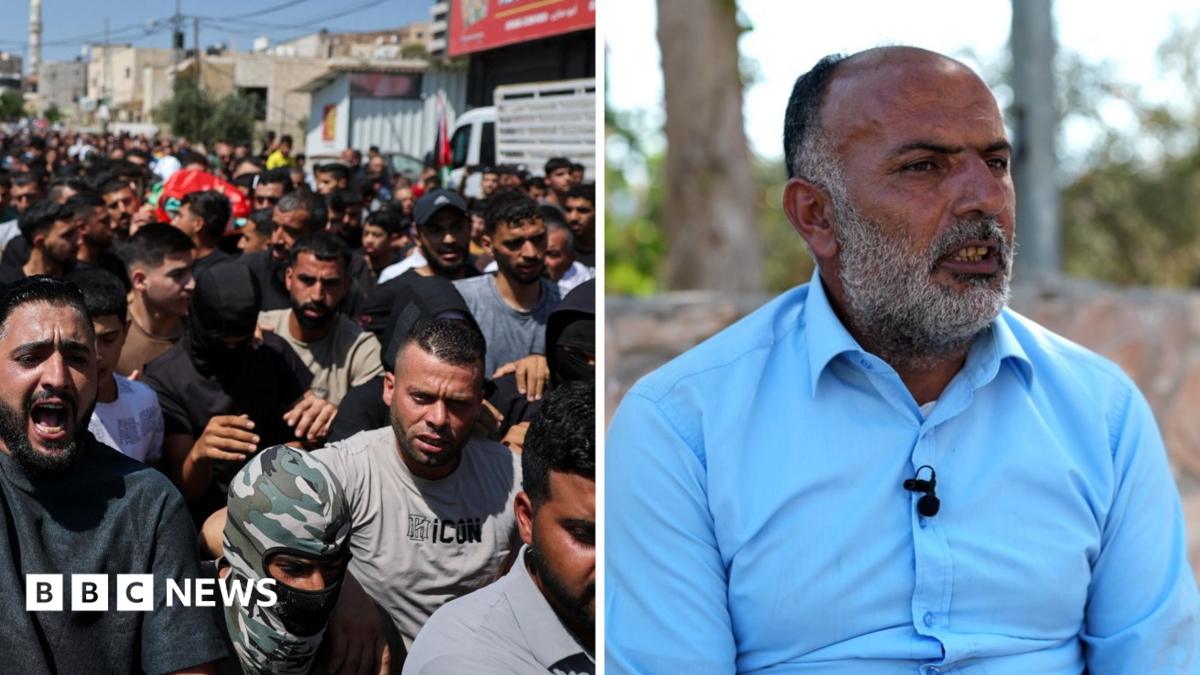
Funerals have taken place for two Palestinian teenagers who were shot dead this week when settlers and soldiers entered a Palestinian village in the occupied West Bank.
The killing of Omar al-Naasan and Khalil Abu Alia comes amid near-daily attacks by Jewish settlers in the village of al-Mughayyir, south of Nablus.
“We expect that when our sons walk in the street, they are likely to return to you injured or killed,” Mohammed Al-Naasan, Omar’s father, told the BBC.
Israel’s military says it fired on “instigators of a violent riot” and that the incident is under review.
The United Nations says more than 80 Palestinians have been killed by Israeli forces or settlers in the territory since the beginning of the year.
Wendell Berry, a Kentucky farmer and writer whose work advocated fiercely for working landscapes and working people, died “suddenly and peacefully” on Monday at his home in Port Royal, Ky., according to his family. He was 92.
His daughter, Mary Berry, confirmed his death. On Thursday, she told The Times that her father, until about six months ago, was still writing regularly in his cabin on the banks of the Kentucky River, a place he called “camp,” where many of his more than 50 volumes of poetry, short stories, essays and novels were written.
Berry championed sustainable farming and rural community preservation and railed against industrial agriculture and corporate agribusiness.
“He was fierce and he was fearless, and he remained fearless,” she said, explaining that her family taught her the erosion of rural places wasn’t inevitable but “destruction by design,” engineered by corporate interests and political policies.
Berry, whose writings were often fueled by an anger toward the forces that have driven the destruction of the rural land and communities that he dedicated his life to defending, softened in his final years, according to his daughter. “He was always a tender man, and that part of him got stronger. He was rereading a lot of books that he had loved in his life, and he told me he was looking for the tenderness in the books, and that’s a lovely thing.”
Berry’s most influential work began with a list of the problems he’d observed in modern agriculture, scribbled onto a legal pad as he traveled the long stretch of road between Kentucky’s Henry County and Spokane, Wash., where Berry would deliver a speech at the “Agriculture for a Small Planet” symposium in 1974.
“I was asked to talk about labor-intensive microsystems agriculture. That’s not my language, and it’s not the sort of language that I wish to use because it’s the way people speak when they don’t want to be understood by most people,” he began.
Berry spoke of the six generations of farmers who worked his land before him, and the concerns for farming communities and their agricultural economy that he inherited from his father. He decried “the experts and politicians who have prescribed, encouraged, and applauded the disintegration of such farming communities all over this country into our allegedly miraculous modern American agriculture.”
The speech would later become Berry’s 1977 manifesto “The Unsettling of America: Culture & Agriculture,” which launched a sustainable-farming movement and cemented Berry’s authority on agrarian issues on the national stage.
Beyond his cultural critiques, Berry wrote notable novels including “The Memory of Old Jack,” “Jayber Crow” and “Hannah Coulter.” He was a prolific poet as well. His verse included his debut collection, “The Broken Ground,” and his celebrated Sabbath Poems series, which explored living in harmony with the land.
Over the course of his career, he was honored with the T. S. Eliot Prize, the Aiken Taylor Award for Modern American Poetry and the Richard C. Holbrooke Distinguished Achievement Award from the Dayton Literary Peace Prize, among other accolades. In 2010, Berry was awarded the National Humanities Medal by then-President Obama for his achievements as a poet, novelist, farmer and conservationist. In 2016, he was the recipient of the Ivan Sandrof Life Achievement Award from the National Book Critics Circle.
Wendell Erdman Berry was born on Aug. 5, 1934, in Louisville, Ky., to John Marshall Berry Sr., a lawyer and tobacco farmer, and Virginia Perry Berry. Wendell was the eldest of four children, two boys and two girls. In high school, his parents shipped him off to Millersburg Military Institute, a former military boarding school in Kentucky, where rather than conform to the teachings, he later wrote that his takeaway was, “Take a simpleton and give him power and confront him with intelligence — and you have a tyrant.”
He went on to study English and creative writing at the University of Kentucky. There he met and wooed Tanya Amyx, who would become his wife and the mother of his two children, Mary and Pryor. He landed a Wallace Stegner writing fellowship at Stanford in 1958, and in 1961 he was granted a Guggenheim Fellowship, which allowed him to pack up the family and live in Tuscany and southern France.
After Berry’s scholarly pursuits took him to the West Coast, then Europe, then the East Coast, where he taught at New York University, he accepted a job at the University of Kentucky, allowing him to return home and back to his roots, on a farm near the river.
Then-President Obama presents the 2010 National Humanities Medal to Wendell Berry during a ceremony March 2, 2011, in the East Room of the White House.
(Mark Wilson / Getty Images)
“Within a few years, Mom and Dad were raising 85% of the food we were eating,” Mary told The Times. “We had a milk cow, raised hogs for our own use, and by the time I was a teenager, I resented the whole thing pretty seriously, and I remember saying to them more than once, ‘I did not choose to live this way, and I don’t know why we have to do everything the hardest way possible.’ We had no television. … But I was in a heck of a position with my parents because I never really thought they were wrong about anything, and I still don’t.”
When Mary would gripe, she said, her dad would laugh or “just keep working.” But “he talked about what we were doing and why we were doing it,” she said. “He told my brother and me from the time I can remember to look and see that this is good and don’t forget, and I have not forgotten.”
In 2011, when Berry was nearly 80 years old, he joined a high-profile sit-in at the office of Kentucky’s then-Gov. Steve Beshear to protest the destructive mountaintop strip-mining of coal. In an interview with Bill Moyers shared by the Berry Center in 2025, Berry said that he and his compatriots had had enough of the state government ceding control of resources to the coal companies. “In our society,” he said, “people with money are bigger and more powerful and more noticeable and count more as citizens than people without much money. … So we did confront the governor and tell him we weren’t going to leave.”
His attempt at civil disobedience was turned on its head when the governor invited Berry and the Kentucky Rising activists to stay.
“We did stay,” he said. “The whole weekend.”
“We were beautifully treated by the security staff and people who sent us food and bedding and good wishes and even came in and gave us massages. And it was altogether one of the loveliest weekends I’ve ever spent in my life.”
Berry continued writing into his old age.
Next month, Counterpoint Press will posthumously release “Dispatches From Rural America,” a collection of 15 essays. In one, “The Problem Is Industrialism,” Berry wrote about a 2021 conversation he had with a friend of more than 40 years, author Wes Jackson.
“To the extent that we were talking in earnest, our subject was the set of calamities that the media and the commentators frequently take up, typically dealing with each one in isolation from the others and representing each as an emergency more or less apocalyptic, and in tones recalling a number of vernacular alarms, from ‘Last chance for beer’ to ‘Prepare to meet God.’”
He continued later that the two discussed how industrialism “grows only by consuming, once and for all, the living world.”
Mary said she wanted people to know that, yes, her father was worried and wouldn’t have written so much if he weren’t terribly concerned about the future of rural America, but she wants people to understand that he was a man of great hope.
“Hope he felt was a duty, and I learned that from him,” she said. “As he said in one of his many poems, hope is what we owe people younger than ourselves.”
Mary said she was continuing her father’s work through the Berry Center, a nonprofit that aims to put Berry’s writings to work and advocates for farmers, land-conserving communities and healthy regional economies.
Berry is survived by his wife of nearly 70 years, Tanya, his daughter Mary, son Pryor, five grandchildren and four great-grandchildren.
Eating breakfast in a South Dakota coffee shop, Gloria Steinem was all too aware of the couple eyeballing her from the next booth. He was sporting chains. She wore leather pants and what Steinem later recalled as “an improbable hairdo.” The place was packed with tough-looking, mostly male bikers pumped about a huge rally they were attending. Steinem, returning from a Sioux powwow honoring ancient tribal women, knew she wasn’t in her element.
Finally, the leather-clad woman came over and spoke up. “I just want to tell you how much Ms. magazine has meant to me over the years — and my husband too,” she told an astonished Steinem.
There was a time, the woman said, when rolling down the road meant perching on her husband’s back seat. But now she had her own sweet ride: “I even put ‘Ms.’ on my license plate, and you should see my grandkids’ faces when Grandma rides up on her purple Harley!”
The image of that breezy, boisterous grandma stayed with Steinem for years. “I’ve come to believe that inside, each of us has a purple motorcycle,” she wrote in her 2015 memoir. “We have only to discover it — and ride.”
Steinem, the co-founder of Ms. Magazine and for six decades a charismatic leader who urged women to pursue self-affirmation, political power and equality both in the workplace and at home, died Wednesday at her home in New York City, according to her foundation’s social media pages. She was 92.
“Gloria lived true to her independent spirit, always with curiosity and a great sense of humor,” the posts said.
An activist, journalist, and relentless traveler who said she went for 20 years without spending more than eight consecutive days in her New York apartment, Steinem described herself as “an entrepreneur of social change.”
“I raise money. I talk. I write. I tell stories. I want to do justice to the women I meet,” she told The New Yorker in 2015.
Steinem, who struggled with stage fright most of her life, talked with women at gigantic conferences and in intimate kaffeeklatsches. At book signings and on barstools, she sought their stories, sometimes re-telling them in her essays and on her countless speaking tours. Her portfolio of issues was vast, from sexual violence, female genital mutilation and racism to the more mundane injustices that helped fuel a movement for sweeping social change.
At one campus visit, the discussion turned to men who expect women to pick up after them. A young Japanese woman, silent for most of the increasingly raucous session, stood up, turned around to address 500 other audience members and said: “When my husband leaves his underwear on the floor, I find it quite useful to nail it to the floor.”
She had never before said a word in public, she told the cheering crowd.
Steinem had a “gift for empathy,” New York Times columnist Gail Collins wrote when the feminist icon turned 80 in 2014.
“Women who read about her or saw her on TV felt that if they ran into her on the street, they would really get along with her. And women who actually did run into her on the street felt the same way. More than a half-century into her life as an international celebrity, she remains stupendously approachable, patient with questions, interested in revelations.”
Gloria Steinem, left, and Pat Carbine, two of Ms. magazine’s founding editors, in 1980.
(Dave Pickoff / Associated Press )
Famously attractive, Steinem over the years gave hope to young women who wanted to “stand up for their rights without being called man-haters,” Collins wrote. “She was evidence that it was possible to be true to your sisters while also being really, really attractive to the opposite sex.”
At the same time, she alienated the religious right with her fervent pro-choice advocacy. When Lands’ End featured an interview with Steinem in its 2016 catalog, outraged readers threatened a boycott. Company officials then cut their ties with the woman they had headlined as a “legend.”
Steinem first drew public notice when she was in her 20s and struggling to establish herself as a freelance writer. Her breakthrough story was a funny, scathing account of her two weeks as a Playboy “bunny” — a scantily clad cocktail waitress at Hugh Hefner’s Manhattan nightclub.
In some ways, the story backfired. Steinem became known not as a crusader for women but as a former bunny. For several years, her magazine assignments continued to veer toward “women’s page” topics — in 1964, she wrote about textured stockings for the New York Times — and even after she delved into serious political issues for New York magazine, she wasn’t taken as seriously as she would have liked.
In 1968, a Washington Post columnist described her as “the mini-skirted pinup girl of the intelligentsia.” Two years later, a headline in the Los Angeles Times read, “Gloria: Beautiful Brain in Ditto Body.”
Meanwhile, the women’s liberation movement had propelled itself into the mainstream, ignited by writers like Betty Friedan. For Steinem, though, it became a passion only after she covered a meeting during which women opened up about their illegal abortions. The event was held to protest a legislative hearing on abortion where the only witnesses were 14 men and a nun.
“Suddenly I was no longer learning intellectually what was wrong. I knew,” Steinem recalled in 1983. “I had had an abortion when I was newly out of college, and I told no one. If one in three or four adult women shares this experience, why should we be made to feel criminal and alone?”
Nearly 60 years after her unwanted pregnancy, Steinem dedicated her memoir to the British physician who arranged her abortion after she agreed to two conditions.
The first was that she never reveal his name. (She did, long after his death.)
The second: “You will do what you want to do with your life.”
Born on March 25, 1934, in Toledo, Ohio, Steinem didn’t attend school regularly until seventh grade. Most winters, her father Leo, an ebullient, 300-pound dreamer who was often in debt, would drive the family down back roads in a trailer, stopping here and there to sell antiques he’d picked up along the way.
Ruth Steinem, Gloria’s mother, was a former journalist who was hospitalized for long periods with severe mental health problems. From the age of 11, after her parents divorced and her older sister Susanne left home, Gloria often cared for her mom.
In an essay, “Ruth’s Song (Because She Could Not Sing It),” Steinem recalled her mother cutting her arm when she smashed a window to escape the Nazi invaders that only she could see. “I remember a long Thanksgiving weekend holding on to her with one hand and holding my eighth-grade assignment of ‘Tale of Two Cities’ with the other,” Steinem wrote.
Despite her patchy schooling, Steinem received a scholarship to Smith College, where she graduated Phi Beta Kappa after majoring in government. After spending two years in India on a fellowship, she worked briefly for an international youth organization funded by the CIA.
Basing herself in New York in 1960, she quickly became known for her stylish prose, sharp wit, and striking appearance. Within a decade she was “Gloria-Steinem-the-antiwar-gorgeous- bachelor girl who was pictured with Henry Kissinger in Time and Life…,” according to a breathless 1970 account in the Los Angeles Times.
But she was also the Gloria Steinem who helped start New York magazine, who wrote insightfully about the intersection between racism and sexism, and who in 1971 became the first woman chosen to address an annual banquet of the Harvard Law Review.
She zeroed in on the school’s failings.
“There is a course on international whaling law but none on women’s rights internationally,” she told the black-tie gathering. “An eminent professor of administrative law said as late as last night that he didn’t know what the Equal Employment Opportunity Commission was. The same man replied to a request that at least one full-time female professor be hired by answering that women faculty brought problems because of ‘sexual vibrations’…”
The following year, Steinem, with several other feminist journalists, founded Ms. Its first, tentative edition, a 40-page insert into New York magazine, sold out in eight days.
The debut issue of Ms. included pieces on gender stereotypes, lesbian relationships, and job discrimination. It also featured an open letter from 53 prominent women — including tennis great Billie Jean King, singer Judy Collins and Steinem — who revealed that they had undergone abortions.
While the magazine’s monthly circulation eventually topped 500,000, it also fueled skeptics. “I’ll give it six months before they run out of things to say,” newscaster Harry Reasoner predicted on national TV.
Ms. also took flak from some of Steinem’s sister feminists, who contended that it cast women as victims. As new waves of feminists confronted different issues, some became exasperated by Steinem’s seemingly perennial role as the face of the women’s movement.
“Guys in the media chose Gloria as our leader,” said feminist writer Susan Brownmiller in 2016. “A lot of us, our hope is that eventually, history will straighten this all out and say, no, Gloria came in a little later, and her very loyal supporters have backtracked that history.”
Steinem remained a contributing editor to Ms. for 15 years.
Gloria Steinem at home in New York City, 2010.
(Annie Leibovitz / Penguin Random House)
Meanwhile, she was crisscrossing the country, campaigning for liberal Democratic candidates, fighting laws restricting abortion, and urging legislators to adopt the Equal Rights Amendment.
“Like Sky Masterson, the wandering gambler in Damon Runyon stories, I’ve been in more hotel rooms than the Gideon Bible,” she wrote, “and he didn’t wash his hair with hotel soap, eat from vending machines, or sit up late organizing with the hotel maids.”
In 2013, President Barack Obama gave Steinem the Presidential Medal of Freedom, the nation’s highest civilian honor.
Her books include a 1983 essay collection, “Outrageous Acts and Everyday Rebellions”; a 1986 portrait of Marilyn Monroe; her 2015 memoir, “My Life on The Road”; and works on aging and self-esteem.
Over the years, Steinem had longstanding romantic relationships with a number of men but vowed never to marry or have children.
However, at 66, she broke her vow and married David Bale, a British businessman and animal rights advocate. By then, the institution of marriage had changed for the better, she later explained.
“We spent 30 years in the United States changing the marriage laws,” she said. “If I had married when I was supposed to get married, I would have lost my name, my legal residence, my credit rating, many of my civil rights.”
Three years after their marriage, Bale died of brain cancer. Steinem’s stepchildren include the actor Christian Bale.
At 80, Steinem celebrated her birthday by riding an elephant in Botswana.
In the following years, she campaigned for Hillary Clinton, spoke at the Women’s March on Washington, helped save her hometown’s last abortion clinic and gave numerous interviews denouncing President Trump’s views on women. She was the subject of an off-Broadway play and was honored by Rutgers University with the Gloria Steinem Endowed Chair in Media, Culture, and Feminist Studies.
For fun, she danced. When asked by TV hosts, she occasionally demonstrated a well-worn soft shoe routine, though her heart was with the tango.
“It’s a sick, authoritarian dance,” she told a reporter, “but I loved it.”