Days out

Stunning coastal walk with unique wildlife but it comes with a grave warning

This beautiful Lancashire walk offers breathtaking coastal views and unique wildlife, but visitors must beware of one thing before planning a visit.

The Lancashire countryside brims with spectacular walks, picturesque villages and awe-inspiring views, establishing it as a haven for travellers.

Among the county’s wealth of beautiful locations, one particular walk stands out as genuinely extraordinary, with visitors describing it as “magnificent”.

Nestled at the very fringe of Morecambe Bay, between the Irish Sea and the southern banks of the River Lune’s estuary, sits Sunderland Point – a secluded and hidden strip of land brimming with pristine natural splendour.

Encircled by marshland and waterways, Sunderland Point offers an encounter with nature in true seclusion.

Distinctive and fascinating, much of Sunderland Point falls within a conservation area, with numerous surrounding properties holding Grade II Listed designation.

Taking the brief stroll around this remarkable peninsula transports you back centuries to the 1700s, when Sunderland Point functioned as Lancaster’s first transatlantic harbour, reports Lancs Live.

Best Lancashire holiday cottage deals

This article contains affiliate links, we will receive a commission on any sales we generate from it. Learn more
Sykes Cottages

From £42 a night

Sykes Cottages

See the deals

Lancashire is known for its wide open skies, stunning landscapes and lively coastal resorts. Sykes Cottages has a wide range of self catering accommodation across the county from £42 a night.

Walkers will encounter wind-swept panoramas of river and ocean, salt marshes, tidal flats, hillsides, and expansive skies whilst tackling this three and a half mile circular route along Lancashire’s magnificent coastline.

Gifted with ideal conditions for nurturing wildlife, bird watching devotees will find Sunderland Point particularly rewarding, as glimpses of the rapidly diminishing curlew, greenshank, redshank, and oystercatchers are commonly documented across the salt marsh bordering the bay.

Wading birds are frequently seen cavorting in the mudflats or performing captivating aerial displays, whilst salmon are known to populate the River Lune at this juncture, where they can be observed being caught mid-river through traditional haaf-net fishing.

Important warning for visitors

However, Sunderland Point isn’t all picturesque landscapes and charming wildlife. The small peninsula is severed from the mainland twice daily by high tide, and if you neglect to check the tide times before setting off on your stroll, you could find yourself marooned for hours without any provisions.

The tidal causeway that links the extremity of the point to the rest of the mainland is prone to being entirely submerged by water, with one visitor even warning that improperly parked cars could end up underwater during high tide.

Indeed, the residents of Sunderland village largely structure their lives around the tide’s schedule – heading to work and school early and returning late, depending on when the tidal causeway road is free from water and safe to traverse.

For those planning a visit, it’s absolutely crucial to refer to the tide table for Heysham and bear in mind that weather conditions can significantly impact the height and timing of the tide.

If you’re making your way from Overton village on foot or by car, it’s essential to consult the tide tables, as the Causeway to Overton is very likely to sit beneath several feet of water for at least an hour or two either side of high tide, meaning careful planning is crucial.

Dog owners are also urged to keep their pets on leads whilst exploring Sunderland Point, as the route passes through a heavily protected seascape that’s vital for wading birds, with Morecambe Bay acting as their feeding area. There’s also the possibility of encountering farm livestock and cattle, so keeping your own animals on a lead ensures everyone’s safety.

Stunning destination worth visiting

Sinister safety warnings notwithstanding, every corner of Sunderland Point is breathtaking and merits a visit for the spectacular views and distinctive wildlife alone.

One Tripadvisor review says: “For me Sunderland Point was magnificent, I had always wanted to ride on a motorbike on a tidal road, we took advice and arrived at the correct time with the tide out phew, make no mistake chancing it is not an option, however you do have a few hours window.

“We arrived at the parking space to visit Sambo’s grave, look it up, very interesting, we had a lovely walk around, met some interesting locals then walked to the grave. Fun morning then onwards to Scotland.”

Another visitor notes: “I have never seen or known a place like this in the UK. The tide comes in and closes off the road making it an island for a few hours and goes out to give access.

“A few people live on the point and they are all lovely. I have met a few. When you visit always check the tide times so you are not stuck. There are no cafes on the point.”

Whilst another visitor offers a gentle caution: “A great place to drive over to see Samba Grave and to walk around the peninsula. DO make sure you know the tide times as you can get stranded with no return and where you park your car can be under water very quickly.”

The route

Pott’s Corner: Start your journey at Pott’s Corner car park beside the shore near the public loos. You can either turn right along First Terrace towards The Lane following the green trail, or press on with the blue trail that runs along Second Terrace.

First and Second Terrace: Soak up the views from First Terrace. At Second Terrace you’ll notice the wooden poles that were once employed for airing out and drying fishing nets.

Upsteps Cottage and The Lane: Upsteps Cottage, previously the brewhouse of the Ship Inn, is where Sambo the enslaved boy is thought to have sought refuge and died in 1736. Following The Lane as it winds past Mission Heritage Centre and continues along a hedge-bordered path, you’ll eventually reach the shore, passing the bird hide, Horizon Line Chamber and Sambo’s grave.

Bird hide: The perfect spot to observe curlews, redshanks, oystercatchers, and greenshanks on the mudflats and salt marsh – which serves as the feeding ground for nearly 40,000 waders including dunlin, knot, and bar-tailed godwit.

Horizon Line Chamber: This handcrafted stone sculpture is the work of Chris Drury, an artist of international renown.

Sambo’s Grave: The grave of Sambo, a young slave boy, is lovingly maintained by locals, volunteers and visitors alike – it’s certainly worth a visit to pay your respects.

Return to Second Terrace: Once you’ve finished exploring the Point, retrace your steps from the grave, heading back down The Lane from whence you came. Upon reaching Upsteps Cottage, take a right onto Second Terrace.

Alternatively, for a shorter return journey, turn left and follow the path along the shoreline, soaking up the stunning estuary views on your way back to Pott’s Corner car park, your starting point.

Old Sunderland Hall: If you opted for the right turn at Second Terrace, towards the tip of the land, you’ll pass Old Sunderland Hall. Across the water, you can enjoy spectacular views of Plover Scar Lighthouse and Cockersand Abbey.

Source link

Stunning coastal village home to lovely 120 year old bakery famous for giant sausage rolls

This charming village has been dubbed an ‘unspoilt gem’ by visitors and is home to an award-winning bakery that’s been serving up delicious baked goods for over 120 years

Some corners of the world seem to have been shaped with exceptional care and affection – and this pristine Cornwall coastal village is undoubtedly among them.

Nestled along the North Cornwall coastline approximately 10 miles southwest of Newquay, this historically significant and remarkably unspoiled coastal settlement offers breathtaking vistas, vibrant community character, and prize-winning cuisine and beverages.

Concealed within an immaculate section of the Cornish shore, this tiny village represents a gem positioned within both a designated Area of Outstanding Natural Beauty and a World Heritage Site.

This waterside settlement thrives courtesy of its robust local community, which supports an array of independent retailers and enterprises, including one of Britain’s most ancient bakeries still trading from its founding location.

Save on the best holiday cottages in Cornwall

This article contains affiliate links, we will receive a commission on any sales we generate from it. Learn more
Sykes Cottages

From £36 per night

Sykes Cottages

See the deals

Famous for its rugged coastline, golden beaches, picture-perfect villages and rich maritime heritage, Cornwall is one of the most-visited corner of the UK. Sykes Cottages has a large number of holiday homes to choose from, with prices from £36 per night.

Boasting beautiful, canine-friendly shores, exceptional public houses and dining establishments, and access routes to some of Cornwall’s most dramatic coastal paths and walks, it’s little wonder this village is hailed as a traveller’s paradise, reports Cornwall Live.

Prize-winning bakery with unique pastries

The celebrated St Agnes Bakery has been trading from its original site in St Agnes for more than 120 years – having initially welcomed patrons back in 1905.

Famed for producing the most delectable traditional Cornish recipes daily, St Agnes Bakery stands as one of the village’s finest attractions.

Their renowned Cornish Pasty has secured Gold Standard status, whilst the distinctive ‘Giant Sausage Roll’ was created and gained popularity within the bakery’s modest premises.

Buttery flaky buns, delectable Cornish cakes, and freshly baked loaves also feature amongst St Agnes Bakery’s bestselling items.

St Agnes Bakery has collected numerous prestigious accolades – from World Pastry Awards to National Bakery Awards, each testament to the quality of its exceptional offerings.

The bakery’s owners said: “The joy of baking is deeply rooted in both our own childhood memories and experiences. Since taking over the bakery it has been our aim to bake all our breads, cakes, Cornish pasties and giant sausage rolls using time-honoured methods, tried and tested recipes and only the highest quality of ingredients, just like our own mothers showed us.”

St Agnes Bakery procures the majority of its ingredients locally from Cornwall, with most suppliers and producers based near St Agnes.

A fascinating heritage and plenty of attractions

The prize-winning bakery isn’t the only draw St Agnes has to offer. This charming seaside village, with its winding lanes and delightful independent shops, proves irresistible to holidaymakers.

Its narrow streets brim with Cornish character, establishing St Agnes as a treasured destination for visitors. St Agnes boasts several stunning beaches for visitors to discover, including Trevaunance Cove, Chapel Porth, and Porthtowan – all hugely popular spots for surfing enthusiasts, swimmers, and those simply wanting to soak up the sun.

The surrounding coastal area is steeped in captivating history, particularly its mining heritage, exemplified by sites such as the derelict 19th-century tin mine Wheal Coates.

The village possesses a fascinating past and industrial legacy rooted in tin and copper mining, which dominated Cornwall’s economy during the 18th and 19th centuries. Today, remnants of this mining history, including engine houses and mine shafts, still punctuate the landscape.

Despite ranking amongst Cornwall’s larger coastal villages, St Agnes maintains a charming and unspoilt character. One of its most celebrated landmarks is St Agnes Beacon – an elevated vantage point offering panoramic views of the spectacular countryside and historically serving as a watchtower.

The adjacent St Agnes Head is similarly cherished by both residents and tourists, providing magnificent views across the dramatic Cornish coastline.

This enchanting seaside village has frequently been hailed as an ‘underrated gem’ by those who visit, delivering spectacular coastal scenery featuring dramatic cliffs, sandy beaches, and picture-perfect rural countryside.

It’s also the home of The Peterville Inn, an award-winning establishment which previously claimed the coveted ‘Pub of the Year’ title at the VisitEngland Awards for Excellence in 2024. Chapel Porth Beach stands out as another essential spot in St Agnes, with the Chapel Porth to St Agnes Circular Walk coming highly recommended.

Visits to the St Agnes Museum and Perranporth Airfield are also strongly suggested for those seeking enjoyable pursuits, whilst the St Agnes to Trevellas Porth Circular Walk proves a treat for walking enthusiasts.

Admirers of Winston Graham’s bestselling Poldark novels (and its dashing hero Ross Poldark) will be thrilled to learn that the writer lived just moments from St Agnes and has famously revealed he found inspiration in this picturesque village, calling it ‘Poldark Country’.

Despite its modest proportions, St Agnes brims with delightful attractions, making it an essential destination if you’re after a brilliant experience amidst breathtaking scenery.

Source link

Beautiful English village is foodie paradise with scenic views

Breathtaking countryside views make this village feel like you’ve stepped onto a film set – and foodies will love the Michelin Guide-listed restaurant in this tiny hamlet

For such a tiny hamlet, this stunning Lancashire village packs a mighty punch. Located roughly three miles from the thriving market town of Clitheroe, this charming village is enveloped by spectacular countryside vistas across Lancashire’s renowned Ribble Valley, transporting visitors into what feels like a scene from a picturesque film.

Its remarkable location cannot be overstated – nestled at the meeting point of two significant Lancashire waterways: the River Ribble and River Hodder. Indeed, the village derives its name from Old English, reflecting its position as a settlement at the “mythe”, meaning “confluence” or “junction” of two streams.

Great Mitton, alongside its neighbouring village (officially a civil parish) Little Mitton, occupies fewer than 2,000 acres within the Forest of Bowland, establishing it as the smallest township in the Forest, reports Lancs Live.

Best Lancashire holiday cottage deals

This article contains affiliate links, we will receive a commission on any sales we generate from it. Learn more
Sykes Cottages

From £42 a night

Sykes Cottages

See the deals

Lancashire is known for its wide open skies, stunning landscapes and lively coastal resorts. Sykes Cottages has a wide range of self catering accommodation across the county from £42 a night.

Gorgeous riverside panoramas, undulating countryside landscapes, and exceptional award-winning cuisine – what more could you desire from this idyllic hamlet?

Things to do in Mitton

Housed within a magnificently restored 19th-century building, The Three Fishes now operates as a farm-to-fork restaurant at the heart of Great Mitton and has been described as “outstanding” by customers who have experienced the venue.

Led by Michelin-starred chef Nigel Haworth, The Three Fishes has garnered numerous accolades throughout the years and maintains an impressive 4.4 rating out of five on Tripadvisor.

Diners consistently sing the praises of both the cuisine and service at this establishment. So impressive is the offering that it has secured a coveted spot on the Michelin Guide restaurant list since 2022, with inspectors deeming it “worthy of a place”.

One Tripadvisor reviewer gushes about The Three Fishes: “Everything about this place is total perfection. Everything. The staff, the service, the atmosphere, the surrounding area, the layout. And, of course, the food is as good as anything I’ve ever experienced. Difficult to imagine how this place could be improved.”

Another jewel in Mitton’s crown, lovingly restored to its former glory, is the magnificent 15th-century manor house, Mitton Hall, which stands majestically on the banks of the River Ribble in the heart of Little Mitton.

Serving dual purposes as both a sought-after wedding venue and a country house hotel, it offers sumptuous accommodation in the scenic Ribble Valley and is adored by locals and tourists in equal measure.

Staying on the Little Mitton side of the river, there’s the celebrated Aspinall Arms, which greets guests with a roaring fire during winter months and a delightful riverside terrace garden come summer – ideal for enjoying a refreshing pint alongside delectable contemporary dishes drawing inspiration from British classics and “exotic global influences”.

This 19th-century coaching inn boasts views of the beloved All Hallows Church and Mitton Hall, making it a favourite haunt for ramblers, cyclists and their four-legged companions.

One delighted guest remarked about the Aspinall Arms: “We’ve been to the Aspinall Arms twice now, both times following a hike in the Ribble Valley. The first visit we just had drinks, but were really impressed with the pub and its outdoor area. Immaculately maintained, the beer garden is substantial in size and offers some beautiful river views!

“On our second visit, we again intended just to pop in for a riverside view drink in the sunshine, but having perused the menu decided to have a meal also! Considering we only popped in for a drink, we ended up spending three hours in the Aspinall Arms and had a great time.”

Another must-see attraction in the picturesque hamlet of Great Mitton is All Hallows Church, formerly called the Church of St Michael. Constructed during the 13th century, the building underwent significant modifications and extensions throughout the 15th and 16th centuries.

All Hallows Church contains the burial sites of the renowned Shireburne of Stonyhurst family and has held Grade I listed status from English Heritage since 1954. The church also boasts the magnificent Shireburn Chapel and is thoroughly worth exploring.

Edisford Bridge, a Grade II listed structure dating back to medieval times, represents another essential sight in Mitton. Constructed from sandstone and incorporating four arches with cutwaters, Edisford Bridge has earned recognition as a scheduled monument.

Another bridge of note (and scheduled monument) is the Grade II Listed Old Bridge, which dates from 1562. Now no longer in use, it’s constructed from sandstone and spans the River Hodder.

The Mitton Bridge represents another striking landmark, probably built during the 19th century and likewise fashioned from sandstone with Grade II listed status.

Ensure our latest headlines always appear at the top of your Google Search by making us a Preferred Source. Click here to activate or add us as your Preferred Source in your Google search settings.

Source link

The under-rated seaside town that’s a perfect alternative to the UK’s ‘best’

Where can you go if you want a lovely coastal alternative? My suggestion would be one of my favourite, underrated spots in Wales.

As many of us will well know, popular UK seaside destinations can be very crowded during half-terms and summer holidays as the masses descend for a break by the sea. But where can you go if you want a lovely coastal alternative?

I’ve got a suggestion and it’s one of my favourite spots — and hugely under-rated. Once synonymous with heavy industry and commercial docks, Milford Haven is now making waves as an exciting destination for tourism. Dominating the estuary, this historic harbour town in south-west Wales has had a striking transformation thanks to a multi-million-pound regeneration project that has turned its waterfront into a bustling hub of food, fun and on-the-water living.

It’s a lovely alternative to busy Tenby if you’re looking for a new location for a family break or a couple’s escape. At the heart of the town’s impressive revival is Milford Waterfront, a stylishly redeveloped marina that’s fast earning a name for itself – and is becoming somewhere worth travelling to in its own right.

Formed by a ria, or drowned valley, the Milford waterway is known for being one of the deepest natural harbours in the world and is still Wales’ largest fishing port and home to the local inshore fleet. Today, it’s still a fishing port but is now a mixed-use space for locals and tourists featuring berths, floating accommodation, shops and restaurants.

From a 17th-century Quaker whaling town and shipbuilding outpost to a modern marina, Milford Haven has become one of my go-to weekend break spots. Here, you’ll find independent bars, locally owned shops, gallery spaces, and an increasingly sophisticated dining scene that’s starting to rival Tenby in both quality and character.

Where to stay in Milford Haven

One of the most striking additions to Milford’s astonishing facelift is the Tŷ Milford Waterfront hotel, which opened in 2022. It’s managed and operated by the team responsible for the iconic five-star Celtic Manor Resort and forms part of The Celtic Collection’s expanding portfolio and the Tŷ Hotels family in partnership with the Port of Milford Haven.

Tŷ Milford is one of Pembrokeshire’s largest hotels, with 100 bedrooms and a gorgeous glass-fronted restaurant, and it’s my favourite place to stay in the area.

Since opening, the hotel has garnered positive reviews and was crowned Hotel of the Year at the Visit Pembrokeshire – Trade Croeso Awards in 2024. Ensure our latest news and sport headlines always appear at the top of your Google Search by making us a Preferred Source. Click here to activate or add us as Preferred Source in your Google search settings

Despite its four-star status and stylish interiors, it’s surprisingly affordable with advance purchase rooms starting from £104. You can also bag great deals on sites like Booking.com and Holiday Cottages.

The Dulse restaurant and bar is a real highlight, serving some of the best seafood in Pembrokeshire. This stylish restaurant is named after Pembrokeshire’s edible, versatile seaweed, which grows abundantly along the rocky coastline. Definitely order the Tenby Harbwr Beer Battered Haddock, it’s divine.

I would also highly recommend the Luxury Glamping Cabins on the marina, where you can stay on the water from £80 per cabin.

Things to do in the town

Step outside your accommodation and you’ll find plenty to do here. The boat-filled marina offers plenty of bars, independent shops, and cafes to explore. History and heritage are also thoughtfully displayed through walking trails and the volunteer-run Milford Haven Museum. The museum tells the story of Milford Haven and its proud maritime heritage.

Inside, you can explore exhibits and collections that cover the Nantucket Quaker Whalers, the fishing industry, and the nautical town’s crucial role in meeting the world’s energy demands.

Wander further along the waterfront, and you’ll find boutique shopping, cafes, seafood restaurants, and even a chocolate shop.

The port also hosts a busy calendar of events, including its popular summer campaign, which features a fish festival, a beer festival, and a street food festival. Children’s activities and seasonal events, such as fireworks displays and Santa visits, also take place throughout the year.

Where to eat and drink in Milford Haven

Some of the foodie offerings in the marina include artisan chocolates from Dilly’s Chocolates, ice cream from Scoop Parlour and sweets from Scott’s. For lush seafood, try the seared scallops, prawns or pan-fried hake fillet at Martha’s Vineyard, a family-run bar and restaurant with glorious views over the Milford Haven Waterway.

There are several cafes along the Waterfront that serve breakfast and lunch, including the Spinnaker Café, Foam and the traditional Crow’s Nest Café, where you can get a proper fry-up or bacon bap.

Further along the waterfront, you’ll find dinner and drinks at quayside restaurant Coco’s, housed in the Grade II-listed ‘Sail Loft’ building. Pembrokeshire produce features where possible on their menu, and local tipples are also available at this upscale venue.

Activities around the town

Looking for something more active? At Milford Beach Activity Centre, you can experience stand-up paddleboarding and kayaking from the Hot Water Slip and explore the historic Milford Haven Waterway shorelines.

This local business operates out of a blue shipping container overlooking Milford Beach and offers guided tours, stand-up paddleboard rentals, and kayak hire.

Go on a guided tour of the estuary with their experienced guides to better understand the area’s history, including the Vikings that settled here, the Welsh fishing industry, the town’s military connection, and past industries.

Milford Haven is also a fantastic base for exploring the Pembrokeshire coast year-round.

A short drive from Milford Haven, Broad Haven Beach is a wide, sandy expanse perfect for a relaxing day by the sea. In the summer season, this family-friendly beach offers excellent facilities, including lifeguards, making it safe for swimming and sunbathing. On colder days, it’s still lovely to bring a flask of hot chocolate and have a bracing walk along the shoreline.

Marloes Sands is another great shout for dramatic cliffs, golden sands, and crystal-clear waters.

Surrounded by cliffs, accessible only on foot and only when the tide allows, the effort of getting to this remote Welsh beach is well worth it, with unspoiled sands, rocky outcrops and a sea with the most vibrant shades of blue.

At low tide, the sand stretches out forever, revealing rock pools teeming with tiny crabs and sea anemones.

To reach the beach, you’ll need to park at the National Trust car park, about a half-mile away, and walk down. It’s a bit of a stomp, especially if you’re carrying beach gear, but you’re rewarded straight away with sweeping views of the coastline and distant glimpses of Skokholm and Skomer islands, both rich in birdlife.

If you want to make the most of your visit, lace up your walking boots and do the Marloes Peninsula coastal circuit. The National Trust has listed a brilliant circular walk that takes you across farmland, along the Wales Coast Path and through the remains of Iron Age forts.

Source link

Beautiful and underrated beach in UK’s sunniest place added to list of world’s best

The sandy beach in one of the sunniest parts of the UK has been ranked 15th on Tripadvisor’s Best of the Best beaches worldwide, beating destinations in Turkey, Indonesia and Greece

A breathtaking sandy beach in one of Britain’s sunniest corners has earned a spot on a prestigious list of the world’s finest coastal destinations.

Yaverland Beach at Sandown on the Isle of Wight has secured its place on Tripadvisor’s Best of the Best list, unveiled this morning. Claiming the No. 15 position in its first appearance, it outranks beaches in Turkey, Indonesia and Greece. Celebrated as a jewel in Britain’s coastal crown, Yaverland Beach features an expansive, golden, dog-friendly stretch with crystal-clear, shallow waters and striking multi-coloured cliffs.

With top-notch facilities on site and the award-winning The Beach Cafe nearby, it makes for an ideal day out throughout the year.

There’s solid reasoning behind why Yaverland deserves a visit. The Met Office has recently named the Isle of Wight Britain’s sunniest location, with inhabitants of this southern haven enjoying an average of five hours of sunshine daily, reports the Express.

This stands in stark contrast to the UK’s gloomiest spot, Lowther Hill in Scotland, which manages just shy of 2 hours and 45 minutes of daily sun.

Since last May, the brightest spot in the nation’s brightest region has officially been Shanklin, a beloved seaside destination on the island’s eastern shore that’s witnessed a surge in visitor numbers lately. Sandown lies merely 2.5 miles along the coast from Shanklin, meaning it’s clearly absorbing plenty of sunshine too.

The picturesque Sandown Bay earned the title of Britain’s favourite beach from Countryfile Magazine readers back in 2019. The stunning stretch spans eight miles of coastline linking Sandown and Shanklin.

Capitalising on this glorious setting and beautiful shoreline, a local community group is currently constructing a new tidal sea pool at Yaverland. Billed as “Olympic-sized and accessible”, it would mark the first development of its kind in the UK for a hundred years, according to the organisation.

Best UK holiday cottage deals

Sykes Cottages offers a wide range of handpicked holiday homes across the UK and Ireland, from cosy countryside retreats to stunning coastal escapes. Prices start from £27 per night

Another remarkable local attraction is Shanklin Chine – a striking, largely concealed tourist destination that carves through the clifftops overlooking the Shanklin stretch of beach before descending onto the sand. A chine refers to a stream eroding into soft cliff faces, with Shanklin’s example formed over the past 10,000 years, extending 400m with an impressive 32m vertical drop. This wooded coastal gorge features waterfalls, woodland, and abundant greenery, with pathways and walkways offering paid entry for tourists.

This coastal location has welcomed numerous distinguished guests, including Charles Dickens, poet John Keats, American poet Longfellow, Lewis Carroll, and Charles Darwin, who penned portions of his work Origin of the Species there.

Top 10 Beaches in the World for 2026 according to Tripadvisor

1. Isla Pasion – Cozumel, Mexico

Good for Private island oasis, crystal-clear waters, marine life encounters, and snorkeling, which travelers can book through this Catamaran Snorkel Adventure to El Cielo and The Money Bar Beach experience.

Best time to go: November-April

Unique features: Protected coral reefs, sea turtle nesting sites, exclusive day-trip destination

2. Elafonissi Beach – Crete, Greece

Good for: Pink sand phenomenon, shallow lagoons, protected nature reserve, and can be easily accessed from Chania through the Elafonissi Beach Trip from Chania tour.

Best time to go: May & September

Unique features: Rare pink sand created by crushed shells

3. Balos Lagoon – Kissamos, Greece

Good for: Turquoise lagoon waters, dramatic landscapes, and Instagram-worthy vistas like this Balos & Gramvousa Luxury Catamaran Sailing Cruise from Kissamos experience.

Best time to go: April-June, September-October

Unique features: Former pirate hideout, protected Natura 2000 site

4. Eagle Beach – Eagle Beach, Aruba

Good for: Pristine white sand, watersports paradise, activities like this 3-Hour Electric Scooter Island Tour in Arubadivi.

Best time to go: April-August

Unique features: Sea turtle nesting ground, iconic Ffofoti trees

5. Praia da Falésia – Algarve, Portugal

Good for: Ochre cliffs with spectacular views that can be experienced during this Benagil And Dolphins Tour.

Best time to go: April-October

Unique features: Dramatic red cliff formations

6. Banana Beach – Ko He, Thailand

Good for: Crystal-clear waters and vibrant coral reefs with amazing snorkeling that travelers can book through this Banana Beach Snorkeling Adventure.

Best time to go: November-March

Unique features: Part of Racha Islands, premier diving destination

7. La Jolla Cove – California, USA

Good for: Sea lion colonies, underwater park, kayaking adventures like this Sea Caves Kayak Tour.

Best time to go: March-May, September-November

Unique features: Protected marine reserve, year-round wildlife viewing

8. La Pelosa Beach – Sardinia, Italy

Good for: Caribbean-like waters, ancient watchtower views that can be experienced through this Half Day Catamaran Tour to La Pelosa with Aperitif tour.

Best time to go: June-September

Unique features: 16th-century Torre della Pelosa

9. Manly Beach – Sydney, Australia

Good for: Surf culture, beachside promenade, a scenic Sydney Harbour Ferry Ride.

Best time to go: September-May

Unique features: Historic surfing beach, pine tree-lined Corso

10. Boulders Beach Penguin Colony – Simon’s Town, South Africa

Good for: African penguin sanctuary, granite boulders that travelers can experience during this Table Mountain, Boulders Penguins and Cape point Day Tour.

Best time to go: September-April

Unique features: One of few mainland penguin colonies globally

Source link

I went to UK’s best theme park for toddlers – one land absolutely blew my mind

Drayton Manor has launched a K-Pop themed takeover for half term, and while it had some fun moments, our favourite attraction was worlds away from the glittering world of K-Pop music

If you have a child of primary school age, the soundtrack to your life is likely to be the cheery sounds of K-Pop. K-Pop, which stands for Korean Pop, has been on many music fans’ radar for years now, but 2026 is likely to be a big year for the genre.

Not only has K-Pop Demon Hunters become the most-watched original title in Netflix history with 500 million views – quite a few of which have come from my house – but K-Pop bands have been all over the charts. In August 2025, a record seven K-Pop tracks made the top 40 singles chart, including BLACKPINK and Stray Kids. A recent tour announcement by BTS saw a Taylor Swift-style clamber for tickets and UK dates sold out in 30 minutes.

So, it wasn’t a huge surprise to see that Drayton Manor, a theme park in the West Midlands, would be hosting a K-Pop Takeover for February half term. My daughter was thrilled to be going to a K-Pop themed day and wore her favourite HUNTR/X hoodie for the occasion. And of course, Spotify was cued up with an appropriate playlist on the way.

While the park isn’t fully open during February half term, in addition to the K-POP activities the ticket price includes Thomas Land, a handful of rides, plus the zoo. With tickets starting at £19.90, the price reflects that you won’t get the full theme park experience.

We arrived just in time for ‘K-Pop games’ on the park’s main stage, and a very enthusiastic entertainer was leading some kids in a game of red light, green light, followed by some singing along to the tune of Golden. There was also a K-Pop themed dance workshop later on, with excited kids dancing in front of the sparkly stage.

Other than some Korean fried chicken being served in the burger bar, and some Korean souvenirs in the gift shop, there wasn’t a huge amount of K-Pop theming throughout the park. However, the end of day K-Pop concert definitely brought in the crowds and seemed to be widely enjoyed.

Three entertainers, dressed as a K-Pop girl group, sang songs by HUNTR/X, Saja Boys, and Rosé, bringing the day to a close with a water show in the park’s lake. Kids and adults were bopping along to the tunes, and I was impressed that the group’s lead singer managed to tackle the high notes in Golden.

But the real draw at Drayton Manor is Thomas Land. While it took the silver award for Best Theme Park for Toddlers in 2025, people of all ages seem delighted when wandering around the Sodor-themed attraction. Even grown adults were posing for photos with Thomas, showing the nostalgia around the show never went away.

It seemed to be a good time to visit. Queues were pretty minimal on most of the rides, although we did unfortunately wait half an hour to get on Winston’s Whistle-Stop Tours only for the ride to break down. However, quite a few of the smaller rides had no queue at all, and it meant we got a couple of turns on Toby’s Tram Express and some other favourites.

Thomas Land also had regular shows, and we got the chance to meet Sir Topham Hatt, or depending on your age, the Fat Controller. The performer was great, and I noticed he could communicate in Makaton – a type of sign language often used for children with learning or communication difficulties. It would be great to see more theme parks train staff in this way to make the entertainment more inclusive.

READ MORE: Ibiza and Majorca could end up restricting tourist numbers under radical plansREAD MORE: Wizz Air becomes third airline to offer Brits bag drop hack for early morning flights

So, is this review Golden or is it a Takedown? Overall, I’d say it’s worth visiting the park for the K-Pop Takeover. Outside of the main stage, there’s not a whole lot of K-Pop theming, but enough to keep fans happy. The end of day concert was definitely a highlight for my youngest and she hasn’t stopped talking about it, and concert only tickets are available if you just want to visit later on. But Thomas Land is always worth a day out. Just make sure you bring your big coat.

You can find out more on draytonmanor.co.uk.

Have a story you want to share? Email us at webtravel@reachplc.com

Source link

Abandoned ‘village that died’ is now peaceful haven in stunning location

This breathtaking abandoned village in North Cornwall is one of the most magical spots in the county, a real hidden gem with unmatched coastal views and a rich history.

A blink-and-you’ll-miss-it fishing village in North Cornwall, now better described as a tiny hamlet, boasts some of the most spectacular vistas Cornwall can offer – and that’s quite the claim given a third of the county holds designated Area of Outstanding Natural Beauty (AONB) status.

Nestled comfortably between its better-known neighbours – Port Isaac and Polzeath – this diminutive hamlet now falls largely under National Trust ownership. A peaceful ambience, stunning coastal panoramas, and abundant natural splendour – that’s how you’d characterise this small Cornish settlement.

Despite its modest proportions, it possesses a remarkably colourful history encompassing fishing, smuggling, mining, a devastating maritime tragedy, a wealthy man’s architectural whim, and even a stint as a filming location for the television adaptation of Winston Graham’s celebrated Poldark novels.

The now-abandoned hamlet of Port Quin derives its name from the Cornish words ‘porth’ meaning cove, and ‘gwynn’ meaning white – literally White Cove.

Tucked between imposing headlands, this compact hamlet forms a protected inlet with a substantial fishing heritage. Indeed, the scale of the old fish cellars (which remain visible in Port Quin today) suggests it was once a flourishing and prosperous fishing community on the Cornish coastline, reports Cornwall Live.

Save on the best holiday cottages in Cornwall

This article contains affiliate links, we will receive a commission on any sales we generate from it. Learn more
Sykes Cottages

From £36 per night

Sykes Cottages

See the deals

Famous for its rugged coastline, golden beaches, picture-perfect villages and rich maritime heritage, Cornwall is one of the most-visited corner of the UK. Sykes Cottages has a large number of holiday homes to choose from, with prices from £36 per night.

Today, Port Quin boasts just a handful of holiday lets, all under the stewardship of the National Trust. The hamlet has seen virtually no modern construction over the centuries, remaining remarkably preserved from the march of time and urban sprawl.

Three local farms – Scarrabine, Trevigo, and Roscarrock – encircle Port Quin’s harbour, each managed by families from the area. The National Trust also maintains the fields surrounding this now-abandoned village.

Situated approximately two miles west of the busier Port Isaac, Port Quin is an enchanting, uninhabited cove blessed with untamed natural splendour and a dramatic, craggy coastline.

The village’s tragic legend

Port Quin has earned its reputation as the ‘village that died’, hiding a heartbreaking history.

Local folklore tells of a catastrophic Sunday night during the 19th century when, according to legend, all the village’s menfolk defied the Sabbath to go fishing, only to be caught in a ferocious storm that claimed every one of their lives.

Left without breadwinners, the village women found themselves unable to feed their families, compelling them to desert their homes and seek refuge with their children in nearby communities where they might find better opportunities.

This poignant story lives on in Frank Bramley’s 1888 painting ‘The Hopeless Dawn’, which is displayed at Tate Britain in London. A compact National Trust car park sits at Port Quin, typically visited by a mobile vintage café throughout the summer season.

Things to do in Port Quin

Port Quin’s protected inlet is celebrated as one of Cornwall’s finest locations for rock pooling, kayaking or angling, or simply taking a refreshing plunge in the Atlantic.

The cove is beloved by families, ideal for youngsters to safely paddle without the hassle of tourist hordes. Winter brings ferocious storms, however, making swimming at Port Quin inadvisable during those months.

Port Quin enjoys the advantage of being close to Port Isaac, Cornwall’s renowned fishing village, which brims with restaurants, welcoming pubs, and remarkably two Michelin-starred establishments within its compact confines – Outlaw’s New Road and Outlaw’s Fish Kitchen.

Run by chef Nathan Outlaw, the Outlaw venues are cherished by locals and tourists alike, all of whom rave about the delectable cuisine.

Nathan’s acclaimed flagship venue, Outlaw’s New Road, is nevertheless scheduled to close its doors on March 28 this year.

The shuttering will be swiftly followed by the launch of a fresh venture from the Michelin-starred chef – Outlaw’s Bistro, operating from the well-loved Outlaw’s Guest House located directly opposite.

The South West Coast Path runs straight through Port Quin and provides walkers with an enchanting stretch of pristine coastline, exceptional even by Cornwall’s remarkably elevated standards. A stunning three-and-a-half-mile coastal ramble stretches from Port Quin to Port Isaac, affectionately nicknamed ‘The Rollercoaster’ due to its challenging landscape.

With sections that are extremely steep, walkers are urged to take care and ensure they’re properly kitted out and ready for the trek.

Yet the vistas along this route are utterly spectacular, and those who venture along it will catch a splendid glimpse of Doyden Castle, a 19th-century folly that’s been transformed into a National Trust holiday let.

Doyden Castle is a compact but impressive fortress standing at the cliff’s edge on the isolated Port Quin headland, backed by sweeping ocean panoramas.

Built in 1830 by a local entrepreneur as a private getaway (essentially: a venue for gambling and revelry), today Doyden Castle operates as a delightful one-bedroom holiday cottage brimming with historical treasures.

Gothic arched windows, a welcoming open fireplace, and the original wine storage in the cellar all contribute to its irresistible appeal.

Famous connections

Port Quin and several neighbouring spots have featured in well-known films and television programmes.

During the 1970s, Quin House in the village served as a filming location for the inaugural series of the BBC’s Poldark, whilst Doyden Castle was employed to depict a gatehouse. Roscarrock and its magnificent surroundings also made appearances on the beloved series.

During the 1980s, Doyden Castle served as a filming location for an adaptation of the celebrated classic novel Jamaica Inn. The castle and Port Quin also appeared in the 1997 film Swept from the Sea.

In 2011, the iconic Doyden Castle was featured as Pentire Castle in ITV’s popular series Doc Martin.

Source link

Village home to traditional windmill and cosy pubs for perfect day out

The Derbyshire village is home to the UK’s only six-sailed stone tower windmill and three traditional pubs, making it an ideal countryside destination

Nestled peacefully between Ripley and Belper lies a delightful village offering far more than initially apparent for a perfect day out.

Heage is most famous for its windmill, but attracts plenty of visitors to its classic pubs, located within half an hour of Derby city centre. It’s a perfect location for an afternoon wander, with several opportunities to stop off for a pint or some hearty pub fare.

The distinctive name originates from the Anglo-Saxon term ‘Heegge’, meaning high or lofty, reflecting its agricultural heritage. The village is divided into two parts, Heage and Nether Heage, though neither has a traditional ‘centre’ and largely comprises houses dotted along country lanes, with the windmill standing peacefully on the outskirts.

Windmill

At the village’s core stands its windmill, remarkable not only for its construction, which commenced in 1791, but also for its six-sailed stone tower. It’s the sole remaining windmill of its type in the whole country and attracts visitors eager to witness this historic landmark.

The magnificent mill operated right through until 1919, when damage necessitated extensive restoration work. Each sail reportedly weighs one tonne, whilst the tower itself is constructed from robust local sandstone.

Best Derbyshire holiday cottage deals

This article contains affiliate links, we will receive a commission on any sales we generate from it. Learn more
Sykes Cottages

From £32 per night

Sykes Cottages

See the deals

Derbyshire is known for its dramatic Peak District landscapes, historic market towns and stately country houses. Sykes Cottages has hundreds of places to stay, with prices from £32 per night.

In 1965, it finally received ‘listed status’ and remains carefully maintained, having undergone significant structural beam repairs in 2003. A recent visitor shared their experience on TripAdvisor: “Brilliant visit to Heage Windmill; learnt such a lot and got to have a go with the sails!

“The team here has a fabulous knowledge of what it was like being ‘Windy Miller’ back in the day, and we even came away with some flour from the actual mill. Cannot recommend highly enough.”

Another guest commented: “This really is a wonderful place to visit. Beautifully preserved and so well looked after. The very kind people running the mill were so kind to watch our dogs while we had the pleasure of such a great tour and demonstration.”

Pubs

The village of Heage boasts three pubs – The Eagle Tavern, The Black Boy and The Spanker Inn, all within easy walking distance. Nestled in the heart of Heage, between the other two, is the Black Boy, which one patron described as being “a lovely place.”

They commented: “Locals, visitors, ramblers and even dogs – just as a pub should be! The food was lovely and very fresh. Would recommend.”

Others enjoy drinking pints at the Spanker Inn, a “brilliant little pub” beloved by locals, which is due to welcome new owners. One diner shared: “We stayed nearby on holiday. We visit this area about twice a year and always go to the Spanker for a meal.

“We are never disappointed. Plenty of choice on the menu, good prices and good food. Good atmosphere and service.”

For a vibrant ambience featuring regular live music and an authentic village atmosphere, the Eagle Tavern serves as a community focal point. Quiz nights, special events and live sports screenings attract visitors from throughout the surrounding area seeking quality entertainment alongside quality ale.

Guests have praised it as a “warm and welcoming pub” boasting a “lovely” outdoor seating space perfect for sunny days. When visiting the windmill, it’s tempting to hop between these charming local establishments.

Morley Park

Nestled within Heage village is Morley Park, a site of considerable historical importance, having once been among seven Royal parks within the Duffield Frith. This extensive forest served as an enclosed hunting and grazing ground under Royal ownership.

Throughout the industrial revolution, it transformed into a significant ironworks location, featuring blast furnaces now designated as Grade II listed structures. The two striking stone furnaces still tower at approximately 40 feet following restoration work in 1986, and can be located near the A38.

Source link

Stunning village hidden in cove is ‘frozen in time secret’ with unmatched views

This picturesque fishing village has been hailed as one of the prettiest in Cornwall, offering unspoilt coastal views and traditional coastal village charm without the touristy crowds

Cornwall boasts a hidden treasure which genuinely appears untouched by the passage of time.

Surrounded by breathtaking landscapes and brimming with quintessential Cornish character, this South Cornwall fishing village ranks amongst the region’s most remarkable destinations.

Dubbed by Secrets of Cornwall as “a great secret frozen in time”, this small harbour village sits magnificently at the base of a steep, imposing valley that opens onto the magnificent Veryan Bay.

Regarded as the jewel in the crown of Cornwall’s Roseland Peninsula, this seaside village offers classically Cornish vistas, yet remarkably remains free from the typical tourist hordes.

The late Sir John Betjeman – Poet Laureate and famously the champion who rescued St Pancras Station from demolition during the 1960s – once lauded this small hamlet as “one of the least spoiled and most impressive of Cornish fishing villages”, and it’s fair to say Portloe has thoroughly justified such praise.

Save on the best holiday cottages in Cornwall

This article contains affiliate links, we will receive a commission on any sales we generate from it. Learn more
Sykes Cottages

From £36 per night

Sykes Cottages

See the deals

Famous for its rugged coastline, golden beaches, picture-perfect villages and rich maritime heritage, Cornwall is one of the most-visited corner of the UK. Sykes Cottages has a large number of holiday homes to choose from, with prices from £36 per night.

Timeless Cornish treasure

The village takes its name from the Cornish ‘Porth Logh’, meaning ‘cove pool’ – an apt description reflecting its scenic setting within a cove encircled by striking hillsides.

This naturally protected location secured its position as a thriving pilchard fishing harbour throughout the 17th and 18th centuries.

In fact, until the 20th century, more than 50 fishing vessels worked from the village’s sheltered cove harbour, a figure that has since plummeted to just two.

These remaining active boats continue their trade, catching lobster and crab which is subsequently sold to the village’s two establishments – The Lugger and The Ship Inn.

Regarded as amongst Cornwall’s most charming villages, Portloe represents a genuine hidden treasure, untouched by time’s march and contemporary development, reports Cornwall Live.

The precipitous valleys surrounding the village have ensured Portloe’s immunity from urban expansion throughout the years, leaving the settlement and its structures virtually unchanged since their original construction during the 17th and 18th centuries.

As with much of Cornwall, Portloe’s history is intertwined with smuggling, with French brandy serving as the primary illicit cargo trafficked through the village in an attempt by residents to bolster the hamlet’s declining fishing industry.

Famous connections

Portloe offers a genuine retreat from Cornwall’s renowned summer throngs, providing merely a picturesque historic harbour and a modest beach which reveals a small expanse of sand at low tide – its picture-perfect settings undisturbed by tourist bustle.

The village’s pristine charm has also made it a sought-after filming location through the years, notably featuring in Forever England (1935) starring John Mills, Treasure Island (1949), The Camomile Lawn (1991), and more recently in Richard Curtis’ rom-com smash hit About Time (2013), the BBC’s Wild West television series, and Irish Jam (2006).

What to see and do in the picturesque coastal village

Visitors shouldn’t miss Portloe’s two most celebrated establishments – The Lugger hotel and The Ship Inn.

Positioned right at the crown of the harbour slipway, The Lugger offers diners the chance to savour freshly caught lobster, crab and fish whilst enjoying unrivalled vistas of the Cornish coastline.

Steeped in Portloe’s history, The Lugger was formerly a notorious smuggler’s hideout, with its innkeeper even meeting his fate at the gallows during the 18th century for trafficking French brandy.

For those preferring a valley-facing outlook and a more traditional pub ambience, the much-loved Ship Inn beckons – originally a 17th century fisherman’s dwelling that remains adorned with nautical memorabilia. Offering delectable dishes, The Ship Inn has built its reputation on fresh seafood whilst also catering to fans of more conventional pub classics.

One Tripadvisor review of this stunning village reads: “One of those hidden treasures that we love. Tucked away and not easy to find, but so well worth the trip. There is no beach to speak of, this is still very much a fishing village. One hotel, one pub, lots of fancy pants second homes and a handful of old fishing boats plying their trade. A great place to start a section of the coast path also. Or just sit and be, and let the day drift by.”

Another delighted visitor remarked about Portloe: “Lovely, timeless location, where they still winch small fishing boats up on the beach. The only other place I know of like this is Cadgwith Cove on the Lizard peninsula. Simple and unspoiled – thankfully not inundated with tourists like Polperro. There are beautiful clifftop walks to enjoy, or you can just sit and listen to the waves lapping on the shore.”

There’s precious little else to occupy yourself with in this picturesque Cornish fishing village beyond eating, drinking and soaking up the spectacular coastal vistas – and quite honestly, we can’t imagine a more perfect way to while away your holiday hours.

Source link

Hidden gem village with two stunning marinas and historic Tudor hall

This hidden gem is tucked away in West Lancashire with charming attractions and breathtaking views — a truly spectacular getaway.

There’s a secret treasure of a village nestled in West Lancashire which is bursting with delightful attractions and stunning views – and it absolutely deserves a spot on your 2026 travel itinerary.

Boasting a magnificent marina, charming waterfront eateries, Tudor architecture, fantastic pubs and nearby nature reserves plus animal farms – this compact village is genuinely remarkable.

Despite sitting in a prime Lancashire location – positioned where the Leeds and Liverpool Canal meets the River Douglas, Ormskirk and Preston Railway, plus the bustling A59 – it’s frequently ignored thanks to its reputation as a ‘commuter town’, which means most folk simply drive through without giving it a second glance.

Encircled by beautiful countryside and crammed with wonderful attractions, this enchanting settlement provides visitors with far more than initially apparent.

With its distinctive white-painted properties, magnificent marina panoramas, ancient waterway, and superb retail outlets, Rufford village in Lancashire stands as the ultimate destination.

Best Lancashire holiday cottage deals

This article contains affiliate links, we will receive a commission on any sales we generate from it. Learn more
Sykes Cottages

From £42 a night

Sykes Cottages

See the deals

Lancashire is known for its wide open skies, stunning landscapes and lively coastal resorts. Sykes Cottages has a wide range of self catering accommodation across the county from £42 a night.

Magnificent marina

The Leeds Liverpool canal flows directly through Rufford’s centre and connects to St Mary’s Marina plus Fetler’s Wharf Marina, both offering breathtaking panoramas and peaceful waters.

Offering a scenic retreat, Fettlers Wharf Marina sits amid verdant surroundings and creates a perfect backdrop for soaking up the peace and serenity of the local area.

This dog-friendly riverside haven provides waterside dining delights for guests, whilst nature paths and picturesque lakeside strolls enhance its appeal. The well-kept walkways give visitors fantastic chances to enjoy spotting local wildlife and plant life, reports Lancs Live.

Outstanding waterside cafés

Tastebuds at the Wharf is a charming canalside café nestled beside the picturesque Fettlers Wharf Marina.

Serving up various delights such as breakfast, lunch, afternoon teas, and an enticing selection of cakes and scones, during bright spring weather, guests can soak up the rays on the café’s terrace whilst savouring the tranquil marina panorama.

Another exceptional waterside establishment is The Boathouse Brasserie, which commands views across St Mary’s Marina.

Located within a

converted dairy farm, this family-operated venue launched in 2008 and delivers breathtaking perspectives over the thriving marina. The café showcases a delightful alfresco dining space facing the water, featuring its own pergola and cosy outdoor pods for diners to unwind in.

Things to do in Rufford

A trip to Rufford Old Hall is essential. This magnificent Tudor mansion and its colourful gardens have remained in National Trust custody since 1936.

It functioned as the Hesketh family home for more than five centuries before Rufford New Hall was built in Rufford Park.

Fascinatingly, legend has it that the Old Hall’s Great Hall once hosted a young William Shakespeare before his meteoric rise to stardom. Guests can also explore the Old Hall’s stunning Victorian and Edwardian gardens.

Meanwhile, Rufford New Hall was acquired by Lancashire County Council in 1920, before being converted into a pulmonary hospital for tuberculosis patients in 1926. It remains operational as a hospital to this day.

Another site worth discovering in Rufford is the Church of St Mary the Virgin, erected in 1869. This red brick Gothic-style parish church, complete with steeple, holds Grade II Listed status.

The Hesketh Arms, a three-storey property thought to date from the late 18th century, stands as another popular destination for visitors to the village.

This impressive historic inn boasts Grade II listed status and serves everything from traditional ales to pub favourites and dishes featuring seasonal ingredients.

It’s celebrated for welcoming guests with a warm, countryside-pub atmosphere from the moment they arrive, whilst the outside space proves equally delightful, featuring plenty of seating perfect for savouring a drink on summer days.

Situated mere moments from the village centre lies Mere Sands Wood – a nature reserve under the stewardship of the Wildlife Trust for Lancashire, Manchester and North Merseyside.

Boasting 42 hectares of wildlife observation points and walking trails, plus its own visitor centre and café, it makes for an excellent destination for an outing with loved ones.

Other attractions near Rufford include the Windmill Animal Farm, which houses numerous rare breeds of exotic farm animals and boasts indoor and outdoor play areas.

The Martin Mere Wetlands Centre also makes an excellent option for a family day out. This marshland sanctuary and nature reserve carries international significance and provides year-round family-friendly attractions.

Source link

The thriving market town with 80 independent shops ‘so good entire families move here’

it might not be on many people’s must-visit lists but people love it here.

It might not be on many tourists’ must-visit lists but locals in this town say they can’t think of anywhere they’d rather live. Just half an hour from Sheffield, and around 90 minutes from Manchester, it’s home to a thriving community, a stunning market and a huge range of independent shops.

Meeting with residents and shop owners on a grey day, life in the town bustles on despite the gloomy weather. Chesterfield is known for its historic crooked church spire which dominates its skyline. In recent years, the town has begun to grow, with plenty more on the horizon.

Alec Chapman-Taylor, 32, works at the Cheese Factor. The business has become a core part of the town with people travelling into Chesterfield to purchase its cheese. There’s a constant flow of customers despite the dull weather.

He says: “There’s a new market square, that’s going to be like the new event square. It’s fantastic. It looks a lot better. I think it’s hard to be an independent business these days. I really do think it’s hard. Luckily for us, Simon, who owns the place, has been here since the 60s with his dad.

“I’ve worked in the town now for probably the last maybe 10 or 15 years. Chesterfield has this kind of unique position where we have the heritage here. So the town hall is quite old. Again, I’d say the market’s quite old and traditional. It’s been going on for a long time. A lot of people have family connections to the market too which makes it really special.”

He says one of the town’s strengths is its quirky independent shops and he estimates there are around 80 in Chesterfield.

He adds: “The Davidson family have been running a cheese store since the early 60s, I’ve only been working here for two years but I’ve lived in Chesterfield since the mid-90s and I love it. I really love it. I’ve lived in quite a few places including Manchester, but I always came back to Chesterfield. It’s the perfect size and it’s got anything you want. I just really enjoy it, the people are really nice. It’s got some fantastic bars. I’m bringing up a family here. All my brothers and sisters all live here too – we’ve moved our family from elsewhere to Chesterfield.”

In terms of improvements, he says he has always wanted to see more events – and those have started to be put on now too. He explains: “We had an animatronic dinosaurs day which was great for the kids and we had a 1940s market which people loved too.”

Out on the high street, plenty of shoppers are milling around, dipping in and out of shops. Janice Wallhead, 72, is out shopping for the day. She says: “I’ve lived here for 40 years and I like it here. I can walk into town and I do think the high street is good but I would like to see a bit more variation. We have lost a few things over the years – a few of the fashion shops. There’s been some money spent on improving the market but I still think there’s other things that need to be improved in town other than just the market.”

Bringing new life to a well-known pub, The Royal Oak, Patrick Hopman, 30 and Meg Hopman, 29, say they think Chesterfield has a lot to offer. The couple have become known among local business owners for defying the odds and making a success of the pub despite the current economic climate.

The two former school teachers say the pub has been a great success – and stepping inside, it’s not hard to see why. Walking through a small door on a side street, the building opens up once you’re inside. Bright orange walls are adorned with memorabilia which the pair have collected. From decorative plates to signs and posters, it’s a feast for the eyes.

At the other side of the bar is a church-like setting, not too dissimilar from the set of a film. There’s stained glass windows, high ceilings and dried flowers.

The couple have clearly established the pub as a place to visit and a destination in the town. Pat says: “We took a bit of a punt by buying this pub but we’ve been really pleasantly surprised. We’ve had it for a year but we reopened it in April last year.

“Chesterfield has a few really unique buildings, the Spire is the main one. But after that, our pub is on the list for sure – school trips actually come and sit outside on our benches.”

Pat grew up in London and Meg grew up in Devon but they say they now feel at home in Chesterfield. They both agree that, at first, they wanted to live in Sheffield but due to Chesterfield being cheaper, they opted for the town instead – with the thought that Sheffield is just a short drive away.

But after living in Chesterfield, they say that everything they need is there, and they find themselves visiting Sheffield less and less. Pat says: “We’re about five minutes’ drive from the Peak District. We’re perfectly situated for Sheffield, Derby and Nottingham. It’s less than two hours into London. We even went to Newcastle last weekend which is only two hours away as well. Location wise, it’s great.”

Pat adds: “There’s quite a lot of negativity around, especially when I’ve been to loads of meetings where everyone says the town centre’s dead. I think it’s complete rubbish – certainly from what we’ve seen.”

Locals say the town is one filled with creativity and life. Emily Bowman, 44, managing director at Junction Arts, which is a community based arts charity based in the town, is keen to have an array of artists paint murals on some of the town’s buildings to add colour and vibrancy.

Arriving at its new home, there’s paintings and sculptures dotted around as we head to the conference room to talk about Chesterfield’s future. On February 1, a total of 11 local creatives took up a spot in the building.

Emily says she has high hopes for the town. She told the Express: “All of our work is grassroots and up so we work really closely with our community and there’s a real sense of pride in where people are from, what our communities have been through.

“We’re an ex-mining community and ex-industrial so there’s been quite a lot of change but there is a real sense of history in our town. It echoes across our business and across the community.”

Emily says that in May, she is looking forward to the Chesterfield Make-Off which will see around 40 artists “making and creating”. She adds that it’s an opportunity for locals to get involved and “see what we’ve got on our doorstep and how brilliant it is”.

She adds: “It’s really important to recognise the huge ambition for the future of Chesterfield.” Chesterfield might not be your first thought for a day out, but it’s a place that is definitely putting itself on the map. With affordable homes and great transport connections to larger cities nearby, it’s no surprise that so many people don’t want to leave.

Source link

UK’s ‘safest beach for families’ has Caribbean white sands and crystal-clear waters

New figures have revealed where some of the most family-friendly beaches in the world are located — and one of the selections can be found right on our doorstep

A British beach has been named as one of the safest for families to have a day out. It has now been likened to similar beaches in sun-drenched locations such as the Caribbean or Mediterranean.

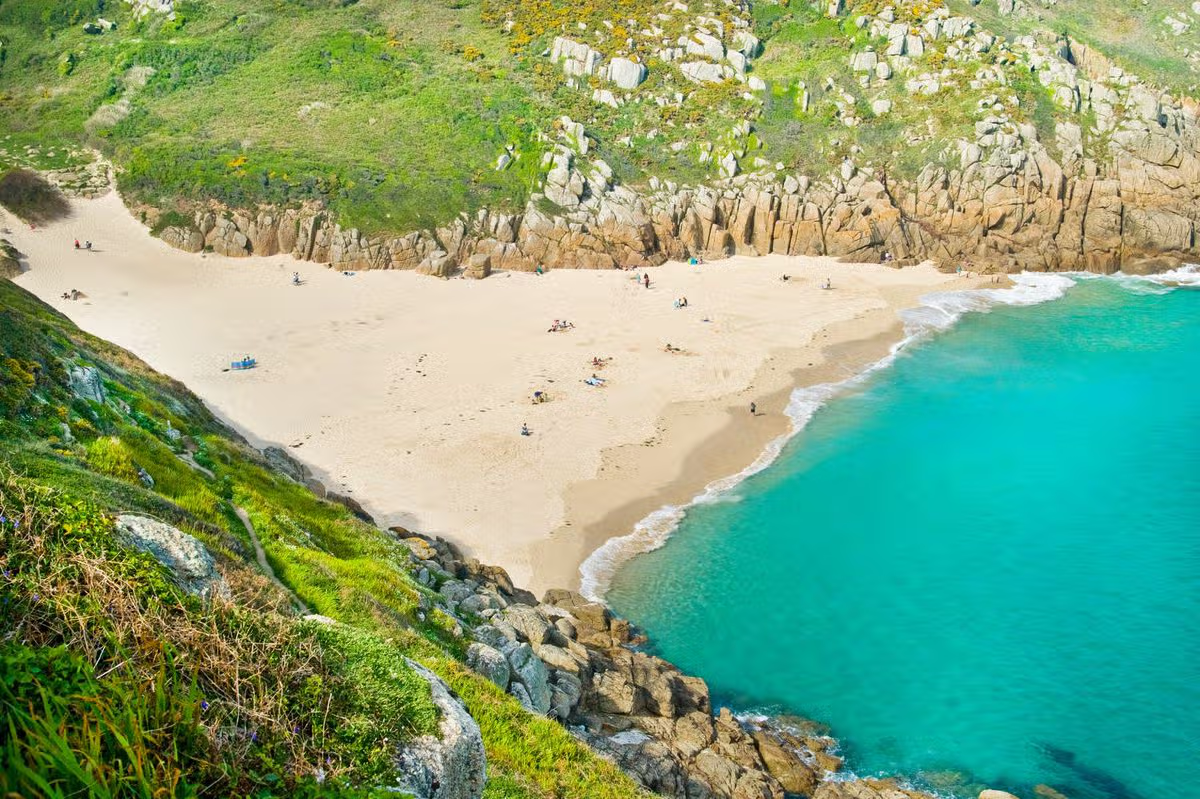
Porthcurno Beach is one of Britain’s most beautiful locations, hidden away on the Cornish coast. Located close to Land’s End, the cove is a gorgeous hidden gem for those looking to beat the crowds and have a more relaxed staycation.

And now, it has been revealed that Porthcurno Beach is one of the top 20 beaches in the world for families to enjoy themselves safely. It ranks among the likes of breathtaking Adriatic beaches and sun-kissed exotic locations, showing that Britain is indeed one of the best places for adults and kids alike.

READ MORE: Beautiful Spanish hidden gem with hardly any tourists and £13 flights from UKREAD MORE: Busy European attraction is now charging visitors to tackle tourist chaos

House of Travel put together a meta-list of the beaches that appear most regularly on the ‘world’s best beaches’ lists. Once a list was collated, the shortlist was generated, rating each beach’s cleanliness, local crime rates, lifeguard presence, and crowd levels.

Porthcurno Beach officially came in at #4 on the list, with experts praising its cosy nature, hidden away from the crowds of tourists. Whilst they did admit the beach did get rather packed in the summer, other elements raised its score to a high level.

“Turns out you don’t need to fly halfway around the world for a safe family beach experience, with Porthcurno Beach bringing Britain into the top five,” the study noted. “Tucked away in Cornwall near Land’s End, this cove is famous for its turquoise waters and white sand — colours you’d more typically associate with the Caribbean.”

Save on the best holiday cottages in Cornwall

This article contains affiliate links, we will receive a commission on any sales we generate from it. Learn more
Sykes Cottages

From £36 per night

Sykes Cottages

See the deals

Famous for its rugged coastline, golden beaches, picture-perfect villages and rich maritime heritage, Cornwall is one of the most-visited corner of the UK. Sykes Cottages has a large number of holiday homes to choose from, with prices from £36 per night.

The study found that having lifeguards present and visible throughout the summer season improved the beach’s safety year-round. This is down to “strong Atlantic currents” that can prove dangerous if people aren’t aware of them. The cleanliness of the beach also put it in good standing, as well as Cornwall’s incredibly low crime rate, making it a perfect stay for those looking for a small getaway in a gorgeous part of Britain’s unbeatable coastline.

Topping the overall global list was Saadiyat Beach in Abu Dhabi, the capital of the United Arab Emirates. Lifeguards are on duty practically all year round, with the beach never getting that busy, even at the height of the peak season.

Turkey’s Iztuzu Beach in the Dalyan area came in at number two, with a relatively busy peak season, but punters heading to the beach were seen to be very clean. Dubai’s Kite Beach rounded out the top three, although it was considerably more busy than most beaches that featured on the list and a marginally higher crime rate, and one shark attack in the region.

Other sunny holiday destinations featured throughout the list, including reliable British favourites in Spain, Portugal and Italy. However, more up-and-coming destinations, including Montenegro and Cambodia, also made appearances.

The full list of the world’s safest beaches is:

  1. Saadiyat Beach, Abu Dhabi, UAE
  2. Iztuzu Beach, Dalyan, Turkey
  3. Kite Beach, Dubai, UAE
  4. Porthcurno Beach, Porthcurno, United Kingdom
  5. Kalamies Beach, Paralimni region, Cyprus
  6. Playa de Rodas, Vigo, Spain
  7. Playa de Muro, Can Picafort, Mallorca, Spain
  8. Sveti Stefan Beach, Sveti Stefan, Montenegro
  9. Praia da Marinha, Algarve, Portugal
  10. Henderson Beach, Destin, Florida, United States
  11. La Pelosa Beach, Sardinia, Italy
  12. Elafonissi Beach, Crete, Greece
  13. Fig Tree Bay, Protaras, Cyprus
  14. Blue Lagoon, Comino, Malta
  15. Kep Beach, Cambodia
  16. Tulum Beach, Tulum, Mexico
  17. Cala Brandinchi, Olbia, Sardinia, Italy
  18. Cannon Beach, Oregon, United States
  19. La Concha Beach, San Sebastián, Spain
  20. Mandraki Beach, Hydra, Greece

Source link

Charming ancient village with rich history and legendary pub worth visiting

The picturesque village boasts 1,000 years of rich history, stunning churches and marvellous buildings, as well as a legendary haunted pub.

A picturesque Lancashire village renowned for its medieval heritage, stunning landscapes, and a celebrated pub with a spooky history is being praised as essential viewing by visitors.

Nestled between Ribble Valley and the Forest of Bowland Area of Outstanding Natural Beauty (AONB), this charming hamlet offers the perfect peaceful retreat, particularly for those passionate about history.

With origins stretching back at least 1,000 years, the serene village of Chipping features in the Domesday Book as Chippenden; the name stems from ‘Chepyn’ meaning ‘market place’.

The settlement experienced significant wealth in bygone eras, flourishing throughout the Industrial Revolution, when seven mills operated along Chipping Brook’s banks.

Best Lancashire holiday cottage deals

This article contains affiliate links, we will receive a commission on any sales we generate from it. Learn more
Sykes Cottages

From £42 a night

Sykes Cottages

See the deals

Lancashire is known for its wide open skies, stunning landscapes and lively coastal resorts. Sykes Cottages has a wide range of self catering accommodation across the county from £42 a night.

Chipping possesses a fascinating and layered past, with its period buildings ranking among the village’s premier attractions.

Wandering through this delightful village feels remarkably like travelling back in time, with the scenic hamlet radiating an unmistakably medieval yet captivating atmosphere, reports Lancs Live.

Indeed, numerous stone cottages throughout the village date back to the 1600s and 1700s, enhancing its historical appeal.

St Bartholomew’s Church

The village of Chipping houses the 13th-century St Bartholomew’s Church, an active Anglican church with Grade II Listed status, positioned at the village centre and partially restored in 1505, 1706, and throughout the 19th Century.

St Bartholomew’s Church boasts an ancient yew tree within its grounds – a magnificent landmark renowned throughout the county – thought to be more than a century old.

A sundial from 1708 can also be discovered in the churchyard on the southern side of the main structure.

Open for private prayer daily between 10am and 3.30pm, this beautiful church has occupied its present site for more than 500 years and forms an integral part of Chipping’s medieval heritage.

St Mary’s Church

After the 16th-century Protestant Reformation, publicly practising Catholicism became unlawful, yet several local landowners who stayed Catholic proceeded to create a handful of worship centres on their properties.

One was in Chipping, founded by the Welds of Leagram Hall.

In 1827, George Weld donated funds and land to build the openly Catholic St Mary’s Church in Chipping village, just before Catholic Emancipation in 1829.

He also constructed an adjoining priest’s house and a school (now serving as a parish hall) around the same period, which remain standing as the buildings we observe in the village today.

Other medieval attractions

Another medieval site in Lancashire’s Chipping is Hesketh End on Judd Holmes Lane – a Grade I Listed Building originating from 1591 and the early 17th century, which underwent restoration in 1907.

The Grade II Listed Woolfen Hall, potentially dating back to the 16th century and nestled at the base of nearby Parlick Hill, is a must-see when visiting Chipping.

The village boasts two incredibly popular pubs: The Sun Inn, a welcoming yet infamously legendary 17th-century pub, sits unassumingly on the corner of Chipping’s main street, proudly displaying its rich history of spectral tales.

Chipping’s other well-loved watering hole is The Tillotson’s Arms on Talbot Street. Constructed around 1836 and historically known as the Buck Inn, it has since been renamed to The Tilly’s.

Source link

Stunning coastal town is ‘nation’s favourite seaside holiday’ and it’s dog-friendly all year

Newquay in Cornwall offers dog-friendly beaches year-round, with the best time to visit being January to March when beach restrictions are lifted and quieter beaches mean dogs can play without the stress of busy crowds

In an emerging trend, increasing numbers of dog owners are opting for pet-friendly breaks, ensuring their cherished canine companions can share in the holiday fun.

Coastal getaways remain a favourite among British holidaymakers and their dogs, with figures from dog-friendly holiday specialists Canine Cottages showing 80% of dog owners brought their pets along on holiday in 2025.

The statistics also revealed that 62% of their 2024 bookings consisted of seaside retreats.

Whilst the sunny summer months might appear to be the perfect opportunity for a pet-friendly coastal adventure, this is also when holiday prices peak. Millions of Brits look to capitalise on the fine weather and warm temperatures during this period.

Save on the best holiday cottages in Cornwall

This article contains affiliate links, we will receive a commission on any sales we generate from it. Learn more
Sykes Cottages

From £36 per night

Sykes Cottages

See the deals

Famous for its rugged coastline, golden beaches, picture-perfect villages and rich maritime heritage, Cornwall is one of the most-visited corner of the UK. Sykes Cottages has a large number of holiday homes to choose from, with prices from £36 per night.

However, the off-peak season or “secret season” could prove the most suitable and budget-friendly time to travel with your four-legged friends, according to dog-travel specialists, as quieter destinations and relaxed restrictions for dogs are crucial elements in enhancing holidays for both pets and their humans.

Embarking on a seaside break with your dog during the off-peak months – November to April – guarantees quieter locations and lifted restrictions, particularly on beaches, which consequently provides greater freedom for dogs and their owners to fully embrace and enjoy their coastal escape.

Canine Cottages‘ Digital PR Manager Sarah Pring shares: “For pet owners, the best time to take a seaside break is actually at the start of the year, around January to March, once beach restrictions have been lifted.

“The quieter beaches mean dogs can play without the stress of a busy environment, which can be distressing for reactive and anxious pets. The benefits extend to pet owners, with seaside properties being cheaper to rent in the winter months.”

Perfect destination for your next pooch-friendly getaway

A coastal retreat in England is being championed as the ultimate dog-friendly haven, particularly during quieter seasons.

The North Cornwall seaside town of Newquay consistently ranks amongst Britain’s most beautiful locations and is often dubbed the ‘nation’s favourite seaside holiday’, reports Cornwall Live.

Newquay offers a wealth of family entertainment, with multiple beaches in this lively coastal resort accommodating four-legged guests.

The shores are noticeably more peaceful at this time of year, ideal for lengthy walks, unrestricted play, and a well-deserved break without worrying about your beloved pets disappearing into throngs of people.

Outside the peak summer season, restrictions on dogs at popular beaches like Fistral Beach and Watergate Bay – half a mile and two miles from Newquay town centre respectively – are relaxed, before returning to the usual 10am to 6pm ban typically in place from May to September when tourists flock to the area.

During these busier months, dogs must be kept on leads.

Throughout the year, dog-friendly beaches in Newquay include Crantock Beach, Little Fistral, Harbour Beach, Towan Beach, Lusty Glaze, and Whipsiderry Beach.

Pet owners can take a leisurely walk along the River Gannel while their four-legged companions paddle in the shallow waters of the tidal estuary.

The town offers plenty of scenic walks, as well as dog-welcoming pubs, bars and eateries, so your furry family members can join you for meals rather than being left at home.

Notable pet-friendly venues include the Fistral Boardmasters Beach Bar and The Fistral Stable, both conveniently located directly on Fistral Beach.

Cornwall has the longest coastline in the UK, surrounded by sea on three sides, and is rich in Arthurian legend and Celtic folklore, making it a perfect destination for history buffs and lovers of ancient mythology.

Sarah explains: “Arthurian legend is one of the fascinating parts of British folklore, and with so many of the locations in the tales being outdoors, there’s no shortage of dog-friendly walks that allow dog owners to immerse themselves in the legends.”

Source link

Lovely village with top-rated country restaurant and unique single street

The picturesque village has one single road running through it and is home to a beloved country restaurant with rave reviews — ideal to spend a day in the countryside.

A charming Lancashire village featuring just one street and boasting a highly-rated country restaurant offers the perfect destination for your next family day out or catch-up with mates.

This distinctive linear village lies next to the renowned Pendle Hill, which provides a breathtaking backdrop to this peaceful hamlet.

Tucked away in the Ribble Valley district, east of the bustling market town of Clitheroe, this compact village serves as an ideal location for a peaceful retreat surrounded by natural beauty.

Its solitary road runs through the settlement before narrowing to a single-track lane leading to neighbouring Downham.

Despite the conservation village of Worston being relatively under the radar, it provides plenty of attractions for a fulfilling day trip.

A serene haven away from urban hustle and bustle, Worston boasts a fascinating and layered past. Back in 1778, workmen broadening the village road to Chatburn discovered 1,000 Roman coins (Denarii) in this modest settlement.

There’s also a prehistoric burial site located on Worsaw Hill, reports Lancs Live.

Located a stone’s throw from the village, Worsaw Hill is a Bronze Age burial mound displaying faint earthworks at its peak, potentially revealing traces of an ancient community from bygone times.

A cavern near the hill’s base enhances its enigmatic appeal, whilst the rocky outcrops and gentler slopes of Worsaw Hill prove excellent territory for fossil enthusiasts.

This tranquil single-track hamlet boasts numerous historical connections, featuring three Grade II Listed structures: the 17th-century Crow Hill Cottage, the 19th-century Worston Old Hall, and the Wall surrounding Worston Old Hall.

Remarkably, Worston Old Hall contains pieces of the historic Sawley Abbey embedded within its construction.

Tucked away beyond the village’s solitary main thoroughfare lies the remarkably intact remnants of an old bull ring, hidden within a compact meadow.

The stone and bronze tethering ring used during the bull-baiting period remains perfectly preserved on the village green.

This bull ring is thought to have been the epicentre of village activity in bygone days.

After the bull-baiting tradition faded, legend has it that anyone seeking confrontation would approach the bronze ring and rattle it vigorously to provoke a duel on the village green.

Charming countryside restaurant worth a visit

At the centre of tranquil Worston sits a much-loved rural restaurant and pub, treasured by locals and tourists alike.

The Calf’s Head ranks as Worston’s premier venue, earning an impressive 4.1 out of 5 rating on Tripadvisor. It stands as the village’s sole dining and drinking destination.

With stunning vistas across Pendle Hill, the Calf’s Head serves authentic ales and an impressive wine collection, alongside a comprehensive menu featuring freshly prepared dishes showcasing locally sourced ingredients. Its sprawling, well-kept gardens and outdoor dining space offer guests the opportunity to savour meals in the fresh air whilst taking in breathtaking views across the Lancashire countryside.

Diners have heaped praise on the food at Calf’s Head, with one guest sharing on Tripadvisor: “We were holidaying in the area and decided to try the Calf’s Head for an evening meal.

“We were not disappointed, the food was plentiful and tasty and it was so good to see some traditional meals on the menu. I loved the homely atmosphere in the restaurant, it was a dark November evening when we visited and it felt very cosy. We will return when we’re next in the area.”

Another glowing review says: “Just had the most amazing afternoon tea in celebration of family birthdays. Soup to start, unlimited tea, varied sandwiches, delicious cakes and scones with jam and cream.

“The staff were friendly, the views were stunning and we loved every part of it. Amazing value at £22.50 per person. Thank you so much.”

Meanwhile, another satisfied visitor said: “We stayed for two nights, having both breakfast and evening meal both days. Delicious food and great service on each occasion, despite the fact they were incredibly busy on Sunday. (Judging by the food, I’m not surprised – our lamb burgers with goat’s cheese and caramelised onions were superb, as was the lasagne.)

“The setting is perfect – in a lovely walled garden by a stream, in a pretty little village. Add in a comfy bed, tea and coffee-making facilities and piping hot water; we couldn’t have asked for more. Thank you!”

Best Lancashire holiday cottage deals

This article contains affiliate links, we will receive a commission on any sales we generate from it. Learn more
Sykes Cottages

From £42 a night

Sykes Cottages

See the deals

Lancashire is known for its wide open skies, stunning landscapes and lively coastal resorts. Sykes Cottages has a wide range of self catering accommodation across the county from £42 a night.

Source link

Frozen in time village with incredible 15th-century church and packed with history

This charming Lancashire village in the Forest of Bowland with no mobile reception is the ideal weekend getaway

Nestled within the moorland wilderness of the Forest of Bowland – designated an area of outstanding natural beauty (AONB) in 1964 – lies a captivating, lesser-known village that seems virtually frozen in time.

Boasting magnificent stone buildings, this charming Lancashire village is considered the perfect retreat for anyone seeking to escape the frenetic pace of urban living and disconnect for a while.

Situated at the heart of the Trough of Bowland, this picturesque hamlet offers practically no mobile phone signal, adding to its timeless character, but makes up for its lack of connectivity with plentiful charm, offering visitors countless activities as they discover the locale.

The peaceful village of Slaidburn has plenty to offer and makes an ideal starting point for walkers and cyclists, owing to its closeness to the varied landscape and breathtaking rural views that encircle it, reports Lancs Live.

Must-see 15th-century church

Among the key attractions in Slaidburn is the village’s Grade I Listed church located at its centre.

A functioning Anglican church, St Andrew’s Church is built from sandstone and originates from the 15th century, making it a superb afternoon stop for visitors, particularly history enthusiasts.

Constructed in the Gothic architectural tradition, the church was established in 1450, though it experienced several modifications during the 18th Century. The eastern wall of the church was completely reconstructed in 1866.

This historic building, steeped in a rich past and heritage, boasts unique pews, an uncommon three-tier pulpit, and a striking chancel screen. It’s also noted for its ‘quantity of good early woodwork’.

Venturing outside, the churchyard houses a sandstone cross shaft with Grade II Listed status, likely dating back to the 16th century, adorned with carved detailing on its upper part.

The churchyard is also the final resting place of a Duke of Wellington’s Regiment soldier who lost his life during World War I.

Why this delightful village is worth a visit

Slaidburn is a perfect spot for outdoor enthusiasts and history aficionados.

A poignant war memorial takes centre stage in the village – a solitary soldier with a bowed head atop a hexagonal plinth – and visitors often remark on the touching tribute to the fallen.

Visitors to Slaidburn can unwind with a brew and a piece of freshly baked cake at the quaint Riverbank tearoom, an ideal pit-stop for cyclists and walkers needing a break.

Indeed, it’s fair to say that Slaidburn is one of those villages where the charm lies in the small details of life.

Nestled among the Forest of Bowland fells, Slaidburn is reached via a narrow, winding mountain pass.

A stroll through this charming village reveals a historic water fountain and a display of Victorian footwear, featuring clogs and ice-skating boots. Another significant structure in Slaidburn is the Ellerbeck Hall.

The Hark to Bounty Inn, a 16th-century pub and Grade II Listed building, stands at the village’s centre, featuring oak-beamed ceilings, a spacious bar area and an adjoining snug room ideal for gatherings.

The pub, a cherished cornerstone of the community, is presently shut, according to the final update from its former landlords of more than 25 years in October 2024.

Slaidburn’s charm stems from its capacity to offer both tranquil unwinding and adventure – all within its picturesque confines, establishing it as a perfect countryside retreat.

Best Lancashire holiday cottage deals

This article contains affiliate links, we will receive a commission on any sales we generate from it. Learn more
Sykes Cottages

From £42 a night

Sykes Cottages

See the deals

Lancashire is known for its wide open skies, stunning landscapes and lively coastal resorts. Sykes Cottages has a wide range of self catering accommodation across the county from £42 a night.

Source link

Picture-perfect village with babbling brook and trio of top pubs is ultimate peaceful escape

The beautiful village is perfect for a serene getaway for those looking to immerse themselves in nature and rich rural history – and it’s been named one of the county’s ‘best kept’.

A hidden gem of a Lancashire village nestled on the northern shores of the River Ribble offers the perfect tranquil escape for anyone seeking to lose themselves in nature and centuries of countryside heritage.

Located a mere two miles north-west of Clitheroe in the breathtaking Ribble Valley, this picturesque village boasts everything you could wish for – a trickling stream, sweeping views of imposing fells, heritage sites, three highly-rated traditional pubs, cobblestone lanes and winding pathways, plus a captivating riverside garden that has earned the village numerous accolades through the years.

Set within the Forest of Bowland – designated an Area of Outstanding Natural Beauty (AONB) in 1964 – strolling through this enchanting corner of the countryside whilst soaking up scenic vistas of striking fells, it’s easy to understand why this village has captured the affection of countless visitors.

The Lancashire village of Waddington derives its name from Wadda, an 8th-century Anglo-Saxon chieftain linked to the assassination of Northumbrian King Ethelred – just one glimpse into this charming settlement’s fascinating and layered past.

Having secured the prestigious ‘Best Kept Village in Lancashire’ award on multiple occasions, Waddington’s Coronation/Jubilee Gardens deserves much of the credit for this distinguished recognition, reports Lancs Live.

The public garden’s stunning sundial and vibrant floral displays are truly spectacular, and positioned alongside Waddington Brook, it serves as one of the village’s most popular attractions.

Created in 1953 to commemorate Queen Elizabeth II’s coronation, the crowning glory of this award-winning garden is the rustic bridge erected in 2002.

Contributing to the village’s appeal and distinctive character, several properties benefit from having the Waddington Brook literally on their doorstep, with the picturesque stream running directly past their front doors.

The village boasts numerous significant historical landmarks including the 15th-century Anglican St Helen’s Church, Waddington Methodist Church, a magnificent 17th-century manor house known as Waddow Hall, and Almshouses initially built during the 1700s to accommodate widows of local dalesmen and farmers.

These almshouses were demolished and rebuilt beside the village green in the late 19th-century.

However, there’s more to Waddington’s story. The village has another notable distinction – Waddington Hall is renowned for sheltering King Henry VI for 12 months whilst he evaded his Yorkist adversaries, before his betrayal and capture in 1465.

The village also became the location for a 1990 ‘TV experiment’ when the now-defunct television channel established a studio in the village hall, broadcasting ‘hyper-local’ programmes featuring local stories from the venue for an hour each evening.

Consequently, Waddington Village TV proved enormously popular at the time. The closest train station to Waddington is located in Clitheroe, whilst the nearest bus station can be found in Whalley. The village is also readily accessible by road.

Trio of top-rated pubs

Waddington is also home to three highly-rated pubs – firm favourites amongst both locals and tourists.

The picturesque village nestled at the base of Waddington Fell houses the award-winning Higher Buck, a pub which appeared on Estrella Damm’s ‘Top 50 Gastropubs in the UK’ list in 2022.

Its outdoor seating area proves irresistible to travellers, with visitors unable to pass up enjoying a pint when the weather’s fine. Combine that with the exceptional food served at the establishment and you’ve discovered an unmissable culinary paradise.

Rounding off the trio are the Lower Buck Inn and the Waddington Arms, both offering delicious meals that pair perfectly with a satisfying pint. Situated right in the village centre, these two venues also provide accommodation for visitors.

The Lower Buck dates back to 1760 and takes pride in being a ‘traditionally traditional’ establishment, whilst the Waddington Arms is somewhat more sophisticated – and functions as a four-star hotel with an impressive 4.4 out of 5 rating on Tripadvisor.

Best Lancashire holiday cottage deals

This article contains affiliate links, we will receive a commission on any sales we generate from it. Learn more
Sykes Cottages

From £42 a night

Sykes Cottages

See the deals

Lancashire is known for its wide open skies, stunning landscapes and lively coastal resorts. Sykes Cottages has a wide range of self catering accommodation across the county from £42 a night.

Source link

Charming market town home to the ‘finest house and garden’ you can visit for free

Surrounded by the picturesque countryside and boasting a lively market centre, this charming mill town offers no shortage of activities for those keen to explore its many attractions.

A charming market town in Lancashire boasts what’s been dubbed the ‘finest house and garden’ in the entire county – and the best part is, entry won’t cost you a penny.

Accrington, Lancashire’s well-kept secret, is packed with culture, stunning natural landscapes, and rich heritage, guaranteeing something special for every visitor who makes the journey. Nestled amongst rolling countryside and featuring a thriving market at its centre, this historic mill town offers no shortage of activities for those keen to explore its many attractions.

Among the standout destinations in Accrington is an art gallery housing the spectacular Tiffany Glass Collection, which art enthusiasts simply cannot miss.

The Haworth Art Gallery and Museum is an essential stop for lovers of art and history alike, and according to Visit Lancashire, it’s also where you’ll find ‘Lancashire’s finest house and garden’, reports Lancs Live.

Originally known as Hollins Hill, the Haworth Art Gallery and Museum was first constructed for siblings William and Anne Haworth, and has been carefully ‘designed in the Arts and Crafts style’.

Bequeathed by the brother and sister to serve as a museum, art gallery and public park for Accrington’s residents, this historically important building welcomes visitors throughout the year, with absolutely no admission fee.

Bursting with elaborate details and stunning features, every corner of this remarkable building has been ‘inspired by nature and made with a love of materials and craftsmanship’.

In its current incarnation, the property’s historic stables and coach house have been transformed into Artists’ Studios, providing workspace for numerous skilled artisans who create and sell their pieces on the gallery-museum’s prestigious premises.

Spanning nine acres of parkland, this historic site provides refuge in its rose garden, room to relax on sweeping lawns, or chances to wander through the woodland encircling this house-turned-gallery.

Guests can also enjoy a genuine dining experience at the venue’s licensed Gallery Kitchen, located in Haworth’s original Arts and Crafts dining room.

However, the standout attraction of the Haworth Art Gallery and Museum is arguably its stunning Tiffany Collection.

This assemblage of beautiful American glassware was presented to the town by Accrington-born Joseph Briggs, who, following an apprenticeship as an engraver, relocated to New York at just 17 years old.

Joseph worked at Tiffany for roughly 40 years, starting out as an errand boy before eventually ascending to managing director of the world-famous company.

This glassware collection, produced by the legendary designer Louis Comfort Tiffany, was dispatched by Joseph to Accrington in 1933. The iconic works remain on permanent public display throughout four themed galleries within the art venue.

One review of the art gallery and museum on Tripadvisor reads: “Beautiful art gallery with a wonderful collection of tiffany glass. The surrounding gardens are very pretty. Had a fantastic lunch in the cafe.”

Another satisfied visitor shared their experience: “Most interesting place which still has the feel of a large family home in the Arts and Crafts style with superb Tiffany exhibits and other items of interest. Excellent tea room and gift shop with pleasant gardens . We will definitely come again.”

Key information for visitors

Entry to the Haworth Art Gallery and Museum in Accrington, including parking at the gallery, is absolutely free. For 2026, the attraction welcomes visitors from January 1 to December 20, Wednesday through Sunday from 12pm to 4.30pm.

The Gallery Kitchen operates on the same days and dates, but timings differ slightly, with service starting from 11.30pm to 4.30pm. Last admission to the house is at 4pm and the building is closed over Christmas and New Year.

Must-see attractions in Accrington

For those keen to delve deeper into Accrington, Oswaldtwistle Mills is another must-see attraction in the town. This historic cotton mill played a crucial role during the Industrial Revolution and is the birthplace of the spinning Jenny.

Accrington also offers an array of splendid green spaces, including Oak Hill Park and Memorial Park situated in Great Harwood.

Those passionate about history and architecture shouldn’t miss the Victorian Market Hall during their stay – a landmark that opened for business in 1869 and continues to serve as the community’s beating heart – along with the Town Hall, a favourite venue for weddings and celebrations.

This delightful market town is also renowned for its yearly celebrations including the Soapbox Challenge and The Accrington Food Festival, offering visitors a delicious insight into the area’s culture and culinary scene.

Whether you’re a history enthusiast, art aficionado, or someone simply wanting to enjoy the natural surroundings and local character, Accrington provides plenty to suit every preference, allowing guests to discover the town’s enchantment for themselves.

Best Lancashire holiday cottage deals

This article contains affiliate links, we will receive a commission on any sales we generate from it. Learn more
Sykes Cottages

From £42 a night

Sykes Cottages

See the deals

Lancashire is known for its wide open skies, stunning landscapes and lively coastal resorts. Sykes Cottages has a wide range of self catering accommodation across the county from £42 a night.

Source link

‘Most beautiful village’ with chocolate box houses is peaceful paradise

Frequently crowned the county’s ‘most beautiful village’ with its stunning natural landscapes, historic 17th-century stone cottages and charming rural atmosphere – it’s the perfect tranquil paradise.

Tucked away between the Forest of Bowland Area of Outstanding Natural Beauty (AONB) and Ribble Valley, brimming with fascinating history and stunning scenery, lies a village that appears ‘frozen in time’, often celebrated as Lancashire’s ‘most gorgeous village’.

The Lancashire community of Chipping ranks amongst those quintessential ‘picture postcard’ places you’d typically spot on television and instantly dream of calling home.

Boasting sweeping woodland vistas and immaculately maintained cottages, this settlement captures the true spirit of English countryside allure.

The area is equally famous for its deep historical foundations and cultural legacy, housing ancient stone dwellings, a historic inn with supernatural stories, and a flourishing community.

Chipping village’s past stretches back over a thousand years, and strolling through this charming hamlet feels like journeying through history, with the community exuding a distinctly medieval yet delightful ambiance, reports Lancs Live.

Indeed, many village stone cottages were built during the 1600s and 1700s.

A perfectly rural retreat, Chipping offers a wealth of attractions featuring cheese producers, a farm store, a furniture workshop, café, and arts centre, plus countless public walkways, bike paths and hiking trails.

This enchanting settlement showcases some of Lancashire’s most spectacular countryside directly at its entrance, providing endless attractions and pursuits in the neighbouring region.

Among Chipping’s most renowned attractions is Brabin’s Shop and Café, Britain’s longest continuously operating trading establishment; as of 2026, it functions as both a corner shop and eatery.

This modest enterprise has maintained its commercial role since initially welcoming customers in the 17th century, never fulfilling any alternative purpose.

The Sun Inn pub, an inviting yet notoriously legendary establishment, nestles discreetly on the corner of Chipping’s main thoroughfare, showcasing with pride its extensive paranormal heritage.

Upon reaching the village, visitors are greeted by evidence of Chipping’s RHS Gold Award for Britain in Bloom, with stunning floral displays scattered throughout the locale.

Venturing further into this magical settlement, a slender pathway, seemingly constructed for horse-drawn transport of bygone eras, draws travellers, flanked by delightful dwellings from the 17th and 18th centuries.

Investigating more thoroughly into the community, Chipping’s mesmerising heritage becomes immediately apparent to guests.

The village showcases the 13th Century St Bartholomew’s Church, an active Anglican place of worship holding Grade II Listed status, which has experienced partial restoration in 1505, 1706, and during the 19th Century.

However, whilst the settlement boasts an extensive and captivating history, it’s genuinely the residents who make this charming village truly extraordinary. Evidently taking enormous pride in their locality, numerous properties showcase spectacular floral displays, breathtaking facades, and remarkable stone-constructed dwellings with charming architectural features.

How to reach there

By car: Chipping sits roughly 10 miles from junction 31A on the M6.

By public transport: The closest railway and coach stations are situated in Preston.

Best Lancashire holiday cottage deals

This article contains affiliate links, we will receive a commission on any sales we generate from it. Learn more
Sykes Cottages

From £42 a night

Sykes Cottages

See the deals

Lancashire is known for its wide open skies, stunning landscapes and lively coastal resorts. Sykes Cottages has a wide range of self catering accommodation across the county from £42 a night.

Source link

‘Picture perfect’ village with cosy bakery serving ‘best afternoon teas’ and rich history

This charming village has been dubbed a ‘hidden gem’ by travellers and it’s packed with historic sites and highly-rated cosy food spots serving some of the best treats.

Positioned along the St Oswald’s Way walking route, between Rothbury and Warkworth, lies a delightful hidden gem village that ranks among Northumberland’s best-kept secrets.

Tucked away beside the River Coquet, this small village gained fame for accommodating Oliver Cromwell during his journey to the Battle of Dunbar. It sits 8.9 miles from Alnwick and 12 miles from Morpeth, just 37 miles south of the Scottish border.

Felton village offers an ideal blend of historic and modern elements, particularly around its centre. Two distinct bridges, positioned close together, link Felton with the opposite bank of the River Coquet.

The historic stone crossing originates from the 15th century and remains closed to vehicles, whilst the more recent concrete structure was constructed in 1926 – both hold Grade II Listed status and draw considerable interest from residents and visitors.

The older crossing – recognised for its historical and architectural significance – regularly hosts key village gatherings, including the beloved wassailing tradition at Christmas, reports Chronicle Live.

Additional historical treasures in this picturesque settlement include the Grade I listed St Michael and All Angels church, constructed around 1200, which appears almost enclosed within another structure due to numerous extensions and modifications over the centuries.

Rambling and angling represent two favourite pastimes for both locals and tourists in Felton, with the River Coquet readily reachable via the village centre. Beyond that, Felton boasts two highly-regarded food and drink destinations.

First up is The Northumberland Arms – a beautifully restored 1820s coaching inn originally built by the 3rd Duke of Northumberland.

This delightful historic treasure sits opposite the river near Felton and boasts a River Room Conservatory alongside a bar, restaurant and six ensuite luxury bedrooms.

One delighted guest wrote on Tripadvisor: “The hotel is a lovely historic building in a great setting, easy access to river walks.

“The rooms were attractive , clean and spacious, I thought fabulous, not what I expected when I walked through the door of an old village pub.”

For visitors seeking a brief refreshment stop in Felton, there’s an ideal option available. An artisan bakery named The Running Fox, cherished by locals, has been delighting guests for years.

Since welcoming its first customers in 2011, The Running Fox has become renowned for its afternoon teas and baked goods.

Set in stunning rural surroundings, The Running Fox nestles beside the River Coquet and is encircled by numerous scenic country walks.

One satisfied customer left a glowing review on Tripadvisor for the bakery, writing: “One of the best afternoon teas. Afternoon tea, freshly made sandwiches which were delicious various fillings to choose from with home made bread, such a change from the usual pre made cardboard efforts you get in other places, choice of a wedge of pie or quiche, scones fabulously light, and a slice of cake also homemade from huge selection. Breakfast and lunch menu also looked very appealing. Service excellent, staff very friendly and helpful.”

Another visitor shared their praise, commenting: “I think that the Afternoon Tea offered at the Running Fox is outstanding – great value for money and the food; the variety and the quality are always excellent! We will be back (again!)”

Best Northumberland holiday cottage deals

This article contains affiliate links, we will receive a commission on any sales we generate from it. Learn more
Sykes Cottages

From £38 per night

Sykes Cottages

See the deals

Northumberland is famed for its rugged coastline, ancient castles and unspoiled natural beauty. Sykes Cottages has a range of places to stay starting from £38 per night

Source link

Idyllic walking trail with ‘magical views’ inspired famous author and blockbuster film trilogy

The stunning circular walking trail, perfect for a relaxed day out, is believed to have inspired one of the most famous authors of our time — and it’s right here in the UK.

A breathtaking walking route in Lancashire boasts an incredibly famous link to a bestselling author and has formed the inspiration behind a mammoth blockbuster film trilogy.

It’s well known that JRR Tolkien drew inspiration from Lancashire’s spectacular countryside whilst penning The Lord of the Rings, which was clearly reflected in his portrayal of Middle Earth. For decades, countless visitors have travelled from across the globe to trace the footsteps of the legendary fantasy writer.

During World War Two, Tolkien and his spouse frequently stayed at a guesthouse within Stonyhurst College’s grounds, where their son had allegedly been evacuated. This timeframe coincided with his writing of The Lord of the Rings, reports Lancs Live.

He’s believed to have sought refuge in Hurst Green village in the Ribble Valley, whose verdant and enchanting environment directly shaped The Lord of the Rings as well as his children’s fantasy tale The Hobbit.

Indeed, devotees of The Hobbit will recognise that Hobbiton and the Shire drew their inspiration from Hurst Green’s magnificent rural splendour and neighbouring regions.

The terrain surrounding Stonyhurst College also appears within Tolkien’s bestselling novels, and there’s even a complete 5.5 mile circular route called the Tolkien Trail which guides walkers through numerous locations they’d encounter referenced – or directly inspired by – in Tolkien’s masterpieces.

Renowned for his passion for woodland scenery and the natural world, several names and locations in Tolkien’s Lord of the Rings bear striking resemblance to those found in reality around Hurst Green, including Shire Lane and the River Shirebourn, which shared its name with the very family who owned the Stonyhurst estate.

Tolkien is famously reported to have devoted considerable time ‘in a classroom on the upper gallery of Stonyhurst College’ crafting Lord of the Rings.

The Tolkien Trail itself is packed with historic sites, each more captivating than the previous. Beginning and concluding near the Shireburn Arms – a celebrated gastro pub in Hurst Green – the approximately five-and-a-half-mile Tolkien Trail guides walkers through breathtaking vistas.

The Shireburn Arms itself is a 17th-century establishment which has preserved many of its period features. Celebrated for its cuisine, this independent pub features a welcoming fireplace in the public room – particularly popular with visitors during the colder months.

The Tolkien Trail guides walkers past Stonyhurst College and the historic yet famous Cromwell’s Bridge, named after Oliver Cromwell.

Initially built in 1562, Cromwell is believed to have led his forces across the ancient bridge whilst travelling from Walton-le-Dale to participate in the 1648 Battle of Preston.

The Tolkien Trail also leads visitors past Hacking Hall – a 17th-century, Grade I listed Jacobean residence located near where the River Calder meets the River Ribble. Despite being privately-owned, it remains a beloved landmark amongst walkers, particularly those who have embarked upon the Tolkien Trail.

Tolkien’s Trail also guides adventurers through verdant fields and agricultural pathways, offering hikers classic Ribble Valley countryside panoramas.

Additional remarkable features along the route include a 19th-century observatory, the 18th century Hodder Place – a former educational establishment that initially functioned as a mill owner’s home – alongside a partially-medieval barn.

Peaceful waterside sections and endless vistas of the Bowland Area of Outstanding Natural Beauty (AONB) render the Tolkien Trail an ideal ramble for those seeking to undertake a relaxed stroll.

Between two and a half to three hours represents an appropriate timeframe to dedicate to this historical walking route.

Delighted visitors have flocked to Tripadvisor to praise the trail, with one writing: “The Tolkien Trail is a scenic 5.5-mile walk through the beautiful Ribble Valley, offering lush woodlands, riverside paths, and peaceful countryside.

“Inspired by J.R.R. Tolkien’s time at nearby Stonyhurst College, the trail is easy to follow and perfect for a relaxed day out. The mix of history and nature makes it a must for Tolkien fans and casual walkers alike. A great spot for a picnic with magical views!”.

Meanwhile another hiker said: ” Loved the walk. Great views and stunning scenery. Can understand this would inspire the imagination. Easy recommend.”

One visitor said: “The views and the surrounding area are exactly what you want on a walk, fresh air and green spaces with rolling hills and the rivers to marvel at too.”

How to get there

The village of Hurst Green is located approximately 5 miles west of Clitheroe and nine and a half miles northeast of Preston. Limited car parking is available in the village.

Regular bus services also operate between Clitheroe, Preston, and Whalley, stopping at Hurst Green.

Best Lancashire holiday cottage deals

This article contains affiliate links, we will receive a commission on any sales we generate from it. Learn more
Sykes Cottages

From £42 a night

Sykes Cottages

See the deals

Lancashire is known for its wide open skies, stunning landscapes and lively coastal resorts. Sykes Cottages has a wide range of self catering accommodation across the county from £42 a night.

Source link

Hidden gem beach with unspoilt golden sand and ‘unreal’ views feels like abroad

This unspoilt beach is dog-friendly all year round and offers pristine golden sands, dramatic Jurassic cliffs and ‘unreal’ walks – visitors say the ‘gorgeous’ water feels worlds away

A hidden beach boasting vast stretches of pristine golden sand, encircled by striking cliffs and crystal-clear blue waters, is being praised as essential viewing by tourists.

This secluded beach in North Yorkshire, situated between Filey and Scarborough, offers unspoilt vistas and picture-perfect scenes that seem almost too beautiful to be real – yet it’s right here in Yorkshire.

Found just off the A165, approximately three miles from Scarborough, this remote retreat is truly idyllic, particularly for dog owners, as it’s exempt from the seasonal dog ban enforced by North Yorkshire County Council which affects other well-known beaches in the area.

The seaside panoramas at this beach are utterly breathtaking, showcasing a fusion of Yorkshire’s wind-swept rolling countryside and sweeping expanses of golden sandy shoreline.

It comes as no surprise that Cayton Bay Beach was recognised as one of Britain’s finest beaches in 2024.

A significant attraction for visitors, this coastal gem is delightful to explore whatever time of year you decide to go. It’s a spot of untouched natural magnificence and provides an ideal base for discovering the Yorkshire Coast, reports Yorkshire Live.

Cayton Bay Beach tends to remain relatively tranquil throughout the year and avoids the noise of crowded hordes.

With its serene ambience and abundant golden sands, tourists have described feeling as though they’ve been transported far from the rugged North Sea, with many even suggesting it resembles a holiday beach overseas.

A favourite destination for surfers, birdwatchers, adventure enthusiasts and fossil hunters, or simply those looking to unwind and recharge, Cayton Bay Beach offers the ideal retreat to enjoy peace and breathtaking views, with its dramatic limestone cliffs dating back to the Jurassic period over 150 million years ago.

Equally cherished by surfers and windsurfers alike, this bay confronts the full force of the North Sea. The beach is home to one of Britain’s oldest surf schools, with The Scarborough Surf School conducting surf lessons at Cayton since 1989.

Cayton Bay Beach boasts crystal-clear waters perfect for paddling and is also regarded as a popular location for learning to surf and kayak. It’s worth noting that the current at this beach can be rather powerful, so swimmers are cautioned against venturing too far from shore.

Today, the northern stretch of the coastline still reveals several World War II pillboxes discovered by beachgoers, with that section of the bay known as Johnny Finton’s Harbour.

It’s not difficult to understand why many have dubbed Cayton Bay Beach North Yorkshire’s hidden treasure, nestled amongst undulating hills. Visitors can wander for hours across the sand whilst savouring peaceful coastal walks, taking in Cayton Bay’s magnificent beauty.

Rocky formations at one end offer possibilities for climbers, whilst vast stretches of sand and sea extend along the shoreline. It truly is regarded as an idyllic beach – and when the weather’s on your side, you could easily imagine you’ve been transported to some far-flung paradise abroad rather than Cayton Bay Beach.

Holidaymakers can’t help but rave about this ‘hidden gem’, with one sharing on Tripadvisor: “What a stunning place the walk to it was unreal. It looked like a holiday beach water was gorgeous just stunning all round we had a lush day here definitely going back”.

Another beach fan said: “A beautiful stretch of England’s East Coast, a bay that allows a peaceful retreat in outstanding natural beauty. Nice sandy beach with grassy hills to sit. A great cafe (Salty Dog) with nice staff offering a wide range of treats at expensive prices.”

A satisfied visitor wrote: “A stunning beautiful beach, great for a walk when the tide is out. The children love running on the beach. It is a steep walk back up but well worth it.”

Meanwhile, one guest added: “Stunning scenery. Gorgeous beach. Lots of surfing going on. Great for walking the dog when the tide is out. You need to be reasonably fit to get back up the hill.”

It’s worth bearing in mind that both the descent to the shore and the ascent back are quite challenging, and those with restricted mobility, along with wheelchair and pushchair users, may struggle considerably with the route.

Additionally, there are numerous steps near the final stretch of the walk leading to the beach, which takes you through a picturesque woodland setting.

Save on the best holiday cottages in Yorkshire

This article contains affiliate links, we will receive a commission on any sales we generate from it. Learn more
Sykes cottages

From £31 per night

Sykes Cottages

See the deals

Famous for its dramatic landscapes, historic cities, hearty food, and rich cultural heritage Yorkshire is just waiting to be explored. Sykes Cottages has a large number of properties to choose from with prices from £31 per night.

Source link