Davis

We don’t need AI to threaten humanity. We got Trump’s climate policies

You need a boost, right?

We’re living under a dark cloud, with a steady downpour of graft, thuggery and baloney.

There’s the raffling of presidential pardons and the attacks on reporters for doing their jobs, the clownish trade war with Canada, the bungled disaster in Iran, the petty obsessions with the ballroom and the Kennedy Center, the hogwash about a stolen election, the attacks on immigrants and the shameless presidential profiteering while working people suffer the cost of Trump’s countless broken promises.

I could go on, and I will. But rest assured, I have not forgotten about the boost I promised.

For all the affronts, nothing strikes me as more sinister than the Trump administration’s ambitious assault on the planet. Despite nearly daily headlines about the global calamity of overheated oceans, melting glaciers, stark weather transformations and species extinction, Trump keeps shoveling more coal onto a fire that will rage long after he’s dead and gone.

He’s gutted environmental protections and scientific research and dismantled clean energy initiatives. Now his administration is rolling back limits on power plant emissions, attempting to open the California coast to more oil drilling and sabotaging the state’s ambitious goals on emission controls and electric vehicle conversion.

We don’t need AI to threaten the future of humanity. We’ve got Trump.

It’s tempting to duck under the covers and wait for the nightmare to end, but the good news is that a lot of people are standing up rather than rolling over, rebelling against the ignorance and callous disregard that threatens our most precious and fragile shared inheritance.

In August, hundreds showed up to defend California’s authority to govern its own coast at a Santa Monica hearing of the National Oceanic and Atmospheric Agency, and 18,000 more people filed comments online.

The rollback of environmental safeguards is, for many, a call to arms.

“Yes, I am discouraged. … But I am not despairing,” said Bill McKibben, an author and environmental activist who is organizing a worldwide event called Sun Day for next year to promote clean energy. “We’re reacting to multiple crises, and we’re led by a pack of fools, so why would anybody not stand up?”

McKibben launched a national movement five years ago called Third Act, and tens of thousands of people 60 and older have signed on to advocate for climate action, voting rights and civic participation. Third Act now operates in about 30 states, with a robust chapter in Southern California.

Former Times reporter Zan Dubin has worked as both a volunteer and a paid communications consultant for Third Act, and I asked her what someone could expect to do if they became a member of Third Act/SoCal.

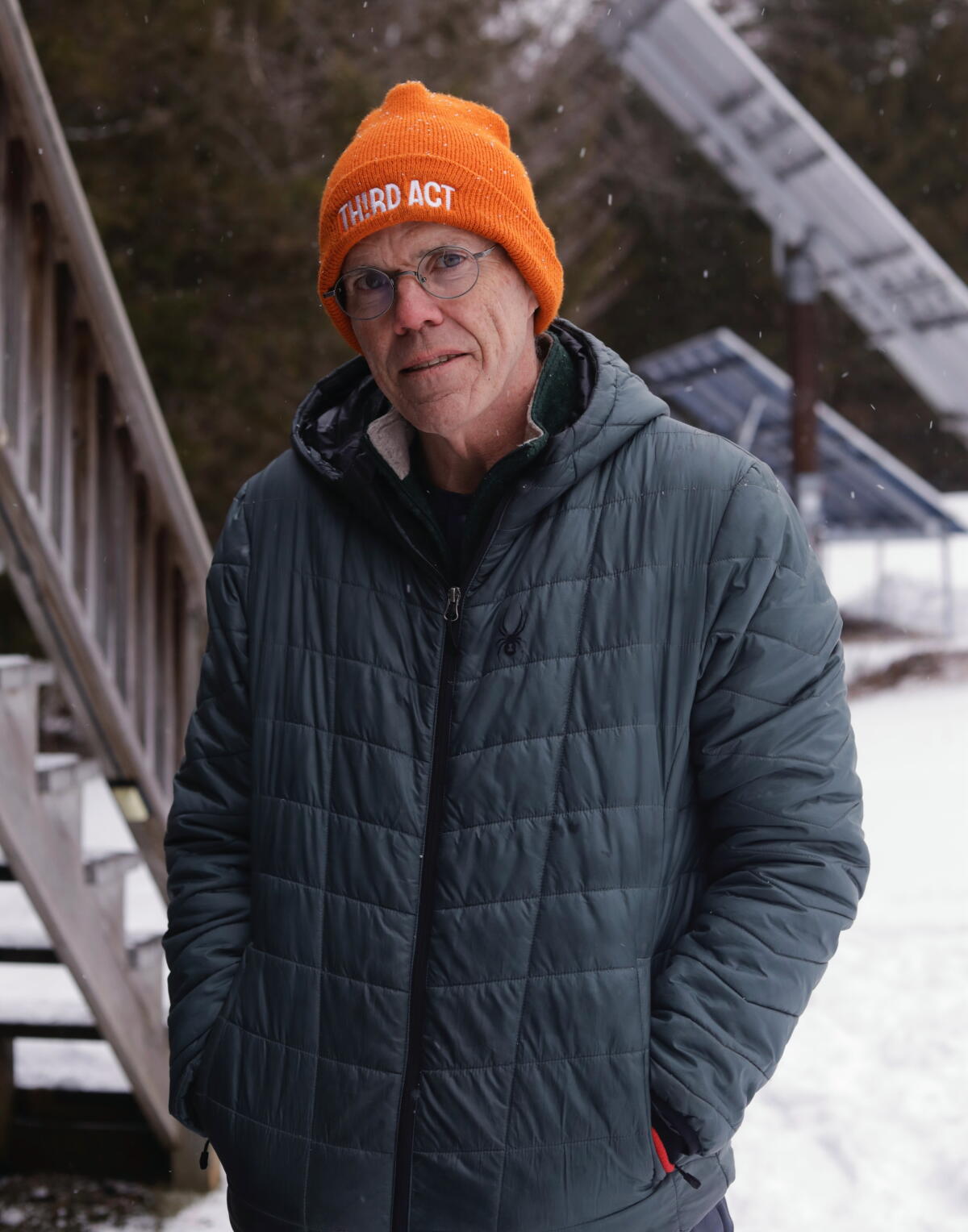
Environmentalist and author Bill McKibben is organizing a worldwide event called Sun Day next year to promote clean energy.

Environmentalist and author Bill McKibben is organizing a worldwide event called Sun Day next year to promote clean energy.

(Amanda Swinhart / Associated Press)

“We do it all,” Dubin said, from promoting climate-friendly candidates to running phone banks and testifying at public meetings. She said Third Act co-sponsors protests at Dodger Stadium, and she and others planned to meet at Vin Scully Avenue and Stadium Way for Sunday’s game against the San Francisco Giants. They want the Dodgers to stop doing business with Big Oil and bench their sponsorship deal with Phillips 66.

She also called out Disneyland for its exhaust-spewing Autopia attraction, along with former Times climate columnist Sammy Roth, and Disneyland responded by announcing in 2024 that it was switching to electric cars beginning in 2027.

Dubin, co-founder of National Drive Electric Week, said 170 volunteer-led events were being held nationwide over the next month to promote EVs, and she was leading one Friday in Irvine.

“Action is absolutely the antidote to despair,” Dubin said. “I find that despite the onslaught of these horrifying headlines … taking action invigorates me.”

Claremont resident Margaret Davis knows that feeling. She emailed me in 2023, prior to participating in a Third Act event, and said many retirees have time on their hands, which puts them in a powerful position.

“The climate crisis is the greatest existential threat humans have ever faced, hence we live in a time when we can make the greatest change for the better,” Davis wrote at the time.

When I called her a few days ago, Davis told me she’s now a member of Senior Stewards Acting for the Environment. She lives at Pilgrim Place — a senior community with a focus on justice, peace and environment — where residents meet regularly to study, discuss and advocate for sustainability, biodiversity and environmental causes.

“When I was in college in 1970, we had the antiwar movement and that was the first year of Earth Day,” Davis said. “At the time, I thought Earth Day was just a distraction from what was going on in the world.”

Later, she said, “I came to realize it was the biggest issue of all time.”

Climate activist Sim Bilal stands next to pumps at an oil field in Los Angeles in 2024.

Climate activist Sim Bilal stands next to pumps at an oil field in Los Angeles in 2024.

(Allen J. Schaben/Los Angeles Times)

Like Davis, I went to college in the ‘70s, and there’s no denying that our aggressively consumptive generation played a key role in manufacturing a crisis for our children and grandchildren. We’ve got matches in our hands and smoke on the horizon, and if we’re honest with ourselves, we’d see atonement not as a hobby, but as a duty.

As for the next generation, climate activist Sim Bilal, 24, said he too shares the sense that this is both a wickedly frightening time and a moment of opportunity.

“In the last month, we’ve gotten more young people involved,” said Bilal, executive director of Youth Climate Stewards 4 Local Action. “We usually have to reach out to them, but so many people have been wanting to get involved, and they’re so eager, and that’s been affirming for me. The policies are depressing, but the fact that people are reenergized and want to fight back is really exciting.”

Bilal said faith in politics, government and corporations is not high among his peers, but he’s trying to grow a network of young people to cultivate and support future leaders.

“A mentor told me there are two kinds of power — organized people, and organized money,” said Bilal, whose activism began when his grandmother died and he began wondering if her cancer, and global warming, were connected to the oil drilling in his South L.A. neighborhood. “We don’t have the money, but a lot of the work we do is political and civic education, demystifying power, and making people understand they have agency.”

You needed a boost, right?

There you go.

Whatever your age, do not despair.

Get off the chair.

steve.lopez@latimes.com
Source link

The Office’s Lucy Davis tackles zip-wire challenge after saying ‘she don’t know how long she has left’ amid cancer fight

THE Office star Lucy Davis has tackled a terrifying zip-wire challenge amid her terminal cancer fight.

The 53-year-old announced last month that she’s been diagnosed with incurable stage four breast cancer.

The Office star Lucy Davis has bravely taken on a gruelling hike and terrifying zip wire Credit: reallucydavis/ Instagram
She took to Instagram to share her zip line challenge Credit: reallucydavis/ Instagram

She admitted “I don’t know how long I have left” as she revealed the tragic news with her followers in a video on social media.

However, Lucy said she was determined to have as much fun as she can during the time she has left and she’s doing exactly that.

The daredevil shared her pride on Wednesday after completing a gruelling hike followed by a scary zip line through a California canyon.

She took to Instagram to share pictures of herself on the hike as well as video of the moment she bravely took on the zip line.

STRONG SPEECH

Lucy Davis shares emotional message after revealing terminal cancer diagnosis


FAN FAVE

The Office’s Lucy Davis greets fans days after revealing she has incurable cancer

Lucy took the zip line in her stride Credit: reallucydavis/ Instagram
She hiked across the California canyon Credit: reallucydavis/ Instagram

Lucy penned: “I loved this #zipline and I was a bit proud of myself for doing it because they said to be prepared for a 25 minute walk, so I took my pain meds an hour before in preparation.

“In previous zip lines, I’ve always been driven up to the first line, and the walking is in between the lines.

“But no. This was a legit hike up to the first zip. It took me one hour and 15 minutes.

“I was so grateful for the support of the guides and my friend @jharris1231 who helped me up, and the other people on the hike that never judged me or made me feel stupid. Thank you.”

Her fans flocked to the comments section as one expressed: “Still living to the fullest and experiencing life. Good on you!”

Another person commented: “Oh wow, you’re fabulous Lucy. Still chokes me up though.”

Somebody else gushed: “You are such an inspiration. Also, whenever I see you I remember Aunt Hilda, she was so comforting as a character.

“You really played her so well, you’re truly amazing. So talented and inspiring.”

She revealed last month that she’s got incurable cancer Credit: instagram/reallucydavis
She’s best known for her role in The Office Credit: BBC

Yet another added: “My gosh Lucy, so much courage! You are such an inspiration.”

Lucy took to Instagram last month to share her heartbreaking news.

She wrote: “Hi friends:) I wanted to share something with you all that I’ve kept to myself for a while but for various reasons would like to share now.

“A year and a half ago I was diagnosed with Stage 4 Breast Cancer, which has metastasized to my bones. Specifically to my spine, right hip, and my ribs. The cancer is incurable, and too late for chemo.

“The initial lump that I felt, wasn’t a ‘lump’ as such; rather a kind of hard spot. Really tiny.

“I almost didn’t bother getting it checked. So I guess I’m saying don’t ignore anything – get everything checked out.”

Lucy told her fans that she’s at peace with “whatever comes next,” as she shared the clip of her ringing the cancer treatment bell.

While she rang the bell, Lucy confessed she has been told by doctors it’s “too late” for her to receive Chemotherapy.

Lucy is best known for playing Dawn Tinsley in Ricky Gervais’ comedy The Office.

Dawn was a receptionist at Wernham Hogg’s Slough branch in the original UK version of The Office.

Her character battled an unfulfilling engagement, failed dreams of becoming an artist and a will-they-won’t they relationship with her colleague Tim.

Source link

Longtime film academy chief executive Bruce Davis dies at 83

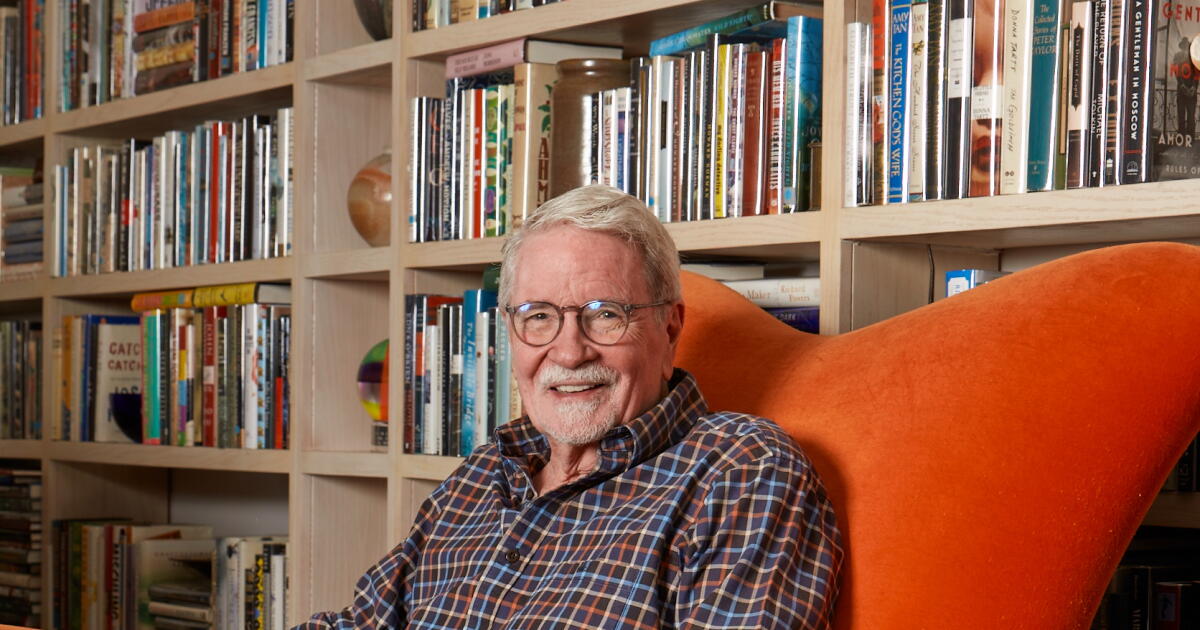
Bruce Davis spent more than two decades as the motion picture academy’s chief executive. Even when he retired in 2011, it was not because he didn’t still love the work. In fact, he kept at it in retirement, retaining an office at the Pickford Center for Motion Picture Study where he focused on writing a definitive history of the early days of the Oscars.

“I don’t think I’ve been bored for a minute in 30 years here,” Davis told the Associated Press upon leaving the academy. “I feel like such a rube sometimes. To this day, when I get out of the car on Oscar night and step up there onto that carpet, you get that rush of energy. The lights are popping — not that anybody’s aiming at me — but still I think it’s one of the great rushes, emotionally speaking, that a person can have.”

Following a battle with leukemia, Davis died Saturday. He was 83.

Davis’ career at the academy was, according to wife Joann, partly a matter of being in the right place at the right time.

“Not that he wasn’t really good at what he did,” she says by phone. “But he was also a lucky man.”

Davis was working as chair of the theater department at Juniata College in Pennsylvania when he and Joann loaded all of their belongings atop their Mazda GLC and headed to Los Angles in pursuit of Hollywood dreams. Davis had been working on a few screenplays while teaching, and his agent told him needed to move closer to the action to network and take meetings.

“Neither of us had jobs when we left Pennsylvania,” Joann says. “We just bit the bullet and drove out. It was a leap of faith.”

Shortly after arriving, Davis met someone at a party whose wife worked at the motion picture academy. That soon led to Davis taking a job arranging lectures and seminars and, later, overseeing the organization’s public programming.

Davis became the academy’s seventh executive director in 1989, leading it through a sizable expansion of staff, relocating the academy’s Margaret Herrick Library to the Beverly Hills Waterworks building in 1991 and setting up its film archive at the Pickford Center for Motion Picture Study in 2002.

“Bruce would drive back and forth to work and see that Waterworks building at the time that they were looking for places for the library to expand,” Joann says. “And one day, it just occurred to him that maybe that would be a building, and so initiated conversation with Beverly Hills. It was kismet.”

Davis had hoped to build an academy museum next to the Pickford, convincing the group’s board of governors to purchase a nearby 3.5-acre site in 2006 for a reported $50 million, but the 2008 recession derailed those plans. His successor, Dawn Hudson, led the push to partner with the Los Angeles County Museum of Art, eventually building the museum at the former May Co. building at Wilshire and Fairfax. It opened in 2021.

Davis was also instrumental in doubling the Oscars’ best picture category from five nominees to 10 in 2009, establishing the preferential ballot system that determines the academy’s top prize.

“That way, best picture reflects the choice of the greatest number of people,” Davis told The Times.

Davis’ Oscar book, “The Academy and the Award,” was first published in 2022, long after he originally anticipated it would hit stores.

“He thought a couple months of research, a couple more months to write it, and voila, in two years, he’d have it done,” Joann says. “But he kept finding new things he wanted to explore.”

Shortly before it published, Davis told The Times that he hoped the book would dispel myths surrounding the Oscars, including Susan Orlean’s assertion in her Rin Tin Tin biography that the dog received more votes than any male actor at the first Academy Awards and that Bette Davis gave the golden statue its nickname because its backside mirrored that of her then-husband Harmon Oscar Nelson.

“There’s a lot of nonsense out there,” Davis said, “and the real story is almost always more interesting.”

“He was deeply committed to preserving the academy’s history, establishing dedicated homes for our library and film archive, and relaunching the concept of creating a museum,” current academy CEO Bill Kramer and President Lynette Howell Taylor said in a statement. “He had a profound love for the academy.”

Davis loved to read and collect books, devouring anything from John Updike and Margaret Atwood, among other authors, a passion that necessitated having bookshelves in every room of his home. Language itself was an obsession, with many family dinners ending with Davis pulling out his unabridged Oxford English Dictionary to share the derivation of a word.

“He was a really fascinating guy,” Joann says.

Perhaps the only thing Davis didn’t like about the Oscars was the ceremony’s annual in memoriam segment, which pays tribute to those who died in the previous year.

“It is the single most troubling element of the Oscar show every year,” Davis told the Associated Press, “because more people die each year than can possibly be included in that segment.”

Next year’s ceremony now has one certain addition.

In addition to Joann, Davis is survived by four daughters: Brangien Davis, Alexandra Davis, Archer Davis and Roxanne Davis.

Source link

How the killing of Biggie Smalls brought a big break in the Tupac murder mystery

They were two killings that rocked the rap world.

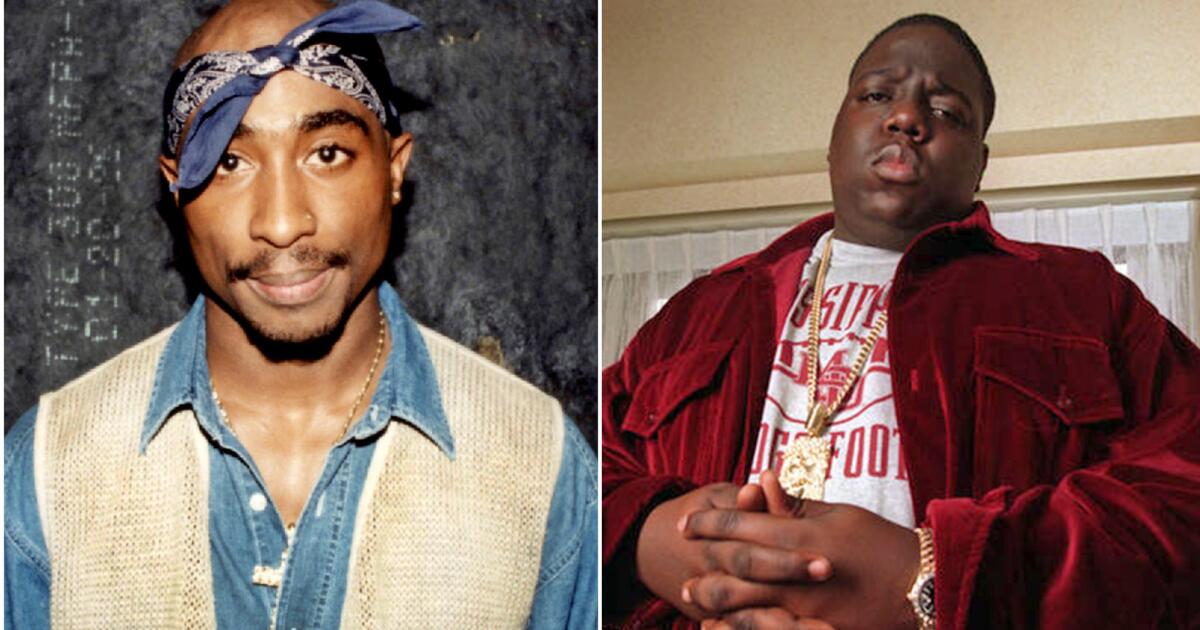
In 1996, Tupac Shakur was gunned down off the Las Vegas Strip. Then, less than a year later, Christopher Wallace, aka Biggie Smalls or the Notorious B.I.G., was killed in a drive-by shooting in front of the Petersen Automotive Museum on Wilshire Boulevard.

The two killings have long been tied together in popular culture.

Now, a detective says the investigation into Wallace’s death helped lead police to the suspect on trial in Las Vegas in Shakur’s slaying.

Duane “Keffe D” Davis, a onetime Compton gang member, is accused of orchestrating the Sept. 7, 1996, killing of Shakur. Prosecutors say the killing was rooted in a war between Southside Crips-Burris Street, led by Davis, and Mob Piru, a gang long associated with Death Row Records. Shakur was closely affiliated with the record company.

Authorities say Davis was in the car with his nephew, who grabbed the murder weapon and fired the fatal bullet.

On Wednesday, former LAPD Homicide Det. Daryn Dupree said Davis set out his role in Shakur’s killing in detail in 2008 to a joint LAPD federal task force that was formed to investigate Wallace’s murder.

To force Davis’ cooperation, Dupree said investigators gathered evidence that Davis, now 63, had sold a large quantity of PCP through his home, exposing him to a potential life sentence and leaving his family open to charges.

The task force questioned Davis about a car he owned that was similar to the one used in Wallace’s L.A. killing. Davis was given a proffer agreement, according to Dupree, meaning he agreed to provide information in exchange for possible benefit.

Davis said he knew about the Smalls shooting and then indicated, “we did the other one,” Dupree testified. That statement, he said, shifted investigators’ focus to the Shakur killing.

“We were talking about Christopher Wallace,” Dupree said. “We didn’t ask him any questions about Tupac. He offered that on his own.”

In a second interview, Dupree testified Davis stated that his nephew Orlando Anderson had been jumped, spurring Davis and cohorts on a hunt for revenge against Shakur.

The attack on Anderson occurred at a Mike Tyson fight earlier on the night of Sept. 7 in Las Vegas, according to Clark County prosecutors. Earlier in the trial, video was shown of Shakur’s entourage attacking Anderson, allegedly in retaliation over a chain that Anderson had previously stolen.

“They went looking for Tupac, Suge and anybody who was involved basically in the beatdown of Mr. Anderson,” Dupree said. Death Row Records boss Marion “Suge” Knight was in the car with Shakur the night he was killed.

When they found Shakur, the former detective testified, Davis “had the gun at first, but they came up on the passenger side,” where Knight was seated, “so he could not shoot across the driver. So he handed a gun to Dre in the back seat.” Deandre “Big Dre” Smith was among those in the white Cadillac in addition to Davis and Anderson.

“Davis said Deandre Smith was afraid to shoot,” Dupree testified, so “Anderson grabbed the gun and shot across Mr. Smith into Mr. Knight’s car.”

Davis told the task force they used a .40-caliber handgun, according to testimony.

Prosecutors said they would begin playing all five hours of the interviews to jurors on Thursday.

Dupree said Davis was signed up as a confidential informant in March 2009. He said Las Vegas police were not aware of the secret conversations at the time.

Dupree testified that Davis told investigators that former rapper and music mogul Sean “Diddy” Combs had been involved in targeting Shakur and Knight through East Coast drug dealer Eric “Von Zip” Martin.

He testified that Davis pledged to rekindle his relationship with Martin to gather evidence. But Martin had cancer, and that was not possible, Dupree said. Martin died in 2012.

Combs was never connected to the Shakur case and has denied ever being involved. Others have questioned Davis’ credibility on this and other points.

The Times in 2008 published a story suggesting a Combs link to Shakur’s killing. But it later retracted the story, saying it was based on documents that appeared to have been forged.

Prosecutors in Davis’ trial say the motive was straight revenge for the beating of Anderson, and that Martin allegedly gave Davis a gun. But they have made no allegations against Combs, who has long denied any role or connection to Shakur’s killing.

Michael Sanft, Davis’ defense attorney, told jurors in opening statements there would be no evidence linking his client to the shooting. Sanft noted that previous investigations did not take his client’s statements seriously because they were not credible. The defense attorney, in an unusual move, repeatedly undermined his own client’s credibility, saying Davis’ memoir, “Compton Street Legend,” where he talks about the Shakur killing, was a work of fiction for money and his client wasn’t in Las Vegas.

Under cross-examination, Dupree said Davis faced a life sentence in the PCP case and that his wife and family were in jeopardy because of it, so he needed to help authorities.

He said that LAPD Det. Greg Kading, the task force leader, left the department after investigating the Shakur and Smalls cases and published a book in 2011 that revealed Davis’ interview.

Dupree said the task force was trying to determine if money was really offered to kill Shakur. He said they were trying to build a racketeering case. “This is trying to solidify that Death Row Records was built on narcotics and Bad Boy Records.”

Dupree said he personally did not doubt Davis when he talked about Anderson killing Shakur.

“I knew he loved his nephew.”

For all the notoriety of the rapper killings, neither has yet led to convictions.

Wallace was leaving a music industry party at the Petersen Automotive Museum on March 9, 1997, sitting in the front passenger seat of a Chevrolet Suburban, when his killer pulled up alongside in a dark Chevy Impala.

As the SUV idled at a stoplight, the gunman opened fire, hitting the 24-year-old four times. He was rushed to Cedars-Sinai Medical Center, where he was pronounced dead shortly after 1 a.m.

From the beginning, police said they struggled to get leads and cooperation.

As The Times reported back in 1997, “although more than 1,000 people were said to be at the party, police said they had few eyewitnesses and even fewer solid leads … Detectives said they are investigating whether Wallace’s death is linked to bicoastal tensions within the rap world, but had nothing solid to go on.”

Despite many theories and a long LAPD investigation, the case remains unsolved.

There have been numerous books, documentaries and civil litigation that make allegations, but police said they could never build a case.

In 2017, an LAPD detective told The Times: “The shooter is most likely dead. You cannot ask him who paid him.”

Source link