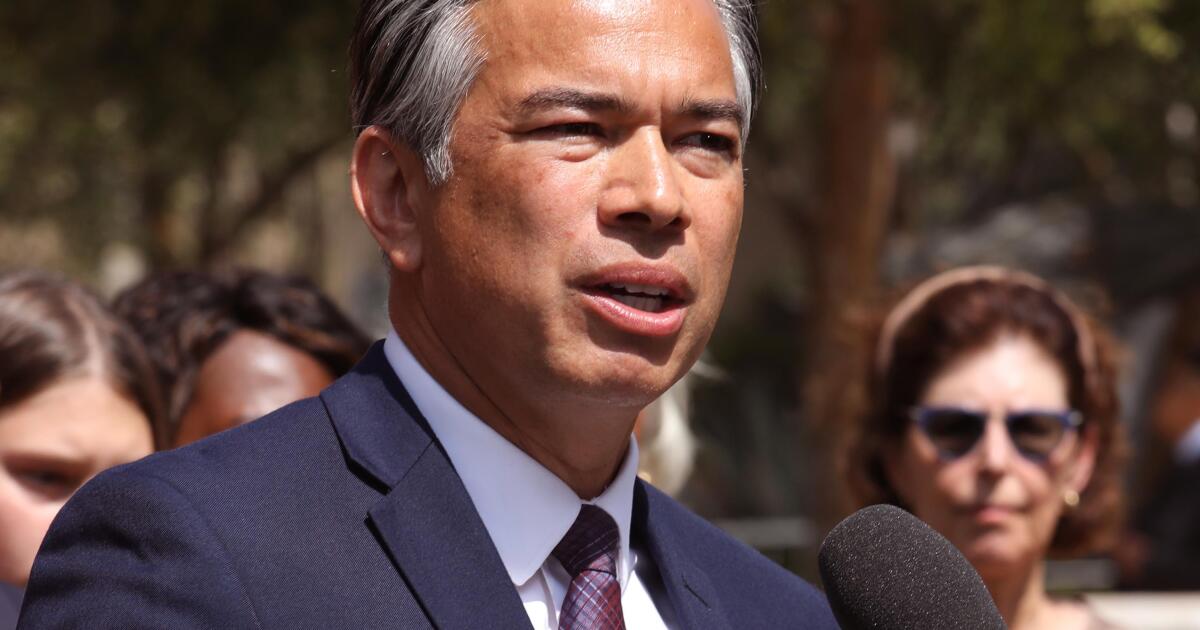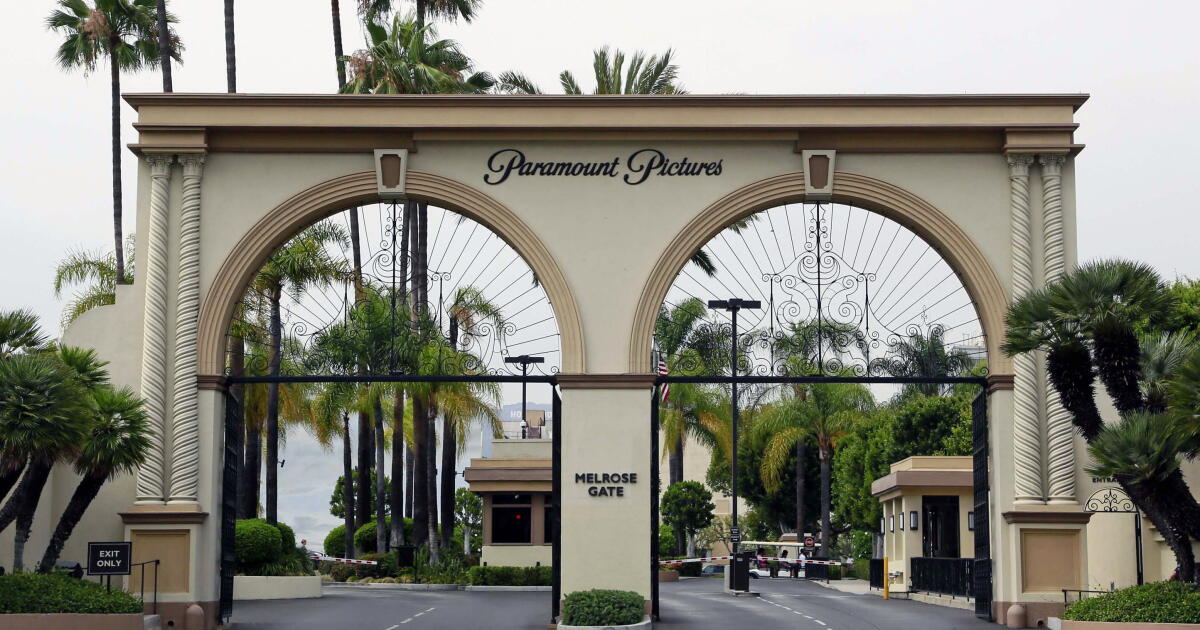
david ellison

Post-Stephen Colbert, CBS still wants an original late-night show

CBS hasn’t given up on producing an original late-night show — despite easing Stephen Colbert out the door.

“The Late Show With Stephen Colbert” ends next month after CBS canceled the popular program, citing financial pressures. The network’s top two executives told reporters during a press briefing in Hollywood on Wednesday that the network still wants to be a player in the 11:35 p.m. hour.

CBS struck a one-year deal with media mogul Byron Allen to bring his “Comics Unleashed” syndicated show to the prominent time slot once occupied by David Letterman until Colbert took the mantle a decade ago. President Trump, in social media posts, has taken credit for getting Colbert, whom he dislikes, tossed off the air.

Colbert’s final broadcast will be May 21.

Beyond the stop-gap arrangement with Allen, network executives acknowledged they don’t have a long-term plan for the late-night hours — but development executives are working on it.

“We are still going to develop other ideas, other concepts,” said George Cheeks, whose role as chair of TV Media at Paramount includes running CBS. He added that Allen’s programs, including “Funny You Should Ask” at 12:35 a.m., will allow the company to immediately turn a small profit — an increasingly critical mandate as CBS prepares to absorb the high cost of keeping NFL football on its schedule.

“If we are going to go back into that space, we have to go back into that space with a different financial model,” Cheeks said, in contrast to a show set in a theater with a band, live audience and large group of writers and support staff to stage a nightly show with numerous guests.

“I grew up in late night — I believe in late night,” Cheeks said. “The reality is that the reach is still there, but the reach is primarily on YouTube.”

It’s become increasingly difficult for CBS or other major networks to make money on a topical show when the majority of the audience, particularly younger viewers, watch snippets on YouTube.

CBS Entertainment President Amy Reisenbach acknowledged the network wasn’t actively developing a replacement late-night show; instead the effort was in the brainstorming stage. “They’re just conversations at this point,” she said.

CBS can make money on “Comics Unleashed” because Allen pays CBS for the hours and covers production costs. In return, Allen’s company receives most of the commercial spots in the programs, which his company can sell to advertisers to defray its costs.

Cheeks dismissed concerns that Allen’s programs, which have been in syndication for years, would not be viewed as “CBS-level quality.” He called Allen “a great partner.”

“Comics Unleashed” has run at 12:35 a.m., but CBS is moving it one hour earlier on the schedule, where it will have more exposure and benefit from running immediately after TV stations’ local late news. “Funny You Should Ask” will air in the 12:35 a.m. time slot.

“I actually think the shows are strong. … They have a point of view,” Cheeks said of Allen’s programs. “It’s a change in format … a change from what people are used to.”

It’s been a rough year for CBS.

The last 12 months have included a nasty spat with Trump over a “60 Minutes” segment with Kamala Harris, which Paramount ended by paying the president $16 million. Then came the tempest over Colbert’s cancellation just days after he called the Trump settlement “a big fat bribe.”

The network got new owners — David Ellison and Skydance Media — in August and Ellison promptly installed a new boss at CBS News, Bari Weiss, who has made talent moves to shake up the division.

Six weeks ago, Paramount prevailed in the bidding war for Warner Bros. Discovery — a deal that will bring more turmoil to Paramount, CBS and Hollywood production.

Because of last year’s Paramount change in ownership, the NFL has the ability to reopen the network’s TV license deal, which is expected to increase the cost of retaining the NFL by as much as $1 billion a year, potentially cutting into CBS’ programming budget.

“Capital allocation is always a major consideration,” Cheeks said. “But I would harken back to something that David Ellison said recently, which was content investment was mission critical to the future of this company.”

CBS unveiled its new fall schedule Wednesday, announcing that fan-favorite LL Cool J was returning to star in a new show, “NCIS: New York,” with Scott Caan, and the introduction of a new legal drama, “Cupertino,” from hit-making executive producers Robert and Michelle King. CBS will serve up two other new shows, including a comedic drama, “Einstein,” and a half-hour vampire family comedy, “Eternally Yours.”

Cheeks also acknowledged that, for the first time in 18 years, CBS would not end the television season in first place in viewers. This year, that honor goes to NBC, which broadcast a blockbuster February with the Super Bowl and the Winter Olympics.

Source link

Jeff Shell to step down as Paramount president after legal battle

Paramount President Jeff Shell is expected to exit the company after being entangled in a legal battle with a controversial Las Vegas gambler and self-styled “fixer.”

Shell has been negotiating his exit and is expected to leave imminently after just eight months on the job, said two people familiar with the matter who were not authorized to comment publicly.

The veteran entertainment executive officially joined the media company with David Ellison’s takeover in August, though he had been a key member of Ellison’s team for nearly two years as the group worked to assemble the pieces of the tech scion’s growing empire. Ellison’s Skydance Media acquired Paramount and then pulled off a stunning $111-billion deal to buy Warner Bros. Discovery in late February.

Shell brought substantial experience running a media company to Ellison’s inner circle, a group that included former investment bankers and others who haven’t run a large-scale enterprise. Shell also served as a member of Paramount’s board and is expected to leave that role, too.

His exit comes after the high-roller, Robert James “R.J.” Cipriani, sued Shell in Los Angeles County Superior Court on March 9, alleging fraud and breach of an oral contract. Cipriani claimed that he provided Shell with “sophisticated, high-value crisis communications services,” according to his suit. He alleged Shell spilled corporate secrets, which Shell has denied, and also failed to deliver on a verbal pledge to help Cipriani develop an English-language version of a Roku TV Spanish music show.

Shell maintains Cipriani fictionalized the two men’s dealings, then spread “false and salacious lies to extract a massive payday.” Cipriani has been seeking $150 million in damages. Shell filed a counterclaim, saying the two men met only twice and that Shell owed him nothing.

The legal skirmish cast a cloud over Shell’s tenure helping lead the company because the Ellisons wanted to stay focused on their Warner Bros. takeover and lining up regulators approvals in the U.S. and abroad. The Cipriani controversy made Shell’s future at Paramount untenable, the sources said.

Shell’s departure comes three years after he was ousted as NBCUniversal chief executive.

NBCUniversal-owner Comcast hired a law firm to investigate him after a CNBC anchor filed an internal sexual harassment claim against him. Shell stepped down, acknowledging that he’d had an “inappropriate relationship” with the journalist, who has since left the company.

The job at Paramount was envisioned to be his second act.

Shell’s dealings with Cipriani began with an August 2024 meeting at litigator Patty Glaser’s Century City office. At the time, Glaser represented both men and urged Cipriani to “cease” his efforts to drum up damaging stories about Shell, who was trying to recover from the scandal that cost him his job at NBC.

Jeff Shell, Paramount Skydance president.

Jeff Shell, Paramount Skydance president.

(Paramount / Skydance)

The most serious of Cipriani’s allegations was that he made a report about Shell to the U.S. Securities & Exchange Commission that Shell had discussed highly sensitive Paramount information with him: Paramount’s proposed $7.7-billion deal with the UFC owner to bring the mixed-martial arts fights to CBS and other Paramount outlets. Shell, in his lawsuit, denied the allegation.

Robert James "R.J." Cipriani in Amazon Prime Video's 2025 series, "Cocaine Quarterback."

Robert James “R.J.” Cipriani in Amazon Prime Video’s 2025 series, “Cocaine Quarterback.”

(Courtesy of Prime)

Paramount’s brass hired the Gibson Dunn law firm to investigate Shell’s surreptitious dealings with Cipriani. Investigators have been reviewing whether Shell had divulged any secrets. The review is still pending.

“Nobody believed me,” Cipriani said Wednesday. “The best thing I did was cooperate with Gibson Dunn and showed them that the texts were real.”

It’s unclear whether Ellison will look to bring in other experienced media executives or look to senior Warner Bros. Discovery executives following Paramount’s proposed takeover of that company.

Source link

Why the FCC is unlikely to pull TV licenses over Iran news coverage

Federal Communications Commission Chairman Brendan Carr is using his bully pulpit to push back against coverage of the U.S. military action in Iran that his boss President Trump doesn’t like, marking an extraordinary escalation in his clashes with the media.

On Saturday, Carr posted a message on X suggesting TV stations could lose their government licenses to use the public airwaves if they “don’t operate in the public interest.”

Underneath his statement, Carr shared a social media post from Trump, who complained about the New York Times and Wall Street Journal stories on the five refueling tankers were hit during an Iranian missile strike on the Prince Sultan Air Base in Saudi Arabia.

Carr seized on Trump’s missive to issue a warning to TV outlets, which are frequently threatened by the president when he is angry at their coverage.

It’s the latest attempt by the FCC chair to apply pressure on media companies that irritate Trump with critical coverage of his administration.

Since becoming FCC chairman last year, Carr has repeatedly threatened to use the levers of power he has to punish TV and radio stations when they get in Trump’s crosshairs. His behavior has alarmed free speech advocates.

“Broadcasters that are running hoaxes and news distortions — also known as the fake news — have a chance now to correct course before their license renewals come up,” Carr wrote, without providing evidence to back up his claims. “The law is clear. Broadcasters must operate in the public interest, and they will lose their licenses if they do not.”

Carr’s threats are based on his assertions that said he wants to enforce the FCC’s public interest obligation for broadcasters that use the airwaves. He made similar remarks in the fall, which prompted two major TV station groups to keep ABC’s “Jimmy Kimmel Live!” off the air for a week due to remarks the host made regarding slain right-wing activist Charlie Kirk.

Trump and Defense Secretary Pete Hegseth have repeatedly attacked news organizations for any reporting that doesn’t say the war in Iran is anything but a rousing success.

On Friday, Hegseth said took aim at CNN and said “the sooner David Ellison takes over that network the better.”

Ellison, the chief executive of Paramount who, along with his father, has forged strong ties to the White House, will have control over CNN in addition to CBS if the company’s deal to acquire the news outlet’s parent Warner Bros. Discovery is completed.

Carr made the appointment of an ombudsman for CBS News a condition to approve Ellison’s Skydance Partners deal to acquire Paramount last year. Paramount also drew scrutiny over its controversial decision to pay $16 million to settle Trump’s legal salvo against “60 Minutes” over the editing of an interview with his 2024 opponent, then-Vice President Kamala Harris. Most legal analysts viewed the case as frivolous.

The FCC has no jurisdiction over CNN, which is why most of Carr’s barbs are aimed at ABC, CBS and NBC, which air on local TV stations. He once wrote on X, “More Americans trust gas station sushi than the legacy national media.”

Trump said in a social media post Sunday that he was “thrilled” with Carr’s remarks and would support his efforts to go after what he called “Highly Unpatriotic ‘News’ Organizations.”

“They get Billions of Dollars of FREE American Airwaves, and use it to perpetuate LIES, both in News and almost all of their Shows, including the Late Night Morons, who get gigantic Salaries for horrible ratings,” Trump wrote.

Andrew Jay Schwartzman, a Washington-based public interest communications attorney, believes Carr’s conduct and threats violate the 1st Amendment, adding that any serious attempt to revoke licenses would be tied up in legal challenges.

“Even if he started to try to deny a license renewal as quickly as he could, Brendan Carr would be long gone before that case would be over,” Schwartzman said. “The law intentionally sets out a very steep burden for the FCC to deny a license renewal; the process takes many years, during which time the licensee continues to operate normally under ‘continuing operating authority.’”

Carr’s remarks Saturday drew immediate blowback from Democrats and 1st Amendment advocates, noting the FCC’s role does not include policing the free press.

“Once again, this FCC pretends it has the power to control news coverage,” FCC Commissioner Anna Gomez said Monday in a statement. “In reality, the FCC has vanishingly little power over national news networks. It licenses local broadcast stations, not networks, and no licenses are up for renewal until 2028.”

Calif. Gov. Gavin Newsom weighed in as well, posting, “If Trump doesn’t like your coverage of the war, his FCC will pull your broadcast license. That is flagrantly unconstitutional.”

Sen. Ron Johnson (R-Wis.), usually a reliable voice of support for the Trump administration, expressed his concerns over Carr’s remarks.

“I’m a big supporter of the 1st Amendment,” Johnson told Fox News on Sunday. “I do not like the heavy hand of government no matter who’s wielding it. I’d rather the federal government stay out of the private sector as much as possible.”

Gomez added that while attempts to pull licenses border on folly, Carr’s threats and attacks on the media can create a chilling effect and erode the public’s confidence in the press.

“Over the past year, this FCC has attacked the media as part of a years-long campaign by this Administration and its allies to discredit factual, independent coverage while blaming the press for growing public distrust,” Gomez said. “Meanwhile, it is the FCC’s own credibility and public trust that are rapidly eroding.”

Trump is not the first president to target TV station licenses in response to negative news coverage. At the height of the Watergate scandal in the 1970s, Richard Nixon’s allies attempted to challenge the TV licenses for three stations owned at the time by the Washington Post.

The effort didn’t get far.

The last Los Angeles outlet to lose its broadcast license was KHJ in 1987, when the station was part of RKO General, a media company owned by the General Tire and Rubber Co. The case was related to corporate malfeasance and not broadcast content on the stations.

The process to revoke the RKO licenses took seven years from the moment the FCC voted in favor of the move.

“Since then, only small mom-and-pop radio stations have been litigated,” Schwartzman said. “The cases nearly always involve lying to the government, felony convictions or failure to pay regulatory fees. In one recent case, a small owner convicted of tax evasion still kept his license.”

There would be other logistical hurdles to the FCC making good on Carr’s threats.

As Gomez noted, Carr’s FCC only has regulatory control over the TV stations that carry the network signals. If stations were drop network programming for any reason, they could violate their affiliation contracts and lose the right to carry NFL football and other content that delivers big ratings and revenue.

Sinclair Broadcast Group wanted Kimmel to apologize to Kirk‘s family and contribute to his organization Turning Point USA before putting the host’s late night show on the air.

That did not happen and “Jimmy Kimmel Live!” returned to Sinclair’s stations anyway.

Source link