Dave

Dodgers Dugout: Dalton Rushing, Dave Roberts and a bunch of All-Stars

Hi, and welcome to another edition of Dodgers Dugout. My name is Houston Mitchell. No animals were harmed in the production of this newsletter.

Are you a true-blue fan?

Get our Dodgers Dugout newsletter for insights, news and much more.

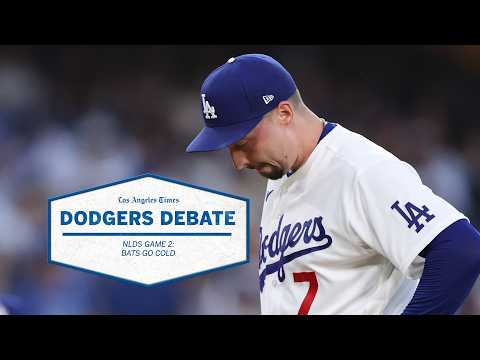
Dalton Rushing has certainly been in the spotlight lately. From his miscommunication with Shohei Ohtani to getting emotional on the bench. We put the spotlight on him recently in this newsletter, which you can read here.

This led to readers asking whether his teammates like him. And while you can never know what lies in the heart of a person, it seems very likely that they do. We quoted colleague Maddie Lee‘s story last time. This time, we look at a couple of interesting quotes from Katie Woo’s story in the Athletic.

Freddie Freeman: “Everyone here loves Dalton Rushing. The person he is in the clubhouse, before games, after games, doesn’t get to be shown on the field. But there’s that three-hour window where his emotions come forward, and it can be a lot. I wish people could see the Dalton Rushing inside the clubhouse, on the plane, on buses. It’s not what you see during the game. He’s a young guy who’s learning the starting role, who wants to be great, who is just learning, and we’re here to help, and that’s why you see so many people trying to help him.”

Miguel Rojas: “It’s really hard to change one person’s personality from one year to another. We have to understand and give him a little bit of a break, because he’s young. Now, if we’re seeing this next year, or the same thing happening two years from now, there’s probably going to be a conversation with the organization. You have to see growth.”

That sounds like two guys who like him, and are trying to help him navigate through all of this. Which is what teammates are for.

However, is Rushing in sync with the pitchers? Let’s take a look at the starting pitcher ERA with Rushing and with Will Smith in their career. We’ll include Austin Barnes and Ben Rortvedt too.

Yoshinobu Yamamoto
ERA with Rortvedt: 0.86 (21 innings)
Barnes: 1.64 (33)
Rushing: 1.75 (92.2)
Smith: 3.29 (221.2)

Justin Wrobleski
Smith: 2.60 (86.2)
Rushing: 3.75 (72)
Rortvedt: 6.14 (7.1)
Barnes: 10.90 (17.1)

Shohei Ohtani
Rortvedt: 0.00 (11)
Smith: 2.08 (82.1)
Rushing: 2.97 (39.1)
Barnes never caught him

Roki Sasaki
Rortvedt: 0.00 (2)
Barnes: 2.00 (9)
Smith: 4.32 (58.1)
Rushing: 6.21 (37.2)

Emmet Sheehan
Rortvedt: 0.00 (1)
Rushing: 3.04 (50.1)
Smith: 4.20 (124.1)
Barnes: 7.56 (16.2)

Tyler Glasnow
Rushing: 1.46 (24.2)
Rortvedt: 2.89 (18.2)
Smith: 3.42 (210.2)
Barnes: 5.40 (10)

Blake Snell
Rortvedt: 0.47 (19)
Smith: 3.26 (30.1)
Rushing: 4.80 (15)

Eric Lauer
Smith: 1.50 (6)
Rushing: 3.86 (23.1)

All Dodgers pitchers this season
Smith: 3.02 (393)
Rushing: 3.74 (341.1)
Chuckie Robinson: 4.88 (59)

All Dodgers pitchers in 2025
Rortvedt: 2.89 (140.1)
Rushing: 3.87 (325.1)
Smith: 4.00 (865.1)
Robinson: 5.14 (7)
Barnes: 5.16 (103)

You can see why the Dodgers liked Rortvedt so much.

Dave Roberts, millennium man

Dave Roberts got the 1,000th victory as Dodgers manager when they beat the Athletics on Tuesday.

“I mean, 1,000 didn’t even seem on my radar,” Roberts said after that game. “That’s a long time of consistent winning, let alone keeping a job for 11 years. That’s just kind of the life I chose. But yeah, to kind of put your head down and look back and go, ‘Oh my God, I’m here,’ it’s mind-blowing. I still feel like I’m getting better, and I still enjoy it.”

Roberts, who is in his 11th season as Dodgers manager, gave a hint as to how long he will be at the helm.

“I will not manage 20 years. Mookie wants me to manage until his contract expires [in 2032], so that’s something I am thinking about. But I can be certain I’m not going to do 20 years. It’s too much. I love it, but it’s a lot to give. To see myself doing that for another seven, eight, nine years, that’s a lot.”

Barring some unexpected collapse by the Dodgers for a couple of seasons, Roberts will be manager of the Dodgers for as long as he wants. He has won three World Series titles and will go into the Hall of Fame one day. He has grown considerably as a manager, as he has shown in the last two postseasons. There is always a vocal minority who doesn’t like him, or who thinks anyone could manage this team to a title. Nonsense. As Mookie Betts said:

“I would definitely say it’s probably the reverse. It makes it harder. It’s probably easy to write in a lineup, for sure. But to manage so many personalities, injuries, guys coming up, guys coming down, it’s a lot, especially losing. We went through our stretches where we weren’t playing well.

“And then it’s the other way, like, ‘Oh, you got this roster, and you’re still losing X, Y, and Z.’ But he just kind of handled it. Handled it with grace. And still come out on top. So, yeah, it’s probably easy to write in the lineup, but to manage it for 162-plus is really hard to do.”

Roberts became the 69th manager to win 1,000 games and the fourth Dodger manager, joining Walter Alston (2,040), Tommy Lasorda (1,599) and Wilbert Robinson (1,375). He also has the best winning percentage of any manager in history, winning 62.3% of his games. He is 1,003-607. Just behind him is Joe McCarthy, who won 61.5% (2,125-1,333). McCarthy won seven World Series titles, all with the Yankees, and is considered by many to be the greatest manager in history.

Sad news

Catcher Eliezer Alfonzo made his major league debut with the Dodgers on Sunday, but with a heavy heart. Alfonzo’s younger sister, Eliana, and stepmother, Patricia, died during the devastating earthquakes that struck Venezuela recently.

”Don’t really know what to say about it outside of my heart goes out to him and his family,” Roberts said before Sunday’s game. “He’s in [the lineup]. He’s going to play today, but obviously it’s heavy hearts. I don’t want to really go too far because I’ll get emotional, so I don’t know. I know it’s tough, very tough.”

After the game, Alfonzo said this about playing: “Honestly it was a little difficult, but at the same time thanking God always for everything. What happened, unfortunately, is out of my hands and part of life. Only God knows why they happen. I went out there to honor my sister and my stepmother, and give my best in a difficult moment.”

Keep these types of things in mind the next time you want to boo or yell at a player for making an error, mentally or physically. We don’t know what they are going through from day to day. It’s easy to get caught up in thinking these are baseball players making a lot of money and living the dream. But no one lives the dream 24/7.

Four All-Stars

Ohtani, Freeman, Max Muncy and Andy Pages were all elected as starters for this year’s All-Star team, and Yamamoto also made the team, giving the Dodgers four All-Stars this season, tied for the most with Atlanta and Philadelphia. It is Ohtani’s third All-Star nod with the Dodgers (he also had three with the Angels), Freeman’s fifth with the Dodgers (he also had five with the Braves), the third for Muncy, the first for Pages and the second for Yamamoto.

The franchise record for most players on the team is seven, done in multiple years while the Dodgers were in Brooklyn.

Dodgers named to the All-Star team at least four times:

11
Clayton Kershaw

10
Pee Wee Reese

Nine
Don Drysdale

Eight
Roy Campanella
Steve Garvey
Gil Hodges

Seven
Sandy Koufax
Duke Snider
Maury Wills

Six
Ron Cey
Jackie Robinson
Fernando Valenzuela

Five
Freddie Freeman
Mike Piazza
John Roseboro

Four
Mookie Betts
Pedro Guerrero
Cookie Lavagetto
Davey Lopes
Van Lingle Mungo
Don Newcombe
Mickey Owen
Johnny Podres
Preacher Roe
Don Sutton
Dixie Walker
Whit Wyatt

These names seem familiar

How notable players who were with the Dodgers the last couple of seasons are doing with their new teams (through Sunday). Click on the player’s name to be taken to their full stats page:

Anthony Banda, Twins: 2-0, 4.46 ERA, 2 saves, 34.1 IP, 31 hits, 15 walks, 33 K’s, 98 ERA+, on the IL

Cody Bellinger, Yankees: .251/.348/.426, 374 PA’s, 17 doubles, 3 triples, 11 homers, 50 RBIs, 116 OPS+

Walker Buehler, Padres: 5-4, 4.61 ERA, 82 IP, 83 hits, 30 walks, 76 K’s, 91 ERA+

Mike Busch, Cubs: .234/.367/.391, 398 PA’s, 14 doubles, 2 triples, 11 homers, 47 RBIs, 114 OPS+

Michael Conforto, Cubs: .250/.345/.492, 148 PA’s, 10 doubles, 7 homers, 21 RBIs, 133 OPS+

Justin Dean, Cubs: .400/.500/.800, 6 PA’s, 1 triple, 3 RBIs, 259 OPS+

Caleb Ferguson, Reds: 1-0, 1.62 ERA, 1 save, 16.2 IP, 15 hits, 6 walks, 16 K’s, 278 ERA+

Jack Flaherty, Tigers: 2-8, 4.60 ERA, 76.1 IP, 74 hits, 37 walks, 92 K’s, 93 ERA+

Kenley Jansen, Tigers: 1-4, 4.98 ERA, 10 saves, 21.2 IP, 14 hits, 12 walks, 23 K’s, 87 ERA+

Craig Kimbrel, Rays: 0-2, 4.62 ERA, 25.1 IP, 22 hits, 10 walks, 23 K’s, 9Gavin 4 ERA+

Gavin Lux, Rays: on the IL

Dustin May, Cardinals: 5-6, 4.80 ERA, 84.1 IP, 83 hits, 24 walks, 78 K’s, 84 ERA+

Zach McKinstry, Tigers: .196/.274/.291, 225 PA’s, 6 doubles, 2 triples, 3 homers, 16 RBIs, 58 OPS+

James Outman, Tigers : .159/.234/.292, 124 PA’s, 4 doubles, 1 triple, 3 homers, 11 RBIs, 46 OPS+

Joc Pederson, Rangers: .242/.338/.466, 276 PA’s, 7 doubles, 2 triples, 14 homers, 31 RBIs, 133 OPS+

Luke Raley, Mariners: .228/.293/.466, 241 PA’s, 8 doubles, 1 triple, 14 homers, 35 RBIs, 114 OPS+

Ben Rortvedt, Mets: in the minors

Corey Seager, Rangers: .182/.292/.374, 219 PA’s, 6 doubles, 10 homers, 25 RBIs, 94 OPS+, on the IL

Justin Turner, Tijuana (Mexican League): .281/.394/.475, 216 PA’s, 17 doubles, 6 homers, 28 RBIs

Trea Turner, Phillies: .246/.283/.360, 364 PA’s, 15 doubles, 10 homers, 31 RBIs, 72 OPS+

Miguel Vargas, White Sox: .247/.363/.494, 304 PA’s, 17 doubles, 1 triple, 20 homers, 56 RBIs, 138 OPS+

Kirby Yates, Angels: 0-3, 2.75 ERA, 2 saves, 19.2 IP, 11 hits, 7 walks, 28 K’s, 154 ERA+

Note: Vargas was named to the AL All-Star team.

Up next

Monday: Colorado (*Kyle Freeland, 2-7, 7.25 ERA) at Dodgers (*Eric Lauer, 4-5, 4.84 ERA [3-0, 2.88 ERA with Dodgers]), 7:10 p.m., SportsNet LA, AM 570, KTNQ 1020

Tuesday: Colorado (Michael Lorenzen, 3-9, 6.91 ERA) at Dodgers (*Justin Wrobleski, 10-2, 2.80 ERA), 7:10 p.m., SportsNet LA, AM 570, KTNQ 1020

Wednesday: Colorado (Ryan Feltner, 3-2, 4.27 ERA) at Dodgers (Roki Sasaki, 3-5, 5.40 ERA), 7:10 p.m., SportsNet LA, AM 570, KTNQ 1020

All times Pacific

*-left-handed

In case you missed it

Dodgers’ Edwin Díaz pushes back against alleged links to illegal cockfighting

Dodgers’ Eliezer Alfonzo to start after his sister and stepmother died in Venezuela

Dodgers sending four more players to MLB All-Star Game, tied for most selections

Shohei Ohtani and Dodgers taking cautious approach with his biceps ailment

How Dodgers’ Max Muncy, vying for his third All-Star selection, continues to evolve

Fan loudly expresses unbridled enthusiasm for Mexico’s World Cup goal … at Dodgers-A’s game

Dodgers Debate: Midseason awards

Walter Alston, Dave Roberts and everyone in between: The 10 managers in L.A. Dodgers history

And finally

Vin Scully tells us about Kirk Gibson‘s home run. Watch and listen here.

Until next time …

Have a comment or something you’d like to see in a future Dodgers newsletter? Email me at houston.mitchell@latimes.com. To get this newsletter in your inbox, click here.

Source link

A look at the nine L.A. Dodgers managers before Dave Roberts

p]:text-cms-story-body-color-text clearfix”>

Dodgers manager Tommy Lasorda celebrates after the Dodgers beat the Montreal Expos to win the NL pennant in 1981.

Dodgers manager Tommy Lasorda celebrates after the Dodgers beat the Montreal Expos to win the NL pennant in 1981.

(Associated Press)

Years as manager: 1976-1996

Record: 1,599-1,439, .526 win pct

After serving as the team’s third base coach for four seasons, Lasorda took over as manager late in the 1976 season when Alston announced his retirement. He led the Dodgers to the National League pennant in his first two full seasons, losing both times to the Yankees in the World Series. He won his first World Series in 1981, knocking off the Yankees, and rallied his team to a surprise title in 1988 in which the Dodgers beat the heavily favored Athletics. Lasorda was inducted into the Baseball Hall of Fame in 1997, his first year of eligibility.

A fiery and vibrant presence who spent 71 years with the Dodgers, Lasorda managed nine players who won the NL rookie of the year award. The Dodgers also opened the Japanese player pipeline on his watch. Hideo Nomo, the first Japanese big leaguer to permanently relocate to the U.S., joined the Dodgers in 1995. Three decades later, the team features Shohei Ohtani and Yoshinobu Yamamoto on its star-studded roster.

Source link

What is Dave Eggers’ new book about? Inside the plot of ‘Contrapposto’

Book Review

Contrapposto

By Dave Eggers
Knopf: 432 pages, $32

If you buy books linked on our site, The Times may earn a commission from Bookshop.org, whose fees support independent bookstores.

What does it mean to lack ambition in a country that worships wealth? It means you are a capitalist wallflower, a laggard with a serious character flaw. No field of endeavor is immune from this attitude, the art world least of all. But artists with a desire for riches and fame must not declare their intentions so brazenly. At a time when the plastic arts are about as marginalized as they ever have been, and media buzz is generated by dead painters whose works sell for enormous sums at auction, creation in and of itself has little value unless it is lashed to something marketable.

With his new novel “Contrapposto,” Dave Eggers has written a big-hearted, deeply moving story about the choices artists make, or don’t make, to square up their own notions of success and happiness. The book is dual bildungsroman, following two friends across the long span of their lives from adolescence to their 70s, as they fall in and out of each other’s lives, make their way in the world, and fumble around for meaning and purpose in their art.

The protagonist in “Contrapposto” is Rob “Cricket” Dibb, an underclass Midwestern kid, raised by a single mother in a North Indiana suburb that’s about as nowheresville as it gets for budding artists with dreams of glory. Cricket doesn’t dream big. He’s just trying to endure without bodily harm, seeking refuge from his mother’s abusive boyfriend in the basement with his grandfather Silas, who teaches him about jazz and the beauty of a glorious sunset. He draws so he doesn’t have to think. Immersion in art is his escape hatch from the dreariness of his pinched world: “The drawing meant nothing, would never mean anything to anyone, but it was true to how he saw it. His hand had recorded what he saw and felt about this thing. He was an ugly, common creature who could occasionally freeze time. That was enough.”

Cricket’s apprenticeship is decidedly informal. No full scholarship rides to Bard or Pratt for him; instead he saves up to enroll himself in a life drawing class in Chicago, where he discovers the beauty of applying rigor and rules to his work, how to break down pictures into the geometry of circles and squares, planes and angles. “He measured proportions and improved,” writes Eggers. “He grew more confident with each pass on his drawing, and realized … that much of the rightness of the drawing, of any drawing, came through time and diligence and discernment.”

He meets his slightly older schoolmate Olympia, one of Eggers’ most beguiling creations, when she implores him to scrawl scatological bathroom graffiti on a playground structure in Old-English typography. Unlike Cricket, Olympia is earnest and sincere about her art in the way that only a young person untainted by cynicism can be. She claims to inhabit the soul of Albert Camus, and flings around aphorisms about art that fly over Cricket’s head. She is an aesthete, someone who likes to go to the race track just to revel in the colors on display there. She wants to create an art scene in their little world. “You know all the great art movements have friends at their core, right?,” she tells Cricket. “A lot of time they’re jammed together by some critics and the artists reject the name and the association. But think about Patti Smith and Sam Shepard. Did you know they dated for a while?”

Cricket is beguiled by her, and Olympia in turn is taken in by Cricket’s talent. When the local library pulls a few of Cricket’s semi-nude life drawing portraits down for fear of offending their patrons, Olympia becomes his advocate and champion. In contrast to Cricket, who skates along with no end plan, Olympia is a committed careerist, an artist who insists on a captive audience to justify her work. She wants to earn money as an artist; Cricket just wants to be left alone. This push and pull between the two frame Eggers’ novel across the six decades of his narrative.

One of many joys of “Contrapposto” is observing Cricket’s artistic awakening via the mentors who guide him into his artistic consciousness. Marcus Carpenter, a wizened sage in battered work boots (one imagines him as the art world analogue to the late novelist Jim Harrison), is the moral conscience of the novel, fighting the good fight for personal expression and railing against the “new, paradoxical tyranny wherein those without technical skill terrorize those who possess it.” Carpenter plucks Cricket from arts college and its meaningless pontificating to his “atelier in the corn,” a ramshackle Victorian where Cricket learns how to transmute what he sees with color and light. “The talented have talent,” Carpenter tells Cricket during one of his endearing rants. “The untalented have theories.”

From there, Cicket’s life is a crooked line. He doesn’t abandon art, but he can’t summon the urge to sell himself or his work, to graft his joy in making things onto the caprices of the marketplace. As Eggers jumps through time, we find Cricket working as an intern in an art gallery, an arid, lifeless space where nothing inspiring can possibly exist. As a young man he works as a ship-breaker in Turkey; in middle-age, we find him in a coastal town in Cambodia, making replicas of great paintings for tourists. Olympia, his elusive love and sporadic muse, flits in and out of his life as she works her way up the tiers of the art world’s ziggurat. She gently berates him for his timidity: “This is how artists have power. We sell work. You’re implying there’s nobility in powerlessness. That’s been an idiotic trope for too long — that participating in the business side of it taints you. Do you know how dumb that is? That artists have to be these fragile little wood nymphs that are too precious to touch the money?”

As “Contrapposto” arrives at its beautiful, life-affirming conclusion, we are left pondering the significance of artistic endeavor in a world that commodifies everything, including our bodies and brains. At a time when even the greatest achievements are debased in a culture that gives equal weight to meretricious novelty, is it even worth the trouble? Eggers’ brilliant novel has the answer: Follow your bliss. In the final analysis, it is all that matters.

Weingarten is the author of “Thirsty: William Mulholland, California Water, and the Real Chinatown.”

Source link

Why Dave Roberts didn’t pinch-hit Shohei Ohtani in Dodgers’ loss

Dodgers manager Dave Roberts had a decision to make.

Before the Diamondbacks’ Ketel Marte delivered the walk-off blow to the Dodgers — a towering home run off reliever Tanner Scott, punctuated by a bat flip — Roberts had to choose whether to send Shohei Ohtani to the plate as a pinch-hitter.

In a 3-2 loss, Ohtani, who didn’t start after two-way duties the day before, remained in the dugout.

“It has to be the right spot,” Roberts said.

The defensive picture complicated the calculus.

If Scott had thrown a scoreless inning and sent the game into the 10th, Roberts planned to have Ohtani pinch hit for Miguel Rojas, the third batter due up.

In the ninth, however, unless Ohtani replaced designated hitter Will Smith (who ended up hitting a two-out double), Roberts would have had to put in a defensive replacement for the bottom half of the inning.

“I didn’t want to go two innings trying to figure out how to play defense with Shohei then being out of the game,” Roberts said.

Roberts already had been forced to use the rest of his bench.

Third baseman Max Muncy exited in the fifth inning after a collision at first base, and Santiago Espinal replaced him. When rookie left fielder Ryan Ward walked in the seventh inning, the speedier and more defensively sound Alex Call replaced him on the bases. And in the eighth, the right-handed hitting Rojas pinch-hit for Alex Freeland against Diamondbacks left-hander Brandyn Garcia.

Arizona's Ketel Marte, center, celebrates with teammates as he steps on home plate.

Arizona’s Ketel Marte, center, celebrates with teammates as he steps on home plate after hitting a walk-off home run against the Dodgers on Thursday.

(Christian Petersen / Getty Images)

The Dodgers had Andy Pages, Kyle Tucker and Smith — none of whom were candidates to be pulled for a pinch-hitter — due up in the ninth. But after Smith hit a two-out double, leaving first base open, the Diamondbacks surely would have intentionally walked Ohtani if he pinch-hit for Espinal.

Then, the Dodgers would have had to reconfigure their defense, likely moving first baseman Freddie Freeman to third, catcher Dalton Rushing to first base and Smith behind the plate, forfeiting the designated hitter spot.

That would mean a shaky defensive lineup with the game still on the line in the ninth, with pitchers forced to hit if it went into extra innings.

So, instead, Roberts saved Ohtani.

“Once we get into extra innings, then I would fire that bullet,” Roberts said.

The Dodgers, however, didn’t get to extra innings. Scott struck out the first batter he faced. Then he threw a fastball down and in to Marte, who managed to get the barrel of his bat to it.

“You’ve got to tip your cap,” Scott said. “He’s a good hitter. Should I have gone up and in? Yeah. Or just a slider. I knew he was going to be aggressive.”

Ohtani dealing with blister

Ohtani has been dealing with a small blister on the middle finger of his right hand for his last couple starts, Roberts said.

“I don’t expect it to affect him going forward,” Roberts said Thursday afternoon, the day after Ohtani held the Diamondbacks to two hits in six scoreless innings. “Even [Wednesday], if we wouldn’t have tacked on, he would’ve stayed in there.”

Roberts pulled Ohtani after the Dodgers pulled out to a seven-run lead in the top of the seventh inning.

Roberts also said he didn’t believe the blister affected Ohtani’s command last week, when he threw six hitless innings against the Rockies but issued four walks and hit a batter.

“When his command has been off, I think it’s a bigger thing than just a blister,” Roberts said. “Because it’s a small blister. That’s just when his mechanics are out of whack.”

Source link

Dave Roberts made the right call giving Shohei Ohtani a day off

Didn’t hit. Didn’t pitch.

But that didn’t make Shohei Ohtani not the story.

On the contrary. Seeing him chillin’ in a Dodger-blue hoodie — and not dressed for success in his white home uniform top — was the most striking part of the Dodgers’ 5-2 victory over the San Francisco Giants on Thursday at Dodger Stadium.

Back on Tuesday, before the Dodgers’ fourth consecutive loss, with Ohtani having recorded just four hits in 36 at-bats, manager Dave Roberts announced plans to bench baseball’s best player.

To get him some R&R — rest and reset. “A good spa day,” Roberts would joke Thursday.

Of course, it’s Ohtani, so much is being made of the much-needed breather.

Dodgers two-way player Shohei Ohtani rounds the bases after hitting a solo home run Tuesday at Dodger Stadium.

Dodgers two-way player Shohei Ohtani rounds the bases after hitting a solo home run Tuesday at Dodger Stadium.

(Eric Thayer/Los Angeles Times)

Maybe you hate it. Maybe you hate it for him. Maybe you think a $700 million contract doesn’t account for days off. Maybe you were among the unfortunate 51,048 paying customers who came to watch the Dodgers even their series with the Giants without Ohtani’s help, and you’re sad about it.

Maybe, though, you should give Roberts the benefit of the doubt. Maybe you should remind yourself Ohtani isn’t actually a unicorn. Not a myth, but a man.

“Mentally, the days that he does pitch, it’s tougher on him [to also hit],” Roberts said Thursday. “Physically, it’s the day after.”

And so the manager wasn’t joking; he wasn’t juking. Even after Ohtani homered for the first time in 53 plate appearances in Tuesday’s 6-2 loss, Roberts stuck with the plan and gave his superstar a whole day off Thursday after having him only pitch the night before.

Only. As in that he only pitched seven scoreless innings, only struck out eight and only lowered his ERA to a major-league leading 0.82. Yes, he only teed up the Dodgers for a 4-0 victory. An honestly exceptional day’s work for anyone else.

Then on Thursday, Ohtani contributed only vibes.

Which was weird. Which was good.

Instead of swinging a bat, Ohtani served as the welcoming committee after Will Smith led off the game with a home run. Ohtani was later an accessory to Smith’s prank filling Yoshinobu Yamamoto’s hood with wrapped pieces of bubble gum. And still, for the second consecutive game without him in the lineup, the Dodgers (26-18) finished the job.

For all of their recent scuffing and shuffling, these loaded, baseball-ruining Dodgers should be able to survive an Ohtani skip day every so often.

Even without Ohtani or Mookie Betts, a lineup with Smith, Freddie Freeman, Kyle Tucker, Andy Pages, Max Muncy and Teoscar Hernández should be able to overpower the lowly Giants, who have been outscored by 45 runs and now are 18-26.

Dodgers pitcher Shohei Ohtani laughs with teammates while sitting in the dugout before a game against the Giants.

Dodgers pitcher Shohei Ohtani laughs with teammates while sitting in the dugout before a game against the Giants Thursday.

(Ryan Sun / Associated Press)

But maybe you think: Here the Dodgers go again, making it too complicated, being too cute. They’re back to being too cautious, too careful.

But don’t think of it as load management. Consider it asset management.

The Dodgers are going to protect their personnel from as much wear and tear as possible — and from themselves.

Obviously, Ohtani — who came into the season appearing to really covet the Cy Young award — is capable of multidimensional greatness. He’s the Him who closed out the National League Championship Series with a wildest-dream-exceeding, 10-strikeout, three-home run game.

But it’s important that the Dodgers don’t let the 31-year-old burn himself out.

“The thing is with all players, once you get to a point where you’re exhausted and tired and that’s in the middle of the summer, it’s tough to recoup,” Roberts said. “So you kind of have to know how to push them but not get to the red line point. If we can kind of hold and get a good rhythm, which I think we’re getting a good grasp on now, then we’ll have more of a base, a foundation to push him when the time is right. It’s certainly not right now.”

Roberts said Ohtani is sharing in these decisions. If there are days that Roberts feels like Ohtani would benefit from a day off, he’s given the manager his blessing.

Sometimes less is more, even for the guy who can do it all.

Source link

What do Jeanie Buss, Colin Jost and Dave Winfield have in common? A stake in L.A. mayor’s race

The roster of campaign contributors to Los Angeles mayoral candidates has something in common with the courtside seats at Lakers games: Both are sprinkled with the rich and famous.

There’s Colin Jost, “Saturday Night Live’s” Weekend Update host, popping up as a donor to Councilmember Nithya Raman. Mayor Karen Bass, meanwhile, counts former Major League Baseball star Dave Winfield among her contributors.

Lakers governor and part-owner Jeanie Buss is there too, as a donor to reality TV personality Spencer Pratt. All three gave the maximum $1,800 contributions to their chosen candidates.

With Los Angeles at the center of the entertainment industry, big names like Jost, Winfield and Buss (none of whom responded to requests for comment) are par for the course in local elections. There might have been even more celebrity contributions were it not for the late-breaking entries of Pratt and Raman in the race, said political consultant Mike Trujillo.

“It’s a very short timeline that is not usual for a mayor’s race where you’re challenging an incumbent,” said Trujillo, who isn’t affiliated with any of the mayoral campaigns. “It takes a while to get these celebrities.”

Trujillo said he expects more big names will contribute if no candidate wins a majority in the June 2 primary, which would trigger a runoff in the Nov. 3 general election.

In 2022, “E.T.” director Steven Spielberg gave $1,500 to Bass’ first campaign for mayor as well as $125,000 to the independent expenditure group “Communities United for Bass for LA Mayor 2022.” J.J. Abrams, the director of “Star Wars: The Rise of Skywalker,” also gave $125,000 to the group.

Jeffrey Katzenberg, the co-founder of DreamWorks Animation, gave nearly $2 million to the pro-Bass group.

Winfield and Buss weren’t the only names associated with the sports world to wade into the mayoral maelstrom.

Brian McCourt, son of former Los Angeles Dodgers owner Frank McCourt, contributed the maximum $1,800 to Bass’ reelection campaign. He is the president of the McCourt Foundation, which runs the Los Angeles Marathon.

Magic Johnson’s son, Andre Johnson, who now runs Magic Johnson Enterprises, also gave the maximum to Bass.

Bass also collected donations from “Grey’s Anatomy” actor James Pickens Jr. and from Pauletta Washington, Denzel Washington’s wife. In 2025, Bass received $1,800 from Edythe Broad, the widow of billionaire developer Eli Broad and co-founder of the Eli and Edythe Broad Foundation.

Raman received dozens of contributions from successful Hollywood writers, producers and directors. She is married to Vali Chandrasekaran, a writer for hit TV shows including “30 Rock” and “Modern Family.” She took in maximum contributions from stand-up comedian Adam Conover as well as musician Joanna Newsom, the wife of Andy Samberg.

The most recent campaign contribution reports showed Pratt raising nearly $540,000 since Jan. 1, more than any other candidate. About $131,000 of his contributions were in so-called un-itemized contributions of under $100, significantly more than any other candidate.

Among the itemized contributions, Pratt reported getting $1,800 from Rick Salomon, the professional poker player who is known for a 2004 sex tape with Paris Hilton. Salomon’s daughter Tyson Salomon, a social media influencer, gave $1,250 to Pratt.

Two other mayoral candidates, tech entrepreneur Adam Miller and community organizer Rae Huang, also raised more than $200,000 each, though there were fewer household names in their contributions

Miller loaned his own campaign $2.5 million.

Source link

Dave Mason dead: The co-founder of Traffic dies at 79

Dave Mason, a founding member of the British psychedelic rock band Traffic who wrote some of their best-known songs including “Feelin’ Alright?” and “Hole in My Shoe,” has died. He was 79.

The singer and guitarist died Sunday at his home in Gardnerville, Nev., his publicist confirmed to the Associated Press. No cause of death was given.

“On Sunday, April 19, after cooking an amazing dinner with his beloved wife Winifred, [Mason] sat down to take a nap with sweet Star (the maltese) at his feet,” said a post shared Tuesday on the musician’s Instagram page. “He passed away peacefully, in his favorite chair, surrounded by the beautiful Carson Valley that he loved so much. A storybook ending. On his own terms. Which is how he lived his life right up until the end.”

“He leaves a lasting imprint on the soundtrack of our lives and the hearts he has lifted. His legacy will be cherished forever,” the tribute concluded.

Mason canceled his 2024 tour dates after doctors “detected a serious heart condition” during a routine check-up that required “immediate medical attention.” He was expected to make “a full and successful recovery” after treatments. He later announced his retirement from touring in 2025, citing “ongoing health challenges.”

Born May 10, 1946, in Worcester, England, Mason was a teenager when he joined singer and keyboardist-guitarist Steve Winwood, drummer Jim Capaldi and woodwind player Chris Wood to form Traffic in 1967. The band was known for its psychedelic sound that blended elements (and instruments) of rock, blues, R&B and jazz.

Mason was inducted into the Rock & Roll Hall of Fame in 2004 for his work with Traffic, but the musician had a fraught history with the group.

“We did some good stuff,” Mason told The Times in 1995. “We were young kids. The first song I wrote was their first big hit in England (‘Hole in My Shoe’). But I was only 19 years old and couldn’t handle all the fame, really. It was just too much.”

He explained that after he left the band the first time, he was asked to come back because “they didn’t have enough songs for a second album,” while he had written “five or six” including “Feelin’ Alright?” The song, now considered a classic rock staple, has been covered by multiple artists including Joe Cocker, Huey Lewis, the Jackson 5, Gladys Knight & the Pips and Grand Funk Railroad.

“Then I found out that Steve [Winwood] didn’t really care for my stuff,” Mason said. “From my point of view, I think [our] differences made something better. … But it just pulled too much I suppose, and they couldn’t work it. I was more or less forced into having to leave.”

Mason’s subsequent solo career included three gold albums: his 1970 debut “Alone Together” — which featured hits like “Only You Know and I Know,” “Shouldn’t Have Took More Than You Gave” and “World in Changes;” 1974’s “Dave Mason” and 1978’s “Mariposa de Oro.” His 1977 album “Let It Flow” was certified platinum.

He also collaborated with other notable acts such as Eric Clapton, George Harrison, Jimi Hendrix, the Rolling Stones, Delaney & Bonnie and Friends, Joe Cocker’s Mad Dogs & Englishmen, and Fleetwood Mac.

Winwood shared a tribute to his bandmate on Wednesday on Instagram.

“Dave was part of Traffic during its earliest chapter, and played an important role in shaping the band’s sound and identity during that time,” said the caption accompanying a photo of a young Mason. “His songwriting, musicianship and distinctive spirit helped create music that has lasted far beyond its era, and continues to mean so much to listeners around the world.”

“Those years remain a special part of the band’s story, and Dave’s contribution to them is not forgotten,” Winwood continued. “His place in that history will always be remembered, and through the music, his presence endures.”

Mason is survived by his wife, Winifred Wilson, daughter Danielle, nephew John Leonard, niece Michelle Leonard and his brothers-in-law, Sloan Wilson and Walton Wilson.


Source link