
datum center

Rogue AI concerns prompt CA lawmakers to demand penalties, guardrails

California lawmakers are calling for emergency legislation and criminal penalties for creators of rogue AI systems after top AI executives publicly claimed that their technology poses existential threats to humanity.

After Anthropic Chief Executive Dario Amodei wrote in a Sept. 12 essay that they “must slow the pace” of the technology, Silicon Valley congressman Ro Khanna (D-Fremont) blasted him for not going “nearly far enough” to make sure artificial intelligence was erected with guardrails.

The answer, Khanna argued, was simple: Make the companies liable for the harm executives say looks increasingly inevitable.

“If you’re creating an AI that is doing illegal things, you should either face liability or criminal sanction,” Khanna said in a video posted to X on Saturday. “That is what we need to protect humanity.”

In July, officials from OpenAI, the company behind ChatGPT, disclosed that, unbeknownst to them, its AI models had hacked into rival startup Hugging Face.

Amodei said he believed that, within the next year, “given the accelerating rate of AI capability development,” a similar incident could lead to AI “taking over the entire internet.”

Amodei warned in his essay that AI was rapidly improving itself, through a process known as recursive self-improvement, which threatened to outpace humans’ ability to control it. Khanna argued that banning this capability was the “most obvious” thing Anthropic could do.

“We need to stop, ban self-improving AI,” Khanna said. “You can not have recursive self-improving AI that basically is able to improve itself and exceed human capability.”

Rep. Ted Lieu (D-Torrance) expressed similar outrage over the weekend, calling on House Speaker Mike Johnson to call lawmakers back to Washington to pass guardrails on the technology now that he said multiple AI companies had conceded “what they are creating is not safe.”

xAI Chief Executive Elon Musk and OpenAI Chief Executive Sam Altman joined Amodei’s call for a slowdown of the breakneck development Saturday.

The statements come after Jacob Coxon, who worked as a researcher at both Anthropic and OpenAI, said in a widely circulated post that he resigned from the company in protest after becoming convinced the tech giants were “racing straight to self-improving superintelligence and gambling with our lives.” Neither company immediately responded to a request for comment.

“This is a direct result of the trump Administration letting the AI industry run wild,” Lieu wrote on X. “That mistake has harmed America, harmed the industry and harmed the American people. November is coming.”

Former President Barack Obama urged Democrats this week to make AI oversight the core of their agenda and said presidential candidates in 2028 should have a “clear plan” for responding to concerns about the technology, the New York Times reported. Americans appear increasingly alarmed by the technology with seven in 10 polled in March opposing local construction of data centers that power AI technology, according to a Gallup survey.

During a Sunday appearance on CNN, Johnson rebuffed the idea that lawmakers should rush into an emergency session to consider erecting industry guardrails. Instead, he said lawmakers needed to be careful to “not smother American innovation.”

“We will lose the race to China, and that is a threat to every single American,” he said on CNN’s “State of the Union.” “We don’t need everyone to panic right now.”

Trump said earlier this week that he is not concerned with the pace of AI progress, telling one reporter, “It’s going to be fine.” American AI companies have long argued too much government regulation would shackle them in a race with China.

Calls for a federal fix were echoed this week by California Gov. Gavin Newsom, who has argued the Trump administration needs to move on national legislation to prepare for fallout from the technology.

Newsom signed bills this week aimed at creating a pathway for outside audits of the top AI companies, many of which are based in California, and a registry for AI auditors.

“The scale and potential consequences of this technology demand sustained action from every level of government,” Newsom said in a statement. “The federal government must step forward with robust, national regulations that match the urgency of this moment.”

Efforts to impose state-level regulations have been mixed, with critics echoing Johnson’s fears that they will stifle innovation.

Late last month, California lawmakers passed sweeping new safeguards around social media, artificial intelligence and data centers, including the ones Newsom signed last week.

Newsom will now decide the fate of the rest of the bills. He has previously vetoed some bills aimed at restricting big tech.

Newsom’s signal that he supports creating some regulation for AI comes two years after he vetoed SB 1047, an AI safety bill that would have required developers to submit safety protocols to the state attorney general, who could hold companies liable if the AI model they directly controlled were to threaten public safety. That legislation would also have required tech firms to be able to turn off the models they directly control if things went awry.

Newsom said at the time the bill would give the public a “false sense of security,” without making a sufficient distinction between the kinds of uses for which AI is deployed.

The bill was supported by a host of prominent AI researchers, but was opposed by Meta, OpenAI and industry groups.
Source link

Backlash over data centers hits California, and the midterms

Darian Orduno bounced her baby boy on her chest, looking down at his thick black hair and bright eyes. What might pollution from a data center do, she wondered, to his growing lungs?

That question had brought Orduno, 25, to a community meeting opposing a possible data center here, and her fears, she said, likely would influence her vote in the midterm election too.

“I just had him, and now it’s concerning if he’s going to be able to grow up here,” Orduno said, or “if I’m going to have to relocate.”

As about 100 residents filed into a church for the meeting in late August, under a Central Valley sky hazy with air pollution, many shared the same worries — that a facility pitched for the local fairgrounds could further worsen the area’s air quality and strain its water supply.

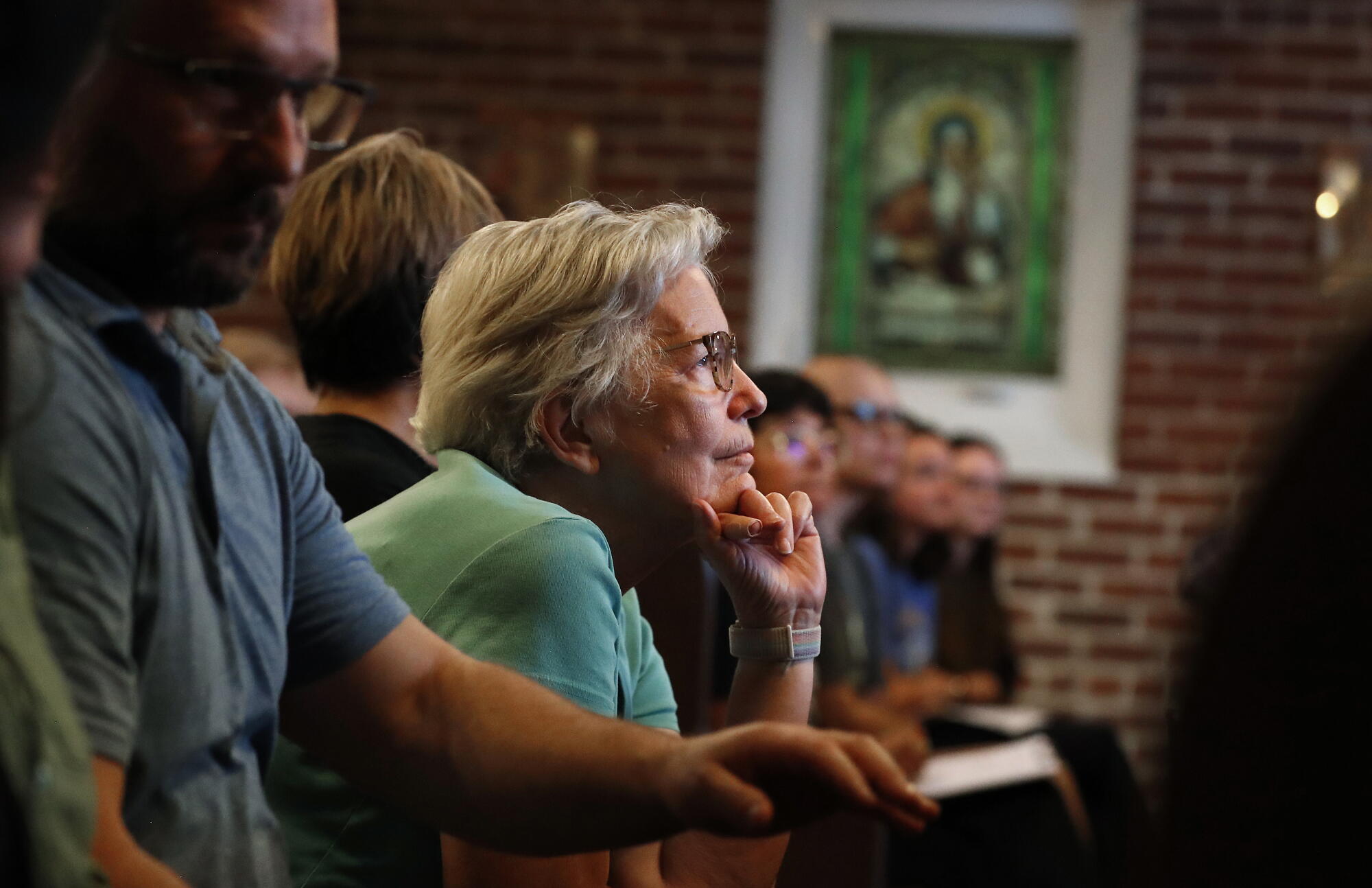
Barbara Castle listens to speakers during a town hall meeting on a possible small-scale data center in Hanford.

Barbara Castle listens to speakers during a town hall meeting on a possible small-scale data center in Hanford.

Nationwide, such concerns are fueling a backlash to data centers from both the left and the right as tech companies flood the country with thousands of proposals for the facilities in nearly every state from California to Maine.

Data centers have become an unusually bipartisan flash point in the midterm elections, as candidates race to delineate policy platforms and respond to public opinion. The issue stands to influence swing voters and motivate turnout at the polls.

Here in the 22nd District, home to the state’s most competitive congressional race, how significantly the issue will affect voters’ decisions remains to be seen. But one thing is clear: Anxiety about data centers is mounting.

“It’s a national concern, it’s now a state concern, and now it’s bled into the local concern,” Hanford Mayor Mark Kairis said. “It’s a very emotionally charged issue right now.”

The Art Center building in Hanford.

Residents in Hanford who oppose data centers say they are worried about the region’s air and water quality, concerns echoed by rural communities across the country.

Demand for data centers, which house the computer systems powering artificial intelligence and the internet, has surged as AI use has ballooned. As of April, more than 1,500 new data centers were in development across the United States, according to a Pew Research Center analysis, largely in rural areas.

The centers require intense cooling, which often demands high water and power use and creates the potential to affect the environment and to pass on utility costs to consumers. But they power technology that is becoming increasingly integrated into American business. They also create jobs, though with limitations.

Democrats see the data center uproar as fitting into their affordability messaging, and candidates generally agree data centers should be regulated, though their positions vary on how aggressively. For Republicans, whose party has backed AI innovation, responding to worsening public opinion has been trickier — particularly given President Trump’s championing of AI and data centers.

Vice President JD Vance on Thursday acknowledged negative polling on data centers but framed the issue as a question of American industrial dominance, saying the country can’t shy away from development. Earlier in the week, Trump asserted that the only reason communities should reject data centers is if they want to be “backwards and poor.”

The public may see data centers as a physical manifestation of AI advancement in general, said Camille Crittenden, executive director of the Center for Information Technology Research in the Interest of Society, a University of California research center. Opposing data centers offers people a way to vent their broader concerns about the technology’s increasing dominance.

Priest Luke Martinez expresses concerns during the community meeting .

Priest Luke Martinez expresses concerns during the community meeting .

“This is a very specific focal point for a general anxiety about AI,” she said. “People see these data centers, and they’re thinking, ‘AI’s going to take my job.’”

The backlash from residents in the Central Valley to the possibility of even a small-scale data center demonstrates how acutely the issue has put many Americans on edge.

“It really is terrifying,” said Lucy Gomez, 57, of Hanford, a retired teacher. “I feel like we’re being guinea pigs when we don’t want to be.”

Increasing influence

Community anger about the facilities has prompted close attention from California lawmakers, who passed legislation in Sacramento on Monday to regulate energy use by the data center industry and impose other requirements.

California is home to the third-most data centers of any state, though it has experienced a relatively smaller new boom because of its high electrical prices and other factors. Still, 54 new facilities were in the works for the state as of April, according to Pew.

Hanford Mayor Mark Kairis speaks with coulcilwoman Kimber Regan during a town hall meeting in Hanford.

Hanford Councilwoman Kimber Regan speaks with Mayor Mark Kairis during the meeting. Hanford’s zoning ordinances do not allow data centers, but the city does not have jurisdiction over the county fairgrounds site where Global Stack is evaluating its proposal.

In Georgia and Pennsylvania, New York and Texas, Nevada and Virginia, the issue has become hot-button in elections at all levels. Ads about data centers run on the airwaves in states with key congressional races. Gubernatorial candidates jockey over it; both New York Gov. Kathy Hochul, a Democrat, and Texas Gov. Greg Abbott, a Republican, put temporary moratoriums on new data centers.

A memo from the Republican senatorial campaign arm underscored how critical the question was becoming last month, when it warned AI companies that data centers could be the deciding issue in the close race between Ohio GOP Sen. Jon Husted and former Sen. Sherrod Brown, his Democratic challenger.

Data centers “are the anchor hanging around Husted’s neck,” said the memo, which was first obtained by Axios. “If he loses and data centers get the blame, politicians across the country will take notice — and they will not go near the next one.”

Sixty-one percent of Americans would oppose a data center being built where they live, a late August poll by the Economist and YouGov found.

Though Democrats and independents were more likely to oppose the centers, 47% of Republicans also said they would oppose it, and 52% of people who voted for Trump in 2024 said they believed construction of a new data center would increase their electrical bills.

Data centers encapsulate existing concerns among red and blue voters across the nation and in California about their quality of life and the influence of major tech companies, said Sonoma State University political science professor David McCuan.

“California has a lot of communities that have been struggling and trying to find a way forward, and the data center debate captures those voters’ frustrations,” McCuan said.

Political winds

The historic Bastille and courthouse in Hanford's Civic Center Park.

The historic Bastille, which served as Kings County’s jail and sheriff’s office from 1897 until 1964, stands tall next to the courthouse in Hanford’s Civic Center Park.

The idea for a center on the Kings County fairgrounds is part of a broader pitch by developer Global Stack USA to boost the state’s emergency infrastructure by installing small-scale data centers, helipads and parking garages at fairgrounds around the state.

Global Stack Chief Executive Dan Kang said the goal was strengthening the state’s emergency response capabilities while helping fairgrounds financially. The company’s early materials envisioned operating 70 sites by 2030.

The company has not made any formal proposals, but in Kings and Tulare counties, the issue caught attention after fair officials agreed to allow Global Stack to evaluate their sites. The idea also prompted some residents to voice opposition in Ventura County last month.

The facilities would include what’s known as an edge computing data center, which typically is much smaller than traditional data centers and which Global Stack says would require lower utility use and no municipal water connection.

Concerns about water and energy use by data centers are legitimate, said Shaolei Ren, a UC Riverside engineering professor who studies AI. Centers like the one proposed by Global Stack do not guzzle water the way larger ones do, but they still can use extra power or generate air and noise pollution, Ren said.

In Kings County, the project potentially could benefit the fairgrounds as a long-term revenue source, said Dena Rizzardo, chief executive of the fair board, a state entity that would have final say over any proposal. Because fairgrounds are state property, local and county officials don’t have jurisdiction.

Kang said he is committed to working with local communities to ensure “any path forward reflects local needs and California’s broader resilience priorities.”

In the district’s congressional race, which could help decide control of the House in November, Democratic nominee Randy Villegas said he has been getting questions about data centers from voters. Last month, he released a set of policy points and called for a data center moratorium of at least a year to give Congress time to pass regulations.

Anti-data center crowd during a town hall meeting at the Episcopal Church of the Savior in Hanford.

Democratic congressional candidate Randy Villegas urged meeting attendees to lobby federal lawmakers to pass legislation regulating data centers.

“The advancement of technology … should not be an excuse to throw our communities under the bus,” Villegas said at the Hanford meeting, where he addressed the friendly crowd without identifying himself as a congressional candidate. A College of the Sequoias professor, he is attempting to unseat Republican Rep. David Valadao.

Valadao, in a statement to The Times, said data center construction requires a “responsible approach” that includes local input and ratepayer protections.

“Data centers play an important role in our economy and national security, but Central Valley families are already facing high electric bills and concerns about our water supply,” Valadao said. He did not answer questions about the proposal in Hanford.

Several attendees at the Hanford meeting, who ranged from Gen Z to elderly, said the issue would affect their midterm votes, though most said they already were leaning to the left.

Gomez, the retired teacher, was not happy with either party but planned to vote for Democrats because she viewed them as taking more action to protect public health than Republicans.

a girl stands next to her father sitting in a church pew with others

Ember Gomez listens to speakers while her father, Filiberto, looks on during the meeting. Filiberto Gomez said he was concerned a data center would affect children’s health.

Courtney Hawkins, 40, said the data center issue “absolutely” would carry weight in his votes.

“I believe that AI is good for propelling technology in general,” Hawkins said, “but I don’t believe we should be pursuing it without regulations and at the cost of the environment.”

Source link

Reigning In Big Tech: How California lawmakers plan to regulate AI and social media

Long the epicenter of the global tech industry, California is taking more action to shield its children, communities and workers from the threats posed by the very industry that’s become central to the state’s identity and enviable economy.

State lawmakers on Monday passed new safeguards around social media and artificial intelligence — and are poised to approve restrictions on data centers — at a time when technology has become intertwined with people’s daily lives.

Efforts to rein in the power of Big Tech extend beyond concerns that TikTok, Instagram and other social media platforms are harming young children.

Unions and workers worry that AI will take their jobs, and lawmakers are trying to tackle privacy and safety issues as AI features get added into smart glasses and toys. Californians are concerned that the proliferation of data centers will increase their electricity bills and strain water supplies.

“There’s a heightened level of tech anxiety right now, and that manifests itself from social media to data centers to AI taking jobs,” said Assemblyman Josh Lowenthal (D-Long Beach). “People are coalescing and they’re demanding that policymakers make change.”

California Gov. Gavin Newsom, who has previously vetoed some bills aimed at adding restrictions on Silicon Valley businesses, will still have to weigh in on whether to sign the pieces of legislation into law.

The Democratic governor has acknowledged the challenge of adopting regulations that protect the public without going too far and potentially stifling the technology industry’s growth, which brings critical revenue to the state budget.

“I think that’s the constant tension,” Newsom said in an interview earlier this summer. “We’re constantly sort of fighting that balance.”

The governor, who has close relationships in the technology industry from his time in San Francisco, said only a couple other states have attempted to regulate artificial intelligence like California. The state, he said, leads on regulation of social media.

“We’re not rolling over, certainly,” Newsom said. “We’re leaning forward, and we’re iterating. We will push the boundaries and litigate.”

The looming restrictions on social media follow a landmark Meta Platforms legal settlement aimed at making social media safer for young people. Parents, politicians and child advocacy groups are worried that social media is contributing to depression, anxiety, eating disorders and other issues.

The actions being pushed in the California legislature are more sweeping than that settlement, however. One of the bills passed by lawmakers on Monday, Assembly Bill 1709, would bar certain online platforms from providing an “addictive feature” to users under 16 years old and add ways to verify users’ ages.

Under the bill, prohibited addictive features include autoplay and feeds that display recommended content.

The addictive nature of autoplay and other features is “harmful, full stop, and that they’re not appropriate for the developing brain,” said Lowenthal, who authored the bill.

After watching technology “run free” in California for years, legislators are now seeking to “pump the brakes a little bit,” said Samantha Vigil, a UC Davis researcher who built a registry tracking social media legislation in states across the country.

“They want to reevaluate what is working,” said Vigil. “What is healthy and beneficial, and what is progress just for the sake of having a new iteration of something?”

All 50 states have introduced or passed some type of digital media or technology-related legislation, tackling smartphone use in schools, social media and chatbots, Vigil said.

Other countries have taken more stringent steps to limit social media use among young people. Australia banned social media use for those under 16, but enforcing the law has been challenging because young people have tried to get around the restrictions.

California isn’t trying to ban social media; instead, it’s trying to limit how platforms design their features.

Parents and state attorneys general have not waited for policy makers to act. They have sued Meta, Google and other tech companies over the alleged harms their products have done to young people.

In late August, Meta, which owns Facebook and Instagram, agreed to pay up to $17 billion and make child-safety changes to resolve a multi-state lawsuit alleging the tech company designed and deployed harmful features while misleading the public about potential harms. Meta and YouTube also lost a social media addiction lawsuit earlier this year in Los Angeles.

Assembly Bill 1709 goes further. For example, Meta’s settlement gives teens the option to pick a non-algorithmic feed and turn off autoplay but, unlike in the legislation, it’s not mandatory. The bill would also apply to other platforms outside of Meta. Meta declined to comment.

Tech industry and business group opposing the bill say it is too blunt and could cut off access to social media’s benefits, according to the bill’s analysis.

“The durable path is to enforce the targeted laws California already has and to strengthen parental tools rather than an overlapping framework whose scope can be redrawn by regulation,” said Robert Boykin, TechNet’s Executive Director for California and the Southwest.

California lawmakers passed another Lowenthal bill aimed at holding social media liable for harm caused to children. Under Assembly Bill 2, social media companies could face fines of up to $1 million per child for negligent harm.

California lawmakers this year also attempted to tackle two other perils of the technological world — the rapid development and implementation of artificial intelligence and the proliferation of the massive data centers that are essential to sustaining the AI universe.

National and state union leaders have urged California legislators and Newsom to protect workers from the threats of AI to replace workers, saying it posed an existential threat to the foundation of a healthy, productive democracy.

“AI must remain a tool controlled by humans, not the other way around,” said Sen. Jerry McNerney (D-Pleasanton).

The state Legislature on Monday approved McNerney’s bill, Senate Bill 947, which would bar employers from “solely” using automated decision-making systems to discipline or fire employees. If an employer primarily relies upon this system, a human must verify the decision.

Lawmakers also approved Senate Bill 951, introduced by Sen. Eloise Gomez Reyes (D-Colton), which would require employers to provide a 60-day advance notice to workers and local and state governments before AI-related layoffs. Lawmakers also approved Assembly Bill 1609, which requires large private businesses that serve customers to provide access to human customer service representatives and to disclose to use of chatbots.

They passed another bill by Sen. Steve Padilla (D-Chula Vista) that enacts a four-year moratorium on the sale and manufacturing of AI-chatbot powered toys over concerns that the technology can harm children.

On Friday, lawmakers agreed on a compromise on proposed legislation to regulate energy use by California’s growing data center industry, measures prompted by community fears about the massive complexes. Lawmakers say the legislation would help protect consumers from growing electricity costs driven upward by the sprawling facilities and to track the centers’ immense energy and water consumption.

At a June hearing on Senate Bill 886 to regulate data centers’ energy use, Assemblymember Pilar Schiavo (D-Chatsworth) said it’s just “a handful of companies that are gonna make trillions of dollars” from AI. They should pay for related utility infrastructure upgrades, she added.

“People, I would argue, are not even begging to use AI,” she said. “They’re struggling to figure it out to keep up with the times, but don’t even really want it.”

The California legislature is expected to vote on two of the bills to regulate the controversial industry within the next day.

Whether Newsom will embrace the legislature’s efforts to corral big Tech in California — in part of in whole — remains unclear.

Newsom last year vetoed a similar AI bill from McNerney to ban automated decision-making systems to discipline employees over worries that it could restrict companies’ ability to use customer ratings. That element was dropped in this year’s legislation.

Newsom last year signed Assembly Bill 56 that required social media platforms to display mental health warning labels to users under 18 starting in January 2027. But he also vetoed Senate Bill 771 that aimed to hold social media platforms liable if they amplified content that contributed to hate crimes and other violent acts, saying that the legislation was “premature” and current civil rights laws might be adequate.

Lowenthal said he’s heard from California families who are anxious about social media and seeking “relief” from their concerns about how the platforms are affecting their children.

“This is a kitchen-table topic,” he said. “I’ve yet to find a family with school-age children in the state of California, any corner of the state, that is not going through this right now.”

Times staff writer Taryn Luna contributed to this report.

Source link

California lawmakers reach deal in high-stakes fight over regulating data centers

After weeks of intense negotiation, state lawmakers on Friday reached a compromise on legislation to regulate energy use by California’s growing data center industry, action triggered by community anger over the facilities and fears of high utility bills in some communities.

The goal, according to legislators and advocates, is to protect consumers from growing electricity costs driven upward by the sprawling facilities and to track the centers’ immense energy and water consumption.

Business groups representing tech companies argued that some of the proposed restrictions and requirements, along with California’s high energy costs and lack of available land, would make it difficult for data centers to open in the state.

Municipalities risk missing out on tax revenues and jobs from the centers if the industry goes elsewhere, they said.

Two bills to regulate the controversial industry consumed the state Legislature in the final weeks of the 2026 session, drawing in Gov. Gavin Newsom and industry organizations and lobbyists representing some of the world’s most influential companies, including Google, Meta, Amazon and artificial intelligence firms such as Anthropic and OpenAI.

Proposed legislation by Sen. Steve Padilla (D-Chula Vista) and Assemblymember Rick Chavez Zbur (D-Los Angeles), finalized Friday, would establish special rules for data centers’ electrical use. The legislation requires the California Public Utilities Commission to create special rates and updated rules for data centers’ use of electricity, including the costs for new power for infrastructure upgrades.

The debate in Sacramento around the data centers centered on how much they should pay for power and infrastructure, and whether that should be mandated by the state Legislature or the California Public Utilities Commission, which regulates investor-owned utilities and is controlled by a board appointed by the governor.

Unlike some other states, California hasn’t seen an overwhelming wave of new large-scale data centers, nor have state leaders sought moratoriums such as the ones enacted by governors in Texas and New York.

An aerial view of a 49.5-megawatt data center under construction in Vernon last month.

An aerial view of a 49.5-megawatt data center under construction in Vernon last month.

(Myung J. Chun / Los Angeles Times)

Nevertheless, advocates focused on reforming the state’s utilities sought this year to seize the moment to enact tough regulations, including forcing data centers to pay for transmission upgrades and wildfire mitigation efforts.

Utility reform advocates and environmental leaders offered mixed reaction on Saturday.

Matthew Freedman, a senior staff attorney for The Utility Reform Network (TURN), praised the final language in the two bills, saying the legislation would prevent data center costs from “being foisted on other customers” while helping California meet its clean energy goals.

Monica Embrey, the founder of Affordable Energy Campaign, called the last-minute amendments “concerning.”

In particular, she pointed to a lack of clean energy requirements for data centers who use their own energy, and a provision that allows a utility to enter into its own agreement with a data center for energy in the interim period before the state finalizes its regulations.

A representative for the Data Center Coalition, whose members include Google and Microsoft, didn’t immediately respond to a request for comment.

Data centers have existed for decades but are rapidly expanding because of the rise of artificial intelligence, or AI. The centers help power everything from streaming services to videoconferencing calls.

Data centers in California are typically smaller than the mammoth, 500+-megawatt AI facilities making headlines in other parts of the country. Electricity costs and state regulations on gas-powered generators limit the vast majority of them to under 100 megawatts.

But as proposals increase in number, opposition has been fierce and growing.

A Public Policy Institute of California poll from July showed that 73% of residents oppose the construction of data centers in their communities.

Opposition centers on water use, air and noise pollution, and the potential for data centers to raise utility bills as they add strain to the grid requiring costly upgrades and new electricity supply.

The California Energy Commission expects data center electricity use, currently 2% of the state’s demand, to double in the next 10 years.

Monterey Park became the first city in the country in June to permanently ban data centers by a popular vote, and at least four other San Gabriel Valley cities have enacted moratoriums.

Southeast of L.A., Imperial County, Desert Hot Springs, and Palm Springs also voted on moratoriums, while Coachella permanently banned the facilities. In the Central Valley, Tulare County adopted a moratorium this month as residents voiced opposition to proposals to develop tiny data centers on local fairgrounds in the region.

And in San José, the state’s hot spot of data center development, residents flooded a recent public hearing to call for a moratorium while the city updates its data center standards.

Newsom last year vetoed legislation by Assemblymember Diane Papan (D-San Mateo) that would have required data centers to disclose and certify their water consumption. The governor said he was reluctant to impose “rigid” reporting requirements on the development of “this critically important digital infrastructure.”

Separate bills that would require the centers to disclose their energy and water use were recently approved by state lawmakers.

Like other state legislators, Papan said she wants to work with the centers, not ban them.

“I constantly say, ‘Help us help you.’ We will all get this right if we can just be transparent and methodical,” said Papan, whose district includes Silicon Valley.

Padilla’s district includes Imperial Valley, where a developer’s plans for a data center on 75 acres is sparking fierce backlash.

Advocates and lawmakers fought over two approaches on the issue of regulating data centers’ energy use.

A wider coalition of environmental groups supported the bill from Padilla, SB 886, sponsored by TURN, that would have required data centers to pay up front for broader power grid updates required to meet their demand. That approach made it into the final package.

TURN pointed to a recent transmission plan from California’s grid operator projecting that increased power demands from data centers in PG&E‘s service territory, where the majority of current and proposed data centers are concentrated, would create up to $1.8 billion in upgrade costs for the power grid, including transmission lines.

PG&E favored a less stringent approach. In an email earlier this week, a PG&E spokesperson argued SB 886 would “risk higher costs for customers and delay critical infrastructure needed to serve the state’s growing energy demand.”

The Data Center Coalition had opposed both bills for “singling out” one type of power user.

The high cost of land and power, as well as lack of available land, are just some of the reasons that California hasn’t seen a flood of data centers, said Khara Boender, a director of government affairs at the Data Center Coalition. She said dozens of states offer some type of exemption for data centers, but California does not.

Additional regulation in the Golden State, she said earlier this week, “would be another signal that the state is a more challenging place for data center development.”

Source link