Displaced Darfur families face volatile winter as Sudan aid cuts bite | Human Rights News
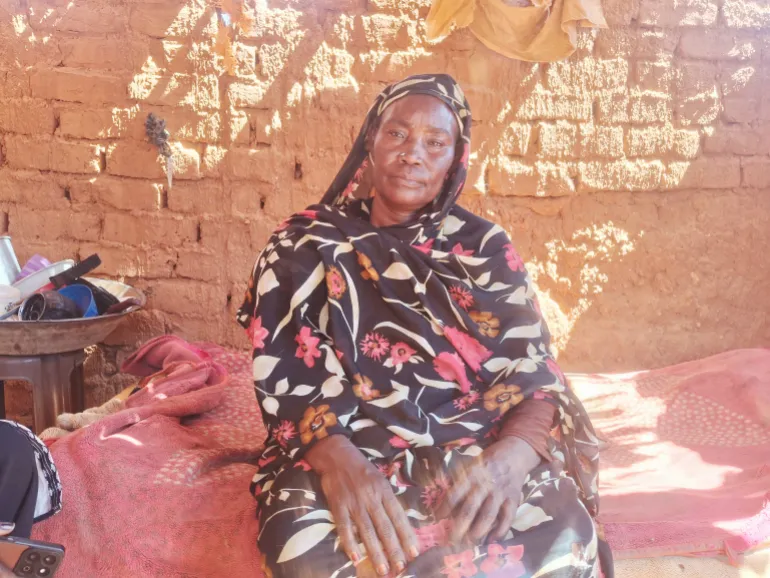
Omdurman, Sudan – When Fatima Mohamed Haroun was displaced from West Darfur state at the start of Sudan’s war in 2023, she never imagined she would find herself caring for four of her grandchildren far from her home.
Haroun, who believes she is aged about 60, said her son went missing a year ago. His wife died after giving birth, leaving Haroun as the sole guardian of her four grandchildren.
Recommended Stories
list of 3 itemsend of list
Now living in a crumbling mudbrick building in al-Ghadir, north of Omdurman, in Khartoum state, she has received no humanitarian assistance since her displacement.
Without an income, it is only the goodwill of her neighbours that prevents Haroun and her grandchildren from starving. But every day is a battle to find food, water or medicine, and with winter fast approaching, proper shelter, warm clothes, and blankets for the children are another priority.
“I cannot work or earn money, so we depend on neighbours who occasionally give us food. But even our neighbours sometimes have nothing to eat. When they have no food, my grandchildren and I go to bed hungry,” she told Al Jazeera.
“We have no supplies to help us cope with the cold, not even blankets to keep us warm. We sleep on the ground with only the sky above us. The cold is severe, and the children are suffering. We appeal to the government and humanitarian organisations to provide food, blankets, covers and other basic necessities to help us endure the cold and protect our children.”

Temperatures can drop significantly in Omdurman during the winter, and at night al-Ghadir can be particularly cold due to its location close to mountainous areas. Displaced families living in temporary shelters here are especially vulnerable because they lack blankets, winter clothing and heating facilities.
The war in Sudan, which broke out between the Sudanese Armed Forces (SAF) and the Rapid Support Forces (RSF) paramilitary in April 2023, has led to one of the world’s worst humanitarian crises.
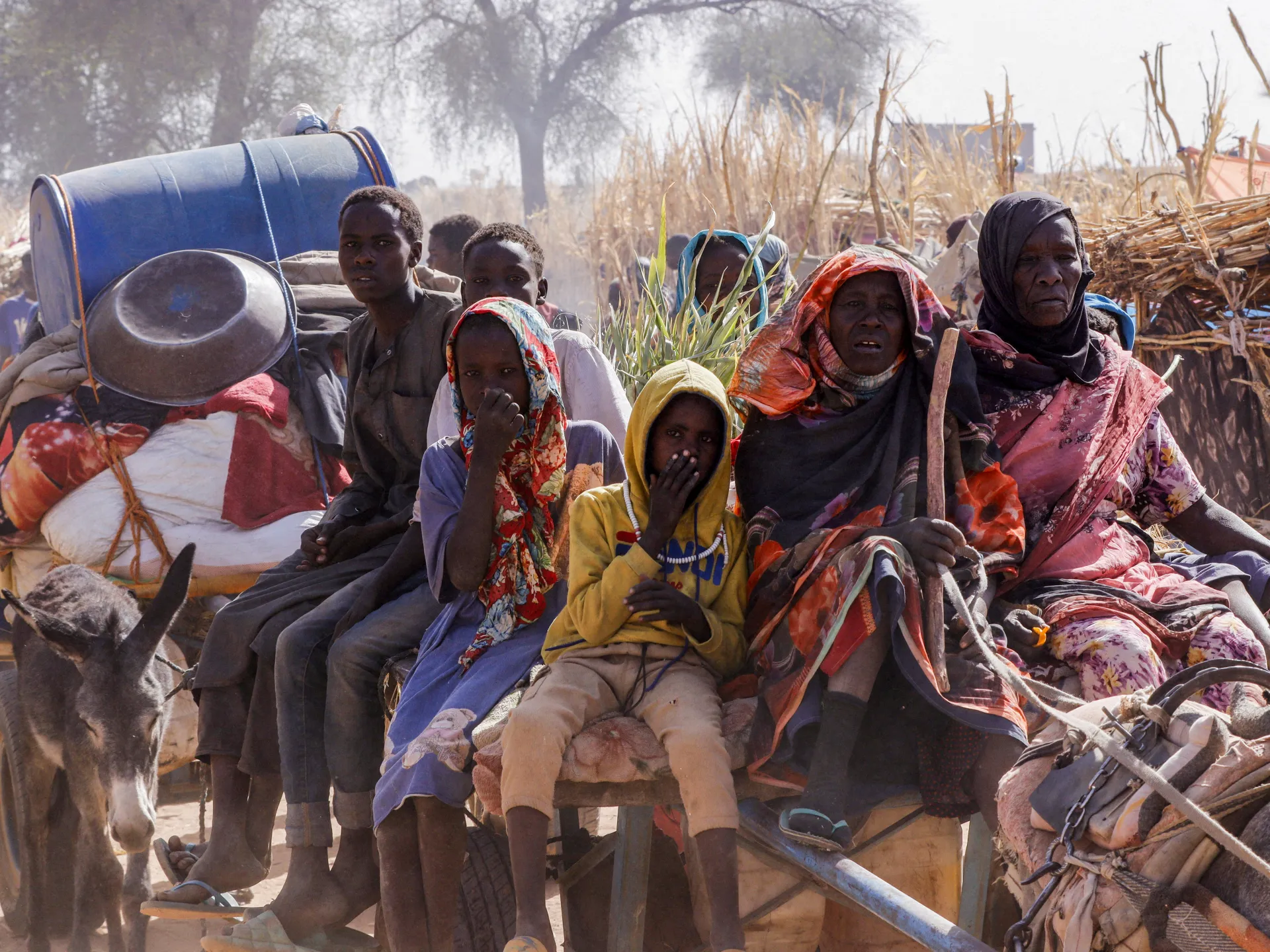
Khartoum state, which was initially one of the epicentres of the war but is now relatively more stable, continues to host large numbers of people forced to flee their homes, particularly from southern and western Sudan where fighting is ongoing. Millions of people in areas such as Darfur have experienced or are at risk of horrific violence, forcing them to flee to other parts of Sudan or neighbouring countries where they live in horrendous conditions.
As of July 30, Khartoum state was hosting 414,252 internally displaced people, according to data from the International Organization for Migration’s (IOM) Displacement Tracking Matrix (DTM).
Winter is expected to worsen conditions for families living in temporary shelters or unfinished buildings without adequate blankets and warm clothing.
Sudan has more than 8.5 million internally displaced people, according to DTM Sudan, with the IOM and the United Nations refugee agency (UNHCR) warning that millions are still without a roof over their heads and risk losing access to emergency shelters due to funding shortages.
About 15.4 million people in Sudan need emergency shelter and basic household items. The agencies said funding shortages mean humanitarian organisations can prioritise assistance for only 10 percent of those in need, leaving millions without support.
Fighting, general insecurity, drone attacks on civilian infrastructure and camps, as well as other logistical challenges were all obstructing aid deliveries, the agencies said. Less than half of the funding for Sudan’s 2026 Humanitarian Response Plan, which requires $2.9bn to assist 20.4 million people in need, had been received, forcing humanitarian agencies to scale back some services.
Abdelaziz Suleiman Ori, director of culture and information for the Darfur regional government, said his administration was monitoring the conditions for displaced people in host states, including Khartoum, and coordinating humanitarian assistance.
The regional government has drawn up a winter plan that includes blankets, clothing and food to respond to the impending crisis, but Ori acknowledged that available resources were so far insufficient.
“Since the outbreak of the war on April 15, Governor Minni Arko Minawi has dispatched humanitarian convoys from Port Sudan to el-Fasher, passing through Madani, Kosti and El Obeid. We are also in contact with international organisations and UN agencies to monitor the situation of displaced people in different states,” Ori told Al Jazeera.

“Our winter plan includes blankets, clothing, food and children’s necessities. But our resources are not enough to meet the needs of the large number of displaced people. We appeal to humanitarian partners to provide more support.”
Ori said that only a collective response – involving regional government, host states, local authorities and NGOs – can properly respond to the crisis.
“Responsibility for displaced people is shared between the regional government, host states, local communities and humanitarian organisations,” he said.
“We coordinate efforts, seek relief assistance and monitor their conditions with local authorities. We bear part of the responsibility, but need greater cooperation to ease their suffering.”
Kheira Matar Hassan, a resident of Darfur, passed through Renk, Rabak and Khartoum at the start of the war before settling in al-Ghadir camp in 2023. She became separated from her husband when he went looking for work in a gold mining area in Chad at the same time.
She has received no word from him since he disappeared and has been left alone to support their seven children. They live in a dilapidated home built of bricks and mud bricks with damaged areas covered with cloth and plastic sheeting.

Hassan said she has received no support from the government or NGOs, and to support her children, she washes and irons clothes for families in the area, earning just enough money to buy food.
But her income is irregular, and if she has no customers, her family goes hungry. Lacking blankets or adequate shelter, she fears the impact that falling winter temperatures will have on her children. It stands in stark contrast to their former life, when her father worked as a farmer, and the family had enough food to eat.
“We are just here, trying to get by. Our circumstances are extremely difficult; we are really struggling here,” she told Al Jazeera.
“We came from an area where we were not poor. We had our land, cultivated it and lived off what it produced. But the war brought us here. Please look at us and consider our circumstances. We are really suffering.”