U.S. deportations to Nicaragua rise under Trump, despite its record of abuses
MEXICO CITY — Nicaraguan journalist Luis Galeano fled his country in 2018 after police raided the television station where he broadcasted his popular talk show, arresting two of his colleagues.
Galeano applied for political asylum when he arrived in Florida on a tourism visa, saying he faced grave risks back home for his fierce criticism of Nicaragua’s left-wing Sandinista government, which the U.S. labels a dictatorship. Soon after, Nicaragua declared Galeano a “traitor to the homeland” and confiscated his home and assets in the capital of Managua.
This week, U.S. immigration agents arrested Galeano in Orlando. Despite his ongoing asylum case, he now faces deportation to the country he fled and whose abuses he has spent years documenting.
Journalists, human rights advocates and political dissidents who were persecuted in Nicaragua and sought safety in the United States are increasingly being detained as the Trump administration widens its deportation dragnet and narrows access to asylum and other forms of protection.
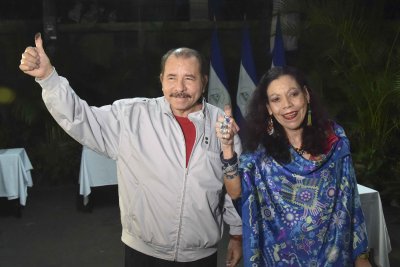
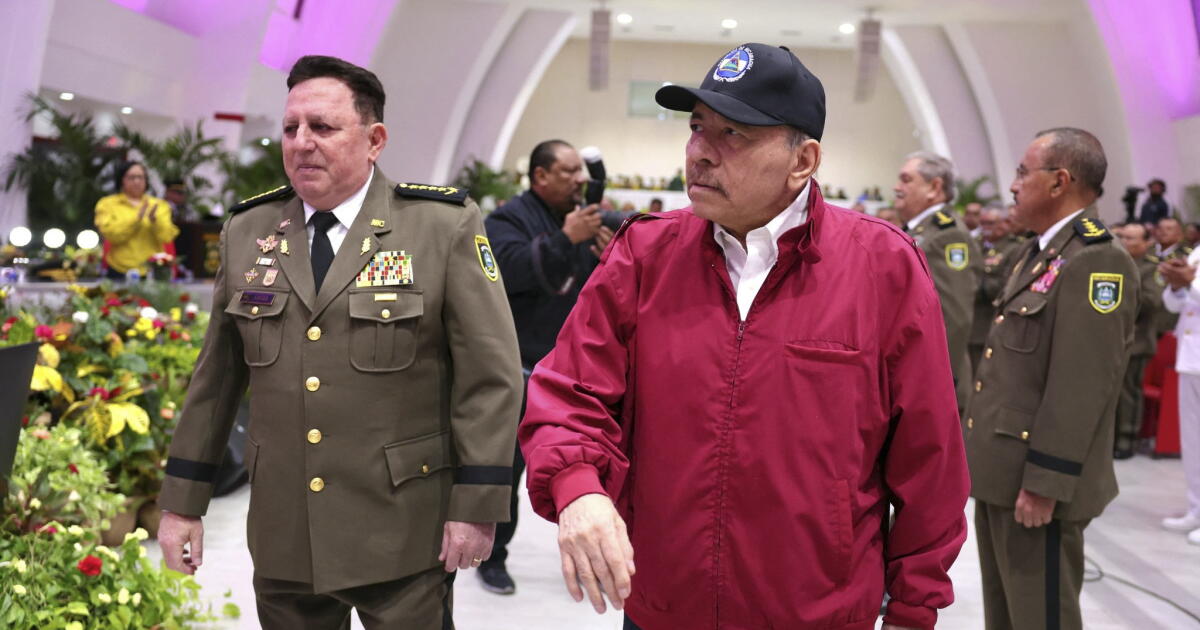
Recent targets include activists who fled Nicaragua after a bloody crackdown on pro-democracy protests in 2018 and opposition leaders critical of the regime of Daniel Ortega and Rosario Murillo, a married couple who lead Nicaragua as co-presidents.
Some of the exiles arrested by U.S. agents in recent months had been welcomed with open arms by the U.S. government just three years ago under a novel deal negotiated by the State Department.
As part of the 2023 agreement, Nicaragua freed 222 political prisoners and the U.S. hired a charter plane to fly them to Washington, where each person was granted temporary humanitarian parole and the chance to apply for asylum.
One of those former prisoners, Marlon Gerardo Sáenz Cruz, a former Sandinista who said he was tortured in Nicaragua after denouncing government corruption, was arrested during a regular check-in with immigration authorities in Los Angeles on Aug. 17.
Another, Denis Javier Palacios Hernández, who languished for three years in a Nicaraguan jail after participating in pro-democracy marches, was detained by immigration agents Wednesday morning in Virginia.
Human rights advocates say the effort to deport dissidents with no criminal record and a history of persecution puts their lives in danger and is at odds with U.S. foreign policy, which condemns human rights abuses and corruption under Murillo and Ortega, a former Marxist revolutionary who at 80 is now the longest-serving leader in the Americas.
After Ortega said in July that Nicaragua would scrap all future elections, Secretary of State Marco Rubio, who had recently announced sweeping sanctions on dozens of Nicaraguan leaders, vowed consequences. This week, while celebrating the anniversary of Central America’s independence from Spain, Rubio praised Nicaraguans for pushing for democracy “despite the Murillo-Ortega dictatorship’s brutal efforts to annihilate it.”
“Whether at home or in exile, Nicaraguans’ aspirations for a future free from tyranny cannot be canceled or erased,” Rubio said.
He spoke one day after Border Patrol agents arrested Galeano, who, since moving to Florida, has driven for ride-hailing apps in the mornings to provide for his two children and has spent his afternoons recording episodes of “Café con Voz,” his daily YouTube show.
A spokesperson for the Department of Homeland Security said Galeano was detained because he overstayed his tourist visa, which gave him permission to remain in the U.S. only through 2019, and encouraged Galeano to self-deport. “Being in detention is a choice,” the spokesperson said. “The United States is offering illegal aliens $3,000 and a free flight to self-deport now.”
In the past, people who had filed asylum applications in the U.S. were generally allowed to stay and work while they waited for a ruling in their case, a process that often stretches years because of backlogs in immigration court.
That’s changed under President Trump, who has vowed to deport 1 million people annually, and who complains that the asylum system is abused and used as a back door for economic migrants falsely claiming persecution.
As immigration arrests in the U.S. have soared in recent months, surpassing 51,000 in August, asylum seekers and others who have shared their information with the U.S. in hopes of achieving legal status make up a growing share of detainees, according to the Deportation Data Project.
Removals of Nicaraguans have also surged, with deportation flights to Managua increasing more than fourfold under Trump compared to under President Biden, according to data tracked by Human Rights First.
Nicaraguans are also being shipped to Mexico, Costa Rica and as far away as the Central African Republic. They face unique risks in those countries, said Savi Arvey, director of policy for refugee and immigrant rights at Human Rights First.
In Costa Rica, Sandinista operatives are suspected in a series of shootings, abductions and killings of Nicaraguan exiles in recent years.
“This government is so single-minded in carrying out this vast mass deportation campaign that it blatantly ignores realities on the ground,” Arvey said.
Gerald Chávez, president of the Independent Journalists and Communicators of Nicaragua, said that at least one journalist who had sought protection in the U.S. had been sent to Costa Rica, avoiding deportation to Nicaragua thanks to a lengthy legal battle and help from Reporters Without Borders.
Restriction of press freedoms has been a cornerstone of Ortega and Murillo’s efforts to concentrate power in recent years.
Hundreds of journalists fled as government officials jailed colleagues, shuttered dozens of news outlets and passed laws barring reporters from publishing information not authorized by the government. At one point, Ortega even banned newspapers from importing paper and ink.
Galeano — who previously worked as a correspondent for the Associated Press in Nicaragua — believed he had a responsibility to call out what he saw as injustices perpetrated by the government.
“If there is one thing that has distinguished the Sandinista thugs … it is that up until now, they have enjoyed total impunity,” he said on a recent episode of his YouTube show.
Galeano’s arrest has drawn sharp criticism from human rights and press freedom groups and even Republican Rep. María Elvira Salazar, a Trump ally who is seeking reelection in Florida.
Salazar described Galeano as a journalist who had “paid a very high price for telling the world the truth.”
“The United States must always know how to distinguish between a criminal and a political exile,” she wrote on X. “Luis cannot end up in the hands of the very dictatorship that persecuted him.”
Linthicum reported from Mexico City. López, a special correspondent, reported from Orlando.