SCREEN star Sydney Sweeney is backed for the next 007 film — not as a Bond girl, but a girl Bond.
Hollywood director Paul Feig believes she would be perfect as the British spy.
Sign up for the Showbiz newsletter
Thank you!
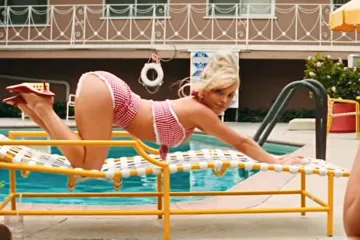
Film star Sydney Sweeney has been backed for the next 007 filmCredit: GettyA Hollywood director believes Sydney would be perfect for the role of BondCredit: Getty
Asked about a glamour role for her in the next movie, he insisted: “I’d rather Sydney be the next Bond.
“There have been some cool Bond girls, but come on, let her be the super-spy, she’s great.”
Paul, who was behind the camera for Sydney’s latest hit The Housemaid, added: “She’s one of the hardest-working people I know, so professional, so smart, so savvy. I think she’d be a good spy.”
American Sydney, 28 — who posted a selfie in an ivory dress on Instagram at the weekend — last year told of her interest in Bond after the franchise was bought by Amazon MGM.
Dune’s Denis Villeneuve will direct the next 007 film, written by Peaky Blinders’ creator Steven Knight.
Daniel Craig as James Bond in 2008’s Quantum Of Solace with Olga KurylenkoCredit: Kobal Collection – ShutterstockSydney with Hollywood director Paul FeigCredit: GettySydney posted this snap of her in an ivory dress on InstaCredit: Instagram/Sydney Sweeney
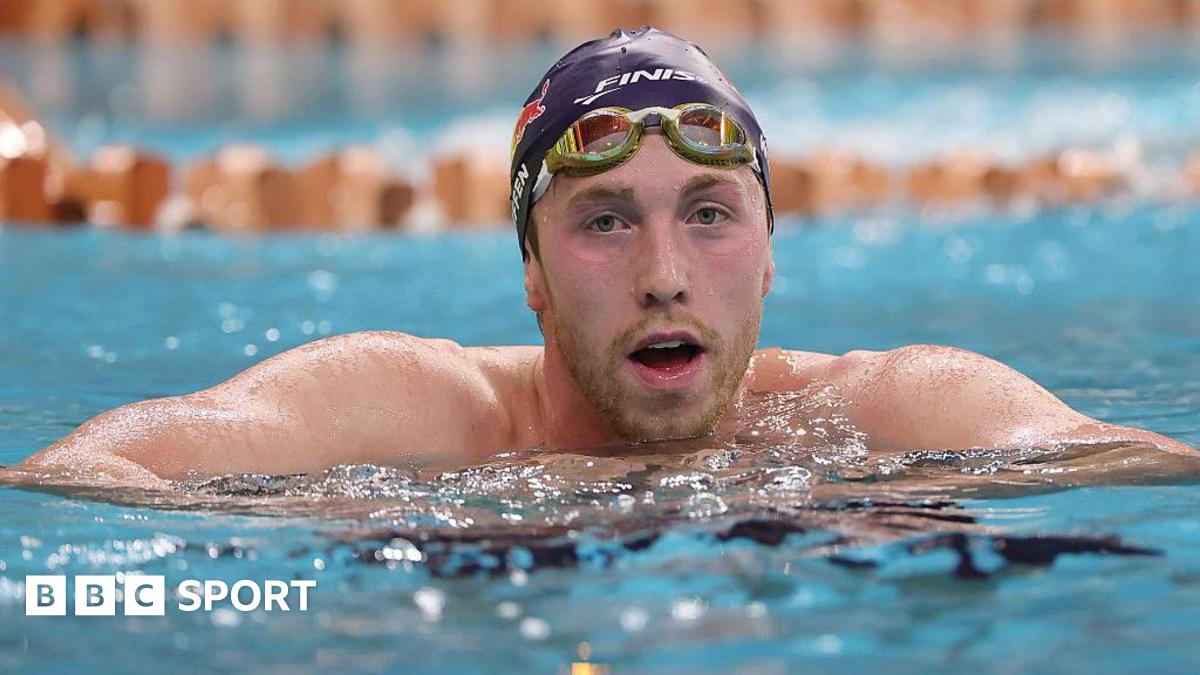
Wiffen said he is expecting “to swim the best ever so I don’t have to make a decision” across the 200m, 400m, 800m and 1500m events he will be competing in, despite his recent lack of competitive action.
He outlined his goals as swimming the 400m around 4.33 seconds, the 800m below 7.42 seconds and the 1500m under 14.40 to assess whether his time spent in California has been successful.
The County Armagh man also cited Dublin as a potential future base if he does decide to move, but emphasised that doing so would be heavily dependant on his performances in Bangor.
“If I’m around those times, under or around PB, then that’s great. That obviously means the training is working, and if it doesn’t work then I [have to figure out] what I’m going do after,” he added.
“I’m thinking of coming back to Dublin if it doesn’t go well, but, we have to see. If I swim lights out in Bangor, then my decisions obviously can’t have been made.”
Wiffen also explained the main differences he has encounter between training in England and in the US, where they use yardage instead of metres.
“The training is just quite different and, even though I don’t swim a lot of yards, I just think being in America is fun. There’s quite a lot of distractions, and it’s a good lifestyle but, it’s not the same as what Loughborough was like,” he said.
“[It was] all about grind, very similar weather to Ireland and I love swimming in the rain and when the weather is dull. When you’re in the sun everything becomes a lot harder and the motivation becomes a lot harder.
“When I’m swimming in California, my motivation is I’m with a really good training group and everybody’s pushing each other, where as in Loughborough, I feel like it was more self-motivation, I was getting there because I wanted to win.
“I wanted to do all these things where I feel like another group is kind of pushing me to swim fast, which I like, but I think I want a bit of the self-motivation back, so we’ll have to see how the next week goes.”
Driver Daniel Dye has been suspended indefinitely by NASCAR for “insensitive comments made during a recent livestream,” the organization announced Tuesday.
The full-time driver in the NASCAR Craftsman Truck Series was also suspended indefinitely by his team, Kaulig Racing.
In the video, Dye imitated IndyCar driver David Malukas. At one point during the livestream, Dye referred to the voice he had used as a “David Malukas gay voice.”
According to a NASCAR news release, Dye was punished for violating a rule that states members should not make “a public statement or communication that criticizes, ridicules, or otherwise disparages another person based upon that person’s race, color, creed, national origin, gender, sexual orientation, marital status, religion, age, or handicapping condition.”
“Dye used language that officials deemed unacceptable, resulting in Tuesday’s suspension,” NASCAR stated. “Dye must complete sensitivity training before he may return to competition.”
On Tuesday, Dye posted a statement on social media, in which he apologized to Malukas and others for his “careless comments.”
“I chose my words poorly, and I understand why it upset people,” Dye wrote. “I’m sorry to anyone who was offended. That’s not how I want to represent myself.
“I have some close friends in the LGBTQ+ community who I would never want to feel less of themselves because of what I said, and that’s exactly why I should hold myself to a higher standard. In talking with them, I realize that a true friend would know better than to act the way I did and for that I need to be a better friend. What I said doesn’t reflect how I feel about them or anyone else.
“I didn’t think enough before I spoke, and I in no way meant any harm. I know that intention does not erase impact and I need to do better.”
Malukas and his team, Team Penske, did not immediately respond on Wednesday to requests for comment.
Dye, 22, was also suspended four years ago as a driver in the ARCA series, which NASCAR owns. He had been arrested and charged with felony battery for allegedly punching a high school classmate in the groin area. He was reinstated when the charge was reduced to a misdemeanor.
In 49 Truck Series starts, Dye has two finishes in the Top 5 and 10 finishes in the Top 10, earning one pole position. He is in 13th place through three races this season.
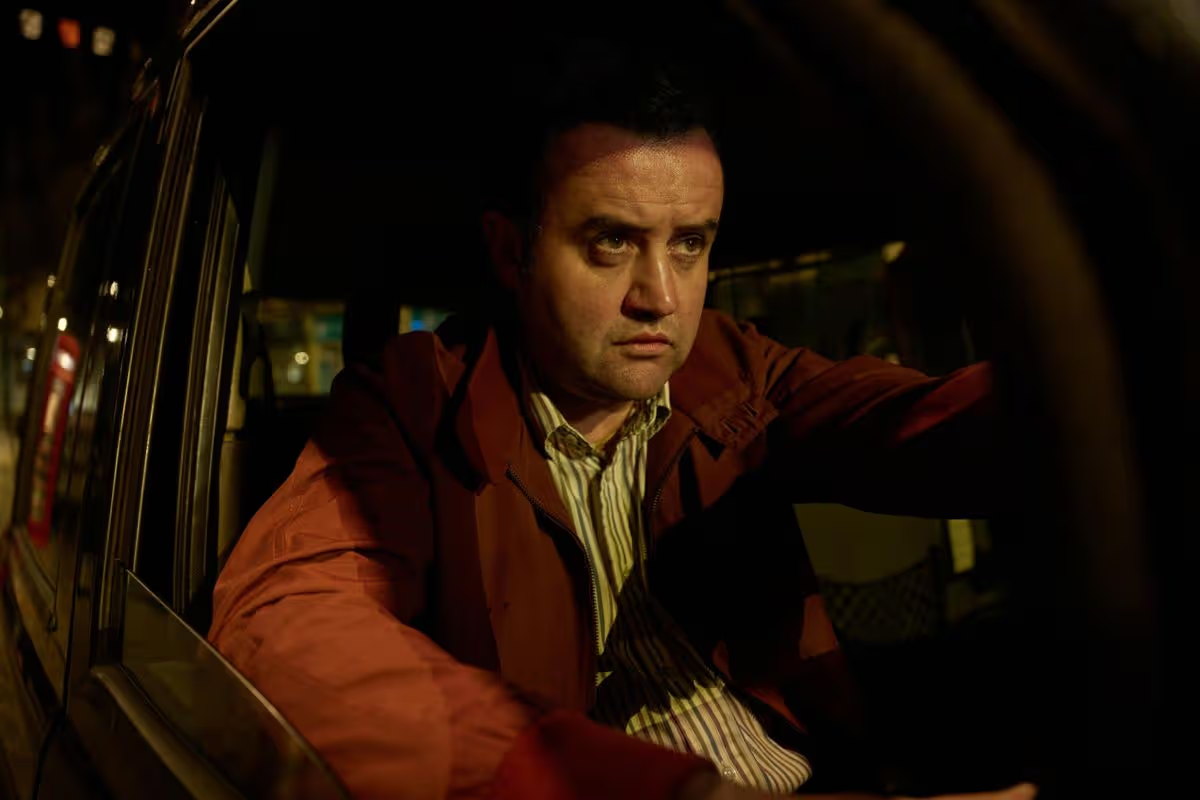
The actor portrays John Worboys – dubbed the “black cab rapist” – in the upcoming series
Daniel Mays plays John Worboys in Believe Me(Image: ITV)
Daniel Mays has admitted he was “absolutely terrified” when he read the script of his new ITV drama Believe Me.
The actor plays convicted offender John Worboys – who was dubbed the ‘black cab rapist’ after preying on women under the cover of being a licensed taxi-cab driver.
He was convicted in 2009 for crimes including sexual assault and drugging with intent against 12 women.
“I actually underestimated how much it was going to affect me,” Daniel said as a first look image of him as Worboys was released.
“I’ve been a professional actor for 26 years, so I’ve done a lot of true crime and played a lot of wrong ‘uns. When I got these scripts, it absolutely terrified me, because I’m a father myself.
“My head immediately went to my 13-year-old daughter Dixie. She’s venturing out, going on trains, and before long, no doubt she’ll be in the back of a taxi. So as a father, I found it an incredibly disturbing and terrifying read.”
He continued: “It was a difficult thing to have rolling around in my head before filming.
“It was a very isolating character to play, by its very nature. When I was announced to play him, I got this tirade from family and friends and work colleagues who can’t quite believe it, going, ‘Why would you want to play something like that?’ So, the challenge was to humanise him, really, and that was a very difficult and unsettling thing to take on.”
The four-part series, filmed in Cardiff, focuses on the ordeal of Sarah (played by Peaky Blinders’ Aimée-Ffion Edwards) and Laila (played by Raised By Wolves’ Aasiya Shah), who reported sexual assaults by Worboys, and how their allegations were not thoroughly investigated.
ITV said it “tells the story of how the victims of one of the most prolific sex attackers in British history were failed by the system”.
Danny, known for Des and A Thousand Blows, said there’s “always a huge responsibility” playing a real person on screen, but that this was “a whole other level”.
He explained: “This is told from the perspective of the victims, and for them to tell their truth, have their stories told – the ordeals that they went through and the fight they took on against the Metropolitan Police and the court systems.
“So, when you’re dealing with that, the onus was on me to get it absolutely 110% right. That was paramount to me.”
Believe Me is coming soon to ITV1
If you or somebody you know has been affected by this story, contact Victim Support for free, confidential advice on 08 08 16 89 111 or visit their website, http://www.victimsupport.org.uk.
NEW YORK — What makes life worth living? For hard-core “Harry Potter” fans with money to burn, it might be getting Broadway tickets to interact fleetingly with Daniel Radcliffe in “Every Brilliant Thing,” an ingenious and touching solo performance piece written by Duncan Macmillan with Jonny Donahoe on the subject of suicide — or more precisely, on the ordinary joys that militate against such a drastic step.
Radcliffe was breathlessly scampering up and down the aisles of the Hudson Theatre before the show began, enlisting audience members to be participants in the play. Having seen “Every Brilliant Thing” twice before, once at the Edye (the black box at Santa Monica’s BroadStage) starring Donahoe in 2017 and once at the Geffen Playhouse’s intimate Audrey Skirball Kenis Theater starring Daniel K. Isaac in 2023, I knew exactly what he was up to.
The play revolves around a list that the narrator began at the tender age of 7 after his mother first attempted suicide. While she was still in the hospital, he started compiling, as much for her benefit as for his own, sources of everyday happiness.
Ice cream, water fights, kind people who aren’t weird and don’t smell unusual. These items are given a number, and audience members assigned a particular “brilliant thing” are expected to shout out their entry when their number is called.
The list gradually grows in complexity as the narrator gets older. Miss Piggy, spaghetti bolognese and wearing a cape give way to more sophisticated pleasures, such as the way Ray Charles sings the word “You” in the song “Drown in My Own Tears” or the satisfaction in writing about yourself in the second person.
Music plays a prominent role in “Every Brilliant Thing,” which was adapted from a monologue/short story Macmillan wrote called “Sleeve Notes.” The narrator’s terribly British father takes refuge from the emotional storms of his household by listening to jazz records in his office. John Coltrane, Cab Calloway, Bill Evans, Nina Simone are favorite artists, and the narrator can tell his father’s mood simply by the record he’s decided to play.
The production, directed by Jeremy Herrin and Macmillan, involves every level of the Hudson Theatre. I assumed I would be safe, occupying an aisle seat in the murderously expensive prime orchestra during a press performance attended by critics. But I wasn’t flashing a pad as my colleague across the aisle from me was doing to ward off any intrusions. And just before the show was about to start, Radcliffe was suddenly kneeling beside my seat asking if the person I was sitting with was my partner.
I told him that we weren’t a couple, just friends, and that I would be the worst person he could possibly ask to perform anything. But Radcliffe wasn’t so easily put off. “Let’s just say that you’re an older couple who have been together for some time,” he whispered. “And all you have to do is hand me this box of juice and candy bar when I refer to the older couple.”
OK, what harm could there be? Little did I know that “older couple” was to become “old couple,” a term that seemed to be repeated incessantly, at least to my Gen X ears not yet accustomed to scurrilous millennial attacks! I composed myself by pretending that we were in the world of anti-realism. But in truth, I would like to be the kind of person who would offer an anxious kid in a hospital waiting room a juice box and a candy bar, so maybe the casting wasn’t so far-fetched after all.
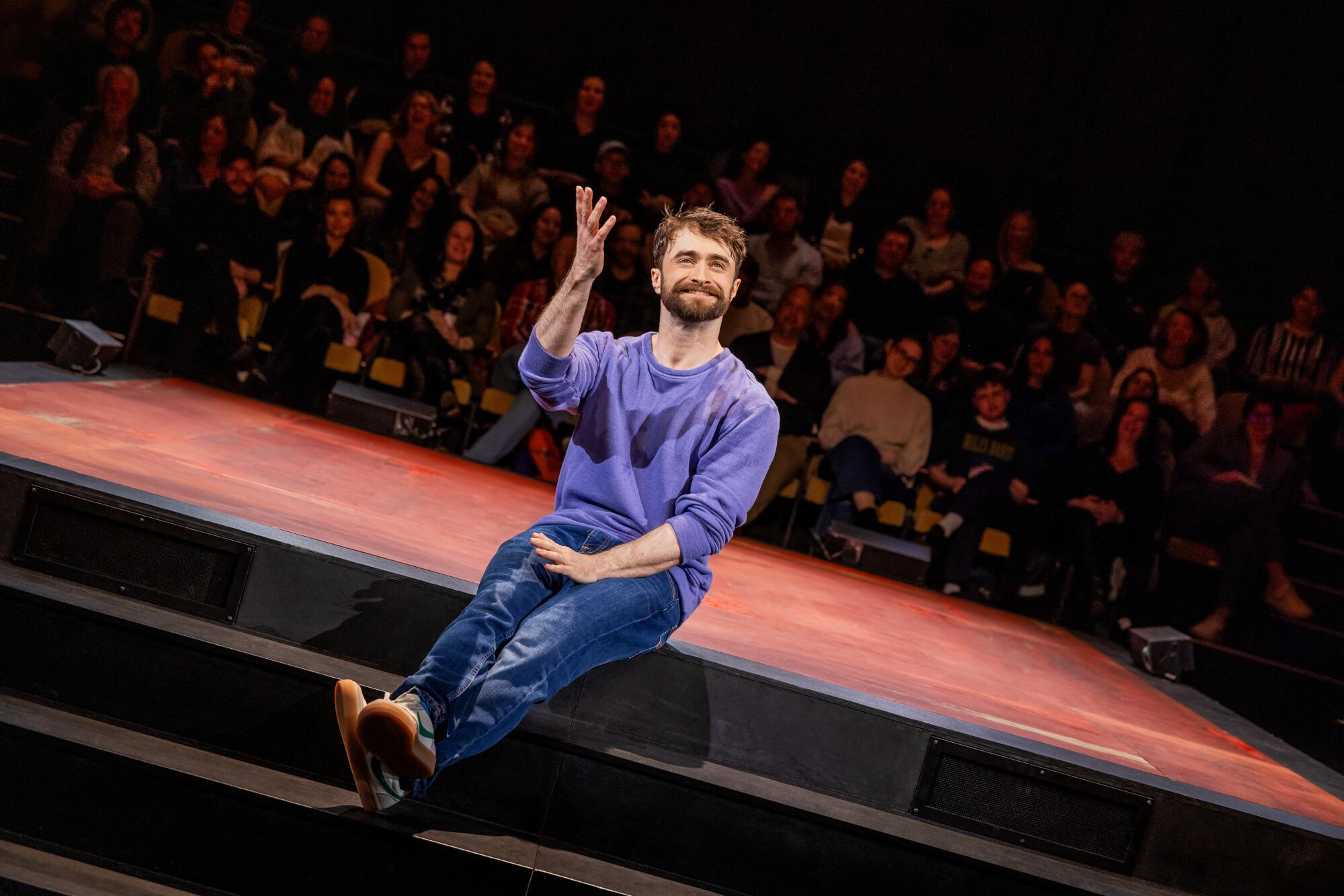
Daniel Radcliffe in the Broadway production of “Every Brilliant Thing.”
(Matthew Murphy)
A theatergoer was called upon to play the vet who euthanized the narrator’s childhood pet, a dog named Indiana Bones that was symbolized by a coat someone volunteered from the audience. It was the boy’s first experience of death, a difficult concept for a young mind but an important precursor for a boy not given the luxury of existential innocence.
Other audience members, particularly those seated on the stage, played much more elaborate roles. One man, first invited to serve as a stand-in for the narrator’s father, was asked instead to play the boy. He was given one word to say in reply — “Why?” — as his father tries to explain the reason his mother is in the hospital. This same enlisted actor was later called upon to play the dad giving a toast at his son’s wedding, one of the rare occasions when he was able to summon language for the kind of deep feeling he would normally only be able to express through his records.
One kind and patient spectator conscripted to play the school counselor had to remove her shoe to improvise a sock puppet, one of the tools of her empathetic practice. Another audience member sensitively played Sam, the narrator’s love of his life, a relationship that reveals the long-term toll of being raised by a parent suffering from suicidal depression.
Radcliffe’s audience wrangling was as intuitively sharp as his deeply felt performance. He has the comfort of a good retail politician, who’s not afraid of making direct contact with crowds. Two-time Tony winner Donna Murphy, in the house at the reviewed performance, gamely went along when Radcliffe briefly enlisted her luminous services.
Obviously, Radcliffe is the main reason “Every Brilliant Thing” is on Broadway. The show, which began at Britain’s Ludlow Fringe Festival in 2013, is a gossamer piece, a 70-minute curio best experienced in close quarters without the high expectations and ludicrous prices of New York’s turbo-charged commercial theater. The Hudson Theatre lends a mega-church vibe to the proceedings, but the spirits of theatergoers are nonetheless moved.
A scruffy-faced Radcliffe, twinkling accessible geniality in jeans and a sweatshirt, zips up and down the cavernous theater as though waging a one-man campaign against the isolation epidemic. There’s no denying that Harry Potter has matured into an assured stage actor. His Tony-winning performance in “Merrily We Roll Along” should have put to rest any doubts, but the glare of his fame can still obscure his serious chops.
Sincere yet never smarmy, ironic without ever being cynical, well-groomed though far from swank, he’s a more glamorous version of the character than the one originated by Donahoe, the British comedian with an everyman demeanor whose portrayal seemed so genuine at the Edye that I mistakenly thought that the play was his personal story.
Donahoe’s performance was filmed for HBO, but “Every Brilliant Thing” is meant to be experienced in a theater. The whole point of the show is to transform the audience into an impromptu ensemble, a group of strangers emotionally united through the story of one young man’s intimate knowledge of suicide, a subject that Albert Camus called the “one truly serious philosophical problem.”
I’m of two minds about “Every Brilliant Thing.” I was moved once again by the piece, but I’m grateful I didn’t have to wreak havoc on my credit card to pay for my seats. I love the interactive, gentle humanity of the play, but I was also acutely aware of how the work has been commodified. I applaud Radcliffe’s willingness to carve an independent path as an actor, but I might have been more impressed by his adventurousness had he decided to perform in a pocket venue that didn’t have the tiers of pricing I associate with airlines.
Yet launching a conversation around mental health with an audience magnet as powerful as Radcliffe is on balance an excellent thing. And Radcliffe’s compassionate portrayal of a survivor recognizing that he’s not out of the woods just because he made it into adulthood is one of those things that makes a theater lover just a little more appreciative of the humanity at the center of this art form.