dana williamson

A former Becerra aide pleaded guilty in a fraud case. I still have questions

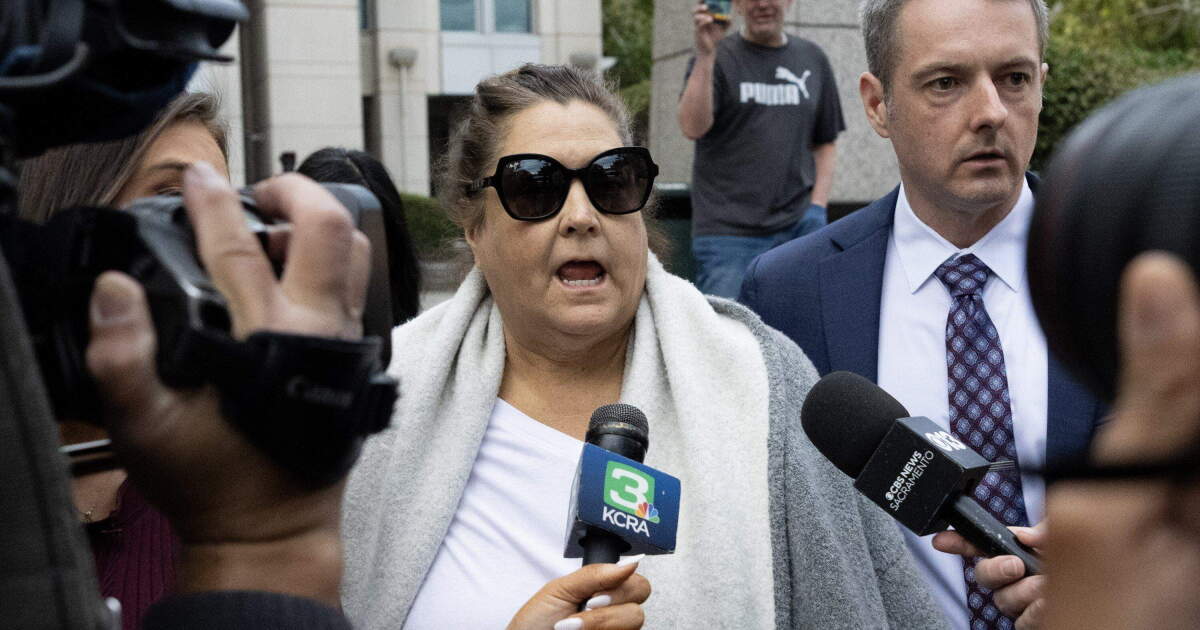
Dana Williamson, one of the political heavyweights at the center of a financial scandal involving gubernatorial candidate Xavier Becerra, looked shell-shocked Thursday morning in a federal courtroom in downtown Sacramento, as most folks do when bad choices collide with the hard realities of the justice system.

A thousand-yard stare in her eyes, Williamson responded “guilty” three times in a voice that required a microphone to be heard as the judge walked her through a plea deal reached days before with the U.S. Department of Justice. She likely won’t be sentenced until fall (possibly close to the general election) but will — again, just a likely here — at best face home confinement and at worst upward of three years in prison.

It’s a colossal fall for a woman who wasn’t so much a consultant as a political operative to Becerra, Gov. Gavin Newsom, former Gov. Jerry Brown and a slew of companies including Meta and PG&E. She was known at the Capitol as a woman who got things done, sometimes with finesse, sometimes not.

It was her savvy and ability to deliver whatever was needed through her deep connections and knowledge of the complicated structures — official and cultural — that govern the California halls of power that make her predicament all the more confounding. Especially because, far from stealing money for self-enrichment, she actually paid money to be part of this scheme.

That alone, to me, raises questions.

Though Williamson’s guilty plea may seem like an ending to the saga, it shouldn’t be, because there’s still a lot lurking in the dark corners of this deal.

If Becerra makes it past the primary, which seems (I’ll use that word again) likely, voters have a right to know.

Here’s the simple backstory, according to court documents. Becerra’s close aide, Sean McCluskie, took a pay cut to remain with his boss when he moved to Washington to become President Biden’s secretary of Health and Human Services.

Strapped for cash, McCluskie asked Williamson to receive money from Becerra’s dormant campaign account — which Becerra was legally not allowed to manage while holding federal office — and pass it through a bunch of other accounts before giving it to McCluskie’s wife as payment for a nonexistent job.

Williamson’s attorney, McGregor Scott, said Thursday that Williamson received $7,500 each month from the Becerra account and added $2,500 from her own funds before sending it on to ultimately reach McCluskie — for a total of $10,000 a month.

McCluskie was “living on a government salary,” Scott said Thursday after court. “Wife is home with the kids. They didn’t have enough money, and that’s where this all originated. [Williamson] was simply trying to help a friend in a pinch as best she could.”

Scott, a former Bush and Trump United States attorney, managed to get Williamson’s original 23-count indictment knocked down to the Becerra account issue, along with lying to the FBI and filing a false tax return.

McCluskie entered his own guilty plea in the case last November and is scheduled to be sentenced, along with the third lobbyist, in June.

Becerra, who is a slim-margin front-runner for governor, was the victim in this case — or more precisely, his state campaign bank account was, according to court documents.

There has never been any indication that Becerra was investigated as a participant, and he has forcefully denied wrongdoing, calling it a “gut punch” that his advisers allegedly betrayed him.

That, of course, hasn’t stopped the other candidates from using the case against him.

“My opponents have spent millions spreading lies to purposefully mislead voters,” he wrote Thursday on social media. “Today confirms what I have said from day one: I did nothing wrong. Case closed.”

Meanwhile, Scott, the attorney, also said Thursday that Williamson assumed, based on her conversations with McCluskie, that McCluskie had spoken to Becerra about the concept of the money transfer. Text messages in court records show a brief and ambiguous exchange between McCluskie and Williamson that backs that up.

Scott said that Williamson never spoke directly with Becerra about the scheme.

That leaves the distinct possibility that Williamson believed Becerra knew what was happening — but never asked him. Dumb? Maybe. But Williamson isn’t usually dumb.

“The understanding that McCluskie conveyed to my client was it was OK to proceed,” Scott said.

Becerra has repeatedly said he believed the $10,000 a month was a legitimate fee being paid to manage the funds in the dormant account while he could not — though that is an amount above what is usual for such work, as my colleague Dakota Smith has reported.

Becerra has also repeatedly used some variation of the “case closed” line, seemingly hoping to move past this scandal without further answers.

But at the very least, it deserves some kind of mea culpa from Becerra or lessons learned, a more robust conversation than the brush-off it’s been getting. Because either McCluskie is one heck of a con man who rolled both Becerra and Williamson, making both believe what was happening was kosher with entirely different tales, or someone isn’t being entirely honest.

Did Becerra never question why an account with almost no activity was costing so much to manage? Did he never wonder what Williamson was doing to earn all that money? Should he, with his decades of legal and political experience, have seen red flags, even with a trusted adviser? Or is Williamson, facing sentencing, just trying to paint herself in a sympathetic light?

“I’m not trying to paint my client as a victim,” McGregor said. “She’s accepted responsibility today for what she did by pleading guilty. She’s now a felon. So you know, we’re not trying to do anything to dance away from that.”

Williamson may be done dancing, but the music’s still playing, and the fancy footwork of politics continues.

Source link

Becerra’s consultant to plead guilty to skimming campaign funds

A veteran California political consultant has agreed to plead guilty in a scheme to steal campaign funds from Xavier Becerra, now a leading candidate for governor, when he served in the Biden administration, according to filings in her criminal case on Thursday.

Dana Williamson will plead guilty to three counts, including bank fraud and lying to authorities. In exchange, the federal government will dismiss 20 other counts against her related to her tax filings and a federal COVID-era loan she received.

A court hearing is scheduled Thursday morning.

Williamson, a former chief of staff to Gov. Gavin Newsom, was arrested in November and pleaded not guilty. The government secured guilty pleas in December from two advisors who worked with alongside her to skim money from Becerra.

The case against her and a looming plea deal have taken center stage in the California governor’s race as rivals seek to tie the charges to Becerra, who is a Democratic front runner. He hasn’t been charged, and prosecutors paint him as a victim.

Prosecutors say that Williamson, Becerra’s then-chief of staff Sean McCluskie and lobbyist Greg Campbell took part in a scheme to siphon money from Becerra’s dormant campaign account and funnel it to McCluskie.

McCluskie needed the money, according to prosecutors, so he could afford to fly home frequently to see his family in California while working for Becerra, who was Biden’s health secretary, in Washington, D.C.

As part of the scheme, Williamson and another consultant charged Becerra’s account up to $10,000 a month to manage one of his dormant state campaign accounts.

Becerra approved the payments, even though he had never paid such a high amount for a similar job. He told The Times that McCluskie told him to pay the fees.

Becerra’s rivals in the governor’s race are hammering him over his decision, arguing he should have known something wasn’t right. Becerra has said that he didn’t know about the criminal behavior and has called the charges a “gut punch.”

Known as an hard-nosed and aggressive operator, Williamson’s career in politics also included working for former governors Jerry Brown and Gray Davis and mentoring other women.

McGregor Scott, Williamson’s attorney, told reporters last year that federal authorities initially approached Williamson about helping them with a probe into Newsom. She refused, he said, and was subsequently charged.

Details contained in the indictment and other public records suggest that federal authorities were looking into the state’s handling of alleged sexual harassment at Activision Blizzard Inc., a video game company.

Source link

Becerra’s advisor pleaded guilty. Gubernatorial rivals are piling on

As Xavier Becerra rose to the top echelons of power in Washington and Sacramento over the last two decades, his trusted advisor Sean McCluskie joined him at every step.

The son of a Scottish immigrant, McCluskie had a reputation as a political street fighter and his gruff style complemented Becerra’s more measured, cerebral approach.

Now Becerra is under attack in California’s wide-open governor’s race after McCluskie, 57, pleaded guilty in December to stealing more than $200,000 from Becerra’s campaign account.

The charges were part of a broader scandal that implicated or brushed up against some of Sacramento’s most influential Democratic political advisors, a scheme prosecutors allege included payments, bank fraud and an FBI sting operation that swept McCluskie’s incriminating private conversations and texts into evidence.

Rivals in the California governor’s race have seized on the case to question whether Becerra, one of the front-runners in the contest to succeed outgoing Gov. Gavin Newsom, is fit for office and could be swept up in the case.

“We can’t have someone who is running as a Democrat who could run into legal difficulties,” said candidate Tom Steyer, who is close to Becerra in the polls.

Becerra has not been accused of wrongdoing, and prosecutors’ court filings describe him as a victim. He told The Times that he cooperated with investigators, including appearing before the grand jury.

“Sean was as close as any staffer that I’ve ever had,” Becerra said in an interview last week, describing how McCluskie moved across the country twice to work for him.

He added that he’s “racked” his brain to understand the case involving McCluskie and his longtime political consultant, Dana Williamson, both of whom he described as “very highly accomplished people.”

Williamson, who also served as Gov. Gavin Newsom’s chief of staff, was indicted in November. She had refused to cooperate with federal investigators and pleaded not guilty, but recently discussed a plea deal with prosecutors. A court hearing is set for Thursday, according to court filings.

An agreement could unearth more details about the case in the coming weeks, a possibility not lost on the Democrats and Republicans running for governor.

Former Orange County Rep. Katie Porter, one of the Democrats who has watched Becerra’s rapid ascent in the race, said in a CNN interview Monday that California can’t risk having Becerra in the race with the specter of the ongoing criminal case.

She acknowledged that “I do not have the facts” about the case, but said if Becerra were to finish in the top two in the June 2 primary and then be indicted by the Trump administration’s Department of Justice, a Republican ultimately could win the governor’s race in November.

“Secretary Becerra cannot and has not guaranteed or promised the people of California that he will not be named as a co-conspirator and indicted,” she said.

Other candidates, and reporters, have questioned whether Becerra had a blind spot in trusting McCluskie.

Appearing on Fox40 News last year, Becerra likened the criminal case to being “married for 20 years” and “all of a sudden you find out that your spouse has been cheating.”

According to prosecutors, McCluskie, Williamson, and another consultant skimmed $225,000 from one of Becerra’s dormant campaign accounts and funneled it to McCluskie through various entities.

McCluskie, who declined to speak to The Times, sought the money because he’d taken a pay cut after joining Becerra in Washington when Becerra became Health and Human Services secretary in 2021, according to prosecutors.

And unlike Becerra, he didn’t move full-time to D.C., and was splitting his time between the nation’s capital and California, where his family lived.

On a phone call recorded by the FBI in 2024, McCluskie talked about the scheme and told a consultant, “This money you guys are giving me is helping me fly back and forth to D.C. and live there half part time.”

Becerra, in an interview, said McCluskie never mentioned his money problems. The pair worked together when Becerra served in Congress and as California attorney general.

After President Biden appointed Becerra to lead Health and Human Services, the pair discussed the move back to D.C.

“Even before we went to HHS, we had talked about whether we wanted to do this,” Becerra said. “We both agreed, ‘Yeah, you know, it’s going to be a sacrifice. We’re going to have to make changes.’”

Former Becerra staffers told The Times that Becerra and McCluskie were such a close team that they have a hard time imagining Becerra working in government without McCluskie.

Another former staffer, Amanda Renteria, said the two men bonded over their humble immigrant backgrounds. McCluskie’s family came from Scotland and Italy; Becerra’s relatives came from Mexico.

McCluskie relished going to battle for those less fortunate, she said.

“When Becerra became A.G., [people questioned] whether or not he had the style that could really take on Trump. If you were to meet Sean, you’d be like, Oh yeah, Sean is totally ready for a fight, he’s ready to take him on.

“That was sort of a difference with Becerra. Becerra had that fight in him. Sean wore it a little bit more,” said Renteria, a political strategist.

Becerra has faced repeated questions about his financial judgment after the criminal case revealed that he agreed to pay up to $10,000 a month to Williamson and another consultant to oversee one of his dormant campaign accounts.

The consultants charged him the fee as part of the scheme to divert money to McCluskie, prosecutors allege.

At the time, Becerra, a Biden Cabinet member, was barred from involving himself in campaign matters.

Becerra defended the payments during an interview with Fox40 last year, stating, “I was told that’s the rate I would have to pay to get someone who could manage that and make sure that I don’t have to worry about [violating any federal rules].”

Campaign finance records show Becerra had never paid such a high fee for his other accounts.

Becerra told The Times that his longtime attorney Stephen Kaufman, whom he was also paying to oversee the account, didn’t flag the payments. “I would have expected him to raise issues if he thought there was something wrong,” Becerra said.

Kaufman didn’t respond to questions about the account.

Los Angeles-based political consultant Eric Hacopian told The Times that the fees are “certainly high.”

“It’s obviously something he should’ve noticed. Either he was not paying attention, or was too trusting of these people,” said Hacopian, who isn’t involved in the governor’s race. “At the end of the day, he’s the primary victim.”

At a debate last week, rival candidate Antonio Villaraigosa pounced on the payments made by Becerra, saying that the politician “has to be under suspicion because it doesn’t pass the smell.”

Danni Wang, a spokesperson for Steyer, said in a statement, “So, which is it — did Becerra know about the illegal payments and participate in the campaign’s corruption, or was he a totally incompetent manager oblivious to what was going on underneath his nose?”

Renteria, the former Becerra staffer, said the allegations against McCluskie and others are particularly surprising given Becerra’s reputation as a “straight A student.”

“Part of it broke my heart,” she said.

Jonathan Underland, a Becerra spokesperson, said Becerra “has always been consistent and clear: Every action he took was in accordance with the law.”

“What he didn’t know — and what the FBI’s own investigation goes out of its way to clarify — is that his staff cooked up a scheme designed to deceive him.”

Becerra, in an interview, repeatedly said that he relied on McCluskie. It was McCluskie, he said, who advised him to make the payments. “I trusted him to handle the accounts,” he said.

He also said he was unaware of some of the details laid out by prosecutors.

Prosecutors said Williamson and others created a “no show” job for McCluskie’s wife, Kerry MacKay, to do work for the consultants.

MacKay never was paid, however, and the money went to an account controlled by McCluskie. MacKay, who didn’t respond to requests for comment, was not charged.

McCluskie’s plea agreement states that he told Becerra about his wife’s job with the consultants, though he didn’t tell the politician that his wife wouldn’t actually be doing any work.

Becerra, in an interview, said he didn’t recall McCluskie informing him about his wife’s work.

McCluskie’s sentencing is scheduled for June 4, two days after the primary.

Source link