damage

FBI arrests man over alleged damage at office of prosecutor Alina Habba

A man has been arrested after federal officials alleged that he destroyed property while trying to confront President Trump ally and New Jersey’s top federal prosecutor, Alina Habba.

The FBI arrested Keith Michael Lisa, 51, agency spokesperson Emily Molinari confirmed Saturday.

Molinari did not say when or where Lisa was arrested, what charges he might face, whether he was in jail or when he might go before a judge. It’s unclear whether Lisa is represented by a lawyer. The federal public defender in Newark, N.J., didn’t immediately respond to an electronic message Saturday asking whether it was representing Lisa.

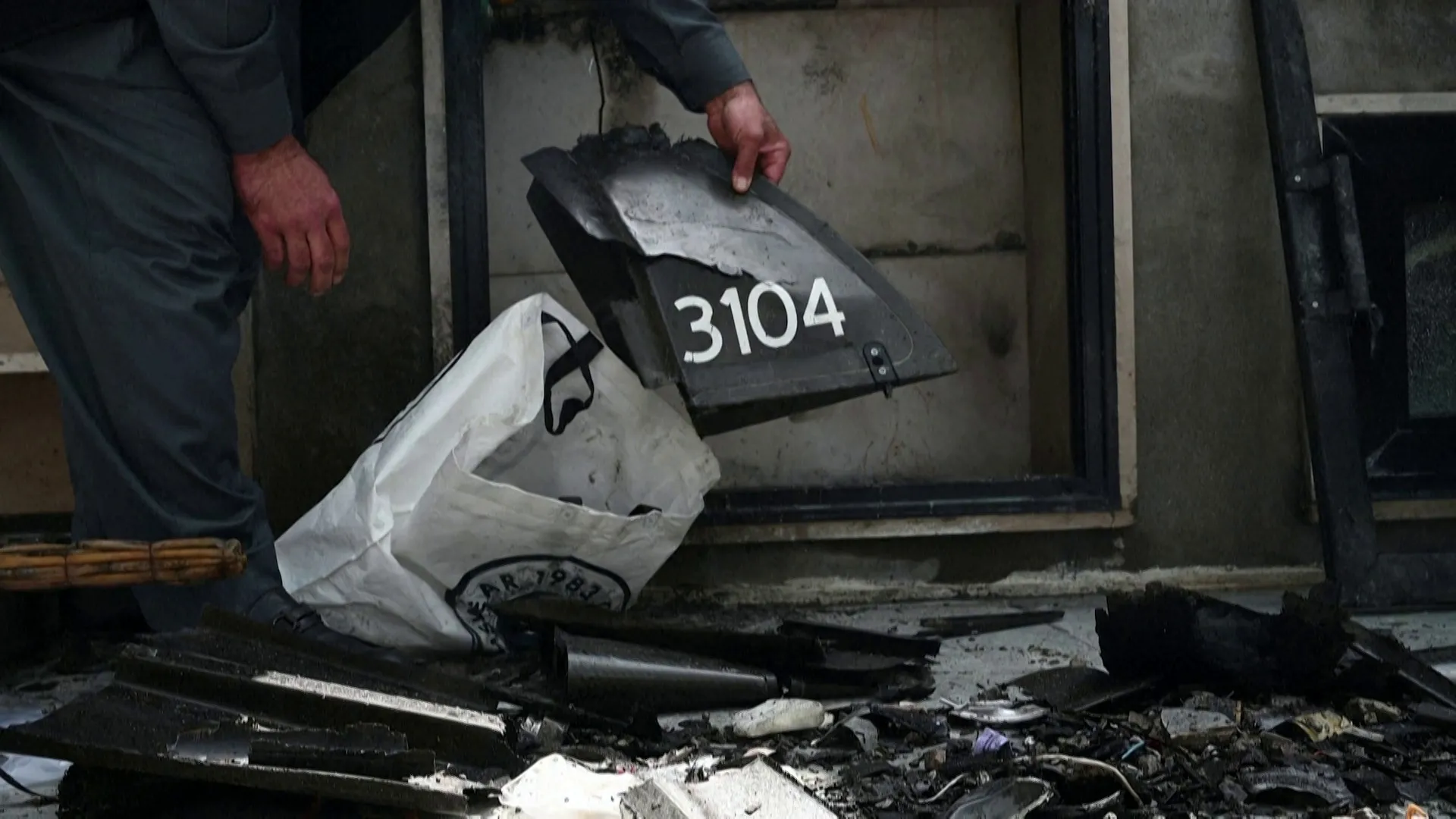
The FBI on Friday had offered a reward of up to $25,000 for information about Lisa, saying he was wanted on charges of destroying government property and possession of a dangerous weapon inside a U.S. court facility. That bulletin said he tried to enter a federal office building in downtown Newark on Wednesday with a bat and was turned away. Lisa returned without the bat, the bulletin said, and was admitted. He then went to the U.S. Attorney’s office, where Habba works, and destroyed property, the bulletin said.

Atty. Gen. Pam Bondi wrote in a post on X on Saturday that the FBI, U.S. Marshals Service and Homeland Security Investigations had worked together to arrest Lisa.

“No one will get away with threatening or intimidating our great U.S. attorneys or the destruction of their offices,” Bondi wrote.

Habba was previously Trump’s personal lawyer, representing him in various cases and acting as his spokesperson on legal matters. She served as a White House advisor briefly before the president named her interim U.S. attorney in March.

“We got him,” Habba wrote on X on Saturday. “This Justice Department under Attorney General Pam Bondi and our federal partners will not tolerate any acts of intimidation or violence toward law enforcement. So grateful to the FBI, U.S. Marshals Service and U.S. Homeland Security Investigations for their tireless work to capture him. Now justice will handle him.”

Bondi had vowed that federal officials would find and prosecute the perpetrator, writing earlier that “any violence or threats of violence against any federal officer will not be tolerated. Period.”

Trump formally nominated Habba as New Jersey’s permanent U.S. attorney on July 1, but the state’s two Democratic U.S. senators, Cory Booker and Andy Kim, opposed it, stalling the confirmation process.

A few weeks later, as Habba’s 120-day interim appointment was expiring, New Jersey federal judges moved to replace her with her second in command. Bondi then fired that prosecutor and renamed Habba as acting U.S. attorney.

Last month, the U.S. 3rd Circuit Court of Appeals heard arguments in a case challenging Habba’s appointment. It hasn’t ruled.

Source link

Railgun Damage To Japanese Target Ship Seen For The First Time

Japan’s Acquisition Technology & Logistics Agency (ATLA) has offered the first look at damage to a target ship after it was hit by projectiles fired from a prototype electromagnetic railgun in testing earlier this year. Japanese authorities say valuable data and experience were gleaned from the demonstration, which will feed into its continued push toward an operational railgun capability. This is an area of development where the U.S. Navy notably halted work in the early 2020s, despite having seen promising progress, due to significant technological impediments.

ATLA provided additional details about the at-sea railgun testing that took place this past summer during a presentation at its annual Defense Technology Symposium, which opened earlier this week. For the tests, the prototype weapon system was installed on the rear flight deck of the JS Asuka, a one-of-its-kind 6,200-ton-displacement testbed warship belonging to the Japan Maritime Self-Defense Force (JMSDF). Pictures of the railgun onboard Asuka first began to emerge in April. ATLA released an initial batch of imagery from the at-sea tests, along with a brief statement about the results, in September.

A previously released picture showing the prototype railgun installed on the JS Asuka being fired during the testing earlier this year. ATLA

The prototype railgun used in the testing is an evolution of a design that ATLA has been developing since the mid-2010s. That work has included previous live-fire testing at facilities on land, as well as at least one earlier at-sea test that did not involve shooting an actual target vessel.

Railguns, in general, use electromagnets instead of chemical propellants to fire projectiles at very high velocities. Dart-shaped projectiles, each with four fins at the rear and no warhead, were fired during the at-sea tests earlier this year. The projectiles were initially held inside a sabot that broke apart after leaving the muzzle. There was also a metal armature at the rear that served to push the projectile in the sabot down the barrel, which fell away after firing.

A slide from the ATLA presentation this week highlighting the evolution from earlier prototype railguns tested at facilities on land to the one mounted on the JS Asuka for the at-sea tests. ATLA
Another slide from the presentation discussing the design of the projectiles fired during the at-sea testing. ATLA

A tug-like ship was used as the target for the railgun installed on the JS Asuka. The target vessel was moving during at least some of the test shots, but under tow behind another ship rather than its own power. It was struck multiple times, with the cross-shaped impact points showing the fin-stabilized projectiles flew in a stable manner, as seen in the images at the top of this story and below.

The full slide covering damage to the target ship from ATLA’s presentation this week. ATLA
Another slide with additional details about how the test shots at the target ship were carried out. ATLA

In addition to level shots at the target ship, the railgun was fired at a 45-degree upward angle to provide an opportunity to gather data on the basic ballistics of the weapon and round combination.

Operators aimed the railgun remotely using a camera mounted under the barrel. An additional high-speed camera and a small radar were also positioned on JS Asuka‘s flight deck to collect additional data. A drone filmed the testing from above. When ATLA first released imagery from the testing back in September, TWZ highlighted the presence of what was likely a small radar array, as well as electro-optical and/or infrared cameras, which has now been confirmed.

A slide highlighting the camera under the railgun’s barrel, which was used to aim the weapons during the at-sea tests earlier this year. ATLA
A slide with additional imagery from the at-sea tests, including of the ballistic shots fired with the weapon aimed 45 degrees upward. The radar array and high-speed camera that helped collect data during the testing are highlighted in the image at far left. ATLA

ATLA says that the testing also provided valuable new experience regarding the installation and operation of a railgun on an actual naval vessel. Of course, an operational naval railgun would likely be far more deeply integrated into a warship compared to the test arrangement on JS Asuka. A more traditional naval installation on any ship would require finding sufficient space above and below deck for the railgun and its associated systems, as well as making a host of other necessary modifications, which could be costly and time-consuming.

Otherwise, ATLA continues to work to improve various key underlying technologies as part of its ongoing railgun development efforts, including when it comes to power and cooling, as well as general wear and tear. Japanese authorities say they have now been able to demonstrate a barrel life of more than 200 rounds when firing projectiles at around 2,300 meters per second. As of 2023, ATLA had reportedly been able to fire projectiles from prototype railguns at around 2,230 meters per second and had said it was working toward a barrel life of 120 rounds.

ATLA

The wear on barrels from the sustained firing of projectiles at very high speeds is one of a number of long-standing challenges for railguns, in general. A worn-out barrel can lead to the loss of range and accuracy, as well as increase the risk of a catastrophic failure.

Railguns also have significant power generation and cooling requirements, which have, in turn, historically made them very physically bulky. The installation on JS Asuka included four shipping containers full of additional systems and equipment to help meet those needs.

Kazumi Ito, principal director of the equipment policy division at ATLA, said his country’s railgun efforts were “progressing,” but acknowledged “various challenges,” while speaking through an interpreter at a panel discussion at the DSEI Japan 2025 exposition earlier this year, according to National Defense Magazine.

The ATLA video below shows previous live-fire testing of a prototype railgun at a facility on land.

In general, the potential rewards from developing a practical railgun suitable for operational military use are great. Such a weapon would offer valuable anti-air capabilities, as well as the ability to engage targets at sea and on land. It would also bring additional benefits in terms of the relatively low cost of its ammunition and magazine depth. As TWZ has previously written:

“In principle, a practical electromagnetic railgun would offer a highly capable and flexible weapon system that can rapidly engage a wide array of targets at sea, on land, and even in the air, and at considerable ranges. Japan has previously expressed interest in this capability explicitly to help protect against incoming hypersonic threats. Such a weapon would also offer benefits in terms of magazine depth and cost compared to traditional surface-to-air and surface-to-surface missiles, given the small size and lower unit price of the individual rounds.”

“When it comes to warships, in particular, where physical space is at a premium and where options for reloading missiles at sea can be at best extremely limited, having a weapon system firing lower-cost munitions from a large magazine and that can engage a broad swath of target sets would be a clear boon.”

A U.S. Navy briefing slide from the service’s abortive railgun program showing how ships armed with the weapons (as well as conventional guns firing the same ammunition) could potentially engage a wide variety of aerial threats, including cruise missiles, as well as surface targets. USN

The benefits railguns could offer extend to ground-based types, as well as ones installed on naval vessels. ATLA’s presentation this week shows a truck-mounted railgun, along with one on a warship, as part of the projected roadmap for further railgun developments. ATLA has highlighted the potential for land-based capability in the past, as well.

A slide showing the general planned progression of Japanese railgun developments from the work that has been done already to a more refined design, and then operational naval and ground-based capabilities. ATLA

The previously released ATLA video below also depicts ground-based truck-mounted railguns.

As TWZ has noted in the past, Japan’s continued push ahead with the development of railguns stands in ever-starker contrast to the U.S. Navy’s shelving of its work on such a capability back in 2022, at least publicly. Starting in 2005, the service had been very actively pursuing an operational railgun and had plans to move from extensive on-land testing out to sea. However, the expected at-sea tests were repeatedly delayed and never came to pass. The Navy cited major technological hurdles in its decision to halt its railgun program.

Interestingly, ATLA has reportedly met with U.S. Navy officials to discuss its past railgun work and how it might be useful to Japan’s ongoing efforts. The possibility of greater collaboration in the future has also come up. Last year, ATLA signed a separate deal with the Franco-German Research Institute of Saint-Louis (ISL) to cooperate on the development of railgun technologies.

China has also been experimenting, on-and-off, with railguns since the 1980s. In 2018, a prototype railgun mounted in a large turret emerged on a People’s Liberation Army Navy (PLAN) ship, but the exact status of that program is now unclear.

The Chinese naval railgun that emerged in 2018. Chinese internet

As mentioned, work on railguns is also ongoing as part of a joint effort between Germany and France. Turkey has received particular public attention for its railgun developments in recent years, as well. There continues to be general interest, globally, in railguns for naval and ground-based applications.

ATLA’s update on the at-sea railgun testing earlier this year makes clear that, regardless of any other global development, Japan very much remains committed to its pursuit of this capability.

Contact the author: [email protected]

Joseph has been a member of The War Zone team since early 2017. Prior to that, he was an Associate Editor at War Is Boring, and his byline has appeared in other publications, including Small Arms Review, Small Arms Defense Journal, Reuters, We Are the Mighty, and Task & Purpose.


Source link

Celebrity Traitors’ real winners and losers revealed – from mega-money deals to damage control

EXCLUSIVE: With the Celebrity Traitors final just hours away, a PR expert has revealed which stars are coming out to TV opportunities – and which have been left worse off

The Celebrity Traitors airs its huge finale tonight on BBC One – and while fans are asking whether the Traitors or Faithful will win the game, others are wondering what’s next for its viral stars. Tonight’s episode will see finalists Alan Carr, Cat Burns, David Olusoga, Nick Mohammed and Joe Marler compete for the chance to win up to £100,000 for their chosen charities.

However, celebrity PR specialist Kayley Cornelius has revealed who the real winners from the BBC One series are – as well as who hasn’t come of as well as they had hoped. One of those coming out on top is ex rugby player Joe Marler, who is rumoured to be taking on a big presenting role with the BBC after the show.

Speaking on behalf of Online Casino provider Slingo, Kayley said that Joe has gained a whole new fanbase thanks to the Celebrity Traitors. “He has a lot to gain from this show – he’s recently retired from his sporting career and stepped into this new chapter of his life,” she said.

“Celebrity Traitors was his first bash at giving a reality career a try and he’s going to attract a lot of new listeners to his podcast. People have been so impressed with how clever he’s been throughout the process. He’s proven himself as being entertaining, clever, he comes across very well on screen.

“I can see him being lined up for every show under the sun – he’s probably going to be on Strictly next. He would be perfect for the glitz and glam. He’s such a good team player and he’s from sport so has discipline. He’s going to be a very booked and busy man.”

However, he’s not the only finalist who’ll be going on to bigger and better things – Kayley reveals that Cat Burns’ brand awareness has shot up thanks to the show. “She entered as this quiet underdog among line-up of really well known names. This show was a great opportunity for brand awareness for her,” she said.

“She’s just had to push back her tour but I have no doubt that it is going to sell out in no time. She’ll be able to headline bigger stages, do more arena-based shows. She might get a support slot on a stadium tour. It’s an exciting time where she’s going to be in demand.”

Kayley added that Cat could also go into fashion after showing off her style on Celebrity Traitors. “Some of her looks from the show, she came across as like quite cool, quite grungy and I think that aesthetic from an editorial sense, she’ll probably make thousands off the back of that.”

While there are rumours that the treacherous Alan Carr could become the next host of Strictly Come Dancing, Kayley doesn’t think it would be the right fit for the standout star. “When I think about what he will realistically do next, I can’t imagine it being Strictly,” she said.

“I think with the position that Strictly Come Dancing is in at the moment, as they’re recovering from these scandals, I think they want to keep two female presenters so I don’t know if I can quite see him taking Strictly on, even though it would be brilliant.

“I suppose for Alan, he’s just made a nation fall in love with him again and there’s chats of Chatty Man being revived – I can see it.”

As for the stars who haven’t found success from the show, YouTube star Niko Omilana is one of them thanks to his early banishment. The influencer was the first person to be accused of being a Traitor on the show and left in episode two.

“Niko unfortunately has lost out on quite a lot from doing this show,” Kayley said. “This is the kind of move that should have been a massive career break for Niko as he goes from online reality star into a mainstream celebrity. Like what we’re witnessing with George Clarke on Strictly at the moment.

“Unfortunately, with him being on the show for such a short amount of time, he wasn’t in there long enough to make much of an impact on this new audience.”

Another is Paloma Faith, who was the first to be killed by the Celebrity Traitors – and ‘threw a wobbly’ after being murdered by pal Alan, a source told The Mirror.

“I think Paloma might have some damage control to do,” Kayley says. “She’s quite angry with Alan Carr and how the game panned out. People might see her as a bit petty and a bit pathetic. Originally, the public said, ‘We need Paloma back – she was done so dirty.’ They’re now turning on her and saying she’s been a sore loser.

“From that perspective, she just needs to be a bit cautious and careful about how she speaks about her experience on the show and there might be more behind the scenes than we’re being let on to know at the minute, but I think if she is going to be a bad loser about this situation, it’s not going to go down well with viewers at home.”

Join The Mirror’s WhatsApp Community or follow us on Google News , Flipboard , Apple News, TikTok , Snapchat , Instagram , Twitter , Facebook , YouTube and Threads – or visit The Mirror homepage.


Source link