Best Puerto Rican restaurants in Los Angeles
When San Juan native Rafael Rodriguez opened Señor Big Ed in Cypress in the mid-90s, there were few Puerto Rican restaurants in Southern California.
“A lot of customers were driving long ways to come to eat at Señor Big Ed,” said restaurant manager Veronica Coronado. “They would get very emotional when they would eat the food, because it reminded them so much of their childhood.”
While cities like New York and Miami have come to be veritable hubs for Puerto Rican cuisine, the food community here in Los Angeles — more than 3,000 miles away from the island — still remains relatively small.
And yet, demand for Boricua cuisine is on the rise locally, due in part to a growing Puerto Rican population — about 47,000 residents, according to the Los Angeles Almanac — and rapper Bad Bunny’s recent Super Bowl halftime show that paid homage to his homeland and made history as the most-watched Super Bowl halftime performance of all time, with more than 4 billion views globally.
“His whole movement and everything that he’s been doing for the island … has really been this big boost for global awareness of the Puerto Rican identity and culture,” said Carmen DeLeon, the actor and chef behind Capicu, a Puerto Rican pop-up in L.A.
While longstanding restaurants like Señor Big Ed have anchored communities for decades, newer spots like Taínos in Woodland Hills and La Casa de Iris in Long Beach are expanding the Boricua food landscape in L.A.
“Everyone comes to look for this food because this is like gold,” said Edwin Torres, chef at Taínos in Woodland Hills.
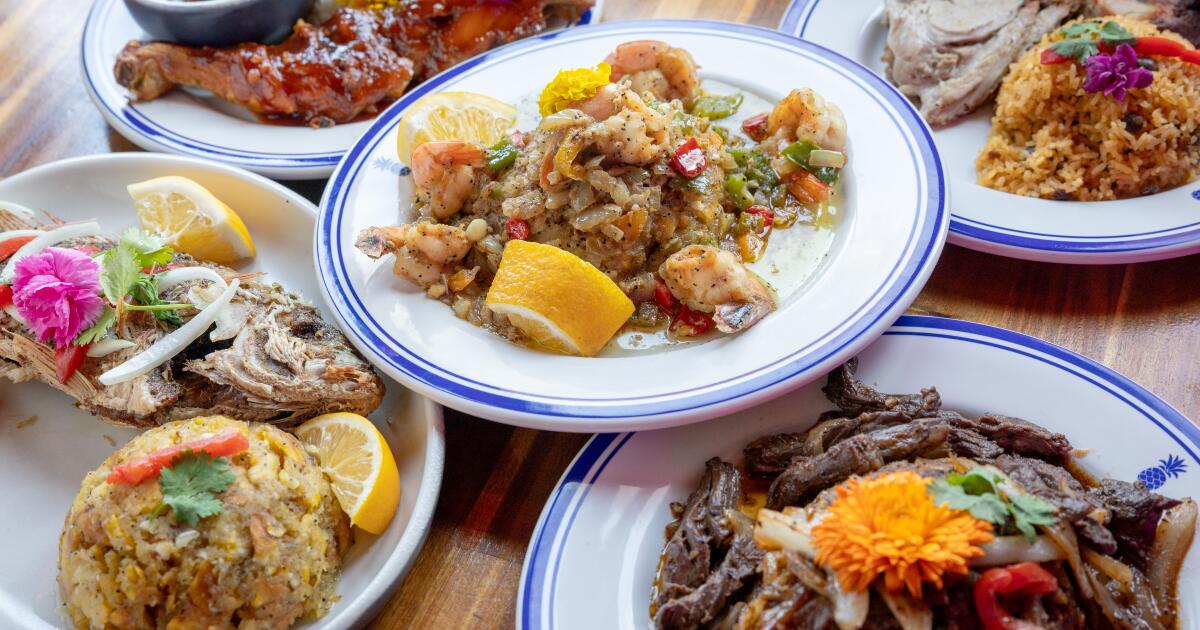
In addition to traditional guisados, mofongo (mashed green plantains) and banana-leaf-wrapped pasteles, Taínos shares Puerto Rican dishes rarely seen outside of home kitchens. Soon, co-owner Odessa Rodriguez plans to add guanimes con bacalao, boiled flour dumplings with salted cod, a Taíno dish that traces back centuries.
“We’re not trying to reinvent the wheel. We are just trying to bring back essential plates that our ancestors ate,” Rodriguez said.
DeLeon, known as the Not Starving Artist on Instagram, started her pop-up in 2023 with her sister Anabel, serving small bites at bars, farmers markets and local events. The siblings grew up in Arizona cooking Puerto Rican food with their island-born parents, and DeLeon said she’s passionate about making the cuisine accessible to others.
“I want to attract people first, and then I can talk about where these dishes derive from and where the inspiration comes from,” she said.
The current menu features pizza empanadillas, vegan arroz con gandules (rice with pigeon peas), vegan tostones and gazpacho, and mini sandwiches with ham, cheese and sweet pimiento peppers.
DeLeon hopes more people will grow excited about Puerto Rican food as they discover the culture and meaning behind the cuisine.
“There’s so much history and structure and love behind this group of people, this environment, this culture, this food, this identity,” she said. “I hope that when people eat this food … I want your belly to feel full, I want you to feel as if you’re sitting at my house with my family.”
Similarly, Rodriguez hopes Taínos will become a cultural hub for Boricuas in L.A.
“It fulfills me to feel that I am providing a sense of comfort, nostalgia, home,” she said. “It’s bigger than food.”
Whether you’re craving nostalgic flavors from home or looking to experience L.A.’s small but growing Puerto Rican food scene, here are four restaurants serving up a taste of the Isla del Encanto. — Angela Osorio