Todd Blanche narrowly confirmed as Trump’s attorney general
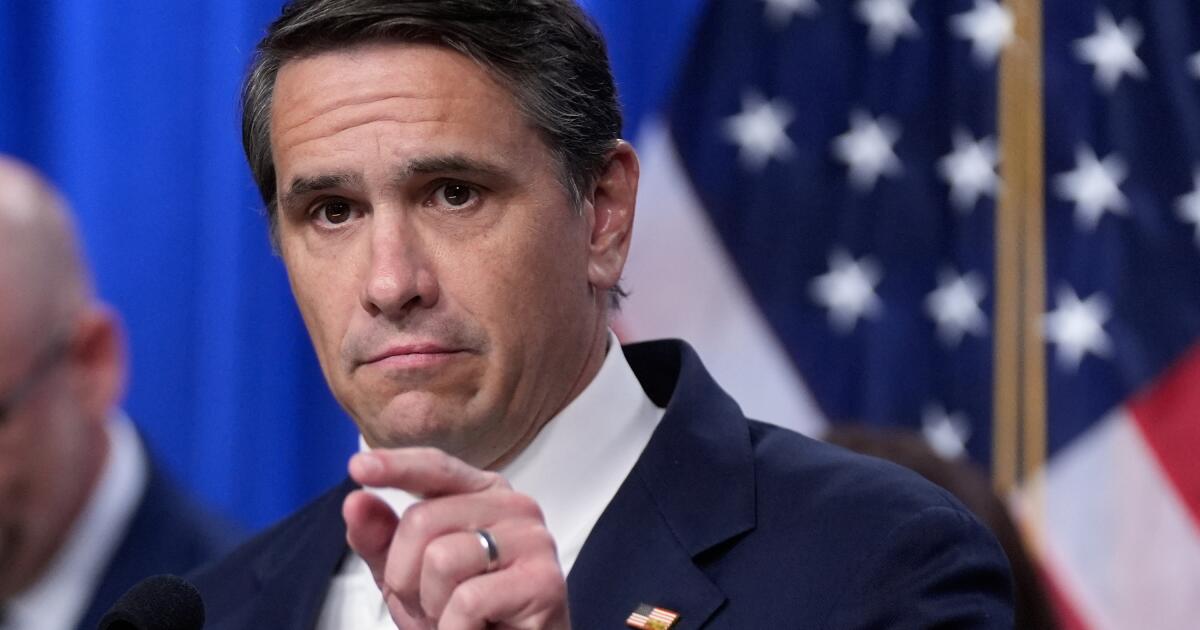
WASHINGTON — The Senate confirmed Todd Blanche as attorney general in a vote early Saturday, cementing the command of President Trump’s former personal lawyer at a Department of Justice that Trump has sought to bend to his will.
The Republican-led Senate voted 50 to 49 to make Blanche the second confirmed attorney general since Trump returned to the White House last year with a stated desire to use the law enforcement agency to investigate his political enemies. While Blanche has already been leading the department in an acting capacity, his confirmation could free him to pursue the administration’s agenda even more aggressively.
Blanche said on social media that he was “deeply honored by the trust and confidence President Trump has placed in me,” adding that he was “grateful” to senators for working late to confirm him.
The vote followed a tumultuous confirmation fight that exposed deep concerns — from some Republicans as well as Democrats — about installing Trump’s close ally atop a Justice Department that historically prided itself on its independence from the White House.
In the end, Blanche was confirmed by the narrowest of margins, opposed by two Republicans — Sens. Susan Collins of Maine and Lisa Murkowski of Alaska — and by every Democrat.
The path to confirmation for Blanche was unusually rocky, due in large part to Republican concerns about a controversial settlement of Trump’s lawsuit against the IRS.
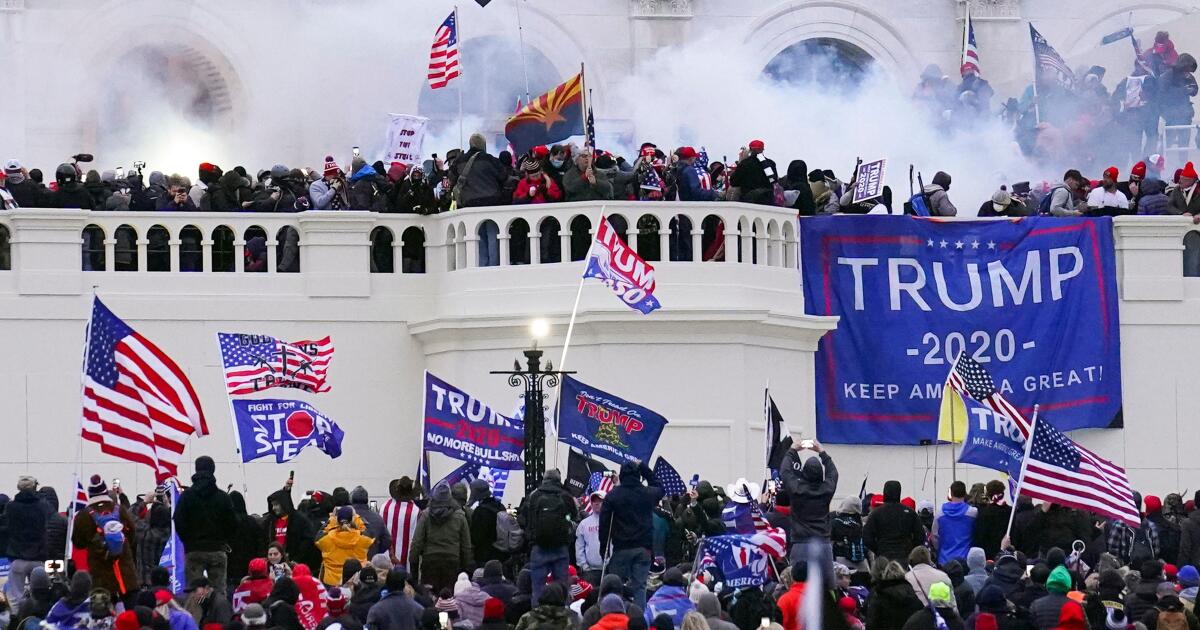
Under pressure, Blanche publicly promised in writing that the department would abandon Trump’s proposed $1.8-billion compensation fund for the president’s allies, including those who attacked the Capitol on Jan. 6, 2021, and rein in another piece of the settlement designed to shield Trump and his family from IRS tax audits.
His appeals were enough to win over Republican Sen. Bill Cassidy, the decisive vote who threw his support behind Blanche on Friday morning. Cassidy said no other nominee may be able to run the department better under Trump and suggested Blanche’s role as Trump’s former criminal defense lawyer can make him more effective at resisting the Republican president’s demands.
“This is not a referendum on President Trump. It is a decision regarding Mr. Blanche in very specific circumstances,” said Cassidy, who lost his primary this year to a Trump-backed challenger.
Sen. Dick Durbin of Illinois, the top Democrat on the Senate Judiciary Committee, said confirming Blanche would be a “serious mistake.” He begged his colleagues not to be on the “wrong side” of history.
“If there is ever a moment in history when we need an attorney general above reproach, who is clearly dedicated to ending corruption, even at the highest level of our government, it’s right now,” Durbin said.
Loyalty to Trump
The vote capped off a bruising confirmation fight, with Blanche’s loyalty to Trump at the center of the stalemate.
Blanche was elevated to the top Justice Department post in an acting capacity after Trump fired Pam Bondi in April. Blanche moved swiftly to advance the president’s interests, accelerating investigations into Trump’s perceived foes and announcing the settlement that created the $1.8-billion “anti-weaponization fund” to compensate Trump allies who feel mistreated by the criminal justice system and provided the president and his family members with immunity from tax audits.
The controversial settlement threatened to torpedo Blanche’s nomination until he formally rescinded the fund in writing under pressure from Republican Sens. John Cornyn of Texas and Thom Tillis of North Carolina. The deal reached between the senators and the department unlocked a vote in the Senate Judiciary Committee, which advanced Blanche’s nomination earlier this week.
Even after the deal, Blanche faced opposition from some Republican senators concerned with the settlement fund and the tax audit immunity.
Murkowski announced early Friday that she would join Collins in opposing Blanche’s nomination, saying the country needs an attorney general “who will check the worst impulses of this administration.”
Former prosecutor rises as Trump’s defender
A former federal prosecutor in New York, Blanche rose to public prominence as a lead attorney on Trump’s defense team, including during Trump’s hush money trial in New York in which he was found guilty of felony fraud.
He also defended Trump against criminal charges in the two federal cases brought by the Biden administration’s Department of Justice, related to Trump’s attempts to overturn his loss in the 2020 election and his hoarding of classified documents at his home in Florida. Both cases were dropped after Trump won reelection in 2024, and despite the seriousness of the charges, Blanche said that experience provided him a firsthand look at what he claims was the weaponization of the criminal justice system against Trump.
Blanche entered the Justice Department last year as deputy attorney general under Bondi, overseeing the agency’s day-to-day operations and serving as the public face for high-profile and controversial matters, like the release of millions of investigative files related to disgraced late financier Jeffrey Epstein.
Democrats have accused Blanche of prioritizing his loyalty to Trump above all else through investigations against perceived Trump foes such as former FBI Director James Comey and a radical reshaping of the department. Under Bondi and Blanche’s leadership, the department has lost thousands of employees through firings, resignations or voluntary departures.
Blanche’s supporters say his experience as a federal prosecutor and the trust he earned from Trump in the courtroom make him better equipped than Bondi to explain to the White House the legal constraints of its demands. Republicans have also touted his efforts to bring down violent crime, tackle illegal immigration and combat violent cartels and drug trafficking.
Sen. Chuck Grassley, the Judiciary Committee chairman, gave a full-throated endorsement of Blanche ahead of voting, saying he’s led the Justice Department with distinction. “Mr. Blanche is the right choice,” said Grassley (R-Iowa).
It is unclear whether Blanche will fare any better in delivering on Trump’s desire for retribution than Bondi, whom Trump fired amid resistance from judges, grand jurors and the department’s own workforce as prosecutors sought to establish criminal conduct by one Trump foe after another.
Shortly after Blanche took the top post, the Justice Department moved to indict Comey on charges of threatening the 47th president by posting a social media photograph of seashells in the numerical arrangement of “86 47.” Comey’s lawyers are pressing to have the case dismissed, accusing the department of misleading judges, submitting documents containing false statements and withholding key facts.
Blanche has also appointed Joseph DiGenova, a former Justice Department prosecutor from the Reagan administration, to oversee a Florida-based investigation into whether former law enforcement and intelligence officials conspired over the last decade to undermine Trump. But it remains uncertain whether that inquiry will result in any criminal charges.
Durkin Richer and Mascaro write for the Associated Press. AP writers Bill Barrow in Atlanta and Kevin Freking and Mary Clare Jalonick in Washington contributed to this report.