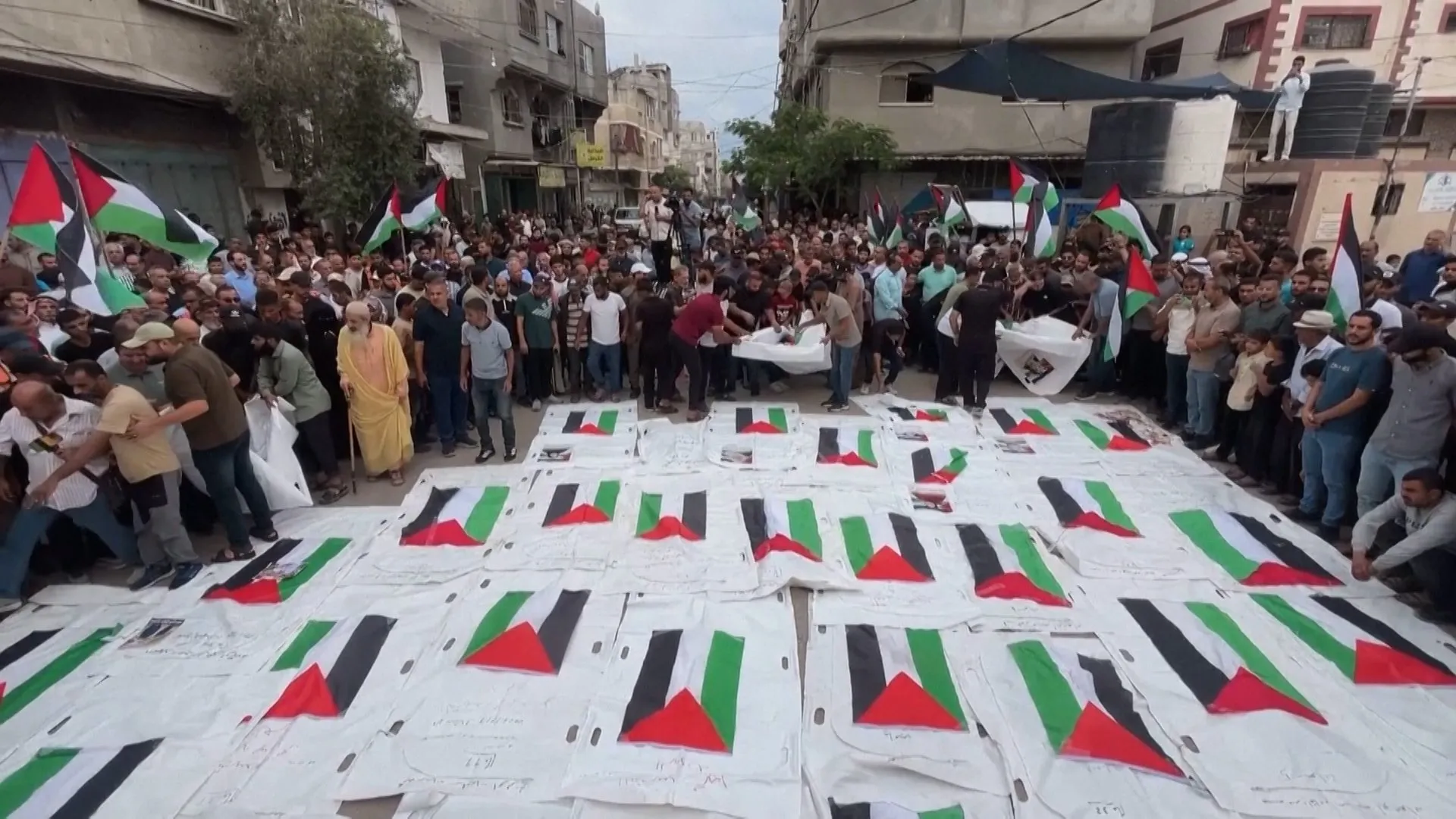
Dozens of mourners in Gaza grieve the loss of their loved ones as they bury the fragmented remains of relatives killed in an Israeli strike in October 2023.
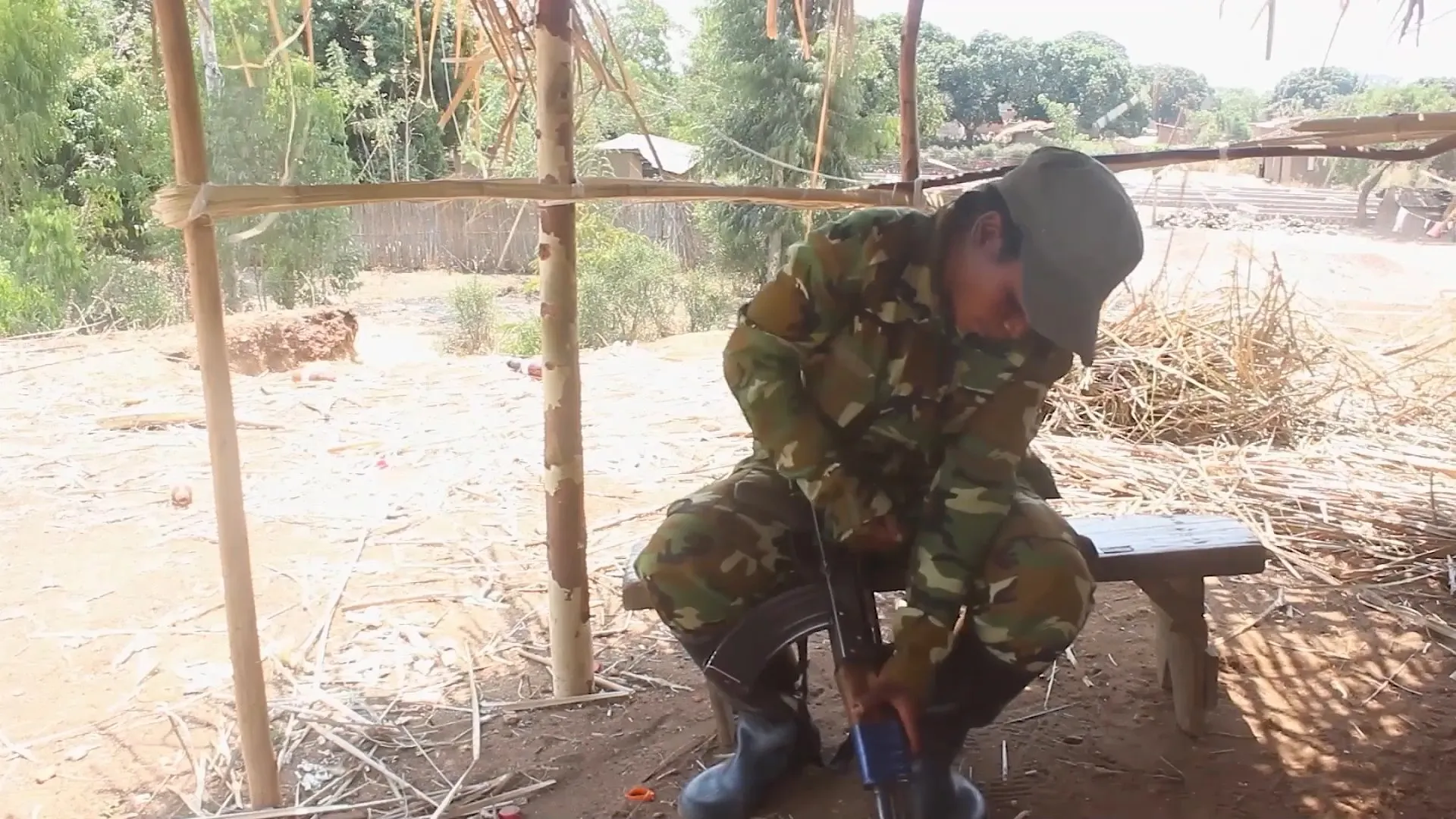
As war and sexual violence rage in eastern Democratic Republic of the Congo (DRC), women are joining pro-government Wazalendo fighters to defend their communities. However, the armed group itself faces serious accusations of human rights abuses, including gang rape.
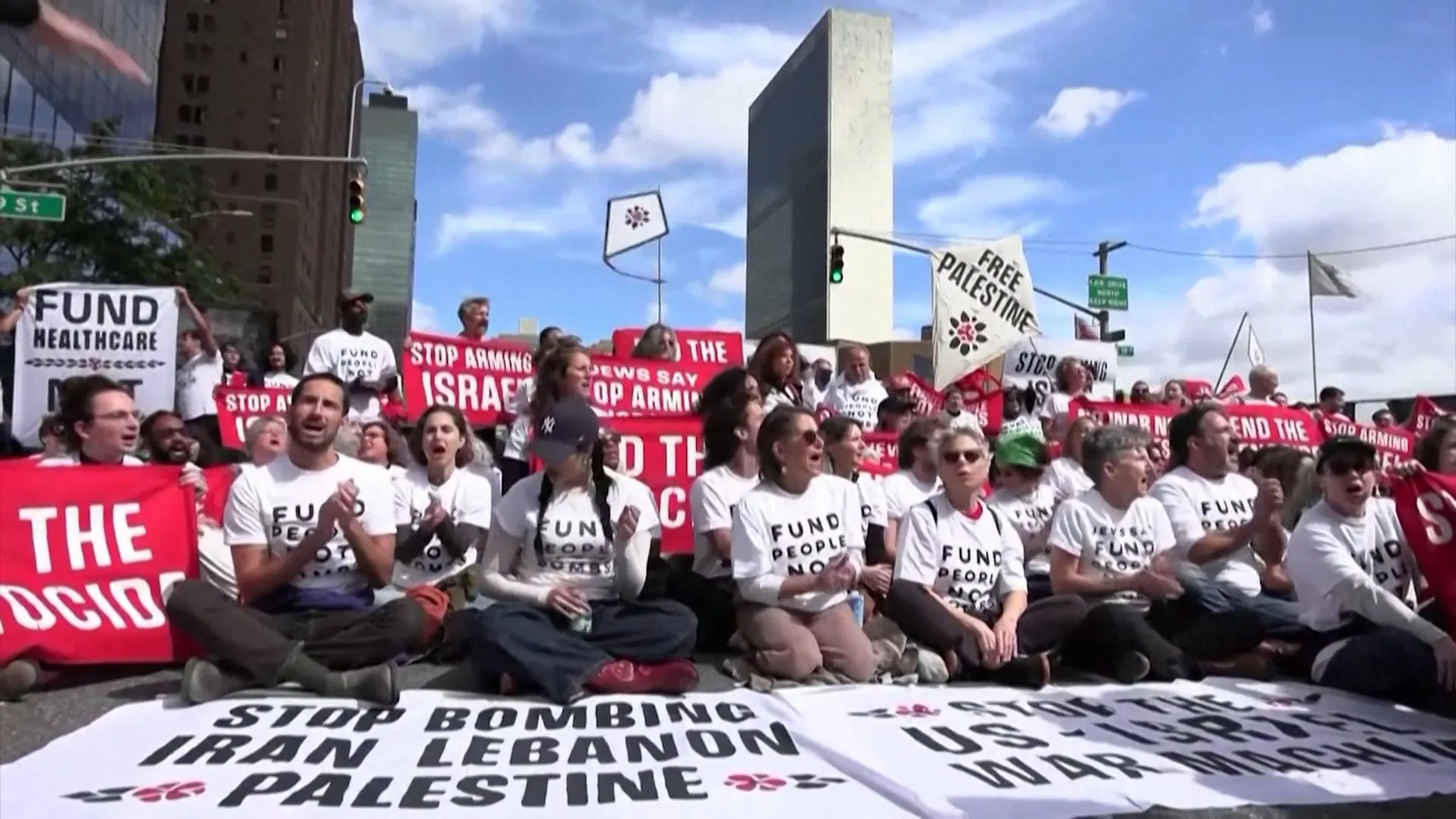
Actors Susan Sarandon and Hannah Einbinder were among roughly 100 protesters arrested by New York City police outside the UN ahead of Israeli PM Benjamin Netanyahu’s speech. Protest organiser Jewish Voice for Peace had accused the UN of “playing host to a war criminal”.
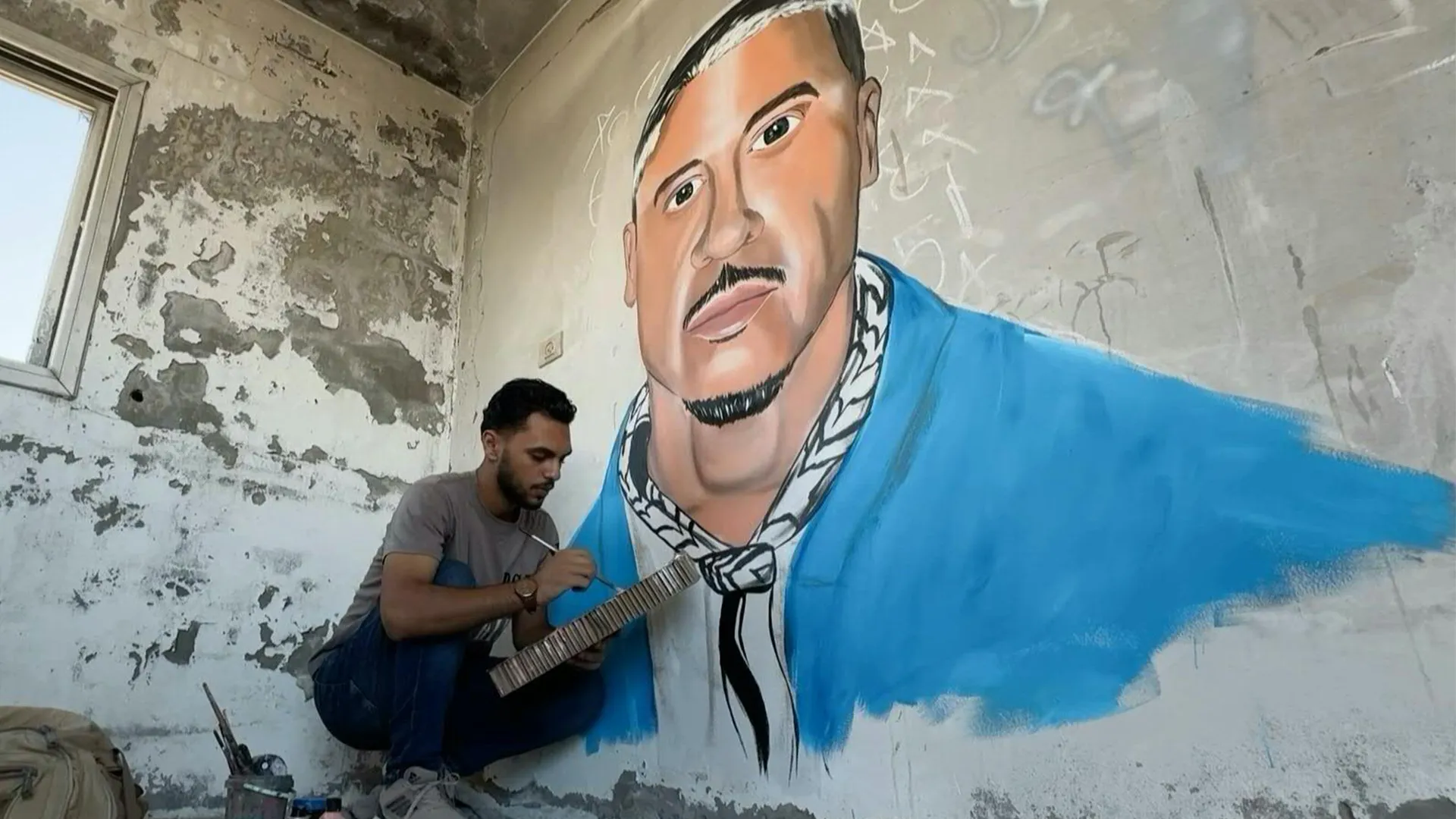
Artists in Gaza are painting murals on destroyed walls, honouring US rapper Macklemore for his support for Palestine. Despite a ceasefire agreement, Israel continues to kill Palestinians in frequent strikes across Gaza.
Israel’s bitter political divisions are particularly sharp before the country’s October elections. But the furious response to a new documentary about the military’s actions in the genocidal war on Gaza has revealed an issue that much of Israel’s political and media establishment appears united on.
Few of the central allegations in NAZA, made by Israeli filmmakers Yuval Abraham and Rachel Szor, are new. Reports that the Israeli military was relying on artificial intelligence systems to generate targets in Gaza, often killing the inhabitants of entire buildings to kill just one individual identified by the system, were reported in April 2024.
Recommended Stories
list of 4 itemsend of list
Other accusations against Israel, such as committing genocide, deliberately causing a famine, and unlawfully killing children, have also not received much attention in Israel.
In contrast, NAZA has unleashed a litany of abuse from across Israel, and brought the allegations to the centre of Israel’s political debate.
Culture Minister Miki Zohar reacted to the film’s premiere at the Venice Film Festival – where it received a 25-minute standing ovation – by calling for the directors to be stripped of their citizenship and to be investigated by the internal intelligence service for treason.
Army chief Eyal Zamir has dismissed the film as being built on blood libel and ordered a legal probe to hunt down its military and intelligence sources.
Prime Minister Benjamin Netanyahu also cited the film when advancing legislation to revoke citizenship from anyone deemed to be smearing the country’s soldiers, while in the coastal city of Ashdod, graffiti branding the directors “traitors” has appeared on the walls.
“You can’t really understand the extent of the madness from outside of the country,” Orly Noy, an editor at Local Call, which first carried many of the accusations contained in the film, said. “They’re attacking the friends and families of [the filmmakers] Yuval Abraham and Rachel Szor. They’re talking about revoking their citizenship. They’re asking the Shin Bet to investigate them – for making a film, and it isn’t just the politicians. Journalists, who you might expect to show some kind of solidarity with them, are competing to attack them. It’s scary.”
Denial
In late 2025, the Committee to Protect Journalists reported escalating censorship and harassment in Israel, with Israeli journalists telling the organisation that the media’s approach had become “part of the war effort” and, by extension, significantly shaped Israeli view of their war on Gaza.
In October 2025, a study by the Israeli think tank Molad found that only 3 percent of Channel 12’s coverage of the first six months of the war mentioned Gaza’s humanitarian crisis. Of 206 war-related images and video clips broadcast by the network, Israel’s most-watched channel, only two showed Palestinian civilian casualties.
Nevertheless, before the film’s release, polls found that most Israelis believed the coverage they were receiving of the military’s conduct in Gaza was balanced.
Director Yuval Abraham and Director Rachel Szor winners of the Special Jury Prize for “Naza” attend a photocall on the red carpet following the closing ceremony of the 83rd Venice Film Festival at Venice Lido on September 12, 2026 [Tiziana Fabi/AFP]
“I guess it was because the mainstream media outlets in Israel did not investigate the conduct of the army during the war in Gaza, and hardly covered the war from the Palestinian point of view,” Anat Saragusti, the Israeli jurist and journalist responsible for press freedom at the Union of Journalists in Israel, said of the shock that had accompanied the release of the film. “[The Israeli media] hardly reported on the human toll and the scale of the humanitarian crisis in Gaza.”
Compounding the gap, Saragusti said, was a deep-seated national narrative: that the war had been imposed on Israel, that Hamas had carried out a massacre on October 7, 2023, and that Hamas’s use of civilians as human shields made mass casualties in Gaza all but unavoidable.
Palestinian deaths, in this telling, were framed less as the product of Israeli conduct than as collateral damage forced on Israel by its enemy’s tactics, she said.
Lynch mobs
“Even journalists that usually support the anti-Netanyahu bloc have criticised the filmmakers,” Israeli political sociologist Daniel Bar-Tal said.
“Israeli Jews deny the genocide,” he continued, “Even all the opposition parties joined the vicious criticism of the filmmakers.”
The language used against the filmmakers has been echoed by some of Netanyahu’s most prominent political rivals.
On Monday, former military chief and one of Netanyahu’s principal rivals Gadi Eisenkot denounced the film for “moral blindness, a detachment from reality, and harm to the State of Israel in a difficult hour”.
Former Prime Minister Naftali Bennett, who is also running in October’s election, called the film a “horrific blood libel against our sons and daughters”.
“Everything gets heightened the closer to the election we get,” Noy said. “But I think only now, for those of us who live here, is the extent of the fascism becoming clear. Journalists, politicians and the media are forming some kind of incitement machine.”
“I’ve had anxieties over where Israel had been going for a long time,” she said, “but right now I’m genuinely worried for my friends and colleagues.”
In Super Macklemore 64, players are chased by a giant Ed Sheeran, dodge tiny billionaire Robert Krafts and summon musicians to chant “Free Palestine”. Creator Jonathan Mann says it highlights the “absurdity” of Macklemore being dropped from Sheeran’s concerts and Israel’s genocide in Gaza.
The mission also said Iranian authorities committed crimes against humanity during their crackdown on protests in late 2025 and early this year.
The United States likely committed “war crimes” in Iran when it launched a pair of air strikes that killed at least 178 civilians, including women and children, a United Nations fact-finding mission has found.
The report by the UN Independent International Fact-Finding Mission on Iran on Thursday also accused Iran of human rights violations and crimes against humanity during protests last year and in early 2026.
The mission also referred to the US air strike on a “clearly identifiable” sports complex and residential area in Lamerd the same day, where precision strike missiles dispersed clouds of tungsten pellets, killing 22 civilian men and women.
The findings, to be submitted to the UN Human Rights Council in Geneva, examined the US’s conduct during the Iran war and the Iranian government’s response to nationwide unrest that began in late December.
US air strikes against civilians
The attack on the school in Minab was conducted with the use of Tomahawk missiles.
“The Mission concluded that when identifying and directing its attack against the primary school in Minab, whose civilian nature is apparent, the US failed in its obligation to do everything feasible to verify that it was a military objective,” the report stated.
The report’s authors said that photographs and videos depicting the school before and after the strike showed “readily identifiable features” that it was associated with an educational facility for young children.
“These included child-oriented murals painted on exterior walls, school signage, and playground areas,” said the UN report.
“According to public reporting, satellite imagery of the school before the strike also appears to show human figures, readily identifiable as children, gathered in its courtyard.”
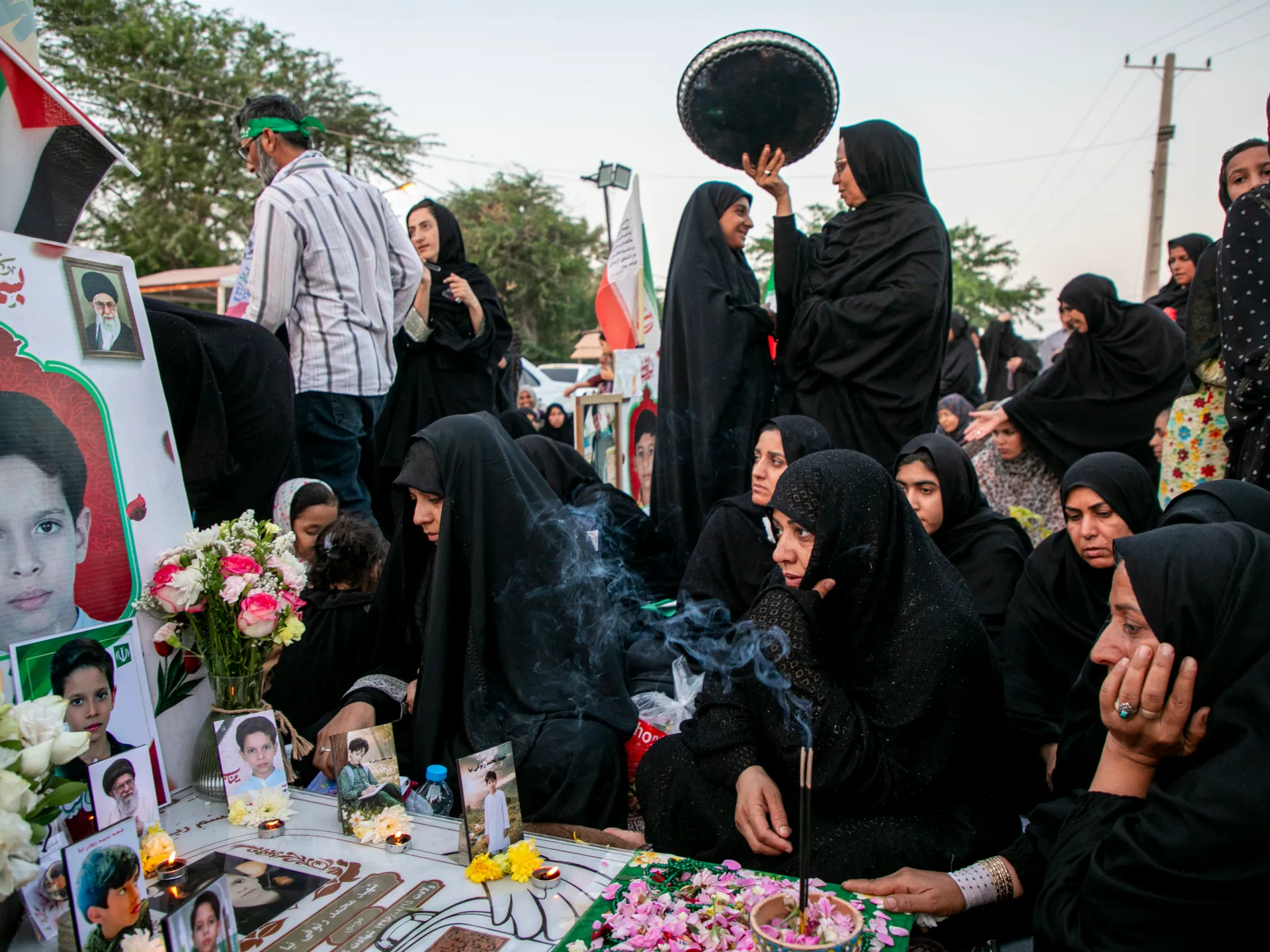
Following the strike, state-affiliated media showed widespread destruction at the site, including parents holding the body parts of their children, and bloodied backpacks and schoolbooks.
“Several families lost more than one child, reflecting the devastating impact of the attack on families and the wider community,” the report said.
In June, US President Donald Trump said that “nobody” purposefully attacked a girls’ school in Iran in February, citing an investigation into the incident, for which the Pentagon has not yet published any findings.
Regarding the strike in Lamerd, the mission similarly found that the sports centre attacked was “visibly separate” from an adjacent compound belonging to Iran’s Islamic Revolutionary Guard Corps (IRGC).
The US Central Command said in a statement in March that US forces did not launch any strikes into the city of Lamerd on that day.
Iran protests
The UN mission additionally accused Iran of repressing demonstrators during the country’s 2025-2026 protests through an internet shutdown, unlawful killings, torture, arbitrary detention, enforced disappearances and severe restrictions on freedom of expression.
It also stated that the number of deaths and injuries by state forces is much higher than the government’s reported toll – which says 3,038 people were killed and 25,000 people injured – but could not verify exact numbers.
Tehran claims the majority of deaths occurred due to “rioters” during the protests backed by exiled opponents and the US and Israel.
The UN fact-finding mission urged Iran and the US to immediately end hostilities, provide reparations to victims, and seek permanent peace through diplomatic means.
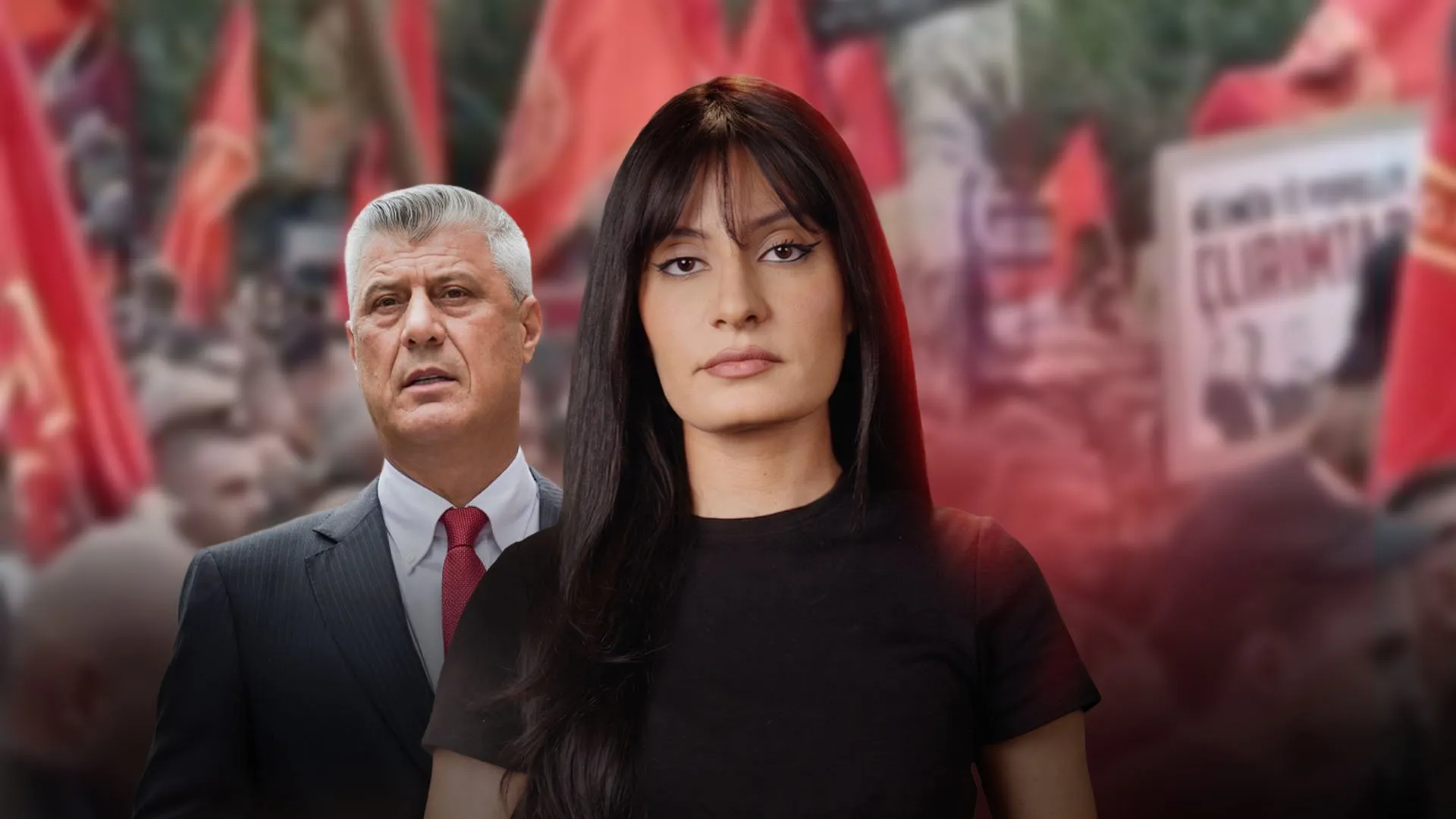
Hashim Thaci, former President of Kosovo and KLA leader, has been found guilty of war crimes by the Specialist Court in The Hague. Al Jazeera’s Marah Rayan explains how the ruling came about.
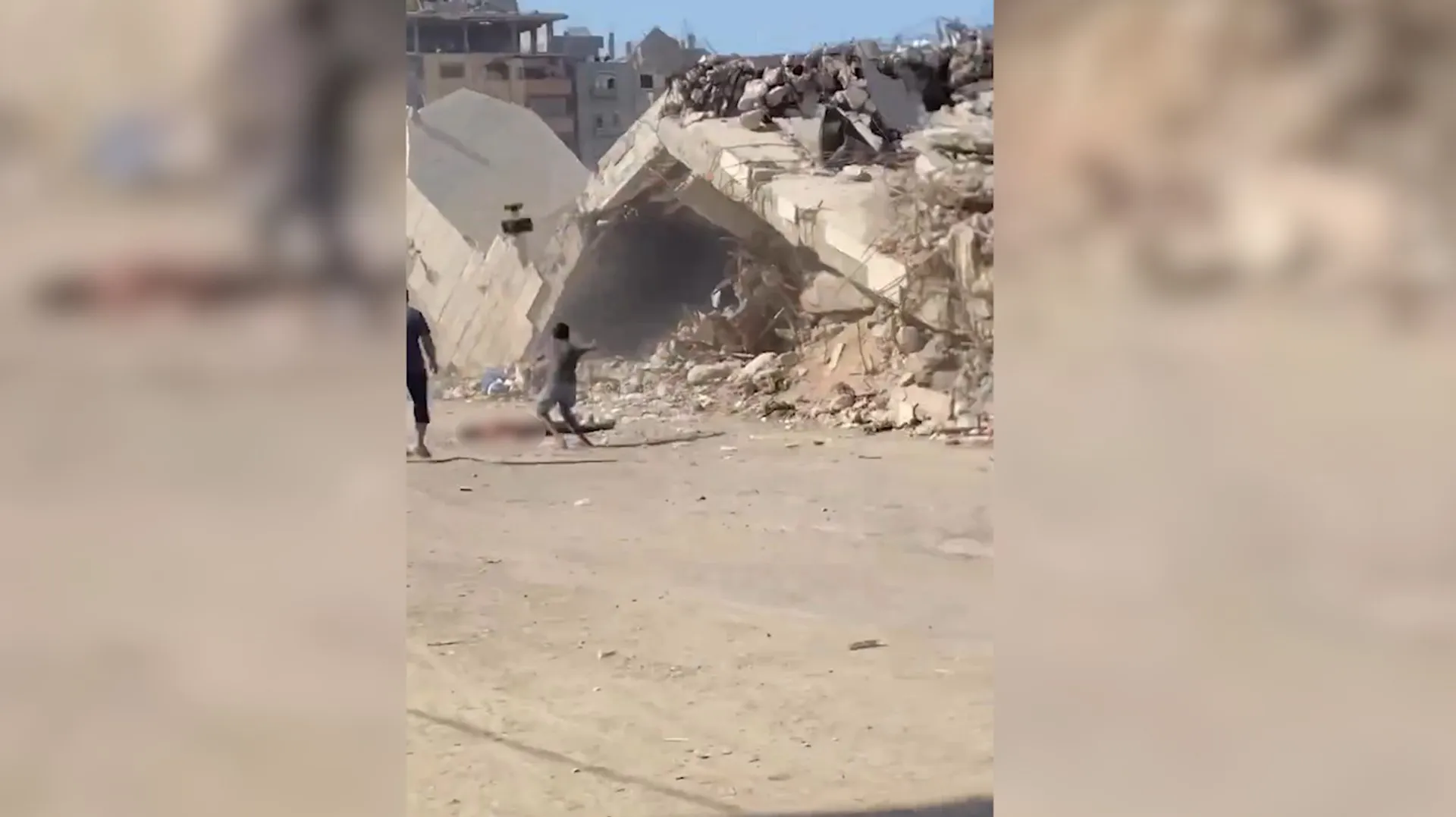
A 15-year-old boy has been killed in an apparent Israeli double-tap strike as he rushed to help a paramedic wounded in an attack moments before. Israel has killed around one child per day in Gaza since the 2025 ‘ceasefire’.
Prosecutors have requested a 45-year jail sentence for Thaci and three wartime commanders accused of war crimes.
Published On 16 Sep 202616 Sep 2026
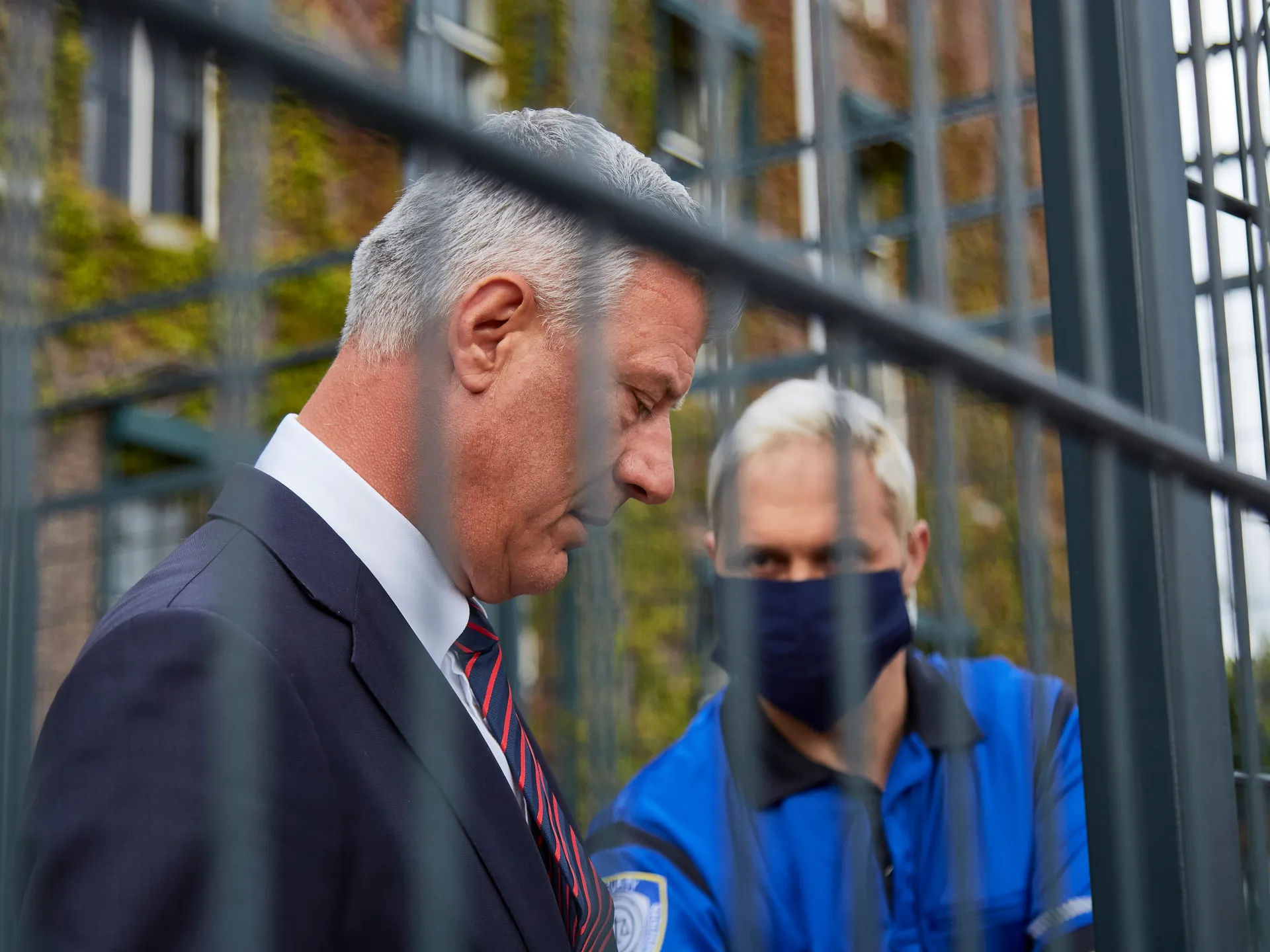
The Kosovo war crimes tribunal will on Wednesday deliver its verdicts in the case of former President Hashim Thaci and several wartime commanders accused of murder and torture during the self-declared republic’s break from Serbia.
Thaci, 58, is facing several counts of war crimes and crimes against humanity, including murder, torture and persecution, along with three former commanders from the ethnic Albanian Kosovo Liberation Army (KLA), a separatist militia that fought Serbian troops.
Recommended Stories
list of 3 itemsend of list
Thaci and the other former high-ranking commanders, Jakup Krasniqi, Rexhep Selimi and Kadri Veseli, deny the charges.
Prosecutors have requested 45-year prison sentences for each of the men.
The case is extremely contentious within Kosovo, where Thaci remains a revered figure for many Kosovan Albanians due to his role in the 1998-99 independence war.
On Saturday, tens of thousands gathered in the capital, Pristina, to call for their acquittal in the latest of several rallies since the trial began. Portraits of the four former KLA fighters have been plastered across the city along with a huge digital clock counting down to the verdicts.
“In the name of the people, declare them innocent,” one banner read.
According to prosecutors, the men targeted political opponents and civilians perceived as collaborators and traitors during their time in the KLA.
Thaci’s lawyers argued in February there is no evidence that directly links him to any of the crimes.
“There are no orders in the record from Thaci to perpetrators of crimes. There are no reports from perpetrators of crimes to Thaci,” lawyer Luka Misetic told judges at the Kosovo tribunal in February.
Most of the 13,000 people who died in the war in Kosovo were ethnic Albanians. A 78-day campaign of NATO air attacks against Serbian forces ended the fighting. About one million ethnic Albanian Kosovars were driven from their homes.
In 2008, Kosovo declared its independence from Serbia, a move that Belgrade refuses to recognise. Ties between Kosovo and Serbia remain tense, despite years of negotiations mediated by the European Union.
“Pravac Potocari” or “Direction Potocari” were the words used by former Bosnian Serb general Ratko Mladic as he entered Srebrenica on July 11, 1995.
Mladic was referring to the nearby village of Potocari, which hosted a United Nations peacekeeping base and was the initial gathering point for Bosniak refugees during the war in Bosnia. Under Mladic’s command, Bosnian Serb forces committed a genocide against thousands of Bosniak men and boys in the days that followed.
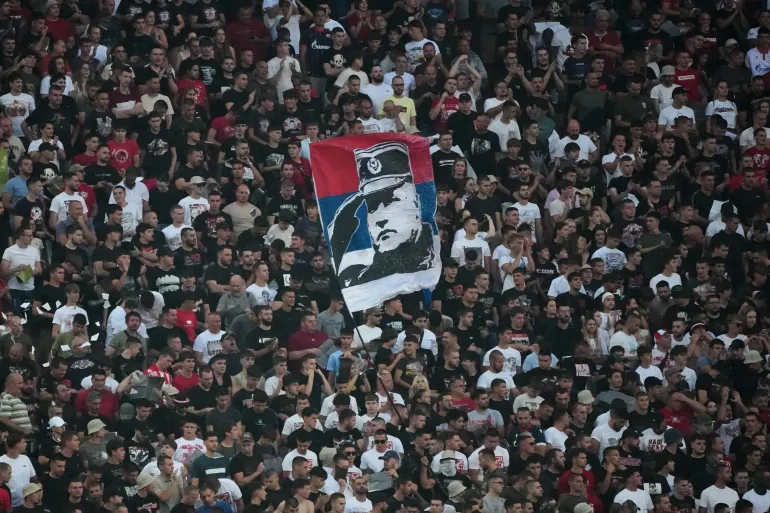
“Pravac Potocari” was also the slogan the fans of the Serbian football team Red Star chose on Sunday to honour the so-called “butcher of Bosnia”, who died in The Hague, the Netherlands, on August 27, while serving a life sentence for genocide, war crimes and crimes against humanity. During a match against city rivals Partizan in the Serbian capital, the supporters also unveiled a giant image of Mladic and observed a minute of silence in his memory.
The tribute came days after European football governing body UEFA fined Red Star a total of 98,250 euros, or $114,100, over a banner -“General, eternal glory and thanks” – dedicated to Mladic that was unveiled by the club’s ultras during a Europa League playoff away leg in Plzen, in the Czech Republic.
The penalty included a ban on Red Star supporters travelling to the club’s next two European away fixtures, in Lugano, Switzerland on October 15 and Ghent, Belgium on November 26.
It was not the first time Red Star supporters had expressed support for Mladic during a European match. Nine years earlier, fans displayed similar messages during a Europa League tie against Belarusian club BATE Borisov.
‘Most shameful event this stadium has seen’
For Slobodan Georgiev, a news director at TV Nova S in Serbia, the minute of silence at Belgrade’s Marakana stadium marked a qualitative shift rather than a repeat performance.
“Glorifying a convicted war criminal is nothing new, but officially paying tribute to him with a minute of silence is new – and it’s the most shameful event this stadium has witnessed,” Georgiev said. “Displaying the shameful slogan ‘Pravac Potocari’ cannot be justified, though in the coming days we’ll surely see attempts to do so.”
He placed the display in a much longer lineage. “Since the breakup of Yugoslavia, the terraces have served as a recruitment centre for paramilitary formations, and in various forms that haven’t changed to this day,” he said. “The worst messages have always travelled through the terraces – everything the authorities didn’t dare say themselves, they most often said through the stands, as they did … at the Red Star–Partizan match.”
But what made Sunday’s so-called “eternal derby” notable was not only the Red Star display.
Partizan’s own hardcore supporters, the Grobari, had raised their own banner in tribute to Mladic – reading “General, thank you” – just a week earlier, on August 31, during a Serbian Super Liga match against OFK Beograd, with Mladic’s flag flying over the north stand for the full 90 minutes.
For Georgiev, the fan groups are not an autonomous phenomenon, but an instrument. “The state, through its secret services and through criminal groups, has always managed these groups and used them for the worst tasks: Mobilisation in war, crime in peacetime, and delivering the ugliest political messages,” he said. “A stand that boasts it was founded by Zeljko Raznatovic Arkan, and that sings in praise of Ratko Mladic without facing any legal consequence for it, speaks for itself.”
Georgiev was referring to Arkan, the Serbian paramilitary leader whose unit committed atrocities during the Yugoslav wars and who, before his assassination in Belgrade in 2000, was closely associated with Red Star’s hardcore fan base, the Delije – a group he is widely reported to have helped organise.
‘Clearest indication issue deeply ingrained’
Sasa Djordevic, a senior analyst at the Global Initiative Against Transnational Organized Crime (GI-TOC), sees the same continuity Georgiev described, tracing it back further still. “The connection between football hooliganism, nationalism and politics in Serbia dates to the late 1980s and became particularly evident during and after the breakup of former Yugoslavia,” he said. “Certain elements of the hooligan scene have since been exploited as a political ‘rent-a-mob,’ and some group leaders have reaped benefits from political protection or business opportunities.”
What worries him most now is not the display itself, but how unremarkable it risks becoming. “Incidents like those that occurred at Marakana last night risk being perceived as routine rather than serious manifestations of hate speech,” he said. “Public debate has nearly vanished, and society seems increasingly desensitised to violence and hate speech in stadiums. When such behaviour starts to feel normal, it may be the clearest indication that the issue has become deeply ingrained.”
Ivana Jeremic, an editor at the Balkan Insight publication, pointed to why sports venues serve that function so well. “Stadiums have long ceased to be merely sporting arenas – they are fertile ground for sending messages that can’t be spoken publicly, or that come wrapped in a softer form,” she said. “Matches involving Partizan, Red Star, and the national team stand out in particular for this.”
The political ties, she argued, are an open secret. “The political connections between the fans leading the stands and those in power are something of a public secret, with a number of documented examples of direct influence. What we hear or see on the terraces could hardly happen without some form of ‘permission’ from the authorities,” Jeremic said. “When it comes to Mladic, we’ve seen a rise in such messages in recent days. Red Star’s fans, as well as the club itself, are currently perceived as a mouthpiece of the government.”
On Thursday, a Serbian government plane carried Mladic’s body from The Hague to Belgrade for burial, where it was received with military honours.
Red Star fans wave a flag showing Ratko Mladic during the match against Partizan [Darko Vojinovic/AP Photo]
From the terraces to paramilitary structures
Djordevic traced the mechanism behind this convergence to the same period cited by Georgiev. “During the breakup of Yugoslavia, football stadiums became spaces for nationalist mobilisation, and for some young men the step from organised football violence to paramilitary structures was short,” he said. “Hooligan groups since then cultivate loyalty, hierarchy, readiness to use violence and rapid mobilisation to achieve their extremist views that go beyond strictly football supporter beliefs.”
That structure is not unique to Serbia, but it is particularly acute there. GI-TOC’s regional research examined 122 fan groups, identifying 78 as ultras – and found 21 groups combining violent hooliganism with links to extreme politics. “The most problematic situation was in Serbia, followed by Bosnia and Herzegovina,” Djordevic said, while cautioning against overreach. “The term ‘terrorism’ should be used cautiously: The evidence points to particular groups or individuals linked to violent extremism and paramilitary structures, not supporter groups as a whole.”
UEFA’s disciplinary decision detailed the layers of the punishment: A 50,000-euro ($58,000) fine for transmitting a message unfit for a sporting event, an 8,250-euro ($9,580) fine for team misconduct, and the activation of a suspended sanction originally imposed in April 2025 over racist conduct by Red Star fans – a suspended stadium ban now converted into a one-match travelling ban, conditionally extended for a further two years.
But fines on paper, Djordevic said, rarely reach the people who are actually liable. “The problem is that fines imposed on clubs do not necessarily affect those responsible for the incidents,” he said. “If hooligans remain untouched, financial penalties can become simply another cost of doing business rather than a tool for changing behaviour. That does not mean clubs do not care. They respond when sanctions are certain, substantial, and consistently enforced, as seen more clearly in basketball games than in football.”
The gap, he argued, is not a lack of rules. “Serbia already has a solid legal framework,” he said. “The real issue is enforcement. Sanctions need to be applied quickly, consistently and without exceptions, both to clubs and to individuals responsible for violence and hate speech.”
Two Muslim female journalists allege they were detained and brutally assaulted by police in India’s capital, Delhi. Police have denied the allegations, claiming the journalists were brought to the station over an illegal parking dispute.