Certain animals keep disappearing under suspicious circumstances in the UK’s ‘Bermuda Triangle’
Hen harriers are the most intensely persecuted of all the UK’s birds of prey (Image: PA)
A moorland in North Wales has earned the grim nickname “Wales’ Bermuda Triangle” after gaining notoriety for a string of mysterious bird disappearances. Ruabon Moor, located to the west of Wrexham, is regarded as one of the most notorious bird of prey persecution hotspots in the UK, according to the RSPB.
In late August 2025, a satellite-tagged female Hen Harrier vanished without trace on the moor. Data from late August revealed that the young bird had departed the Peak District National Park, coming to rest on Ruabon Moor on August 28.
By the night of August 31, satellite tag data confirmed that the bird was no longer alive.
A search was subsequently carried out and the tag was recovered, but the bird’s body was nowhere to be found. North Wales Police sent the tag away for forensic examination.
Results confirmed that the satellite tag’s harness had been deliberately severed using a sharp instrument, such as a knife. Despite extensive searches, the body has never been recovered.
The Hen Harrier is a rare and vulnerable, red-listed species in Wales and across the UK, with its recovery being directly undermined by illegal persecution.
Mark Thomas, RSPB’s UK Head of Investigations, said: “Sadly, this incident is a textbook example of Hen Harrier persecution and really shows the massive impact these crimes are having on this species. In this case a healthy young bird fledged from a safe area in the Peak District National Park and sadly chose to settle in ‘Wales’ Bermuda Triangle’ – the most notorious bird of prey persecution hotspot in the country.
“This three-month-old bird survived for just three days in the area before it vanished in highly suspicious circumstances. Based on years of evidence and intelligence, we suspect the criminal shot the harrier, cut the harness off the Hen Harrier’s body, discarded the tag and disposed of the body.”
Craig Best, General Manager for the National Trust in the Peak District, said: “We are devastated to learn of the fate of this magnificent bird that started its life on moorland in our care in the Peak District. Hen Harriers are an important species in the ecosystem of moorland habitats.
“We work hard to make sure these birds have good nesting and feeding grounds. Funding from our supporters helps us to restore the landscapes they need to give them the best chance of survival. If persecution is allowed to continue, we stand to lose a very important species that is crucial to the health of these landscapes and it can’t continue.”
Sgt Peter Evans, of North Wales Police Rural Crime Team, said: “In September 2025, North Wales Police received a report concerning the disappearance of a Hen Harrier on Ruabon Moor. Working in partnership with the RSPB and the National Wildlife Crime Unit, the harness was recovered and the investigation to date is inconclusive. Despite this, we can confirm that the harness had been intentionally severed, and the circumstances surrounding the bird’s disappearance are being treated as suspicious.
“Hen Harriers are a rare and protected species in Wales, making incidents of this nature particularly concerning. We urge members of the public to remain vigilant. If you witness any suspicious activity involving birds of prey, please report it to North Wales Police or the RSPB.”
Members of the public are encouraged to flag any suspected bird of prey persecution by ringing the police on 101 and submitting a report to the RSPB. This can be done through the RSPB’s online reporting form at www.rspb.org.uk/report-crimes or by phoning the RSPB’s confidential Raptor Crime Hotline on 0300 999 0101.
Reports made via the RSPB’s reporting form and Raptor Crime Hotline can be submitted anonymously.
Those trapped in the compounds include Chinese, Philippine, Taiwanese, Malaysian and Brazilian nationals.
Published On 23 Jun 202623 Jun 2026
More than 5,300 people remain trapped in online scam centres in Myanmar near the Thai border, despite a multinational crackdown in the region last year, a human rights group says.
The Thai-based Civil Society Network for Human Trafficking Victim Assistance (CSNHTV) sent a letter to Thai police urging them to take action. It said many of those trapped were foreign nationals held at four locations inside areas controlled by the Myanmar Democratic Karen Buddhist Army militia.
Recommended Stories
list of 3 itemsend of list
According to the CSNHTV, an estimated 1,600 people trapped are Chinese nationals, and about 200 are people of Myanmar, along with people from the Philippines, Taiwan, Malaysia, Brazil, Russia, Kenya, Uganda, Rwanda, and Zimbabwe.
“Many of these compounds have yet to be dismantled or subjected to rescue operations to free all remaining victims,” it said.
“As a result, these syndicates continue to engage in online fraud and human trafficking, causing harm to victims around the world, particularly in the United States and Europe.”
Scam centres in Southeast Asia, including those in Myanmar and Cambodia, run illegal online schemes that are designed to defraud people worldwide.
“Litany of abuse”
The centres grew significantly during the COVID-19 pandemic in the region, and were initially tied to poorly run casinos and online gambling. They have now become a multibillion-dollar industry, according to the United Nations.
A UN report in February said the facilities are mostly staffed by foreign nationals who have been trafficked by criminal gangs and subjected to abuse.
It found instances of “torture and other ill-treatment, sexual abuse and exploitation, forced abortions, food deprivation, solitary confinement, among other grave human rights abuses”.
“The litany of abuse is staggering and at the same time heart-breaking,” UN Human Rights chief Volker Turk said.
“Yet, rather than receiving protection, care and rehabilitation as well as the pathways to justice and redress to which they are entitled, victims too often face disbelief, stigmatisation and even further punishment.”
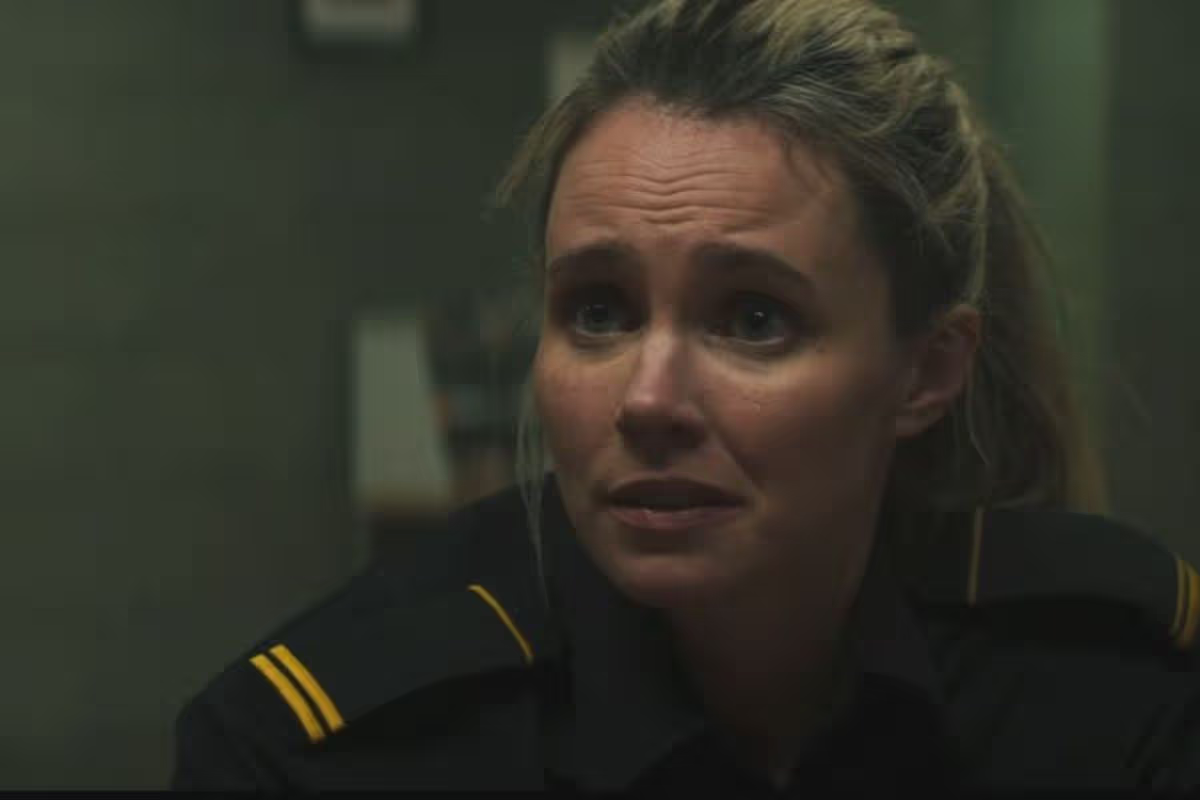
The Icelandic Nordic noir thriller follows police officer Aníta as she investigates dark secrets
19:00, 20 Jun 2026Updated 19:02, 20 Jun 2026
The chilling programme received good reviews from critics(Image: U)
Black Sands is returning for a second series on U.
The Icelandic crime thriller, which devotees of ITV’s Broadchurch ought to appreciate, resumes 14 months following the startling events of the opening season, with the small coastal town of Glerársandar still grappling with the revelation that a serial killer had been concealed in plain sight amongst its inhabitants.
Central to the new series is police officer Aníta, who is adapting to life as a new mother while wrestling with a powerful urge to return to work.
Her world is thrown into turmoil when a woman perishes in what seems to be a suspicious car crash. Driven to unearth the truth, Aníta becomes embroiled in the investigation alongside her friend and colleague Fríða, who is heading up the official police inquiry.
As the case progresses, sinister secrets from the town’s past start to surface. The investigation traces back to a former foster home with connections to Aníta’s own family, revealing decades of concealed trauma and lingering questions, reports Wales Online.
What at first appears to be a tragic accident quickly evolves into a considerably more intricate mystery, with startling revelations and devastating ramifications for those caught up in it.
Throughout the eight-part series, viewers can anticipate twists as long-buried truths emerge, relationships are put to the test, and suspicion descends upon numerous residents. As the pressure intensifies, Aníta grapples with both the investigation and her own personal demons, paving the way for a dramatic finale.
Season two of Black Sands arrives on U on 20 June, with all episodes available to stream from launch day.
Fans who have already delved into the crime thriller have offered mixed verdicts on the programme, though it has garnered acclaim from critics.
Reviewer Kelly Luchtman commented: Black Sands is a very satisfying series with fantastic acting, especially by Steinunn Ólína Thorsteinsdóttir, who has mastered the dangerous charm of Elín’s character.
“We can feel the oppressive sadness of the town, and empathize with Aníta, even if it’s her own bad decisions that are the impetus for her return. People have criticised the running time of the series and the agonising slowness of solving the crime. I agree it could have been 6 episodes instead of 8, but I still binged it.”
Black Sands series two is available to watch on U.
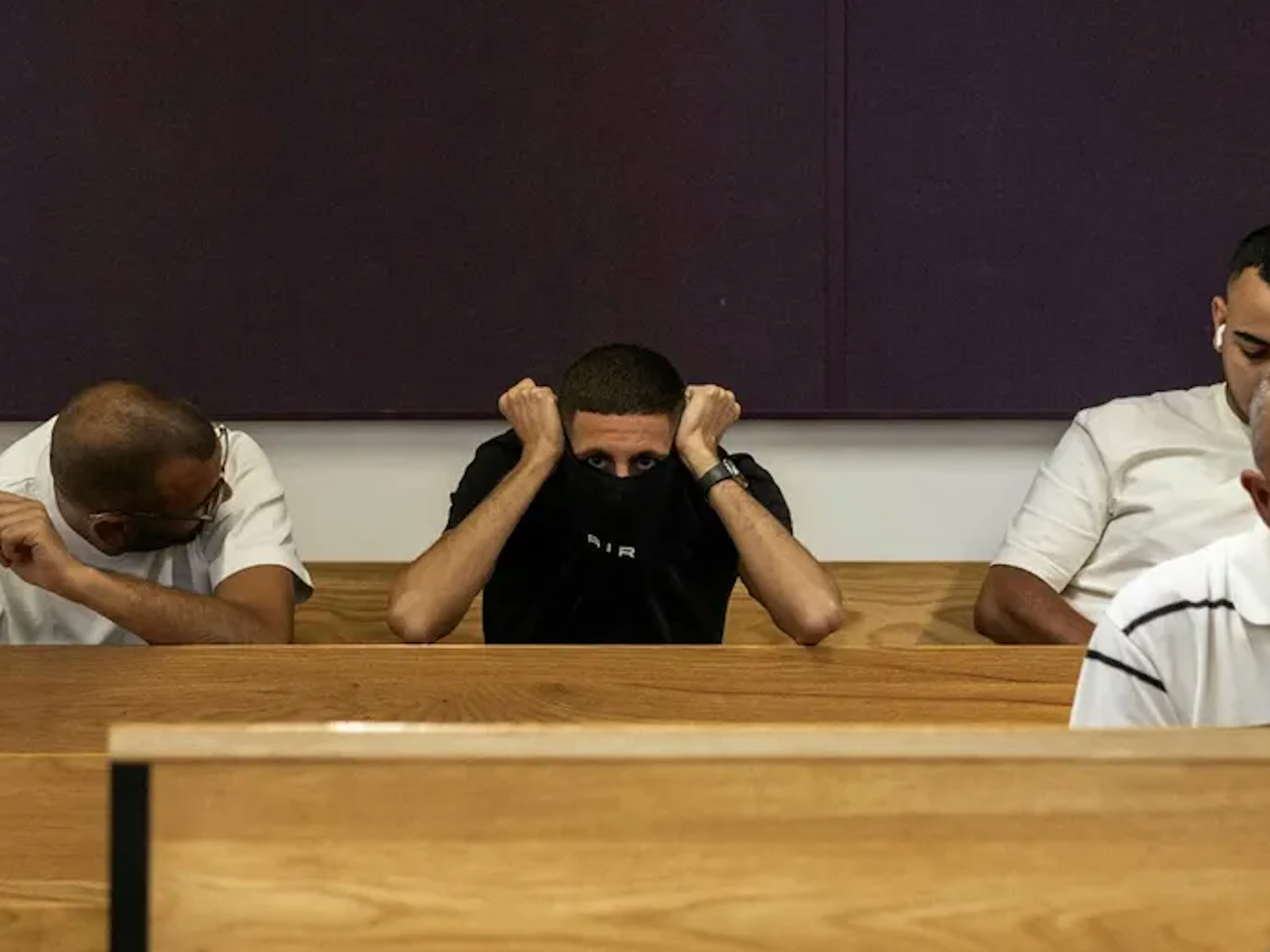
An Israeli court has convicted seven men over the 2021 lynching of Sa’id Moussa, ending a five-year trial. Moussa was dragged from his car and beaten unconscious by a mob during the May 2021 riots.
Research has named the best place in the UK to raise a child, thanks to a number of factors from the variety of countryside spaces to lower than average house prices
16:39, 19 Jun 2026Updated 16:41, 19 Jun 2026
The city was praised for its large outdoor green spaces(Image: Katy Blackwood/NurPhoto/Shutterstock)
Raising a child in the modern world is a demanding task, and there are lots of big decisions parents-to-be need to make to give their offspring the best chance in life.
One of the most important factors is where to live, and parents will be seeking somewhere with a balance between safety, education quality, childcare costs, plus outdoor spaces to raise free-range kids.
To give parents a hand when making this life-changing choice, Outdoor Toys has created an index of the best places to raise a child in the UK for 2026, and its research looked at a huge number of factors. These included the number of child-friendly attractions, crime rates, and the percentage of schools with a good or outstanding OFSTED rating. This gave each town and city a child raise-ability score out of ten, and the overall winner scored an impressive 7.32.
Sheffield in South Yorkshire took the top spot thanks to offering double the average amount of green space per person . It also has relatively affordable childcare costs of £918.33 per month, which is below the UK average of £1,128 per child without government support.
Housing is also a major factor for growing families, and according to the Office of National Statistics (ONS), the average house price in Sheffield stands at £222,000. This is below the UK wide average of £270,080, and far below areas such as the south east at £379,000.
Green spaces that can be enjoyed around the city include the Sheffield Botanical Gardens, which includes colourful flowers and plants from around the world, some of them kept in huge Victorian greenhouses. Outside, kids can wander the endless trails, spotting statues, fountains, and other pretty features.
Graves Park is another spot that’s much-loved by families. It has two playgrounds, woodlands, lakes, and much more to explore, while Kelham Island Museum is a fun day out where kids can learn all about the area’s industrial heritage in an interactive environment.
Second place in the rankings was Milton Keynes, its score boosted by the fact it offered the widest range of child-friendly attractions. MK residents enjoy 31 kid-friendly attractions per 100,000 people, 11 more than the study’s average, meaning families who live in the city certainly won’t get bored.
While Milton Keynes lost some ground due to its costly childcare – an average of £1,416 per month – it offered large amounts of green space per person as well as a high percentage of schools OFSTED graded as good or outstanding.
Swindon came in third place, in part due to having the lowest crime rate in the study at 68 per 1,000 people. It also offered average childcare costs of £900, below the UK average, while two-thirds of its schools had good or higher OFSTED ratings.
Have a story you want to share? Email us at webtravel@reachplc.com
Mexican journalist Roxana Guzman’s disappearance for more than two weeks has renewed concerns over escalating violence against journalists in Mexico, where attacks on the press continue with near-total impunity.
Mangione would face lighter sentencing if jury accepts he was in a state of ‘extreme emotional disturbance’ during act.
Published On 17 Jun 202617 Jun 2026
Luigi Mangione, the man suspected of fatally shooting United Healthcare CEO Brian Thompson in New York City, will argue a psychiatric defence during his trial.
Judge Gregory Carro said on Wednesday that Mangione’s lawyers informed him that they will assert that their client was in a state of “extreme emotional disturbance” when he allegedly carried out the shooting in December 2024.
Recommended Stories
list of 3 itemsend of list
New York state allows murder defendants to make the case that they cannot be held fully responsible for their actions because they were in a state of extreme emotional disturbance at the time of the killing.
Thompson’s slaying, which took place outside a hotel in midtown Manhattan, shocked the United States public. Grainy footage of the act quickly spread across social media.
It also drew attention to the widespread anger over sky-high healthcare prices. Police have said that the terms “delay”, “deny”, and “depose” were written on the suspect’s ammunition, a reference to how health insurance companies avoid paying claims.
If the jury concludes that Mangione was emotionally disturbed at the time of the alleged act, it could move to convict him of manslaughter rather than murder. Such a conviction generally results in a lighter sentence.
Relying on a claim of emotional disturbance means that Mangione would effectively admit that he carried out the act, but that he did so under circumstances of impaired judgement. It differs from an insanity plea, which would allow Mangione to serve his sentence in a psychiatric facility rather than a prison.
Mangione, who sat between two of his lawyers dressed in a blue suit, is set to go to state trial on September 8. The 28-year-old has previously pleaded not guilty to state and federal charges in connection to the killing.
His federal trial, which includes stalking charges, is set to begin on October 13. He faces a potential life in prison if convicted in either case.
US District Judge Margaret Garnett, who is overseeing the federal case, threw out murder and weapons charges against Mangione on technical grounds in January. That ruling eliminated the possibility of Mangione facing the death penalty.
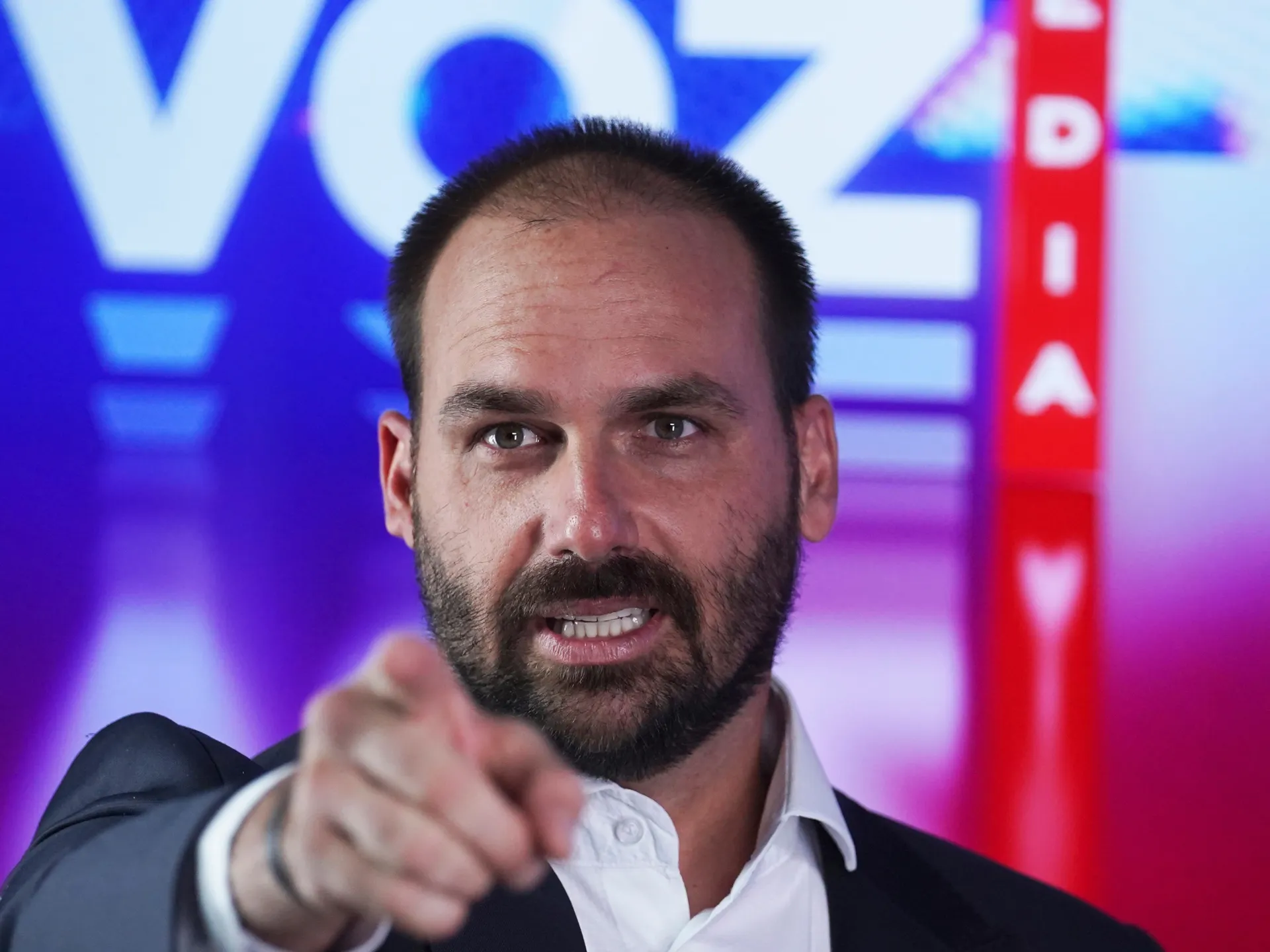
A panel on the Brazilian Supreme Court has voted to convict Eduardo Bolsonaro of lobbying the United States to interfere in the trial of his father, former right-wing President Jair Bolsonaro.
On Tuesday, three of the four justices on the panel voted in favour of conviction, with one remaining justice yet to vote.
Recommended Stories
list of 3 itemsend of list
They determined that Eduardo Bolsonaro’s actions amounted to coercion against Brazil’s justice system and sentenced him to four years and two months in prison.
“It wasn’t merely an expression of opinion or a political stance, but rather conduct that clearly threatened Brazilian authorities and Brazilian citizens themselves,” Justice Cristiano Zanin said, calling Eduardo Bolsonaro’s actions “illegitimate and criminal”.
The conviction is the latest legal setback for the Bolsonaro family, which remains a dominant force on Brazil’s political right.
Jair Bolsonaro is serving a 27-year prison sentence for his efforts to remain in power after losing the country’s 2022 election.
Prosecutors described his actions as an attempted coup. Bolsonaro and his family have portrayed the trial as a political witch-hunt.
The ex-president’s third son and a member of Brazil’s Chamber of Deputies, Eduardo Bolsonaro has been active in his father’s defence.
In March 2025, he pledged that he would move to the US full time to “focus 100 percent” of his energy on “a single cause”: freeing his father.
Prosecutors accused him of mounting an illegal campaign to court US President Donald Trump and use foreign influence to pressure Brazilian officials to drop the case against Jair Bolsonaro.
Trump, an ally of Bolsonaro, had likewise tried to remain in office despite his loss in the 2020 election and has accused Brazilian officials of persecuting right-wing voices like Bolsonaro.
In July 2025, Trump issued a letter announcing 50 percent tariffs on certain Brazilian products, citing Jair Bolsonaro’s trial, specifically, as a reason.
“This Trial should not be taking place,” Trump wrote at the time. “It is a Witch Hunt that should end IMMEDIATELY.”
Trump also issued an executive order sanctioning one of the Brazilian Supreme Court justices involved in the Bolsonaro case, Alexandre de Moraes, on the basis that he worked to “target political opponents” and “suppress dissent”.
He called de Moraes a “threat” to the US, and his administration later expanded the sanctions to include the justice’s family members, as well as other Brazilian judicial officials.
Brazil’s current president, Luiz Inacio Lula da Silva, has denounced those actions as an attempt to interfere in Brazil’s domestic affairs.
As relations with Lula grew more cordial, the Trump administration relaxed its tariffs against Brazil. In December, it also repealed the sanctions against de Moraes and his family.
Lula, meanwhile, visited the White House in May and praised what he described as a productive meeting with his US counterpart.
But it remains unclear what role Trump may seek to play in Brazil’s upcoming presidential elections.
The left-wing Lula is campaigning for a fourth term, and he is likely to face his stiffest competition from Jair Bolsonaro’s eldest son, Senator Flavio Bolsonaro.
A CNT/MDA poll released on Tuesday projected that Lula would receive 49.3 percent of the vote in a run-off election against the senator’s 40.2 percent.
Flavio Bolsonaro has faced his own legal trouble in recent months, with police opening a probe in April into whether he defamed Lula. His connections to a disgraced banker have also raised media scrutiny.
Jair Bolsonaro, meanwhile, faced questions this week about the presence of a firearm in his home in Brasilia, where he is serving three months of his sentence on medical grounds.
Justice de Moraes likewise asked the elder Bolsonaro’s legal team to explain the presence of the weapon, which police discovered during a routine inspection on Monday.
A security guard for Bolsonaro initially said the 9mm Glock pistol was his own, but it was later revealed to be the ex-president’s.
De Moraes gave Bolsonaro’s legal team 24 hours to explain why “the convicted man kept a firearm at home”.
She was stopped as she was about to board a plane to leave the country
A still image of the video in which she reportedly criticised local law enforcement as well as general driving standards
A woman has been arrested after reportedly posting a negative video about her holiday. Yass Naubelle was intercepted by border authorities on Saturday, June 13.
The influencer was placed in police custody just moments before boarding her flight back to her home country France. The 30-year-old content creator published a viral video that reportedly criticised local authorities – sparking hundreds of comments online.
The French-Algerian influencer reportedly slammed her holiday experience in Marrakech, Morocco. She allegedly criticised local law enforcement as well as general driving standards in the North African country.
Airport police at Marrakech Menara Airport executed the border stop as Yass prepared to clear security checkpoints for her return flight to France. Yass, founder of the Naubelle skincare line, was arrested under a national warrant after Moroccan authorities deemed her clip “defamatory towards Moroccan citizens” and “outraging to the forces of order”.
She was placed in police custody “to determine the real motivations behind these criminal acts”. State investigators confirmed she is being held on suspicion of publishing defamatory and insulting digital content directed toward citizens and undermining a public institution.
In the now-deleted video, filmed during her short break in Marrakech, she reportedly described the roads as chaotic. “I’ve never seen people drive like this. It’s super dangerous – cars, mopeds without helmets, with children on board, swerving suddenly,” she reportedly said.
Content cannot be displayed without consent
When comparing the driving standards to Algeria, she reportedly said: “It’s less bad than here”. She also accused some traffic police officers of stopping women “for nothing” in order to extract money, it is claimed.
The content quickly triggered a national alert, leading to her interception at the airport. Yass, who has more than 20,000 TikTok fans, currently remains in custody in Morocco. No formal charges or court appearance details have been publicly confirmed beyond her initial arrest.
Marrakech, a popular destination for European tourists including many from France, relies heavily on holidaymakers but has seen occasional controversies involving social media content. British travellers to Morocco are advised to remain cautious with social media posts about local conditions as the authorities have reportedly acted swiftly in similar cases.
A TV critic has urged everyone to watch a new Netflix true crime documentary he claims is the best of 2026 so far and will leave viewers feeling a wave of emotions
15:50, 15 Jun 2026Updated 15:59, 15 Jun 2026
A new Netflix true crime documentary has been labelled ‘insane’(Image: Djavan Rodriguez via Getty Images)
For those who are passionate about true crime, one television critic has shone a spotlight on a brand new Netflix documentary that he insists is a “must-watch”.
Luke Eccleston went further, describing the programme as the finest of 2026 so far, and predicted it would soon become the “top trending” title on the streaming giant. “The documentary I am talking about is called Maternal Instinct,” he revealed in a TikTok video. Despite running at just 90 minutes long, Luke enthuses that it will have all viewers “hooked” from after just five minutes.
“This tells a story from back in 2020 where a young woman is driving down the highway, she gets pulled over by the police and she has a baby on her lap, which had just been born,” he continued.
Content cannot be displayed without consent
Expanding on the plot, Luke explained that once the woman and baby are taken into custody by law enforcement, tests quickly reveal the pair are not related. “What comes next is genuinely insane,” he declared.
Keen not to discourage his followers from watching, Luke pressed on: “The more you learn about the story, this woman and what happened… it is one of the most brutal, heartbreaking, emotional and horrible stories you will ever come across.
“Everyone is going to be talking about this documentary – I guarantee it.”
Netflix’s Maternal Instinct synopsis states: “In a small East Texas town, a young woman from a wealthy family falls for a local hog trapper. Their relationship appears perfect, and within months she’s pregnant and proudly showing off her baby bump all over social media.
“But when a state trooper pulls her over and discovers she has just given birth in her car, her story quickly falls apart, exposing the truth behind a terrifying and unthinkable crime.”
Helmed by Jessica Dimmock, Maternal Instinct chronicles the lives of Jessica Brookes, her boyfriend Wade Griffin, Taylor Parker and Reagan Simmons-Hancock.
On IMDb, the documentary has garnered an impressive rating of 7.4 out of 10 from almost 2,000 reviews.
One viewer confessed in a recent review: “I was not prepared! I went into this documentary completely blind, with no idea where the story was headed. It begins with a mystery. Something seemingly impossible has happened.
“But how? As the pieces slowly fall into place, the story takes an increasingly dark turn, far darker than I ever expected. And I have seen my share… the reveal is a complete and utter gut punch and at one point brought tears to my eyes. And I will have to leave it at that.”
And a second added: “I had never read anything about this case, so I went into this doc knowing nothing of the background or repercussions. I was horrified at how one person could destroy so many lives.
“The documentary pursues the whole journey of the perpetrator extraordinarily well, piecing together her journey for the past 10 or so years of her life where her lies keep getting worse.”
The United Kingdom’s Court of Appeal has ruled that the British government was right to proscribe the Palestine Action activist group as a “terrorist” organisation last year.
Palestine Action is a British protest group which was founded six years ago and describes itself as a movement “committed to ending global participation in Israel’s genocidal and apartheid regime”.
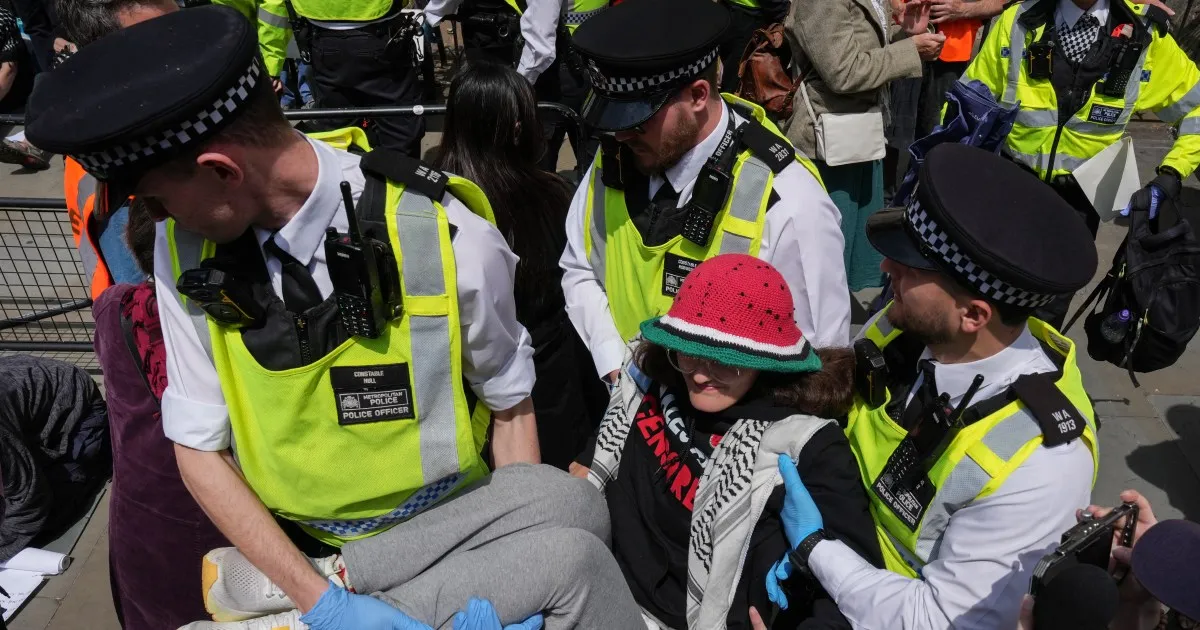
On Monday, police made more arrests of protesters demonstrating in support of Palestine Action outside the Court of Appeal in London.
Since the group’s proscription, which also bans support for proscribed groups, about 3,000 people have been arrested.
The Metropolitan Police welcomed the ruling and said it would continue to arrest those who protest in support of the group.
Here is what we know about the ruling:
What has the Court of Appeal ruled?
The judgement released on Monday states: “The proscription of an organisation like Palestine Action is highly controversial. But it is a fundamental mistake to overlook the fact that Palestine Action overtly promotes unlawful violence amounting to terrorism”.
The ruling was made by a five-strong panel, including the two most senior judges in England and Wales.
Palestine Action, which was formally proscribed by the UK last July, is a British protest group founded six years ago. It says it uses “disruptive tactics” to target “corporate enablers” and companies involved in the manufacture of weapons for Israel, such as Israeli group Elbit Systems, Italian aerospace company Leonardo, French multinational Thales and Teledyne from the United States. The group has targeted British facilities linked to those companies.
In all, British police say action by the group has resulted in millions of pounds of criminal damage.
A court in London ruled on June 12 that four Palestine Action members convicted of criminal damage at a British facility owned by Israeli weapons group Elbit Systems near Bristol, west England, would be sentenced on the basis that their actions had a “terrorist connection”.
Why was this case brought?
Following the proscription of Palestine Action last year, the group’s co-founder, Huda Ammori, challenged the decision in the High Court. In February, the High Court ruled that the government’s “terror group” ban was unlawful and disproportionate.
The government immediately said it would appeal. “I am disappointed by the court’s decision and disagree with the notion that banning this terrorist organisation is disproportionate,” Home Secretary Shabana Mahmood said.
The judgement on Monday agreed with her. Its ruling states: “The Home Secretary had the institutional competence and the democratic accountability to make the decision. The Proscription Decision was consistent with the Home Secretary’s Proscription Policy and was proportionate. It was not unlawful.”
Days after the Brize Norton attack, members of parliament voted in favour of proscribing the group. That classified Palestine Action as a “terrorist” organisation, bringing it into the same category as armed groups such as al-Qaeda and ISIL (ISIS).
Critics decried the vote, arguing that while members of the group have caused damage to property, they have not committed violent acts that amount to terrorism. More than 130 high-profile public figures have spoken out against the proscription.
Other previous actions the group has taken include:
In 2021, members protested for six days on the roof of Elbit Systems’ subsidiary, UAV Tactical Systems in Leicester, until some were arrested by police.
In 2022, the group broke into a Thales equipment factory in Glasgow, causing damage to weapons worth more than a million pounds ($1.3m).
In 2024, 10 months into Israel’s genocidal war on Gaza, Palestine Action activists broke into an Elbit Systems UK facility near Bristol in southwest England, causing another million pounds of damage.
How has Palestine Action responded to the ruling?
In a statement read by a representative following the ruling, Palestine Action’s Ammori said the group will challenge the judgement in the UK’s Supreme Court.
“We will fight this all the way. We will seek permission to appeal to the Supreme Court and, if need be, take this to the European Court of Human Rights,” Ammori said.
The European Court of Human Rights (ECHR), established by the Council of Europe, allows individuals to hold member states accountable for rights violations through a dedicated court. When the ECHR finds a violation, its judgements are legally binding on the state concerned under the European Convention on Human Rights.
“We will not stop fighting to overturn one of the most extreme attacks on free speech and the right to protest in modern British history,” Ammori added.
“This unprecedented abuse of power has devastated the lives of thousands of people while silencing dissent over Israel’s slaughter of the Palestinian people during the genocide, when that dissent could not be more urgent.”
How have others reacted to the ruling?
Anas Mustapha, Head of Public Advocacy at CAGE International, said: “This ruling tells us exactly what these powers are for. They are not safeguards against violence, they are authoritarian tools for crushing dissent.”
Mustapha added: “No ruling from any court is going to convince people that their conscience is wrong, and no amount of legislation will make support for Palestine disappear. The only sustainable outcome is the abolition of these laws in their entirety.”
Thomas Bell, acting UK Director of Human Rights Watch, said: “This disastrous decision further cements the UK’s place among countries that are backsliding on human rights by classifying acts of protest as terrorism.”
“When Palestine Action members have committed criminal damage, that should be dealt with under normal criminal laws, not by misusing overbroad and poorly defined terrorism powers. Defining a protest group as terrorists has created an absurd situation where thousands of people peacefully holding up signs have been arrested,” Bell added.
An award-winning crime drama that boasts a stellar cast including Sherdian Smith and Stephen Graham has been dubbed as ‘one of the best dramas around’
‘Outstanding’ crime series stacked with stars including Tina O’Brien streaming for free(Image: Getty Images)
A gripping and compelling BBC crime series that has been dubbed “one of the best dramas around” is now available to watch online.
Originally airing in 2010, Accused includes 10 individual episodesspread across two series, each following a different character on trial and how they came to be accused.
The first series stars the likes of Christopher Eccleston, Mackenzie Crook, Coronation Street’s Tina O’Brien, Peter Capaldi, and Naomi Harris across six hard-hitting episodes.
It was followed by a second series in 2012, with Sean Bean, Stephen Graham, Olivia Colman, Sheridan Smith, and Anna Maxwell Martin among the stars joining the cast.
Created by Time writer Jimmy McGovern, Accused was a smash hit and bagged a BAFTA TV nomination for Best Drama Series in 2011, with Juliet Stevenson also receiving a nod for her performance in episode three.
Two years later, Olivia Coleman won Best Supporting Actress for her role in series two at the BAFTA TV Awards and also the Royal Television Society Programme Awards, while Sean Bean won Best Actor at the International Emmys.
The gripping anthology series, available to watch on ITVX, also received rave reviews from critics, earning a score of 7.9 out of 10 on IMDb. One viewer praised the show and said, “Blown away. I can’t believe it took me so long to find this series!!!
“This is what happens when top writers and some of Britain’s most impressive actors emotionally involve themselves in making great drama. What a theme! That on paper, through the courts, there is simply a charge and a decision, without the truth behind the whos, whats, whens, and whys. One of the best dramas to date!
Another agreed: “Absolutely outstanding. Can’t recommend this series highly enough. Each episode, bar one, is a separate story, and every one is outstanding, brilliantly acted, and scripted. Stellar cast under brilliant direction- you can’t go wrong. Trust me.”
A third penned: “Very well done. This is a very well-done show and at times difficult to watch because of how real it seems. The performances are incredible, as is the writing.
“You understand these characters in a way that is rare and sometimes disturbing. As I said, this is not easy viewing, but it’s certainly worthwhile.”
Summer, and all the vacation days and potential travel that implies, is upon us. And whether flying internationally or taking time off at home, you can’t beat a good British crime drama as the ultimate self-soother (especially in summer when the U.K.’s inevitable drizzly city streets and windswept moors can provide at least visual relief from the heat). The genre is varied, the casts inevitably fine and justice almost always prevails. So here are 15 shows, new and old, to watch. (And if that’s not enough, you can find 15 more here.)
‘Young Sherlock’ (Prime Video)
Will we ever tire of reimagining Sherlock Holmes? Not anytime soon, apparently. Created by Matthew Parkhill and developed by Guy Ritchie (who directed two episodes), this version gives us a college-aged Sherlock (Hero Fiennes Tiffin) banished to the role of Oxford University porter by his fed-up older brother, Mycroft (Max Irons), who hopes to put the arrogant young rip on a steadier path. Alas, before you can say “Sir Bucephalus Hodge” (the Oxford bigwig played by Colin Firth), young Sherlock is up to his flat cap in murder and mystery, which he is determined to solve with the aid of his new best bud — wait for it — James Moriarty (Dónal Finn). An over-the-top romp that proves, if nothing else, the near-miraculous elasticity of Arthur Conan Doyle’s iconic creation.
Mark Gatiss stars as Gabriel Book in “Bookish.”
(PBS)
‘Bookish’ (PBS)
Speaking of Holmes, “Sherlock” co-creator and co-star Mark Gatiss is up to it again, this time in the leading role. In post-World War II London, Gabriel Book (Gatiss) runs a secondhand bookshop, above which he and his beloved wife, Trottie (Polly Walker), live. But all is not what it seems, as Jack (Connor Finch), the young orphan ex-con they take under their wing, soon discovers. Gabriel apparently did something so important during the war that he is now the neighborhood’s go-to crime solver (with a letter from Winston Churchill to ensure VIP access). He also has a personal stake in Jack’s reclamation, which gives the series a fascinating and pathos-filled LGBTQ-history subtext.
Rishi Nair as Alphy Kottaram, left, and Robson Green as Geordie Keating in the 11th and final season of “Grantchester.”
(PBS)
‘Grantchester’ (PBS)
The sacred meets the secular in this long-running pairing of a young vicar with a worldly police detective in the titular idyllic Cambridgeshire village during the 1950s and ‘60s. In Seasons 1-4, that vicar is Sidney Chambers (James Norton), a jazz enthusiast plagued by memories of WWII who offers unsolicited insights to gruff and initially ungrateful Det. Inspector Geordie Keating (Robson Green). Friendship inevitably blooms, and when Sidney leaves the scene (and Norton the series) at the end of Season 4, many hearts (including Geordie’s) are broken. But subsequent replacement vicars — Will Davenport (Tom Brittney) in Seasons 5-9 and Alphy Kotteram (Rishi Nair) in Seasons 9-11 — each find their way to Geordie’s side, bringing their own charms, detectival insights and personal woes. The final season premieres June 14.
‘Touching Evil’ (BritBox)
DI Dave Creegan (a young Robson Green) is brought in to help DI Susan Taylor (an even younger Nicola Walker) of the Organized and Serial Crime Unit solve a series of abductions that Creegan comes to believe have been committed by a serial killer. The relationship sticks and the pair goes on to track down all manner of nasty killers with a combination of unconventional techniques and good police work. Green’s Creegan gets top billing, and a deeply resonant personal story, but seeing Walker (who would go on to star in so many fine series, including the terrific crime dramas “River” and “Unforgotten”) play a finely tuned second fiddle is great fun too.
‘Karen Pirie’ (BritBox)
For fans of Scottish crime drama (see also “Case Histories,” “Shetland” and “Dept. Q”), Det. Inspector Karen Pirie (“Outlander’s” Lauren Lyle) is a refreshing historic cases hero. Smart, ambitious and dogged, she is not burdened by a dark past or traumatic pain or the generally dour outlook that plague so many of her peers. Based on the books of Val McDermid, the series is set on the Scottish peninsula of Fife (the first season involves the picturesque town of St. Andrews) and all the gloriously broody scenery that implies. Murder mystery plus vicarious international mini-break.
‘Sister Boniface Mysteries’ (BritBox)
This cheeky spinoff of the iconic “Father Brown” puts a sweet-faced Catholic nun (Lorna Watson) at the center of all manner of murder in the fictional 1960s Cotswolds town of Great Slaughter. Sister Boniface is, of course, not just any nun. Having served as a codebreaker at Bletchley Park during WWII before entering the convent, she holds a PhD in chemistry, which makes her the perfect, if most unlikely, forensic specialist. (She also rides a red Vespa and serves as the convent’s vintner.) Unflappably brilliant and sincere in her vocation, she proves that faith in action can be both serious and great fun to watch.
‘The Bletchley Circle’ (BritBox)
Like Sister Boniface, Susan Grey (Anna Maxwell Martin) served her country as a codebreaker, but she is finding post-WWII life a bit more, well, boring. Forced back into the traditional roles of wife and mother, Susan tries to make do until a series of murders suggests to her a pattern unnoticed by the police. Gathering her former and still formidable colleagues who are also languishing in a sexist world, she creates, for two marvelous seasons, her own private crime unit. (See also, the one-season spinoff, “The Bletchley Circle: San Francisco.”)
‘Sherwood’ (BritBox)
When truculent Gary Jackson (Alun Armstrong) is murdered by an arrow outside his home in Nottinghamshire, near Sherwood Forest, Det. Chief Supt. Ian St. Clair (David Morrissey) is quick to put down any Robin Hood references and look instead at the town’s 30-year-old but still roiling divisions over the U.K.’s 1984-85 miners’ strike. Based on real events, “Sherwood” is both a murder mystery and a contemplation of the damage done by class-based strife and longheld grudges, often based on misinformation. With an incredible cast, including Lesley Manville, Kevin Doyle and Lorraine Ashbourne, it is deeply moving drama that illuminates the personal price of social divisions. Season 3 premieres this year.
Lesley Manville as Susan Ryeland and Timothy McMullan as Atticus Pund in “Magpie Murders.”
(Nick Wall / Eleventh Hour Films / PBS)
‘Magpie Murders’ (PBS)
Season 3 of “Magpie Murders” — titled ”Marble Hall Murders” — is also set to bow this year, so now is a good time to catch up on the previous adaptations of Anthony Horowitz’s Susan Ryeland novels, which both satirize and honor the murder-mystery genre. Ryeland (Lesley Manville) is a book editor whose most famous — and tiresome — author, Alan Conway (Conleth Hill), has just turned in his final murder mystery called “Magpie Murders.” Only the last chapter is missing and Conway has just been found dead at his country home. So it’s up to Ryeland, working with Conway’s literary detective Atticus Pünd (Tim McMullan), to figure out what happened, both in real life and in the book. This mystery-within-a-mystery launches two vivid characters, Ryeland and Pünd, working separately and together to solve crimes, sometimes in two different timelines.
Bill Nighy as headmaster Alan Lockwood, from left, Sharon Small as Det.Sgt. Barbara Havers and Nathaniel Parker as Det. Inspector Thomas Lynley in “The Inspector Lynley Mysteries.”
(Alex Bailey / BBC)
‘The Inspector Lynley Mysteries’ (BritBox)
The many, and voluminous, novels of Elizabeth George are being adapted in “Lynley,” a new series that has its charms. Still, I’m sticking with the older version, which ran from 2001 to 2008. Over six seasons, the unlikely partnership of Det. Inspector Thomas Lynley, eighth earl of Asherton and generally natty guy played by Nathaniel Parker, and his distinctly working-class and perpetually disheveled sergeant, Barbara Havers (Sharon Small), creates a classic odd-couple mix that allows some actual insight into issues of class and gender. But mostly, they make a great detective team, often using their differences to their advantage. The mysteries range far and wide over the U.K., from gritty streets to posh country homes, and 24 90-minute episodes are enough to keep you going all summer long.
Derek Jacobi in the title role of “Cadfael” in 1995.
(ITV)
‘Cadfael’ (BritBox)
Though the oldest series on this list (1994-1998), “Cadfael,” based on the books of Ellis Peters, remains a classic and constant recommendation. The great Derek Jacobi plays the titular 12th century monk who was once a soldier of the Crusades. Now a botanist and apothecary, Cadfael aids the local sheriff in solving all manner of crimes committed in and near Shrewsbury Abbey during England’s 15-year civil war known now as the Anarchy. Though the series does not delve as deeply into the politics of the time as the novels do, it creates an uncertain world in which violence runs rampant. Mercifully, there is a monk who knows his stuff, and if Jacobi isn’t enough reason to watch, the costumes and landscape are pretty great too.
‘No Offence’ (BritBox)
Joanna Scanlan was punk rock long before her turn in “Riot Women,” especially as the wildly frank, slightly raunchy, take-no-prisoners DI Viv Deering in this blackly funny depiction of the wayward Friday Street division of the Manchester Police. They are not misfits exactly — Deering knows what she’s doing as does her team, including the ambitious Det. Constable Dinah Kowalski (Elaine Cassidy), the self-doubting Det. Sgt. Joy Freers (Alexandra Roach) and Paul Ritter’s wise-cracking Randolph Miller (OK, maybe he is a misfit) — but they are much more recognizably human than most TV coppers. We know they’ll get their man, but it will take some time, and more than a few hilarious and heartbreaking misfires.
‘Inspector George Gently’ (Acorn TV)
After the murder of his wife, Inspector George Gently (Martin Shaw) leaves London’s Metropolitan police force in search of a more peaceful life in 1960s Northumberland. But as anyone who has seen “Vera” could tell him, Newcastle Upon Tyne is far from peaceful. Still brokenhearted, Gently finds himself solving crimes, and trying to teach his sergeant John Bacchus (Lee Ingleby) to be an honorable man in a time of shifting social mores and political upset.
‘Whitechapel’ (Hulu)
Come for the Jack the Ripper overtones, stay for the always great character actor Phil Davis (“Trying,” “Vera Drake”). He plays old-school Det. Sgt. Ray Miles, a member of an East End squad that is less than thrilled by their new guy, opposite the smooth and ambitious Det. Inspector Joseph Chandler (Rupert Penry-Jones), who shows up to his first crime scene in a tux and doesn’t appear to understand that this is the East End. But with what seems like a Ripper copycat on the loose, everyone needs to put aside their preconceived notions and figure out what’s going on. The series is wildly atmospheric with plenty of gallows humor and more than a few truly loopy plotlines, but great fun with Davis managing, as ever, to sell even the most preposterous scene.
James Norton as Henry Alveston, from left, Matthew Rhys as Darcy and Matthew Goode as Wickham in “Death Comes to Pemberley.”
(Robert Viglasky / PBS)
Death Comes to Pemberley (PBS)
This adaptation of P.D. James’ sequel to “Pride and Prejudice” is a miniseries, and just three episodes long, so this might be a bit of a cheat. But if you haven’t seen it, you should. Elizabeth Darcy (nee Bennet) (Anna Maxwell Martin) and Fitzwilliam Darcy (Matthew Rhys) are happily married and planning a ball. Sure, a couple of servants see a ghost in the woods (where Elizabeth encounters a suspicious woman), and Col. Fitzwilliam (Tom Ward) clearly wants to marry Georgiana (Eleanor Tomlinson), who doesn’t seem too keen, but what of it? Then Elizabeth’s sister Lydia (Jenna Coleman) shows up uninvited and hysterical; her still-caddish husband, George Wickham (Matthew Goode), had an argument with his friend Capt. Denny (Tom Canton), and the two vanished into the woods where shots were subsequently heard. Once again, Mr. Darcy must do what he can to protect the dreaded Wickham, and in doing so all manner of secrets are revealed. Jane Austen meets Agatha Christie with a cast either writer would kill for.
President Donald Trump has posted a video of a ‘swift and lethal’ US strike he claims has killed the leader of Venezuela’s Tren de Aragua gang. Trump said Venezuela helped the US with the strike on Hector Rusthenford Guerrero Flores.
The chain confirmed information exposed in the breach includes ‘certain guests names, email addresses, telephone numbers, and/or home addresses, along with other reservation details’
Hotel guests have been warned they might be targeted(Image: Getty)
Hotel guests have been warned to watch out for convincing scam messages after a data breach at a major hotel chain. Data including personal details of people booked to stay at one of the chain hotels was exposed over a six month period.
BWH Hotels, the parent company for WorldHotels, Best Western Hotels & Resorts, and Sure Hotels notified customers of the breach in an email when it said “certain guests’ names, email addresses, telephone numbers, and/or home addresses, along with other reservation details” had been accessed between October 14, 2025 and April 22. It added: “Importantly, payment and other financial information was not stored in the affected system and therefore was not accessed.”
It confirmed the firm had taken action to stop the unauthorised access and that it was also taking steps to strengthen safeguards to stop any further breaches. And they urged any affected customers to take steps to ensure any scammers did not take advantage of them, warning them to be extra vigilant about unexpected emails, texts, WhatsApp messages or calls referencing hotel stays.
Now privacy experts have warned the concern is not only what was stolen, but how that information could be used next. Hotel booking data can make follow-up scams look far more believable because criminals may be able to reference real stays, dates, locations or reservation numbers.
Peter Nguyen, a privacy expert from Protect My Data, says travellers should not dismiss this kind of breach just because payment details were not exposed. “A hotel reservation contains more useful information than people realise.
“A scammer does not always need your card number to target you. If they know your name, phone number, hotel, stay dates and booking reference, they can make a fake message look extremely convincing.
“That is the risk with travel data. It gives criminals context. Instead of sending a vague scam, they can contact you with details that feel personal and accurate.”
Nguyen says guests should be especially careful with any unexpected message claiming there is a problem with a booking, payment, refund or reservation. He warned a scammer could pretend to be from the hotel, a booking platform, customer support team or payment department.
The message may claim a card needs to be reverified, a stay could be cancelled, a refund is waiting, or extra information is needed before arrival. He said: “The most dangerous message is one that sounds helpful. It might say your booking needs confirming, your payment failed, or your refund is ready. Because it references a real hotel stay, people are more likely to click.
“If the message asks for payment, codes, logins or verification, do not engage through that message. Go directly to the hotel or booking platform yourself.”
Nguyen says WhatsApp and SMS messages are particularly risky because they feel more direct. “A text or WhatsApp message creates urgency. It feels like someone is dealing with your booking right now. That pressure makes people act faster than they would with an email.”
BWH Hotels’ own warning urged customers not to engage with suspicious communications asking for payment, codes, logins or verification, even if they reference a BWH Hotels property or an upcoming reservation.
Why reservation data is so valuable
Many people worry most about card details in a breach, but Nguyen says contact and booking information can still create serious risk. He explained: “Names, phone numbers and email addresses are the starting point for phishing. Add reservation details and the scam becomes much more targeted.”
“A criminal could send a message saying, ‘Your stay at this property on this date needs confirmation.’ That feels completely different from a generic scam email because it contains something real.”
He said postal addresses can also make scams more credible. He explained: “If a scammer has your address, they can make a fake message feel more official. They might use it in a fake invoice, refund notice, complaint response or identity check.”
Special requests may also reveal details guests did not expect to become part of a security issue. “People sometimes include personal information in hotel requests, such as accessibility needs, arrival times, family arrangements or reasons for travel. Even small details can help scammers tailor their approach.”
What guests should do now
Nguyen says anyone who has stayed with, or booked through, a BWH Hotels property during the affected period should be alert, but not panic. He added: “The first step is awareness. If you receive a message about a Best Western, WorldHotels or SureStay booking, slow down and verify it independently.”
He advised guests to avoid clicking links in unexpected messages. “Open the official hotel website yourself, use the original booking confirmation, or contact the property through a trusted number,” he said. “Do not use a number or link sent in a suspicious message.”
Guests should also be careful if they are asked to confirm personal information, he said. “A genuine hotel may need basic details to find your booking, but they should not ask for banking codes, account passwords or card security codes through an unexpected message.”
If someone has clicked a suspicious link or shared card details, Nguyen says they should contact their bank immediately. He warned: “Speed matters. If you entered payment details, call your bank straight away. If you entered a password, change it immediately, especially if you use it anywhere else.”
He also recommends securing email accounts, as email is often the route scammers use to reset other accounts. “Your email account is the front door to much of your digital life,” he said. “Use a strong, unique password and switch on two-factor authentication.”
Why this warning matters for summer travel
The breach comes as many travellers are booking summer stays, weekend breaks and last-minute trips. Nguyen says that makes hotel-related scams especially dangerous.
“Travel season gives scammers a huge advantage. People are expecting hotel messages, payment reminders and booking updates. That makes fake messages easier to hide among real ones.”
He says guests should be particularly wary of messages close to their check-in date. “A message sent shortly before a stay can create panic. If it says your room will be cancelled unless you act now, that is exactly when you need to stop.”
The safest rule, Nguyen says, is to treat unexpected booking messages as suspicious until proven otherwise. He said: “If a message knows your hotel and dates, that does not automatically make it real. It may simply mean the scammer has booking data. Do not let accurate details rush you into clicking. Verify through the official route every time.”
In its email, signed by Bill Ryan Chief Technology Officer of the hotel chain and sent last month, it said: “BWH Hotels, the parent company for WorldHotels, Best Western Hotels & Resorts, and Sure Hotels, takes the privacy and security of our guests’ personal information very seriously. We are writing to let you know that on April 22, 2026, we identified unauthorised activity in one of our web applications that houses certain guest reservation data.
“We have learned that certain guests’ names, email addresses, telephone numbers, and/or home addresses, along with other reservation details (e.g., reservation numbers, dates of stay, and any special requests) for reservations in our system were accessed by an unauthorised third‑party between October 14, 2025 and April 22, 2026, including yours. Importantly, payment and other financial information was not stored in the affected system and therefore was not accessed.
“Upon discovering the incident, we immediately took the application offline and revoked the unauthorised access. We have engaged leading external cybersecurity experts to support our incident response efforts and to assist with the further strengthening of existing safeguards.
“We advise guests to be extra vigilant when viewing any unexpected or suspicious communications about hotel stays. If you receive a suspicious communication such as an unexpected email, text, WhatsApp message, or telephone call that asks for payment, codes, logins, or “verification,” even if they reference a BWH Hotels property or an upcoming reservation, do not engage. Navigate to sites directly rather than clicking links.
As part of protecting your personal information and to prevent payments to fraudulent parties, here are some precautions you can take:
Stay alert for suspicious sender addresses, urgent or unexpected unsolicited requests, and strange links, especially any unexpected request for payment or personal information. Treat any suspicious request with caution. If you have a question regarding a suspicious request, please contact our customer service team
Scammers may create webpages that closely resemble legitimate hotel booking pages. Always review the web address before entering payment details. If a page looks unexpected or unfamiliar, stop and verify it with our customer service team before proceeding. If you entered or shared any payment (credit card) information in response to a scam, please immediately report it to your financial institution and follow security steps they recommend. If you have any questions, please contact BWH Hotels’ data protection office at dpo@bwh.com
WASHINGTON — President Trump said Friday that a “swift and lethal kinetic” U.S. strike has killed Hector Rusthenford Guerrero Flores, whom he called “the infamous leader” of the Tren de Aragua gang.
Tren de Aragua has been labeled by the United States as a terrorist organization. Guerrero Flores was charged in a New York federal court with racketeering conspiracy and other crimes, including lending support to terrorists in crimes that stretched more than a decade, authorities announced in December.
Defense Secretary Pete Hegseth posted on X that the strike occurred earlier in the week on a Tren de Aragua compound in Venezuela.
U.S. Atty. Jay Clayton alleged at the time that the gang is responsible for countless acts of violence, extortion and drug trafficking in North America, South America and Europe. Trump nominated Clayton on Thursday to be director of national intelligence.
The U.S. State Department had offered rewards of up to $5 million for information leading to Guerrero Flores’ arrest.
In a post on his social media site, Trump wrote, “Tren de Aragua terrorists no longer have safe haven in Venezuela or anywhere else and, under my leadership, we will find these vicious murderers and drug lords anytime, anyplace, and send them to the depths of hell where they belong.” Trump’s post referred to Guerrero Flores by his alias, Niño Guerrero.
Hegseth said, “The operation underscores the shared U.S. and Venezuelan commitment to take the fight to narco-terrorists and deny them any safe haven in our hemisphere.”
Venezuela’s ministry of communications did not immediately respond to a request for comment on the operation.
Trump has taken a series of extraordinary actions against the gang, including a series of strikes on small boats his administration has accused of smuggling drugs to the U.S.. At least 207 people have been killed in boat strikes by the U.S. military in the eastern Pacific Ocean and Caribbean Sea since the Trump administration began the campaign in early September.
Independent investigations, by the Associated Press and others, have raised questions about the boat passengers’ alleged connection to drug trafficking. And, in any case, many legal experts say the boat attacks amount to extrajudicial killings in violation of international law.
Trump and administration officials have consistently blamed Tren de Aragua for being at the root of the violence and illicit drug dealing that plague some U.S. cities. The president spent months repeating the claim — contradicted by a declassified U.S. intelligence assessment — that Tren de Aragua had operated under Venezuelan President Nicolás Maduro’s control. The U.S. invaded Venezuela and seized Maduro in January to face U.S. drug charges.
Tren de Aragua originated more than a decade ago at an infamously lawless prison in Venezuela’s central state of Aragua. The gang has expanded in recent years as millions of Venezuelans migrated to other Latin American countries or the U.S. in search of better living conditions.
Guerrero Flores returned to the prison in Aragua on murder and other convictions in 2013, when Venezuela’s crisis began and corruption, mismanagement and a drop in crude prices wrecked the oil-dependent economy. Guerrero Flores and a few other inmates saw a profitable opportunity as the government neglected prisons.
They assumed control and administration of the prison, establishing a system that controlled the entire inmate population through force and extortion. Over time, they transformed the lockup into a sort of city that included a zoo, baseball field, casino and restaurants. Guerrero Flores had his own lavish suite.
The size of the gang is unclear. Countries with large populations of Venezuelan migrants, including Peru and Colombia, have accused the group of being behind a spree of violence in the region. Still, unlike other criminal organizations from Colombia, Brazil and Central America, Tren de Aragua has no large-scale involvement in smuggling cocaine across international borders, according to InSight Crime, a think tank that tracks crime across Latin America.
In Venezuela, gang leaders have long been known to participate in various illegal activities, including illicit gold mining.
Weissert writes for the Associated Press. AP writer Regina Garcia Cano in Mexico City contributed to this report.
Seoul court sentences former leader for sending military drones into North Korea.
Published On 12 Jun 202612 Jun 2026
South Korea’s ex-President Yoon Suk Yeol has been sentenced to 30 years in prison for sending military drones into North Korea, a move prosecutors argued was aimed at creating a pretext for his disastrous martial law declaration in 2024.
The drone flights, which Pyongyang said included the dropping of propaganda leaflets, triggered a spike in military tensions between the nations in October 2024.
Recommended Stories
list of 4 itemsend of list
Special prosecutors, who had sought a 30-year prison term for Yoon, said in April that the ex-leader’s effort to “fabricate wartime conditions” with the drones had undermined state security.
Yoon was “given 30 years in jail” for the charges involving the drones, a spokesperson for the Seoul Central District Court told the AFP news agency on Friday, without giving further details.
Yoon had denied wrongdoing.
The ruling adds to a series of judgements against the ousted conservative leader, once South Korea’s top prosecutor, whose martial law order plunged Asia’s fourth-largest economy into its deepest political turmoil in decades.
In February, a South Korean court sentenced Yoon to life in prison after finding him guilty of leading an insurrection linked to the martial law attempt.
He was removed from office last year after the Constitutional Court upheld his impeachment, triggering a snap election that was won by liberal President Lee Jae Myung.
Yoon’s lawyers said he neither ordered nor later approved the drone operation, which they said was unrelated to martial law and instead a response to months of North Korean launches across the border of balloons stuffed with rubbish.
Yoon, who is already in custody, can appeal Friday’s lower court ruling.
Drone flights remain a flashpoint in tensions between the two Koreas, which remain technically at war.
Lee expressed regret earlier this year after an investigation found government officials had sent drones into the nuclear-armed North Korea in January.
North Korean leader Kim Jong Un’s powerful sister called Lee’s statement “wise behaviour”, but hopes for a rapprochement faded after the diplomatically isolated nation returned to calling South Korea its “most hostile” enemy.
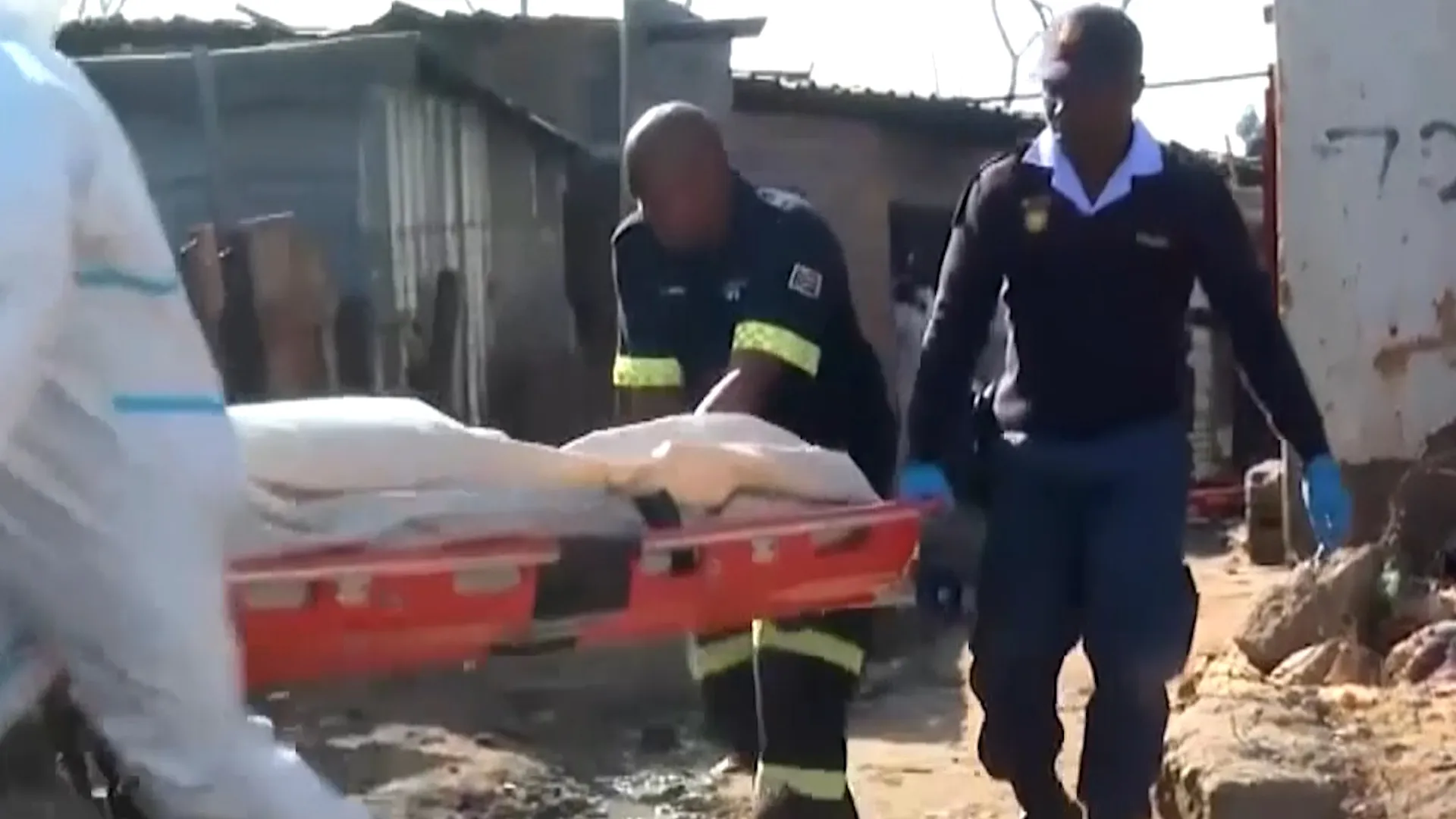
A manhunt is underway for at least 10 suspects in a mass shooting that left 12 people dead near Johannesburg, South Africa. The motive for the attack is not known but Al Jazeera’s Fahmida Miller reports that recent shootings have been linked to turf wars or gang violence.
Republican Stephen Buyer was convicted and sentenced to 22 months in prison, though he has maintained his innocence.
Published On 6 Jun 20266 Jun 2026
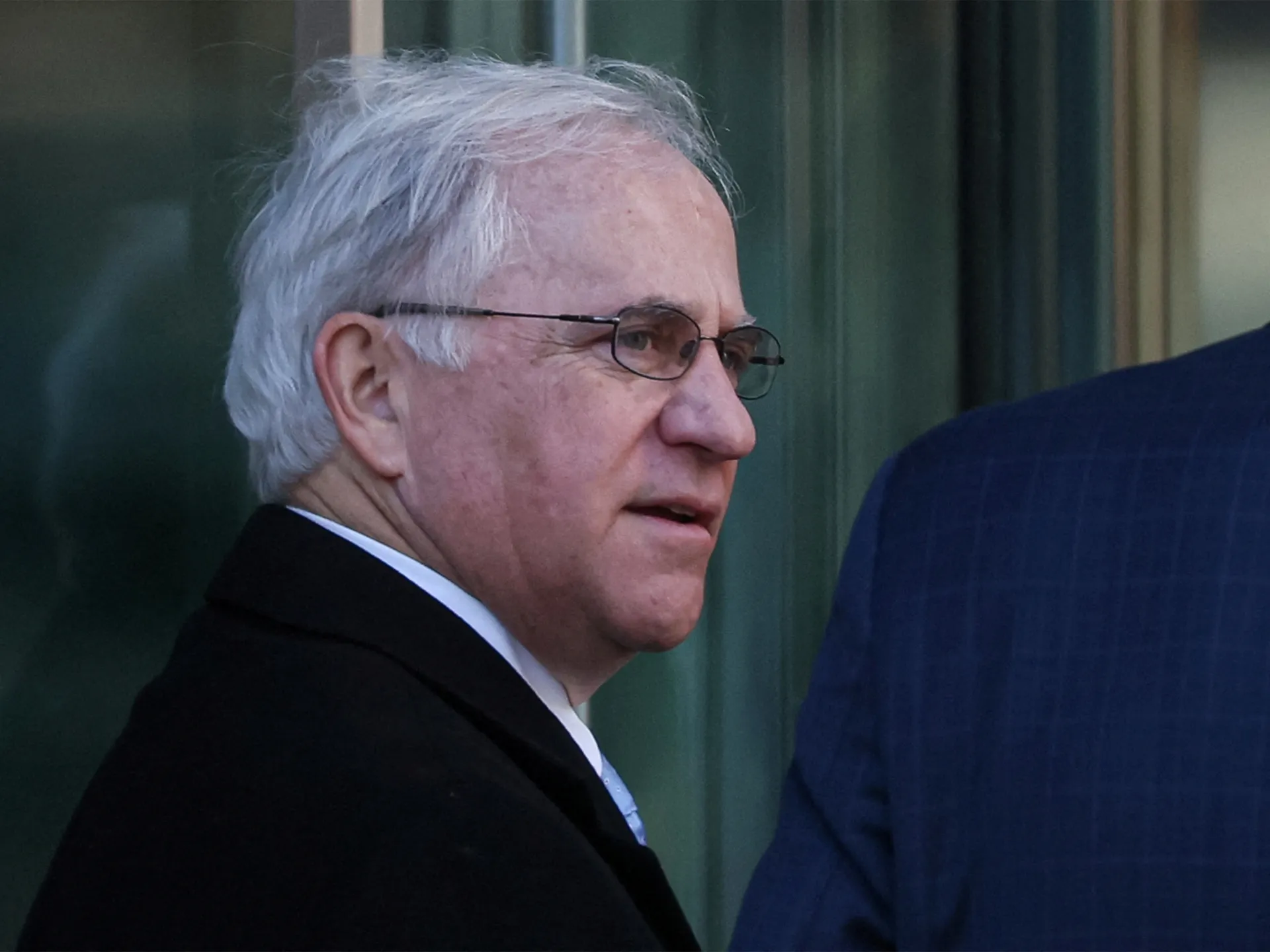
United States President Donald Trump has issued a pardon to Stephen Buyer, a former Republican congressman from Indiana who served nearly two years in prison for making illegal stock trades based on inside information after he left office.
The pardon was dated Thursday and released by the White House late Friday night.
Recommended Stories
list of 3 itemsend of list
Buyer was sentenced to 22 months in prison in 2023 for trades made while working as a consultant and lobbyist. He was ordered to forfeit more than $350,000, representing the amount of the illegal gains, as well as pay a $10,000 fine. He was released in 2025.
The Supreme Court in May rejected Buyer’s appeal without comment or noted dissent.
In granting “a full, complete, and unconditional pardon” to Buyer, Trump cited the Republican’s work, both as a judge advocate general in the US Army and as a politician in the US House. Trump described his career as “distinguished and highly productive”.
Buyer said the pardon “corrects a politically motivated prosecution” and that it was “horrific to be imprisoned for a crime that I did not commit”. He maintains that he is innocent.
Trump used his Truth Social media platform on May 31 to share a pair of letters requesting a presidential pardon for Buyer, a lawyer and Gulf War veteran who left office in 2011.
He was a House prosecutor at Democratic President Bill Clinton’s 1998 impeachment trial, and in 2016, he served on Trump’s transition team, focusing on veterans’ issues.
A letter signed by more than 40 former Republicans in Congress said Buyer was “targeted by the deep state” because of his involvement in Clinton’s trial.
“Like you, Mr President, Steve has been the victim of lawfare conducted by the Biden Administration,” they wrote in the April 2025 letter.
A second letter, from five current House Republicans, said pardoning Buyer would bring justice to his case. The June 2025 letter was signed by Tom Cole of Oklahoma, Ken Calvert of California, Marlin Stutzman of Indiana, Jack Bergman of Michigan and Pete Sessions of Texas.
Buyer, 67, was convicted in connection with insider trading involving the $26.5bn merger of T-Mobile and Sprint, announced in April 2018, and illegal trades in the management consulting company Navigant when his client Guidehouse was set to acquire it in a deal publicly disclosed weeks later.
The US Constitution gives the president broad power to grant pardons for federal crimes.
A pardon does not erase a recipient’s criminal record but can be seen as an act of mercy or justice.
A crime drama on BBC iPlayer has been branded a “masterpiece” and a “must-watch” by fans
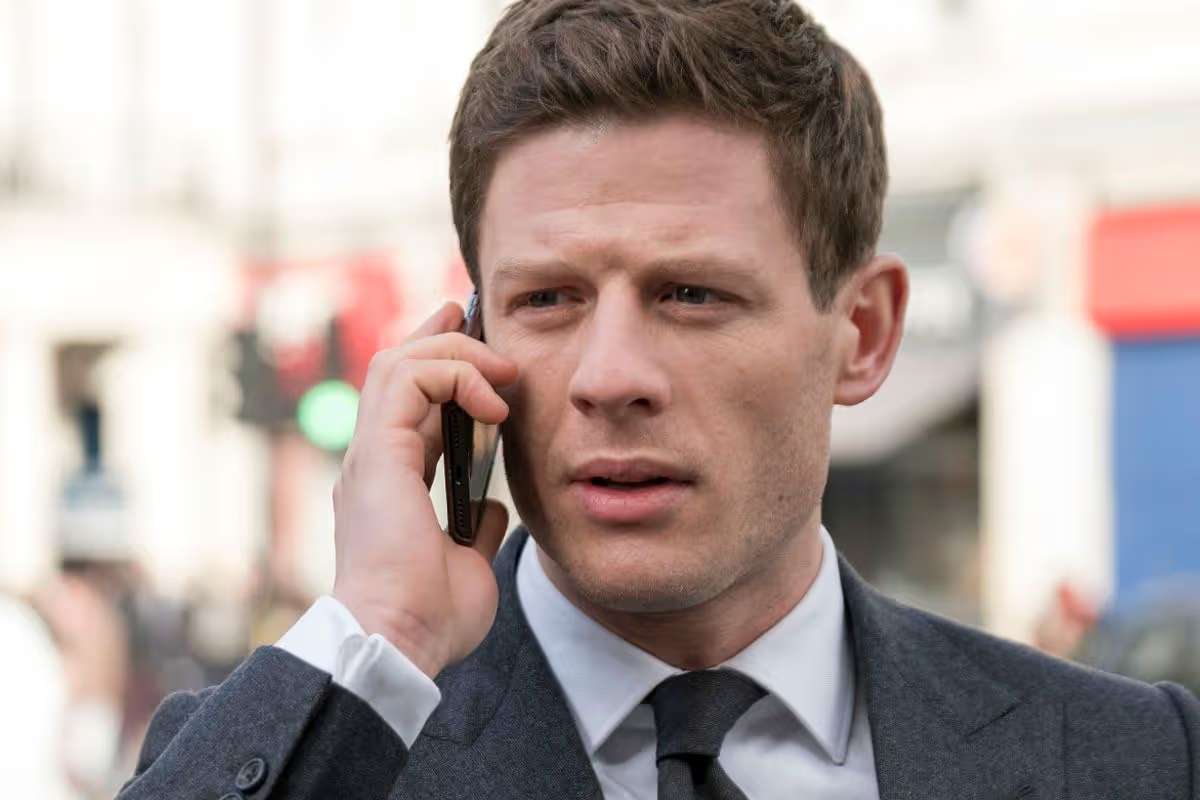
James Norton’s 2018 crime drama has left viewers hooked(Image: BBC)
Fans of crime dramas have been devouring a “masterpiece” series that’s currently available on BBCiPlayer.
Television viewers are being encouraged to tune into a gripping drama centred on a respectable businessman, who attempts to outrun his family’s sinister past.
McMafia is a series created by Hossein Amini and James Watkins, who also took on directorial duties. It draws inspiration from the non-fiction book McMafia: A Journey Through the Global Criminal Underworld by journalist Misha Glenny – which has been hailed as “riveting” and “chilling”.
The drama features James Norton as Alex Godman, the British-raised son of a Russian mafia boss residing in London, whose father is desperately attempting to break free from the world of organised crime.
The official synopsis reads: “Alex Godman, the English-raised son of Russian mafia exiles, has spent his life trying to escape the shadow of their past, building his own legitimate business and forging a life with his girlfriend, Rebecca,” reports Wales Online.
“But when a murder unearths his family’s past, Alex is drawn into the criminal underworld where he must confront his values to protect those he loves.”
Alongside James Norton, the ensemble cast also includes David Strathairn, Juliet Rylance, Merab Ninidze, Aleksey Serebryakov, Maria Shukshina, David Dencik, Oshri Cohen, Sofia Lebedeva, Caio Blat, Kirill Pirogov, Nawazuddin Siddiqui, and Karel Roden.
McMafia was shot across numerous international locations, with key scenes unfolding in London, Zagreb, Split, Opatija, Mumbai, Prague, Cairo, Belgrade, Istanbul, Moscow, and Tel Aviv.
The drama debuted on BBC One in 2018, running for a single series. Crime drama enthusiasts can now delve into Alex’s perilous world, as all eight compelling episodes are available to stream free on BBC iPlayer.
McMafia currently maintains a 71% critic score on review aggregator Rotten Tomatoes, based on 38 reviews. Audiences have likewise expressed widespread acclaim for the programme on social media, with numerous viewers declaring it superior to James Norton’s other popular crime series Happy Valley.
One IMDb user penned: “One of the best series I have ever seen. Binged in one night. 100 stars.”
Another contributed: “Best show since The Night Manager. A 10+ for intrigue and suspense,” while a third stated: “Thriller of the year! An outstanding and engrossing series that grabs your attention from the start and ramps up the suspense as each episode progresses.”
Someone else remarked: “I loved McMafia. The best TV series yet. Great acting. On par with Breaking Bad,” with another individual posting: “Chilling, thrilling and re-watchable.”
A sixth audience member reinforced the sentiment, declaring: “This series is a masterpiece, and a must-watch for thriller lovers. The plot is obviously complex, but absolutely intriguing and well developed, with a large number of themes connected to the most topical reality. For me, McMafia is one of the most interesting shows I have seen in the last few years.”
THE heartbroken girlfriend of James Handy has spoken out in anguish after her own son was accused of brutally stabbing the veteran actor to death.
Wendy Gledhill, 76, fought back tears as she broke her silence outside her home, reeling from the horror of losing her partner and the devastating allegations against her son.
Sign up for the Showbiz newsletter
Thank you!
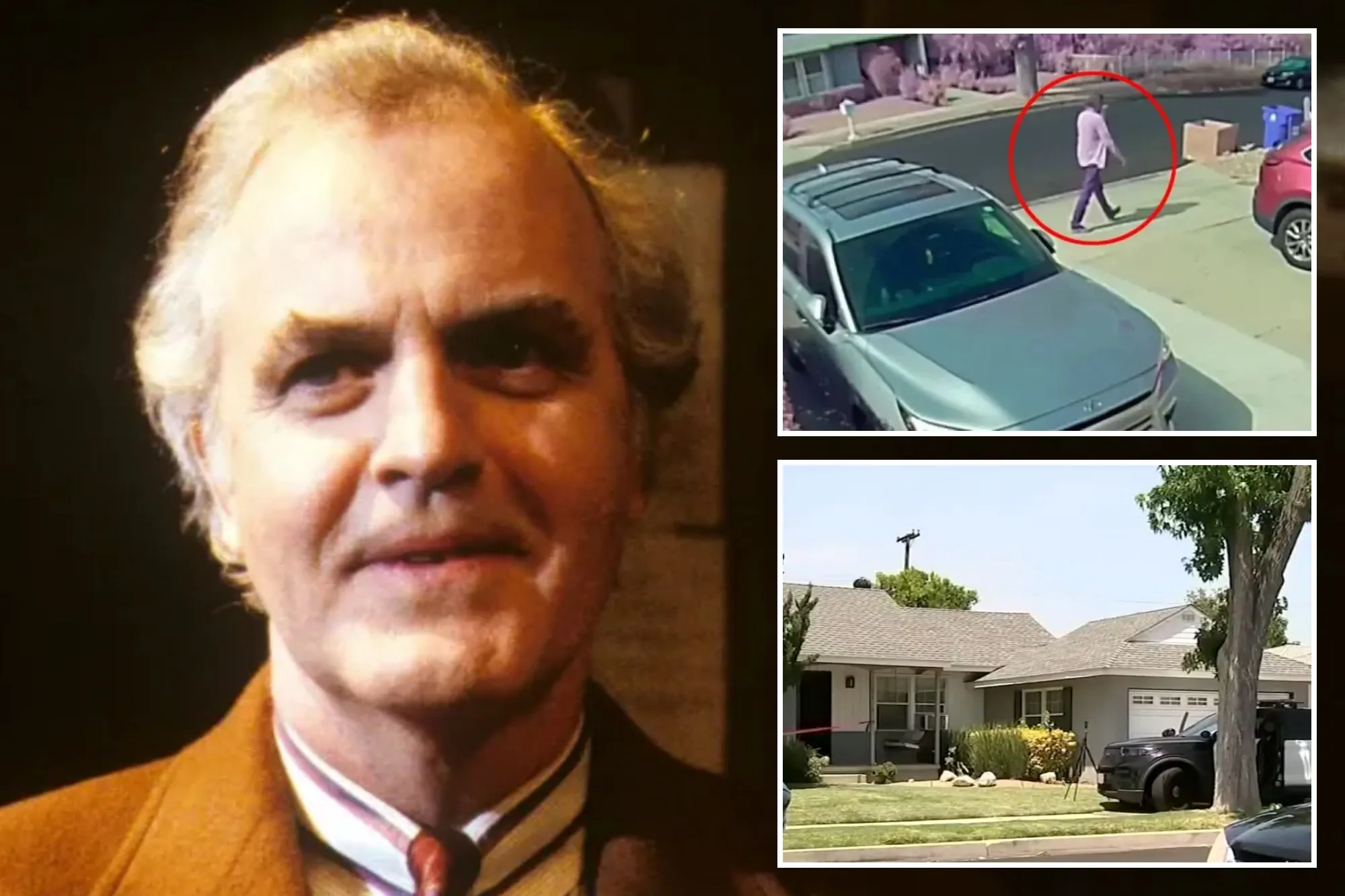
James Handy, pictured in TV series NYPD Blue, has been stabbed to deathPolice swarmed round James’ home early on Wednesday morning after receiving a chilling 911 call
“I’m just trying to make it through one day at a time, a minute at a time,” she said.
“I loved James and my son. I still can’t believe it….I can’t believe my son did it. I’m just trying to …,” she added, before retreating inside, overcome with emotion.
Her son, Michael Gledhill, 44, stands accused of fatally stabbing the 81-year-old actor multiple times in the chest in a shocking attack at the family home in Tarzana, Los Angeles.
Authorities say the horror unfolded on Wednesday morning when police were called to the property on the 19200 block of Erwin Street following a disturbing 911 call.
A voice reportedly told dispatchers: “I am the son of man, I just killed the man of sin.”
“We also need [a rescue ambulance] for a male, not conscious, not breathing, suffering from a stab wound,” a responding officer said in chilling dispatch audio.
The beloved actor was rushed to hospital but was later pronounced dead.
Most read in Entertainment
Chilling doorbell footage has captured a man casually strolling past the home of veteran actor James Handy around the same time he was killedThe suspect appeared to walk up to the home of the Hollywood star
In a dramatic twist, Gledhill himself allegedly waved down officers as they approached, telling them he was the suspect they were looking for.
He was arrested at the scene and charged with murder. He is currently being held on a $2,000,000 bond.
He was dressed in a purple or pink shirt and blue trousers, at times touching his face before returning to the property and flagging down police.
Another clip showed him walking back towards the house where Handy’s body was later found, with footage also appearing to capture him leading officers across the lawn.
Neighbours described Gledhill as acting erratically in the past, with one claiming his behaviour raised alarm.
“He looked really rugged … he looks like he doesn’t really change his clothes,” said neighbor Joheina Quibol.
She also recalled a bizarre encounter in which he allegedly questioned her father about cameras inside their home, describing him as “paranoid” and suggesting he may have struggled with mental health issues.
The actor, far left, also starred in Arachnophobia in 1990James Handy was found unconscious and suffering from stab wounds to his chestCredit: Fox11
Other neighbours claimed the suspect and Handy had been overheard arguing overnight before the fatal attack.
Despite the brutal nature of the killing, the Los Angeles Police Department said they believe it to be an isolated incident, adding there is no ongoing danger to the public.
A motive for the attack has not yet been established.
Handy’s death has sent shockwaves through Hollywood, with his talent agent Pam Ellis-Evenas confirming the tragedy in a statement.
“With great sadness I can confirm that the gentleman who was attacked and killed on Wednesday in Tarzana was the actor James Handy.”
The New York City-born star enjoyed a glittering career spanning nearly five decades, racking up close to 150 screen credits across film and television.
He was most recently seen as bartender Jimmy in Top Gun: Maverick alongside Tom Cruise.
Handy also appeared in the 2017 superhero film Logan, starring Hugh Jackman, playing a doctor treating an ageing Wolverine.
One of his most memorable roles came in the 1995 classic Jumanji, where he starred alongside Robin Williams, Bonnie Hunt and Kirsten Dunst.
His extensive television career included appearances in hit series such as The West Wing, 9-1-1, NCIS: Los Angeles, CSI: NY, The Young and the Restless, Castle, Criminal Minds, Cold Case, Without a Trace, ER and The X-Files.
He also had notable roles in Alias as Arthur Devlin, and recurring appearances in Melrose Place and NYPD Blue.
Handy’s brutal killing comes less than a year after another shocking Hollywood tragedy involving Rob Reiner, 78, who was found with his throat slit inside his Los Angeles home.
His son, Nick Reiner, 32, has been accused of killing both him and his mother Michelle, 68, while they were in bed on December 14, 2025. He has pleaded not guilty and is awaiting trial.
When Nick Antosca was a kid, he didn’t like having good dreams.
“With good dreams, I’d wake up and think, ‘Well, that didn’t happen’ and be disappointed,’” he recalled in a recent video interview. “But with a nightmare I’d wake up with my pulse racing and think, ‘I’m OK, I survived.’ I loved nightmares.”
Chasing that excitement and “healthy” catharsis in his daily life, Antosca has built a career on telling crime and horror stories: “Channel Zero,” “The Act,” “Brand New Cherry Flavor,” “Candy” and “A Friend of the Family.”
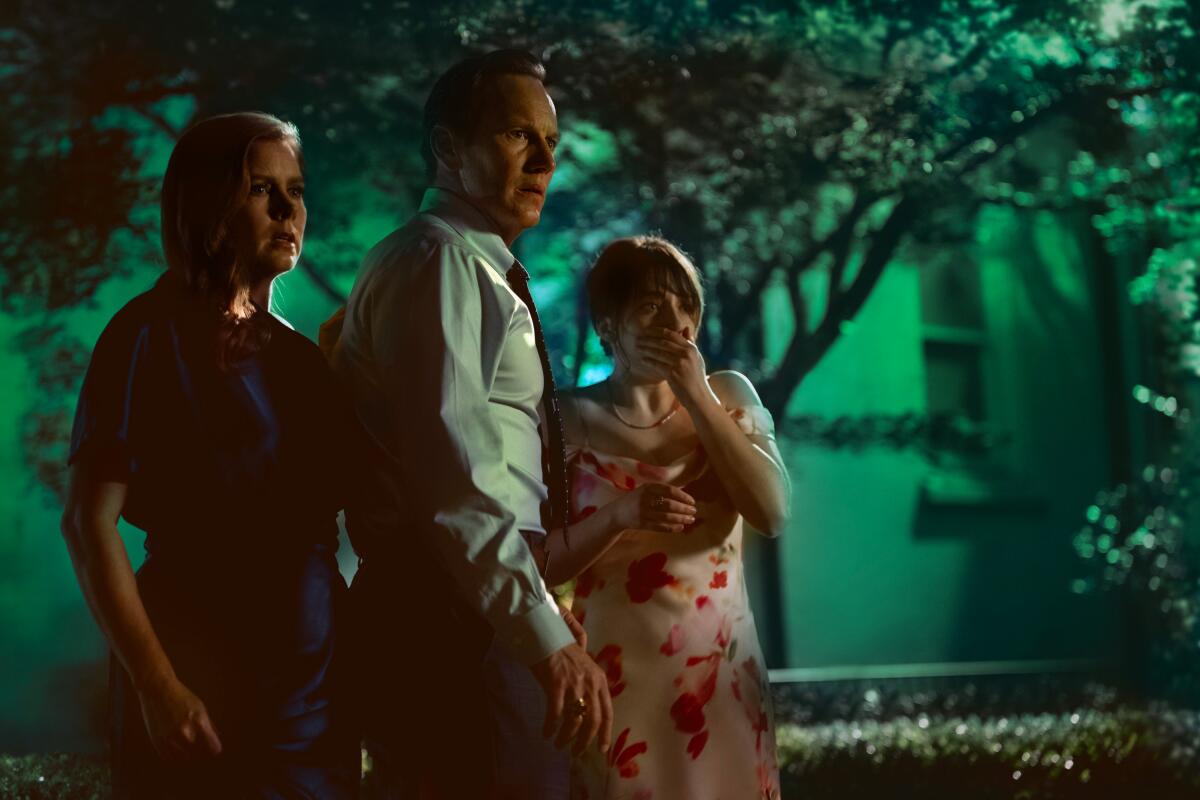
His newest project is a 10-episode remake of “Cape Fear” for Apple TV, starring Javier Bardem as Max Cady along with Amy Adams and Patrick Wilson as Anna and Tom Bowden.
“I think everything I’ve done is kind of a psychological horror story about the characters and their relationships,” he says, noting that this is true of the best horror tales like “Rosemary’s Baby,” “The Shining” and “Cape Fear.”
Antosca was a fan of both the original 1962 “Cape Fear” starring Robert Mitchum and Martin Scorsese’s 1991 remake starring Robert De Niro. But he felt it was time for a modern revision, a Southern Gothic fever dream that reflects the complexities of life today.
“The terror in ‘Cape Fear’ is about the destruction of the family,” he says. The story was originally about Cady, a rapist released from prison stalking Sam Bowden, who had interrupted his crime and testified against him. In Scorsese’s version, Bowden had been Cady’s defense attorney who, knowing Cady was guilty, had hidden evidence about the victim’s promiscuity to ensure a conviction and long sentence.
The original features “an all-American archetype of a virtuous family pitted against a monster,” while Scorsese depicted a “broken and dysfunctional family and the monster is even more extreme, he’s like a swamp creature.”
“The previous versions of ‘Cape Fear’ are pretty cut and dry,” Antosca says.
The Bowdens are portrayed by Amy Adams as Anna, Patrick Wilson as Tom and Lily Collias as daughter Natalie.
(Apple)
The new iteration features a sexting scandal, social media eruptions and drones — “there’s more ways to terrorize a family in 2026 and the world is scarier today than it was before” — but that’s not what makes it feel different.
“In our version the truth is more complicated, the past is more mysterious and both the family and the monster are more complicated,” he says. “The truth is murkier and that feels current.”
In this adaptation, Anna Bowden had been Cady’s defense attorney, and he’s no longer an illiterate rube but a successful restaurateur who was convicted of murdering his wife and unborn son. After the trial, Anna scandalously married Cady’s prosecutor Tom; he became stepfather to her newborn daughter Natalie (Lily Collias) and they later had a son Zack (Joe Anders).
“The foundation of their happiness is Max’s suffering,” he says, adding that while the crime was local in the previous versions, Cady’s conviction had been a national sensation in this one.
On the surface, the Bowdens are a perfect family, but cracks are rippling with increasing intensity just beneath, a fragility that will soon be exploited by Cady.
“In the first episodes, the family is permeable and a threat could be coming from anywhere,” he says. “Even if in your gut you think it’s Max Cady, it feels like it’s seeping into the family from all different directions.”
When Cady is suddenly exonerated and set free, he shows up to insinuate himself in the Bowdens’ life. Anna, ironically, works for a nonprofit that seeks to exonerate the wrongly convicted.
“All the versions ask, ‘What would you do to protect your family?’ but this also asks, ‘If an injustice was done to somebody, then what are they justified doing in return,’” he says. “I don’t want the audience rooting for Max, necessarily, but I want to trick them into having sympathy for somebody they didn’t expect to have sympathy for.”
To pull that off, “Cape Fear” needed a star as charismatic as Mitchum and De Niro.
Antosca always dreamed of Bardem as Cady: “When I’d pitch networks before there was a script, I’d say, ‘Picture Javier Bardem in this role.’” But this time, his dream came to vivid life.
The two developed the character together, everything from the explanation for Cady’s Spanish background to his exposure to Santería and prison and his “mutated version of the real religion” to the tattoos adorning Cady’s body to an early scene with a panther and the idea of the “psychological jungle,” which inspired Bardem to incorporate a panther’s physicality into his movement and his eyes.
Antosca always dreamed of Javier Bardem as Max Cady: “When I’d pitch networks before there was a script, I’d say, ‘Picture Javier Bardem in this role.’”
(Apple)
“Javier also asked questions about Max’s emotional history that was useful in shaping his character,” he says. “We wanted to show a little more authentic vulnerability, which we see very much in the previous versions intentionally.”
To make this series, Antosca first approached Scorsese and Steven Spielberg, who had initially developed the 1991 version. “They were incredibly generous and quite involved,” Antosca says. “They encouraged us to forge our own path.”
The one place they urged some fidelity to the past versions was in the score. “They said the Bernard Herrmann score is part of the DNA and feels like a character in both movies,” says Antosca, noting that Elmer Bernstein adapted the original in Scorsese’s version and Jeff Russo used the same starting point this time around.
Scorsese discussed episodes over FaceTime and Zoom, spending time dissecting a vicious fight scene while Antosca was editing it; shot in color but shown in black-and-white, the blood splattering may make you think of “Raging Bull,” but Antosca says the visceral violence was meant to call up “Casino’s” vise scene.
It may be nearly too much to handle, but Antosca is from New Orleans and says he found it easy to exploit the Southern Gothic sensibilities. “Everything is heightened in the Deep South and we were going for that energy, where something is adjacent to the real world but more saturated, sweatier, more feverish,” he says, noting that while the first episode is “cinematically pretty grounded and traditional, when the family gets shocked out of their comfort zone, things get a little crazy.”
That meant handheld cameras, flares, saturated colors, distortions, negative imagery and odd angles to reflect the growing sense of terror. Antosca promises that in the back half of the series, the show will get even wilder and more destabilizing.
“It just feels like there’s violence in the humidity in the South,” he says.
Subconsciously hearkening back to his childhood sleep experiences, he adds, “I wanted this story to feel like a nightmare that just keeps getting worse and worse and worse and worse.”