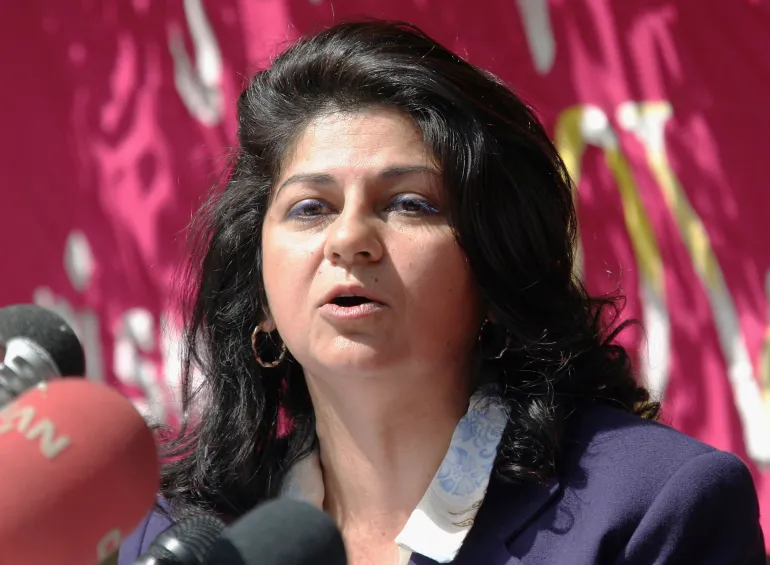
Omar Oswaldo Torres, the leader of the Los Mayos faction of the Sinaloa criminal network, was detained in the raid.
Published On 19 Mar 202619 Mar 2026
Mexican authorities have revealed that 11 people were killed during a raid that resulted in the capture of Omar Oswaldo Torres, the leader of a faction of the Sinaloa Cartel.
In a social media post on Thursday, the Mexican Navy said the raid took place in Culiacan, part of the state of Sinaloa in northern Mexico.
Recommended Stories
list of 3 itemsend of list
It alleged that its personnel were attacked at the site of the raid and returned fire, killing 11 “assailants”. Their identities have yet to be released to the public.
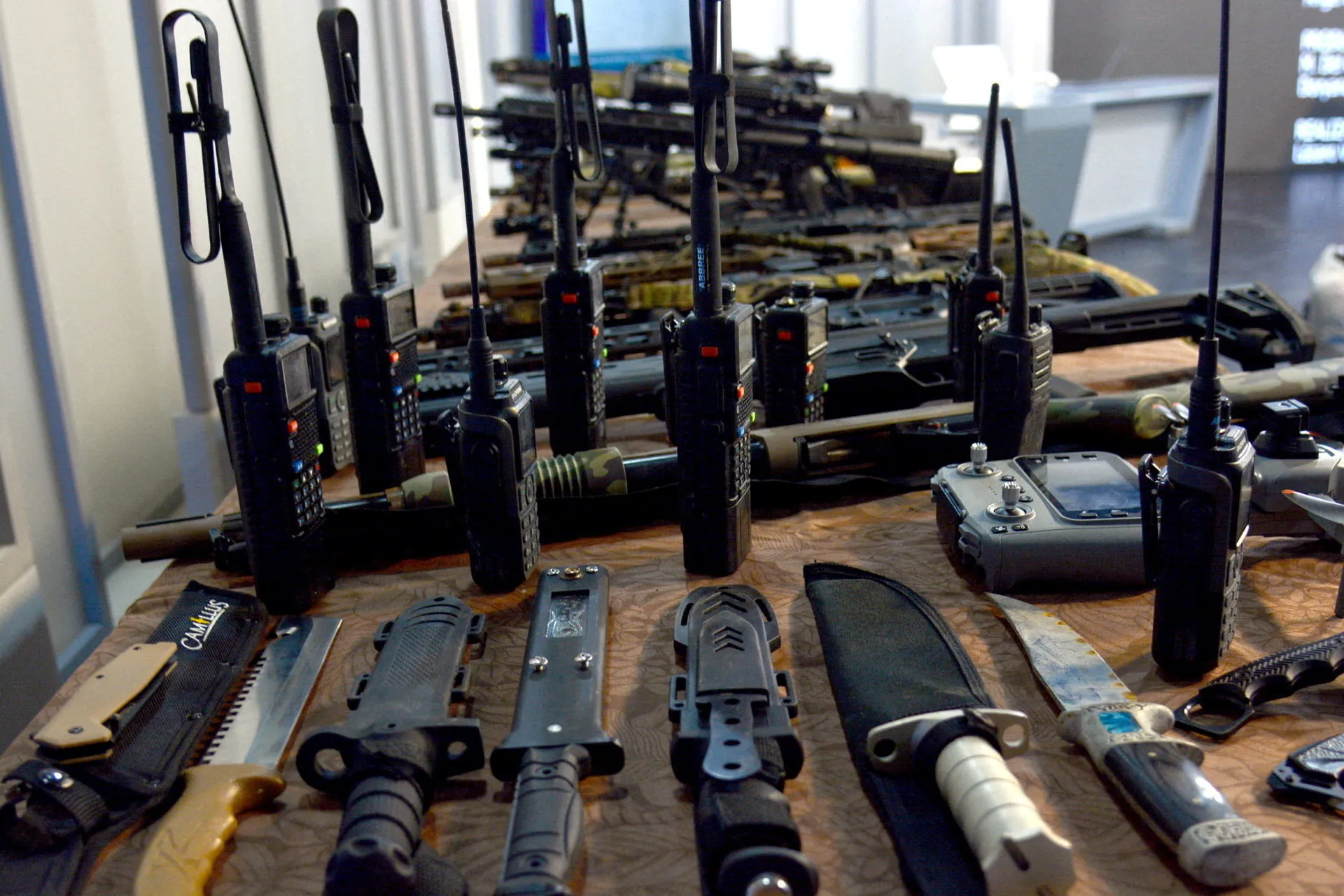
“High-powered weapons and tactical equipment were seized at the scene,” the navy said in a statement.
The navy added that a woman identified as Torres’s daughter was also present during the operation, but she was released to her family due to a lack of connection to criminal activities.
Torres, known by the nickname “El Patas”, is the leader of the Los Mayos faction of the Sinaloa Cartel.
In recent years, Los Mayos have been in a fight with another faction, Los Chapitos. Each side is named for a different Sinaloa Cartel leader: Joaquin “El Chapo” Guzman and Ismael “El Mayo” Zambada, both of whom have been arrested and imprisoned in the United States.
Thursday’s raid comes as governments across Latin America seek to deliver US President Donald Trump tangible results in the fight against crime and drug trafficking.
Just this week, the Mexican government participated in a law enforcement operation with Ecuador and Colombia to arrest Angel Esteban Aguilar, the leader of the Los Lobos crime group.
A separate Mexican military operation in the state of Jalisco last month led to the death of Nemesio Oseguera, also known as “El Mencho”, the leader of the Jalisco New Generation Cartel.
Criminal groups responded with a burst of violence, including the erection of roadblocks and attacks on security force outposts across Mexico.
Critics have questioned the efficacy of the more militarised methods Trump has pressured Latin American leaders to use against cartel leaders.
Capturing or killing cartel leaders is sometimes referred to as a “decapitation strategy”, and the method is designed to weaken the structure of criminal networks.
But experts warn that the “decapitation strategy” risks increasing violence over the long term, as new conflicts emerge to fill the leadership vacuum.
Many also point out that such militarised approaches fail to address the root causes of crime, among them corruption and poverty.
Still, Trump has labelled groups like the Sinaloa Cartel “foreign terrorist organisations”, and has indicated he would consider taking military action on Mexican soil against such groups, despite concerns that such actions would violate Mexican sovereignty.
“We have to eradicate them,” Trump said of the cartels. “We have to knock the hell out of them because they’re getting worse. They’re taking over their country. The cartels are running Mexico. We can’t have that.”
Mexican officials, meanwhile, have called on the US to stem the flow of illicit weapons into Mexico, to little avail.
Last year, the Supreme Court struck down a lawsuit from the Mexican government accusing US gun manufacturers of negligence, given that their products end up arming criminal networks in the Latin American country.
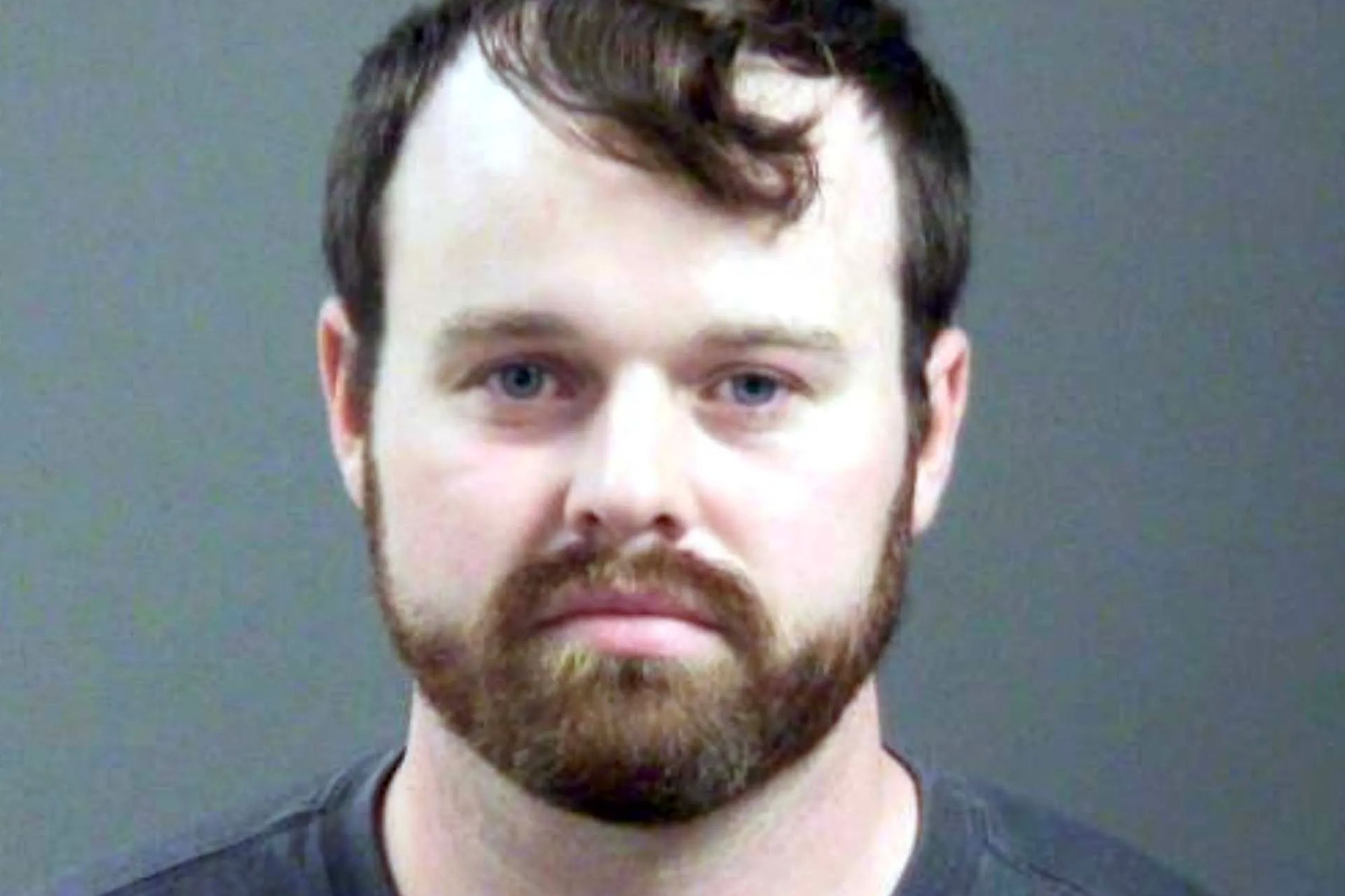
FORMER 19 Kids and Counting star Joseph Duggar has been arrested for alleged child sex crimes against a nine-year-old girl.
The 31-year-old from Arkansas allegedly molested the child six years ago on a vacation in Florida.
Sign up for the Showbiz newsletter
Thank you!
Joseph Duggar has been arrested and charged with child molestationCredit: The Mega AgencyDuggar (third from left) allegedly admitted his crimes to the victim’s fatherCredit: Alamy
On Wednesday, the former TLC star was charged with molestation of a victim under 12 years old and with lewd and lascivious behavior of a person 18 years or older, the Bay County Sheriff’s Office said.
The girl, now 14 years old, told investigators that the incident took place while she was on family vacation in Panama City in 2020.
Duggar, who was booked into the Washing County jail in Arkansas, is awaiting extradition to Bay County.
It is alleged that Duggar asked the victim to sit on his lap, the Bay County Sheriff’s Office said.
“As the vacation continued, he also asked her to sit next to him on a couch and covered them with a blanket,” it has been claimed.
“During this time, Duggar manipulated the victim’s underwear and grazed her genitals.
“Duggar would also continue to rub his hands on her thighs.”
“The victim stated Duggar eventually apologized for his actions and the incidents stopped after the apology,” the authorities said.
Most read in Entertainment
The allegations and arrest come after the victim had a forensic interview due to reports of past sexual abuse.
Her father allegedly confronted Duggar about the allegations and the reality star “allegedly admitted his actions to the father and Tontitown detectives,” and the alleged abuse stopped, per officials.
Duggar, 31, is married and has three childrenCredit: Little Duggar Family/Instagram
Duggar is married to his wife Kendra, with whom he shares three young children.
The Duggar family has not issued a statement following the arrest.
The popular crime drama first aired back in 2021 and has featured the likes of Stephen Graham, Jodie Whittaker and Bella Ramsey.
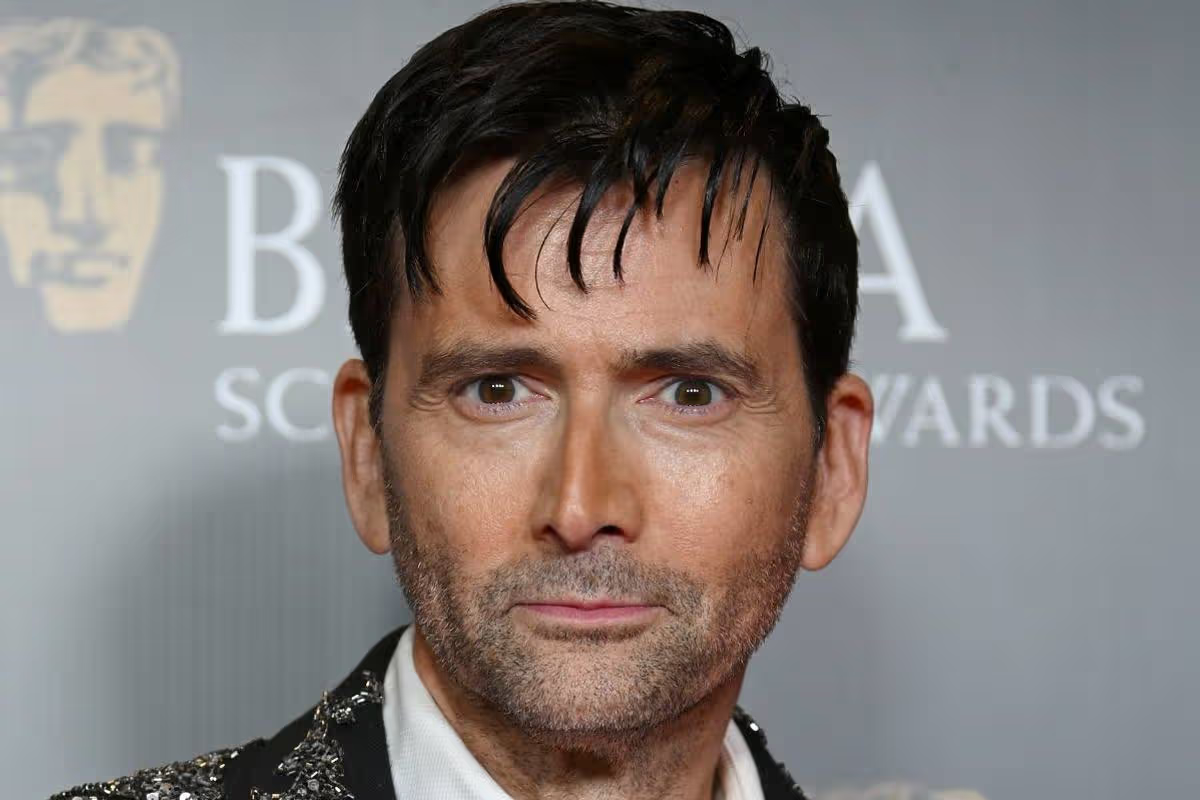
David Tennant is starring in the upcoming series(Image: Getty Images for BAFTA)
The wait is almost over as the BBC has confirmed a third series of Jimmy McGovern’s BAFTA-winning hit drama, Time, is coming back.
With filming set to begin in Belfast, the broadcaster has announced viewers can expect to see David Tennant and Siobhan Finneran in the upcoming instalment.
This week, the broadcaster shared further casting as Vinette Robinson, Jo Joyner, Daniel Ryan, Warren Brown, Louis McCartney, Ollie McNulty and Chukwubuikem Molokwu will star in the third series.
BBC viewers will also welcome the likes of Ethaniel Davy, Victor Zhao, Paul Smith Junior, Finn Kearns and Jack Barnes.
Set in a Young Offenders Institution, the third series of Time will explore the impact of locking up teenagers and the impact on those who look after them.
A synopsis reads: “Prison Chaplain Marie-Louise comes to the YOI having lost her faith. When tragedy strikes within the prison, Marie-Louise clashes with veteran officer Bailey, a man in the midst of his own crisis.
“Bailey knows more about the circumstances that led to this major incident – but will he come clean before the guilt gets too much?
“Meanwhile, two teenage young offenders, Peter and James, struggle through the terrifying first weeks and months of their incarceration.
“Can James ever face his broken parents after an unforgivable act of violence and will Peter tell the truth about the death of an innocent man, or does family loyalty mean more? An unlikely friendship between them looks to shift the trajectory of their futures, but in an increasingly unstable environment, is change ever possible?”
Sharing an image of the new cast members joining the show in Instagram, it wasn’t long before people commented on the post, sharing their excitement.
One person said: “Fantastic news.” Another wrote: “Can’t wait! Congrats on the casting, amazing announcements.”
Someone else shared: “ANOTHER SEASON OF TIME?!? I’m ready to get my heart absolutely broken yet again.” As one fan added: “A good line-up of actors and actresses.”
Another commented: “Can’t wait for this also great casting!” While someone else added: “Can’t wait for this, Siobhan smashed the first 2 series.”
Time series one and two are available to stream on BBC iPlayer
For the latest showbiz, TV, movie and streaming news, go to the new **Everything Gossip** website.
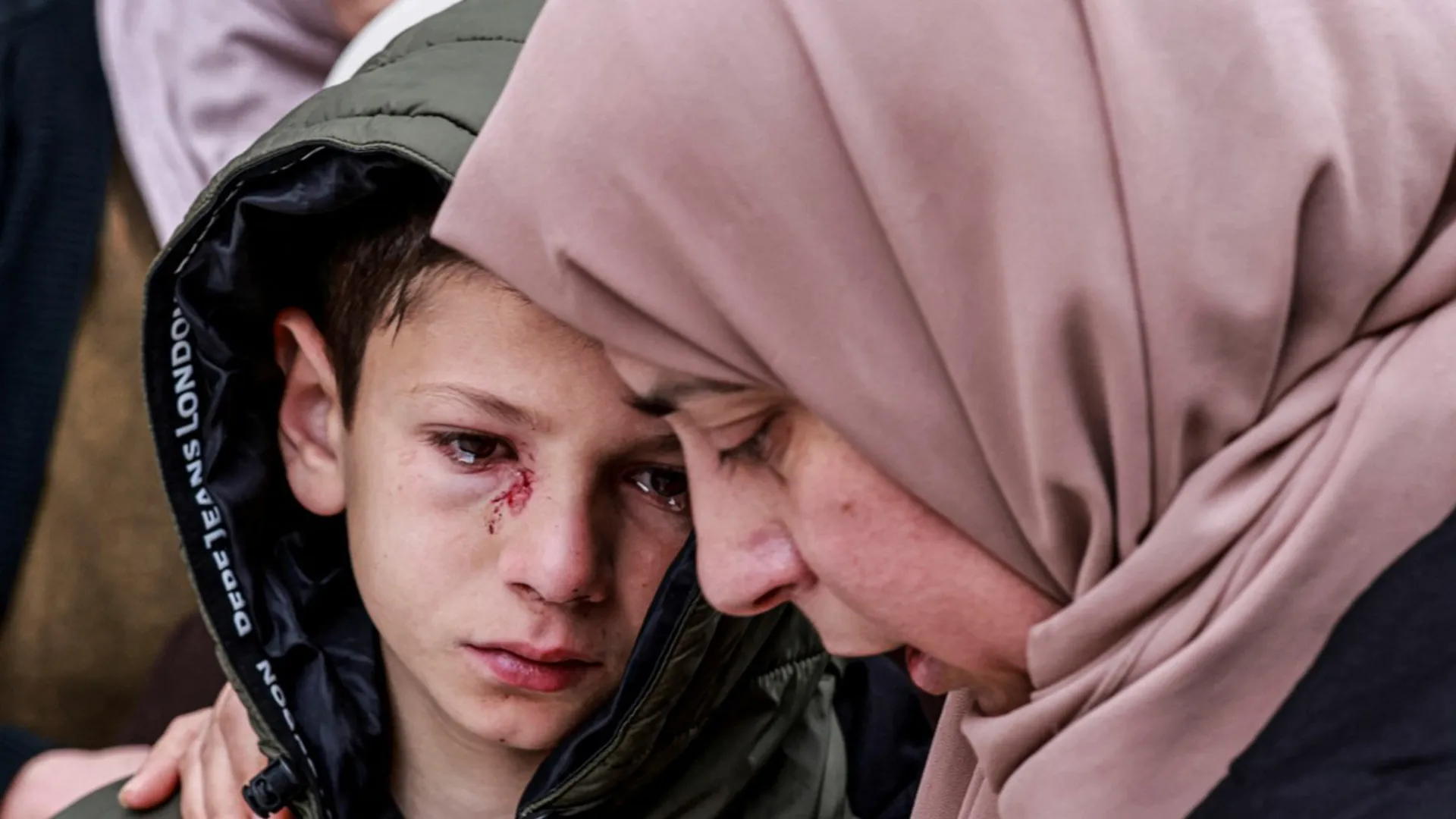
Two Palestinian brothers are the only survivors after Israeli troops killed their parents and two siblings in Tammun in the occupied West Bank, according to Palestinian health authorities. The boys say soldiers opened fire on their family car and beat them after the shooting.
The brutal episode will plunge viewers into another chilling investigation
BBC’s Forensics: The Real CSI returns to BBC Two at 9pm tonight(Image: BBC/Blast Films)
A chilling new episode of a harrowing true crime documentary will be released tonight.
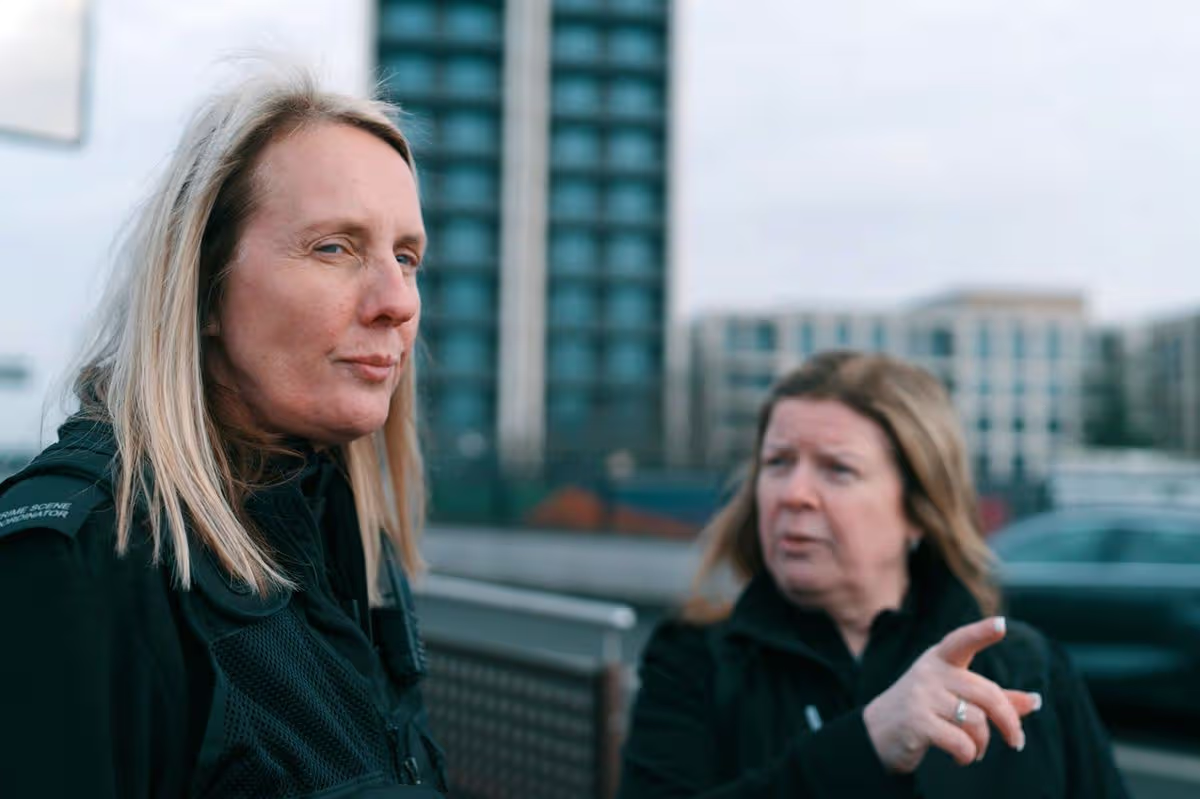
Viewers are once again plunged into a race against time as Forensics: The Real CSI’s brand new series continues, giving fans an unprecedented insight into a local police force. Focusing on the forensic evidence gathered in the search for justice, the documentary, now in its sixth series, has been branded the perfect watch for fans of true crime.
Plunging viewers into complex investigations and searches within the West Midlands Police Force, another brand new episode is set to air tonight (March 15) at 9pm on BBC2 with yet another chilling case.
Tonight’s instalment will investigate a harrowing phone call where one teenage girl calls 999 to say her friend has been attacked as his life hangs in the balance.
A BBC synopsis reads: “It’s the early hours of the morning when a frantic teenage girl calls 999 to say that her friend has been attacked and stabbed in a car park. Police rush to the scene, where they find a 16-year-old boy with a life-threatening stab wound to his stomach.
“While his life hangs in the balance, the case is escalated to West Midlands Police’s homicide team, and forensic investigators get to work. They discover two discarded weapons at the scene – a kitchen knife and a machete.”
The episode will also be available to stream on BBC iPlayer shortly after broadcast, with other instalments also available to stream online.
Titled Ambush in the Car Park, the upcoming episode marks the third instalment within the new series, with viewers having to wait every week for new episodes to be released.
Previously, viewers have witnessed a brutal attack in a public phone box with investigators searching for evidence, as well as a young boy who was fatally stabbed on his way home from school with police suspecting a 14 year old, but needing forensic proof.
Viewers claimed the new series has broadcast the “worst” episodes yet, with one saying last week’s instalment was “absolutely shocking”.
Another described the latest series as “unbelievable” as a third said they were “speechless”. A fourth added: “Made me feel sick.”
Spanning across six seasons, the BBC documentary has been branded as the “best ever”, becoming a firm favourite amongst true crime fans.
Taking to TikTok, one true crime fan said the upcoming series was a must watch, adding: “I love this show… they’re really interesting. Some of them are quite brutal what you see.”
One person commented: “Real CSI is my most favourite programme I’ve watched every single series.” Another wrote: “Been waiting so long for a new series.” A third added: “Forensics is one of the best documentaries.”
Forensics: The Real CSI airs tonight at 9pm on BBC Two. For the latest showbiz, TV, movie and streaming news, go to the new **Everything Gossip** website.
Washington, DC – In September, the United States began launching dozens of deadly military strikes against alleged drug-smuggling boats in the Caribbean Sea and eastern Pacific.
Nearly half a year later, remarkably little is known about the strikes. The identities of the nearly 157 people killed have not been released. Any purported evidence against them has not been made public.
Recommended Stories
list of 3 itemsend of list
But a group of United Nations and international law experts are hoping to change that on Friday, when they testify at the Inter-American Commission on Human Rights (IACHR).
The international hearing will be the first of its kind since the strikes began on September 2, and rights advocates hope it can help lead to accountability as individual legal cases related to the strikes proceed.
Steven Watt, a senior staff lawyer with the American Civil Liberties Union’s human rights programme, said the goal of the hearing will be threefold.
“Our ask will be to conduct a fact-finding investigation into what’s going on,” Watt said.
The second aim, he continued, would be “to assert or to arrive at a conclusion that there is no armed conflict here”, in what would be a rebuke to US President Donald Trump’s previous claims.
Finally, Watt said, he hopes the proceedings will yield long-sought transparency from the Trump administration on “whether or not they have a legal justification for these boat strikes”.
“We don’t think there are any,” Watt added.
‘We don’t know the names’
The experts set to testify at Friday’s hearing said the IACHR has a unique mandate to uncover the truth behind the US strikes.
The commission, based in Guatemala City, Guatemala, is an independent investigative body within the Organization of American States, of which the US was a founding member in 1948.
While the Trump administration has claimed it has a right to carry out the deadly attacks as part of a wider military offensive against so-called “narco-terrorists”, rights groups have decried the campaign as a series of extrajudicial killings.
They argue that Trump’s deadly tactics deny those targeted of anything that approaches due process.
Legal experts have also dismissed Trump’s claims that suspects in drug-related crimes are equivalent to “unlawful combatants” in an “armed conflict”.
Few details have emerged from the air strikes. Several families have come forward, however, to informally identify the dead as their loved ones.
Victims are said to include 26-year-old Chad Joseph and 41-year-old Rishi Samaroo, who were sailing home to Trinidad and Tobago when they were killed in October, according to relatives.
A complaint filed against the US government said both men travelled often between the islands and Venezuela, where Joseph found work as a farmer and fisherman, and Samaroo laboured on a farm.
The family of Colombian national Alejandro Carranza, 42, have also said he was killed in September when the US military attacked his fishing boat off the country’s coast.
The US has yet to confirm the victims’ identities, and only two survivors have ever been rescued in the 45 reported strikes.
A clearer picture of what happened will be a significant step towards accountability, according to experts like Watt.
“[The IACHR] is uniquely positioned to identify who all these persons are,” Watt said. “We just know the numbers from the United States. We don’t know the names or the backgrounds of these people.”
The IACHR has launched a range of human rights investigations in recent decades, including probes into the 2014 mass kidnapping of 43 students in Iguala, Mexico, and a series of murders in Colombia from 1988 to 1991 dubbed the Massacre of Trujillo.
The commission has also examined US policies, including extrajudicial detentions at Guantanamo Bay, Cuba, during its so-called “global war on terror”.
The IACHR has the power to seek resolutions to human rights complaints or refer them for litigation before the Inter-American Court of Human Rights.
Just last week, the court ordered Peru to pay reparations to the family of a woman who died during a government-led forced sterilisation campaign in the 1990s.
The Carranza family has filed its own complaint to the IACHR, and the families of Joseph and Samaroo have also lodged a lawsuit against the US in a federal court in Massachusetts.
Angelo Guisado, a senior staff lawyer at the Center for Constitutional Rights (CCR), said a fuller accounting of the US actions is needed to prevent future abuses. He is among the experts testifying on Friday.
“You can’t normalise assassinating fishermen off the coast of South America,” Guisado told Al Jazeera. “That’s just sadistic and an abomination to the rules-based order that we’ve created.”
“So we hope that the commission can do some investigation.”
A war against ‘narco-terrorists’?
One of Guisado’s goals for Friday’s hearing will be to unpack the Trump administration’s argument that the attacks are necessary from a national security standpoint.
Even before the US strikes began, the Trump administration began framing the Latin American drug trade as an existential threat to the US.
As part of that re-framing, the administration borrowed messaging from its “global war on terror”, taking the unorthodox approach of labelling several cartels “foreign terrorist organisations”.
Speaking last week at a meeting of Latin American leaders, White House security adviser Stephen Miller maintained there is no “criminal justice solution” to drug cartels.
Instead, he affirmed that the US would use “hard power, military power, lethal force, to protect and defend the American homeland”, even if that meant carrying out deadly operations throughout the Western Hemisphere.
Guisado, however, noted that the administration has admitted that the targeted boats were largely carrying cocaine, not the highly addictive fentanyl responsible for the majority of US drug overdoses.
He explained that the administration has done little to prove its claims that drug traffickers are part of a coordinated effort to destabilise the US.
Such hyperbolic language, Guisado added, could be used as a smokescreen to conceal illegal actions.
“When you invoke national security interest, it seems as if scrutiny and any legitimate analysis or condemnation gets pushed to one side in favour of an ersatz martial law,” Guisado said.
“The idea that you could just proclaim anyone a narcoterrorist and do whatever you want with them is just so repugnant to our system of fairness, justice and law.”
Watt, meanwhile, said he hopes the IACHR will draw a clear “line in the sand”, separating drug crimes from what is conventionally considered an armed conflict.
He also would like to see the IACHR clearly outline the US’s human rights obligations.
“But even if there was an armed conflict — of which there isn’t — the laws of war would prohibit the type of conduct that the United States is engaging in here,” Watt explained.
“It would be an extrajudicial killing. It would be a war crime.”
Transparency or accountability
Friday’s hearing will only be an initial step towards accountability, and critics question how effective the IACHR will ultimately be.
The US has regularly shrugged off human rights probes at international forums, and it is not party to entities like the International Criminal Court in The Hague, raising barriers to the pursuit of justice.
Despite being a member of the OAS, the US has also not ratified the American Convention on Human Rights, one of the organisation’s founding documents.
It is, therefore, unclear how binding any IACHR decisions could be, although Watt argued that it is “longstanding jurisprudence of the commission that the declaration imposes obligations on non-ratifying member states”.
Still, legal experts said Friday’s hearing may yield clarity on the Trump administration’s legal argument for the boat strikes.
The IACHR has said US government representatives are set to appear at the hearing.
To date, the US Department of Justice has not released the Office of Legal Counsel’s official reasoning for the boat strikes, considered the foundational legal document for the military actions.
A separate memorandum from that office addressed the US abduction of Venezuelan President Nicolas Maduro on January 3, which it framed as a drug enforcement action.
That memo touched on the boat strikes, but it only served to raise further questions about Trump’s rationale.
“This will be an opportunity for the United States to put its case before the commission,” Watt said.
“But of course, it depends on US cooperation,” he continued. “They’re going down there, but it’ll be interesting to see what they actually say”.
ITV has shared images from its upcoming true crime series about convicted sex offender John Worboys
14:39, 12 Mar 2026Updated 14:48, 12 Mar 2026
Aimée-Ffion Edwards stars in Believe Me(Image: ITV)
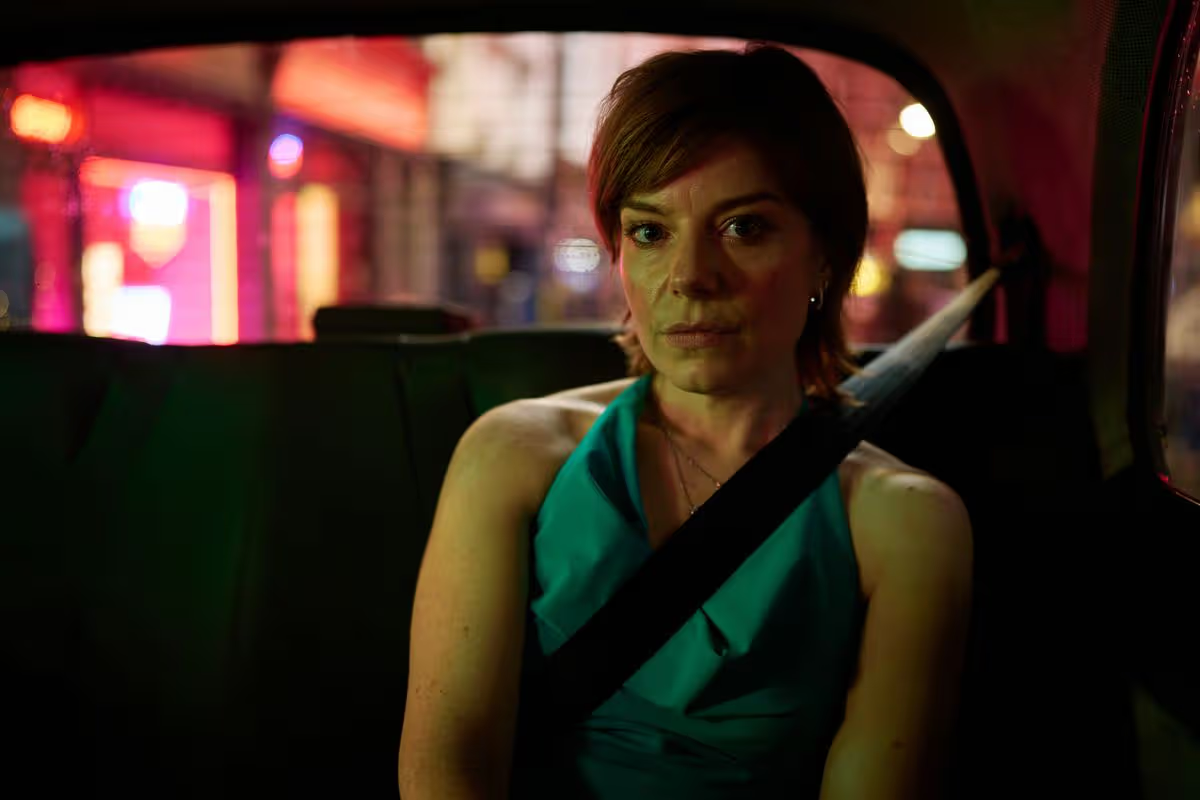
Broadcaster ITV has released a first look at its new true crime drama Believe Me.
Filmed in Cardiff, the four-part series tells the story of John Worboys – who was dubbed the ‘black cab rapist’ after preying on women under the cover of being a licensed taxi-cab driver.
He was convicted in 2009 for crimes including sexual assault and drugging with intent against 12 women.
His modus operandi was to claim that he’d had a win at a casino or on the lottery, then offer women he’d picked up in his cab after a night out a glass of champagne, which he’d laced with drugs, and which rendered his victims unconscious.
ITV said the drama “tells the story of how the victims of one of the most prolific sex attackers in British history were failed by the system”.
The series focuses on the ordeal of Sarah (played byPeaky Blinders‘ Aimée-Ffion Edwards) and Laila (played by Raised By Wolves’ Aasiya Shah), who reported sexual assaults by Worboys (Daniel Mays), and how their allegations were not thoroughly investigated.
Sarah and Laila – both pseudonyms – joined forces with solicitor Harriet Wistrich, played by Philippa Dunne and barrister Phillippa Kaufmann QC, played by Rachael Stirling, to sue the Metropolitan Police under the Human Rights Act for their failure to properly conduct investigations into their allegations of sexual assault, leading to their being subjected to degrading treatment and contributing to their distress.
They won, and when the Met appealed that judgment to the Supreme Court, they won again.
As these women fought to have their cases heard, looming in the background was Worboys’ first parole hearing. Eight years after he was convicted for his crimes, his victims had to fight again to keep him behind bars.
Sarah, Laila, Harriet and Phillippa were joined by Carrie Symonds (played by Industry’s Miriam Petche), a senior figure in the Conservative Party press team. She put her career on the line to spearhead a huge media and political campaign pushing for an unprecedented judicial review of the Parole Board’s decision. The campaign, with Sarah, Laila and Carrie at the forefront, was successful, and Worboys’ parole was quashed.
Sarah, whose identity has been protected, said: “Believe Me is about the courage of every woman who came forward to help put John Worboys behind bars.
“What happened to me changed my life, but in many ways the hardest part was not being believed for so many years. Without the people who stood by me, Worboys would have been freed and continued to pose a huge risk to women. Seeking justice shouldn’t mean more trauma. We shouldn’t have to fight to be believed or feel like we’re the ones on trial. The shame never belongs to the survivor.”
Believe Me will air on ITV
If you or somebody you know has been affected by this story, contact Victim Support for free, confidential advice on 08 08 16 89 111 or visit their website, http://www.victimsupport.org.uk.
First troops touch down nearly a month after President Ramaphosa said organised crime threatened country’s democracy.
Published On 11 Mar 202611 Mar 2026
Share
Soldiers have been deployed on the streets of South Africa’s biggest city nearly a month after the president announced the army would work alongside the police to tackle high levels of crime.
President Cyril Ramaphosa said in his annual State of the Nation address on February 12 that organised crime was the “most immediate threat” to South Africa’s democracy and economic development.
Recommended Stories
list of 3 itemsend of list
On Wednesday, troops touched down on the streets of Eldorado Park, a working class suburb in the country’s economic capital, Johannesburg, that has high levels of crime and gang violence.
Local media published pictures of armoured vehicles rolling into the area, and the Independent Online reported that local councillor Juwairiya Kaldine welcomed their arrival.
Soldiers were also seen in the Johannesburg suburb of Riverlea. Media reports said the soldiers were searching door-to-door.
South Africa’s national police service and the Department of Defence, which oversees the military, did not immediately provide details on the deployment. But the president said last month that the army will help the police service fight gang violence and illegal mining.
South African soldiers search a building during a patrol operation in Riverlea, near Johannesburg [AFP]
Ramaphosa said in a notice to the speaker of parliament that 550 soldiers would be involved in an initial deployment in Gauteng province, which includes Johannesburg, to help combat crime and preserve law and order.
That deployment would last until the end of April, he said.
The government plans a wider deployment in five of its nine provinces, according to details submitted by police to parliament.
The deployment will focus on illegal mining in the Gauteng, North West and Free State provinces, and gang violence in the Western Cape and Eastern Cape provinces.
Parts of the national deployment could last more than a year, police officials said.
South Africa has high rates of violent crime. Police reported 6,351 homicides from October to December 2025, an average of nearly 70 a day in a country of about 63 million people.
However, not all residents of crime-affected communities are pleased about the plan to deploy the army.
In the Cape Flats, an impoverished area of the Western Cape with high levels of gang violence, where troops will also likely deploy, people told Al Jazeera last month that the military will not help fix the root causes of the violence or the social ills that make it easy to recruit people into gangs.
“It’s a very dangerous thing to bring the army because there’s an impatience with the fact that the police are not doing their job,” Irvin Kinnes, an associate professor with the University of Cape Town’s Centre for Criminology, told Al Jazeera at the time, calling the move “political”.
“It’s to show that the political leaders have kind of heard the public. But the call for the army hasn’t come from the community. It’s come from politicians,” he said.
For years, Magaluf has been a go-to party resort for Brits seeking fun in the sun. But a darker side to the tourist spot has emerged, with reports of spiked drinks, sexual assaults, and rape
09:03, 11 Mar 2026Updated 09:09, 11 Mar 2026
Magaluf has long been a party destination for Brits(Image: AFP via Getty Images)
With the promise of sun, sand, booze, and parties, Magaluf is a major party resort – but beneath it hides a dark underbelly. Popular amongst a younger demographic, it’s been seen to epitomise a typical ‘lads holiday’ or girls’ trip abroad, with tens of thousands of British 18 to 30-year-olds flocking there each summer.
Dubbed ‘Shagaluf’, alcohol-sodden tourists descend on the ‘strip’ in their droves, lured through the promise of cheap accommodation, cheap booze, and no-strings sex. However, it hides a seedier scene where vulnerable young girls are being exploited – duped into drinking too much and pressured into sex acts.
In 2014, viral mobile phone footage showed a British 18-year-old giving oral sex to 24 men on a Carnage Magaluf pub crawl, egged on by a DJ who called her a ‘slag’. The ‘prize’ was a free drink. In the horrifying video obtained by our newspaper, the vile music host is seen shouting: “This is Carnage and this is what we do” as a no-holds-barred sex act takes place in the middle of a bar. When the girl appears to stop, the DJ – who has a Geordie accent – bellows: “You little sl*g, stop f****** about. This is Carnage and this is what we do. We need to see someone get b*nged here don’t we? Who wants to see someone get sh**ged?”
And this week, eight men were jailed after a British teenager was filmed being gang-raped at a hotel in Magaluf. The accused, seven French nationals and one man from Sweden, subjected the 18-year-old to a sickening attack in at the BH Mallorca Resort on August 14, 2023.
The men agreed to plead guilty in exchange for reduced sentences. The five rapists accepted jail terms of nine to 11 years for sexual assault, with three receiving higher prison sentences because they repeated their crimes. The three men who didn’t take part in the sex attack but filmed it were handed prison sentences of two years and three months.
Reports at the time said three of the suspects had met the girl hours earlier while partying in Magaluf. After sexually attacking her, one went out into the hotel corridor to encourage strangers returning from their own night out to have ‘free sex’ with her.
“There, the accused men, during approximately half an hour, aware of the semi-conscious state the young woman was in and at one point seeing she had fallen in a state of unconsciousness, and taking advantage of the closed room she had been taken into, stripped her naked leaving her with only her bra on,” a 14-page indictment laying out the public prosecution case read.
“They then carried out different sexual acts on her, acting by common consent and without her consent.” The indictment further detailed how the woman had been raped, spat on, and “hit and smacked”.
“The accused men, each one with a mobile phone, throughout the actions previously described, recorded several videos focusing on the young woman’s private parts in which they appeared forcing her to to carry out sexual acts,” it added. One of the suspects was accused of filming 14 videos lasting 170 seconds, and another of filming five videos lasting 142 seconds.
Sadly, it’s not an unusual story. The dark underbelly of Magaluf was explored in the 2024 Channel 4 documentary Magaluf Undercover: Predators and Parties. It followed journalists Ellie Flynn and Emily Birtley as they went undercover for three nights, posing as drunk or vulnerable tourists to expose the predatory behaviour on the strip, in clubs, and on the beach.
In one instance, footage saw Ellie pretend to be drunk and slump on a sun lounger before being approached by two men. One asks: “Are you good? Do you want to talk for a little bit?” When she replies, “I’m good”, he continues to bombard her, saying: “You are my last chance, do you want to kiss a little bit?”
Ellie tells him “No”, and secret cameras, hidden around the lounger, show the man walking away. But instead of leaving, he goes to recruit another man. “She’s completely wasted,” he tells him in Spanish, before calling out “Let’s go for it.” A third man then moves in beside Ellie on the sun lounger saying: “If you want, I can keep you company.”
Reflecting on the encounter, Ellie said: “The arrival of the third male startled and genuinely scared me. I had seen the first two together, but the sudden appearance of another – and having no idea at the time if they were together – was enough for me to signal security to get me out.
“I leave the beach upset and frightened, feeling like I’ve experienced an orchestrated attempt to target drunk women alone on a night out in Magaluf. Shockingly, this was not an isolated incident, but a pattern that emerged across my three nights in the resort town.”
Another young woman, meanwhile, said she ended up alone on the beach after her drink was spiked. “I just started to feel worse and worse. I could barely speak, I could barely walk,” she said.
We spoke to Ellie about the latest arrest of the eight men – and the dangers that women can face abroad. She told the Mirror: “It’s just so horrifying, isn’t it? I guess first impressions are just, I’m so, so sorry for that girl, what she’s been through.
“I think having been on these holidays when I was younger myself – I went to Magaluf when I was younger – and similar places, I think I really understand some of the problematic culture there.
“I think that these holidays, unfortunately, can create a breeding ground for this kind of behaviour, because you have young people who are particularly vulnerable, perhaps away from home for the first time, with their friends, trying to have a good time, drinking, trying to party.
“And unfortunately, there are predatory people there who are looking to take advantage of those vulnerabilities. I think what’s so shocking about this case [is that] it’s not even the first or the only one of these kind of horrific group rapes. It says so much, I think, about this toxic culture that eight people got involved with that.”
Dr Charlotte Proudman, a barrister and academic who specialises in women’s rights, echoes these concerns, and believes the problem has been fuelled by the so-called ‘manosphere’ – an online space that often champions masculinity to the extreme. The online space includes content creators with huge followings, such as HS Tikky Tokky, who promote the ideals of masculinity – and even misogyny – via YouTube videos and podcasts.
“What we are seeing in places like Magaluf is the collision of toxic online misogyny with a holiday culture of excess, where alcohol, group dynamics and anonymity embolden some men to act with shocking entitlement towards women’s bodies,” she tells The Mirror.
“The influence of the ‘manosphere’ has normalised the dehumanisation of women and the idea that sexual aggression is a form of male bonding or status,” Dr Proudman explains. “The fact that some perpetrators even film these attacks is profoundly disturbing; it shows that for some men, sexual violence is not only committed but performed for an audience for entertainment.
“This is not about lowered inhibitions on holiday, it is about a culture that still allows misogyny and sexual violence to be trivialised, excused and, in some cases, celebrated.”
Indeed, an independent survey undertaken as part of the documentary exposed disturbing levels of predatory behaviour and sexual abuse – primarily toward women – on party holidays. The survey, which asked over 500 men and women aged 18 to 35 about their experience on party holidays, revealed:
Almost of quarter of those surveyed said they’d experienced sexual assault with almost 1 in 10 women reporting experience of a sex act – including rape – without consent
Nearly 35 percent of women reported unwanted sexual touching whilst on a party holiday
1 in 5 of the men surveyed admitting to touching a stranger in an intimate area without their consent
More than 30 percent of the men surveyed admitted they had kissed someone without their consent during a night out on holiday
Nearly a quarter of men believed that someone dancing or standing alone indicated they were looking for a sexual partner
33 percent of the women reported they had been followed whilst on holiday
Nearly 40 percent of women surveyed felt that they had been taken advantage of whilst being alone on a party holiday
More than 1 in 4 of the men believed that someone chatting to them on a night out meant that person wanted to be sexually intimate with them
In an effort to take control back on the streets of Magaluf, the government passed a new law in January 2020 to target “tourism of excesses and for the improvement of quality in tourist zones”.
At the time of the approval of the decree, Balearic tourism minister Iago Negueruela stated that it represented “one more commitment to a sustainable tourism of quality” and that it was part of “the fight against anti-social behaviour caused by excessive consumption of alcohol”.
Key rules include a six-drink limit per day for all-inclusive guests, a ban on shop alcohol sales between 9:30 PM and 8 AM, and prohibitions on pub crawls. There are also fines for being topless and naked in public, and the police presence has increased.
Ellie added that “it’s really hard to imagine and it’s horrifying” that one of the men went into the corridor and offered ‘free sex’ with the teenager, saying: “It’s almost difficult to um comprehend that anybody would respond to that in any way other than calling the police.
“I think it’s really symptomatic of how dangerous these holidays or these kind of environments can be, not just for women but you know mostly for young women.
“What I find the most shocking about it is the fact that they were, it’s such a bleak fact that this group of men who did not know each other, thought that this was something they would get involved in and I think that it shows how pervasive this kind of this culture of abuse of women is because you know in that environment people were willing to get involved in the most horrific crime.
“There’s something about these holidays, I think, where hedonism and abuse, the lines become so blurred and I think that people kind of go in with these attitudes of wanting to have sex, wanting to meet people, and unfortunately what we see in a society where, like, women are systematically abused and often used for kind of male gratification is this blurring of lines between sort of hedonism and trying to have fun and then really really serious abuse.”
When making her own documentary and surveying holidaymakers, Ellie noted, “a huge percentage of the men that we surveyed thought that someone standing near you was an indication that they might be interested in sex”. She added, “it was so shocking and I think there is this assumption that if you are on these holidays, if you’re out with your friends having a good time, having a drink that somehow that that makes you you know constantly available for sex – you know even if you’re unconscious”. Een if someone is “showing no signs at all that is what you want, there are people out there who will take advantage of the fact that you that you were just there”.
She added, “That was what really shocked me about the documentary,” pointing out that some people responded to the documentary in bizarre ways, “there were people who were replying to me on Instagram who were like, ‘Well you know, why would you go somewhere like Magaluf if you weren’t prepared to experience something like that?’ And I think it shows that we have such a long way to go in terms of actually stopping Violence against women and girls.”
Discussing the algorithmic silos that see totally different conversations about gender, sexual violence, and abuse taking place at once, Ellie said: “We’ve never seen a further divide between young men and young women and their views and their experiences.
“And there was a period in time where I think it felt like things were moving in the right direction. You know, we were taking women seriously, and we were listening to their stories and we were, saying all the right things to try and combat violence against women and girls and stop this kind of insidious abuse, but you know at the same time you have the rise of, you know, certain influencers and the manosphere and this kind of narrative that young boys are isolated and don’t know how to treat girls and are scared of kind of making any approaches, and and we have these kind of two conversations happening simultaneously and taking people down in completely different directions and I think that is where things are now particularly concerning.”
She added that “on one side you have young men,” hearing one message and “almost being justified in some cases in the abuse of women and in this mistreatment of women and in degrading women, because there are people, there are high profile figures, who have made them feel like it’s okay to do that.”
Ellie continued, “It’s clear that we need to be having conversations that include both sides of this argument.” She adds, “I have two sons and I don’t want them to grow up feeling like they are inherently bad because they are male, that’s not true, and I think that somewhere along the way that’s a narrative that some young boys have learned to believe, and so things have gone wrong in a sense that things have gone that way, but also ignoring the very real epidemic of violence against women and girls and highlighting those issues isn’t the answer. We should be able to do both at the same time.”
EXCLUSIVE: A beloved crime drama is set to return for a third season next week, with a host of “incredible” guest stars
14:59, 10 Mar 2026Updated 15:02, 10 Mar 2026
‘Intriguing’ crime drama that Death in Paradise fans ‘watch on repeat every day’(Image: UKTV/Robbie Gray)
Fans of Death in Paradise are being urged to watch a “cosy” crime drama with a distinctive premise.
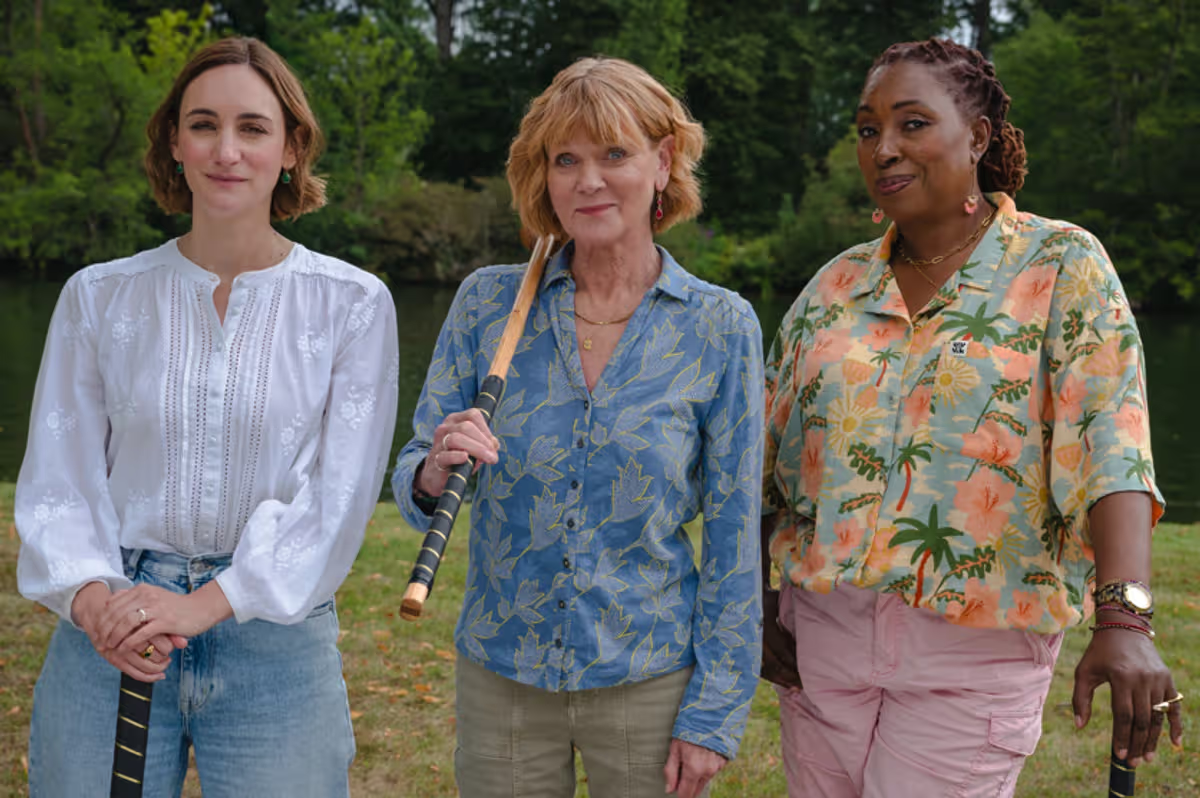
Death in Paradise creator Robert Thorogood’s English-set mystery series, The Marlow Murder Club, follows three amateur detectives as they solve crimes in the tranquil riverside town of Marlow.
Judith Potts (Samantha Bond), a retired archaeologist, establishes a club alongside professional dog walker Suzie Harris (Jo Martin) and vicar’s wife Becks Starling (Cara Horgan). Their discoveries eventually earn them positions as civilian advisers under Detective Sergeant Tanika Malik (Natalie Dew).
Now firmly embedded within newly promoted DI Malik’s crime-solving operation, Judith, Suzie and Becks are back, applying their unorthodox techniques to a series of high-profile murders. However, it quickly becomes apparent to the amateur investigators that their enquiries may strike closer to home than ever before, reports the Express.
The synopsis reveals: “From the sudden death of the kindest man in Marlow, the town’s beloved Mayor, to a celebrity chef found dead at the launch of his cookbook with half the town in attendance, the team will be working under the watchful eye of the Marlow community.”
“They’ll also be called to an eerie manor house in the middle of nowhere, where they’ll face a case intrinsically linked to Becks’ past that could threaten the future of their roles as civilian advisors. Judith, Suzie and Becks will have to pull closer together than ever to catch these killers.”
Since launching in 2024, The Marlow Murder Club has established itself as a beloved staple amongst mystery fans. Speaking exclusively to the Mirror, leading actress Jo Martin, who portrays Suzie, has shared her thoughts on why the programme connects with audiences so profoundly.
“People love murder, don’t ask me why. And the fact that this isn’t this gruesome, you know, dead women everywhere, mutilated. It’s a cosy crime drama, and it’s beautifully shot as well,” she explained.
“You can sit back and feel like [you’re having] a cup of drinking chocolate, you know? It’s like that. It’s like toasting some marshmallows and watching this. You’re in safe hands. It’s a great formula and it works.
“I think people have bought into the characters as well. And the fact that there aren’t many shows where you’ve got, you know, three, four women leading the show. We’re not the wife of, or the friend of, or the dead body – we are leading the show, and we’re all women of a particular age.”
Jo continued: “It’s intergenerational, which is always very interesting, you know… I think it’s wonderful.”
Alongside the returning main cast, series three will welcome an impressive array of guest stars throughout its six episodes. The stellar line-up includes Nigel Harman, Peter Davison, Jacqueline Boatswain, Sarah Alexander, Tony Gardner, Jason Merrells, Harry Enfield, Cherie Lunghi, Adrian Lukis, and Alastair Mackenzie.
Additionally, Hugh Quarshie reprises his role as Professor Darius Gifford, a prospective romantic interest for Judith.
Discussing the significance of embracing their guest performers, Jo explained: “If you’re coming on as a guest, it’s really hard to enter this family… [We want] to make [them feel] a part of it, so they can do their best work. So, yeah, we love it, welcoming new people.”
The actress also described her excitement upon meeting comedy icon Harry Enfield. She recalled: “We’ve had some great artists this season. It’s been amazing. I’m a huge fan of Harry Enfield… When he was on set, we’re all like, ‘Oh God, when can I ask for a selfie? When’s it going to be cool to get a selfie with Harry Enfield?’ Yeah, it’s incredible.”
With only two episodes remaining in the current series of Death in Paradise, audiences may be seeking a new series to satisfy their appetite. This “intriguing” programme that fans “watch on repeat every day” could prove the ideal escape into the realm of murder mysteries, minus the blood and violence.
The Marlow Murder Club returns to U and U&DRAMA on Wednesday, March 18 at 8pm
For the latest showbiz, TV, movie and streaming news, go to the new Everything Gossip website
Human Rights Watch says drone strikes by Haitian forces kill more than 1,200 people in and near Port-au-Prince since 2025.
Published On 10 Mar 202610 Mar 2026
Share
Drone strikes operated by Haitian security forces and private contractors have killed at least 1,243 people and injured 738 in Haiti, Human Rights Watch (HRW) reports.
Since March last year, Haitian security forces with support from Vectus Global, a United States-licensed private military firm, have carried out antigang operations using quadcopter drones strapped with explosives, often in densely populated parts of the capital, Port-au-Prince.
Recommended Stories
list of 3 itemsend of list
The report found strikes from March 1, 2025, to January 21 in West Department, where Port-au-Prince is located, have killed 17 children and 43 adults not believed to be members of any criminal groups.
“Haitian authorities should urgently rein in the security forces and private contractors working for them before more children die,” Juanita Goebertus, Americas director at HRW, said in a statement.
The nonprofit said the number of drone attacks in Port-au-Prince, which is 90 percent controlled by gangs, has “significantly increased” in recent months, with 57 reported from November to late January, almost double that of the 29 attacks reported from August through October
HRW said its researchers analysed seven videos uploaded to social media or shared directly with the group that show quadcopter drones in action and geolocated four of them to Port-au-Prince.
“The videos show the repeated use of drones equipped with explosives to attack vehicles and people, some of them armed, but none who appear to be engaged in violent acts or pose any imminent threat to life,” the group said.
‘There are innocent people’
HRW said it did not find widespread drone use among criminal groups.
One of the attacks highlighted in the report occurred on September 20 in the Simon Pele neighbourhood, an impoverished community controlled by a gang of the same name.
The drone attack killed nine people, including three children, and injured at least eight as the leader of the Simon Pele gang prepared to distribute gifts to children in the area.
HRW quoted one unnamed resident as recalling how the explosion ripped both feet off a baby.
Among those killed was a six-year-old girl whose unidentified mother was quoted as saying: “In the spaces where the gangs are, there are innocent people, people who raise their children, who follow normal paths.”
The families of those killed said the criminal group organised and controlled access to their funerals, according to Human Rights Watch.
Last month, the United Nations Integrated Office in Haiti said it had no indications the deaths and injuries were being investigated.
HRW said there was no evidence drones were being used widely by gangs. The UN’s high commissioner for human rights said in October that the drone strikes were disproportionate and likely unlawful.
REALITY TV star Paul Preece Jr who won the Netflix survival show Outlast has been charged with raping a child.
The 51-year-old was arrested in Tennessee on Friday and booked into Knox County Jail.
Sign up for the Showbiz newsletter
Thank you!
Paul Preece Jr, winner of Netflix show Outlast, has been charged with child rapeCredit: NetflixJail records show Preece is being held on a $150,000 bondCredit: JIMS
Jail records show Preece has also been charged with aggravated sexual battery and attempted rape of a child, The Daily Mail reports.
The age of the victim has not yet been released.
Preece is currently being held on a $150,000 bond and will be required to wear a GPS tracker upon release.
His arrest comes after a capias warrant was issued, according to TMZ.
The court-ordered warrant is typically used when a person fails to appear in court, violates bond conditions, or neglects to pay court-ordered fines or child support.
Preece rose to prominence after competing on the first season of Outlast in 2023.
The gruelling reality show sees a group of contestants trying to survive remote Alaskan terrain in punishing conditions for a chance at a $1 million prize.
Sixteen participants are dropped by parachute into the wilderness before being divided into teams.
Most read in Entertainment
Season one was filmed on the Neka River on Chichagof Island, while series two moved south of Petersburg to Little Duncan Bay.
Unlike many competition shows, contestants cannot compete alone.
Participants are allowed to switch teams throughout the competition.
The only way to leave the game is to quit.
Preece won the inaugural season alongside teammates Seth Lueker and Nick Radner.
Season two landed in the Global Top 10 in 22 countries.
Two Texas men, Drake Vliem II and Drew Haas, won the million-dollar pay-out in the second series.
The series was renewed for a third season in February 2025.
Preece won the first series of Outlast – bagging $1 million with his teammatesCredit: Netflix
‘The Hollywood Godfather’ Gianni Russo made millions through crime and his film careerCredit: Olivia West – The SunRusso played Carlo in The Godfather, pictured taking a beating from Sonny, played by James CaanCredit: Olivia West – The SunPablo Escobar held Russo in a make-shift prison inside his Colombian mansionCredit: Getty – ContributorIt followed him shooting dead a Medellin Cartel hitman and Escobar putting a hit out on his lifeCredit: Olivia West – The Sun
The New Yorker’s blockbuster life began dramatically when he nearly died aged six from polio, only surviving thanks to an experimental vaccine trial that cured him but led to the deaths of half of the patients on the hospital ward.
After a lengthy five-year recovery, Russo started out selling ballpoint pens on the streets of New York aged 13.
It was here that he first crossed paths with Frank Costello, a mob boss from the Luciano crime family, who offered him work.
This induction into the mob world would lead to him becoming pally with the likes of Frank Sinatra, Monroe and Al Pacino, as well as bagging acting roles including in the first two Godfather films, Rush Hour 2 and Red Dragon.
And it was his portrayal of Carlo Rizzi, the abusive husband of Connie Corleone, in the first Godfather movie that would save his life in the unlikeliest fashion.
Surviving “King of Cocaine” Escobar’s wrath – after surrendering himself to the Colombian drug lord and being interrogated in a prison cell three floors underneath his mansion – was among Russo’s biggest feats.
Escobar had put a hit out on the actor after he shot dead Lorenzo Morales, a hitman from his Medellin Cartel, in a 1988 Las Vegas nightclub.
The fatal altercation came after Morales stabbed a woman he had taken to dinner at Russo’s venue and then slashed the Godfather star’s face with a broken champagne bottle.
Russo tells The Sun: “He spins around and goes for my throat. Fortunately I react, I was agile enough, but he cuts me on my jawline, which required 81 stitches, and I’m bleeding.
“I said, ‘Look what you did to my shirt.’ He cut me but I’m worried about my shirt. I just wanted to get my hand on my gun and as soon as I did, I put the gun at his forehead.
“I told him, ‘Now go out the door’. He said, ‘F*** you’. I shot him… The cops came and took me to the hospital.”
Russo wasn’t charged with the killing due to it being ruled a justifiable homicide by the Nevada District Attorney’s Office.
But he knew he was a wanted man when Morales was revealed to be part of the Medellin Cartel.
Despite knowing he was unlikely to return, Russo travelled to a church in Colombia to meet face-to-face with the drug lord – a meeting arranged by mobster John Gotti, head of New York’s Gambino crime family.
Russo adds: “Understand one thing, Escobar believed in killing your pets, your children, your family, and you last. I wasn’t going to let that happen.”
Seconds after greeting Escobar, he was hit from behind and woke up in the cartel lord’s famous “mansion prison”, which he had built to avoid extradition to the US for drug charges.
“I was strapped to a chair, the stench was unbelievable,” Russo says.
Marlon Brando, who initially disliked Russo, holding his cheeks during a scene in The GodfatherCredit: ParamountMob boss Frank Costello helped out young Russo due to his family connection to the Sicilian MafiaCredit: Getty
“I thought I was hallucinating. [Escobar] had a book in his hands. The book was ‘Making Of The Godfather’. He said to me, ‘Why didn’t you tell me you were Carlo in The Godfather? I loved that movie.’”
In a Hollywood-style twist, Escobar instructed his associate to clean-up Russo, treat his injuries and take him to his dining room, where the Colombian would later probe: ‘Why did you come here?’
Russo replied: ‘What would you have done if someone was going to kill your daughter? I had to come here. Kill me now and leave my family alone.’
He continues: “He walks towards me, I don’t know if he was going to cut off my head or what, but he kissed me. He said, ‘They don’t make men like us anymore. Go home, I’ll handle this’.
“So, we sat down, had dinner, we talked, it was amazing. But he was a frightening man.”
Russo’s most famous conquest was Marilyn Monroe, who he claims took his virginityCredit: GettyRusso was given work by Frank Costello of the Luciano crime family at the age of 13Credit: Olivia West – The Sun
Russo bagged his role in The Godfather after serving as a liaison between Paramount Studios and the Colombo crime family, who had threatened to stop the film’s production through their vice-like control over the unions.
He recalls petitioning crime boss Joe Colombo, who objected to the movie because it “basically identified every Italian as a gangster”, by telling him: “Listen, we can make a lot of money from this.”
Eventually, Russo talked him around and was given the role of Carlo in the iconic 1972 movie “as my reward”.
Not everyone was happy he got the part, including Marlon Brando. The legendary star, who played Don Vito Corleone, was desperate to succeed in his “comeback film” and wanted everything to be perfect.
“When he found out that I wasn’t even an actor, he tried to get me fired,” Russo said. “I worked that out with him and we became friends.”
Similarly, Russo says co-star James Caan, who played Sonny Corleone, “hated me from day one” because of his corrupt connections.
Caan also believed he lost out on the role of Michael Corleone to Al Pacino because of Russo and his mobster allies.
John Gotti rival
By the time Russo starred in The Godfather, he had already made a fortune from criminal activities.
He was sitting on an estimated £1.5million fortune, having worked as a ‘messenger’ for mafia families and run multiple crooked businesses including casinos.
Russo was taken under mobster Frank Costello’s wing out of respect for his Sicilian uncles, who had helped to send the Mafia crime families over to America and were hanged for their criminal activities.
He says being “given so much respect so early on” angered future Gambino crime boss Gotti, who was then a “hijacker, earning big money” and desperate to become a ‘made’ man.
Was I upset? No. I’d just had sex with America’s hottest movie star and sex symbol.
Gianni Russo
Russo’s biggest money-spinner was laundering “hundreds of millions of dollars” skimmed from casinos and other illegal businesses through the Vatican Bank with the help of a corrupt bishop in the 1970s.
Then came his big screen debut in The Godfather, which changed his life forever and was a film that “the mob loved”.
Russo says: “The Godfather was my first film. I was young, I was making big money and with my ego, I wanted to become an actor.
“The movie premiere was like a dream come true for me because 10 years earlier I was selling ballpoint pens to people and now I was in the biggest movie ever in the world.”
‘Marilyn taught me everything’
Fame, coupled with Russo’s mob connections, led to a series of high-profile celebrity romances. He would go on to father 13 children with 10 different women.
He dated I Say A Little Prayer singer Dionne Warwick in the 1980s, the actress Zsa Zsa Gabor and Cabaret star Liza Minnelli.
“I really like Liza, I couldn’t say anything bad about her, she’s just fun, enjoys life,” Russo said through laughter.
But perhaps his most famous dalliance came earlier with Marilyn Monroe, then 33, who he sensationally alleged took his virginity when he was 15.
Gianna was working at a hair salon in New York and says the Some Like It Hot star always requested him to wash her hair.
He claims one day Marilyn’s advisors invited him to her suite in the Waldorf Hotel and they bonked for the entire weekend, leaving him struggling to walk after .
Russo recalled her standing in her messy room, which he compared to “like the set of a disaster movie”.
She was holding a flute of champagne, wearing just a towel which she promptly dropped and invited him to join her in the bath.
“My heart was pounding,” he said. “Like an idiot, I covered my eyes, which made her laugh.
“I began undressing, praying I wouldn’t trip over my pants and fall on my ass, and then entered the tub. I’ll be honest, I had no idea what to do, or what she expected.
“We wound up in bed for the entire weekend, climbing out only when needed. It was my first experience of room service, and it added to the fantastic experience.”
The one issue was that Russo was just 15 years old – but the actor had no regrets, even boasting “she taught me everything I know” and he felt like “the luckiest boy alive”.
He said: “If it had happened today, I think she’d be arrested and my parents would have tried to get some cash out of it… Was I upset? No. I’d just had sex with America’s hottest movie star and sex symbol.”
Russo claimed to have been a close friend of Frank Sinatra (left)Credit: Olivia West – The SunGambino family mobster John Gotti ‘hated’ Russo due to the amount of respect he commanded early onCredit: Getty
Russo has lived a life few could imagine – he’s hung out with everyone from Pope John Paul II to Donald Trump.
He dubs himself “the Hollywood Godfather” but despite the title and his murky past, he insists: “I was never in the mob but I was around it and was friends with some of the big names.
“They (police) tried to tie me to the mob but I never got a traffic ticket let alone association.”
Russo has released multiple books and is currently touring the UK and Ireland as part of a one-man theatre show, which reveals all about his colourful life and how his film debut was a seismic moment for him.
He adds: “The Godfather changed my life. I don’t know what my life would be without The Godfather. It’s still changing my life now.”
Russo Russo’s new book Mafia Secrets Untold Tales From The Hollywood Godfather is out now.
At the inaugural “Shield of the Americas” summit in South Florida, United States President Donald Trump announced the creation of what he calls the Americas Counter-Cartel Coalition: a group of a dozen politically aligned countries committed to fighting drug trafficking.
But as he signed a declaration to cement that commitment, Trump signalled that it came with the expectation that cartels would not be confronted with law enforcement action, but instead military might.
Recommended Stories
list of 3 itemsend of list
“ The only way to defeat these enemies is by unleashing the power of our military. So we have to use our military. You have to use your military,” Trump told the audience of Latin American leaders.
“You have some great police, but they threaten your police. They scare your police. You’re going to use your military.”
Saturday’s summit was the latest step in a larger foreign policy pivot under Trump.
Since taking office for a second term, Trump has distanced himself from some of the US’s traditional allies in Europe, instead forging tighter partnerships with right-wing governments around the world.
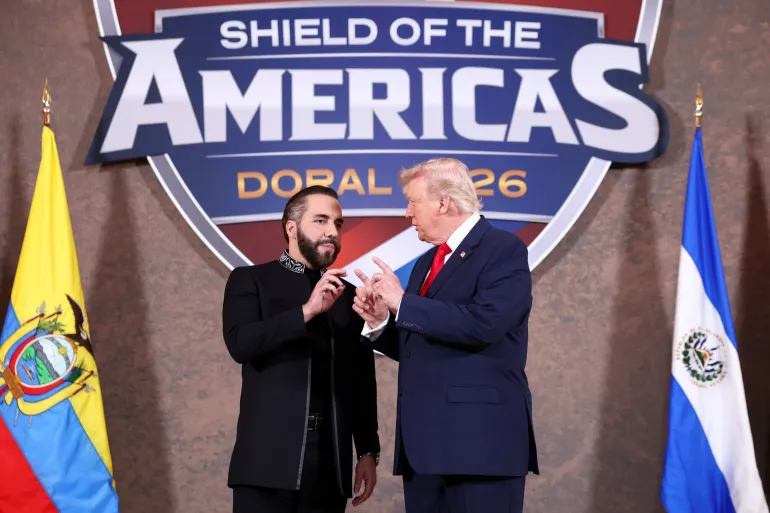
The attendance at the Shield of the Americas summit reflected that shift. Right-wing leaders, including Argentina’s Javier Milei, El Salvador’s Nayib Bukele and Ecuador’s Daniel Noboa, were among the guest list.
But notably absent was top-level leadership from Mexico, the US’s biggest trading partner, and Brazil, the largest country in the region by economy and population.
Both Mexico and Brazil are led by left-wing presidents who have resisted some of Trump’s more hardline policies.
The growing rift between the US and some of its longtime partners was a feature in the brief remarks delivered by US Secretary of State Marco Rubio, who praised attendees for their cooperation.
“They’re more than allies. They’re friends,” Rubio said of the leaders present.
“At a time when we have learned that oftentimes an ally, when you need them, maybe may not be there for you, these are countries that have been there for us.”
Secretary of Defense Pete Hegseth, meanwhile, reiterated his view that criminal networks and cartels pose an existential crisis for the entire Western Hemisphere, which he described as sharing the same cultural and religious roots.
“ We share a hemisphere and geography. We share cultures, Western Christian civilisation. We share these things together. We have to have the courage to defend it,” Hegseth said.
Donald Trump meets with El Salvador’s President Nayib Bukele as they attend the ‘Shield of the Americas’ summit on March 7 [Kevin Lamarque/Reuters]
A military-first approach
Latin America is one of several areas where Trump has launched military operations since returning to office in January 2025.
His rationale for authorising deadly operations in the region has centred primarily on the illicit drug trade.
Trump has repeatedly argued that Latin American criminal networks pose an imminent threat to national security, through the trafficking of people and drugs across US borders.
Experts in international law have pointed out that drug trafficking is considered a criminal offence — and it is not accepted as justification for acts of military aggression.
But the Trump administration has nevertheless launched lethal military strikes against alleged drug traffickers in Latin America.
Since September, for instance, the Trump administration has conducted at least 44 aerial strikes on maritime vessels in the Caribbean Sea and eastern Pacific Ocean, killing nearly 150 people.
The victims’ identities have never been publicly confirmed, nor has evidence been publicly released to justify the deadly strikes.
Some families in Colombia and Trinidad and Tobago have stepped forward to claim the dead as their loved ones, out on a fishing expedition or travelling between islands for informal work.
In Saturday’s remarks, Trump justified the attacks by arguing that cartels and other criminal networks had grown more powerful than local militaries — and therefore necessitated a lethal response.
“Many of the cartels have developed sophisticated military operations. Highly sophisticated, in some cases. They say they’re more powerful than the military in the country,” Trump said.
“Can’t have that. These brutal criminal organisations pose an unacceptable threat to national security. And they provide a dangerous gateway for foreign adversaries in our region.”
He then compared cartels to a disease: “They’re cancer, and we don’t want it spreading.”
US President Donald Trump signs a proclamation at the ‘Shield of the Americas’ summit in Doral, Florida [AFP]
A ‘nasty’ operation in Venezuela
In late December and early January, Trump also initiated attacks on Venezuelan soil, again defending his actions as necessary to stop drug traffickers.
The first attack targeted a port Trump linked to the gang Tren de Aragua. The second, on January 3, was a broader offensive that culminated in the abduction and imprisonment of Venezuela’s then-leader, President Nicolas Maduro.
On Saturday, Trump reflected on that military operation, which he characterised as an unmitigated success.
Maduro is currently awaiting trial on drug-trafficking charges in New York, though a declassified intelligence report last May cast doubt on Trump’s allegations that the Venezuelan leader directed drug-trafficking operations through groups like Tren de Aragua.
“America’s armed forces also ended the reign of one of the biggest cartel kingpins of all, with Operation Absolute Resolve to bring outlaw dictator Nicolas Maduro to justice in a precision raid,” Trump told Saturday’s summit.
He then described the military operation as “nasty”, though he underscored that no US lives were lost.
The early-morning raid, however, killed at least 80 people in Venezuela, including 32 Cuban military officers, dozens of Venezuelan security forces, and several civilians.
“We went right into the heart. We took them out, and it was nasty. It was about 18 minutes of pure violence, and we took them out,” Trump said of the operation.
Trump has since held up Venezuela as a model for regime change around the world, particularly as it leads a war with Israel against Iran.
Maduro’s successor, interim President Delcy Rodriguez, has so far complied with many of Trump’s demands, including for reforms to the country’s nationalised oil and mining sectors.
Just this week, the two countries re-established diplomatic relations for the first time since 2019, under Trump’s first term as president.
In Saturday’s remarks, however, Trump reiterated that his positive relationship with Rodriguez hinged on her cooperation with his priorities.
“She’s doing a great job because she’s working with us. If she wasn’t working with us, I would not say she’s doing a great job,” he said.
“In fact, if she wasn’t working with us, I’d say she’s doing a very poor job. Unacceptable.”
US Secretary of Defense Pete Hegseth speaks at the summit of Latin American leaders on March 7 [Kevin Lamarque/Reuters]
‘We’ll use missiles’
Trump did, however, express consternation with other presidents in the Latin American region, accusing them of allowing cartels to run amok.
“Leaders in this region have allowed large swaths of territory, the Western Hemisphere, to come under the direct control” of the cartels, Trump said.
“Transnational gangs have taken over, and they’ve run areas of your country. We’re not going to let that happen.”
He even delivered an ominous warning to the summit’s attendees: “Some of you are in danger. I mean, you’re actually in danger. It’s hard to believe.”
Many of the leaders in attendance, including El Salvador’s Bukele, have launched their own harsh crackdowns on gangs in their countries, employing “mano dura” or “iron fist” tactics.
Those campaigns, however, have elicited concerns from human rights groups, who have noted that presidents like Bukele used emergency declarations to suspend civil liberties and imprison hundreds of people, often without a fair trial.
Still, Trump dismissed alternative approaches in Saturday’s speech. Though he did not mention Colombia by name, he was critical of efforts to negotiate for the disarmament of cartels and rebel groups, as Colombian President Gustavo Petro has sought to do.
Instead, he offered to deploy military might throughout the region.
“We’ll use missiles. If you want us to use a missile, they’re extremely accurate — pew! — right into the living room, and that’s the end of that cartel person,” Trump said.
“A lot of countries don’t want to do that. They say, ‘Oh, sure. I’d rather not have that. I’d rather not have it. I believe they could be spoken to.’ I don’t think so.”
Leaders gather for a group photo at the ‘Shield of the Americas’ summit on March 7 [Kevin Lamarque/Reuters]
A call to ‘eradicate’ Mexico’s cartels
One country he did single out, though, was Mexico. Trump suggested that it had fallen behind other countries in the region in its efforts to combat crime.
“We must recognise the epicentre of cartel violence is Mexico,” he said.
“The Mexican cartels are fueling and orchestrating much of the bloodshed and chaos in this hemisphere, and the United States government will do whatever’s necessary to defend our national security.”
Since the start of his second term, Trump has pressured Mexico to step up its security efforts, threatening tariffs and even the possibility of military action if it does not comply.
Mexican President Claudia Sheinbaum has responded by increasing military deployments throughout the country.
In February 2025, for instance, she announced 10,000 soldiers would be sent to the US-Mexico border. For the upcoming FIFA World Cup, her officials have said nearly 100,000 security personnel will be patrolling the streets.
Just last month, her government also launched a military operation in Jalisco to capture and kill the cartel leader Nemesio Oseguera Cervantes, nicknamed “El Mencho”. She has also facilitated the transfer of cartel suspects to the US for trial.
But Trump reemphasised on Saturday his belief that Sheinbaum had not gone far enough, though he called her a “very good person” and a “beautiful woman” with a “beautiful voice”.
“I said, ‘Let me eradicate the cartels,’” Trump said, relaying one of his conversations with Sheinbaum.
“We have to eradicate them. We have to knock the hell out of them because they’re getting worse. They’re taking over their country. The cartels are running Mexico. We can’t have that. Too close to us, too close to you.”
Secretary of State Marco Rubio, centre, delivers remarks at a working lunch at Trump National Doral Miami in Florida [Rebecca Blackwell/AP Photo]
‘Last moments of life’ in Cuba
Trump also used his podium to continue his threats against Cuba’s communist government.
Since the January 3 attack on Venezuela, Trump has increased his “maximum pressure” campaign against the Caribbean island, which has been under a full US trade embargo since the 1960s.
His administration severed the flow of oil and funds from Venezuela to Cuba, and in late January, Trump announced he would impose steep economic penalties on any country that provides the island with oil, a critical resource for the country’s electrical grid.
Already, the country has been struck with widespread blackouts, and the United Nations has warned Cuba is inching closer to humanitarian “collapse”.
But Trump framed the circumstances as progress towards the ultimate goal of regime change in Cuba.
“As we achieve a historic transformation in Venezuela, we’re also looking forward to the great change that will soon be coming to Cuba,” he told Saturday’s summit.
“Cuba’s at the end of the line. They’re very much at the end of the line. They have no money, they have no oil. They have a bad philosophy. They have a bad regime that’s been bad for a long time.”
He added that he thinks changing Cuba’s government will be “easy” and that a deal could be struck for the transition of power.
“Cuba’s in its last moments of life as it was. It’ll have a great new life, but it’s in its last moments of life the way it is,” Trump said.
But while Trump’s remarks largely focused on governments not represented at the summit, he warned that there could be consequences even for the right-wing leaders in attendance.
Trump’s “Shield of the Americas” coalition comes as he seeks to bring the whole of Latin America in line with US priorities. It’s a policy he has dubbed the “Donroe Doctrine”, a riff on the 19th-century Monroe Doctrine, which claimed the Western Hemisphere as the US’s sphere of influence.
To Trump, that means ousting rival powers like China as they seek to forge relationships and economic ties with Latin America. Trump has even mused about retaking the Panama Canal, based on his allegation that the Chinese have too much control in the area.
“As these situations in Venezuela and Cuba should make clear, under our new doctrine — and this is a doctrine — we will not allow hostile foreign influence to gain a foothold in this hemisphere,” Trump said.
He then made a pointed remark to Panama’s president, Jose Raul Mulino, who was in the audience.
“That includes the Panama Canal, which we talked about. We’re not going to allow it.”
The government in Havana has claimed that the 10 people on board the speedboat had planned to unleash terrorism in Cuba.
Published On 7 Mar 20267 Mar 2026
Share
The government of Cuba has announced that a fifth person died as a consequence of a fatal shootout last month involving a Florida-flagged speedboat that allegedly opened fire on soldiers off the island nation’s north coast.
The island’s Ministry of Interior said late on Thursday in a statement that Roberto Alvarez Avila died on March 4 as a result of his injuries.
Recommended Stories
list of 3 itemsend of list
It added that the remaining injured detainees “continue to receive specialised medical care according to their health status”.
On February 26, authorities in Cuba said that Cuban soldiers confronted a speedboat carrying 10 people as the vessel approached the island and opened fire on the troops.
They said the passengers were armed Cubans living in the United States who were trying to infiltrate the island and “unleash terrorism”. Cuba said its soldiers killed four people and wounded six others.
“The statements made by the detainees themselves, together with a series of investigative procedures, reinforce the evidence against them,” the Cuban Interior Ministry said in its statement.
It added that “new elements are being obtained that establish the involvement of other individuals based in the US”.
Earlier this week, Cuba said it had filed terrorism charges against six suspects who were on the speedboat. The government also unveiled items it claimed to have found on the boat, including a dozen high-powered weapons, more than 12,800 pieces of ammunition and 11 pistols.
Cuban authorities have provided few details about the shooting, but they said the boat was roughly 1.6 kilometres (1 mile) northeast of Cayo Falcones, off the country’s north coast.
They also provided the boat’s registration number, but The Associated Press news agency was unable to readily verify the details because boat registrations are not public in the state of Florida.
The shooting threatened to increase tensions between US President Donald Trump and Cuban authorities.
The island’s economy was, until recently, largely kept economically afloat by Venezuela’s oil, which is now in doubt after a US military operation abducted and deposed former Venezuelan President Nicolas Maduro.
The United States-Israeli war with Iran continues to rage, as Washington pledges to send more troops and military assets to the Middle East and Tehran widens its retaliatory strikes across the region.
But on Thursday, top officials under US President Donald Trump shifted focus to another military front: Latin America.
Recommended Stories
list of 3 itemsend of list
Since taking office for a second term, Trump has indicated he plans to exert US dominance over the entire Western Hemisphere. His push for control has coincided with military operations against alleged criminal networks across the region.
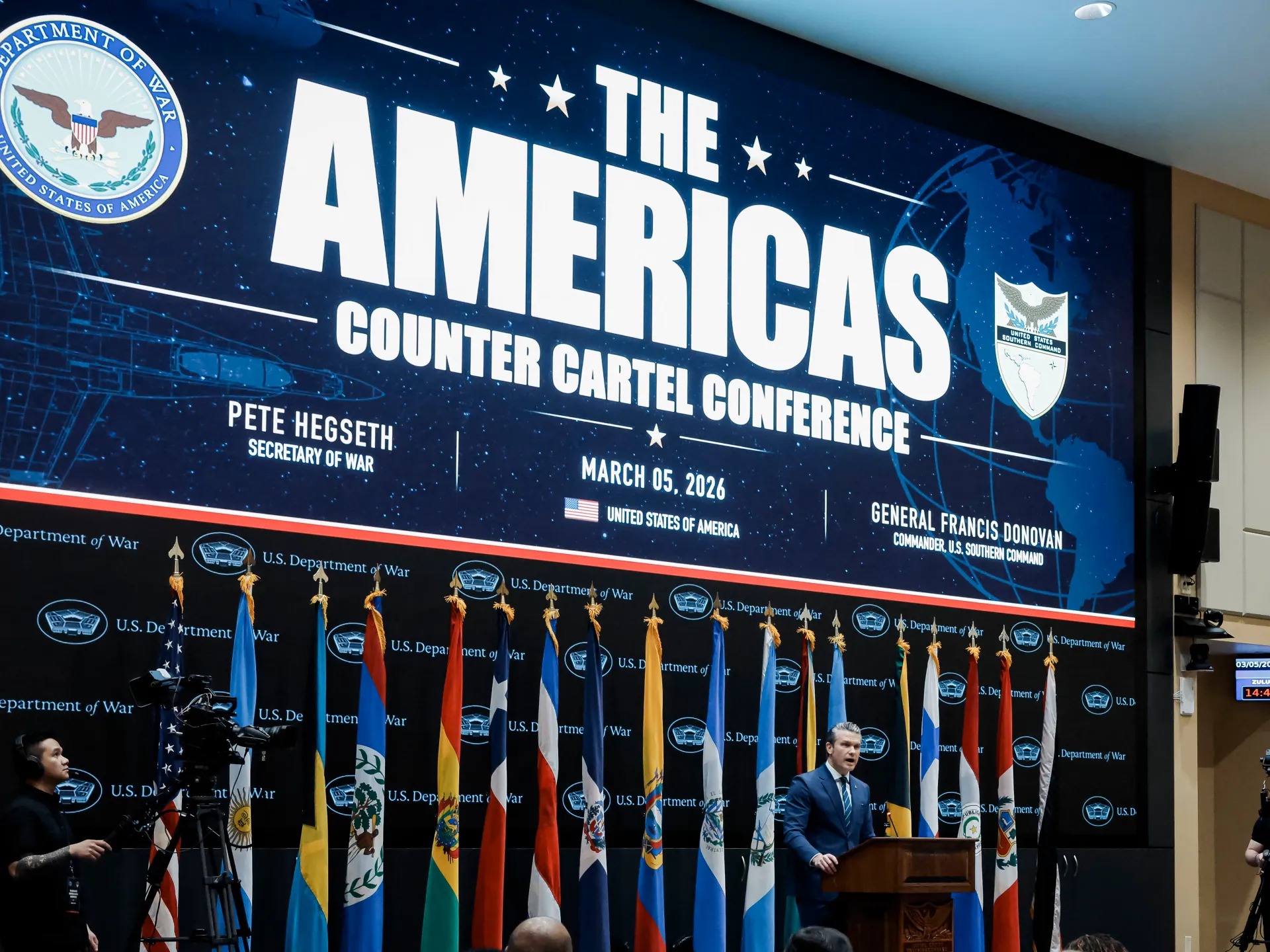
At Thursday’s inaugural “Americas Counter Cartel Conference”, speakers such as White House security adviser Stephen Miller assured reporters that Latin America would remain a top military priority for the US, regardless of events in the Middle East.
“We are not going to cede an inch of territory in this hemisphere to our enemies or adversaries,” Miller said, adding the US was “using hard power, military power, lethal force, to protect and defend the American homeland”.
Miller further maintained there is no “criminal justice solution” to drug cartels, which he likened to armed groups like al-Qaeda and ISIL (ISIS).
Organised crime, he concluded, “can only be defeated with military power”.
Since Trump took office last year, his administration has applied what experts describe as a “global war on terror” approach to Latin America, including by labelling drug cartels “foreign terrorist organisations”.
Figures like Miller, a key architect behind Trump’s hardline immigration policies, have championed the president’s militaristic approach, even as critics warn it raises human rights and legal concerns.
Last September, for instance, the administration began striking alleged drug-smuggling boats in the Caribbean and eastern Pacific Ocean, in what rights groups have decried as extrajudicial killings.
And in early January, the US launched an extraordinary operation to abduct Venezuelan leader Nicolas Maduro. It has since pursued a pressure campaign against Cuba designed to weaken its communist government.
Just this week, on Wednesday, the Pentagon announced it had launched joint operations with Ecuador’s military “against Designated Terrorist Organizations” in the South American country.
The announcement indicated a new front for US military actions in the region, which officials have said could include land operations.
But the broadening scope of Trump’s military involvement in Latin America, combined with the nascent war with Iran, has raised questions about the US’s ability to sustain such intense military activity.
Prepared to ‘go on offence alone’
The “Americas Counter Cartel Conference” came as Latin American leaders arrived in South Florida to attend a regional summit hosted by Trump at his Mar-a-Lago estate.
Attendees included officials from the Trump-allied conservative governments in Argentina, Honduras and the Dominican Republic.
But despite support from several regional governments, Secretary of Defence Pete Hegseth nevertheless told the audience that the US was “prepared to take on” Latin America’s cartels and “go on the offence alone, if necessary”.
“However, it is our preference — and it is the goal of this conference — that, in the interest of this neighbourhood, we all do it together,” Hegseth added.
The secretary also praised Trump’s take on the 1823 Monroe Doctrine, which sought to establish a US sphere of influence, separate from Europe, in the Western Hemisphere. Administration officials have dubbed Trump’s parallel approach the “Donroe doctrine”.
Hegseth framed the administration’s attacks on alleged drug-smuggling boats as a keystone of Trump’s effort to maintain regional influence.
The US military has carried out at least 44 aerial strikes on vessels in the Caribbean Sea and eastern Pacific Ocean, resulting in an estimated 150 known deaths.
The identities of the victims have not been released, with several family members saying fishermen and informal workers were among those targeted.
The Pentagon chief said the approach was meant to “establish deterrence”.
“If the consequence was simply to be arrested and then released, well, that’s a consequence they’d already priced in a long time ago,” Hegseth said.
He then pointed to a “few weeks” in February in which there were no strikes on alleged drug boats.
The pause in attacks, he said, was evidence of the strategy’s success. But that break notably came as the US surged assets to the Middle East.
Emphasis on ‘heritage’
Neither Hegseth nor Miller specifically referred to the war with Iran, but the pair touched on themes that have been present in the administration’s messaging on the war.
Trump, for example, said Iran’s government “waged war against civilisation itself”. There have been reports, meanwhile, that US military officials have referenced the biblical “end times” as a religious underpinning for the war.
Those remarks have reflected what critics consider Trump’s embrace of Christian nationalism and his view of the Americas as a European-derived “civilisation” threatened by outside forces.
At Thursday’s conference, Miller himself referenced violence in European history as justification for the modern-day military actions in Latin America.
There were periods in European history throughout the 18th and 19th centuries during which “ruthless means were used to get rid of the people who were raping and murdering and defying established systems of order and justice,” Miller said.
He also echoed Trump’s allegation that Europe was facing “civilisational erasure” as a result of left-wing leadership and immigration.
“The reason why many Western countries are struggling today is they’ve forgotten the eternal truth and wisdoms they once followed,” Miller said.
Hegseth, meanwhile, described all the countries at Thursday’s meeting as “offsprings of Western civilisation”.
Representatives in attendance, he said, faced a test “whether our nations will be and remain Western nations with distinct characteristics, Christian nations under God, proud of our shared heritage with strong borders and prosperous people ruled not by violence and chaos but by law”.
He added that foreign “incursions” represent “existential questions” for the region, seemingly referencing the growing influence of China as an economic and political partner in the Americas.
Adrian Dunbar, who has played Superintendent Ted Hastings in Line of Duty for years, has starred in the lead role of Alex Ridley in the ITV detective series since 2022
Adrian Dunbar has played Superintendent Ted Hastings in Line of Duty for years(Image: PA)
Popular crime drama Ridley — which stars Adrian Dunbar — has been scrapped despite top ratings, it is reported.
The ITV series sees Dunbar play the title role, a retired Detective Inspector turned police consultant and regular jazz club singer, and has drawn in viewers since 2022. Bronagh Waugh and Georgie Glen have also had regular roles across the two seasons.
But there will be no more, according to reports today. ITV has reportedly decided to shelve the programme, filmed across Lancashire and the Yorkshire Dales.
An ITV spokesman said: “There are currently no plans to return to Ridley. We’d like to extend our thanks to creator and writer Paul Matthew Thompson, executive producer Jonathan Fisher and the team at West Road Pictures for producing two successful series.”
It is a fresh blow for Dunbar, 67, following years of uncertainty around the future of Line of Duty. The actor, born in Enniskillen, County Fermanagh, had hinted he hoped Ridley would return. Speaking in an interview in August last year, Dunbar said: “The programme did very good numbers when it was shown in America and I know that PBS [the US’s Public Broadcasting Service], who part-financed Ridley, would like us to film another series.
“There’s definitely more to be said about Alex Ridley, his troubled life and the team of detectives with whom he works, and I would love to film more.”
But The Sun says this unlikely. The publication reports the programme had received top reviews and, since the last series ended in the autumn of last year, there had been hints it would come back.
Dunbar’s uncertainty around Line of Duty finally vanished late last year though when it was confirmed the popular police drama would return for a seventh season. In November last year, a source said: “Although this has been discussed at length since the unsatisfactory ending of series six in 2021, it’s still going to create huge excitement when the Beeb makes the announcement.
“It’s one they’ve been preparing to make for weeks, but they’ve been trying to pick the right moment, since The Celebrity Traitors has been hogging quite a lot of limelight recently.” They added: “And the BBC very much view Line Of Duty as one of the jewels in its crown that they want to deliver with some fanfare.”
Martin Compston played DS Steve Arnott in the show, which came to an end when his character and his team discovered the identity of “H”. He last year also shared details on whether viewers can expect more from the series.
The killing of prominent Iraqi women’s rights activist Yanar Mohammed has fuelled an outpouring of grief and calls for justice, with advocates from around the world remembering Mohammed as a “courageous” voice.
Mohammed, 66, was killed earlier this week after unidentified gunmen on a motorcycle opened fire outside her home in the north of Iraq’s capital, Baghdad.
Recommended Stories
list of 3 itemsend of list
“Despite being rushed to the hospital and attempts to save her life, she succumbed to her wounds,” the Organisation of Women’s Freedom in Iraq, a group that Mohammed co-founded, said in a statement shared on social media.
“We at the Organisation for Women’s Freedom in Iraq condemn in the strongest terms this cowardly terrorist crime, which we consider a direct attack on the feminist struggle and the values of freedom and equality.”
Several international rights groups also condemned Mohammed’s killing, with Amnesty International on Wednesday decrying the deadly attack as “brutal” and “a calculated assault to stifle human rights defenders, especially those defending women’s rights”.
The organisation, which said Iraq’s Prime Minister Mohammed Shia al‑Sudani ordered an investigation into the killing, also called on the Iraqi authorities to ensure the perpetrators are brought to justice.
Yanar Mohammed speaks during a Women’s Day event in Baghdad, Iraq, in 2006 [Akram Saleh/Getty]
“Yanar Mohammed … dedicated her life to defending women’s rights,” Amnesty’s Iraq researcher, Razaw Salihy, said in a statement. “The Iraqi authorities must stop this pattern of targeted attacks in their tracks, and take seriously the sustained smear campaigns designed to discredit and endanger activists.”
Mohammed was one of Iraq’s most prominent women’s rights activists, working since the early 2000s “to protect women facing gender-based violence, including domestic abuse, trafficking, and so-called ‘honour killings’”, Front Line Defenders said.
Her work included the establishment of safe houses, which sheltered hundreds of women experiencing exploitation and abuse.
In a 2022 interview with Al Jazeera, Mohammed described her organisation’s efforts to support Iraqi women who survived violence at the hands of ISIS (ISIL), which had seized control of large swathes of the country.
“Muslim-Arab women who were enslaved by ISIL and have not found a place to go back to, they are still living in the shadows of the society,” she said at the time.
“Not less than 10,000 women were the victims of ISIL attack[s], and this femicide is not really acknowledged by the international community or dealt with in a way that keeps the dignity or the respect [of], or compensates, those who were the victims.”
Years of threats
Mohammed had been the target of death threats for decades, “aimed at dissuading her from defending women’s rights”, Front Line Defenders said. “Yet she remained defiant in the face of threats from ISIS and other armed groups.”
In 2016, she was awarded the Rafto Prize “for her tireless work for women’s rights in Iraq under extremely challenging conditions”.
The Rafto Foundation, the Norway-based nonprofit group that administers the award, said it was “deeply shaken” by her killing. “We are deeply shocked by this brutal attack on one of the most courageous human rights defenders of our time,” the foundation said in a statement.
“The assassination represents not only an attack on Yanar Mohammed as a person, but also on the fundamental values she dedicated her life to defending: women’s freedom, democracy, and universal human rights.”
Other activists and human rights groups also paid tribute to Mohammed this week, with Human Rights Watch describing her as “one of Iraq’s most courageous advocates for women’s rights” for more than two decades.
“Yanar was a dear colleague and friend to so many of us in the women’s rights and feminist community, one of our icons. She spent her life standing up for women’s rights in the most dangerous environment,” said Agnes Callamard, secretary-general of Amnesty International.
“She faced constant threats, but she never stopped. And today we cry and mourn her energy, her commitment, her profound humanity, her amazing courage.”
Mohammed speaks to reporters in Baghdad, Iraq, in 2005 [File: Wathiq Khuzaie/Getty]
Lutnick’s relationship with the late financier and sex offender has come under scrutiny after files revealed closer ties than previously known.
Published On 4 Mar 20264 Mar 2026
Share
US Secretary of Commerce Howard Lutnick has agreed to give testimony to lawmakers about his ties to Jeffrey Epstein, the head of a committee investigating the late sex offender has said.
Lutnick, who lived next door to Epstein in New York for more than a decade, “proactively agreed” to provide a transcribed interview to the House Committee on Oversight and Government Reform, panel chair James Comer said on Tuesday.
Recommended Stories
list of 4 itemsend of list
“I commend his demonstrated commitment to transparency and appreciate his willingness to engage with the Committee. I look forward to his testimony,” Comer, a Kentucky Republican, said on X.
Axios, which first reported the commerce secretary’s intention to testify, quoted Lutnick as saying he had done nothing wrong and he wished to “set the record straight”.
Lutnick’s relationship with Epstein, who died in 2019 while awaiting sex trafficking charges, has come under mounting scrutiny after he appeared to misrepresent the extent of his associations with the notorious financier.
In a podcast interview last year, Lutnick said he decided to “never be in the room” with Epstein again following an uncomfortable encounter at the sex offender’s Manhattan penthouse in 2005.
But files released by the Justice Department earlier this year showed that Lutnick met and communicated with Epstein for years after the reported 2005 encounter, and the commerce secretary later acknowledged that he visited the financier’s private island of Little Saint James in 2012.
Comer said on Tuesday that he had also sent letters to seven individuals seeking written testimony about their knowledge of Epstein’s crimes, including Microsoft cofounder Bill Gates, private equity investor Leon Black, and top Goldman Sachs lawyer Kathryn Ruemmler.
Gates, Black and Ruemmler have repeatedly denied wrongdoing in connection with Epstein, or having knowledge of his abuse of women and girls.
The committee’s requests for testimony come after former US President Bill Clinton and his wife, ex-Secretary of State Hillary Clinton, appeared before lawmakers last week to answer questions about their ties to Epstein.
Bill Clinton told the committee he did nothing wrong and “saw nothing that ever gave me pause” while interacting with Epstein.
Hillary Clinton told lawmakers she had no recollection of encountering Epstein and that she never “flew on his plane or visited his island home or offices”.
HOLLYWOOD star Nicole Kidman hits the spot in a leopard-print coat — as she prepares to hunt baddies in a crime drama.
The Aussie-American actress, 58, was in New York to promote her upcoming Amazon Prime Video series Scarpetta, in which she plays a forensic pathologist.
Sign up for the Showbiz newsletter
Thank you!
Hollywood star Nicole Kidman stepped out in a leopard-print coat in New YorkCredit: GettyThe Aussie-American actress, 58, was promoting her upcoming Amazon Prime Video series ScarpettaCredit: GettyThe star had some suitable reading material as she promoted her new crime showCredit: Getty
It is based on a book series by Patricia Cornwell and launches next Wednesday.
Meanwhile, Nicole and Keith Urban face the tough task of dividing their staggering £210million property portfolio as part of their divorce settlement.
The former couple’s marriage is now officially over after the superstar pair finalised their split, and they’ve come to an agreement on how their collection of multi-million pound homes will be divvied up.
According to documents, both Nicole and Keith will retain ownership of the properties already in their possession and the rest will be split to their mutual satisfaction.
It is believed the majority of the exes’ properties were all jointly purchased following their wedding in 2006.
The most recent purchase came in 2023 in the form of a £5.7m three-bed apartment in Sydney‘s exclusive Landmark Latitude complex – their sixth property in the same high rise.
They have another £13.3m wrapped up in the complex.
Nicole and Keith first bought into the apartment block in 2009, picking up a sizeable 420-square-metre pad overlooking Sydney’s famous harbour for a cool £4.45m.
A further £5.2m was splashed on a larger neighbouring apartment when that became available in 2012.
The couple bought into the 19th floor in 2011, paying £2m on a smaller space that Nicole used as a home office.
Nicole plays a forensic pathologist in the new crime dramaCredit: PA
The Dunblane Tapes takes viewers back to 1996 to a tragic mass shooting that saw over a dozen primary school children killed. The heartbreaking documentary spans across 73 minutes as it tells the devastating impact of those still dealing with the loss, as well as the successful campaign launched to ban weapons in the UK.
With previously unseen footage, a Channel 4 synopsis states: “After the 1996 mass shooting at Dunblane, a campaign was launched to ban private handguns in the UK. This remarkable story is now told through unseen footage filmed by a bereaved parent.”
The documentary, released to mark the event’s anniversary, was previously aired on Channel 4 last month, but is now available to stream online for those who missed it.
It has been dubbed an “emotional roller coaster” and viewers have been left in tears following the harrowing instalment. Taking to social media, one viewer previously wrote: “Just finished watching The Dunblane Tapes on Channel 4. Extremely upsetting watch, but the families who were devastated by what happened changed the law of the land and definitely stopped it happening again.
“Also extremely pleased the perpetrator’s name was not mentioned, I won’t mention it either as he doesn’t deserve to be mentioned. Please watch it, it’s humbling and devastating and I remember it like it was yesterday, it was 13th March 1996.”
One TikTok viewer, who was wiping away tears while discussing the film, said in a video: “Well I went into this documentary knowing it was going to be sad but oh my God… It is heartbreaking.”
They added: “It’s awful it’s so sad but definitely give this a watch. It’s really well made, just heartbreaking.”
In another video, one person said: “It’s meant to be an absolute emotional rollercoaster. I’m not sure if I can handle this one I’ll be honest.”
Another replied: “I just blubbed the whole way through the Dunblane Tapes”, as one person commented: “Cried all the way through the Dunblane one so so sad.” A third commented: “The Dunblane Tapes was so moving. I cried my eyes out.”
Over on X, one Channel 4 viewer said: “Watching #TheDunblaneTapes.. 7 mins in and I’m already in tears. Gonna be a difficult watch. So close to home.”
Another wrote: “Cried lots watching deeply moving #TheDunblaneTapes.” A third added: “@Channel4 has just done it again with #TheDunblaneTapes. Both harrowing & moving in equal measure.”
The Dunblane Tapes can be streamed now on Channel 4 online. For the latest showbiz, TV, movie and streaming news, go to the new **Everything Gossip** website.
Ensure our latest headlines always appear at the top of your Google Search by making us a Preferred Source.Click here to activateor add us as your Preferred Source in your Google search settings.