In March 2025, when California ran out of Medicaid funds to pay doctors and hospitals, the state borrowed $3.4 billion to keep the program afloat. It was, as a spokesperson for Gov. Gavin Newsom insisted, nothing new. Indeed, a handful of times over the years, the state had taken out internal, short-term loans to sustain its healthcare program for poor and disabled people.
The unprecedented move came a few months later, when Newsom and Democratic state lawmakers agreed to pay down the loan — which grew to $4.4 billion — over 10 years instead of later in the year. California’s healthcare safety net, it seemed, was buckling.
Rising healthcare costs systemwide were partly to blame. But so were several state-led expansions that made California’s Medicaid program, known as Medi-Cal, one of the nation’s most generous.
Now, with congressional Republicans’ One Big Beautiful Bill Act expected to reduce federal Medicaid spending by more than $900 billion over 10 years, California and dozens of other states must contemplate the limits of their generosity. The problem is particularly acute in the nation’s most populous state, which spends more on Medicaid than New York and Texas combined.
“We know we can’t afford to serve everybody we want to serve in the model that we have today,” said Mark Ghaly, the former top Newsom health official who now co-chairs the Future of Medi-Cal Commission, a 29-person panel with the goal of modernizing and sustaining California’s Medicaid program for those who need it. “What can we do differently? What can we do smarter?”
The 2025 law that Newsom, a Democrat, has dubbed President Trump’s “Big Ugly Bill” is expected to leave millions more Americans without health insurance, mostly because of new work requirements. It also curbs the use of healthcare provider taxes and other strategies states have deployed to maximize federal funds. Some state lawmakers and consumer advocates have argued the federal cuts, along with rising costs, present an opportunity for the next governor to overhaul a program plagued by long appointment wait times, low reimbursement rates for healthcare providers, and volatile financing.
“If we continue to just give millions and millions into the same system and expect something different — I’m sick and tired of that,” said Caroline Menjivar, a Democratic state senator representing a Los Angeles-area district where roughly half of constituents rely on Medi-Cal.
Democratic lawmakers, who have often clashed with Newsom on Medi-Cal rollbacks, succeeded in getting him to delay a number of painful cuts until 2027 in hope that a new governor might reverse them.
So far, neither of the gubernatorial candidates running in the November election to replace Newsom has offered substantive proposals for a program that covers 1 in 3 Californians — roughly 13.6 million people.
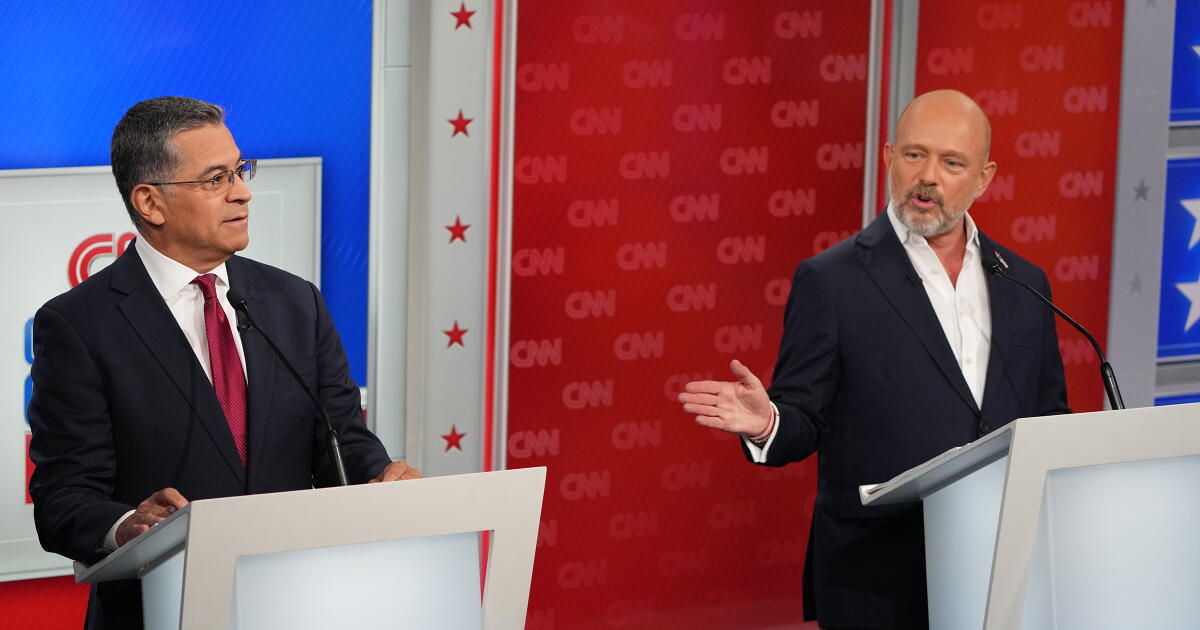
Republican Steve Hilton, a former Fox News commentator, wants to pare back Medi-Cal eligibility and has promised to end coverage for immigrants without legal status, citing that benefit as an example of “wildly unsustainable” state spending. Democrat Xavier Becerra, who has spent decades trying to expand government-funded healthcare, has promised to protect Californians from the massive federal cuts and find and cut billions in administrative waste.
Expanding coverage
President Johnson signed the law that established Medicaid and Medicare in 1965 to cover certain low-income groups, such as families with children, older people and those with disabilities. Over the last six decades, states have substantially widened that pool, most notably under the Affordable Care Act’s Medicaid expansion to childless adults.
Starting in 2024, California offered healthcare coverage to all low-income residents, regardless of age or immigration status, although lawmakers scaled that back this year. At the same time, the state opted to cover a slew of non-mandated benefits such as physical therapy, hospice care and housing assistance.
“California has always struggled with wanting to have as broad a program as possible but then having to figure out a way to pay,” said Jennifer Kent, who oversaw Medi-Cal under Gov. Jerry Brown, a Democrat. “There is no population that we have met that we don’t want to offer coverage to, and we’ve never met a benefit that we don’t like.”
Since 2010, California’s Medi-Cal enrollment has nearly doubled while spending has ballooned from $50 billion a year to $222 billion. It now makes up more than 40% of overall state spending, according to the nonpartisan Legislative Analyst’s Office.
Conservatives argue the program is bloated and rife with fraud. They say the federal changes will force states to refocus resources on the neediest.
“The role of the safety net programs was just that — to be a safety net,” Hilton said in an interview. “I don’t think it’s a particularly positive boast to say 40% of Californians should be on a program that was designed for people living in poverty.”
Becerra declined an interview request.
Nelly, a 59-year-old from Los Angeles County, was one of millions who have benefited from the state’s Medi-Cal expansion, but she was initially reluctant to sign up.
For years after she left her corporate job to care for her ailing mother, Nelly said, she didn’t consider applying. She remained uninsured until three years ago, when she woke up and couldn’t see out of her left eye.
She enrolled in Medi-Cal in the emergency room. It now covers her appointments with specialists and transportation to and from. While her condition may exempt her from the new Medicaid work requirements, Nelly said, she’s still worried about losing coverage after experiencing numerous paperwork hiccups simply trying to renew.
Nelly, who asked that her full name not be used because she hasn’t told her family about her condition, said she understands not everyone on the program may need it. But, she added, “it should be there for someone like me.”
Tough choices ahead
When Republican state lawmakers got wind of Newsom’s plan to stretch the debt repayment over a decade, they accused Democrats of trying to “paper over” the state’s structural deficit.
“This leaves future governors and legislatures to clean up the mess,” stated a July 2025 memo from GOP senators. The Legislative Analyst’s Office later called the maneuver “unusual.” That could leave Becerra, the favorite to succeed Newsom in the overwhelmingly liberal state, as the face of staggering changes to a program he spent his career defending.
More than 2 million Californians under age 65 could lose health coverage over the next four years as a result of the state and federal policy changes, according to recent estimates by the UC Berkeley Labor Center and the UCLA Center for Health Policy Research. At least 730,000 residents have already disenrolled since June 2025.
State agencies are scrambling to implement new federal work requirement rules for adult Medicaid enrollees under 65, hoping to automate as much verification as possible to blunt coverage losses. And in 2028, states will be required to charge some enrollees fees for many services, making it harder for them to maintain coverage.
Disability rights activists say new asset limits will prevent Californians from getting needed home care, which they say is more cost-effective and humane than nursing homes. Counties, deemed by state law to be healthcare providers of last resort, say they need immediate funding for the millions of uninsured patients they anticipate in the new year.
Hospital administrators have urged policymakers to help them keep their facilities stable, and the state’s most recent budget included some $390 million to assist public and distressed hospitals.
Martin Luther King Jr. Community Hospital in Los Angeles treats five times the patients it was designed to serve, and 80% of patients are uninsured or on Medi-Cal. Demand is so high in the chronically underserved area, MLK Community Healthcare CEO Elaine Batchlor said, that the hospital has erected tents in the parking lot. Most emergency room patients are now treated there.
“We already have an extremely overcrowded, overburdened emergency department,” MLK Community Healthcare CEO Elaine Batchlor said. “Insured care will turn into uncompensated care, and the financial burden for that will fall on providers.”
Becerra has said he opposes the state’s recent freeze on enrollment for adult immigrants without legal status, as well as new monthly premiums set to take effect next year, saying such moves will only saddle taxpayers with higher bills for ER care.
If elected, Becerra will probably need to wade into the politically toxic debate over whether to raise more revenue, cut benefits further, or do both.
Aside from promising to find and eliminate billions in administrative waste from the industry, the nation’s former top health official has not explained how he would cobble together the tens of billions of dollars the state is likely to need just to maintain status quo.
The next governor must tread carefully, Kent warned. “When people come and say, ‘Well, you should just do this because it’s the right thing,’ ” she said, “all of those right things have fiscal consequences.”
Mai-Duc writes for KFF Health News, a national newsroom that produces in-depth journalism about health issues and is one of the core operating programs at KFF — an independent source of health policy research, polling and journalism.