The lawsuit comes two months after the state filed a similar lawsuit against competitor Kalshi.
New York State has filed a lawsuit against prediction market company Polymarket amid allegations that it violated state laws against illegal gambling.
The suit, filed on Thursday by New York State Attorney General Letitia James, comes two months after the state filed a similar lawsuit against competitor Kalshi. That followed the state suing Coinbase and Gemini for offering users the ability to bet on “sports, entertainment, and elections, in violation of New York laws”, according to a release from the attorney general’s office at the time.
Recommended Stories
list of 4 itemsend of list
The state accused all the companies of operating without licences from the State Gaming Commission.
“Our gambling laws exist to protect New Yorkers, prevent the potential harms of problem gambling, and ensure funding for educational and public benefit programs,” James said in a statement announcing the suit.
“By skirting New York’s laws, Polymarket is targeting the most vulnerable and depriving New York families of critical services and support. My office will never hesitate to take action to defend our laws and keep New Yorkers safe.”
The suit also alleges that the company encouraged gambling among young people. It accuses Polymarket of targeting users as young as 18, while state law requires users to be at least 21 years old to take part in mobile sports betting.
“By running an unlicensed gambling operation, Polymarket has done more than just knowingly violate state law, they have put New Yorkers at risk, especially those underage who are most vulnerable to problem gaming,” New York Governor Kathy Hochul said in a statement.
The more than 30-page lawsuit claims that Polymarket, which is valued at more than $20bn, has advertised sports betting in particular since July 2025. It pointed to a post on X from August 17, 2025, about the launch of its US mobile app that said it was “BAD NEWS (For sportsbooks)”.
Prediction markets allow users to wager on so-called event contracts, covering political events, sports, elections and even award shows. Concerns about the role of prediction markets came to a head earlier this year when wagers were made in the hours before the United States and Israel first struck Iran, prompting widespread backlash in Washington.
Polymarket pushed back on the allegations.
“We chose to engage with them directly on the substance and address their concerns,” chief legal officer Neal Kumar said in a statement.
“They preferred the media hit. Any time the [attorney general’s] office wants to swing by, our door is open for a conversation about how we protect consumers and offer fair, transparent and legal markets.”
Kalshi is facing similar allegations in New York State. Kalshi has been critical of reporting on lawsuits against it and allegations that it is akin to a sports betting or gambling platform.
Polymarket did not respond to Al Jazeera’s request for comment.
The Polymarket lawsuit comes days after reporting from the Wall Street Journal that alleged a wave of users had linked stolen bank debit cards and then used them to make wagers, effectively draining the accounts. According to the report, when CEO Shayne Coplan was made aware of the issue, he responded: “Just keep growing and pay a fine if regulators ever find out.”
Political pressure
New York State’s lawsuit joins a growing list of states that have sued prediction market platforms, including Arizona, Massachusetts, Nevada and many others. Those states are at odds with the federal government, as the Commodity Futures Trading Commission has claimed that the federal agency exerts authority over the regulation of prediction markets.
Polymarket has close ties with the family of US President Donald Trump. The prediction market platform has investment from 1789 Capital, a venture capital firm backed by Donald Trump Jr, the president’s eldest son, who also serves on the company’s advisory board.
Excluding Ra’am and the Joint List leaves Palestinian citizens in Israel without major Knesset representation options.
Published On 24 Sep 202624 Sep 2026
Israel’s Central Elections Committee has voted to bar both main Arab electoral lists from next month’s election, putting the political representation of Palestinian citizens of Israel before the Supreme Court weeks before voters go to the polls.
The committee voted on Wednesday to disqualify the United Arab List, or Ra’am, led by Mansour Abbas, and the Joint List, an alliance of the Arab-led Hadash, Ta’al and Balad parties. It also voted separately to bar Hadash legislator Ofer Cassif and Balad leader Sami Abu Shehadeh. The election is scheduled for October 27.
Recommended Stories
list of 4 itemsend of list
The bans are not final. Decisions against individual candidates require Supreme Court approval, while lists can appeal their exclusion. Adalah, the legal centre representing the parties and candidates, says it will challenge the votes when the court hears the cases next week.
Ra’am called its exclusion “political and unacceptable”, saying the decision was intended to prevent it from influencing the balance of power and changing the government.
The Joint List said Israeli Prime Minister Benjamin Netanyahu and far-right National Security Minister Itamar Ben-Gvir were trying to discourage Arab citizens from voting “because they fear our ability to bring down the government of genocide and racism”. Its leader, Yousef Jabareen, questioned how the committee could bar parties representing more than 1.25 million voters.
Abu Shehadeh told Al Jazeera that his exclusion was an attempt to silence criticism of government policy and said the decisions would be challenged in court and through public protest. Rejecting the allegation that he supports violence, he told The Times of Israel: “I have never called for violence or terrorism. I oppose armed struggle.”
The petitions invoke Section 7A of Basic Law: The Knesset, which allows a list or candidate to be excluded for denying Israel’s existence as a “Jewish and democratic state”, inciting racism or supporting armed struggle against Israel by an enemy state or an organisation designated as terrorist.
Netanyahu’s Likud party sought to disqualify the Joint List and Cassif, and was among the groups that filed against Ra’am. Ben-Gvir’s Otzma Yehudit party also sought to bar Abu Shehadeh. Adalah disputes the allegations. It says the case against Ra’am presents no evidence that the party supports armed struggle, while the Joint List petition relies heavily on old material, including bills proposed in previous Knessets.
Israel’s Minister of National Security Itamar Ben-Gvir speaks with Prime Minister Benjamin Netanyahu during a session at the Knesset, Israel’s parliament, in Jerusalem, July 16, 2026 [File: Ronen Zvulun/Reuters]
Abu Shehadeh’s case has drawn a different response. Attorney General Gali Baharav-Miara found no legal basis to exclude the other targeted parties and candidates but said an article he published on October 8, 2023, which she said may constitute support for armed struggle, warranted serious examination. The committee voted 31-4 to bar him. Adalah says the article contains no such call.
The push to bar Abu Shehadeh drew support from parties outside Netanyahu’s coalition. According to The Times of Israel, opposition parties voted to disqualify him, as did Supreme Court Justice Noam Sohlberg, who chairs the elections committee. The vote broke with decades of precedent in which committee chairs abstained from disqualification votes. Abu Shehadeh’s exclusion still requires approval from the full Supreme Court.
Why the Arab vote matters
Ra’am joined the coalition government formed by Naftali Bennett and Yair Lapid in 2021, helping end Netanyahu’s 12 consecutive years in office in 2021, although Abbas had previously discussed cooperation with Netanyahu as well. Now Likud itself has filed petitions against Arab representation, while Ben-Gvir’s party has pursued separate exclusions.
A Channel 12 poll published on Tuesday projected seven seats for the Joint List and five for Ra’am, against 50 for Netanyahu’s current coalition bloc. The 12 projected Arab seats would not automatically back Netanyahu’s opponents, as mainstream opposition parties remain divided over whether to govern with Arab support. But removing both lists would change the possible routes to the 61-seat majority needed to form a government.
The Supreme Court has overturned previous committee bans on Arab lists and candidates, including Balad’s exclusion in 2022. It must now decide whether the evidence meets the legal threshold for barring the two principal lists seeking to represent Palestinian citizens of Israel. The ruling will determine who can appear on the October ballot.
Jason Eaton faces up to life in prison after a jury rejected his insanity defence.
Published On 21 Sep 202621 Sep 2026
A jury in the US state of Vermont has convicted a man of attempted murder for shooting three Palestinian college students in 2023, rejecting his defence that he was not guilty by reason of insanity.
Jason Eaton, 51, faces up to life in prison for the attack near the University of Vermont campus in Burlington. It left Hisham Awartani paralysed from the waist down and wounded his friends Tahseen Aliahmad and Kinnan Abdalhamid.
Recommended Stories
list of 4 itemsend of list
The jury deliberated for several hours on Monday before reaching its verdict after a week-long trial that included testimony from the three men and psychiatric experts called by both the defence and prosecution.
Eaton was ordered jailed pending sentencing, which has yet to be scheduled.
Awartani and Aliahmad, who were sitting in the front row of the courtroom, smiled and hugged people around them as the verdict was read.
Eaton did not dispute that he shot the three men in November 2023. Instead, his lawyers argued that he should be found not guilty by reason of insanity.
The defence said Eaton was suffering from a delusional psychotic disorder and believed the CIA and Israel’s Mossad were transmitting messages to him through FM radio.
Joshua O’Hara, the supervising attorney at the Chittenden County Public Defender Office, told jurors that Eaton believed the intelligence agencies had enlisted him to “overwatch duty” to protect a Jewish family living across the street and that God was commanding him to act.
Prosecutors rejected the insanity defence, telling jurors that a state psychiatrist had concluded Eaton did not have a mental disease or defect and that the evidence showed he intended to kill the three men.
‘He pulled out a handgun and started shooting’
Awartani, Aliahmad and Abdalhamid, now 23, grew up together in Ramallah in the occupied West Bank before moving to the US for university.
They were visiting Awartani’s grandmother in Burlington over the Thanksgiving holiday when they went for a walk near the University of Vermont campus after dark.
Awartani testified that the friends were smoking cigarettes and speaking a mix of English and Arabic. Two of them were wearing keffiyehs.
He said Eaton was standing on the porch of the apartment building where he lived before approaching the friends without saying anything.
When Eaton was about five to 10 feet (1.5 to three metres) away, Awartani testified, he pulled out a handgun and began shooting.
Awartani, then a student at Brown University, was shot in the chest and left paralysed from the waist down. Aliahmad, who attended Trinity College, was shot in the collarbone, while Abdalhamid, a Haverford College student, was shot in the right buttock.
The shooting prompted calls for a hate crime investigation, but no hate crime charges were filed.
Police later found three shotguns in Eaton’s apartment as well as a Ruger .380-calibre handgun that crime laboratory testing identified as the weapon used in the shooting.
US judges affirm migrants must have opportunities to voice safety concerns before deportation to unfamiliar nations.
Published On 19 Sep 202619 Sep 2026
A US federal appeals court has rejected the Trump administration’s policy of rapidly deporting migrants to countries other than their own – a ruling that could next go before the Supreme Court.
On Friday, a three-judge panel of the 1st US Circuit Court of Appeals in Boston largely upheld a February decision that found the Department of Homeland Security’s so-called third-country removal policy unlawful.
Recommended Stories
list of 3 itemsend of list
The case stems from a class-action lawsuit testing what due process migrants are owed before being sent to nations with which they have no ties.
Writing for the panel, US Circuit Judge Seth Aframe said migrants must be given a “meaningful” chance to raise safety concerns before removal, rejecting the Trump administration’s narrower reading of the law.
The court did overturn part of the ruling on procedural grounds, concerning whether officials must first try deporting migrants to countries they have ties to.
Trina Realmuto, a lawyer for the plaintiffs at the National Immigration Litigation Alliance, said the decision confirmed that “due process and the protections Congress enacted against persecution and torture cannot be circumvented by putting someone on a plane to a country that was never part of their removal proceedings”.
The DHS did not immediately comment. The Trump administration is expected to appeal the ruling.
Under Trump, the US has struck agreements allowing it to send more than 25,000 migrants to at least 29 third countries, most often Mexico, according to Third Country Deportation Watch, a tracker run by the rights groups Refugees International and Human Rights First.
The policy, adopted in March 2025, allowed removals with only minimal notice if officials had diplomatic assurances against persecution.
The controversial programme has reached the Supreme Court twice.
In 2025, the justices cleared the way for eight men, including nationals of Cuba, Myanmar and Vietnam, to be deported to South Sudan, a country the US State Department advises against visiting because of “crime, kidnapping, and armed conflict”.
The DHS called the removals “a win”, while rights groups said they flouted basic protections.
The Trump administration’s immigration agenda has faced a string of setbacks this month.
A federal judge blocked planned caps on student and journalist visas, calling the government’s justification “exceptionally weak”, while a coalition of 22 states and Washington, DC, sued to stop a separate rule that would let officials deny green cards to immigrants who lawfully use public benefits.
Former Syrian official sentenced to 60 years in US prison for torturing prisoners under al-Assad’s regime.
A former Syrian military official convicted of torturing prisoners during the rule of former President Bashar al-Assad has been sentenced to 60 years in a United States prison.
A federal judge in Los Angeles sentenced Samir Ousman Alsheikh on Thursday. A jury found him guilty in March of one count of conspiracy to commit torture and three counts of torture while in charge of Syria‘s infamous Adra Prison from roughly 2005 to 2008.
Recommended Stories
list of 3 itemsend of list
“The conduct was heinous, unimaginably cruel, and almost unspeakably violent and brutal,” the judge said before announcing the sentence.
Human rights groups and the United Nations have accused the Syrian government officials of widespread abuses in detention facilities, including torture and arbitrary detention of thousands of people, in many cases without informing their families.
US prosecutors said Alsheikh, seeking to quash political dissent, sent certain prisoners to a wing of Adra where they were held in small isolation cells and tortured.
At the two-week trial, three victims recounted beatings while suspended from pipes on the ceiling for hours or days and the use of a device that folded their bodies in half at the waist, according to a press release from the US Department of Justice. One person testified that Alsheikh stomped on the device with his foot, according to the department.
“Defendant knew that what he was doing was wrong,” Justice Department prosecutors said in a sentencing memo filed this month. “Nonetheless, he ordered and participated in the torture of his victims because he had the power to do so and because he thought he would never be held accountable.”
The memo included statements from several victims, one of whom, Nidal Shikhani, said he can “still hear the screams of others begging for mercy, repeating, ‘Leave me, leave me.’”
The prosecutors asked US District Judge Hernan D Vera for a minimum sentence of 80 years. Alsheikh’s lawyers, Nina Marino and Collin Cate, called for a five-year sentence, noting that he is 74 years old and has “significant medical and cognitive conditions”. They also said he was willing to be deported to Syria, where a new government has sought to hold Assad-era security officials accountable.
“Whatever moral weight this case carries in the broader arc of history — however much the world, or the victims, or the public might wish the sentence to ‘send a message’ — that desire cannot be the foundation of a just sentence,” Marino and Cate wrote in their September 3 memo.
Alsheikh came to the US in 2020 and applied for citizenship, but the Justice Department said he lied about his past. Federal authorities arrested him at Los Angeles international airport in July 2024.
Jurors also convicted him in March of lying to US immigration authorities and fraudulently obtaining a green card and attempting to naturalise as a US citizen.
“The acts Alsheikh ordered and directly participated in are gruesome and disturbing. We would like to offer our gratitude to the brave victims who testified leading to today’s sentencing,” Heith Janke, assistant director of the FBI’s criminal division, said in a press release Thursday.
Al-Assad was ousted in a lightning rebel offensive in December 2024, bringing a 14-year civil war to an end, but the country has continued to suffer from sporadic outbreaks of violence.
In March 2025, armed groups aligned with al-Assad ambushed the new government’s security forces on Syria’s coast. A government counteroffensive then spiralled into sectarian revenge attacks and the massacre of hundreds of civilians from the Alawite religious minority, to which al-Assad belongs.
On Thursday, three people were sentenced in the Syrian city of Aleppo in connection with the violence. One member of the pro-Assad groups was sentenced to death and another to life in prison, while a member of the government security forces who took part in the revenge attacks was convicted of murder and sentenced to 20 years in prison.
The symbolic move comes as Argentina escalates its claim over the British-administered territory.
Published On 17 Sep 202617 Sep 2026
An Argentinian judge has ordered the suspension of a British-Israeli oil project near the Falkland Islands in a purely symbolic move as Argentina escalates its claim over the British-administered territory.
Wednesday’s interim ruling issued by a court in Argentina’s southernmost province, Tierra del Fuego, follows a lawsuit filed by 1982 war veterans and environmental lawyers earlier this month.
Recommended Stories
list of 3 itemsend of list
The plaintiffs sought to block Britain’s Rockhopper Exploration and Israel’s Navitas Petroleum from the Sea Lion oilfield, located about 220km (137 miles) from the islands.
The judge ordered the companies to “refrain from initiating, pursuing, carrying out or having carried out any material actions” that would involve drilling, installing infrastructure or extracting hydrocarbons, according to a ruling seen by the AFP news agency.
Additionally, the suspension applies “until such time as the environmental impact assessment procedure has been conducted before the national authority competent in environmental matters”.
The judge gave the parties 10 days to provide information, including details about the status of the project, its contractors and its financiers.
President Javier Milei’s administration has also taken legal action against the project, arguing it violates a United Nations resolution calling for both sides to desist from unilateral actions in the islands until their dispute is resolved.
The court order comes just a day after Argentina announced it would file further legal complaints against companies exploring for oil near the islands, intensifying its campaign against businesses operating in the British overseas territory.
Britain and Argentina fought a brief but bitter 10-week war in 1982 over the South Atlantic islands, known to Argentines as the Malvinas.
The 1982 war ended with an Argentinian surrender after 74 days of conflict that killed 649 Argentines and 255 British troops, as well as three Falkland Islanders.
Buenos Aires has doubled down on its claim over the Falkland Islands after US President Donald Trump said Washington was open to reviewing its historically neutral stance on the territory.
London maintains the islands are British and rejects the jurisdiction of Argentinian courts in the Falklands.
The islanders themselves voted overwhelmingly in 2013 to remain British.
But Argentina rejects that outcome, arguing that the principle of self-determination does not apply to a population it considers implanted by Britain after 1833.
Hashim Thaci, former President of Kosovo and KLA leader, has been found guilty of war crimes by the Specialist Court in The Hague. Al Jazeera’s Marah Rayan explains how the ruling came about.
Prosecutors have requested a 45-year jail sentence for Thaci and three wartime commanders accused of war crimes.
Published On 16 Sep 202616 Sep 2026
The Kosovo war crimes tribunal will on Wednesday deliver its verdicts in the case of former President Hashim Thaci and several wartime commanders accused of murder and torture during the self-declared republic’s break from Serbia.
Thaci, 58, is facing several counts of war crimes and crimes against humanity, including murder, torture and persecution, along with three former commanders from the ethnic Albanian Kosovo Liberation Army (KLA), a separatist militia that fought Serbian troops.
Recommended Stories
list of 3 itemsend of list
Thaci and the other former high-ranking commanders, Jakup Krasniqi, Rexhep Selimi and Kadri Veseli, deny the charges.
Prosecutors have requested 45-year prison sentences for each of the men.
The case is extremely contentious within Kosovo, where Thaci remains a revered figure for many Kosovan Albanians due to his role in the 1998-99 independence war.
On Saturday, tens of thousands gathered in the capital, Pristina, to call for their acquittal in the latest of several rallies since the trial began. Portraits of the four former KLA fighters have been plastered across the city along with a huge digital clock counting down to the verdicts.
“In the name of the people, declare them innocent,” one banner read.
According to prosecutors, the men targeted political opponents and civilians perceived as collaborators and traitors during their time in the KLA.
Thaci’s lawyers argued in February there is no evidence that directly links him to any of the crimes.
“There are no orders in the record from Thaci to perpetrators of crimes. There are no reports from perpetrators of crimes to Thaci,” lawyer Luka Misetic told judges at the Kosovo tribunal in February.
Most of the 13,000 people who died in the war in Kosovo were ethnic Albanians. A 78-day campaign of NATO air attacks against Serbian forces ended the fighting. About one million ethnic Albanian Kosovars were driven from their homes.
In 2008, Kosovo declared its independence from Serbia, a move that Belgrade refuses to recognise. Ties between Kosovo and Serbia remain tense, despite years of negotiations mediated by the European Union.
The United States Supreme Court has rejected Donald Trump’s bid to restrict voting by mail ahead of the November midterm elections, in a setback to the US president’s efforts to change rules governing elections.
The ruling on Monday by the conservative supermajority court allows states to continue sending out mail ballots as they have done for years, dealing a blow to Trump’s plans to stop the ballots before the elections and halting possible last-minute legal actions as voting begins in some states.
Recommended Stories
list of 4 itemsend of list
Trump has repeatedly cast doubt on the security of mail-in voting, citing debunked claims of widespread election fraud associated with it. That is despite the president voting by mail himself, including during the 2024 election.
Mail ballots, in place for decades, have been found to increase voter turnout and currently account for a third of all votes cast in the US.
Here’s what we know about the legal challenge to overturn them:
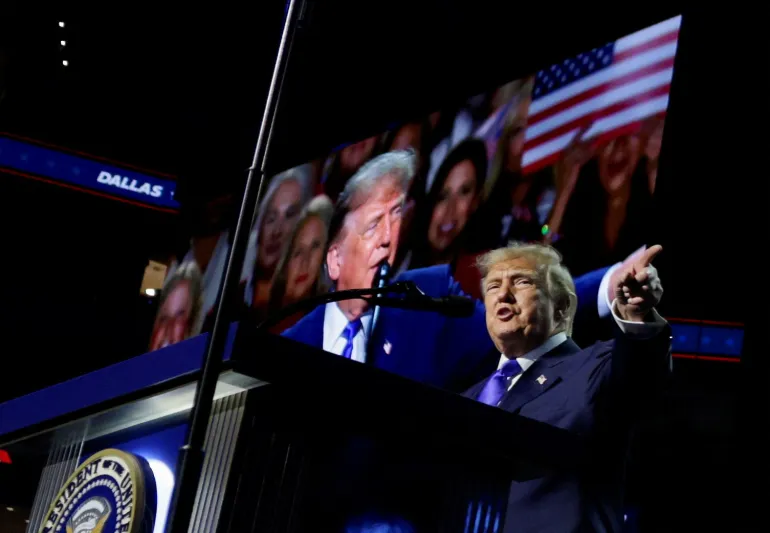
President Trump speaks at the Republican National Midterm Convention in Dallas, Texas, US, September 9, 2026 [Evan Vucci/Reuters]
What are mail-in votes?
Voting by post works by sending ballots to the homes of registered voters, who then mail them back before a deadline.
Eight states, several of them Democratic-leaning – California, Colorado, Hawaii, Nevada, Oregon, Utah, Vermont and Washington – as well as the District of Columbia, allow all elections to be conducted entirely by mail.
Others only allow smaller elections to be conducted by mail.
Although there are cases of forgery or repeat voting, they are rare and amount to just four in 10 million mailed votes, according to the Brookings Institution.
What has Trump said about the mail-in votes?
Trump falsely blamed his 2020 presidential election loss on mail-in voting fraud. He and his supporters also opposed changes made during the COVID pandemic to expand mail-in voting.
During the 2020 Republican National Convention, Trump called mail-in voting changes “the greatest scam in the history of politics”.
His attempt to push the SAVE America Act, which calls for sweeping voting laws, has stalled in the US Senate. The bill, passed in the House of Representatives in February, faces opposition over concerns that millions of voters will be disenfranchised.
How did Trump target mail-in votes?
In March 2026, Trump signed an executive order directing the US Postal Service to take control of mail voting by designing new envelopes with special barcodes that would allow the federal government to ensure ballots are only from eligible voters.
For the midterms, that move would force all states to adopt a uniform envelope style in a short time.
The order also required states to provide the US Postal Service with a list of eligible voters ahead of elections. Several government departments, including Homeland Security and US Citizenship and Immigration Services, would also have the voters’ lists.
The postal agency was additionally empowered to deny mailed ballots if they did not comply with new standards or were not associated with registered voters on the states’ lists.
What happened to the order?
Democrats and activists challenged the order in several courts, resulting in a series of back-and-forth rulings between May and August.
US District Judge Indira Talwani imposed an injunction against the rule in June on the basis that it likely violated the US Constitution. Talwani also noted in her injunction that Trump’s executive order would be impossible to apply when the midterms were already so close.
But her ruling was overturned by the conservative-majority Supreme Court in late August in a temporary judgement.
The Supreme Court had not decided at the time whether Trump’s move was constitutionally legal. Rather, it only sided with the Trump administration on procedural grounds after the administration argued that Democrats sued too soon.
What does the latest judgement mean?
In the latest and final decision, the Supreme Court refused to lift Judge Talwani’s injunction.
In a brief written order that did not go into detail, the court noted that the administration was likely to fail in its push to restrict mail-in votes ahead of the midterms.
Justice Brett Kavanaugh, who was appointed by Trump, voted with the majority against the administration, though he indicated he could support the policy at a later stage. Two judges, Samuel Alito and Clarence Thomas, dissented.
Critics have long warned that restricting mail-in ballots could disenfranchise some voters who typically rely on this method.
It could also disrupt the delivery of mailed votes, as some states, including Alabama, North Carolina and Wisconsin, have begun sending in midterm ballots.
The ruling says the Energy Department exceeded its authority by extending the plant’s operation.
Published On 12 Sep 202612 Sep 2026
A federal appeals court has ruled that the United States Energy Department exceeded its authority when it ordered a coal-fired power plant in the US state of Michigan to remain open beyond its planned retirement, dealing a setback to the Trump administration’s effort to keep ageing coal facilities operating.
The US Court of Appeals for the District of Columbia Circuit ruled unanimously on Friday that there was no emergency under federal law that justified keeping the 64-year-old JH Campbell Generating Plant online. Energy Secretary Chris Wright invoked emergency powers last year, arguing that the plant was needed to maintain reliable electricity in the region.
Recommended Stories
list of 3 itemsend of list
President Donald Trump declared a national energy emergency in an executive order in January last year, citing demand increases from artificial intelligence and data centre growth.
Judge Cornelia Pillard, writing for the three-judge panel, said the emergency provision of the Federal Power Act was intended as a “narrow, last-resort backstop.” She said the authority could be used only when immediate action was required, and states or utilities could not address the problem themselves.
Pillard also described the reversal of the plant’s “long and carefully planned retirement” as “disruptive”.
The plant, operated by Consumers Energy, had been scheduled to close in May 2025, but the company has continued operations under energy department orders. That has cost about $259m, according to financial filings, with opponents warning that the expense could ultimately fall on families and businesses in midwestern US states.
The company told The Associated Press it was reviewing the court ruling.
Michigan Attorney General Dana Nessel, a Democrat, whose office joined counterparts in Illinois and Minnesota in challenging the orders, welcomed the ruling. She said the appeals court had “thrown out DOE’s order that had zero basis in reality”.
The Energy Department defended its use of emergency powers, saying the orders helped prevent blackouts and “likely saved hundreds of lives” during periods of peak demand, particularly during severe winter storms in late January and early February.
The department said that during the winter storm peak, coal generation in affected areas increased by 25 percent compared to the previous year.
The Michigan case is one of several legal disputes that have emerged across the country. Secretary Wright issued another emergency order, just hours after the ruling, to a coal plant in Centralia, Washington, to remain in operation. Similar orders have been issued for plants in Indiana, Colorado and Florida, as well as an oil and gas plant in Pennsylvania.
Members of the high court have exchanged accusations after one justice was accused of involvement in a bank scandal.
By AFP and The Associated Press
Published On 11 Sep 202611 Sep 2026
Brazil’s Supreme Court has cancelled a second straight day of deliberations as suspicions of corruption, political bias and police interference loom over several of its members.
Cancellations are rare at the high court. But on Thursday, Chief Justice Luiz Edson Fachin nixed a second consecutive session, calling for the court to reconvene on Tuesday instead.
Recommended Stories
list of 3 itemsend of list
The decision was spurred by an ongoing crisis among the court’s members.
The divisions emerged on September 1, when one justice, Andre Mendonca, unsealed a series of federal police documents that appeared to show a disgraced banker, Daniel Vorcaro, seeking advice from another justice, Alexandre de Moraes.
De Moraes has rocketed to prominence in recent years for his roles in high-profile cases.
He presided over the trial of former President Jair Bolsonaro after prosecutors accused the far-right leader of plotting a coup following his 2022 election defeat. De Moraes also oversaw suspensions of platforms like X and Rumble for failing to abide by court orders, making him a target for Brazil’s right wing.
The document release authorised by Mendonca, a Bolsonaro appointee, contains roughly 30 text messages sent to a phone number associated with de Moraes, allegedly from Vorcaro.
In response, de Moraes has accused Mendonca of abusing his authority on the court for political gains. He requested a probe into whether Mendonca interviewed Vorcaro without the presence of police or prosecutors.
Tuesday’s session will involve the full Supreme Court bench, and 10 of the justices will discuss whether the 11th member, de Moraes, should be investigated over the text messages.
The tit-for-tat on Brazil’s high court is the latest fallout from the Banco Master corruption scandal.
Vorcaro, the head of the Banco Master financial institution, was arrested in November 2025 on accusations he defrauded investors of billions in lost funds, in one of the biggest banking scandals in the country’s history.
The collapse of Banco Master’s private banking arm left behind more than $7bn in debt.
Lawmakers from across the political spectrum have become embroiled in the unfolding scandal as new details emerge.
The turmoil risks affecting October’s general elections, including a pivotal presidential election.
Left-wing incumbent Lula Inacio Lula da Silva is set to compete for the presidency against Jair Bolsonaro’s eldest son, Senator Flavio Bolsonaro.
Both Lula and Senator Bolsonaro have called for investigations into the Supreme Court justices.
The Bolsonaro family itself has been dragged into the Banco Master scandal. In May, the publication Intercept Brasil released a report showing that Senator Bolsonaro petitioned Vorcaro for funds to finance a film about his ex-president father, who is now serving a 27-year prison sentence.
Senator Bolsonaro has denied wrongdoing, claiming he did nothing more than seek private sponsorship for the film, entitled Dark Horse.
But on Thursday, Brazilian police executed dozens of raids related to the Banco Master scandal, including some that targeted two figures involved in the film: Karina Gama, the head of a production company, and Congressman Mario Frias, who served as executive producer.
Senator Bolsonaro has called the probes “attempted political interference” ahead of the elections.
Venezuela’s former first lady, Cilia Flores de Maduro, has asked a judge to release her from federal detention in the United States, citing a worsening heart condition.
In an application for pre-trial release on Wednesday, her legal team asked for the court to allow Flores to await trial under home confinement in Manhattan.
Recommended Stories
list of 3 itemsend of list
It described her declining health since US military operation on January 3 that resulted in her abduction from Caracas and imprisonment in New York, as well as that of her husband, former Venezuelan President Nicolas Maduro.
“Prior to the United States’ military invasion of Venezuela, Ms. Flores de Maduro was physically healthy and took no ongoing medication, other than a monthly injection to help control her mitral valve prolapse,” the legal filing said.
“Now she is prescribed four medications, maintains nitroglycerin by her side in the event of a potential heart attack, and grapples with the continued medical advice suggesting coronary exploration and surgery.”
Flores was a prominent figure in her husband’s government, serving as first lady since his inauguration in 2013.
Prior to Maduro’s first inauguration, she was also a leading member of the United Socialist Party of Venezuela (PSUV), the country’s dominant political movement, leading the National Assembly for more than four years.
But Maduro had long clashed with the administration of US President Donald Trump, who accused Venezuela of sending drug-traffickers into the US. Both Maduro and Flores have also faced allegations of participating in human rights abuses, including the violent suppression of political dissent.
After launching a one-day military operation to abduct Maduro and Flores, the Trump administration charged them both with drug- and weapons-related charges. They are currently awaiting trial in New York City.
But Flores’s health has been in doubt since her forced removal from Venezuela, according to her legal team.
After consulting outside medical experts, Flores’s lawyers said they believe she may have suffered a minor heart attack on July 29 while in US custody.
They also questioned whether she was receiving the appropriate medical care for her mitral valve prolapse, a condition affecting one of the heart’s valves.
Since her imprisonment, her lawyers said Flores has not received the monthly injection she needs to manage the condition.
Instead, she has reportedly been prescribed baby aspirin, a statin, diltiazem and nitroglycerin to use when she experiences chest pain.
Doctors have recommended that she undergo a cardiac procedure, which could result in additional heart operations. If she undergoes such treatment, Flores “will need adequate time to recover from any procedures in a setting conducive to restoring her health”, her lawyers said.
Thursday’s filing acknowledges that Flores does not “dispute that she has received excellent care” from medical professionals. But it argues that “a detention centre lacks the conditions needed for such a recovery”.
Her lawyers proposed moving Flores from the Metropolitan Detention Center in Brooklyn to a residence within the Manhattan federal court district, where she and Maduro are due to go on trial next June.
Under home detention, Flores would be subject to round-the-clock armed monitoring, with visits restricted to people approved by the court and federal prosecutors. Her home would also be monitored by video and her phone calls recorded, according to the filing.
Judge Alvin K Hellerstein has yet to rule on the application.
Flores, 69, and Maduro, 63, have been held in US custody since the January raid on their home in Caracas. Both have pleaded not guilty to the charges of participating in a conspiracy to traffic cocaine into the US.
Court also acquits Dow Jones on the charge of dismissal over Selina Cheng’s leadership role with the Hong Kong Journalists Association.
Published On 10 Sep 202610 Sep 2026
A Hong Kong court has convicted Dow Jones for trying to deter a journalist from taking a union role, but also acquitted the publisher on the charge of dismissal over the role, in a case that raised concerns about media freedom in the city.
Selina Cheng, who was fired by the Wall Street Journal (WSJ) in July 2024, had accused the newspaper’s publisher Dow Jones of unlawfully terminating her employment over her role chairing the Hong Kong Journalists Association (HKJA) and of trying to prevent her from standing for a union position.
Recommended Stories
list of 3 itemsend of list
The court found the company guilty on Thursday of trying to prevent Cheng’s right to run for the union chairmanship.
However, the judge sided with Dow Jones’ argument that she was made redundant because of corporate restructuring, and not due to her role as HKJA chair.
The right to take part in a trade union is protected by Hong Kong’s labour laws. An employer found guilty on “prevent or deter” charges could be fined up to 100,000 Hong Kong dollars ($12,755).
“If reporters’ employment rights are not sufficiently safeguarded, or when their rights are violated and not enforced in law, then we can no longer work safely as reporters,” Cheng told reporters outside the court after the ruling.
The judge said the company’s requirement that Cheng seek prior permission to take a union role was an “unjustified deterrent” of her rights.
Dow Jones said it disagreed with the ruling and was evaluating next steps.
“The Wall Street Journal has a long and proud history as an employer in Hong Kong. Throughout that time, we have remained deeply respectful of its labour laws and supportive of our employees’ rights, while publishing excellent, impartial journalism about the region,” a spokesperson said.
Sentencing is expected to be handed down at a later date.
Cheng launched a private prosecution last year for illegal termination, after filing a complaint with the Labour Department that did not result in a prosecution.
Founded in 1968, the HKJA is Hong Kong’s longest-established journalists’ organisation and one of the last remaining groups advocating for media rights in the city.
Although Hong Kong was once known for its independent news outlets, media freedom has come under strain and many outlets have disbanded since Beijing imposed a 2020 national security law following sometimes violent pro-democracy protests, according to international rankings and HKJA surveys.
Allegations of misconduct between two justices threaten to pull court into political battles ahead of upcoming election.
Published On 8 Sep 20268 Sep 2026
Brazilian Supreme Court Justice Andre Mendonca has ordered the suspension of federal police chief Andrei Rodrigues and the force’s intelligence chief Leandro Almada amid growing divisions that have tested the credibility of the country’s highest court.
The suspensions were announced on Tuesday. Mendonca, appointed by former right-wing President Jair Bolsonaro, has accused Rodrigues and Almada of producing six illegal reports on the activities of justices.
Recommended Stories
list of 3 itemsend of list
The move was backed by a majority on one of the high court’s five-member panels.
But it is likely to be challenged by the government, possibly pulling the administration of leftist President Luiz Inacio Lula da Silva into a political battle ahead of October’s presidential election.
“Investigating possible evidence of crimes is correct,” Institutional Relations Minister Jose Guimaraes, a top aide to Lula, said in response to the decision on social media. “But this measure smells electoral to me. That cannot happen.”
Polls show Lula and Jair Bolsonaro’s eldest son, Senator Flavio Bolsonaro, in a tight race ahead of the first round of voting on October 4.
The Supreme Court has been roiled by mutual accusations of wrongdoing between Justice Alexandre de Moraes, appointed under centre-right President Michel Temer, and Mendonca, a Bolsonaro appointee.
De Moraes has become a prominent target of right-wing criticism, particularly after he oversaw the case against Jair Bolsonaro for plotting a coup after the 2022 election.
A report detailing possible links between de Moraes and disgraced banker Daniel Vorcaro was made public by Mendonca last week.
De Moraes, however, responded by accusing Mendonca of abusing his power, citing federal police intelligence reports and urging the court to investigate him. Mendonca has now challenged the legality of those reports.
The Vorcaro corruption scandal has widened to include powerful political figures on both the left and right.
Vorcaro was arrested in 2025 for allegedly overseeing one of the largest bank fraud schemes in the history of Brazil, leaving billions in owed money.
Flavio Bolsonaro has also faced scrutiny for his ties with Vorcaro, after he approached the banker for assistance in funding a film about his father. Jair Bolsonaro is currently serving a 27-year prison sentence.
The right-wing senator used Tuesday’s suspension to push his claim that the prosecution of his father was a political “witch-hunt”. The Federal Police had recommended charges be brought against the elder Bolsonaro in November 2024.
“Lula’s special group in the Federal Police officially unmasked,” Senator Bolsonaro wrote in a social media post. “May the honourable and glorious Federal Police regain its autonomy to go after criminals, and not Lula’s political adversaries.”
William Marcel Murad, the federal police’s executive director, released a statement saying that Rodrigues has the agency’s “full confidence” and that agents “will not be shaken by attacks”.
Investors, however, are more bullish on the eatertainment model than they are on traditional restaurants, Camillo says.
“A padel [another racket sport rising in popularity] court or a bowling lane is a much more durable, less trend-driven revenue stream than a dining room seat, and it comes with better real estate economics. It’s not competing purely on per-seat turns. F&B just juices the model on top of that.”
Private equity isn’t just investing in dine-in pickleball concepts because the sport is popular among Americans. Landlords are eager to lease to pickleball concepts for multiple reasons. Large indoor pickleball facilities can absorb anywhere from 30,000sq ft (2,800sq metres) to 70,000sq ft (6,500sq metres), giving new leases of life to former sites of shuttered big-box retail stores, department stores and grocery stores. Look at where many of these pickleball venues are located on a map, and you’ll see that they frequently correlate with suburban developments needing traffic.
Pickleball is “a draw for strip centres and malls as well as it brings in traffic where people will shop and eat after they are finished”, says Jeff Lichtenstein, CEO and broker at Echo Commercial Properties. “In South Florida, there is a lot of demand for this, especially in the summertime or when it rains as the country clubs and other communities don’t have indoor facilities. People need AC to play in the summer.”
In other words, investors aren’t simply betting on pickleball remaining popular. They’re betting that these venues can generate recurring revenue while helping revive struggling retail corridors. The business appeals to landlords and investors for the same reason it appeals to customers: It keeps people in one place longer.
For consumers, that extra time translates into something that has become increasingly difficult to find in the restaurant industry: value. Indeed, when dinner is paired with a fun activity, patrons are happier to hand over their credit card: 21 percent of Americans said they were willing to pay more at an eatertainment venue than at a traditional restaurant, according to a 2019 study conducted by SevenRooms, a data-driven hospitality platform.
“These eatertainment venues, pickleball or otherwise, are very popular now as people look for greater value when dining out,” says Maeve Webster, president of the food industry consultancy Menu Matters.
“Restaurants have been struggling with prices, quality, consistency and, as a result, their value proposition,” Webster added. “Places like this offer guests more than just a meal, which makes for a far greater value proposition. And all of this is coming at a time when people are placing a far greater emphasis on experiences and human connections.”
Increasingly, meeting up has become about more than just eating and drinking; people want to do something together. OpenTable, an online platform for learning about restaurants and booking reservations, reports a 46 percent year-over-year rise in experiential dining from 2024 to 2025, with 37 percent of consumers saying they wanted more of it in 2026.
The Physical Activity Council, which conducts an annual study to establish levels of personal activity and identify key trends in sports, fitness and recreational participation in the US, estimates that since 2020, the number of “inactive” Americans has dropped by 13.6 million, or 18 percent.
Those changing habits have helped eatertainment concepts attract private equity interest. But these firms must ensure return on their investment, which has increasingly taken the form of private corporate events and membership models. Monthly membership fees at the nation’s most popular dine-in pickleball venues range from $75 to $149 a month but include perks like food and beverage discounts and dedicated court times.
“From a recurring revenue perspective, when you make it a subscription, the business can forecast revenue more accurately,” Bhasin says. “They’re not making margin off the superusers. The users who only come in every couple weeks are where they make their margin.”
We’ve seen the recurring membership model become standard at country clubs, golf courses and bowling leagues. The more successful these businesses become financially, the more exclusive they risk becoming socially.
Bhasin hopes pickleball club operators can find ways to preserve affordability.
“My request to private equity companies is: Can we find a way to offer deals?” Bhasin says. “It’s meant to be a ubiquitous experience, but the prices are a barrier to entry.”
Still, a dine-in pickleball venue membership is much more affordable for the average American than, say, a country club, where monthly dues can range from a few hundred dollars to $2,000 on top of a hefty initiation fee.
Electric Pickle offers free court reservations every day until 4pm from June through August. The promotion makes the experience more affordable, but it’s also smart business strategy. If most guests visit in the evening, free daytime court reservations may generate food and beverage sales that otherwise wouldn’t exist.
The Missouri Supreme Court has unanimously blocked a congressional map backed by United States President Donald Trump ahead of November’s midterm elections, restoring the state’s previous districts.
Thursday’s ruling delivered a rare judicial rebuke to Trump in the national battle over redistricting. But it is unlikely to be the final word in the case, with Republican officials already pledging to appeal the ruling.
Recommended Stories
list of 3 itemsend of list
At the heart of the case is a congressional map signed into law in September 2025, designed to help Republicans win an extra seat in the US House of Representatives this year.
But the partisan redistricting effort prompted a popular backlash, with nearly 300,000 Missouri residents signing a petition to instead put the new map to a vote.
Missouri’s Secretary of State Denny Hoskins rejected the petition as legally insufficient. That set up the legal fight, which the Missouri Supreme Court decided on Thursday.
“The referendum petition was legal, sufficient, and timely, and the secretary incorrectly concluded otherwise,” the court wrote in its ruling.
It added that the Missouri Constitution has made such petitions legal, and “no exception applies”. The court is staffed by seven judges, five of whom are Republican-appointed.
The decision, however, places Missouri in a complicated position. Two months remain until the midterm elections, and ballots will soon be printed.
There are also outstanding legal questions over whether a state’s general election can use different congressional districts than its primaries did.
Missouri Attorney General Catherine Hanaway, a Republican, said she would immediately appeal the ruling to the US Supreme Court. She called Thursday’s decision a “full-fledged constitutional crisis”.
“Never before in American history has a court overturned a congressional map after a primary and before a general election,” she said in a statement.
Trump also denounced the ruling in a social media post, calling it “horrible, ridiculous, and unConstitutional”.
“The Missouri Supreme Court just ridiculously ruled in favor of changing the maps back to what they were a long time ago. It’s called, Ancient History,” he wrote.
Last year, Trump triggered the nationwide redistricting fight when he approached Texas state lawmakers to redraw their maps in a way that would give Republicans an advantage.
Normally, congressional maps are redrawn once every 10 years to reflect census results.
But Trump encouraged Republican-led states to issue new maps mid-decade, as a strategy to help the right-wing party maintain control over the House.
Some 10 states ultimately decided to redistrict, including Missouri. Most tilted in favour of Republicans. California, meanwhile, redrew its map to skew Democratic.
Prior to Thursday’s ruling, Missouri’s Supreme Court affirmed that the special legislative action to change the state’s congressional map was lawful. In the US, no federal law bars partisan redistricting, known as gerrymandering.
But Thursday’s decision upheld the legality of the petition campaign to put the map up for a vote.
The Missouri Supreme Court barred the 2025 map from being used in November’s midterm election or any future election until Missouri voters approve it first.
The group People Not Politicians spearheaded the referendum petition. In a statement on Thursday, it applauded the state court’s decision, which overturned a lower court ruling.
“Supreme Court of Missouri has ruled: Missourians will vote on politicians’ rigged map,” the group wrote on social media.
It also blamed Missouri’s secretary of state for any hurdles to restoring the old map.
“Hoskins had the power to prevent all this confusion months ago — and he chose not to,” the group said.
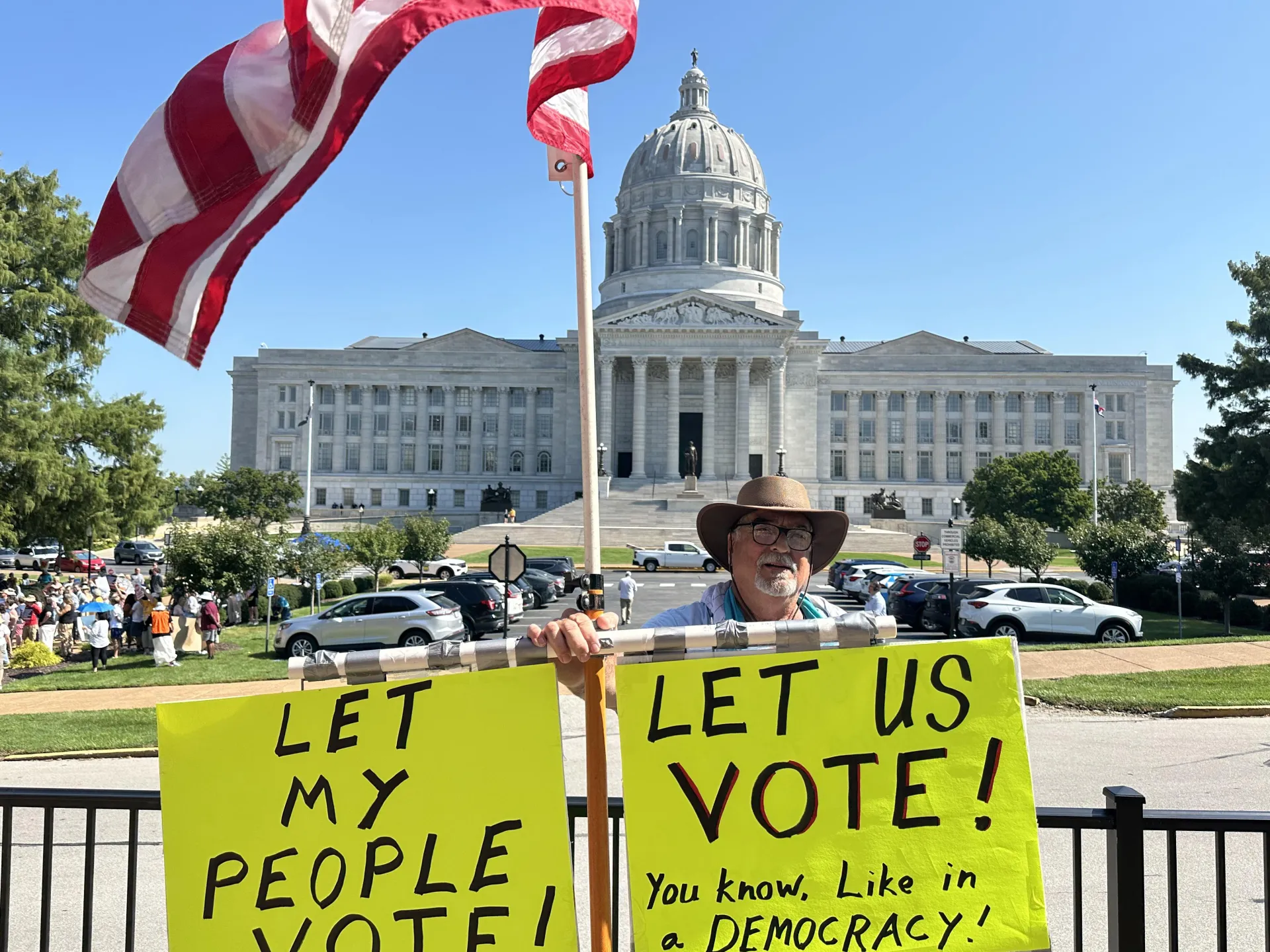
A day before the court’s ruling, hundreds of people rallied outside the state Supreme Court, chanting: “Let us vote!”
Grant Christensen, a resident of Jefferson City and referendum supporter, said he had signed the petition.
“Gerrymandering is the same as voter suppression,” Christensen said. “Cutting up districts in order to steer them to vote one way or the other is not fair.”
Missouri’s 2025 congressional map had already shaped the state’s primary elections. Critics, however, point out that Hoskins did not reject the referendum until August 4, the day of the party primaries.
The outcome of the legal battle is likely to be most pivotal for Missouri’s 5th congressional district, currently held by Democrat Emanuel Cleaver. His district, which encompasses parts of Kansas City, was reshaped to favour Republicans.
Ousted Venezuelan President Nicolas Maduro has urged a United States judge to dismiss the criminal drug trafficking charges against him, arguing he should be immune from prosecution as the head of a sovereign country.
Maduro’s lawyer, Barry Pollack, made the appeal in a Manhattan district court on Wednesday.
Recommended Stories
list of 3 itemsend of list
His legal team has petitioned District Judge Alvin Hellerstein to dismiss the case, which will test the willingness of US courts to apply international law to criminal cases.
Maduro was abducted and imprisoned on January 3, after US President Donald Trump authorised a military raid in Caracas. The former Venezuelan leader, who has been held in a Brooklyn federal jail, has pleaded not guilty and is scheduled to go on trial on June 1, 2027, if his effort to dismiss the case is unsuccessful.
The principle that sitting heads of state are immune from prosecution abroad is a longstanding tenet of international law, seen as fundamental to diplomacy.
Judge Hellerstein had given Pollack a Wednesday deadline to file his motion to dismiss the case.
Pollack has argued that Hellerstein lacks jurisdiction, both because sovereign heads of state enjoy complete immunity and because the acts that Maduro is accused of would have been part of his official duties.
“This unprecedented prosecution violates the absolute immunity from criminal jurisdiction to which heads of state and foreign officials acting in their official capacities have been entitled for hundreds of years,” Pollack wrote.
Pollack added that Maduro was falsely accused and “vehemently denies” the allegations.
A spokesperson for the Manhattan US Attorney’s office, which brought the charges, did not immediately respond to a request for comment.
Maduro faces uphill battle
Legal experts have told the Reuters news agency that Maduro faces an uphill battle.
Washington has not recognised Maduro as Venezuela’s president for years, due to disputed elections. Courts tend to defer to the US president and his cabinet in disputes over who is recognised as a foreign country’s leader.
US criminal cases involving heads of foreign states are extremely rare, but precedent offers little encouragement for Maduro. In 1990, a federal judge in Miami rejected former Panamanian military leader Manuel Noriega’s attempt to assert head-of-state immunity, in part because he never officially held the title of president.
The US stopped recognising Maduro in 2019, when he was inaugurated for a second time after a 2018 election that critics say was rigged. Washington also called his 2024 re-election fraudulent.
Maduro says both votes were fair and has long accused the US of seeking his ouster to gain control of the South American country’s oil wealth.
Pollack, however, wrote that Washington’s assessment that Maduro lacked legitimacy was not relevant.
“Unlike in Noriega, the Executive Branch does not dispute that Mr Maduro was Venezuela’s head of state, but instead merely claims that, after 2019, he did not occupy that position legitimately,” Pollack wrote.
Venezuela run by Maduro’s vice president
Since Maduro’s abduction, his former vice president and socialist ally, Delcy Rodriguez, has run Venezuela as its interim leader.
She has also increased cooperation with the Trump administration. Last month, the two countries reached an unprecedented deal that would see the US take over about one-fifth of Venezuela’s oil reserves.
Pollack wrote that it was “incongruous” for the US to recognise Rodriguez, who was appointed by Maduro, and not Maduro himself. He pointed to statements by Rodriguez and officials in her government, made in January and February, indicating that they still considered Maduro Venezuela’s legitimate head of state.
Rodriguez’s government has since gone silent on the matter. Some murals of Maduro in Caracas have been painted over in recent months.
Prosecutors have until October 2 to respond to Maduro’s motion to dismiss the indictment, and Hellerstein will hold a hearing on the dismissal effort on November 17.
The ruling follows a 6-3 decision from the Supreme Court that found Trump’s effort to limit birthright citizenship was illegal.
Published On 3 Sep 20263 Sep 2026
A United States federal judge in Maryland has blocked President Donald Trump’s latest effort to roll back birthright citizenship, after the Supreme Court ruled that his last attempt violated the Constitution.
District Judge Deborah Boardman issued a preliminary injunction on Wednesday against Trump’s new executive order, which was issued on August 6.
Recommended Stories
list of 3 itemsend of list
The new order took aim at what Trump has called “birth tourism”, the practice of intentionally giving birth on foreign soil.
It sought to deny citizenship to children of foreign nationals in certain groups, including those accused of engaging in a commercial transaction to obtain citizenship or classified as an “alien enemy”.
Boardman, however, said the order was unconstitutional for the same reason Trump’s previous effort failed. She cited the Supreme Court’s June decision in the case Barbara v Trump.
The order “is almost certainly unconstitutional as applied to the certified class for the simple reason that the Supreme Court in Barbara already decided that the children in the class are citizens at birth”, she wrote.
“This Court must, once again, preliminarily enjoin enforcement of the President’s most recent attempt to strip the right to citizenship from them.”
In the Barbara case, the Supreme Court ruled six to three that birthright citizenship was protected under the Fourteenth Amendment of the Constitution.
Birthright citizenship confers automatic citizenship on anyone born in the US, outside of a handful of narrow exceptions, such as the children of diplomats or invading armies.
The constitutional basis for birthright citizenship has been upheld in several Supreme Court cases over the years, most notably in US v Wong Kim Ark, the case of an American man born to Chinese parents.
But Trump campaigned for a second term as president on the pledge to crack down on immigration into the country.
One of his promises was to reform the concept of birthright citizenship. Trump and his allies have argued that children of temporary or undocumented immigrants do not qualify for the right, as they are not under the “jurisdiction” of the US.
Since the Supreme Court defeat in June, Trump and his allies have continued to probe for ways to challenge the constitutional protections for birthright citizenship.
Wednesday’s legal challenge was brought by immigrant rights advocates and families, including groups like the Asylum Seeker Advocacy Project.
They had previously won an injunction from Boardman last year, blocking the Trump administration from enforcing his initial executive order about birthright citizenship.
Last week, Boardman instructed the plaintiffs to revise their complaint to specifically address the second executive order, rather than relying on the same material used for the first.
But she signalled scepticism at the time about the constitutionality of Trump’s latest attempt, calling it “unprecedented”.
“The Supreme Court has spoken: Children in the certified class are ‘citizens at birth’,” she wrote in Wednesday’s decision.
Multiple new cases have been filed against OpenAI, alleging ChatGPT played a role in the Tumbler Ridge mass shooting.
Published On 2 Sep 20262 Sep 2026
OpenAI is facing another wave of lawsuits in the wake of the February mass shooting in Tumbler Ridge in Canada’s province of British Columbia, which left eight people dead.
On Wednesday, 30 new complaints were reportedly filed in a United States federal court in California, including teachers and students who were witnesses and survivors at the school where most of the shooting took place, joining seven initial lawsuits filed in April.
Recommended Stories
list of 4 itemsend of list
The lawsuits accuse the San Francisco, California-based artificial intelligence giant and its CEO, Sam Altman, of negligence, as well as aiding and abetting a mass shooting.
The suits, brought by lawyer Jay Edelson, allege that the company knew about the intentions of the 18-year-old shooter who, in her interactions with OpenAI’s chatbot ChatGPT, had described scenarios involving gun violence, but that the leadership did not report their concerns to law enforcement, echoing earlier lawsuits on the matter.
In April, Altman penned a letter to the community apologising that the company did not alert law enforcement about the shooter, Jesse Van Rootselaar.
“While I know words can never be enough, I believe an apology is necessary to recognize the harm and irreversible loss your community has suffered,” Altman wrote in the letter.
Authorities say that Van Rootselaar killed her mother and half-brother before going to the Tumbler Ridge Secondary School and opening fire. Five children and one educator were killed at the school. More than 25 others were wounded before Van Rootselaar died from what police described as a self-inflicted gunshot wound.
One of the new cases filed was on behalf of a 13-year-old identified as A C, who played dead after watching the shooter kill their classmates and the teacher. Another new case was brought by a grade seven teacher named Deidre Rushlow, who hid under her desk with her students during the rampage.
“There isn’t a day that goes by that I don’t think about what happened at Tumbler Ridge, or the victims of this devastating tragedy and their families. It’s a constant and sobering reminder of the important and incredibly difficult work that many people in my team do each and every day,” Jason Kwon, OpenAI’s head of strategy, wrote in a post on X on Wednesday.
“We’ve been approaching this litigation with respect for both the legal process and the families and victims of this tragedy, and we’ll continue to engage in good faith with that process.”
Edelson did not respond to Al Jazeera’s request for comment.
Growing legal pressure
In July, British Columbia’s Attorney General Niki Sharma announced that the province would also pursue “all legal avenues to hold OpenAI and its decision-makers accountable” for the shooting.
The company has faced a growing slate of suits, apart from the ones from British Columbia, alleging that its product played a role in incidents that led to users harming others and themselves.
A recent lawsuit in Florida alleges that the company “actively assisted and encouraged the mass shooting” at Florida State University in April 2025.
There are other complaints filed on behalf of victims across the US and Canada alleging that the victims took their own lives after being pushed by ChatGPT to do so, including a case in Quebec earlier this year.
The decision replaces a temporary order issued earlier this month.
Published On 31 Aug 202631 Aug 2026
A divided United States Supreme Court has allowed the White House to continue construction on a $400m ballroom project as lawsuits play out, a win for President Donald Trump as he flexes unprecedented executive power and remakes the capital in his image.
The apparent 5-4 decision replaces a temporary order that allowed construction earlier this month, shortly before a court-ordered halt would have gone into effect.
Recommended Stories
list of 3 itemsend of list
The temporary order was signed by US Chief Justice John Roberts, assigned to handle appeals from the capital. But he publicly disagreed with the latest decision, writing a strong dissent that referenced historical figures and calling the project “likely unlawful” because it has not been approved by Congress.
“Today’s decision is no victory for the separation of powers.” Roberts wrote. The court’s three liberal-leaning justices agreed.
The majority did not decide the legality of the project, but found that a preservation group likely did not have the legal right to challenge it. The unsigned opinion also cited the national security concerns that the government says the project would address.
The lawsuit will return to lower courts, but documents say that key portions of the project could be complete within months – a quick timeline compared with a typical legal case.
The Trump administration asked the justices to intervene after federal courts found the project must halt because it did not have congressional approval.
The lawsuit from the National Trust for Historic Preservation argued that Trump has no unilateral authority to undertake the work, which has included demolishing the East Wing. The group’s lawyers accused the White House of trying to “outrun the courts” by accelerating construction.
In lower courts, the Trump administration has argued that the president has total authority to renovate the White House and other federal buildings. Government lawyers said the ballroom project must be completed due to national security concerns, though those were not an initial focus when Trump announced the work and said it would be funded by private donations.
“This case involves an extraordinary and unlawful injunction that will halt the ongoing construction of the integrated military complex, including a totally secure ballroom space, at the East Wing of the White House, which is vitally required by national security,” the lawyers wrote in an August 14 filing.
The administration has said that crews are working 20 hours a day on the planned 8,400 square metre (90,000 square foot) ballroom. The framework is expected to be completed in November, and much of the facade done by April, with full completion slated for August 2028, according to court documents.
US District Judge Richard Leon ordered a stop to aboveground construction of the planned ballroom in April, though the order would allow work on bunkers and military installations below ground to continue. Leon was nominated by former President George W Bush, a Republican.
The ruling was suspended but later upheld by a divided appeals court panel. Two judges appointed by Democratic presidents found the project was for Congress to decide and “not a matter for Executive self-help”. A third judge, appointed by Trump, found that the preservationist group that challenged the project had no legal right to sue.
Solicitor General D John Sauer also made that argument to the justices and said the decision halting the work was “extraordinary and unlawful”. He said the completion of the project was “vitally required by national security.”
The administration has scored a series of other victories on the high court’s emergency docket, though the justices have ruled against some of the president’s signature policies after fuller review.
The demolished East Wing housed the first lady’s offices and the White House movie theatre. It was originally built in 1902, during Theodore Roosevelt’s presidency, and greatly expanded in 1942, during Franklin Roosevelt’s presidency.
Court order rules that Pentagon acted illegally, punishing AI company for criticism of government.
Published On 28 Aug 202628 Aug 2026
A United States judge has blocked the Pentagon’s blacklisting of technology company Anthropic.
In a 59-page written order issued on Thursday night, District Judge Rita Lin ruled that the Department of Defense had acted illegally when it designated the company a supply chain risk to national security.
Recommended Stories
list of 3 itemsend of list
The decision marks the latest turn in the Claude maker’s high-stakes fight with the US military over artificial intelligence safety on the battlefield. The government is expected to fight the ruling.
The judge’s order rebuked the Pentagon, saying it had targeted and punished Anthropic for the company’s public criticism of the Defense Department’s stance on AI deployment on the battlefield.
“The empty invocation of national security is not a blank check to punish and retaliate against government critics,” Lin, an appointee of former President Joe Biden, wrote.
Autonomous weapons and domestic surveillance
Anthropic’s lawsuit in a California federal court alleges that Defense Secretary Pete Hegseth overstepped his authority when he designated the company a national security supply-chain risk.
Hegseth’s move, which blocked Anthropic from military contracts, followed the company’s refusal to allow the military to use its Claude AI models for US surveillance or autonomous weapons.
Anthropic argues that AI models are not reliable enough for autonomous weapons and opposes domestic surveillance. The Pentagon maintains that private companies should not constrain military action.
Executives have said the ban could cost the company billions of dollars in lost business.
During a hearing on July 30, Lin described the government’s position as “really troubling” and “at odds … with the First Amendment”, adding that the record had “gotten worse for the government” over time.
In the same hearing, Department of Justice lawyers argued that the nature of AI models is “so staggeringly enormous and opaque” that the Pentagon cannot evaluate them like physical hardware.
First use of obscure statute
Anthropic welcomed the ruling, stating it remained “focused on working productively with the government to harness AI for our national security so all Americans benefit from this technology”.
The designation was the first time a US company has been publicly labelled a supply-chain risk under an obscure procurement statute aimed at protecting military systems from foreign sabotage.
In its lawsuit, Anthropic alleged the government violated its constitutional rights to free speech and due process by retaliating against its views on AI safety without allowing it to dispute the claim.
The lawsuit called the decision unlawful, unsupported by facts, and inconsistent with the military’s past praise of Claude.
There was no immediate comment from the Pentagon on the ruling.
Meta has agreed to a landmark $18bn settlement in a major US federal case accusing it of endangering children, the terms of which will force the social media giant to introduce new safety features to platforms including Instagram and Facebook.
The social media giant has faced an avalanche of legal cases against it this year, mostly arguing that it deliberately designed its platforms to be addictive and that they have harmed children. It has already lost two of these and been forced to pay damages.
Under the agreement, child users under the age of 18 will see a slew of changes to their Facebook and Instagram accounts, ranging from night curfews to two-hour usage limits, which Meta must implement as part of the settlement reached on Wednesday with 48 US states.
The agreement could have a global ripple effect as several countries around the world are already taking regulatory action against Meta and other social media companies over their platforms.
So, what is in the settlement Meta has reached in the United States, and how will Instagram and Facebook change for users?
Colorado Chief Trial Counsel Jason Slothouber leaves the courthouse with team members after Meta Platforms agreed to a settlement to resolve claims by states across the US that the company designed those platforms to get children addicted, in Oakland, California, the United States, August 26, 2026 [Manuel Orbegozo/Reuters]
What was the lawsuit about?
Twenty-nine US states sued Meta, accusing it of designing its platforms in ways that “encourage addictive behaviour, fail to verify users’ ages, encourage adolescents to bypass parental controls, and inadequately safeguard against harmful content and/or intentionally amplify harmful and exploitative content”, according to filings at the Court of Appeal in California.
The first four of the states that originally filed their federal lawsuit against Meta in 2023 – California, Kentucky, Colorado and New Jersey – began their cases in a California federal trial last week.
The attorneys general bringing the case also asked the court to order that changes be made to Meta’s platforms to protect young social media users. In particular, they demanded that Meta introduce a process of parental verification for teenage users; change its “dopamine-manipulating” algorithms; remove image filters for users’ personal images; forbid the creation of multiple accounts; and end “disappearing” messages and posts.
The lawsuit also alleged Meta had violated the Children’s Online Privacy Protection Act by collecting, retaining and using personal data from children under 13 without proper parental consent.
In February this year, Meta lost a multimillion-dollar case brought on similar grounds by a young woman referred to as KGM in Los Angeles, over platform features linked to addiction in younger users.
In March, a US jury ordered Meta to pay $375m for endangering children in a case brought by the state of New Mexico.
Last month, a judge in New Mexico also ordered Facebook and Instagram owner Meta to pay a further $567m in a second phase of the trial.
Witness Adam Mosseri, head of Instagram, leaves the courthouse as Meta faces a landmark trial in federal court in Oakland, California, the US, August 25, 2026 [Manuel Orbegozo/Reuters]
Meta denied wrongdoing but agreed to settle after evidence was heard that Meta knew its products harmed children’s mental health. The total payout – to be paid over 10 years – is a fraction of Meta’s 2025 revenue of $201bn.
The company, which was originally founded as Facebook in 2004 by Mark Zuckerberg, agreed to make maximum payments totalling $16.7bn to 47 US states as well as Washington, DC; Puerto Rico; American Samoa; and the Northern Mariana Islands.
Among those, California could receive a $2.2bn payout, while New York could receive $1.1bn. Texas reached a separate settlement worth more than $1bn. Some states will deposit funds they receive in general accounts, while others will earmark portions to address children’s mental health services.
The settlement does not require Meta to discontinue personalised recommendations or targeted advertising.
It also does not address some content researchers found particularly problematic, including posts that made Instagram users uncomfortable with their body image.
“Ensuring teens have a safe and productive experience on our platforms is an absolute imperative for Meta,” Meta said in a blog post. “We want to get this right for parents and teens.”
Novva Tolson, 15, and Annie Wang, 15, pose as they scroll through their social media feeds, in Sydney, Australia, July 14, 2026 [Jeremy Piper/Reuters]
What changes will be seen on Instagram and Facebook?
Under the agreement, children under 18 using Meta platforms will be restricted to two hours’ use per day, with a night curfew in place from midnight to 6am. Meta will limit “social comparison” features by hiding likes and reactions to children’s accounts, and will ban “cosmetic procedure filters” that alter the appearance of a user’s image, as a default setting. These settings will only be able to be overruled by parental consent.
The company also agreed to disable the majority of push notifications from the platforms during school hours – 8am to 3pm – for teenage users.
It will also facilitate much closer parental supervision of social media accounts by giving designated adults the ability to more extensively monitor and change settings on a social media account.
Parents and guardians will be able to receive information about time spent on platform apps, and usernames of social connections and accounts sending messages to children.
Supervising parents will also receive daily notifications from Meta any time the teen account messages an adult account for the first time, as well as a link to the adult’s account. Parental accounts will also be notified any time the teen account searches for keywords related to suicide, self-harm or eating disorders.
Meta also agreed to improve the technology used to check children’s ages, using its own as well as third-party tools, with regular outside audits on how well this monitoring is working. This measure is particularly notable because Australia banned under-16s from using social media platforms in December last year. However, the Australian internet watchdog, eSafety, found in August this year that more than eight in 10 young Australian teens and preteens continue to use them – largely because age-check procedures are ineffective.
So far, Meta has only agreed to pay 70 percent of the settlement, or roughly $12.7bn, over the next 10 years. It will only pay the remaining amount, about $5bn, if its rivals – including Snapchat, TikTok and Alphabet-owned YouTube – adopt similar measures and agree to pay the same. It also said it would reduce time restrictions to one hour per day if other platforms do the same.
These changes would be phased over time. Once the court approves the settlement, non-personalised feeds would be introduced within four months; broader compliance measures within six months; and major age-assurance requirements within one year.
While these changes will apply to users in the US, it is unclear if Meta plans to introduce them worldwide. However, Meta is already under rising regulatory pressure in European Union countries and those elsewhere to implement similar changes.
How much difference will these changes make?
Critics and child safety advocates have acknowledged that this settlement has forced landmark changes by Meta, the world’s biggest social media company, which owns Facebook, Instagram, WhatsApp and Messenger, each of which has more than two to three billion monthly active users.
However, critics say the central plank of Meta’s latest settlement deal is the move to restrict teens to two hours per day on platforms, rather than fundamentally changing their addictive algorithms.
Sacha Haworth, executive director of The Tech Oversight Project, which campaigns for youth safety online, said the deal is a “historic settlement that will have a lasting impact, but we cannot truly protect all children and teens until these protections are required on every platform and are permanent – that’s something only Congress can do”.
Ella Bradshaw, policy officer for child safety online at the NSPCC, a UK children’s charity, welcomed moves to rein in “addictive” design features like personalised algorithms and likes. “These are the things that we know keep children hooked and feeling out of control of their screen time, so action here is necessary and welcome. However, important gaps remain,” she told Al Jazeera.
Bradshaw described the settlement as taking “piecemeal action” on tackling risky features and addictive design choices which drive harm of children.
“This means features like disappearing messages, infinite scroll, the ability to gift and livestreaming remain unaddressed. Similarly, little has been announced on how Meta’s AI chatbots will be made safer – better guardrails are needed, particularly when children raise safeguarding concerns.”
Bradshaw also called for stronger protections for younger children as well as protections that “don’t suddenly drop away the moment a teenager turns 18.”
Furthermore, she said: “Not all children have families they can rely on to oversee their online worlds and help them to stay safe. We know that the issue of patchy online protections extends across the online world.
“This settlement must spur governments and regulators to go further faster; taking stronger action across the online ecosystem including private messaging, AI tools and online gaming. Without that wider shift, children will continue to face avoidable harm.”
What action are other countries taking against Meta?
While action against social media giants in the US is mostly taking the form of lawsuits, elsewhere it is regulators who are leading the charge.
In the European Union, regulators are pursuing several legal and regulatory cases against Meta, covering antitrust rules for artificial intelligence (AI) on WhatsApp, as well as child safety protections and addictive platform features under the Digital Services Act (DSA).
The EU specifically accused the group of designing Facebook and Instagram to be “addictive”, adding that Meta has failed to adequately assess the danger its products pose to users’ physical and mental health.
On Thursday, a European Commission spokesperson said it is waiting on Meta to present changes to limit the addictive designs of its social networks.
“We have been very clear … Meta knows what we are expecting from them. … the ball is in Meta’s court,” Thomas Regnier said. “Now it is for the company to offer these commitments in the European Union to protect our kids here, too.”
In June, the UK government also announced a sweeping ban on social media for those below 16 to come into force next year, following a global trend after Australia pioneered it. The UK is also considering overnight curfews and ways to prevent infinite scrolling for those under 18.
In Brazil, a prominent consumer rights organisation, the Collective Defence Institute, filed twin lawsuits for three billion reais ($525m) in damages against the Brazilian subsidiaries of Meta, TikTok and Kwai in October 2024.
Those lawsuits also accuse the groups of failing to implement safeguards against addiction and use by children and adolescents. Since March this year, platforms have been required to link the accounts of children below 16 to legal guardians under Brazil’s Digital Statute for Children and Adolescents.
South Korea’s media regulator also reacted on Thursday to Meta’s settlement, calling for better protections for young users to be ideally applied worldwide, rather than just in specific markets.