court pick

Should child rapists be released just because they’re old? Maybe

Murder is considered the worst crime out there, but for my money, it’s child rapists who are the worst of the worst — especially the serial ones who destroy one life after another.

That’s wholly subjective on my part, but I doubt I’m alone. Which is why I was far from surprised at the outrage that accompanied two recent, successful parole hearings for convicted serial child predators in Sacramento.

Gregory Lee Vogelsang, 57, and David Funston, 64, both attacked children and were granted parole through California’s elderly parole program — though both remain behind bars for now.

But the fury over the possibility of their freedom has put the state’s controversial elderly parole program under scrutiny — again — and led to a flurry of legislation to add new restrictions. Should sex offenders be excluded? Especially heinous murderers? Everyone under the age of 75?

It’s easy to answer “yes” to all of the above.

“Part of the problem we have is we shouldn’t be making policy decisions based on speculation and on scary rhetoric that’s disconnected from the facts,” Keith Wattley told me. He’s the founder and director of UnCommon Law, a nonprofit that provides legal services and parole advocacy.

“That’s how politicians make people afraid, but it shouldn’t be how we make law,” he said.

And he’s right, as grotesque as these headline-grabbing cases are. In 2024, there were 3,580 elderly parole hearings and 606 people were granted that relief. Most have remained law-abiding. In the 2019-20 year, the most recent recidivism statistics available from CDCR, 221 people were granted elderly parole. Within three years, only four had been convicted of new crimes, and only one of those was a felony for a crime against a person. That tracks with lots of data that shows men generally age out of violent crimes.

But Funston and Vogelsang are the worst of what we fear when we talk about parole, and their cases rightfully make us wonder what the heck the parole board is doing. Though Gov. Gavin Newsom sent both of these decisions back for review, it’s easy to imagine the attack ads should he run for president: Under Newsom’s watch, child rapists walked free.

“Elder parole has gone too far,” Thien Ho, the Sacramento district attorney whose office prosecuted both men, told me. “I support the opportunity of people to be rehabilitated. But I think that certain individuals, in my opinion, and in my experience, cannot be rehabilitated.”

Here’s where I’m going to make a lot of folks mad on both sides of this issue. I agree with Ho, but also, I agree with Wattley. I don’t think we can pass laws based on our grimmest view of humanity. Removing hope from the system turns our prisons into dungeons and does not ultimately serve public safety.

But then, neither does releasing child molesters into our communities.

Lost in all the wrath about these two cases is the difficult business of justice that led to the early release law in 2014, and any interest in the hard and nuanced conversation that we need to have around terrible crimes. It’s easy and popular to say no violent criminal should ever be released, but we can’t just lock up everyone with no possibility of ever getting out because the “R” in CDCR stands for “rehabilitation,” and also — we just can’t afford the forever scenario, morally or fiscally.

California tried the throw-away-the-key model in the 1980s and ‘90s and ended up with prisons so overcrowded that the federal courts stepped in. The original elderly parole effort came through a 2014 court decision on overcrowding that gave inmates 60 or older who had served at least 25 years a chance to go before the parole board. A chance — no guaranteed freedom, and usually it takes multiple hearings years apart before the board approves it.

Later, the Legislature expanded elderly parole to inmates 50 or older who had served 20 years, but excluded those sentenced under the “three strikes” law or those who had murdered peace officers.

The reality is California has a lot of old, aging and sick people behind bars — at great expense. As we grapple with the idea of universal healthcare, there’s one place in California where it already exists — our prisons and jails. We currently pay more than $41,000 in healthcare costs per inmate per year, according to the Legislative Analyst’s Office.

I’m not going to tell you it’s the best healthcare, but it’s taxpayer-funded, and includes even long-term dementia care. And yes, we do have incarcerated dementia patients.

“This is about reducing our prison population and our liability to cover housing and healthcare for an aging prison population, and we have to balance that with the safety of the community and the rights of victims,” state Assemblymember Maggy Krell (D-Sacramento) told me. She’s sponsoring a bill that would create an additional layer of safety around sex crimes by referring these possible parolees to the civil system that evaluates sexually violent predators for confinement in mental facilities after their prison terms.

“Under some circumstances, it is worth considering paroling some of these defendants,” she said, with the kind of thoughtful rationality sure to offend many. “But the cases that you’re seeing right now are completely egregious, and those defendants should not be released.”

Vogelsang was convicted of almost 30 counts of kidnapping and sex crimes, against kids as young as 5. He’s served 27 years of a 355-year sentence.

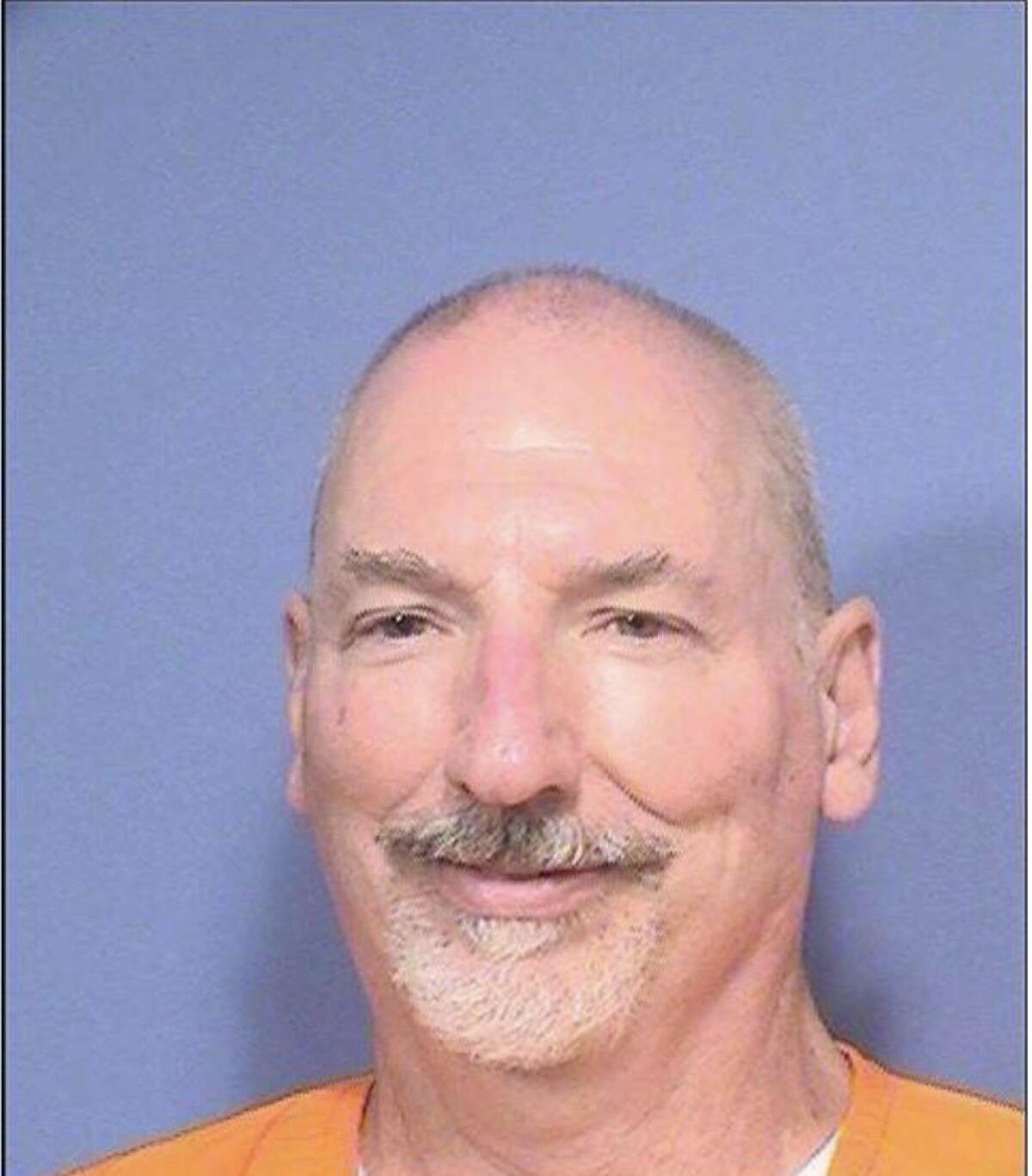
David Allen Funston, a child predator convicted in 1999 of multiple counts of kidnapping and child molestation.

David Allen Funston, a Sacramento County child predator convicted in 1999 of multiple counts of kidnapping and child molestation. Funston was granted parole suitability under California’s Elderly Parole Program after serving more than two decades in prison.

(Sacramento County Sheriff’s Office)

David Allen Funston was convicted in 1999 of 16 counts of kidnapping and child molestation for kids as young as toddlers. He was sentenced to three consecutive 25-to-life prison sentences. Newsom bounced his first successful parole bid back to the parole board for a review, and on Feb. 18, it affirmed its decision.

But Placer County prosecutors quickly charged him with an old crime that had never been filed due to the Sacramento case, and he remains incarcerated awaiting trial on those charges.

Vogelsang’s case particularly raised a red flag for me. He told the parole board he’s been working successfully for about five years to control his thoughts about children.

“I don’t want to become aroused, but I know it’s always going to be there,” he said during the hearing.

Newsom also sent Vogelsang’s case back for review, and he will go before the board again on March 18. Vogelsang’s testimony was concerning enough that if I had a vote in this, I’d probably ask him to come back again in a few years, but we’ll see what the board does.

I’ll admit my decision would be emotional, and these cases do make me wonder. But Wattley is right that condemning elderly parole based on the monstrous deeds of these child predators is shortsighted. There is likely little to no public safety benefit in raising the overall age for elderly parole, and certainly no fiscal benefit.

“When you’re paying for older, sicker people to be incarcerated, and they don’t pose a risk to public safety, what are we actually getting for that? We’re not getting anything that supports survivors. We’re not getting anything that prevents crime. We’re just spending taxpayer dollars on something that doesn’t correlate with the public safety risk,” Wattley pointed out.

As hard as it is to wrap our minds around, it’s best for public safety to allow even the worst of the worst their chance in front of the parole board. It may even make sense for some who have committed truly terrible crimes decades ago to be released, if there is strong evidence of change and a low risk to public safety. That’s the kind of fair and realistic justice that no one on either side of the issue wants to talk about.

I’m not convinced Vogelsang and Funston have met those bars. But that doesn’t mean we should throw out the bars.

You’re reading the L.A. Times Politics newsletter

George Skelton and Michael Wilner cover the insights, legislation, players and politics you need to know. In your inbox Monday and Thursday mornings.

By continuing, you agree to our Terms of Service and our Privacy Policy.

What else you should be reading

The must-read: USC and ABC7 criticized for exclusion of all candidates of color in upcoming gubernatorial debate
Money, it’s a gas: Poison-pill effort to cancel proposed billionaire tax hits voters’ mailboxes
The L.A. Times Special: China-backed Big Pork wants to override 63% of California voters. Even conservatives are mad

Stay Golden,
Anita Chabria


Was this newsletter forwarded to you? Sign up here to get it in your inbox.
Source link

Big Pork attacks California law on caging

Spring has sprung on Leo Staples’ family farm in Oklahoma, and his Berkshire pigs couldn’t be happier about it.

Weighing in at about 550 pounds, Woody, his largest hog (named by a grandson after the “Toy Story” icon) plays “like a puppy” in his free-range paddock, Staples told me, gobbling up the rye, clovers and winter peas that have grown knee-high under the Southern sun.

Swine life on Staples’ sustainable family farm is a jarring contrast to the existence of a pig on one of America’s “intensive” corporate-owned mega-farms, where some sows are confined to cages so small they literally can’t turn around or take more than a step or two in any direction.

“It’s not necessary and it hasn’t proven to be good science,” Staples, a self-described conservative Republican, said of Big Ag porcine lockups. “It’s also cruel.”

That confinement is at the heart of a congressional fight over animal welfare standards that Staples — and California — is likely to lose, though we shouldn’t.

At issue is the Save Our Bacon Act, a sneak attack backed by foreign corporations currently hidden deep inside the farm bill. It would severely curb the ability of states to enact limits on animal confinement and maybe accidentally open the door for ending all kinds of state-level food safety laws.

The SOB Act, an apt nickname, would not only cripple small family farmers such as Staples (though its supporters claim it helps family farmers), it would negate the will of California voters, potentially introduce risk into the food chain, and turn greater power of our food supply over to China.

It would also limit consumer choice at a time when more Americans — from fans of far-right Health Secretary Robert F. Kennedy Jr. to far-left granola grandmas — are demanding a say in how their food is produced.

Let’s break that down.

What is the SOB Act?

For the vegetarian hard-liners out there, it is true that Woody himself will someday likely be bacon.

But, increasingly over the past decades, meat-friendly consumers have moved toward wanting animals to “live a really great life and have one bad day,” as Nate Beaulac, another conservative Oklahoma pork farmer, describes it.

In 2018, to further that aim, about 63% of California voters passed Proposition 12, which increased the space that breeding sows were required to have, from something about the size of a small car trunk to the size of a coat closet. We’re not talking rolling acres here — just enough room to turn around. Some of these sows are basically caged for the majority of their breeding life — years — and are about the size of a black bear.

But here was the real bite in Proposition 12: No pork from any state could be sold in California if it didn’t come from a farm that met the new standard.

Overnight, the corporate breeders were locked out of the Golden State market. They sued bigly, and lost bigly in 2023 at the Supreme Court, which upheld California’s right to impose the state standard.

Big Pork tried to revive the issue with the Supreme Court in 2025 and was rebuffed. Surprise, surprise, the drums started pounding for the SOB Act shortly after (though various legislative attempts have floated since Proposition 12 was passed) backed by a Midwestern congresswoman from a Big Pork state.

The SOB Act would negate Proposition 12 (and a similar law in Massachusetts) and forbid states from making laws regarding animal confinement, according to an analysis by the Animal Law & Policy Program at Harvard Law.

That would emphatically overturn the will of the majority of California voters who want those standards.

But hey, Big Pork would make big bank.

“They want to limit American consumers’ ability to fight,” Beaulac told me. “They wanted to limit Americans’ ability to pursue any sort of change. And that is why me, not only as a farmer, but as an American and a capitalist, I’m strongly opposed to the Save Our Bacon Act, and in staunch support of Proposition 12.”

What Prop. 12 did

Beaulac was once a Californian himself, before heading to the Sooner State for college. He describes himself as a “Christian, capitalist, conservative environmentalist,” and a sustainable farmer who depends on consumers’ desire for healthy food to sell his pigs, chickens and cows.

Proposition 12, Beaulac said, “was a huge help to smaller farms, and the only people that it really hurt were the huge multinational conglomerates.”

“I mean very simply, we want the opportunity to compete,” he said.

Staples, Woody’s owner, who is also an expert in project management and environmental compliance from a previous career in the power industry, makes the case that the mega-farms can also come with mega-dangers.

“You have 100,000 pigs within two miles of each other, the chance of issues with a swine flu or natural disaster just increases,” he said. He points out that issues such as disease, groundwater contamination and waste disposal have already become problems for some large farms.

The flaws in the SOB Act don’t stop there.

The Harvard Law analysis points out that the loose language of the bill could have other consequences, maybe even gutting some state safety, labeling and cleanliness standards.

And some Republicans in Congress, including Californian Reps. David Valadao and Young Kim, oppose the measure and sent a letter to the Agriculture Committee late last year urging them to dump the act, pointing out that at least a quarter of Big Pork is owned by Chinese companies and does not represent American interests.

“Foreign-owned corporations — particularly those tied to adversarial nations — already hold a disturbing amount of control over U.S. agricultural assets,” the letter read, citing Chinese-owned Smithfield Foods, the largest pork producer in the United States.

The SOB Act “could further consolidate the influence of such foreign entities,” the letter‘s authors warned.

Armed with those arguments and others, Staples and Beaulac traveled to Washington recently to make their case against the SOB Act with lawmakers.

But, both men told me, they were met with a wall of lobbyists and money.

“It’s very eye-opening in terms of how many lobbyists are there every day,” Beaulac said. “The reality is Big Ag donates big money to the senators, and so when they need their bill to go through or they need a bill shut down, they’re going to have a lot more leeway than the small farmers.”

The lobbyists, Staples said, had the debate wrapped up tight long before the farmers even knocked the dirt off their boots and entered Congress.

“It was very obvious,” he said. “I was not prepared for what Big Ag had done, how they had prepared members of Congress to address the issues we wanted to address.”

Beaulac said he’s discouraged and fears the SOB Act will pass, but also isn’t giving up hope. He sees it as a bipartisan issue, and one he hopes for which people will stand up. This week, a social media post featuring a sad photo of a caged pig went viral, drawing attention across party lines.

“Blue, red. It doesn’t matter. People want healthy food,” Beaulac said. “They want to know how it’s raised. They genuinely care how they’re feeding their family, and it has nothing to do with who they vote for in November.”

What else you should be reading

The must-read: Thune Is in a Vise as Trump and Far Right Demand Fight on Voter Bill
The deep dive: The exodus of California’s tech billionaires from the Golden State to Florida’s Gold Coast
The L.A. Times Special: California could be attacked by drones because of Iran war, memo warns. Officials downplay threat
Stay Golden,
Anita Chabria

P.S. Here’s a post by right-wing commentator Michael Cernovich on the SOB Act, just a taste of how much some of the MAGA folks don’t like this measure.


Was this newsletter forwarded to you? Sign up here to get it in your inbox.
Source link

Promising free college tuition is obvious politics — and a good idea

One unique perk California kids enjoyed for generations was tuition-free college. Now, a candidate for governor promises to bring that back. And bravo for her.

The candidate, former congresswoman Katie Porter of Orange County, even suggests a way to pay for her bold pledge. That’s unusual for a politician. It’s normal to promise the moon without specifying how to get there.

She‘d raise the corporate income tax a notch.

You’re reading the L.A. Times Politics newsletter

George Skelton and Michael Wilner cover the insights, legislation, players and politics you need to know. In your inbox Monday and Thursday mornings.

By continuing, you agree to our Terms of Service and our Privacy Policy.

OK, it’s very unlikely to ever happen.

The powerful business lobby would scream, even though California companies would benefit from a more educated workforce.

And California’s public universities would probably cry about their revenue streams having to rely on unpredictable corporate profits rather than the pocketbooks of students’ parents.

But at least there’s a potential governor who’s advocating tuition-free higher education and proclaiming it to be a priority.

Why is this Democrat, a UC Irvine law professor, pushing the issue? Tuition cost doesn’t show up anywhere on voter lists of important concerns. But California’s high cost of living is a gigantic gripe. And “affordability” these days is one of the most overused words in any politician’s vocabulary.

“When we talk about affordability, there’s lots of talk about the problem, but people want to hear what [candidates] would do about it,” Porter told me over coffee last week. One thing she’d do is eliminate much of the tuition at public universities.

Another reason for making college tuition-free again, she said, is that “it was a promise made to the people” by the California Master Plan for Higher Education.

But that was 66 years and nine governors ago. A lot has changed.

Actually, tuition-free public higher education was a California birthright long before Gov. Pat Brown’s master plan.

Policymakers regarded tuition-free college as a sound economic investment. It was in the state’s self-interest to produce highly educated innovators and skilled professionals to grow the economy. The middle class expanded, with people landing good-paying jobs that resulted in higher tax revenue for state coffers.

That didn’t mean college was free — and it wouldn’t be under Porter’s plan. There’s still housing, meals, books and annoying fees.

But Sacramento switched priorities in the 1970s, spending tax money on other things: enhanced welfare, healthcare and specifically K-12 schooling.

Free tuition existed before the creation of Medi-Cal healthcare, which now eats up 20% of the state general fund. It also was prior to Proposition 13 in 1978 that dramatically cut property tax revenue for K-12 schools. The state felt obliged to make up the difference.

Naysayers contend California can’t possibly afford to educate students today without their paying tuition. Nonsense. The state could happily afford it long before we expanded into the world’s fourth largest economy. It’s about priorities.

And today, free tuition could be the PR tonic California needs to brighten its faded image across America. It could attract middle-class families to California and keep those already here from fleeing.

Porter promised a return to yesteryear in a speech that was a far cry from old-time political rhetoric. Addressing more than 2,000 delegates at a recent Democratic state convention in San Francisco, she held up a whiteboard with two words in large letters: “F— Trump.”

And she led the delegates in shouting “F— Trump.”

That was a bit of a turnoff for this old traditionalist, who thinks politics has gotten too coarse and foul-mouthed.

I asked Porter what prompted the profanity and whether she had any regrets.

No, she answered. Candidates were allotted only four minutes to speak and “I was economical with my time.

“I wanted to be very clear in the first 15 seconds that I would fight Trump. I wanted the other three minutes and 45 seconds to be about all other stuff.

“Some people just want to talk about Trump because they don’t want to talk about our own problems.”

Plowing into her speech, she quickly promised to “deliver single-payer healthcare, less-expensive housing, free childcare for all, zero tuition at our UCs and CSUs, and [elimination of] income tax for those earning less than $100,000.

“Those are real affordability solutions.”

Right. But no specifics. How does a state wading in red ink afford all that?

I pressed her when we met later. She didn’t have time for details at the convention, she said. But this is her plan on tuition:

Free tuition only for California residents who are undergrads. And only in their third and fourth years at the University of California and California State University. If they desired free tuition in their first two years, they could attend community college.

Many community colleges already waive course fees for full-time, first-time students. Kids are better educated in their first two years at community college anyway, the UC professor said.

Many liberals complain that free tuition would waste tax money on rich kids who don’t need it.

“I’m a believer in universal programs” that don’t base eligibility on income, Porter said. “Something I learned in Congress. You know what never gets cut? Universal programs such as Social Security and Medicare.”

Anyway, she added, “Kids from really wealthy families go to Harvard or USC or other options.”

Public school tuitions are bargains in California compared to other states and private universities.

At UC, annual tuition is roughly $14,900 and at CSU it’s around $6,500. Without tuition, UC would lose roughly $5.9 billion and CSU $3.7 billion, state budget officials say.

But under Porter’s plan, the universities would lose much less. They’d still collect tuition from freshmen and sophomores and hefty levies from non-Californians. Also student aid could be cut back if kids weren’t saddled with tuition.

Hiking the corporation tax from 8.84% to 9.5% “would generate way more than I need for tuition-free,” Porter said. “I would use any extra money for free childcare.”

Political promises often aren’t worth a nickel. But tenacious and feisty Porter’s free tuition pledge might be worth at least a few bucks. And, maybe some votes.

What else you should be reading

The must-read: Veteran Rep. Darrell Issa decides not to seek reelection in new Democratic-leaning district.
Internal combustion: Anxiety grows among California Democrats as gubernatorial candidates rebuff calls to drop out.
The L.A. Times Special: Yes, Republicans have a chance in California governor’s race. Here’s our expert analysis.

Until next week,
George Skelton


Was this newsletter forwarded to you? Sign up here to get it in your inbox.
Source link

Column: Scary time for California Democrats

The race for California governor couldn’t be much closer. And that’s scary for Democrats.

Only the top two vote-getters in the June 2 primary — regardless of their party — will advance to the November election. And although still unlikely, it’s increasingly conceivable that both could be Republicans.

“Scare tactics,” claim naysaying Democrats of such speculation.

But Democrats should have heeded scary rumblings 10 years ago when long shot Donald Trump was first running for president — and not buried their heads in the sand again two years ago when Joe Biden was feebly seeking reelection.

You’re reading the L.A. Times Politics newsletter

George Skelton and Michael Wilner cover the insights, legislation, players and politics you need to know in 2024. In your inbox Monday and Thursday mornings.

By continuing, you agree to our Terms of Service and our Privacy Policy.

They ignored the warning signs and paid the price.

Now, the latest independent poll of likely voters shows that Republican candidates are running in two of the top three places for governor — meaning it’s possible both could qualify for the November ballot, guaranteeing the first election of a GOP chief executive in 20 years.

The best odds are on one Democrat and one Republican finishing in the top two — virtually assuring a Democratic victory in November.

California is too solidly Democrat — and President Trump too despised here — to envision a Republican beating a Democrat to replace termed-out Gov. Gavin Newsom.

But Democrats could beat themselves if the current field of candidates remains intact. There essentially are eight Democrats and only two Republicans competing in the primary.

If the combined Democratic vote is splintered among the eight Democratic contestants, the two Republicans could end up finishing first and second.

“It’s hard to come up with the math that makes that work,” asserts Mark Baldassare, polling director for the nonpartisan Public Policy Institute of California. He just completed a survey in which “a lot of things show that a Democrat and Republican [top-two finish] is the likely outcome,” he says.

But political data guru Paul Mitchell has been running primary election simulations and after Baldassare’s latest poll, he calculated the chances of an all-Republican finish at 18%.

That seems like the danger zone.

The solution is for some Democratic candidates who have little hope of winning to drop out of the race — very soon, in fact. They shouldn’t even file their official candidacy papers that are due by Friday. After that deadline, it’s impossible to remove their names from the ballot even if they’re no longer really running.

The PPIC poll, released last week, showed a statistical tie between the top five contenders — three Democrats and two Republicans, all within 4 percentage points of each other.

The breakdown:

Republican former Fox News commentator Steve Hilton, 14%; Democratic former Rep. Katie Porter, 13%; Republican Riverside County Sheriff Chad Bianco, 12%; Democratic Rep. Eric Swalwell, 11%; Democratic hedge fund founder Tom Steyer, 10%.

Then came five Democratic stragglers.

Former U.S. Health Secretary Xavier Becerra, former Los Angeles Mayor Antonio Villaraigosa and former state Controller Betty Yee each had 5%. Trailing them were San José Mayor Matt Mahan with 3% and state Supt. of Public Instruction Tony Thurmond at 2%.

Mahan’s a centrist wild card who jumped into the race while the polling was underway. So, there’s a valid excuse for his poor showing.

Swalwell and Steyer entered late last year and apparently took votes away from Porter and Becerra.

Porter and Yee are the only prominent female candidates, but they aren’t particularly being helped by female voters, the poll showed.

There was good news in the survey for Democrats hoping to pick up more congressional seats in California and help the party seize control of the House of Representatives from Republicans.

Asked whether they’d vote for a Democrat or Republican for Congress, 62% replied Democrat and only 36% Republican. That’s not surprising, since Democrats already hold 43 of California’s 52 seats.

Newsom and the Democratic-controlled Legislature last year gerrymandered California’s House districts with the goal of gaining at least five more seats. Voters approved that move by passing Proposition 50.

The especially bright news in the poll for Democrats was that in the five new House districts considered the most competitive, Democrats had a slight edge in voter preference. That was also true in districts held by Republicans.

Additionally, Democrats are much more enthusiastic than Republicans about voting in the congressional contests.

In the competitive districts, nearly two-thirds of voters disapprove of tactics by Immigration and Customs Enforcement in corralling undocumented immigrants. And 57% disapprove of Trump.

Anti-Trump sentiment is extremely high among all voters — 30% approval and 70% disapproval.

One head-scratcher in the poll was the voters’ denial about their political polarization. They were asked what qualification they considered most important in choosing a governor. Only 6% said it was the candidate’s political party. Rubbage.

“There are very few people who are voting outside their party,” Baldassare notes.

Two-thirds of voters answered that a candidate’s stand on issues is the most important consideration for them. Voters of both parties, plus independents, rated a candidate’s position on “affordability” as “very” important — and it topped their list of concerns.

A majority of voters said California is “going in the wrong direction.” This is a gloomy finding for Democrats who have been ruling state government — and most large cities — for many years.

But a much larger majority believe the country also is headed in the wrong direction. Back at ya, Republicans. It’s the GOP that’s in total control of the federal government.

Both parties in California have reasons to run scared this year.

What else you should be reading

The must-read: California Democrats unite against Trump, differ on vision for state’s future
Salud: Retired 100-year-old fighter pilot from Escondido receives Medal of Honor
The L.A. Times Special: Gavin Newsom and Kamala Harris have traveled parallel paths. Will they collide in 2028?

Until next week,
George Skelton


Was this newsletter forwarded to you? Sign up here to get it in your inbox.
Source link

Column: Some Democratic candidates for California governor need to drop out

Every farmer knows there comes a time to thin the crop to allow the most promising plants to grow bigger and reach their potential.

The same is true in politics. And it‘s now time to cull some Democrats from the dense field of candidates for governor.

Put another way, it’s time for some lagging Democrats to step aside and provide more running room for swifter teammates in the race to replace Gov. Gavin Newsom.

You’re reading the L.A. Times Politics newsletter

George Skelton and Michael Wilner cover the insights, legislation, players and politics you need to know in 2024. In your inbox Monday and Thursday mornings.

By continuing, you agree to our Terms of Service and our Privacy Policy.

Sure, they’ve all got a constitutional right to run. But too many Democrats on the June 2 primary ballot could flip the California governor’s office to a Republican.

You’d think that Democratic candidates now plodding behind in the race — with little realistic hope of catching up — would want to avoid having that on their conscience. Party leaders, too.

Until recently, this nightmarish scenario for Democrats seemed inconceivable. After all, California hasn’t elected a Republican to statewide office for 20 years. Roughly 45% of registered voters are Democrats. Only 25% are Republicans. About 23% are independents who lean left.

But do the math. There are nine Democrats running for governor with various degrees of seriousness. There are only two major Republican contenders, plus a third lagging practically out of sight.

Remember, California has a “top two” open primary. The top two vote-getters, regardless of their party, advance to the November election. And only the top two. Write-in candidates aren’t allowed.

It’s a matter of arithmetic.

In the primary, about 60% of voters will choose a Democrat, political data expert Paul Mitchell figures. That number of voters split among nine Democratic candidates could result in all sharing smaller pieces of the pie than what the top two Republicans receive. Mitchell estimates nearly 40% of voters will side with a Republican, with just two candidates splitting most of the smaller GOP pie.

Recent polls have shown three candidates — two Republicans and one Democrat — bunched closely near the top. They’re Republican former Fox News commentator Steve Hilton, Democratic U.S. Rep. Eric Swalwell from the San Francisco Bay Area, and Republican Sheriff Chad Bianco of Riverside County.

Another Democrat, former Rep. Katie Porter of Orange County, has been running close to the top three, followed by Democrat Tom Steyer, a billionaire former hedge fund investor.

It’s not likely that two Republicans will survive the primary and block a Democrat from reaching the general election. But it’s a legitimate possibility — and not worth the risk for the Democratic Party.

“How unlikely does it have to be for Democrats not to be worried?” asks Mitchell, who works primarily for Democrats. “Even if the chances are very small, the consequences could be catastrophic.”

He is constantly running primary election simulations. And last week he calculated the chances of two Republicans gaining the top slots at 18%. Most of his calculations have come out at around 10% to 12%, he says.

“I’m not trying to yell fire in a crowded theater,” Mitchell says. “But I’m trying to install a thermostat.”

He adds: “If there was ever a perfect storm when this could happen, we’re experiencing it now.”

The absence of a gubernatorial candidate heading the Democratic ticket in November, Mitchell says, would result in party damage far beyond the governor’s office.

It would lower Democratic voter turnout and probably cost the party congressional and legislative seats, and also affect ballot measures, Mitchell says.

In fact, it could jeopardize the Democrats’ chances of ousting Republicans and capturing control of the U.S. House.

So which candidates should drop out, not only to avoid embarrassment on election night but to save the party from possible disaster?

Four clearly should stay.

Swalwell has some momentum and is the leading Democrat in most polls, although his numbers are only in the teens. He’s relatively young at 45 and many voters are looking for generational change.

Porter is the leading female — with a chance to become the first woman elected California governor — and has been holding up in the polls despite showing a bad temper in a damaging TV interview last year.

Steyer has loads of his own money to spend on TV ads. But he needs a more coherent, simple message in the spots.

San Jose Mayor Matt Mahan just entered the race, but shows some promise. He’s a moderate with strong Silicon Valley tech support. And he also has youth at 43.

Five others should consider bowing out.

Xavier Becerra has a great resume: Former U.S. health secretary, former California attorney general and longtime congressman. But he hasn’t shown much fire. And his message is muted.

Antonio Villaraigosa also has an impressive resume: Former Los Angeles mayor and state Assembly speaker. He’s running with a strong centrist message. But at 73, voters seem to feel his time is past.

Former state Controller Betty Yee knows every inch of state government, but lacks voter appeal.

State Supt. of Public Instruction Tony Thurmond hasn’t shined in his current job and has no traction in the governor’s race.

Former legislator Ian Calderon isn’t even a blip.

What causes some candidates to stay in a race against long, even impossible odds?

“Hope springs eternal,” says longtime Democratic strategist Darry Sragow. “History is replete with races that turned around on a dime.”

And many feel obligated to their donors and endorsers, he adds.

Also, consultants often “have a vested interest” financially in keeping their clients in the game, he acknowledges.

But currently, Sragow adds, “it’s time for the Democratic Party to get its act together and weed out the field.”

“Party leaders should start cracking the whip. There’s something to be said for decisions being made behind closed doors in a ‘smoke filled room.’ The difference today is that it’s in a smoke-free room.”

The filing deadline for officially becoming a candidate is March 6. After that, a name cannot be removed from the ballot. It’s stuck there — possibly drawing just enough votes to rob another Democrat of the chance to be elected governor in November.

What else you should be reading

The must-read: Bernie Sanders kicks off billionaires tax campaign with choice words for the ‘oligarchs’
What the … : Bondi claims win in ICE mask ban fight — but court ruled on different California case
The L.A. Times Special: Billionaires Spielberg, Zuckerberg eyeing East Coast, stirring concerns about California’s wealth-tax proposal

Until next week,
George Skelton


Was this newsletter forwarded to you? Sign up here to get it in your inbox.
Source link

The billionaire who wants to be California governor

Tom Steyer must solve this dilemma: How does he convince financially struggling Californians they can trust a billionaire to be their governor?

Because, after all, the former hedge fund titan doesn’t exactly share their daily ordeal of scraping up enough money to pay for rent, groceries and gas in the run-down car.

And he doesn’t have any record in public office to point to. He’s trying to start his elective career at the top.

So, what’s the solution? Well, you can be a global celebrity like super-rich actor Arnold Schwarzenegger when he was elected in 2003. Or a Gold Rush tycoon like Leland Stanford back in 1861. Other than those two, there’s a long list of well-heeled rookie failures.

You’re reading the L.A. Times Politics newsletter

George Skelton and Michael Wilner cover the insights, legislation, players and politics you need to know in 2024. In your inbox Monday and Thursday mornings.

By continuing, you agree to our Terms of Service and our Privacy Policy.

They include Republican Meg Whitman, who blew $144 million of her fortune losing in 2010. And Al Checchi, who spent $40 million of his own money getting beaten in the 1994 Democratic primary.

“Look, they didn’t have anything to say,” Steyer told me while sipping tea at a popular hangout near the state Capitol, specifically mentioning Whitman and Checchi. “They’d never done anything. Not like I’ve done for 14 years.”

Steyer, 68, who lives in the San Francisco Bay Area, touts his record of funding and promoting progressive causes, including successful ballot campaigns that raised tobacco taxes, closed a major corporate tax loophole and beat back oil industry efforts to kill climate fighting laws.

“I could give you 10 things I’ve done about environmental sustainability and economic justice,” he said.

“Why trust me? Because I’ve gotten results. And I don’t owe anybody anything.”

The Democrat spent $12 million on TV ads last year pushing Gov. Gavin Newsom’s Proposition 50 that allowed the Legislature to gerrymander congressional districts aimed at gaining five more Democratic seats in California.

Being a billionaire allows Steyer to buy all the TV spots he wants. He already has popped for $27 million worth running for governor.

But astronomical wealth comes with a political price.

“California voters do not cotton to some rich guy who has never spent a day in office but looks in the mirror one morning and suddenly sees a governor of California,” says veteran Democratic strategist Garry South.

So, in his campaign TV commercials, Steyer wears casual backyard barbecue garb trying to look like Mr. Average, but with a populist agenda.

“I’m the billionaire who’s going to take on the billionaires,” he says.

That sounds counterintuitive, and I’m skeptical about how well it sells.

Steyer knows he sorely needs labor support to seem credible among the working class. That’s why he recently joined rallies for striking teachers in San Francisco and healthcare workers in San Diego.

He has scored endorsements from the California School Employees Assn. — a union representing school staff — and the California Nurses Assn.

Nurses are backing Steyer largely because he has embraced their No. 1 goal: a single-payer, state-run health insurance system.

They’ve attempted to push that in Sacramento for years and failed. And for good reason.

Single-payer would cost the state barrels of money it doesn’t have. Moreover, it would replace not only private insurance, but popular federal Medicare and the state’s Medi-Cal program for the poor. The federal government would need to agree. Fat chance.

I asked Steyer whether he really believes the state bureaucracy is capable of handling such an ambitious undertaking.

“We’re going to have to get back to having a government that works,” he replied, in what sounded like a knock on Newsom and his predecessors.

How could he make a single-payer system work? “God is in the details,” he answered, a phrase he frequently uses. Translation: “I don’t know.”

“We’re going to work through it. That’ll take at least three years… But we’re going to have to do it…. Healthcare costs have been escalating for a very long time. And they’re eating up the [state] budget.”

After Steyer left hedge fund investing, he became an ardent crusader for clean energy and fighting climate change. It was his core issue running for president in 2020, when he spent $340 million before giving up.

But these days, he barely mentions climate. The better politics du jour is advocating for “affordability” — especially affordable housing.

Steyer said he doesn’t have a “silver bullet” for lowering housing costs. He has “silver buckshot” — a scattergun of solutions for boosting housing supply, plus rent control.

He’d shorten the time for issuing construction permits, require rezoning to develop vacant land, tax unoccupied housing left off the market and build higher — more like in New York’s Manhattan, where he was raised.

“What we’re doing is sprawl,” he said. “And what sprawl leads to is an awful lot of commuting, a lot of driving.”

That’s been a problem for generations, I noted. Suburban ranch-style housing is the California way. “People can change,” he said. “I think people want to.”

I asked him about the slow-poke bullet train project that’s costing four times original estimates.

“Of course, I’m in favor of high speed rail,” he said. “But good grief. We’ve been working on this for an incredibly long time and spent an incredible amount of money. As far as I can tell, we haven’t built anything. If we’re going to do high-speed rail, we have to build it at a reasonable price. And we haven’t been able to do that.”

Might he abandon the project? “I want to look at it,” he said.

The odds are against him ever getting the opportunity.

But the odds aren’t exciting for any candidate in this ho-hum contest.

Steyer is running in the middle of the pack, based on polls. He has hired the strategists who managed Democratic Socialist Zohran Mamdani’s victorious campaign for New York mayor.

There’s no front-runner for governor. But Rep. Eric Swalwell (D-Dublin) has some momentum. He recently was endorsed by Sen. Adam Schiff. And he’ll also soon be endorsed by influential former House Speaker Nancy Pelosi, I’m told.

Voters will do their all-important endorsing in the June 2 primary.

What else you should be reading

The must-read: In 50-year fight to protect California’s coast, they’re the real McCoys, still at it in their 80s
CA vs. Trump: Trump, California and the multi-front war over the next election
The L.A. Times Special: Who pays for Newsom’s travel? Hint: It’s not always taxpayers

Until next week,
George Skelton


Was this newsletter forwarded to you? Sign up here to get it in your inbox.

Source link