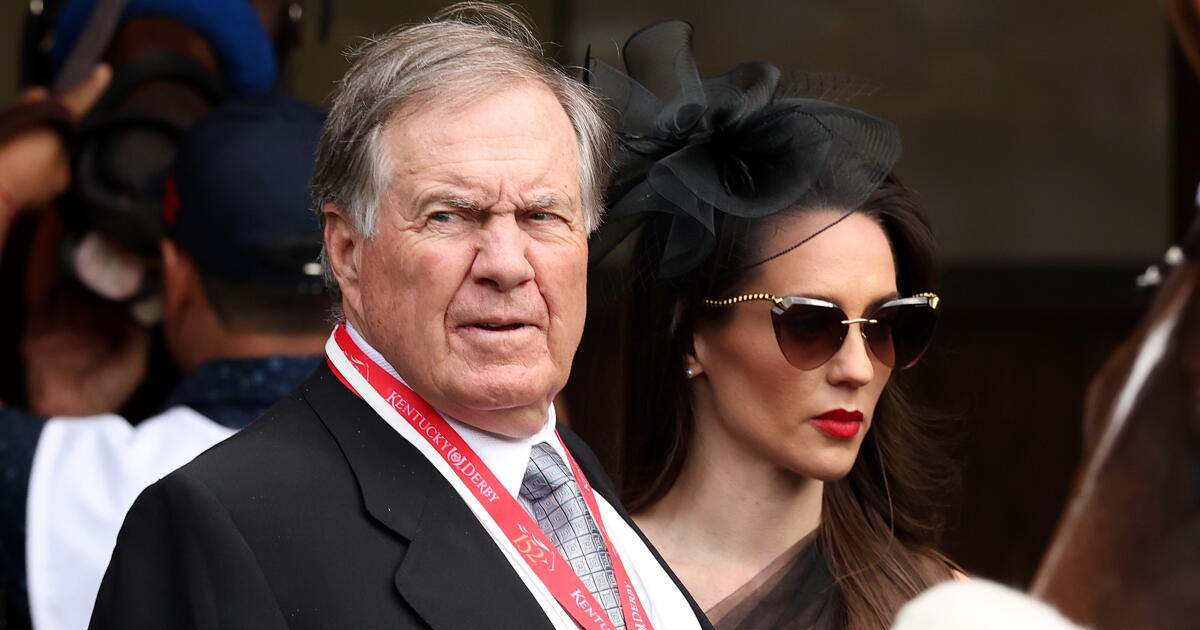
Jordon Hudson is suing the owners of a Massachusetts rental property for their alleged connection to the release of a video that showed her then-boyfriend Bill Belichick shirtless and outside the home while Hudson was renting it in 2023.
In a civil lawsuit filed Friday in Suffolk County Superior Court, Hudson accuses the couple of invasion of privacy, breach of contract and unfair and deceptive conduct after the video, which was captured on a porch security camera, and “personal and private information about Ms. Hudson” were leaked online.
According to the complaint, that leak in November 2023 was the reason the public found out about the romantic relationship between the then-22-year-old former college cheerleader and the then-70-year-old coach of the New England Patriots, who now coaches the North Carolina Tar Heels.
“These outrageous violations of Ms. Hudson’s privacy have, among other things, resulted in significant unwanted publicity and scrutiny of Ms. Hudson and her relationship with Mr. Belichick, which they had intended to remain private, and led to the ridicule and denigration of Ms. Hudson through numerous tabloid stories published by the media,” the complaint states.
“This unwanted scrutiny and the ensuing media stories, which contain false information, has caused significant damage to Ms. Hudson, which would not have occurred had Defendants not leaked Ms. Hudson’s personal and private information.”
The Times was unsuccessful in attempts to reach the defendants for comment.
The complaint states that Hudson booked the rental house for four days through Airbnb in or around June 2023. During her stay, the filing states, Hudson received a text from one of the owners reminding her not to park in front of a neighbor’s property. According to the complaint, the owner also texted Hudson “a link to a Ring video of a shirtless Mr. Belichick walking to and from the Property, which had been captured and saved without the knowledge or authorization of Mr. Belichick or Ms. Hudson (the ‘Ring Video’).”
Hudson then informed the defendant that privacy was important to them and asked if she could delete the video, the lawsuit states, to which she received the response: “We will delete it from ring, but as you know, unfortunately, videos are never totally deleted.”
After the video was leaked and the relationship became public, the complaint states, the same defendant told Hudson, “I absolutely did not leak this video to twitter or anyone.” But in May 2025, according to the filing, the owner told Hudson in a text that while they didn’t release the video publicly, “we had sent it to a few people initially wondering is this him [Mr. Belichick], isn’t it him and I don’t know what happened from there.”
The complaint also accuses the defendants of giving a second porch video of Belichick to journalist Pablo Torre, who aired it on his podcast that same month.
Hudson is requesting a jury trial and seeks unspecified damages and an order “enjoining Defendants from disclosing or disseminating any personal and/or private information related to Ms. Hudson to any third-party.”
Multiple media outlets reported last month that Hudson and Belichick quietly ended their romantic releationship in late 2025 but remain close friends and business partners.
Elizabeth Holmes was once celebrated as the world’s youngest self-made female billionaire, with an estimated fortune of $4.5 billion. Today, the disgraced Theranos founder is serving a federal prison sentence for defrauding investors and owes hundreds of millions of dollars in restitution.
Suffice it to say, she has a complicated relationship with money.
In the nearly three-hour, wildly unpredictable film, a reenactment staged by Fielder depicts Evans pushing for a share of the documentary’s profits, sparking a dispute with the filmmakers over whether paying their subjects would compromise the project’s integrity. Holmes, meanwhile, maintains that money has never been her primary motivation. As Fielder probes the couple’s finances, he struggles to determine how much Holmes knows about Evans’ dealings — and where their financial interests begin and end.
Here’s what “You Can See Everything” reveals about Holmes and Evans’ finances, and what it leaves unanswered. Warning: Major spoilers ahead.
Did Holmes and Evans get paid to participate in the documentary?
No. But for a time, compensation was on the table.
The film was financed by A24, which gave Fielder and Oppenheim unusual freedom to pursue the project without any deadline or obligation to turn what they captured into a finished film. As Fielder recalled during a Q&A following the film’s secret premiere at the Telluride Film Festival in September, the studio told them that if nothing came of it, “you can just throw everything away.”
In one of the film’s pivotal sequences, Fielder stages a reenactment, based on his recollections, of a meeting with Evans, Holmes, Oppenheim and two A24 executives. Amanda Seyfried, who won an Emmy for portraying Holmes in Hulu’s “The Dropout,” plays her again, while Christopher Abbott takes on the role of Evans. After Holmes leaves to check on the couple’s children, Evans raises the question of compensation.
“I do know that there is potential for this movie to also make a lot of money,” Evans says. “And I feel strongly that if this movie were to make money, that we should be entitled to some of it.”
Fielder objects, arguing that payment could cast doubt on the couple’s motives and suggest they had influence over the finished film. Evans insists that compensation is nonnegotiable.
According to Fielder, A24 ultimately agreed to a profit-sharing arrangement, though the documentary doesn’t disclose its terms.
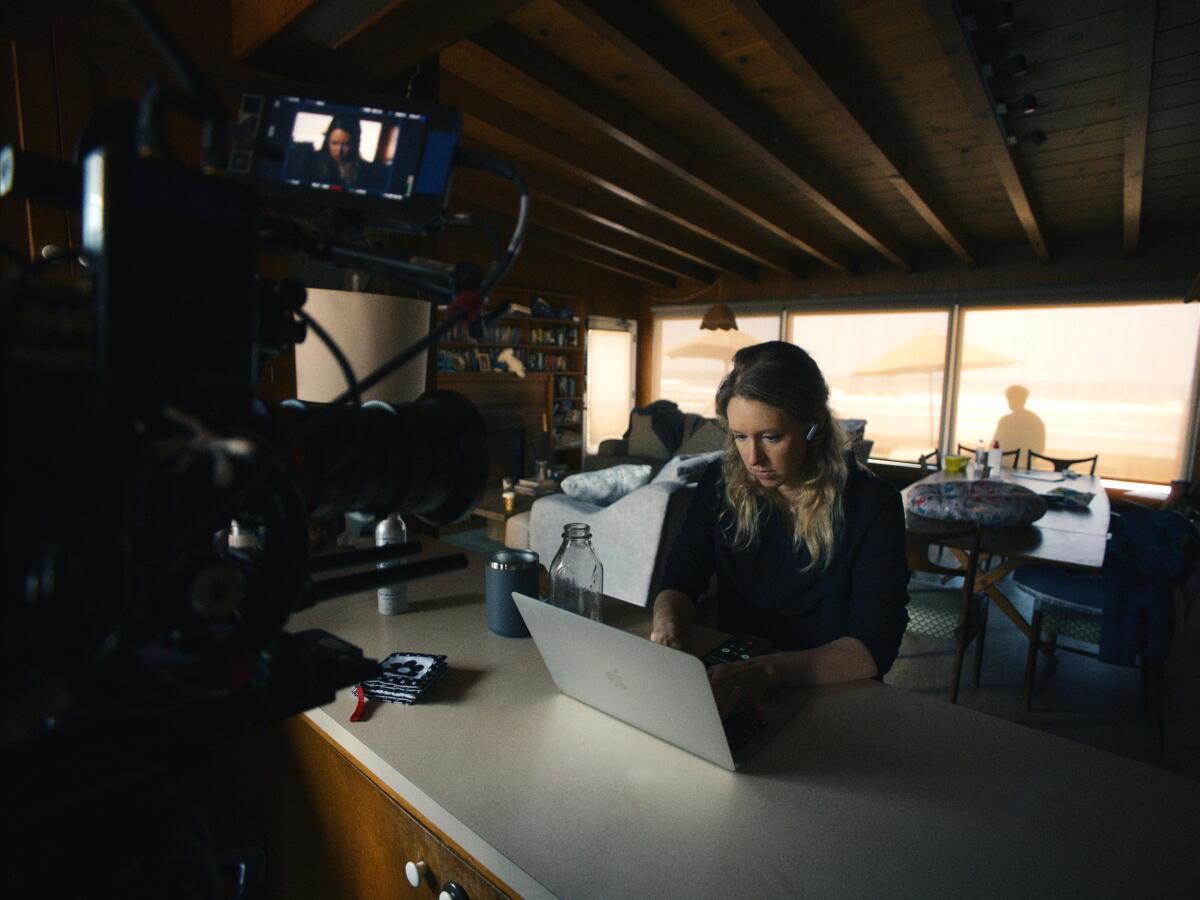
Holmes works on a laptop at the rented beachfront home in Del Mar, Calif., where she lived with her partner, Billy Evans, and their two children before entering prison, in a scene from “You Can See Everything.”
(A24)
But shortly before entering prison, Holmes tells Fielder on camera, “Obviously I’m not making any money or having any economic interest in this whatsoever.” Fielder is left wondering whether she’s genuinely unaware of the deal Evans negotiated or merely pretending not to know.
The real Evans later acknowledges withholding some details from Holmes, explaining that she had enough on her mind.
In the end, a title card reveals that Evans decided to forgo compensation.
Is it unusual for documentary subjects to get paid?
Generally, yes — at least in documentaries that follow traditional journalistic standards.
Paying subjects can create conflicts of interest, raising questions about their motives and credibility. Those concerns are particularly acute with someone like Holmes, who was convicted of defrauding investors through an elaborate web of deception.
“The optics are terrible,” Fielder warns Evans.
Evans counters that documentary subjects have been paid before, citing reports of a lucrative Netflix deal involving Prince Harry and Meghan Markle. Oppenheim dismisses the comparison, saying their series isn’t a conventional documentary.
The distinction isn’t always clear-cut. In 2019, competing documentaries about the disastrous Fyre Festival took different approaches to paying its disgraced organizer, Billy McFarland. The filmmakers behind Hulu’s “Fyre Fraud” acknowledged paying him for footage and other rights. But Chris Smith, director of Netflix’s “Fyre,” refused McFarland’s demand for payment, arguing that it would be unethical for him to profit after defrauding so many people.
Fielder says he considered abandoning the project rather than accepting Evans’ demands. Instead, he decided the negotiations might reveal something about how Holmes and Evans operate.
As Fielder later confides to Seyfried, “Either this is fully sincere and she actually has no clue about the deal Billy made, or she honestly might be the most manipulative person that’s ever lived.”
How much money does Holmes owe?
A lot.
In 2023, a federal judge ordered Holmes and former Theranos President Ramesh “Sunny” Balwani to pay more than $452 million in restitution to investors and companies defrauded by Theranos. The two are jointly responsible for the judgment, meaning the same losses cannot be collected twice. A federal appeals court upheld the order in 2025.
Holmes speaks at the Fortune Global Forum in 2015, when her blood-testing startup Theranos was valued at billions of dollars and she was celebrated as one of Silicon Valley’s most successful entrepreneurs.
(Jeff Chiu / Associated Press)
Holmes has maintained that she has little money left. In a court appearance shown in the documentary, she insists, “I don’t have any money,” explaining she is deeply in debt from legal fees associated with her criminal case.
During Fielder’s prison visit, as reenacted in the film, she tells him, “I don’t have the option to care about money. I owe hundreds of millions of dollars of restitution. Every dollar I make, they take from me.”
Would any profits from the documentary have gone toward Holmes’ restitution?
Not necessarily.
Although Holmes and Evans have two children together and refer to each other as husband and wife, Holmes told People in 2025 that they were not legally married. Evans isn’t personally responsible for her restitution debt simply because they’re a couple.
The government can seek payment from assets belonging to Holmes, but the documentary doesn’t disclose who would have received money under the proposed profit-sharing deal or whether Holmes would have had any financial interest in it. So it’s unclear whether any proceeds could have gone toward her restitution.
The proposed profit-sharing arrangement could have been lucrative. “You Can See Everything” grossed $15.6 million in its opening weekend and more than $20 million in its first five days. Those figures represent ticket sales, not profits, but illustrate the potential value of such an arrangement. And with the film still expanding into more theaters and generating strong buzz, its box-office haul is poised to grow further.
How are Holmes and Evans supporting themselves?
The documentary doesn’t fully answer that question either.
Before Holmes entered prison, the couple lived with their two children — son William, now 5, and daughter Invicta, 3 — in a luxurious rented home near the beach in Del Mar, north of San Diego. Evans comes from a wealthy family whose hotel business includes the Bahia Resort Hotel, the Catamaran Resort Hotel and Spa and the Lodge at Torrey Pines. But in an Oct. 1 statement, Evans Hotels said he is neither an employee nor a shareholder in the company.
In the film, Fielder asks Evans whether Holmes might have been attracted to his family’s money. Evans grows visibly uncomfortable and shuts down the conversation when Fielder presses him about the extent of the family’s wealth.
Evans also has a biotech start-up, Haemanthus, which is developing laser-based technology to analyze biological samples, an undertaking with echoes of Holmes’ failed blood-testing company. According to Wired, the company has reported raising as much as $20 million in funding but has yet to release a product.
How much Evans personally earns from the venture — or whether his family helps support the couple — remains unclear.
In a later scene, Seyfried asks Evans who’s bringing in money while Holmes is in prison. He says she earns 30 cents an hour at the federal prison in Texas where she’s serving her sentence.
The reality TV star said he will “always be Jen’s supporter” in a Thursday statement to People. “Hope she is happy in this next phase of life,” he added. “Just focusing on my kids and figuring out what’s next for me.” The couple share three children and Jen is pregnant with their fourth.
The MomTok influencer–turned–reality TV star reportedly filed a petition for divorce Tuesday in a Provo, Utah, court, according to numerousoutlets. Jen has also reportedly submitted a proposed parenting plan for their children.
The “Mormon Wives” couple have been married since 2019, after meeting the year before on a Mormon dating app called Mutual when Jen was 18 and Zac was 21. Their three children were born in 2021, 2023 and 2025.
In June, Jen shared on Instagram that she and Zac were expecting their fourth child together. She also shared a photo of a strip of sonogram images Thursday on her Instagram Stories. Jen first rose to internet fame through sharing content around her pregnancy on social media.
Jen and Zac also shared separate photos celebrating their daughter Nora’s 5th birthday on each of their Instagram Stories on Wednesday.
Zac is reportedly “doing okay” following Jen’s filing, according to People sources. The outlet reported Wednesday that “He and Jen are staying focused on preparing for the baby and supporting their kids.”
Rocky moments of Jen and Zac’s marriage have been depicted on “The Secret Lives of Mormon Wives.” The couple briefly separated in 2025 after the first season of the reality show had aired, but later reconciled. In August, Jen told the outlet that she and Zac were working on their relationship “behind closed doors” but credited him for helping her get through her first trimester.
Jen, who competed on Season 34 of “Dancing With the Stars” last year, will appear next in “The Secret Lives of Mormon Wives: Orange County.” The first “Mormon Wives” spinoff will premiere Nov. 12 on Hulu.
Chris and Becky Yates., originally from near Huddersfield in West Yorkshire and later based in Gloucestershire, faced not only money troubles but chronic illness, too
Chris and Becky Yates travelled by ferry to their new home in Spain (stock)(Image: Getty Images)
For many people, years of hard work and saving are meant to lead to a dream retirement – so bankruptcy in your 50s can seem unthinkable. But that’s what happened to Chris and Becky Yates. The couple, originally from near Huddersfield in West Yorkshire and later based in Gloucestershire, faced not only money troubles but chronic illness, too.
Chris’s surveying and construction business was rocked by the turbulence in the sector during the 2010s, while Becky was forced to give up her civilian role with the police as she battled fibromyalgia – a condition of the central nervous system that can cause widespread pain.
With their “comfortable, privileged lifestyle” under threat, they decided on drastic action: relocating to rural Spain after becoming enchanted with an area west of Valencia.
Chris told the i Paper: “It is an area of small, traditional towns surrounded by mountains, farmland and orange groves. It feels very different from the busy resorts and heavily developed parts of the Spanish coast.
“It was the old-fashioned Spain we had hoped to find, with independent shops and bars where people remember your name and their faces light up when you walk through the door. We quickly fell in love with the area.”
Chris and Becky, now 60, began laying the groundwork for their expat life, sorting through what to keep, sell or ship to Spain. They put their house on the market too, intending to use the money raised to finance their move.
Chris and Becky made the ferry crossing to their new home with their Newfoundland dogs. These days they rely mainly on Becky’s pension, worth £1,700 a month, while Chris does “odd jobs” to supplement their earnings.
The couple say they spend about €100 (£83) a week on food and have adapted to life in Spain, picking up conversational Spanish and enjoying a “very good life”.
Chris added: “A decade ago, we were sitting in an empty house in Gloucestershire after bankruptcy and illness had dismantled the life we thought we would have. Today, we feel we have the best of both worlds. We have no intention of returning.”
According to Chris, the couple are now in an off-grid three-bed, two-bath property with a swimming pool for €1,100 (£917) a month.
Solar panels provide their electricity, meaning they pay nothing for power and believe they’re saving about €150 (£125) every month.
They also maintain that the warmer weather has had a beneficial effect on Becky’s health. While she still lives with the condition, Becky is said to be more “active and thriving”.
Ensure our latest headlines always appear at the top of your Google Search by making us a Preferred Source. Click here to activate or add us as Preferred Source in your Google search settings
Polo Lam and his girlfriend Laura Matos say they only spent minutes on the phone to check Google Maps and the internet but were stunned at the final cost
08:00, 27 Oct 2026Updated 08:36, 27 Oct 2026
Polo Lam and his girlfriend Laura Matos were shocked at the cost(Image: Polo Lam)
A British traveller has warned holidaymakers about the risk of unexpected charges after spending just two hours in Monaco left him and his girlfriend with a £109 (€128.88) phone bill. Polo Lam, 30, from Whitby, North Yorkshire, was travelling across Europe with his girlfriend Laura Matos, 29, in September when the couple made a brief stop in Monaco.
Despite using just 18.66MB of mobile data between them, the pair were left picking up almost £85 (€99.79) in roaming charges, sending their monthly bill soaring to £109 (€128.88), compared with just £25 (€29.18) the previous month. Experts say 18.66MB is roughly the amount of data someone might use scrolling through Instagram for just three to 10 minutes, depending on the content being viewed.
The couple were enjoying a budget-friendly interrail holiday from Barcelona to Vienna, travelling through France, Italy, Slovenia, Croatia and Hungary. While staying in Nice, they decided to visit nearby Menton and make a short stop in Monaco, which hadn’t originally been part of their plans.
Laura, a psychologist and founder of La CoolMente, said: “It was actually my idea to visit Monaco. I’d heard so much about the luxury and the famous casino, and I wanted to see what it was like for myself.”
But it was only when they continued their journey into Italy that Polo checked their mobile account and discovered the their trip had cost more than they bargained for. Speaking to Nomad eSIM, Polo said: “I couldn’t believe it when I saw the bill. We’d only been in Monaco for a few hours, and somehow our phone bill had jumped to £109 (€128.88).
“We’d barely used our phones. We only checked Google Maps and opened Instagram, but that was about it.
“What really scares me is thinking about what could have happened if we’d stayed overnight. If we’d spent a whole day or two there, we could potentially have been looking at a bill running into the hundreds, or even thousands of pounds.
“I’m pretty stingy when it comes to money, so you can imagine how I felt. We’d gone interrailing to have a relatively inexpensive holiday, and suddenly we had this huge phone bill.”
Laura added: “We were both confused about where the charges had come from. We’d only used our phones briefly to find our location, so we felt the bill was completely unreasonable. We kept talking about it for days afterwards because we’d been trying so hard to save money throughout the trip.”
Polo said the unexpected expense put a dampener on their holiday. “The worst part was thinking about what else we could have spent that money on. We were trying to keep costs down, and it would have paid for three or four meals out in some of the places we visited.”
Laura agreed that the money could have been put to much better use. She said: “We’d been avoiding expensive experiences to save money, so it was frustrating to see that money disappear on a phone bill without getting anything enjoyable in return.
“I’d much rather have spent it on a nice meal at a restaurant with a view, visiting a museum or even a more comfortable hotel. When you’re travelling around Europe by interrail, a bit of extra comfort can make a big difference.”
The experience left the couple more cautious about using their phones abroad, particularly when travelling between countries. Polo said: “I’d tell anyone travelling around Europe to check exactly which countries are covered by their mobile plan. Just because somewhere is in Europe doesn’t mean your normal roaming allowance applies. We found that out the expensive way.”
Ensure our latest travel news always appears at the top of your Google Search by making us a Preferred Source.Click here to activate or add us as Preferred Source in your Google search settings
Tim Page, Marketing Lead at Nomad eSIM, said: “One of the biggest misconceptions about mobile roaming is that travelling within Europe automatically means you’re covered by your usual mobile plan.
“Monaco is a perfect example. Despite being surrounded by France on three sides, it’s not part of the European Union and isn’t automatically covered by the EU’s Roam Like at Home rules. Introduced in June 2017, these rules generally allow customers of EU mobile operators to use their calls, texts and data across EU countries without paying additional roaming charges.
“This means travellers could be using their phones in Nice without additional roaming charges, then cross into Monaco and face significantly higher rates for exactly the same usage. Before travelling, always check which countries are included in your mobile plan, particularly destinations such as Monaco, Andorra and Switzerland.
“Even small amounts of data can result in surprisingly expensive bills, so consider switching off data roaming or using a travel eSIM that specifically covers your destination. If you do receive an unexpected roaming charge, contact your mobile provider as soon as possible. While there’s no guarantee, some providers may be willing to reduce or waive the charges as a goodwill gesture.”
The brilliant Korean filmmaker Lee Chang-dong is a suffering protagonist’s best friend, exploring the buried pain in people like no other filmmaker. But he’s never been so delicately novelistic, and so accessibly human, as with his latest movie, “Possible Love,” even when Lee is spinning the enigmatic vibes he’s known for.
A marriage story weighty enough to bear two fascinatingly complex couples, it explores a web of isolation and desire knotted with the divisions and woes of society today: class, labor, media. The film fairly vibrates with ominous tension even in scenes in which seemingly nothing happens. (Which, admittedly, is a Lee staple if you remember his last film, 2018’s eerie psychological thriller “Burning.”) Astonishingly acted, intricately written, with nary a shot out of place and never insulting to its audience, “Possible Love” is a masterpiece of everyday struggle — essentially, who bears it and who doesn’t — and easily among the year’s best films.
At the funeral for a colleague who committed suicide in the wake of a disastrous labor strike, out-of-work Ho-seok (Sul Kyung-gu, of Lee’s “Peppermint Candy”) would rather brood in the car alone and let his patient, grasping-for-connection wife Mi-ok (Jeon Do-yeon, a Cannes prize-winner for her turn in Lee’s “Secret Sunshine”) be around others. With these blue collar parents’ grade-school-age son a tangibly quiet presence, a seemingly impassable unhappiness oozes from the opening scenes. The appearance inside the funeral home, however, of a documentary crew interviewing laid-off workers spurs Mi-ok to engage with the outgoing director, Ye-ji (Cho Yeo-jeong), whose reserved, well-to-do husband Sang-woo (Zo In-sung) is in tow. When Mi-ok agrees to participate in Ye-ji’s film, a friendship forms.
Is it friendship, though, or a mutually useful rapport? The women couldn’t be more unalike in terms of background and status. Mi-ok has to tell Ye-ji that her expensive clothes don’t jibe with someone championing labor issues. But they have a breezy, even jokey openness, fed by the stories Mi-ok tells on camera as well as soju-fueled double dates with their spouses. They also have in common husbands who are remote, albeit for vastly different reasons. Hedge-fund-rich Sang-woo has an air of cool privilege, while the gloomy, taciturn Ho-seok harbors unprocessed trauma about what happened during the strike, the details of which are judiciously doled out to us in flashbacks. (Lee drew the background for his scenario from a real-life labor protest met by a government crackdown that shocked the country.)
But underneath what seems promising, the beginnings of empathy and maybe healing, there’s something performative and calculated in this fast bond. There are Ye-ji’s filmic needs — “I’m trying to love these people,” she says privately to Sang-woo after he calls her behavior with them “Method acting” — and Mi-ok’s swirl of intentions, hoping to save her husband with not ignoring the allure of her new pal’s quietly confident and wealthy man. Right at the moment when more cracks materialize, Ye-ji invites this broken family for a shared weekend at Sang-woo’s vacation mansion.
You may be forgiven for anticipating a potboiler climax when a lush hideaway with a private beach is concerned, and what occurs there is indeed juicy. But that’s only because Lee, in his finest screenplay to date, has laid out precisely where his vectors of hardship, exploitation, pent-up anguish and hidden desire are going to converge. Just add more alcohol and more reminders of these couples’ experiential chasm, and Lee’s command of irony in a simmering atmosphere is in a league all its own.
The documentary angle, of course, is this great director probing the ethics in his own vocation as an intrusive force, one that shapes lives, emotions and, in this case, the weight of a genuine tragedy. In much the way he finessed a truth about art facing evil in “Poetry,” the camera here is both predatory and a tool for catharsis. In one scene, the confluence is literally breathtaking.
Best-of lists were made for performances like Jeon’s. With tear-swollen eyes and an anxious intelligence that imbues Mi-ok’s mission of repair with heartbreaking energy, she is this movie’s restless soul of want: a wife, lover, worker and mother trapped between the balm of recollecting better times and worry for the future. Alongside Sul’s deftly handled, physical characterization of a proud man swallowed by hurt he could never imagine, “Possible Love” stands as one of the more sensitively wrought depictions of a wounded marriage you’ll ever see.
And when it’s over, it somehow doesn’t feel over. Maybe no scene better embodies Lee’s exquisite communion with his characters than his last one, which supplies them with a hint of grace. “Possible Love” hovers over the moment’s sublimity like the moonlight and I haven’t stopped thinking about its elemental beauty since.
‘Possible Love’
In Korean with subtitles
Rated: R, for language, some sexuality and nudity
Running time: 2 hours, 44 minutes
Playing: Opens Friday, Oct. 23, in limited release; on Netflix Nov. 6
Coronation Street’s Debbie Webster and Ronnie Bailey faced a split on Friday night, as the pair clashed amid Debbie deteriorating following her dementia diagnosis on the soap
Coronation Street’s Debbie Webster and Ronnie Bailey faced a split on Friday night(Image: ITV)
Fans of Coronation Street were left fearing for a popular couple after Friday’s episode of the ITV soap. Debbie Webster’s out-of-character behaviour continued, and it put pressure on her relationship with her husband Ronnie Bailey. Debbie has dementia, and recently she’s deteriorated hugely.
She’s starting to struggle with recognising people she knows well, and has even called Ronnie the wrong name. Making mistakes at work has also added to the strain, and she has moments where she forgets things have happened.
Ronnie shared his concerns this week about being intimate with his wife, in case she forgot who he was. Things worsened on Friday after drama with a bride and groom at the hotel.
To see more of the stories you love from The Mirror and to find them easily in Google, then make us your preferred source. Free and easy to do, just click on the link here to find more from The Mirror at the top of your feed.
Events led to Debbie and Ronnie rowing at home, and Ronnie admitted she wasn’t the woman he had fallen in love with. Struggling to care for Debbie and to deal with her condition, Ronnie claimed Debbie was close to throwing herself at another man.
Calling her “so random”, he admitted he didn’t know what she was going to do next. It’s then that he left Debbie heartbroken by his comment about her not being the woman he loved, and she kicked him out of the house.
As Ronnie left, a broken Debbie burst into tears, reeling that her marriage might be in crisis. But will Ronnie’s comment lead to Debbie ending things? Will Ronnie struggle to be with Debbie going forward, and could this lead to a devastating split for them?
Fans were heartbroken by the scenes, with one writing: “I truly feel for both Debbie and Ronnie. Of course you want your partner to desire you, but when you become someone’s caretaker that kinda gets pushed to the back burner.”
Another said: “Debbie breaking my heart in today’s episode. Sue is incredible.” A third viewer posted: “Wish they’d give Debbie some good times. Life’s tough enough for her and Ronnie. Give her a break writers.”
A final fan said: “I think it’s only just begun and the heartbreak to come will be deserving of an award from all involved and especially Sue Devaney.” It comes following the show announcing that former character Owen Armstrong is returning after a decade away.
Actor Ian Puleston-Davies is reprising his role, and there’s set to be trouble for Gary Windass. Owen decides to move back to the Cobbles to live with his daughter Izzy Armstrong, amid trouble with Owen’s young grandson Jake.
His scenes won’t air until January 2027, but actor Ian is back filming very soon. After nearly 11 years, Owen returns to the Street, and it’s said he is far from impressed by Gary’s behaviour of late.
Blaming Gary for Izzy and Jake’s own drama, it’s been teased Owen’s comeback could spell trouble for Gary’s business at the builders yard. Commenting on his return after his exit in 2015, Ian said: “I can’t wait to pick up where I left off ten years ago! It’s brilliant to be back and to get stuck into a cracking storyline. Owen’s back and he’s still angry!”
When William Jackson Harper moved to Los Angeles to star in NBC’s “The Good Place” a decade ago, he himself felt out of place.
“As an actor, I was like I don’t know if this is where I’m supposed to be,” says Harper, who earned an Emmy nomination for his role as Chidi Anagonye, the show’s endearingly panicked and indecisive professor.
In Sunday Funday, L.A. people give us a play-by-play of their ideal Sunday around town. Find ideas and inspiration on where to go, what to eat and how to enjoy life on the weekends.
“People felt more finished there,” he says of L.A. “I felt like people had sort of come into their appearance, they knew what they were selling. And I was like, you know, I’m much more of a theater guy, New York is probably where I’m going to land.”
He adds, “So I had this idea that I was going to get to L.A. and everyone was just going to laugh at me.”
Quite the opposite happened. Harper leaned into the L.A. experience, exploring the sprawling city, particularly its nature, and connecting with old friends on a deeper level. He soon grew to appreciate it — so much that he continues to split his time between L.A. and New York alongside his wife, Ali Ahn, who is also an actor.
Harper now stars in the dramatic anthology series “American Hostage,” which re-creates the true story of Tony Kiritsis, an Indianapolis man who, in 1977, kidnapped a mortgage broker whose family Kiritsis blamed for his own financial hardships. During a 63-hour standoff, Kiritsis demands that Fred Heckman, a beloved radio reporter played by Jon Hamm, interview him live on air.
“When that script came across my desk, I was like ‘This is insane,’” Harper says of the show, now streaming on MGM+. He was excited to portray Ben Hairston, a reporter and Heckman’s mentee, who attempts to help him navigate the challenging situation.
Harper says he’d been interested in being part of the show set in the late 1970s. Another draw? “I was looking forward to just rocking a mustache,” he says with a laugh. “I was looking forward to just looking like my uncles.”
Here’s how Harper would spend his perfect Sunday in L.A., from a morning hike at Griffith Park to shopping for more French tour jackets at a vintage store in Silver Lake.
7 a.m.: Start with an intense workout
Even though I typically don’t work out on Sundays, sometimes I get a wild hair and do it anyway because I enjoy it. I’ll go to a class around 7 or 8 a.m. I go to Training Mate a lot because the instructors are fun. They’re all, like, beautiful people, but they are dorks, which I find really endearing. They’re really sweet and encouraging. So we’ll do a really tough 45-minute workout an I’ll probably want to go for a hike after that. Griffith Park is one of my favorite places anywhere, so I’d kind of march around there for a couple of hours. I don’t always do the hard [route], I’m already kind of cooked. I just want to be in nature a little bit.
11 a.m.: Bond with friends over breakfast
Then it would be time to eat. I have this tradition whenever I’m in L.A. of meeting with a couple of friends of ours at Fred 62 on Vermont [Avenue]. I’ll get a tofu breakfast enchilada and then we’ll just sit there and talk for a couple of hours. The waiters remember my order even if it’s been months. Or my friends and I will go to some place like All Time, which is really good. There’s always a line and everyone is very done up and I feel really dirty and underdressed when I go, but f— it. It’s like deal with it. I’m old. I can’t be out here flexing.
2 p.m.: Nap to recharge for a shopping spree
All those things make for a powerful wave of sleepiness, so I’ll take a nap. Usually when I have days off like this, I have a shopping addiction, so there’s a few stores that I’ll probably wind up hitting. One of them is this place called Golden Age that has all these old French tour jackets. I have so many [laughs]. I rock those a lot. So I’ll go there, look around and abuse my bank account a little bit. Then there’s this other place on La Brea called General Quarters. It’s got a bunch of work wear stuff.
6 p.m.: Watch a movie at an old-school theater
After that, I might go see a movie at Los Feliz 3. It just reminds me of the movie theaters I grew up going to. I love an old-school, no frills theater that shows cool stuff.
8:30 p.m.: Have a delicious pescatarian dinner
If we are not cooking, we’re going out to eat somewhere. There’s this place in Eagle Rock that we like a lot called Little Beast. One of my favorite restaurants is Bavel. Every time I go there, I’m just like I don’t deserve this meal. I don’t deserve these cocktails. I’ve ordered something different every time. My wife and I are both pescatarian, so we usually load up on the veggies and pick whatever fish dish they have.
10:30 p.m.: Time for bed
After that, we’ll go back home, give our dog Chico another walk and watch Netflix until we fall asleep. My wife falls asleep first. When we are together, I’ll fall asleep earlier between like 11 p.m. and midnight. When I’m by myself, I’m up till 2 or 3 in the morning. I’m just up.
TWO of Britain’s best-known comedians’ on-off romance appears to have come to an end — despite previously insisting they were together for good.
Shaparak Khorsandi, formerly known professionally as Shappi, has set tongues wagging after revealing she’s been trying her luck on dating apps, suggesting her relationship with fellow comic Mark Steel is over.
Shappi has set tongues wagging after revealing she’s been trying her luck on dating apps, suggesting her relationship with fellow comic Mark Steel is over.Credit: Not known, clear with picture deskThe comedian, who was diagnosed with throat cancer in 2023, previously revealed his devastating health battle had brought them back together after a period apart.Credit: Instagram
But it seems the world of online romance has been anything but a barrel of laughs for the stand-up star, who admitted she’d already thrown in the towel.
Sharing a candid Instagram video about her dating disasters, she wrote: “I have come off the site because I really didn’t like who I was on it. I never thought I would hate someone for wanting ‘travel tips for Japan’”
Sign up for the Showbiz newsletter
Thank you!
She added the hashtags #midlifedating, #onlinedatingfail and #datingapps — but it wasn’t long before eagle-eyed followers noticed something rather surprising.
One asked: “I thought you were already in a relationship, Shappi……” Another questioned: “I thought you were with Mark Steel?”
Their rollercoaster romance also featured in his 2025 memoir, The Leopard in My House: One Man’s Adventures in Cancerland, which documented his gruelling cancer treatment and their reconciliation.Credit: InstagramThe pair had been romantically linked since at least 2022, with Shaparak previously referring to Mark as her boyfriendCredit: Shutterstock Editorial
The apparent split is particularly surprising given Mark’s declaration last year that the couple had finally cracked the secret to lasting love after years of breaking up and making up.
Speaking to The Guardian in February 2025, Mark said: “We were no good not being together,” before insisting things were going “great” between them.
He added: “It’s lovely. You can never say with these things, but… I think it’s permanent now.”
Their rollercoaster romance also featured in his 2025 memoir, The Leopard in My House: One Man’s Adventures in Cancerland, which documented his gruelling cancer treatment and their reconciliation.
And things certainly appeared rosy in October 2024, when Shaparak shared an Instagram video showing Mark waiting at home as she returned from touring, giving fans a glimpse into their domestic bliss.
The pair had been romantically linked since at least 2022, with Shaparak previously referring to Mark as her boyfriend, but her latest dating-app confession suggests their happy ending may have been short-lived.
The Sun has approached representatives for both stars for comment.
Nathan Fielder would rather you not read this article. At least not until you’ve seen his new movie.
He has a point.
Now in theaters, “You Can See Everything,” the nearly three-hour documentary Fielder co-directed with filmmaker Lance Oppenheim about convicted Theranos founder Elizabeth Holmes, is full of head-spinning twists and turns best left unspoiled, and the filmmakers have gone to extreme lengths to keep them that way. At its secret premiere at the Telluride Film Festival last month, audience members were required to lock their phones in pouches and warned that security guards with night-vision goggles would be watching for anyone trying to record the screening. Afterward, Fielder pleaded with the crowd to keep the film’s biggest surprises to themselves.
Holmes was convicted in 2022 of defrauding investors in her failed blood-testing company and sentenced to more than 11 years in federal prison. Fielder and Oppenheim began filming her and longtime partner Billy Evans, an MIT graduate and heir to a family-owned San Diego hotel business, shortly before she reported to prison in 2023, gaining extraordinary access to the couple and their two young children.
Holmes and Evans welcomed the cameras, hoping they would help vindicate her. But the closer Fielder and Oppenheim got to the couple, the harder it became to distinguish candor from calculated performance. Fielder, whose series “Nathan for You” and “The Rehearsal” put real people through elaborate, often uncomfortable experiments, began to wonder whether the tables had been turned.
“I really am struggling to this day to understand exactly what I experienced in this,” Fielder admitted during a post-screening Q&A at Telluride. “I don’t quite know what I went through.” He said he hoped audiences might help him make sense of the “glitchy feeling” it left in his head.
Having seen the film twice, we’re not entirely sure we can help him.
In deference to Fielder’s wishes, this is your last chance to turn back: Major spoilers follow. For those still with us, here are 10 of the film’s strangest moments — by no means the only ones — along with a few clues from Fielder himself about how they came to be.
Evans takes ’radical transparency’ too far
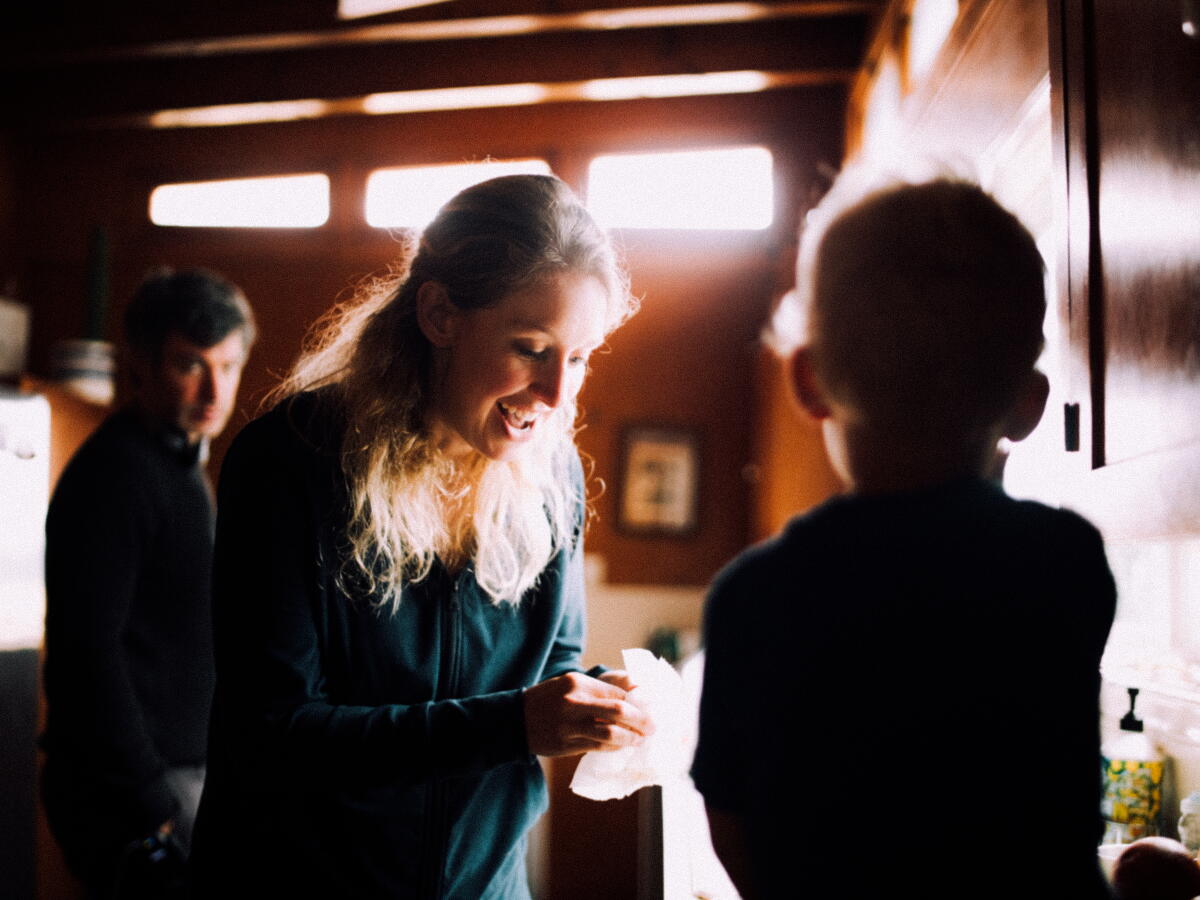
Evans has a theory about why the world sees his partner as a monster: Nobody really knows her. “In the absence of knowing somebody, it’s really easy to make them feel other and scary,” he tells the filmmakers. His proposed solution is “radical transparency” — a familiar Silicon Valley mantra with an ironic resonance given Theranos’ notorious culture of secrecy. The filmmakers are allowed virtually unlimited access to the family’s life, with Fielder even invited to move into their rented house in Del Mar, near San Diego. In one scene, Evans stands completely naked in the shower, brushing his teeth with the bathroom door wide open and the cameras rolling, as Fielder stands awkwardly nearby. At Telluride, Fielder, who had initially planned to stay behind the scenes, admitted he was still perplexed by the couple’s openness. “I’m a weird guy — why do they want me there?” he said. “That messed with my head a little bit.”
Fielder observes Holmes and her family in a scene from the documentary “You Can See Everything”
(A24)
Theranos, the sequel
A federal fraud conviction apparently hasn’t ended Holmes’ ambitions to revolutionize medical testing. Before heading to prison, she and Evans begin laying plans for a new venture involving lasers and artificial intelligence that Evans describes as “2.0” — a chance, he says, “to put the band back together and do it all again.” Holmes declares, “From wherever I am, I’m going to continue to work inventing, even if it’s inventing from a cage.”
Holmes claims she’s never told a lie
For someone convicted of defrauding investors, Holmes has a remarkably uncomplicated view of her own honesty. Asked by Fielder whether she’s ever told a lie in her life, she replies, “I don’t think so.” Pressed — surely she’s pretended to be sick to get out of a party? — she concedes she has, explaining that she thought he meant the criminal case against her. In a scene that became the centerpiece of the film’s teaser trailer, Holmes fixes Fielder with an unwavering stare. “Why would I deceive you?” she asks. “There’s no reason for me to do that.” When Fielder asks whether she’s being real with him, she doesn’t miss a beat: “I’m always being real.”
The Theranos device gets a second look
Holmes hauls out of storage the infamous Theranos device, the machine that helped bring down her company. “So this is the famous scam device,” Fielder says. “It is not a scam device,” Holmes replies. When she insists the machine can perform any medical test, Fielder finds himself drawn into an absurd debate over the meaning of the word “can.” Did she mean it could actually perform those tests, or that it theoretically would once the necessary chemistry had been developed? The man who has made a career out of baffling other people seems genuinely baffled himself, reduced to explaining the word “can” to the founder of Theranos.
Holmes and Evans enter federal court in 2022.
(Nic Coury / Associated Press)
Elizabeth Holmes meets Abbott and Costello
Still trying to make his point, Fielder turns to Abbott and Costello. He plays Holmes the classic “Who’s on First?” comedy routine — two people hopelessly talking past each other. Holmes watches politely and says she finds it funny. But she seems to have missed the central joke: The first baseman’s name is actually Who. “I didn’t pick it up,” she admits. Fielder’s attempts to explain the joke and why he showed it to her get him nowhere. Evans, watching the exchange, regards his wife’s difficulty following the joke as further evidence that her mind simply works differently from everyone else’s.
Fielder gives Holmes an escape kit
On the morning Holmes is due to report to prison, Fielder arrives with a parting gag gift: hair dye and glasses, in case she’d prefer to disguise herself and flee the country. Fielder is famous for excruciatingly awkward deadpan comedy, but Holmes’ parents are there, the family is preparing for an emotional goodbye and he seems to realize almost immediately that he has misjudged the situation. “I didn’t know your parents would be here,” he says, assuring everyone that it’s “just kind of like a joke.” The more he tries to explain himself, the more uncomfortable things become. “Maybe not appropriate for the moment,” he concedes.
Amanda Seyfried becomes a surprise co-star
Seyfried won an Emmy for playing Holmes in Hulu’s “The Dropout,” which Holmes had avoided watching for fear it would be too emotionally disturbing. Fielder persuades Holmes to watch it for the first time, on a laptop in the couple’s bed. She soon breaks down in tears and asks him to turn it off. Later, Fielder visits Seyfried at her apartment and shows her footage of Holmes watching her performance. So we watch Seyfried watch Holmes watch Seyfried playing Holmes as Fielder watches her. And things only get weirder from there.
At Telluride, Fielder said the filmmakers initially doubted Seyfried would want to participate. But after a brief phone call, she invited them over and agreed to be filmed. Neither side knew where things would lead. “It just actually evolved in that organic way, which was really exciting,” Fielder said.
Seyfried as Holmes in a scene from Hulu’s “The Dropout.”
( Beth Dubber / Hulu)
Seyfried plays detective
Seyfried soon finds herself reenacting Holmes’ conversations with Fielder as he tries to make sense of their encounters. She becomes so invested that she joins Fielder on a visit to Evans’ home, hoping she might get him to open up in ways Fielder can’t. “I feel like an undercover cop right now,” she says, clearly getting a rush. There, after meeting the couple’s children, she unexpectedly winds up on a prison phone call with Holmes herself. With only two minutes for the family to talk, Seyfried suddenly seems mortified to be intruding. “I’m so sorry — I don’t want to ruin your two minutes with your beautiful family,” she says. Fielder, naturally, has a camera running.
Evans takes control of the narrative
With Holmes behind bars, Evans seems determined to manage her public image himself. Armed with power of attorney, he takes over her verified X account, posting messages in her name, some of which sound nothing like the carefully controlled Holmes, including one telling another user to “f— off.” “There’s just so much trust that most things I don’t really consult her on,” Evans says at one point. “I know what she’d want.”
Evans’ attempts to steer the documentary itself begin even before Holmes reports to prison. In a meeting later reenacted in the film, after Holmes leaves the room, he raises the subject of money with Fielder, Oppenheim and executives from A24, the studio behind the film, demanding a share of the profits. Fielder says A24 reluctantly agreed, leaving him worried that the integrity of the project may have been compromised. When Holmes later insists she has no financial interest in the film, Fielder is taken aback. Either she’s “fully sincere,” he tells Seyfried, or “she honestly might be the most manipulative person that’s ever lived.” (The film notes at the end that Evans later changed his mind and decided not to accept payment.)
On Oct. 5, Holmes’ X account promoted the documentary with a tantalizing warning: “I really don’t think you are ready for this doc.” Whether that was Holmes speaking or Evans speaking for her is anyone’s guess.
Seyfried confronts Evans
Things turn ugly during that same visit to Evans’ home. A conversation about conjugal visits and Evans’ sex life gives way to a heated argument over his use of Holmes’ X account. Evans brings up the social media backlash Seyfried faced for criticizing Charlie Kirk after his shooting death, then attacks her portrayal of his partner in “The Dropout.” Soon he’s threatening vengeance against people he believes have wronged Holmes. “I’m going to ruin their lives,” he declares. Asked whose lives he means, Evans replies, “F—ing everyone. I’ve got vengeance in my heart.”
Later, away from Evans, Seyfried offers her own assessment: “He is bat— crazy.”