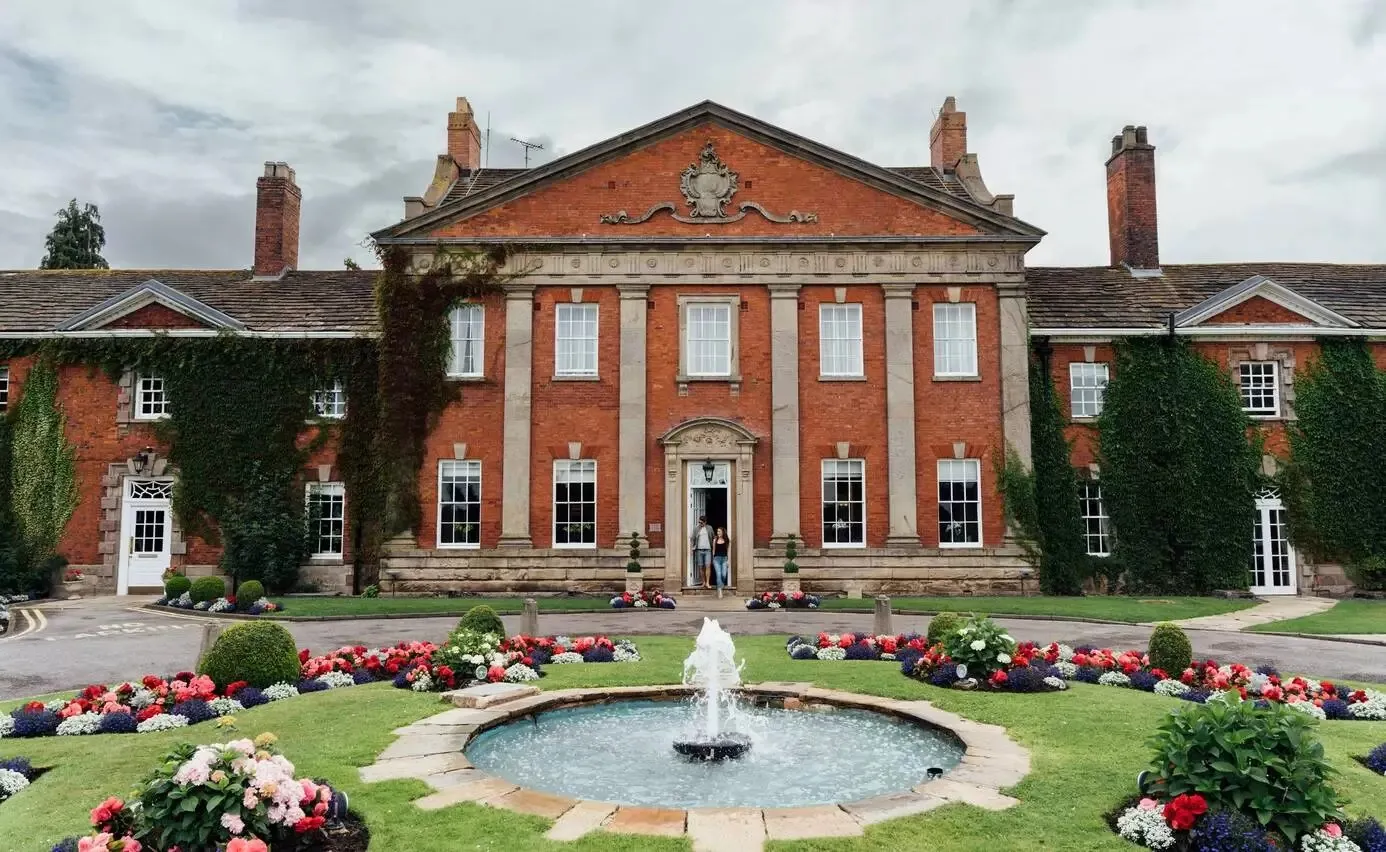
I stayed at the countryside spa hotel loved by WAGs with £50pp rooms

IF you want a beautiful spa hotel with all the trimmings, you’re in luck.
Here’s everything you need to know about staying at Mottram Hall in Cheshire.
Where is Mottram Hall?
Mottram Hall sits in the heart of Premier League Wag country.
It’s rural but easily accessible from Manchester while Wilmslow, on the mainline rail line from London, is just three miles away.
What’s it like?
The Grade II listed building has a modern £15m spa and large gym attached to it, and looks out over an 18-hole championship golf course.
What are the rooms like?
We had a suite with a kingsize bed – the kind of bed where you have to reach over and check if someone else is still there in the morning.


The room was smart and functional over trendy and gimmicky.
It’s very peaceful – we slept with the window open and even the birds seem to wake late.
Room only is £49.50 per person and a spa treatment can be added on for £60. See champneys.com.
What is there to eat and drink?
We visited in January when hotels usually are less busy but the main Carrington Grill restaurant was packed with hen dos and couples.
We had a hearty lunch in the spa so stuck to mains for dinner and tucked into a couple of steaks.
Both well-cooked and good value along with a lovely bottle of Malbec.

Attentive staff brought us a Mojito cocktail and a Cosmopolitan while we waited for our mains.
We finished with some tea and a cheese board.
If you’re staying for longer, Wilmslow is jam-packed with restaurants – Cibo is a favourite of footballers while Hickory’s Smokehouse is more family orientated.
What else is there to do?
Mottram Hall is an activity-based hotel.
There’s a busy golf course, and while the spa attracts a large crowd, the experience was still relaxing and we didn’t feel cramped.
I enjoyed the 20m pool, along with the jacuzzi, steam room and saunas.
The gym looked well-equipped, but I was on a rest day, ahem.
Instead, I saved myself for a Champneys massage which almost caused me to yelp, but made my muscles feel amazing two days later.
A tailored spa break including three-course dinner, breakfast and lunch is £560.
Is it family friendly?
There are some family rooms available that sleep up to three people, as well as kids menu at the restaurants
Is it accessible?
The hotel has disabled parking spaces, along with ramps to the main entrance and the restaurant.
There are also three accessible rooms which have been tailored to suit disabled guests.