count

Spartacus: House of Ashur release date, cast, trailer and episode count

Spartacus has been missing from our screens for 12 years but now a new bloody era is on the horizon

Spartacus: House of Ashur is on the way, breathing new life into the unforgettable violent period drama.

The long-awaited series is going to be set in an unfamiliar world as not only does cunning Ashur (played by Nick Tarabay) survive his horrific series three death, he thrives.

Brought to life on MGM+ and Starz in the US, Spartacus: House of Ashur comes 12 years after the original Spartacus series came to an end.

As the wait is almost over for the iconic show to return, here’s everything there is to know about watching Spartacus: House of Ashur.

When will Spartacus: House of Ashur premiere?

There is just a matter of days left before the drama’s big debut with Spartacus: House of Ashur starting on Friday, December 5, on Starz in the US and Saturday, December 6 on MGM+ in the UK.

Those in the UK can get access to MGM+, which also features the Power franchise and Outlander, via an add-on subscription within Prime Video

The show’s confirmed release has been a long time coming with news of the spin-off first being announced back in 2023.

Spartacus: House of Ashur episode count and release schedule

Spartacus: House of Ashur is going to consist of 10 episodes with only the first two instalments dropping on December 5 and December 6. From this point on, a single episode is going to be released on the same days every week, continuing to bring this epic story to life.

And as long as there are no delays to the schedule, this means that the grand finale is going to be out on Friday, January 30, in the US and Saturday, January 31, in the UK. But fans are going to have to stay tuned in to find out how it all plays out.

Spartacus: House of Ashur cast

Actor Nick Tarabay will be reprising his devious role of Ashur from the original Spartacus series for his own spin-off House of Ashur. As this is an alternate reality, he will be joined by an abundance of new faces including Outlander icon Graham McTavis as Korris.

Other new cast members include Tenika Davis as Achillia, Jamaica Vaughn as Hilara, Ivana Baquero as Messia and Jordi Webber as Tarchon.

The only other original star to briefly join Tarabay in House of Ashur is actress Lucy Lawless as Lucretia. An early released clip has teased her appearing in the underworld where she once again comes face to face with Ashur.

Julius Caesar will be portrayed by actor Jackson Gallagher, a role which had previously been taken on by actor Todd Lascance. It was planned that Lascance would reprise the role but wasn’t able to due to scheduling conflicts with NCIS Sydney.

What is Spartacus: House of Ashur about?

As previously mentioned, Spartacus: House of Ashur is a spin-off from the original Spartacus drama which will be set in an alternate reality. It delves into what could have happened if Ashur hadn’t been decapitated on Mount Vesuvius 12 years ago.

Instead, Ashur has been gifted the gladiator school which had once been owned by Batiatus (John Hannah) as a reward for helping the Romans kill Spartacus and ending the slave rebellion. While Ashur may have been given all that he desired, will he truly be happy with his second chance?

Spartacus: House of Ashur will premiere on Friday, December 5, on Starz in the US and Saturday, December 6, on MGM+ in the UK.

Source link

Missing Virginia high school football coach now considered a fugitive

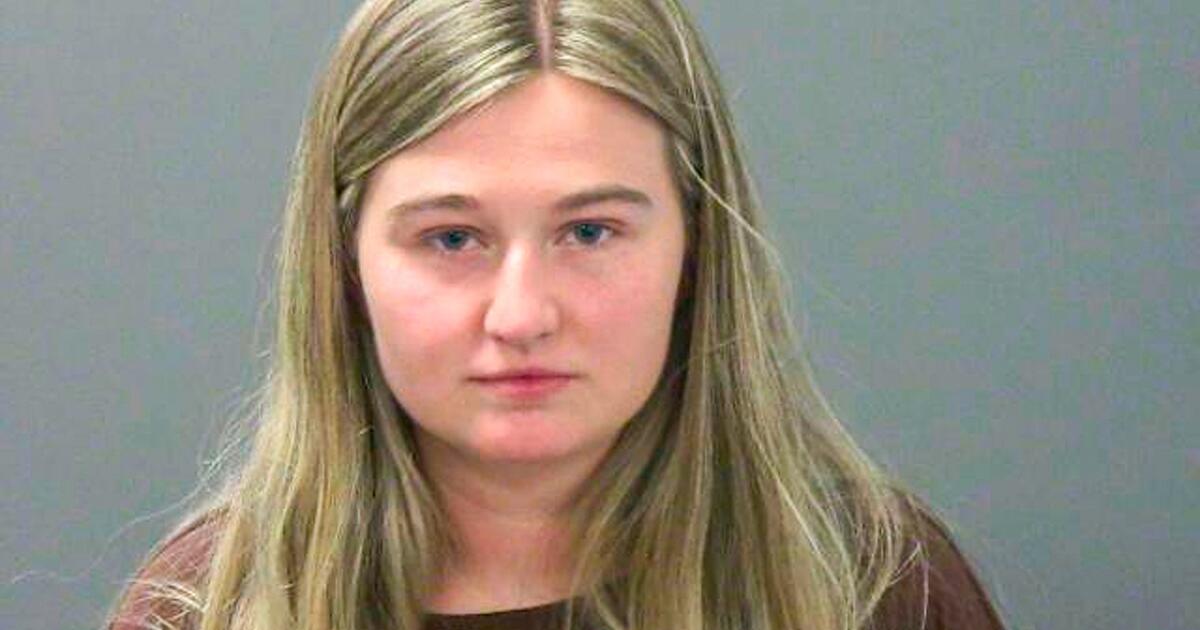
A Virginia high school football coach who went missing last week as his team prepared for a playoff game is now considered a fugitive.

Virginia State Police has issued 10 warrants for the arrest of Appalachia resident Travis Lee Turner, head football coach at Union High School in Big Stone Gap, Va. Turner, 46, is wanted on five counts of possession of child pornography and five counts of using a computer to solicit a minor.

The investigation is ongoing, police said in a statement, and additional charges are pending.

“Police are actively searching for Turner,” the department also said. “Since his disappearance, VSP has utilized a number of assets, including search and rescue teams, drones and k9s, to assist in the search. VSP’s main priority is locating Turner safely; he is now considered a fugitive.”

On Nov. 20, special agents from the Bureau of Criminal Investigation Wytheville Field Office were sent to Turner’s home “as part of the early stages of an investigation,” Virginia State Police said in its statement.

“This was part of the investigation, and not to arrest him,” the department added. “While in transit, the agents were informed that Turner was no longer at the location.”

Turner was last seen wearing a gray sweatshirt, sweatpants and glasses. He has coached Union since 2011. Two days after Turner’s disappearance, the Bears improved to 12-0 with a victory in a regional semifinal game.

“Wise County Public Schools is aware that law enforcement has filed charges against a staff member who has been on administrative leave,” Mike Goforth, division superintendent for Wise County Public Schools, said in a statement emailed to The Times.

“The individual remains on leave and is not permitted on school property or to have contact with students. The division will continue to cooperate with law enforcement as this process moves forward. Because this is an active legal matter involving personnel, the division cannot comment further.”

Source link

Contributor: Don’t count on regime change to stabilize Venezuela

As the USS Gerald Ford aircraft carrier sails to the Caribbean, the U.S. military continues striking drug-carrying boats off the Venezuelan coast and the Trump administration debates what to do about Venezuelan dictator Nicolás Maduro, one thing seems certain: Venezuela and the western hemisphere would all be better off if Maduro packed his bags and spent his remaining years in exile.

This is certainly what Venezuelan opposition leader María Corina Machado is working toward. This year’s Nobel Prize laureate has spent much of her time recently in the U.S. lobbying policymakers to squeeze Maduro into vacating power. Constantly at risk of detention in her own country, Machado is granting interviews and dialing into conferences to advocate for regime change. Her talking points are clearly tailored for the Trump administration: Maduro is the head of a drug cartel that is poisoning Americans; his dictatorship rests on weak pillars; and the forces of democracy inside Venezuela are fully prepared to seize the mantle once Maduro is gone. “We are ready to take over government,” Machado told Bloomberg News in an October interview.

But as the old saying goes, if it sounds too good to be true, it probably is. While there’s no disputing that Maduro is a despot and a fraud who steals elections, U.S. policymakers can’t simply take what Machado is saying for granted. Washington learned this the hard way in the lead-up to the war in Iraq, when an opposition leader named Ahmed Chalabi sold U.S. policymakers a bill of goods about how painless rebuilding a post-Saddam Hussein Iraq would be. We all know how the story turned out — the United States stumbled into an occupation that sucked up U.S. resources, unleashed unpredicted regional consequences and proved more difficult than its proponents originally claimed.

To be fair, Machado is no Chalabi. The latter was a fraudster; the former is the head of an opposition movement whose candidate, Edmundo González Urrutia, won two-thirds of the vote during the 2024 Venezuelan presidential election (Maduro claimed victory anyway and forced González into exile). But just because her motives are good doesn’t mean we shouldn’t question her assertions.

Would regime change in Caracas produce the Western-style democracy Machado and her supporters anticipate? None of us can rule it out. But the Trump administration can’t bank on this as the outcome of a post-Maduro future. Other scenarios are just as likely, if not more so — and some of them could lead to greater violence for Venezuelans and more problems for U.S. policy in Latin America.

The big problem with regime change is you can never be entirely sure what will happen after the incumbent leader is removed. Such operations are by their very nature dangerous and destabilizing; political orders are deliberately shattered, the haves become have-nots, and constituencies used to holding the reins of power suddenly find themselves as outsiders. When Hussein was deposed in Iraq, the military officers, Ba’ath Party loyalists and regime-tied sycophants who ruled the roost for nearly a quarter-century were forced to make do with an entirely new situation. The Sunni-dominated structure was overturned, and members of the Shia majority, previously oppressed, were now eagerly taking their place at the top of the system. This, combined with the U.S. decision to bar anyone associated with the old regime from serving in state positions, fed the ingredients for a large-scale insurgency that challenged the new government, precipitated a civil war and killed tens of thousands of Iraqis.

Regime change can also create total absences of authority, as it did in Libya after the 2011 U.S.-NATO intervention there. Much like Maduro today, Moammar Kadafi was a reviled figure whose demise was supposed to pave the way for a democratic utopia in North Africa. The reality was anything but. Instead, Kadafi’s removal sparked conflict between Libya’s major tribal alliances, competing governments and the proliferation of terrorist groups in a country just south of the European Union. Fifteen years later, Libya remains a basket case of militias, warlords and weak institutions.

Unlike Iraq and Libya, Venezuela has experience in democratic governance. It held relatively free and fair elections in the past and doesn’t suffer from the types of sectarian rifts associated with states in the Middle East.

Still, this is cold comfort for those expecting a democratic transition. Indeed, for such a transition to be successful, the Venezuelan army would have to be on board with it, either by sitting on the sidelines as Maduro’s regime collapses, actively arresting Maduro and his top associates, or agreeing to switch its support to the new authorities. But again, this is a tall order, particularly for an army whose leadership is a core facet of the Maduro regime’s survival, has grown used to making obscene amounts of money from illegal activity under the table and whose members are implicated in human rights abuses. The very same elites who profited handsomely from the old system would have to cooperate with the new one. This doesn’t appear likely, especially if their piece of the pie will shrink the moment Maduro leaves.

Finally, while regime change might sound like a good remedy to the problem that is Venezuela, it might just compound the difficulties over time. Although Maduro’s regime’s remit is already limited, its complete dissolution could usher in a free-for-all between elements of the former government, drug trafficking organizations and established armed groups like the Colombian National Liberation Army, which have long treated Venezuela as a base of operations. Any post-Maduro government would have difficulty managing all of this at the same time it attempts to restructure the Venezuelan economy and rebuild its institutions. The Trump administration would then be facing the prospect of Venezuela serving as an even bigger source of drugs and migration, the very outcome the White House is working to prevent.

In the end, María Corina Machado could prove to be right. But she is selling a best-case assumption. The U.S. shouldn’t buy it. Democracy after Maduro is possible but is hardly the only possible result — and it’s certainly not the most likely.

Daniel R. DePetris is a fellow at Defense Priorities.

Source link