council

L.A. County wants a healthcare sales tax. Cities are in revolt.

It’s one thing most everyone agrees on: federal funding cuts have left the Los Angeles County health system teetering toward financial collapse.

But the supervisors’ chosen antidote — a half-cent sales tax to replenish county coffers — is being condemned by a slew of cities as its own form of financial catastrophe.

“I heard from every city in my district,” said Kathryn Barger, the only supervisor who voted against putting the sales tax on the June ballot.

The resounding reaction? “Absolutely not,” she says.

“People are fatigued,” Barger said. “I’m not convinced that it’s going to pass.”

You’re reading the L.A. on the Record newsletter

Observers wouldn’t have sensed that fatigue from the rowdy crowd of supporters that filled the board meeting Tuesday, along with seldom-used overflow rooms. The supervisors voted 4-1 at the meeting to put the tax on the ballot.

“There really are no other viable and timely options,” said Supervisor Holly Mitchell, who introduced the measure along with Supervisor Hilda Solis. “Trust me, I looked high and low.”

The goal, supervisors say, is to generate $1 billion per year to backfill the dwindling budgets of local hospitals and clinics battered by federal funding cuts.

The county’s already bracing for impact. The Department of Public Health announced Friday it would shutter seven clinics. Officials say it’s just the beginning, with the county poised to lose more than $2 billion in funding for health services over the next three years. Hospitals could be down the road, they warn.

But many cities, some of which could have local sales tax hit more than 11%, are revolting on the plan.

“I have been getting calls and texts and letters like honestly I have not gotten in a long time,” Supervisor Janice Hahn told the audience as a message from Jeff Wood — the vice mayor of Lakewood — pinged on her phone. “They are really diving in on this one.”

In a series of opposition letters, the cities unleashed a torrent of criticism. Norwalk called the tax “rushed.” Palmdale said it had “significant flaws.” Glendale found it “deeply troubling and fundamentally unfair.”

Some bristled at the cost to consumers. Palmdale and Lancaster — some of the poorest cities in the county — could wind up with some of the highest sales tax rates in the state if the measure passes.

Some cities say the bigger issue is they don’t trust the county. They point to its checkered history of pushing ballot measures that don’t live up to their promises.

Measure B, a special parcel tax, was passed in 2002 to fund the county’s trauma center network. An audit more than a decade later found the county couldn’t prove it used the money for emergency medical services.

Measure H, the homelessness services tax measure, was passed in 2017 as a temporary tax. Voters agreed in 2024 to make the tax permanent and to double the rate — though some cities insist they’ve never gotten their fair share of the funds.

“It’s a historical issue,” said Glendora mayor David Fredendall, whose city opposes the sales tax. “We don’t trust it.”

The county decided to put the sales tax on the ballot as a general tax, meaning the money goes into the general fund. Legally, supervisors could use the money for whatever services they desire.

“They say ‘No, this is our plan’, but we’re going to expand from five to nine supervisors over the next few years before this tax expires,” said Marcel Rodarte, the head of the California Contract Cities Assn., a coalition of cities inside the county. “They may say we need to use these funds for something else.”

A general tax also is easier to pass, since it needs only a majority vote. Special taxes — levies earmarked for a specific purpose — need two-thirds of the vote.

The measure also asks voters to approve the creation of an oversight group that would monitor where the money goes. The supervisors also voted on a spending plan for the tax money, which would dedicate the largest portion of funds for uninsured residents over the next five years.

Some opponents predict the tax will stick around longer than advertised.

“A temporary tax is like Bigfoot,” said Jon Coupal, president of the Howard Jarvis Taxpayers Assn., a group that advocates for lower taxes. “It exists in fantasy.”

State of play

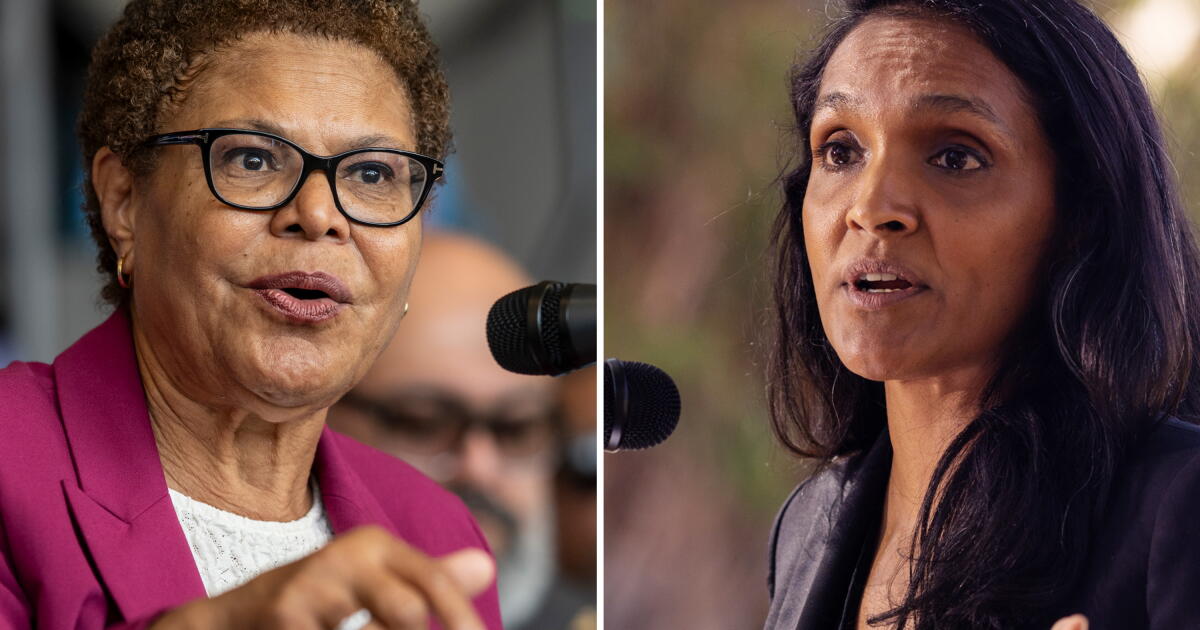
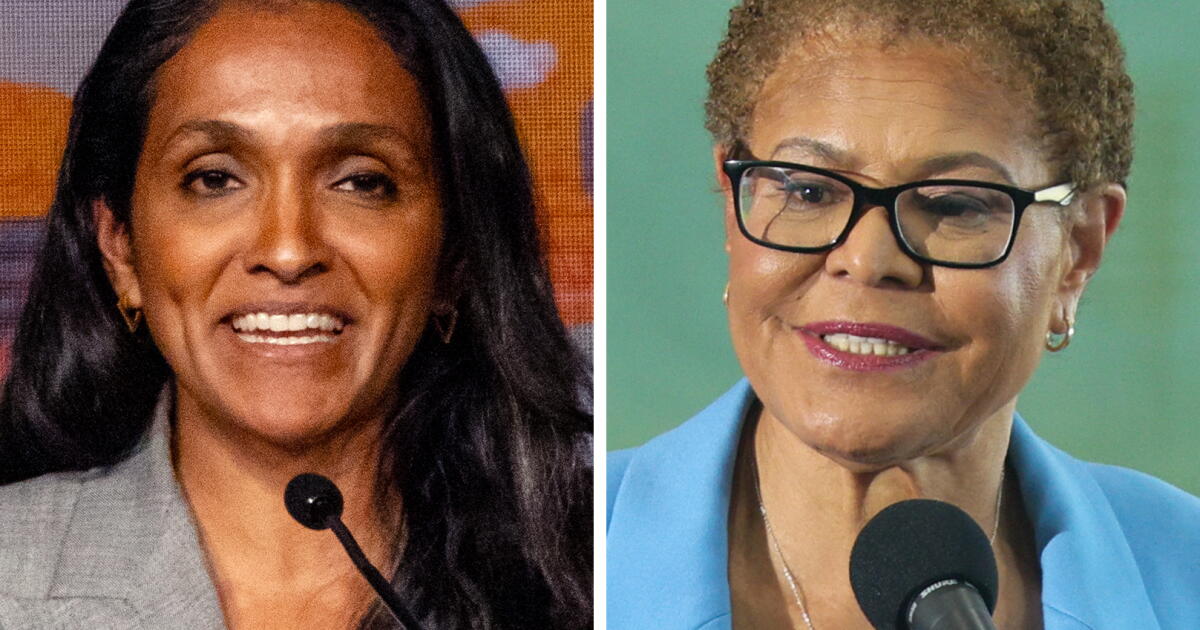
FRIENDLY FIRE: Three hours before the filing deadline, L.A. City Councilmember Nithya Raman jumped into the race for mayor, challenging her former ally Karen Bass. Her candidacy will be Bass’ most serious threat.

— DEFUND DETOUR: Shortly after, Raman staked out her position on cops, saying she doesn’t want the LAPD to lose more police. Raman called for department downsizing when she first ran for city council in 2020.

— LOYAL LABOR: The head of the AFL-CIO, the county’s powerful labor federation, blasted Raman as an “opportunist.” Federation president Yvonne Wheeler said her organization will “use every tool” at its disposal to get Bass reelected.

— PETITION PUSH: Scores of candidates for L.A. city offices picked up their petitions Feb. 7, launching their effort to collect the signatures they need to qualify for the ballot. The first to turn in a petition was Councilmember Traci Park, who is facing two challengers while running for reelection in a coastal district.

— EYES ON ICE: Los Angeles police officers must turn on their body cameras if they’re at the scene of federal immigration enforcement operations, according to a new executive directive issued by Bass. LAPD officers also must document the name and badge number of the agents’ on-scene supervisor.

— CONTESTING CLEANUPS: A federal judge ruled this week that the city of L.A. violated the constitutional rights of homeless people by seizing and destroying their personal property during encampment cleanups. Lawyers for the plaintiffs want U.S. District Judge Dale S. Fischer to issue an injunction requiring the city to give homeless people the opportunity to contest the seizure of their property.

— HOTEL HIKE: Voters in the June 2 election will be asked to hike the city’s tax on nightly hotel stays — increasing it to 16% from 14% — for the next three years. The tax would then drop to 15% in 2029.

— PAYDAY POLITICS: The county is considering a proposal that would remove supervisors’ final decision-making power in contract disputes involving sheriff’s deputies and firefighters. Supporters say it’ll take politics out of labor negotiations while opponents warn of bloated labor costs.

QUICK HITS

  • Where is Inside Safe? The mayor’s signature homelessness program went to Los Angeles City Council District 13, bringing 50 unhoused Angelenos indoors from an encampment.
  • On the docket next week: The county’s back to its marathon budget briefings. Tune in Tuesday for presentations from the sheriff, district attorney and probation department.

Stay in touch

That’s it for this week! Send your questions, comments and gossip to LAontheRecord@latimes.com. Did a friend forward you this email? Sign up here to get it in your inbox every Saturday morning.
Source link

L.A. streetlights take a year to fix. City Council touts solar power

Faced with numerous complaints about broken streetlights that have plunged neighborhoods into darkness, two Los Angeles City Council members unveiled a plan Friday to spend $65 million on installing solar-powered lights.

With 1 in 10 streetlights out of service because of disrepair or copper wire theft, Councilmembers Katy Yaroslavsky and Eunisses Hernandez launched an effort to convert at least 12% of the city’s lights to solar power — or about 500 in each council district.

Broken streetlights emerged as an hot-button issue in this year’s election, with council members scrambling to find ways to restore them. Councilmember Nithya Raman, now running against Mayor Karen Bass, cited the broken lights as an example of how city agencies “can’t seem to manage the basics.”

By switching to solar, the streetlights will be less vulnerable to theft, said Yaroslavsky, who represents part of the Westside.

“We can’t keep rebuilding the same vulnerable systems while copper theft continues to knock out lights across Los Angeles,” she said.

Three other council members — Traci Park, Monica Rodriguez and Hugo Soto-Martínez — signed on to the proposal. All five are running for reelection.

Miguel Sangalang, director of the Bureau of Street Lighting, said there are 33,000 open service requests to fix streetlights across L.A., although some may be duplicates. The average time to fix a streetlight is 12 months, he said.

Repair times have increased because of a rise in vandalism, the department’s stagnant budget and a staff of only 185 people to service the city’s 225,000 streetlights, he said.

About 60,000 street lights are eligible to be converted to solar, according to Yaroslavsky.

Council members also are looking to increase the amount the city charges property owners for streetlight maintenance. Yaroslavsky said the assessment has been unchanged since 1996, forcing city leaders to rely on other sources of money to cover the cost.

Last month, Soto-Martínez announced he put $1 million into a streetlight repair team in his district, which stretches from Echo Park to Hollywood and north to Atwater Village. Those workers will focus on repairing broken lights, hardening lights to prevent copper wire theft and clearing the backlog of deferred cases.

On Monday, city crews also began converting 91 streetlights to solar power in Lincoln Heights and Cypress Park. Hernandez tapped $500,000 from her office budget to pay for the work. The shift to solar power should save money, she said, by breaking the cycle of constantly fixing and replacing lights.

“This is going to bring more public safety and more lights to neighborhoods that so desperately need it and that are waiting a long time,” she said.

In recent years, neighborhoods ranging from Hancock Park and Lincoln Heights to Mar Vista and Pico Union have been plagued by copper wire theft that darkens the streets. On the 6th Street Bridge, thieves stole seven miles’ worth of wire.

Yaroslavsky and Park spoke about the problem Friday at a press conference in the driveway of a Mar Vista home. Andrew Marton, the homeowner, pointed to streetlights around the block that have been targeted by thieves.

Many surrounding streets have been dark since shortly after Christmas, Marton said. He has changed his daily routines, trying not to walk his dog late at night and worrying for the safety of his family.

He said he reported the problem to the city and was told it would take 270 days to fix. He then reached out to Park, who contacted the police department, he said.

A couple of neighboring streets had their lights restored, he said, but his street remains dark at night.

Park said she and Yaroslavsky identified $500,000 in discretionary funds to pay for a dedicated repair team to fix streetlights, either by adding solar or by reinforcing the existing copper wire, in their respective Westside districts.

Source link

Trump’s deportations are losing him the ‘Mexican Beverly Hills’

Carlos Aranibar is a former Downey public works commissioner and remains involved in local Democratic politics. But until a few weeks ago, the son of Bolivian and Mexican immigrants hadn’t joined any actions against the immigration raids that have overwhelmed Southern California.

Life always seemed to get in the way. Downey hadn’t been hit as hard as other cities in Southeast L.A. County, where elected officials and local leaders urged residents to resist and helped them organize. Besides, we’re talking about Downey, a city that advocates and detractors alike hyperbolically call the “Mexican Beverly Hills” for its middle-class Latino life and conservative streak.

Voters recalled a council member in 2023 for being too wokosa, and the council decided the next year to block the Pride flag from flying on city property. A few months later, Donald Trump received an 18.8% increase in voters compared to 2020 — part of a historic shift by Latino voters toward the Republican Party.

That’s now going up in flames. But it took a while for Aranibar to full-on join the anti-migra movement — and people like him are shaping up to be a real threat to President Trump and the GOP in the coming midterms and beyond.

On Jan. 27, Aranibar saw a Customs and Border Protection truck on the way home from work. That jolted Aranibar, an electrician with the International Brotherhood of Electrical Workers’ Local 11, into action.

“It’s not something like that I was in a bubble and I was finally mad — I’ve been mad,” the 46-year-old said. “But seeing [immigration patrols] so close to my city, I thought ‘That’s not cool.’”

He Googled and called around to see how best to join others and resist. Someone eventually told him about a meeting that evening in a downtown Downey music venue. It was happening just a few days after Border Patrol agents shot and killed Minneapolis resident Alex Pretti after he tried to shield a fellow protester from pepper spray, and a few weeks after immigration agents tried to detain two Downey gardeners with legal status before residents hounded them away and recorded the encounter.

Aranibar joined more than 200 people standing shoulder to shoulder for the launch of a Downey ICE Watch group. They learned how to spot and track immigration agents and signed up for email updates. A box of whistles was passed around so people could alert their neighbors if la migra was around.

“Who here has been a member of a patrol?” an organizer asked from the stage.

Only a few people raised their hands.

“I saw familiar faces and new faces, energized — it was really nice,” Aranibar said afterward. “I got the sense that people in Downey have been fired up to do something, and now it was happening.”

A similarly unexpected political awakening seemed to be happening just down the street at Downey City Hall, on the other side of the political aisle.

Mayor Claudia Frometa set tongues wagging across town after video emerged of her whooping it up with other Latino Trump supporters the night he won his reelection bid. Activists since have demanded she speak out against the president’s deportation deluge, protesting in front of City Hall and speaking out during council meetings when they didn’t buy her rationale that local government officials couldn’t do much about federal actions.

“Mayor Frometa is not a good Californian right now,” councilmember Mario Trujillo told me before the Jan. 27 council meeting. During the previous meeting, Frometa cut off his mic and called for a recess after Trujillo challenged Frometa to talk to “her president” and stop what’s going on. “It’s not a time to deflect, it’s not a time to hedge — it’s a time to stand up. She’s giving us a bulls—t narrative.”

Downey Mayor Claudia Frometa listens to public testimony

Even Downey Mayor Claudia Frometa, a supporter of President Trump, has called out his immigation policies.

(Ronaldo Bolanos/Los Angeles Times)

That night, Frometa listened to critics like Trujillo slam her anew while wearing a wearied smile. When it was her turn to speak at the end of the night, she looked down at her desk as if reading from prepared remarks — but her voice and gesticulations felt like she was speaking from somewhere deeper.

“This issue [of deportations] which we have been seeing unfold and morph into something very ugly — it’s not about politics anymore,” Frometa said. “It’s about government actions not aligning with our Constitution, not aligning with our law and basic standards of fairness and humanity.”

As she repeatedly put on and removed her glasses, Frometa encouraged people to film immigration agents and noted the council had just approved extra funding for city-sponsored know-your-rights and legal aid workshops.

“This is beyond party affiliation,” the mayor concluded, “and we will stand together as a community.”

Suddenly, the so-called “Mexican Beverly Hills” was blasting Trump from the left and the right. Among Latinos, such a shift is blazing around the country like memes about Bad Bunny’s Super Bowl halftime show. Trump’s support among former voters has collapsed to the point that Florida state senator Ileana Garcia, co-founder of Latinas for Trump, told the New York Times that the president “will lose the midterms” because of his scorched-earth approach to immigrants.

Former Assembly member Hector de la Torre said he’s not surprised by what’s happening in a place like Downey.

“When it hits home like that, it’s not hypothetical anymore — it’s real,” he said. De La Torre was at the Downey ICE Watch meeting and works with Fromenta in his role as executive director of the Gateway Cities Council of Governments, which advocates for 27 cities stretching from Montebello to Long Beach to Cerritos and all the southeast L.A. cities.

“People are coming out the way they maybe didn’t in the past “ he continued. “It’s that realization that [raids] can even happen here.”

Mario Guerra is a longtime chaplain for the Downey police department and former mayor who remains influential in local politics — he helped the entire council win their elections. While he seemed skeptical of the people who attended the Downey ICE Watch — “How many of then were actual residents?” — he noted “frustration” among fellow Latino Republicans over Trump and his raids.

“I didn’t vote for masked men picking people up at random,” Guerra said before mentioning the migra encounter with the gardeners in January. “If that doesn’t weigh on your heart, then you’ve got some issues. All this will definitely weigh on the midterms.”

Even before Frometa’s short speech, I had a hint of what was to to come. Before the council meeting, I met with the termed-out mayor in her office.

The 51-year-old former Democrat is considered a rising GOP star as one of the few Republican Latino elected officials in Los Angeles and the first California Republican to head the nonpartisan National Assn. of Latino Elected and Appointed Officials. Her family moved to Downey from Juarez, Mexico when she was 12. Whites made up the majority of the suburban city back then, and it was most famous in those days as the land that birthed the Carpenters and the Space Shuttle.

Now, Downey is about 75% Latino, and four of its five council members are Latino.

So what did Frometa expect of Trump in his second term?

“I was expecting him to enforce our laws,” she replied. “To close our border so that we didn’t have hundreds of thousands coming in unchecked. I was expecting him to be tough on crime. But the way it’s being played out with that enforcement and the tactics is not what we voted for. No. No.”

Over our 45-minute talk, Frometa described Trump’s wanton deportation policy as “heartbreaking,” “racial profiling,” “problematic,” “devastating” and “not what America stands for.” The mayor said Republicans she knows feel “terrible” about it: “You cannot say you are pro-humanity and be OK with what’s happening.”

Asked if she was carrying a passport like many Latinos are — myself included — she said she was “almost” at that point.

Neighbors walk past a home with signs showing support for then president-elect Trump

A home in Downey shows support for Trump in 2024.

(Gina Ferazzi/Los Angeles Times)

Frometa defended her relative silence compared to other Latino elected officials over the matter.

“We live in a time that is so polarizing that people want their elected officials to come out fighting,” she said. “And I think much more can be accomplished through different means.”

Part of that is talking with other Southern California Republicans “at different levels within the party” about how best to tell the Trump administration to “change course and change fast,” although she declined to offer details or names of other GOP members involved.

I concluded our interview by asking if she would vote for Trump again if she had the chance.

“It’s a very hard — It’s a hard question to answer,” Frometa said with a sigh. “We want our communities to be treated fairly, and we want our communities to be treated humanely. Are they being treated that way right now? They’re not. And I’m not OK with that.”

So right now you don’t know?

“Mm-hmm.”

You better believe there’s a lot more right-of-center Latinos right now thinking the same.

Source link

Haiti’s transitional council hands power to US-backed prime minister | Politics News

Move comes after council tried to oust PM Fils-Aime and the US recently deployed warship to waters near Haiti’s capital.

Haiti’s Transitional Presidential Council has handed power to US-backed Prime Minister Alix Didier Fils-Aime after almost two years of tumultuous governance marked by rampant gang violence that has left thousands dead.

The transfer of power between the nine-member transitional council and 54-year-old businessman Fils-Aime took place on Saturday under tight security, given Haiti’s unstable political climate.

Recommended Stories

list of 2 itemsend of list

“Mr Prime Minister, in this historic moment, I know that you are gauging the depth of the responsibility you are taking on for the country,” council President Laurent Saint-Cyr told Fils-Aime, who is now the country’s only politician with executive power.

In late January, several members of the council said they were seeking to remove Fils-Aime, leading the United States to announce visa revocations for four unidentified council members and a cabinet minister.

Days before the council was dissolved, the US deployed a warship and two US coastguard boats to waters near Haiti’s capital, Port-au-Prince, where gangs control 90 percent of the territory.

US Secretary of State Marco Rubio stressed “the importance” of Fils-Aime’s continued tenure “to combat terrorist gangs and stabilise the island”.

The council’s plan to oust Fils-Aime for reasons not made public appeared to fall to the wayside as it stepped down in an official ceremony on Saturday.

Fils-Aime now faces the daunting task of organising the first general elections in a decade.

Election this year unlikely

The Transitional Presidential Council was established in 2024 as the country’s top executive body, a response to a political crisis stretching back to the 2021 assassination of President Jovenel Moise.

It quickly devolved into infighting, questions over its membership, and allegations of corruption falling overwhelmingly short of its mission to quell gang violence and improve life for Haitians.

Just six months after being formed, the body removed Prime Minister Garry Conille, selecting Fils-Aime as his replacement.

Despite being tasked with developing a framework for federal elections, the council ended up postponing a planned series of votes that would have selected a new president by February.

Tentative dates were announced for August and December, but many believe it is unlikely an election and a run-off will be held this year.

Last year, gangs killed nearly 6,000 people in Haiti, according to the United Nations. About 1.4 million people, or 10 percent of the population, have been displaced by the violence.

The UN approved an international security force to help police restore security, but more than two years later, fewer than 1,000 of the intended troops – mostly Kenyan police – have been deployed. The UN says it aims to have 5,500 troops in the country by the middle of the year, or by November at the latest.

Source link

Everybody who’s anybody is at the city clerk’s office

Good morning, and welcome to L.A. on the Record — our City Hall newsletter. It’s Noah Goldberg, giving you the latest on city and county government.

For six days this week, anybody could dream at the L.A. city clerk’s office.

Angelenos seeking elected office had to file their declarations of intent between Monday and Saturday to be eligible for the June 2 primary.

All week, the third floor courtyard of the C. Erwin Piper Technical Center was abuzz with candidates milling about, filling out paperwork, signing ethics forms and writing down their job histories.

Some will win elected office, which, naturally, means others will lose.

And some may not get on the ballot — each candidate must gather 500 legitimate voter signatures by March 4, which is relatively easy in citywide races but harder in council districts.

A candidate arrives to file to run for office in the the 2026 Municipal elections at the city clerk's office

A candidate arrives to file to run for office in the the 2026 Municipal elections at the city clerk’s office in downtown Los Angeles on Wednesday.

(Jason Armond / Los Angeles Times)

“I know I won’t win,” said Joseph Garcia, a gardener, former screenwriter and member of the Venice Neighborhood Council who filed Tuesday to run for mayor.

During an interview, Garcia removed his shoe to show an injury to his foot. City clerk staffers politely asked him to put his shoe back on.

One candidate showed up on colorful roller skates wearing a wreath of flowers on her head. Another came in scrubs.

Other aspiring politicians were ready to get down to brass tacks.

Tim Gaspar, a business owner who is running to represent Council District 3, purchased a strawberry Pop-Tart from a vending machine and spoke about his fundraising numbers.

In the race to replace Councilmember Bob Blumenfield, who is terming out, Gaspar has raised more than $300,000, which is $100,000 more than the two other candidates who have raised any cash at all.

Gaspar, who was wearing a blue suit, said the money came from more than 900 donors.

“It’s been a grassroots campaign,” he said.

Minutes earlier, former reality television star Spencer Pratt stepped out of his Ford F150 and changed from flip-flops into sneakers before walking into the building to file his declaration to run for mayor.

Pratt wore shorts, a hat that said “Heidiwood” — for his wife, Heidi Pratt — and a shirt for Heidi’s “Superficial” album tour. He was flanked by two private security guards and two aides.

As Pratt was walking in, Jose Ugarte, a top aide to Councilmember Curren Price who is running to replace his boss in Council District 9, was walking out.

“F— that guy,” Ugarte said about Pratt, a registered Republican who has received endorsements from many in the MAGA world. Ugarte has been explicit in his anti-Trump sentiment, specifically over the summer’s immigration raids.

Henry Mantel files to run for City Council District 5 in the the 2026 Municipal elections at the city clerk's office

Henry Mantel files to run for City Council District 5 at the city clerk’s office on Wednesday.

(Jason Armond / Los Angeles Times)

In the elevator, Pratt edited a social media video in which he railed against Los Angeles Fire Department Chief Jaime Moore for not looking into who watered down the after-action report into the Palisades fire.

About 30 minutes later, after he finished filing, Pratt took questions from a gaggle of reporters huddled beyond a barrier that said “No media beyond this point.”

“It’s me or Karen Bass. We have no other choice,” said Pratt, one of more than 30 candidates who have filed to run against Bass, who is seeking a second term as mayor.

Watching from under a white tent as she filled out her declaration was Dylan Kendall, who is trying to oust Councilmember Hugo Soto-Martínez in District 13.

“I think Spencer Pratt kind of sucked the air out of the room,” Kendall said.

The former bartender said it took her about an hour to fill out her forms. She feels that Soto-Martínez has “neglected and ignored” residents in her district, which spans Echo Park and Hollywood, all the way to Atwater Village.

In the parking lot, Keeldar Hamilton, who sported a long ponytail, had just finished filing.

Asked what he was running for as he got into his Tesla Cybertruck, Hamilton said, “Governor … I mean mayor.”

You’re reading the L.A. on the Record newsletter

State of play

— MAY-OR MAY NOT: The filing deadline to run for mayor is Saturday at 12 p.m., and some candidates have really taken it down to the wire. L.A. County Supervisor Lindsey Horvath is still weighing a run. Former schools Supt. Austin Beutner dropped out on Thursday, following the death of his 22-year-old daughter. Billionaire developer Rick Caruso, meanwhile, decided not to run — for the second time in less than a month.

— FIRE WATER: Two sources told The Times that two people close to Bass informed them that Bass wanted key findings in the LAFD after-action report on the Palisades fire softened. Bass denied The Times’ report, calling it “dangerous and irresponsible” for the newspaper to rely on third-hand information.

— SOTC PART 1: Bass delivered the first of two States of the City Monday, urging Angelenos to come together ahead of the 2028 Olympics while announcing a push to clean up Los Angeles’ busiest streets in the run-up to the Games. The second speech will take place in April.

— WASSERMANIA: LA28 Olympics committee Chair Casey Wasserman faced calls from L.A. officials to resign following revelations about racy emails he exchanged with convicted sex offender Ghislaine Maxwell, Jeffrey Epstein’s former romantic partner. Bass did not take a stance, saying it was up to the LA28 board.

— FREE OF FEE: Palisades fire victims rebuilding homes, duplexes, condominium units, apartment complexes and commercial buildings will not have to pay permit fees, the City Council decided Tuesday. Forfeiting those fees is expected to cost as much as $90 million over three years, according to Matt Szabo, the city’s top budget analyst.

— PRICE FAINT: Councilmember Curren Price, 75, was taken to the hospital Wednesday after fainting during a Black History Month event at City Hall. Price was “in stable condition, is in recovery and doing well,” said Council President Marqueece Harris-Dawson.

— HALL PASS: Former State Assemblymember Isadore Hall dropped out of the race for L.A. city controller, saying in a statement to The Times that a death in his family had prompted his decision.

— SHERIFF SUITS: L.A. County spent $229 million on legal payouts and lawyer bills last fiscal year. Nearly half of that — $112 million — went to defend the Sheriff’s Department against lawsuits, a 12% uptick in the department’s payouts from the year before.

— COUNTY CUTS: The county approved nearly $200 million in cuts to homeless services, despite 2024 voter support for a sales tax to combat the crisis.

QUICK HITS

  • Where is Inside Safe? The mayor’s signature homelessness program went to Lincoln Heights, bringing 17 unhoused Angelenos indoors from an encampment.
  • On the docket next week: A plan to build 1,000 units of housing at the Row DTLA goes before the Planning Commission on Thursday.

Stay in touch

That’s it for this week! Send your questions, comments and gossip to LAontheRecord@latimes.com. Did a friend forward you this email? Sign up here to get it in your inbox every Saturday morning.
Source link

Ospreys: ‘We were told they wouldn’t exist’ – Swansea Council

Swansea Council had said it would publish the minutes of the meeting, which took place on 22 January, but in its statement claimed they had not done so because the WRU, Y11, and Ospreys objected to it.

The meeting included officials from Swansea Council, the WRU chief executive Abi Tierney, and Ospreys chief executive Lance Bradley.

In a statement, the council listed a number of what it called “key facts” that it claims were said at the meeting.

The statement includes that the Ospreys chief executive Lance Bradley confirmed that there would not be a professional Ospreys team playing regional rugby after 2027 if the takeover of Cardiff by Y11 went through.

It is claimed that Mr Bradley also said a merger with Swansea RFC could follow, which would see a merged team competing in the semi professional Super Rygbi Cymru instead of the United Rugby Championship (URC).

The council statement said: “Council representatives left the meeting with a clear understanding that the basis of the WRU’s and Y11’s proposals for the future, if the acquisition of Cardiff Rugby by Y11 is completed, was that the Ospreys would not continue as a professional regional team after 2026-27.”

“The council expressed deep frustration that, despite extensive and recent discussions about the redevelopment of St Helen’s, it had not been informed earlier of these proposals. This lack of transparency and engagement is wholly unacceptable.”

The council claim that the WRU’s restructuring proposals would breach UK competition law and has issued pre-action letters to the WRU and Y11 requesting that they pause their plans.

The WRU has proposed cutting one of its four men’s professional sides – Cardiff, Dragons, Ospreys and Scarlets – to three.

The WRU has stated there will be one licence in Cardiff, one in the west and one in the east, with Llanelli-based Scarlets, and Dragons in Newport, expected to be handed those.

Source link

Palisades fire victims will see building permit fee relief during recovery

The Los Angeles City Council on Tuesday signed off on a plan to give financial relief to Palisades fire victims who are seeking to rebuild, endorsing it nearly 10 months after Mayor Karen Bass first announced it.

On a 15-0 vote, the council instructed the city’s lawyers to draft an ordinance that would spare the owners of homes, duplexes, condominium units, apartment complexes and commercial buildings from having to pay the permit fees that are typically charged by the Department of Building and Safety during the recovery.

Forfeiting those fees is expected to cost as much as $90 million over three years, according to Matt Szabo, the city’s top budget analyst.

The vote came at a time of heightened anxiety over the pace of the city’s decisions on the recovery among fire victims. Bart Young, whose home was destroyed in the fire, told council members his insurance company will cover only half the cost of rebuilding.

“I’m living on Social Security. I’ve lost everything,” he said. “I’m not asking for special treatment. I’m asking for something fair and with some compassion.”

The ordinance must come back for another council vote later this year. Councilmember Traci Park, who pushed for the financial relief, described the vote as a “meaningful step forward in the recovery process.”

“Waiving these fees isn’t the end of a long road, but it removes a real barrier for families trying to rebuild — and it brings us closer to getting people home,” she said in a statement.

Bass announced her support for the permit fee waivers in April as part of her State of the City address. Soon afterward, she signed a pair of emergency orders instructing city building officials to suspend those fees while the council works out the details of a new permit relief program.

That effort stalled, with some on the council saying they feared the relief program would pull funding away from core city services. In October, the council’s budget committee took steps to scale back the relief program.

That move sparked outrage among Palisades fire victims, who demanded that the council reverse course. Last month, Szabo reworked the numbers, concluding that the city was financially capable of covering all types of buildings, not just single-family homes and duplexes.

Fire victims have spent several months voicing frustration over the pace of the recovery and the city’s role in that effort.

Last week, the council declined to put a measure on the June 2 ballot that would spare fire victims from paying the city’s so-called mansion tax — which is levied on property sales of $5.3 million and up — if they choose to put their burned-out properties on the market.

Bass and other elected officials have not released a package of consulting reports on the recovery that were due to the city in mid-November from AECOM, the global engineering firm.

AECOM is on track to receive $5 million to produce reports on the rebuilding of city infrastructure, fire protection and traffic management during the recovery. The council voted in December to instruct city agencies to produce those reports within 30 days.

Bass spokesperson Paige Sterling said the AECOM reports are being reviewed by the city attorney’s office and will be released by the end of next week. The mayor, for her part, said Monday that the city has “expedited the entire rebuilding process without compromising safety.”

More than 480 rebuilding projects are currently under construction in the Palisades, out of about 5,600, the mayor’s team said. Permits have been issued for more than 800 separate addresses, according to the city’s online tracker.

The council’s vote coincides with growing antagonism between the Trump administration and state and local elected officials over the recovery.

Last week, President Trump signed an executive order saying wildfire victims should not have to deal with “unnecessary, duplicative, or obstructive” permitting requirements when rebuilding their homes. On Tuesday, the county supervisors authorized their lawyers to take legal action to block the order if necessary.

Lee Zeldin, Trump’s administrator for the federal Environmental Protection Agency, is scheduled to meet Wednesday with Bass and LA. County Supervisor Kathryn Barger in Pacific Palisades to discuss the pace of the recovery. He is also set to hold a news conference with Palisades residents to discuss the roadblocks they are facing in the rebuilding effort.

Source link

Will County Supervisor Lindsey Horvath enter the mayor’s race? She has a week to decide

Good morning, and welcome to L.A. on the Record — our City Hall newsletter. It’s David Zahniser, giving you the latest on city and county government.

Los Angeles Mayor Karen Bass did something this week that would have been unthinkable three years ago — she took an unprompted swipe at her counterparts in L.A. County.

Bass, while weighing in on L.A.’s so-called “mansion tax,” dinged the county for creating what she called a “bureaucratic” homelessness agency, saying it threatened to undermine the city’s progress on the crisis.

County Supervisor Lindsey Horvath hit back hard, telling Bass on X that the county created the new agency because the existing one — which is partly overseen by Bass appointees — was incapable of tracking its spending.

“The County is fixing the problems you’ve ignored,” Horvath said.

Things have been bad between Bass and Horvath for more than a year, with the two Democrats taking veiled, and sometimes not-so-veiled, swipes at each other. But could they become adversaries in the truest sense of the word — as head-to-head rivals in this year’s mayoral election?

You’re reading the L.A. on the Record newsletter

Horvath, who has spent months lining up endorsements for her own reelection campaign, has until Saturday to decide whether to enter the mayor’s race, challenging Bass’ bid for a second term. She told The Times she is seriously weighing a run — and “spending the weekend in deep reflection” with friends and family.

“From a young age, my faith has guided me through the most important moments of my life,” said Horvath, who is Catholic. “This is one of those moments.”

Bass, who is running in the June 2 primary for a second term, is already facing challenges from reality television star Spencer Pratt, former school superintendent Austin Beutner and community organizer Rae Huang, who has focused heavily on housing issues. Still, a Horvath bid would reshape the contest dramatically.

Beutner has not campaigned publicly since Jan. 5, one day before his 22-year-old daughter died of undetermined causes. Real estate developer Rick Caruso opted on Jan. 16 to stay out of the race, after sharply criticizing Bass for more than a year.

On paper, a Horvath mayoral bid looks somewhat risky. If she takes the plunge, she would no longer be permitted to seek reelection to her supervisorial seat, representing about 2 million people on the Westside and in the San Fernando Valley. Bass has been raising money for more than a year and has locked up key endorsements, including the Los Angeles County Federation of Labor.

If she runs, Horvath would face questions about the county’s difficulties, including a $4-billion legal payout over sexual abuse that has been marred by fraud allegations and a screwup surrounding Measure G, the 2024 ballot measure that will expand the number of county supervisors but also is on track to inadvertently repeal a criminal justice reform measure.

On top of that, there’s the secret $2-million payout to the county’s top executive.

Horvath said she’s seen recent polling that makes clear that “there’s an appetite for change” among Angelenos. Community leaders, residents of her supervisorial district and “those longing for a better Los Angeles” have been asking her to run, she said.

“I am listening carefully and seriously both to those who are urging me to enter this race, and to those who are eager to continue the work we have begun together at the County,” she said in a statement.

A spokesperson for the Bass campaign said he does not comment on prospective candidates. Pratt, for his part, said he’s rooting for Horvath to jump in so that “voters can see two career politicians calling each other out for the failed policies they both promoted.”

“Lindsey Horvath and Karen Bass are both responsible for the decline of our city, and the more they talk about each other, the more the public will see why we need a complete reset,” he said in a statement.

Even if Horvath doesn’t run, it looks like her relationship with the mayor will be rocky for the foreseeable future. The first-term supervisor has emerged as one of Bass’ most outspoken critics, highlighting an array of issues at City Hall.

Earlier this month, Horvath told The Times that she hears regularly from Angelenos who complain that they’re not getting basic services. She said that support within City Hall for Inside Safe, the mayor’s program to combat homelessness, is eroding.

Horvath has also taken aim at the city’s response to the Palisades fire, pointing out in a letter to Gov. Gavin Newsom that the Fire Department’s after-action report was watered down and then disavowed by its author. A day later, she told CBS2 that Bass was not being truthful about the county’s new homelessness agency.

Bass also has her own bully pulpit. On Friday, she stood outside federal court and railed against the indictment of independent journalist Don Lemon, calling it an “assault on our democracy.” Prosecutors have accused Lemon of violating federal law while reporting on a protest inside a Minnesota church.

The strained relations between Bass and Horvath are noteworthy given the mayor’s heavy focus on collaboration early on in her administration, when she triumphantly declared she was “locking arms” with a wide array of elected officials — including county supervisors — in the fight against homelessness.

Bass has attempted to stay above the fray, mostly avoiding direct conflict with other politicians — at least in public. But the Palisades fire, which destroyed thousands of homes and left 12 people dead, showed things weren’t always amiable behind the scenes.

Two weeks after the fires, Horvath and Bass were at odds over their joint public appearances, with Horvath complaining via text message that the mayor’s approach didn’t feel “very ‘locked arms.’”

Months later, Horvath and her colleagues on the Board of Supervisors voted to pull hundreds of millions of dollars from the Los Angeles Homeless Services Authority, moving the money to the new county homelessness agency.

Horvath said the change was urgently needed in the wake of highly damaging reports about LAHSA’s financial oversight. Bass, in turn, warned the move would create a “monumental disruption” for the city’s effort to bring unhoused residents indoors.

Last month, Bass published an opinion piece in the Daily News criticizing the county, pointing out that its new homelessness agency was already proposing cuts to programs that have served the city’s unhoused population.

Bass echoed that criticism in a recent interview, saying the cuts were proposed a year after voters approved a half-cent sales tax to fund homeless services.

Those reductions, if enacted, would scale back the operations of A Pathway Home, the county’s counterpart to Inside Safe.

“We are going to do the best we can without a full partner in the county,” Bass said.

Horvath, for her part, said she wants to scale back A Pathway Home because it is too costly — and is not achieving the success that county officials want.

State of play

— BACK TO THE DRAWING BOARD: City Councilmember Nithya Raman fell short in her attempt to send voters a ballot proposal rewriting Measure ULA, the tax on property sales of $5.3 million and up. Councilmembers said they did not even want to discuss the idea until it had been vetted by her committee.

— PIT BULL PAYOUT: The city paid more than $3 million last year to a woman who adopted a dog from the South L.A. animal shelter, only to have it attack her two days later. She later found out the dog had bitten a grandmother’s face. The case is raising questions about the way some shelter dogs are promoted on Instagram and other platforms.

— HEADING TO TRIAL: After a weeklong hearing, a judge ruled on Wednesday that the criminal case against Councilmember Curren Price can proceed to trial. Price, who has been charged with embezzlement, perjury and violations of conflict-of-interest laws, is slated to leave office in December. His lawyer said he did not act with “wrongful intent.”

— CLEARING CASES: Los Angeles police solved more than two thirds of homicides citywide in 2025, in a year that ended with the fewest number of slayings in six decades, according to figures released Thursday.

— GIVING TO GIBSON DUNN: The council signed off on a $1.8-million increase to its legal contract with Gibson Dunn, which is representing the city in the seemingly endless L.A. Alliance case. The increase, which passed on a 9-4 vote, brings the contract to nearly $7.5 million.

— PAYOUT PAUSE: Los Angeles County will halt some payments from its $4-billion sex-abuse settlement, as prosecutors ramp up their probe into allegations of fraud.

— LAPD VS. PROTESTER: A tense exchange between an LAPD captain and one of the Police Department’s most outspoken critics has gone viral.

— BATTLING TRUMP, PART 1: President Trump signed an executive order to allow victims of the Los Angeles wildfires to rebuild without obtaining “unnecessary, duplicative, or obstructive” permits. The order, which is likely to be challenged by the city and state, was immediately derided by Gov. Gavin Newsom, who said Trump should provide FEMA relief.

— BATTLING TRUMP, PART 2: Trump also vowed to fight the construction of new low-income housing in the Pacific Palisades burn area. L.A. officials say no projects are planned.

Quick hits

  • Where is Inside Safe? The mayor’s signature program to fight homelessness went to the area around Gage Avenue at St. Andrews Place, located in the South L.A. district represented by Councilmember Marqueece Harris-Dawson.
  • On the docket next week: Bass delivers the first of her two State of the City speeches, which has been billed as a “unifying celebration of Los Angeles.”

Stay in touch

That’s it for this week! Send your questions, comments and gossip to LAontheRecord@latimes.com. Did a friend forward you this email? Sign up here to get it in your inbox every Saturday morning.

Source link

Law firm’s contract hiked to nearly $7.5 million in L.A. homelessness case

The Los Angeles City Council has again increased what it will pay Gibson Dunn to represent it in a contentious homelessness case, bringing the law firm’s contract to nearly $7.5 million.

In mid-May, the council approved a three-year contract capped at $900,000. The law firm then billed the city $1.8 million for two weeks of legal work, with 15 of its attorneys charging nearly $1,300 per hour.

In a closed-door meeting Wednesday, the council voted 9-4 to approve an increase of about $1.8 million from the current $5.7 million, with Councilmembers John Lee, Tim McOsker, Imelda Padilla and Monica Rodriguez opposed. It was not clear why the additional money was needed.

Rodriguez said that spending resources on outside lawyers instead of complying with the settlement terms in the case is “simply a waste of public funds.”

“In the face of a mounting homelessness crisis, it’s misguided for the City to continue pouring our scarce resources into outside counsel instead of housing the most vulnerable Angelenos,” Rodriguez said in a statement.

The contract “has expanded significantly beyond its original scope,” Lee said in a statement, later adding, “I believe the Council has a duty to demand transparency and closely scrutinize costs.”

The L.A. city attorney’s office did not respond to a request for comment.

The city reached a settlement with the nonprofit LA Alliance in 2022, agreeing to create 12,915 homeless shelter beds or other housing opportunities, while also clearing thousands of encampments.

Since then, the LA Alliance has repeatedly accused the city of failing to comply with the terms of the settlement agreement.

Gibson Dunn was retained by the city a week before a federal judge called a seven-day hearing to determine whether he should take authority over the city’s homelessness programs from Mayor Karen Bass and the City Council. Alliance lawyers said during those proceedings that they wanted Bass and two council members to testify.

The judge later declined to put Los Angeles’ homelessness programs into receivership, even as he concluded that the city failed to adhere to the settlement.

Theane Evangelis, a Gibson Dunn attorney who led the firm’s LA Alliance team, did not immediately respond to a request for comment.

City Atty. Hydee Feldstein Soto has praised Gibson Dunn’s work in the LA Alliance case, saying the firm helped the city retain control over its homelessness programs while also keeping Bass and the two council members off the stand.

She commended the firm — which secured a landmark Supreme Court ruling that upheld laws prohibiting homeless people from camping in public spaces — for getting up to speed on the settlement, mastering a complex set of policy matters within a week.

Faced with lingering criticism from council members, Feldstein Soto agreed to help with the cost of the Gibson Dunn contract, committing $1 million from her office’s budget. The council has also tapped $4 million from the city’s “unappropriated balance,” an account for funds that have not yet been allocated.

On Thursday, Matthew D. Umhofer, an attorney who represents LA Alliance, called the Gibson Dunn contract increase “predictable.”

“It’s a taxpayer-funded debacle designed to help city officials avoid being held accountable for their failures on homelessness,” Umhofer said in a statement. “The amount will keep going up as long as the City is more interested in ending oversight than ending homelessness.”

Source link

Charter Reform Commission, L.A. City Council look to impose transparency rules

The Los Angeles City Council voted Tuesday to approve a law aimed at boosting transparency at the Charter Reform Commission, by requiring that members of that panel disclose any private talks they have with the city’s elected officials.

The vote comes about two months before the commission, which began its work in July, is scheduled to finish its deliberations and deliver a list of recommendations to the council.

Councilmember Monica Rodriguez, who proposed the ordinance, said she has been trying since August to pass a measure requiring the disclosure of such private conversations, known as “ex parte” communications. That effort was greeted with “nearly six months of stonewalling,” she said.

“While this is an important victory for oversight and transparency, government accountability shouldn’t be this hard to secure,” she said.

The ordinance, which also applies to communications between commissioners and elected officials’ staff, is expected to go into effect in about a month. Meanwhile, the 13-member Charter Reform Commission approved its own policy a week ago requiring the disclosure of private conversations between its members and city elected officials.

Some government watchdogs say the disclosures are needed to prevent council members and other city elected officials from seeking to dictate the details of the recommendations that are ultimately issued by the commission. The volunteer citizens panel is currently looking at such ideas as increasing the size of the council and potentially changing the duties of citywide elected officials.

“If the public is going to trust the outcomes of our charter reform process, it has to be transparent and credible,” Commissioner Carla Fuentes, who pushed for the new disclosure policy at its Jan. 21 meeting.

The commission has not yet voted on a proposal to also require disclosure of communications with elected officials’ staff.

It is also looking at the idea of adopting ranked choice voting, where voters list all of the candidates in order of preference, and switching the city to a multi-year budget process.

Councilmember Bob Blumenfield raised warnings about the council’s vote on Tuesday, saying charter reform is substantively different from the 2021 redistricting process. Council members should be engaging in conversations with its volunteer commissioners, to help them better understand how the city is run, Blumenfield said.

Those communications will ensure the commissioners make an informed decision what to recommend for the ballot later this year.

“I don’t want this message to be that it’s somehow bad for council members and mayor and elected officials to be engaging in this process,” he said. “To the contrary, I think we need to double down our engagement. We need to speak to those commissioners. They need to learn a lot more about how this city really works for this thing to be effective.”

The commission is scheduled to take up the motion to disclose staffer conversations at its next meeting on Feb. 7.

Rob Quan, an organizer with the group Unrig LA, said he doesn’t want to see a repeat of 2021, when members of the citizens commission on redistricting were regularly contacted by council members’ aides. Those ex parte communications were not disclosed, he said.

“If it didn’t apply to staff, we would simply be reinforcing the power of the staff, which have from day one been the most problematic aspect of this commission,” said Quan, whose group focuses on government oversight.

He and a group of other transparency activists have proposed a total ban on ex parte communication, which hasn’t been considered by the current commission.

Source link