Corruption

How California’s new House members seek to make their mark

One is a community college counselor. Another made a fortune as a venture capitalist. A third has spent years treating children as a pediatrician. All three are Democrats newly elected to Congress from California, and in January, they’ll join the largest Democratic delegation the state has ever sent to Washington.

Eight California Democrats won House seats for the first time. They are part of one of the largest freshman classes in Congress since Watergate after Democrats rode a national wave of political dissatisfaction that flipped seats blue and ousted incumbents seen as out of touch with the electorate.

In total, Democrats will hold 48 of California’s 52 seats, more than the party will hold in the next three most populous states of Texas, Florida and New York combined. California Republicans will drop to four seats from eight seats plus one independent who caucused with the GOP — a rout compounded by district lines redrawn under Proposition 50 to further tilt the odds toward Democrats.

The Golden State newcomers range in age from 31 to 64. Their politics run from the party’s left flank to its pragmatic center, representing a microcosm of the Democratic Party, which is wrestling with an ideological identity crisis. Despite their differences, they all agree their top priorities include bringing down costs of living and investigating corruption in the Trump administration.

“We may have different ideas on certain things, but for the most part, we as Democrats are excited to be here,” said Rep.-elect Marni von Wilpert, a former prosecutor from San Diego. “We’re excited to govern again and take our government back, and I’m looking forward to working to actually deliver for the American people.”

Although they will arrive at the bottom of the seniority ladder, they will be part of a delegation whose members are poised to take some of the most powerful posts in the House, including Rep. Ted Lieu of Torrance as caucus chair, Rep. Pete Aguilar of Redlands as majority whip and Long Beach Rep. Robert Garcia as the chair of the House Oversight and Government Reform Committee.

The freshmen are also joined by former Rep. Hilda Solis, who won an open race to reclaim a Los Angeles-based congressional seat after terming out on the L.A. County Board of Supervisors, and Aisha Wahab (D-Hayward), who was reelected after winning the race to replace disgraced former Rep. Eric Swalwell.

Pathways to power

Some of the new delegation members are already well-known California legislators.

Rep.-elect Scott Wiener talks with reporters at the Capitol.

Rep.-elect Scott Wiener talks with reporters in the basement of the Capitol during the first day of new member orientation, Nov. 9 in Washington.

(Allison Robbert / Associated Press)

State Sen. Scott Wiener, a YIMBY-focused progressive from San Francisco, won the seat long held by former Speaker Nancy Pelosi, who is retiring. Assemblymember Jacqui Irwin, a moderate Democrat and former aerospace engineer, won a Ventura County seat.

Others are first-time politicians.

Eric Jones and Angela Gonzales-Torres both ousted Democratic incumbents by mobilizing working-class voters, arguing that the current representatives were failing to deliver on their constituents’ economic needs.

“Too many people are drowning under medical debt. There’s kids in East L.A. that have not gone to see a dentist, though there’s lead found in their teeth,” Gonzales-Torres said, noting that one of her legislative priorities will be lowering healthcare costs by expanding Medicare.

A member of the Democratic Socialists of America, Gonzales-Torres represents the furthest left flank of the party. She was one of 11 Democrats who opposed the election of Rep. Hakeem Jeffries (D-N.Y.) as speaker of the House. Gonzales-Torres said she thinks Jeffries is too beholden to special interests.

Rep.-elect Angela Gonzales Torres in Washington

Rep.-elect Angela Gonzales Torres in Washington for new member orientation on Nov. 8.

(Nathan Howard / Associated Press)

Jones, a venture capitalist who grew up in a working-class household in Maine, poured $14.8 million of his own money into the campaign to represent a Northern California district that touches nine counties from Sonoma to Sutter. With the backing of Sen. Bernie Sanders (I-Vt.), Jones beat a 14-term moderate Democrat.

Randy Villegas also ran a progressive campaign with Sanders’ endorsements and ousted a Republican incumbent in a Central Valley swing seat by a more than 36-percentage-point margin.

“It wasn’t really this fight about left versus right; it’s really us versus them — working families in the Central Valley who’ve been left behind by politicians in both parties who would rather cater to corporations and billionaires than actually stand up and fight for our communities,” he said.

Mike McGuire of Sonoma County, Richard Pan of Sacramento and Von Wilpert all flipped seats in redrawn districts. They touted themselves as commonsense Democrats focused on lowering the cost of living rather than progressive renegades. Their successful campaigns tied their opponents to Trump’s unpopular economic and immigration policies.

“I really do believe we’re at a moment in our nation’s history where folks want leaders to set aside the politics and focus on people, and that’s what these next several years are going to be about,” McGuire said.

Affordability and accountability: ‘Completely inextricable’ issues

California’s freshmen share in the consensus that Democrats’ top priorities must include delivering on lowering the cost of living and investigating corruption in the Trump administration.

When asked about how to balance the two needs, several replied with the adage that the party must walk and chew gum.

This means plowing ahead with reversing Medicaid and SNAP cuts, extending Affordable Care Act tax credits, ending the war with Iran and Trump’s tariffs, while continuing to pushing to ban congressional stock trading and aggressively investigate corruption in the Trump administration.

Rep.-elect Marni von Wilpert arrives at the U.S. Capitol

Rep.-elect Marni von Wilpert arrives at the U.S. Capitol for new member orientation on Nov. 9.

(Andrew Harnik / Getty Images)

Von Wilpert said affordability and accountability are “completely inextricable” issues, arguing that corruption in Washington is driving up the cost of living.

Irwin said many people who voted Democratic in the midterms did so not out of party loyalty, but out of hope that new leadership will lower prices. In order to preserve support in 2028, Democrats must deliver on that mandate, she said.

Immigration: ‘Waiting for generations to simply feel safe’

Villegas, whose parents immigrated to California from Mexico, said immigration reform is his top priority. He supports a pathway to citizenship for “Dreamers” — Deferred Action for Childhood Arrivals recipients, who were brought to the U.S. as children — and families who have been “waiting for generations to simply feel safe in this country.”

He attributes part of his swing seat victory to strong voter turnout among the Central Valley’s immigrant and farmworker community, which he says has been terrorized by the Trump administration’s immigration agenda.

“I think what you saw was a lot of young Latinos voting not just for themselves and for their futures, but for that of their parents and their abuelos and abuelas and everybody who deserves to live their lives in dignity,” he said.

Rep.-elect Randy Villegas speaks to the media in Washington.

Rep.-elect Randy Villegas speaks to the media during new member orientation on Nov. 8 in Washington.

(Aaron Schwartz / Getty Images)

Solis said that the immigration crackdown is tied to the affordability crisis, pointing to how fear of federal agents has slowed economic activity in areas of East Los Angeles she represents. She expressed tempered optimism about being able to garner bipartisan support for immigration reform, noting that the disruptions to the farmworker and construction labor force contributed to Republicans’ midterm losses.

Delegation members broadly support investigations into use of force by immigration agents and conditions inside facilities such as the Adelanto Detention Center as well as redirecting ICE funding into social services.

AI and tech oversight: ‘Unbelievable risk for loss of control’

California is home to the majority of the country’s top AI companies, and members of the state’s delegation are poised to play a leading role in the push to establish the federal guardrails against this rapidly developing technology.

Wiener, who wrote the country’s first AI safety bill in the state Senate, is calling for federal legislation that establishes a strong regulatory oversight body and backs international agreements with other AI superpowers.

He wants to slow down the development of America’s most advanced AI technology and is alarmed about recursive self-improvement — AI developing the skills to improve its own models without human input — which he said poses an “unbelievable risk for loss of control.”

Regulating frontier AI companies has become more closely tied to the party’s accountability agenda in the wake of the Trump’s controversial move to push for the reinstatement of Jensen Huang as Nvidia chief executive following the tech titan’s affair with an alleged Chinese spy.

In statements on X last week, Wiener argued it was hypocritical for the Trump administration to criticize California for empowering the development of Chinese AI through state-level AI regulations — and then push to reinstate a CEO who lobbied to sell advanced chips to China.

“Ensuring AI serves humanity and not vice versa — and ensuring government and corporate corruption don’t drive AI policy — must be a bipartisan fight,” he said.
Source link

Trump backs Iraqi PM’s oil smuggling crackdown | Oil and Gas News

Baghdad closes border crossings as Kurdish authorities warn of constitutional violations and call for meeting.

US President Donald Trump has backed Iraqi Prime Minister Ali al-Zaidi’s drive to stop oil smuggling and assert state authority, moves that have put Baghdad in direct confrontation with Kurdish authorities and Iran-aligned militias.

Trump said in a Truth Social post on Friday that Washington supports al-Zaidi’s efforts to “stop the smuggling of Iraqi oil, end corruption, and bring all weapons under the exclusive control of the state”.

Recommended Stories

list of 3 itemsend of list

He said the United States wants a “united, prosperous, and strong Iraq that makes its own political decisions”. The endorsement comes as al-Zaidi, who has steered Iraq closer to Washington, risks antagonising both the Kurds and Iran, Agence France-Presse reported.

Haider al-Aboudi told the Iraqi News Agency (INA) that Baghdad considers crude exports bypassing state marketer SOMO to be smuggling, since the proceeds do not reach the treasury. He said Iraq lost an estimated $100bn to smuggling through northern Iraq’s Kurdish region between 2008 and 2025.

Reuters said it was unclear how the government calculated the figure.

On Tuesday, al-Zaidi moved to place the Kurdish region’s border crossings and several oil fields under federal control, AFP reported. Iraq closed two crossings in the region on Thursday, one with Syria and one with Iran. Iraq’s highest court ruled on Wednesday that Baghdad can deploy federal forces along all international borders, including those of the Kurdish region of northern Iraq.

Oil Minister Basim Mohammed said: “The oilfields in the region and Basra belong to all Iraqis and remain under the Iraqi flag.” INA reported that he said Iraq would not be lenient towards “any drop of oil exported outside legal contexts”.

ERBIL, IRAQ - MARCH 17: Men stand near tank trucks at a market for fuel oil and automotive fuel on March 17, 2026 in Erbil, Iraq. Recent drone attacks in the region have forced some oil refineries here to cease operation, while others continue. More broadly, Iraq, a member of OPEC, has had to sharply reduce oil production as its main export route, through the Strait of Hormuz, has been block due to the war between Iran and the U.S., Israel and their regional allies. On March 12, two oil tankers were attacked in Iraqi waters offshore from its main port of Basrah, allegedly by Iranian forces. Meanwhile, Baghdad and the government of semi-autonomous Iraqi Kurdistan are negotiating to try to increase exports through the Iraq-Turkey Pipeline, which has been a source of political and legal tension. (Photo by Sedat Suna/Getty Images)
Men stand near tank trucks at a market for fuel oil and automotive fuel on March 17, 2026 in Erbil, Iraq [Photo by Sedat Suna/Getty Images]

Kurdish reaction

Kurdistan Regional Government (KRG) spokesman Peshawa Hawramani said the region does not want clashes with Baghdad, but sees the central government’s actions as aimed at restricting the semi-autonomous region and violating its constitutional rights.

“We are not in favour of clashes and disagreement, but that does not mean we accept the violation of Kurdistan’s rights guaranteed by the constitution,” he said.

The Kurdish government on Wednesday rejected the “military language and threats” in a statement from the Iraqi military spokesman, Reuters reported. It said it was working with federal authorities to combat corruption. Thousands of Kurds protested the decision on Thursday.

The Kurdish crackdown came a week after al-Zaidi ordered the army to prepare to enter Jurf al-Sakhar, south of Baghdad, where the government accuses the Iran-backed Kataib Hezbollah of running a smuggling operation.

Demonstrators gather beside a giant Kurdish flag draped across the slopes of the historic citadel during a rally in support of Iraq's semi-autonomous Kurdish region amid tensions with Baghdad over control of border crossings and oil resources, in Irbil, Iraq, Thursday, Nov. 26, 2026. (AP Photo/Rashid Yahya)
Demonstrators gather beside a giant Kurdish flag draped across the slopes of the historic citadel during a rally in support of Iraq’s semi-autonomous Kurdish region amid tensions with Baghdad over control of border crossings and oil resources, in Erbil, Iraq, Thursday, November 26, 2026 [Rashid Yahya/AP Photo]

Al Jazeera’s Mahmoud Abdelwahed, reporting from Erbil, said residents fear for their livelihoods if Baghdad takes over the region’s oil infrastructure, and spoke of a “trust deficiency” between the two governments. He said the Kurdish government denies any illicit oil operations and calls the campaign an attempt to undermine Kurdish constitutional and territorial rights.

A meeting sponsored by the head of the Supreme Judicial Council is set for December 1 in Baghdad, he said. If it fails or stalls, the sides could face a constitutional and political conflict.

Why it matters

Sajad Jiyad, an analyst at the Center for International Policy, told AFP that al-Zaidi’s “strategy is aligned with what America wants for Iraq and for its Iran policy”. Cutting off the oil flow, he said, is “exactly what US policy is right now: maximum pressure through economic blockade”.

Trump has welcomed al-Zaidi at the White House, where he called him “a great fighter” and “a great fan of America”.

Source link

Netanyahu’s corruption trial: Is it really all over? | Benjamin Netanyahu News

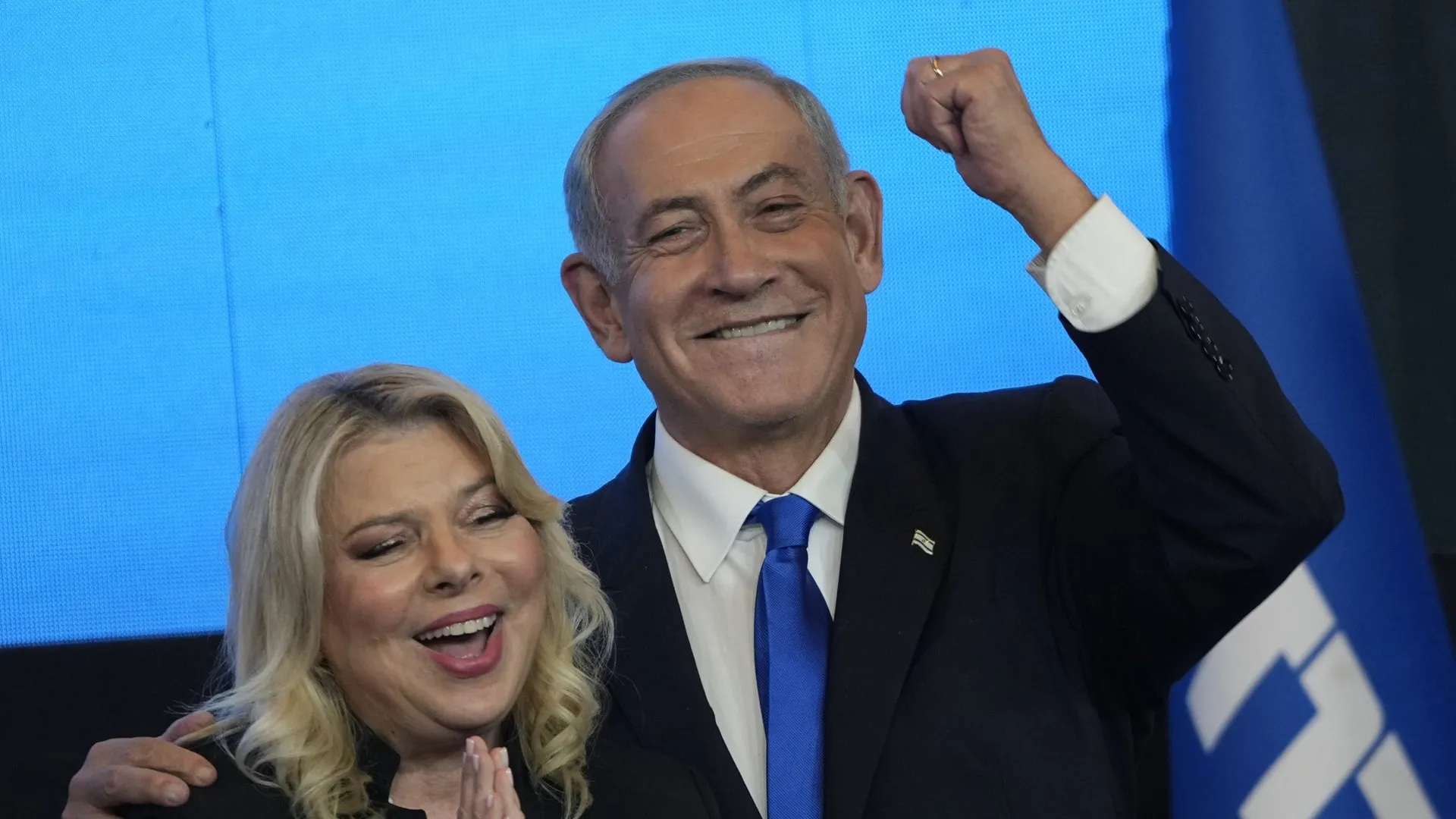
Benjamin Netanyahu got a boost on Wednesday, when judges in his long-running corruption trial recommended dropping the most serious case against him.

Netanyahu, who has been Israel’s caretaker prime minister since October’s election, is fighting to maintain political power as his rival Gadi Eisenkot tries to build a coalition.

Recommended Stories

list of 4 itemsend of list

He has also been fighting three corruption cases since 2020, when proceedings against him for bribery, fraud and breach of trust began.

In his telling, the trial has dogged his political career, prevented him from forming a government during a chaotic period of repeated elections between 2019 and 2022 and was responsible for “years of terrible suffering” for himself and his family during the investigation and trial.

Much of the evidence against Netanyahu rests on his efforts to secure favourable coverage for himself and his wife, Sara, in the national media.

The first, Case 1000, relates to accusations that he and his wife received gifts and payments in return for political favours. The second, Case 2000, concerns accusations that he struck a deal with Israeli daily Yedioth Ahronoth, whereby he would legislate to limit the commercial activities of their rival Israel Hayom in return for favourable coverage. Another, Case 4000, relates to accusations that he granted favours to telecommunications company Bezeq in return for positive coverage for himself and his wife on a news site owned by the telecoms company’s chair.

Judges, who do not have the power to drop charges themselves, have recommended that the Attorney General and Netanyahu critic Gali Baharav-Miara drop Case 4000, saying the prospects of securing a conviction were low, particularly over the bribery allegations. They also expressed doubts about whether the conduct alleged in Case 2000 constituted a criminal offence – and called for the matter to be reconsidered.

In relation to Case 1000, the judges suggested that prosecutors and the defence seek an agreement to bring the proceedings to a conclusion, although a verdict remained another option.

“The judges’ intervention is unprecedented in its nature,” said Barak Medina, legal scholar at The Hebrew University of Jerusalem. “They expressed their views before the prosecution had an opportunity to present its arguments.”

So, is this the end of the matter? Will Netanyahu continue to carry the taint of alleged criminality, and how might his career be affected?

Here’s what we know:

Is Attorney General Baharav-Miara likely to drop the case?

It looks likely, but it is still too early to tell.

Responding to the judges’ suggestions, she said, “Every statement and proposal raised just now by the court” will be considered.

“We are open to examining everything. Including things that were argued in the past,” she said.

At the end of her remarks, the attorney general turned to the proposal by Netanyahu’s lawyers that proceedings be concluded through some kind of deal.

“We did this and were ready to accept his proposal, and we responded positively. Our extended hand remains.”

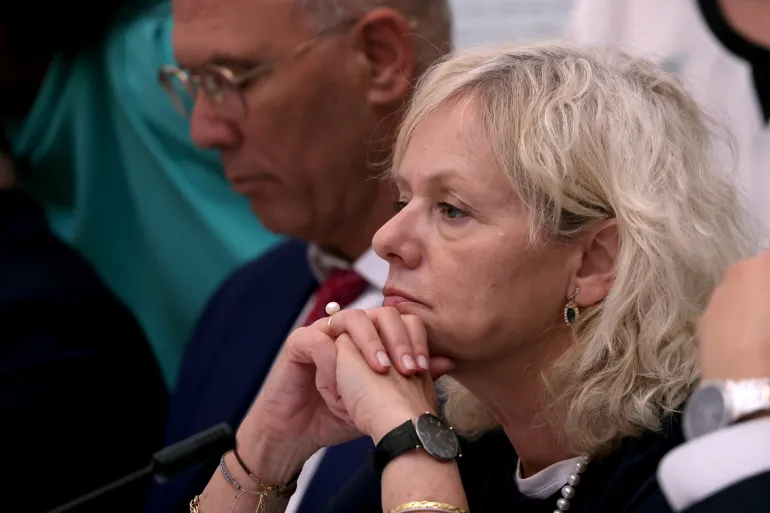
Israel's Attorney General Gali Baharav-Miara listens on as she attends a cabinet meeting at the Bible Lands Museum in Jerusalem on June 5, 2024. GIL COHEN-MAGEN/Pool via REUTERS
Israel’s Attorney General and longstanding Netanyahu critic Gali Baharav-Miara listens on as she attends a cabinet meeting at the Bible Lands Museum in West Jerusalem [File: Gil Cohen-Magen/Pool via Reuters]

Do they have a history?

Baharav-Miara and Netanyahu are longstanding political opponents.

Baharav-Miara was among the staunchest critics of Netanyahu’s attempts to overhaul the judiciary and unshackle his government from judicial oversight in the early months of 2023.

She has subsequently challenged several government policies and decisions, including measures affecting the independence of the civil service, and attempts to dismiss the head of Israel’s internal Shin Bet security agency, Ronen Bar.

The Netanyahu-led coalition repeatedly accused her of obstructing its agenda and voted unanimously to dismiss her in August 2025, a decision later overturned by the Supreme Court.

So, is Netanyahu in the clear now?

He seems to think so.

In a defiant speech calling for the trial to end following the judges’ recommendations, Netanyahu said: “The boycotts must end, and now.”

He was referring to the refusal of opposition politicians to work with him due to his case.

“I know what enormous and immediate dangers the state of Israel faces,” he continued. “There is only one way to deal with them. To unite in order to deal with them. We must unite to secure the future of Israel – no less than that, and immediately.”

None of Israel’s main opposition politicians have yet commented on the judges’ advice.

Roi Zur, an Israeli academic at the University of Essex, said the main problem with allying with Netanyahu was not the corruption trial, but rather “Netanyahu’s role in October 7 and the war that happened afterwards”.

“I don’t think a coalition with Netanyahu becomes more probable. [Naftali] Bennett, who was more open to such a coalition in the last two weeks, is still open to it, whilst the other three party leaders – Eisenkot, Lieberman and Golan – still seem to be against such a coalition,” he said.

Israel’s opposition leaders, L-R: Yair Lapid, Naftali Bennett, Gadi Eisenkot, Avigdor Lieberman and Yair Golan, have commented on the judges’ advice [Getty Images]

What have critics accused Netanyahu of?

Netanyahu has been accused of enacting government policies to derail his criminal proceedings. These include claims that he has prolonged the genocidal war on Gaza, putting his political survival ahead of Palestinian lives, a ceasefire and a deal to return Israeli captives.

The accusations intensified during his 2023 judicial overhaul, which opposition politicians, legal figures and protest movements argued would weaken judicial independence and provide Netanyahu with an escape route from prosecution.

In February 2023, former attorney general Avichai Mandelblit accused Netanyahu of pursuing the overhaul to bring his corruption trial to an improper end. Justice Minister Yariv Levin, the reforms’ architect, acknowledged that Netanyahu’s indictments had helped persuade the public of the need for judicial change.

The accusations extended to the conduct of the war on Gaza.

In May 2024, Defence Minister Yoav Gallant urged Netanyahu to put national priorities ahead of personal interests, criticising his lack of a post-war plan. A month later, Benny Gantz, then his principal political rival, accused him of obstructing a captive-release deal for political reasons.

In June 2024, former United States President Joe Biden said there was reason to believe Netanyahu was prolonging the war for political gain, a comment widely interpreted as referring to his corruption trial.

FILE PHOTO: U.S. President Joe Biden is welcomed by Israeli Prime Minster Benjamin Netanyahu, as he visits Israel amid the ongoing conflict between Israel and Hamas, in Tel Aviv, Israel, October 18, 2023. REUTERS/Evelyn Hockstein//File Photo
In June 2024, former US President Joe Biden acknowledged there was ‘every reason’ to suspect Netanyahu was prolonging the war for political self-preservation [File: Evelyn Hockstein/Reuters]

Have other leading Israeli ministers faced similar charges?

Most Israeli prime ministers to have served from 1996 to the present have at some point faced a corruption investigation.

In May 2014, former prime minister Ehud Olmert was convicted of bribery and breach of trust in several corruption cases relating to his time in office and as Jerusalem mayor. He served 16 months in prison.

His successor and Benjamin Netanyahu’s immediate predecessor Ehud Barak, a longstanding ally of disgraced American financier Jeffrey Epstein, was also investigated over allegations of bribery and illegal campaign financing in 2014 but was never charged.

In the late 1990s, Ariel Sharon was investigated over alleged payments to his son in return for political favours in a case known as “the Greek Island Affair”, but prosecutors dropped the case for lack of evidence.

In 2000, Ezer Weizman, who served as Israel’s president and previously as defence minister, was also investigated for corruption. While police said there was enough evidence to support a case of breach of trust and fraud, the statute of limitations had run out. Weizman resigned in July 2000.

Source link

Judges recommend prosecutors end corruption case against Netanyahu | Benjamin Netanyahu

Israeli judges have ruled there is little prospect Benjamin Netanyahu will be convicted of corruption and have recommended prosecutors drop the long-running case. The caretaker PM says the trial, which has dragged on for a decade, is politically motivated.

Source link

China’s probes Shanghai party chief Chen Jining over corruption | Corruption News

Chen is the fourth Politburo member to be probed since last year in a campaign that has targeted top Chinese leaders.

China’s anticorruption watchdog has launched an investigation into the top Chinese Communist Party leader in Shanghai and member of the elite Politburo, Chen Jining, according to state media.

The 62-year-old, who is the fourth member of the top leadership body to be probed since last year, is suspected of “severe violations of discipline and laws”, the Xinhua news agency reported. The phrase is a common euphemism for corruption.

Recommended Stories

list of 4 itemsend of list

As part of President Xi Jinping’s widening anticorruption campaign, three Politburo members from the 24-member body have already been removed in its current term, which began in 2022, including General Zhang Youxia and He Weidong, both senior members of the Central Military Commission that oversees the armed forces, and Ma Xingrui, a provincial party secretary.

Mingda Qiu, a senior analyst at the Eurasia Group, said Chen’s investigation was part of an “unprecedented pattern”.

“The takedown again shows that Xi Jinping’s anticorruption campaign has no limits,” he said.

FILE PHOTO: Chen Jining, Minister of Environmental Protection, waves as he arrives at a news conference on the sidelines of the National People's Congress (NPC) in Beijing, China, March 11, 2016. REUTERS/Jason Lee/File Photo
Chen Jining joined the Politburo in 2022 [File: Jason Lee/Reuters]

Chen earned a doctorate in environmental engineering at Imperial College London and rose through the ranks at China’s elite Tsinghua University to become its president.

He entered government as China’s environmental protection minister before becoming the mayor of Beijing. In 2022, he joined the Politburo as the party boss of Shanghai, China’s financial hub.

The post is one of China’s most prestigious provincial-level positions, often serving as a springboard to top leadership roles. Xi briefly served in the role in 2007 before joining the Politburo’s Standing Committee, the country’s highest decision-making body.

China’s second-ranking official, Prime Minister Li Qiang, as well as Vice President Han Zheng, also held the Shanghai post before moving into central leadership roles.

In a separate development, Liu Min, a senior official at the Ministry of Science and Technology, has also been placed under investigation for suspected “serious violations of party discipline and national laws”.

Source link

Trump to host private dinner for largest owners of his meme coin | Donald Trump News

United States President Donald Trump will host a third private dinner for top investors in his meme coin $TRUMP, reigniting questions about potential conflicts of interest with his cryptocurrency ventures.

Sunday’s gala will take place at the Trump National Golf Club outside Washington, DC.

Recommended Stories

list of 3 itemsend of list

According to the dinner’s official website, the top 185 meme-coin holders will be invited to a gala dinner, where guests will include businessman Kevin O’Leary and boxer Floyd Mayweather.

The top 29 holders, meanwhile, will be given special access to a VIP reception where Trump will reportedly be present.

“There will be no private meetings with The President. No gifts will be accepted,” the website said of the VIP reception.

The event has been billed as “a once-in-a-lifetime experience — an evening you will talk about forever”.

But Democrats have accused the Republican leader of leveraging his public office for profit in violation of federal law. They see such dinners as an opportunity for private interests to pay for access to the president.

“Trump is continuing to exploit the presidency for his personal gain,” Kendall Witmer, the deputy communications director for the Democratic National Committee, said in a statement.

In October, shortly after the gala was announced, eight Democratic senators issued an open letter promising to investigate any conflicts of interest such an event might raise.

“President Trump’s continued monetization of his name and likeness once again raises serious ethical concerns, necessitating this request for a robust inquiry into the President’s financial entanglements and personal profiteering,” the letter said.

The Democratic Party has since won majorities in both chambers of Congress in the November 3 midterm race, paving the way for possible inquiries and subpoenas when the new members are sworn in next year.

Trump’s White House has dismissed the criticism, calling the dinner a “private event, not a government function”. It has also emphasised that “there is no promise of official government action in exchange for attending”.

Trump has also argued that many of his assets are held in a trust while he is in office, though that trust is largely run by his family members.

The president is a stakeholder in cryptocurrency firms like World Liberty Financial, and has made promoting cryptocurrency a central part of his second term.

Under his leadership, the US Treasury established a reserve of digital currency assets, as part of Trump’s effort to make the US the “crypto capital of the world”.

Sunday’s gala is believed to be the third such dinner for top $Trump meme coin holders.

Meme coins trade on a popular likeness from the internet. Trump launched his on January 17, 2025, days before the start of his second term.

To encourage meme-coin purchases, Trump and his business partners held private events on May 22, 2025, and again on April 25, 2026, for top holders of the cryptocurrency.

The first was held at the same Trump golf club outside Washington, DC, and the second took place at Mar-a-Lago, Trump’s Florida resort.

The May 2025 dinner reportedly required a minimum of $55,000 in $Trump coins to attend.

At the time, Chinese crypto investor Justin Sun was declared the winner of a “contest” for who held the most $TRUMP coins. Sun held about $18m of the coin in 2025, as well as tokens from World Liberty Financial.

Earlier this year, Sun sued World Liberty Financial, saying it had frozen his access to the assets he owned with it, making it impossible for him to sell them.

Trump’s inauguration in January 2025 proved a major boost for his coin, pushing its value to $74.

The $Trump coin has since lost value. On the eve of the gala dinner, it is worth about $0.88.

According to financial disclosure forms released earlier this year, Trump earned more than $2.2bn in 2025, the first year of his second term.

Much of that wealth came from meme coins, tokens and other digital assets. Some $636m came from $Trump meme coin sales.

Source link

Trump calls for Nvidia to reinstate ‘brilliant’ Jensen Huang | Technology News

US president calls tech giant to give former CEO ‘a second chance’ and urges him to ‘make a big apology’.

US President Donald Trump has said he would welcome Jensen Huang’s return as Nvidia’s CEO, more than a week after the company’s founder stepped down over a scandal involving extramarital affairs.

“You have one of the truly most brilliant minds in the world, and where is he going to go?” Trump told reporters on Friday. “I think that I would love to see Jensen be given a second chance.”

Recommended Stories

list of 3 itemsend of list

Trump also described Jensen Huang as “a good man” who “made some bad decisions”.

“I’d like to see Jensen make a big apology and go back, because he created something with Blackwell,” Trump said, referring to Nvidia’s most advanced chips.

Huang resigned on November 12, following media reports of an intimate relationship with an alleged spy for Beijing who may have helped route restricted chips to China. US intelligence officials are said to have previously known about the possible espionage link.

Two more affairs have since been reported. The New York Times reported on Friday that the suspected spy, Alice Huang, has extensive ties to China’s defence industry through her family and associates.

Trump also appeared to contradict Treasury Secretary Scott Bessent, who had said earlier on Friday that Jensen Huang did not come up in talks between Trump and Chinese President Xi Jinping in Shenzhen this week.

“I did discuss that with President Xi, and he said, ‘Oh, brilliant, brilliant! He’s a brilliant man,’” said Trump of his meeting with the Chinese president.

No way back

In a post on X on Tuesday, Jensen Huang offered to return to the company.

However, Nvidia’s board has ruled out his comeback. Board chairperson Harvey Jones said on an earnings call later that day that the directors unanimously accepted Huang’s resignation and do not plan to reinstate him.

The scandal has also drawn in Commerce Secretary Howard Lutnick. Republican Senator Tom Cotton of Arkansas told The Wall Street Journal that Lutnick had repeatedly ignored warnings about AI chips being smuggled to China before the scandal broke, though he stopped short of calling for the commerce secretary’s resignation.

Trump said he still supported Lutnick.

“I have not lost confidence,” Trump said, calling Lutnick “a different kind of a guy, very good businessman”.

Democrats, who will take control of Congress in January, are investigating whether Lutnick used his office to help Cantor Fitzgerald, the firm run by his sons, avoid losses tied to scrutiny of Nvidia’s links to a Chinese company.

Source link

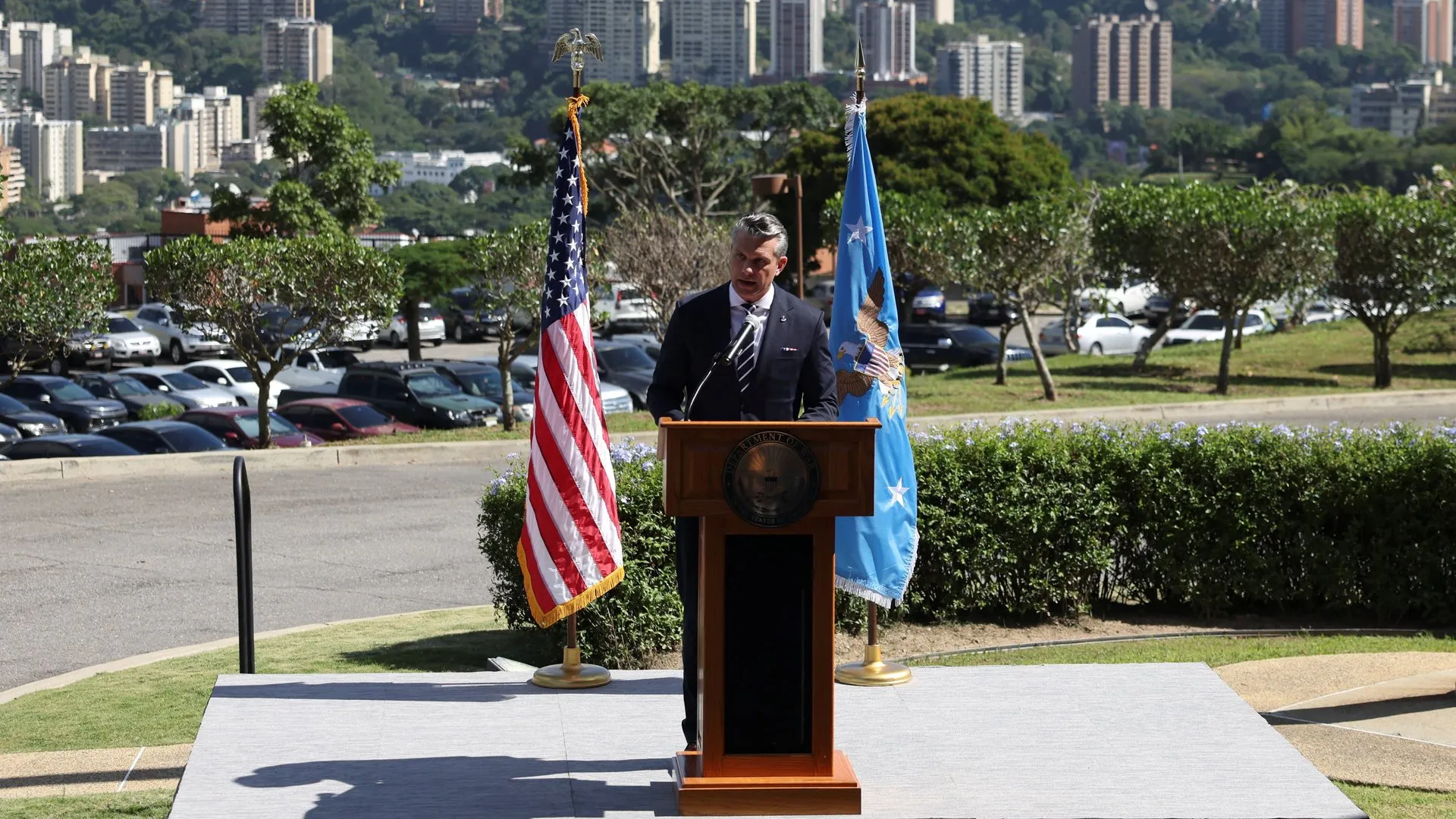
Hegseth unveils new US-Venezuela military deal | Nicolas Maduro

Pete Hegseth has unveiled a new military deal with Venezuela in his first visit since the January US military raid to capture President Nicolas Maduro. The visit comes amid growing unease in Venezuela about the US’s influence over the country’s sovereignty.

Source link

What is Iraq’s Jurf al-Sakhar and what is behind gov’t push to control it? | Military News

Jurf al-Sakhar, a stronghold of Iran-linked fighters in Iraq, has emerged as the focal point of a sweeping anticorruption campaign launched by Prime Minister Ali al-Zaidi’s government following accusations of oil smuggling.

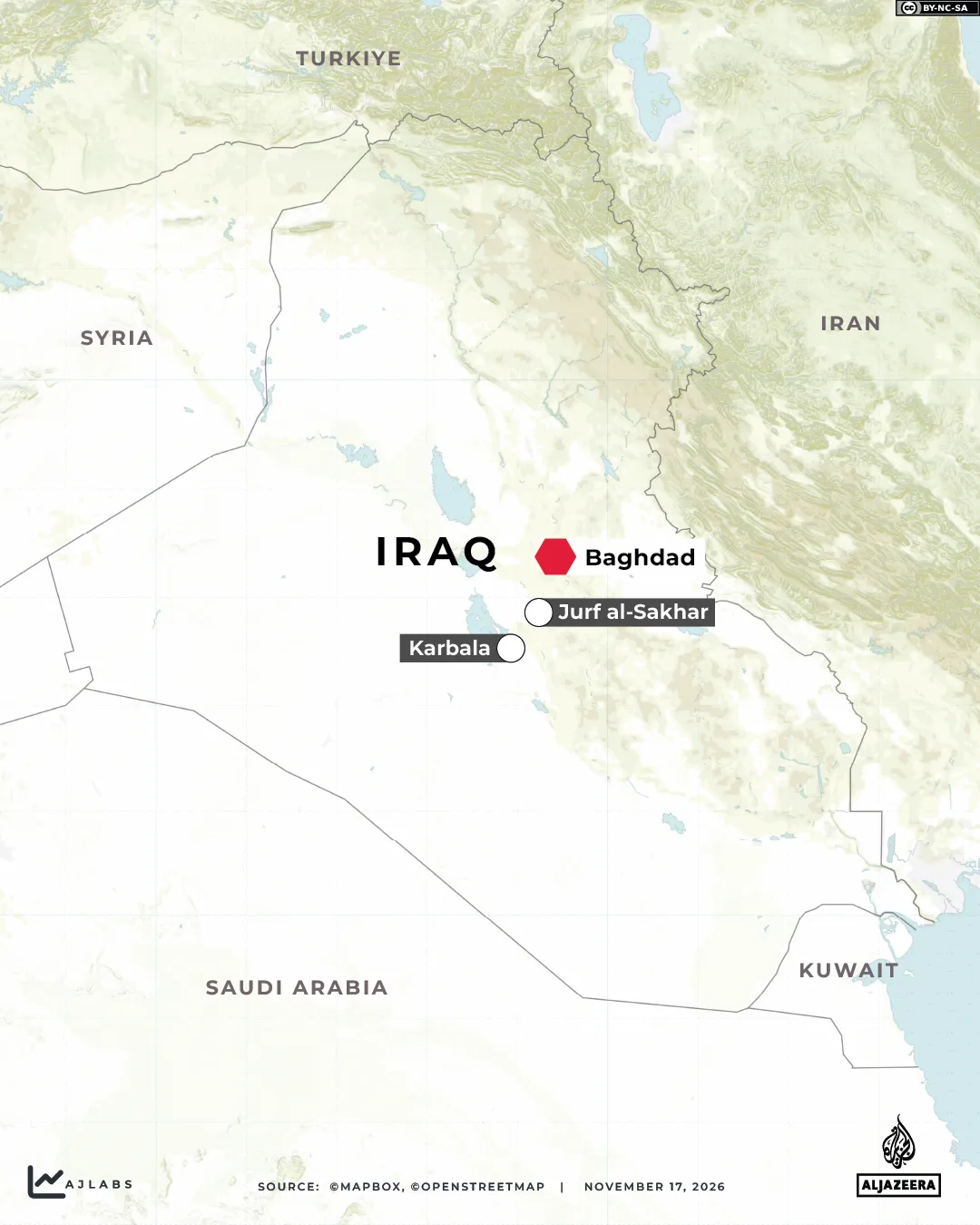
Located some 60km (37 miles) southwest of Baghdad and spanning roughly 345 square kilometres (133 square miles), the area holds immense strategic significance along the Shia pilgrimage route between the Iraqi capital and the holy city of Karbala.

Recommended Stories

list of 3 itemsend of list

It was once the site of former President Saddam Hussein’s military-industrial complexes, making its geography ideal for testing, building and concealing weapons.

Following the US-led invasion of Iraq in 2003 that toppled Hussein, it became a hotspot for armed confrontations before the ISIL (ISIS) armed group seized it in 2014. Later that year, the Iran-backed Popular Mobilisation Forces (PMF), an umbrella organisation of mostly Shia armed groups, recaptured the territory from ISIL.

Kataib Hezbollah, one of the largest groups within PMF, subsequently took full control, renaming the area Jurf al-Nasr and barring state institutions from entering. The militia sealed the town, citing security concerns, effectively preventing the return of approximately 140,000 displaced residents.Interactive_Iraq_Nov17_2026-1795013341

Oil scandal

Last week, a leaked intelligence report said millions of dollars’ worth of crude oil had been siphoned from two state pipelines passing through the closed area since 2021. According to the document prepared by the Iraqi Ministry of Interior, the perpetrators allegedly constructed makeshift underground refineries to process the stolen resources.

The information led al-Zaidi to form a high-level investigative committee that entered the restricted zone on November 13 with military backing to confirm the existence of the illicit facilities. Earlier this week, the committee said it had identified several locations linked to smuggling operations in the area, without naming those allegedly implicated. As part of the anticorruption crackdown, nine senior security and administrative officials in Babil province, including the provincial police chief and the director of the Oil Pipelines Company, have also been dismissed.

According to the state Iraqi News Agency, the government has “ordered the armed forces to enter” Jurf al-Sakhar, setting a deadline “for the armed faction to exit the area”. Reports say the deadline for the withdrawal is Friday.

Kataib Hezbollah has denied the oil-smuggling allegations and, in harshly worded statements, accused al-Zaidi of corruption and framed the crackdown as a political extortion campaign. In a major show of force, the militia also mobilised approximately 8,000 fighters from various provinces towards Jurf al-Sakhar ahead of the government committee’s arrival.

Iraqi writer and journalist Hamza Mustafa told Al Jazeera that the military posturing masks underlying vulnerabilities. “What the brigades are doing through field mobilisation is perhaps the last line of defence for them after their position appeared weak regarding the oil-smuggling operations,” said Mustafa, noting that the previous narrative of fighting “terrorism” no longer held.

Security expert Saif Raad said the militia’s fierce resistance is driven by economics amid allegations that the restricted zone is also used to run thousands of illegal fish farms. “The desperation over this area is not for security reasons but for financial reasons,” said Raad, a former military officer.

Military standoff

Since taking office in May, al-Zaidi has made the disarmament of all armed factions in the country, including Kataib Hezbollah, a priority amid pressure from the United States, which has long demanded the decommissioning of the Iran-backed fighters. An initial September 30, 2026, deadline to bring all weapons under state control has since been pushed to June 2027.

“The issue here comes in the context of removing all pretexts from the armed factions after it was revealed that they are smuggling oil,” said Mustafa.

Fadel Abu Ragheef, an Iraqi political analyst, told Al Jazeera that al-Zaidi is in a distinctive position to take such unprecedented steps against entrenched interests. “He did not come from a partisan or bloc background, so his decisions are characterised by boldness and daring,” argued Abu Ragheef.

The standoff has deeply divided Iraq’s ruling Coordination Framework, prompting leaders such as Nouri al-Maliki, Hadi al-Amiri, Qais al-Khazali and Ammar al-Hakim to frantically mediate behind the scenes. Abu Ragheef suggested these factions are highly sensitive to issues such as disarmament.

“They harden their position if they hear the word disarmament or containment, so the concepts have shifted from disarmament and containment to organisation and management,” said Abu Ragheef, noting that the change has provided a crucial negotiating window until the June 2027 deadline.

With Friday’s deadline looming, Iran has also stepped in to avert a direct military clash. Esmail Qaani, commander of the Quds Force of the Islamic Revolutionary Guard Corps, headed to Baghdad to mediate the crisis and push for a solution. Qaani and al-Zaidi reportedly held talks until dawn on Tuesday, reaching a tentative agreement that would see Kataib Hezbollah withdraw “soon”.

Still, Mustafa warned that the crisis is not fully resolved.

“Qaani has not been able to dismantle the scene so far like he used to,” he said, referring to Iran’s historical influence, noting that Tehran had come to realise the issue is larger than expected due to al-Zaidi’s insistence.

Raad echoed this, emphasising al-Zaidi’s determination to centralise state arms, comparing it to his recent successful pacification of armed groups in the Sinjar district.

“The prime minister will not be prevented by Qaani or anyone else from going and restoring the authority of the commander in chief of the armed forces over all Iraqi territories,” he said. “This crisis is a beginning to restore the sovereign decision of the state.”

Source link

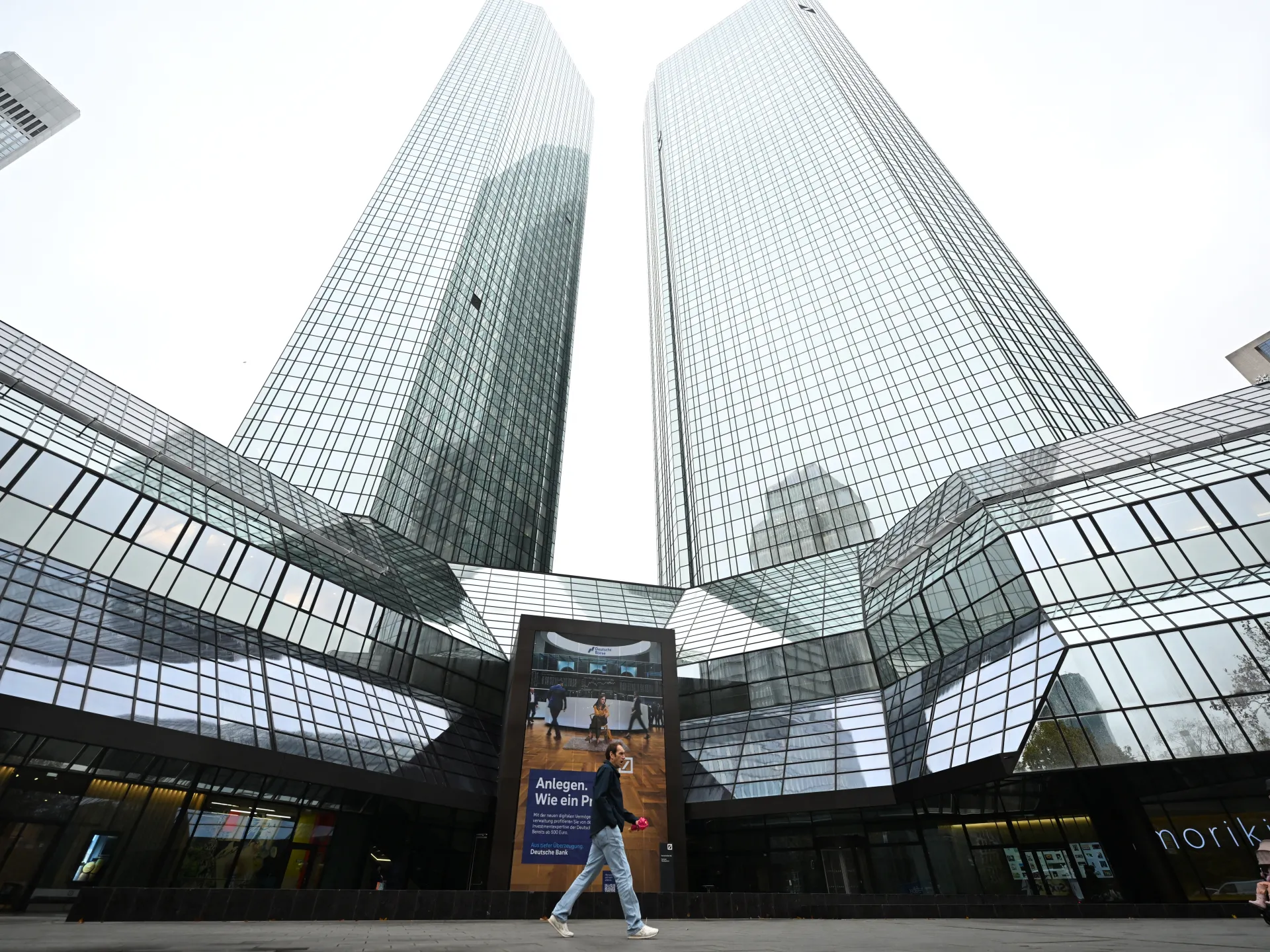
What do Deutsche Bank leaks reveal about Trump, Epstein and Russia? | Corruption News

A leak of more than 15 million internal records from Deutsche Bank has shed new light on its dealings with United States President Donald Trump, the late sex offender Jeffrey Epstein and other powerful figures.

The Inside Deutsche Bank investigation, published on Tuesday by a consortium of international news outlets, has put Germany’s biggest bank back in the spotlight after years of trying to rebuild its reputation following its failures to prevent money laundering.

Recommended Stories

list of 3 itemsend of list

Here is what we know:

What was leaked and how did it happen?

Files containing millions of emails, minutes of meetings and internal reports were leaked by two whistleblowers whose identities and links to the institution have been withheld for their protection, according to Le Monde, one of the participating news outlets. The pair told the media groups they believed the bank was engaging in criminal activity and that releasing the documents was in the public interest.

An Indian journalist and a South African journalist obtained the cache, then shared it with more than 230 reporters from about 50 news organisations, including Der Spiegel, the Financial Times and The New York Times, in an internationally coordinated effort.

The material includes some nine million emails, as well as meeting minutes, due diligence reports and financial crime reports dating back to the early 2010s, many of them from the bank’s internal investigations.

The whistleblowers also passed the data to US prosecutors and financial crime authorities, and could be eligible for a reward if Washington prosecutes the bank based on their leaks. Le Monde said the whistleblowers were not paid by the journalists and placed no conditions on how the material was used.

Deutsche Bank said concerns raised by the investigation “date back many years” and that it had since strengthened its controls, adding that it did not expect any meaningful financial impact. The bank’s chairman reaffirmed the board’s support for chief executive Christian Sewing, who has run the institution since 2018.

“Deutsche Bank is a different bank today,” the bank said in a statement.

What do the leaks reveal about Trump?

The files identify more than $3m in transactions involving Trump-owned companies, including payments linked to suspected Russian and Azerbaijani money-laundering networks.

Deutsche Bank extended loans to Trump for years, even after a string of bankruptcies and defaults at his businesses from the early 1990s. By January 2021, it was his biggest creditor, with about $340m in loans to his company outstanding.

That month, following the January 6 assault on the US Capitol by protesters wanting to stop the certification of Democrat Joe Biden’s win in the presidential election, the bank ceased doing business with him, according to The New York Times. Trump had claimed the election had been rigged against him, of which there has never been any proof.

The Financial Times reported that the bank inadvertently sent a Trump tax document to another client’s accountant in 2017, during his first term in office, and never told him about the error. Asked about the disclosure during his visit to Manila for the ASEAN summit on Tuesday, Trump said the bank should not have released that information.

“They shouldn’t have done it. It’s illegal for them to do it,” he said. Deutsche Bank declined to comment on his remarks.
The leaked records also reveal special monitoring that the bank applied to Trump’s accounts, and its handling of them has drawn scrutiny before.

In 2019, The New York Times reported that Deutsche Bank had failed to alert US authorities to suspicious transactions linked to Trump. The bank said at the time that none of its investigators had been prevented from escalating such concerns.

What do the leaks reveal about Epstein?

The leaked files list about $582m in transactions linked to Epstein, which were flagged internally as suspicious. That is more than double the amount previously identified as being overlooked or not reported by banks during US Senate investigations. When the Senate findings were released in August, a Deutsche Bank spokesperson said the bank regretted its “historical connection” with Epstein.

Epstein, who was a US financier, became a Deutsche Bank client in 2013, five years after pleading guilty in Florida to procuring a minor for prostitution, and remained a client until 2018. He died in a New York jail in 2019 while awaiting trial on sex trafficking charges.

Internal emails in the newly leaked cache indicate that senior executives approved Epstein as a client despite his conviction, and kept his accounts open even after warnings about the activities of Ghislaine Maxwell, his former girlfriend and associate. Maxwell was convicted in 2021 of helping Epstein sexually abuse teenage girls. She is currently serving a 20-year prison sentence.

The files also reveal information about payments linked to wealthy Epstein associates such as private equity billionaire Leon Black and Wall Street financier Glenn Dubin.

A review commissioned by Black’s firm previously found he had paid Epstein $158m between 2012 and 2017 for tax and estate planning advice. Black has sought to distance himself from Epstein, repeatedly denying wrongdoing or any knowledge of his abuse of girls and young women.

The leak comes years after the bank paid fines and settlements of more than $200m over its handling of Epstein-related finances. In 2020, regulators fined it $150m for compliance failures linked to Epstein and other high-risk clients, finding that he had held more than 40 accounts at the bank. In 2023, it agreed to pay $75m to settle a suit brought by women who alleged they had been abused by him.

Who else is named in the leaks?

The documents also detail Deutsche Bank’s business dealings in Russia up until Moscow’s full-scale invasion of Ukraine in February 2022, despite concerns raised by some managers.

They include previously undisclosed internal warnings about the bank’s continued dealings with wealthy Kremlin-connected clients despite sanctions and money laundering concerns.

Those named include Russian billionaires Roman Abramovich, the former owner of English football club Chelsea, and aluminium tycoon Oleg Deripaska. Both men were sanctioned by the United Kingdom in 2022. Suleiman Kerimov, another billionaire whose name appears in the files, was sanctioned by the US in 2014 and 2018.

Transactions associated with Rifaat al-Assad, the uncle of former Syrian President Bashar al-Assad, also appear in the files. Rifaat, who died in January, was convicted in France in 2020 of acquiring millions of euros’ worth of property with funds diverted from the Syrian state.

Other files concern figures connected to the Sarkozy-Libya affair, in which former French President Nicolas Sarkozy was convicted in 2025 of criminal conspiracy over efforts to secure funding for his 2007 campaign from the government of late Libyan leader Muammar Gaddafi.

Source link

US Pentagon rejects allegations linking deputy to a Goldman Sachs banker | Donald Trump News

The Department of Defense has defended Steve Feinberg amid claims that he encouraged defence contractors to use a specific banker.

The Pentagon has denied reports that Deputy Defense Secretary Steve Feinberg pushed defence contractors to work with a specific Goldman Sachs banker with whom he had longstanding ties.

In a statement sent to Al Jazeera on Monday, the Pentagon said the allegations were “baseless”.

Recommended Stories

list of 4 itemsend of list

“Any claim that the Deputy directed companies to use Goldman Sachs is categorically false. He worked with financial firms across the industry throughout his entire career,” Pentagon spokesman Sean Parnell said in the statement.

“He has no favorites, and neither does the Department of War.”

The publication Bloomberg first reported the allegations, citing anonymous sources familiar with the matter.

According to Bloomberg’s report, Feinberg guided defence contractors like Lockheed Martin and RTX towards working with Goldman Sachs banker Jim Donovan during their negotiations with the Pentagon.

Donovan and Feinberg reportedly knew each other. Bloomberg said Donovan has previously worked for the investment firm Feinberg co-founded, Cerberus Capital Management, which claims to oversee $70bn in assets.

Bloomberg’s report has raised concerns about a conflict of interest during the lucrative Pentagon negotiations.

Defence contracts are often million, if not billion, dollar deals. Guiding a company that is competing for a contract to work with a specific banker could be seen as a way of rigging the negotiations.

It would also put the banker in line to potentially receive large commissions from the contracts in question.

According to Bloomberg, both RTX and Lockheed Martin hired Donovan after Feinberg’s suggestion.

The Pentagon, however, has accused Bloomberg of seeking to lend credibility to unsubstantiated allegations.

“Despite the Department’s categorical denial, Bloomberg appears more interested in advancing a baseless smear than establishing the facts. Your sources are playing you, and Bloomberg should know better,” Deputy Pentagon Press Secretary Jacob Bliss told Al Jazeera.

“The Deputy is a man of honor and integrity. Unfortunately, some would rather see him fail than succeed.”

Feinberg was nominated by President Donald Trump for his position in one of the Pentagon’s top posts.

The Senate confirmed him in a vote of 59 to 40, and he was sworn in as the 36th deputy defense secretary on March 17, 2025, according to the Pentagon.

Lockheed Martin and RTX, both aerospace and defence companies, have longstanding ties to the Pentagon.

In August, for instance, the Department of Defense announced a multibillion-dollar deal with Lockheed Martin and another defence giant Northrop Grumman to boost production of parts for the Patriot PAC-3 and THAAD missile interceptor systems.

According to Bloomberg’s reporting, Donovan, the banker, was a part of several deals in recent months involving Lockheed Martin and RTX.

They include a $59bn contract with Lockheed Martin for Patriot missiles and two missile contracts worth approximately $45bn with RTX.

It is unclear who the anonymous sources for Bloomberg’s story might be.

Under Defense Secretary Pete Hegseth, the Pentagon has opened multiple investigations into leaks of sensitive information and taken steps to limit journalists’ access to military officials and other Pentagon resources.

Source link

Iraq deploys army to stronghold of Iran-backed Kataib Hezbollah | Corruption News

US pressure on Iraq to curb Tehran’s influence leaves potential for direct confrontation with Iran-linked armed group around the town of Jurf al-Nasr.

Iraq has ordered its armed forces to move into a stronghold of the Iran-backed Kataib Hezbollah group, amid an investigation into suspected oil smuggling.

Prime Minister Ali al-Zaidi has ordered the military to enter the town of Jurf al-Nasr, government spokesman Haidar al-Aboudi said on Monday, according to the state-run Iraqi News Agency (INA). The Iraqi leader has also set a deadline for the armed faction, which has been implicated in the oil probe, to leave the area.

Recommended Stories

list of 4 itemsend of list

The order comes amid pressure on Baghdad from the United States and some of its Gulf-state allies to counter Tehran’s influence in Iraq.

Al-Aboudi told local media the “deadline is not far off”. A senior Iraqi official told Al Jazeera Arabic that Kataib Hezbollah has until Friday to leave Jurf al-Nasr, which sits south of Baghdad in the centre of the country and was previously known as Jurf al-Sakhar.

Al-Zaidi told military and security commanders to deploy additional forces around the town and to prepare for government troops to enter. The order would potentially bring the government and its troops into direct confrontation with the armed group.

Security agencies have also been instructed to prevent tankers carrying oil or petroleum products from leaving the area.

Iraq recently launched a sweeping anticorruption crackdown centred on the town, which allegedly harbours illicit oil refineries.

Kataib Hezbollah, one of dozens of heavily armed pro-Iranian groups that have semi-official status in Iraq, denied the allegations on Sunday, saying that an inspection found no interference with pipelines.

“We are therefore being subjected to the greatest campaign of blackmail aimed at forcing us to relinquish the weapons of dignity that have upheld sovereignty and protected the rights of Iraqis at multiple stages,” the group said in a statement.

The campaign to stamp out the oil smuggling trade has seen the dismissal and judicial referral of nine senior officials accused of corruption. It has also led to the sacking of senior government officials and security directors.

Al-Aboudi said an investigative committee, following an intelligence agency report, had “detected clear tampering with pipelines passing through the area, as well as attempts to bury and conceal traces of that tampering”.

Sources told the Reuters news agency that the smuggling, carried out with accomplices among some security and oil officials, has robbed the government of hundreds of millions of dollars since 2021.

While officially framed as an initiative to protect public funds, analysts believe the oil probe is a calculated strategy to sever the financial arteries of armed factions that refuse to integrate into Iraq’s state apparatus.

Iranian-backed armed groups, including Kataib Hezbollah, have resisted repeated calls by both al-Zaidi and ‌‌‌‌his ally, US President Donald Trump, to disarm.

They have struck US troops and targets in Saudi Arabia and the UAE in solidarity with Tehran since the United States and Israel launched their war against Iran in February.

Source link

Iraqi armed group denies involvement in oil smuggling, calls probe a ‘lie’ | Corruption News

Iran-aligned Kataib Hezbollah says the group is subjected to ‘blackmail’ to force disarmament amid US pressure on Iraq.

The Iran-aligned Kataib Hezbollah group has denied its involvement in an oil smuggling operation in Iraq’s Jurf al-Nasr area after Iraqi authorities launched an anticorruption crackdown.

Kataib Hezbollah, one of Iraq’s most heavily armed factions, said in a statement on Sunday that the Iraqi prime minister’s office was “fabricating lies” and that the group was being subjected to “the largest blackmail operation” to force its disarmament.

Recommended Stories

list of 3 itemsend of list

The statement was issued a day after Prime Minister Ali al-Zaidi sacked nine senior officials following an investigation into the allegations.

The Iraqi government said an investigation committee, chaired by al-Zaidi, confirmed oil smuggling based on “intelligence documents” containing satellite images showing operations being carried out in the armed faction’s stronghold.

The committee ordered those implicated, whom it did not identify, to be referred to the judiciary and dismissed nine officials, including security and intelligence officers in Babil province, an Interior Ministry commander and the director of the Oil Pipelines Company at the Ministry of Oil.

Responding to the committee’s findings, Kataib Hezbollah said the investigation “found no violations whatsoever of the oil pipelines” and that this “definitively proves that the smuggling allegations are false”.

The group said its members accompanied the committee’s visit to the Jurf al-Nasr area on Friday.

Baghdad has been under increasing pressure from Washington to rein in Iran-aligned groups and curb Tehran’s influence in Iraq, an ally of both the US and Iran.

Al-Zaidi has previously promised to ensure that non-state armed groups would hand over their weapons to the state.

However, Kataib Hezbollah has pledged to retain its weapons arsenal and accused al-Zaidi of caving to pressure from the US, Saudi Arabia and the United Arab Emirates.

Iran-aligned groups, including Kataib Hezbollah, have previously targeted US forces in Iraq and attacked Gulf states following the start of the US-Israel war on Iran in late February.

Washington accuses Tehran of using Iraq’s economy to evade sanctions and has previously sanctioned Iraqi individuals for blending Iraqi and Iranian oil.

Source link

Will Iraq’s oil smuggling crackdown disarm militias without a conflict? | Corruption News

The Iraqi government has launched a sweeping anticorruption crackdown centred on the Jurf al-Sakhar area, a stronghold of Iran-linked militias near Baghdad.

The campaign has seen the dismissal and judicial referral of nine senior officials accused of corruption. It has also led to the sacking of top security directors, the Babil police chief and the director of the Oil Pipelines Company at the Ministry of Oil.

Recommended Stories

list of 3 itemsend of list

While officially framed as an initiative to protect public funds from a widespread smuggling network, analysts believe the move is a highly calculated strategy to sever the financial arteries of armed factions that refuse to integrate into the state apparatus.

At the heart of this confrontation is Jurf al-Sakhar – also known as Jurf al-Nasr – a stronghold of the Kataib Hezbollah group, believed to have close links to Iran.

For over a decade, Jurf al-Nasr has allegedly harboured illicit oil refineries. An intelligence report released last week claimed that the area was at the centre of a major corruption scheme involving oil revenues and Iran-linked militias.

That led Iraq’s Prime Minister Ali al-Zaidi to launch the crackdown, with an Iraqi security committee entering Jurf al-Nasr on Friday to investigate, following the arrest of other officials accused of graft. The formerly Sunni-majority area has long been considered outside government control since Iraqi militias seized the area a decade ago.

Michael Knights, head of MENA research at Horizon Engage, told Al Jazeera that Jurf al-Sakhar’s value is deeply rooted in recent developments in Iraq, when Iran-linked militias used the campaign against ISIL (ISIS) to stamp their authority in the country.

“Iran-backed militias illegally seized and renamed Jurf al-Sakr when they conducted sectarian cleansing of the Sunni residents in the area in 2014, under the cover of the anti-Daesh [ISIL] war,” Knights explained.

The town, about 60km (37 miles) from Baghdad, is at a critical point near the Shia pilgrimage route between the Iraqi capital and Karbala.

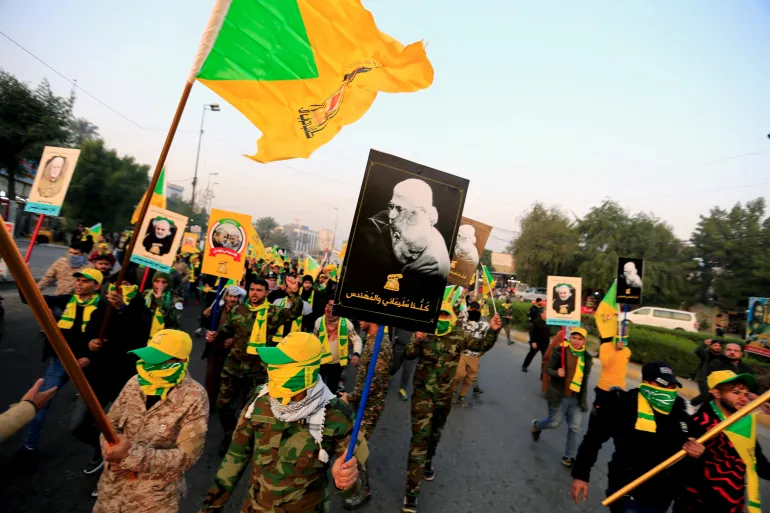
Kataib Hezbollah Iraqi militia gather ahead of the funeral of the Iraqi militia commander Abu Mahdi al-Muhandis, who was killed in an air strike at Baghdad airport
Kataib Hezbollah militia before the funeral of commander Abu Mahdi al-Muhandis who was killed in an air strike at Baghdad airport, January 4, 2020 [Thaier al-Sudani/Reuters]

It was once the site of Saddam Hussein’s military industrial complexes, which made Jurf al-Nasr an ideal place for Iraqi militias to test, build and hide rockets, drones and missiles, said Knights.

“If full control is taken, which is unlikely, the government would be able to finally tell Iraqis that a militia had been removed from its base and the legal residents of the area allowed to return,” he said. “This would be like taking back the Bekaa Valley from Hezbollah.”

Knights said the actual financial impact on Kataib Hezbollah of the Jurf al-Sakhar crackdown could be less spectacular than expected, with the militia having other sources of revenue.

Analysts say that dismantling the smuggling networks is part of a wider project to bring weapons under the control of the state.

After some Iran-linked militias missed a deadline to disarm this year, PM al-Zaidi now appears to be using economic pressure to weaken these armed groups without directly confronting them.

Security and strategic expert Saif Raad told Al Jazeera that the anticorruption campaign in Jurf al-Sakhar is essentially a message from the PM that no group is above the law.

“This duality is over. Part of what happened now is that the Iraqi people knew these factions and knew why they hold onto weapons, and I believe this is a victory achieved by the government without a single drop of Iraqi blood,” Raad said.

“Jurf al-Sakhar has been around for, let’s say, more than ten years; for ten years no prime minister was able to enter this area.”

Averting armed conflict

A central focus of the government’s strategy is executing this crackdown without igniting a potentially explosive ‘Shia-on-Shia’ armed conflict.

The militia network which emerged following the US-led invasion of Iraq – and was emboldened during the campaign against ISIL – includes groups with widely divergent political and religious views. Some are closely aligned to Iran and accused of being proxies of Tehran, while others are closer to the federal government.

In a bid to prevent violence, Al-Zaidi reportedly cooperated with leaders of the Popular Mobilisation Forces (PMF), particularly with the Badr Organisation, before initiating the arrests and dismissals in Jurf al-Sakhar, Raad said.

Fadel Abu Ragheef, an Iraqi political analyst, told Al Jazeera that leveraging Hadi al-Amiri, leader of the Badr Organisation, was essential to neutralising the threat from the militias.

“The Badr Organisation is considered the largest combat force within the Popular Mobilisation Forces, so the process of focusing on this issue… is a fundamental part of strengthening the state project,” Raad observed.

“[The campaign] is a major shift in the process of strengthening the state and state institutions and making the Popular Mobilisation Forces an active and large part in controlling these groups [militias outside government control].”

Political analyst Ali Fadhlallah said that due to the structural nature of Iraq’s political and religious leadership, an internal war between the Shia factions was never likely to break out, particularly due to the influence Grand Ayatollah Ali al-Sistani.

“The Shia component has very many large and positive factors that serve as a brake for any clash that is supposed to happen,” Fadhlallah said.

“The presence of the rational religious authority, which has always controlled the rhythm of the political process at dangerous crossroads, definitely has a very large role and it is monitoring the events… the issue of a [Shia-Shia] clash is unlikely, even in the most difficult and miserable circumstances.”

Source link

Trump rebuffs oversight with claims his critics are ‘corrupt.’ Experts say it’s a tactic

Facing fresh oversight and investigations from congressional Democrats come January, President Trump and his supporters have increasingly turned to a tactic experts say they recognize from authoritarian regimes the world over.

Without evidence or any clear legal reasoning, they’ve accused their political opponents of being criminal or “corrupt.”

Trump has alleged in a series of recent social media posts that the Democratic Party is led by “one of the most Corrupt and anti-American groups of political leaders and hacks in the history of our Country, and even the World,” and that there is “Massive Corruption and Crime taking place in Democrat run Cities and States.”

He said Democrats cheated to win the midterms and are now “illegally threatening Republicans with knowingly false accusations and charges.” He also renewed his previous calls for the prosecution of six Democratic lawmakers who advised U.S. military personnel not to follow illegal orders — calling them the “Seditious Six” — and wrote, “THE DEMOCRATS ARE CORRUPT AND EVIL, and I am the exact opposite.”

Trump’s posts followed White House Counsel Will Scharf warning Democratic lawmakers — including Rep. Robert Garcia (D-Long Beach), the likely next chair of the House Oversight and Government Reform Committee — that they could face criminal prosecution if they launch the kind of sweeping investigations into Trump and his family that they’ve promised.

They also followed recent Justice Department warnings to state and local elections officials across California that they could face criminal prosecution for not setting aside ballots from individuals the administration alleges are noncitizens, and criminal subpoenas demanding some of those same officials appear before a federal grand jury to discuss their handling of the ballot demands.

Experts said Trump’s latest flurry of accusations and threats is clearly a reaction to his current political situation — after a monumental reckoning from voters concerned with corruption and ahead of his first real investigative oversight from an adversarial Congress in years. It is a moment of unique vulnerability, they said — the sort that causes strongmen to cast aspersions on opponents and rivals.

Barbara Geddes, a political science professor emeritus at UCLA who has studied dictators for 25 years, said Trump’s message is a familiar one. “Accusations of corruption are extremely common and they’re used all over the world by dictators” and “people who are sliding into dictatorship.”

Geddes said the tactic isn’t new for Trump but may be “ramping up” because “the Democrats, pretty successfully, have used the corruption charge against Trump.”

Kim Lane Scheppele, a Princeton University professor who studies the rise and fall of democracies and has lived in Russia and Hungary, said Trump hasn’t gone the route of Russian President Vladimir Putin, who has given up any real pretense of democratic rule, but has clearly taken inspiration from recently ousted Hungarian Prime Minister Viktor Orban.

Subject to the laws of the European Union, of which Hungary is a member, Orban pretended to work within democratic channels while co-opting his country’s legal system to punish enemies and reward allies.

Scheppele said “weaponizing criminal justice is exactly how” would-be autocrats seize power in struggling democracies, often by accusing their opponents of doing “what they’re doing themselves” — hence the “old expression, ‘Every accusation is an admission.’”

Lauren Bis, a White House spokesperson, called comparisons of Trump’s actions to those of dictators “insanity” — citing the fact that the nation “just had an election” and saying such “far-left smears about President Trump have no basis in reality.”

Other administration officials have defended — and echoed — the president’s attacks on Democrats as a defense of the American public. Upon his recent promotion to White House chief of staff, Stephen Miller credited Trump with having “single-handedly saved America from those who would destroy it.”

Dueling allegations

Trump and other administration officials have accused a slew of political opponents of corruption and criminality — from elected Democrats to liberal state attorneys general, federal judges, Federal Reserve officials, former military officers, law enforcement leaders, medical doctors, journalists and late-night comedians.

In some instances, the allegations have relied on decades-old paperwork errors that experts suggest aren’t even crimes, as in the case of Trump accusing Sen. Adam Schiff (D-Calif.) of mortgage fraud for allegedly listing two homes as his primary residence. They have also gone back decades to probe immigration paperwork filed by the father of Rep. Ilhan Omar (D-Minn.), whose home was recently raided by federal authorities.

Trump, a convicted felon, has suggested that late-night host Seth Meyers mocking him on air was “PROBABLY ILLEGAL.” Defense Secretary Pete Hegseth has claimed that unfavorable reporting on U.S. military operations by American journalists is “treason.” The U.S. Justice Department has issued criminal subpoenas to providers of gender-affirming care, demanding patient records and threatening clinicians. Trump has accused judges of being “corrupt” just for ruling against him.

Claims that have reached the courts, including those against New York Atty. Gen. Letitia James and former FBI Director James Comey, have been rejected, though most of the accusations haven’t made it that far — with federal prosecutors unable to make a case despite Trump pressuring them to do so.

Trump’s latest wave of allegations follows a midterm election in which voters overwhelmingly voted against his party, with many identifying government corruption as a primary factor. An Associated Press poll just before the election found more than half of voters said government corruption was a “crucial” consideration in their congressional vote.

It also comes amid mounting allegations from Democrats that Trump and his family have been wildly corrupt during his current term.

In addition to probing the Trump administration’s handling of the Jeffrey Epstein files, U.S. Immigration and Customs Enforcement operations and corporate corruption, Garcia has said his committee intends to investigate “the Trump Crime Family” — including the $2-billion fortune Trump amassed last year, the “insane amount of stock trading” he has done while in office, a $2-billion investment in Trump son-in-law Jared Kushner’s private equity firm from the Saudi sovereign wealth fund, and a Russian oligarch’s paying for Donald Trump Jr.’s island wedding celebration.

Sen. Richard Blumenthal (D-Conn.), who is expected to become the chairman of the Homeland Security Committee’s permanent subcommittee on investigations, has promised probes of Trump’s real estate projects and his cryptocurrency deals with special envoy Steve Witkoff. Sen. Ron Wyden (D-Ore.), who is expected to become Senate Finance Committee chairman, has said he intends to investigate pharmaceutical companies that have profited from their ties to the administration.

Schiff said the Trump administration “has weaponized the federal government to intimidate or seek retribution against congressional leaders, states, the media, and organizations for standing up to his grave abuses of power — using tactics of an authoritarian leader,” but Democrats won’t be intimidated.

“Doing oversight is part of the job we were given by the Constitution and the American people, and we will do it,” he said.

Trump and his family members have denied wrongdoing. Justice Department officials have promised to defend the president and those around him, and reportedly told prosecutors nationwide to adopt a war footing for more legal battles ahead.

A tactic of the right and left

Daniel Treisman, a political science professor at UCLA and co-author of “Spin Dictators: The Changing Face of Tyranny in the 21st Century,” said that “attacking corruption is a favorite trope of populists in both authoritarian and democratic systems” — with left-wing authoritarians tying capitalism to corruption and right-wing authoritarians tying socialism to it.

In China, President Xi Jinping “has operated a rolling anti-corruption purge to weed out any potential challengers” within the Chinese Communist Party and “keep subordinates nervous,” he said, while in Venezuela, the late Hugo Chavez campaigned against “los corruptos.”

“What’s particularly brazen about how Trump plays the corruption card is that he does it from the summit of power at a time when his family and friends are earning billions of dollars from government-adjacent business,” Treisman said. “There’s an element of preemption — if you accuse them of corruption first, then their accusations will seem less credible.”

California Atty. Gen. Rob Bonta said the Trump administration is “using their abuse of the law as both sword and shield,” to go after opponents but also to claim they and other federal officials are immune from the law or any consequences from it.

He said that it “is what you’d expect from a would-be dictator, monarch, tyrant who just wants to have his way, exercise his authority, hurt his enemies, and advance his own power” — but that courts have resisted and Trump will ultimately lose.

Geddes said Trump has long met claims he is corrupt by pointing the finger at others in Washington. “If you can’t really defend yourself against something, the next best thing is to persuade voters that they’re all corrupt. There’s no difference.”

In countries where corruption is indeed endemic, leaders such as Xi have used such claims to wipe out opposition within their own governments, Geddes said. “The big difference in the U.S. is that the people who have been accused of corruption [by Trump] are almost universally not corrupt, and Trump kind of uses the word ‘corruption’ just to mean anybody he doesn’t like.”

Where evidence of real corruption is “mounting day by day” is in the case against Trump, Geddes said, which is part of why voters abandoned his party in the midterms.

Scheppele said when people chafing under autocratic rule “see how many other people agree with them” — including after big election wins for opposition parties — they “become less afraid to stand up and say what they think,” which leaders like Trump understand.

Trump’s “increased bullying” of late, she said, is a transparent effort to re-instill that fear and “reassert that he’s actually in charge.”

Source link

Iraq PM targets powerful militia stronghold in $30m oil smuggling probe | Corruption

Iraq’s PM Ali al-Zaidi has dismissed nine senior security officials over an alleged oil smuggling network worth up to $30m monthly, in a move targeting a Kataib Hezbollah stronghold. Al Jazeera’s Peter Smith has the latest from Baghdad.

Source link

Powerful California Democrats in new Congress focused on Trump

California Democrats, poised to play a prominent role in the next Congress, plan to use their newly won power to investigate President Trump over allegations that corruption, cronyism and self-dealing enriched the president, his family and his allies while housing, fuel and food costs skyrocketed for everyday Americans.

The potential targets are wide-ranging, from immigration raids and the fatal shootings of protesters by federal agents to Trump’s ties to the late Jeffrey Epstein and billions of dollars in investment made by Middle Eastern countries allegedly seeking to influence U.S. foreign policy.

The war with Iran, which increased oil prices, the military operation in Venezuela and dizzying tariff policies are also expected to come under intense scrutiny.

However, Democrats are notably focused on investigations, not the other “I-word” — impeachment.

“That’s not on my bingo card,” said Rep. Pete Aguilar (D-Redlands), who is expected to become House Democratic whip. “We’re focused on accountability, and we’re focused on holding people accountable, and that should be to follow the evidence wherever it leads … but that’s not anything that House Democrats are discussing at this point.”

Sen. Adam Schiff (D-Calif.), who played a leading role in the impeachment proceedings against Trump in 2020, said the priority is to alleviate the affordability crisis, but that the administration’s actions must be scrutinized for causing it.

“Our oversight agenda should be focused on corruption that has led to higher costs,” said Schiff, who has been making calls to colleagues about his desire to serve in leadership next year given his fundraising prowess, his visibility communicating the party’s priorities and his oversight experience, according to a source close to the senator. “Corruption involving the oil industry, allowing the oil industry to gouge consumers, corruption that is costing taxpayers by raising the cost of federal contracts because of kickbacks or sweetheart deals or contributions to ballrooms.”

Judicial appointments are also a priority for California’s two senators, who could review appointments to the federal courts across the nation as well as Supreme Court nominees if any of the nine justices retire in the next two years. Schiff, who lives in Burbank, serves alongside Sen. Alex Padilla of Porter Ranch on the Judiciary Committee.

Committee Democrats, Schiff said, would be able to block federal judicial appointments of “incompetent partisans … who have no business being on the bench, and in any other administration would have never been nominated.”

Schiff also hopes to pursue an enforceable code of ethics and term limits on the high court. (The Supreme Court has a code of conduct but has resisted the idea of adopting one written by Congress.)

Democrats’ sweeping victories in the Nov. 3 election may prompt a significant upheaval in the already-fraught power dynamic between Trump and Schiff.

Trump, who was acquitted by the Senate in two first-term impeachments, has relentlessly attacked Schiff, from mocking him as “Shifty Schiff” to ordering investigations into unfounded allegations that he committed mortgage fraud.

Rep. Robert Garcia (D-Long Beach) speaks at a Texas Democratic Party news conference in Texas in September.

Rep. Robert Garcia (D-Long Beach) speaks at a Texas Democratic Party news conference in Texas in September.

(Gabriela Passos / Associated Press)

Trump’s response to this new round of Democratic-led investigations is expected to be just as aggressive. On Monday, White House counsel Will Scharf sent Rep. Robert Garcia (D-Long Beach), who is expected to chair the House’s chief investigative committee, a letter warning that he and his Democratic colleagues could face criminal scrutiny over their planned investigations.

Shortly after the election, Garcia made it clear that the incoming Democratic-led Congress will hold the Trump administration to account. “LAWYER UP,” he posted on social media.

“Taking on the Trumps and their grift is taking on corruption, but it’s also going to lower your costs,” Garcia said. “Prices are up at the gas pump because of Trump’s corruption in Iran, because Trump is paying off oil companies in Venezuela while they’re making record profits.

“While the Trumps get richer on their crypto schemes, the American public is struggling with gas and groceries. It’s all connected.”

The White House dismissed Democrats’ plans as counterproductive to the nation’s economy.

“As the President has said, he’s willing to work with anyone to continue delivering victories for hardworking Americans,” spokesperson Lauren Bis said in an email. “If Democrats choose to pursue sham investigations and radical left policies, they are choosing to work against the American people.”

After Trump threatened Democrats who pursue investigations, Garcia sought to turn it to his advantage.

“Because I promised that our incoming House Oversight majority will hold him accountable, investigate his administration’s abuses, and pull back the curtain on his corruption, he is trying to use the legal system as a weapon to stop us,” Garcia wrote in a fundraising email to supporters.

While some ballots are still being counted, Democrats had won 256 House seats to the Republicans’ 169, as of Friday, according to the Associated Press. In the Senate, Democrats and the two independents who caucus with them had secured 55 seats to the GOP’s 44.

The Democratic gains in traditionally Republican states and congressional districts could be short-lived, however, if the incoming Congress is consumed by political revenge and fails to address voters’ economic concerns.

“Managing a very large caucus that represents America is going to be thrilling and important as we change America’s direction to focus on affordability and accountability,” said Rep. Ted Lieu (D-Torrance), who is expected to lead the House Democratic caucus.

The former prosecutor said he views an impeachment as akin to an indictment, which shouldn’t be pursued based on news reports but on witnesses’ testimony, documents and tangible evidence.

“After we do those investigations, then we can make a decision,” Lieu said. “I absolutely support investigating the corruption in the Trump administration, and then we can see where that leads.”

Former House Speaker Nancy Pelosi (D-San Francisco) faced the challenges of balancing the various wings of her party during Trump’s first term. She rebuffed liberal members’ initial calls for impeachment over allegations of administration obstruction into the investigation of Russian interference in the 2016 election.

Pelosi eventually supported impeachment after allegations surfaced that Trump threatened to withhold military aid to Ukraine unless the nation launched an investigation into the Biden family, and in the aftermath of the deadly Jan. 6, 2021, riot and insurrection at the U.S. Capitol.

Pelosi, who is retiring, did not respond to a request for comment.

Barbara Boxer, who represented California in the U.S. Senate for 24 years, noted a similar phenomenon when Republicans impeached President Clinton while she was in office.

“To say that it sucked all the air out of the room is not even describing it,” Boxer said, adding that the attention over the proceedings sidelined policy actions that could have benefited the American people.

This time, Boxer said, incoming Democrats will need to focus on common goals, even when they disagree. While she believes some members will place ideology ahead of pragmatism, the expected House speaker, Hakeem Jeffries (D-N.Y.), a moderate, has enough support to neutralize challenges from either wing of the party.

“Everyone under this big umbrella has to understand that they have to come to the center to stay out of those storms,” she said. “Because if they stay on their right and they stay on their left, they’re gonna lose in the next election.”

Source link

Hungary seizes $18m cash tied to ex-Orban-era minister in probe | Corruption

Anti-corruption authorities in Hungary say they found around $18 million in hidden cash, buried in forests and stashed in buildings and warehouses during an investigation. The funds are reportedly tied to a former Orbán minister, Miklós Seszták.

Source link

Paraguay’s ex-president Pena faces new charge over Ueno bank collapse | Banks News

The criminal association charge over his alleged role in the collapse of the bank comes a week after his removal.

Paraguayan prosecutors have charged former president Santiago Pena with criminal association over his alleged role in the collapse of the digital bank Ueno, a week after Congress removed him from office.

The prosecutor’s office announced the new charge on Friday, adding to the breach of trust and self-dealing charges already facing Pena, who is being held in pretrial detention at a military facility.

Recommended Stories

list of 1 itemend of list

The 47-year-old former leader is accused of using his position to direct millions in government funds to Ueno and concealing or downplaying its financial troubles, despite warnings of risky lending practices, while having financial ties to the bank.

He denies all charges.

Pena, who entered office in 2023, held a stake in the bank’s holding company until last year.

On Thursday, investigators raided his official residence in the capital, Asuncion. The prosecutor’s office said agents from the economic crimes unit were extracting data and gathering relevant information for the investigation.

Last week, Pena tried to step down as president, but Congress rejected his resignation, instead removing him from office through impeachment. Pena was arrested shortly after his removal.

The collapse of Ueno left customers locked out of their accounts, prompting huge protests across the country as thousands demanded accountability and their money back.

Prosecutors had been looking for missing funds and said on Friday that assets had been located abroad, although they did not specify in which countries. They had previously asked the United States, Luxembourg and Argentina for help locating the missing money.

“The necessary steps are under way to request that they be frozen,” prosecutor Francisco Cabrera told reporters.

Three former central bank officials were also arrested on Friday, accused of having known about Ueno’s issues since late last year.

The bank, which held more than $800m in public funds, grew quickly under Pena’s presidency from a financial technology company into a large firm handling state pensions and the accounts of several government entities.

The credit ratings agency Fitch has placed Paraguay’s sovereign rating on watch for a possible downgrade, which would make it more expensive for the government to borrow money.

On Thursday, the Central Bank said it had returned savings to more than 1.8 million people who had deposited money at the bank.

Source link

Trump pulls Vance from Iran talks, saying ‘we don’t need a deal’

President Trump on Thursday pulled Vice President JD Vance away from negotiations with Iran, suggesting that the United States no longer needs to pursue a deal to end the Middle East conflict and instead directing Vance to turn his attention to corruption in states run by Democrats.

“We don’t need a deal with Iran. Those days have long since passed,” Trump wrote on Truth Social. “We’ve got their money, Hundreds of Billions of Dollars, and we’ve got the Strait!”

In the same post, Trump said he asked Vance, who has played a central role in talks with Tehran, to “focus his complete and total attention on the Massive Corruption and Crime taking place in Democrat run Cities and States.” He singled out California, Minnesota and Illinois, calling them “poorly run, corrupt disasters.”

The reassignment came as Vance and other Republicans have blamed the Iran war for the party’s sweeping losses in last week’s midterm elections. The morning after the election, Vance wrote in a lengthy social media post that “the reason we lost is the war.”

“If you’d like to argue it was worth it, that losing the Senate for the next six years was worth it, then do so. Argue it was worthwhile cost to pay,” Vance wrote. “Agree or disagree, that’s at least honest. But everyone knows why we lost.”

Trump insisted the post had not damaged their relationship, telling reporters last week that “a lot of people didn’t like his comments,” but that he didn’t mind them.

A White House official on Thursday said the United States remains in a “very strong position” in negotiations with Iran, citing a naval blockade and control of the Strait of Hormuz — even though there is evidence that struggles continue over the key oil route.

“President Trump holds all the cards, will do what is best for the United States, and will make sure that Iran will never have a nuclear weapon,” the official said.

Trump’s decision to pull away Vance from the talks was among a flurry of social media posts he fired off early Thursday morning that conveyed the president has little appetite for changing course nine days after voters rebuked his policies, in large part due to economic struggles triggered by the war.

President Trump speaks outdoors, wearing a suit and no hat.

President Trump speaks during an event Wednesday to mark Veterans Day at Arlington National Cemetery.

(Mark Schiefelbein / Associated Press)

In a series of posts that began around 6 a.m., Trump threatened to impose new tariffs on Mexico, called for the prosecution of Democratic lawmakers he has previously threatened, declared that Democrats were “CORRUPT AND EVIL” and claimed without evidence that they had won the midterms by cheating.

Trump also claimed an “invasion” of migrants was coming from Mexico in “huge CARAVANS,” returning to language he used to rally his base shortly after taking office. And at one point, he even cast doubt over this year’s election results, calling it a “perceived loss by the Republicans in the Midterms.”

It was yet another sign that Trump wanted to double down on the very issues that exit polls showed voters rejected on election day. His posts were a departure from a more reflective tone Trump had struck in the hours after the midterms, when he congratulated Democrats for their victories and conceded that his immigration policies and the war had played a role in his party’s losses.

“Congratulations to the Democrats. They did a good job. They’ve been looking for this one for 11 years and they finally got it,” the president told Fox News on the night of the election.

But, he added: “I don’t view it as a hit on me. I think we’ve had the greatest two years in the history of the president in terms of the economy, in terms of all the things that we’ve done.”

Democrats won at least 55 seats in the Senate and are projected to have control of at least 255 seats in the House, flipping seats in Republican strongholds like Kansas and Mississippi — a stunning sweep that Republicans have warned could take years to recover from.

In the days since the election, Trump has taken an aggressive approach to fighting the new Democratic majorities.

The White House’s top lawyers on Wednesday warned of the possibility of criminal inquiries into House Democrats who investigate Trump when they assume power next year.

He also attacked Sen. Chuck Schumer (D-N.Y.), who is expected to lead Democrats in the Senate, for saying he wants to address corruption in the United States. Schumer has said this in reference to dealings within the Trump administration.

“I assume he is referring to Democrat run Blue States such as California, Minnesota, Illinois, Maine and New York,” Trump wrote. “Hopefully his words will ring true! It will be an honor to work with him on this very big Democrat problem that, when solved, will literally balance the Budget of the U.S.”

Source link

Indonesia vice president resigns amid dispute over eligibility | Government News

Gibran Rakabuming Raka, son of former President Joko Widodo, resigns as court questions his overseas education credentials.

Indonesia’s vice president has resigned in the midst of a scandal over his high school diploma, the head of parliament says, adding to pressure on a government facing widespread dissatisfaction over the economy, corruption and wildfires.

Gibran Rakabuming Raka submitted his resignation to President Prabowo Subianto and parliament on Thursday, the speaker of the People’s Consultative Assembly told reporters.

Recommended Stories

list of 3 itemsend of list

Gibran is the eldest son of former President Joko Widodo, Prabowo’s immediate predecessor.

The 39-year-old left office after serving two years of his five-year term as questions grew over his eligibility after recent court rulings disputed his educational credentials.

Under Indonesia’s Constitution, a vice presidential vacancy does not trigger a new election. The office remains vacant until the People’s Consultative Assembly elects a replacement from two candidates nominated by the president within 60 days.

Gibran had offered to resign on Tuesday during a meeting with the president, saying he wanted to avoid a prolonged political controversy.

But a cabinet minister said Prabowo urged Gibran at the time to defend himself, and it wasn’t clear whether he had accepted the resignation offer.

Indonesia’s vice president does not have many constitutionally defined powers apart from acting as the president’s representative at official events and taking over if his boss is incapacitated.

The Constitutional Court and the Supreme Court ruled last month that the documents Gibran submitted regarding his overseas education did not meet election requirements. His critics have accused him of never receiving a high school diploma.

A subsequent petition submitted on Wednesday to the leaders of the House of Representatives by 120 lawmakers from eight political parties began a parliamentary process that could lead to Gibran’s impeachment.

Under Indonesian law, House leaders must establish a special committee to examine whether Gibran has violated the constitution by serving as vice president despite allegedly failing to meet election requirements.

If lawmakers determine there is sufficient basis for the accusation, the House must ask the Constitutional Court to rule on whether a constitutional violation has occurred.

Gibran’s downfall comes as thousands of protesters have taken to the streets in recent weeks to protest economic hardship, corruption, perceived authoritarianism and the government’s handling of months of devastating wildfires emitting a toxic haze that has made thousands of people ill.

It also comes amid investigations into allegations that top police officials were involved in wiretapping targeting the president. The academic credentials investigation was apparently not related to the wiretapping scandal.

Source link