One beach has been named third best in the world with its stunning backdrop, and it’s not in Cornwall, Devon or Yorkshire
Mia O’Hare Senior Spare Time Reporter and Grace Piercy
09:19, 30 Mar 2026
The stunning UK beach has been named among the best in the world(Image: Michael_Conrad via Getty Images)
Residents in a picturesque seaside town may need to prepare for an influx of tourists this year, after their stunning beach secured a spot on TripAdvisor’s ‘best of the best’ global list for 2026. It nearly claimed the top position, landing in an extremely impressive third place, thanks largely to its absolutely breathtaking backdrop.
When discussing beaches in the UK, Roker and Seaburn beaches have drawn comparisons to LA and Tynemouth has been likened to Australia’s Bondi Beach. Yet, for countless people – both residents and tourists alike – there’s one that will forever reign supreme in the North East, and that’s Bamburgh.
It boasts spectacular scenery, a brilliant day out, fresh sea air, and a chance to clear your head, regardless of the conditions.
Even during the recent bitter cold snap, visitors have continued strolling along its renowned sands and admiring the ‘unparalleled’ and utterly magnificent views of Bamburgh Castle in the distance.
It is the very location where Hollywood star Harrison shot an Indiana Jones film in 2021.
Interestingly, in last year’s rankings, Bamburgh actually trailed behind Roker and Seaburn amongst the UK’s finest beaches.
The beach is now proudly representing the UK as the sole entry from British shores on TripAdvisor’s Travellers’ Choice Awards best-of-the-best list for one-of-a-kind beaches.
Bamburgh comes in third place, behind only Boulders Beach in South Africa and Isola Bella in Sicily – a prestigious list that celebrates beaches boasting the most extraordinary settings.
Bamburgh has been rightly recognised for its breathtaking Medieval backdrop, which sets it apart from the crowd.
Highlighting its position on the One of a Kind list, TripAdvisor writes: “Framed by the iconic silhouette of Bamburgh Castle, this beach boasts miles of soft white sand, and a dramatic coastal backdrop.
“The dog-friendly stretch is close to the charming Bamburgh village, making it a standout choice for unforgettable family escapes and romantic coastal breaks.”
A charming UK village has found a newfound status, thanks to celebrity chef Gordon Ramsay highlighting it as his coastal escape, with golden beaches and a booming food scene
16:48, 19 Mar 2026Updated 16:50, 19 Mar 2026
Gordon Ramsay has thrown a Cornish village into the spotlight(Image: Getty Images)
A small UK village has been thrown into the spotlight as the nation’s most searched holiday destination, all thanks to Gordon Ramsay.
Just last month, the Netflix series Being Gordon Ramsay was released, following the celebrity chef as he opened his latest venture, comprising multiple restaurants, at 22 Bishopsgate in London. While the foot of the series showed Ramsay in a professional light, it also offered a glimpse into life at home with his family and on holiday in Cornwall.
Used as his London escape, Ramsay showed viewers around his Cornwall holiday home, set in the charming village of Rock. This prompted a surge in searches around the village, situated on the Camel Estuary in north Cornwall, with fans asking, “Where is Rock in Cornwall?” and inputting “Rock Beach Cornwall.”
Elliot Walker, editor of local travel guide Cool Cornwall, said: “We always knew Rock was pretty special. But its appearance in a top TV show has dramatically boosted its fame and appeal. It’s wonderful to see more people discovering what those of us in Cornwall have quietly cherished for years.”
It was an unusual spike in attention for the village, yet one well deserved, thanks to its stretches of golden-sand beaches, thriving food scene, and status as an uncrowded haven. It’s just across the blue waters from the holiday hotspot of Padstow, and has been hailed as one of the UK’s most beautiful coastal areas.
Thanks to its position on the Camel Estuary, with its sheltered, calm blue waters, Rock is a popular spot among sailing enthusiasts and those looking to enjoy further watersports. Often dubbed the “Saint-Tropez of Cornwall”, it’s no wonder that Ramsay has chosen the coastal destination as his holiday home retreat for years, and even purchased a staggering £9.65 million neighbouring property.
“Anyone who visits Rock will understand why Gordon Ramsay has chosen this as his out-of-London retreat. The estuary views, dune-backed sandy beaches, lovely coastal walks, watersports such as sailing and wakeboarding, as well as several great restaurants and pubs, make this a truly special place to spend time,” Elliot added.
To help prospective visitors make the most of a trip to the stunning coast of Rock, Cool Cornwall has published a local guide to the area, with the best things to see and do. From exploring Daymer Bay, rockpooling at Greenaway beach, to climbing Brea Hill and dining at celebrity chef and friend of Ramsay, Paul Ainsworth’s The Mariners restaurant, there’s more than enough to enjoy during a weekend or week escape.
Elliot noted that Rock is a “wonderfully laid-back, naturally beautiful destination with real soul”, that he hopes visitors will enjoy past its newfound celebrity status. “Rock has been quietly doing its own thing for years, and it will carry on doing so long after the cameras have moved on,” he added.
“If the documentary is what brings people here for the first time, brilliant. But we’d love them to stay a little longer, explore a little further, and leave with a genuine feel for what makes this corner of Cornwall so special.”
Cornwall, which attracts millions of visitors every year, has long been an escape for Brits seeking a seaside holiday, with promises of golden-sand beaches and turquoise waters. The county has even attracted attention from film and television productions, with the likes of Poldark and James Bond using the beautiful UK coast as a backdrop.
“Cornwall is no stranger to appearances on screen,” Elliot said. “Each time there is a boost in searches for the locations featured and an influx of visitors. Rock is simply the latest example of that.”
Do you have a travel story to share? Email webtravel@reachplc.com
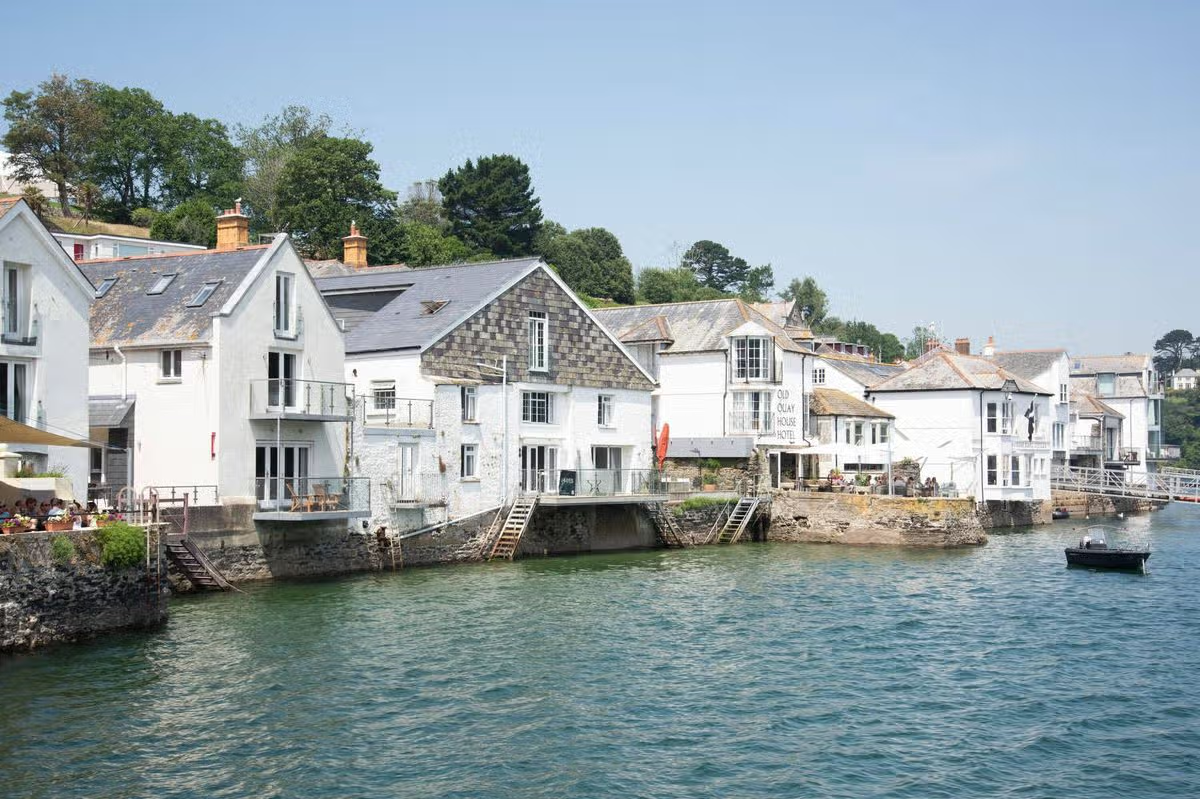
The fishing village sits magnificently in a stunning cove on a peninsula, offering fresh seafood, timeless charm and an escape from typical tourist crowds
The village seems to be frozen in time(Image: Getty Images)
Cornwall harbours a hidden gem which truly seems frozen in time.
Encircled by stunning scenery and overflowing with authentic Cornish charm, this South Cornwall fishing village stands amongst the area’s most exceptional locations.
Described by Secrets of Cornwall as “a great secret frozen in time”, this tiny harbour village nestles magnificently at the foot of a steep, dramatic valley that opens out onto the splendid Veryan Bay.
Considered the crown jewel of Cornwall’s Roseland Peninsula, this coastal village provides quintessentially Cornish views, yet remarkably stays free from the usual tourist masses.
The late Sir John Betjeman – Poet Laureate and famously the campaigner who saved St Pancras Station from destruction during the 1960s – once described this little hamlet as “one of the least spoiled and most impressive of Cornish fishing villages”, and it’s safe to say Portloe has fully lived up to such acclaim.
Save on the best holiday cottages in Cornwall
This article contains affiliate links, we will receive a commission on any sales we generate from it. Learn more
Famous for its rugged coastline, golden beaches, picture-perfect villages and rich maritime heritage, Cornwall is one of the most-visited corner of the UK. Sykes Cottages has a large number of holiday homes to choose from, with prices from £36 per night.
Timeless Cornish treasure
The village derives its name from the Cornish ‘Porth Logh’, meaning ‘cove pool’ – a fitting description reflecting its picturesque position within a cove surrounded by dramatic hillsides.
This naturally sheltered spot established its role as a flourishing pilchard fishing harbour throughout the 17th and 18th centuries.
In fact, until the 20th century, over 50 fishing boats operated from the village’s protected cove harbour, a number that has since dropped to just two.
These remaining operational vessels continue their work, hauling in lobster and crab which is then supplied to the village’s two venues – The Lugger and The Ship Inn.
Considered among Cornwall’s most delightful villages, Portloe stands as a true hidden gem, preserved from the passage of time and modern development, reports Cornwall Live.
The steep valleys encircling the village have guaranteed Portloe’s protection from urban sprawl over the years, leaving the settlement and its buildings practically unaltered since their initial construction during the 17th and 18th centuries.
Like much of Cornwall, Portloe’s past is linked with smuggling, with French brandy being the main contraband transported through the village in a bid by locals to supplement the hamlet’s dwindling fishing trade.
Famous connections
Portloe provides a genuine escape from Cornwall’s well-known summer crowds, offering simply a scenic historic harbour and a small beach which exposes a limited stretch of sand at low tide – its picture-perfect surroundings undisturbed by tourist commotion.
The village’s unspoilt appeal has also rendered it a popular filming destination over the years, most notably appearing in Forever England (1935) starring John Mills, Treasure Island (1949), The Camomile Lawn (1991), and more recently in Richard Curtis’ rom-com blockbuster About Time (2013), the BBC’s Wild West television series, and Irish Jam (2006).
What to see and do in the picturesque coastal village
Tourists should not overlook Portloe’s two most renowned establishments – The Lugger hotel and The Ship Inn.
Situated right at the top of the harbour slipway, The Lugger provides diners with the opportunity to relish freshly caught lobster, crab and fish while taking in unmatched views of the Cornish coastline.
Immersed in Portloe’s history, The Lugger was once a notorious smuggler’s refuge, with its landlord even meeting his end at the gallows during the 18th century for smuggling French brandy.
For those favouring a valley-facing view and a more traditional pub atmosphere, the much-adored Ship Inn awaits – originally a 17th-century fisherman’s abode that remains decorated with maritime memorabilia.
Serving delicious meals, The Ship Inn has established its reputation on fresh seafood whilst also accommodating lovers of more typical pub favourites.
One Tripadvisor review of this beautiful village reads: “One of those hidden treasures that we love. Tucked away and not easy to find, but so well worth the trip.
“There is no beach to speak of, this is still very much a fishing village. One hotel, one pub, lots of fancy pants second homes and a handful of old fishing boats plying their trade.
“A great place to start a section of the coast path also. Or just sit and be, and let the day drift by.”
Another visitor said about Portloe: “Lovely, timeless location, where they still winch small fishing boats up on the beach. The only other place I know of like this is Cadgwith Cove on the Lizard peninsula. Simple and unspoiled – thankfully not inundated with tourists like Polperro. There are beautiful clifftop walks to enjoy, or you can just sit and listen to the waves lapping on the shore.”
There’s remarkably little else to keep you busy in this charming Cornish fishing village apart from dining, enjoying a drink and absorbing the breathtaking coastal views – and frankly, we can’t think of a better way to spend your holiday time.
It is just after dawn and from a viewpoint on Looe Island, Cornwall, I watch two seals on the beach below. The pair entwine in the surf, her freckled, creamy belly against his, flippers wrapped around each other, eyes closed in blissful bonding. I feel like a peeping Tom, watching from behind a bush. It feels too intimate a moment to be spying upon, but the emerald-eyed cormorants guarding the beach seem unbothered.
I had arrived on Looe Island, also known as St George’s Island, off the south coast of Cornwall, the previous morning via the romantically named Night Riviera sleeper train from London, changing early in the morning in Liskeard, then 15 minutes across the waves in a small fishing boat. The island is managed by the Cornwall Wildlife Trust and can only be accessed on organised visits, and while most people come on day trips, I’m staying for a little longer. I have come loaded down with all the food and bedding I will need for my three-night visit, but also with the mental baggage of workaday life. Now, that weight lifts as I watch the male seal court his lady in the shallows.
Rain threatens, and I return to Smuggler’s Cottage, a pretty whitewashed house that sleeps two, tucked into a garden of fruit trees and fading flower heads. The cottage, with a bedroom, tiny kitchen, bathroom and cosy living room with a wood burner, is a homely place and was once lived in by a pipe-smoking, fist-fighting smuggler called Black Joan and her brother, Finn. The rain drips steadily from the sycamore trees clambering up the hillside and clings like frost to the spiders’ webs hanging from the windowsills. I snuggle back into bed with a cup of tea and feel the warmth that comes from a wildlife encounter in which the wildlife never knew you were there.
Undoubtedly it was to preserve moments such as these that the former owner of Looe Island, Roselyn “Babs” Atkins, left her home to the Cornwall Wildlife Trust as a nature reserve. Babs and her sister, Evelyn “Attie” Atkins, were women who defied the conventions of their time. The pair never married and instead invested in their careers and took up hobbies such as mountaineering and rifle shooting. Then, when Attie was in her mid-50s, the chance came to realise a long-held dream to own an island. She bought Looe Island along with her sister in 1965 for £22,000 and became a daffodil farmer; Babs joined her later when she retired.
Smuggler’s Cottage, a cosy holiday home for two on Looe Island
Cornwall Wildlife Trust took over the island in 2004, after Babs’s death, and the charity manages the 9 hectares (22 acres) of woodland, maritime grassland and rocky shoreline for the benefit of wildlife, including one of Cornwall’s largest breeding colonies of great black-backed gulls (stately birds with a wingspan of over 1.5 metres) and marine wildlife such as the graceful compass jellyfish, which can be spotted in the rock pools.
Apart from the cottage, visitors can stay in a bell tent, which sleeps two, overlooking Trelawny Island to the south-east, where breakers crash on the rocks and seals sleep, nose skywards, kissing the surf. Additional revenue comes from the landing fee charged to day trippers, who come across with Looe Sea Safari a few times a day when the weather allows. There is also a diminutive museum and giftshop, where wardens Claire and Jon, who live on the island year-round, sell homemade chutney, chillies from their veg garden and charming books on island life written by Evelyn Atkins.
Today, the seas are too rough for day trippers and I have the island to myself. I read in a meadow, something I never find the time to do at home, and explore the winding pathways that climb steeply up to the summit, 47 metres above the sea.
There’s a self-guided trail (free from the bookshop) for further exploration. One of the stops is Babs’s meadow, where she is buried looking out over her beloved home. The whole route could easily be walked in an hour, but why rush? The trail winds past Island House, Roselyn and Evelyn’s old home, and follows the coastline, with views out over the reefs that fringe the island, before returning through woodland bright with bird calls.
In the afternoon, I head for a swim on the island’s main beach, where the black-backed gulls roost in between fishing trips. I try hard to follow Claire’s instructions, staying close to the tree line and not looking in the birds’ direction to avoid disturbing them, and am delighted when the colony largely ignores me. The sea is icy and the surf threatens to pummel me, but I spot silver striped mackerel swimming inches away and relish the thrill of taking a dip from a little-visited cove. Afterwards, dried and bundled in layers, I sit propped up between the boulders, hands warming around a cup of hot chocolate from my Thermos as I catch the last light of the dying sun. I gaze across the water, my mind clearer than it has been in weeks, as the gulls take off into the wind and sail past along the coast.
Aerial view of Looe estuary. Photograph: Wirestock/Getty Images
When I watch the two seals again later that evening with Claire and Jon, she explains that they hope to encourage visitors to respect coastal wildlife and minimise disturbance. “When the seals are resting,” she says, “they are laying down layers of fat from their meals, which helps the adults survive the winter and enriches the milk females give to their pups. Each time they are woken by a boat, even if it’s only for a few minutes, they use up a little bit of energy and the effect accumulates.”
For each seal, disturbance can be the difference between life and death, she says, but agrees that protection needs to be balanced against the need for people to engage with wildlife in order to increase empathy and support. Staying on – or visiting – a nature reserve is one way that people can get to know the wildlife on its terms. “The island forces them to slow down, to notice the small things,” Jon says. “People put their phones away and spend the afternoon watching a spider building its web.”
After only a day watching the seals, I can already feel that kinship. After all, these animals look so much like us that they were once mistaken for mermaids. It is these priceless moments of connection that Claire and Jon hope will stay with guests and teach them to be humble in the way they live alongside other creatures.
I have come to realise, as Babs and Attie did before me, that it is the lordly gulls and the amorous seals who are the real owners of the island. Still, I am grateful for the opportunity to share their home, if only for a few days, and for the sense of peace and reconnection with the wilder world it has allowed me.
The trip was provided by the Cornwall Wildlife Trust. Smuggler’s Cottage is available to rent from spring until October and costs £450 for a three-night stay for two. Looe Sea Safari runs day trips either side of high tide in daylight hours and fair weather, £12 adults, £7 children 10 and under, plus Cornwall Wildlife Trust’s landing fee of £8 adults, £3 children.
IN CORNWALL is a pretty fishing village that made an appearance on television across 18 years in the hit ITV series Doc Martin.
Now, a pub that starred in the show and overlooks the seafront will reopen after it announced its sudden closure last month.
Sign up for the Travel newsletter
Thank you!
Port Isaac was used as the filming location for Doc Martin 18 yearsCredit: AlamyThe Golden Lion that featured as the Crab and Lobster will reopen on Friday 13 MarchCredit: Refer to Source
The postcard-worthy village of Port Isaac sits on the North coast of Cornwall.
It’s full of white-washed cottages and pubs including The Golden Lion which closed in February when the ‘local company running them ran out of money‘, according to Cornwall Live.
Just a few weeks later, the pub announced it was under new ownership of St Austell Brewery and would reopen on Friday 13 March with the same team.
When the news was revealed on Facebook, one local said: “So pleased to hear it will be reopening. It is the hub of the village. Will be in next week for a meal.”
In fact, lots of Port Isaac was used in the TV show as it doubled as the fictional village of Portwenn.
Fans of the series will recognise the pretty harbour, beaches and the Grade-II Listed Fern Cottage which is perched high above the harbour.
The stone cottage once stood in as the doctor’s surgery and now fans of the show can rent it out as a two-bedroom self-catering holiday cottage.
The cosy cottage sleeps four, it also has a sun terrace, garden and a hot tub.
It’s not cheap though as the booking website estimates the cottage at £443 per night.
The village was used as a filming location for Doc Martin for yearsCredit: Neil GenowerStone Fern Cottage sits high above Port Isaac’s harbourCredit: Alamy
Fans of the show can take guided walking tours exploring locations like the cottage as well as Mrs. Tishell’s pharmacy, and the harbour.
One of the spots where Harry Potter has been filming is in Cadgwith Cove, a small fishing village and Kynance Cove, a tidal beach with white sand, turquoise sea and rock stacks.
YouTuber Wendall flew to the Isles of Scilly off Cornwall and found stunning golden sandy beaches that he compared to the Caribbean, with experts also praising the remote islands as a UK paradise
YouTuber Wendall went to the Isles of Scilly(Image: YouTube/@WendallExplores)
A traveller who journeyed to some of England’s most isolated islands has insisted certain beaches rival those found in the Caribbean.
YouTuber Wendall, who shares content on the video platform through his eponymous channel, travelled to the Isles of Scilly. The Isles of Scilly comprise five inhabited islands including St Mary’s, Tresco, St Martin’s, Bryher, and St Agnes.
The Isles of Scilly are a compact archipelago situated just off the Cornish coast and have been recognised for generations as a location of significant interest and cultural value to the United Kingdom, reports the Express.
Whilst touring the region by boat, Wendall questioned the vessel’s operator about the standard of the beaches. He observed: “I’ve heard St Martin’s has got the nicest beaches.”
The boat operator responded: “It does have nice, golden, sandy beaches, yes. Nice golden sandy beaches.”
Wendall then remarked: “Caribbean-esque.”
Wendall isn’t alone in highlighting the Isles of Scilly’s beaches, with those at Tresco’s Pentle Bay also garnering considerable acclaim.
Specialists from GO Outdoors recently named Pentle Bay among the finest beaches to explore this spring, thanks to temperatures hovering around 10C and approximately 7.2 hours of daily sunshine.
This reputation is echoed in numerous Google Reviews. One visitor described it as “one of the most beautiful beaches I’ve ever seen,” while another called it a “mini paradise” and a “private gem.”
Discussing the subject, Calum Jones, author at GO Outdoors, commented: “As the days get longer and the weather warms up, spring is the perfect time to explore the stunning coastlines across the UK. From Druridge Bay Beach in the North East to Immeridge Bay in the South West, there are breathtaking beaches to discover all around the country.”
Beaches in this region are not the only ones to attract attention; Cornwall’s shores have also earned widespread acclaim, including Kynance Cove.
Located just a short drive from Falmouth, Kynance Cove has drawn comparisons to beaches on the opposite side of the globe in New South Wales, Australia.
Research conducted by Parkdean Resorts found that Kynance Cove boasts the whitest sand in the UK.
They stated: “Topping the list as the UK’s whitest beach is Kynance Cove in Cornwall. This Cornish cove boasts powder-soft sands made primarily of quartz, giving the beach its bright, white appearance. This breathtaking spot gives even Australia’s iconic coastline a run for its money.”
The village is home to one of the country’s finest beaches, boasts a cosy pub with unrivalled views, and has a historically important site nearby – a must-visit destination in England.
Breathtaking views and pristine beaches – what’s not to love?(Image: Chris Griffiths via Getty Images)
Encircled by crystal-clear waters and striking views stretching endlessly into the distance, Cornwall overflows with magnificent sights. Among them is a small coastal village in West Cornwall, positioned approximately nine miles from the vibrant seaside resort of Penzance by road.
With the South West Coast Path winding through this charming seaside settlement, it’s easy to appreciate just how beautiful this spot truly is. This little Cornish village sits just two miles by car and one mile on foot from Cornwall’s iconic Land’s End.
Whilst not technically a cove in the strictest geological definition, the village of Sennen Cove has a handful of year-round inhabitants, though a significant proportion of the properties there serve as holiday rentals and seasonal residences.
Save on the best holiday cottages in Cornwall
This article contains affiliate links, we will receive a commission on any sales we generate from it. Learn more
Famous for its rugged coastline, golden beaches, picture-perfect villages and rich maritime heritage, Cornwall is one of the most-visited corner of the UK. Sykes Cottages has a large number of holiday homes to choose from, with prices from £36 per night.
Sennen Cove serves an essential function for the Royal National Lifeboat Institution (RNLI) as it houses a critical lifeboat station. A modest fleet of working fishing vessels can be spotted moored in the cove, alongside recreational fishing boats, reports Cornwall Live.
Things to do in Sennen Cove
The panoramas from the headland slash observation point, Pedn-men-du, are unmatched and absolutely merit the brief walk from the heart of the coastal village.
Delightful boutiques, art galleries including the distinctive circular Roundhouse and Capstan Gallery, and an impressive array of dining and drinking establishments make Sennen Cove an essential destination to visit in Britain.
Sennen Cove features one principal village pub, Old Success Inn, which has become an absolute favourite amongst both residents and tourists.
The charming 17th-century fisherman’s inn radiates character and appeal, situated in a prime location that commands views across the golden sands of Sennen Cove Beach – another significant, perhaps the most crucial, attraction in the village.
Providing guests with expansive outdoor seating offering breathtaking vistas and a welcoming indoor area complete with a roaring fire, Old Success Inn is the essential spot when visiting Sennen Cove, with lodging also on offer for travellers.
Acclaim for the iconic pub at the centre of Sennen Cove is endless, with one Tripadvisor review stating: “A recent visit on the back of a trip nearby was excellent.
“The location, of course, cannot be beaten – even stormy weather is great to view from here – unmatched to be honest. What’s great is the service and personnel which is brilliant no matter who sees to you.
“You are charmed and looked after as soon as you walk in and that’s what we loved the most. Of course the excellent food to match also helps. You can come here any time you want (it’s ALWAYS open) and it doesn’t matter.”
The Blue Lagoon and Shantys Fish Bar (in the main village of Sennen) are obvious choices for an excellent portion of fish and chips. Sennen Cove Cafe, adjacent to the lifeboat station, is ideal for a quick snack whilst enjoying some watersports, swimming, or simply relaxing by the beach.
The historic First and Last Inn (also in mainland Sennen) is another excellent place to grab some food and a refreshing pint.
One of Cornwall’s finest beaches
Sennen Cove Beach, also popularly known as Whitesands Bay, has frequently been praised as one of Cornwall’s most stunning and attractive beaches, thanks to its mile-long white sands and spectacular views.
A premier surfing location for locals and visitors alike, Sennen Cove Beach is widely recognised as a surfing paradise celebrated for its near-perfect surf conditions.
The surfing schools and centres are ideal for lessons and surf equipment can be rented independently at the beach, near the café and the car park.
Sennen Cove Beach is also renowned for once being the professional territory of Britain’s first qualified lifeguard dog, Bilbo.
The 14-stone Newfoundland would regularly be spotted patrolling the beach’s immaculate sands in his red and yellow jacket, often at the back of a lifeguard’s quad bike.
Bilbo was trained by his owner, head RNLI lifeguard Steve Jamieson, and went on to become an active lifesaver as well as the face of beach safety on Sennen Cove Beach. He passed away in 2015, at the age of 12.
Tourists are consistently impressed by how pristine and well-kept this beach remains, even during peak times, with one reviewer commenting on Tripadvisor: “This is a truly lovely beach, spotlessly clean with excellent safety standards.
“Even though it was extremely busy as it was a lovely hot Cornwall day there was enough room for everyone. A lovely wide, family friendly beach where after swimming all day you could get a fantastic hand made pizza from a pizza truck. A wonderful experience to remember from a family holiday.”
The spectacular ‘castle on the cliff’
Located just half a mile from Sennen Cove on foot, Maen Cliff Castle is an ancient Iron Age hill fort perched on Mayon Cliff, positioned between Land’s End and Sennen Cove.
It’s an essential stop for anyone exploring the region, offering breathtaking panoramic views and a fascinating heritage that will whisk you centuries into the past.
Only earthworks and walls remain of the historic structure, alongside two standing gate stones which indicate the entrance to the site. Tracing its origins to approximately 500 BC, it stands as one of Cornwall’s earliest datable Cliff Castles, enriching its already compelling story.
Being one of just two fortified locations in Cornwall where early Iron Age pottery has been unearthed, Maen Cliff Castle represents a genuine treasure of the region.
Fragments of pottery spanning the era from 400 BC to 400 AD have been uncovered at the location, enhancing its intrigue and layered history.
In fact, local legend suggests the castle was once the dwelling of the giant Myen Du, though the promontory fort more probably served as a defensive retreat or observation point, a commercial trading station or a location for significant ceremonial gatherings.