Corina

Why Venezuela Needs María Corina to Go Home

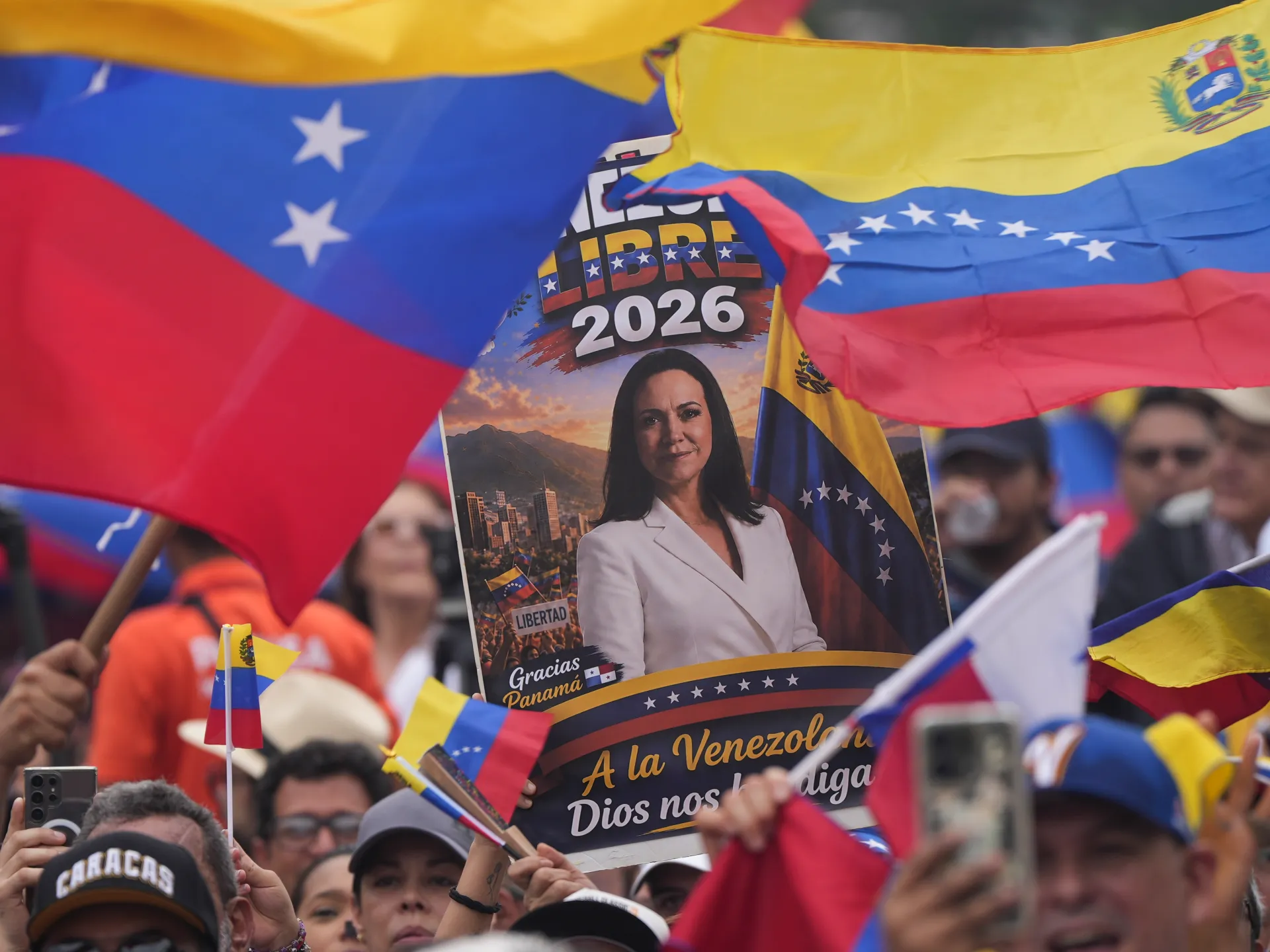
Maria Corina’s return to Venezuela is looking imminent. Her willingness is hurried by her desire to stand next to Venezuelans after the devastating earthquakes, and by the risks of remaining in exile while the emergency unfolds. Her return trip now looks like a matter of when, not if.

Last weekend, Bloomberg’s Eric Martin reported that US officials made it clear to both Dutch and chavista authorities that Washington wouldn’t support her return, when she was planning to fly to Venezuela from Curacao. Machado countered in a video distributed Tuesday, claiming she intends to do “whatever is necessary” and speak to “whoever is needed” to serve the Venezuelan people. 

Meanwhile, officials in Washington are backing the regime and trying to distance themselves from her intentions. In a recent interview, the chargé d’affaires in Caracas praised the commitment of Delcy’s regime to work and collaborate with the US. A State Department spokesperson said on the record that chavismo remains “the ultimate authority over their territory,” further empowering the Venezuelan State to react negatively if the opposition leader shows up. 

An unprecedented catastrophe once again exposed the incompetence of the Venezuelan government. Yet the Trump administration continues to tilt the scales in Delcy’s favor. This time, by offering no guarantees and taking no official position on Machado’s return, contradicting the assurances given by Marco Rubio and Ambassador Michael Kozak during congressional hearings earlier this year. 

A complex set of stakeholders is determining the terms of this event. Machado’s return will have a direct impact on the challenges she is set to face in the first days and weeks after arriving. Blocking it entirely will only intensify the social tensions already simmering within the country. However, an arrival without a clear operational contribution risks undermining her leadership.

While exile has helped Machado advance the democratic cause across the world and coordinate closely with allies, the benefits of staying outside the country no longer outweigh the costs.

The Venezuelan people await a leader that steps up to fill the institutional and operational vacuum left by a regime that has abandoned the population. The last seven days have been characterized by the lack of adequate relief to rescue survivors and assist refugees on ground zero. The Venezuelan State has been exposed in what should be its core mission. Time is running against everyone involved. 

While exile has, to an extent, helped Machado advance the democratic cause across the world and coordinate closely with allies, the benefits of staying outside the country no longer outweigh the costs.  For many, the clock is ticking under the rubble and their grievances can no longer be addressed with digital messaging.

Since Nicolás Maduro and Cilia Flores were captured, every passing day has raised more doubts regarding Machado’s autonomy and political agency. The saga surrounding her return is casting doubts on Washington’s ultimate support for the Nobel laureate, putting a large question mark over long-term plans to have her truly involved in a purported transition. For the opposition leader, recognizing Trump as an ally in the pursuit of a democratic Venezuela is understandable. Allowing him to dictate your decisions in one of the most crucial moments in Venezuela’s history is a very different thing.

Trump’s intentions over post-Maduro Venezuela have definitely eroded. Elite expectations of a swift economic recovery that pervaded post-January 3 conversations changed dramatically. But as the little credibility the Rodríguez siblings had evaporated in a matter of days, the Trump government continues to hold María Corina down. This happens as we know the US retains more than enough influence to allow the Nobel laureate to return to her country during a national tragedy, with or without a valid passport.

For María Corina to regain Washington’s support, she has to succeed in becoming a figure that inspires stability. 

Since 2025, María Corina has tried to communicate that she can persuade the Trump administration over Venezuela. For instance, when it came to the need to pressure Maduro to step down, to finally resort to military means to remove him, to press for the release of political prisoners, and so it goes. Trump himself has repeatedly shown he doesn’t need Machado to have his goals met in Caracas. This emergency could now emerge as a train crash between Trump’s interests and those of the democratic opposition. Unlike Delcy, whose main goal is to retain power and survive chavismo’s demise, María Corina cannot afford to have minimal leverage over Washington. At least not anymore. The earthquakes’ aftermath, then, is also an opportunity for her to forcefully drive a realignment of US tutelage over reconstruction and democratization efforts. Or to finally expose Trump over conflicting interests.

Civil defiance against regime forces is increasing on the ground, a sign that social unrest is emerging among a population without someone to look up to for help. Blocking María Corina’s entry might feed tensions created by the vacuum produced by the State. If people continue to be left to their own devices, this could spark a new, critical chapter of social conflict in the country’s history.

Relief efforts have already provided a positive platform for local leaders who have delivered. A good example is Chacao mayor Gustavo Duque, who has been able to establish and communicate the most effective operational coordination from a local government official. María Corina would need to replicate this at a larger scale while raising the standards, relying on non-government tools and human capital at her disposal. 

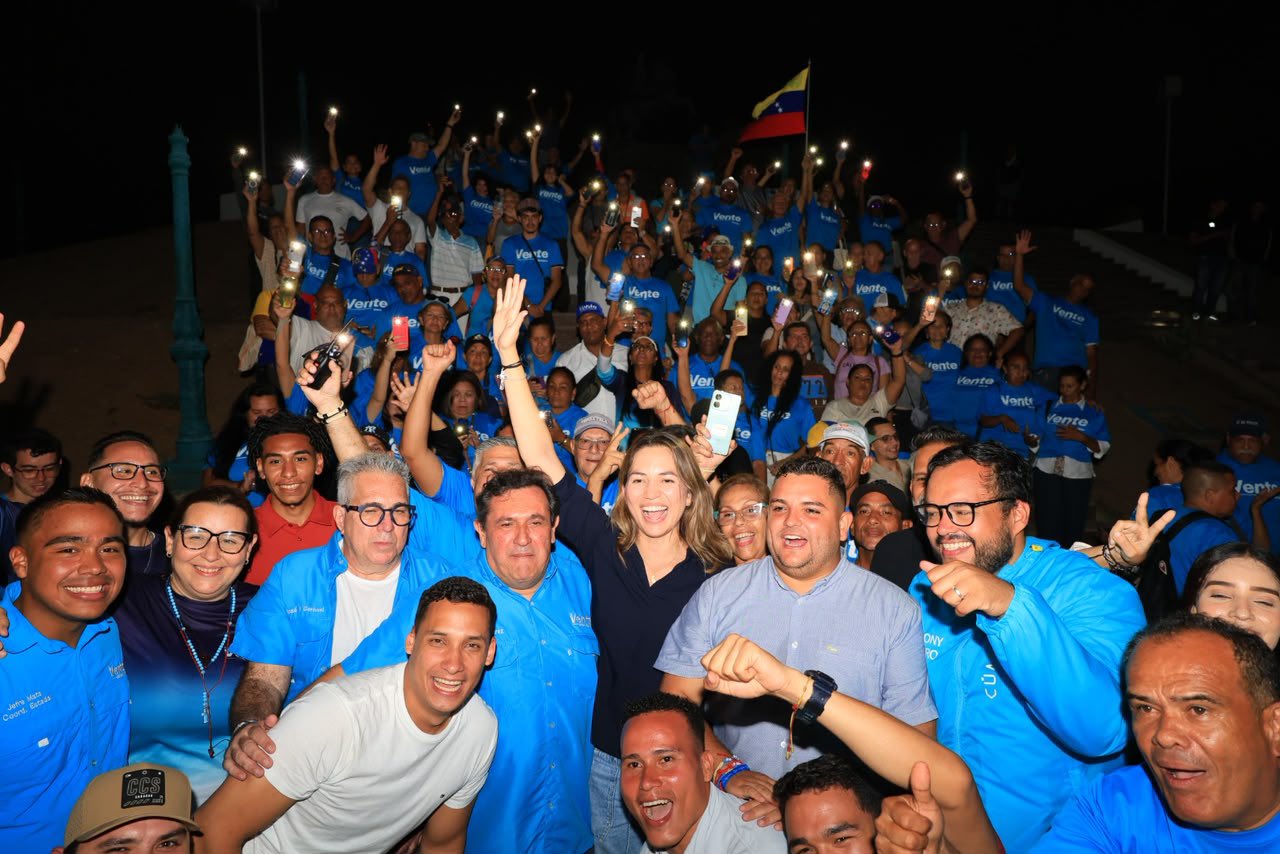
The regime’s complete lack of response and its attempts to block relief efforts need to be challenged. Machado’s ability to organize efforts through civil society and allied NGOs, coordinate with international rescuers and foreign governments, muster operational capacity through Vente Venezuela’s comanditos and local political structures, and deliver sensible (and sensitive) communications could be crucial to contrast with the regime’s negligence. Her responsibility would not be to engage in political campaigning with other opposition leaders, but to establish a backbone for operational organisation, even a chain of command that makes the efforts of Venezuelan civilians more effective. When it comes to logistics involving civilian volunteers, the famous electoral strategy of 2024 showed what Machado’s leadership can achieve. The stakes are even higher this time.

Chavismo’s negligence is fueling instability that could jeopardize the economic and political gains the US hopes to secure in Venezuela.

Machado must demonstrate that she can contain the threats to Trump’s post-Maduro narrative that inevitably emerge from the country’s current state of political and institutional orphanhood

The likes of Delcy and Cabello will try to obstruct Machado’s networks and allies from providing assistance and support. Their goal would be to secure Machado’s failure in supporting the people. Nonetheless, the costs of repression are currently at the highest due to the state of widespread desperation. Attempting to block or even capture Machado could come at a high price, yet they will use every resource available to hinder her initiatives.

For María Corina to regain Washington’s support, she has to succeed in becoming a figure that inspires stability. 

Chavismo’s negligence is fueling instability that could jeopardize the economic and political gains the US hopes to secure in Venezuela. Machado must demonstrate that she can contain the threats to Trump’s post-Maduro narrative that inevitably emerge from the country’s current state of political and institutional orphanhood. If Washington cannot mitigate those risks soon, as it has sought to do in the wake of its February strike on Iran, a Venezuela policy in crisis could become yet another political liability for the Trump-dominated GOP ahead of the November elections. 

Between Trump’s continued support for the regime and Delcy’s incompetence in addressing the emergency, there is an opportunity for María Corina to make a consequential return. Throughout the history of anti-chavista politics, no leader has been able to withstand the political test that coming back from exile poses. If the ambitions of María Corina and her supporters become reality, she will inherit the long-term consequences of the tragedy. Her return offers a critical opportunity to take immediate responsibility, show the type of public-servant leadership she should offer, and channel the frustration of Venezuelans into collective actions.

Venezuelan civil society has risen to the occasion. The people have become the heroes lifting the country’s ruins. But Venezuelans remain in desperate need of a leader. Not to raise our hopes, which I believe we have found among each other. But for the guidance necessary to face the wreckage chavismo continues to leave behind.

Source link

A Tiger’s Shadow Stalks María Corina Machado

For a quarter century, Venezuelan politics has revolved around a single divide: chavismo versus anti-chavismo. Entire political careers were built around that struggle, as parties rose and fell according to their ability to interpret it. Leaders were judged less by what they proposed than by how effectively and fervently they opposed the regime. 

No one has embodied that tradition more successfully than María Corina Machado. Her achievement was not simply electoral. She transformed anti-chavismo from a coalition of parties and personalities into something closer to a political identity.

That transformation helped make Machado the dominant figure in Venezuelan politics since 2024. It may also explain why the beast showing its fangs at the other side of the Western border deserves to be taken seriously by the opposition. 

Political movements rarely remain the property of the people who built them. Over time, people begin to invest parts of themselves in them. They become attached not only to leaders, but to their own idea of what those leaders represent. Their loyalties gradually shift from individuals to identities, at that point, succession becomes possible.

The curse of the trailblazer

Colombia’s recent election offers an intriguing illustration of how this process can unfold. At first glance, Abelardo de la Espriella’s victory looked like a victory for the Colombian Right. It may turn out to have been something more interesting.

De la Espriella did not defeat Uribismo. If anything, he inherited it. Many of his voters still admire Álvaro Uribe and some probably voted for him repeatedly. What changed was not their opinion of Uribe, but their sense of who now spoke most convincingly for the political tradition he created.

The Tiger did not campaign against Uribe’s legacy. He campaigned as its most uncompromising heir, as he described himself “más uribista que doña Lina” (Uribe ‘s wife). His appeal rested on a simple proposition: Uribe had been right all along, but those who claimed to represent his legacy lacked either the conviction or the will to carry it through to its logical conclusion. This is a very different kind of political challenge. It does not seek to replace a movement. It seeks to inherit it.

De la Espriella’s voters didn’t change their opinion of Uribe, but their sense of who now spoke most convincingly for the political tradition he created.

That possibility should sound familiar to Venezuelans.

The question is not whether Machado is losing support. By any reasonable measure she remains the dominant figure in the Venezuelan opposition. The more interesting question is whether anti-chavismo, having become an identity in its own right, could one day develop ambitions, expectations and frustrations that exceed her ability to contain them.

The strange thing about political victories is that they rarely belong entirely to those who achieve them. Over time, successful leaders create constituencies, expectations and myths that acquire a life of their own. What begins as a political movement gradually becomes a political identity, and once identities take root they stop asking permission from the people who created them.

The comparison that comes most readily to mind is Winston Churchill. The British prime minister lost the first election after the Second World War, in one of the great paradoxes of democratic politics. The standard explanation is that Britons decided the war had been won and wanted someone better suited to building the peace.

Bukele, Trump and Milei often feature more prominently in the imagination of many Venezuelans than the leaders who shaped domestic opposition politics before Machado.

The Venezuelan case may eventually present the opposite problem. Machado’s future challenger, once one emerges, is unlikely to argue that the struggle against chavismo has ended. If anything, the argument would be the reverse: not that Machado was wrong, but that she stopped too soon.

If such a figure were ever to emerge in Venezuela, it would likely appear first as a sentiment rather than as a politician.

A nameless threat

One can already glimpse fragments of that sentiment across the Venezuelan diaspora, in Miami, Houston or Madrid among voters who remain deeply committed to the opposition but increasingly impatient with the pace of events, and Machado’s approach to Trump’s plan. Many admire Machado, some even revere her. Yet admiration and impatience are not mutually exclusive sentiments.

A decade ago, one of the most common criticisms of Machado was that she was too confrontational. Today, some of her critics seem to believe she has not been enough of a hardliner. The shift may appear subtle. It is anything but that.

What unites these constituencies is not necessarily ideology. Many disagree on policy, strategy and even on the nature of a future Venezuelan transition. What they seem to share is a growing impatience with the political habits that defined the opposition during the previous two decades. Their political reference points are increasingly international. Bukele, Trump and Milei often feature more prominently in their imagination than the leaders who shaped Venezuelan opposition politics before Machado.

The result is a political vocabulary that would have sounded unfamiliar not long ago. Arguments about negotiations and elections increasingly coexist with arguments about strength, authenticity, betrayal and whether the opposition has shown sufficient willingness to exercise power rather than merely seek it.

The Tiger represents a possibility: that the greatest challenge facing anti-chavismo in the years ahead may not come from its enemies, but from the unresolved question of what victory should look like.

None of this means that a Venezuelan Bukele is waiting in the wings, nor does it suggest that Machado’s position is immediately threatened. As things stand, the opposite appears true. But political identities rarely remain frozen in time. They absorb new influences, adapt to new frustrations and develop new aspirations. The question is whether anti-chavismo is beginning to do the same.

Perhaps someone like Abelardo The Tiger never comes. Perhaps Machado successfully leads Venezuela through a transition and remains the uncontested leader of the movement she helped build. That remains the most likely outcome.

But history suggests that political movements rarely remain suspended in a single moment forever. The forces that transformed Machado into the dominant figure of Venezuelan opposition politics, frustration, perseverance, impatience, conviction and a refusal to accept the permanence of chavismo, are not forces she alone controls.

That is why The Tiger matters. The point is not whether it materializes as a candidate, a faction or a movement. The point is that it represents a possibility: that the greatest challenge facing anti-chavismo in the years ahead may not come from its enemies, but from the unresolved question of what victory should look like.

For 25 years, Venezuelan politics revolved around how to confront chavismo. María Corina Machado provided the most compelling answer that question has yet produced. The shadow crouched in the woods is the possibility that a different question is beginning to emerge.

And predators have a peculiar habit. They tend to show up before people eventually give them a name.

Source link