Nithya Raman has at least one friend in City Hall — City Controller Kenneth Mejia
After the L.A. mayoral debate on NBC4 ended Tuesday, reporters rushed downstairs to a courtyard hoping to speak with the candidates or their surrogates.
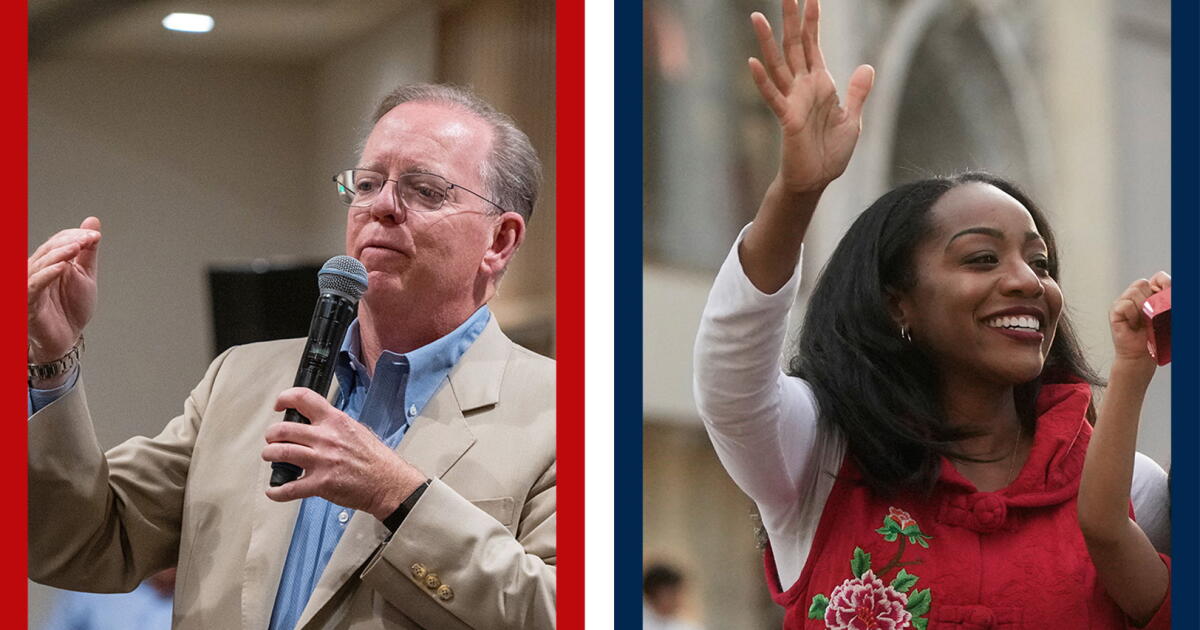
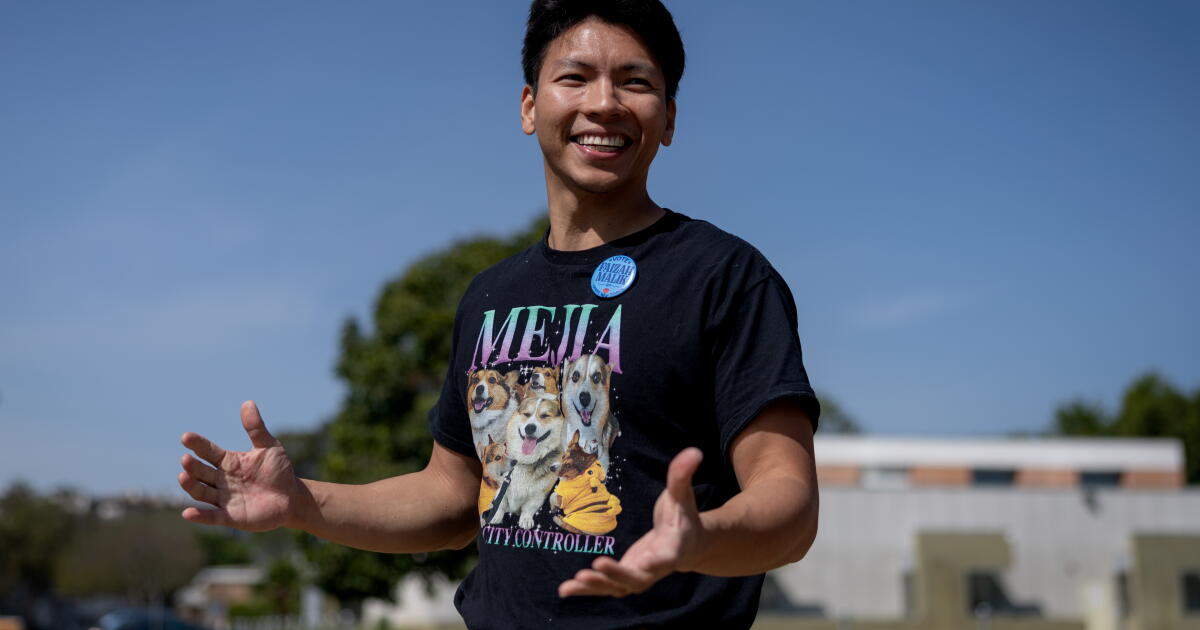
Speaking for Mayor Karen Bass were Councilmember Monica Rodriguez and State Assemblymember Rick Chavez Zbur (D-Los Angeles). On the other side, speaking for Councilmember Nithya Raman, the sole spin doctor was Controller Kenneth Mejia.
“What Councilmember Nithya Raman did up there was show a better path, a better vision for what this city could be,” Mejia told reporters outside the NBC4 and Telemundo52 studios in Universal City.
Mejia isn’t just listed as Raman’s top endorser on her campaign website. He’s also her biggest cheerleader, and the only elected official at City Hall publicly supporting her mayoral bid. (Raman’s camp has contended throughout the campaign that endorsements are not necessarily a sign of how the electorate is feeling.)
Of all the elected officials out there, Mejia is an obvious ally for a politician like Raman who has been somewhat ostracized at L.A. City Hall since she announced her candidacy in February. Not a single council member — even her three fellow comrades in the Democratic Socialists of America — has endorsed Raman’s candidacy.
“When you’re in office, once you learn how status quo works and how to game it, you don’t want to change it,” Mejia told The Times, referring to the three DSA council members supporting Bass.
As for Mejia, he doesn’t mind being on the outside.
“It’s been lonely since I’ve been here [at City Hall],” he said.
“People have told me, ‘Kenneth you ruined your political career by endorsing Nithya,’” he said. “I’m honored to be the only one endorsing her … Karen Bass said the political establishment doesn’t like Nithya and I said, ‘So? I won by bucking political establishment.’”
Mejia has turned into an attack dog for Raman over the past few weeks. After endorsing her in July, he has showed up at news conferences with her and posts sometimes multiple times per day on social media supporting her or attacking the mayor.
One reason for his endorsement is that Bass declined to consent to Mejia performing an audit into her signature homelessness program Inside Safe.
Raman, meanwhile, has said she’ll open the books to Mejia.
If Raman wins, she will have a formidable City Hall ally in Mejia, who has not been shy about using social media to attack an assortment of political targets in and outside city government. On Friday, he announced that he had issued subpoenas to LA28, the private Olympic organizing committee, demanding financial records on the planning for the 2028 Games.
A vote, but no endorsement
Fourteen members of the Los Angeles City Council have endorsed Bass (yes, that includes Raman, who subsequently decided to challenge the incumbent).
The sole holdout on the council, Traci Park, made her allegiances — soft as they may be — abundantly clear Wednesday at a town hall in Pacific Palisades when she said she would be voting for Bass but not endorsing her.
“I want some change too,” Park said, addressing her constituents about the mayor’s race. “But the alternative does not actually get us where we want to be. I think it actually impedes our progress.”
“I have deep concerns about the leadership and effectiveness of both candidates. I have personally been deeply frustrated and angry with our current mayor. We have tangled on some major policy issues. But always respectfully.”
Park said that as difficult as things may be now, they could get worse if Raman were elected.
The council member, who represents a large swath of L.A.’s Westside, said she is “very, very concerned” about a Raman mayoralty.
Park represents the Palisades, where the Palisades fire burned last year, destroying thousands of homes and killing 12 people.
Park told The Times in an interview that an endorsement of Bass would have represented “an affirmative statement of support earned based on agreement with someone’s records or positions or accomplishments.”
But Bass is someone Park can work with, the council member told The Times.
“I cannot say the same thing about Nithya Raman. That’s the problem. She doesn’t work with others. I think that deep frustration with her unwillingness to collaborate with others is reflected in the fact that no other council members at all are endorsing her,” Park said.
Bass goes to Ramanland
Bass went hard after Raman at this week’s NBC4/Telemundo 52 debate, accusing her of neglecting constituents in her district, which stretches from Silver Lake to the San Fernando Valley. She pushed even harder the following morning, appearing with some of those dissatisfied residents and business owners in Sherman Oaks.
Standing outside the Valley Inn Restaurant and Martini Bar, Bass said she reached out to Raman early on as mayor to warn her that some of her Valley constituents had contacted the mayor’s office to voice unhappiness with Raman. Bass said she told Raman she was going to meet with them.
“She essentially said to me that … she knew that they didn’t like her, that it was a feeling that was mutual, and to have at it if I want,” Bass said. “To me, I thought that was a strange way to respond.”
Raman spokesperson Liz Garcia denounced Bass’ comments as “bizarre and simply not true,” saying her boss has maintained positive relationships with her constituents. In a statement, she pointed to recent polling that showed Raman with an 8-point lead in the Valley.
“Nithya’s results in her district help explain why: She has reduced encampments, tents and RVs by 70% in her district over the past three years, helped businesses succeed, protected tenants, installed traffic safety upgrades and improved quality of life for residents,” Garcia said.
Raman has been pushing back against the mayor’s claims in other ways, noting that two-thirds of voters in the June 2 primary chose someone other than the incumbent.
During this week’s debate, Raman criticized Bass for boasting that she had given Sherman Oaks residents her personal cell number, saying it showed that regular government operations are dysfunctional.
Standing outside the martini bar, Bass acknowledged that her own staffers aren’t always happy about her generosity with her cell number. But things were worse when she was a member of Congress, she said.
“My cellphone was on my business card,” Bass said.
State of play
— BLOW FOR BLOW: The gloves came off in the final debate between Bass and Raman this week, with the two candidates trading verbal jabs over public safety, the Palisades fire and the fate of Police Chief Jim McDonnell. Meanwhile, here’s who three L.A. Times columnists believe won the debate.
— A MOVING TARGET: Raman has shifted her position on police hiring, public safety spending, the so-called mansion tax and other issues, causing some to question what she stands for. Raman has defended her various policy shifts, saying she made them after receiving new information or recognizing changed circumstances.
— CHIEF AMONG THEM: Raman and Bass have diverged over whether to keep Chief McDonnell. Raman said she would replace the chief if she becomes mayor, although she offered mixed messages on the timing. Bass said that McDonnell’s replacement before the 2028 Olympics could throw the LAPD into turmoil.
— GATES-GATE: Bass denounced Raman for saying the “gold standard” for the LAPD’s noncooperation with immigration enforcement took place during the tenure of former police chief Daryl Gates. Bass suggested Raman is not in touch with the city’s Black community, while Raman said the mayor had deliberately twisted her words.
— HOPE FOR HOUSING: Both Bass and Raman have been talking up their work on housing affordability. Bass said her administration has fast-tracked tens of thousands of units of affordable housing, while Raman has boasted of her success in enacting the strongest tenant protections in L.A. in 40 years.
— FIGHTING FRAUD: Los Angeles County voters are concerned about a host of voter fraud issues that could disrupt the Nov. 3 general election, even though they have a high degree of confidence in local elections officials, according to a new poll funded by the nonprofit California Community Foundation.
QUICK HITS
- Where is Inside Safe? The mayor’s signature program did not have an operation this week.
- On the docket next week: The final, pre-election campaign finance statements are due in Los Angeles runoff contests on Thursday.
Stay in touch
That’s it for this week! Send your questions, comments and gossip to LAontheRecord@latimes.com. Did a friend forward you this email? Sign up here to get it in your inbox every Saturday morning.