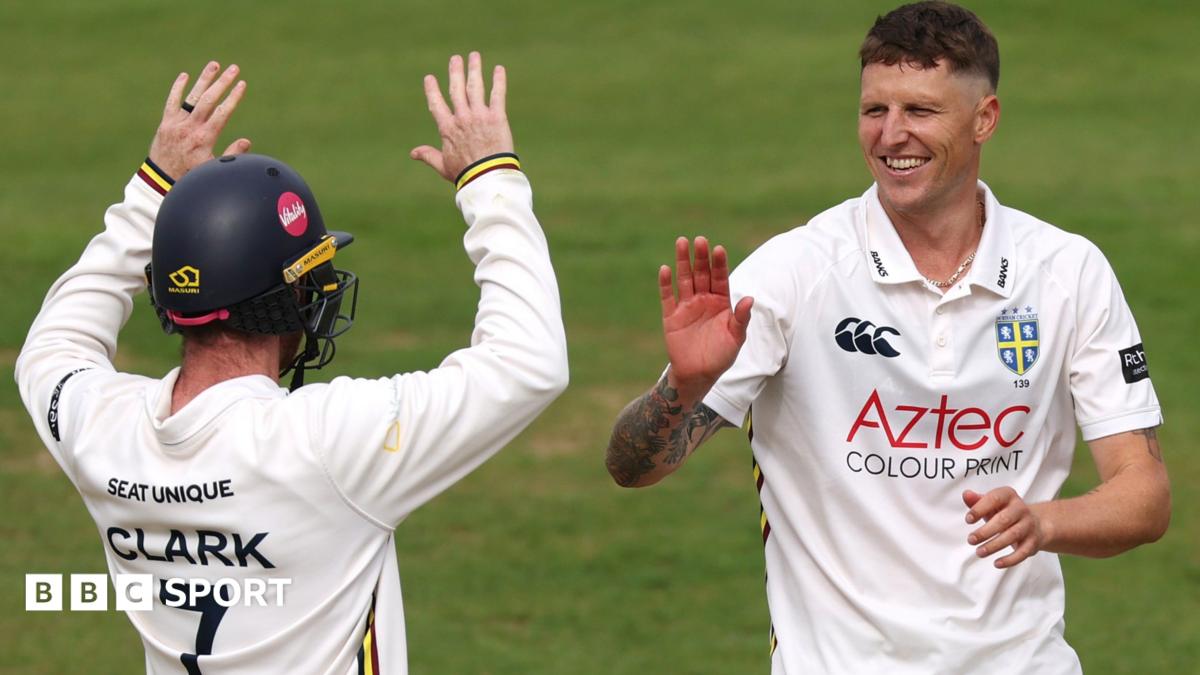
Brydon Carse can return, says Rob Key, as England reveal central contracts
As well as announcing player deals, England also confirmed new-look backroom teams underneath Test head coach Stephen Fleming and white-ball counterpart Brendon McCullum.
Fleming has brought in Richard Dawson, who leaves his position as Glamorgan head coach, alongside former England wicketkeeper James Foster and South African Eric Simons. Fleming worked with both Foster and Simons at Indian Premier League side Chennai Super Kings.
Marcus Trescothick, who took interim charge of the Test team for the home series against Pakistan, remains with the red-ball team.
McCullum keeps the bulk of the staff who worked with him across formats: Sarah Taylor, Jeetan Patel and Tim Southee. Kevin Pietersen will also work with the white-ball teams in the run-up to the 50-over World Cup in southern Africa next year.
Of the 39 players handed England deals, 30 have full central contracts and nine are on development contracts.
The large number of players on England deals is a result of high-earners like Ben Stokes and Mark Wood retiring from international cricket and freeing up space in the budget.
Eleven players, including Test captain Joe Root and white-ball captain Harry Brook, are given two-year contracts.
In an unprecedented move for an uncapped player, pace bowler Henry Crocombe is also given a two-year contract.
———————————————————
England’s centrally contracted players: Joe Root* (Yorkshire), Harry Brook* (Yorkshire), Rehan Ahmed (Leicestershire), Jofra Archer* (Sussex), Gus Atkinson* (Surrey), Sonny Baker* (Hampshire), Tom Banton (Somerset), Shoaib Bashir (Derbyshire), Jacob Bethell* (Warwickshire), Jos Buttler (Lancashire), Brydon Carse (Durham), Sam Cook (Essex), Jordan Cox* (Essex), Henry Crocombe* (Sussex/Surrey), Sam Curran* (Surrey), Liam Dawson (Hampshire), Ben Duckett (Nottinghamshire), Emilio Gay (Durham), Matthew Fisher (Surrey), Will Jacks* (Surrey), Dan Lawrence (Surrey), Saqib Mahmood (Lancashire), Jamie Overton (Surrey), Ollie Pope (Surrey), Matthew Potts (Durham), Adil Rashid (Yorkshire), Ollie Robinson (Sussex), Phil Salt (Lancashire), Jamie Smith (Surrey), Josh Tongue* (Nottinghamshire)
*Denotes two-year deal through until 30 September 2028.
England development contracted players: James Coles (Sussex), Mason Crane (Glamorgan), Josh Hull (Leicestershire), Eddie Jack (Hampshire), Ben McKinney (Durham), Liam Patterson-White (Nottinghamshire), Thomas Rew (Somerset). Matthew Revis (Yorkshire), Mitch Stanley (Lancashire).
———————————————————
Crocombe is one of five specialist fast bowlers to be given a multi-year deal, joining Jofra Archer, Gus Atkinson, Sonny Baker and Josh Tongue.
Before the Derby incident, Carse had not played for England since the Ashes in January because of a wrist injury.
Prior to the injury, the Durham man was an international regular across formats and was the only England seamer to play in all five Tests in Australia.
With inexperienced bowlers like Baker and Crocombe receiving longer contracts, Key was asked if a lack of extension for Carse revealed England’s feelings on his international future.
“No,” replied the former Kent batter. “I think it means if he gets a chance to come back and play for England he’s got to try to maximise his career and be the best bowler he possibly can be.
“That investigation is going on with the Regulator. I don’t know a lot about what happens in that investigation, because that is with them and we deal with that afterwards. There’s nothing really I can say about that. We haven’t had those conversations. We’ll find out more in due course. We’ll find out more when that investigation comes to a head.”
Along with Crocombe, Emilio Gay, Jordan Cox, Dan Lawrence, Tom Banton, Sam Cook and Matt Fisher are given full central contracts for the first time.
Ollie Robinson returns to the contract list after missing out for the past two years, rewarded following his superb return to the Test team in the home summer.
Off-spinner Shoaib Bashir keeps his deal and is the only specialist red-ball spinner on the list. However, Mason Crane and Liam Patterson-White are given developmental deals as an indication of how England could grow their Test spin-bowling options.