contract

Looking into Shohei Ohtani’s mysterious slump

Hi, and welcome to another edition of Dodgers Dugout. My name is Houston Mitchell, and I guess Shohei Ohtani is human after all.

Are you a true-blue fan?

Get our Dodgers Dugout newsletter for insights, news and much more.

I’m writing this on Tuesday evening because my youngest daughter, Hannah, whom I’ve mentioned numerous times in this newsletter, is getting married this weekend. I won’t be able to do a newsletter for next Monday, and I didn’t want everyone to wait a week and a half for the next newsletter.

So, hopefully nothing huge happened on Wednesday. But if it did, and it’s not mentioned here, now you know why.

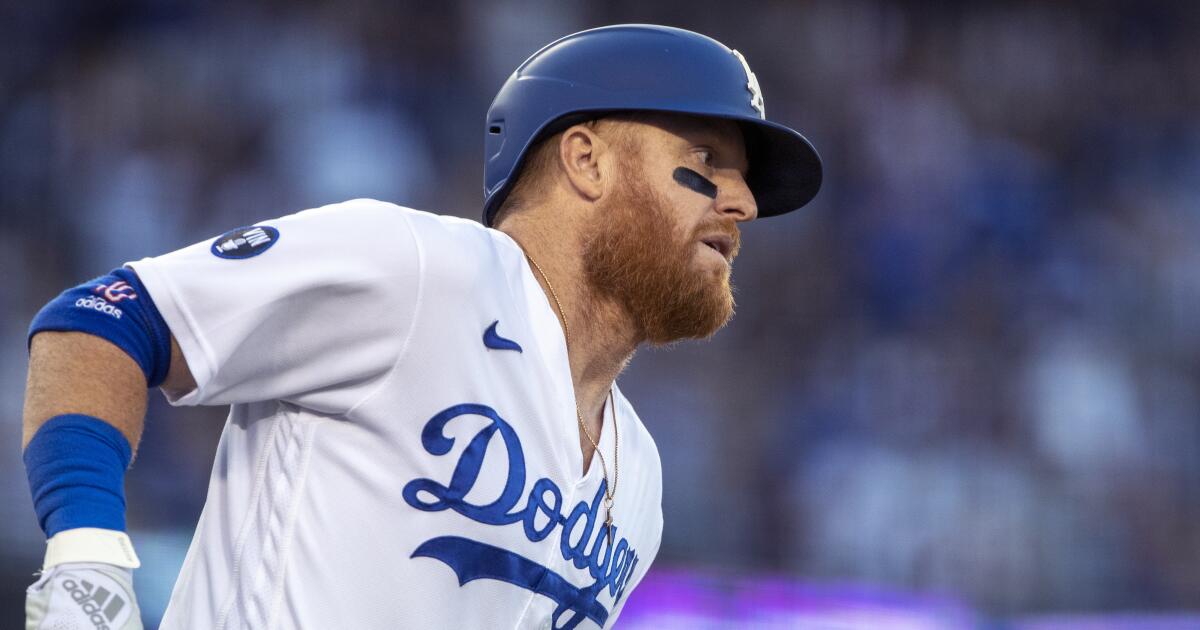
Heading into Wednesday’s game, Shohei Ohtani was hitless since April 27. That’s a long time without a hit. So what happened?

Our Dodgers beat reporter, Maddie Lee, wrote about this after Monday’s game. Some takeaways from that story, which you can read here:

—At one point, Ohtani was going to hit and pitch Tuesday, but the Dodgers changed their mind Monday and had him only pitch.

—“Definitely not results,” Dave Roberts said of how he made that decision. “It’s a little bit more body language and just watching the player. … We’ve certainly enjoyed the fruits of him doing [both], which he will continue to, at times. But I think for me, it’s a start by start kind of read-and-react situation.”

—Ohtani: “I do feel like over the course of my career it’s just a reality that I’m not exactly hitting at the best of my ability at this time of year,” Ohtani said last week through interpreter Will Ireton. “At the same time, as a player, I do want to be better and get to that position where I’m feeling really good. It’s a balancing act of the two.”

—Ohtani has become pull-happy. He was hitting the ball to the right side 53.4% of the time entering Monday, compared to 43.2% last season, according to Statcast.

—“It’s more about timing and feel for him, backing up the baseball,” hitting coach Aaron Bates said. “When he gathers correctly and hits through the baseball, obviously we’ve seen what he’s capable of doing. But just kind of managing his at-bats right now, trying to get to the big part of the park.”

As of right now, this is Ohtani’s worst offensive season since 2020, when he hit .197. Let’s take a look at his OPS+ numbers since he began playing:

2018: 151
2019: 121
2020: 79
2021: 157
2022: 144
2023: 185
2024: 181
2025: 187
2026: 131

Even in the midst of this slump, Ohtani is 31% better than league average this season. Pretty amazing.

Does Ohtani slump early in the season? Let’s look at his numbers per month in his career:

March/April: .293/.369/.559
May: .261/.355/.541
June: .316/.413/.721
July: .248/.361/.543
August: .272/.365/.537
Sept/Oct.: .294/.391/.582

He usually hits fine this time of year. Of course, this season he is also trying to pitch full time. But he hit fine when he was a full-time pitcher with the Angels. Sometimes, players just go through slumps. There’s no reason to believe Ohtani won’t break out of this slump. And if Ohtani went four for four with three homers Wednesday, then I reverse jinxed him.

Stats explained

Every year I get emails from readers who only follow the Dodgers and not baseball in general. They want to know how to calculate various stats and wondered if I could put together a glossary of terms. This seems as good a time as any to do so. Some of you, maybe most of you, probably already know these things, but there are different levels of baseball knowledge among the subscribers, so let’s put us all on the same page. And if you want, you can save this newsletter to refer back to. These definitions come from mlb.com.

Pitching

GF: Games Finished. The number of times the pitcher was on the mound during the final out.

ERA: Earned Run Average. The number of earned runs times nine then divided by the number of Innings Pitched.

CG: Complete Games. When the pitcher throws the entire game without any relief.

SHO: Shutouts. A complete game thrown by the pitcher where the losing team did not score.

Saves. Earned by a pitcher when a. He is the finishing pitcher in a game won by his team. b. he is not the pitcher who earned the win (W). c. he meets one of the following criteria: 1. He came to the mound with a lead of three runs or fewer and pitches at least one inning. 2. He came to the mound with the tying run on base, at bat, or on deck. 3. He pitches effectively for at least three innings.

IP: Innings Pitched. A pitcher with 4.2 innings pitched had four full innings then retired two batters in his fifth inning of work.

ER: Earned Runs. Earned runs are those which scored without the aid of an error, a catcher’s interference call, or a passed ball.

R: Runs Allowed. A total number of runs, earned or not earned, that scored.

K: A strikeout by the pitcher.

Balks. A call against the pitcher for making an illegal motion that the umpire views as an attempt to deceive a baserunner.

Hold. Awarded to a relief pitcher who enters with the lead, retires at least one batter, and does not relinquish the lead.

K/BB: Strikeouts to Base on Balls Ratio. Strikeouts divided by base on balls.

K/9: Strikeouts per nine innings. The number of strikeouts averaged during every nine innings of work. Strikeouts times nine divided by innings pitched.

BB/9: Walks per nine innings. The number of walks averaged during every nine innings of work. Calculated as walks times nine divided by innings pitched.

ERA+: A pitcher’s ERA adjusted to reflect home ballpark and league average. A pitcher with an ERA+ of 100 is a league average pitcher. An ERA+ of 110 means the pitcher’s ERA is 10% better than the league average. An ERA+ of 90 means that the pitcher’s ERA is 10% worse than the league mean.

FIP: Fielding Independent Pitching. FIP is similar to ERA, but it focuses solely on the events a pitcher has the most control over: Strikeouts, walks, hit-by-pitches and home runs.

For example: If a pitcher has surrendered a high average on balls in play, his FIP will likely be lower than his ERA. Balls in play are not part of the FIP equation because a pitcher is believed to have limited control over their outcome.

The formula: The “FIP constant” puts FIP onto the same scale as the entire league’s ERA: ((HR x 13) + (3 x (BB + HBP)) – (2 x K)) / IP + FIP constant.

Hitting

AB: At-bats. Number of times a player batted, excluding walks, sacrifices, catcher interference, or being hit by a pitch.

Plate appearances: The number of times a player batted.

Runs Batted In. Given to a a batter when a runner scores due to a base hit, a sacrifice, being hit by a pitch, during an infield out (but not during a double play), or a fielder’s choice.

Sacrifice Fly. A fly ball hit with less than two outs, fair or foul, that is caught but allows one or more baserunners to tag up and score.

Batting Average. The player’s total number of hits divided by their total number of at-bats.

OB%: On Base Percentage. Determines what percentage of a player’s plate appearances resulted in him reaching base safely. Calculated by adding hits, walks and hit by pitch then dividing that by the player’s at-bats, walks, sacrifice flies and hit by pitch.

SLG%: Slugging Percentage. Calculated by taking the total bases (singles + 2 x doubles + 3 x triples + 4 x home runs) then dividing it by the number of at-bats.

AB/HR: At-Bats per Home Runs. Calculated by dividing the number of at-bats by home runs.

AB/K: At-Bats per Strikeouts. Calculated by dividing the number of at-bats by strikeouts.

OPS: On-Base Plus Slugging. On-base percentage added to slugging percentage.

OPS+: OPS adjusted to reflect league and ballpark conditions, like ERA+ for pitchers. OPS+ is scaled so that 100 is a league average player. Formula: 100 x (OBP/lgOBP + SLG/lgSLG – 1)

BABIP: Batting Average on Balls in Play. BABIP measures a player’s batting average exclusively on balls hit into the field of play, removing outcomes not affected by the opposing defense (namely home runs and strikeouts).

For example, a hitter who goes two for five with a home run and a strikeout would have a .333 BABIP. He’s one for three on the balls he put in play.

The formula: (H – HR)/(AB – K – HR + SF)

BABIP can be used to provide some context when evaluating both pitchers and hitters. The league average BABIP is typically around .300. Pitchers who have allowed a high BABIP is considered to be pitching with “bad luck.” Over time, they’ll see fewer balls in play fall for hits, and therefore experience better results in terms of run prevention. The same applies for batters who have seen a high or low percentage of their balls in play drop in for hits.

Up next

Friday: Atlanta (*-Chris Sale, 6-1, 2.14 ERA) at Dodgers (Emmet Sheehan, 2-1, 5.23 ERA), 7:10 p.m., Sportsnet LA, AM 570, KTNQ 1020

Saturday: Atlanta (Spencer Strider, 0-0, 8.10 ERA) at Dodgers (Roki Sasaki, 1-3, 5.97), 6:10 p.m., Sportsnet LA, AM 570, KTNQ 1020

Sunday: Atlanta (JR Ritchie, 1-0, 3.63 ERA) at Dodgers (*-Justin Wrobleski, 5-0, 1.25 ERA), 1:10 p.m., Sportsnet LA, AM 570, KTNQ 1020

All times Pacific

*-left-handed

In case you missed it

Shohei Ohtani is mired in a hitless streak. Here’s what the Dodgers are doing to fix it

How a onetime top Dodgers prospect became an advisor to four U.S. presidents

And finally

Vin Scully tells a story about a childhood prank. Watch and listen here.

Until next time…

Have a comment or something you’d like to see in a future Dodgers newsletter? Email me at houston.mitchell@latimes.com. To get this newsletter in your inbox, click here.
Source link

Dodgers’ offense hits a road bump, but they do this every season

Hi, and welcome to another edition of Dodgers Dugout. My name is Houston Mitchell, and it still amazes me every season how some fans are ready to throw in the towel at the first sign of distress.

Are you a true-blue fan?

Get our Dodgers Dugout newsletter for insights, news and much more.

So, the Dodgers’ offense has been sputtering as of late. Since April 21, a span of 12 games, they have scored two runs in a game three times, one run in a game twice and have been shut out once. They are 5-7 in that time and lost four in a row before winning Sunday.

Is that good? Of course not, but it’s nothing to get overly concerned about. Every team goes through highs and lows on offense. In that same time, they also scored 12 runs in a game and beat the Chicago Cubs, who had a 10-game winning streak, twice.

When they opened the season 15-4, they were averaging almost six runs a game. No one was bowing down and handing them the World Series trophy just for that, just like no one should write them off because of a bad stretch of games.

Let’s look at the Dodgers’ offense each year since 2017, with the number of times the team scored two runs or fewer in a game each season.

2026
Two runs: 6 times
One run: 3 times
No runs: 1 time
Season record: 21-13
Average runs per game: 5.15
Longest losing streak: 4 games

The Dodgers project to score two or fewer runs 47 times this season, which is higher than the last few seasons, but it’s a relatively small sample size and projections are a bit wonky this early. This is looking more and more like a repeat of last season. Streaky offense, erratic bullpen, solid (for the most part) starting pitching.

2025
Two runs: 13 times
One run: 16 times
No runs: 8 times
Season record: 93-69
Average runs per game: 5.09
Longest losing streak: 7 games

2024
Two runs: 15 times
One run: 14 times
No runs: 5 times
Season record: 98-64
Average runs per game: 5.20
Longest losing streak: 5 games

2023
Two runs: 12 times
One run: 14 times
No runs: 4 times
Season record: 100-62
Average runs per game: 5.59
Longest losing streak: 4 games

2022
Two runs: 12 times
One run: 13 times
No runs: 7 times
Season record: 111-51
Average runs per game: 5.23
Longest losing streak: 4 games

2021
Two runs: 22 times
One run: 14 times
No runs: 5 times
Season record: 106-56
Average runs per game: 5.12
Longest losing streak: 4 games

2020
Two runs: 7 times
One run: 2 times
No runs: 0 times
Season record: 43-17
Average runs per game: 5.82
Longest losing streak: 2 games

2020 was the COVID-shortened season.

2019
Two runs: 22 times
One run: 11 times
No runs: 6 times
Season record: 106-56
Average runs per game: 5.47
Longest losing streak: 6 games

2018
Two runs: 19 times
One run: 17 times
No runs: 8 times
Season record: 92-71
Average runs per game: 4.93
Longest losing streak: 6 games

2017
Two runs: 14 times
One run: 20 times
No runs: 8 times
Season record: 104-58
Average runs per game: 4.75
Longest losing streak: 11 games

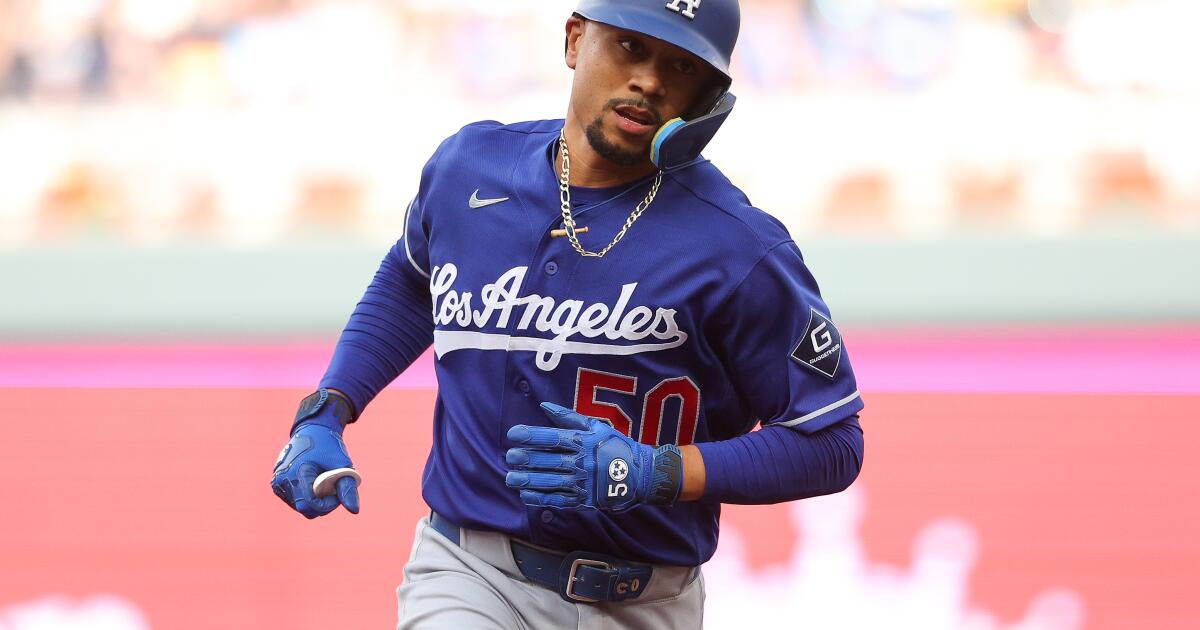
So, there’s nothing really unusual going on so far this season. Now, if we reach May 20 or so and they still are slumping, then we can worry more. At some point, this team will age out. Mookie Betts seems to be injury prone, and Freddie Freeman has slowed some. At some point, this team will fail to make the postseason. But not this season.

The biggest obstacle this team faces is expectations. Some in the media proclaimed this the best offense in history. It was never going to be that. But it raised expectations, making them almost impossible to beat.

Heck, last season’s Dodgers went 0-6 against the Angels. They went 3-6 in one stretch, losing one of those games 16-0. They went through another stretch of the season in which they went 2-10, scored two or fewer runs seven times and averaged 3.5 runs per game. And last time I checked, they won the World Series.

So, this is nothing new.

When will Blake Snell be back?

Blake Snell, whom the Dodgers should start encasing in bubble wrap when he’s not pitching, is on a rehab assignment. In three games (two for class-A Ontario, one for triple-A Oklahoma City) he has pitched eight innings, giving up six hits, four runs and two walks while striking out 10. If all goes well, he will be back in mid-to-late May.

And who goes out of the rotation when he comes back? Yoshinobu Yamamoto, Shohei Ohtani and Tyler Glasnow aren’t going anywhere, so that leaves Emmet Sheehan, Justin Wrobleski and Roki Sasaki. If you go by results, then it has to be either Sheehan or Sasaki. How these guys pitch over the next couple of weeks will solidify that answer, but as for now, I’d remove Sasaki from the rotation.

Justin Turner, manager?

With three World Series titles, Dave Roberts will be Dodgers manager for a long time. But when he does step down, could Justin Turner be next?

Turner’s wife, Kourtney, recently appeared on the “Foul Territory” podcast and had this to say when asked if she believes Justin will become a manager after retiring.

“I do. I think it will be more nerve-wracking than his playing days for me, though, because I think it’s a tough job. Because if things are going well, not everyone looks to the manager. But then if there’s a decision that doesn’t pan out, I think it falls back on the manager.

“So I’ll have to stay off Twitter and all the comments for that one. I think he has such a good understanding of the game. I think he has good feel. I think he does a really good job.

“I’m always in awe when he goes to these new teams. And then I see him in the dugout the first or the second game of the season, and he’s already meshing so well. He just has that ability to reach, I think, every single guy there. And I think that’s what makes him so special.”

Turner is currently playing for Tijuana in the Mexican League.

These names seem familiar

How notable players who were with the Dodgers the last couple of seasons are doing with their new teams. Click on the player’s name to be taken to their full stats page:

Anthony Banda, Twins: 1-0, 9.00 ERA, 14 IP, 16, hits, 5 walks, 13 K’s, 50 ERA+

Austin Barnes: out of baseball (released by Mets in spring training)

Cody Bellinger, Yankees: .275/.373/.483, 142 PA’s, 8 doubles, 1 triple, 5 homers, 20 RBIs, 137 OPS+

Walker Buehler, Padres: 1-2, 5.40 ERA, 25 IP, 27 hits, 12 walks, 24 K’s, 78 OPS+

Mike Busch, Cubs: .218/.317/.339, 145 PA’s, 7 doubles, 1 triple, 2 homers, 17 RBIs, 92 OPS+

Michael Conforto, Cubs: .300/.321/.433, 38 plate appearances, 4 doubles, 5 RBIs, 150 OPS+

Caleb Ferguson, Reds: on the IL

Jack Flaherty, Tigers: 0-2, 5.90 ERA, 29 IP, 27 hits, 25 walks, 32 K’s, 74 OPS+

Jason Heyward: retired

Justin Dean, Cubs: in the minors

Tony Gonsolin: out of baseball

Kenley Jansen, Tigers: 0-2, 6.14 ERA, 6 saves, 7.1 IP, 8 hits, 4 walks, 9 K’s, 74 OPS+

Craig Kimbrel, Mets: 0-1, 4.26 ERA, 6.1 IP, 6 hits, 3 walks, 8 K’s, 100 OPS+

Michael Kopech: out of baseball

Gavin Lux, Rays: on the IL

Dustin May, Cardinals: 3-3, 5.15 ERA, 36.2 IP, 47 hits, 9 walks, 25 K’s, 75 ERA+

Zach McKinstry, Tigers: .209/.261/.326, 46 PA’s, 2 doubles, 1 homer, 5 RBIs, 62 OPS+, on the IL

James Outman, Twins: .129/.182/.194, 33 PA’s, 2 doubles, 4 OPS+

Ben Rortvedt, Mets: in the minors

Corey Seager, Rangers: .213/.315/.410, 143 PA’s, 6 doubles, 6 homers, 17 RBIs, 113 OPS+

Chris Taylor, Angels: in the minors

Justin Turner, Tijuana (Mexican League): .276/.344/.448, 32 PA’s, 2 doubles, 1 homer, 3 RBIs

Trea Turner, Phillies: .243/.304/.375, 148 PA’s, 6 doubles, 4 homers, 11 RBIs, 86 OPS+

Miguel Vargas, White Sox: .220/.359/.424, 145 PA’s, 4 doubles, 1 triple, 6 homers, 17 RBIs, 119 OPS+

Kirby Yates, Angels: on the IL

Up next

Monday: Dodgers (Yoshinobu Yamamoto, 2-2, 2.87 ERA) at Houston (TBA), 5:10 p.m. PDT, Sportsnet LA, AM 570, KTNQ 1020

Tuesday: Dodgers (Shohei Ohtani, 2-1, 0.60 ERA) at Houston (Peter Lambert, 1-2, 3.52), 5:10 p.m. PDT, TBS, Sportsnet LA, AM 570, KTNQ 1020

Wednesday: Dodgers (Tyler Glasnow, 3-0, 2.56 ERA) at Houston (Lance McCullers Jr., 2-2, 6.32 ERA), 11:10 a.m. PDT, Sportsnet LA, AM 570, KTNQ 1020

*-left-handed

In case you missed it

Why Dodgers pitcher Emmet Sheehan has ‘K ALS’ stitched into his glove

‘We’re in a little funk’: Dodgers fizzle at plate, suffer third straight loss

Ex-Dodger Alex Cora’s wild roller-coaster departure from the Red Sox explained

Shaikin: The Dodger hosting a comedy show? Stoic Will Smith. No joke

McCourt Foundation’s L.A. Marathon to city: Can you save us half a million dollars?

What Shohei Ohtani’s start against Marlins says about how Dodgers are handling his workload

And finally

Vin Scully tells a story on how a player’s career was influenced by … well, you have to see it to believe it. Watch and listen here.

Until next time…

Have a comment or something you’d like to see in a future Dodgers newsletter? Email me at houston.mitchell@latimes.com. To get this newsletter in your inbox, click here.
Source link

SAG-AFTRA reaches a tentative deal with the studios

SAG-AFTRA and the Alliance of Motion Picture and Television Producers have landed on a new tentative contract.

The actors union’s new agreement with the trade group that negotiates with Hollywood unions on behalf of the major studios will reportedly improve AI protections and boost the guild’s pension fund. Similar to the pact the Writers Guild reached with the studios last month, SAG-AFTRA’s contract will last four years instead of the usual three.

SAG-AFTRA confirmed the tentative deal on Saturday. The union said in a statement that “specific details will not be released” until the SAG-AFTRA National Board reviews its terms.

The contract is set to cover workers who are involved in motion pictures, scripted primetime dramatic television, streaming content and new media.

The actors union began negotiations with the studios in February and extended those talks in March, but paused to allow the AMPTP to finish negotiations with the writers union. Negotiations resumed April 27 and ended May 2.

The tentative contract still needs to be voted on by its members — SAG-AFTRA represents more than 160,000 actors, broadcast journalists, dancers, DJs, stunt performers, voice-over artists and other entertainment professionals.

The union’s current contract is set to expire June 30. SAG-AFTRA joins WGA as the latest Hollywood union to strike a deal with the studios.

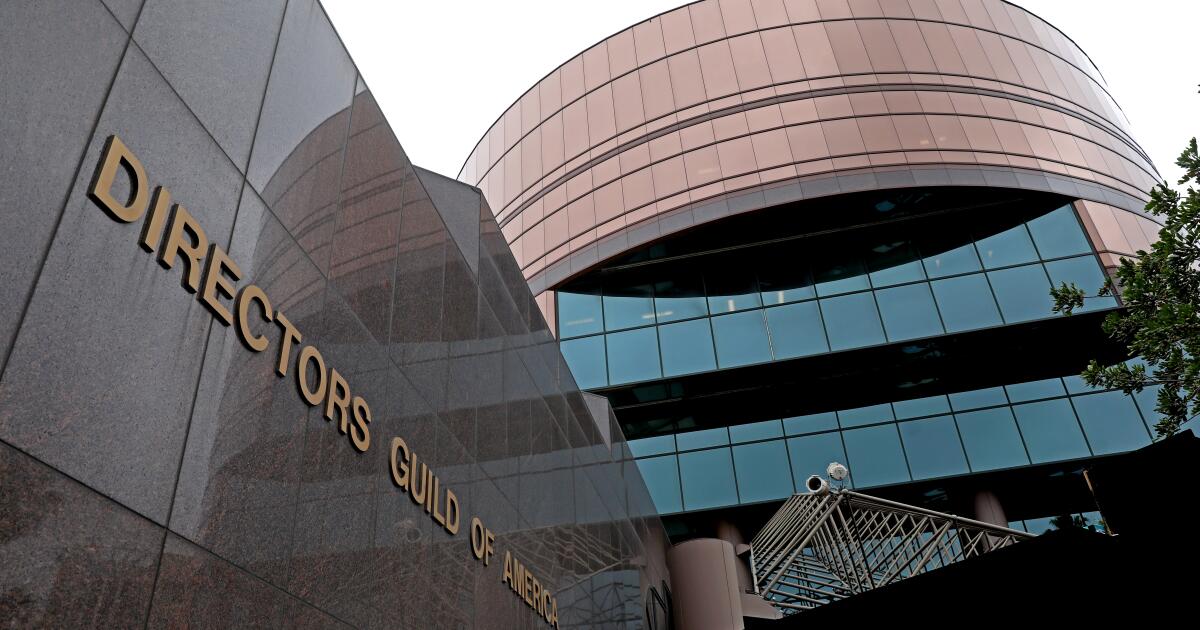
The Directors Guild of America is the last union that still needs to reach an agreement with the studios. Negotiation sessions with AMPTP will begin on May 11, as its contract is set to expire on June 30.

Source link

Light Uncrewed Cargo Helicopters Based On Robinson R66 And Bell 505 Compete For USMC Contract

The U.S. Marine Corps is set to test at least two new autonomous cargo helicopters, as it seeks to field platforms that can rapidly resupply Marines in contested environments. The service recently awarded contracts for two such platforms, one being the R66 Turbinetruck that inserts Sikorsky’s MATRIX autonomy system in the proven Robinson R66 airframe. The second is the Uncrewed 505, a development of the Bell 505 in a program led by Near Earth Autonomy, in collaboration with Bell Textron, Moog Inc., and XP Services.

This is all part of ongoing efforts to develop uncrewed logistics platforms that the Marines can use in contested environments, something that is of particular relevance as the branch looks to the requirements for a future conflict with China in the Pacific.

The R66 Turbinetruck that combines the Robinson R66 airframe with Sikorsky’s MATRIX autonomy system. Robinson Unmanned

Lockheed Martin announced yesterday that its Sikorsky subsidiary and Robinson Unmanned had received a contract for the Turbinetruck from the Marine Corps. This comes under the Marines’ new-look Autonomous Aerial Logistics Program Medium Aerial Resupply Vehicle — Expeditionary Logistics (MARV-EL). The contract is worth $15.5 million and covers Increment 2 of MARV-EL.

“As we expand the MATRIX family, we also extend the reach of uncrewed solutions for both civil and military customers,” said Rich Benton, vice president and general manager of Sikorsky. “The commercially developed R66 Turbinetruck is simple, economical, and re-configurable; ideal for high-risk, hard-to-reach environments, where keeping personnel out of harm’s way is essential.”

“Our partnership with Sikorsky brings the trusted performance and reliability of the R66 platform into the unmanned logistics arena,” added David Smith, president and CEO of Robinson Helicopter Company. “The R66 Turbinetruck represents a significant step forward in expanding proven rotorcraft into scalable, autonomous cargo solutions for demanding operational environments. Together, we are delivering a game‑changing capability that will enhance warfighter readiness and open new opportunities for safe, reliable, and affordable autonomous transport.”

Robinson Unmanned | The Future of Autonomous Rotorcraft is Here thumbnail

Robinson Unmanned | The Future of Autonomous Rotorcraft is Here


The R66 Turbinetruck puts together the R66 airframe from the Robinson Helicopter Company, a single-turbine engine design that is best known as a five-seat light rotorcraft on the commercial market. The R66 was selected for the Turbinetruck application primarily on account of its reliability, low maintenance demands, and high level of versatility. The aircraft is currently in widespread civilian service as a trainer, passenger, and utility helicopter.

Combining the R66 airframe with Sikorsky’s MATRIX system provides the ability to perform autonomous uncrewed operations. MATRIX has previously been proven in a U.S. Army UH-60M helicopter, giving it a ‘robotic brain,’ and the culmination of a series of tests stretching back years now that have been steadily working on ever-greater pilot-optional capabilities for the Black Hawk family. As we have noted in the past, the same technology could easily find its way onto other aircraft, as evidenced by the Turbinetruck.

Sikorsky and DARPA Autonomous Black Hawk Flies Logistics and Rescue Missions Without Pilots on Board thumbnail

Sikorsky and DARPA Autonomous Black Hawk Flies Logistics and Rescue Missions Without Pilots on Board


Lockheed Martin says the Turbinetruck is intended to give the Marines “flexible, affordable and rapid combat sustainment,” with its primary roles including the delivery of ammunition, medical supplies, and other essential equipment directly to the troops that need it. These critical loads need to be supplied “regardless of terrain, weather, or enemy threat,” the company adds.

According to Robinson Helicopter, the Turbinetruck can carry a load of 1,300 pounds internally, or external loads supported via a cargo hook. The internal cargo compartment is accessed via front clamshell doors and a right-hand baggage door. A total useful load of 1,500 pounds can be transported, and the aircraft has a range of more than 325 nautical miles.

The Turbinetruck features two clamshell doors in its nose, allowing a forklift truck to place loads directly in it. Robinson Unmanned

When it comes to MARV-EL, this now stipulates an uncrewed aircraft that can carry a logistic payload of between 1,300 and 2,500 pounds to a combat radius of 100 nautical miles, operating through a common digital handheld device.

In an operational scenario, the mission objectives would be entered into the Turbinetruck using a digital tablet. The system would then automatically create a flight plan, using sensors and algorithms to guide the helicopter safely to the target location.

The Turbinetruck would allow the Marines to conduct critical logistics missions without having to put any additional personnel at risk, as would be the case if crewed rotorcraft were employed at the tactical edge of the battlefield. Crewed rotorcraft also come with increased demands on maintenance and availability. Meanwhile, crew-rest cycles might mean that the aircraft have to stay on the ground during high-tempo operations, while these assets will inevitably be in heavy demand for all kinds of other missions in any kind of high-end fight.

A video outlining the Robinson R66 Army Trainer, a crewed version of the helicopter offered to the U.S. Army schoolhouse:

Robinson R66 Army Trainer Helicopter | Press Conference & Official Reveal | AAAA in Nashville thumbnail

Robinson R66 Army Trainer Helicopter | Press Conference & Official Reveal | AAAA in Nashville


At the same time, the MARV-EL concept is especially tailored for the Indo-Pacific theater, in which Marines and other U.S. military forces would be expected to fight from and around austere forward operating bases — a concept known as Expeditionary Advanced Base Operations — as well as unimproved landing zones, and from the decks of ships.

In this context, the Turbinetruck, and the MARV-EL program, more generally, hope to fill a notable capability gap between small tactical drones and larger crewed airlifters. This is something that Lockheed Martin describes as a “middleweight” uncrewed logistics platform capable.

Another view of the Turbinetruck with the nose cargo doors open. Robinson Unmanned

Robinson Unmanned will deliver the first R66 Turbinetruck to Sikorsky for integration, test and evaluation, and demonstration. At that point, the aircraft will undertake capability demonstrations to prove out the MATRIX system in the R66 airframe.

Since MATRIX is platform-agnostic and has an open architecture design, it is intended to be easily integrated into various airframes.

As for the rival Uncrewed 505, this takes the Bell 505 Jet Ranger X helicopter and combines it with Near Earth’s Captain autonomous system, and Moog’s Genesys avionics. The 505 is also a single-turbine helicopter that is in use in similar training, passenger, and utility roles as the R66.

A rendering of the Uncrewed 505. Near Earth Autonomy

The MARV-EL Increment 2 program will also see the Uncrewed 505 prototype developed for the Marine Corps. Near Earth says it will spend the next 36 months integrating and flight-testing the autonomous flight system in the Uncrewed 505, before progressing from early demonstrations to full mission capability.

“The program is to develop an uncrewed aerial logistics aircraft for where the risk and need are highest,” said Lyle Chamberlain, CTO of Near Earth. “We are combining our Captain autonomy architecture with a proven Bell 505 platform to move cargo without putting Marines in harm’s way. To be as intuitive as possible, we are designing the aircraft around existing Marine Corps workflows. Operators will be able to request, dispatch, and manage missions through familiar command-and-control pathways, including MAGTAB and MANGL integration. At the same time, cargo can be loaded with standard pallet jacks and forklifts. This approach reduces infrastructure burden and helps make autonomous resupply practical for expeditionary operations.”

A diagram shows the basic operating concept for the Uncrewed 505. Near Earth Autonomy

Near Earth says the Uncrewed 505 is optimized for efficient transportability, with two aircraft fitting inside a C-130 cargo aircraft with minimal disassembly.

Other aircraft have previously emerged out of the MARV-EL program.

These included the Kargo UAV, a rotary-wing drone from the Kaman Corporation, which previously developed an optionally crewed version of its K-Max helicopter.

KARGO UAV | Transforming Expeditionary Logistics thumbnail

KARGO UAV | Transforming Expeditionary Logistics


Notably, Kaman partnered with Near Earth Autonomy for the autonomy system for both the Kargo UAV and the optionally crewed K-Max.

Another competitor for MARV-EL was the SeaOnyx from Leidos. In 2023, it was announced that Leidos had won a Marine Corps contract to develop a prototype of this autonomous resupply vehicle under the Medium Unmanned Logistics Systems — Air (MULS-A) program, which later became MARV-EL.

The SeaOnyx from Leidos. Leidos

However, neither of these platforms met Marine Corps requirements, leading to MARV-EL being recompeted. At the same time, the previous requirements (including delivering a logistics payload of 300-600 pounds within a radius of 25 to 100 nautical miles to a combat area) were made more ambitious, increasing cargo payload and range.

Overall, MARV-EL again highlights the Marines’ growing focus on expeditionary warfare in contested environments, in the Pacific theater especially. With their versatile airframes, the R66 Turbinetruck and the Uncrewed 505 could be adapted for other missions, including intelligence, surveillance, and reconnaissance (ISR), electronic warfare (EW), communications relay, and search and rescue. All of these are growth areas for the Marines specifically and the U.S. military more generally.

A video outlining the Bell 505, as offered for the U.S. Army Flight School Next requirement:

Bell 505: Ideal Trainer thumbnail

Bell 505: Ideal Trainer


At the same time, the R66 already has a foothold with the U.S. military, with TH-66 Sage used to train U.S. Army and Navy helicopter operators, under contract. The Army is also now looking at both the R66 and the Bell 505 for its Flight School Next training helicopter program.

Whichever design or designs are ultimately selected for the MARV-EL requirement, the Marines can expect a new medium-weight logistics platform that bridges the gap between smaller drones and larger crewed aircraft currently in use. At the same time, it will help reduce risk by keeping more fixed-wing and helicopter crews out of harm’s way.

Contact the author: thomas@thewarzone.com

Thomas is a defense writer and editor with over 20 years of experience covering military aerospace topics and conflicts. He’s written a number of books, edited many more, and has contributed to many of the world’s leading aviation publications. Before joining The War Zone in 2020, he was the editor of AirForces Monthly.


Source link

Callum Sheedy: Wales fly-half signs new Cardiff contract

Fly-half Callum Sheedy has committed his future to Cardiff, saying he is “desperate to do everything possible to make sure it is a successful period for the club”.

The 30-year-old Wales international joined his home club from Bristol for the 2024-25 season and is the latest to sign a new deal with Cardiff not revealing the duration of his new contract.

“Playing at the Arms Park is the most special feeling. We have incredible supporters, they are close to the pitch and the atmosphere is electric,” said Sheedy.

“To be able to connect with the fans and see how much passion they have is a massive driving factor both for myself and the wider group.

“I’m really excited by what the future holds.”

Source link

Dodgers Dugout: Should the Dodgers move Roki Sasaki to the bullpen?

Hi, and welcome to another edition of Dodgers Dugout. My name is Houston Mitchell, and how amazing is it that the Dodgers are 19-9, on pace to win 110 games, and are still just barely in first place?

Are you a true-blue fan?

Get our Dodgers Dugout newsletter for insights, news and much more.

So the Dodgers’ bullpen imploded for a couple of days, costing the team. Most recently was Friday against the Cubs, when Alex Vesia, Blake Treinen and Tanner Scott coughed up a four-run lead in a game the Dodgers lost, 6-4.

This brought renewed pleas from fans on social media and some readers of this newsletter to move Roki Sasaki to the bullpen. After all, he has been no great shakes as a starter this season, while he was “lights out” as a closer at the end of last season. But was he, or are we remembering it a bit more fondly than it deserves, After all, the Dodgers were in no hurry to bring him in during Game 7 against the Blue Jays.

Let’s take a look at each of Sasaki’s relief outings at the end of last season and in the postseason.

Sept. 24 at Arizona
Score when entering game: Dodgers, 3-1
Seventh inning
James McCann grounds to third
Tim Tawa strikes out
Ildemaro Vargas strikes out

Sept. 26 at Seattle
Score when entering game: Dodgers, 3-1
Seventh inning
J.P Crawford grounds to third
Cole Young strikes out
Randy Arozarena doubles to left
Cal Raleigh strikes out

Postseason

NL wild card Game 2
vs. Cincinnati
Score when entering game: Dodgers, 8-4
Ninth inning
Spencer Steer strikes out
Gavin Lux strikes out
Austin Hays lines to short

The game against the Reds was when fans got excited, because he looked dominant.

NLDS Game 1
at Philadelphia
Score when entering game: Dodgers, 5-3
Ninth inning
J.T. Realmuto strikes out
Max Kepler doubles to right
Nick Castellanos grounds to second
Bryson Stott pops to third
Sasaki gets the save

NLDS Game 2
at Philadelphia
Score when entering game: Dodgers, 4-3
Ninth inning, two out, runners on first and third
Trea Turner grounds to second
Sasaki gets the save

NLDS Game 4
vs. Philadelphia
Score when entering game: Tied, 1-1
Eighth inning
Kyle Schwarber flies to right
Bryce Harper pops to third
Alec Bohm grounds to second
Ninth inning
Brandon Marsh grounds to second
J.T. Realmuto strikes out
Max Kepler pops to third
10th inning
Nick Castellanos grounds to third
Bryson Stott strikes out
Trea Turner lines to right
Dodgers win game, and series, in 11th inning

NLCS Game 1
at Milwaukee
Score when entering game: Dodgers, 2-0
Ninth inning
Caleb Durbin pops to third
Isaac Collins walks
Jake Bauers doubles to right
Jackson Chourio sacrifice fly to center
Christian Yelich walks
Blake Treinen replaces Sasaki, gets final out, Dodgers win. First bad relief outing by Sasaki

NLCS Game 3
vs. Milwaukee
Score when entering game: Dodgers, 3-1
Ninth inning
Andrew Vaughn grounds to short
Sal Frelich pops to short
Caleb Durbin strikes out
Sasaki gets the save

NLCS Game 4
vs. Milwaukee
Score when entering game: Dodgers, 5-1
Ninth inning
William Contreras singles to center
Andrew Vaughn flies to deep right
Sal Frelick grounds to second
Caleb Durbin flies to deep right
Dodgers win game and sweep NLCS

World Series Game 3
vs. Toronto
Score when entering game: Tied 5-5
Eighth inning, men on first and second, one out
Ty France grounds to third
Nathan Lukes grounds to the pitcher

Ninth inning
Vladimir Guerrero Jr. flies to right
Isiah Kiner-Falefa walks
Daulton Varsho singles off Freeman’s glove, Kiner-Falefa out trying to advance to third
Alejando Kirk walks
Myles Straw grounds to second
Dodgers win game in 18th inning

World Series Game 6
at Toronto
Score when entering game: Dodgers, 3-1
Eighth inning
George Springer singles to right
Nathan Lukes flies to center
Vladimir Guerrero Jr. walks
Bo Bichette pops to short
Daulton Varsho grounds to second

Ninth inning
Alejando Kirk hit by a pitch
Addison Barger ground-rule double
Sasaki replaced by Tyler Glasnow, who gets the final three outs

Sasaki wasn’t fooling anyone against Toronto

In the postseason, Sasaki pitched 10 2/3 innings, gave up six hits and walked five while striking out six. His ERA was 0.84. However, his big success came in the first two rounds. In the NLCS and World Series, his numbers were: 5 1/3 IP, five hits, five walks, one hit batter, one strikeouts, one run.

All of this is to say: Don’t expect Eric Gagne 2.0 if they move Sasaki to the bullpen. He won’t be a miracle cure.

Let’s look at where they rank in ERA in the NL:

Starting pitching
1. Dodgers, 2.79
2. Atlanta, 3.12
3. Pittsburgh, 3.47
4. Milwaukee, 3.59
5. Chicago, 3.98
15. Philadelphia, 5.80

Relief pitching
1. Cincinnati, 2.91
2. San Francisco, 2.93
3. Atlanta, 3.14
4. Pittsburgh, 3.17
5. Miami, 3.60
11. Dodgers, 4.26
15. Washington, 5.27

Inherited runners that scored %

1. Colorado, 13.6% (six of 44)
2. Cincinnati, 20% (nine of 45)
3. Dodgers, 26.7% (eight of 30)
4. San Francisco, 27.8% (10 of 36)
5. Atlanta, 28% (seven of 25)
15. Washington, 48.9% (23 of 47)

It looks like 2025 all over again.

Colleague Bill Plaschke wrote about this a couple of weeks ago. You can read that here.

Injury Updates

Will Smith is day to day (aren’t we all?) with tightness in his lower back. He is not expected to go on the IL. Luckily, Dalton Rushing is hitting like he is.

Mookie Betts, sidelined by an oblique injury, is swinging the bat now. He could go on a rehab assignment in the next couple of weeks and be back soon after that.

Tommy Edman still has some soreness in his ankle and isn’t running the bases fully yet. Dave Roberts said he probably won’t return until the end of May or the beginning of June.

Reliever Brock Stewart is in a rehab assignment with Class-A Ontario, so he could be back in a couple of weeks.

When Betts returns, the Dodgers will have to decide what to do. It seems unlikely they send Hyeseong Kim down as long as he is playing this well, so that leaves either Alex Freeland or Santiago Espinal as the most likely candidates to be removed from the roster.

More complaints about Ohtani

It seems more people are getting on board the “Why do the Dodgers get to have an extra pitcher just because they have Shohei Ohtani” bandwagon. Teams can carry up to 13 pitchers on the roster. The Ohtani two-way player rule basically allows the Dodgers to carry 14 pitchers, since as a two-way player Ohtani only counts once on the roster.

And I respond with what I always say: Why didn’t these people complain when he was on the Angels and they did the same thing? Why is it now suddenly a problem?

The other complaint: Umpires allow extra time for Ohtani to get ready to pitch when he makes the last out of an inning, or is on base when the last out was made.

Response: Did these people never watch the NL before the DH rule was added? Umpires always gave the pitcher extra time to get ready when they made the last out or were on the bases when the last out was made. Quite often a pitcher would make the last out, walk over to the dugout, sit for a moment, towel off, grab their glove then make a leisurely stroll to the mound. This is nothing new. And I have a feeling if the Dodgers hadn’t won the last two World Series, no one would be complaining about either of these things.

Obscure stat of the week

All the recent talk about Davey Lopes had me wondering who were the best at stealing bases in Dodgers history. A look at the top 10 in stolen base %, minimum 50 stolen bases:

1. Eric Davis, 89.7% (52 for 58)
2. Shohei Ohtani, 89% (81 for 91)
3. Kirk Gibson, 88.5% (69 for 78)
4. Freddie Freeman, 86.4% (51 for 59)
5. Davey Lopes, 83.1% (418 for 503)
6. Dave Roberts, 82.5% (118 for 143)
7. Cody Bellinger, 81.6% (62 for 76)
8. Mookie Betts, 81.4% (70 for 86)
9. Chris Taylor, 81% (81 for 100)
10. Mariano Duncan, 80% (100 for 125)
21. Maury Wills, 74.1% (490 for 661)

The 10 worst:

Babe Herman, 54.3%, (69 for 127)
John Roseboro, 55.7% (59 for 106)
Steve Garvey, 57.5% (77 for 134)
Duke Snider, 57.9% (99 for 171)
Harvey Hendrick, 59.8% (61 for 102)
Gil Hodges, 60% (63 for 105)
José Offerman, 61% (61 for 100)
César Izturis, 61.4% (51 for 85)
Dusty Baker, 61.9% (73 for 118)
Wes Parker, 63.8% (60 for 94)

Up next

Monday: Miami (Chris Paddack, 0-4, 6.38 ERA) at Dodgers (Yoshinobu Yamamoto, 2-2, 2.48 ERA), 7:10 p.m., Sportsnet LA, AM 570, KTNQ 1020

Tuesday: Miami (Janson Junk, 1-2, 3.67 ERA) at Dodgers (Shohei Ohtani, 2-0, 0.38 ERA), 7:10 p.m., Sportsnet LA, AM 570, KTNQ 1020

Wednesday: Miami (Sandy Alcantara, 3-2, 3.05 ERA) at Dodgers (Tyler Glasnow, 3-0, 2.45 ERA), 12:10 p.m., Sportsnet LA, AM 570, KTNQ 1020

*-left-handed

In case you missed it

‘They started it:’ Pete Crow-Armstrong won’t apologize for mocking Dodgers fans

Dave Roberts has a sharp reply to Cubs manager Craig Counsell’s criticism of ‘Ohtani roster exception’

Shohei Ohtani homers, Justin Wrobleski shines as Dodgers shut out Cubs for series win

Dodgers rediscover their offense, scoring 12 runs to end Cubs’ 10-game win streak

Bullpen meltdown squanders Emmet Sheehan’s strong start in Dodgers’ loss to Cubs

And finally

Vin Scully recalls a story about Pearl Harbor. Watch and listen here.

Until next time….

Have a comment or something you’d like to see in a future Dodgers newsletter? Email me at houston.mitchell@latimes.com. To get this newsletter in your inbox, click here.

Source link

Writers Guild members ratify new contract with studios

Members of the Writers Guild of America have officially ratified their newest contract with the Alliance of Motion Picture and Television Producers.

More than 90% of the 11,000 voting members in both WGA East and West registered their support of the new agreement. The voting period closed Friday at noon, after the union first struck a tentative deal earlier this month.

The new contract includes a robust healthcare plan in which studios pay over $320 million to sustain the health fund, higher residual rates — including a provision for a “success bonus” for the most popular streaming shows from 50% of the base residual to 75% — and language on the licensing of work for AI training.

“The first reaction [from members] was relief that we were not going to be going into a period of labor strife or strike authorization vote, in the midst of this contraction,” said John August, the co-chair of WGA’s negotiating committee, referring to the ongoing challenges in the industry. “Members want to work, and they want to get back to doing their job.”

Negotiations between the union and film and TV studios began in March, as the union’s current contract expires May 1. August said that, at the beginning of the negotiations, expanding the healthcare plan was a top priority. The union was able to secure increases that would raise the cap that companies pay to as high as $400,000 by 2028.

Union officials say the current cap has remained unchanged for two decades as healthcare contributions have steadily declined because there are fewer working writers.

But under the new contract, members would, for the first time, have to start contributing to their healthcare costs to the tune of $75 per month. The earnings threshold to get coverage would increase by about $7,000 to $53,773, leaving many members concerned about the higher cost.

“This is all difficult. Healthcare in America is not a good situation. But we were really mindful, as we always are, of trying to make sure the career of writing is sustainable,” negotiating committee co-chair Danielle Sanchez-Witzel said.

Additionally, the contract terms have been extended from the WGA’s usual three years to four — though it is not the first time the guild has added more time to its deal with the studios. Sanchez-Witzel clarified that the four-year period for the new contract ”is, by no means, a standard. This is just what we needed this year and what we agreed to for this cycle.”

“We were here in 2026 trying to get some things that we didn’t get earlier [in previous negotiation cycles] and happy for the progress we made,” she said.

The WGA is the first of the Hollywood unions to strike a deal with the studios. AMPTP congratulated the WGA on the ratification in a statement released shortly after the vote totals were announced.

“This deal reflects a collaborative approach that supports both writers and the industry’s long-term stability,” AMPTP said.

SAG-AFTRA and the Directors Guild of America still need to negotiate new contracts.

The actors’ union began its negotiations in February and extended those talks in March, but paused to allow AMPTP to finish its deal with the writers’ union. SAG-AFTRA’s and the DGA’s contracts expire June 30.

Source link