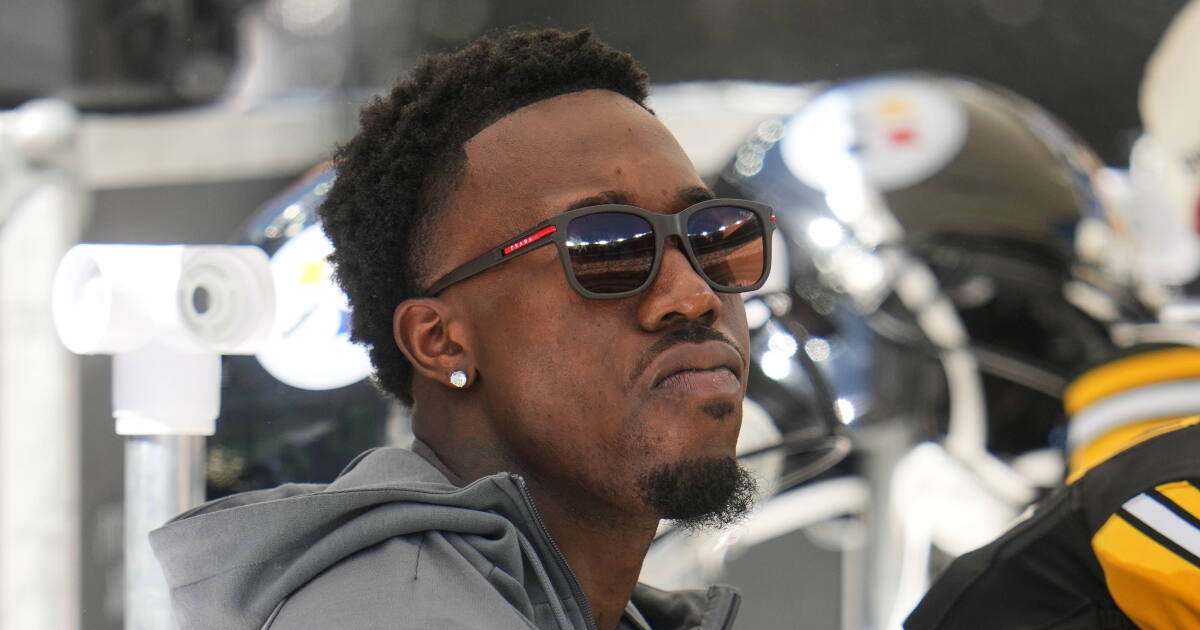
Just last week, Joey Porter Jr. told reporters he “definitely” would play for the Pittsburgh Steelers this season despite a contract standoff and a lingering back issue.
That’s not going to happen. The Steelers have traded the fourth-year cornerback to Dallas for a second-round 2028 draft pick and a sixth-round 2027 pick, the Cowboys announced Thursday morning.
“Here I come…… Dallas,” Porter wrote on a post to his Instagram Stories early Thursday.
The son of a former Steelers great — Joey Porter Sr. won a Super Bowl with the Steelers during his 13 years as an NFL linebacker and spent several years with the team as a defensive coach — Porter was selected by Pittsburgh in the second round of the 2023 draft. He broke up 31 passes over his first three seasons.
Porter missed all of training camp and preseason while on the Steelers’ physically unable to perform list because of the reported back issues. During the same period of time, he and the Steelers were unable to come to terms on a contract extension on the rookie deal that was set to expire after this season. The Steelers do not negotiate contracts once a season has begun.
Since the season started, Porter has been a limited participant in practices but was inactive in all three games. As the Steelers prepared to face the Cleveland Browns on “Thursday Night Football” this week, Porter was listed as a full participant in practice, although the team added a back injury to Porter’s injury status on Wednesday.
Porter is the third Steelers player traded to the Cowboys in the last two years, following receiver George Pickens last year and offensive lineman Broderick Jones just before this season started. First-year Steelers coach Mike McCarthy was the Cowboys coach from 2020 to 2024.
Last year, a contract dispute led Dallas to deal star edge rusher Micah Parsons to the Green Bay Packers just before the start of the regular season.
Hi, and welcome to another edition of Dodgers Dugout. My name is Houston Mitchell. A good Tommy Lasorda quote: “There are three types of people in the world. Those who make it happen, those who watch it happen and those who wonder, ‘What happened?’ ”
Are you a true-blue fan?
Get our Dodgers Dugout newsletter for insights, news and much more.
By continuing, you agree to our Terms of Service, which include arbitration and a class action waiver. You agree that we and our third-party vendors may collect and use your information, including through cookies, pixels and similar technologies, for the purposes set forth in our Privacy Policy such as personalizing your experience and ads.
Some random questions
While we await the winner of the Braves-Phillies series, it’s time to get a different viewpoint. I reached out to Times columnists Mirjam Swanson and Bill Plaschke to get their answers to a few Dodgers questions.
Q. Which team is the one the Dodgers would rather avoid playing in the NL playoffs?
Swanson: The San Diego Padres, actually. Weird stuff happens with rivalries. Weird stuff has happened against the Padres. Add a rivalry to the high-stakes NLCS? Guaranteed weirdness.
So the Padres concern me more than the Brewers, a talented group headlined by ace Jacob Misiorowski that nonetheless does itself in with its poor-little-us talk. The Padres have swagger — and substance — and they just finished the season on a heater, going 41-18 to close the season.
I still like the Dodgers in that series, and then against whomever comes out of the American League too.
It’s the NLDS that’s of most concern — less for who the opponent will be and more for the fact that it’s a best-of-five series. That squeezes the already small sample size of a playoff series and makes it so there’s less room for error and more room for baseball to happen.
Plaschke: The one team the Dodgers should avoid playing is the Philadelphia Phillies. They have all those left-handed starters who can shut down the best Dodger hitters. They only lost the NLDS to the Dodgers last year because one of their relief pitchers lost his mind. They have a veteran lineup that is long overdue. Play them at your peril.
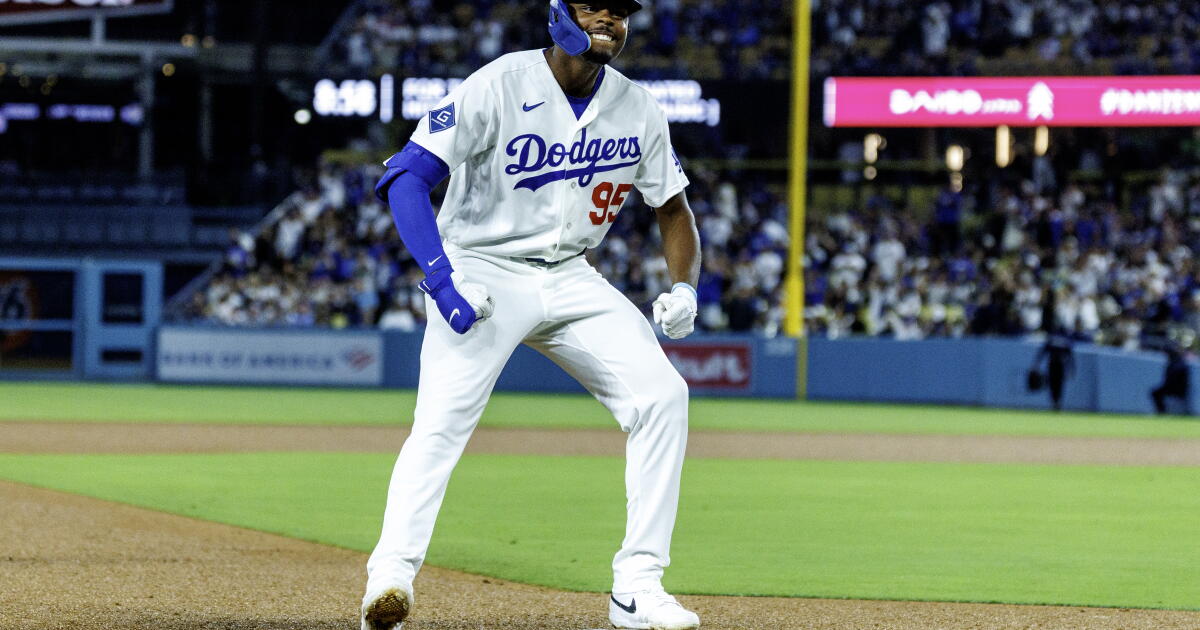
Q. Does Josue De Paula find a space on the postseason roster, and what do they do with him next year, with the positions he plays seemingly taken?
Swanson: Yes, absolutely, JDP will be on the roster in the postseason. For his incredible energy. For his incredible bat. Both much-needed.
Next year? Are they going to play professional baseball next year?
OK, let’s hope they do play ball. And as long as they do, I can see the Dodgers giving De Paula run in the outfield — so long as he puts in the work in the offseason (however long that is) to train and study and make himself a playable outfielder.
His hitting is so elite, he needs only to be a competent fielder to justify his regular presence in the lineup. He’s a great young athlete and if he understands and tackles the assignment with the gusto that he approaches hitting, I don’t see what could hold him back.
Plaschke: De Paula has to be on the roster this October and in a position to take some high-leverage at-bats. I think he’s potentially good enough that you trade Teo and put him in left.
Q. How would you rank the bullpen in terms of trust (top three)?
Swanson: Roki Sasaki and Edgardo Henriquez are both coming back from injuries and basically jumping right into the postseason fire so … fingers crossed. But let’s assume Sasaki’s blister is a thing of the past, as it appears to be, and that Henriquez’s back isn’t aching, I’ll pick them and make a call for Evan Phillips, who looks great and looks like he’s feeling great; I just saw him hit 100 mph for the first time this season, striking out the San Diego Padres’ Jackson Merrill looking in the Dodgers’ loss Thursday.
Plaschke: In the bullpen I trust, in order, Roki Sasaki, Alex Vesia, and Evan Phillips. I don’t trust Tanner Scott. Would you?
Q. The Dodgers won last year despite not getting a first-round bye. So was it really important for them to get the bye this year?
Swanson: Yes! This team is “old.” They know it, everyone knows it — and they know they’ll benefit from getting off their feet for a few days. To them, it’s a reward for a job well done. As a thankful Freddie Freeman chuckled Thursday night: “Rest for all of us is always nice. We’ve been grinding since February, getting ready for the season. Then you go through a 162-game schedule. It’s a lot. So we played really good baseball for six straight months and we get rewarded for that. So we’ll take it in, rest up and get ourselves ready to go for Saturday.”
Plaschke: The bye is hugely important. This is the oldest team in baseball. This is the most exhausted team in baseball. They desperately need those five days off.
Q. Finally, predictions. Who wins the World Series this year?
Swanson: The club that won the past two World Series.
Plaschke: Milwaukee wins the World Series. Nobody beats the Miz.
Who makes the roster?
We will predict the postseason roster after we know who the Dodgers are playing, but, it appears the final two spots among position players could come down to Josue De Paula, Alex Call, Dalton Rushing and Hyeseong Kim. Which two would you choose to make the team?
Every year around this time, this newsletter mentionsMakenna Martin, who holds an online bracket (much like the NCAA bracket) where people can fill out their choices for the best-looking Dodger. She added a charitable aspect to it, raising money for a charity for women who are the victim of domestic violence.
Martin, now a college graduate, has continued the bracket, and this year is using it to raise money for “Peace Over Violence,” another charity that helps victims of domestic abuse. You do not have to donate to take part in the bracket challenge. Whether you donate or not, it’s a lot of fun to do. There’s also a raffle to raise funds, with a lot of Dodgers prizes to win. A tip of the cap to Martin and to all young people who try to make the world just a little bit better.
Freddie Freeman hits a walk-off grand slam to win Game 1 of the 2024 World Series. Watch and listen here.
Until next time …
Have a comment or something you’d like to see in a future Dodgers newsletter? Email me at houston.mitchell@latimes.com. To get this newsletter in your inbox, click here.
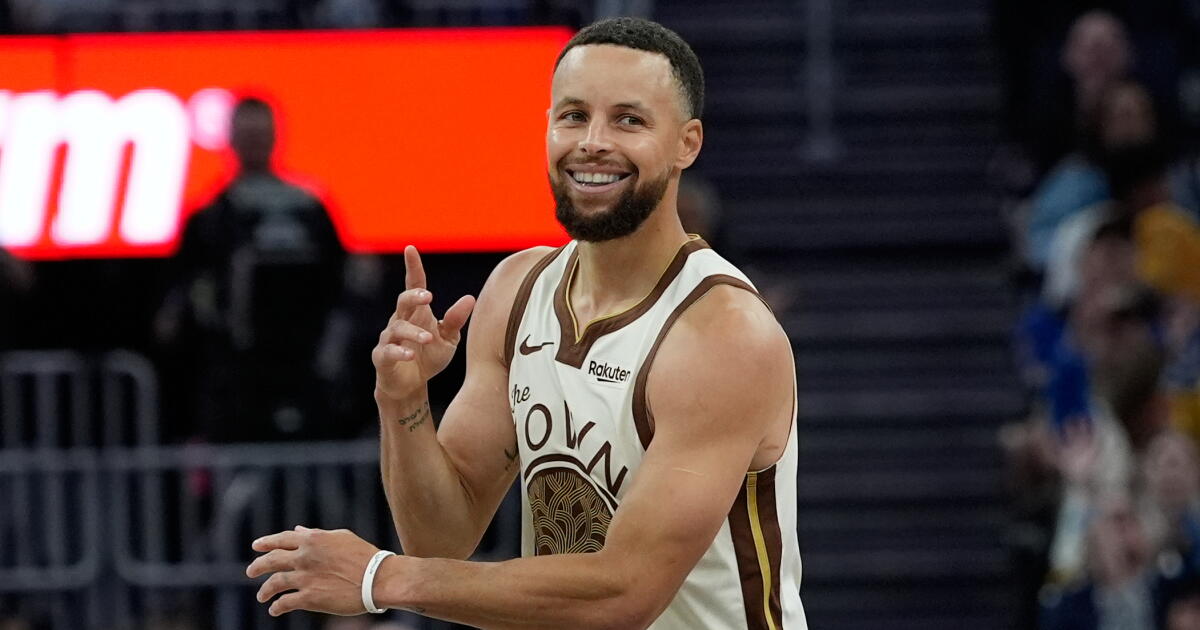
SAN FRANCISCO — Stephen Curry has agreed to a two-year contract extension worth $116 million that would take him through the 2028-29 season, a person with direct knowledge of the deal told the Associated Press on Friday night.
The person spoke on condition of anonymity because the team had not announced the terms of Curry’s contract. Curry was eligible to command up to $136 million, so he is giving his team a discount as he backs up his longstanding commitment to finish his career with the Warriors.
Golden State general manager Mike Dunleavy said last month he was optimistic of getting something done with the two-time MVP and NBA career leader in three-pointers.
The 38-year-old Curry will complete a $62.6 million extension he signed for the 2026-27 season in August 2024 before the new contract takes him through 2029 — which would be his 20th season.
Curry averaged 26.6 points, 4.7 assists and 3.6 rebounds but was limited to 43 games last season because of injuries. He has won four NBA titles with Golden State, most recently in 2022.
Hi, and welcome to another edition of Dodgers Dugout. My name is Houston Mitchell. I was reading my Bible, and baseball was mentioned almost immediately. “In the big inning, God created the heavens and the earth.”
Are you a true-blue fan?
Get our Dodgers Dugout newsletter for insights, news and much more.
By continuing, you agree to our Terms of Service, which include arbitration and a class action waiver. You agree that we and our third-party vendors may collect and use your information, including through cookies, pixels and similar technologies, for the purposes set forth in our Privacy Policy such as personalizing your experience and ads.
The postseason awaits
There are still three games left in the season, but let’s jump ahead and talk about the postseason a bit. We will have more in the run-up to the NLDS next week. The good news is the Dodgers have clinched a first-round bye and will open the postseason on Saturday, Oct. 3. The NLDS is best-of-five on a 2-2-1 format, so the Dodgers will host Games 1 and 2, and if necessary, Game 5.
Who will they play? The winner of the series between the No. 3 seed (Atlanta) and the No. 6 seed, which has yet to be determined. There are four teams vying for the three wild-card spots.
Should the Dodgers fear any one team more than the others this postseason? Let’s see how they have fared against all the other potential postseason teams. In fact, let’s see how all the postseason teams have fared against each other.
Dodgers vs. Arizona, 6-7 (-5 run differential) vs. Atlanta, 1-5 (-11) vs. Chicago, 2-4 (+2) vs. Milwaukee, 3-4 (+2) vs. Philadelphia. 4-2 (+11) vs. San Diego, 8-5 (+19) Total, 23-27, (+18)
Arizona vs. Dodgers, 7-5 (+5) vs. Atlanta, 4-3 (-8) vs. Chicago, 2-4 (-11) vs. Milwaukee, 2-4 (-22) vs. Philadelphia. 3-3 (-5) vs. San Diego, 5-5 (+5) Total, 18-19, (+25)
Atlanta vs. Dodgers, 5-1 (+11) vs. Arizona, 3-4 (+8) vs. Chicago, 3-3 (-1) vs. Milwaukee, 3-3 (-5) vs. Philadelphia. 9-4 (+23) vs. San Diego, 3-4 (-7) Total, 26-19 (+29)
Chicago vs. Dodgers, 4-2 (-2) vs. Arizona, 4-2 (+11) vs. Atlanta, 3-3 (+1) vs. Milwaukee, 4-9 (-9) vs. Philadelphia. 6-1 (+22) vs. San Diego, 5-1 (+27) Total, 26-18, (+50)
Milwaukee vs. Dodgers, 4-3 (-2) vs. Arizona, 4-2 (+22) vs. Atlanta, 3-3 (+5) vs. Chicago, 9-4 (+9) vs. Philadelphia, 4-2 (+14) vs. San Diego, 2-4 (-5) Total, 25-18, (+43)
Philadelphia vs. Dodgers, 2-4 (-11) vs. Arizona, 3-3 (+5) vs. Atlanta, 4-9 (-23) vs. Chicago, 1-6 (-22) vs. Milwaukee, 2-4 (-14) vs. San Diego, 6-0 (+11) Total, 18-26, (-54)
San Diego vs. Dodgers, 5-8 (-19) vs. Arizona, 5-5 (-5) vs. Atlanta, 4-3 (+7) vs. Chicago, 1-5 (-27) vs. Milwaukee, 4-2 (+5) vs. Philadelphia, 0-6 (-11) Total, 19-29, (-50)
This serves as a basic guideline for you. We would really have to dig deep to find hidden meanings here, since a lot depends on who started for each team. Philadelphia started the season poorly, fired their manager, named Don Mattingly manager and turned things around. So, when did these teams face the Phillies? I could do that for every team, but I can just hear people closing the newsletter and deleting it if I get too far into the weeds. Just as an example, San Diego is 0-6 against the Phillies, but were outscored by only 11 runs, while the Dodgers have losing records against Chicago and Milwaukee, but outscored both teams. And every Dodger fan from that era can tell you that the Mets were 10-1 against the Dodgers in the regular season in 1988, but lost to them in the playoffs.
But, stuff like this is fun. And remember when stats were sometimes just for fun, and not every stat had to look at launch angles and elevation rates?
The postseason roster?
The final position player spot on the postseason roster will be very interesting. Does it go to Josue De Paula, who hit .323/.500/.581 with three doubles, one triple, one homer and seven RBIs in 42 plate appearances. He also walked an impressive 11 times while striking out only five times.
He is back in the minors now, but the Dodgers can bring him back for the postseason, as long as he is replacing an injured player, such as Dalton Rushing. They would need to petition the Commissioner’s Office to allow it, but that kind of petition has never been denied in the past.
Of course, De Paula is blocked at DH, left field and right field now that Kyle Tucker and Teoscar Hernández are hitting better. But he did seem to bring a shot of energy to the team, as if he reminded them “Hey, this is supposed to be fun.”
Does the final spot go to Rushing? I don’t see how, because he can’t play in the field right now because of his elbow injury.
Does it go to Hyeseong Kim? His name was brought up this week by Dave Roberts, because Kim brings speed, versatility and good defense. He could be this season’s Justin Dean, appearing in almost every game and never hitting.
And the bullpen? If you have Yoshinobu Yamamoto, Tarik Skubal, Tyler Glasnow and Blake Snell in the rotation, that means Roki Sasaki goes to the bullpen. Does Justin Wrobleski get a bullpen spot? What about Emmet Sheehan, who has pitched great in his return (one earned run in 17 innings, giving up six hits and walking three while striking out 24)? Do you need all three of them in the bullpen in anticipation of the inevitable injury to Snell and Glasnow? We’ll know more about Snell when he starts Saturday.
Can Yamamoto pitch in every postseason game?
A lot of questions, no answers yet.
Forgotten Dodger: Willie Crawford
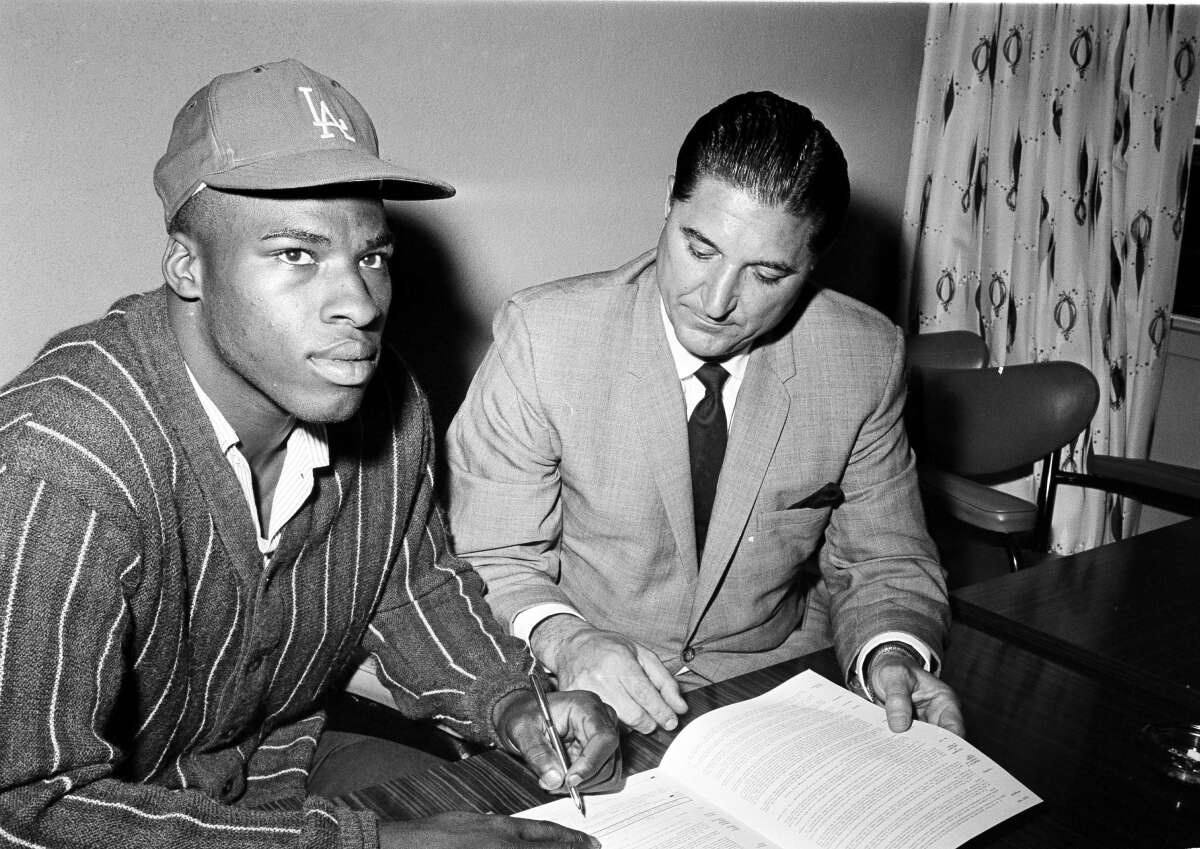
Willie Crawford, 17, who hit .444 for Fremont High, signs a $100,000 deal with the Dodgers in 1964 as Al Campanis watches.
(Associated Press)
We won’t go quite as far back in time for this one as the previous ones.
Willie Crawford is one of those guys who was good at a lot of things but not great at anything, and those types of players tend to be overlooked. But you need players like that every year in order to win.
Crawford first played for L.A. as a 17-year-old in 1964 and had his best season in 1973, when he hit .295/.396/.453 with 14 homers and 66 RBIs. He was solid defensively, playing more shallow than most right fielders to cut down on bloop singles and relying on his speed to catch any balls hit over him.
“He was big and powerful, and he could hit a ball as far as anybody. Boy, was he something,” Tommy Lasorda once said of Crawford, who the Dodgers signed out of Fremont High. Crawford was signed out of high school for $100,000, and the rules at the time said if you signed for at least that much, you had to stay on the major league roster for a season, which hampered his development. In 1965, the 19-year-old Crawford got a World Series ring for being on the Dodgers roster, but he batted only 27 times in the regular season. He had a pinch-hit single in Game 1 of that series.
In his first four seasons as a Dodger, he played in 72 games.
He was a productive player for many years and retired after the 1977 season. Crawford died of kidney disease at age 57 in 2004. You can read more about him here.
The postseason race
Here are the postseason seedings as of Thursday’s games. The three division winners get the top three seeds, followed by the three teams with the best records. The top two division winners get a first-round bye. Milwaukee and the Dodgers have clinched division titles and first-round byes.
Mikwaukee has clinched the No. 1 seed and home-field advantage throughout the postseason. The Dodgers have clinched the No. 2 seed and the Braves the No. 3 seed.
The Padres and Cubs have clinched wild-card spots. If the season ended today, Atlanta would host Philadelphia in one best-of-three wild-card round, with the winner taking on the Dodgers. The Padres would host the Cubs in the other wild-card round, with the winner playing Milwaukee.
In their final three games of the season, the Padres host the Diamondbacks, Philadelphia hosts Tampa Bay and Chicago plays at Boston.
Five of the six teams in the AL have been decided, with Tampa Bay and Cleveland clinching the top two seedings and the first-round bye. The third seed will be the AL West champion, either Texas or Houston (no relation), who are both 79-80. The Astros have the tiebreaker advantage. The three wild-card teams are the Yankees, Boston and the Chicago White Sox, in that order.
The Cat Man is back
Reports of the demise of Tony Gonsolin were greatly exaggerated. He’s back in the majors.
Gonsolin was an All-Star with the Dodgers in 2022, finishing the season 16-1 with a 2.14 ERA. He was having a mediocre 2023 before he was shut down and had Tommy John surgery. After missing the 2024 season, he came back in 2025, made seven starts and had internal brace surgery on his elbow. The Dodgers let him go. He was busy rehabbing his arm for the last year, and finally the Kansas City Royals decided to give him a chance. They sent him to the minors in August, and called him up to the majors this week.
He came in for a relief appearance on Tuesday and, after pitching two scoreless innings, gave up five runs and four hits, with two walks, ending the outing on a sour note.
“Essentially, I’m trying out for next year,” Gonsolin told reporters before the game. “It has been a while since I’ve thrown before this many fans. Just looking forward to the excitement and the adrenaline.”
These names seem familiar
This will be the final time this feature runs this season. It will be back next season. How many names will have joined it then? How notable players who were with the Dodgers the last few seasons are doing with their new teams (through Wednesday). Click on the player’s name to be taken to their full stats page:
Anthony Banda, Twins: 2-0, 4.46 ERA, 2 saves, 34.1 IP, 31 hits, 15 walks, 33 K’s, 95 ERA+, out for the season
Friday: Dodgers (*Tarik Skubal, 11-7, 2.85 ERA [4-2, 2.95 ERA with Dodgers]) at San Francisco (Yunior Marte, 0-1, 4.66 ERA), 7:15 p.m., SportsNet LA, AM 570, KTNQ 1020
Saturday: Dodgers (*Blake Snell, 4-1, 1.86 ERA) at San Francisco (*Matt Wilkinson, 1-3, 3.65 ERA), 7:15 p.m., SportsNet LA, AM 570, KTNQ 1020
Sunday: Dodgers (TBD) at San Francisco (TBD), 12:05 p.m., SportsNet LA, AM 570, KTNQ 1020
Have a comment or something you’d like to see in a future Dodgers newsletter? Email me at houston.mitchell@latimes.com. To get this newsletter in your inbox, click here.
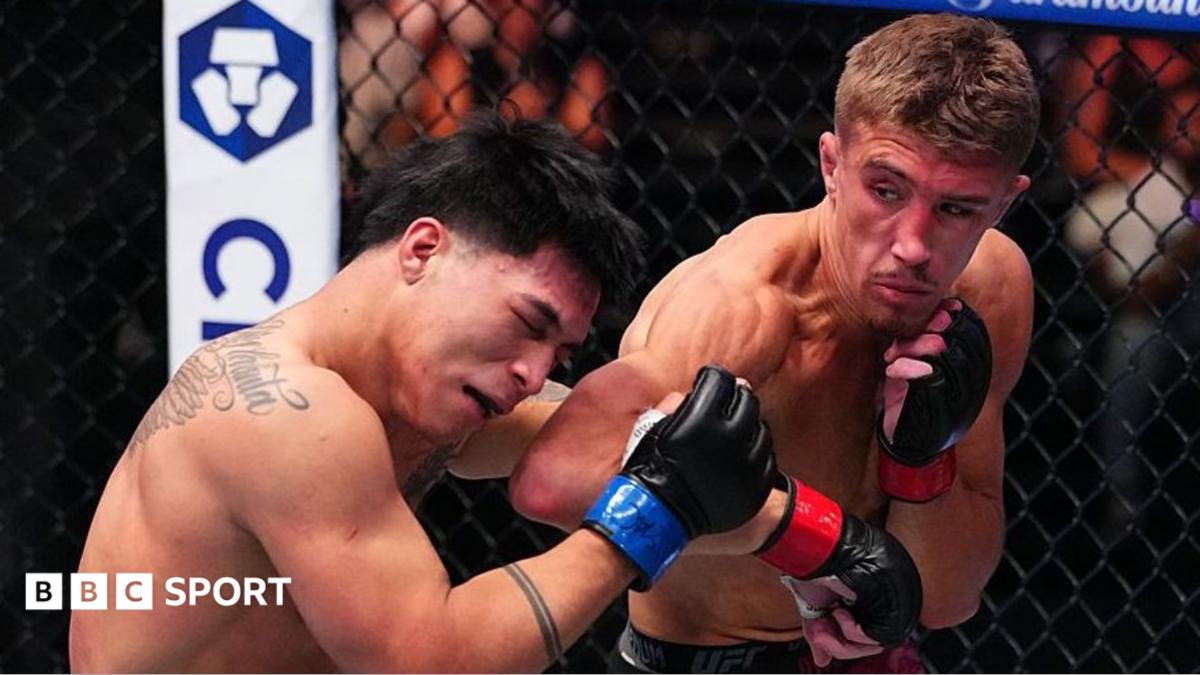
Britain’s Callum Connor was given a UFC contract despite losing in Dana White’s Contender Series, but Norbert Novenyi Jr missed out despite winning.
Six fighters from Tuesday’s five fights earned contracts in MMA’s leading promotion – four of the winners plus two losers, including 26-year-old Connor.
Peru’s Piero Guaylupo earned a unanimous decision over lightweight rival Connor, who suffered the first professional loss of his career.
UFC president White said it could be a fight of the year contender because it contained more significant strikes than any UFC lightweight three-round bout.
“Both of these guys are in the hospital right now, as they should be,” said White.
“One of the greatest fights you’ll ever see on Tuesdays or Saturdays or any other day.
“For Piero to be 21 years old and fight the way he did, the fight was incredible. But it takes two guys to make a great fight. I’m taking them both.”
Connor, from Manchester, now has a pro record of 8-1 and has a four-fight win streak on UK promotion Full Contact Contender.
Middleweight Novenyi, who was born in Hungary but fights out of London, earned a unanimous decision over American Theo Haig to improve his pro record to 11-1.
But the 26-year-old was the only fighter who won on Tuesday not to be given a contract. He was told by White that “tonight’s not your night, my friend”.
“Norbert, both of you guys have great records,” White said. “You came in, fought a good fight.
“Unfortunately, I didn’t see anything tonight that makes me say, ‘I got to have this guy in the UFC’.
“Whatever you decide to do here, we would like to take another look at you.”
Hi, and welcome to another edition of Dodgers Dugout. My name is Houston Mitchell. Thirteen division titles in 14 seasons, and in the year they didn’t win, they had 106 victories. We don’t have a lot to complain about.
Are you a true-blue fan?
Get our Dodgers Dugout newsletter for insights, news and much more.
By continuing, you agree to our Terms of Service, which include arbitration and a class action waiver. You agree that we and our third-party vendors may collect and use your information, including through cookies, pixels and similar technologies, for the purposes set forth in our Privacy Policy such as personalizing your experience and ads.
Division titles and Ryan Ward
—The Dodgers won the division title again, clinching it Thursday with their win over the Reds. Remember the olden days of yesteryear when winning the division was a huge deal? Now it is blasé. Dodgers fans live in a time where they have an embarrassment of riches,
Let’s look at how many NL West titles each team has won since divisional play began in 1969:
Dodgers, 24 San Francisco, 9 Cincinnati, 7 Arizona, 5 Atlanta, 5 San Diego, 5 Houston, 2
There was no official winner in 1994, which was ended by a labor dispute.
I guess I’m feeling extra nostalgic today, but I remember growing up the Dodgers’ biggest divisional rival was the Cincinnati Reds, who moved to the Central division in 1994 and have since won a grand total of zero division titles.
If we narrow NL West titles since 2000, we get:
Dodgers, 16 San Francisco, 5 Arizona, 4 San Diego, 2
Poor Colorado.
—The Dodgers made room for pitcher Kris Bubic on the 40-man roster by designating outfielder Ryan Ward for assignment. Ward has been a favorite of newsletter readers for a couple of seasons now, but he really had no place on the team anymore. He’s too old (28) to really be a prospect and his best triple-A season came in his third season at that level. His numbers declined in triple-A this season (you can see his numbers here).
He’s not great defensively, and the team already has corner outfielders who aren’t great defensively. They passed him over for Josue De Paula when they needed someone to fill in for Shohei Ohtani, and there are several outfielders in the system who are considered better than Ward.
In all likelihood, another team will pick him up and give him more playing time in the majors, something he wasn’t going to get with the Dodgers. Hopefully we see him next season in the “There names seem familiar” section of this newsletter.
Evidence of Dave Roberts’ growth
One of the knocks on Dave Roberts has always been his poor postseason managing. But his postseason managing has dramatically improved the last few seasons, and I’m not just saying that because they won the last two World Series. His decisions appear to not always be guided by analytics, like they are during the regular season. And it appears Roberts has indeed learned some things during his tenure. He recently appeared on the 6-1-1 podcast, hosted by former major leaguers Ryan Howard and Jimmy Rollins, and had this to say:
“When you’re talking about winning 11 games in October, I couldn’t believe more that it’s about people, and players you can bet on,” Roberts said. “The heartbeat that the analytics doesn’t line up with. I think that early on, my mistake was I continued to use that same method of the regular season in the postseason….
He also had high praise for two of his players.
“Mookie has said to me, ‘Doc, we wouldn’t have won the World Series if it wasn’t for Shohei and Yamamoto. And his point was, the discipline that they had every single day, how they worked with intention every single day … it raised the level even higher for our guys.”
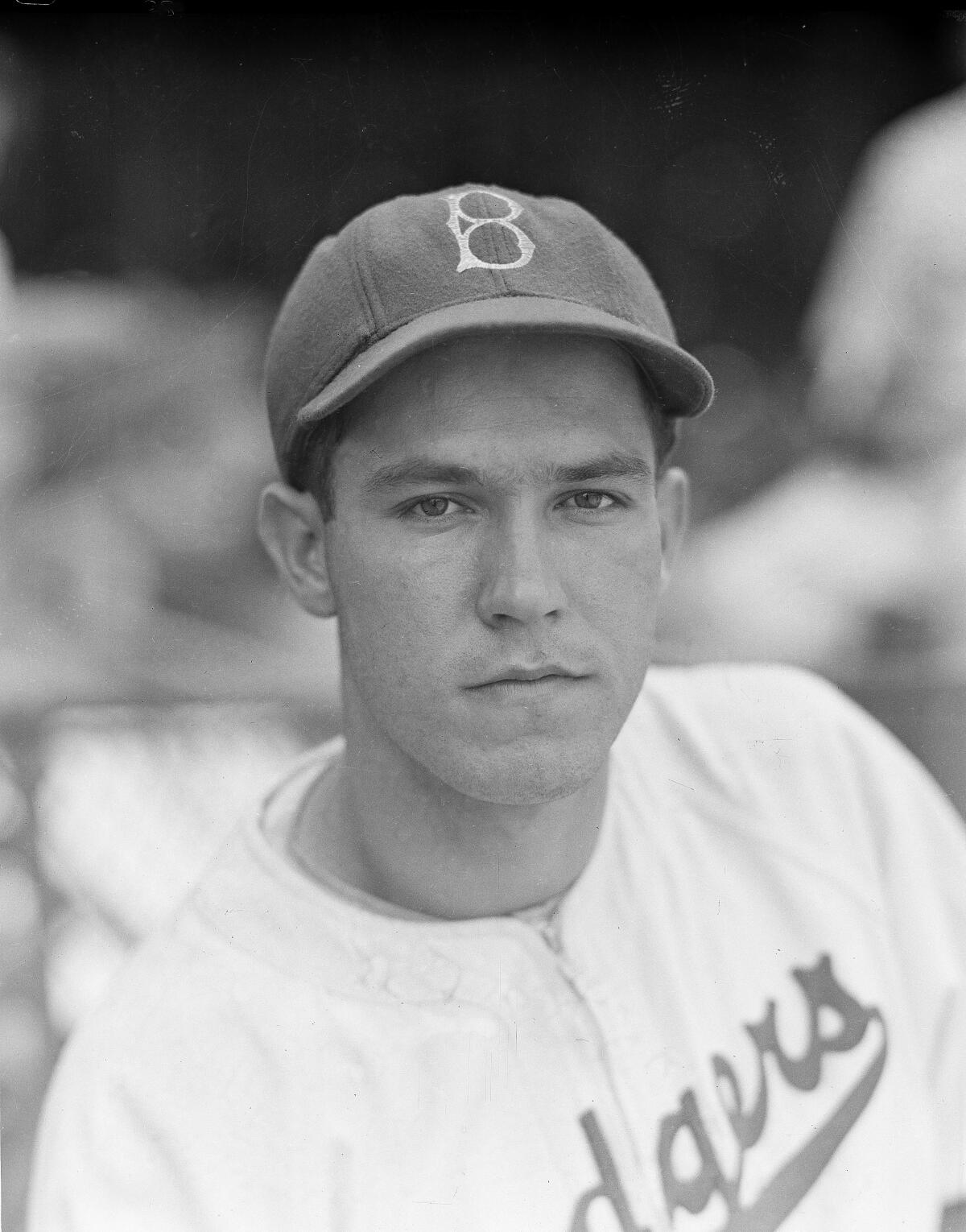
Forgotten Dodger: Pete Reiser
Pete Reiser in 1941.
(Associated Press)
Pete Reiser never met an outfield fence he didn’t like crashing into and it may have cost him a Hall of Fame career.
Harold Patrick Reiser was born on March 17, 1919, in St. Louis. He loved westerns and as a child often walked around wearing a cowboy hat and carrying toy guns, so people started calling him Pistol Pete, which stuck with him throughout his baseball career.
After playing in 58 games with the Dodgers in 1940, Reiser came into his own in 1941 when he hit a league-leading .343 to go with 117 runs, 39 doubles, 17 triples, 14 homers and 76 RBIs. He also played great defense in center. That got him second place in NL MVP voting behind teammate Dolph Camilli (Reiser should have won). Reiser led the league in nine categories.
He followed that by hitting .310 with 33 doubles and 10 homers in 1942, leading the league with 20 steals and making his second straight All-Star team. However, on July 18 of that year, he crashed full speed into the center-field fence, which was made of concrete, while chasing a fly ball. He ended up with a separated shoulder and fractured skull. In those days though, you didn’t let little things like a fractured skull slow you down. He returned to the lineup a week later, but he wasn’t the same. He hit .244 the rest of the season.
He then enlisted in the Army and spent three years there. In 1944, after a long march in below-zero weather, Reiser was diagnosed with pneumonia. The Army decided to put him in Fort Riley, Kan., so he could play for the camp’s baseball team. With Reiser on the team, they were virtually unbeatable and Reiser was given his own room and excused from all other duties.
Reiser returned to the majors in 1946 and broke his leg while stealing second. He crashed into the fence in St. Louis and missed some time. But he still led the league with 34 steals, though his batting average dropped to .277.
In 1947, he was chasing another fly ball when he crashed into the wall face first. This caused another fractured skull. He was given the Last Rites by a priest in the hospital before making a miraculous recovery. He ended up playing 110 games that season.
He was a bench player the following season, as he had put on a little weight and had been slowed tremendously by his numerous injuries. The Dodgers traded him to the Boston Braves after the season for Nanny Fernandez and Mike McCormick.
By unofficial count, Reiser’s injuries over the years included four fracture skulls, multiple dislocated shoulders, two broken ankles, torn ligaments in both knees and and two beanings. He was carried off the field on a stretcher eleven times—five times when he was unconscious.
He retired after the 1952 season and came back to the Dodger organization as a roving minor-league hitting instructor. He joined Walter Alston’s coaching staff in L.A. in 1960 and helped tutor Maury Wills on how to steal bases. In an interview with this newsletter a few years ago, Wills made sure to give praise to Reiser as being a big part of his 104-steal season.
Reiser had a heart attack in 1965, went on to coach for other teams. He smoked a pack of cigarettes a day throughout his adult life and died of emphysema in Palm Springs in 1981. He was only 62.
The postseason race
Here are the postseason seedings as of Thursday’s games. The three division winners get the top three seeds, followed by the three teams with the best records. The top two division winners get a first-round bye. Milwaukee and the Dodgers have clinched division titles.
Remember, there are no extra games to break ties anymore. It all comes down to tiebreakers. Atlanta and Milwaukee have the tiebreaker over the Dodgers. For the wild card, the Cubs have the advantage over the Phillies, having won six of seven games against each other. The Diamondbacks and Padres have split 10 games, but their final three games this season are against each other, so that very well could determine the final wild-card spot.
These names seem familiar
How notable players who were with the Dodgers the last couple of seasons are doing with their new teams (through Wednesday). Click on the player’s name to be taken to their full stats page:
Anthony Banda, Twins: 2-0, 4.46 ERA, 2 saves, 34.1 IP, 31 hits, 15 walks, 33 K’s, 95 ERA+, out for the season
Have a comment or something you’d like to see in a future Dodgers newsletter? Email me at houston.mitchell@latimes.com. To get this newsletter in your inbox, click here.
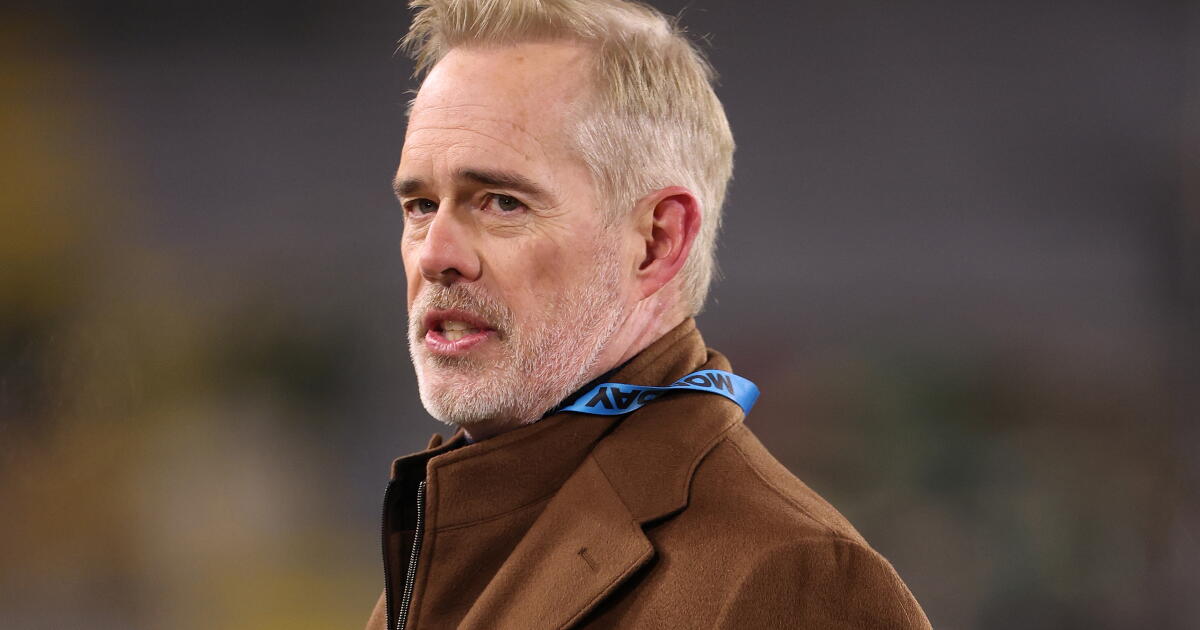
Joe Buck will call his seventh Super Bowl in February. It will be his first with ESPN — and, it turns out, won’t be his last.
The “Monday Night Football” play-by-play announcer and the network agreed to a six-year, $108-million extension, according to the Athletic. Buck’s deal was set to expire following this season.
Super Bowl LXI at SoFi Stadium will be broadcast on ESPN and simulcast on Disney sister network ABC. It will be the first Super Bowl on ESPN and the first on ABC since Super Bowl XL, which followed the 2005 season. The game is scheduled to rotate back to ESPN/ABC in February 2031.
While Buck seems locked in for that Super Bowl LXV broadcast, his longtime booth partner may not be — at least not yet. The Athletic reports that color commentator Troy Aikman remains unsigned beyond this season.
When asked about the contract situations for Buck and Aikman, an ESPN spokesperson directed The Times to a statement executive vice president of communications Josh Krulewitz gave to the Athletic.
“With this historic season for ESPN now underway, our entire focus is on bringing fans the best possible football coverage, culminating with our first Super Bowl,” Krulewitz said. “To that end, we won’t be addressing talent contract specifics publicly before the Super Bowl.”
Buck broke into broadcasting in 1989, calling games for the Louisville Redbirds, a minor-league affiliate of the St. Louis Cardinals. Two years later, he joined his father, Sports Broadcasting Hall of Famer Jack Buck, in the radio and TV booths for the Cardinals’ games.
In 1994, Buck was hired by Fox Sports. He eventually became the network’s top play-by-play voice for the NFL and MLB, calling 24 World Series and six Super Bowls for the network. Buck joined his father in the Sports Broadcasting Hall of Fame in 2022.
Buck and Aikman have been calling football games together since 2002 and left Fox for ESPN together before the 2022 season. Last season, “Monday Night Football” averaged 15.8 million viewers per game, the second-best ratings in ESPN’s 20 seasons of broadcasting the franchise (it averaged 17.4 viewers in 2023).
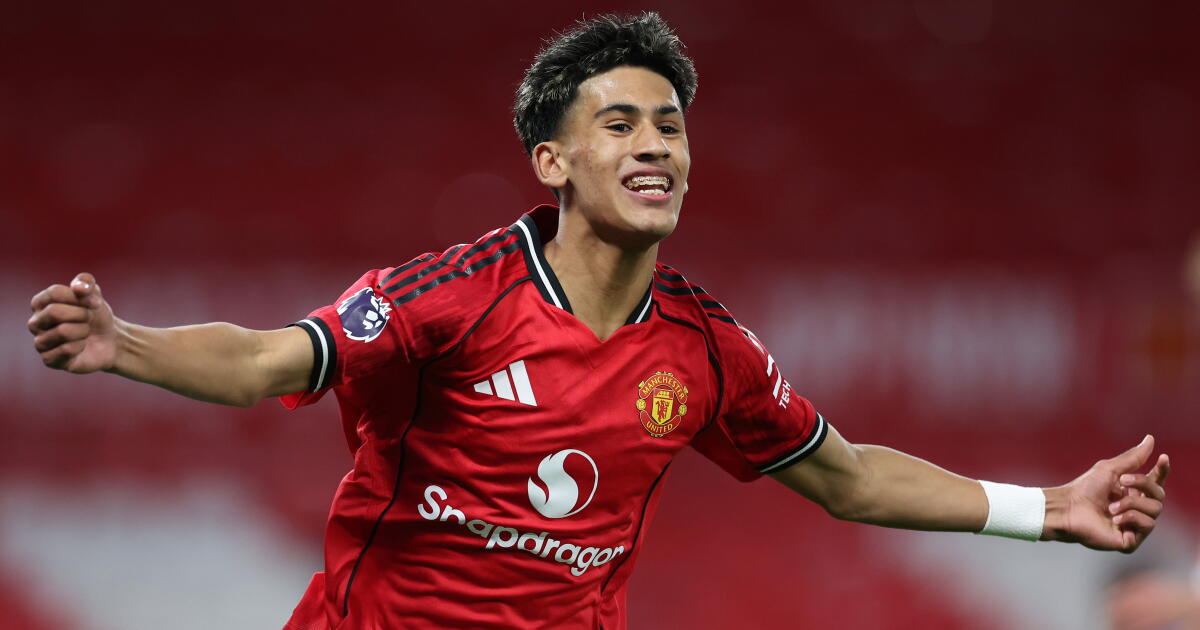
JJ Gabriel is already the youngest person to play for Manchester United’s Under-18 team.
He is also the youngest person to play in an unofficial game with United’s first team.
The 15-year-old striker appeared set to become the youngest person to play in an official game with United’s first team. The club plays Brighton in an English League Cup game Wednesday.
But seems unlikely to happen at this point — not after Gabriel has requested to be let out of his youth registration with the club immediately to become a free agent. Gabriel is under contract with United until the end of the current season in May.
United remains hopeful it can retain the young star, a person with knowledge of the situation but unauthorized to comment told the Associated Press.
According to the BBC, Gabriel did not train with the team late last week “amid issues in the relationship between the player’s family and United.” The publication also states that chief executive Omar Berrada and director of football Jason Wilcox “are directly involved in discussions with the player’s family, which underlines how seriously the club [regards] the situation.”
If United declines Gabriel’s request, the matter could ultimately be decided by the Premier League.
Gabriel’s father, Joe O’Cearuill, was a defender who played for Arsenal, mainly in the lower leagues, and briefly for Ireland’s national team.
Born in London on Oct. 6, 2010, Gabriel first gained wide attention — and the nickname “Kid Messi,” after global soccer legend Lionel Messi — as an 8-year-old youth player showing his skills in a YouTube video posted by SV2 in 2019. It has been viewed more than 5 million times.
After playing for youth academies such as Arsenal, West Ham United and Chelsea, Gabriel signed with Manchester United at age 11. He was 14 years, 6 months and 1 day old when he scored two goals in his U-18 debut, a 13-1 victory against Leeds on April 5, 2025.
Gabriel went on to score 20 goals in only 21 appearances and was named the U-18 Premier League player of the year. He also became the youngest player to be named Manchester United’s academy player of the year. Making his UEFA Youth League debut last week, Gabriel netted a hat trick during a 5-0 victory over Sabah.
On Aug. 1, Gabriel made his first appearance with United’s first team, playing eight minutes during a preseason game against Atlético Madrid. He was 15 years, 9 months and 26 days old. The youngest Manchester United first-team player in an official game is David Gaskell, who was 16 years and 19 days old when he first appeared for the club on Oct. 24, 1956.
Hi, and welcome to another edition of Dodgers Dugout. My name is Houston Mitchell. There are only 13 games remaining in the regular season. Time flies when you are having fun.
Are you a true-blue fan?
Get our Dodgers Dugout newsletter for insights, news and much more.
By continuing, you agree to our Terms of Service, which include arbitration and a class action waiver. You agree that we and our third-party vendors may collect and use your information, including through cookies, pixels and similar technologies, for the purposes set forth in our Privacy Policy such as personalizing your experience and ads.
A different opinion
Throughout the season, I like to occasionally reach out to others to see what they think of the Dodgers so the readers are not exposed to just my viewpoint. This time I reached out to two of my favorite sports people.
I have listened to sports talk radio for about 50 years. Bud Furillo, Superfan, Rick Talley, Joe McDonnell, Steve Edwards, Fred Wallin, Steve Somers and many, many others. For me, “The Mason and Ireland Show,” hosted by Steve Mason and John Ireland and currently on ESPN Radio, surpasses them all. They can talk knowledgeably about any of our local teams, and the Dodgers are no exception. They were kind enough to answer a few questions.
Q. With the postseason rapidly approaching, how would you assess the Dodgers’ season so far?
Ireland: Surprising, in this sense: the Dodgers are heavy favorites to win it all, but they rarely beat good teams. Since the All Star break, they are 6-16 against teams with winning records. That’s obviously not good, and doesn’t bode well for the postseason. But having said that, for the Dodgers, the regular season is basically a dress rehearsal for the playoffs. I’m not sure they’re motivated until October. Maybe they’ll “flip a switch” and turn it on when it counts. We’ll see.
Mason: The Dodgers seem to be in a good groove right now. Mookie is starting to look like Mookie. Teo has come around. But hard to judge this team without a healthy Andy Pages and with Ohtani on the IL. I worry that as an organization, they didn’t get Shohei off his feet sooner. He has wrestled with injury for the last couple of months, and his biggest at bats are coming in October. They still have a chance to win 100 games, and they’re in position to three-peat, but with the playoffs, it’s a crapshoot. It’s a historically good rotation, but will those bats be clicking at the right time?
Q. The Dodgers have won two World Series in a row. Winning a third would be great, but if they don’t, does winning two in a row make up for it?
Ireland: Absolutely. Let’s face it, most teams want to be the Dodgers. A seemingly unlimited payroll, best manager in baseball, best front office. It’s incredibly hard to win two World Series in a row, and almost impossible to win three straight. No National League team has ever done it. So if they pull it off, it’s icing on the cake. But the cake has been great.
Mason: When the Yankees clinched their three-peat in 2000, they only won 87 games and lost 15 of their final 18. That shows you how hard it is. Honestly, the odds are strongly stacked against anybody winning three in a row, but if they fail, it is not a waste of a season. When you go back-to-back, you’ve got to show a lot of gratitude to the organization and to those players. A lot has to go right to win it all.
Q. Do you think Shohei Ohtani should just stop pitching altogether and focus on hitting the rest of his career?
Ireland: Selfishly, I hope he does both. That’s what makes him the best baseball player I’ve ever seen in person. But it’s obviously hard, and he’s had to shut down pitching at least three times since he came over from Japan. This year, it seemed to me that he was going for the Cy Young Award, while trying to keep up his offensive numbers, and it didn’t work. So maybe they do just let him hit moving forward, but I hope not. One thing that complicates things is that at least so far, the Dodgers have let Shohei do what he wants. And my sense is that he wants to continue to pitch and hit, so that figures into this too. It may not be a Dodgers decision — it might be Shohei.
Mason: I really want Shohei to do both, but in a specific way. He’s never going to give you 25 starts, and as good as he is, I cannot imagine him winning the Cy Young. He started 14 games to start the season this year — I say, instead, put those 14 starts at the end of the season. Ramp him up after the All-Star break, and have him ready to contribute on the mound in October. I was there for the magical night in the playoffs last year, when he hit three home runs and struck out 10. As a baseball fan, I really want to see him do both.
Q. If you were put in charge of the Dodgers and could make three immediate changes to the organization, be it on field, the stadium, whatever, what would you choose?
Ireland: For starters, I would address affordability. Most Dodgers fans have been priced out. They lead the league in attendance every year, so they have a business model that works. But I would take two or three sections in the upper deck and make those $5 tickets. They can afford it, and I think the gesture alone would score major points with fans.
On the field, they need to get younger. Freddie Freeman is 36, and so is Max Muncy. Mookie Betts, Teoscar Hernández, and Blake Snell are all 33. Andrew Friedman has been great at roster building, so they have the right guy. But it isn’t easy to say goodbye to great players as they age out, and he’s facing that now.
Finally, everybody I know thinks there’s a lockout coming. To me, that would ruin all of the progress baseball has made over the last five years. The game has never been better. All of the rule changes have worked, and the pitch clock has been brilliant. Most people feel the Dodgers are the main reason for the lockout. They outspend everybody, have a sweetheart TV deal, and most small market teams can’t keep up. The Dodgers need to lead the charge to avoid this lockout. I’m against a salary cap, but everything should be on the table. I would lock both sides in a room and tell them not to come out until they have a deal. It’s a huge story that we probably don’t talk about enough.
Mason: First I would expand the number of retired jerseys. It would be great to see guys like Maury Wills, Steve Garvey, Bill Russell, Davey Lopes, Orel Hershiser and other Dodger greats receive that honor.
Andrew Friedman is a genius, but he has overspent on guys like Kyle Tucker and Edwin Díaz. I’d like to see them consider more of their minor league talent employed. Love that Rushing and Freeland have had strong moments this year, but instead of signing Tucker, why not find a way to use De Paula or Tibbs or Sirota. I know they are unproven, but once upon a time, so was Andy Pages.
Pet peeve of mind, but I don’t like the brand of Dodger Dogs being served. Farmer John hot dogs had a better taste and texture than the ones they are using now. Plus, Dodger Dogs are much better when grilled, so why are there so many boiled hot dogs at the stadium?
Q. Favorite Dodger of all time?
Ireland: Can I say Vin Scully, or is that cheating? I say all the time that I grew up going to Sportscasters School, but I just didn’t know it. For years, I listened to Vin call the Dodgers, Chick Hearn call the Lakers, Dick Enberg call the Angels and Bob Miller call the Kings. FOUR Hall of Fame announcers — I didn’t know what a bad announcer sounded like until I moved out of L.A. But I had this exchange with my Dad before he died in 2017:
Dad: “If you want to be a sports announcer, you better study more than just the sports page.”
Me: “Not necessary — I just need to call the games.”
Dad: “Listen to Vin Scully — he talks about EVERYTHING.”
Of course, my Dad was right. Listening to Vin was a history lesson every time he did a game. I learned more from him than I did from a lot of my professors at UCLA.
Mason: Back in the day, I would have said Sandy Koufax, who I had the pleasure of meeting at Dodgertown in Vero Beach, but nobody, in the history of the game has awed me the way that Shohei Ohtani has. His performance in NLCS Game 4 last year is the greatest I have ever witnessed in person. Better than any athlete in any sport. I have been a baseball fan all my life, and I could never have even imagined that was possible. I also love Ohtani’s Harada chart, basically his goals in life and career. One of his goals has been to “be someone people root for.” Hard to find anybody who is not amazed by both his talent and his humility.
Q. I have long said that the Mason and Ireland show is the best sports talk show of all time. Do you guys remember when you first met? First impressions? And remind the readers where they can listen to you now.
Ireland: Mason and I were kind of a weird shotgun wedding in the beginning. In the early ‘90s, he moved to XTRA in San Diego from Toledo, Ohio, to do mornings. After a few months, the station decided they didn’t like him. So they moved him to nights in an effort to try and get him to quit.
I was a TV guy in San Diego, who filled in on the radio station when they needed somebody. They called me and said, “We’re going to put you on at night with Steve Mason, but he’s not happy with us. Anything could happen.” On the first night, I walked in and Mason was working on a screenplay on his computer and he told me, “Just have fun and say anything you want — I won’t be here for long anyway.” So we just started goofing around, and I asked Mase on the air why he thought mornings didn’t work. He started making fun of himself, then me, and we just clicked.
After it was over, I called the program director and said, “You guys are idiots — Mason is fantastic. If you can’t build a show around him, you don’t get it.” The more Mason stopped caring, the better he got. They came back to him and said, “That’s the guy we thought we were getting from Ohio.” They told him they wanted him to stay, and told him he could pick his partner. He picked me, and we were off and running. The first week was pretty bad, but we were following a failed show, so they let us work through it, and we’ve been at it ever since.
We’re on every day from noon to 3 p.m. on ESPN LA, and we post a podcast of every show as soon as it ends. You can also listen live on the ESPN LA app from anywhere in the world, which is a free app that works great. Also, you can find Mason’s podcast, “Mason Plus,” on that app, which has some great deep dives with a lot of cool people in and out of sports.
Mason: Thank you for the kind words. John’s story of our meeting and partnership is right on. In radio, there is this idea that you can throw any two people in a studio and they will automatically do great radio. It just doesn’t work like that. John and I clicked immediately. The show has always been good because John and I are so different. He’s Corona del Mar, and I am a kid from Toledo. Even now, he’s very Manhattan Beach, and I’m very Venice. We see the world differently, which leads to healthy debate, but we have a deep respect for each other and for what we have built.
The postseason race
The Dodgers’ magic number to clinch the NL West is four. Here are the postseason seedings as of Thursday’s games. The three division winners get the top three seeds, followed by the three teams with the best records. The top two division winners get a first-round bye. The division winner with the worst record plays the wild-card team with the worst record, and the other wild-card teams play each other in the best-of-three wild-card round that begins Tuesday, Sept. 29.
Remember, there are no extra games to break ties anymore. It all comes down to tiebreakers. Atlanta and Milwaukee have the tiebreaker over the Dodgers. For the wild card, the Cubs have the advantage over the Phillies, having won six of seven games against each other. The Diamondbacks and Padres have split 10 games, but their final three games this season are against each other, so that very well could determine the final wild-card spot.
The Dodgers won it all last season without a first-round bye, but with all the injuries, it would be nice to get that bye this season. They have only three games remaining against a team with a winning record, so they really have no one to blame but themselves if they don’t get it.
Up next
Monday: Dodgers (*Tarik Skubal, 9-7, 2.84 ERA [2-2, 2.93 ERA with Dodgers]) at Cincinnati (*Nick Lodolo, 3-4, 5.12 ERA), 3:40 p.m., SportsNet LA, AM 570, KTNQ 1020
Vin Scully is interviewed by the Braves announcers during his final season. Watch and listen here.
Until next time …
Have a comment or something you’d like to see in a future Dodgers newsletter? Email me at houston.mitchell@latimes.com. To get this newsletter in your inbox, click here.
Hi, and welcome to another edition of Dodgers Dugout. My name is Houston Mitchell. I hope you all had a nice Labor Day and took the time to celebrate all the pregnant women around you. Wait, I am being told now that that is not what Labor Day is for. That explains all the strange looks at my local hospital’s maternity ward.
Are you a true-blue fan?
Get our Dodgers Dugout newsletter for insights, news and much more.
By continuing, you agree to our Terms of Service, which include arbitration and a class action waiver. You agree that we and our third-party vendors may collect and use your information, including through cookies, pixels and similar technologies, for the purposes set forth in our Privacy Policy such as personalizing your experience and ads.
Teoscar is back
On Aug. 23, Teoscar Hernández went 0 for 4 in a victory over the Pittsburgh Pirates, striking out twice. That lowered his season numbers to .244/.305/.390, which, to go along with his poor defense, made him a below average player, with a WAR below zero.
The Dodgers were off the following day, and Dave Roberts gave Hernández the Aug. 25 game off for a mental reset. Which seems to have worked. Since Aug. 26, Hernández is hitting .440/.525/.660, going 22 for 50 with three doubles, one triple, two homers, 14 RBIs, seven runs, two steals and eight walks. His WAR has gone up to 0.7 and he is as responsible as anyone for the Dodgers’ seven-game winning streak.
And, strangely, his defense doesn’t seem quite as bad when he is hitting that well.
When asked about this resurgence by SportsNet LA’s Kirsten Watson after Tuesday’s win, Hernández did what he usually does, deflect the spotlight away from himself, saying:
“I feel really good at the plate. Now, it’s just being consistent with it, see good pitches and make contact. We’re going in a good direction, taking the right approach and it shows. I think everybody is doing what everybody expected us to do at the right time. Everybody is having good at-bats. The pitchers are throwing really good games. Everything is clicking right now for us.”
Hernández told reporters after the game that his injuries the last two seasons made him adjust his swing and he’s finally feeling close to 100%.
“Last year, I used [my regular swing] before I had the [adductor] injury. That’s the way I was hitting. Then when I came back, I was doing the same thing, but I was feeling it in my [injured] leg, so that’s why I stopped.”
“This year when I got my hamstring issue, I had to get rid of [the swing] because it was putting so much pressure on the hamstring. Little, little things that people barely notice or realize can change the swing and the results in games.”
And let’s point something else out. Despite the subpar season, who was the first Dodger to leap out of the dugout to celebrate a teammate’s success? Hernández. He didn’t sit around and brood and feel sorry for himself. He was there for his teammates. There are some things that aren’t measurable by OPS+, WAR or any other stats, and in some of those areas, Hernández is a superstar.
In 2024, there were two things that helped the Dodgers find a gear they never had been able to reach before: Shohei Ohtani and Hernández. They both rose to every occasion, where in the past it seemed the Dodgers would shrink in the big moments. Ohtani and Hernández had big hit after big hit during the season and postseason. The same last season, even with Hernández having a down year. This year, however, Hernández had been mainly a nonfactor. Until Aug. 26. The Dodgers can only hope it continues, because if it does, their chances to win the World Series get a lot better.
Ohtani heads to the IL
The Dodgers announced after Wednesday night’s game that they put Ohtani, who is dealing with soreness in seemingly every part of his body (left knee, right biceps, neck and left hip), on the injured list. Two-way players have to go on the 15-day IL, so he will be out until the final week of the season.
“Talking to Shohei, the doctors, the training staff, it’s the right thing to do,” Roberts told reporters after Wednesday’s game. “We tried to kick the can as much as we could. It’s more of let’s take the 15 days and get him reset, get him feeling better, and then build him back up to get the best of him for the postseason.”
With the Dodgers’ penchant to obfuscate when it comes to injuries, the fear here is he is hurt worse than they are saying. We won’t know for sure until he comes off the IL and starts playing again.
To replace Ohtani on the roster? In a bit of a surprise, the Dodgers are turning to their top prospect, Josue De Paula, who never has played above double A. The Dodgers never had promoted a player from double A to the majors since Andrew Friedman took over the front office before the 2015 season.
De Paula, 21, has spent the season with double-A Tulsa, hitting .303/.401/.547 in 588 plate appearances, with 37 doubles, 27 home runs, 104 RBIs and 31 stolen bases. That’s extra impressive considering he is about three years younger than the average double-A player.
He will start at DH tonight, so the Dodgers are throwing him right into the fire.
De Paula has walked 81 times and struck out 87 times this season, so he has a decent eye at the plate. He is considered a subpar fielder though, with one scout telling me during a game De Paula played with Rancho Cucamonga two seasons ago, “As an outfielder, he makes for a hell of a DH.”
The intriguing thing is — and I know I’m putting the cart about a mile ahead of the horse — that if De Paula plays well, he could be added to the postseason roster. Unlike the old days, you don’t have to be on the 40-man roster by Sept. 1 to be considered for the postseason, you just have to be with the organization by that date. The Dodgers would need to petition MLB to allow De Paula to be on the postseason roster, but that type of petition generally is approved.
The Dodgers will have to make room on the 40-man roster for De Paula, either by removing a player or putting someone, such as Dalton Rushing, on the 60-day IL.
Injuries R Us
The Dodgers have another injury concern as the season winds down: Freddie Freeman.
Freeman is bothered by a troublesome knee. He sat out Wednesday’s game.
“The right knee has been bothering him, and so just on the heels of an off day [Thursday], we felt it was best to just give him [the day off] and then see how he is on Friday,” Roberts said.
There are 16 games left in the season, and the Dodgers are without Ohtani, Freeman, Rushing and Andy Pages. That’s not ideal. It seems unlikely Rushing will be back, and you really need two of the other three back for the postseason.
The postseason race
The Dodgers’ magic number to clinch the NL West is six. Here are the postseason seedings as of Thursday’s games. The three division winners get the top three seeds, followed by the three teams with the best records. The top two division winners get a first-round bye.
Remember, there are no extra games to break ties anymore. It all comes down to tiebreakers. Atlanta and Milwaukee both have the tiebreaker over the Dodgers. For the wild card, the Cubs have the advantage over the Phillies, having won six of seven games against each other. The Diamondbacks and Padres have split 10 games, but their final three games this season are against each other, so that very well could determine the final wild-card spot.
The Dodgers won it all last season without a first-round bye, but with all the injuries, it would be nice to get that bye this season. They have only three games remaining against a team with a winning record, so they really have no one to blame but themselves if they don’t get it.
These names seem familiar
How notable players who were with the Dodgers the last couple of seasons are doing with their new teams (through Wednesday). Click on the player’s name to be taken to their full stats page:
Anthony Banda, Twins: 2-0, 4.46 ERA, 2 saves, 34.1 IP, 31 hits, 15 walks, 33 K’s, 95 ERA+, out for the season
Have a comment or something you’d like to see in a future Dodgers newsletter? Email me at houston.mitchell@latimes.com. To get this newsletter in your inbox, click here.
Thousands of low-income patients, some seriously ill, are scrambling to find new doctors as they lose access to UCLA Health physicians after a longtime Medi-Cal contract was not renewed.
Under the contract that expired June 30, UCLA had been providing specialty care to 9,000 medically frail patients from Health Care LA, an association of nonprofit clinics that serve patients covered by Medi-Cal, the state program for the poor.
“Many of these patients have been waiting for months to be seen by UCLA specialty medicine providers and are now being told they cannot receive the care they desperately need,” Health Care LA said in a Thursday news release.
The patients had gone to UCLA for cancer and infectious-disease treatments, high-risk women’s services, major organ transplants and other specialty medicine care, the association said.
A Friday news conference that Health Care LA had scheduled to detail the problems patients faced in getting care was abruptly canceled when the two sides said they had reached a tentative agreement on how to transition the patients to other doctors over the next year.
“To help ensure a smooth transition for patients, both organizations have agreed that established UCLA Health patients, individuals with existing appointments, and patients requiring other agreed-upon services will continue to be cared for at UCLA Health facilities,” Phil Hampton, a university spokesman, said in a statement.
Although some patients will continue to be seen by UCLA doctors, he said, “accepting an unlimited number of new referrals presents challenges given existing capacity constraints and the need to preserve timely access for existing patients.”
Sabra Matovsky, chief executive of Health Care LA, said in an interview on Thursday that UCLA had declined to renegotiate the contract.
“They never even asked us for a raise,” she said, “They just want us out.”
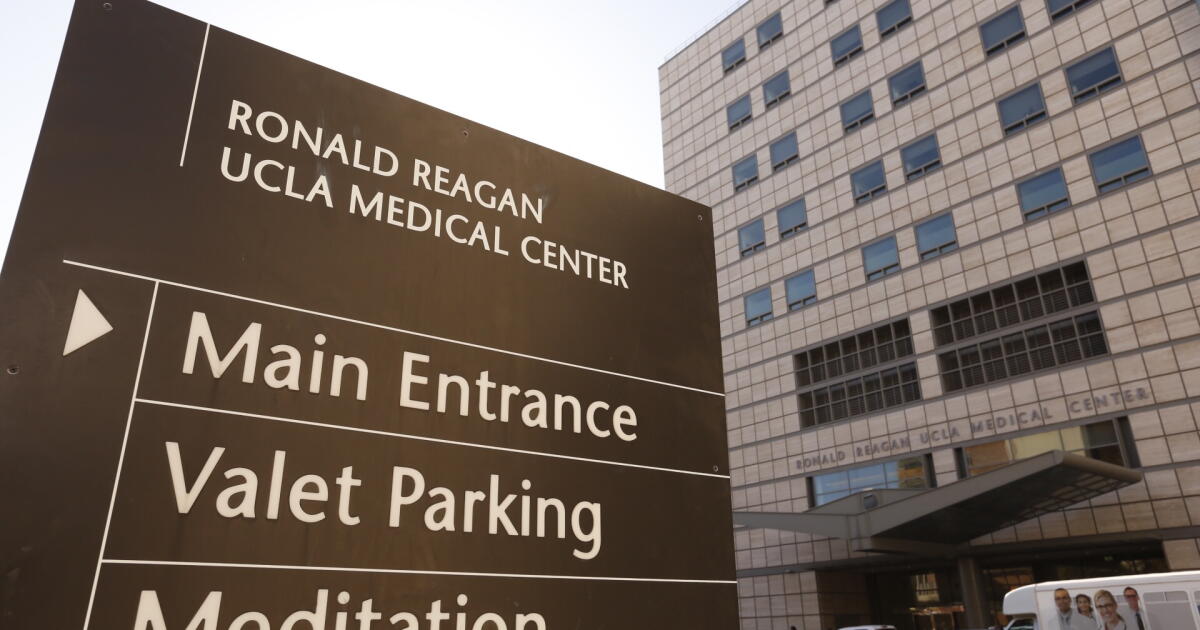
She said that university officials had pointed to “capacity issues” at Ronald Reagan UCLA Medical Center in Westwood, including in the emergency room and dozens of specialty clinics.
“To solve this by pushing out Medi-Cal patients while you continue to expand and market and take on other patients is not a solution,” Matovsky said.
Hampton said UCLA had offered to extend the contract, but Health Care LA rejected the offer.
The end of the Medi-Cal contract disappointed some UCLA medical professionals who have been urging the public university to provide care to more of L.A. County’s low-income residents.
“It feels like this is profits over patients,” said Dr. Patrick Samones, a fellow at UCLA Health, who trained at the university in family medicine.
“UCLA is one of L.A.’s most important healthcare institutions,” said Samones, who represents members of the Committee of Interns and Residents, which is part of Service Employees International Union. “We feel it has a duty to serve all Californians.”
In recent years, UCLA Health has been expanding fast and now has almost 300 locations throughout Southern California, including in wealthier places such as Montecito, Malibu and Westlake Village.
At the same time, it provides less care to Medi-Cal patients than its sister university health systems: UC Irvine, UC San Diego, UC San Francisco and UC Davis, according to university statistics.
Last year, about 15% of UCLA Health’s net patient service revenue came from Medi-Cal, according to the university health systems’ annual report. The four other UC health systems each received about 22% of that revenue from Medi-Cal.
About 40% of L.A. County residents are insured by Medi-Cal, according to a recent report by the California Health Care Foundation.
Hampton said the net patient service revenue data from the annual report doesn’t capture UCLA’s “extensive contributions to caring for Medi-Cal patients” and isn’t “a fair basis for comparing academic health systems.”
He added that with the university’s expansion of clinics, “we are providing substantial specialty care to Medi-Cal and Medicare patients” throughout L.A. County.
“Unlike county-owned hospitals, UCLA Health relies almost exclusively on patient care revenue to fund operations, expand access, recruit clinicians and invest in facilities and technology,” he said.
Hampton said UCLA has other contracts to serve Medi-Cal patients, which will continue. The health system also provides more than $270 million in unreimbursed care for low-income patients each year, he said, as well as primary and urgent care for people experiencing homelessness.
In addition, UCLA is spending $500 million to create a new neuropsychiatric hospital in Los Angeles’ Mid-Wilshire neighborhood, he said.
“We continue to fortify our region’s safety net despite growing access demands and challenges,” Hampton said.
In the most recent fiscal year, he said, Medi-Cal patients comprised 26% of 336,600 inpatient days and 34% of 156,000 emergency department visits.
“UCLA Health’s long-standing commitment to serving vulnerable populations in Southern California is well-established,” he said.
Hampton said the net patient service revenue data doesn’t reflect the complexity of care delivered by UCLA and is affected by Medi-Cal reimbursement rates and payment policies, which vary by region and health plan.
“Over time, Medi-Cal reimbursement has not kept pace with the cost of providing care, and UCLA Health has experienced increasing payment denials and delays,” he said.
UCLA specialists had been caring for Health Care LA’s seriously ill patients under the contract since 2009.
“They were the provider that did all the complicated care,” Matovsky said. “UCLA was our go-to.”
Hi, and welcome to another edition of Dodgers Dugout. My name is Houston Mitchell. A set of jumper cables walks into a bar and orders a beer. The bartender eyes it suspiciously and says “I’ll serve you as long as you don’t start anything.”
Are you a true-blue fan?
Get our Dodgers Dugout newsletter for insights, news and much more.
By continuing, you agree to our Terms of Service, which include arbitration and a class action waiver. You agree that we and our third-party vendors may collect and use your information, including through cookies, pixels and similar technologies, for the purposes set forth in our Privacy Policy such as personalizing your experience and ads.
This just in
The big news is whatever is going on with Shohei Ohtani. He went 0 for 4 with four strikeouts against St. Louis on Wednesday and seemed to be in pain. He didn’t play Thursday. He’s not talking to reporters and Dave Roberts said, “He definitely doesn’t want to take the day [off]. Speaking for him, I know he feels that he needs to post and be in the lineup, and if he’s upright, he should play. I respect that. But if he’s feeling the way that it visibly looks, then it’s really not helping anyone. So that’s the conversation I’ll have with him.”
I’m sure we’ll have more to discuss on this in the next newsletter, once we have more clarity.
Most and least valuable?
Who have been the most valuable Dodgers this season? Well, if you go by WAR, which considers pitching, hitting, fielding and base running, the most valuable have been:
Shohei Ohtani, 6.5 Andy Pages, 5.4 Yoshinobu Yamamoto, 4.8 Max Muncy, 3.9 Freddie Freeman, 3.9 Mookie Betts, 2.6 Tommy Edman, 1.8 Justin Wrobleski, 1.8 Tanner Scott, 1.7 Tyler Glasnow, 1.6 Dalton Rushing, 1.4 Jack Dreyer, 1.2
The least valuable Edwin Díaz, -1.3 Cole Irvin, -0.4 Chuckie Robinson, -0.4 Kyle Tucker, -0.3 Emmet Sheehan, -0.3 Eliezer Alfonzo, -0.2 Ben Casparius, -0.2 Jonathan Hernández, -0.2 Will Klein, -0.2 Ben Rortvedt, -0.1 Teoscar Hernández, -0.1 Kiké Hernández, -0.1 Alek Thomas, -0.1 Charlie Barnes, -0.1 Kyle Hurt, -0.1
I think we can safely call last offseason the worst free-agent signing group of the Andrew Friedman era. Two guys are getting a combined $80 million this season and have a combined -1.6 WAR. Do I have to say their names?
Then you factor in Teoscar, and the outfield is a mess, especially with Pages out.
And if your last name is Hernández, this is not a good year for you to play for the Dodgers.
Some might be surprised to see Betts so high, considering he is having a poor year offensively. But Betts gets a strong boost from his defense. He is in the top three in most defensive metrics.
Which brings us to his hitting. He has had some injuries the last two seasons, so we could blame his decline on that. We could blame it on moving to shortstop. Or it could be both those things. Or neither. Some things just don’t have a provable cause.
But let’s look at how Betts has hit in his career at different defensive positions:
DH (55 plate appearances), .319/.400/.574 Second base (446), .309/.406./.550 Right field (4,458), .293/.372/.528 Center field (968), .287/.349/.492 Shortstop (1,421), .265/.337/.436 PH (17), .267/.353/.267
To be clear, the Dodgers are not moving Betts back to right unless something unexpected happens. It’s also true that Betts has hit much better as the leadoff hitter in his career than anywhere else. These are just things to make you think.
Back to WAR for a moment. Is it a perfect stat? No. There is no perfect stat. It’s just one tool in a drawer of tools. A mechanic never uses one tool for all jobs. A chef doesn’t use one kitchen utensil. And when looking at stats, you shouldn’t make a determination based on just one stat. But it can give an indication of how things are going.
Here’s how WAR basically grades out:
Replacement player 1 or fewer WAR Role Player 1-2 Solid Starter 2-3 Good Player 3-4 All-Star 4-5 Superstar 5-6 MVP 6+
Chris Taylor returns
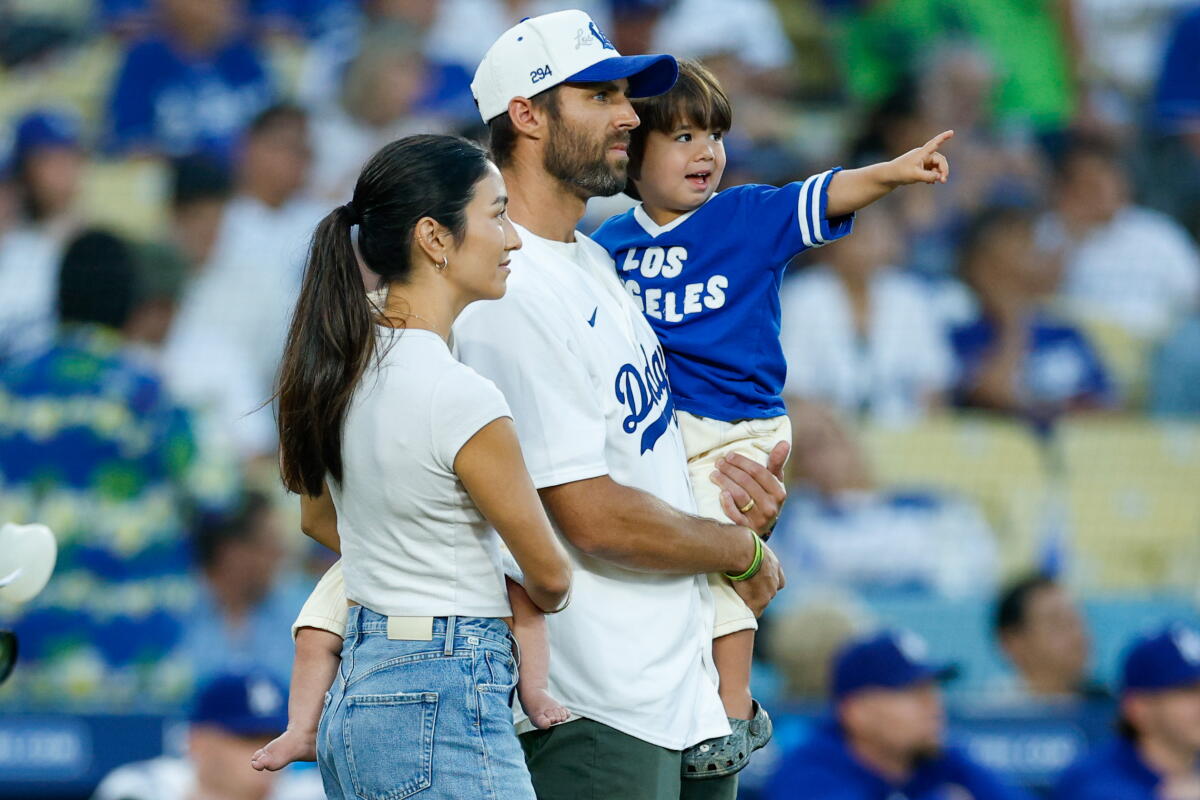
Chris Taylor, his wife Mary and son Theo watch a tribute video of his career as a Dodger on Wednesday.
(Ronaldo Bolaños / Los Angeles Times)
Former Dodger Chris Taylor returned to Dodger Stadium on Wednesday, where he received his 2025 World Series ring and threw out the first pitch before the game against the St. Louis Cardinals.
Taylor is one of those guys who become a fan favorite because they seem to be wringing every ounce of athletic ability out of their body. We could identify with Taylor, because we could imagine us playing the way he did. Play like Ohtani? No. But play like Taylor? We could fool ourselves into believing that if we just stuck with it, we could have been Chris Taylor. He was us on the field.
This newsletter began a couple of weeks before the 2015 season. And I believe the first group of angry emails I got about something the Dodgers did was June 19, 2016, when the Dodgers traded pitcher Zach Lee to Seattle for some guy named Chris Taylor.
Lee had been touted as one of the best Dodgers pitching prospects in years. In the minors in 2015, he went 13-6 with a 2.63 ERA. Sure, he had a terrible outing in what turned out to be his only start with the Dodgers (4.2 IP, 11 hits, one walk, three strikeouts, 13.50 ERA), but that could happen to anyone. He was the pitcher of the future. Until he wasn’t. And to trade him for this Taylor guy, who in three seasons with the Mariners hit .240/.296/.296? Surely they could have gotten more for him than that! (They couldn’t and don’t call me Shirley.)
Here’s a guy who was with the team from 2016-25, and what do we know about him? Not much. He never sought the spotlight, just did his job every day to the best of his abilities.
“He is the consummate pro, the way he did a trust fall when he got here,” Dodgers president of baseball operations Andrew Friedman said when the Dodgers released Taylor last season. “He came in hungry and wanting to get better, and dove in with our hitting guys, with our position coaches. … He was a huge part of so much success that we’ve enjoyed. Can’t say enough about the human, the worker, the teammate, the player.”
Before Wednesday’s game, Mookie Betts told Cary Osborne of Dodgers Insider, “Having CT on the team was like having a Swiss Army knife. I think he was one of the first Swiss Army knives (in the majors). He made an amazing career out of it. It’s really hard to do, to be essentially a utility player and make a full career and be an elite utility player. He did it with flying colors.”
And it was fitting that he threw out the first pitch before the game against the Cardinals. His most important homer may have been his walk-off in the 2021 wild-card game against St. Louis. You can watch that here.
He made an incredible catch in Game 7 of the 2018 NLCS against the Brewers. You can watch that here.
—Rosters expanded from 26 to 28 players on Sept. 1, and the Dodgers activated catchers Will Smith and Dalton Rushing and pitcher Justin Wrobleski from the IL. They also brought infielder Alex Freeland up from the minors and designated catcher Ben Rortvedt for assignment.
Rushing, who has a torn UCL, isn’t expected to catch but will be available as a hitter off the bench.
“From a hitting side, I think they felt comfortable with how much I’ve been hitting off [the pitching machine] and how much I’ve just really just been hitting over the last three weeks,” Rushing said. “The swing never really took a break. Usually, you hit the IL and it’s like you do nothing for a week or two, and thankfully for me, it was just no throwing, so I was able to still progress with the bat and feel as comfortable as possible. So I think making this call to allow me to obviously help us off the bench, I think, is an easier call for them.”
As for Smith, it turns out he had an annular tear in his neck. An annular tear is a small crack in the outer fibrous ring of a spinal disc. That doesn’t sound pleasant at all.
“It was frustrating early, just looking for answers why it was taking longer,” Smith said. “But we finally got those answers. And then it was kind of a pretty straightforward process from there. So last month or two hasn’t been too bad.”
Forgotten Dodger: Babe Herman
Babe Herman in 1933 with the Cubs.
(Associated Press)
Babe Herman was a great hitter and a lousy fielder who will always be remembered for doubling into a double play.
On Aug. 15, 1926, the Dodgers were playing the Boston Braves. With one out and the bases loaded, Herman launched a flyball to right that looked like it would be caught, but it hit the wall. The runner on third scored, but the runner on second, Dazzy Vance, rounded third and stopped, unsure if the ball had been caught. The runner on first, Chick Fewster, saw Vance round third and assumed he was going to score, so Fewster rounded second and continued to third, where he met the confused Vance. Meanwhile Herman, head down all the way, came sliding into third with what he thought was a triple. The base belonged to Vance, so Fewster and Herman were tagged out, inning over.
What often gets overlooked, the run Herman did knock in turned out to be the winning run in the game.
It also led to a story, possibly apocryphal, of a Brooklyn man hailing a cab. The driver has the Dodgers game on the radio and the passenger asks “What’s going on with the Dodgers?” the driver answers “they have three men on” and the passenger responds, “Oh yeah? Which base?”
Also, Herman played so well that season that the Dodgers released aging future Hall of Famer Zack Wheat, convinced Herman could replace him.
Herman’s best season came in 1930, when he hit .393 with 48 doubles, 11 triples, 35 homers and 130 RBIs. Tempering those numbers a bit is the fact the entire league hit .303 in 1930 and despite those lofty numbers, Herman amazingly didn’t lead the league in anything. Herman led the team in homers in RBIs in 1931 and hit for the cycle twice. He got into a salary dispute after the season and the Dodgers traded him to Cincinnati.
He left the majors after the 1937 season and returned to the minors, playing several seasons with the Hollywood Stars. If you have ever watched the move “The Pride of the Yankees” starring Gary Cooper as Lou Gehrig, then you’ve seen Herman. He served as the movie’s technical consultant and was a stand-in for Cooper in long shots of Gehrig hitting.
In 1945, with the Dodgers in a pennant race and players scarce because of the war, general manager Branch Rickey asked Herman, who had been playing in the Pacific Coast League, if he would like to return to the Dodgers. Herman, 42, said sure and hit .265 with a double, homer and nine RBIs in 34 at-bats. He retired for good and became a longtime scout for various teams, as well as raising turkeys and owning an avocado farm. Herman died in Glendale on Nov. 27, 1987, at age 84.
Dodgers poll
We asked, “How do you think the Dodgers will do in the postseason this year?”
After 11,146 votes:
They will win the World Series, 40.7% They will lose in the NLCS, 32.9% They will lose in the NLDS, 16.6% They will lose in the wild-card series, 5.4% They will lose in the World Series, 3.9% They won’t make the postseason, 0.5%
Up next
Friday: Washington (*Jackson Kent, 1-2, 5.59 ERA) at Dodgers (*Blake Snell, 2-1, 2.42 ERA), 7:10 p.m., SportsNet LA, AM 570, KTNQ 1020
Saturday: Washington (Cade Cavalli, 12-5, 3.12 ERA) at Dodgers (Tyler Glasnow, 4-0, 2.79 ERA), 6:10 p.m., SportsNet LA, AM 570, KTNQ 1020
Sunday: Washington (*Andrew Alvarez, 2-6, 3.47 ERA) at Dodgers (TBD), 7:10 p.m., SportsNet LA, AM 570, KTNQ 1020
Have a comment or something you’d like to see in a future Dodgers newsletter? Email me at houston.mitchell@latimes.com. To get this newsletter in your inbox, click here.