continue

Trump warns Netanyahu: ‘You’ll be on your own’ if attacks on Iran continue | US-Israel war on Iran News

United States President Donald Trump has warned Israeli Prime Minister Benjamin Netanyahu that he might find himself fighting on his own if Israel returns to war with Iran.

The warning on Monday came as Israel and Iran said they would pause attacks following their most serious escalation since a ceasefire took effect in April.

Recommended Stories

list of 3 itemsend of list

Trump, who has reportedly grown increasingly exasperated with Netanyahu, demanded that both sides stop “shooting” in a post on his Truth Social platform and said that “final negotiations” towards peace would proceed “subject to ignorance or stupidity getting in its way”.

He also called Netanyahu and told him to stop the strikes, according to media reports.

In an interview with Axios, Trump said he had warned Netanyahu about the consequences of continuing the war.

“I said, ‘Bibi, you better be careful, or you will be on your own very soon’,” Trump said.

The flare-up began on Sunday, triggered by Israel’s deadly bombardment of Lebanon’s capital, Beirut. Iran – which has long said any peace deal with the US depends in part on an end to the fighting in Lebanon – responded with a wave of missiles at northern Israel.

Trump reportedly called Netanyahu on Sunday evening and asked him not to retaliate, but Israel launched attacks on Iran early on Monday.

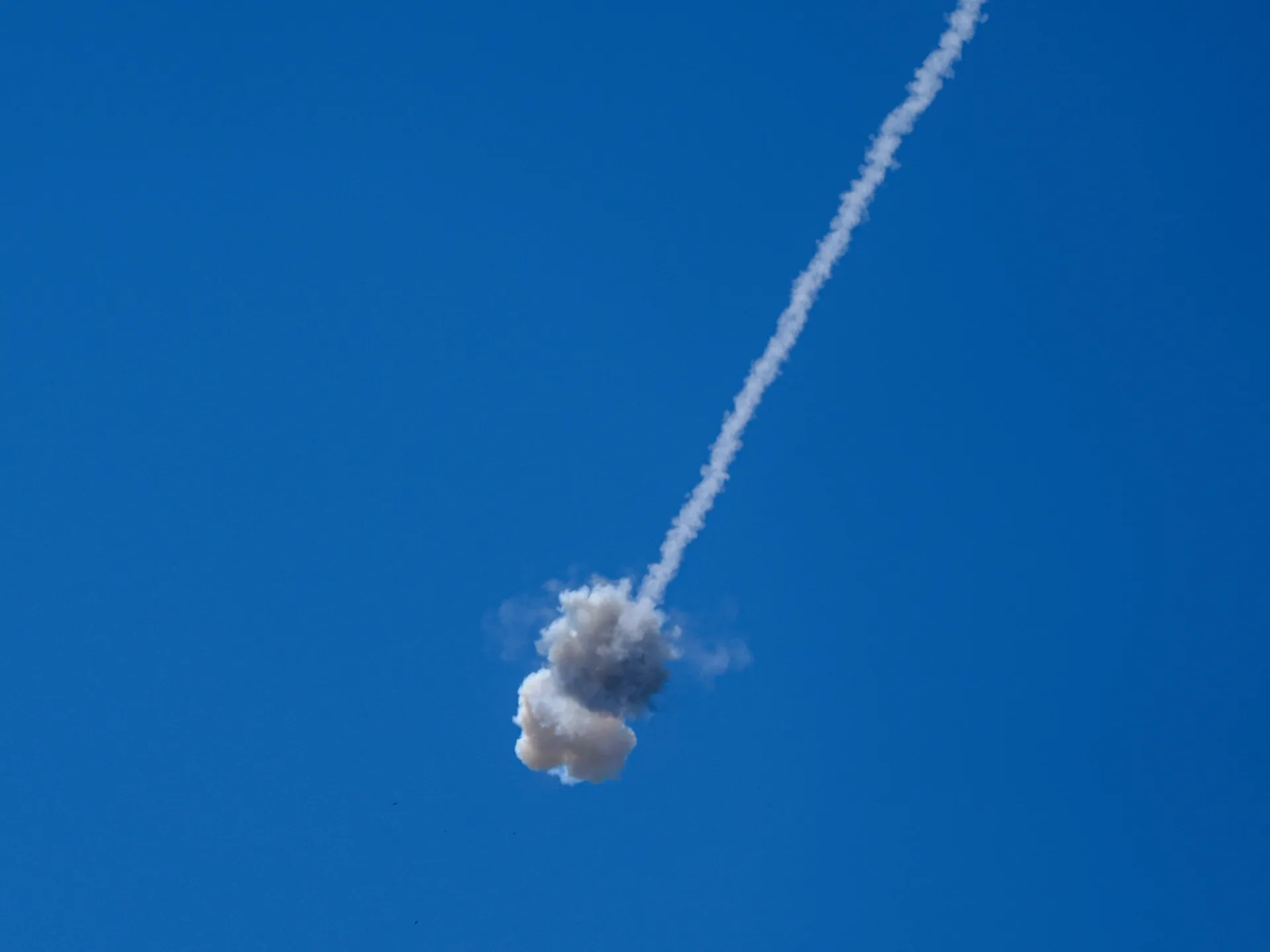
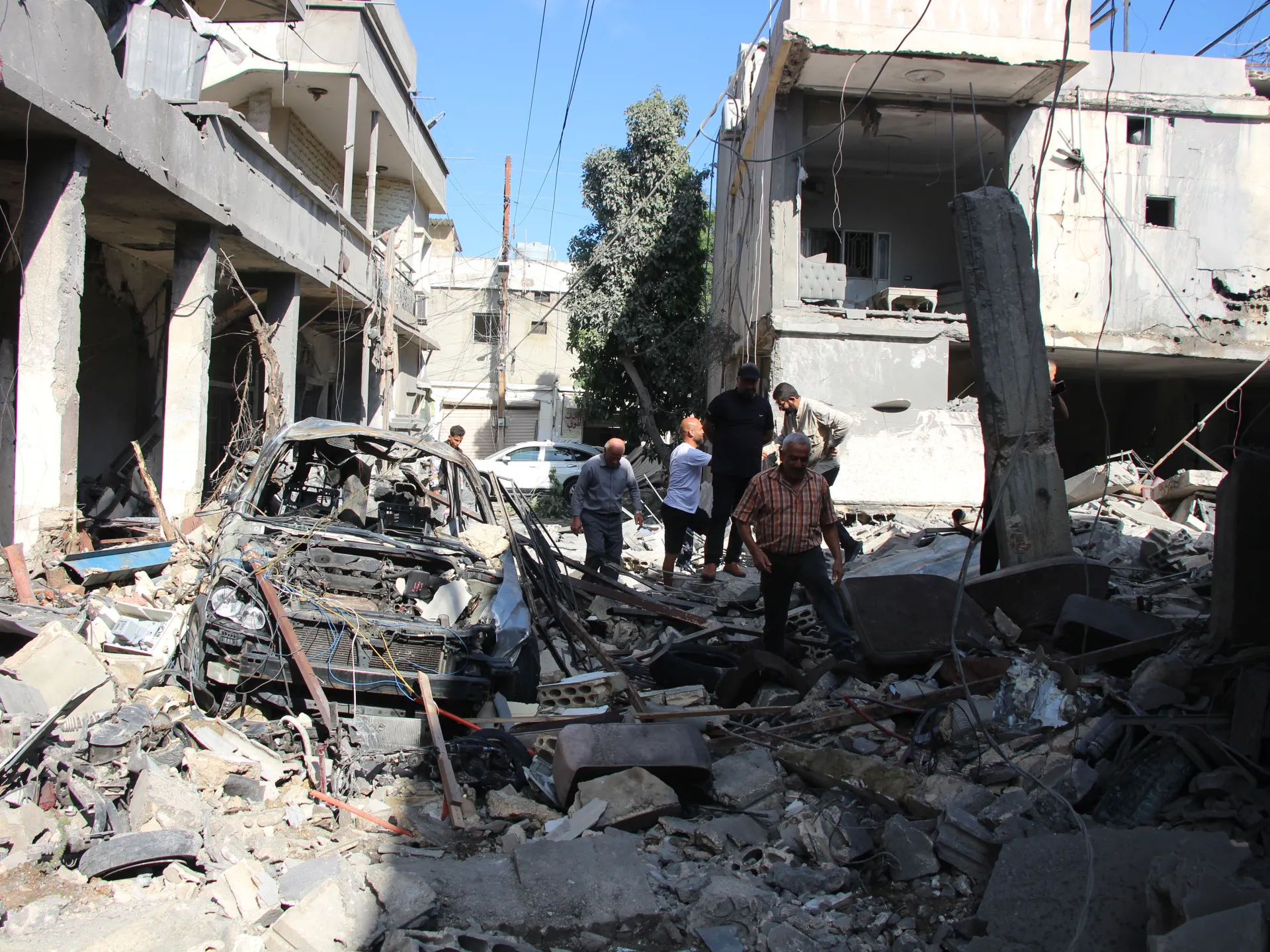
Israeli forces struck Iranian air defence systems and a petrochemical plant, while Iran retaliated by hitting a similar facility in Haifa and targeting two Israeli airbases. Many of the missiles were intercepted over the occupied West Bank.

No deaths were reported on either side.

Israel plays down tensions

The exchanges complicated Trump’s push to end a war that the US and Israel launched on February 28. A ceasefire announced on April 8 paused all-out warfare. But flare-ups in the Gulf have continued.

For his part, Netanyahu said in a televised statement that he had told Trump that “Israel has a full right to self-defence, and we are exercising it as required”.

“Right now, the fire at the front is contained, because after we hit the terrorist regime in Tehran, it stopped attacking us,” he said.

Netanyahu also warned that should Iran “make the mistake of resuming attacks against us, we will respond with full force”.

Israel’s ambassador to Washington, Yechiel Leiter, downplayed reports of tension between the US and Israeli leaders, telling Fox News that “sometimes, lovers have a spat”.

He said that while Netanyahu had “decided” to “lower the temperature” at Trump’s request, the US president understands “full well” that Israel cannot “absorb ballistic missiles into our country without responding.”

Iran’s Ministry of Foreign Affairs spokesperson, Esmaeil Baghaei, blamed Washington for the escalation.

“The US is directly responsible,” he said. “They are party to the ceasefire negotiations. Therefore, any act in violation of the ceasefire, be it through the interception of vessels [in the Strait of Hormuz], the targeting of southern Lebanon by Israel, or any other event, will cause the United States to be directly responsible for the escalation in the region.”

Iran’s First Vice President Mohammad Reza Aref said the operation against Israel, dubbed “Nasr” or victory, showcased “a new level of deterrence from mighty Iran” and that Israel had been “forced to beg once again” for a ceasefire.

Behind the scenes, diplomatic efforts continue.

Iranian President Masoud Pezeshkian posted on X that Tehran was still “at the negotiating table”, while Iran’s ambassador to the United Nations, Amir Saeid Iravani, said that Washington and Tehran, through Pakistan as an intermediary, are “presenting and exchanging views” towards an agreement.

Iravani told The Associated Press news agency he was hopeful that “very soon” the two sides would reach “a conclusion”.

Pakistan’s Prime Minister Shehbaz Sharif said efforts for a peaceful diplomatic solution was ongoing “earnestly and painstakingly” and called for restraint, “especially when the final objective is just about to be achieved”.

He also said Israel and Iran’s exchange of fire was a “reminder of the dangers associated with a tenuous ceasefire and the unbearable consequences it may lead to”.

Attacks on Lebanon continue

The escalation on Monday also drew in Yemen’s Houthi rebels.

The group fired missiles at Israel early in the morning and declared a complete ban on Israeli maritime navigation in the Red Sea, warning that all Israeli movements would be considered “legitimate military targets”.

Later on Monday, air raid sirens sounded in the Israeli port city of Eilat, with the military saying a suspected aerial target was launched from Yemen.

Violence has also continued in southern Lebanon.

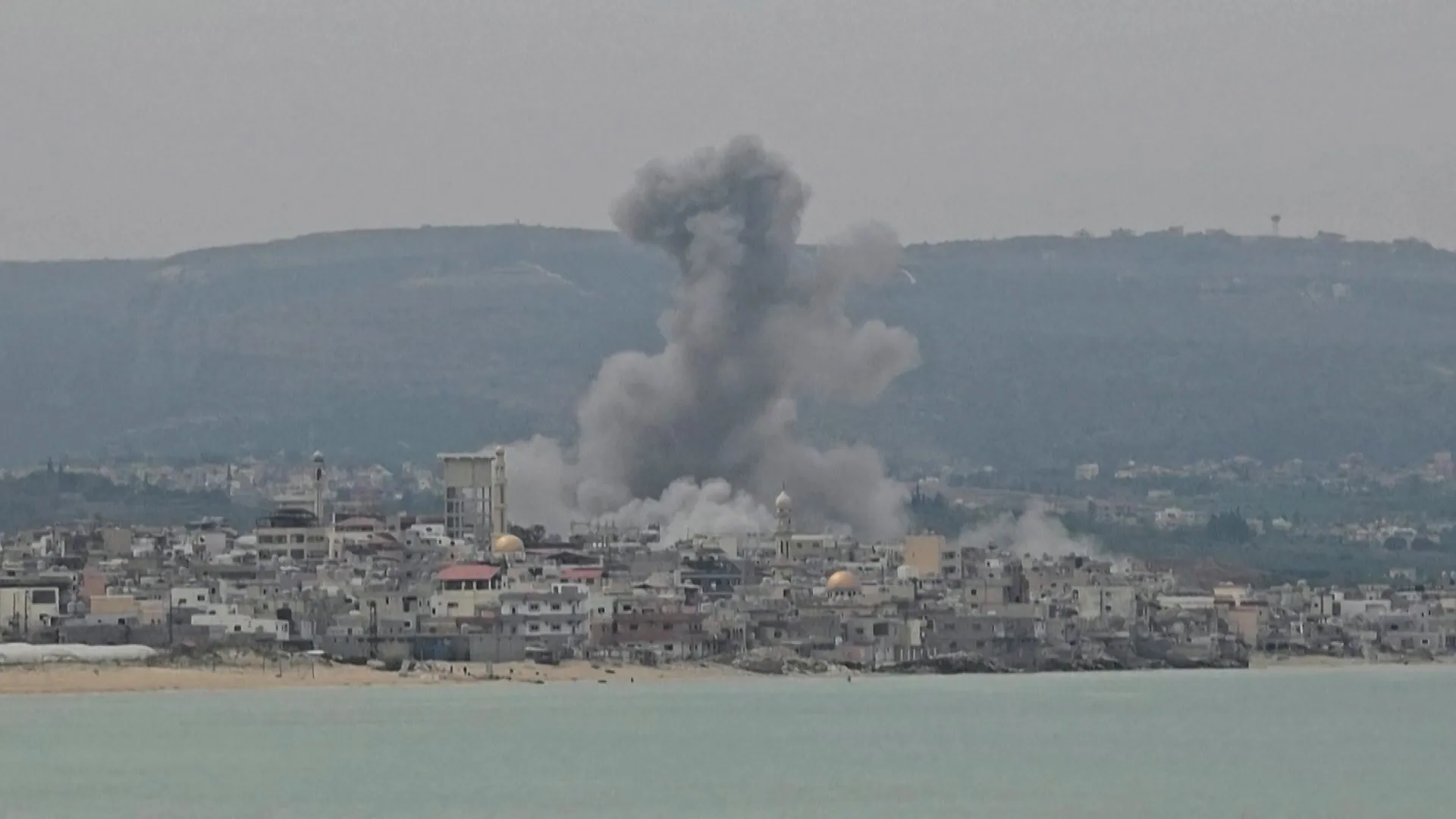
An Israeli strike killed five people in the city of Tyre, while another, in the Nabatieh district, left seven dead. A third strike in Marwanieh killed two people, the Lebanese Ministry of Health said.

Phyllis Bennis, a fellow at the Institute for Policy Studies, said Trump was trying to give an impression that he was tougher on Israel than he actually is.

“The words could be significant if they were matched by actions,” she told Al Jazeera.

“As long as they’re sending billions of dollars directly to the Israeli military, and as long as they’re protecting Israel from being held accountable in the International Court of Justice or the International Criminal Court, as long as those actions don’t change, the words just don’t mean very much,” she added.
Source link

Gaza, Iran, Lebanon: If ceasefires are in place, why do strikes continue? | US-Israel war on Iran News

On Wednesday, Israel and Lebanon announced yet another ceasefire – after they had seemingly already agreed to a truce on April 16.

Iran and the United States have formally had a ceasefire in place since April 8. And Israel and Hamas, the Palestinian group, have had a ceasefire in Gaza since October 10, 2025.

Yet Israel’s attacks on Lebanon continue unchecked, with strikes on the Naqoura and Nabatieh districts of southern Lebanon on Friday, resulting in at least one death. Iran and the US have continued to trade periodic attacks that have picked up in intensity in recent days. The Iranian military has also fired missiles and drones at Gulf nations such as the United Arab Emirates, Kuwait and Bahrain, which it accuses of enabling US attacks on Iran during the ceasefire.

And in Gaza, Israel continues to carry out bombings, including one that killed nine people in a residential building this week, despite a supposed truce aimed at ending its genocidal war on the Palestinian territory.

So what does it mean for a ceasefire to be in place when fighting continues? What does international law say? And why do violations so rarely lead to consequences?

We speak to legal experts to understand:

What is a ceasefire?

Simply put, it’s a pause in fighting designed to create space for negotiations, explained Mark Kersten, assistant professor of criminal justice and criminology at the University of the Fraser Valley.

“A ceasefire is effectively a cessation of hostilities, but typically not understood to be a permanent one,” he told Al Jazeera.

It is also often fundamentally a political agreement rather than a strongly enforceable legal instrument, said Michael Lynk, an emeritus professor at Western University in Canada.

Unlike peace treaties, which often have guarantors responsible for oversight and enforcement, ceasefires can be breached with few immediate legal consequences, Lynk told Al Jazeera.

This is especially true in Gaza and Lebanon, where the United States has acted as the principal broker and overseer. While some countries have criticised Israeli strikes in Lebanon, Lynk says there has been little pressure on Washington for allowing repeated violations.

“A number of Global North countries have criticised the continuing Israeli attacks on Lebanon despite the ceasefire, but they have not called out the US for allowing Israel to repeatedly breach the ceasefires in Gaza and Lebanon.”

So are ceasefires legally binding – or not?

Yes, they are, argues Toby Cadman, a British international human rights lawyer and cofounder of Guernica 37 Chambers.

But, like Kersten and Lynk, Cadman said that ceasefires – which he described as the “temporary, military and diplomatic suspension of military operations” – are inherently fragile. Unlike peace treaties, ceasefires do not resolve the underlying conflict or end the legal state of war.

“It suspends the fighting; it does not end the state of armed conflict,” he said.

Where there is a broader peace agreement, such as in Gaza, the ceasefire too stands – at least in theory – on a stronger footing, said Lynk. The Gaza peace plan that accompanied the ceasefire was endorsed by the UN Security Council through Resolution 2803, which calls for the agreement to be implemented “in its entirety, in good faith and without delay”.

In theory, states could ask the Security Council to sanction parties violating the Gaza agreement. In practice, Lynk explained, the US veto on the body means that neither Israel, nor the US itself, can realistically be censured.

“This is why ceasefires and peace treaties are ultimately political documents because it requires political will to enforce them,” Lynk said.

Who decides when a ceasefire has been violated?

Palestinians have repeatedly pointed to the violation of the Gaza ceasefire by Israel. The US and Iran routinely accuse each other of breaching their truce. And Israel and Lebanon do the same when it comes to their ceasefire.

So who decides whether a ceasefire has been violated – and by whom?

The answer, according to Cadman, is that “there is no neutral arbiter empowered to determine, with binding effect, who has breached.”

Monitoring mechanisms do exist, but they are largely political bodies overseen by the same states that brokered and guaranteed the agreements. In the case of Gaza and Lebanon, that is the United States. But Washington occupies the unusual position of mediator, guarantor and Israel’s closest military and diplomatic ally.

That means allegations of violations are often filtered through political calculations rather than assessed by an independent legal authority, say experts.

What about international law?

For Kersten, Gaza and Lebanon expose a fundamental contradiction within the international legal system. On paper, international law has succeeded in establishing a broad consensus about the legality of what is taking place.

“The vast majority of the world recognises that what is happening in both contexts is not just wrong, but illegal – thanks to international law.”

Yet recognition has done little to halt the violence. “Little is being done to save lives and stop the carnage,” he said.

The result is a widening gap between legal findings and political action. Courts can investigate, collect evidence and issue rulings as the International Criminal Court and the International Court of Justice have both done against Israel, but that does not stop bombs from falling or guarantee compliance on the ground.

For Kersten and Lynk, the problem is not a lack of legal standards; it is the persistent failure of states to enforce them, particularly when powerful actors are involved.

“The lack of effective accountability is the hole in the heart of international law and our modern international political system,” Lynk said.

But Kersten said what was clear was that international humanitarian law, human rights law and international criminal law remain fully applicable during a ceasefire.

“Ceasefire provides no legal cover to commit atrocities against civilians.”

That means allegations of war crimes can still be investigated and prosecuted even while a ceasefire is in effect.

Is ‘self-defence’ a justification for attacks during a ceasefire?

Cadman highlights the legal argument most frequently used to justify continued strikes by Israel on Gaza and Lebanon, and by the US against Iran: self-defence.

These arguments rest on Article 51 of the UN Charter, which carves out the right for states to launch unilateral military action against other nations if they are acting in self-defence.

But Cadman said the interpretation of that clause is heavily contested.

“Article 51 answers an armed attack that has happened or is genuinely imminent; it is not a standing licence for preventive strikes.”

So why do countries feel they can get away with attacks during a ceasefire?

Asked by reporters on Wednesday how he defined a ceasefire, given the continuing – though sporadic – attacks that the US and Iran have exchanged in recent weeks, US President Donald Trump said: “It’s a different part of the world, you know. I’d say in that part of a ceasefire is when you’re shooting in a more moderate manner.”

Trump’s comments underscore what legal experts say is at the heart of the persisting violence in Gaza, Lebanon and the Gulf: The lack of any meaningful enforcement mechanism.

The Security Council is constrained by veto powers. The ICJ can issue binding orders but cannot enforce them. The ICC can issue arrest warrants, but depends on states to carry them out.

“The unifying theme is an enforcement deficit,” Cadman said.

Cadman argued that the problem is not that international law lacks rules. Rather, those rules are often applied selectively. “The law is not formally different for Israel or the US; its application is selective.”

Source link

Rory McIlroy: Six-time major winner will continue to ‘pick and choose’ events

This week’s Memorial will be McIlroy’s last event before this month’s US Open at Shinnecock Hills – and he revealed he undertook a scouting mission to the New York course earlier this week.

McIlroy missed the cut when Shinnecock last hosted the US Open in 2018, and while he was buoyed by what he saw before this year’s championship, he outlined the importance of tournament organisers the United States Golf Association (USGA) maintaining control of the green speeds.

In 2018, Phil Mickelson apologised for putting a moving ball on Shinnecock’s sun-baked greens, while in 2004 the par-three seventh green was called “unplayable” and had to be watered during the last round after two players putted off the green into bunkers.

“The fairways are very generous. They’re more generous than they were in 2018 but the first cut of rough is five inches long,” said McIlroy.

“The greens are rolling around 11, 11.2 [anything over 12 is considered fast and last year’s US Open at Oakmont was between 13 and 14], something like that and I really don’t think they need to get much faster.

“I think if they can keep them at that speed they can get them firm and use the hole locations that they want to use without having some of the struggles that they have had the last couple of US Opens.

“It’s all about them just maintaining the green speeds really where they are, not getting them too out of hand, and I think it will be a great week.”

Source link

injury woes continue as Teoscar Hernández leaves Dodgers’ win over Rockies with strained hamstring.

The Dodgers’ recent string of injuries continued Wednesday when left fielder Teoscar Hernández pulled up limping after trying to beat out a grounder to shortstop.

Once he was thrown out in the second inning of the Dodgers’ 4-1 win against the Rockies, Hernández took his time walking across the field back to the dugout.

The Dodgers announced that he sustained a left hamstring strain. Utility player Hyeseong Kim replaced Hernández in left field.

This series, as results went, was a success for the Dodgers. They swept the Rockies, outscoring Colorado 24-10 over the course of three games. But the injury losses dealt a blow.

Earlier this month, the Dodgers’ rotation bore the brunt of the injury bug. But recently, it has spread to the position players. Over the last week, three Dodgers position players have left games with injuries.

Last Friday in Milwaukee, third baseman Max Muncy was hit in the wrist by a pitch and sidelined for three games.

Utility player Kiké Hernández made his season debut Monday, after starting the season on the injured list while recovering from offseason surgery on his left elbow, and helped fill in for Muncy’s temporary absence. But Hernández logged just four at-bats before landing on the IL again, lifted from Tuesday’s game with a strained left oblique.

Even after tweaking his oblique in batting practice Monday, Kiké Hernández went four for four with two doubles and a home run as he played through the injury.

Teoscar Hernández’s hamstring strain came in the midst of a hot offensive stretch. Entering Wednesday, he had a 1.072 OPS in his last 13 games.

Manager Dave Roberts also pulled Shohei Ohtani from the Dodgers’ blowout win Tuesday, after he was hit on the right hand by a changeup. But that had more to do with the score, an opportunity to get Dalton Rushing more at-bats, and getting Ohtani ready for his start on the mound Wednesday.

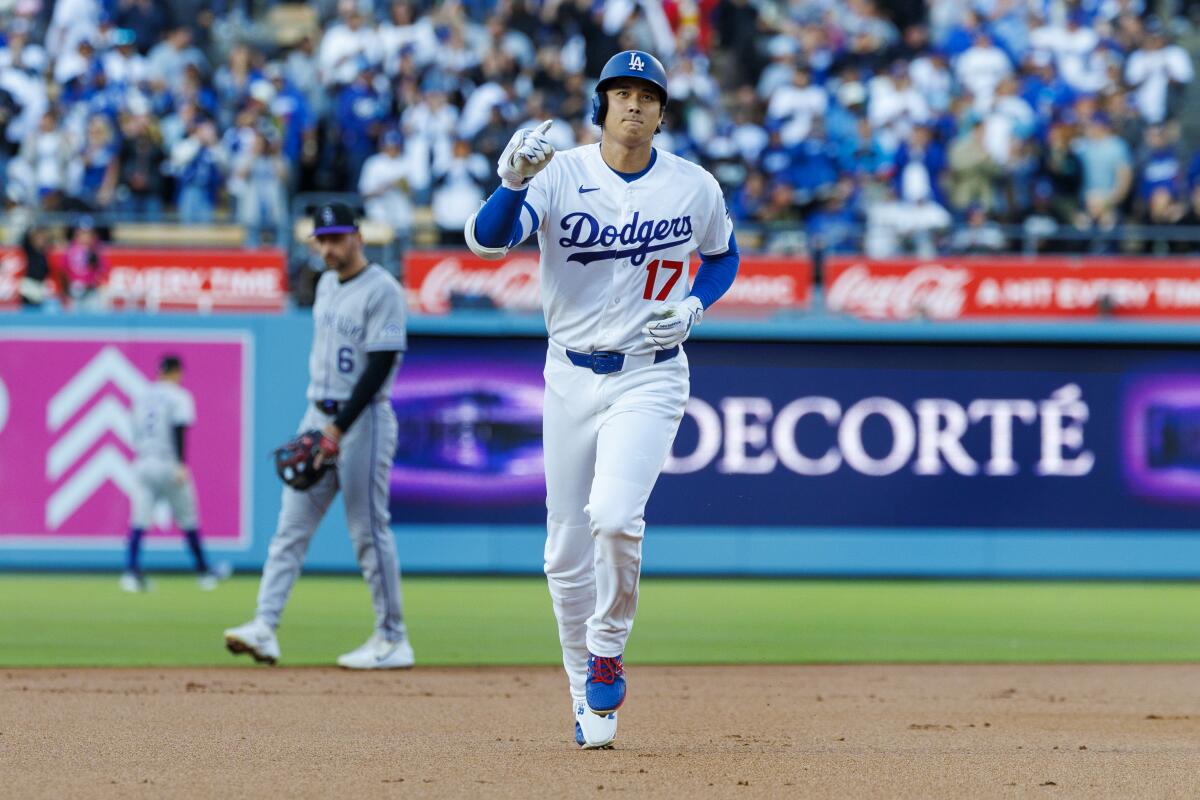
For the second week in a row, Ohtani was in the batting order while also pitching. And for the second pitching start in a row, he gave himself run support with a leadoff home run.

This jumped off his bat at an exit velocity of 111.3 mph, according to Statcast, landing on the netting beyond the center field wall.

Shohei Ohtani runs the bases after leading off Wednesday's game with a home run.

Shohei Ohtani runs the bases after leading off Wednesday’s game with a home run.

(Gina Ferazzi / Los Angeles Times)

His pitching performance was less straightforward. He held the Rockies hitless through six innings. But he still gave up a run, thanks to a total of five free passes (four walks and a hit batter).

Two of them set up the Rockies’ scoring opportunity. With runners on first and third in the fourth inning, the Rockies’ Willi Castro hit a grounder to the right side of the infield, pulling first baseman Freddie Freeman away from the base.

But second baseman Alex Freeeland, recalled Wednesday as the corresponding move as Kiké Hernández went on the IL, ranged to his left and dove to first base with the ball, beating Castro to the bag for the second out of the inning. Ohtani acknowledged Freeland with a point.

A run scored, but Freeland’s hustle set up Ohtani to get out of the inning without further damage.

The Dodgers held the Rockies hitless until the eighth inning, when Tyler Freeman hit a ground-ball single through the right side of the field off reliever Tanner Scott, in the midst of a scoreless inning.

Meanwhile, the Dodgers scored almost all their runs on homers, with Freddie Freeman and Andy Pages adding their own solo blasts after Ohtani, and Alex Call contributing an RBI single.

Source link

Russia warns Rubio strikes on Kyiv to continue, urges U.S. evacuation

Smoke rises following overnight Russian strikes on Kyiv on Sunday amid the Russian invasion. More than 600 drones and 90 missiles struck several sites across Kyiv overnight on Sunday, resulting in multiple fatalities and more than 80 injuries, according to Ukrainian President Volodymyr Zelensky. Photo by Sergey Dolzhenko/EPA

May 25 (UPI) — Russia on Monday warned the United States it will continue targeting “decision-making centers” in Kyiv and advised Washington to evacuate its personnel from Ukrainian capital as it ratcheted up pressure in the conflict.

Russian Foreign Minister Sergey Lavrov told U.S. Secretary of State Marco Rubio in a phone conversation the Russian Armed Forces are now launching “systematic and consistent strikes against facilities in Kyiv used by the Ukrainian Armed Forces and against the relevant decision-making centers,” according to a readout supplied by the Kremlin.

The Russian assault is in response to “the Kyiv regime’s ongoing terrorist attacks against civilians and civilian objects on Russian territory,” the statement said.

Lavrov also warned Rubio that the United States, “along with other states with missions in Kyiv, ensure the evacuation of their diplomatic personnel and other citizens from the Ukrainian capital.”

Earlier Monday, Moscow decried what it called “a bloody drone attack” on a college dormitory on Friday in Luhansk, a part of Ukraine occupied by Russian forces and claimed as a “people’s republic.”

Twenty-one people, including children, were killed and 42 others injured in strike, Russian President Vladimir Putin claimed while calling it a deliberate “terrorist strike.”

Ukraine, however, described it as an attack on the headquarters of Russia’s Rubicon drone military unit in Starobilsk, Luhansk.

That incident was followed by Russia’s largest-ever drone and missile attack on Kyiv overnight from Saturday into Sunday, in which two were killed more than 80 injured.

Strikes were recorded in almost every district of the city, hitting cultural targets such as The National Art Museum, the Chornobyl Museum, the National Philharmonic, the Ukrainian National Academy of Music and the Kyiv Opera Theater, the Kyiv Independent reported.

Julie Davis, the chargé d’affaires at the U.S. embassy in Kyiv, condemned the overnight strikes on Monday, calling them “deliberate strikes on civilian populations and civilian infrastructure” which she deemed “unacceptable.

“As President Trump has stated before, this war must end. We extend our deepest condolences to all those affected by this horrific tragedy.”

Such strikes in the capital are set to continue, Russia warned Monday, although insisting they are aimed at military rather than civilian targets.

“All this has exhausted our patience In this situation,” the Foreign Ministry said. “The Armed Forces of the Russian Federation are beginning to launch consistent and systemic strikes at enterprises of the Ukrainian defense industry in Kiev, including specific facilities for designing, manufacturing and programming drones and preparing them for operation.”

The strikes “will target decision-making centers and command posts,” Moscow claimed.

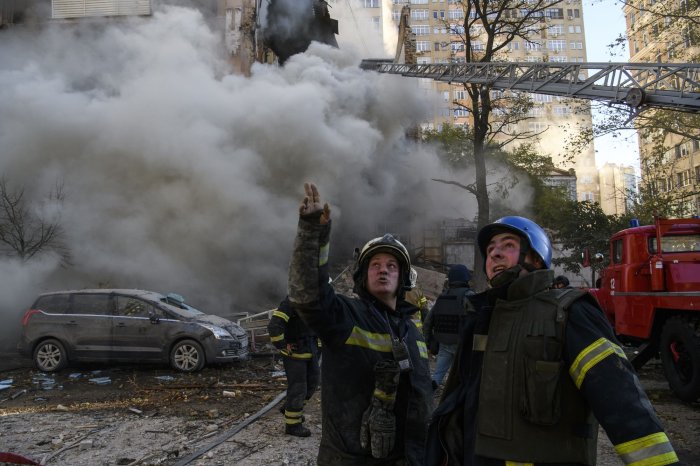
Firefighters conduct work while smoke rises from a building after it was attacked by Russian drones in Kyiv, Ukraine, on October 17, 2022. Photo by Vladyslav Musiienko/UPI | License Photo

Source link