consumer

Live Nation is supporting two California bills to lower prices. Can fans trust it?

Bruno Mars tickets running for $2,000 and ones for SZA costing $600 caught California lawmakers’ attention. They’re advancing two bills targeting the resale market.

Earlier this year, tickets to see SZA perform at the Crypto Arena in Los Angeles were selling for $600 the day before they officially went on sale at $35 a piece.

In San Francisco, tickets to see Sam Smith at the newly renovated Castro Theater went on sale for $120, only to be quickly snatched up by scalpers and resold for upwards of $600.

Those are some of the stories that California lawmakers are citing as they advance two plans to change the ticketing landscape. One caps the extent to which resellers can mark up the original ticket price while the other prohibits resellers from selling tickets they don’t yet own.

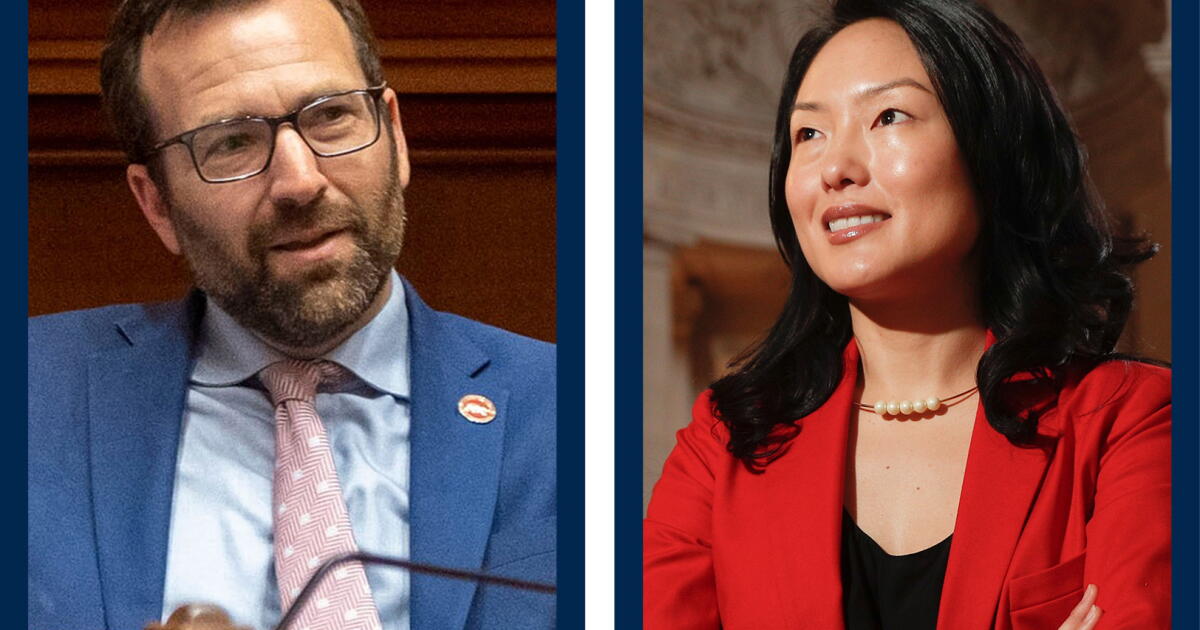
Democratic Assemblymembers Issac Bryan of Culver City and Matt Haney of San Francisco are each carrying bills that they say would protect consumers from fraudulent and deceptive ticket sales.

Both measures are backed by the ticket market’s dominant seller, Beverly Hills-based Live Nation, which owns Ticketmaster. Its support has some worried that the bills will help the company crush its competitors and jack up prices.

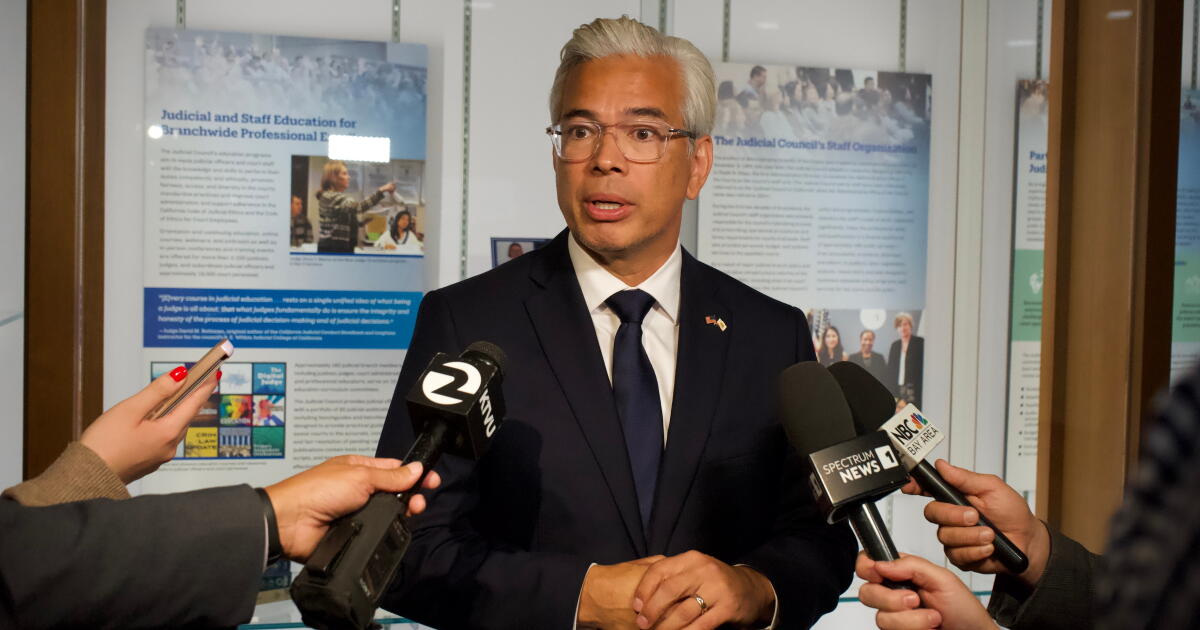
A federal jury in New York this week found that the company illegally acted as a monopoly in a victory for, among others, California Attorney General Rob Bonta, who with colleagues in other states sued the company two years ago and kept going after federal prosecutors settled. Live Nation is now awaiting penalties.

Despite these headwinds, the ticket bills are sailing through the Legislature.

Supporters say the legislation has nothing to do with the antitrust case against Live Nation and helps consumers. Opponents disagree.

“The state Legislature should really be standing up for consumers instead of advancing bills that are there to help a monopoly that has been caught on record calling its fans stupid and has bragged about robbing them blind,” said Jose Barrera, national vice president for the far west region at the League of United Latin American Citizens, a civil rights advocacy group.

Ticketmaster’s competitors in the online resale market are lobbying against the measures, a sign that they view the proposals as a threat to their business.

Jack Sterne, StubHub’s head of policy communications, wrote to CalMatters, stating, “Passing laws that hand the Ticketmaster monopoly more power and don’t actually make tickets more affordable is the last thing California’s leaders should do.”

But Stephen Parker, executive director of the National Independent Venue Association, which is co-sponsoring the bills, argues that they will regulate the marketplace to better protect fans by limiting price gouging and encouraging the face value — or below face value — exchange of tickets.

“Ultimately, that is what these bills will do, in addition to making sure that the tickets are actually real,” he said. “That is a good thing for California consumers. It’s a good thing for artists and it’s a good thing for these small businesses and nonprofits that make up the independent stages across the state.”

A Live Nation spokesperson said in a statement to CalMatters, “The resale lobby constantly tries to change the subject by pointing fingers at Ticketmaster, even though it has less than 25% of the resale market. This has nothing to do with anyone’s monopoly, but rather is about protecting fans from scalpers and the resale sites that cater to them.”

The company has spent roughly $165,000 on lobbying efforts this legislative session, including to support Bryan’s bill.

‘Unlikely allies’

Bryan’s Assembly Bill 1349 would ban the sale of speculative tickets — or tickets that are not in the possession or ownership of the people who list them online. In an April hearing, Bryan said the bill protects consumers from predatory mark ups.

“This bill is so important that, after our introduction, it brought unlikely allies together,” Bryan said, according to the CalMatters Digital Democracy database. “In fact, this bill brought the Giants and the Dodgers together, brought the National Independent Venue Association and Live Nation together. It brought Kendrick Lamar and Kid Rock together. It brought Isaac Bryan and Donald Trump together.”

Several secondary ticket sellers are fighting the measure, including StubHub, SeatGeek and Vivid Seats. The three companies have spent roughly $1.1 million dollars on lobbying efforts this legislative session, which included opposition to Bryan’s bill.

People watch fireworks during Bad Bunny’s halftime show from a parking garage outside Super Bowl LX at Levi’s Stadium in Santa Clara on Feb. 8, 2026. Photo by Jungho Kim for CalMatters

People watch fireworks during Bad Bunny’s halftime show from a parking garage outside Super Bowl LX at Levi’s Stadium in Santa Clara on Feb. 8, 2026. Photo by Jungho Kim for CalMatters

Opponents including Robert Herrell, executive director for the Consumer Federation of California, argue that the bill strengthens Live Nation Ticketmaster’s grip on the ticketing and live entertainment industry. According to them, the measure would give Live Nation complete control over the ticket even after it has been purchased — meaning, for example, that consumers could lose the ability to sell it or give it away.

“There’s no consumer choice in the matter,” said Herrell. “They can keep people out of shows if they want to. There have been situations where, if you bought a ticket on the secondary market, you’ve been denied entry into a show.”
Proponents say Herrell and other opponents are mistaken. They say they are not trying to prevent transferability but rather, they want to protect fans from speculative costs.

“We want those rooms full,” said Ron Gubitz, executive director of Music Artists Coalition, which is co-sponsoring both bills. “So you have to be able to transfer a ticket. We just want it to be in a way that’s safe, trustworthy and not creating this run on the market that exists now.”

Gubitz pointed to a recent Bruno Mars concert, where tickets were on StubHub for $400 to $2,000 before they were on sale through Ticketmaster.

“That’s crazy,” he said. “That’s a speculative ticket that Bryan’s bill is trying to stop. That shouldn’t happen. It’s not fair to anybody, except for the secondary (market). It seems great for them.”

Price caps in a free market

Haney’s Assembly Bill 1720, also known as the California Fans First Act, would put a 10% cap on resale event ticket markups, inclusive of the ticket fees. In other words, a reseller could not charge more than 10% higher than the original ticket price.

In an interview with CalMatters, Haney said artists, independent venues and downtowns are currently being “screwed over and exploited” by scalpers and brokers.

“We can’t allow the status quo to continue if we want to ensure Californians have access to affordable tickets to see their favorite artists or if we want independent venues or the broader landscape of musicians and artists to thrive in our state,” he said.

Haney rejected the idea that his bill would strengthen the Live Nation Ticketmaster monopoly, saying that the company is one of the biggest operators and profiteers of the secondary ticket market and would therefore be subject to the same restrictions as any other platform or broker.

“I don’t think it’s a free market to allow folks to come in and buy up all these tickets and then create scarcity and then you’re now required to buy your ticket at a much higher price from someone who had nothing to do with the event,” he said. “This is not something we would ever allow for airplane tickets or even dinner reservations.”

The bill has been criticized by opponents like Diana Moss, vice president and director of competition policy at Progressive Policy Institute, who said price caps notoriously distort the market, describing them as “anti-consumer, anti-competitive and anti-artist.”

“If you shut down the resale market with price caps then guess what? Ticket buyers have no place to go but right back to Ticketmaster,” said Moss. “If (Live Nation) succeed(s) in decimating the resale market, then they steer millions and millions of fans back to their own ticketing platform where they charge monopoly ticket fees and where fans are hostage to their glitchy online platform and all of their data, privacy and security concerns that we always hear about in the news.”

Those concerns didn’t stop the bill from passing out of the Assembly Committee on Arts, Entertainment, Sports and Tourism last week with a 6-1 vote. The bill also passed out of the Assembly Committee on Privacy & Consumer Protection on Thursday with a 9-4 vote.

Mihalovich is a California Local News fellow for CalMatters.

Source link

Disney plans extensive round of layoffs in the coming weeks

Walt Disney Co. is planning an extensive round of layoffs in the coming weeks, according to a source familiar with the matter but unauthorized to comment.

The move comes nearly three months after Disney unveiled a more streamlined management structure that sought to centralize its sprawling marketing operations.

Disney declined to comment.

The total number of layoffs could be as many as 1,000, according to the Wall Street Journal, which first reported news of the planned cuts.

Many of the layoffs are expected to come from the recent consolidation of Disney’s marketing department.

After officially taking the reins of the company last month, Chief Executive Josh D’Amaro told employees he wants the Burbank media and entertainment giant — which includes film and TV studios, a tourism division, streaming services and live sports programming — to operate as “one Disney,” saying the global businesses all play a role in deepening consumers’ relationship with Disney and its characters.

Like many studios in Hollywood, Disney has faced decreased theatrical revenues, the continued decline of linear television and the smaller profits it makes from its streaming services. Though the company’s theme parks division has served as its economic engine for years, Disney recently indicated it expects to see “headwinds” in international tourism to its U.S. parks.

News of the planned Disney job cuts add to the ongoing drumbeat Hollywood has endured for the last few years.

On Tuesday, Sony Pictures Entertainment said it planned to cut hundreds of its employees worldwide as it looked to restructure its business.

Disney recently laid off thousands of workers in the years after former Chief Executive Bob Iger returned to the company. At the time, Iger said Disney had been pumping out too many shows and movies to compete with Netflix and needed to retrench.

Source link

Bigger tax refunds touted by Trump will probably be spent on gas

The U.S. economy was supposed to start the year with a bang, fueled by a jump in tax refunds from President Trump’s tax cut legislation. But soaring gas prices are on track to eat up those refunds, leaving most Americans with little extra to spend.

“Next spring is projected to be the largest tax refund season of all time,” Trump boasted in a prime-time speech in December intended to address voter concerns about the economy and stubbornly high prices, though exaggerating the anticipated refunds.

But that was before the Iran war, which the U.S. and Israel began on Feb. 28. Oil and gas prices have skyrocketed since then, with the nationwide average price of gas reaching $3.94 Sunday, up more than a dollar from a month earlier.

Gas prices are likely to remain elevated for some time, even if the war ends soon, because shipping and production have been disrupted and will take time to recover. Economists now expect slower growth this spring and for the year, as dollars that are spent on gas are less likely to be used for restaurants, new clothes or entertainment.

Lower- and middle-income households are likely to be hit particularly hard, because they receive smaller refunds and spend a greater proportion of their earnings on gas.

“The energy shock is to going to hit those who have the least cushion,” said Alex Jacquez, chief of policy at the left-leaning Groundwork Collaborative and a former economist in the Biden White House. “And it doesn’t look like those tax refunds are going to be here to save them.”

Neale Mahoney, director of the Stanford Institute for Economic Policy Research, calculates that gas prices could peak in May at $4.36 a gallon, based on oil price forecasts by Goldman Sachs, followed by slow declines for the rest of the year. The notion that gas prices decline much more slowly than they rise is so ingrained among economists that they refer to it as the “rocket and feathers” phenomenon — rising like a rocket before falling like a feather.

In that scenario, the average household would pay $740 more in gas this year, nearly equal to the $748 increase in refunds that the Tax Foundation has estimated the average household will receive.

Through March 6, refunds have risen by much less than that, according to Internal Revenue Service data: They have averaged $3,676, up $352 from $3,324 in 2025. Still, average refunds could rise as more complex returns are filed.

Other estimates show similar impacts. Economists at Oxford Economics, a consulting firm, estimate that if gas prices average $3.70 a gallon all year, it will cost consumers about $70 billion — more than the $60 billion in increased tax refunds.

The gas price spike comes with many consumers already in a precarious position, particularly compared with 2022, when gas prices also soared because of Russia’s invasion of Ukraine. At that time, many households still had fattened bank accounts from COVID-19 pandemic-era stimulus payments and companies were hiring rapidly and sharply lifting pay to attract workers.

Now, hiring is nearly at a standstill and Americans’ saving rate has steadily fallen in the last few years as many households borrow more to sustain their spending.

“When you start looking across the perspective from a consumer side, you’re seeing people who have maxed out their credit cards, are using ‘buy now, pay later’ to purchase their groceries,” said Julie Margetta Morgan, president of the Century Foundation think tank. “They’re making it work for now, but that can fall apart quite quickly.”

The consequences are likely to worsen the “K-shaped” phenomenon in the U.S. economy, analysts said, in which higher-income households have fared better than lower-income households. The bottom 10% of earners spend nearly 4% of their incomes on gasoline, Pantheon Macroeconomics estimates, while the top 10% spend just 1.5%. The Trump tax breaks also benefited the wealthiest taxpayers most.

For now, most analysts still expect the U.S. economy to expand this year, even if more slowly, given the gas price shock. Higher gas prices will probably worsen inflation in the short run, and over time weaker spending will also slow growth.

American consumers and businesses have repeatedly shaken off shocks since the pandemic emergency — soaring inflation, rising interest rates, Trump’s tariffs — and continued to spend, defying concerns that the economy would tip into recession. Many economists note that the proportion of their incomes that Americans spend on gas and other energy has fallen significantly compared with a decade ago.

Data from the Bank of America Institute released Friday showed that spending on gas on the bank’s credit and debit cards shot 14.4% higher in the week ended March 14 compared with a year ago. Before the war, such spending was running 5% below the previous year, a benefit to consumers.

Spending on discretionary items — restaurants, electronics and travel — is still growing, the institute said, evidence of consumer resilience. But there is little sign it is accelerating, as many economists had hoped.

“The longer these gasoline prices persist, the more that will gradually sap consumer discretionary spending,” said David Tinsley, senior economist at the institute.

Other analysts expect growth will slow because of the war. Bernard Yaros and Michael Pearce, economists at Oxford Economics, forecast that the U.S. economy will grow just 1.9% this year, down from an earlier estimate of 2.5%.

“We had anticipated a lift in spending from a bumper tax refund season,” they wrote, “but the rise in gasoline prices, if sustained, would more than offset that boost.”

Rugaber writes for the Associated Press.

Source link

Nexstar finalizes acquisition of Tegna’s TV stations, despite opposition

KTLA-owner Nexstar Media Group said it has closed its deal to acquire rival Tegna’s TV stations, despite opposition from eight state attorneys general who filed a lawsuit to block the merger.

The acquisition was approved by the Federal Communications Commission’s Media Bureau and the Justice Department, Irving, Texas-based Nexstar said Thursday.

“This transaction is essential to sustaining strong local journalism in the communities we serve,” Nexstar founder and Chief Executive Perry Sook said in a statement. “By bringing these two outstanding companies together, Nexstar will be a stronger, more dynamic enterprise — better positioned to deliver exceptional journalism and local programming with enhanced assets, capabilities and talent.”

Sook also mentioned President Trump and FCC Chairman Brendan Carr by name in the statement, saying the company was “grateful” they recognized the “dynamic forces shaping the media landscape” and allowed the transaction to move forward. Trump had supported the deal.

The surprise announcement came only a day after eight state attorneys general, including California’s Rob Bonta, sued to stop the deal, arguing it would give Nexstar too much control of local TV stations. At the time, Bonta said the combination would cause “irreparable harm to local news and consumers who rely on their reporting as a critical source of information.”

Nexstar is the largest TV station owner in the U.S., with 164 outlets including KTLA in Los Angeles. If the merger with Tegna succeeds, Nexstar would have 265 TV stations reaching 80% of the U.S. and multiple outlets in a number of markets.

The suit also claimed it would give the combined company too much leverage in negotiating fees from pay-TV providers that carry their stations, which could raise costs for consumers.

The plaintiffs in the suit also include state attorneys general in Colorado, Connecticut, Illinois, New York, North Carolina, Oregon and Virginia.

FCC Commissioner Anna Gomez said the merger violates the existing national ownership cap of 39% under federal law and said the acquisition did not receive a vote before the entire commission. The FCC approved this deal with waivers, meaning the company can operate in violation of that ownership cap.

“A transaction of this magnitude, which includes new and novel issues before the FCC, demands open deliberation before the full Commission, not a quiet sign-off meant to avoid public scrutiny,” Gomez said in a statement. “Given the increasingly alarming pace of reckless media consolidation, the American public deserves to know how and why this decision was made.”

The FCC did not respond to an immediate request for comment.

Times staff writers Stephen Battaglio and Meg James contributed to this report.

Source link

Eight state attorneys general file suit to block TV station group merger

A group of attorneys general are taking legal action to block Nexstar Media Group’s proposed $6.2-billion acquisition of Tegna’s TV stations, calling the deal bad for consumer cable bills and local journalism.

A lawsuit filed Wednesday in U.S. District Court in Sacramento says the proposed deal by eight state law enforcers, including California Atty. Gen. Rob Bonta, claims the proposed deal will give Nexstar too much control of local TV stations, ultimately hurting consumers by diminishing the diversity of news sources in their markets.

Bonta said in a statement that the deal will cause “irreparable harm to local news and consumers who rely on their reporting as a critical source of information.” The plaintiffs also include state attorneys general in Colorado, Connecticut, Illinois, New York, North Carolina, Oregon and Virginia.

The Irving, Texas-based Nexstar is currently the largest station owner in the U.S., with 164 outlets including KTLA in Los Angeles. If the merger with Tegna succeeds, Nexstar would have 265 TV stations reaching 80% of the U.S. and multiple outlets in a number of markets.

The suit also claims that the merger would give Nexstar too much leverage in negotiating fees from pay-TV providers that carry their stations. Higher fees paid to Nexstar would be passed along to consumers in their cable and satellite bills, the lawsuit asserts.

Most of Nexstar’s stations are affiliates of ABC, CBS, NBC and Fox, all of which carry NFL football, the highest-rated programming on TV by a wide margin. Disputes over carriage fees between station owners and pay-TV providers often result in blackouts and service interruptions to consumers.

DirecTV, which serves around 11 million pay-TV subscribers in the U.S., filed a similar lawsuit in the same court on Thursday, claiming the Nexstar deal will “irreparably drive up consumer costs, reduce local competition, shutter local newsrooms, and increase both the frequency and duration of blackouts of key local teams and network programming.”

A Nexstar representative did not respond to a request to comment.

President Trump has said he favors Nexstar’s proposed deal. But every major TV station owner believes consolidation in the TV station business is necessary to thrive going forward as they battle to compete with streaming video platforms that have eaten away at their audience share.

The companies say they are at a disadvantage in competing with tech companies by being limited to owning stations in 39% of the U.S., a cap that was set in 2003.

Nexstar recently cut veteran anchors and on-air reporters from its stations in Los Angeles, Chicago and New York. Further reductions in local TV newsrooms would occur if Nexstar succeeds in acquiring Tegna, which would likely mean consolidation of local newsrooms in which it owns more than one station.

Source link

Disney’s new CEO says his focus is on storytelling and creativity

Disney has a new captain, and his eyes are on the stars.

Taking over the reins from Bob Iger on Wednesday, new chief executive Josh D’Amaro signaled a bold shift for the entertainment giant: a future where emotional storytelling remains the “North Star,” but cutting-edge technology provides the fuel.

From ESPN to the Magic Kingdom, D’Amaro said in his first letter to employees as the top boss that his mission is to turn a century of nostalgia into a more personal, high-tech reality for fans worldwide.

“Used thoughtfully, it can empower our storytellers, strengthen our capabilities, and help us create more immersive, interactive and personal ways for people to experience Disney,” he wrote in the Wednesday morning note.

D’Amaro also said he wants the sprawling company, which includes film and TV studios, a tourism division, streaming services and live sports programming, to operate as “one Disney,” saying the global businesses all play a role in deepening consumers’ relationship with the Mouse House.

That connection people have with Disney’s brand is key to the company’s future. Consumers have more film, TV and experiences to choose from than ever, meaning Disney needs to distinguish itself among competitors.

To do that, D’Amaro plans to focus on the emotions consumers feel when they encounter Disney. As an example, he reminisced about his own first visit to Disneyland more than 40 years ago.

He recalled the joy on his father’s face as the two rode Peter Pan’s Flight together. And when they soared over the miniature version of London on the ride, he remembered his father leaning in and saying, “See, I told you. It feels like we’re flying!”

“That feeling of flying I had on Peter Pan all those years ago is still real to me,” he wrote in the Wednesday morning note. “And today, I am honored to move forward with all of you — with ambition, optimism, and absolute confidence in what we can build together.”

That new era also included a goodbye to Bob Iger, who handed over the reins Wednesday and now moves into a senior advisory role for the rest of the year before his planned retirement.

The company paid tribute to Iger in a video during Disney’s annual shareholders meeting Wednesday morning.

With clips from his earliest public appearances as Disney’s CEO, a highlight reel of the acquisitions the company made under his tenure and even a nod to his previous career behind the anchor desk, the video highlighted Iger’s legacy at the company and the role he played in bulking up Disney’s franchises, global theme parks, sports and streaming platforms.

When asked in the video about where he’ll go from here, Iger laughed and replied, “To Disneyland.”

In a pre-recorded speech, Iger said his time at Disney has spanned much of his life and that he never expected to become CEO of the company — much less twice.

“Over the years, we experienced extraordinary change and faced real challenges that were particularly profound in the last three years,” Iger said. “It was daunting at times, but through it all, what sustained me was the passion I saw every day from great storytellers, innovators, leaders and people around the world.”

In his parting remarks during that speech, he expressed confidence in the new leadership team of D’Amaro and Dana Walden, who is now president and chief creative officer of the company.

“I will be cheering on Josh, Dana and all of you as I sail off into the sunset,” he said. “So thank you for the trust you placed in me, for the memories we created together, and for allowing me the honor of serving. It has meant more to me than I can say.”

Source link

Live Nation trial resumes, as 32 states proceed with trial

Live Nation, the ticketing giant that reached a tentative settlement with the Department of Justice last week, remains under fire.

A coalition of more than 30 states that had joined the original lawsuit filed in 2024 is refusing to accept the $200-million settlement, causing the trial to resume this week in Manhattan’s Federal Court.

The settlement with the Justice Department requires Beverly Hills-based Live Nation to open Ticketmaster to rival ticket sellers, force the company to open select venues to competing promoters and cap service fees at 15%. California is one of the key states still involved in the trial.

But those steps fall short, critics say.

“It’s clear that Live Nation has manipulated the market and made itself untouchable by competitors, hurting artists, hurting fans, hurting venues, all the while, raking in the cash,” said California Atty. Gen. Rob Bonta at the Capitol Forum conference last week. “Not because it’s a better service or product, because it acted illegally and created a monopoly.”

U.S. senators have also chimed in. Minnesota’s Amy Klobuchar recently introduced the Antitrust Accountability and Transparency Act to strengthen the review of antitrust settlements. Klobuchar said in a release that it’s “clear the American people got the raw end of the deal.”

And Connecticut’s Richard Blumenthal released a report that provides new details into the inner workings of Ticketmaster and urges attorneys general across the nation to reject the settlement.

Blumenthal said that the Trump administration’s settlement with Live Nation will keep consumers vulnerable to Ticketmaster’s “anticompetitive practices” and ultimately push “concert tickets farther out of reach for fans.”

The senator’s report, entitled “So Casually Cruel: How Ticketmaster’s Monopoly Supercharges Prices and Fees,” examined over 100,000 documents and Ticketmaster’s revenue data. The report argues that the company leveraged its market control to make tickets available on the resale market before they were available to the general public in an effort to hike prices and boost profits.

“The ticketing market is broken,” Blumenthal said in a statement.

In its own statement, Ticketmaster said Blumenthal’s report “misrepresents how the live events industry works” and that the problem lies in the secondary ticketing industry.

“This is why we’ve long called for industry resale reform, including price caps, while also developing tools to empower artists and protect fans,” Ticketmaster said in a statement.

Recently, Ticketmaster has backed ticketing bills like AB-1349 and advocated to Congress for an industry-wide resale cap.

Sens. Blumenthal and Klobuchar are among many industry experts who say the settlement doesn’t adequately address anticompetitive practices and falls short of protecting consumers from high ticket prices.

Under Klobuchar’s new bill, courts could have 90 days to review public comments and government responses.

“When the government prosecutes antitrust violations, the goal should be to uphold the law, lower prices, and protect consumers and small businesses,” Klobuchar said in the statement.

Lindsay Owens, the executive director of the economic policy nonprofit Groundwork Collaborative, said the settlement will end up being “incredibly costly for concertgoers, performers, and independent venues.”

“California and 35 other states are standing up for Americans who are sick and tired of being ripped off and having to scrimp and save to enjoy a night out,” Owens said in a statement.

This ongoing trial is one of several major legal battles the ticketing giant is facing. The company is also being sued by the Federal Trade Commission and is dealing with a handful of class-action lawsuits from groups of concertgoers.

Times staff writer Meg James contributed to this report.

Source link