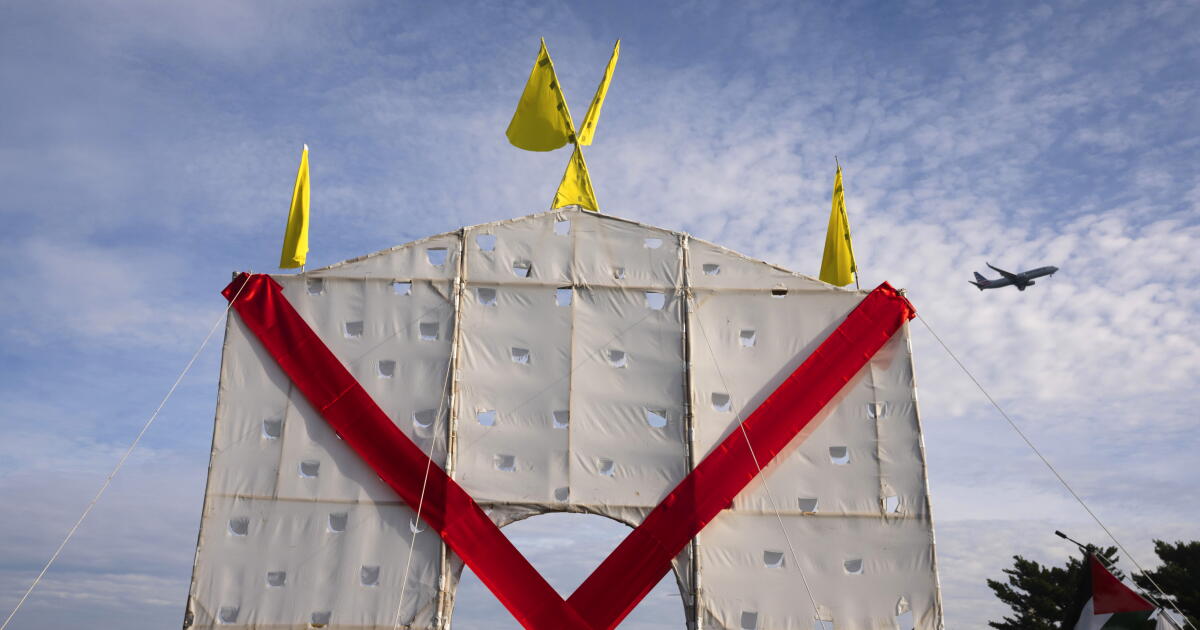
WASHINGTON — The Arlington County Board in Virginia filed a lawsuit Thursday opposing the construction of the Triumphal Arch, becoming the first governmental body to take legal action against President Trump’s planned monument.
The lawsuit, filed in the Eastern District of Virginia, criticized the speed at which the project slated for Memorial Circle has moved without going through the full review process.
“The National Park Service, the agency responsible for projects on national park land such as Memorial Circle, is proceeding full-speed toward ground-disturbing construction,” the lawsuit said. “Although the agency has claimed that a final decision to construct the Arch has not yet been made and purports to be engaged in a routine decisional process, that rushed process appears to be a pretext designed to shore up justifications for building the Arch in accordance with the President’s repeated marching orders.”
The lawsuit asks that “the agency’s feverish pace toward construction of the arch” be halted to ensure that the requirements of the National Environmental Policy Act be followed and proper analysis and testing be done.
“The Arlington County Board has filed this lawsuit because our community has the most to lose from this egregious and unlawful proposed project,” Arlington County Board Chair Matt de Ferranti said in a statement. He added that the county has acted in good faith in the review process, pointing out the “severe, unique, and wide-ranging negative impacts” the project will have on the county and its residents, only to see them ignored.
Memorial Circle sits on federal parkland west of the Potomac River across the Memorial Bridge and immediately adjacent to Arlington County.
The county is being represented in the lawsuit by legal advocacy group Democracy Forward.
White House spokesman Davis Ingle said the Trump administration and White House have been “fastidiously compliant with all procedural and legal requirements and are certain this meritless and dilatory lawsuit will be dismissed.”
The arch will become one of the world’s most iconic landmarks, he added. “It will enhance the visitor experience at Arlington National Cemetery for veterans, the families of the fallen, and all Americans alike.”
The lawsuit came a day after the Association of Flight Attendants-CWA President Sara Nelson expressed concerns that the 250-foot arch compounds multiple safety issues that she said have gone unaddressed since a deadly January 2025, crash over the Potomac River that killed 67 people. Nelson also criticized Trump’s plan to turn the arch into “a top grade military complex” able to host drones and snipers while storing ammunition.
Though the arch has received early approval from the U.S. Commission of Fine Arts, whose members were all tapped by Trump, a group of three veterans and an architectural historian sued in federal court in Washington, D.C., saying the project needs to be approved by Congress. The judge in that lawsuit said the administration must give the court 48 hours before undertaking any activities related to or in preparation for construction of the arch.
The arch is one of several projects around Washington that Trump has undertaken as he remakes the city, from renovating one of its storied public golf courses to threatening to demolish the John F. Kennedy Center for the Performing Arts.
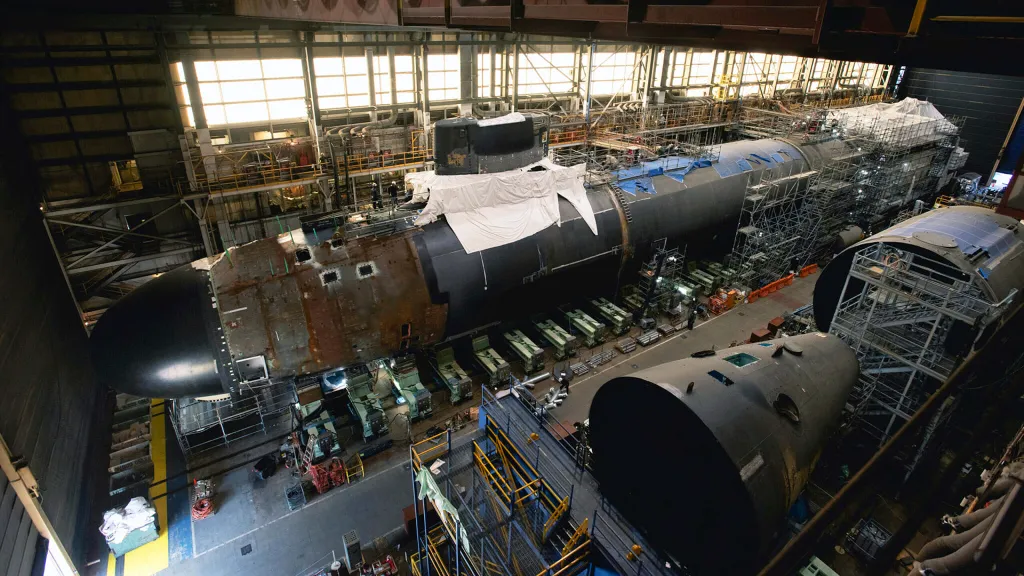
As part of its overall effort to boost America’s flagging shipbuilding capacity, the Trump administration on Tuesday announced that Anduril is building a new two-million-square-foot facility in Baltimore designed to help speed up the production of Virginia class nuclear-powered attack submarines. The plant, dubbed Arsenal-2, will eventually produce components like torpedo tubes and spherical air flasks, which will then be sent to the two shipyards that build nuclear submarines, General Dynamics Electric Boat and Huntington Ingalls Industries’ Newport News Shipbuilding. Anduril’s plan to build complex submarine components is a huge leap for a company with a shipbuilding portfolio consisting of a limited number of smaller craft.
The submarine component plant announcement was made as the Navy is struggling to keep up with its goal of producing two of these boats per year amid a wider issue of construction and delivery delays across the service. However, it will be years before the first Anduril-produced components are placed on a submarine, with no specific timelines for that effort yet established, an industry official told us. We will discuss that in greater detail later in this story.
A Virginia class submarine under construction. (HII) HII
“Today’s $6.6 billion investment represents the president’s commitment to restoring American maritime dominance by constructing new vessels in communities like Baltimore and across the country,” White House spokesperson Anna Kelly told a group of reporters, including from TWZ, at a Tuesday morning press conference.
Those funds include a $3.7 billion investment from Anduril to build and staff the new facility and a contract worth up to $2.9 billion awarded to Anduril by the Navy to produce the components.
“The Virginia class submarine program is one of the most critical warfighting capabilities that our nation has that guarantees deterrence every single day,” Anduril President and Chief Strategy Officer Chris Brose stated. “It is also a program that has been challenged in terms of the ability to meet the Navy’s requirements. So we’re, as a nation, not necessarily where we need to be, and that’s not because of our shipyard workers.”
The Navy currently has 26 Virginia class boats, with two more expected to be commissioned next spring, a senior administration official told reporters on Tuesday. Another 31 vessels are still needed to meet the Navy’s overall plan to have 59 Virginia class boats.
The USS Idaho (SSN 799) pulls into Submarine Base New London in Groton, Conn. for the first time on Monday, Dec. 15, 2025. When commissioned, it became the 26th Virginia class attack submarine and fifth U.S. Navy ship to be named for the Gem State. (U.S. Navy Photo by John Narewski) John Narewski
However, while the Navy has been buying them at a rate of two per year from Fiscal Year 2011 through Fiscal Year 2024, “the actual Virginia class production rate has never reached 2.0 boats per year, and since 2022 has been limited by shipyard and supplier firm workforce and supply chain challenges to about 1.1 to 1.2 boats per year, resulting in a growing backlog of boats procured but not yet built,” according to a Congressional Research Service (CRS) report published in January. “Key drivers of the drop in production include workforce challenges, first-time quality, material and supplier delays, and lead ship issues associated with the Virginia Payload Module [VPM] variant. The Navy is working closely with the shipbuilders to drive improvement throughout the Virginia enterprise.”
A briefing slide with details about the Virginia Payload Module (VPM) that will be added to the Block V Virginia class submarines. USN
Adding to the strain on production and delivery, Australia is set to get one new-build Virginia class boat and two from the U.S. Navy’s fleet under the 2021 trilateral AUKUS nuclear submarine acquisition deal with the United States and the United Kingdom.
In May, Chief of Naval Operations Adm. Daryl Caudle told Congress that the service would meet its two-boat-a-year delivery rate by 2032.
During Tuesday’s press conference, officials laid out claims that the new Anduril plant will address several of the issues that have slowed down the construction and delivery of these submarines.
“If you look at this in terms of capacity, the potential based on the area and what Anduril plans to do is to add about 9 million hours of labor a year at this facility,” stated a senior administration official, who, like others on Tuesday spoke on condition of anonymity. “That would be the equivalent of about a 15% increase, and so that would be directly translatable to Virginia class submarine production. So having those torpedo tubes earlier would let us move production of current Virginia submarines under construction faster.”
Adm. Frank Caldwell, Jr., director of the Naval Nuclear Propulsion Program, examines a torpedo tube aboard the Virginia class fast attack submarine USS Illinois (SSN 786) during Ice Exercise (ICEX) 2022. (U.S. Navy photo by Mass Communication Specialist 1st Class Alfred Coffield/Released) Petty Officer 1st Class Alfred Coffield
In addition, Anduril plans to draw on a huge potential workforce to staff the plant.
“If you basically draw like a one-hour radius around the Baltimore County area, there are millions and millions of people who could potentially contribute and work at this shipyard, and that is a huge selling point for us,” an industry official suggested.
The greater Baltimore area. (Google Earth)
Beyond producing components like torpedo tubes, Anduril aspires to eventually build “full ship sections, bows, sterns, etc.” at Arsenal-2, the industry official added.
Anduril said Arsenal-2 will be “purpose-built” for the “high-volume, high-precision production of undersea naval capabilities.”
“The shipyard’s layout is optimized for production,” the company stated in a media release. “Reduced distances between fabrication, assembly, testing, and integration areas eliminate the staging bottlenecks that slow conventional yards.”
“A functional 1,200-foot graving dock and multimodal road and rail access support large-scale component movement,” Anduril added. “High-bay assembly halls, adjacent fabrication areas, and reconfigurable production lines allow the yard to shift rapidly as Navy requirements evolve.”
ArsenalOS, Anduril’s industrial software platform, “will provide the digital backbone for the yard and its production systems,” the company further pointed out. “It will connect fabrication workflows, outfitting sequences, material movement, inspection protocols, and documentation requirements in a single system, giving workers and managers real-time visibility into the state of production. Digital work instructions, embedded quality controls, modern sensing, and automation will support the expertise of welders, pipefitters, electricians, shipfitters, inspectors, and other skilled trades.”
ArsenalOS™: The Digital Backbone of Modern Defense Manufacturing
Anduril claims the project “will create 3,100 direct jobs and support more than 11,000 indirect jobs. The site will drive $2 billion in annual economic output, including an estimated $312 million in wages each year.”
Before Arsenal-2 is up and running, Anduril said it plans to “manufacture critical Virginia class submarine components at a new 160,000-square-foot facility in Orange County, California, purpose-built to support key submarine construction processes and SUBSAFE-qualified production qualification [efforts].”
The Orange County facility will give Anduril “a two-year operational head start to develop and validate manufacturing methods, production workflows, and quality systems before Arsenal-2 comes online,” the company noted. “It will support prototyping and production of Virginia-class test assets and critical maritime components, including torpedo tubes, while allowing Anduril to recruit and train the early workforce on the systems and standards that will ultimately scale at Arsenal-2. Once Arsenal-2 comes online, the Orange County facility will continue supporting broader maritime manufacturing efforts across Anduril’s industrial network.”
Newly built Virginia-class submarine #Massachusetts launches for the first time #shorts
As we noted earlier in this piece, it will be years before anything produced by Anduril winds up on a sub. In addition to recruiting and training a workforce to build the components and ensuring the production system can meet goals, the parts then have to be tested to ensure they are safe enough to place on boats.
The industry official told TWZ that there is no schedule yet for when that will happen.
“We are starting this work now,” the industry official said. “We’re going to be working quickly. There’s a lot we’re going to have to do to prove the ability to produce the initial components – the torpedo tubes. We’re going to have to work with our partners in industry and partners in government on the certification. So it’s really not possible to put a time stamp on it as much as I’d like to.”
“I think our goal, and I know this is shared by the administration, is to go as fast as possible while keeping the bar of safety as high as it needs to be, and try to get these systems certified so that they go into the production of boats… and solve the critical limiting factor currently in our supply chain, and help our industry partners produce more submarines.”
Arsenal-2 follows the development of Anduril’s Arsenal-1 plant in Ohio, first announced two years ago. That five-million-square-foot facility, once fully up and running, will be able to “produce tens of thousands of autonomous weapons systems addressing the urgent needs of the United States and our allies,” the company said at the time.
Anduril’s Arsenal-1 plant in Ohio. (Anduril)
Arsenal-1, however, remains a work in progress, with more construction work yet to be done. Still, Anduril’s first product from that plant, the U.S. Air Force’s Collaborative Combat Aircraft (CCA) known as the YFQ-44A Fury, rolled off the assembly line there in July. That milestone met the company’s initial production schedule announced in January 2025, according to JobsOhio, the state’s business development arm.
A U.S. Air Force YFQ-44A Fury aircraft, assigned to the Collaborative Combat Aircraft Experimental Operation Unit, takes off for a mission flight during an Agile Combat Employment exercise at Creech Air Force Base, Nevada, July 21, 2026. (U.S. Air Force photo by Staff Sgt. Kristal Munguia) Staff Sgt. Kristal Munguia
Anduril, which also produces systems like the Ghost Shark extra-large autonomous undersea vehicle (in partnership with Australia), the Roadrunner reusable missile-like air vehicle, the Iris family of passive infrared sensors, and a wide range of other items, is playing a growing role in the Trump administration’s weapons development efforts.
Last month, Defense Secretary Pete Hegseth announced that Anduril co-founder Palmer Luckey, who made a name for himself and his fortune in the virtual reality space with Meta, will help lead a new program dubbed Project Meridian. The goal, according to a Pentagon memo, is to “map the trajectory of future warfare, identify critical capability gaps, and propose actionable solutions in furtherance of the identified goals in the 2026 National Security Science and Technology Strategy.”
The Pentagon’s Chief Technology Officer, Emil Michael, has been directed to set up this project. SpaceX founder Elon Musk and Newt Gingrich are other key members.
A screen capture from last month’s livestream of Secretary Hegseth’s speech announcing new plans for autonomous warfare capabilities. From left to right, Palmer Luckey, Newt Gingrich, and Elon Musk. U.S. Military capture
“The inclusion of Musk and Luckey does raise ethical questions, as they both lead companies with major U.S. government contracts already, and which could be in line to see more opportunities based on Project Meridian’s findings. What guardrails might be put in place to prevent conflicts of interest is unclear.”
Regardless of any such concerns, today’s shipyard announcement is a clear indication that the Trump administration and the Pentagon see Anduril as a major player across its weapons manufacturing industrial base. It’s also a reminder of just how challenging it is to actually expand America’s ability to build fighting vessels.
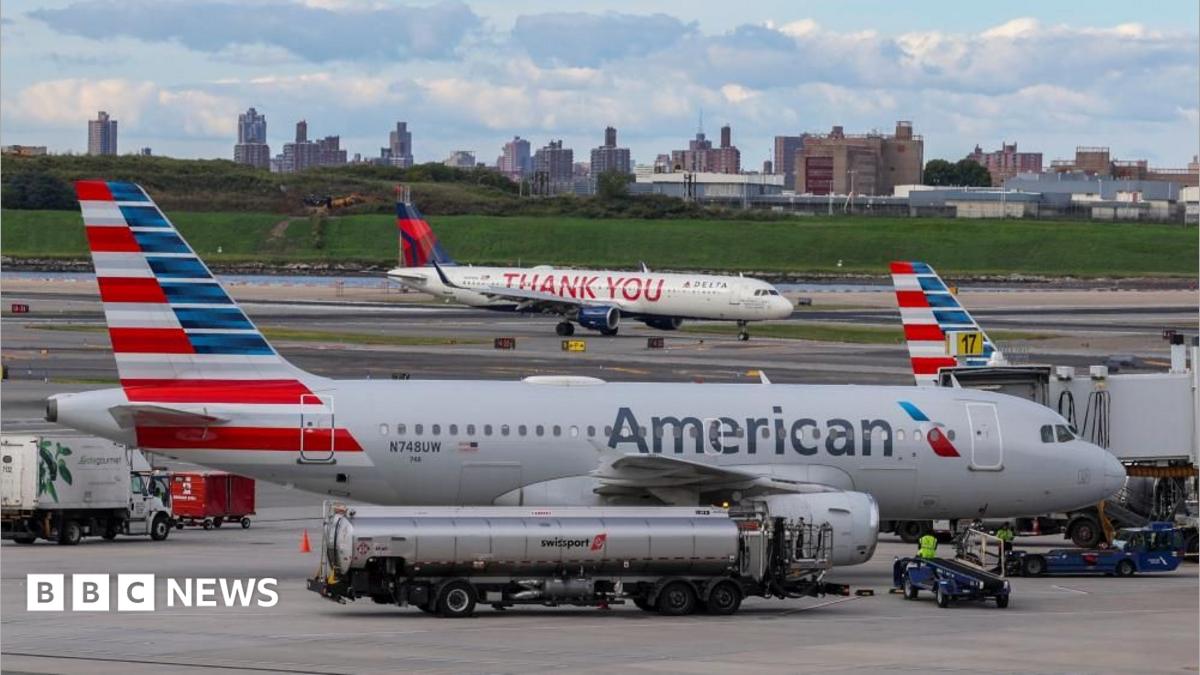
Hundreds of flights have been delayed at major airports in the US after construction workers accidentally cut a cable needed for air traffic control.
Ground stops and delays were issued on Monday afternoon for airports in New York, Pennsylvania, New Jersey and Massachusetts.
Hours later, US Transportation Secretary Sean Duffy said the cable had been repaired and airports would resume normal operations, though delays were still expected.
The major east coast disruption came ahead of the UN General Assembly (UNGA) in New York City on Tuesday, which is expected to be attended by scores of world leaders arriving into New York-area airports.
That includes UK Prime Minister Andy Burnham, who managed to board his flight before the delays began and was expected to arrive on time.
The delays happened after the damaged cable impacted the Terminal Radar Approach Control system, which is used to guide planes during takeoff and landing, transport officials said.
New Jersey public transportation agency NJ Transit told CBS News, the BBC’s US partner, that its construction workers had accidentally severed the line and that markers had been wrongly placed at the digging site.
The BBC has reached out to NJ Transit for comment.
Duffy earlier said the damage was caused by workers from Amtrak, the US national operator of intercity railroad service, who were doing the construction work. This “caused a telecom outage” which forced the Federal Aviation Administration (FAA) to ground flights, Duffy posted on X.
An Amtrak spokesperson said in a statement, reported by US media, that the incident involved a NJ Transit contractor. Telecommunications company Verizon, which owns the cable, also said it was not responsible.
The severed cable was actually a backup network, and the error was only discovered after the primary circuit failed, according to the head of the FAA, Bryan Bedford.
Newark Liberty International Airport in New Jersey – one of the three major airports that services New York City – was the most heavily impacted by today’s air traffic control disruptions, according to flight-tracking website FlightAware.
It reported that 267 departing flights were delayed today, while a further 257 flights destined for Newark were also delayed.
John F Kennedy International Airport and LaGuardia Airport, both in New York, were also affected, as was Philadelphia International Airport.
One passenger, Douglas Tewnion, said he boarded a flight to New York from Edinburgh and that his plane had been diverted to Boston, Massachusetts instead.
He told the BBC that, two hours after his flight was due into New York, he and the other passengers were still “sitting on the same plane, on the tarmac at Boston with no information”.
Though “everyone is in good spirits”, Tewnion said “it’s just a pain” to see two more hours waiting added onto a lengthy flight.
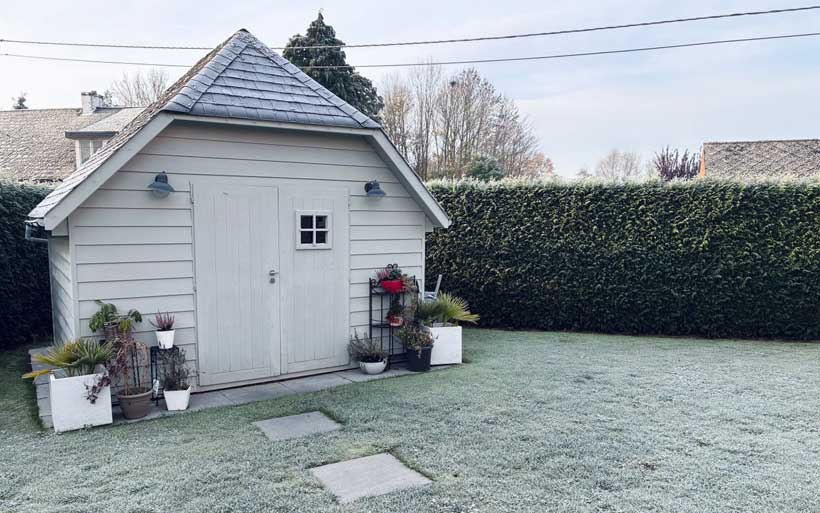
Awareness of environmentally friendly construction methods is increasing in Austria, which is reflected in the growing interest in sustainable garden sheds. The term “gartenhütte” refers to a garden hut or shed, typically a small structure used for storage, hobbies, relaxation or other activities in the garden. This development comes not only from ecological considerations but also from the desire for more durable, affordable and comfortable structures that complement outdoor spaces. The key lies in choosing the right materials, improving energy efficiency and integrating the structure into natural cycles.
What makes a garden shed sustainable?
A sustainable garden shed incorporates an overall approach in which materials are not the only consideration. It takes into account the entire life cycle of the structure, from the extraction of raw materials through to disposal or reuse. Key criteria include reducing the ecological footprint, maximizing resource efficiency, and ensuring the health and comfort of users.
Material selection: Preference is given to renewable, recycled or locally available raw materials.
Energy efficiency: Optimal insulation and passive solar energy use minimize energy consumption.
Durability: Robust construction and weather-resistant materials ensure a long service life.
Recyclability: Materials should be easily reused or recycled at the end of their life cycle.
Materials for sustainable garden sheds
A garden shed’s sustainability depends on the materials you choose for it. When building a garden shed, it is best to use locally sourced wood, recycled building materials, and natural insulation materials. Such materials can conserve resources, while shorter transport distances can help reduce the environmental impact of material delivery and contribute to a healthy indoor climate.
Native woods: Larch, spruce, and Douglas fir are particularly suitable due to their availability and weather resistance.
Recycled and reused building materials: Used bricks, windows or doors can significantly reduce the consumption of primary raw materials.
Natural insulation materials: Hemp, sheep’s wool, and wood fiber offer good insulating properties and can be environmentally friendly. Cellulose flakes, at approximately €9–17/m², can be a relatively affordable eco-friendly insulation option.
Ecological surface treatments: Non-toxic, water-based oils, varnishes, and paints protect the wood and are harmless to health.
Austrian municipalities and sustainable construction
Green building methods and sustainable garden projects are increasingly being considered by Austrian municipalities as part of broader efforts related to climate protection and local economic development. This can include funding programs for natural garden design and community gardens.
Stay ahead of the geopolitical week.
MD Briefing delivers expert analysis across five global fronts — the Indo-Pacific, energy, geoeconomics, European security, and the Middle East — every Monday morning. Free.
Funding programs: Some Austrian regions and municipalities offer funding or incentives for environmentally friendly garden and landscaping projects.
Local economic development: By prioritizing regional materials and craftspeople, municipalities and garden owners can support local businesses and help keep economic activity in the region.
Climate adaptation: De-sealing and greening projects can contribute to improving the local microclimate and may complement sustainable garden design.
The 3-pillar model of the sustainable garden shed
The implementation of a truly sustainable garden shed in Austria can be guided by a three-pillar model. The framework considers environmental, economic and social perspectives as part of an integrated approach to planning and implementation. Rather than focusing on a single aspect, it considers how different elements of sustainability can work together.
Material chain: Prioritizing regional sourcing. This pillar focuses on minimizing transport distances and supporting local forestry, sawmills and other suppliers. The use of locally sourced timber and other building materials can help reduce the environmental impact associated with transportation and support regional businesses.
Life cycle costs: Considering long-term economic viability. Through intelligent planning, high-quality insulation with materials such as cellulose or wood fiber, and the use of passive solar energy, operating costs can potentially be reduced. Considering both initial costs and long-term operating expenses can help building owners make environmentally and economically responsible choices.
Community benefit: Supporting local craft businesses. This pillar emphasizes the social aspect of sustainability. Collaboration with local carpenters, joiners, and other craftspeople can support regional businesses while fostering traditional craftsmanship and the transmission of expertise. Choosing local suppliers and craftspeople can therefore be part of a broader approach to sustainable development.
Conclusion: Sustainable garden sheds as a future solution
A sustainable garden shed is not just a building but a statement of a future-oriented and environmentally conscious lifestyle in Austria. By consistently applying environmentally friendly construction methods, garden owners can contribute to climate protection and biodiversity.
The trend is clearly toward durable, energy-efficient and resource-saving solutions that make sense both environmentally and economically. Using the right methods and materials, together with any available local incentives, can help make a sustainable garden shed a worthwhile long-term investment.
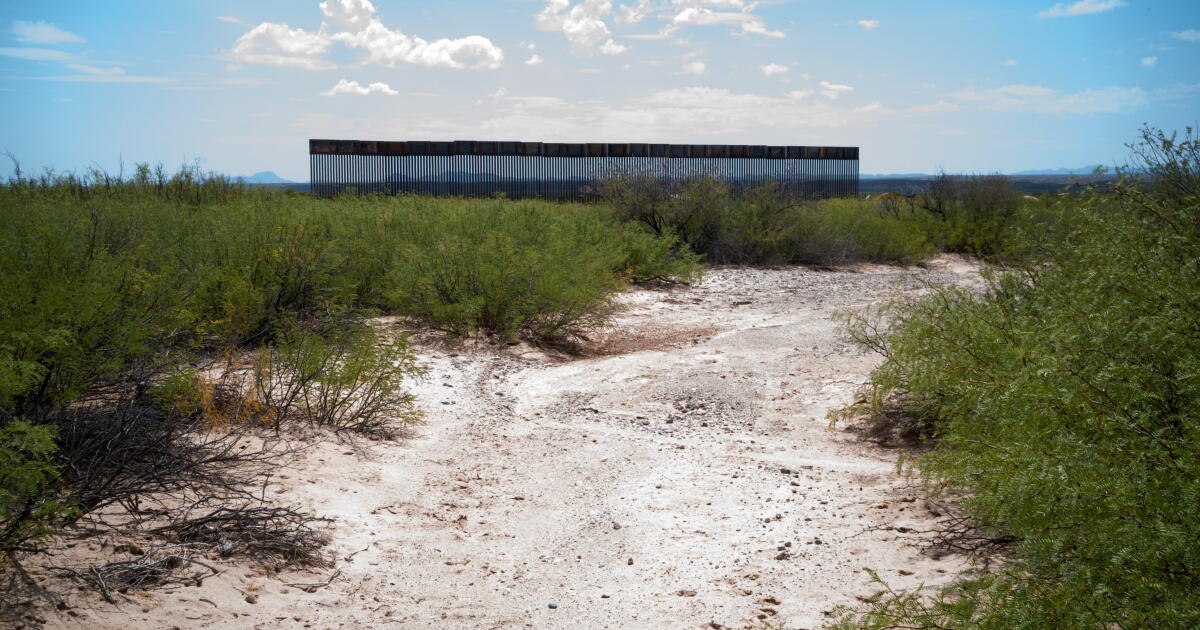
COMSTOCK, Texas — The Trump administration has started building a border wall through a west Texas section of the Big Bend region, marking the first major construction in an area of the U.S.-Mexico border where the administration’s plans have met heavy, bipartisan opposition.
The start of construction marks a milestone in the administration’s $46-billion efforts to line the border with walls, barriers, roads and technology as it seeks to make good on a campaign promise by President Trump to finish the wall. And it comes as Customs and Border Protection says it has doubled the pace at which it is building the wall across the border.
Customs and Border Protection said in a statement to the Associated Press that “border wall panel installation is underway” in a 47-mile stretch of Hudspeth County in west Texas known as Big Bend 1. There are five project areas that make up the roughly 500-mile Big Bend region stretching from an area of Hudspeth County south of El Paso to Lake Amistad.
CBP said the first panels were erected Wednesday. On a map on the agency’s website where it posts updates of wall construction along the southern border, a photo showed a crane lifting one of the 30-foot-tall steel wall panels into place as construction workers looked on.
The new activity was separate from a border infrastructure project in the nearby Big Bend National Park, where the administration has suspended construction in an attempt to reach out to opponents.
In the broader Big Bend region of Texas, CBP has run up against concerted opposition from landowners, environmental groups, business owners and ranchers who say the remote region isn’t a high-traffic area for illegal immigration. Political leaders from both parties, including U.S. Sen. John Cornyn (R-Texas), have joined the opposition.
Activists said Friday they would continue opposing the border infrastructure projects in the rest of the Big Bend region, even as the panels were being installed.
Clara Benson, one of the founders of the No Big Bend Wall Coalition, which has been fighting against CBP’s plans, said in an interview Friday that the organization had been receiving reports of trucks moving supplies into the remote area along the Rio Grande and that contractors had been clearing yards to stage supplies.
Speaking from Washington, D.C., where she and others in the coalition were meeting with lawmakers, she said that the organization and others would continue to fight the wall-building plans across the region.
“We will continue to fight for this land no matter what the outcome is. We will continue fighting to the end,” said Benson. “You talk to people in west Texas and they say even if they put it up, we’ll fight for them to take it down. So this fight is not over.”
The news comes as the administration is speeding forward with a plan to line the entire border with a combination of 30-foot-tall steel bollard walls, barriers designed to stop vehicles from crossing the border, new patrol roads, and various technologies to deter and detect migrants or smugglers from crossing the border.
Customs and Border Protection said it is building an average of 12 miles of barriers per week along the 2,000-mile border with Mexico and recently reached a milestone of 200 miles of new barriers built since the second Trump administration took office. The 12-miles-a-week average is double the pace that the agency’s head, Rodney Scott, cited earlier this year.
The agency has faced opposition from environmental groups, a small town that worries the wall will cause flooding in its area, Native Americans who say the construction is disturbing sacred sites and landowners who say the construction will infringe on their land.
In Texas, much of the opposition has centered on the agency’s plans for Big Bend National Park, in the state’s southwest on the Rio Grande that is a draw for tourists from around the world. But up- and downriver outside the park, much of the land is owned by private landowners, many of whom have organized against the government’s efforts.
Earlier this week, landowners, ranchers and business owners in the Big Bend region along with a nonprofit organization dedicated to protecting the region’s landscape and heritage sued to stop the administration’s plans.
Activists and landowners have also shown up at county meetings to push their elected officials not to cooperate with contractors hired by CBP to build the wall, and many landowners have refused to allow government officials or contractors onto their land to survey it.