conspiracy theory

Joe Kent’s resignation over Iran war reignites antisemitism fears and debate over Israeli influence

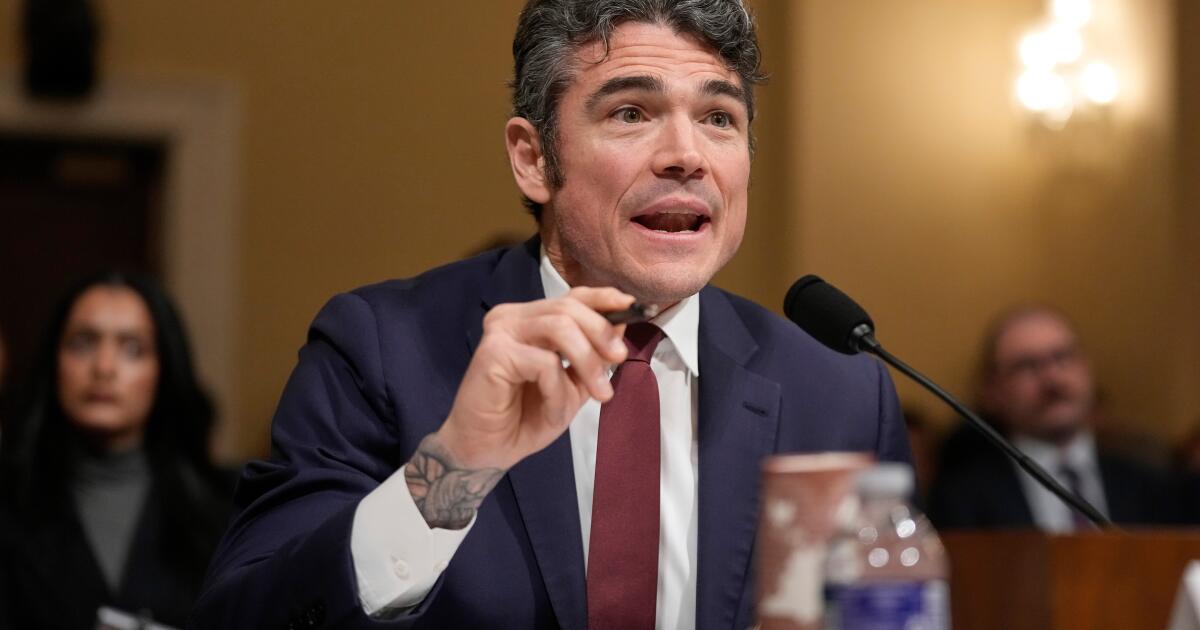
It was no surprise when Joe Kent showed up on Tucker Carlson’s podcast a day after quitting his counterterrorism job in President Trump’s administration. Here was a top official who resigned to protest the war with Iran turning to right-wing media’s leading critic of the conflict.

“The Israelis drove the decision to take this action,” Kent said in Wednesday’s interview.

But before long, the conversation moved in a different direction as Kent nodded to conspiracy theories that pro-Israel forces were behind the assassination of conservative activist Charlie Kirk.

“I’m saying there are unanswered questions,” Kent said.

The conversation encapsulated two schisms within the Republican Party and the right-wing media system, both of which have reached high into the national security establishment of the Trump administration.

There’s a foreign policy debate over the wisdom of Trump’s war with Iran and the future of the United States’ longstanding alliance with Israel.

But there also are fears that the focus on Israel is the leading edge of an antisemitic fringe that has gained ground by portraying Jews as shadowy manipulators, echoing some of history’s most hateful tropes.

Tucker Carlson is playing a central role

At the center of both issues is Carlson, a former Fox News host who remains influential among conservatives. He was previously denounced for hosting Nick Fuentes, a white nationalist and antisemite, on his podcast last year. During the interview, Fuentes complained about “organized Jewry in America.”

On Wednesday, Carlson was sharply critical about Israel, saying “its lobbying in the United States pressured the president.”

Matt Brooks, president of the Republican Jewish Coalition, described Kent’s appearance on Carlson’s podcast as “part of an ongoing problem.”

He noted that his group opposed Kent’s nomination as director of the National Counterterrorism Center because of ties to right-wing extremism. Trump ignored those concerns even though, as he said after Kent’s resignation, “I always thought he was weak on security” and “I didn’t know him well.”

Kent’s resignation letter trafficked in antisemitic conspiracy theories while raising concerns about the war with Iran.

He blamed “high-ranking Israeli officials and influential members of the American media” for encouraging conflict. Indeed, Israeli leaders including Prime Minister Benjamin Netanyahu encouraged Trump to join forces in an attack on Iran.

But Kent also went further, saying it’s “the same tactic the Israelis used to draw us into the disastrous Iraq war.” He also said his wife, a Navy cryptologist who was killed by a suicide bomber in Syria, died “in a war manufactured by Israel.”

Sen. Mitch McConnell, a Kentucky Republican, described the letter as “virulent antisemitism.” Rep. Josh Gottheimer, a New Jersey Democrat, said “scapegoating Israel isn’t just a tired antisemitic trope — it’s anti-American.”

Kent has previously rejected all forms of “racism and bigotry.”

Trump has said nothing about Kent’s remarks on Israel. He previously disputed the idea that Israel pushed him toward war, saying, “I might have forced their hand.”

Unified Republican support for Israel has fractured

Questions about Israeli influence are not unique to right-wing circles. Progressives have also faced accusations of antisemitism for their response to the war in Gaza, which began with an attack by Hamas on Oct. 7, 2023.

But it’s been a widening fault line within the Republican Party, which has been a bedrock of support for Israel over the years. Conservatives are still reckoning with the fallout from Carlson’s interview with Fuentes.

For example, board members and other staff members resigned from the Heritage Foundation after the think tank’s president defended Carlson.

Trump tried to sidestep the issue, declining to criticize Fuentes and praising Carlson for having “said good things about me over the years.” The president previously dined with Fuentes at his Mar-a-Lago estate in Palm Beach, Fla., between his two terms, and Carlson has continued to visit the White House.

Mort Klein, president of the conservative Jewish group the Zionist Organization of America, said Wednesday that he supports Trump but “I’d like him to do more” about antisemitism.

“I want him to be stronger on those issues,” Klein said.

Carlson has said that he is not antisemitic. But he has said that anti-Jewish hate is less pervasive in society than bias against white people and that some Christian politicians who were fervent supporters of Israel were guilty of heresy.

The Iran war is poised to continue fracturing right-wing media.

Ben Shapiro, co-founder of The Daily Wire, called Carlson’s Fuentes interview “an act of moral imbecility” and accused the host of misleading his audience with falsehoods and conspiracy theories.

He’s also feuded with Candace Owens, who has promoted antisemitic conspiracy theories. Dennis Prager, a conservative commentator, wrote in an open letter to Owens that “I cannot think of anyone in public life engendering as much suspicion of Jews, Zionism and Israel as you.”

Megyn Kelly, like Carlson a former Fox News Channel anchor now helming her own independent media empire, said the war was sold to the American people by “Israel firsters, like Mark Levin.” Levin, a radio and Fox personality, has been among Trump’s most fervent supporters of the war.

Levin, for his part, called Kelly an “emotionally unhinged, lewd and petulant wreck.”

It promises to continue.

Levin posted on social media an invitation to Kent to appear on his show in the coming days.

“Sure,” Kent replied. “Let’s go.”

Beaumont and Bauder write for the Associated Press.
Source link

Trump’s counterterrorism chief quits over Iran war

Joe Kent, the director of the National Counterterrorism Center, abruptly resigned Tuesday, becoming the most senior national security official to break publicly with the Trump administration over its military campaign against Iran.

In a statement posted on social media, Kent said he “cannot in good conscience” continue serving in the administration, contending that Iran had “posed no imminent threat to our nation” and that the United States had been drawn into the conflict through “pressure from Israel and its powerful American lobby.”

“I cannot support sending the next generation off to fight and die in a war that serves no benefit to the American people nor justifies the cost of American lives,” Kent wrote in a letter addressed to President Trump. “I pray that you will reflect upon what we are doing in Iran, and who we are doing it for.”

Trump, speaking in the Oval Office, dismissed Kent’s concerns, telling reporters that he had long believed the counterterrorism director — whom he nominated to the post in February 2025 — was “very weak on security.” The president insisted that Iran has been a threat to the U.S. “for a long time,” and said that it was a “good thing” Kent is leaving.

The resignation came at an uncertain moment for the administration. The war, which has repeatedly been sold to Americans as “short term” and contained, is now in its third week, with fraying alliances, renewed missile and drone fire on gulf Arab nations from Iran, new Israeli strikes on Iran and Lebanon, mounting casualties and no clear exit strategy.

“If we left right now it would take 10 years for them to rebuild,” Trump told reporters. “We’re not ready to leave yet, but we’ll be leaving in the near future. We’ll be leaving pretty much in the very near future.”

The uncertainty was compounded Tuesday by Israel’s killing of Ali Larijani, the head of Iran’s Supreme National Security Council, as well as Gholamreza Soleimani, the head of the Basij, Iran’s militia force.

Trump made reference to the Iranian officials killed without naming them, saying one was “their actual top” and the other was responsible for the killing of 32,000 Iranian protesters in recent weeks.

“It’s an evil group,” he said.

Effect of Larijani’s killing

Iranian officials confirmed the deaths of Larijani and Soleimani via state media Tuesday. In addition to killing the Basij leader, Israel reported striking more than 10 Basij posts, part of an effort to destroy the Islamic Republic’s ability to contain internal unrest and protests.

Benjamin Radd, a political scientist and senior fellow at the UCLA Burkle Center for International Relations, said Larijani’s killing would greatly diminish the Iranian diplomatic and institutional experience, as he was perceived to be “the last of the competent bunch” in power.

Those remaining in power are “generally not the sharpest people, they’re not the people who understand the subtleties of diplomacy, of what negotiating with the U.S. is like,” which clears a path for “a country run by a military junta” comprising Islamic Revolutionary Guard Corps leaders, Radd said.

“We’re really going to be moving more toward a military-style dictatorship — behind a clerical robe, if you will,” he said.

The battlefield developments have done little to reassure Washington’s closest allies, most of which have declined to join the fight despite Trump’s recent pleas to allied nations to send warships to help reopen the Strait of Hormuz, a crucial oil route that has been threatened by Iran’s war efforts.

In a social media post Tuesday, Trump said the United States had been informed by most of its allies in the North Atlantic Treaty Organization that they “don’t want to get involved” in the expanding Middle East war — and he claimed the American military no longer needs or wants their help.

“In fact, speaking as President of the United States of America, by far the Most Powerful Country Anywhere in the World, WE DO NOT NEED THE HELP OF ANYONE!” Trump wrote.

Trump cannot unilaterally remove the U.S. from NATO. In 2023, Sens. Tim Kaine (D-Va.) and Marco Rubio (R-Fla.) — who is now Trump’s secretary of State — successfully pushed a measure barring any president from removing the U.S. from the treaty organization without approval from the Senate or an act of Congress.

“The Senate should maintain oversight on whether or not our nation withdraws from NATO. We must ensure we are protecting our national interests and protecting the security of our democratic allies,” Rubio said at the time.

Some experts viewed Trump’s latest remarks about not needing NATO allies as a result of him having misplayed his hand at the start of the conflict with Iran, which has attempted to widen the war by targeting Gulf Cooperation Council nations in the region.

When Trump started demanding that many other nations join the U.S. in the war effort, or at least in safeguarding the Strait of Hormuz, it was “an attempt on Trump’s side to widen the war the other way,” Radd said, based in part on the fact that other nations, including China and in Europe, are much more reliant on oil from the region than the U.S.

However, it was a “clumsy” move by Trump given his alienation of NATO allies in the past, including during a major speech in Davos, Switzerland, in January, in which the president was “basically shaming and criticizing NATO and European states,” Radd said.

Calling on allies to “step up” after ridiculing them was “ham-handed,” Radd said.

Intelligence official’s departure

In Washington, Kent’s resignation exposed new divisions over the administration’s handling of the war.

On Capitol Hill, House Speaker Mike Johnson (R-La.) told reporters that he did not know where Kent was “getting his information” to conclude that Iran posed no imminent threat to the U.S. He said Trump administration officials in classified briefings have asserted that “they had exquisite intelligence and they understood that this was a serious moment for us.”

“The president felt that he had to strike first to prevent mass casualties,” Johnson said.

Several Democrats called on Kent to appear before Congress and tell the American people more about why the administration dragged the U.S. into war in Iran.

“If even officials like Joe Kent do not believe Iran posed an imminent threat, why are we sending more Americans to die in this war?” Rep. Ro Khanna (D-Fremont) wrote on X.

White House Press Secretary Karoline Leavitt said Kent’s letter contained “many false claims,” including that Iran posed no imminent threat to the U.S.

“This is the same false claim that Democrats and some in the liberal media have been repeating over and over,” Leavitt wrote on X. “As President Trump has clearly and explicitly stated, he had strong and compelling evidence that Iran was going to attack the United States first.”

She said that evidence, which has never been detailed publicly, “was compiled from many sources and factors,” and that Trump “would never make the decision to deploy military assets against a foreign adversary in a vacuum.”

Leavitt then repeated past justifications for the attack, including that Iran sponsors terrorism abroad and that it was building out its missile capabilities as “a shield” for protection as it continued to develop nuclear capabilities.

The press secretary previously said that Trump had a “feeling” that Iran was going to attack the U.S. or its assets. The president has alleged, without evidence, that Iran was within weeks of having a nuclear weapon.

Leavitt said the added assertion by Kent that Trump decided to attack Iran “based on the influence of others, even foreign countries, is both insulting and laughable.”

Kent, a former political candidate with connections to right-wing extremists, was confirmed in July as head of the National Counterterrorism Center, which analyzes and detects terrorist threats. Before joining the Trump administration, Kent ran two unsuccessful campaigns for Congress in Washington state. He also served in the military, serving 11 deployments as a Green Beret, followed by work at the CIA.

Democrats strongly opposed Kent’s confirmation in the Senate, in part because they were concerned about his ties to far-right figures and promotion of conspiracy theories. During his 2022 congressional campaign, Kent paid Graham Jorgensen, a member of the far-right military group the Proud Boys, for consulting work. He also worked closely with Joey Gibson, the founder of the Christian nationalist group Patriot Prayer, and attracted support from a variety of far-right figures.

During his Senate confirmation hearing, Kent refused to distance himself from a conspiracy theory that federal agents instigated the Jan. 6, 2021, attack at the U.S. Capitol, as well as false claims that Trump, a Republican, won the 2020 election over Democrat Joe Biden.

Democrats grilled Kent on his participation in a group chat on Signal where Trump’s national security team discussed sensitive military plans.

Republicans, meanwhile, were drawn to Kent’s experience in the military and intelligence.

Sen. Tom Cotton (R-Ark.), the GOP chair of the Intelligence Committee, said in a floor speech that Kent had “dedicated his career to fighting terrorism and keeping Americans safe.” On Tuesday, Cotton said that he disagreed with Kent’s “misguided assessment” on Iran.

“Iran’s vast missile arsenal and support for terrorism posed a grave and growing threat to America. Indeed, the ayatollahs have maimed and killed thousands of Americans,” Cotton said. “President Trump recognized this threat and made the right call to eliminate it.”

Other conservatives — including former Rep. Marjorie Taylor Greene and commentator Candace Owens — called Kent an “American hero.”

Ilan Goldenberg, a former Biden administration official who dealt with the Middle East, wrote on X that while he disagrees with the Iran war, Kent claiming that Israel pressured Trump into the conflict is “ugly stuff that plays on the worst antisemitic tropes.”

“Donald Trump is the President of the United States and he is the one ultimately responsible for sending American troops into harms way,” he said.

Source link

Trump has stocked his administration with people who have backed his false 2020 election claims

President Trump has long spread conspiracy theories about voting designed to explain away his 2020 election loss to Democrat Joe Biden. Now that he’s president again, Trump has stocked his administration with those who have promoted his falsehoods and in some cases helped him try to overturn his loss.

Those election conspiracists now holding official power range from the attorney general to lawyers filing lawsuits for the Justice Department. Kurt Olsen, a lawyer who unsuccessfully pushed the Justice Department in 2020 to back the president’s false claims, is now leading a sweeping probe of the vote from that election.

The most dramatic action from that mandate was the seizure in late January of ballots and 2020 election records from Fulton County in Georgia, a Democratic stronghold that includes Atlanta. The county has long been a target of election conspiracy theorists aligned with Trump, and the affidavit for the search warrant shows the action was based on 2020 claims that in many cases had been thoroughly investigated.

Election officials across the country, especially those in states controlled politically by Democrats, are bracing for more turmoil during this year’s elections, when control of Congress is on the line.

“The election denial movement is now embedded across our federal government, which makes it more powerful than ever,” said Joanna Lydgate, chief executive of States United Democracy Center, which tracks those who promote election conspiracy theories. “Trump and his allies are trying to use all of the powers of the federal government to undermine elections, with an eye to the upcoming midterms.”

Trump has remade the federal government as an arm of his own personal will, and his attorney general, Pam Bondi — who helped try to overturn Trump’s 2020 loss — has declared that everyone working at the Justice Department needs to carry out the president’s demands. Even with all the issues facing him in his second term, from persistent concerns about the economy to his immigration crackdown, Trump continues to push the false claim that he won the 2020 presidential election.

Some of the people who populate his administration are, like Bondi, longtime supporters who continued to help Trump even as he sought to overturn an election. Some played minor roles in supporting the false claims about the 2020 presidential election. Still others have pushed conspiracy theories, often fantastical or debunked, that have helped persuade millions of Republicans that Trump had the 2020 election stolen from him.

Riccardi writes for the Associated Press.

Source link