congressional

How does a 28-year-old raise more than $1 million for a congressional bid?

In his first run for Congress two years ago, Justin Fareed, a relative newcomer to politics, relied mostly on his own money. He didn’t make it past the primary.

This year, the 28-year-old Republican, a former UCLA Bruins running back, has significantly more money to work with — $1 million.

Most of it — 80% — came from people living outside his Santa Barbara district. And nearly $200,000 has come from donors with ties to two of the state’s largest nursing home operators.

The businessmen, Lawrence Feigen and Shlomo Rechnitz, of L.A.’s Westside, have given the maximum allowed contributions, as have members of their families and their friends and employees.

Operators of skilled nursing facilities have a big stake in congressional decisions on healthcare funding and policy. Those businesses depend on funding from Medicaid and Medicare — and, in California, Medi-Cal – and they are under constant scrutiny by government regulators and inspectors.

Fareed himself is in the medical business; he is vice president of his family’s company, ProBand Sports Industries, which makes devices to treat tennis elbow and other repetitive stress injuries. In his candidate statement on the ballot, he also describes himself as a “third-generation cattle rancher” who understands “the burdensome taxes and regulations coming out of Washington, and the implications it has on small businesses and the agricultural community along the Central Coast.”

The congressional race in Santa Barbara, where Democratic Rep. Lois Capps is retiring, pits Fareed against Democratic Santa Barbara County Supervisor Salud Carbajal, who has raised $1.8 million. The field of five others includes Santa Barbara Mayor Helene Schneider, also a Democrat, and Republican Assemblyman K.H. “Katcho” Achadjian. The top two finishers in June will face off in November.

Feigen’s company SnF Management owns more than 35 long-term nursing facilities in California and Arizona under the name Windsor Healthcare.

Rechnitz owns more than 70 facilities and has been described as the state’s largest nursing home operator. In recent years, state and federal authorities have investigated his companies on charges including elder abuse and involuntary manslaughter.

Feigen and at least 30 of his employees, business associates, friends and family members have together contributed at least $108,000 to Fareed’s congressional campaign. Rechnitz, employees of his businesses and their family members have given at least $74,000.

Federal law caps direct donations to candidates at $2,700 for the primary and $2,700 for the general election.

Feigen donated the maximum amount to Fareed’s campaign. Rechnitz contributed $2,700. Three Feigen family members listed as students in finance disclosures each donated $2,700.

In addition, Feigen, his family’s trust and his company donated $25,000 to New Generation, a pro-Fareed political action committee that has since disbanded. Ramat Medical, where Rechnitz is chief financial officer, donated $10,000. Feigen and his wife also donated $10,000 to another PAC set up to support Fareed.

When asked about his donations, Feigen said he and his family “like people who are honest” and not part of the political establishment. He said he knew Fareed through business connections in the medical sector. Rechnitz, through a representative, declined to speak about his contributions to Fareed’s campaign beyond an emailed statement.

“Mr. Rechnitz is a major, non-denominational, non-partisan donor who last year alone contributed to more than 1,100 institutions,” Rechnitz’s spokesperson Stefan Friedman said in the statement.

At the recent opening of his campaign’s Santa Barbara headquarters, Fareed described Feigen as “a supporter like all of our other supporters for the campaign.”

Fundraising success

Fareed, a onetime Capitol Hill aide to a Kentucky congressman, ran for the Santa Barbara congressional seat in 2014, coming up a few hundred votes short of making it past the top-two primary to challenge Capps, the incumbent. That year, he raised about $190,000 and loaned his campaign $197,000.

Voter registration in the district, which stretches across San Luis Obispo, Santa Barbara and Ventura counties, is almost evenly split between Democrats and Republicans. President Obama won the district by 11 points in 2012, and tea party favorite Chris Mitchum, son of the late actor Robert Mitchum, came close to ousting Capps in 2014.

Around 56% of Fareed contributors this year live outside the district, and they contributed $875,000 of his $1.08 million in donations.

About 77% of the $1.5 million that Fareed’s opponent Carbajal has raised from individual donors comes from inside the Central Coast district.

At least 90 of Fareed’s 490 donors live in West Los Angeles, in the Hancock Park, Fairfax and Mid-Wilshire neighborhoods. Supporters in the 90036 ZIP Code contributed a combined $235,000 to the candidate — nearly 25% of the money Fareed brought in since the campaign began.

Many of those Westside donors have ties to the medical industry, according to donation records filed with the FEC.

Feigen is the co-founder of privately owned SnF Management, which manages a chain of nursing facilities. He is also the chief executive of a medical device company that sells orthotic insoles, according to his company website and LinkedIn page.

Rechnitz’s facilities brought in $62 million in profits in 2013, according to a Sacramento Bee report, citing state figures.

In August, California Atty. Gen. Kamala Harris filed involuntary manslaughter charges against one of Rechnitz’s nursing homes, and two of its employees were also charged with dependent adult abuse. Charges against one defendant were dismissed at a hearing last month after she agreed to testify in this case. The charges against the head of nursing and the nursing home remain, and the case is pending. At another Rechnitz-owned facility in Orange County, two former employees were charged with three counts each of elder abuse and failure to report abuse. Their trial is scheduled for July.


For the Record

5:50 p.m., June 2: An earlier version of this article said charges of dependent adult abuse against one defendant were dismissed at a hearing this month. The hearing was in May.


In addition, three Rechnitz-owned facilities repeatedly failed inspections and were eventually decertified by the U.S. Centers for Medicare and Medicaid Services, an agency spokesman said. Regulatory violations at facilities owned by Rechnitz have led to hundreds of thousands of dollars in fines. Rechnitz’s spokesman declined to comment on those cases but said the executive brought “59 nursing homes out of insolvency and currently provides life-saving care to thousands of Californians.”

‘A good guy’

West Hollywood resident Viktor Kogan and his wife each gave $2,700 to Fareed’s campaign in late October.

Asked recently about the contributions, Kogan said he could not recall donating to Fareed, adding that he had never heard of the candidate.

When shown a copy of a federal record noting his contribution, Kogan, 75, said his daughter, Ksenya Kogan, arranged the donation. She also contributed, and listed one of Feigen’s companies, SnF Management, as her employer.

Ksenya Kogan, an attorney, declined to comment about the donations except to say she had met Fareed through friends.

In nearby Hancock Park, Freda Stock gave a total of $5,400 to Fareed, but said she didn’t know anything about the candidate or his campaign. Stock said Feigen has done business with her husband and has been a family friend for “many, many years.”

Fareed’s campaign also has received donations from outside the state, including a $2,700 contribution from Chaim Feigen, a recent graduate of New York University who works for SnF Management and is registered to vote at Lawrence Feigen’s Los Angeles home. Asked about his contribution, he declined to comment.

Other donors interviewed by The Times said they had given money to Fareed’s campaign based on the advice of friends or business associates.

One of those is Denise Wilson, an executive at Ramat Medical, the West Los Angeles medical supply company where Rechnitz is chief executive. Wilson, who gave $2,700, said a group of people that she works with introduced her to Fareed’s campaign.

“They said that he was a good guy,” she said. “I couldn’t give you a definitive answer of his issues or what he stands for. They just said that he was a good, up-and-coming person to support our industry.”

SIGN UP for our free Essential Politics newsletter >>

Lawrence Feigen’s brother, Alan, who also works at Ramat Medical and gave $2,700, said he did not know Fareed personally. He said that a client, whom he declined to identify, had asked Ramat Medical employees to support the candidate.

Among other donors, Ken Zelden, a vice president at Harris Office Products in Van Nuys, said he gave Fareed’s campaign $2,700 because he’d “been told he is a good guy.” “I’m looking forward to meeting him,” he said.

At a recent campaign event in Santa Barbara, Fareed said donors from the healthcare industry comprise “a very prominent base of support that we are developing all over the place.”

He added that his campaign has been holding meet-and-greets and fundraisers around Southern California.

“When you are working to develop an organization, an infrastructure for a campaign and one as significant as this one, it takes a huge geographical area that’s incredibly diverse,” he said.

Times staff writers Victoria Kim, Sarah D. Wire and Maloy Moore contributed to this report.

javier.panzar@latimes.com

@jpanzar

ALSO:

Why activists in these California swing districts are feuding with the national Democratic Party

Celebrity donors pour money into this open California congressional seat

A farmer and a former UCLA football player are running for Congress. Here’s why you should pay attention

Updates on California politics


UPDATES:

June 3, 8:40 p.m.: This article was updated to reflect two additional donations.

4:28.p.m.: This article was updated to include San Luis Obispo County in the description of the 24th Congressional District’s boundaries.

This article was originally published June 2 at 12:56 p.m.


Source link

Missouri Supreme Court upholds state’s GOP-backed congressional map

May 12 (UPI) — Missouri’s Supreme Court has approved the state’s new congressional maps, handing a win to the Trump administration as it seeks to create additional Republican-favored seats ahead of November’s midterm elections.

The high court ruled unanimously Tuesday in three cases that challenged the map, stating in a joint opinion affecting two cases that the redraw does not violate the state’s Constitution, and rejected a referendum-related challenge against the bill that permitted the unorthodox mid-decade redraw.

“Today’s Missouri Supreme Court rulings are a HUGE victory for voters,” Missouri Gov. Mike Kehoe, a Republican, said in a social media statement Tuesday.

“Missourians are more alike than we are different, and our Missouri Values — rooted in common sense, hard work and personal responsibility — are stronger and far more aligned across both sides of the aisle than the extreme left-wing agendas pushed in states like New York, California and Illinois.

“The Missouri First Map ensures those values are represented fairly and accurately at every level of government.”

Missouri began the effort to redraw its congressional map last summer amid President Donald Trump‘s push for Republican-led states to create more GOP-favored seats for November’s midterm elections. The map, which Kehoe signed in September, redraws Democrat Rep. Emanuel Cleaver’s Kansas City-area district to include more rural, Republican-leaning areas, potentially whittling Missouri’s Democratic delegation in the U.S. House of Representatives from two seats to one.

Trump has repeatedly voiced concern about potential impeachment proceedings if Republicans lose the House. Creating additional Republican-leaning seats increases the GOP’s chances of maintaining control of the chamber, making impeachment less likely while limiting Democrats’ ability to conduct investigations into the Trump administration or stymie his agenda.

Texas was the first state to move on mid-decade redistricting, kicking off a gerrymandering arms race in which Democratic-led states sought to counter with their own maps and Republican-led states responded with additional redraws.

Fifteen states have moved to redistrict, with eight — seven Republican-led and one Democratic-led — having implemented new congressional maps, according to the National Conference of State Legislatures. Democratic-led Virginia also approved a new map, but the state Supreme Court overturned it last week.

The Missouri Supreme Court decisions on Tuesday resolve months of litigation in a trio of separate cases filed by Missouri voters against the redistricting.

In consolidating two cases that similarly challenged the constitutionality of the map’s redraw, the justices unanimously ruled that the appellants failed to show that it unlawfully slip the Kansas City-area district.

The other unanimous ruling sided against Missouri voters seeking to have the issue put to a ballot referendum.

Opponents to the maps criticized the court following its ruling, highlighting the fact that it was issued the same day arguments in the case were presented.

“While one might be inclined to hope that these justices managed to grapple with a highly complex, nuanced and consequential issue in just six hours, it seems clear the justices were not interested in the day’s proceedings and simply had their opinion already finalized, even before this morning’s argument,” Marina Jenkins, executive director of the National Redistricting Foundation, said in a statement.

“With this decision, the Missouri Supreme Court has shown Missourians the lack of seriousness with which it takes cases that pertain to protecting their right to vote — a complete and dangerous abdication of the judiciary’s role.”

The Campaign Legal Center, the American Civil Liberties Union Voting Rights Project and the ACLU of Missouri similarly criticized the ruling.

“Mere hours after argument was held, the court released its decisions siding against voters in every respect,” the groups said in a joint statement.

“We are extremely disappointed in these rulings, and in their failure to protect Missourians’ right to fair maps. This state — and our democracy — are worse off for this outcome.”

President Donald Trump gives remarks during a law enforcement leaders dinner, celebrating the start of National Police Week, in the Rose Garden at the White House on Monday. Photo by Aaron Schwartz/UPI | License Photo

Source link

Democrats ask the Supreme Court to halt a Virginia ruling blocking new congressional districts

Democrats on Monday filed an emergency appeal with the U.S. Supreme Court seeking to halt a Virginia ruling invalidating a ballot measure that would have given their party an additional four winnable U.S. House seats.

The move came after the Virginia Supreme Court on Friday struck down a constitutional amendment that voters narrowly passed just last month. The 4-3 state court decision found that the Democratic-controlled legislature improperly began the process of placing the amendment on the ballot after early voting had begun in Virginia’s general election last fall.

Democrats argued unsuccessfully that the U.S. Supreme Court has held that, even if early voting is underway, an election does not happen until election day itself.

The appeal is the latest twist in the nation’s mid-decade redistricting competition. It was kicked off last year by President Trump urging Republican-controlled states to redraw their lines and was supercharged by a recent Supreme Court ruling severely weakening the Voting Rights Act.

“The Court overrode the will of the people who ratified the amendment by ordering the Commonwealth to conduct its election with the congressional districts that the people rejected,” wrote lawyers for Virginia Democrats and Democratic state Atty. Gen. Jay Jones. “The irreparable harm resulting from the Supreme Court of Virginia’s decision is profound and immediate.”

The filing is a sign of Democratic desperation after the Virginia decision. Democrats are still favorites to recapture the U.S. House of Representatives, but their GOP rivals have claimed to have gained more than a dozen seats through redistricting. The voter-approved Virginia map would have partly offset that.

Democrats are taking a legal long shot in asking the justices to reverse the Virginia court’s ruling. The Supreme Court tries to avoid second-guessing state courts’ interpretations of their own constitutions. In 2023, it turned down a request by North Carolina Republicans to overrule a state Supreme Court decision that blocked the GOP’s congressional map.

Politically, the appeal could help a party struggling to compete with Republicans in the unusual mid-decade redrawing of congressional boundaries by providing fodder for election-year messaging about a partisan Supreme Court. The court recently allowed Louisiana Republicans to proceed with redistricting after the justices struck down a majority Black district as an unconstitutional racial gerrymander.

Democrats have been set on their heels because, days after the Virginia ballot measure passed, the Supreme Court’s conservatives reversed decades of rulings and in effect neutered the Voting Rights Act, paving the way for Southern states to eliminate some majority Black districts and further pad Republican margins in Congress.

The Virginia amendment had been launched long before that ruling. It was intended as a response to Republican gains in Texas, Missouri, North Carolina and Ohio, and to blunt a new map in Florida that just became law. Once the Virginia amendment passed, it briefly turned the nationwide redistricting scramble into a draw between the two parties.

That was unraveled by the Virginia Supreme Court’s decision. The justices are appointed by the legislature, which has flipped between the two parties in recent decades, and the body is generally not seen as having a clear ideological bent.

Whitehurst writes for the Associated Press.

Source link

Republicans feud, and fume, in the battle for a Southern California congressional district

It’s a showdown that — regardless of the outcome in the June 2 primary election — probably won’t have Republicans in a celebratory mood.

The battle for the 40th Congressional District representing a swath of inland Orange County and portions of San Bernardino and Riverside counties is happening in one of Southern California’s only remaining solidly red districts. But that doesn’t provide much solace, experts say.

The shuffling of districts following the passage of Proposition 50, which gave Democrats in Sacramento the authority to redraw the state’s congressional districts in favor of Democratic candidates, is pitting two current members of Congress — Young Kim (R-Anaheim Hills) and Ken Calvert (R-Corona) — against each other in a bid to keep their seat.

The two are also fending off challenges from a host of Democrats and an independent candidate who says she hopes to win votes from those disenchanted by deeply partisan politics felt across the country.

But even if a Republican keeps the seat, California’s Republican congressional delegation is still down by another member.

“It was all part of the Prop. 50 effort,” said Jon Fleischman, a conservative strategist. “Not only did they reduce the number of seats that Republicans have, they got to shove a couple of incumbents into one seat and eat popcorn and watch the food fight.”

And the gloves are already off.

Kim launched a $3.7-million ad blitz last month with a video boasting her support of President Trump, saying that she’s a “trusted Trump conservative.”

Calvert’s campaign responded in an attack ad that referred to Kim as a RINO, or Republican in name only, a pejorative term frequently used by Trump and others in the GOP to describe conservatives perceived as being disloyal to the party and a “Trump traitor.”

The television advertisement, which began airing last month, called attention to Kim co-sponsoring legislation with other Republicans to censure Trump in 2022 after the Jan. 6, 2021, attack on the U.S. Capitol. Democrats widely criticized the move as a slap on the wrist.

“I believe censuring the president after his actions helps hold him accountable and could garner wide bipartisan support, allowing the House to remain united during some of our nation’s darkest days,” Kim said at the time.

The nonpartisan Cook Political Report lists the 40th District, which extends from Villa Park south to Mission Viejo in Orange County and into Corona, Murrieta and Menifee in the Inland Empire, as being solidly Republican.

It’s the only House seat that was competitive under the old congressional district map that is now fairly safe for the GOP. Trump would have won the district by 12 points in 2024.

As the two incumbents trade jabs, Democrats Esther Kim Varet, an art gallery owner; Lisa Ramirez, an immigration attorney; Joe Kerr, a retired fire captain; and Claude Keissieh, an electrical engineer; are hoping to garner enough support among the progressives in the district to advance to the November election.

Nina Linh, who entered the race early on as a Democrat but has since identified as an independent, is hoping to make inroads with voters disenchanted by both parties.

“When I look at our political climate, I have never in my adult life witnessed or experienced anything so polarized,” she said in a recent interview. “And people, including myself, are just exhausted from this back-and-forth rhetoric for over a decade that has gotten us into a culture of just hyper-divisiveness and extreme partisanship that is prioritized over what everyday people are concerned about.”

Dan Schnur, who teaches political communications at USC, UC Berkeley and Pepperdine, called the race in the 40th District a “classic matchup between the two Republican parties — the pro-Trump party and the pre-Trump party.”

Kim, who in 2020 was one of the first Korean American women elected to Congress, does vote to advance Trump policies, but her biography is more consistent with an earlier era of conservatism. Calvert, the longest-serving Republican in California’s congressional delegation, has much more aggressively positioned himself in line with Trump, Schnur said.

The district is representative in a lot of ways of the two types of Republicans that make up much of the party’s base — MAGA supporters and traditional Republicans who have either come to accept Trump or quietly resent him.

“Not only is this district reflective of the challenge that the party is facing around the country this year, it could be an early precursor of what Republicans will face in the 2028 presidential primary,” Schnur said.

Source link

Iran Ceasefire Means Trump Needs No Congressional Approval To Continue War: White House

The 60-day clock for President Trump to seek congressional approval for further military actions against Iran was stopped by the April 7 ceasefire, a senior White House official claimed to The War Zone Friday morning. As we previously noted, the president faced a deadline today under the War Powers Resolution of 1973 to obtain permission from Congress to continue fighting.

The White House decision comes as the now-paused war is at a stalemate, with both sides believing they can outlast the other. Meanwhile, Trump is considering options for a new round of strikes while Iranians say they have presented new plans for working toward a peace deal.

“For War Powers Resolution purposes, the hostilities that began on Saturday, February 28 have terminated,” the official told us, speaking on condition of anonymity to discuss the matter. “Both parties agreed to a two-week ceasefire on Tuesday, April 7 that has since been extended. There has been no exchange of fire between U.S. Armed Forces and Iran since Tuesday, April 7.”

The administration’s statement today follows War Secretary Pete Hegseth’s Congressional testimony yesterday that “the 60-day clock pauses or stops in a ceasefire.”

🚨🛑🚨
US Defense Secretary Pete Hegseth says a ceasefire could pause the 60-day war powers deadline, but Senator Tim Kaine argues the law may not allow it.
Source::CNN news pic.twitter.com/NfzHb79NEC

— Naki (@Naki_BK8) May 1, 2026

Under the War Powers Resolution, the use of armed forces should be terminated within 60 days unless Congress has declared war or voted to approve a 30-day extension. Since Trump formally notified Congress about the Iran war on March 2, that deadline fell today. Even though several other presidents have simply ignored the War Powers Resolution, the Trump administration is now arguing that the measure doesn’t really apply to their operation just yet.

It remains unclear how or if Congress will react. It adjourned yesterday for a week-long recess. On Thursday, the Senate rejected the latest of many resolutions intended to halt the war, The Washington Post noted

Republican lawmakers appear to be deferring to Trump on the issue of the War Powers Resolution. Senate Majority Leader John Thune, R-S.D., told The Associated Press on Thursday that he doesn’t plan on a vote to authorize force in Iran or otherwise weigh in.

“I’m listening carefully to what the members of our conference are saying, and at this point I don’t see that,” Thune said.

Republican Sen. Kevin Cramer of North Dakota said he’d vote for an authorization of war if Trump asked for it. But he questioned if the War Powers Act, passed during the Vietnam War era as a way for Congress to claw back its power, is even constitutional.

“Our founders created a really strong executive, like it or not like it,” Cramer said.

In a post on X, Republican Sen. Susan Collins of Maine, who joined with nearly all Democrats for the vote, said Trump’s authority as commander in chief is “not without limits.”

The 60-day deadline “is not a suggestion; it is a requirement,” she said, adding that further military action “must have a clear mission, achievable goals, and a defined strategy for bringing the conflict to a close.”

As I have said since these hostilities with Iran began, the President’s authority as Commander-in-Chief is not without limits. The Constitution gives Congress an essential role in decisions of war and peace, and the War Powers Act establishes a clear 60-day deadline for Congress…

— Sen. Susan Collins (@SenatorCollins) April 30, 2026

UPDATES

Iran says that it has “delivered its latest proposal for negotiations based on efforts to end the war to Pakistan,” the official Iranian IRNA news outlet reported on Friday.

“Iran handed over the text to Pakistan – a mediator for negotiations with the United States – on Thursday evening,” IRNA stated, without providing any details about what it entailed.

​Iranian Foreign Ministry Spokesperson Esmaeil Baqaei emphasized in a television interview “that ending the war and establishing a sustainable peace remain Tehran’s main priorities in negotiations with the United States,” according to IRNA.

However, how much the new proposals will move the needle is unclear. Trump’s major demand is that Iran give up its nuclear ambitions. Baqaei’s comments followed those yesterday by Iran’s Supreme Leader, Ayatollah Mojtaba Khamenei, that seem to be in opposition to Trump’s demand. Khamenei said that his country will protect its “nuclear and missile capabilities” as a national asset and that the only place Americans belong in the Persian Gulf is “at the bottom of its waters.”

As we noted yesterday, the injured Iranian supreme leader rarely communicates publicly and Trump claims there is a fracture in Tehran’s government, making negotiations difficult. The schism in Iranian leadership should come as no surprise. This is exactly what we predicted could happen before the war even started.

Pakistan has been serving as an intermediary between the U.S. and Iran. Talks in Islamabad on April 11 concluded without reaching an agreement to end the war.

Iran submitted a revised negotiation proposal to the United States through Pakistani mediators on Thursday, IRNA news agency reported on Friday.

Foreign ministry spokesman Esmail Baghaei earlier said Tehran seeks a durable peace in talks with Washington, even as senior clerics… pic.twitter.com/UwdvXeVDOU

— Iran International English (@IranIntl_En) May 1, 2026

While details of the new plan are unknown, CNN International Diplomatic Editor Nic Robertson said that from talking to sources, it could involve a situation where the U.S. lifts its blockade of Iranian ports at the same time Iran ends its closure of the Strait of Hormuz.

At the 11th hour in Pakistan Iran’s proposal arrives – will it go far enough for the US President – here’s what we know about it pic.twitter.com/j7r4QB5sUB

— Nic Robertson (@NicRobertsonCNN) May 1, 2026

U.S. Central Command commander Adm. Brad Cooper and Joint Chiefs of Staff Chairman Gen. Dan Caine briefed President Trump Thursday night for 45 minutes “on new operational plans for potential strikes against Iran,” Axios reported on X, citing two senior American officials.

As we noted yesterday, CENTCOM has prepared three options, according to Axios. They include: 

  • “Short and powerful” waves of strikes on Iran, likely including infrastructure targets. 
  • “Taking over part of the Strait of Hormuz to reopen it to commercial shipping. Such an operation could include ground forces,” one source told the outlet.
  • A “special forces operation to secure Iran’s stockpile of highly enriched uranium.” As we have reported in the past, such an operation faces tremendous challenges and great risk for a questionable chance of success.

“President Trump has all the cards as negotiations continue, and he always has all options at his disposal to ensure that Iran can never possess a nuclear weapon,” White House deputy press secretary Anna Kelly told us Friday morning in response to our query about the briefing. CENTCOM declined comment and the Joint Chiefs have not responded to our request.

מפקד פיקוד מרכז של צבא ארה”ב האדמירל בראד קופר וראש המטות המשולבים הגנרל דן קיין תדרכו הלילה את הנשיא טראמפ במשך 45 דקות על תכניות מבצעיות חדשות לתקיפות אפשריות נגד איראן, כך לפי שני בכירים אמריקנים https://t.co/p4GOe8rdAf

— Barak Ravid (@BarakRavid) May 1, 2026

Addressing one of those options listed by Axios, Iranian MP and member of the negotiation delegation Mahmoud Nabavian warned that if Iranian leaders are assassinated in any attack, leaders of Persian Gulf nations “will be killed and their palaces destroyed.”

Iranian MP and member of the negotiation delegation Mahmoud Nabavian states that if Iranian leaders are assassinated in any attack, all of the complicit despots in the Persian Gulf will be killed and their palaces destroyed. pic.twitter.com/JUioYttQtc

— Seyed Mohammad Marandi (@s_m_marandi) May 1, 2026

While Israel has managed to meet its military objectives against Iran, leaving the Islamic Republic with highly enriched uranium would be a huge mistake, a senior military official told the Israeli Ynet media outlet.

The air force established an “Iran Department,” and the goals that had been set were achieved, the anonymous official told the publication.

“Now we will see whether another ‘clarification’ is needed to make them sit down for negotiations,’” the senior military official told the outlet, adding that “without a solution to the issue of uranium enrichment and the nuclear program, it will be one major failure.”

Israel Air Force chief exits with warning: no nuclear deal with Iran would be ‘a major failure’

Maj. Gen. Tomer Bar is ending 39 years in uniform after leading the Israel Air Force through October 7, internal reservist turmoil, his…https://t.co/AOAmxFbB64 pic.twitter.com/xwsLRe3Zyn

— Ynet Global (@ynetnews) May 1, 2026

An Iranian official claims that last night, “small enemy drones appeared to assess the country’s air defense, and Iran’s air defense responded decisively.”

“The Islamic Republic must respond offensively to the presence of micro-drones so that the enemy does not make such a mistake again,” said Ali Khodarian, Iranian National Security Commission of the Parliament Member. He did not say whose drones flew over Iran.

The War Zone cannot independently verify that claim, but this would be very much in line with preparations for resuming the air war. Stimulating an enemy’s air defense network via decoy drones would provide critical intelligence on the enemy’s electronic order of battle, including the status and locations of threat emitters and Iran’s ability to respond.

JUST IN: Iranian National Security Commission of the Parliament Member, Khodarian:

“Last night, small enemy drones appeared to assess the country’s air defense, and Iran’s air defense responded decisively. The Islamic Republic must respond offensively to the presence of… pic.twitter.com/pri0iBauOd

— Sulaiman Ahmed (@ShaykhSulaiman) May 1, 2026

Khodarian’s comments follow video emerging on social media last night showing Iranian air defenses firing over Tehran.

In a major sign of growing cooperation between Israel and Gulf nations spurred by the war, Israel “sent sophisticated weapons systems — including an advanced laser — to the United Arab Emirates to help defend the Gulf monarchy from a ferocious onslaught of Iranian missiles and drones,” Financial Times reported.

Israel sent the UAE a version of its Iron Beam laser defense system, FT stated, citing one person familiar with the deployment and another with knowledge of the preparations to operate the system.

As we have previously explained, Iron Beam is a trailer-mounted weapon using directed-energy to destroy targets, including rockets, mortars, and drones. Reports described the system as firing “an electric 100-150 kW solid-state laser that will be capable of intercepting rockets and missiles.”

It was first deployed by Israel earlier this year to defend against incoming Hezbollah projectiles from Lebanon. 

Israel also provided UAE with its lightweight Spectro surveillance system, “which helped the Gulf nation detect incoming drones, especially Shaheds, from as far as 20km away,” the publication stated. The system “integrates a wide range of digital imaging, high-definition optical sensors and advanced lasers, providing simultaneous multi-spectral observation capabilities and enabling ultra-long-range detection,” according to the Israel manufacturer Elbit

In addition to Iron Dome, #Israel dispatched a version of the Iron Beam laser-based air defense system to the United Arab Emirates during the recent fighting with #Iran to help protect the Gulf nation from missile and drone attacks. https://t.co/AAuUpfxyxK

— Jason Brodsky (@JasonMBrodsky) May 1, 2026

A satellite image emerging on social media purports to show that Iran is continuing to load oil onto tankers at Kharg Island.

“No sign yet Tehran has run out of storage, despite baseless claims from the White House,” Javiar Blas, energy and commodities columnist at Bloomberg stated on X. 

As we previously reported, Trump suggested that Iran’s oil infrastructure could “explode” in about three days because of mechanical and geologic issues exacerbated by the blockade.

Transits of the Strait of Hormuz continue to decline during the ongoing closure by Iran and U.S. blockade of Iranian ports.

As of April 30, “Hormuz crossings reduced to seven transits, split between four commercial and three non-commercial movements, with direction broadly balanced at four west-to-east versus three east-to-west,” the global trade intelligence firm Kpler stated on X. “Only two laden west-to-east crossings were recorded, under Pakistani and Comoros flags carrying [refined petroleum] and dry bulk, while higher-risk tonnage remained limited with just three shadow or sanctioned vessels observed and the rest assessed low-risk.”

No new physical attacks have been recorded since April 22, Kpler added, with permissive passages continuing.

Strait of Hormuz | Daily Vessel Crossings

As of 30 April, Hormuz crossings halved d/d to seven transits, split between four commercial and three non-commercial movements, with direction broadly balanced at four west-to-east versus three east-to-west.
Only two laden west-to-east… pic.twitter.com/y5Mc39xarg

— Kpler (@Kpler) May 1, 2026

The UK Maritime Trade Operations (UKMTO) group says strait transits have fallen by more than 90%, leaving 850 merchant ships and around 20,000 sailors trapped inside the Gulf and unable to leave. 

The Royal Navy maritime monitoring team has warned that shipping through the Strait of Hormuz has fallen by more than 90 per cent, with 850 merchant ships and around 20,000 sailors trapped inside the Gulf and unable to leave. Click image for more.https://t.co/XgKDZjSzql

— UK Defence Journal (@UKDefJournal) May 1, 2026

Despite a ceasefire, Israel said it has continued attacking Hezbollah positions in southern Lebanon.

Troops from the Paratroopers Brigade, Givati Brigade, Commando Brigade, and the Fire Brigade (214), under the command of the 98th Division, have operated in recent weeks in the area of the town of Bint Jbeil to clear the area of Hezbollah infrastructure and eliminated its fighters, the IDF said on Telegram.

“During the operations, the troops dismantled more than 900 terrorist infrastructure sites, located hundreds of weapons, and eliminated more than 200 terrorists in close-quarters combat and precise airstrikes.”

“After it was identified as booby-trapped, the Israeli Air Force struck and dismantled the stadium as part of the division’s efforts to locate and dismantle infrastructure used for terrorist purposes,” IDF claimed. “The IDF will continue to operate against threats to the citizens of the State of Israel and IDF forces, in accordance with the directives of the political echelon.”

IDF Division 98 completed a large-scale clearing operation in southern Lebanon. Hundreds of Hezbollah infrastructure sites destroyed, over 200 terrorists eliminated, and massive weapons stockpiles seized.

A town stadium rigged by Hezbollah as a booby-trapped compound was among… pic.twitter.com/l0SGpZXI1h

— Open Source Intel (@Osint613) May 1, 2026

Contact the author: howard@thewarzone.com

Howard is a Senior Staff Writer for The War Zone, and a former Senior Managing Editor for Military Times. Prior to this, he covered military affairs for the Tampa Bay Times as a Senior Writer. Howard’s work has appeared in various publications including Yahoo News, RealClearDefense, and Air Force Times.


Source link

Clinton Avoids Issue of Congressional OK : Policy: President consults with legislators. ‘Ask my lawyer,’ he says of War Powers Act.

President Clinton consulted congressional leaders Wednesday on his policy toward Bosnia but continued to avoid a firm commitment to seek congressional approval before deciding to send American forces there.

The 1973 War Powers Act requires the President to notify Congress in most cases before sending troops into areas of potential hostilities and requires that the troops be withdrawn within 60 days if Congress does not authorize their presence.

The law was enacted over President Richard Nixon’s veto. Each successive Administration has argued that it represents an unconstitutional infringement on the President’s powers as commander in chief.

During the last 12 years of Republican administrations, Democrats in Congress have made a major issue of support for the War Powers Act. That puts Clinton and his aides in a potentially difficult situation, which they have tried to avoid by evading questions about precisely where they stand.

Clinton continued that approach Wednesday. “Ask my lawyer, I don’t play lawyer,” he said when asked at a White House photo session whether he believes the law is constitutional. “I think it’s worked reasonably well.”

Later, White House Communications Director George Stephanopoulos said: “The President is reviewing the War Powers Act at this time. That is under review by the National Security Council and the counsel’s office.”

White House aides have fallen back on carefully worded pledges to consult with Congress in a manner that is “consistent with” the war powers law but not necessarily “pursuant to” it. Once Clinton decides on a course of action, he “will go to the Congress if it is required,” Stephanopoulos said.

President George Bush followed a somewhat similar path before the Persian Gulf War. Bush argued that he did not need congressional authorization before sending troops to the Gulf but urged Congress to pass a resolution authorizing the use of force against Iraq before the actual war began. Bush insisted, however, that he had the power to go ahead with the attack if Congress voted against him.

Clinton’s less clear-cut position appears to be acceptable to congressional leaders.

Although members of Congress have often touted the War Powers Act as an important safeguard against unbridled executive power, few over the last 20 years have relished the prospect of using it.

One indication of the weakness of the law came in the House on Wednesday when it finally got around to approving a resolution authorizing the sending of U.S. troops to Somalia. The authorization came five months after the troops were dispatched and the day after U.S. forces turned over control of the relief effort to the United Nations.

At a ceremony at the White House to honor troops returning from the African nation, Clinton linked their experiences with the events that may soon unfold in the former Yugoslav republics.

“Your successful return reminds us that other missions lie ahead for our nation,” he said. “You have proved again that our involvement in multilateral operations need not be open-ended or ill-defined, that we can go abroad and accomplish some distinct objectives and then come home again when the mission is accomplished.”

At a later White House ceremony, where he talked about the importance of rapid action on health care reform, Clinton defended his Administration against the charge that monitoring developments in Bosnia-Herzegovina has interfered with his other activities and that it has tried to do too many things at once.

“One of the most challenging things we have to do in this city at this time is to break a mind-set that we have one problem at a time and we’ll get on it and we’ll only think about that,” Clinton said.

Source link

California Congressional District 27 primary election voter guide

p]:text-cms-story-body-color-text clearfix”>

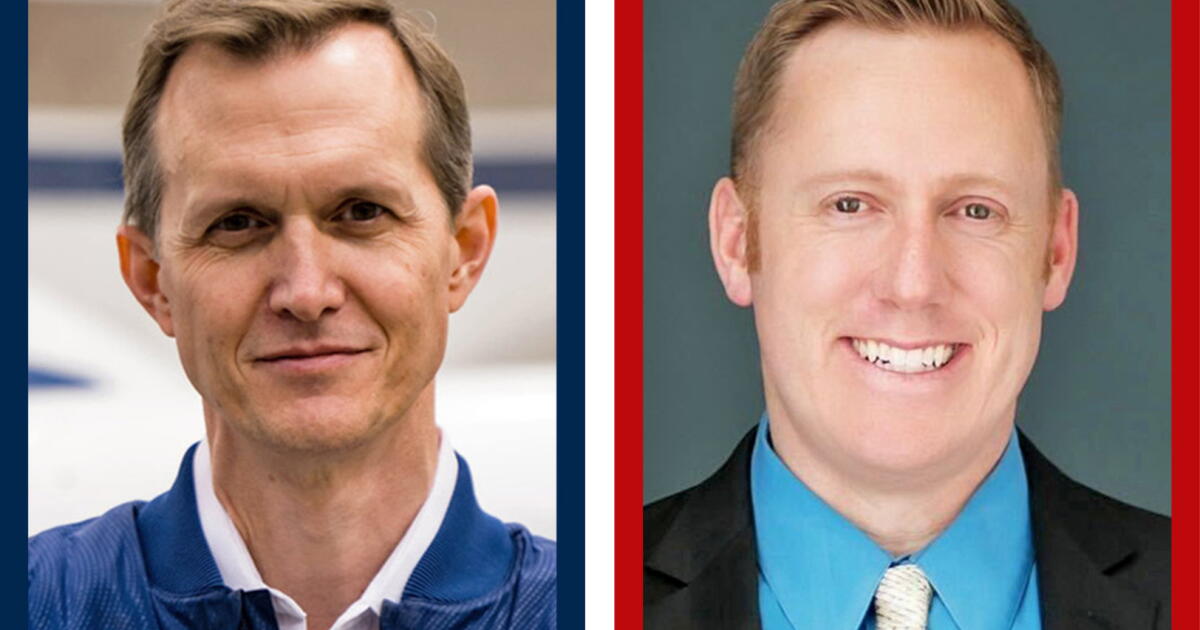
  • Jason Gibbs: Republican, Santa Clarita City Council member, mechanical engineer

Gibbs has been a member of the Santa Clarita City Council since 2020 and was chosen by his peers to serve as the city’s mayor in 2023. He earned his bachelor’s and master’s degrees in mechanical engineering at Cal Poly and went on to work in the aerospace industry, according to his campaign website. He has lived in Santa Clarita for nearly a decade while raising two young children, his bio says, and has served on the local boards of the Boys and Girls Club, the Valley Industry Assn. and the Salvation Army.

  • George Whitesides: Democrat, incumbent

Whitesides defeated Republican incumbent Mike Garcia to represent the 27th Congressional District in 2024. Whitesides worked on President Obama’s transition team in 2008 and served as NASA chief of staff during the Obama administration, according to his campaign bio. He was the first chief executive of Virgin Galactic, co-founded Megafire Action, a nonprofit that advocates for legislation to address the growing problem of massive wildfires, and was a board member for the Antelope Valley Economic Development and Growth Enterprise, his bio says.

Others:

  • Roberto Ramos: Democrat, Marine veteran, UCLA master’s student
  • Caleb Norwood: Democrat, college student

A representative for David Neidhart, a Republican candidate, said he has withdrawn from the race. His name still will appear on the ballot.

Source link

Louisiana congressional primaries are suspended as a result of Supreme Court ruling

Louisiana’s congressional primaries won’t be going forward as scheduled in May, as a result of a U.S. Supreme Court ruling that struck down a majority-Black congressional district, the state’s top elected officials said Thursday.

Gov. Jeff Landry and Atty. Gen. Liz Murrill, both Republicans, said in a joint statement that Wednesday’s high court ruling effectively prohibits the state from carrying out the primaries under the current districts. Early voting had been scheduled to begin Saturday in advance of the May 16 primary.

“The State is currently enjoined from carrying out congressional elections under the current map,” Landry and Murrill said in the statement posted to social media. “We are working together with the Legislature and the Secretary of State’s office to develop a path forward.”

That path is likely to lead to a new U.S. House map benefiting Republican candidates in Louisiana.

President Trump, in a series of social media posts Thursday, praised Landry for moving quickly to revise the state’s congressional districts and urged Republican Tennessee Gov. Bill Lee to do likewise in light of the Supreme Court’s decision.

While civil rights activists denounced the potential for diminished minority representation in Congress, top Republicans cited the Supreme Court’s decision as justification to spur an already intense national redistricting battle among states before the November elections.

“I think all states who have unconstitutional maps should look at that very carefully, and I think they should do it before the midterm,” House Speaker Mike Johnson told reporters in Washington.

Questions persist about election postponement

Louisiana’s election suspension was denounced by some Democrats and questioned by some legal experts.

“This is going to cause mass confusion among voters — Democrats, Republicans, white, Black, everybody,” said Louisiana state Sen. Royce Duplessis, a Democrat who represents the New Orleans area. “What they’re effectively doing is changing the rules of the game in the middle of the game. It’s rigging the system.”

Although Louisiana officials may legally be able to move the primary, it’s not accurate to assert that it was blocked by the Supreme Court’s decision, said Ruth Greenwood, director of the Election Law Clinic at Harvard Law School.

State Rep. Kyle Green, a former assistant state attorney general who is chair of the House Democratic caucus, also cast doubt on the legal justification for postponing the congressional primary.

“The Court’s decision does not halt the election process on its own,” Green said. “And any attempt to suspend or disrupt an ongoing election at this stage would raise serious constitutional concerns.”

Delaying an election is unusual but not unprecedented.

During the onset of the COVID-19 pandemic in 2020, several states pushed back elections because of health concerns. Democratic Gov. John Bel Edwards, who led Louisiana at the time, postponed Louisiana’s April 4 presidential primary three weeks before it was supposed to occur — then delayed it again until July 11.

Louisiana could join a national redistricting wave

Louisiana currently is represented in the U.S. House by four Republicans and two Democrats. A revised map could give Republicans a chance to pick up at least one more seat in the November midterms — adding to Republican gains elsewhere from redistricting.

Voting districts typically are redrawn once a decade, after each census. But Trump last year urged Texas Republicans to redraw House districts to give the GOP an edge in the midterms. California Democrats reciprocated, and redistricting efforts soon cascaded across states.

On Wednesday, Florida became the latest state to redraw its U.S. House districts, adopting a new map backed by Republican Gov. Ron DeSantis that could give the GOP a chance at winning several additional seats.

The Florida vote occurred just hours after the U.S. Supreme Court’s conservative majority issued a ruling that significantly weakened minority protections under the federal Voting Rights Act. The court said Louisiana officials had relied too heavily on race when drawing a congressional district that is represented by Democrat Cleo Fields.

Trump wants Tennessee to also take up redistricting in response to the court’s ruling. The president posted on social media that he had spoken with Lee, who he said would work hard for a new map that could help Republicans gain an additional seat. Democrats currently hold only one of the state’s nine House seats — a district centered in Memphis, which is majority-Black.

Tennessee House Speaker Cameron Sexton, a Republican, said he is in conversations with the White House and others while reviewing the court’s decision.

Louisiana has a history of redistricting challenges

After the 2020 census, Louisiana officials had drawn House voting district boundaries that maintained one Black-majority district and five mostly white districts, in a state with a population that is about one-third Black.

A federal judge later struck down the map for violating the Voting Rights Act. And the following year the Supreme Court found that Alabama had to create its own second majority-Black congressional district.

In response, Louisiana’s Legislature and governor adopted a new House map in 2024 that created a second Black-majority district. But that map also was subsequently challenged in court, leading to the most recent Supreme Court ruling.

After the ruling, Landry called U.S. House candidates on Wednesday and told them that primaries would probably be stalled, according to Misti Cordell, a Republican running in a crowded race to fill U.S. Rep. Julia Letlow’s vacated seat.

“It’s an inconvenience for a candidate for sure, but you know they want to do it right versus having to go through all this again,” Cordell said. She added that she appreciated the heads-up before she and other candidates began “spending their war chest” during the final weeks leading up to election day.

Republican state lawmakers are reviewing which pending bills could be used to alter primaries and reconfigure congressional maps, said Louisiana state Rep. Beau Beaullieu, chair of the House committee overseeing redistricting efforts.

Cline, Brook and Lieb write for the Associated Press. Brook reported from New Orleans and Lieb reported from Jefferson City, Mo. AP reporter Travis Loller contributed to this report from Nashville.

Source link

Florida Legislature approves new congressional map intended to boost Republicans in midterms

The Florida Legislature approved a new congressional map intended to maximize Republicans’ advantage in the state as part of the national redistricting battle that President Trump launched ahead of this year’s midterms.

The vote came just two days after Gov. Ron DeSantis unveiled his proposal and the same day that the U.S. Supreme Court rolled back a key provision of the Voting Rights Act. The decision could make it harder for Democrats to challenge Republican efforts to redraw congressional districts in ways that limit the influence of nonwhite voters.

DeSantis’ map could increase Republicans’ advantage in Florida’s House delegation to 24 to 4, up from the current split of 20 to 8. The potential four-seat gain is the same as what Virginia Democrats expect from a recent redistricting referendum, which is being challenged in state court there.

Florida’s new districts are certain to face lawsuits as well, especially because the state constitution prohibits redistricting for explicitly partisan purposes. DeSantis and his aides believe those provisions will not be a legal barrier because they have been weakened previously by the Florida Supreme Court and again by Wednesday’s U.S. Supreme Court ruling.

Florida Republicans, comfortable in their supermajority in both legislative chambers, said little about the new districts during the whirlwind special session. The measure’s sponsor, Rep. Jenna Persons-Mulicka (R-Fort Myers), limited her remarks to careful answers about an “evolving legal landscape” as Democrats’ asked her about the redistricting effort.

“I believe that there is a likelihood that that map will be upheld against legal challenge,” Persons-Mulicka said.

Opposition was vocal but futile

Democrats, activists and some citizens to decried the process as a partisan power play to satisfy Trump, boost DeSantis’ future ambitions and hurt the majority of registered Florida voters who are not Republicans.

“Y’all are doing this because y’all’s daddy in the White House is injecting national political objectives into what should be a state-driven process,” Rep. Michele Rayner (D-St. Petersburg) told her Republican colleagues before an 83-28 vote in favor of the measure.

The Florida Senate later approved the plan in a 21-17 vote.

Rep. Angie Nixon, a Jacksonville Democrat, chided Republicans for yielding the redistricting process to DeSantis, whose second term expires in January.

“Last time I checked, we’re the ones who were supposed to be drawing the map,” she said, “and yet we are allowing y’all to continue to hold the water of the governor, who is a lame duck and just trying to figure out what his next job is going to be.”

Democrats diminished in metro areas

The new map reshapes districts in Democratic areas around Orlando, the Tampa-St. Petersburg area and in south Florida around Palm Beach, Fort Lauderdale and Miami. The changes could cost Reps. Jared Moskowitz and Debbie Wasserman Schultz, among others, their seats.

DeSantis and his aides said before and during the session that new map is necessary to account for population growth in suburban and exurban areas since the 2020 census and to ensure Florida has a “race-neutral” congressional plan.

The proposal presumed the outcome of the U.S. Supreme Court’s Wednesday decision, which specifically struck down a Louisiana congressional district drawn for the electorate to be majority-Black. Historically, Black voters have aligned more with Democrats, while a majority of white voters lean toward Republicans.

The changes in Florida include the effective elimination of one nearly majority Black south Florida district that was represented by Rep. Sheila Cherfilus-McCormick, a Black Democrat, until her resignation earlier this month.

Lawmakers fast-tracked the measures

From the session’s opening bell Tuesday morning, Republican leaders moved swiftly.

In one of just two committee hearings, Senate Rules Chair Kathleen Passidomo (R-Naples) said she wanted “everybody who has taken the time and effort to come to Capitol to have an opportunity to speak.” Then she declared each speaker would have 30 seconds.

“I know that doesn’t seem like a lot but it actually is, uh, if you’re concise,” she said.

Deborah Courtney drove more than two hours from from Jacksonville and noted that all citizen speakers expressed opposition.

“Why are you doing this redistricting now?” she asked senators. “I doubt that your phone have been ringing off the hook from your constituents going, hey, we need some new maps.”

Rob Woods came from the Tampa area, which under the new map could have no Democratic representation in the U.S. House. A Black man, Wood told senators he was a veteran who said he “bought in from elementary school” on notions of the U.S. as an equal-opportunity democracy.

Now, he said, “it seems as if we are back in that period of Reconstruction, moving back to Jim Crow.”

On the House floor, Persons-Mulicka sidestepped specifics about what factors went into the map. She repeatedly called it “race-neutral,” citing testimony from DeSantis aide Jason Poreda, who took sole credit for the map during the session and did not disclose the names of any architects. But asked about Poreda’s admission that he examined party affiliation and voting patterns, Persons-Mulicka balked.

“I cannot speak to the intent of the map drawer,” she said.

DeSantis unveiled the map on Fox News

Persons-Mulicka and Sen. Don Gaetz, who sponsored the map in the Senate, deflected questions about why DeSantis unveiled the plan on Fox News.

Gaetz, a Crestview Republican, confirmed he had no part in drafting the map and forwarded the governor’s proposal to other senators as soon as he received it late Monday morning.

There’s no guarantee that new maps across the country will play out the way two parties hope. For example, Texas based its revised lines largely on Trump’s performance in 2024, redistributing the president’s voters across more districts to pull them into the Republican column. But Trump’s popularity has waned since his reelection, including among Latino voters who figure prominently in the state.

Florida could face a similar conundrum. Creating more majority-Republican districts could leave margins thin enough to allow for Democratic victories, especially if there’s an anti-Trump backlash at the polls this year.

Some Republicans have expressed worry about that possibility, and a handful voted against the measure in the Florida Legislature.

The governor already took a hit because of the session. He had wanted lawmakers to adopt state regulations on artificial intelligence, ostensibly protecting minors from harmful material, while rolling back vaccine mandates for students in Florida’s public schools. House Speaker Daniel Perez, a Republican but not a DeSantis ally, spiked both ideas.

DeSantis called it “political shenanigans.”

House Minority Leader Fentrice Driskell (D-Tampa) lamented that Republicans still delivered DeSantis the big-ticket item that he wanted.

“On destroying our democracy, they’ve been aligned,” she said, “and that’s what we did here today.”

Barrow writes for the Associated Press.

Source link

Florida legislature OKs congressional map, sends to Gov. DeSantis to sign

April 29 (UPI) — The Florida legislature approved a new congressional map proposed by Gov. Ron DeSantis on Wednesday, sending the redistricting plan back to the governor’s office for a signature.

The new congressional map would allow the Republican Party to pick up an expected four more seats in Congress, Politico reported. In total, the party would have 24 seats to four that would lean Democrat. Currently, Florida Republicans hold 20 seats in Congress and Democrats have seven.

DeSantis submitted his proposal Monday as the state legislature convened a special session.

“Our new map for 2026 makes good on my promise to conduct mid-decade redistricting and it more fairly represents the makeup of Florida today,” DeSantis told Fox News earlier in the week.

Florida lawmakers fast-tracked the proposal ahead of Novembers midterms, The Hill reported. Committees in both the House and Senate advanced the map within hours of the start of the special session.

Lawmakers approved the map mostly along party lines, with some Republican senators voting against it.

Dave Wasserman with Cook Political Report said Reps. Kath Castor, Darren Soto, Jared Moskowitz and Debbie Wasserman Schultz, all Democrats, are now in danger of losing their seats come November.

Source link

Supreme Court rules against Louisiana’s congressional map

April 29 (UPI) — The U.S. Supreme Court ruled against Louisiana’s newly drawn congressional map Wednesday, saying it relied too heavily on race.

The 6-3 decision eliminates one of the two predominantly Black congressional districts established by redistricting from the 2020 census.

Supporters of the redrawn map said it abided by Section 2 of the Voting Rights Act, which prevents lawmakers from packing racial minorities in a limited number of districts or spreading them across too many to diminish their voting power.

Justice Samuel Alito, writing for the majority, described Louisiana’s map as “unconstitutional gerrymander.”

“When §2 of the Act is properly interpreted, it imposes liability only when circumstances give rise to a strong inference that intentional discrimination occurred,” he wrote.

The ruling weakens the landmark Voting Rights Act passed in 1965 to limit racial discrimination in voting. The Supreme Court dealt the act a blow in 2013 when it struck a core provision providing oversight to states with a history of voting discrimination.

With the new ruling by the high court, Republican lawmakers will have an easier time redrawing state maps to more closely align with their party.

Justice Elena Kagan, one of the three dissenters, said such intentional discrimination is hard to prove and that Wednesday’s decision serves to “eviscerate the law.”

“Under the Court’s new view of Section 2, a State can, without legal consequence, systematically dilute minority citizens’ voting power,” she wrote.

It’s unlikely the Supreme Court’s ruling will have an impact on midterm elections later this year as early voting in congressional primaries begin May 16.

Britain’s King Charles III delivers an address to a joint meeting of Congress at the U.S. Capitol on Tuesday. The king and Queen Camilla are on a four-day state visit to the U.S. with stops in Washington and New York. Photo by Bonnie Cash/UPI | License Photo

Source link

Judge blocks results of Virginia referendum on new congressional map

April 22 (UPI) — A judge in rural Virginia on Wednesday blocked the results of Tuesday’s state referendum, barring lawmakers, at least temporarily, from implementing a new congressional map that favored Democrats in November’s midterm elections.

The five-page ruling by Judge Jack Hurley of the Tazewell County Circuit Court sided with the Republican National Committee, which was challenging the results of Tuesday’s special election.

On Tuesday, 51.4% of the more than 3 million Virginians who voted approved amending the state’s Constitution to permit a mid-decade congressional district map redraw, according to unofficial results from the Virginia Department of Elections.

The new map is expected to favor Democrats to win 10 of the state’s 11 congressional districts. The Democrats currently hold six of the state’s 11 congressional seats and Republicans hold five.

Hurley agreed with each of the RNC’s claims, including that the legislation supporting the map redraw violated General Assembly rules and that the question voters were asked — “Should the Constitution of Virginia be amended to allow the General Assembly to temporarily adopt new congressional districts to restore fairness in the upcoming elections” — was “a flagrantly misleading question to the voters, and because the ballot language did not accurately describe the proposed amendment as it was passed by the General Assembly.”

The order declares that all votes from the referendum are “ineffective,” and the state is enjoined from certifying them and instituting the new congressional district map.

“This ruling is a major victory for Virginians,” RNC Chair Joe Gruters said in a statement.

“Democrats attempted to force an unconstitutional scheme to tilt congressional maps in their favor, but the court recognized it for what it is — a blatant power grab.”

Virginia said it will immediately appeal the ruling.

“As I said last night, Virginia voters have spoken, and an activist judge should not have veto power over the people’s vote,” Virginia’s Democratic attorney general, Jay Jones, said in a statement.

“We look forward to defending the outcome of last night’s election in court.”

Virginia Democrats first moved for a mid-decade congressional map redraw in the fall after Texas, under pressure from President Donald Trump, approved a map expected to favor Republicans, kicking off a gerrymandering arms race. Four Republican-led states have approved new maps compared with two Democratic-led states, though several other states under majority leadership of each party are seeking to do likewise.

Trump — who has repeatedly warned Republicans that losing the House in November could lead to his impeachment — has taken several executive actions, including tightening voting regulations, that could affect November’s midterms and that Democrats and critics argue are unlawful measures that could help Republicans maintain their narrow House majority.

He has also repeatedly cast doubt on election legitimacy.

On Wednesday, Trump made unfounded claims that the Virginia referendum was “RIGGED,” citing mail-in voting, a common voting practice that the president has targeted as a vehicle for election fraud, though Trump himself has voted by mail in Florida.

“The Democrats eked out another Crooked Victory,” he said in a statement on his Truth Social media platform before Hurley’s ruling. “Let’s see if the Courts will fix this travesty of ‘Justice.'”

Hurley previously ruled to block the Democrats’ redistricting plan twice, though the Supreme Court of Virginia allowed the referendum to move forward amid litigation.

Democratic-led states California and Virginia pursued their redraws through voter-approved ballot measures, while GOP-led Texas, Missouri, Ohio and North Carolina passed actions through their Republican-controlled state institutions, without voter-approved measures.

Source link

Virginia voting on new congressional map drawn by Democrats

April 21 (UPI) — Voters are heading to the polls in Virginia on Tuesday to vote on a new congressional map drawn by state lawmakers.

Polls are open until 7 p.m. EST., with nearly 1.4 million early ballots already cast on a constitutional amendment to change the congressional map. The result of Tuesday’s vote could have significant implications for the midterm elections in November.

If the map, drawn by Democratic lawmakers, is approved by voters, Democrats would be favored to win 10 of the state’s 11 congressional districts. Democrats currently hold six of the state’s 11 congressional seats and Republicans hold five.

Virginia is just the latest state to weigh redrawing its congressional map mid-decade after Texas approved a map that will favor Republicans last year. Four Republican-led states have approved new congressional maps.

Democrats and Republicans outside of the state have lent their voices to campaigns for and against Virginia’s redistricting plan. President Donald Trump and House Speaker Mike Johnson, R-La., voiced their opposition to the plan, with Trump calling it “unfair.”

House Minority Leader Hakeem Jeffries, D-N.Y., has joined Virginia lawmakers Sen. Mark Warner and Sen. Tim Kaine at rallies to support redistricting. Former President Barack Obama has also been involved, appearing in ad campaigns calling on voters to vote “yes.”

“We’re giving Virginians a chance to vote — which Republican states have not done — about whether they want to have a congressional delegation that will stand up against Donald Trump’s tyranny if he tries to interfere with our elections,” Kaine said in an appearance on Fox News on Sunday.

The Virginia Supreme Court allowed Tuesday’s election to move forward but may still weigh in on whether the new congressional map is legal or not.

Secretary of Health and Human Services Robert F. Kennedy, Jr. speaks during a House Appropriations Subcommittee on Labor, Health and Human Services, Education, and Related Agencies hearing on the budget for the Department of Health and Human Services in the Rayburn House Office Building near the U.S. Capitol on Thursday. Photo by Bonnie Cash/UPI | License Photo

Source link

RFK Jr. defends decisions at HHS in congressional testimony

Secretary of Health and Human Services Robert F. Kennedy, Jr. speaks during a House Appropriations Subcommittee on Labor, Health and Human Services, Education and Related Agencies, one of seven congressional committees he testified before Thursday. Photo by Bonnie Cash/UPI | License Photo

April 16 (UPI) — Health and Human Services Secretary Robert F. Kennedy, Jr. on Thursday testified before seven congressional committees, often clashing with Democrats about decisions he has made about vaccines and department priorities.

The testimony is Kennedy’s first trip to the Capitol this year and the first time that he has appeared before Congress in more than seven months, The Washington Post reported.

In addition to unilaterally remaking the Center for Disease Control and Prevention’s vaccine advisory committee and the agency’s recommended childhood vaccine schedule — which were blocked by a federal judge in March — he has changed the Food and Drug Administration‘s recommendations on diet and shepherded medications through federal approval processes while allegedly ignoring data on them.

Kennedy also was asked by members of Congress about the Trump administration’s 12.5% budget request decrease, which amounts to about $16 billion that it sought for its fiscal year 2027 budget proposal, NPR reported.

“Our children are the sickest generation in modern history — decades of failed policy, captured agencies and profit-driven systems have caused it,” Kennedy said during a hearing before the House Ways and Means Committee.

“Parents across this country demanded change — and we are delivering it,” he said.

Kennedy said that the measles vaccine “certainly” could have saved the life of a child who died in Texas last year during an outbreak in the state.

More than 1,700 measles cases have been reported through the first 3 1/2 months of 2026, compared to more than 2,200 reported in all of 2025.

He also was asked by Rep. Linda Sanchez, D-Calif., about ending an influenza vaccine public awareness campaign while investing money in marketing efforts for his remade food pyramid.

“You suspended this pro-vaccine messaging campaign, but somehow you’re spending taxpayer dollars to drink milk, shirtless in a hot tub with Kid Rock?” Sanchez asked.

Kennedy also was accused of “diminishing science” by Rep. Bradley Scott, D-Ill., with his support for $5.7 billion in cuts to the National Institutes of Health meant for drug development.

“Nobody wants to make the cuts,” Kennedy said in response to several questions about reducing the HHS budget, but said the nation needs “to tighten our belt” because of the national debt, which he blamed on Congress.

First lady Melania Trump speaks during a House Ways and Means Committee roundtable discussion on protecting children in America’s foster care system in the Longworth House Office Building near the U.S. Capitol on Wednesday. The bipartisan group of lawmakers are looking to address challenges children in foster care face, including barriers to education and educational advocacy, housing, employment opportunities, financial independence, and technology. Photo by Bonnie Cash/UPI | License Photo

Source link

A vaccine standoff and other key moments from RFK Jr.’s first congressional hearing in months

Health Secretary Robert F. Kennedy Jr. on Thursday faced federal lawmakers for the first time since September as he sought to defend a more than 12% proposed cut to his department’s budget and dodge arrows from angry Democrats along the way.

In his testimony before the House Ways and Means Committee, kicking off an expected sprint of seven budget hearings he’ll attend across congressional committees and subcommittees over the next week, Kennedy emphasized the administration’s work to reform dietary guidelines and crack down on waste, fraud and abuse.

Republicans on the committee praised Kennedy as a “breath of fresh air” and asked him to promote his department’s recent actions. Democrats, who have been furious over Kennedy’s sweeping overhaul of the U.S. Department of Health and Human Services, largely had a different agenda.

They needled Kennedy on what they viewed as the Trump administration’s hypocrisy on fraud, demanded to know why he was cutting budgets for various programs and slammed his efforts to pull back vaccine recommendations and messaging, which they said have caused unnecessary deaths.

Kennedy fired back, often raising his voice as he accused the Democrats of misrepresenting his work and past statements.

Here are three standout moments from Thursday’s hearing:

A standoff over measles

One heated exchange early in the hearing came between Kennedy and Rep. Linda Sanchez. The California Democrat decried recent measles outbreaks across the U.S. and asked Kennedy to answer for the fact that under his leadership, the Centers for Disease Control and Prevention pulled back public health messaging supporting vaccination.

“As a mother, this horrifies me,” Sanchez said. “Did President Trump approve your decision to end CDC’s pro-vaccine public messaging campaign?”

Kennedy repeatedly refused to answer, saying first he wanted to respond to the “misstatements that you’ve made” and later praising the Trump administration’s record on preventing measles, although protections against the disease have eroded in some parts of the country as vaccination rates have dropped.

“That’s not answering my question,” Sanchez said as the two talked over each other.

But Sanchez also got Kennedy, a longtime anti-vaccine activist before he entered politics, to acknowledge that a 6-year-old who died of measles last year in West Texas could have potentially been saved with vaccination.

“Do you agree with the majority of doctors that the measles vaccine could have saved that child’s life in Texas?” she asked.

“It’s possible, certainly,” Kennedy said.

RFK Jr. denies talking about Black children being ‘re-parented’

A fight erupted between Kennedy and Rep. Terri Sewell, a Democrat from Alabama, when Kennedy vehemently denied making remarks he’d said in 2024.

The comments dated back to when Kennedy was a presidential candidate. On the “High Level Conversations” podcast last July, he said, “Psychiatric drugs — which every Black kid is now just standard put on Adderall, SSRIs, benzos, which are known to induce violence, and those kids are going to have a chance to go somewhere and get re-parented to live in a community where there’ll be no cellphones, no screens, you’ll actually have to talk to people.”

“Have you ever re-parented, or parented, I should say, a Black child?” Sewell asked, as her staff held up a poster featuring an abbreviated version of the quote.

“I don’t even know what that phrase means,” Kennedy said. “I’m not going to answer something I didn’t say.”

“You’re making stuff up,” he later claimed.

A recording of the podcast shows he made the comments during a conversation about free rehabilitation facilities he was proposing opening at the time in rural areas around the country.

Health and Human Services spokesperson Emily Hilliard said Kennedy before joining the administration was referring to spaces where young people facing alienation, mental health challenges and despair could get re-parented, which she said was a psychotherapy term for “developing the emotional regulation, discipline, boundaries, and self-worth that may not have been established in childhood.”

For Kennedy and his former party, civility is the exception

Kennedy spent most of his life as a Democrat, the scion of one of the nation’s most famous political families. Both Republicans and Democrats during the hearing began their remarks by expressing their admiration of Kennedy’s relatives, among them former President John F. Kennedy.

But again and again throughout Thursday’s hearing, the fraying of bonds between Kennedy and his former party was on full display as spiteful comments were passed back and forth.

The Health secretary grew defensive and visibly agitated. He repeatedly criticized Democratic lawmakers for not giving him a word in edgewise.

“They’ve all shut me up,” Kennedy said at one point. “They give a little speech that they can go and market, you know, for fundraising, and they don’t allow me to answer the question.”

On a few rare occasions, the exchanges were civil. One representative, Gwen Moore of Wisconsin, used humor to make that happen.

“I promise to give you easy, comfortable questions if you don’t yell at me and hurt my feelings,” she told Kennedy. He promised he wouldn’t.

Swenson writes for the Associated Press.

Source link

Jackie Speier would like her former congressional colleagues to zip up and shape up

It seems like a simple ask that male politicians don’t sexually harass or even rape women, but also, it seems like an open secret in Congress that sexual misconduct is too common.

Take Eric Swalwell, whose epic political immolation has captivated this week’s national political news, including a TMZ-obtained video of the then-congressman bleary-eyed in a bathrobe on a yacht that was literally the least-worst revelation.

For years “there were swirling rumors about Eric,” former Rep. Jackie Speier told me. Speier in 2018 thought she’d put in place tough new rules to stop sexual misconduct among her former colleagues, and the type of backroom shrugs that allowed men to prowl unchecked.

But despite her efforts, Speier, who represented a part of the Bay Area near Swalwell’s district until 2023, said the problem remains Congress itself, and the “crippling” power that elected officials have over their staffs. Don’t get her started on how that power imbalance is even worse for young lobbyists.

“I’ve always said that Congress is Hollywood for ugly people,” she said. “It’s a whole environment that becomes, I think, toxic.”

But also one that, she added, isn’t inevitable.

The 2018 change

In 2017, the #MeToo movement had swept into the public consciousness and ignited calls for change.

Armed with that outrage and the roiling fire of public opinion, Speier set out to change archaic rules that governed how sexual misconduct was handled in Congress.

“I’ll just run through what it was like,” she told me. “If you wanted to file a complaint, you had to be prepared to go through some period of counseling; to have a cooling off period; to participate in mandatory mediation; and sign an NDA, and then the taxpayers picked up the tab if there was a settlement. It was kind of jaw dropping to think that that was the policy.”

It wasn’t just policy, it was culture. Speier herself had been the victim of an assault when she was a young staffer — a senior staffer pushing her against a wall and forcibly kissing her. And like so many women, she put the episode aside and went on with her career because speaking out would have likely brought her more grief than justice.

But by 2017, she realized the public was at a “tipping point,” and, as she said then, “Congress has been a breeding ground for a hostile work environment for far too long.”

With Rep. Bradley Byrne, a Republican from Alabama, they passed the Congressional Accountability Act of 1995 Reform Act.

It did away with the weird and coercive requirement for counseling and a cooling off period and most significantly, forced sexual harassers to pay for their own settlements instead of pinning the cost on taxpayers.

But even with the new rules, some colleagues didn’t seem to get it. Speier recalled one man who, informed of possibility he would have to pay sexual harassment settlements out of his own pocket, asked if he could purchase insurance to cover those costs.

“How about you keep your zipper up?” Speier wondered.

The bigger problem

Still, Speier said she thought the law made a difference not just in how claims of misconduct were handled, but in the culture of Capitol Hill.

But, “over time it just was relaxed,” she said.

When Speier left office in 2023, Rep. George Santos (R-N.Y.) was under investigation for sexual harassment — a claim Congress deemed unfounded, but bounced Santos from its ranks for a bunch of other misconduct.

Let’s be real — Congress has never been without scandal.

But Speier said that doesn’t mean sexual abuse can’t be stopped. She just thinks the rules she put in place need to be even tougher: A zero-tolerance approach similar to what corporate America often enforces.

“I’m thinking now that the way to fix this may be something more direct and straightforward and simple, much like they do in the private sector,” she said.

“When the CEO is having an affair with a subordinate and it becomes known, he’s history. He’s relieved of his duties, and if we made it clear that if you sexually harass a staff member, or you have an affair with a staff member, you will be expelled, or you will be subject to expulsion of Congress, that will change their behavior.”

I love her enthusiasm and I support tossing out miscreant members, but I’m not sure even that will keep the zippers up. But there is always hope.

And something has to be done.

“These cases underscore the fact that these women do not feel comfortable coming forward,” she pointed out. “So we’ve got to figure out why and close that hole.

“Is it because they’re fearful that they’ll be retaliated against or that they’ll be ostracized or blackballed? I don’t know the answer, but I’m really urging my colleagues on both sides of the aisle to fix this, and part of fixing it is talking to these women who were, in fact, sexually harassed and assaulted and find out why they didn’t feel comfortable coming forward.”

That’s the real issue, and the real demand we should be making. From the Oval Office to district offices, too many elected leaders have proven they’ll use their power to obtain sex — by coercion or even force.

And too many women remain afraid to speak out because they still suffer both career and social consequences — a realistic fear that coming forward could end their own ambitions, or at least leave them battling to not be defined by the abuse.

Yes, Swalwell and others have been shamed into resigning.

But it’s past time to make sexual abuse a one-strike-you’re-out offense — for the perpetrator, not the survivor.

You’re reading the L.A. Times Politics newsletter

George Skelton and Michael Wilner cover the insights, legislation, players and politics you need to know. In your inbox Monday and Thursday mornings.

What else you should be reading

The must-read: Swalwell supporters scramble after he drops out of governor’s race. Who will benefit?
The deep dive:Rebuilding After Fires, L.A. Neighbors Join Forces and Innovate
The L.A. Times Special: In L.A. County, many homeless people enter shelters, only to end up back on the streets

Stay Golden,
Anita Chabria

Was this newsletter forwarded to you? Sign up here to get it in your inbox.

Source link