Poor in an oil-rich country: Republic of Congo’s youth hope for change | Elections News
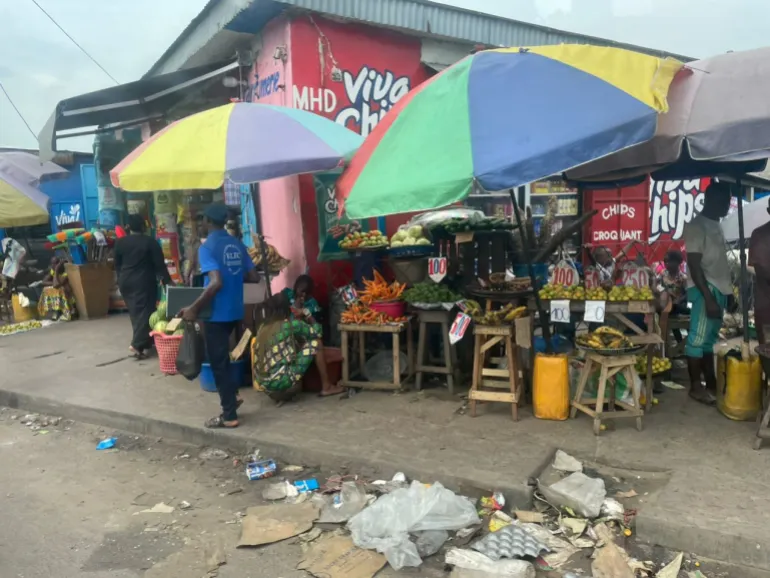
Pointe-Noire and Brazzaville, Republic of Congo – In Pointe-Noire, the economic capital of the Republic of Congo, the aisles of the Grand Marche come alive in the early hours of the morning. Among the market stalls, street vendors, and shoppers pushing their way through the crowd, Romain Tchicaya is selling medicines on the sly.
As the price of basics – including pharmaceutical products – rises, and people turn to more affordable unregulated options, merchants like Tchicaya step in to fill the gap while trying to earn a living in a struggling economy.
Recommended Stories
list of 3 itemsend of list
However, the 37-year-old’s background is far from typical for a street vendor.
With a degree in management, he thought he would find a stable job after graduating from university. But like many young Congolese, he found himself facing a tight job market with few opportunities.
“We are told that the country is rich in oil. But I don’t see that wealth in my daily life,” he told Al Jazeera. “Look at Pointe-Noire, formerly nicknamed as Ponton la Belle [Beautiful Pointe-Noire]. Today, the city is unrecognisable.”
Around the Grand Marche, the main roads are potholed, and when it rains, the streets get flooded, making it almost impossible to drive.
Like Tchicaya, Brice Makaya, in his 40s, has never managed to find a stable job here despite having a degree in computer science.
With no stable employment, he is unable to rent a house and now lives outside the church where he prays.
“I am still underhoused at my age and have no prospects for the future,” he told Al Jazeera. “Without a job, I can’t plan ahead. I’m just trying to survive.”
For many young Congolese, daily life is a paradox: though they live in a resource-rich country – the third largest oil producer in sub-Saharan Africa and a producer of liquefied natural gas (LNG) – nearly half the population live below the poverty line.
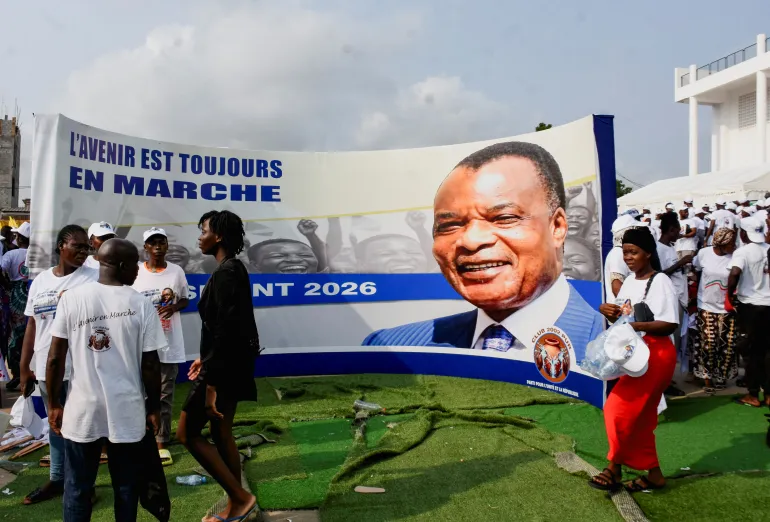
This Sunday, Congo goes to the polls in which President Denis Sassou Nguesso, 82, is again seeking another term. For young voters, jobs and the economy are a big concern. But for the government, there appear to be limitations to what is possible.
During one of his speeches in the election campaign, Nguesso pointed out that the civil service could not absorb all job seekers, and urged young people to take charge of their own futures by encouraging self-employment.

Oil: ‘Fuel of the political system’
According to the World Bank, oil accounts for about 70 percent of Congo’s exports and nearly 40 percent of its gross domestic product (GDP).
But this wealth does not automatically translate into an improvement in living standards for most of the populace.
The World Bank estimates that more than 40 percent of Congolese people live below the poverty line, despite the country’s significant natural resources.
For economist Charles Kombo, this can be explained in large part by the very structure of the Congolese economy, which is dependent on oil revenues.
“Oil dependency plays a structuring role in many African economies. In what some call a ‘rentier state’, a large part of public resources comes from the exploitation of natural resources rather than taxation,” he explained.
In a rentier state, the country generates substantial revenue from “renting out” natural resources, such as oil, to foreign companies. In exchange for the exploitation rights granted on these resources, the state receives royalties, taxes, or a share of production.
In this type of system, Kombo explains, the management of revenues becomes central to political power.
“Control of this revenue often reinforces institutional centralisation,” he said, explaining that dependence is no longer solely economic, but becomes institutional and sometimes psychological, as it influences budgetary priorities, political strategies, and even perceptions of development.
He points out that when the economy relies heavily on extractive revenues, economic and political resources tend to become intertwined, which can limit electoral competitiveness.
“Oil revenues can generate significant income, but they do not guarantee the structural transformation of the economy,” he said.
This oil dependence also exposes the country to fluctuations in oil prices on international markets.
After the fall in crude oil prices in 2014, the Congolese economy experienced a severe crisis. Public debt exceeded 90 percent of GDP, before being restructured under agreements with the International Monetary Fund and several international creditors.
Although this has helped stabilise the macroeconomic situation, the country remains heavily indebted. According to the World Bank, public debt fell from 103.6 percent of GDP in 2020 to about 93.6 percent in 2024, reflecting a gradual improvement, but also the continued vulnerability of Congo’s economy to fluctuations in global oil prices.
For political analyst Alphonse Ndongo, oil revenues also influence political life in Congo.
“Oil has become the fuel of the political system. It is used to finance parties, co-opt elites, and maintain social balance,” he said.
According to him, “oil money comes easily and quickly”, but this financial windfall has long delayed necessary structural reforms such as economic diversification.
In his view, the steady flow of money from the oil sector can create a sense of complacency within the system, reducing the pressure to pursue deeper structural reforms. As a result, debates around economic diversification tend to emerge mainly during periods of financial stress, when falling oil prices expose the limits of the model. But when revenues rise again, he argues, the urgency to diversify often fades, leaving the economy heavily dependent on the same resource.

‘An uphill battle’
As the country’s oil wealth fails to filter to the majority of the population, young people are particularly affected and many face unemployment.
According to data from the World Bank and the International Labour Organization, the youth unemployment rate in Congo is among the highest in Central Africa, while the informal sector absorbs the majority of new entrants to the labour market.
During a news conference on March 4 in Brazzaville, Prime Minister Anatole Collinet Makosso, who is also spokesperson for presidential candidate and incumbent leader Nguesso, said that young people were at the heart of the government’s policy.
“Youth has always been at the centre of Denis Sassou Nguesso’s policies and social projects,” he said, citing investments in education and the construction of universities.
He also claimed that the unemployment rate had fallen from 44 percent to 39 percent in recent years.
But on the ground, many young people remain sceptical.
Landry, 23, a student in the capital Brazzaville who did not want to give his last name, says he has lost faith in political promises.
“Promises of jobs come back every election. It’s become a cycle,” he said.
A months-long strike at Marien Ngouabi University, the country’s main institution of higher education, forced him to interrupt his studies.
“I went back to my parents’ house to wait and see what I could do. Today, I’m seriously thinking about going abroad.”
Another student in Brazzaville, a 26-year-old woman who did not want to give her name, expressed similar frustration.
“The only sector that is really recruiting today is the army. But not everyone can become a soldier. Becoming a civil servant is also an uphill battle,” she said.
Even sectors that are supposed to be structured are not immune to precariousness. Regine, a young journalist who also did not want to provide her last name, said she works without a stable employment contract.
“In the media, many young people live off ‘camora’, one-off payments for services. It’s not a real salary.”
She also lamented the difficulties of everyday life, including infrastructure issues, such as power cuts and inconsistent water supplies, despite repeated government investment plans.
“In the 21st century, people rejoice when the electricity comes back on. And when the water finally flows, everyone rushes to fill buckets,” she said.

‘Social time bomb’
Congo’s infrastructure problems are a reminder to Regine and many others that economic difficulties go beyond the issue of employment.
At the same time, the consequences of the country’s youth employment crisis also reverberate more widely and into the social sphere.
Analyst Ndongo sees this as a potentially explosive situation.
“When there are large numbers of young people who are unemployed and have no prospects, it can become a social time bomb,” he said.
This dynamic is already visible in the tensions that emerge when unemployment and inequality intersect, Ndongo explained: As large numbers of young people struggle to find work while wealth linked to the oil sector remains visible, frustration can build among those excluded from economic opportunities.
He says pressure can be contained for a time, but without meaningful job opportunities and stronger education systems, resentment may deepen. Over time, he warns, groups of unemployed and poorly trained youth can become more vulnerable to crime or gang activity.
The Congolese population is very young: more than 60 percent of people are under 25, according to United Nations data. This demographic reality represents both economic potential and a major challenge for the authorities.
For economist Kombo, the issue goes far beyond just unemployment.
“Demographics are a major political factor in many African countries. When the population is predominantly young, expectations for employment and social mobility are particularly high.”
According to him, long-term political stability will depend on the ability to create economic opportunities.
“Development is not distributed,” he said, “it is built.”
Despite the frustrations, political mobilisation remains limited, even as several candidates rally to compete against Nguesso in this weekend’s vote.
Chris Taty, a young student in Brazzaville, says he is not interested in the current election, as it is clear that the president who has already been in power for more than 40 years will once again reign supreme.
“Everyone already knows who is going to win. So why bother voting? I’d rather stay at home and do other things,” he said.
“Sometimes we joke that Sassou [Nguesso] is our grandfather,” the young journalist Regine said. “He has been ruling for so long that many of us have never known another president”
Nguesso has been a dominant figure in Congolese politics for decades, first ruling the country from 1979 to 1992 before returning to power in 1997 following a brief period out of office. His long tenure has enabled him to consolidate influence over key state institutions. Meanwhile, analysts say the country’s opposition remains fragmented and lacks the organisational capacity to pose a strong challenge.
For some potential voters, the perception of a largely predictable outcome has contributed to a degree of political disengagement, which Ndogo says is a “feeling of resignation”.
“Resignation is ingrained in everyone … Students, politicians, intellectuals … everyone is forced to scramble for a piece of the pie,” he said.
“We are all lulled into resignation because we tell ourselves that if we stand up against the established order, against those in power, we risk ending up in prison or even six feet under. It’s risky to oppose the system today.”
This combination of economic frustrations and limited political participation is a main challenge facing Congo, observers say. And the issue of youth unemployment risks becoming a major crisis in the coming years if nothing is done to fix it.
For many educated yet underemployed young people in the oil-rich country, the question is whether or not Congo can transform its natural wealth into concrete opportunities for its people.
“We are not asking for much,” said Regine. “Just the chance to work, to live in our own country with dignity and to believe that our future can be built here, without connections, with equal opportunities for young people, and without conditions.”