Denmark, Finland, Iceland, Norway, Sweden and the Faroe Islands back calls for Infantino’s resignation amid FIFA crisis.
Published On 23 Aug 202623 Aug 2026
Six Nordic football associations have delivered a united blow to FIFA President Gianni Infantino, declaring they have lost confidence in his leadership while demanding sweeping governance reforms at world football’s governing body.
The six Nordic FIFA members – Denmark, Finland, Iceland, Norway, Sweden and the Faroe Islands – met in Helsinki and issued a rare joint statement on Sunday, backing calls for Infantino’s resignation from three major regional confederations.
They also supported demands for an independent investigation into his proposal to sell a stake in events like the World Cup to private equity investors, a plan that was quickly abandoned in the face of a global backlash.
“The six Nordic football associations have lost confidence in FIFA’s president and are concerned about the organisation’s governance and decision-making at the highest level,” they said in a statement.
“The Nordic football associations stand united with UEFA and support the measures that the organisation and its national member associations have jointly proposed.
“We expect FIFA to provide binding guarantees that the organisation’s governance or competitions will never again be opened up to private ownership.”
FIFA did not respond to Al Jazeera’s request for comment.
On Friday, Denmark’s football association pledged to find a credible alternative to Infantino in March’s presidential election.
Infantino is under pressure from three confederations to resign: UEFA, the AFC and CONCACAF.
The sport’s regional powerhouses in Europe, Asia, and North and Central America and the Caribbean have also discussed a potential vote of no confidence against the FIFA chief.
“We also support the demand made by AFC, CONCACAF and UEFA that a fully independent external investigation into the events surrounding the FIFA Forward Enterprise proposal be established,” the Nordic associations added.
“We also call on FIFA to initiate a comprehensive and independent review of its governance framework to determine whether it ensures the independence, checks and balances, transparency and accountability that were intended when FIFA adopted its reform programme in 2016.”
Infantino, who is seeking a fourth term until 2031 in next year’s election, is in the Dominican Republic this weekend, where he has met with officials of the Caribbean Football Union (CFU).
CONCACAF President Victor Montagliani had asked Infantino to stay away from a youth football tournament in the country, saying his presence would overshadow the event.
“This meeting of the presidents of CFU takes place in the environment of [an] under-14 youth tournament in the region, which actually is one of those tournaments that can take place thanks to the FIFA Forward programme,” Infantino said.
“So even more so a reason to be proud to be here and happy as well because it’s important to engage, to have a dialogue, to express views and opinions.”
Long-term experiments demand resources, which is why the Dodgers’ lab is perfect for the Roki Sasaki project.
Funding is no issue. Time is no object. Pressure is a privilege and so is patience.
And when the Dodgers set out to prove a hypothesis — Roki Sasaki can be a “Cy Young-caliber” starting pitcher, as general manager Brandon Gomes has suggested — they did it with the luxury of seeing the project all the way through, until they’ve been proved right.
And most everyone else, wrong.
No, Sasaki didn’t need to be moved to the bullpen.
No, Sasaki didn’t need to be sent back down to the minor leagues.
No, Sasaki wasn’t going to be a bust.
Yes, the Dodgers knew exactly what they were doing by continuing to trot out the 24-year-old right-hander, providing him with the big league education they promised.
Thursday’s test ran 5⅓ innings, and Sasaki — with his bigger glove and harder splitter — held the Seattle Mariners at bay until the sixth inning, when they scored their only two runs in a game the Dodgers won 6-2.
For the fourth straight start, Sasaki performed like the pitcher who was promised when he picked the Dodgers 18 months ago, trusting them to develop him into a starting star.
Tack on another win to three consecutive he’d previously recorded, against the Colorado Rockies, New York Yankees and New York Mets.
In his past four starts, Sasaki (5-5) has struck out 26 batters, walked seven and has a 2.25 ERA and 3.44 FIP in 24 innings.
Man alive, the Dodgers have done it! “The Monster of the Reiwa Era” is breaking out. And the rest of baseball should probably be terrified.
Teammates congratulate Roki Sasaki as he’s pulled from the game by Dodgers manager Dave Roberts in the sixth inning Thursday against the Seattle Mariners.
(Gina Ferazzi / Los Angeles Times)
“This is a tough league,” catcher Dalton Rushing said. “You have to have confidence and if you don’t have confidence, it’s hard to be successful. I think that’s all it was. He lacked a little bit of confidence early on. And as soon as he had that runway to kind of allow himself to be himself, you’ve seen the best out of him.”
Progress isn’t linear. But it’s been undeniable.
As a much-hyped rookie last season, Sasaki didn’t step right in as a permanent part of the Dodgers’ starting rotation. He had health issues and crises of confidence. And he had to acclimate to a culture far from his home in Japan, and to do it with his baseball-mad country following along closely.
All while playing under the Dodgers’ high-powered microscope. (Ask Kyle Tucker, a 29-year-old, English-speaking American, how challenging it’s been.)
Then, in the postseason, Sasaki became a not-so-secret secret weapon out of the bullpen in the Dodgers’ successful World Series defense. A step forward in relief, and then, as a sophomore starter, several steps back.
This spring training, Sasaki posted a 15.58 ERA and allowed 15 walks in 8⅔ innings. He looked lost — like, I thought, someone whose too-often dejected body language told us the glare of Dodger Stadium’s bright lights would do more damage than help.
I felt bad for the young man, felt he should get to fix his issues in the minors. I doubted his fortitude.
To start the regular season, Sasaki was shaky. He struggled with command. Failed to get out of the fifth inning in his first three starts. And the appeals began for the Dodgers to sign Sasaki up for duty in the ‘pen.
But the Dodgers (69-40) didn’t seem to consider it.
Why would they? They’re incentivized to see this trial all the way through, because of what it says about them as a developmental destination. As the club that pushes the right buttons. That can figure out how to help top talent figure it out.
A lower-half mechanical change over the All-Star break helped the 6-foot-2 Sasaki’s retooled splitter regain its movement and his fastball its heat; he hit or eclipsed 100 mph six times Thursday.
Also, a noticeably larger glove seems to have helped him curb his habit as an overly generous tipper. They thought he might have been inadvertently cluing in opponents with his movements on the mound — now they’ve found a way to better hide them, though neither Sasaki nor manager Dave Roberts want to credit the leather for this recent breakthrough.
“It’s not the glove,” Roberts said. “I think it’s just more of even the second half, when he came out that first start, you just saw that I think he just kind of decided that it’s time to go and finish strong. It’s a new half, it’s a new beginning. And you’ve seen a different player, you know, to be quite honest.
“There’s a lot more confidence … I use that word ‘conviction’ a lot, and there’s a lot of conviction.”
Because it’s not the size of a glove on a man, right? It’s his heart.
Central banks are scaling back on the dollar as institutional bullion buying climbs to record highs.
In the World Gold Council’s (WGC) latest annual survey of central banks, 83% of respondents expect to increase their gold holdings over the next year. That’s up from 76% in 2025. This surge in demand is due to the U.S. dollar’s waning preeminence in global reserves and the growing number of international crises.
Almost three-quarters of central banks predict a lower share of global reserves held in greenbacks over the next five years, and a record 45% say they plan to increase their institutional bullion reserves over the next 12 months, up from 43% last year.
Gold Overtakes Bonds as Ultimate Safe Haven
Gold recently overtook U.S. government bonds as the world’s top reserve asset, according to the June 16 report. The survey polled 76 central banks between February and May; most responses were received after the recent Mideast hostilities began. Greenbacks accounted for 42% of total reported reserves, including gold and foreign exchange, in the third quarter of last year, according to the International Monetary Fund.
A record 90% of those polled by the WGC say gold’s performance during volatile periods is a key reason for acquiring more of it. Similarly, 82% say they value gold for portfolio diversification, and 84% value it as a long-term store of value.
The metal’s role in hedging geopolitical risk is especially important among central bankers in developing and emerging markets, with 85% citing this factor.
Half of respondents seeking to procure more gold say they will finance such purchases through domestic purchase programs denominated in local currency, while 38% say they would buy more gold by selling existing reserve assets.
Global Shift in Gold Storage Strategy
Central banks also appear to be rethinking their gold storage strategy. The survey found that 9% of central banks increased domestic storage over the past year, while 10% say they diversified their overseas storage locations.
The Bank of England remains the most popular gold storage location, cited by 57% of respondents, while the Swiss National Bank saw a sharp drop in preference, from 12% to 6% in 2025.
In the past four years, central banks have, on average, acquired 1,000 tonnes of gold annually, double the 500-tonne average of the previous decade. Mainland China’s bullion stores totaled 74.96 million troy ounces in late May, up 320,000 from April, marking the 19th consecutive month of increase, according to the People’s Bank of China.
Ajay Shamdasani is a contributing writer based in Hong Kong.
The jailing of one of Indonesia’s most influential entrepreneurs in a controversial corruption case has raised fears of damage to investor confidence in Southeast Asia’s largest economy.
Nadiem Makarim, the cofounder of the popular super-app Gojek, was last month sentenced to 10 years in prison for allegedly abusing his authority while serving as the country’s education minister.
Recommended Stories
list of 4 itemsend of list
Makarim was found guilty of giving favourable treatment to Google, an early investor in Gojek, when procuring Chromebook laptops for schoolchildren during the COVID-19 pandemic.
Prosecutors argued that Makarim, who served as former Indonesian President Joko Widodo’s education minister from 2019 to 2024, inflicted state losses of $120m, alleging that he should have been aware the laptops would not work in remote areas with poor internet access.
Critics of the prosecution have argued that the case against Makarim lacks evidence and that the startup founder-turned-politician is the latest victim of a campaign of political retribution being waged by the administration of Indonesian President Prabowo Subianto.
Nicky Fahrizal, a researcher of politics and social change at the Centre for Strategic and International Studies (CSIS) in Jakarta, said foreign investors will inevitably think twice before committing capital to Indonesia following the verdict.
“The Nadiem case, along with a string of similar incidents, has served as a warning signal to investors,” Fahrizal told Al Jazeera.
“For them, non-economic factors, such as legal certainty and the quality of the judicial system, are absolute prerequisites.”
Nadiem Makarim gestures after being sentenced in a laptop procurement corruption case at the Indonesian Court for Corruption Crimes in Jakarta, on June 30, 2026 [Tatan Syuflana/AP]
Makarim was found guilty by a panel of five judges on June 30, following charges related to the procurement of more than 1 million laptops intended for use in schools in remote and impoverished areas.
At the trial held at the Indonesian Court for Corruption Crimes in Jakarta, prosecutors alleged that Makarim deliberately tailored the tender specifications to favour Google, which invested in Aplikasi Karya Anak Bangsa (AKAB), Gojek’s then-parent company.
Scrutiny of the tender process first arose among the public after it emerged that the Chromebooks often did not work in remote areas, raising questions about how Google was chosen in the first place.
“Choosing a device that relies on an internet connection amid uneven infrastructure… demonstrates a mismatch with needs…” Judge Sunoto said during the sentencing.
Following the verdict, prosecutor Corneles Geeb Paulus hailed the outcome as a victory for “the schoolchildren whose rights were taken away and who were deprived of equitable access to digital education across Indonesia”.
Google has denied providing or offering authorities any inducements to win the tender.
The California-based tech giant, which has a market value of more than $4 trillion, was not indicted in the case.
“From a legal standpoint, authorities seem to have hit a wall in their efforts to secure sufficient evidence and establish the necessary criminal nexus to prosecute the corporation,” the CSIS’s Fahrizal said.
“From a political perspective, Google is a tech giant with immense business influence.”
Taking action against Google could have jeopardised the government’s ongoing digitalisation efforts, Fahrizal added, describing the company as “too big to fail” within the digital sector.
Trissia Wijaya, an Indonesian-born research fellow at the University of Melbourne’s Asia Institute, said Nadiem’s prosecution, coupled with the uncertainty of the business environment under Prabowo, would inevitably erode market confidence.
“Regardless of whether Nadiem is actually guilty or not, he is a symbol of startups and market optimism in Indonesia, especially in the mid-2010s,” Wijaya told Al Jazeera.
“When Gojek started booming and gaining traction, Indonesia was one of the main target countries for global investors, both from the US and China, to invest in the fintech industry,” Wijaya added, describing Indonesia’s business environment as being at a “critical juncture.”
Indonesian President Prabowo Subianto gestures during a joint news conference with Singapore’s Prime Minister Lawrence Wong at the Merdeka Palace in Jakarta, Indonesia, on July 6, 2026 [Willy Kurniawan/Reuters]
Since taking office in 2024, Prabowo has faced criticism over his handling of the economy, including high levels of spending on public initiatives, such as his signature free lunch programme, which is expected to cost about $15bn this year.
In June, the Indonesian rupiah hit an all-time low against the US dollar, a nadir economic analysts partly attributed to investors’ scepticism about Prabowo’s populist economic policies.
For his part, Prabowo has denied that he is anti-business, while emphasising that Indonesia must uphold the rule of law.
“Some have claimed that I dislike foreign investors and will drive them away, but that is not the case. I have met many investors who are planning to enter the market,” Prabowo told a conference for young entrepreneurs in the city of Lampung last month.
“The government must create a favorable environment for entrepreneurs, including the enforcement of the law. If the law is not enforced, what ensues is the law of the jungle… law based on power, and in the end, that is not good for any of us.”
‘Credibility’ of government policies
Siwage Dharma Negara, a co-coordinator of the Indonesia studies programme at the ISEAS-Yusof Ishak Institute in Singapore, said Indonesia’s reputation as an investment destination had already been in decline before the Makarim verdict.
“Investors are unsure about the credibility of government policies, and they are unsure about the credibility of institutions, whether executive, legislative, or judicial in Indonesia,” Negara told Al Jazeera.
“Nadiem’s case is only one factor that has damaged foreign investor confidence. But there are many other factors that contribute, including government policies that are increasingly less pro-market.”
Teguh Yudo Wicaksono, an economics lecturer at Universitas Islam Indonesia in Yogyakarta, said that although he does not expect the case to have much of an impact on foreign investment, it could deter Indonesian talent based overseas from returning home.
“This could result in a brain drain and Indonesia losing talent,” Wicaksono told Al Jazeera.
Makarim attended Harvard Business School and Brown University in the United States before returning to Indonesia in 2006 and cofounding Gojek four years later.
In 2019, Gojek, which began as a ride-hailing business before evolving into a super-app that also offers food delivery and digital payment services, became the first Indonesian tech company to achieve a valuation of more than $10bn.
Drivers wear Gojek helmets during the Go-Food festival in Jakarta, Indonesia, on October 27, 2018 [Beawiharta/Reuters]
Not all observers see the Makarim case as a negative for investor sentiment.
I Gusti Ngurah Bayu Pradana, an expert in business law at the Bali-based Malekat Hukum International Law Firm, said the enforcement of corruption law should be seen as a “positive signal for legal certainty and governance quality in a country, rather than a negative one”.
“Experienced foreign investors generally understand that the greatest risk in investing is not the existence of law enforcement, but rather, legal uncertainty, or a situation in which the rules of the game are unclear, legal processes lack transparency, or enforcement is selective and unpredictable,” Pradana told Al Jazeera.
While Makarim was found guilty of abusing authority and causing state losses, he was acquitted of an additional charge of directly seeking to enrich himself, and he was handed a lower sentence than the 18 years sought by the prosecution.
While reading the verdict, Judge Andi Saputra also presented a dissenting opinion, saying that he found “no evidence of malicious intent or malicious acts” and scant “causal connection or indication between the conflict of interest and the corporate crime”.
The Malekat Hukum law firm’s Pradana pointed to the judge’s dissenting view as evidence of the Indonesian judiciary’s independence and rigorous fact-finding.
“For foreign investors considering Indonesia as an investment destination, the takeaway from this case should not be alarm, but rather confidence that Indonesia’s legal system functions and can hold anyone accountable equally before the law,” Pradana said.
“So long as investment contracts are clearly drafted, business processes are conducted transparently, and implementation complies fully with applicable laws and regulations, investment in Indonesia remains a safe and promising choice.”
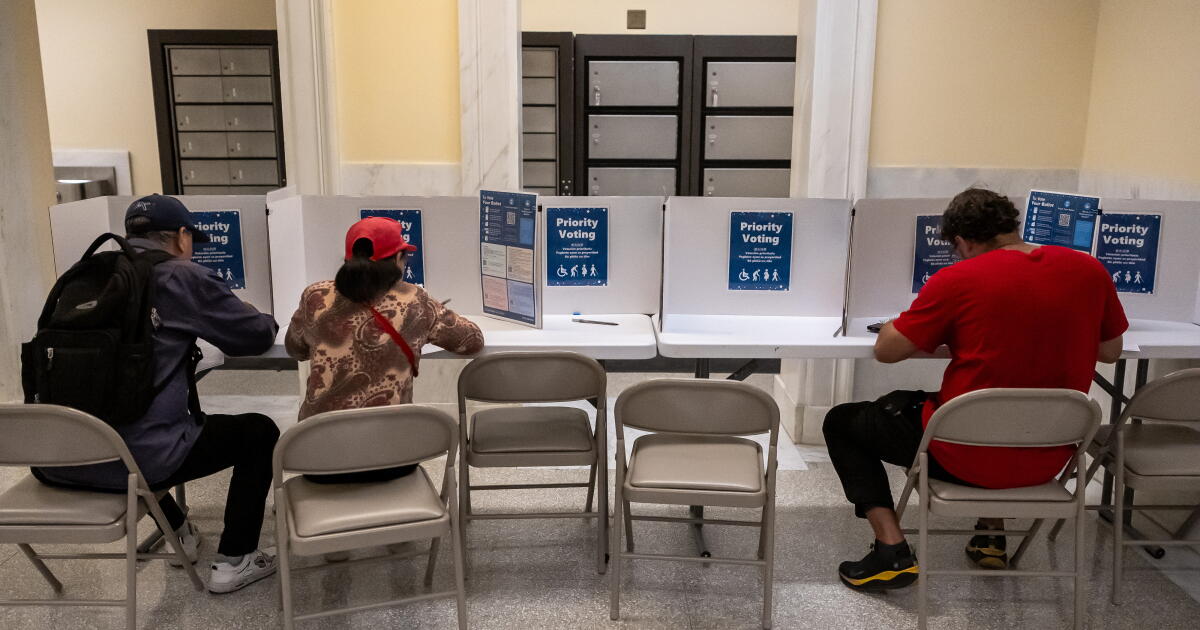
As President Trump pushed unfounded allegations that California’s elections are rigged, the security of the ballot box became a major flash point in the state’s 2026 race for governor on Tuesday.
Republican Steve Hilton called for major reforms to how Californians cast ballots and how their votes are tallied, while sidestepping questions about the president’s claims that the state’s elections officials “were cheating.” Democrat Xavier Becerra defended the integrity of the state’s elections and argued that proposed restrictions would disenfranchise many voters.
The men appeared less than 20 miles apart in Southern California one week after a contentious primary election that prompted Trump to repeatedly make unfounded claims about the integrity of California’s slow vote-counting process, allegations triggered as Democrat Nithya Raman was about to overtake Republican Spencer Pratt for second place in the race for Los Angeles mayor.
Hilton, whose endorsement from Trump pushed him to the front of the GOP gubernatorial field, said he has not seen any evidence of impropriety in this month’s election results.
“We’re very, very focused on making sure that everything’s OK,” Hilton told reporters in Norwalk. “We’ve got teams standing by, we’ve got lawyers standing by, very focused on that. We don’t want to let anyone down, we don’t want to let anything slip away, and we’ve seen nothing.”
The two men emerged from a crowded field of candidates in the most unpredictable governor’s race in more than a quarter of a century. While Becerra on Friday nabbed a spot in the June 2 primary and will advance to the November general election, Hilton has not officially been declared a victor by the Associated Press, as of Tuesday afternoon.
Hilton, however, appears on the cusp of clinching the second spot on the ballot. Billionaire Democrat Tom Steyer is in third place in the current ballot tally, and the odds of him overtaking Hilton appear increasingly unlikely.
“I’m very pleased to say that we remain confident that I will make it into the top two and that California will have a real choice for change in November,” Hilton said at a news conference outside the Los Angeles County elections headquarters. “We’re not popping the champagne yet, but we’re very confident.”
Hilton called for electoral reform, including supporting a voter identification requirement that will appear on the November ballot, ending mail ballots being sent to every registered voter, no longer counting ballots that are received after election day — all of which are being pushed by Trump — and increasing resources at county vote counting centers.
“Voter ID [is] not the only thing, but it’s the biggest, quickest, simplest thing we can do to restore faith in the system and to have these elections completed quickly in a way that inspires confidence, and that’s why I hope that Xavier Becerra will join me in campaigning for it, so we can have a united front,” the former Fox News commentator and British political strategist told reporters.
Hilton did not directly address Trump’s unfounded claims of voter fraud in California. However, he noted that Bill Essayli, the first assistant U.S. attorney for the Central District of California, has the full resources of the Department of Justice and has found no proof of wrongdoing.
Essayli said Monday on NewsNation that his office is investigating voter fraud but doesn’t have a case. However, the voter rolls need to be audited, Essayli told host Chris Cuomo.
“That, to me, is the best way to alleviate most of people’s suspicion. We have a system that breeds skepticism and distrust,” Essayli said. “We should have a little transparency and confidence in our system.”
Becerra, a longtime elected official and a former Biden administration Cabinet secretary, questioned whether Hilton could be trusted to protect the state against Trump’s fraud claims.
“That’s who’s endorsing Steve Hilton,” Becerra told reporters at a South Los Angeles food hall, referring to Trump. “That’s who Steve Hilton is aligning himself with.”
Becerra, who was met with cheers of “Si se puede!” from diners, criticized the proposed voter ID ballot measure, arguing that it would create hurdles for many Californians to participate in the democratic electoral process. Led by Republican Assemblymember Carl DeMaio from San Diego and others, the measure would require elections officials to verify that voters are U.S. citizens to be eligible to cast ballots.
“I’m against voter suppression. I’m against anything that would try to limit a Californian’s right to vote,” said Becerra, who formerly served as California’s attorney general.
Told by reporters that Hilton wanted Becerra to campaign for the ballot initiative, Becerra responded, “Come join me here, where the real people are,” gesturing toward the packed food hall.
Becerra acknowledged his concern over the lengthy time that it takes to count votes in California. He suggested one issue is a lack of workers and equipment at county vote-counting centers.
Another problem is that the “votes get backlogged” because so many people wait until the end of the election to cast ballots, he said, likening last-minute voters to shoppers who go to Costco at the end of the day.
“If you wait till 7:00 p.m. when they’re getting ready to close, you’re probably gonna find more people there,” Becerra said.
The attacks on the elections process by Trump and his supporters appear to have a major effect on people’s confidence in the system. For years, Trump has made baseless claims that the 2020 election was stolen from him, which led his supporters to storm the U.S. Capitol as lawmakers were scheduled to certify the election results. Additionally, Trump’s allegations about California’s elections, as well as an upcoming U.S. Supreme Court ruling about ballot tallying, could have a significant effect on the midterm elections that will decide which party controls Congress for the final two years of Trump’s presidency.
A poll released Friday by the Institute of Governmental Studies at UC Berkeley found that 41% of California voters were “not confident” that this year’s elections would be free of federal interference. Although 48% had confidence that there would be no meddling, the concerns expressed were still significant, said political scientist Eric Schickler, co-director of the institute.
Among Democratic registered voters, 79% said they trusted elections officials to provide an accurate vote count. Among Republicans, 55% said they were not confident that would occur, the survey found.
SACRAMENTO — Even before President Trump’s latest wave of unfounded claims of election fraud in California, a significant share of voters in the state expressed concerns about federal interference in the electoral process, according to a new poll.
Trump on Monday claimed on his social media site that the race for Los Angeles mayor was a “Rigged Election,” an allegation that came after Democrat Nithya Raman overtook Republican Spencer Pratt for second place in the ongoing primary election vote count.
Raman’s lead had prompted Rep. Abe Hamadeh, an Arizona Republican, to call for the election to be federalized, or run by the federal government rather than the state, a message Trump reposted.
Earlier Sunday, Trump had alleged during an interview with NBC News that California elections officials “were cheating.” That came after a debunked social media conspiracy theory claiming that a lag in an update of electronic voting data by the Associated Press showed Pratt was being cheated. On Monday, House Speaker Mike Johnson said the elections process in the L.A. mayoral race “stinks to high heaven.”
The ongoing attacks by Trump and his supporters continue to erode confidence in the nation’s elections, especially among Republicans, threatening a pillar of American democracy, said political scientist Eric Schickler, co-director of the Institute of Governmental Studies at UC Berkeley.
“The president … wants to use those claims to make changes in the election process that could make it harder for people to vote, and that certainly is a threat to our democratic institutions,” Schickler said.
“One thing we’ve learned in recent years is that we just cannot take the voting process for granted, cannot take for granted that both sides will accept as legitimate the outcome, and can’t take for granted the idea that there won’t be efforts to essentially manipulate the vote counting process,” he added.
A new poll released Friday by the institute found that 41% of California voters were “not confident” that this year’s elections would be free of federal interference. Although 48% had confidence that there would be not meddling, the concerns expressed were still significant, Schickler said.
More telling was the partisan divide among voters when asked whether they have confidence that local officials would conduct fair and secure elections and that the vote count would be accurate. Among Democratic registered voters, 79% said they trusted elections officials to provide an accurate vote count. Among Republicans, 55% said they were not confident that would occur.
California voters who don’t belong to either party said by a 2-1 margin that they had confidence in the vote count, the poll showed.
“The positive is that local officials are still widely trusted by Democrats, no-party-preference voters, and at least a share of Republicans, though a lot fewer than I think in the past, and a lot fewer than you know we would want for a really healthy democracy,” Schickler said.
That growing mistrust among certain parts of the electorate comes after years of baseless claims by Trump that the 2020 election was stolen from him, as well as Republican-led efforts to restrict the use of mail-in ballots and impose new requirements for voters to show identification and proof of citizenship.
Recent rulings by the conservative-leaning Supreme Court also have rolled back federal protections under the Voting Rights Act. In April, the court sharply limited a part of those protections that had forced states to draw voting districts to help elect Black or Latino representatives to Congress, as well as state and local boards.
Trump and his allies have used California’s slow vote-counting process to allege cheating. The day after the June 2 primary, Trump claimed without evidence that Democrats were trying to “steal” the gubernatorial and L.A. mayoral primaries. The next day, he alleged that California Democrats had “found” mail-in ballots and were “rigging the election” with them.
Secretary of State Shirley Weber and other officials have said California’s voting system prioritizes voter accessibility and security over speedy results. The state has more than 23 million registered voters, and ballots go through numerous verification steps, including verifying signatures on mail-in ballots.
“Over 97% of our folks actually vote by mail. They want to keep that system. That system demands more contact, more touching of the ballot, more verification of the individuals who are voting. All of those things take time,” Weber said during a recent interview with ABC10 in Sacramento.
Gov. Gavin Newsom’s office called Trump’s claims during the recent “Meet the Press” interview the “most severe case of California Derangement Syndrome we’ve ever seen.”
Newsom is considering a 2028 run for president and has consistently warned that Trump may try to interfere in both the 2026 and 2028 elections.
The Berkeley poll found that California voters overall — 74% — want candidates running for president in 2028 to prioritize defending democracy and making voting more accessible. Among Democratic voters, 95% said that was important; among Republicans, 41%.
Funding for the poll was provided to IGS by the Evelyn and Walter Haas, Jr. Fund, a private foundation based in San Francisco that aims to increase civic participation and improve the state’s democratic processes.
The poll of 8,578 registered California voters was conducted between May 19 and 25 online in English and Spanish and has a margin of error of about 2 percentage points in either direction.
Times staff writers Alene Tchekmedyian and Kevin Rector contributed to this report.
California voters are deeply divided over the trustworthiness of state elections heading into Tuesday’s primary, with most Democrats but less than half of Republicans expressing confidence in the electoral process, according to a new poll.
The polarized view follows a years-long campaign by President Trump and his Republican allies to question the legitimacy of American elections, especially in California and other blue states. It also follows robust efforts from liberal leaders, elections officials and voting rights experts to denounce Trump’s claims as baseless.
Overall, registered voters in the state — which skews heavily Democratic — expressed confidence in local election officials by a 2-to-1 margin, with 65% expressing confidence and 31% expressing a lack of confidence, according to the poll released Tuesday by the UC Berkeley Institute of Governmental Studies and co-sponsored by The Times.
However, those figures shift dramatically when sorted by political party, and even more when parsed by partisan leaning.
For example, 79% of Democratic voters expressed confidence in local officials running a secure and fair election, compared to 62% of independent voters and 42% of Republican voters, the poll found.
While 82% of voters who identified as strongly liberal expressed confidence, just 38% of voters who identified as strongly conservative did so.
A volunteer assists Melani Hurwitz at a polling location Monday at the Cal State Long Beach Walter Pyramid.
(Eric Thayer / Los Angeles Times)
“It’s clearly a partisan issue, and it is being promoted by the president and others who are his followers,” said Mark DiCamillo, the director of Berkeley IGS polls. “Strong conservatives and the Republicans are the least confident, and a lot of them are saying [they are] not at all confident. That’s a pretty extreme statement.”
Rick Hasen, an election law expert and director of the Safeguarding Democracy Project at UCLA Law, said he expected Republican confidence to be even lower given Trump’s decade of undermining trust in elections, especially in liberal, diverse states such as California. But he said neither Trump’s narrative nor public sentiment about election security — which generally shows voters are more confident “when their side wins” — reflects reality, which is that “our elections are administered well.”
“There’s very little evidence of manipulation or of fraud or even of incompetence,” Hasen said. “Anyone who looks objectively would see that there are numerous safeguards to ensure we have free and fair elections in California.”
Trump has long contended without evidence that voter fraud is pervasive among undocumented immigrants and in states, such as California, that use mail ballots, and blamed his 2020 loss to Joe Biden on such fraud despite experts rejecting the claim and Trump’s own allies and lawyers being unable to prove it.
A voter casts their vote inside the Westchester Family YMCA Annex on Monday.
(Kayla Bartkowski / Los Angeles Times)
Since returning to the White House last year, Trump has tried to implement strict new requirements for voter ID and proof of citizenship and to limit or bar mail-in voting, and called for greater federal or Republican Party control over state-run elections. In February, he said that “Republicans ought to nationalize the voting” in “at least 15 places” where they lose.
Democratic leaders, elections experts and voting rights advocates have all pushed back. They’ve backed their assurances that the state’s elections are safe with lawsuits to block Trump’s efforts to assert federal control. They also warn that his administration may try to intervene anyway, including by sending federal immigration agents to polling locations or intercepting or invalidating mailed ballots.
Last week Gov. Gavin Newsom signed a bill barring federal agents and other law enforcement from interfering with local and state elections officials or confiscating ballots, voter rolls or voting machines without a warrant. Newsom said California voters were experiencing “legitimate anxiety” over election integrity given the threats from the Trump administration and the recent actions of Riverside County Sheriff Chad Bianco — a MAGA-backed Republican candidate for governor who recently seized hundreds of thousands of ballots as part of what he said was an investigation into potential fraud in last year’s election.
An election worker collects extracted vote by mail ballots to be tallied at the Los Angeles County Registrar-Recorder/County Clerk Ballot Processing Center in City of Industry.
(Gary Coronado / For The Times)
Newsom said he expects Trump to interfere with the upcoming election as well because “every single thing that Donald Trump is saying only suggests that he will do more, not less, to intimidate and to impact the outcome of this election,” but that the state stands ready to respond.
California Atty. Gen. Rob Bonta last week said that his office is preparing for “all different types of scenarios” involving federal interference, from ballots being seized to immigration agents showing up at polling locations.
“We are currently monitoring any potential risks or threats, and we’re ready for any possibility,” he said.
Sen. Alex Padilla (D-Calif.) last week blasted the U.S. Postal Service for issuing a proposed rule to implement Trump’s mail ballot changes, despite the ongoing litigation. In April, Rep. Nancy Pelosi (D-San Francisco) helped convene a pair of “shadow hearings” in California where fellow House Democrats and a panel of experts shot down Trump’s claims about widespread fraud and expressed confidence in state elections.
A Berkeley IGS Poll from a year ago found that California voters support requiring first-time voters to show ID to prove citizenship in order to register, and that most supported requiring a government ID every time a voter casts a ballot. However, another Berkeley IGS Poll from last month found that strong majorities of California voters believe American democracy is under attack or being “tested.”
Dean Logan, head of the L.A. County registrar-recorder/county clerk’s office, said that overall confidence, “despite a sometimes volatile state and national narrative,” was “gratifying.”
“Election officials take connection to their community seriously. We recognize that our job is to facilitate their voting experience, and that voter participation is key to election security,” Logan said. “Regardless of party affiliation, our role as election officials focuses on the function and process of ensuring the voice of the electorate is heard and that compliance with the election laws adopted in our state is achieved.”
Jesse Salinas, president of the California Assn. of Clerks and Elections Officials and the registrar of voters in Yolo County, said local elections officials are “proud to be a steady source of trust at a consequential moment,” and stand ready to “open our doors to any voter who wants to see firsthand how our elections work and to answer any questions they may have.”
Times staff writer Iris Kwok contributed to this report.
