complaint

As influencers rise in politics, some call for tighter regulations on payments

In the 2024 election, hundreds of social media influencers were credentialed for the first time to attend the Democratic and Republican conventions. They have been invited to holiday parties in the Pennsylvania governor’s mansion, to political rallies in Texas and to events at the White House by both the Biden and Trump administrations.

The role of influencers is surging as candidates and groups across the political spectrum see their social media feeds and personas as a pathway to younger audiences and harder-to-reach groups of voters.

“You have that sense of authenticity, like a friend is talking to you,” said Emma Briant, a professor at Notre Dame University’s Lucy Family Institute for Data & Society who studies propaganda.

That’s exactly what campaigns are hoping to harness when they partner with influencers, she said.

But the nature of that partnership has come into question in California’s hotly contested gubernatorial race after it emerged that a number of content creators — some with millions of followers, others with only a handful — had taken payments from the campaign of Democratic candidate Tom Steyer and not disclosed that they were paid to create those posts.

Some popular content creators have felt the need to explain themselves to their audience. Others have questioned how common such under-the-table payments might be, since there are no disclosure requirements for paid content at the federal level and few jurisdictions have any rules mandating it.

Some campaign finance advocates are concerned that voters could increasingly be influenced by social media posts that they don’t know are sponsored.

“The problem is that it doesn’t look like an ad,” said Saurav Ghosh, a former enforcement attorney at the Federal Election Commission. “It ends up really getting people at a place where they’re not skeptical and not able to tell the difference between what’s voluntary and where the influencer is acting as a paid spokesperson.”

Ghosh is now the director of campaign finance reform at the nonprofit Campaign Legal Center, which has filed a petition asking the FEC to require disclaimers on paid content created by influencers.

Roughly 1 in 5 Americans said they regularly got news from social media influencers in 2024, according to the Pew Research Center, and that number was nearly double for younger adults between the ages of 18 and 29.

Working with social media creators can be an easy way for candidates to try to boost their image, particularly with a younger audience.

“If they don’t have big personalities, maybe partnering with some influencers who seem cool and fun can make you seem cool and fun also through association,” said Link Lauren, a political influencer and podcaster who served as a communications advisor for Robert F. Kennedy Jr.’s presidential campaign in 2024.

California is one of the few places that requires disclosure of sponsored social media posts, but the 2023 law that created those rules hadn’t gotten much of a workout before the issue was raised in this contest through a series of dueling complaints with California’s Fair Political Practices Commission. The commission has yet to weigh in on the various accusations.

Under the law, influencers are required to provide disclosure that a post was sponsored and say who paid for it. Political groups are required to notify paid creators of the requirement.

Even if the commission finds that violations have occurred, the penalties are not especially harsh.

Violation of the law carries no civil, criminal or administrative penalties. The FPPC can take alleged violators to court and ask a judge to force compliance. And violations can be penalized with a fine of up to $5,000 per instance.

Influencers reporting influencers

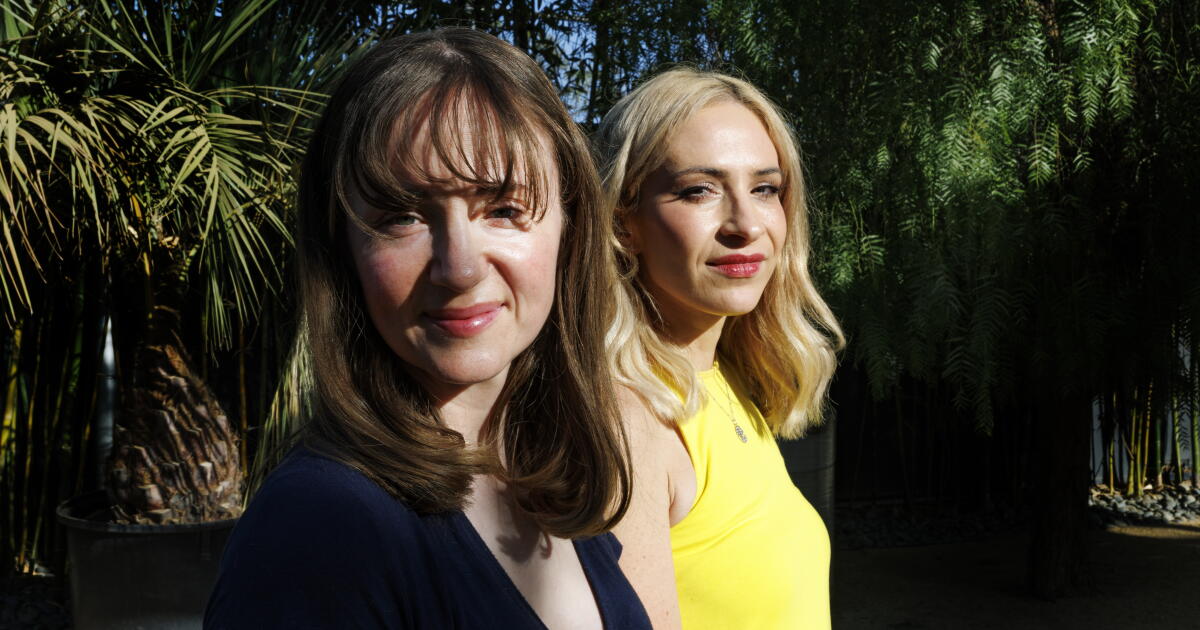
In the gubernatorial race, the issue of compliance was raised, naturally, by a pair of influencers.

Beatrice Gomberg has built up a following of more than 180,000 followers on TikTok, where she posts under the handle antiplasticlady. Her side gig of creating nonplastic children’s cups and lunch boxes became her main gig after she lost her human resources job at Macy’s during the COVID-19 pandemic.

“I started doing social media because I didn’t want to hire a marketing company,” Gomberg said.

Gomberg’s posts were initially largely focused on research related to plastic, but have become increasingly political over time. When campaigns put out the call for influencers to meet with candidates, Gomberg answered.

She interviewed Katie Porter, she met with Xavier Becerra. And it was at a Becerra event in April when she met Kaitlyn Hennessy, another influencer focused on politics.

They found that the world of online influencers can be isolating. “We stare in front of our phones,” Hennessy said. “You don’t want to see our screen time.”

As they scrolled through social media posts about the governor’s race, they found a cause to unite them.

They kept seeing videos posted by social media accounts espousing similar messages in support of Tom Steyer. Hennessy wondered at first if they were actually created by artificial intelligence.

They found that the posts seemed to be created by a network of women who, in some cases, had created several different profiles to promote a variety of products.

They pored over Steyer’s campaign disclosures and saw that the campaign listed payments to several prominent influencers — including one with the handle Zay Dante, with 1.8 million followers on TikTok — who had not disclosed creating paid content for the campaign.

The pair filed a complaint laying out their allegations, which the Steyer campaign has called “baseless.”

In the wake of their complaint, Steyer defended his campaign’s use of paid influencers, writing on Substack that his campaign believed content creators should be paid for their work and that the campaign had been transparent about disclosing those payments.

In a separate post, influencer Carlos Eduardo Espina said he had been paid $400,000 for work he has done for the Steyer campaign. Espina, who has more than 14 million followers on TikTok, is an advisor to the campaign, which was publicly announced.

“You will never see anything on my channels that I don’t believe in, or that I think goes against the best interest of my community. No one buys my opinion. But I also think it’s fair to be compensated for my work,” he wrote on Substack.

Not everyone is ready to accept payment for posts.

Lauren, the influencer who advised Kennedy’s campaign, said that while he doesn’t begrudge other influencers accepting sponsorship, he chooses not to.

“A passive viewer might think you really believe this,” he said. “I have a strong connection with my audience. I really consider them my family.”

Lauren said he favors disclosure requirements.

Briant, the propaganda researcher, said she is concerned about the possibility of foreign actors trying to influence Americans through paid posts.

In 2024, for example, federal prosecutors filed an indictment alleging that Russian state media employees had paid nearly $10 million to a Tennessee company that paid popular right-wing social media influencers to unwittingly produce pro-Russia content.

Briant said she believes that the only way to counteract increased manipulation through social media influencers is to impose harsh penalties when paid content is not disclosed.

“Ultimately, it’s a wild west at the moment if there are no repercussions for not doing it,” she said.

Source link

Influencer files complaint against Steyer campaign, alleging violations

A political influencer has filed a complaint against Tom Steyer’s campaign for governor, saying the committee failed to notify her of disclosure requirements, as required by law, when she was paid to meet with Steyer in March and later produced social media content from the meeting.

What’s more, she said the Steyer campaign falsely accused her of posting paid content in support of Steyer’s chief Democratic rival, Xavier Becerra, and failing to disclose it in a complaint filed by the billionaire’s campaign this week.

Maggie Reed, who regularly posts satirical takes on politics to roughly half a million followers on Instagram and TiKTok under the username mermaidmamamaggie, said she was actually paid by Steyer’s campaign and signed an agreement that barred her from disclosing the payment.

She posted, and later deleted, a video from her meeting with Steyer in March.

“In plain terms: the Committee paid for political content, structured it to look like an ordinary creator’s organic opinion, and used a non-disclosure agreement to keep the public from learning the truth,” says the complaint, filed Thursday with California’s Fair Political Practices Commission.

Steyer’s campaign disclosed in a campaign filing that it had paid the agency that represents Reed $5,000 for digital advertising, but didn’t indicate that the payment was connected to Reed’s meeting with Steyer or her production of content.

The Steyer campaign said that while it did pay to meet with Reed, it left the decision of whether to create content entirely up to her.

Since then, Reed has produced several videos expressing support for Becerra, the former California congressman and U.S. Secretary of Health and Human Services, but she said that she was not paid to produce those videos and that they reflected her genuine support for Becerra’s campaign.

Becerra has been the top Democrat in recent polling in the race, maintaining a narrow edge over Steyer and a firm grip on one of the top two spots in the June 2 primary that would send him to the general election in November.

Reed’s complaint is the latest volley in a back and forth involving the use of paid influencers in the gubernatorial race.

Two influencers who support Becerra — but were not paid by his campaign — filed a complaint last week saying that a number of influencers had created paid content in support of Steyer, but failed to disclose so in their posts.

Steyer’s campaign then filed a complaint earlier this week in which it leveled accusations against Reed and another influencer named Jay Gonzalez, who is now a paid staffer on the Becerra campaign. The complaint alleges that Gonzalez made several pro-Becerra posts after joining the campaign and belatedly amended them to include disclosure that they were sponsored.

The Becerra campaign has maintained that it does not otherwise pay influencers to produce content on its behalf.

Steyer’s complaint included screenshots of an email sent to Reed’s talent agency by a gubernatorial campaign gauging her interest in producing paid content.

While the screenshots produced in Steyer’s complaint did not disclose who had sent the inquiry, Reed said in her complaint that the request had come from a staffer for the gubernatorial campaign of former Los Angeles Mayor and California State Assembly Speaker Antonio Villaraigosa.

Disclosure of paid political content by social media creators is required in California thanks to a law passed in 2023.

Influencers themselves are required to disclose that a post they created was sponsored, but campaigns are required to notify them of the requirement.

Violation of the law doesn’t trigger civil, criminal or administrative penalties, but the FPPC has the right to take violators to court and request that a judge force compliance with the law.

The agreement Reed signed with Steyer’s campaign, which was attached to her complaint, indicated that she needed to follow all applicable state, federal and local laws, but made no specific mention of her requirement to disclose that content she produced was sponsored.

The agreement did specify that Steyer’s campaign might need to disclose the payment.

Source link

The Steyer campaign pays influencers. Their posts don’t always make that clear

In recent weeks, several social media influencers have popped up in online feeds touting the California gubernatorial campaign of billionaire Democrat Tom Steyer.

Some complain about the price of gasoline. Others mention environmental concerns. One cites her newfound sobriety as evidence that people can change — a nod to Steyer’s self-proclaimed metamorphosis from hedge fund titan to scourge of big corporations.

“I did not expect the most progressive governor candidate to be a billionaire, but look at the policies you guys,” said one content creator on TikTok with the user name Jaz R. “Hear me out. I know Tom Steyer is a billionaire, but he also is for the people.”

The posts include direct-to-the-camera appeals, with personal details interwoven into messages of support for Steyer. An influencer goes for a stroll as onscreen text touts Steyer’s policies. Some seek to convey authenticity, if occasionally ham-fistedly; one influencer mispronounces Steyer’s last name.

What they do not include is a disclosure that their creators were paid by the Steyer campaign to produce the videos, according to a complaint filed this week with California’s Fair Political Practices Commission and a Times review of the posts.

The complaint alleges that the Steyer campaign failed to notify the influencers it hired of their obligation to inform their audience when their posts have been sponsored by the campaign.

California passed a law in 2023 requiring that influencers disclose if they have been paid to create promotional content for or against a candidate or ballot measure, one of the few jurisdictions in the country with such a requirement. There is no such requirement at the federal level.

“Every time there’s a new technology, you have to create legislation that requires them to disclose,” said state Sen. Tom Umberg (D-Orange), who sponsored the bill.

Violating the law doesn’t carry criminal, civil or administrative penalties, but the FPPC can take influencers who break the law to court and ask a judge to force them to comply.

The complaint was filed by two California women — political influencers themselves — who said they noticed a number of new accounts that suddenly started posting similar-sounding videos promoting Steyer earlier this month.

“They had the exact same language, they had the same talking points,” said Beatrice Gomberg, who worked with Kaitlyn Hennessy in their digital sleuthing efforts.

The FPPC did not comment on the complaint.

Steyer’s campaign appears to have relied on paid influencers more than any candidate for governor, according to the most recent campaign finance filings.

That spending represents only a small fraction of the massive campaign war chest Steyer has seeded with nearly $180 million of his own money. But the complaint highlights the growing degree to which political candidates have come to seek out the authenticity that social media influencers seem to offer.

Steyer campaign spokesperson Kevin Liao said the campaign had properly followed the rules in hiring influencers and that the campaign is “confident” that Gomberg and Hennessy’s complaint is “baseless.”

“Creators make their living generating content. The campaign believes in compensating people for their time and work product and has paid creators to generate content,” Liao said in a statement. “Payments for creator content are disclosed in campaign finance reports, and we notify creators we directly work with of their disclosure requirements.”

While many of the new Steyer influencers have few followers, Steyer’s campaign disclosed in its most recent campaign finance report that it had paid thousands of dollars to numerous social media influencers with massive audiences, the Sacramento Bee reported.

Several of the videos produced by these popular social media personalities also failed to disclose that they had been paid by the campaign, according to the complaint and The Times’ review of the content.

But even accounts with few followers can still have a big impact if they are producing a steady stream of content supporting Steyer, said veteran California political strategist Mike Madrid.

“What they’re trying to do is trip the algorithm,” he said. “It looks like it has a bigger audience than it really does. It’s taking the concept of astroturfing into the digital age.”

Gomberg and Hennessy said they became friends after meeting at an April campaign event for Xavier Becerra, Steyer’s chief Democratic rival in the race, who holds a narrow advantage over Steyer in several recent political polls.

The pair have been prolific social media supporters of Becerra’s campaign ever since, though they insist they are not being paid for their efforts.

They said they discovered that many of the new pro-Steyer accounts seemed to be run by influencers — mostly women — who had previously created different social media accounts to hawk other products.

One of the pro-Steyer influencers had an online portfolio listing numerous clients, including the Steyer campaign and a gummy designed to boost arousal, according to the complaint and the Times review of the publicly accessible website.

The pair said they stumbled on an advertisement placed by a vendor for the campaign on a platform used by creators to find work. The advertisement indicated that creators would be paid $10 for each post, with bonuses for posts that amassed large viewership.

The vendor who posted the ad did not respond to a request for comment.

The advertisement has since been updated to say that it pays $1,000 per month and that creators will have to disclose that it is paid content.

As Gomberg and Hennessy dug deeper, they determined that some of the influencers promoting a candidate for governor weren’t even based in California.

A TikTok account using the handle jess.votes, for example, appears to be connected to a woman registered to vote in Florida. Other accounts were connected to women who indicated elsewhere that they were based in Pennsylvania, Missouri and Michigan.

Several influencers who created seemingly paid content promoting Steyer did not respond to multiple requests for comment from The Times.

The brouhaha over paid social media content is just the latest instance of the growing political impact of online creators.

Eric Swalwell’s campaign for governor — and congressional career — came to an end after multiple women accused him of sexual assault. A pair of influencers had publicly raised concerns about Swalwell’s behavior and helped connect victims with journalists who produced highly detailed reports of the allegations.

The California law requires influencers to disclose in a political post’s audio or text that it was sponsored and who paid for it.

The onus is on the creators to make the disclosure, but campaigns are required to tell them that they must do so. Despite passage of the law, the issue has so far remained largely under the radar.

“I have dozens of candidates and campaigns and I have not heard this issue come up one time,” said a campaign finance lawyer who requested anonymity because they represent numerous candidates with active campaigns.

Gomberg and Hennessy said that they were driven to call attention to potential violations of the disclosure requirements because of their concern about the corrosive influence such paid content could have if left unchecked.

“You have people who have trust in these creators,” Hennessy said. “You have a responsibility to your audience.”


Source link

‘Like the Russian mafia’: L.A. judge elections see unusual drama

One judge claims his colleagues have adopted a “gangster mentality” in order to shut him up.

Another compared the state board accusing him of serious misconduct to “the Russian mafia.”

Judicial elections are usually sleepy affairs, subject to little political fanfare or interest. But two battles on the June ballot in Los Angeles have raised the temperature this campaign season and invited questions about the lengths members of the insular local bench will go to protect their own.

Lawyers who aspire to become judge often run for open seats. The challengers in these races, however, say they specifically targeted incumbents they believe are unfit for the office, which carries an annual salary of more than $244,000.

One of the contests could unseat 84-year-old Judge Robert Draper, who is seeking reelection despite having spent the last three years relegated to a room at the Santa Monica courthouse without a computer or caseload, which two other judges described to The Times as a “closet.”

In 2023, then-Presiding Justice Samantha Jessner said Draper was “unable to carry out the duties and responsibilities of a judge” due to deteriorating mental and physical health, according to a letter she sent to the state’s Commission on Judicial Performance.

Draper denied all wrongdoing in an interview with The Times, and said that although he has been diagnosed with Parkinson’s disease, he remains fit for the bench. He has also been accused of sexual harassment and making improper and biased comments by the judicial commission. He is contesting those claims. A hearing that could result in his removal began Monday and is expected to last into early May.

Deputy District Attorney Paul Thompson

Deputy Dist. Atty. Paul Thompson at Clara Shortridge Foltz Criminal Justice Center in Los Angeles.

(Myung J. Chun / Los Angeles Times)

The other incumbent fighting to save his seat is Judge Pat Connolly, 61, a former prosecutor who has drawn support from several other sitting L.A. County judges. But his opponent, Deputy Dist. Atty. Paul Thompson, has called Connolly a “rogue judge” who needs to be replaced.

Connolly has been disciplined multiple times in his 18-year judicial tenure for improper comments toward litigants and, in one case, exhibiting bias against a defense attorney against whom he was weighing contempt charges, according to state judicial commission records.

Thompson, who gained notoriety for his role winning a rape conviction against Harvey Weinstein, purchased the rights to the domain name “patconnolly4judge.com,” which now redirects to one of the commission’s admonishments of Connolly.

“What I see is a man who repeatedly prioritizes his own goodwill over that of the community and the public he is serving … a man who has been repeatedly disciplined for prioritizing his own interests,” said Thompson, who has been endorsed by the L.A. County Democratic Party.

In a bizarre turn, the race was linked to the recent shooting at the White House Correspondents’ Assn. dinner after conservative influencers posted a picture of a Thompson campaign sign on the Torrance lawn of the suspected gunman, Cole Tomas Allen.

Thompson lives next door to the Allen family and described the suspect’s parents as great neighbors. He said he didn’t know their son and dismissed “internet trolls” for trying to tie his campaign to political violence.

This year’s election has sparked conversations about the unwavering support incumbent judges seem to enjoy among their colleagues.

Despite the concerns about Draper’s health, a political action committee run by fellow judges gave $72,500 to his campaign, state election finance records show. The PAC gave the same amount to Connolly.

Judge Maria Lucy Armendariz, who oversees the PAC, did not return a call seeking comment.

“The PAC has some explaining to do here. Why is there this show of support for someone who is facing so many challenges?” asked Laurie Levenson, a former federal prosecutor who now teaches at Loyola Law School. “It doesn’t reflect well on the bench.”

L.A. County Deputy D.A. Tal Khan Valbuena

Deputy Dist. Atty. Tal Khan Valbuena at Grand Park in downtown Los Angeles.

(Christina House / Los Angeles Times)

Draper’s opponent is Deputy Dist. Atty. Tal Khan Valbuena, a refugee from Pakistan who works in the Hollywood mental health court. Khan Valbuena believes his lived experience as a gay Muslim who has faced bigotry will bring a compassionate perspective to a bench some complain is overrun with old-school tough-on-crime prosecutors.

But he also expressed concern about Draper’s mental decline after meeting him for lunch earlier this year.

“His honor had exemplified disorganized thought behavior, tangential thought … things I see on a day-to-day basis [in mental health court],” Khan Valbuena said, while acknowledging that he is not a doctor.

The Los Angeles County Bar Assn. issued its ratings for every judicial candidate last week. Connolly graded best among the judges in the contentious races, described as “well qualified.” Thompson and Khan Valubena were rated as “qualified.” Draper was one of only three candidates labeled “unqualified.”

In 2022, Judge Eric Taylor said he noticed a sharp change in Draper’s behavior that included sending “abusive” and “incoherent” e-mails to colleagues that contained racist and profane language, according to a letter Taylor sent to the state judicial commission.

“He has demonstrated a flagging handle on reality,” Taylor wrote.

Draper was accused of sexual harassment, making racist remarks and callous behavior all over the course of one hearing. According to the state judicial complaint and testimony at Draper’s removal hearing on Monday, the judge allegedly stroked a female lawyer’s hair after going on a tangent to a Black attorney about “Black history, Black football players, the Civil Rights Act, and the Black Lives Matter movement,” even though the case had nothing to do with those issues.

Judge Robert Draper

Judge Robert Draper outside the Ronald Reagan Federal Building in Los Angeles.

(Robert Gauthier / Los Angeles Times)

Later in chambers that same day, he made crude remarks to a group of female attorneys while reflecting on his time as a civil attorney, recalling how male lawyers would deride female secretaries, insisting they learn to “f— better than they could type,” according to testimony given by attorney Janice Brown at Draper’s hearing.

Brown told the review panel that Draper’s behavior left her “aghast” and “perplexed.”

Draper denied much of what was in the complaint. He says that he never touched a lawyer’s hair, and that the comments about Black culture were meant to express his pride at racial progress in America. He criticized the Commission on Judicial Performance.

“This is like the Russian mafia, it’s like Germany,” he said. “There’s no due process for any judge.”

Draper’s attorney, Ashley Posner, said his client would routinely walk up seven flights of stairs when he was assigned to the downtown Stanley Mosk courthouse and remains sharp.

“Things were set up to portray him in the worst light possible … he’s been portrayed as a bigot. He’s been portrayed as doddering and demented, which couldn’t be further from the truth,” Posner said.

In court on Monday, Posner suggested the complaint was part of a broader campaign to force Draper to retire and accused the L.A. County Superior Court’s leadership of ageism. A court spokesperson said they could not comment on personnel matters.

The race between Connolly and Thompson has also focused heavily on alleged misconduct.

Connolly’s past admonishments by the state commission include complaints that he yelled at attorneys for appearing remotely during the COVID-19 pandemic. The judge also told a recently acquitted defendant that he knew the man was guilty, records show.

“I don’t think it’s as much what I’ve said as how I have said it. I think that they have taken issue with the terms that I’ve used,” Connolly said, noting he has never been accused of ethical violations or moral impropriety.

Judge Pat Connolly at Compton Courthouse

L.A. County Superior Court Judge Pat Connolly at the Compton Courthouse.

(Robert Gauthier / Los Angeles Times)

A legal expert raised questions in 2023 about the propriety of Connolly seeking to disqualify a fellow judge from ruling on a petition to resentence a convicted cop killer that Connolly had prosecuted in the late 2000s. The state commission is also currently reviewing two additional complaints against Connolly, according to e-mails seen by The Times. Connolly said he couldn’t comment on either situation.

In an interview with The Times, Connolly said he was surprised by the “venom” Thompson had injected into the race.

He said he sees himself as a fair jurist with a knack for finding creative solutions to cases that balance public safety and alternatives to incarceration. In 2022, court records show, he negotiated a plea deal for an NFL player facing prison time for weapons charges, ordering him to organize sports camps for underprivileged youth.

“I’m one of those who listens to both sides, who gives both sides the opportunity to voice their positions,” he said.

Connolly enjoys the support of many sitting judges and law enforcement leaders, including former Dist. Atty. Steve Cooley and the head of the court’s criminal division, Ricardo Ocampo.

Thompson says some of Connolly’s allies on the bench have come after his supporters.

When Thompson launched his campaign, he published an endorsement from L.A. County Superior Court Judge Scott Yang on his campaign website. Within weeks, Thompson said, Yang asked him to take the endorsement down, claiming he was being pressured by other judges.

Yang, who presides over a court in the Antelope Valley, said his colleagues on the bench exhibited a “gangster mentality” when they told him to withdraw his endorsement in a judicial election, according to a text message reviewed by The Times.

“They were going to target him. They were going to run at him. They were potentially going to make false disciplinary reports around him,” Thompson said.

Connolly was not accused of being involved in the alleged harassment and declined to discuss the matter. Yang did not respond to multiple requests for comment. A court spokesperson said they had not received any reports of threats made against Yang, but a law enforcement source said Yang told them he was harassed by fellow judges over his endorsement of Thompson. The source spoke on condition of anonymity for fear of reprisals from the bench.

The conflict has generated whispers among L.A. County judges, one of whom requested anonymity due to concerns of backlash for speaking publicly. Word of the threats against Yang, the judge said, left some fearing they too could face retribution for breaking ranks.

“It’s totally concerning,” the judge said. “How different is that than the deputy gangs?

Source link

MasterChef fans issue same complaint over latest show challenge ‘are you for real’

MasterChef was back with the first quarter-final of series 22 on Thursday night

MasterChef fans were left scratching their heads over Thursday night’s quarter-final challenge.

Series 22 sees celebrated chef Anna Haugh and restaurant critic Grace Dent take over from Gregg Wallace and John Torode as judges. The pair will test 48 of the country’s best amateur cooks with an array of spectacular challenges.

On Thursday’s first quarter-final of series 22, the first challenge saw the amateur home cooks tasked with creating pancakes, making the most of the fresh produce on offer.

However, it was the second challenge that left viewers baffled. During the episode, legendary food critic Jay Rayner joined the show as a special guest as he set a task for the cooks.

Jay, 59, said: “The challenge I’ve set you sounds very simple. I’ve asked you to make a salad. But we do not want a limp bowl of lettuce, we want structure, texture, we want a killer dressing… something that will rock us back on our feet.” The chefs were then given 90 minutes to create their salads.

However, viewers were left baffled over the salad challenge taking to Twitter, now X, to share their thoughts. One person said: “#masterchef A salad …, a salad, are you for real” to which another account put: “Salad? Or a mix of things #MasterChef.”

Elsewhere, another fan referenced The Simpsons as they joked: “#Masterchef You don’t win friends with salad, you don’t win friends with salad…”

Another baffled viewer simply commented: “A salad?! #MasterChef” while a different fan quipped: “No good story ever started with ‘I was having a salad and then'”.

Following the challenge, Jhané and Sabina left Anna, Grace and Jay blown away with their incredible salads. Jhané opted for a Thai-inspired salad with grilled pork, pork skin, sugar snap peas, lettuce, mint, fennel and thai basil. Jhané served it with deep fried rice paper and a lime sesame dressing, which was praised for being a ‘clever’ presentation.

Guest Jay was left delighted as he gushed: “This is exactly what I was hoping for when I set the salad challenge!”

Meanwhile, Sabina also impressed with her ‘harmony salad’, which was spiced black pea falafel, gem lettuce, carrot, pomegranate, salted chicken skin, beetroot quail eggs, puffed rice and curry leaves. It was served with a confit garlic and mustard oil dressing. Jay praised the salad for being “amazing”.

After all the contestants had shown off their creations, Jay admitted: “It was a tough challenge asking them to make a salad, some of them embraced it brilliantly!”

At the end of the show, it was revealed that Jhané and Sabina had sailed through to the next round, they were joined by fellow contestant Jim.

MasterChef season 22 is available to stream on BBC iPlayer

Source link

Jury awards $2.25 million to Riverside County sergeant forced to resign after reporting harassment

Riverside County has been ordered to pay $2.25 million to a former sergeant who said he was pressured into early retirement in retaliation for reporting workplace harassment by a superior.

Sgt. Frank Lodes was forced to leave the job he loved in 2022 — penning a resignation letter in a Del Taco parking lot — while a high-ranking department official threatened him with mounting investigations, according to the complaint. On Tuesday a civil jury concluded that Lodes resigned involuntarily due to his reporting of a hostile workplace and was awarded the multimillion-dollar payment as compensation for his emotional damages.

Lodes’ attorney Bijan Darvish said the award was a “significant number” that adequately represents the harm inflicted on Lodes, noting that the period since his forced retirement has been the “darkest four years” of Lodes’ life.

He said that his client did not wish to comment on the verdict as discussing the events remained painful. The Sheriff’s Department and the county did not immediately respond to a request for comment.

“Being a cop was his life; he lived and breathed it 24/7,” Darvish said. “It was his entire identity, and that’s why it was so difficult for him when it was taken away.”

The jury award comes amid a rare wide-open governor’s race that includes the head of the Sheriff’s Department, Chad Bianco, who is a leading GOP candidate for the seat. Bianco has staked his campaign on his lengthy career in law enforcement, which spans more than three decades, including serving as the elected sheriff of Riverside County since 2019.

Although high-ranking Sheriff’s Department officials were involved in Lodes’ case, Darvish said there was no evidence presented at trial that Bianco had direct knowledge of his client’s mistreatment. Bianco was not a defendant in the lawsuit. His campaign did not respond to a request for comment.

Darvish argues that the case points to a departmental culture of covering up allegations of misconduct.

“When there’s a harassment complaint made against the captain and they never investigated, and they pressure someone to resign and withdraw the complaint,” he said, “then that’s a systemic issue.”

The retaliation began after Lodes, a 25-year veteran of the department, formally reported workplace harassment with human resources in March 2022, according to the complaint.

Lodes had been called mentally ill in front of his peers by a captain during a promotability meeting around October 2021. A few months later, he found degrading posters of his head on a child’s body shoved inside his uniform pockets and gun holster and plastered over the station walls, according to the complaint.

The department responded to his harassment report by launching an investigation into Lodes unlawfully using informants and threatening him with possible criminal prosecution, according to Darvish.

The jury agreed that these allegations were a manufactured excuse to cover up unlawful retaliation.

Within days of filing the workplace harassment complaint, a Internal Affairs sergeant packed Lodes’ personal belongings in a box and drove them to his house, according to the complaint. The sergeant spent hours pressuring Lodes, then 47, to accept early retirement.

The following day, Lodes was told to meet with a high-ranking official in the Sheriff’s Department in a Del Taco parking lot who instructed him to resign immediately and withdraw his harassment complaint.

The $2.25-million award in the civil case will come from the county’s coffers.

The award casts renewed scrutiny on Bianco’s Sheriff’s Department two weeks before primary election ballots land in Californians’ mailboxes.

He was also in the spotlight in March after seizing more than 650,000 ballots from the November election as part of an investigation to determine if they were fraudulently counted. He put the investigation on hold shortly before the California Supreme Court halted it pending further review.

Times staff writer James Queally contributed to this report.

Source link