Commonwealth

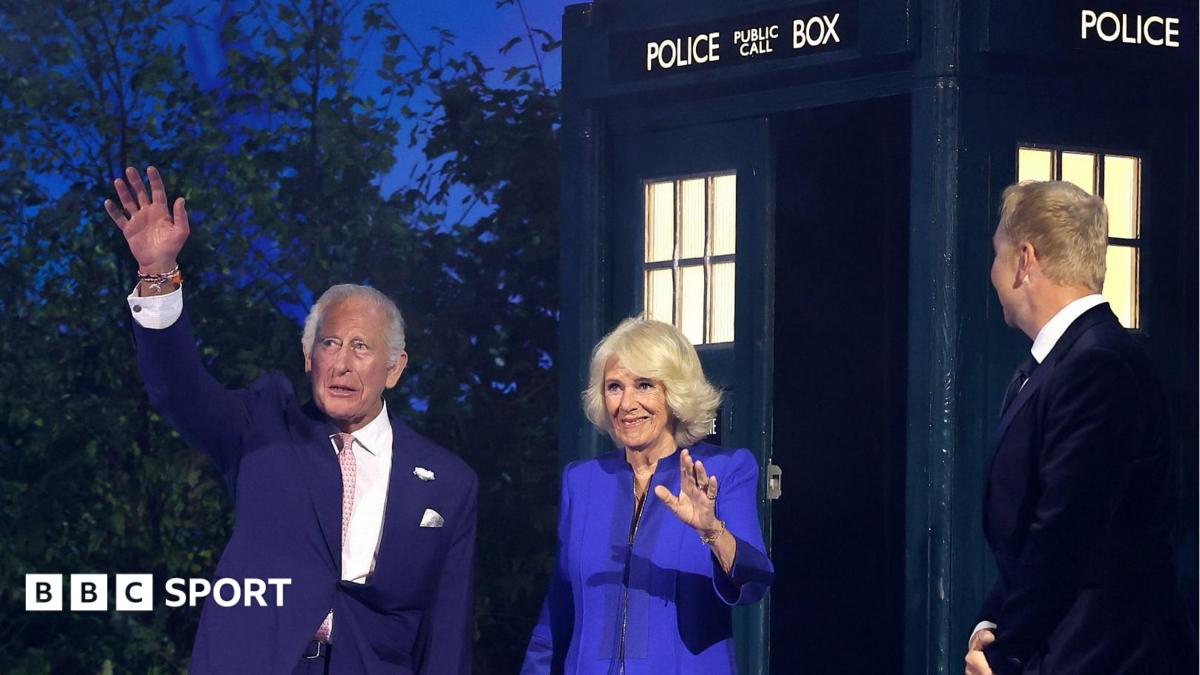
Commonwealth Games: King Charles III emerges from the Tardis as Glasgow 2026 Games begin

One of the louder cheers came for the Falklands Islands – in the news recently following Argentina’s victory over England in the football World Cup semi-finals – and another followed when the Samoa team emerged and performed a haka in front of the dignitaries in the Royal Box.

But nothing compared to the noise which greeted the arrival of the Scotland team, who entered the arena last in their white shirts and kilts and lifted many in the capacity crowd from their seats.

A large Loch Ness Monster representation then emerged, before, backed by bagpipers and drummers, a rousing rendition of Flower of Scotland followed.

The next section of the evening featured theatrical performances – a show billed as “a love letter to Glasgow and the Commonwealth”.

It began with a performance by Scottish folk and country singer Nathan Evans and a dance under a replica of Glasgow Central Station’s iconic clock.

The saying “Meet me under the clock” is famous in these parts.

Singer Callum Beattie’s rendition of Baccara’s Yes Sir, I Can Boogie – the 1970s disco tune recently adopted as Scotland’s unofficial anthem – had the Scottish athletes dancing in their seats.

Held indoors in front of about 10,000 people, this was a more intimate ceremony than the last time Glasgow hosted the Commonwealth Games, when a 40,000-strong crowd witnessed the opening of the Games in 2014 at Celtic Park.

There was a point, after the Australian state of Victoria withdrew as hosts in 2023, when some thought these Games would not happen. Glasgow stepped in at short notice to ensure otherwise.

There are eight fewer sports involved compared to 2014, given the short build-up, and venues from 12 years ago have been repurposed.

But Commonwealth Sport president Donald Rukare, wearing a tartan kilt in the colours of his home country Uganda, said this edition has been made possible by the “extraordinary legacy of 2014 and by a city that once again welcomes us with warm hearts and open arms”.
Source link

Commonwealth Games 2026: Five Team NI boxers one win from the podium

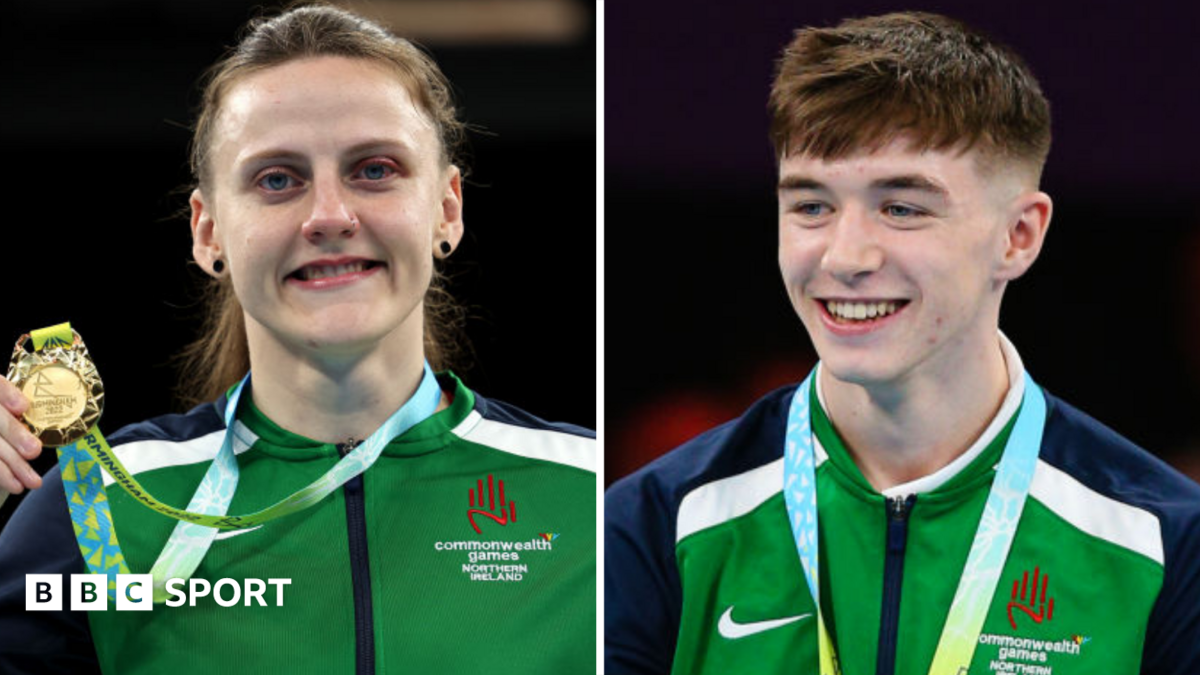
Five Northern Ireland boxers are one win away from a Commonwealth Games’ medal following Wednesday’s draw.

Kaci Rock, Michaela Walsh, Jansseen Hill, Garyn McAllister and Willie John McCartan will all enter the competition at the quarter-final stage next Tuesday and Wednesday in Glasgow.

Defending featherweight champion Walsh will face Scotland’s Lara Brown in Wednesday’s afternoon session, as the Holy Family GG boxer seeks to return to the podium for a fourth-straight Games having won silver at the 2014 edition in Glasgow and again four years later at Gold Coast.

Welterweight Rock takes on Niue’s Karen Te Ruki Pasene on Tuesday afternoon, which will also see heavyweight McAllister take on Ghana’s Jibril Muntari.

In Wednesday’s evening session at the SEC Centre, light-heavyweight Hill faces 2025 World bronze medallist Chantelle Reid from England, while super-heavyweight McCartan will meet Ghana’s Daniel Plange.

The boxing tournament begins on Friday and bantamweight Louis Rooney is the first Northern Ireland boxer in action, taking on Lesthotho’s Mathealira Seholoholo in the opening round at bantamweight and should the Star ABC man prevail, he will meet Australia’s Jye Dixon on Sunday in the last 16.

Nicole Clyde begins her bantamweight challenge on Sunday against Ghana’s Nancy Bamfo, while welterweight JP Hale is also in action at the least 16 stage with his opponent to be determined.

On Monday, 2022 featherweight champion Jude Gallagher makes his bow when he boxes in the last 16 stage at lightweight with his opponent to be determined, while light-heavyweight Eoghan Quinn is a similar scenario,

Also on Monday’s last 16 bouts, flyweight Caitlin Fryers meets Bangladesh’s Zinnat Ferdous, while light-middleweight Jon McConnell is tasked with India’s Sumit Kundu.

All quarter-finals are scheduled for Tuesday, 28 July and Wednesday, 29 July with Thursday a rest day before the semi-finals on Friday, 31 July and finals on Saturday, 1 August.

Source link

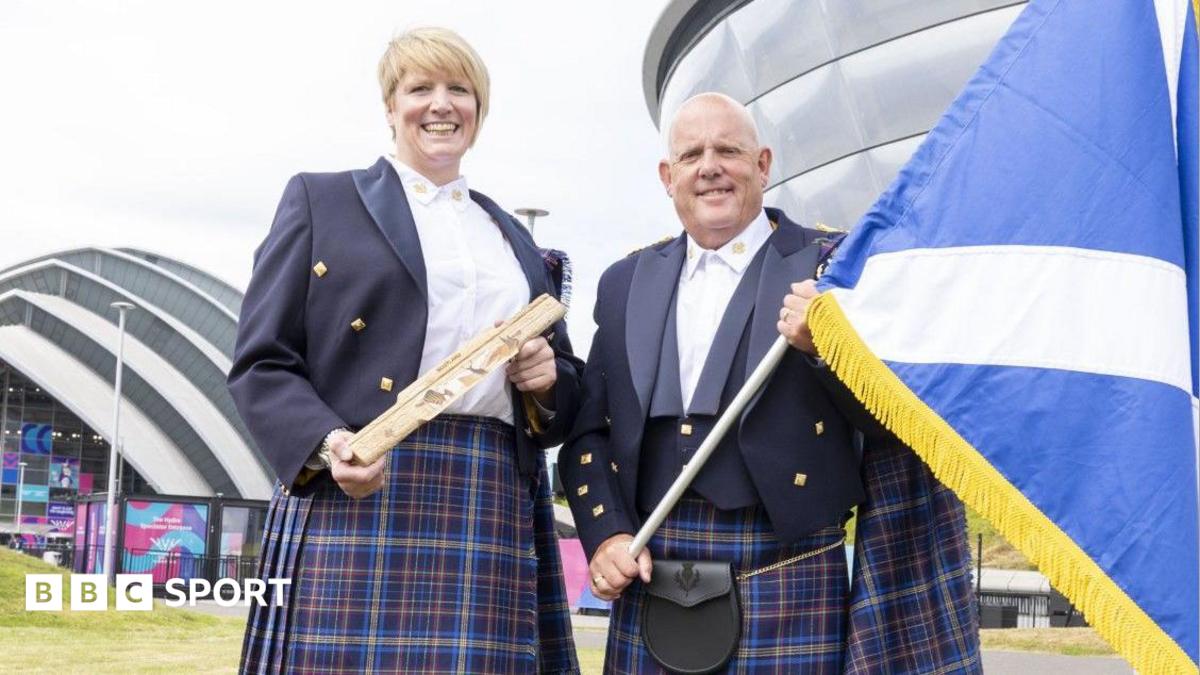
Glasgow 2026 Commonwealth Games: Alex Marshall and Sarah Adlington get Scotland flag honour

It just adds to what will be an especially special Games for Marshall, who is joined in the bowls team by his niece Beth Riva.

“It’s a bit nerve-wracking really,” 59-year-old Marshall told BBC Scotland. “It’s not very often I get a bit emotional, but I certainly had a tear in my eye when I came out the lift this morning and all the athletes were there. It’s just a huge honour.”

Resplendent in full kilt on a sweltering day, and proprietorially clutching the flagstick like a child would a favourite toy, the East Lothian bowler was in his element when talking about the news on Wednesday.

Marshall conceded he would have to let it go for the evening before having it returned before the big show.

But he might have to battle with Adlington for first shot of it when that time comes. “And I’d win that fight,” joked the 39-year-old heavyweight.

Adlington, who won judo gold in 2014 and 2022 and is looking to end her career by completing the treble, revealed the two of them have known the news for a few weeks but had been sworn to secrecy.

“That’s been really hard,” she told BBC Sport Scotland. “I was told I could tell my nearest and dearest but for everyone else it will be a massive surprise.

“I’m just so excited. I was so nervous when I woke up this morning, and I think I’ll be even more nervous tomorrow. I might not even sleep tonight but if it’s even half as good as it was in 2014, it will be amazing.”

Source link

BBC Alba to screen Glasgow Commonwealth Games with nightly live coverage

The BBC Alba deal means there will still be some live coverage of the Commonwealth Games on free-to-air television in Scotland.

The commentary and presentation will, of course, be predominantly in Gaelic.

A similar deal is in place in Wales. This means there will be some live coverage on the Welsh language broadcaster S4C.

These deals happened because TV rights packages are available to cover many indigenous languages across Commonwealth countries – not just the main language.

The BBC was outbid for live English language rights in the UK by subscription service TNT. Channel 5 later secured a package of two hours of daily recorded highlights.

The Welsh and Gaelic deals ensure there will at least be some free-to-air live coverage.

BBC Alba and S4C are available to all viewers in Scotland and Wales respectively.

But the profile of the TV coverage will, inevitably, still be much lower to that afforded to previous Commonwealth Games in the UK.

The games in 1970, 1986, 2002, 2014 and 2022 got wall-to-wall coverage on BBC One.

The schedule on BBC One is currently dominated by the World Cup and Wimbledon. Major sporting events have the potential to bring large, diverse groups of people together to share memorable moments.

The deals covering BBC Alba and S4C are good news for these channels and inevitably some who do not speak Gaelic or Welsh will watch too.

But how will the scaled down Commonwealth Games fare without high profile live coverage on a major free-to-air channel?

Source link