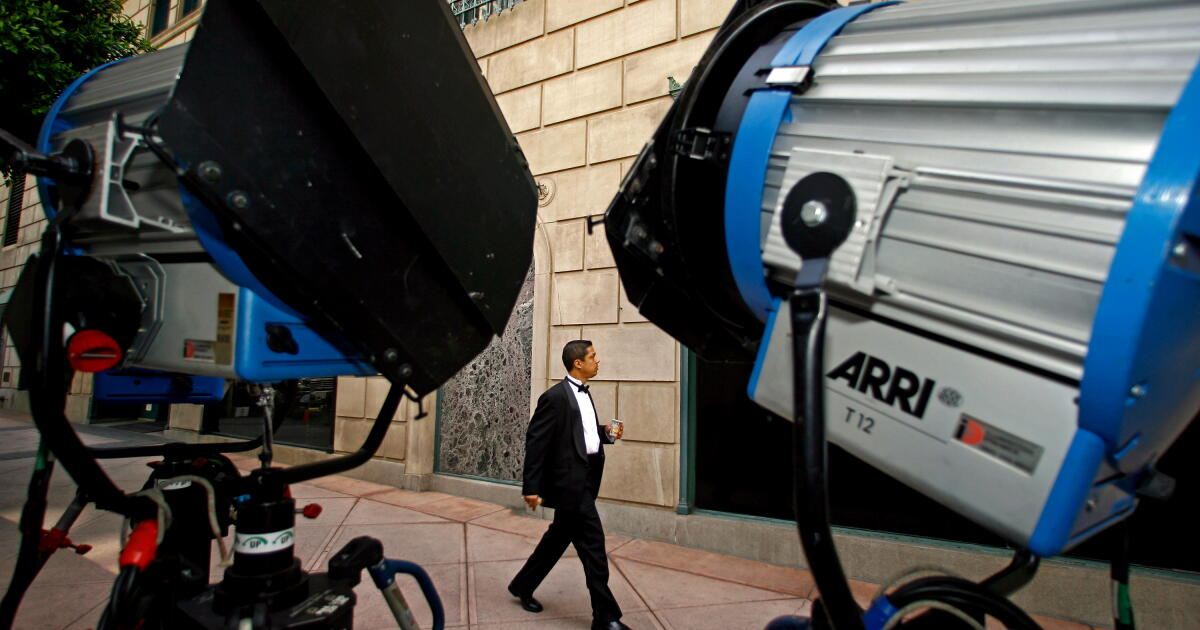
Los Angeles is still struggling to bring filming back to the region, though projects that receive a state tax credit are making up a growing share of local shoot days, according to a new report.
For the three-month period that ended Sept. 30, there were 4,171 shoot days in the greater L.A. area, down 4.8% compared with the same period last year, according to FilmLA Research, a program of FilmLA which tracks on-location production. That’s also down about 11.5% from the second quarter, and nearly 29% below the five-year average.
“Where the tax credit applies, it’s working to bring productions back to Los Angeles and put local crews to work,” FilmLA Chief Executive Denise Gutches said in a statement. “Still, overall production remains far below where Los Angeles needs it to be, and crews and businesses across the region are feeling it.”
The report counts only on-location filming. Productions shot on certified soundstages aren’t included.
Television shoot days totaled 1,400, a 2.8% slide from the third quarter of 2025 and a drop of nearly 53% compared with the five-year average. About 23% of the TV shoot days were for incentivized projects, up from about 9% a year earlier. Among them was the CBS drama “Tracker,” which relocated to L.A. from Vancouver for the show’s fourth season after receiving a state tax credit.
“California’s incentive is what made it possible to bring ‘Tracker’ here,” Elwood Reid, showrunner and executive producer of “Tracker,” said in a statement. “Los Angeles is the big leagues, and after more than a decade away, I’d forgotten what I was missing.”
Within television, comedy made the biggest gains, with 192 days of filming, up 143% from the 79 days in the third quarter of 2025. More than 60% of the comedy shoot days were for projects that received a production incentive, FilmLA said. The organization said this figure could be even higher, as many comedies shoot on soundstages, which are not included in this report. Promisingly, the third-quarter comedy numbers were a 16% improvement on the five-year average.
Other TV genres lost ground, including drama (494 days, down 9.4%), reality programming (630 days, down 2.9%) and pilots (9 days, down 52.6%).
Feature film production was a bright spot, with 533 shoot days, up 2.1% from a year earlier and about 20% from the second quarter. About 24% of that filming came from incentivized projects, up from about 22% a year earlier, including Netflix’s “13 Going on 30” reboot and Jonah Hill’s comedy “Cut Off” from Warner Bros., according to FilmLA. However, the third-quarter numbers are still a 19.3% decline when compared to the five-year average.
Production for commercials, which are not eligible for a state tax credit, continued to struggle, with 562 shoot days, down nearly 16% from the same time period in 2025, though it improved 3.5% from the second quarter.
FilmLA’s “other” category, which includes student productions, still photo shoots, documentaries and online content, totaled 1,676 shoot days, a 4.2% drop from the same period in 2025. Within that category, however, online content accounted for 556 days of filming, up 16.3% from last year.
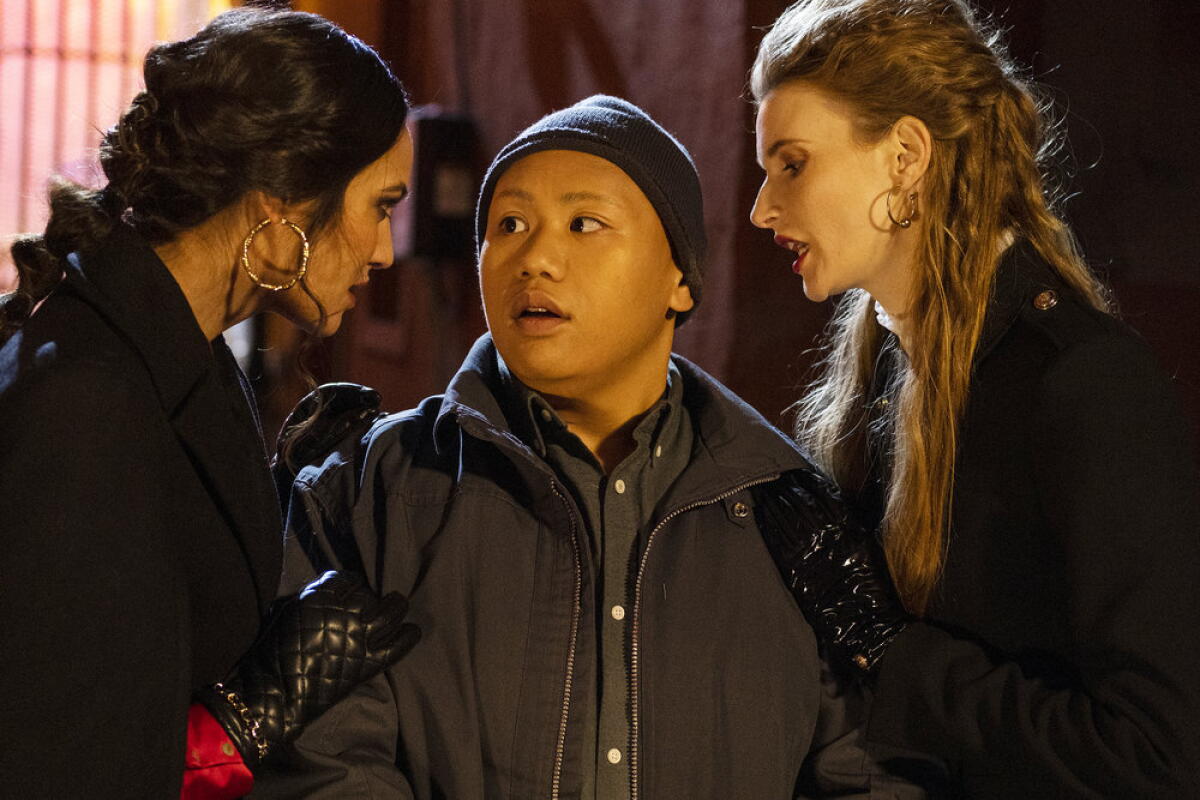
Rachelle Goulding, Jacob Batalon and Georgia Waters in “Reginald the Vampire.”
(James Dittiger / Syfy)
Based on Johnny B. Truant’s “Fat Vampire” book series, this Syfy series brings to light the (some would say preposterous) idea that a vampire could look like an average human. Created by “Twin Peaks” veteran Harley Peyton, it also hits on an important, body-affirming message: Reginald, who was played by Jacob Batalon, wasn’t super strong or super fast. But he was super smart.
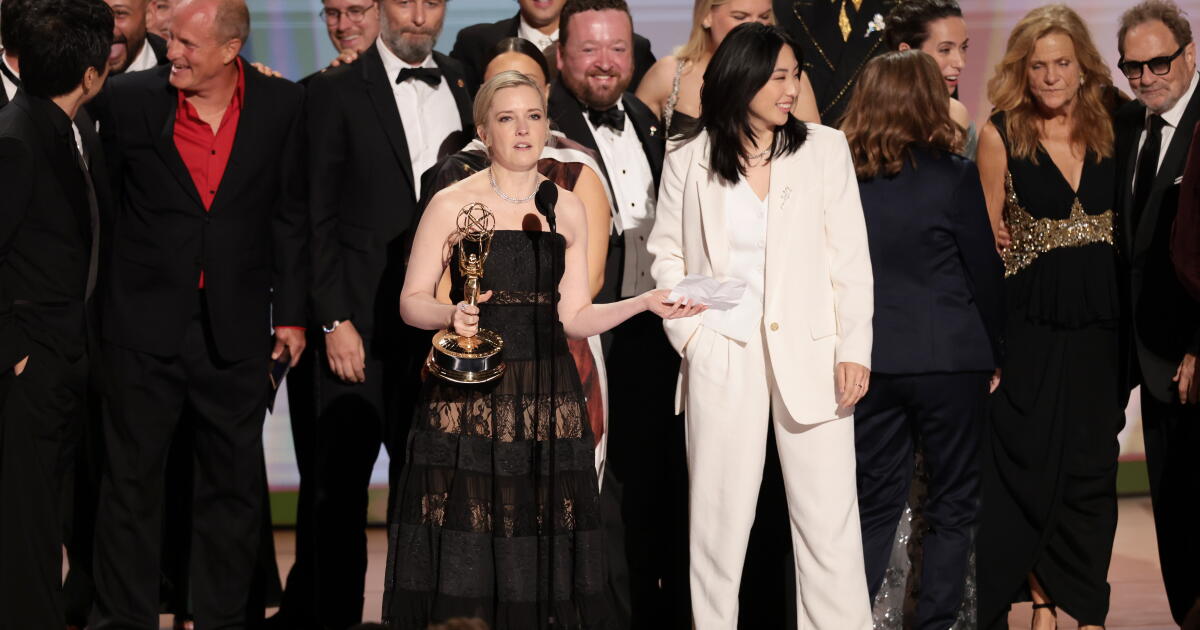
Forget about its comparison to Martha’s Vineyard. “Widow’s Bay” can now call itself the next Emmy-winning comedy series.
At Monday’s Emmys ceremony, the first-year series beat out former winners “The Bear” and “Hacks”; returning nominees “Abbott Elementary,” “Nobody Wants This,” “Only Murders in the Building” and “Shrinking”; and fellow newcomer “Margo’s Got Money Troubles.”
The show took home a record-breaking 14 Emmys, the most ever for a comedy series. The wins include lead and supporting actor, supporting actress, directing and writing. The total overcame the milestone set by “The Studio” with its 13 wins last year.
Apple TV’s horror-comedy series about a fictional cursed island off the coast of New England and its mayor, played by Matthew Rhys, who is trying to save it from economic depression, became a word-of-mouth hit that’s inspired memes and fan cosplay. Creator and showrunner Katie Dippold began writing the series more than 10 years ago, inspired by her trips as a youth to the Jersey Shore and quaint New England seaside towns.
“This was such a great collaboration of the best wonderful weirdos and artists,” Dippold said while accepting the award. “We’d also like to thank the evil entity on the island that trusted us with its story.”
“That is exciting and terrifying,” she added backstage. “One thing I meant to thank in the speech, there’s so many people that spread the word early on, all the people online talking about it with reviews, people tweeting about it … we’re so grateful for that.”
“They were predominately our parents,” Rhys joked.
“And some burner accounts,” Dippold added.
The series was a late entry into the Emmy race, premiering at the end of April. Hiro Murai, who directed five of the series’ 10 episodes and is an executive producer, told The Times he thought of it as a “spooky summer show.” Murai won for directing for a comedy.
“The show takes place during the summer, and so much of what makes it scary is that it doesn’t look like it should be scary. It’s all sunlight,” he said. “The atmosphere is very summery.”
The series stars Rhys as overcompensating mayor Tom Loftis, with a supporting cast that includes veteran actors Stephen Root, Dale Dickey and Kate O’Flynn.
“Widow’s Bay” earned 19 nominations, including lead actor for Rhys and acting nominations for Root and O’Flynn. All three won in their categories.
“Everyone’s more than ready for it and thirsty for it in a real way,” he said. “I really hope this does something in the Hollywood psyche, where they go, ‘Let’s put away the remakes and let’s just get after new challenging, original material.’ ”
The win gives Apple TV its second consecutive comedy series victory after “The Studio” won last year, and its fourth (“Ted Lasso” in 2021 and 2022) in the category in the last six years.
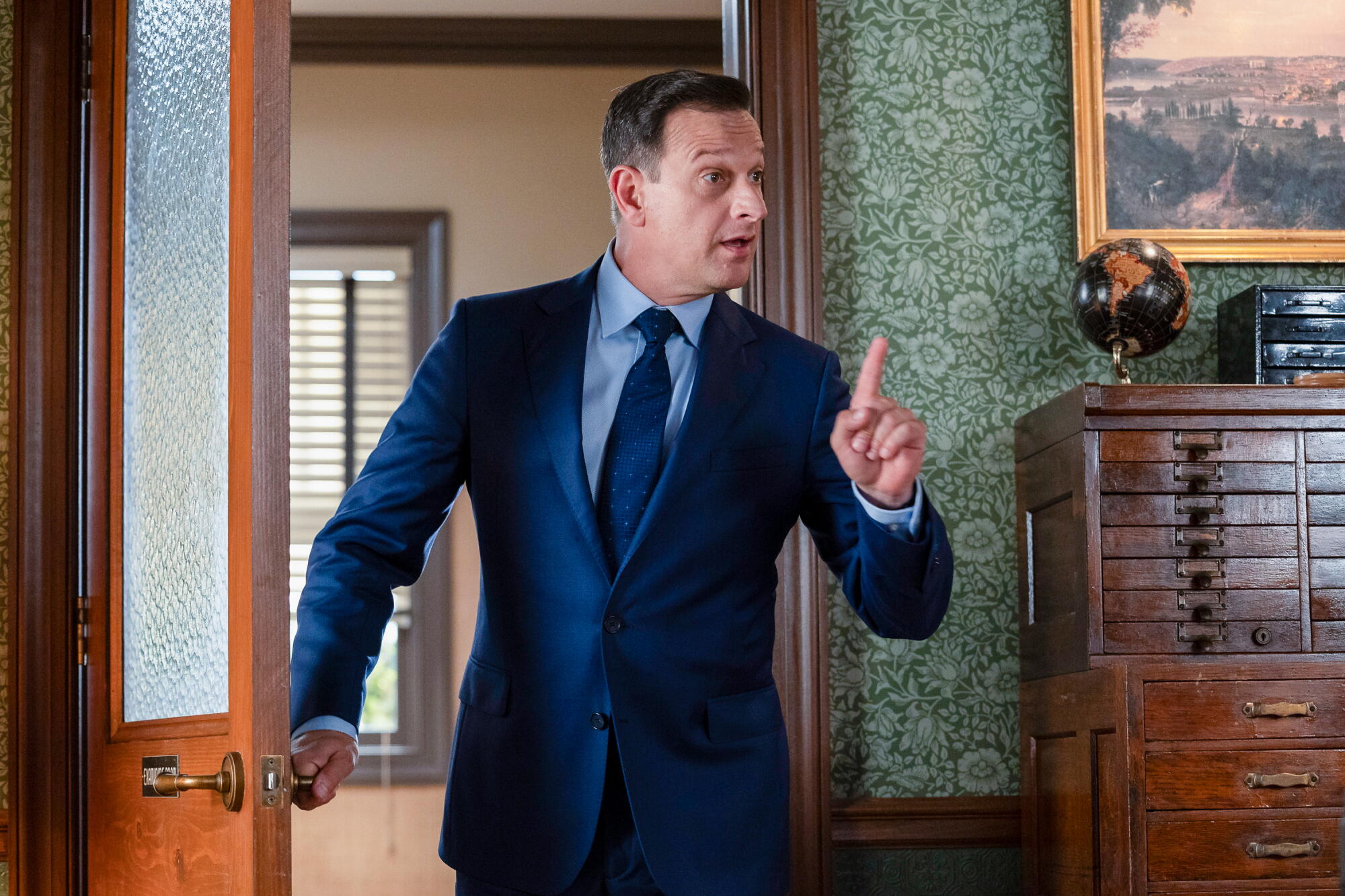
Filming a broadcast television show can leave even the most seasoned actors feeling like they’ve lost sense of time. But by afternoon on a recent weekday, Josh Charles actually looks like he teleported to the past as he collapses into a seat inside his production trailer in upstate New York.
He’s in the throes of filming Season 2 of “Best Medicine,” the Fox dramedy he headlines that’s set in a small fishing village in Maine, and the reason he’s shed his character’s usual suit and tie for gaitered trousers and a navy coat with red facings eventually reveals itself: Port Wenn, the show’s fictional town, is putting on a Revolutionary War reenactment. And if you’re familiar with Martin Best, the curmudgeonly doctor with an almost permanently furrowed brow portrayed by Charles, the character’s willingness to don such a getup likely took some coaxing.
That’s the fun of it all for Charles.
He’s been a working actor since childhood — making his debut at 15 in John Waters’ cult classic “Hairspray,” followed soon after by his turn as Knox Overstreet in “Dead Poets Society” — and a fixture in TV and film ever since.
While best known for dramatic roles like high-powered lawyer Will Gardner in “The Good Wife,” Charles easily pivots to comedy — like the time he memorably played the triple-collared, snobby camp ringleader in “Wet Hot American Summer: First Day of Camp.” Now, “Best Medicine” lets Charles leans into the push and pull of the comedy and drama within his tightly wound alter ego.
Josh Charles as Martin Best in Fox’s “Best Medicine.”
(Francisco Roman / Fox)
Created by Liz Tuccillo (“How to Be Single,” “Sex and the City”), the series follows a brilliant but cranky heart surgeon who, after developing a crippling blood phobia spurred by a traumatic medical case, abandons his thriving career in Boston to become a general practitioner in the town where he spent summers as a child. Martin Best is a doc whose bedside manner could use some TLC, but he came to town hoping he can still practice medicine — that is, if the townspeople would actually do as he says.
“I have been really wanting to do more comedy lately and looking — especially if I was going to call a place home for a particular period of time, like you do in a television show — for something that was a little more lighter air than I had been networking in of late,” says Charles, whose recent credits include dystopian drama “The Handmaid’s Tale” and spy thriller “The Veil.”
The series is based on the beloved British dramedy “Doc Martin,” which starred Martin Clunes as a doctor with a similar storyline, that aired between 2004 and 2022. Tuccillo says Charles brought an elegance and depth to the fish-out-of-water dynamic his character navigates in the quirky town.
“He never hits a false note,” she says in a separate video call. “I knew the material would be in great hands in that he would always elevate it just by his artistry and being. I knew he was going to be able to play the gruffness, but any time that you’re doing a show, there is a question mark on so many things. To be honest, we were like, ‘But is he going to be super funny? Is he going to want to do pratfalls? Is he going to be game for the comedy part of it?’ When we started working, it was clear he was game for all the shenanigans … he likes to laugh. So I try to devise things that I think will amuse him.”
A special advance preview of the Season 2 premiere aired Sunday, but the show will move into its regular time slot Tuesday. Here are edited excerpts from the conversation with Charles.
Josh Charles poses for photos on the “Best Medicine” set in upstate New York. He says he was drawn to the Fox dramedy because it was “a little more lighter air” than the other work he had done recently.
(Ebru Yildiz / For The Times)
“Best Medicine” hit Netflix after its first season aired. Building an audience outside the traditional linear viewing has become such a key component of television today. How do you feel about it?
One of my dad’s best friends told me, “I’m watching the show on Netflix!” He’s like, “I just can’t watch shows with commercials anymore” — as people are programmed now. That is the new shift. You go into these platforms for periods of time, build your audience in a different way and hopefully keep growing that audience. [Television] keeps evolving and growing in a way that I don’t fully understand, but I do know that it’s a different world right now. Netflix has a great reach, and it’s great that we’re on there and that people are discovering it. And apparently we did very well.
Season 2 opens with Martin on probation and under review by the medical board. What is Martin in for this season?
When it starts off, he’s really in it. Eden [Martin’s ex-girlfriend played by Eliza Coupe] is now back in the picture. She’s coming from Boston every weekend, and she’s rubbed a lot of people in town the wrong way. And the progress that Martin made, we see him maybe take a few steps back in the way that he interacts with people. He’s with her and I think there’s feelings there, but I think their relationship feels very — I don’t know, it’s interesting. It doesn’t have the fire. But she doesn’t make him feel bad about himself. She respects him, and I think those things are important. And he’s around in this town where nobody’s listening to him half the time. People are just always mad at him about something, and she’s not. She puts him a little bit on a pedestal, and I think he really needs that.
All that presents an obstacle for the show’s slow burn: Martin and Louisa (Abigail Spencer). There’s been some discourse about the art of the slow burn and how the pacing has changed in an era of short episode orders and unpredictable renewals. You have experience in this department with “The Good Wife.”
Liz and I have talked about it a little bit. You don’t want to muck bait it and drag it out for the sake of dragging it out. I think they’ve done a good job of putting the obstacles in a way that still feels organic and genuine and not yet a reach. In the British show, things accelerated so much faster. They only made eight [episodes] a year. We want to also have it feel like it’s plausible. It is really fun to have Eliza Coupe here. It’s fun to play scenes with her and [see] the different side that brought out in Martin. That is the challenge because I don’t think we’re as interested in doing it quite that fast [as the British show]. I have faith in them that we’ll land it in a good way.
Ellen Soraya Nikbakht as a peculiar patient and Josh Charles as Martin Best in the Season 2 premiere of “Best Medicine.”
(Danielle Mathias / Fox)
You’ve played in comedy and drama in your career. It’s fun to watch you straddle both sides with this character. How has it been finding the rhythm or tone with him?
A lot of the comedy I’ve done, I’ve done some stuff that’s more silly and kind of over the top. I love playing the fool. What’s really fun [here], to me, are the circumstances they put Martin in where things are blowing up in front of him and he’s just trying to deal. I’ve enjoyed doing a lot of the physical comedy on the show.
I [also] found it really interesting to have a character who doesn’t want to be around people, but he actually does. He just doesn’t really know how to do it, and he’s never really had any kind of practice at it in his life. And he’s gone through a lot of trauma in his life. He’s a really specific kind of workaholic. For him to grow up with what he did, and losing his sister really young in his life — I did research on that and what that does to people and how that can sort of frame your life. I imagine he went to private school, maybe a boarding school, then he goes on the track of going to college and medical school — we know how hard that is, the kind of hours they put in; then to be really successful at it, you put everything you have into your work. There’s this other side of his life that is completely empty. This town kind of just softens off the edges of him a little bit and helps him become a little more authentic version of who he was maybe meant to be. That gives me some place to build off of and to go with the character, other than it feeling kind of just very one-note.
Matthew Goode, left, as Finn Polmar and Josh Charles as Will Gardner in a scene from Season 5 of “The Good Wife.”
(CBS)
This series marks your return to broadcast television after leaving “The Good Wife” in its fifth season. You’ve done TV since then, of course. But a big reason you left broadcast was because of the grind of a 20-plus episode season. With “Best Medicine,” you’re the lead and the second season will have 14 episodes. Does that feel like the sweet spot?
If “The Good Wife” was “The Good Fight,” I would have done that until the wheels come off. I would have never wanted to leave that because I would have had a life. I could have been able to go do a play, travel with my family, see my kids. At the time of “The Good Wife,” I didn’t have kids, but we were about to get married and wanted to have children. I was only going to do 18 [episodes] at most with this show, if they wanted it. And then I asked them this year, “Well, we’re just at 14. What was the decision [there]?” And I’m happy about it. They also agree. This just feels like where the show wants to live creatively. You work really hard for four or five months, and then you get to go explore other projects and travel and live your life.
Your departure from “The Good Wife,” with your character Will Gardner dying, felt like an out–of–body viewing experience as it happened. The fact that it was kept under wraps —
I can’t believe we did it, honestly. There was one journalist who obviously had a source somewhere and did find out. Part of being able to keep that silent until the moment was an agreement that they would come to set and be there as long as it was [kept secret]. I remember like when the episode aired, I was in the editing bay with the editors in L.A. [for an episode I directed]. I’m seeing things come in and I was like, “Oh my God!” I thought it was going to get ruined for people on the West Coast. These days, you know how they make something, how much this cost, how they did this scene … we used to be surprised by things. To be able to truly shock people you know like in an Orson Welles-style “War of the Worlds” way. I felt like in our own sort of network TV way, this was the equivalent of that. We really got to narratively pack a punch. That season was one of the great treats of my career. I just felt the writing on that show that season was at another level.