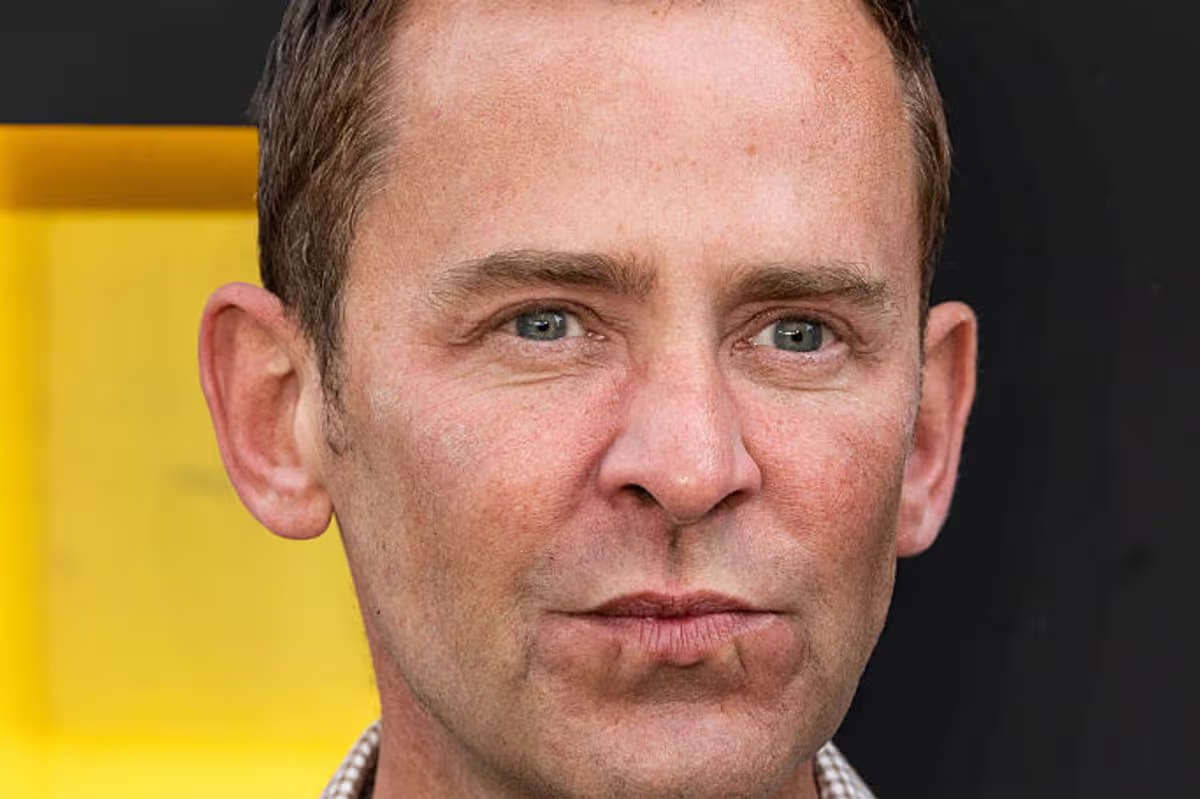
EXCLUSIVE: Scott Mills was axed from the BBC earlier this year after new evidence came to light about a historical alleged sexual offences – but this might not be the end of the former radio DJ

Scott Mills is set to sue the BBC for unfair dismissal(Image: Jeff Spicer/Getty Images)
Axed star Scott Mills has seen a flurry of support this week as his husband Sam Vaughan returned to Instagram to mark their two-year anniversary.
In his first post since the DJ’s shock sacking, Sam posted a sweet picture of him and his husband from their wedding day, captioning the post with a white heart emoji and the words “2 years.”
Stars including Zoe Ball, Rylan Clark and Sara Cox reacted to the post, with former colleauge Zoe writing: “Love you,” in the comments, followed by four red heart emoji’s. Rylan and Sarah also posted hearts in the comments section.
It comes as the Mirror exclusively revealed that Scott is set to sue the BBC for unfair dismissal after his surprise sacking. The DJ has enlisted top lawyers to lodge a case against the BBC. It’s understood he will claim that he disclosed the full details of the cop probe – including the accuser’s age – to BBC Radio 1 bosses at the time.
The BBC has previously said that they knew about the investigation but that “new information” came to light which sources claim was the fact the accuser was under 16. But it’s understood Mills will argue that this was all raised at the time to Radio 1. A source said: “It’s going to get very messy indeed.”
Mills was interviewed by police in 2018 under caution after being accused of serious sexual offences against a boy under the age of 16. A full file was sent to the CPS, who said there was not enough evidence to charge him.
In April, Mills released a statement through his lawyers claiming he had been the subject of “rumour and speculation” since his sacking and that he had “co-operated fully” with the police investigation into the allegations.
As Scott gears up for a battle with the Beeb and his partner returns to social media, questions have been raised on when the DJ could make a career return. “I think Scott Mills’ route back into the spotlight will depend on whether the public see his departure as a temporary setback or as a sign that his broadcasting career has reached a crossroads,” Mayah Riaz, a PR to the stars, tells the Mirror.
“Historically, we have seen that established presenters who have a strong personal brands and years of goodwill behind them are often afforded a second act. This is especially true when they have built up a loyal audience and have industry support over many years,” she said.
The expert noted the significance of the public show of support towards Scott’s husband Sam as it highlights that the star still has a network of influential friends and colleagues who are willing to publicly stand by him. She said this can help “soften the narrative” and “remind people of the affection that exists for a personality.”
The DJ has lost a number of gigs since being axed by the BBC, including podcast roles on Race Across the World and Pop Top 10 with Rylan Clark. Mills was also dropped as a patron of children’s cancer charity Neuroblastoma UK and “stepped back” from his role as an ambassador for the MS Society UK.
His regular panto work, which reportedly made him £600,000 in the last three years, has also been cut. Imagine Theatre, which got Scott involved in Jack And The Beanstalk shows, said there are no plans to work with the presenter for the 2026/2027 season. It said the decision was taken before he was fired by the BBC.
If Scott was to make a comeback, Mayah suggests it won’t be through a “grand relaunch”. Instead, it could be through a project that reminds his audience why they connected with him in the first place.
She explained: “Talent and familiarity remain powerful currencies in broadcasting. It goes without saying that authenticity will be key. The public are increasingly sceptical of overly polished comeback campaigns and media-managed statements.”
Mayah says the public respond “far more positively to resilience, humility and genuine passion for the work” and the biggest mistake Scott Mills could make is to come across “desperate to reclaim the spotlight”. She added: “The strongest celebrity comebacks are those that give people something new to talk about.”
Mills previously issued a statement via lawyers thanking his well-wishers. He said: “I wish to thank from the bottom of my heart all those who have reached out to me with kindness, my former colleagues, and my beloved listeners, who I greatly miss.”
On the police probe, he said: “The recent announcement that I am no longer contracted to the BBC has led to the publication of rumour and speculation. In response to this the Metropolitan Police has made a statement, which I confirm relates to me.
“An allegation was made against me in 2016 of a historic sexual offence, which was the subject of a police investigation in which I fully co-operated and responded to in 2018.” He added: “Since the investigation related to an allegation that dates back nearly 30 years and the police investigation was closed seven years ago, I hope that the public and the media will understand and respect my wish not to make any further public comment on this matter.”