HOLLY Willoughby is turning up the heat — as she plans to install a sauna at her £8million London home.
The TV host, 45, has been researching fancy brands and asked her 8.1million Instagram followers about the health benefits of classic and infrared units.
Sign up for the Showbiz newsletter
Thank you!
Holly Willoughby is turning up the heat — as she plans to install a sauna at her £8million London homeCredit: GettyHolly has been researching fancy brands and asked her 8.1million Instagram followers about the health benefits of classic and infrared unitsCredit: GettyHolly’s sauna search comes as prepares a comeback on YouTube with an edgier imageCredit: Getty
Mum-of-three Holly and her telly producer husband Dan Baldwin, 50, bought the six-bedroom home in South West London last year.
Her sauna search comes as the ex-This Morning host and former golden girl of ITV shuns traditional broadcasters and prepares a comeback on YouTube with an edgier image.
A source recently told The Sun: “Charli XCX might think she’s the original Brat girl, but Holly will give her a run for her money.”
She appeared to put her band’s woes to one side as she posed for pictures with her longtime friend Holly.
Baby Spice got into the spirit of things by donning a pair of Mickey Mouse ears as well as a tie with the famous character on it.
She looked chic in a white shirt tucked into a pair of straight leg jeans and a cream wool coat.
Emma wore her blonde locks straight and opted for a subtle make-up look.
Meanwhile, Holly wore a black t-shirt tucked into jeans with a black coat and some brown boots.
She too got into the Disney spirit with a set of ears as the two put on their widest smiles for photos.
The two women have been firm friends for several years and are often spotted socialising with their group of friends, including Melanie Blatt and Christine Lampard.
The ex-This Morning host and former golden girl of ITV is shunning traditional broadcastersCredit: GettyA source recently told The Sun: ‘Charli XCX might think she’s the original Brat girl, but Holly will give her a run for her money’Credit: Getty
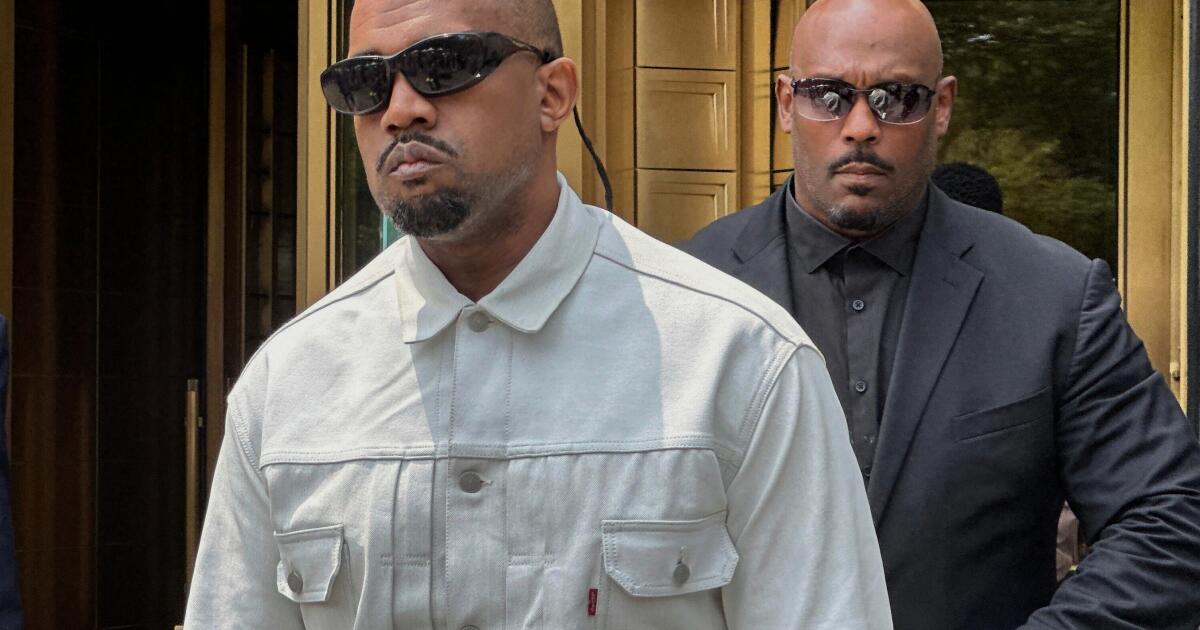
On the first night of Passover, Ye — the superstar rapper, the artist formerly known as Kanye West, the man who once threatened in a tweet to go “death con 3 On JEWISH PEOPLE” — performed for what looked like a full house at Inglewood’s SoFi Stadium.
The first of a pair of Ye concerts this week at the gigantic NFL palace, Wednesday’s show came two months after the 48-year-old musician apologized for his past antisemitic comments, attributing his behavior to injuries he sustained in a 2002 car crash.
More to the point, perhaps, the gig came on the heels of last week’s release of “Bully,” Ye’s first solo LP since 2022’s “Donda 2,” which the trade journal Hits predicts will enter the album chart at No. 2, right behind the latest from BTS.
In other words, Ye’s trying to get a comeback going — and, to judge by the very warm reception he got at SoFi, he might prove successful.
Wednesday’s concert — Ye’s first full live performance in Los Angeles since a 2021 gig at the L.A. Memorial Coliseum — lasted about two hours and featured guest appearances by Don Toliver and Ye’s 12-year-old daughter, North.
The rapper performed atop an enormous dome set up on the stadium’s floor; for much of the night, a spinning globe was projected onto the dome so that Ye looked to be — well, on top of the world is how he might’ve put it.
Early in the set, Ye asked his technical crew to “make the earth move slower,” which somebody made happen.
Accompanied by what sounded like prerecorded backing tracks, Ye opened with a handful of songs from “Bully,” which seeks a middle ground between the soulful, sample-heavy sound of his early work and the gloomier, synthed-up vibe of more recent records like “Donda” and his and Ty Dolla Sign’s “Vultures 1” and “Vultures 2.”
After an extended version of the new album’s “All the Love,” he reached back for an assortment of oldies, including all-timers like “Father, Stretch My Hands, Pt. 1,” “Mercy,” “Black Skinhead” and “Can’t Tell Me Nothing,” which he stopped and restarted after telling the crew to mute the music during the song’s line about getting his money right so that he could hear the crowd join in.
He also did his and Jay-Z’s collaborative 2011 hit — the one whose title contains the N-word — which made you think about how he and his old frenemy are both mounting comebacks at the same time, Jay-Z as a kind of retiree’s victory lap and Ye in hopes of moving past a mess of his own making.
Other classics Ye performed included “Bound 2” and “Heartless,” to name two of his most emotionally potent songs, though thick smoke in the stadium made it hard to feel a sense of connection with him as he moved back and forth atop the dome.
Ye brought out Don Toliver to perform “Moon” and Toliver’s “E85,” then cycled again through the “Bully” tracks he’d done earlier. North West came out to perform “Talking” and “Piercing on My Hand,” after which Ye did his and Ty Dolla Sign’s “Everybody,” which prominently samples the Backstreet Boys’ “Everybody (Backstreet’s Back).”
Then he finished with a sprint through some of his most beloved hits: “All Falls Down” into “Jesus Walks” into “Through the Wire” into “Good Life,” which he restarted several times because he said the lights were “corny.”
“Is this like an ‘SNL’ skit or something?” he asked when nobody made the changes he was looking for.
Ye ended the show with “All of the Lights,” which got a huge pryo display, and “Runaway,” his epic 2010 warning to anyone foolish enough to consider falling in love with him.
“Run away fast as you can,” he sang, and the crowd roared right along.
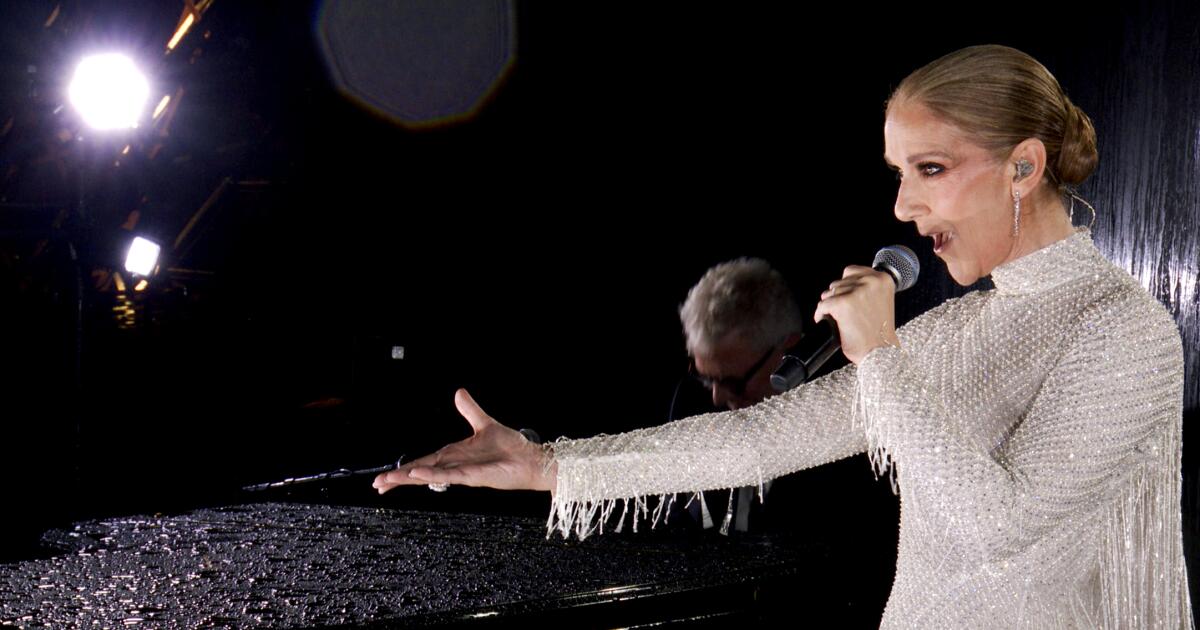
Céline Dion is officially coming back to the stage.
The singer announced on Instagram that she will return to the stage this fall, performing 10 shows at the Paris La Défense Arena. In 2022, Dion canceled her North America tour due to muscle spasms. She was later diagnosed with stiff-person syndrome, an autoimmune neurological disorder, which prevented her from performing.
The concert announcement comes after speculation last week by fans in Paris who spotted posters around the city referencing Dion’s songs, including “Power of Love” and “Pour Que tu M’aimes Encore.”
Dion, who turned 58 on Monday, called this news “the best gift” of her life.
“I’m so happy. I’m so ready to do this. I’m feeling good. I’m strong,” Dion said. “I’m feeling excited, obviously. Of course, a little nervous, but most of all, I am grateful to all of you. I can’t wait to see you again.”
While Dion performed at the opening ceremony of the 2024 Olympics in Paris and at an Elie Saab fashion show in Saudi Arabia, she has not headlined her own concert since her Courage World Tour in 2020. In her video, Dion thanked her fans, who supported her in the “most difficult times.”
“Over these last few years, every day that’s gone by, I felt your prayers and support, your kindness and love,” Dion said. “You’ve helped me in ways that I can’t even describe, and I’m truly so fortunate to have your support. I’ve missed you so much.”
Dion will perform twice a week — on Wednesdays and Saturdays — from Sept. 12 to Oct. 14. In a press statement, Frédéric Longuépée, president of La Défense Arena, called Dion’s residency a major milestone for the venue, which opened in 2017.
Fans can register for presale tickets until April 2, and general ticket sales will go on sale April 10.
Dion discussed her battle with stiff-person syndrome in her 2024 documentary, “I Am: Celine Dion.” In the film, the singer explained how SPS causes a vocal strain that makes it difficult for her to perform. Before her 2022 diagnosis, she had already experienced symptoms for 17 years.
While SPS has no known cure, Dion did not lose motivation to continue performing.
“If I can’t run, I’ll walk. If I can’t walk, I’ll crawl, but I won’t stop,” Dion said.
HOUSTON — Isaac Paredes hit a tiebreaking two-RBI double with two outs in the eighth inning to help the Houston Astros to a 9-7 win over the Angels on Sunday despite a disappointing major league debut from starter Tatsuya Imai.
There were two outs in the eighth when the Angels intentionally walked Yordan Alvarez to give Houston runners at first and third. Alvarez stole second before Paredes hit a line drive off Drew Pomeranz (0-1) to put Houston on top 8-6.
Jose Altuve followed with a double to push the lead to 9-6.
Imai gave up three hits and four runs with four walks and four strikeouts in 2⅔ innings.
The Astros (2-2) are banking on him to have a big year after signing the right-hander to a three-year, $54-million contract following a stellar career in Japan where he was a three-time All-Star in eight seasons with the Pacific League’s Seibu Lions.
The Angels (2-2) had two on with one out in the ninth when Bryan King took over for Bryan Abreu. Nolan Schanuel hit an RBI single to cut the lead to two, but King struck out the next two batters for his first save.
Jorge Soler drove in three runs and Zach Neto hit a two-run homer for the Angels as they split the season-opening series.
The score was tied with one on and one out in the fourth inning when Neto made it 6-4 with his shot to the seats in left field.
Christian Walker’s two-RBI double with two outs in the fifth inning tied it 6-6.
Christian Vázquez drove in two runs with a single in Houston’s four-run second inning to give the Astros an early lead.
There was one out in the third when Imai walked Neto before he moved to third on a single by Mike Trout. Schanuel walked to load the bases and Soler cleared them with his double to the corner in left field to get the Angels within one.
Jo Adell’s two-out RBI single tied it at 4-4 and chased Imai.
Angels starter Jack Kochanowicz yielded four hits and six runs with five walks in four innings.
IF you’re wondering where the next big holiday trend is coming from, I can save you some time.
It’s not a brand new destination, and it’s not somewhere “undiscovered”.
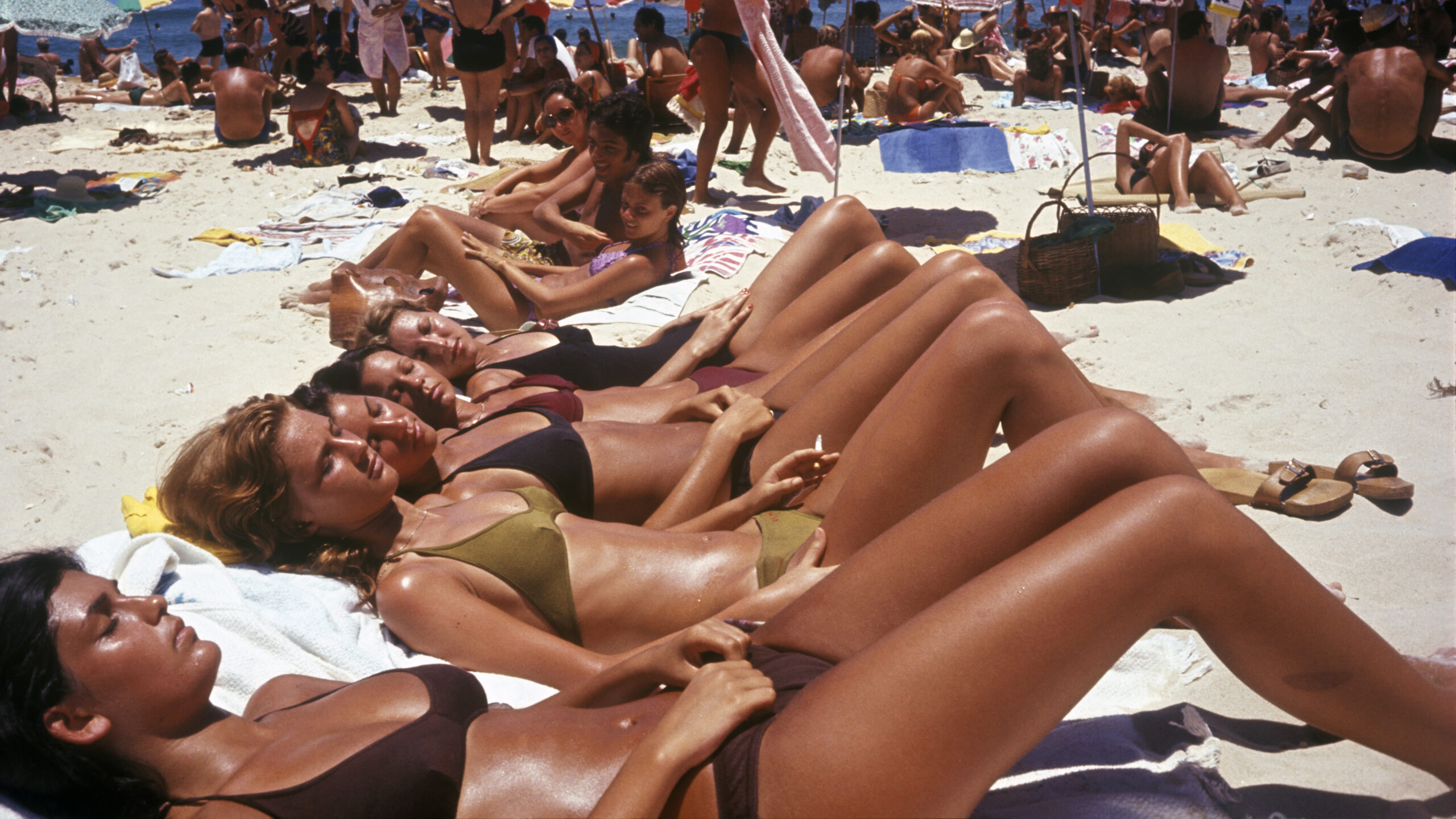
The 1990s were a peak for all-over tans at any costCredit: Getty ImagesBut the same resorts are now great for family breaks with school summer holidays dates from £58pp a nightCredit: Getty
It’s the places your parents went in the 90s.
I spend most of my time looking at holiday booking data, and this one trend keeps jumping out.
A whole wave of classic British package holiday resorts are making a serious comeback in 2026.
And the reason is simple: they’re still ridiculously good value.
From Europe to Africa, here are my top 10 cheap holiday spots that are booming again… and the deals you can get right now.
10. Skanes, Tunisia
Skanes is a proper throwback to 90s package holidays – big beachfront hotels, short transfers, and everything centred around the resort.
And now, it’s having one of the biggest comebacks I’ve seen in the data, with bookings to Tunisia up massively again heading into 2026.
I found a really strong all-inclusive deal here – 7 nights at the 4* Hotel Liberty Resort, flying from London Southend (16–23 Aug 2026), from £535pp for a family of four. That’s roughly £76pp per night, and crucially, it’s all-inclusive.
What makes this one work is how family-friendly it is – big pool areas, loads going on for kids, and everything included, so you’re not constantly spending.
And the reason it’s this cheap is simple. Tunisia is still rebuilding demand, so hotels are pricing low to win Brits back. Which means right now, you’re getting proper beachfront value for a fraction of what you’d pay elsewhere.
Our holiday expert found an all-inclusive deal in Skanes, Tunisia from just £76pp per nightCredit: Getty
9. Calpe, Costa Blanca, Spain
Calpe was huge with British tourists in the 80s and early 90s – classic Spanish seaside, big beaches and that iconic rock backdrop.
Now it’s trending again in 2026, as people look for more relaxed, less chaotic alternatives to bigger resorts.
I found a great-value summer deal – 7 nights at the 4* AR Diamante Beach, flying from Bournemouth (3–10 Aug 2026), from £588pp for a family of four. That’s about £84pp per night, on a bed & breakfast basis.
This hotel stands out because it feels a bit more premium than your typical Costa Blanca stay – big modern rooms, great pool area, and close to the beach without being chaotic.
It’s cheaper because it’s not trying to be flashy or all-inclusive heavy. And for families, that works – because you can eat out cheaply and control your spending instead.
The coastal town of Calpe is situated in Costa Blanca, and is famous for the Peñón de Ifach rockCredit: Getty
8. Hurghada, Egypt
Hurghada was unbelievably popular in the 2000s all-inclusive boom, thanks to massive resorts, guaranteed heat and loads included in the price.
And now it’s properly back again, with bookings climbing fast into 2026.
This one’s properly eye-opening – 7 nights at the 4* Royal Lagoons Aqua Park Resort & Spa, flying from Belfast (22–29 Aug 2026), from £668pp for a family of four. That’s around £95pp per night, and it’s all-inclusive.
What makes it great for families is the waterpark setup with slides, multiple pools and enough going on to keep kids busy all week without leaving the hotel.
This is why Egypt is flying with Brits right now, despite its proximity to the Iran conflict. Because once you arrive, everything’s covered.
Flights are longer, which keeps demand slightly lower, but for families, that means ridiculous value for what you get.
You can stay a week at the 4* Royal Lagoons Aqua Park Resort & Spa from £95pp per nightCredit: Alamy
7. Hammamet, Tunisia
Hammamet was one of the classic British beach holidays of the 90s – long sandy beaches, big hotels and loads of all-inclusive resorts.
Just like Skanes, it’s seeing a massive resurgence heading into 2026.
I spotted this while digging through peak summer prices – 7 nights at the 4* Houda Yasmine Hammamet, flying from London Southend (23–30 Aug 2026), from £553pp for a family of four. That’s about £79pp per night, and it’s all-inclusive.
It’s a proper classic family hotel with a massive pool, entertainment, and everything geared around easy, no-stress holidays.
Again, the price comes down to perception catching up with reality.
The hotels are good, the weather’s great – but demand hasn’t fully returned yet. So you’re benefiting from that gap.
Hammamet in Tunisia offers some of the most affordable 4 and 5* stays on the marketCredit: Getty
6. Salou, Costa Dorada, Spain
Salou was massive with British families in the 90s and early 2000s with beaches, family hotels and PortAventura right next door.
And now it’s flying back again in 2026 as families rediscover how easy it is.
I couldn’t ignore this deal – 7 nights at the 4* 4R Playa Park, flying from Birmingham (21–28 Aug 2026), from £408pp for a family of four. That’s just £58pp per night, on a bed & breakfast basis.
This is exactly what Salou does well: simple, well-located hotels with good pools and easy access to everything – and at a really great price too.
And it’s such great value because you’re not paying for extras upfront.
But in Salou, that’s ideal – everything locally is affordable, so you can build your own budget holiday.
Salou in Spain is a great-value resort with lively nightlife and the PortAventura theme parkCredit: Getty
5. Torremolinos, Costa del Sol, Spain
Torremolinos is where the British package holiday basically started back in the 60s and 70s.
And in 2026, it’s trending hard again thanks to how easy and reliable it is.
I found a really solid summer option here – 7 nights at the 4* Hotel Apartamentos Bajondillo, flying from Bournemouth (22–29 Aug 2026), from £518pp for a family of four. That’s about £74pp per night, on a self-catering basis.
What makes this one great is the location, as it sits right on the beachfront, with loads nearby, and perfect if you want flexibility with food and spending.
It’s not the cheapest on the list, but you’re paying for convenience – short transfer, loads to do, and no surprises.
Torremolinos in Malaga is a reliable holiday resort with package holidays from £74pp per nightCredit: Getty
4. Benidorm, Costa Blanca, Spain
Benidorm was the capital of British holidays in the 80s and 90s, and now a whole new generation is discovering it.
Bookings are up again in 2026, especially with younger families and couples.
I found this cracking value deal – 7 nights at the 3* Terralta Apartments, flying from Dublin (23–30 Aug 2026), from £403pp for a family of four. That’s roughly £58pp per night, on a self-catering basis.
It’s ideal for families too, as it’s home to spacious apartments, a big pool, and a quieter location just outside the main strip.
And this one’s cheap simply because Benidorm is built for volume: loads of apartments, loads of competition – which keeps prices low.
Best part is, once you’re there, everything else is cheap too.
Benidorm remains an affordable holiday destination for Brits, with deals from £58pp per nightCredit: Getty
3. Sousse, Tunisia
Sousse has always been one of Tunisia’s most popular beach resorts – big hotels, great beaches and loads of all-inclusive options.
And just like the rest of Tunisia, it’s seeing a huge comeback into 2026.
One of the best-value all-inclusive deals I found – 7 nights at the 4* El Ksar Resort & Thalasso, flying from London Southend (16–23 Aug 2026), from £583pp for a family of four. That’s about £83pp per night, and it’s all-inclusive.
This is exactly what families want – beachfront setting, slides, big pool areas and everything included from day one.
This is where the value really shows.
Because when everything’s included, you’re not constantly spending – which makes it one of the easiest holidays to budget for.
Tunisia’s Sousse is home to a UNESCO World Heritage medina and your pick of beachesCredit: GettySome of the most popular beaches in Sousse, Tunisia are Bou Jaafar and Samara BeachCredit: Alamy
2. El Arenal, Majorca, Spain
El Arenal was massive in the charter flight era – big beach, loads of hotels and right next to Palma.
And now Majorca, and El Arenal in particular, is firmly back on the rise again in 2026.
I found a peak summer Majorca deal that really stood out – 7 nights at the 3* BLUESEA Costa Verde, flying from Bournemouth (19–26 Aug 2026), from £580pp for a family of four. That’s about £83pp per night, and it’s all-inclusive.
What makes this one work is simplicity – good pool, food included, and a no-frills base in a super easy destination.
It’s slightly pricier because Majorca never really goes out of demand.
But you’re paying for ease – short flight, reliable weather and a destination that just works.
1. Sharm El Sheikh, Egypt
Sharm El Sheikh was one of the BIGGEST British holiday hotspots of the 2000s.
And now it’s making the biggest comeback of all destinations worldwide heading into 2026.
And this is where the value really hits home – 7 nights at the 4* Xperience Saint George Homestay, flying from London Luton (5–12 Aug 2026), from £650pp for a family of four. That’s around £93pp per night, and it’s all-inclusive, in great hotel, with guaranteed heat.
This hotel is built for proper relaxation with multiple pools, loads of food options and everything set up so you barely need to leave. Just turn up, pay for nothing, and leave rested, relaxed and tanned.
And the reason it’s such good value, even in the summer holidays, is simple.
Flights have only relatively recently come back at scale, so demand is still catching up. But the hotels are still world-class.
Which means right now, you’re getting proper 4* all-inclusive… for less than most self-catering holidays in Europe.
Al Sahaba Mosque is a spectacular landmark to visit in Sharm El SheikhCredit: GettyYou can stay in Sharm’s Xperience St.George Homestay from just £93pp per nightCredit: EasyJet
There’s a lot of chatter around reality TV right now and the hazards of leaning into mess for the sake of potential viewership. Before Utah-based reality star and social media influencer Taylor Frankie Paul was making national headlines over domestic violence allegations brought against her by former boyfriend Dakota Mortensen — putting “The Bachelorette” and “The Secret Lives of Mormon Wives” series under interrogation — The Times was working on a group of stories that captured the longevity and cultural impact of the unscripted format.
Sign up to get recommendations for the TV shows and streaming movies you can’t miss, plus exclusive interviews with the talent behind your favorite titles, in your inbox every Friday
By continuing, you agree to our Terms of Service, which include arbitration and a class action waiver. You agree that we and our third-party vendors may collect and use your information, including through cookies, pixels and similar technologies, for the purposes set forth in our Privacy Policy such as personalizing your experience and ads.
Speaking of reality TV — Valerie Cherish and “The Comeback” have returned for another round of the showbiz satire. The HBO comedy, which blends scripted comedy with a mockumentary format, originally premiered a year before the “Real Housewives of Orange County” and lampooned the effects of the early-2000s reality TV boom. It followed Valerie (Lisa Kudrow), a former sitcom star from the ’90s, as she attempts to revive her career by starring in a new sitcom while allowing a reality TV crew to document her journey. When the short-lived series was revived in 2014, it poked fun at the rise of prestige TV and the evolution of celebrity culture in the social media era. Now, its third and final season finds our favorite leading lady navigating Hollywood’s AI revolution. Michael Patrick King, who developed the series with Kudrow, stopped by Guest Spot to discuss the show’s latest timely exploration.
Also in this week’s Screen Gab, we take a breather from current programming and dust off two bygone titles. One is an animated sitcom that revolves around a mild-mannered therapist and his sessions with a notable clientele of real-life comedians playing exaggerated versions of themselves; the other is a mid-aughts thriller (of the Lifetime TV variety) that follows a heroic doctor who moonlights as a dangerous predator — its Letterboxd rating spread is something to behold. And it’ll make you wonder what Valerie Cherish might have brought to camp like that.
Let it all be incentive to spend some extra time on the couch this weekend — it’ll cut down on trips to the gas pump! Until next week.
— Yvonne Villarreal
Turn on
Recommendations from the film and TV experts at The Times
Dr. Katz, played by creator Jonathan Katz, invites his ex-wife, Roz, played by actor/author Carrie Fisher, to indulge in a dysfunctional family Thanksgiving on “Dr. Katz, Professional Therapist.”
(Comedy Central)
“Dr. Katz, Professional Therapist” (YouTube)
Once in a while the algorithms that rule our lives do us an actual favor, and so it was that YouTube alerted me that the entirety of this great turn-of-the-century cartoon lives there, hosted unofficially on a variety of channels. (Just type in the title.) Created by star Jonathan Katz with Tom Snyder, the inventor of an animation workaround called Squigglevision — in which vibrating outlines give a crude effect of action — and co-produced by Loren Bouchard, who would go on to co-create “Bob’s Burgers,” this six-season, semi-improvised, Peabody Award-winning Comedy Central series is founded on the notion that a comedian’s patter can resemble the neurotic unloading one might encounter in a psychotherapist’s office. And so onto Katz’s couch comes a parade of future comedy elder statespersons, naively but recognizably rendered, including Ray Romano, Lisa Kudrow, Dave Chappelle, Garry Shandling, Marc Maron, Catherine O’Hara, Margaret Cho, Wanda Sykes, Patton Oswalt, Sandra Bernhard, Paul F. Tompkins, David Cross, Jim Gaffigan, Steven Wright and Conan O’Brien. Rodney Dangerfield, already an elder comedy statesperson, has some things to say about his wife. Framing the therapy sessions are the domestic misadventures of Katz and his adult child son, Ben (H. Jon Benjamin, the Mel Blanc of adult animation, if Mel Blanc only used his own voice). Can’t-be-bothered secretary Laura (Laura Silverman, recently seen as Jane the documentarian on the new season of “The Comeback”), fills out the regular cast. — Robert Lloyd
“Stalked by My Doctor” (Tubi)
Last weekend, the Museum of Home Video hosted an interactive game at Vidiots where the sold-out crowd watched the first five minutes of 10 films and then voted on which flick to finish. “Stalked by My Doctor” won in a landslide. This 2015 Lifetime TV movie is one of the most bizarrely watchable trash films of the 21st century. Eric Roberts stars as Dr. Beck, a lovelorn, egotistical California cardiologist who is convinced he’s a catch. This graying bachelor falls for his patient, a high schooler named Sophie (Brianna Joy Chomer) and, when rejected, threatens to clobber her disabled boyfriend (Carson Boatman) with the guy’s own crutch. Filmmaker Doug Campbell makes B-pictures like a plastic surgeon does liposuction: He hacks off all the fat. Subtle? Absolutely not. Yet, there’s not a single dull scene and the characters make smarter moves than you’d expect. By the end, I was hooting and clapping, and giddy to hear that this top-notch schlock launched a five-film franchise. Some night soon, you can bet I’ll put on “Stalked by My Doctor: Patient’s Revenge.” — Amy Nicholson
Guest spot
A weekly chat with actors, writers, directors and more about what they’re working on — and what they’re watching
Lisa Kudrow as Valerie Cherish in “The Comeback.”
(Erin Simkin / HBO)
Could ChatGPT deliver a script worthy of Valerie Cherish’s talents? More than 11 years after it was last revived, “The Comeback” returned this month with a third season that explores the fear of technology replacing artists, and the ethical compromises that arise, through its sharp and uncomfortable comedic touch. Valerie is offered the lead in a new sitcom, “How’s That?,” on a faltering streaming service called the New Net. But there’s a catch. It’s the first-ever TV series to be written by AI — a fact that network brass wants to keep secret to avoid industry backlash. Valerie is initially resistant to the idea, but a humiliating experience on an indie shoot has her reconsidering. Is she about to be part of the new future of TV? A new episode of “The Comeback” drops Sunday on HBO and HBO Max. Over email, King shared his worries over how AI may transform the entertainment business and the series he’d pick to join the comeback circuit. — Y.V.
This season has Valerie Cherish starring in the first sitcom written by artificial intelligence. The series has always hilariously explored industry shifts. What concerns or curiosities do you have regarding AI, and did those evolve as you worked on the season?
Concerns — yes, many. They range from young writers with nowhere to learn their craft to no writers, young or seasoned, anywhere but the Coffee Bean & Tea Leaf. And yes I’m curious — white-knuckle curious — to see how the threat of AI (Season 3) will change how we make TV compared to how way the threat of reality TV (Season 1) and the threat of prestige cable and streaming (Season 2) did. Spoiler alert …television and TV writers are still here. When is this being published?
Without spoiling anything, there’s a scene in this week’s second episode where Valerie takes a meeting with some Hollywood folks — and it’s an odd experience. Do those meetings feel any more confusing or bizarre to you, in terms of how network brass thinks about the landscape, than they did a decade or two ago?
That billion-participant Zoom scene in the episode is very reflective of the “pitch process” today — in fact more than reflective — it’s a documentary … minus the occasional “pop-up pet.” What’s missing from this current Zoom pitch process is the in-person connection, which also accounts, I think, for why you no longer hear the phrase: “I sold it in the room.” No room, more people — less sales?
What does your writing process with Lisa Kudrow look like? Place me in those weeks of writing the first episode of this season.
The first and every episode has the same process. We talk, we laugh, we eat, we improv, we take turns writing it down — you know, things human writers do.
In addition to this third go with “The Comeback,” you worked on multiple seasons of “… And Just Like That.” What have you found interesting about the process of revisiting characters at a different stage in your life? Has one felt easier to navigate than the other in the current entertainment landscape?
I’m fascinated by a character’s personal evolution — how they can grow over the years. Who they were, who they might be now, what they’ve let go of — how they’ve changed. I’m also fascinated by how some fans of these characters don’t want them to change. In the current TV landscape — the fans are very vocal.
What have you watched recently that you are recommending to everyone you know?
“The Pitt” [HBO Max]. In addition to the good characters, it’s the thrill of being introduced to new actors.
As a viewer, which show — excluding those in your catalog — do you think would be worthwhile to revisit in 2026?
“Freaks and Geeks” [Prime Video, Paramount+]. One season only. Sometimes … a special show that was canceled — deserves a comeback.
INDIANAPOLIS — Kawhi Leonard made a jumper with 0.4 seconds remaining, and the Clippers rallied from a 24-point deficit to beat the Indiana Pacers 114-113 on Friday night.
Leonard finished with 28 points, reaching 20 for the 50th straight game. Darius Garland led the Clippers with 30.
The Clippers were run off the floor early by the team with the NBA’s worst record. The Pacers were a sizzling eight for 11 from three-point range in the first quarter to open a 42-21 lead.
It grew to 45-21 early in the second before the Clippers stormed back for their fourth straight victory, giving coach Tyronn Lue the 400th of his career.
Indiana had gone back ahead 113-108 on Obi Toppin’s jumper with a minute to play. Leonard answered with a jumper, Garland made two free throws and the Clippers got the ball back after Pascal Siakam missed a jumper. They inbounded along the left side to Leonard, who dribbled into the middle and pulled up for the winner.
Leonard become the 14th NBA player to score at least 20 in 50 straight games, a streak that began Nov. 28.
Bennedict Mathurin scored 17 points against his former team, going 12 for 15 on free throws.
Aaron Nesmith scored 26 points and Toppin had 20 for the Pacers, who have dropped two in a row since the victory that snapped their 16-game winning streak. They lost forward Jarace Walker after he was evaluated for a concussion in the first half.
Like the mythical city of Brigadoon, Lisa Kudrow’s “The Comeback” has returned to television after many years away, with the difference that time has not stood still for its inhabitants, older in a changing world that values them less and which they navigate with less assurance.
Kudrow, who created and writes the series with Michael Patrick King, was in her youth a player in the twilight of network-dominated television, cast in a smart, influential show with wide, multigenerational appeal; in a quantitative sense, at least, everything would be downhill from there, as the medium transformed and transformed again. “The Comeback” premiered in 2005, just a year after the end of “Friends”; the first season addressed the rise of reality TV, and the next season, in 2014, riffed on dark, streaming “prestige” television.
The new (and final) season, which is both timely and speculative, addresses the impact of artificial intelligence on the medium and the industry, hinting at a dystopian future; this gives it a moral, even political component, not to say a sense of urgency. Not surprisingly, “The Comeback,” as a thing made by humans, comes down firmly on their side — it’s a manifesto at times — even as it acknowledges, uncomfortably, that computer-produced content might be “good enough.”
Once again, Kudrow plays Valerie Cherish, who, at 60 — the phrase “of a certain age” repeats throughout the series — still qualifies as a working actor. But she’s been pushed into the further reaches of the profession: Her two-season cozy mystery series, “Mrs. Hatt” (“part-time gardener, solves crime, husband is an ex-police chief”), is on no one’s radar but her own, having shown on Epix. A day’s work on a “no-budget” film is even less rewarding than she had imagined; she lasted all of two episodes on “The Traitors.” Paddling hard to stay current, to improve her brand, she bumbles through a podcast, “Cherish the Time,” without any idea what to do with that time; employs a social media person, Patience (Ella Stiller), with no discernible impact; and posts pictures of herself holding products in hopes of “future collabs.”
Still, she is not poor. Valerie and husband Mark (Damian Young), have moved from Brentwood to a condominium with a view in the (real life) Sierra Towers, overlooking the Sunset Strip, opening the latest “new chapter” in their lives, though just what that chapter for them is hard to say. Mark has lost his job in finance — “You told a joke at work at a time when jokes were illegal,” Valerie says, trying to cheer him, “no one cares now” — but left on a golden parachute; now he builds his day around pickleball. A potential role in a reality show, “Finance Dudes,” isn’t working out to anyone’s satisfaction. He’s on the verge of a three-quarter-life crisis.
When her self-promoting manager/publicist Billy (Dan Bucatinsky) comes to her waving an offer for a new series, for a new network, in which she’ll star, Valerie is more than intrigued, if taken aback when he tells her that it’s being written by AI. (He isn’t supposed to know.) Network head Brandon (Andrew Scott, as blandly discomfiting as his Moriarty on “Sherlock”) assures her that it is “within the Writers Guild agreement,” but that it is also a secret — which will account for a lot of comedy going forward, secrets and lies being the very stuff of the form. “AI is really extraordinary,” he tells Valerie. “After all, it picked you.”
It’s also created a wholly generic multicamera sitcom, “How’s That?,” in which Valerie’s character, Beth, as she describes it, “runs a cute, charming old New England B&B with the help of her hunk nephew, Bo — so Beth and Bo, B&B.” (“Viewers want a break from the complicated confusing storylines of all these dark streaming shows,” says a network exec.) Her eager supporting cast has no idea that the series is being written by anything other than its human faces, unhappily married couple Josh (John Early) and Mary (Abbi Jacobson). Josh, who thinks of himself as “the voice of women of a certain age,” is precious about the jokes he manages to get into the script; Mary couldn’t care less. Untalented writing assistant Marco (Tony Macht) only wants “to get, like, a really nice house.” The AI, meanwhile, is personified to the cast and crew, who know nothing about it, as someone named “Al,” who “works remotely.”
One by one, the old company is introduced into the new season, Valerie finds Jane (Laura Silverman), her former documentarian, working as a cashier at Trader Joe’s, having tired of scuffling as a filmmaker, “begging people to care about the things that I cared about.” When Valerie lets it slip that her new series is AI-generated — “but don’t tell anyone ‘cause that’s a secret” — Jane is inspired to pick up her camera again. Lance Barber will eventually rejoin as screenwriter Paulie G., Valerie’s old nemesis. Robert Michael Morris, who played Mickey, Valerie’s hairdresser and best friend, in earlier seasons, passed away in 2017; Jack O’Brien, as Tommy, occupies a version of that space here.
Valerie may be only moderately successful, but she isn’t a hack. She has an Emmy for “Seeing Red,” the drama at the center of Season 2. She pushes back against the costumer (Benito Skinner) who wants to put her in a caftan. She knows her craft and is nominally proud of belonging to a union. She’s not a diva, but she has her pride. And that she is loyal, even when it does her no good, makes her easy to like. Thrust half-wittingly onto this cutting edge — being the first in an AI comedy, Mark tells her, “is like saying, ‘I was the first one to eat an arm in the Donner Party’” — she is wholly sympathetic, and, eventually, as things bend toward horror in a last-act revelation, a hero.
Though the subject is serious, the approach this time is light and farcical. Partially abandoning the documentary aesthetic of its predecessors — the first season had the look of amateur video, and the second of guerrilla filmmaking — much of this season is shot as a conventional, non-meta television show, allowing us access to private conversations and meetings without having to account for Jane and her crew, or requiring the players to act as if they’re being watched. Paradoxically, without pretending to reality, it makes some things more real.
Playing himself, director James Burrows, whom Valerie convinces to helm her pilot, notes that the jokes AI writes might come fast but are never better than obvious. “Surprising only comes from a group of writers huddled in a corner beating themselves up to beat out a better show,” he says. And just as Valerie is not a character an algorithm could produce, Kudrow is not an actor a machine could ever imagine. She’s no Tilly Norwood, or Tilly Norwood at 60, or Tilly Norwood with quirks applied. There’s no one like her— other than her — for the learning machines to scrape.
You should never settle for “good enough” when better, or best, is available. But that choice is on you.
Former L.A. mayor and current candidate for governor Antonio Villaraigosa wants voters to know that he navigated billion-dollar budgets, cracked down on violent crime and championed the expansion of bus and rail lines.
The onetime state Assembly speaker argues he’s the only Democratic candidate with the experience to do the complicated job of running California.
But Villaraigosa left City Hall in 2013 — eons ago in the world of politics. President Obama was still in office, singer Robin Thicke’s “Blurred Lines” was atop the charts and Apple Watches weren’t yet a thing.
Because of his distance from elected office, combined with a decent but overshadowed fundraising effort, Villaraigosa lacks a high-profile platform to attract attention in today’s fractured media universe, an essential ingredient he needs to remind voters about his experience and accomplishments as mayor and a state lawmaker.
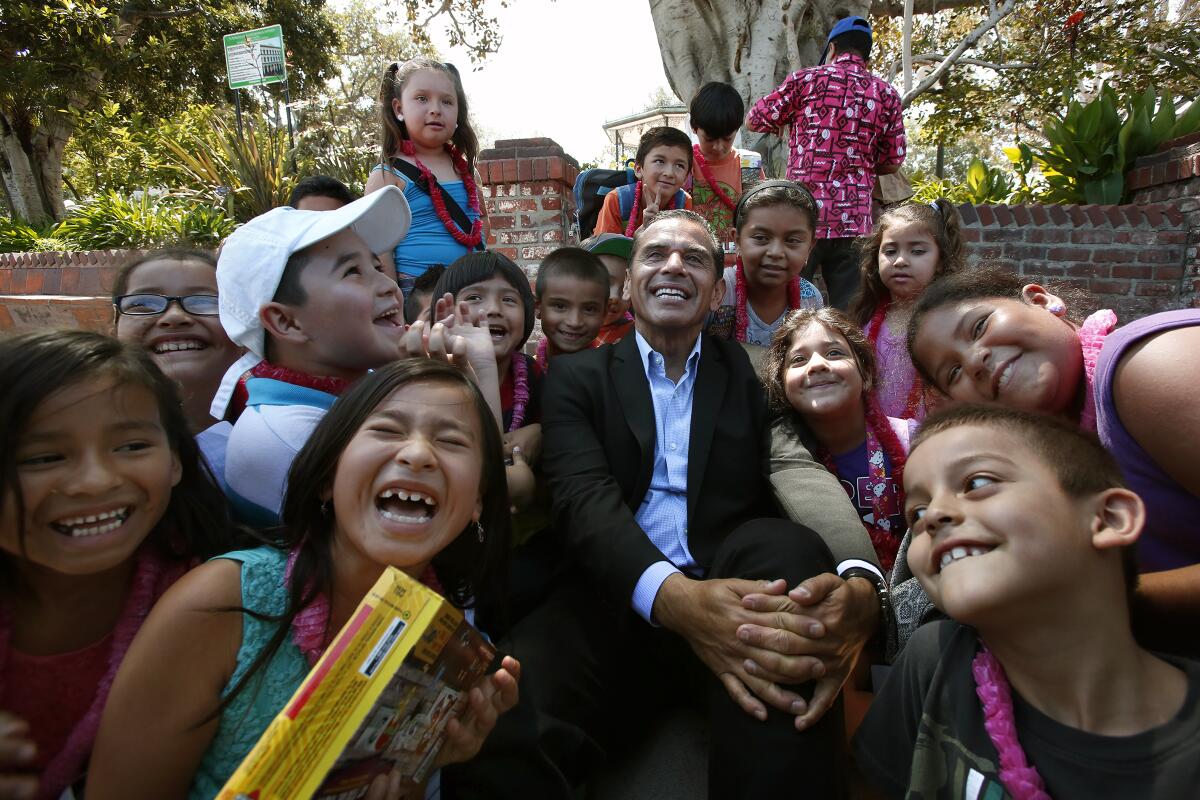
Antonio Villaraigosa gets his photo taken with students from Hazeltine Avenue Elementary School while visiting Placita Olvera in 2013.
(Irfan Khan / Los Angeles Times)
Recent polls show Villaraigosa, 73, wallowing at the bottom of the field, though none of the major Democratic candidates have an overwhelming edge.
Villaraigosa also ran for governor in 2018, coming in third in the primary election behind Democratic rival Gavin Newsom, who went on to win and is now serving his second term, and little-known Republican businessman John Cox.
Political strategist Mike Madrid, who worked for Villaraigosa on that campaign, said the former mayor’s absence from politics in recent years is a major liability in this race.
“He’s a dogged, determined candidate,” Madrid said. “But there are pretty stiff headwinds.”
Villaraigosa got a boost last week when the State Building and Construction Trades Council of California pledged $1 million to an outside committee supporting him.
His allies argue voters aren’t paying attention to the governor’s race because eyes are on President Trump, immigration raids and the Iran war.
But the new funding is a pittance compared to some of his rivals. Billionaire Tom Steyer is tapping tens of millions of his own money to pump out ads. Tech companies and billionaire Rick Caruso are supporting Matt Mahan, the mayor of San José, with millions.
Another contender, Rep. Eric Swalwell (D-Dublin), has the power of incumbency. Swalwell launched his campaign on “Jimmy Kimmel Live!” and is a regular on cable news shows, while former Orange County Rep. Katie Porter, who is also running, recently served in Congress and campaigned for the U.S. Senate two years ago.
With the June primary looming, Villaraigosa’s campaign risks sputtering out.
Angeleno Celine Mares holds a copy of Newsweek featuring newly elected Los Angeles Mayor Antonio Villaraigosa as he is sworn into office on the steps of City Hall July 1, 2005.
(David McNew / Getty Images)
Leaving a Compton church earlier this month, he reacted to Mahan’s support from technology companies, and the billionaire money in the race.
“When you have overwhelming sums of money influencing elections, there’s a great deal of concern for those of us who care about our democracy,” said Villaraigosa. “As much as they say it’s about free speech, it actually drowns out speech.”
(During his 2018 bid for governor, though, Villaraigosa was a major beneficiary of Californians using their wealth to wield political influence. Charter school backers, including Netflix co-founder Reed Hastings and philanthropist Eli Broad, spent around $23 million on efforts to boost his campaign. )
Earlier in the morning, he rallied runners at a 10K road race in L.A.’s Chinatown, lighting firecrackers, posing for photos and looking as energetic as when he was mayor and would dart into the street to personally fill potholes.
Villaraigosa flitted around the racers’ VIP tent, spotted a bowl of fortune cookies and made a beeline. “You have an active mind and a keen imagination,” he read aloud.
“Antonio V.!” a middle-aged man called out as the former mayor passed.
Minutes later, Villaraigosa swapped his black and white Veja sneakers and jeans for dress shoes and a suit for the church service in Compton, at which an overwhelmingly Black audience gave him a warm reception.
Building a coalition of Black and Latino voters helped him win the 2005 L.A. mayor’s race in a dramatic upset of then-Mayor Jim Hahn, and brought wide attention to the one-time high school dropout, who was raised by a single mother on Los Angeles’ eastside.
Newsweek magazine featured Villaraigosa on its cover with the headline, “Latino Power: L.A.’s New Mayor and How Hispanics will change American Politics.”
But national acclaim can be fleeting. Today, voters aren’t as interested in identity-based politics, said Fernando Guerra, a professor of political science at Loyola Marymount University who has known Villaraigosa for decades.
Guerra said Villaraigosa is struggling to differentiate himself in the race because his pitch to voters is not unlike the moderate path taken by Mahan. Another contender, former Health and Human Services Secretary Xavier Becerra, overlaps with Villaraigosa when it comes to biographical details: Both are from the L.A. area, Latino and relatively close in age.
“What’s made it so difficult is that [Villaraigosa said], ‘Here’s my path,’” said Guerra. “Well, guess what, there are one to two more candidates who are also on that path.”
Strategist Madrid questioned whether voters even want to hear about a candidate’s experience at a time when anti-Trump messages rally Californians. “They want a fighter,” he said.
Since leaving the mayor’s office, Villaraigosa has enjoyed success in the lucrative private sector. He purchased a $3.3 million home in the L.A. neighborhood of Beverly Hills Post Office in 2020. . A recent campaign filing shows he’s spent the last few years advising companies including the health company AltaMed, financial lender Change Company and crypto currency exchange Coinbase Global.
Then mayor Antonio Villaraigosa holds a news conference at the Department of Water and Power on Hope Street July 22, 2005, urging all of Los Angeles to conserve energy in an effort to ensure Southern California avoids blackouts.
(Ken Hively / Los Angeles Times)
He also worked for a few years for consulting firm Actum and briefly advised the Newsom administration on infrastructure projects.
“It’s not that I didn’t like the public sector,” said Villaraigosa, explaining his decision to run again. As he talked about his desire to serve, he cast a gauzy image of the aughts in Los Angeles, taking credit for the downtown resurgence, skyline full of construction cranes and fewer homeless people on the streets during that period.
“Most people look back on those years and say they were some of the best years we’ve had in the last 25 — at least,” said Villaraigosa.
Stuart Waldman, president of the business group Valley Industry and Commerce Assn., argues Villaraigosa’s experience in the private sector and distance from elected office is a good thing.
“Look at what the economy was like, look at what the city was like” under Villaraigosa, said Waldman. “That’s what he’s going to be judged on.”
Villaraigosa started his career working for labor and civil rights groups before entering politics. Elected to the state Assembly in 1994, he pushed legislation that banned assault weapons and created healthcare coverage for children. His outgoing personality established him as a coveted fundraiser for Democrats in Sacramento and paved the way for him to be chosen as Assembly speaker.
As L.A. mayor, he brought down gang crime through a program that used former gang members to broker truces. Voters backed his ballot measure to expand L.A.’s transit system through new sales tax money in the middle of the Great Recession. He drove down pension costs after a bruising battle with city unions. At the same time, he established himself as a national leader on climate issues and education.
His reputation took a hit after an affair with a television reporter led to the breakup of his marriage.
The media scene that covered Villaraigosa back then is vastly diminished, with young people now getting news from TikTok videos, message boards or Instagram posts.
Weighing in on recent TV news layoffs in Los Angeles, Villaraigosa called himself “lucky” that there were plenty of newspaper and television reporters covering him as mayor, recalling that he’d get a dozen cameras to his press conferences.
Asked to compare his 2018 campaign for governor with this one, he said, “I didn’t have to reintroduce myself last time in quite the way I’ve had to this time.”
Villaraigosa spent a significant time in Mexico in recent years to see his now ex-wife Patricia Govea, a clothing designer. “She was in Mexico 80% of the time, the last six years. So I` went to Mexico a lot.” The pair’s divorce was finalized last year.
During a debate in front of Jewish voters on L.A.’s westside last month, Villaraigosa appeared to seize on the fact that he was the sole Angeleno on the stage, introducing himself by saying, “It’s good to be home.”
He told the crowd about his work as president of the American Civil Liberties Union of Southern California and criticized UCLA — his alma matter — for its handling of incidents targeting Jewish students on its campus.
It remains to be seen if he’ll have a hometown advantage. In the 2018 race for governor, Newsom won more votes than Villaraigosa in Los Angeles County. While Villaraigosa did well in Latino communities in central L.A. and on the Eastside, Newsom captured more votes in wealthier, whiter areas.
But at the Compton church, a security guard approached Villaraigosa and told him she’d worked on his 2005 campaign, while others promised to vote for him.
“I know he has a track record,” said Valerie Bland, a 63-year-old former port worker from Long Beach, as she watched Villaraigosa work the pews. “I haven’t even looked at anyone else.”
Former Assembly speaker Fabian Núñez, a longtime friend of Villaraigosa and managing partner at Actum, hopes voters dig into Villaraigosa’s record.
“We have short-term memories in this country,” said Núñez.
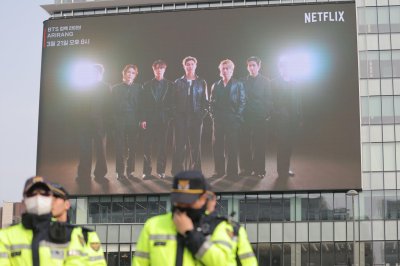
In this photo taken Wednesday, police stand in front of a promotional video in central Seoul for the upcoming BTS live performance in Gwanghwamun Square. Photo by Yonhap
Police vowed Friday to detain any suspects behind possible terror threats targeting K-pop juggernaut BTS‘ comeback concert set to draw hundreds of thousands to downtown Seoul next week.
The group is scheduled to perform before some 22,000 fans in Gwanghwamun Square on March 21, with police estimating as many as 260,000 people to gather around the area that day.
The Seoul Metropolitan Police Agency said it would deploy police commandos to inspect the site, noting it could not rule out the possibility of terror in connection with the current conflict in the Middle East.
“If police resources are wasted or the event is disrupted due to public threats, such as bomb threats, (we) will pursue and apprehend (the suspects) to the end under the principle of investigation under detention,” it said.
Police plan to set up metal detectors at the venue’s entrances as well as barricades to prevent possible accidents or acts of terror, such as a vehicle-ramming attack.
They also asked concertgoers to minimize personal items as security checks will be strengthened.
Copyright (c) Yonhap News Agency prohibits its content from being redistributed or reprinted without consent, and forbids the content from being learned and used by artificial intelligence systems.