colson

The best Colson Whitehead books to read (and where to start)

Reading List

If you buy books linked on our site, The Times may earn a commission from Bookshop.org, whose fees support independent bookstores.

This month, “Cool Machine,” a riff on 1980s New York in the form of a tightly plotted crime novel, arrives from Colson Whitehead. It concludes his Harlem trilogy, they say. If you’d told readers two decades ago that Whitehead would become a bestselling crime novelist, they might have thought you were kidding. He started out writing innovative novels with such intellectual and stylistic punch that the MacArthur Foundation gave him a fellowship in 2002.

His written output is fun, fearless and fantastic. Where to start? Here’s a cheat sheet.

Colson Whitehead triptych 1

For N.Y. lovers

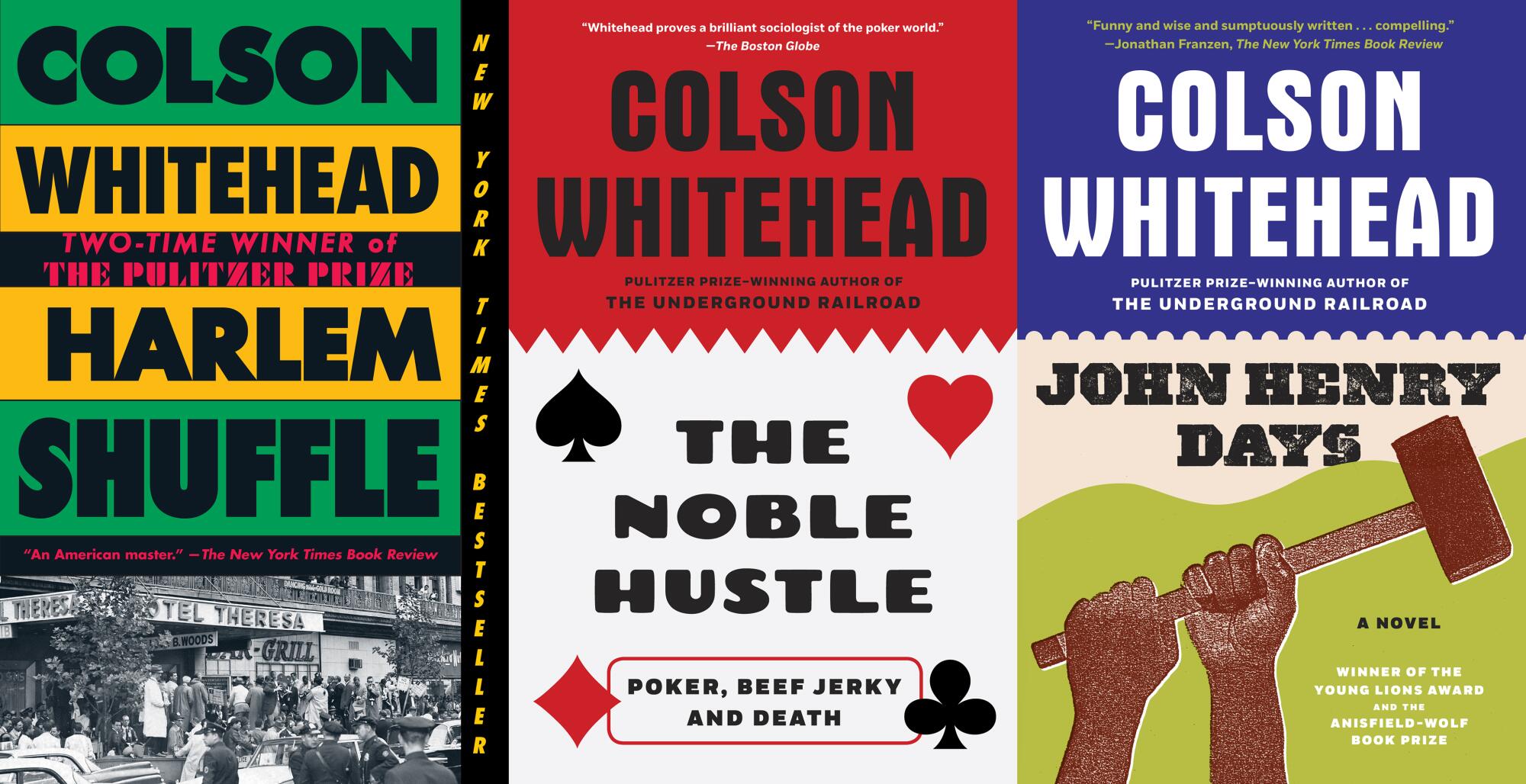
With “Harlem Shuffle,” Whitehead begins his crime trilogy in the 1960s in a furniture store with stylish midcentury stock whose owner, Ray Carney, is trying not to be a fence. Love the evocation of Harlem as a place with a cool interconnected community. Worry about that cousin who’s always trouble. The follow-up, “Crook Manifesto,” is set in the 1970s. All of New York City is at a nadir; Ray is on the straight and narrow, but needs an influx of cash (for Jackson Five tickets for his daughter). Then comes “Cool Machine,” secrets to be revealed when it hit shelves this week . And as a bonus, his essay collection “The Colossus of New York,” which is vivid, episodic and yet still a story: “Talking about New York is talking about the world.”

To break your heart

The novel “The Underground Railroad” comes from an imagined misunderstanding, logical for anyone who grew up riding subways: that the path to freedom for enslaved people that we call The Underground Railroad was in fact underground. In Whitehead’s hands, that imagining takes us through both time and place while making visceral the horrors of enslavement. The book won the National Book Award and the Pulitzer Prize and was adapted by Barry Jenkins into a limited series.

In a rare feat, Whitehead won the Pulitzer Prize a second time for his novel “The Nickel Boys,” another work of historical fiction dealing with the devastating effects of American racism. Based on the true story of a reform school where Black boys went missing, the novel pairs the stories of two teens, one a troublemaker and the other caught up by mistake. Barack Obama called it “a necessary read.” Cleverly structured, it seemed difficult to adapt, but director RaMell Ross made it into a brilliant film.

Colson Whitehead triptych 2

To blow your mind

In Whitehead’s debut novel, the not-realistic “The Intuitionist,” a Black female elevator inspector faces powerful forces aligned against her. Inflected with Thomas Pynchon-like wordplay and situations, it’s both ambitious and funny. So is “John Henry Days,” mixing narrative forms while telling the story of a Black journalist around the year 2000 going to every press junket he can, unmaking the myth of John Henry all the while. And “Apex Hides the Hurt” is a comic novel about the conflicts that arise in a small town when they hire a name consultant for a possible rebranding.

To eat your mind

Just around the time they started staggering onto TV, Colson Whitehead published a zombie novel. “Zone One” is a smart take on the shuffling hordes and pandemic survivors who try to take Manhattan back.

Colson Whitehead triptych 3

To beat the odds

Whitehead, an enthusiastic amateur poker player, wrote the nonfiction book “The Noble Hustle” about his entry into the World Series of Poker in Las Vegas. It was a luxurious time in media, circa 2011, when ESPN’s Grantland paid his $10,000 entry fee and said he could keep his winnings. The book, expanded from what he wrote for them, includes his training, pending divorce, joking asides and playing for high stakes.

To take to the beach

“Sag Harbor,” set in the mostly Black, affluent beach community in the Hamptons, is the closest Whitehead has come to writing a coming-of-age story. Taking place during the summer of 1985, Benji and his teenage friends banter about culture and get their first taste of freedom.
Source link

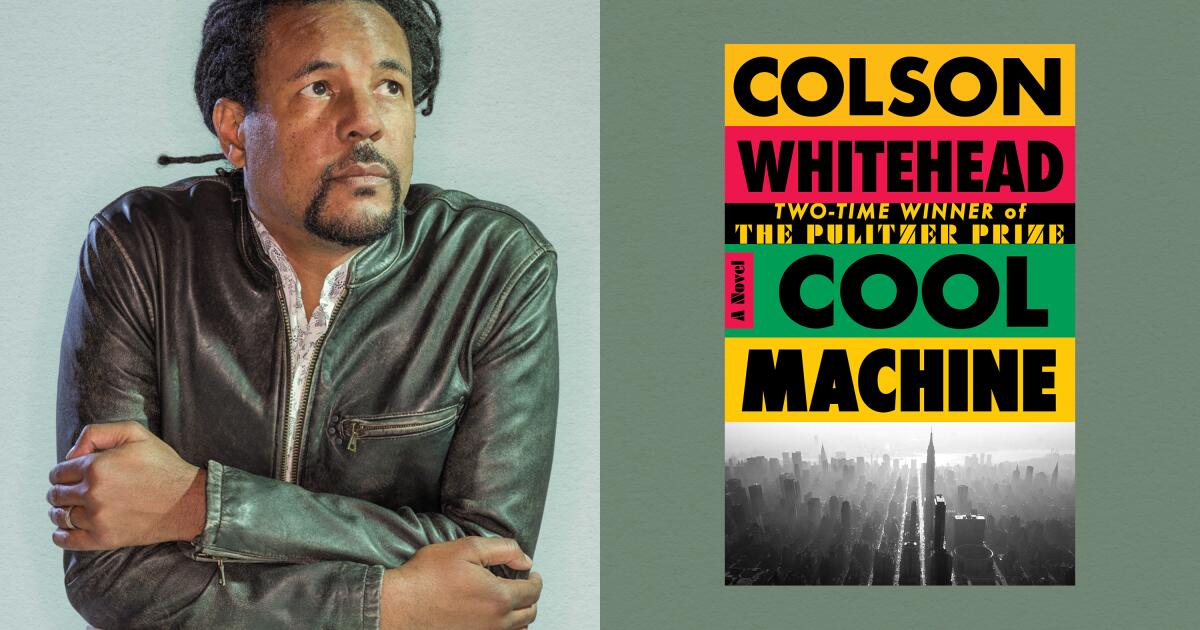
Colson Whitehead’s Cool Machine review: A masterful end to the Harlem trilogy

Colson Whitehead’s latest foray into the bent world of “reluctant fence” Ray Carney — “Cool Machine,” the third and final installment of his Harlem Trilogy — is an American epic disguised as a heist novel. It’s a dizzyingly brilliant measure of the versatility and depth of the acclaimed author’s literary talent.

Book Review

Cool Machine

By Colson Whitehead
Doubleday: 368 pages, $30

If you buy books linked on our site, The Times may earn a commission from Bookshop.org, whose fees support independent bookstores.

After writing two books dealing with monstrous historical trauma and institutional abuse — “The Underground Railroad” and “The Nickel Boys,” for which he won two successive Pulitzers — Whitehead pivots to an entirely new genre, subverting it, toying with it, making it wholly his own. And while the Harlem novels, too, have a great deal to say about serious subjects such as systemic racism, corruption, and crimes and misdemeanors of various proportions, they often lean on humor to get the message across.

In fact, it’s easy to envision the author at his laptop, as exhilarated as his prose, cracking himself up over how he bends language, employs slang, and forges descriptions like this one about a bar where Carney and a partner in crime conspire over how to fence a stolen diamond necklace: “He met Flinch Wilson at the Marlin, a narrow dive on 110th and Broadway with a decor inspired by an old leather shoe that lived in a drainage pipe.” Or this about a rival who has it out for Carney and his cohorts: “Buzz struck him as a plumber, one who comes back when you aren’t home to strangle your parakeet if you stiff him on the bill.”

“Cool Machine” is set in the 1980s, and Carney is still in the picture. It’s the Reagan era, and predatory capitalism rules, as does Mayor Giuliani, who’s waged war on the mafia and the homeless. What Whitehead dubs the “churn” roils the city and his protagonist. It’s that “churn” that beckons Carney to break his promise to himself and once again divert from his legit furniture store business. The excuse this time is that his wife Elizabeth wants to open her own travel agency, and can’t get a bank loan. Despite the couple’s closeness, for all these years her husband has managed to conceal that he’s a part-time crook. He desires respectability, but savors the buzz, the camaraderie — the honor among thieves. Carney falls in with criminal mastermind Uncle Rich and signs on to his outrageous plan to break into the Waldorf Astoria; the goal is to liberate Jesse Owens’ Olympic gold medal from those who forced him to cash it in.

The intricacy with which Whitehead details the planning and execution of this caper marks him as a top-tier researcher — he’s drawn on many primary sources to ground this work of fiction in historical fact. (There’s also his obsessive use of Pinterest.) The scenes set in the bowels of Grand Central, where there’s a secret train track leading to the Waldorf, are thrilling enough to read for their action, but the atmospheric descriptions are equally delectable: “Track 23’s next departure pulled into the station. One commuter joined Carney and Uncle Rich on the platform, a deflated man in a pinstripe suit with shiny elbows, then another businessman who sagged on one side, as if his briefcase was filled with lead weights.” One of the marvels of this novel is how effortlessly such sentences land, despite being honed to perfection. It would be a spoiler to say anything further about whether the thieves’ mission impossible yields their reward.

Part two of the novel shifts downtown, into the heart of the ’80s East Village art scene. A preoccupation of Whitehead’s — Jean-Michel Basquiat — is the inspiration for a fictional graffiti artist whose omnipresent scrawls capture the pretensions of the burgeoning wheelers and dealers, who, like uptown crooks, are relentless strivers, albeit with sleeker facades. Their snobbery is juxtaposed with Carney’s friend and colleague Pepper’s unsettling bluntness and eyeball to eyeball stare. He’s on the trail of a psychopath-for-hire dubbed “the Melancholy Hitman,” while battling stomach issues that have him downing Pepto-Bismol and coughing up blood in random bathrooms. In this section, Carney plays a supporting role to Pepper’s lead; “Escape from New York” is the enveloping soundtrack.

In the novel’s final act, Carney reemerges from straight life and Pepper from retirement in Delaware to rescue Carney’s nephew, Robert, who’s on the mob’s hit list for a murder he witnessed. Political corruption is rampant, and the revelation of who’s on the take has rattled a lot of cages. Robert is unwittingly entrapped, and has absconded with something mob bigwig Lombardi wants revenge for. Carney dons his best furniture salesman hat to make the pitch of a lifetime, a deal that could save Robert’s life, or take Carney’s. As Carney drives to the meet-up, he reflects on New York’s evolution: “Crime transformed the city by degrees. He thought of what John [his son] told him about rap music, where it came from. Rap was part of the New York environment now, barging from boom boxes and windows. They created something new from the spoils, the theft of turntables from record shops, the rip-off of a musical line or riff from another song — a crooked art.”

For those who enjoy knowing how an author’s inspiration arrives, it’s amusing to note that in the case of the trilogy that kicked off in 2021 with “Harlem Shuffle,” Whitehead told the New Yorker: “I was staring off into space and thinking about how much I like heist films and how much fun it would be to write a heist.” That sounds simple enough, but “Harlem Shuffle” turned out to be years in the making. The idea initially came to him around the same time he was writing “The Underground Railroad,” which was published in 2016. It wasn’t until after the release of that book, and then “Nickel Boys,” that Whitehead decided to lighten the mood by composing a crime novel set in New York City in the 1960s. And while he usually avoids staying on the same topic or voice from book to book, in the midst of writing “Harlem Shuffle,” Whitehead found he was still imagining further escapades for his main character, this time in the 1970s, with the city on the verge of bankruptcy, and incendiary conflagrations between the NYPD and the Black Liberation Army trending. As he envisioned what would become “Crook Manifesto,” Whitehead thought: “Why not make it three?”

Carney is part poet. Part crook. Part salesman. Part philosopher. To my knowledge, Carney’s creator is neither crook nor salesman, but Whitehead can lay claim to those other two mantles. His vocabulary appears boundless, as does his apparent love for the city he grew up in, where he still lives. “Cool Machine” is a modern masterpiece and an ode to New York, no matter that rats skitter and cockroaches scamper underfoot. When Carney has the chance to move anywhere in the world he wants, he ponders the appeal of fresh air. “Fresh was nice,” he reflects, “but so was other stuff. Noise, dirt, and struggle.” After escaping Manhattan, he wonders, “Where do you go? There’s no place else. It was like going on the lam from yourself.”

Whether or not New York is your jam, or a place you have escaped from or to, Whitehead’s Harlem Trilogy is destined to live on as an American classic. Never mind the rats and cockroaches — it’s the churn.

Haber is a writer, editor and publishing strategist, and co-founder of the Ink Book Club on Substack. She was director of Oprah’s Book Club and books editor for O, the Oprah Magazine.

Source link

10 books to read in July: New releases from Colson Whitehead and more

Reading List

10 books for your July reading list

If you buy books linked on our site, The Times may earn a commission from Bookshop.org, whose fees support independent bookstores.

New reads abound for your vacation tote throughout the weeks of July, with fiction picks featuring a Carnival cruise casualty, a highly entertaining jewel heist at the Waldorf-Astoria, and a Soviet-era madcap adventure. In nonfiction, authors consider how we define wild places, how we pigeonhole the aging, and how languages live or die. Happy reading!

FICTION:

A REAL ANIMAL by Emeline Atwood

A Real Animal: A Novel
By Emeline Atwood
Catapult: 368 pp., $29
(July 7)
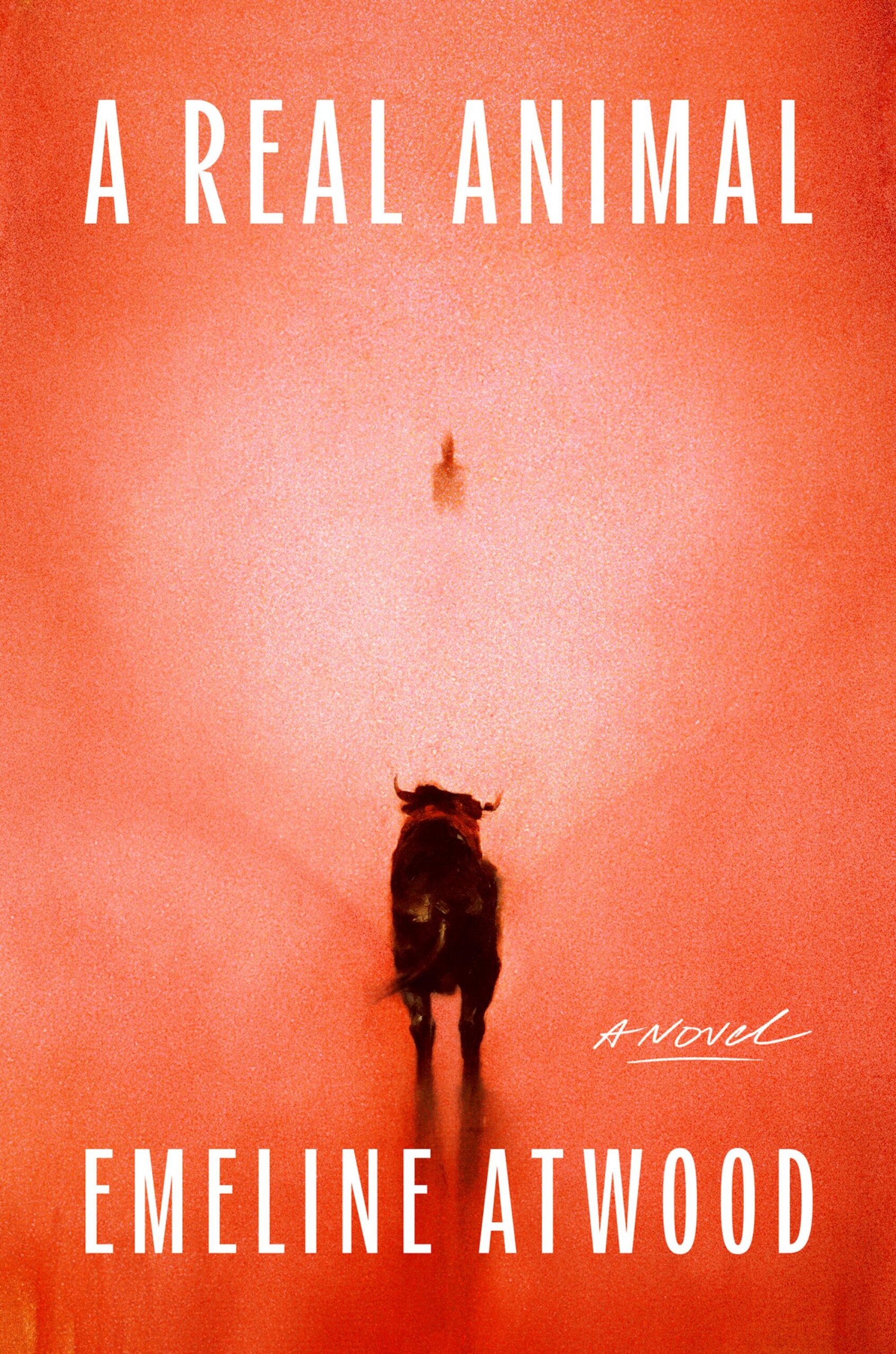
After surviving a sexual assault, narrator Lucy stalks her college campus as a leopard. Don’t spend too much time worrying about whether this transformation is real, or not; Lucy’s knowledge of her fierceness is the point, a fierceness she employs as she struggles to negotiate her independence from parents who wish she’d come home to recover and men who offer up their desires and ignore hers. It’s an astonishing debut with a compelling voice.

MAN OVERBOARD! by Kathleen Rooney

Man Overboard!: A Novel
By Kathleen Rooney
Gallery Books: 208 pp., $27
(July 7)
Readers expecting something akin to Rooney’s wondrous previous novel, “Lillian Boxfish Takes a Walk,” should remember that that book followed “Cher Ami “ and “Major Whittlesey,” a story about a pigeon and a World War I Army officer. In other words, Rooney doesn’t repeat herself, and in “Man Overboard!” she’s concocted a hilarious adventure tale of a man floating in the Gulf of Mexico, adrift with himself, his thoughts, and a few sea creatures.

ASTRONAUT! by Oana Aristides

Astronaut!: A Novel
By Oana Aristides
W. W. Norton: 272 pp., $28
(July 14)
Imagine a dystopia set neither in the future nor in fantasy; that’s the 1989 Romania 7-year-old Lia inhabits, its adults living in fear of Communist dictator Nicolae Ceauşescu, its infrastructure strained by deprivation, and its reality so scrambled that calling an explorer an “astronaut” instead of “cosmonaut” risks punishment. When Lia sets out to buy her mother a birthday gift, she sets in motion a series of weirdly probable yet totally weird events.

CITY OF WIDOWS by Nadia Hashimi

City of Widows: A Novel
By Nadia Hashimi
William Morrow: 432 pp., $32
(July 28)
During the two decades of American occupation, Afghanistan experienced a sort of peace, one in which women could be educated, work as professionals, and even serve in the military. When the U.S. left in 2020, those same women found themselves — regardless of their individual status — subject to Taliban restrictions that deny differences in gender, desire and ambition. Hashimi (Sparks Like Stars”) shows how desperate and daring the women become.

COOL MACHINE by Colson Whitehead

Cool Machine: A Novel
By Colson Whitehead
Doubleday: 368 pp., $30
(July 21)
First “Harlem Shuffle,” then “Crook Manifesto,” and now, “Cool Machine,” the highly anticipated “Harlem Trilogy” conclusion from the two-time Pulitzer Prize-winning Whitehead. The inimitable Ray Carney, who started out as a minor criminal, is now Sterling Furniture’s “Northeast Regional Dealer of the Month,” a respected businessman. It’s the mid-1980s, and when Ray’s beloved wife Elizabeth gets turned down for a small-business loan, he takes matters into his own hands, in his own former ways.

NONFICTION:

HOW TO KILL A LANGUAGE by Sophia Smith Galer

How to Kill a Language: Power, Resistance, and the Race to Save Our Words
By Sophia Smith Galer
Crown: 304 pp., $33
(July 7)
Smith Galer’s nonna spoke an Italian she called “dialet”; her mother spoke “dialet” and English; Smith Galer herself speaks only English. What do we lose, the author asks, when a language dies? The answers she found are powerful, like an enzyme to treat HIV that was found in a tree that was discovered because a researcher spoke Samoan. Unsurprisingly, she also found that language death often corresponds to ecological and cultural devastation.

THE EARTH SAID REMEMBER ME by Jason Dove Mark

The Earth Said Remember Me: How to Revive Our Memories and Restore Our Planet
By Jason Dove Mark
W. W. Norton: 224 pp., $25
(July 14)
Perhaps art will be the thing that preserves the environment, even if humans can’t save it. “Go outside. Bear witness. Make a record. Pass it on,” writes Mark in this eloquent, impassioned plea for us all to remain involved in environmental action. The more we appreciate the natural world, the more we’ll want to care for it, share it with others, and help future generations understand how some changes are natural and not all are inevitable.

AGING OUT by Lucy Schiller

Aging Out: An Exploration of Caregiving, Community, and How Americans Grow Old
By Lucy Schiller
Flatiron Books: 272 pp., $30
(July 14)
Services for the elderly range from luxury assisted-living facilities to special digital devices meant to bypass phone scams, but as Schiller explains, these things not only commodify a natural life passage — they separate older people from their natural communities. The author was inspired to investigate our country’s aging population when she cared for a grandmother who died from COVID; the book weaves the personal with the political in a meaningful way.

DAD, LOVE, ME: A Memoir by Matthew Quick

(Avid Reader Press/Simon & Schust)

Dad, Love, Me: A Memoir
By Matthew Quick
Avid Reader Press: 320 pp., $30
(July 21)
Novelist Quick (“The Silver Linings Playbook”) turns to memoir in recounting his contentious relationship with his father, whom he’s losing to dementia. While the author has had big highs (like the movie adaptation of “Playbook”), he’s also experienced deep lows, including alcoholism and severe creative block. Somehow, through recovery (which he credits to Jungian therapy), he affords both his imperfect, ailing parent and himself grace.

THE SAVAGE LANDSCAPE by Cal Fly

The Savage Landscape: How We Made the Wilderness
By Cal Flyn
Viking: 448 pp., $35
(July 28)
In “Downton Abbey”, the Dowager Duchess of Grantham starchily asked “What is a ‘weekend?’” In this book, journalist Cal Flyn asks — more affably, but with equal intensity — “What is a wilderness?” Her answer: Depends on your perspective. In other words, nearly every place on Earth teems with life. It’s only humans who have attached words like “wild” and “unexplored” to regions where they feel uncertain, afraid, and even awed.

Patrick is a freelance critic and author of the memoir “Life B.”

Source link

Queer rom-com ‘Courtside’ with real WNBA players in the works

Women’s basketball is finally getting the queer rom-com it deserves.

Media company Run-A-Muck has announced that it is developing “Courtside,” a sports romantic comedy set in the world of professional basketball. WNBA All-Star Gabby Williams, two-time WNBA champion Sydney Colson and 2022 WNBA champion Theresa Plaisance are among those set to appear in the movie, according to Deadline.

“If you like ‘Love & Basketball’ and ‘Bend It Like Beckham’ and ‘Bring It On’ but you found yourself wondering, ‘Could this maybe be a little bit gayer?’ We have great news for you,” Colson said in a Thursday Instagram post. “The answer is yeah, you could always make it gayer.”

Colson, a Texas A&M standout who was drafted to the WNBA in 2011, is also one of the executive producers on “Courtside.”

Written by “Abbott Elementary” writer-producer Brittani Nichols and directed by Carly Usdin, the movie will follow an injury-plagued women’s basketball superstar with championship ambitions who is thrown for a loop when she falls for a teammate.

“Making a movie like this is super exciting to me because I grew up playing basketball,” Colson added. “I would have loved as a young person to see my story depicted … on screen so to see a team of people who want to ensure that others can see characters and storylines that feel personal and familiar to them. I’m so excited about it.”

Colsen and Plaisance, who won a championship together as teammates on the Las Vegas Aces in 2022, share a podcast and also starred in the unscripted buddy comedy “The Syd + TP Show” together. Williams, who plays for France in international competition, currently plays on the Golden State Valkyries.

“It feels like I’ve been waiting my whole life for this kind of excitement to surround women’s basketball, and I’m excited to blend my love of sports, lesbian tension, and comedy into one project,” Nichols told Deadline. According to the outlet, Run-A-Muck co-founder and “The L Word” star Jennifer Beals is also slated to appear in the project.


Source link