Colin

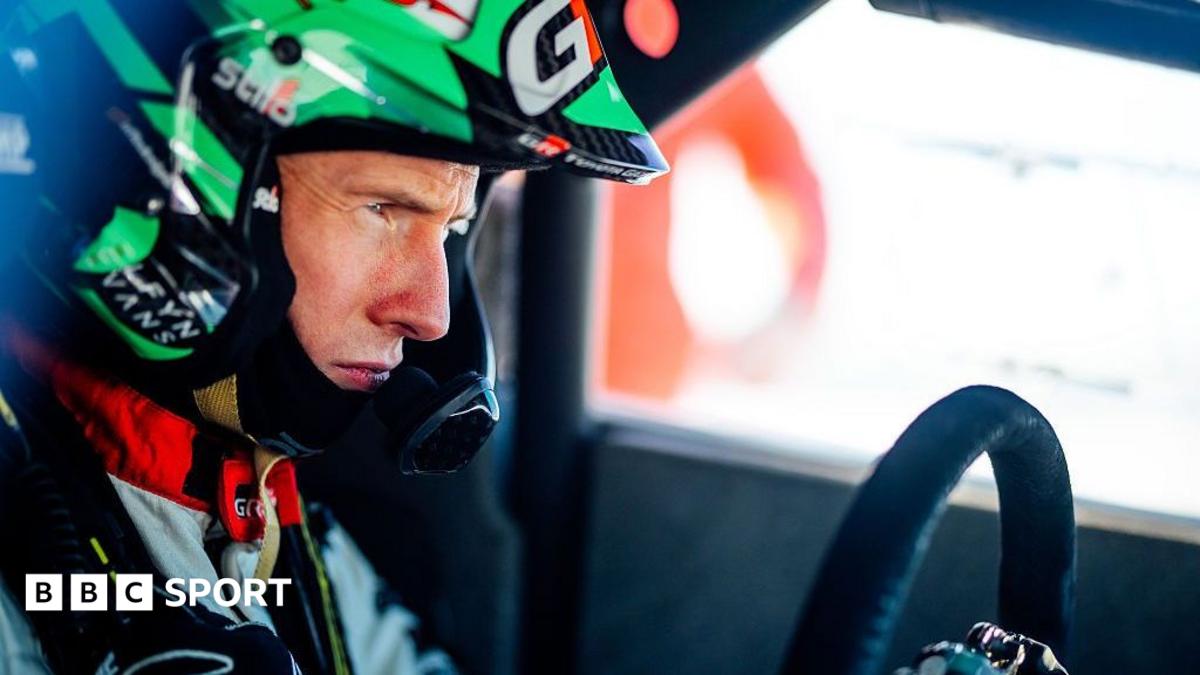
Elfyn Evans defies history to join Britain’s rally greats Colin McRae and Richard Burns with WRC title

For what must have felt like an eternity, Elfyn Evans feared history was repeating itself yet again.

At 3.05pm local time in Sardinia on Sunday, Evans could only stand and watch as another world rally title looked to be slipping from his grasp.

Evans was preparing in his head yet another runners-up speech – it would be his sixth – as he waited for Oliver Solberg to cross the finish line and be crowned world champion.

How could this be happening again?

Of the five previous times he had been championship runner-up, three had been decided on the final day and twice after he had taken a lead into the final event.

But at 3.06pm, for once the motor-racing gods were on his side.

With just two turns to go on the final stage of the final round and with victory in sight, Solberg somehow careered off the track into the Sardinian sand to hand Evans his first world title.

In the most dramatic of finishes, the 37-year-old from north Wales became the first British winner of the of the World Rally Championship (WRC) in 25 years.

Only two British men had taken the title since the WRC’s 1977 inception, matching the exploits of legendary pair Colin McRae (1995) and Richard Burns (2001).

Louise Aitken-Walker was Britain’s first world champion when WRC ran a women’s version in 1990.
Source link

Murder or medical mix-up? New questions in the Colin Norris case

The podcast series comes a week after a public inquiry reported on the case of former neonatal nurse Lucy Letby who was convicted of murdering seven babies and attempting to murder seven others at a hospital in Chester a decade ago.

While the circumstances are very different, Norris’ supporters also argue that his case hinges on disputed interpretations of medical evidence.

The story begins in 2002 when Norris, a 26-year-old nurse, originally from Glasgow, found Ethel in an hypoglycemic coma as she recovered from a broken hip.

Doctors took blood samples to find out what caused her blood sugar to drop so low.

The test results seemed conclusive – she had a massive amount of insulin in her blood.

She died 21 days later, sparking a murder investigation.

A nurse who had been on shift on the night Ethel was found told the police that Norris had predicted the 86-year-old might not last the night.

He quickly became the prime suspect.

The police operation trawled retrospectively through all the deaths on Norris’s wards, looking for potential murders that may have gone unnoticed.

They identified three other cases of unexplained severe hypoglycemic deaths and one where the patient recovered.

No blood tests had been taken from these cases at the time of their deaths to be able to prove insulin poisoning but experts for the prosecution said in court that their medical charts showed persistent and severe low blood sugar readings.

They said that because this was so rare in non-diabetics that it must be murder.

When it came to court in 2007, experts called by the defence said four of the five patients had died of natural causes.

But after a five-month trial and a deadlocked jury, Norris was convicted by a majority of 11-1 and told he would not be eligible for parole for 30 years.

After the verdict, Ethel’s son Stuart Hall said: “I don’t think he should come out again. He’s got the knowledge to commit murder but do it discreetly.”

Source link