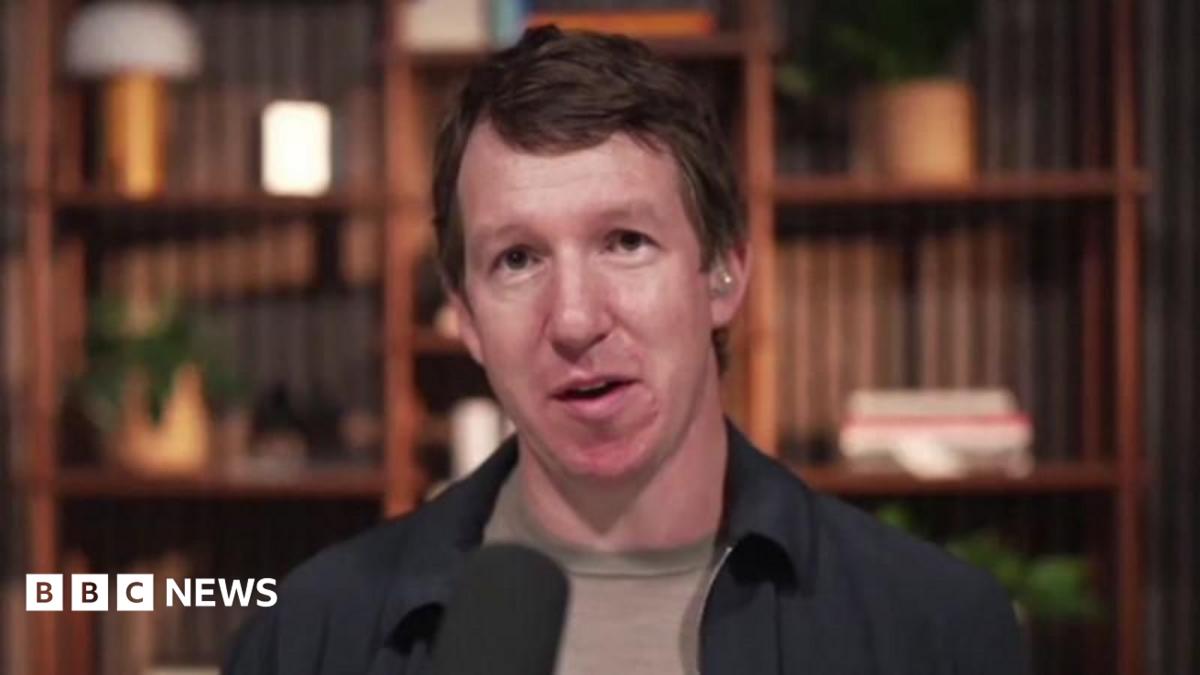
cofounder

Google co-founder Sergey Brin confronted Gavin Newsom — then launched a political war

In a treehouse nestled in redwoods north of San Francisco, Gov. Newsom stood cold and hungry as Sergey Brin, the world’s fourth-richest man, and his wellness-influencer girlfriend told him they were leaving the state.

It was late in the evening at a Christmas party hosted by crypto titan Chris Larsen — featuring singer Janelle Monáe and a towering abominable snowman with glowing red eyes — when Brin and his partner, Gerelyn Gilbert-Soto, confronted Newsom about a new proposal to tax billionaires in California, according to people who’ve spoken with the governor. Such a levy could hit Brin’s stake in Alphabet Inc. and his $272.6 billion fortune.

Newsom, who opposes the wealth tax, was still telling people about the lengthy exchange at the party months later, complaining of a lingering cold the pair had given him, according to the people, who asked not to be named discussing private conversations with the governor.

Brin, meanwhile, followed through. He left the state, bought a lakeside mansion in Nevada, and started bankrolling a billionaire political uprising in California.

Newsom, through a spokesperson, declined to comment on the interaction. “The governor has been very clear with everyone, no matter who they are, that this effort will do serious damage to the state, including for public safety workers and schools, at the expense of one special interest group,” Izzy Gardon, a spokesperson, said.

A representative for Brin didn’t respond to requests for comment.

Brin’s political push reflects a broader awakening among California’s ultrawealthy. Over the past six months, the proposed billionaire tax and a heated governor’s race have drawn tech titans and business leaders more directly into the state’s affairs — a space many of them have traditionally kept at arm’s length.

Prior to this year, Brin’s last contribution in a California election cycle was 2010 when Arnold Schwarzenegger was governor and the Google co-founder largely backed climate causes. He’s now spent more than $58 million in the last four months, including an extra $9 million disclosed late Friday, but more importantly has helped mobilize a network of fellow tech titans in a push to sway state issues.

“The wealth tax was a wake up call, it was a fire that just lit up Silicon Valley literally in a matter of weeks,” said Steven Maviglio, a veteran Democratic strategist. “I’ve never seen anything like it.”

Altogether, ultrawealthy donors have injected more than $270 million into California’s political scene in this election cycle. Outside of the wealth tax, billionaire Tom Steyer is emerging as a top Democratic candidate for governor after the downfall of former Representative Eric Swalwell following allegations of sexual assault. Steyer, a former hedge fund manager, has spent more than $140 million in his election bid, crowding TV airwaves with ads and labeling himself a “class traitor” with a campaign modeled after Vermont Senator Bernie Sanders.

Ballots for the June 2 primary election start going out next week. Brin and a cohort of the ultrawealthy including Coinbase CEO Brian Armstrong and venture capitalists Vinod Khosla and John Doerr have plowed millions into supporting Matt Mahan, a Silicon Valley mayor, with a back-to-basics agenda and a penchant for taking on the state’s Democratic establishment.

That money has helped Mahan buy airtime and attracted controversy, but his polling numbers remain stuck in the single digits while Steyer’s well-funded progressive campaign is gaining favor with voters. Brin has also backed Republican Steve Hilton, who’s currently leading polls.

“You have two polar opposites going on. You have a billionaire running who has actually fully adopted an agenda that the vast majority of voters agree with: Taxing billionaires, funding healthcare, fighting back against ICE,” said Lorena Gonzalez, head of the state’s largest union group, the California Federation of Labor Unions. “And then you have billionaires pushing a candidate whose talking points are apologetic to the tech industry.”

The billionaire political activism in California mirrors larger shifts in Silicon Valley and the nation. President Donald Trump has given tech billionaires broad access to the White House, inviting Brin and other industry captains over for dinner and to join advisory boards.

Back in September, Trump singled out Gilbert-Soto as Brin’s “really wonderful MAGA girlfriend” at a White House dinner also attended by Mark Zuckerberg, Tim Cook and Sam Altman. She has publicly supported Republican Steve Hilton for California governor, a candidate Trump endorsed and Brin has also donated to.

In California, Brin’s newfound political action was catalyzed by the wealth tax proposal, which would levy a one-time 5% tax on billionaires to help offset federal healthcare cuts. In a Signal group chat earlier this year with other Silicon Valley elite, Brin floated the idea of raising hundreds of millions of dollars to influence California politics, according to a person who saw the message.

Brin left California for Nevada ahead of a Jan. 1 residency deadline for the proposed wealth tax. He moved to a $42 million mansion on the Nevada side of Lake Tahoe, featuring two glass-walled funiculars.

Shortly after leaving California, Brin contributed $20 million to a new group dedicated to fighting the tax while also pushing pro-business and housing affordability policies, Building a Better California, making him the single largest contributor. He added $37 million over the spring, as the group quickly started supporting a trio of anti-wealth tax measures that could nullify a billionaire tax if it gets passed in an election. One of the measures, the so-called Transparency Act, has enough signatures to qualify for the November ballot, its backers claimed on Monday.

Building a Better California “remains fixed on long-term reforms supported by most Californians: housing affordability, stable funding for education, infrastructure investments, and government accountability,” a spokesperson said.

Joining Brin in the effort were other billionaires, including former Google CEO Eric Schmidt, Stripe CEO Patrick Collison and venture capitalist Michael Moritz. Peter Thiel, who also left California ahead of the New Year’s Day deadline, gave $3 million to a separate committee opposing the wealth tax.

“They don’t trust California anymore,” said David Lesperance, a tax attorney who specializes in relocations and has helped move five families out of the state because of the wealth tax threat.

Brin and his fellow billionaires helped push up the costs to gather the more than 870,000 signatures required to qualify a ballot measure. This forced the union behind the wealth tax, SEIU-UHW, to spend more on their efforts.

Now, the union says it has succeeded in getting the signatures it needed, which will likely force the business leaders opposing it into further spending.

“A very small group of the most controversial billionaires on the planet tried to stop Californians from being able to save their local emergency rooms and hospitals — but our current signature tally proves frontline healthcare workers will prevail in bringing this commonsense proposal to voters,” said Suzanne Jimenez, SEIU-UHW’s chief of staff. “When our growing coalition files these signatures, David will have won the first round against Goliath.”

Other billionaires have bankrolled their own political initiatives, including Larsen, who set up his own network of influence groups with names like Grow California and Golden State Promise.

Many in Sacramento are skeptical that Brin and his fellow ultra-rich will succeed in swaying California state politics. They point to the failed candidacy of former eBay executive Meg Whitman, who spent around $144 million of her own fortune to become governor, or even venture capitalist Tim Draper’s longshot initiative to split California into six separate states.

“They’re trying to extrapolate from their own industry, which might have been fabulously successful, that they know something about political advertising, when they don’t,” said Garry South, a veteran Democratic strategist. “They think, ‘Hey, I’ve got money I can throw it around,’ and they don’t really do their homework.”

Political consultants describe their frustration with some wealthy tech donors, who often view their political giving through an investment lens, promising big checks and not following through if they don’t see momentum. That’s led to questions about whether the California billionaire activism would continue if Mahan’s governor bid fails and the wealth tax passes.

Even Larsen, who’s worth around $13 billion, has expressed anxiety that not enough business leaders are stepping into politics. “It’s a lot of talk, and they’re happy, but we don’t see the firepower we need to take on the SEIUs,” he said, referring to the state’s largest union.

Newsom, for his part, acknowledges that many of the state’s wealthiest residents are willing to donate significant sums of money, but want to do it on their own terms and not through a tax.

“Some will never give a penny away,” he said at a Bloomberg News event in January, not long after his encounter with Brin in the treehouse. “Some I respect. Some I don’t.”

Kamisher and Carson write for Bloomberg.

Source link

Dave Mason dead: The co-founder of Traffic dies at 79

Dave Mason, a founding member of the British psychedelic rock band Traffic who wrote some of their best-known songs including “Feelin’ Alright?” and “Hole in My Shoe,” has died. He was 79.

The singer and guitarist died Sunday at his home in Gardnerville, Nev., his publicist confirmed to the Associated Press. No cause of death was given.

“On Sunday, April 19, after cooking an amazing dinner with his beloved wife Winifred, [Mason] sat down to take a nap with sweet Star (the maltese) at his feet,” said a post shared Tuesday on the musician’s Instagram page. “He passed away peacefully, in his favorite chair, surrounded by the beautiful Carson Valley that he loved so much. A storybook ending. On his own terms. Which is how he lived his life right up until the end.”

“He leaves a lasting imprint on the soundtrack of our lives and the hearts he has lifted. His legacy will be cherished forever,” the tribute concluded.

Mason canceled his 2024 tour dates after doctors “detected a serious heart condition” during a routine check-up that required “immediate medical attention.” He was expected to make “a full and successful recovery” after treatments. He later announced his retirement from touring in 2025, citing “ongoing health challenges.”

Born May 10, 1946, in Worcester, England, Mason was a teenager when he joined singer and keyboardist-guitarist Steve Winwood, drummer Jim Capaldi and woodwind player Chris Wood to form Traffic in 1967. The band was known for its psychedelic sound that blended elements (and instruments) of rock, blues, R&B and jazz.

Mason was inducted into the Rock & Roll Hall of Fame in 2004 for his work with Traffic, but the musician had a fraught history with the group.

“We did some good stuff,” Mason told The Times in 1995. “We were young kids. The first song I wrote was their first big hit in England (‘Hole in My Shoe’). But I was only 19 years old and couldn’t handle all the fame, really. It was just too much.”

He explained that after he left the band the first time, he was asked to come back because “they didn’t have enough songs for a second album,” while he had written “five or six” including “Feelin’ Alright?” The song, now considered a classic rock staple, has been covered by multiple artists including Joe Cocker, Huey Lewis, the Jackson 5, Gladys Knight & the Pips and Grand Funk Railroad.

“Then I found out that Steve [Winwood] didn’t really care for my stuff,” Mason said. “From my point of view, I think [our] differences made something better. … But it just pulled too much I suppose, and they couldn’t work it. I was more or less forced into having to leave.”

Mason’s subsequent solo career included three gold albums: his 1970 debut “Alone Together” — which featured hits like “Only You Know and I Know,” “Shouldn’t Have Took More Than You Gave” and “World in Changes;” 1974’s “Dave Mason” and 1978’s “Mariposa de Oro.” His 1977 album “Let It Flow” was certified platinum.

He also collaborated with other notable acts such as Eric Clapton, George Harrison, Jimi Hendrix, the Rolling Stones, Delaney & Bonnie and Friends, Joe Cocker’s Mad Dogs & Englishmen, and Fleetwood Mac.

Winwood shared a tribute to his bandmate on Wednesday on Instagram.

“Dave was part of Traffic during its earliest chapter, and played an important role in shaping the band’s sound and identity during that time,” said the caption accompanying a photo of a young Mason. “His songwriting, musicianship and distinctive spirit helped create music that has lasted far beyond its era, and continues to mean so much to listeners around the world.”

“Those years remain a special part of the band’s story, and Dave’s contribution to them is not forgotten,” Winwood continued. “His place in that history will always be remembered, and through the music, his presence endures.”

Mason is survived by his wife, Winifred Wilson, daughter Danielle, nephew John Leonard, niece Michelle Leonard and his brothers-in-law, Sloan Wilson and Walton Wilson.


Source link

Netflix co-founder Reed Hastings to leave the company, marking the end of an era

Reed Hastings, who helped launched Netflix from a fledgling DVD mail-order business into a global streaming juggernaut, plans to exit the company after nearly three decades.

Hastings will leave the company he co-founded to focus on philanthropy and other efforts, the streaming company announced said Thursday.

Hastings, who serves as chairman of the Los Gatos company’s board, told Netflix he will not stand for reelection when his term expires in June, Netflix said in a letter to shareholders timed to its fiscal first-quarter earnings.

He said the commitment of Netflix Co-Chief Executives Ted Sarandos and Greg Peters was “so strong that I can now focus on new things.”

Peters described Hastings, 65, as the company’s “biggest champion,” and that he “is a part of our DNA.”

Sarandos called Hastings a “true history maker,” saying in a statement that Hastings’ “selfless, disciplined leadership style” will continue to shape Netflix’s path ahead.

Hastings’ exit was not unexpected as his role in the company diminished after he stepped aside as co-chief executive of Netflix in 2023.

During his tenure, Hastings oversaw the substantial growth of the streaming colossus. Today, Netflix has a market cap of about $455 billion, more than double that of the Walt Disney Co.

“My real contribution at Netflix wasn’t a single decision; it was a focus on member joy, building a culture that others could inherit and improve, and building a company that could be both beloved by members and wildly successful for generations to come,” Hastings said in a statement.

For the first quarter of 2026, Netflix reported nearly $12.3 billion of revenue, up 16% compared to the same time period a year ago. Operating income grew 18% to $3.9 billion for the three-month period ending March 31.

Both figures were ahead of the company’s guidance, a feat the streamer attributed to slightly higher than expected subscription revenue.

The company reported net income of $5.3 billion, up more than 80% compared to the $2.9 billion it recorded during the same period last year. Earnings per share was $1.23, up from 66 cents last year.

Netflix said it continues to expect 2026 revenue ranging from $50.7 billion to $51.7 billion, with an operating margin of 31.5%.

The earnings release and the Hastings announcement came after markets closed.

Netflix shares closed at $107.79, virtually unchanged. After hours, the shares dropped more than 8% to $98.26. They have climbed about 18% this year.

The Los Gatos-based company had previously secured an $82.7-billion deal to buy Warner Bros. studios and streaming services in December but it withdrew from the bidding war in late February after Paramount Skydance offered $31 a share. As part of the switch, Netflix was paid a $2.8-billion termination fee.

“Warner Bros. would have been a nice accelerant for our strategy, but only at the right price,” Netflix said in its investor letter. “We have multiple ways to achieve our goals (including producing, licensing, and partnering) and we’re constantly seeking to allocate our resources to the most attractive opportunities to maximize the value we are delivering to our members.”

Before Reed Hastings revolutionized the global entertainment business, he sold Rainbow vacuum cleaners door-to-door during his gap year between high school and Bowdoin College, where he earned his bachelor’s degree in mathematics.

During his sales pitch, Reed would first clean a homeowner’s carpet with their vacuum and then demonstrate how to clean using a Rainbow. The job helped hone his ability to understand customers, a core foundation of Netflix’s user-driven, candor-obsessed culture.

After Bowdoin and before he earned his master’s degree in computer science at Stanford, Hastings served in the Peace Corps (he also did a stint in the Marines) teaching high school math in Swaziland (now Eswatini).

“Once you have hitchhiked across Africa with ten bucks in your pocket, starting a business doesn’t seem too intimidating,” he told Time magazine.

While those experiences helped shape Hasting’s business sense, it was a late fee for a video that became the catalyst for launching Netflix, upending the way viewers consumed content and disrupting how Hollywood does business.

As the story goes, Hastings had misplaced a VHS tape of “Apollo 13” racking up a hefty $40 charge.

It was 1997 and his company Pure Software had just been acquired. It dawned on him that a gym membership offered a better business model, than the average video store — where you paid a set fee for the month and you could work out as much or as little as you liked. He thought, why not apply that to the movie rental business?

Netflix, began in Scotts Valley, Calif., as a mail-order business. Customers paid a tiered monthly fee to rent DVDs online which were delivered by mail.

The business exploded racking up millions of customers as it jettisoned the post office to an internet-based business. As the business accelerated across the world it also expanded, creating original content such as award-winning blockbusters such as “Stranger Things” and “House of Cards.”

The company’s innovation extended internally too. Hastings became known for implementing a unique and controversial culture of radical transparency, where employee evaluations are brutally candid and average performances can be grounds for termination.

The concept was a central theme of his 2020 book “No Rules Rules: Netflix and the Culture of Reinvention,” written with business professor Erin Meyer.

Times staff writers Meg James and Wendy Lee contributed to this report.

Source link

Netflix cofounder Hastings to step down after it lost Warner Bros deal | Entertainment News

The company’s stock plunged about 8 percent on the news of Hastings’s departure.

Netflix Chairman Reed Hastings is leaving the streaming service he cofounded 29 years ago as the company regains its footing after it lost its $72bn deal for Warner Bros Discovery to Paramount Skydance.

In a letter to investors released on Thursday, Netflix said Hastings will not stand for re-election at its annual meeting in June and plans to focus on philanthropy and other pursuits.

Recommended Stories

list of 4 itemsend of list

The company’s stock plunged about 8 percent on the news of Hastings’s departure. The cofounder is credited with helping to revolutionise how movies and television shows are delivered in homes, upending Hollywood’s business model.

“Netflix is growing revenues double-digits, expanding margins in 2026 and gushing free cash flow,” said LightShed Partners media analyst Richard Greenfield. “While the Q1 was uneventful financially, the departure of Reed Hastings has spooked investors.”

Netflix reaffirmed in a 14-page shareholder letter that its mission remains “ambitious and unchanged” – to entertain the world, providing movies and series for many tastes, cultures and languages. The company’s full-year outlook remained unchanged.

The company did not say how it plans to spend the $2.8bn termination fee it received after losing the Warner Bros movie studio and HBO, and lifted its earnings per share to $1.23 in the first quarter compared with 66 cents per share in the same quarter last year.

Revenue rose to $12.25bn, an increase of 16 percent from the year-ago period, modestly exceeding analyst forecasts of $12.18bn.

Netflix, which long told investors that a Warner Bros acquisition was a “nice to have, not need to have” proposition, highlighted areas of future growth.

The company said its investment in expanding its entertainment offerings, with video podcasts and live entertainment – such as the World Baseball Classic in Japan – is driving engagement.

It plans to use technology to improve the user experience and improve monetisation, as advertising revenue remains on track to reach $3bn in 2026 – a twofold increase from a year ago.

Source link

Bo Lueders dead: Harm’s Way guitarist and co-founder was 38

Bo Lueders, guitarist and co-founder of the Chicago-based hardcore metal band Harm’s Way, has died, his bandmates announced “with heavy, broken hearts” Thursday on social media. He was 38.

Lueders “will be remembered for his unwavering empathy and compassion for his friends & family and his magnetic, inimitable presence on & off the stage,” Harm’s Way wrote on Instagram, asking for “grace and privacy” during a difficult time.

No cause of death was provided, but the band offered up the 988 suicide and crisis lifeline to anyone “struggling with depression or urges to self-harm.”

Born Bohan Daniel Lueders in November 1987, the musician co-founded Harm’s Way in 2006 as a side project of the punk band Few and the Proud. It turned into a full-time band that has released five studio albums and five EPs in the years since, with songs including “Human Carrying Capacity,” “Become a Machine” and “Call My Name.”

In a bio posted by the band on Spotify, Lueders took a shot at describing the music on Harm’s Way’s 2018 album, “Posthuman,” which was followed by its fifth album, “Common Suffering,” in 2023.

“To a Harm’s Way fan, I would describe ‘Posthuman’ as a blend of ‘Isolation’ (2011) and ‘Rust’ (2015), but it’s sonically way more insane,” he said. “To anyone else, I would simply say it’s like full on aggression.”

Lueders began the “HardLore” podcast in 2022 with Twitching Tongues frontman Colin Young to chronicle life on the road in the hardcore/punk/metal scene. A new episode — the second part of a two-part interview with Madball singer Freddie Crician — was posted Wednesday.

But on March 19, before that two-parter was done, Young and Lueders posted a “HardLore” episode that broke from format, instead answering listener questions for an hour and a half. One listener asked the hosts what piece of music they wanted to hear last before they died. Young picked “My Way” by Frank Sinatra. His buddy chose another track that was distinctly non-metal and non-punk.

“Mine would be some Björk song, probably. Either ‘Unravel’ or ‘Aurora.’ I just wanna drift and go peacefully,” Lueders said, rubbing both eyes before making a drifting gesture with both hands.

“I think ‘Unravel’ is one of the most beautiful songs ever written.”

A GoFundMe campaign was launched Friday by Young on behalf of Lueders’ “mother Wendy and girlfriend Taylor to help cover the costs of both afterlife & memorial services in Chicago.” The campaign had reached nearly $140,000 by midday.


Source link