NEW YORK — Some of the loudest cheers for Sen. Ted Cruz at the Republicans’ recent midterm convention in Dallas came after the Texas politician targeted Muslim Americans and their faith’s religious code.
“Sharia law has no place in America,” said Cruz. “We need to stand together and stop it now.”
Texas Gov. Greg Abbott chimed in moments later, vowing to “fully ban Sharia law in Texas.”
Muslim American civic leaders and scholars — in Texas and other states — are responding forcefully to this latest surge in anti-Sharia rhetoric that dates back more than 15 years.
They passionately defend Sharia — the way it’s practiced in the United States — as positive guidance that has elements in common with the codes of other faiths, such as the Ten Commandments and the collective body of Jewish law derived from the Torah. They rebut the claims of GOP critics that Sharia is a coercive code that threatens the U.S. Constitution and judicial system.
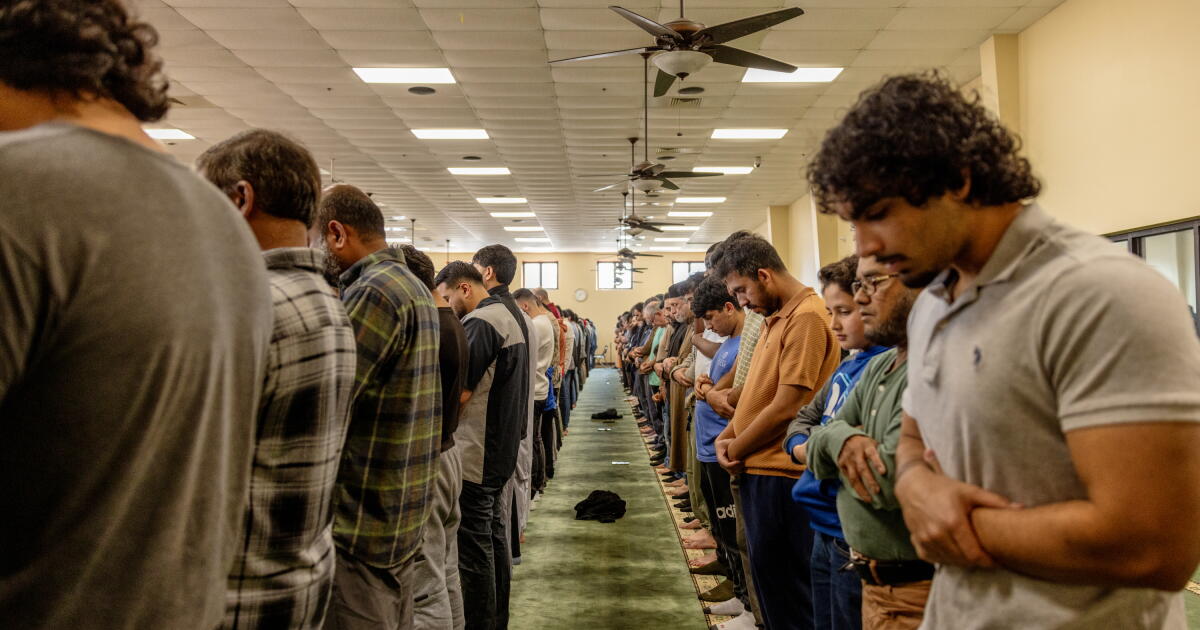
Though there are multiple interpretations of Sharia, its essence is to serve as a code for how Muslims should live and worship — covering such matters as prayer, pilgrimages, fasting, charitable donations and personal virtue.
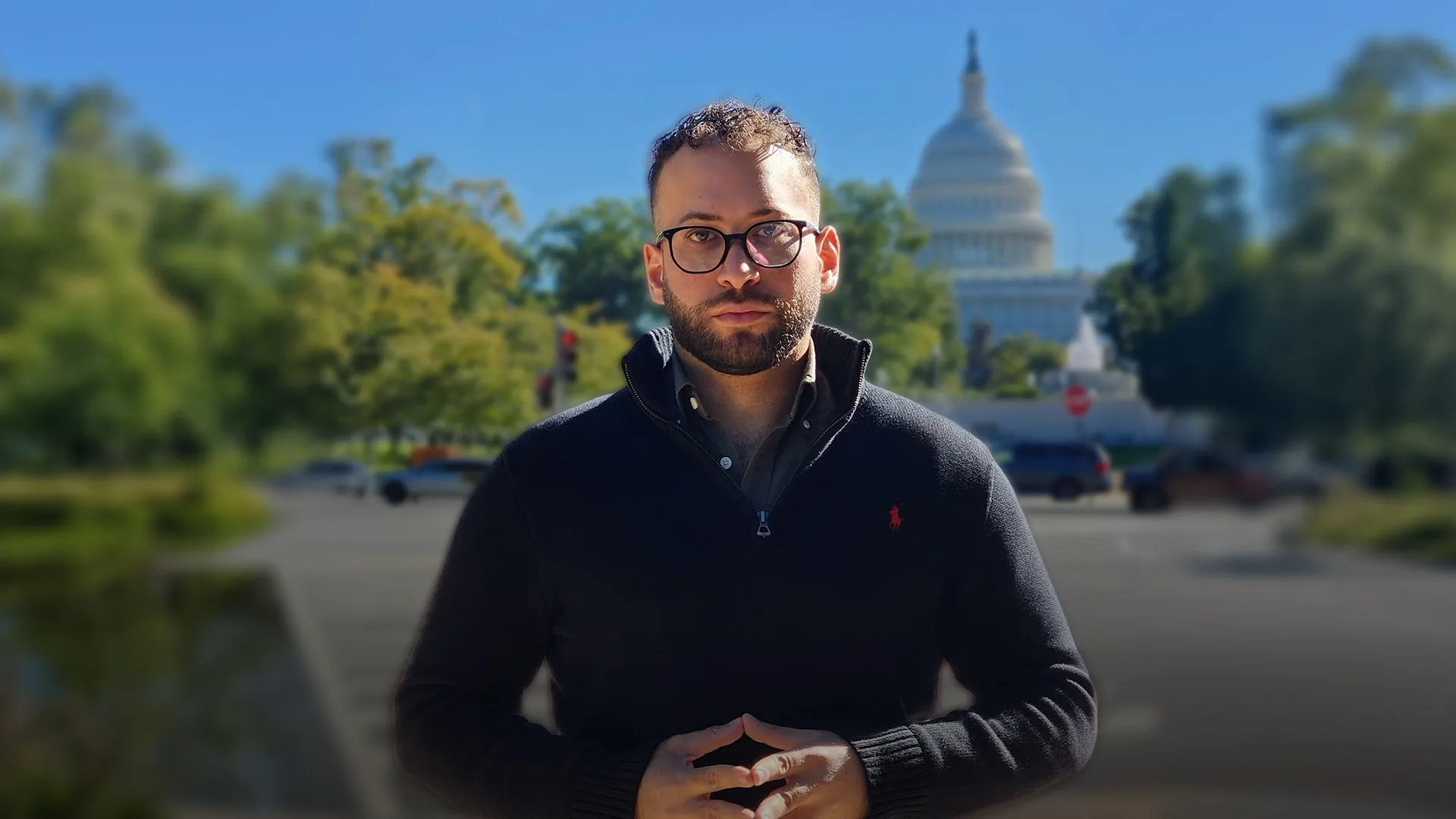
Among the most energetic of Sharia’s defenders is Illinois-based Sabeel Ahmed, director of an outreach project called GainPeace. He travels widely around the U.S., with a recent focus on Texas, speaking at mosque-sponsored workshops and open houses.
“Sharia is often misunderstood,” Ahmed posted on Instagram after a midsummer visit to Plano, Texas. “Many people think Sharia is only about punishments, but in Islam it is Allah’s guidance for living with faith, justice, mercy, and responsibility.”
Ahmed attributes the durability of anti-Sharia vitriol to politicians and social-media influencers who want to rile up their voting base or their followers.
“They gain popularity by saying it,” he told The Associated Press. “It’s the job of the Muslims to educate what is the proper meaning of the word Sharia. We cannot be angry or hateful.”
Sharia’s role varies significantly among Muslim nations
Among those appalled by the anti-Sharia surge in the U.S. is Abdullahi Ahmed An-Na’im, a Sudanese-born Islamic scholar who taught for many years at Emory University School of Law in Atlanta. He is a longtime critic of the relatively small number of governments in Muslim nations that coercively enforce Sharia, saying Muslims are better off in secular states where their religious observance is a matter of free choice.
An-Na’im says he and other Muslim Americans embrace Sharia willingly as a core part of their identity, even as they also embrace American values.
The demonization of their beliefs displays “a shocking ignorance of what Sharia means,” An-Na’im said. “It’s a total dehumanization of the other, the rejection of their right to be human.”
The rhetoric is similarly dramatic among Sharia’s opponents — epitomized by the two U.S. representatives from Texas, Republicans Keith Self and Chip Roy — who co-founded the Sharia-Free America Caucus in Congress.
“Sharia is a direct threat to our Constitution and Western values and seeks to replace our legal system and erode our basic freedoms,” Roy said earlier this year. “Our immigration system must be prepared to confront this challenge and defend our Judeo-Christian values.”
By last count, the caucus had more than 60 members. All of them are Republicans, and its members have introduced several anti-Sharia bills since the caucus was formed last December. None of those measures have been successful.
The Council on American-Islamic Relations, or CAIR, has designated the caucus as an anti-Muslim hate group.
“The bigoted rhetoric used by this caucus resembles the hatred that anti-Catholic politicians once unleashed against Irish Americans,” said CAIR research and advocacy director Corey Saylor.
“Islam is an American faith, present for over 250 years,” he added. “No one who wrote the Constitution or enforced it since has empowered these legislators to pick which religions get to exist in America.”
Texas has been a battleground for Sharia disputes
There has been substantive anti-Sharia action in Texas. In August, Attorney General Ken Paxton demanded documents from the Dallas-based Islamic Tribunal, which provides religious guidance to Muslims.
Paxton said in a news release that the investigation by his office sought to determine if the tribunal was engaged in illegal activity, such as acting as a court, applying foreign laws that conflict with Texas or federal law, or issuing rulings that imply government authority.
“This is America, and we will not be governed by sharia law,” Paxton said.
The Islamic Tribunal subsequently updated its website with a “ Clarification of Mission and Activities,” stressing that its guidance “complements, and never replaces, the legal, social, and professional services available in American society.”
“The Tribunal does not function as a court of law and does not issue legally binding judgments,” it said. “Our role is limited to mediation and religious arbitration requested by members of the Muslim community in matters related to faith, family guidance, and internal religious affairs.”
Any matters requiring legal enforcement are referred directly to the Texas judicial system, said the tribunal, which likened its work to the services provided by Jewish Beth Din courts and Catholic ecclesiastical tribunals.
Sharia defenders seek to broaden understanding of its essence
Asma Uddin, a professor at Michigan State University’s College of Law, has argued in her writings that many American politicians are depicting ordinary Muslim religious practices — such as prayer, choice of apparel, family counseling and mosque attendance — as evidence of a political danger.
In an interview with the AP, Uddin depicted the current wave of anti-Sharia rhetoric as fearmongering by politicians who view the issue as advantageous for them.
“When politicians use this, it’s giving them exactly what they’re looking for,” she said. “They’re looking for a scapegoat … and this gets people riled up.”
Sabeel Ahmed, who has made three outreach trips to Texas so far this year, plans a trip to Houston in a few weeks for another mosque open-house. He’s also working on a book to be mailed to Christian clergy across the U.S., seeking to broaden their understanding of Sharia and other Islamic practices.
“Islam is not to be feared,” Ahmed said. “People should meet a Muslim, go to the mosque, reach out to us. Let’s emphasize the commonalities we have.”
Crary writes for the Associated Press.