Secessionist leader took a boat to Berbera and then boarded a pane that flew to Abu Dhabi via Mogadishu, coalition says.
Published On 8 Jan 20268 Jan 2026
Share
The Saudi Arabia-led coalition in Yemen has announced that the leader of the secessionist Southern Transitional Council (STC) has fled to the United Arab Emirates via Somaliland after skipping planned peace talks in Riyadh.
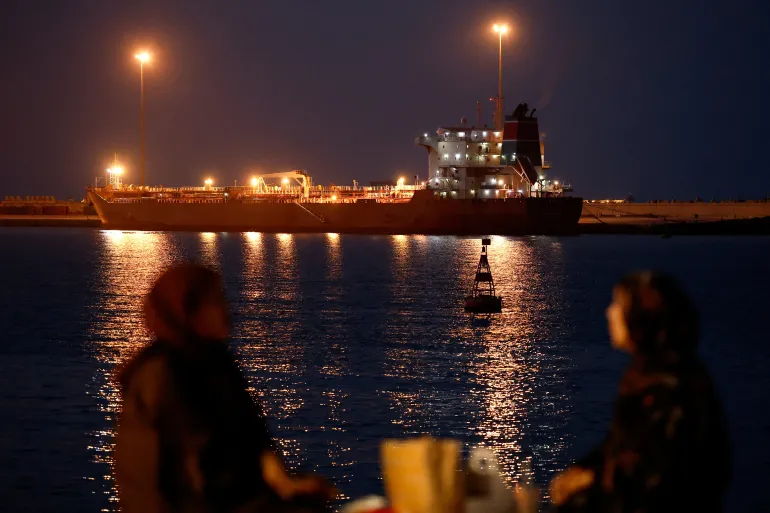
In a statement on Thursday, the coalition said Aidarous al-Zubaidi “escaped in the dead of night” on Wednesday aboard a vessel that departed Aden in Yemen for the port of Berbera in Somaliland.
Recommended Stories
list of 4 itemsend of list
Al-Zubaidi then boarded a plane along with UAE officers and flew to Somalia’s capital, Mogadishu. “The plane turned off its identification systems over the Gulf of Oman, then turned it back on ten minutes prior to arrival at Al reef military airport in Abu Dhabi,” the statement said.
There was no immediate comment from the STC or UAE.
If confirmed, the move could deepen the feud between Saudi Arabia and the UAE that came to light after the Abu Dhabi-backed STC launched an offensive against the Riyadh-backed Yemeni government troops in December.
The STC – which initially supported Yemen’s internationally recognised government against the Houthi rebels in northern Yemen – is seeking an independent state in southern Yemen. It seized the provinces of Hadramout and Mahra, which border Saudi Arabia, in a campaign that Riyadh described as a red line for its national security.
The Saudi-led coalition responded with air strikes on the Yemeni port of Mukalla on December 30, targeting what it called a UAE-linked weapons shipment, and backed a call by Yemen’s internationally recognised government for Emirati forces to withdraw from the country.
For its part, Abu Dhabi denied that the shipment contained weapons and expressed a commitment to ensure Riyadh’s security. On the same day, it announced an end to what it called its “counterterrorism mission” in Yemen.
Yemeni government troops, backed by Saudi Arabian air attacks, went on to reclaim Hadramout and Mahra, and the STC said on Saturday that it would attend peace talks hosted by Saudi Arabia.
But al-Zubaidi was not on board the Yemeni Air flight that took the STC delegation to Riyadh on Wednesday, the coalition said.
The head of the internationally recognised government’s Presidential Leadership Council, Rashad al-Alimi, has meanwhile announced that al-Zubaidi has been removed from the council for “committing high treason”.
Al-Alimi said he has asked the country’s Attorney General to launch an investigation against al-Zubaidi and take legal action.
The Saudi Arabia-led coalition in Yemen launched air strikes against secessionist forces in the south, after their leader failed to attend peace talks in Riyadh. Yemen’s internationally recognised government has accused Aidarous al-Zubaidi of “high treason.”
PARIS — Ukraine’s allies met Tuesday in Paris for key talks that could help determine the country’s security after any potential peace deal is reached with Russia.
But prospects for progress are uncertain: The Trump administration’s focus is shifting to Venezuela while U.S. suggestions of a Greenland takeover are causing tension with Europe, and Moscow shows no signs of budging from its demands in its nearly 4-year-old invasion.
Before the U.S. capture of Venezuelan leader Nicolás Maduro, French President Emmanuel Macron had expressed optimism about the latest gathering of what has been dubbed the “coalition of the willing. They have been exploring for months how to deter any future Russian aggression should it agree to stop fighting Ukraine.
In a Dec. 31 address, Macron said that allies would “make concrete commitments” at the meeting “to protect Ukraine and ensure a just and lasting peace.”
Macron’s office said an unprecedented number of officials will attend in person, with 35 participants including 27 heads of state and government. The U.S. envoys, Steve Witkoff and Trump’s son-in-law Jared Kushner, met with Macron at the Elysee presidential palace for preparatory talks ahead of the gathering.
Moscow has revealed few details of its stance in the U.S.-led peace negotiations. Officials have reaffirmed Russia’s demands and have insisted there can be no ceasefire until a comprehensive settlement is agreed. The Kremlin has ruled out any deployment of troops from NATO countries on Ukrainian soil.
A series of meetings on the summit’s sidelines illustrated the intensity of the diplomatic effort and the complexity of its moving parts.
Ukrainian President Volodymyr Zelensky met with Macron ahead of the summit. French, British and Ukrainian military chiefs also met, with NATO’s top commander, U.S. Gen. Alexus G. Grynkewich, participating in talks that France’s army chief said focused on implementing security guarantees. Army chiefs from other coalition nations joined by video.
A news conference including Zelensky, Macron, British Prime Minister Keir Starmer and German Chancellor Friedrich Merz was planned later in the day.
Macron’s office said the U.S. delegation was initially set to be led by Secretary of State Marco Rubio, but he changed his plans after the U.S. military intervention in Venezuela.
Trump on Sunday renewed his call for the U.S. to take control of Greenland, a strategic, mineral-rich Arctic island.
The leaders of France, Germany, Italy, Poland, Spain and the U.K. on Tuesday joined Danish Prime Minister Mette Frederiksen in defending Greenland’s sovereignty in the wake of Trump’s comments about the self-governing territory of the kingdom of Denmark.
But the continent also needs U.S. military might to back up Ukrainian security guarantees and ward off Russia’s territorial ambitions. That could require a delicate diplomatic balancing act in Paris.
Participants are seeking concrete outcomes on five key priorities once fighting ends: ways to monitor a ceasefire; support for Ukraine’s armed forces; deployment of a multinational force on land, at sea and in the air; commitments in case of more Russian aggression; and long-term defense cooperation with Ukraine.
But whether that’s still achievable Tuesday isn’t so clear now, after the U.S. military operation targeting Maduro in Venezuela.
Ukraine seeks firm guarantees from Washington of military and other support seen as crucial to securing similar commitments from other allies. Kyiv has been wary of any ceasefire that it fears could provide time for Russia to regroup and attack again.
Recent progress in talks
Witkoff had indicated progress in talks about protecting and reassuring Ukraine. In a Dec. 31 post, he said “productive” discussions with him, Rubio and Kushner on the U.S. side and, on the other, national security advisers of Britain, France, Germany and Ukraine had focused on “strengthening security guarantees and developing effective deconfliction mechanisms to help end the war and ensure it does not restart.”
France, which with the U.K. has coordinated the multinational effort to shore up a possible peace plan, has given only broad-brush details about its scope. It says Ukraine’s first line of defense against a Russian resumption of war would be the Ukrainian military and that the coalition intends to strengthen it with training, weaponry and other support.
Macron has also spoken of European forces potentially being deployed away from Ukraine’s front lines to help deter future Russian aggression.
Important details unfinalized
Zelensky said during the weekend that potential European troop deployments still face hurdles, important details have not been finalized, and “not everyone is ready” to commit forces.
He noted that many countries would need approval from their lawmakers even if leaders agreed on military support for Ukraine. But he recognized that support could come in forms other than troops, such as “through weapons, technologies and intelligence.”
Zelensky said deployments in Ukraine by Britain and France, Western Europe’s only nuclear-armed nations, would be “essential.”
“Speaking frankly as president, even the very existence of the coalition depends on whether certain countries are ready to step up their presence,” he said. “If they are not ready at all, then it is not really a ‘coalition of the willing.’”
Leicester and Corbet write for the Associated Press. Volodymyr Yurchuk in Kyiv, Ukraine, contributed to this report.
The Saudi-led coalition carried out a targeted strike at Yemen’s Mukalla port, accusing foreign-backed vessels of delivering weapons to southern separatists.
Published On 30 Dec 202530 Dec 2025
Share
The Saudi-led coalition in Yemen has carried out a “limited military operation” targeting what it described as foreign military support at Mukalla port, days after warning the separatist Southern Transitional Council (STC) group against taking military action in Hadramout province.
Coalition air forces carried out the military operation early on Tuesday, targeting unloaded weapons and vehicles, the official Saudi Press Agency (SPA) reported.
Recommended Stories
list of 4 itemsend of list
Coalition spokesperson Turki al-Malki said two ships entered Mukalla port on Saturday and Sunday without coalition authorisation, disabled their tracking systems, and unloaded large quantities of weapons and combat vehicles “to support” the STC.
The Saudi-backed head of Yemen’s presidential council, Rashad al Alimi, said on Tuesday after the air strike that all forces of the United Arab Emirates must leave Yemen within 24 hours.
People attend a rally organised by the Southern Transitional Council in Aden, Yemen [File: Fawaz Salman/Reuters]
“Given the danger and escalation posed by these weapons … the coalition air forces carried out a limited military operation this morning targeting weapons and combat vehicles that had been unloaded from the two ships at the port of al-Mukalla,” SPA reported.
Two sources told Reuters news agency that the strike specifically targeted the dock where the cargo had been unloaded. The coalition said there were no casualties or collateral damage and emphasised that the operation was conducted in accordance with international humanitarian law.
The strike comes amid heightened tensions following an offensive earlier this month by the STC against Yemeni government troops backed by the coalition.
Saudi Defence Minister Khalid bin Salman Al Saud posted on X that the STC troops should “peacefully hand over” two regional governorates to the government. Meanwhile, United States Secretary of State Marco Rubio called for “restraint and continued diplomacy, with a view to reaching a lasting solution”.
A divided Yemen
The STC was initially part of the Saudi-led coalition that intervened in Yemen in 2015 against the Houthis, but the group later pursued self-rule in southern Yemen. Since 2022, the STC, which has previously received assistance from the United Arab Emirates, has controlled southern territories outside Houthi areas under a Saudi-backed power-sharing arrangement.
In recent weeks, however, the STC has swept through swaths of the country, expelling other government forces and their allies.
Saudi defence minister urges Yemen’s STC to withdraw “peacefully” from seized provinces, Hadramout and al-Mahra.
The Saudi-led coalition in Yemen says it will respond to any separatist military movements that undermine de-escalation efforts in the southern region, as Riyadh doubles down on calls for the group to “peacefully” withdraw from recently seized eastern provinces.
Saudi Arabia’s Defence Minister Khalid bin Salman said on X on Saturday that “it’s time” for troops from the separatist Southern Transitional Council (STC) to “let reason prevail by withdrawing from the two provinces and doing so peacefully”.
Recommended Stories
list of 4 itemsend of list
Brigadier General Turki al-Maliki, the spokesman for the Saudi-led coalition, said “any military movements that violate these [de-escalation] efforts will be dealt with directly and immediately in order to protect civilian lives and ensure the success of restoring calm,” according to the Saudi Press Agency.
Al-Maliki also accused the STC separatists of “serious and horrific human rights violations against civilians”, without providing evidence.
The statements came a day after the STC accused Saudi Arabia of launching air strikes on separatist positions in Yemen’s Hadramout province, and after Washington called for restraint in the rapidly escalating conflict.
Earlier this month, forces aligned to the STC took over large chunks from the Saudi-backed government in the provinces of Hadramout and al-Mahra. The STC and the government have been allies for years in the fight against the Iran-allied Houthi rebels.
Abdullah al-Alimi, a member of the Yemeni Presidential Leadership Council, the governing body of the internationally recognised government, welcomed the Saudi defence minister’s remarks, considering them to “clearly reflect the kingdom’s steadfast stance and sincere concern for Yemen’s security and stability”, he said on X.
Rashad al-Alimi, the head of the Presidential Leadership Council, said after an emergency meeting late on Friday that STC movements posed “serious violations against civilians”.
The STC, which has previously received military and financial backing from the United Arab Emirates (UAE), is seeking to revive the formerly independent state of South Yemen. The group warned on Friday that they were undeterred after strikes it blamed on Saudi Arabia hit their positions.
Diplomacy, de-escalation?
In Washington, US Secretary of State Marco Rubio said: “We urge restraint and continued diplomacy, with a view to reaching a lasting solution.”
Azerbaijan, meanwhile, said it welcomed efforts led by both Saudi Arabia and the UAE to de-escalate ongoing tensions in Yemen.
Following Friday’s raids, Yemen’s government urged the Saudi-led coalition to support its forces in Hadramout, after separatists seized most of the country’s largest province.
The government asked the coalition to “take all necessary military measures to protect innocent Yemeni civilians in Hadramout province and support the armed forces”, the official Yemeni news agency said.
A Yemeni military official said on Friday that about 15,000 Saudi-backed fighters were amassed near the Saudi border but had not been given orders to advance on separatist-held territory. The areas where they were deployed are at the edges of territory seized in recent weeks by the STC.
Separatist advances have added pressure on ties between Saudi Arabia and the UAE, close allies who support rival groups within Yemen’s government.
On Friday, the UAE welcomed Saudi efforts to support security in Yemen, as the two Gulf allies sought to present a united front.
Yemen’s government is a patchwork of groups that includes the separatists, and is held together by shared opposition to the Houthis.
The Houthis pushed the government out of Yemen’s capital, Sanaa, in 2014, and secured control over most of the north.
A group of entertainment industry workers launched a new coalition that aims to advocate for the rights of creators amid the growing AI industry.
The group, called Creators Coalition on AI, was founded by 18 people, including writer-director Daniel Kwan, actors Joseph Gordon-Levitt and Natasha Lyonne and producer Janet Yang, former president of the Academy of Motion Picture Arts and Sciences.
Gordon-Levitt said the group is not limited to Hollywood luminaries and is open to all creators and the skilled workers around them, including podcasters, digital content creators and newsletter writers.
“We’re all frankly facing the same threat, not from generative AI as a technology, but from the unethical business practices a lot of the big AI companies are guilty of,” he said in a video posted on X on Tuesday. “The idea is that through public pressure, through collective action, through potentially litigation and eventually legislation, creators actually have a lot of power if we come together.
The coalition’s formation comes at a time when Hollywood has been grappling with the fast growth of artificial intelligence tools. Many artists have raised concerns about tools that have used their likenesses or work without their permission or compensation.
The tech industry has said that it should be able to train its AI models with content available online under the “fair use” doctrine, which allows for the limited reproduction of material without permission from the copyright holder.
Some studios have partnered with AI companies to use the tools in areas including marketing and visual effects. Last week, Walt Disney Co. signed a licensing deal with San Francisco-based ChatGPT maker OpenAI for its popular Disney characters such as Mickey Mouse and Yoda to be used in the startup’s text to video tool Sora.
Kwan told The Hollywood Reporter that when Disney and OpenAI’s deal was announced many people felt “completely blindsided.”
“On one hand, you can say that this is just a licensing deal for the characters and that’s not a big deal, and it won’t completely change the way our industry works,” Kwan told THR. “But for a lot of people, it symbolically shows a willingness to work with companies that have not been able to resolve or reconcile the problems.”
There has also been lawsuits filed against some AI companies. Earlier this year, Disney, Universal and Warner Bros. Discovery sued AI business Midjourney accusing it of copyright infringement.
The Creators Coalition on AI said it plans to convene an AI advisory committee “to establish shared standards, definitions, and best practices as well as ethical and artistic protections for if and when AI is used.” Some of the principles the group lists on its website include the importance of transparency, consent, control and compensation in the use of AI tools, sensitivity to potential job losses, guardrails against misuse and deepfakes and safeguarding humanity in the creative process.
“This is not a full rejection of AI,” the group said on its website. “The technology is here. This is a commitment to responsible, human-centered innovation.”
“This is not a dividing line between the tech industry and the entertainment industry, nor a line between labor and corporations,” the group said . “Instead, we are drawing a line between those who want to do this fast, and those who want to do this right.”
The idea for the coalition was sparked by Kwan, who produced a documentary about AI, which comes out next year, Gordon-Levitt said in his video. He said work on the group began in the middle of this year. Already the collective has many signatories, including actors Natalie Portman, Greta Lee, Kirsten Dunst and Orlando Bloom.
A coalition of Eaton fire survivors and community groups called on Southern California Edison on Tuesday to provide immediate housing assistance to the thousands of people who lost their homes in the Jan. 7 wildfire.
The coalition says an increasing number of Altadena residents are running out of insurance coverage that had been paying for their housing since they were displaced by the fire. Thousands of other residents had no insurance.
“When a company’s fire destroys or contaminates homes, that company has a responsibility to keep families housed until they can get back home,” said Joy Chen, executive director of the Eaton Fire Survivors Network, one of the coalition members asking Edison for emergency assistance of up to $200,000 for each family.
At the coalition’s press conference, Altadena residents spoke of trying to find a place to live after the Jan. 7 fire that killed at least 19 people and destroyed more than 9,000 homes, apartments and other structures. Thousands of other homes were damaged by smoke and ash.
Gabriel Gonzalez, center, an Eaton Fire survivor, shown with Joy Chen, Executive Director of the Eaton Fire Survivors Network (EFSN), left, and other survivors at a press conference in Altadena. They urged Southern California Edison to provide urgent housing relief to keep Eaton Fire families housed this winter.
(Gary Coronado/For The Times)
Gabriel Gonzalez said he had been living in his car for most of the last year.
Before the fire, Gonzalez had a successful plumbing company with six employees, he said. He had moved into an apartment in Altadena just a month before the fire and lost $80,000 worth of tools when the building was destroyed.
His insurance did not cover the loss, Gonzalez said, and he lost his business.
Edison is now offering to directly pay fire victims for their losses if they give up their right to file a lawsuit against the utility.
But members of the coalition say Edison’s program is forcing victims who are most desperate for financial support to give up their legal right to fair compensation.
Andrew Wessels, Strategy Director for the Eaton Fire Survivors Network, speaks about Edison’s Wildfire Recovery Compensation Plan (WRCP).
(Gary Coronado/For The Times)
“If families are pushed to give up what they are owed just to survive, the recovery will never have the funds required to rebuild homes, restore livelihoods or stabilize the community,” said Andrew Wessels. He said he and his family had lived in 12 different places since the fire left ash contaminated with lead on and in their home.
In an interview Tuesday, Pedro Pizarro, chief executive of Edison International, the utility’s parent company, said the company would not provide money to victims without them agreeing to drop any litigation against the company for the fire.
“I can’t even pretend to understand the challenges victims are going through,” Pizarro said.
He said the company created its Wildfire Recovery Compensation Program to get money to victims much faster than if they filed a lawsuit and waited for a settlement.
“We want to help the community rebuild as quickly as possible,” he said.
Pizarro said Edison made its first payment to a victim within 45 days of the compensation program launching on Oct. 29. So far, he said, the company has received more than 1,500 claims.
The company has said a leading theory is that its century-old transmission line in Eaton Canyon, which it last used in 1971, briefly became energized from the live lines running parallel to it, sparking the fire.
The program offers to reimburse victims for their losses and provides additional sums for pain and suffering. It also gives victims a bonus for agreeing to settle their claim outside of court.
Pizarro said the program is voluntary and if victims don’t like the offer they receive from Edison, they can continue their claims in court.
Edison has told its investors that it believes it will be reimbursed for all of its payments to victims and lawsuit settlements by $1 billion in customer-paid insurance and a $21 billion state wildfire fund.
Zaire Calvin, of Altadena, a survivor who has lost his home and other properties, speaks.
(Gary Coronado/For The Times)
Gov. Gavin Newsom and lawmakers created the wildfire fund in 2019 to protect utilities from bankruptcy if their electric wires cause a disastrous wildfire.
State officials say the fund could be wiped out by Eaton fire damages. While the first $21 billion was contributed half by customers of the state’s three biggest for-profit utilities and half by the companies’ shareholders, any additional damage claims from the Jan. 7 fire will be paid by Edison customers, according to legislation passed in September.
Some Altadena residents say Edison’s compensation program doesn’t pay them fully for their losses.
Damon Blount said that he and his wife had just renovated their home before it was destroyed in the fire. They don’t believe Edison’s offer would be enough to cover that work.
Blount said he “felt betrayed” by the utility.
“They literally took everything away from us,” Blount said. “Do the right thing, Edison. We want to be home.”
At the press conference, fire victims pointed out that Edison reported nearly $1.3 billion in profits last year, up from $1.2 billion in 2023.
Last week, Edison International said it was increasing the dividend it pays to its shareholders by 6% because of its strong financial performance.
“Their stock is rising,” said Zaire Calvin, one of the Altadena residents calling on Edison for emergency relief. Calvin lost his home and his sister died in the fire. “They will not pay a penny when this is over.”