coach

Inside UCLA football coach Bob Chesney’s recruiting revival

The carpet rolls out.

Stars pose with their parents.

Cameras flash, capturing VIP guests emerging from luxury cars.

It has all of the makings of a Hollywood premiere.

Only the carpet that lines the entrance is royal blue instead of scarlet red. The “stars” are teenage football players on recruiting visits. The luxury car is parked on the turf of Spaulding Field. And the Hollywood show is in Westwood.

Despite the parallels, the feeling remains the same — something is brewing within the UCLA football program and it may yield awards.

The Bruins still are riding the high of their hire of coach Bob Chesney on Dec. 9.

And no group has felt the smoke of the Chesney Train more than the 2027 recruiting class.

Sign up for UCLA Unlocked

A weekly newsletter offering big game takeaways, recruiting buzz and everything you need to know about UCLA sports.

The Bruins boast the No. 12 recruiting class in the nation and fourth best in the Big Ten, improvements of 50 and 11 spots, respectively, from the previous year, according to 247Sports’ composite rankings. UCLA had not produced a top-15 class since 2016.

Chesney’s inaugural group features 22 commits, including six four-star recruits, and is headlined by five-star defensive back Juju Johnson, who ranks as the third-best recruit from California and the second-best cornerback in the nation, per 247Sports.

However, to UCLA football general manager Darrick Yray — who spent the last four seasons at Florida State, signing a top-20 class each year — stars and rankings mean nothing without fit.

“It starts and stops with being developed in all areas, socially, academically, spiritually and athletically,” Yray said. “Those four pillars of a young man, we’re trying to attract here, but also are they going to fit in all four of those areas of what we are and what we hold our standard to. They need to be a great steward of what it means to be a student-athlete at UCLA.”

Chesney underscored a similar message during spring practices, illustrating that being a Bruin does not stop once you leave the gridiron.

Talent sets the foundation for what the coaching staff looks for, but character sets the ceiling for what they can become, Yray said.

And this motto is central to the staff’s recruitment efforts.

“You want guys who are intrinsically motivated rather than extrinsically,” Yray said. “It’s easy to get up when everyone’s watching and there’s 80,000 people in front of you. It’s what you’re doing when no one’s looking, it’s how you’re working, it’s how you’re studying. We want to be consistent across the board in everything that we do.”

Throughout spring camp, Chesney provided accessibility to recruits, stressing the importance of developing relationships with the schools, coaches and players in Southern California.

These efforts partly were to cultivate connections in an area saturated with talent, but also to establish relationships in an area Chesney has little experience in.

Providing accessibility also means instilling transparency.

Some players may not fit for UCLA, and UCLA may not fit for some players. And the only litmus test of finding the personnel who will thrive in the Chesney system is forming relationships off the field — allowing authenticity to rise to the top.

“It comes back to relatability. It’s not just football, it’s not just transactional, and it can’t be that way, in order for this to work,” Yray said. “I want to be genuine, and that’s what we want to be here too. This is what you’re going to get. It’s not going to change six months later. That’s how we’re going to be 24/7.”

It was this relatability and energy that drew in four-star wide receiver Kingston Celifie.

The Calabasas product — who boasted offers from California, Arizona and Kansas — first noticed Chesney’s energy on the field, seeing him run around to every position group and even get involved in drills.

But after more conversations, the staff’s collective determination to not only revitalize the program but also develop the whole individual gave Celifie confidence in UCLA, prompting the wide receiver to shut down his recruitment.

“Coach Chesney, he has great energy, which I was attracted to, and ultimately that’s why I committed. I just felt like it was home,” Celifie said. “I feel comfortable here. The official visit, everyone was celebrating all the accomplishments, and I really got to see the coaches outside of the football life, which was great.”

The acquisition of Celifie not only signified a major addition to the 2027 class, but also marked the start of the Bruins keeping homegrown talent in Los Angeles.

In making recruits feel at home when they’re on campus, it is imperative to make sure every part of their visit is tailored to them, Yray said.

While showing off the perks of the program and Los Angeles — through visits to Santa Monica and VIP tours from Dodgers manager Dave Roberts, a UCLA alum — is an integral part of the process, each recruit requires something different to ensure that the experience is what Yray called an “all-inclusive vacation.”

“What are the areas that are going to change their opinion of someplace, and are you checking off those boxes to make sure that they’re having the best experience every single time that they come here,” Yray said. “It can’t be a cookie-cutter mentality; it has to be individualized. If you were going somewhere, you want to have the best experience possible for 24 hours straight.”

Visits are not just a uniform formality, they are a one-of-a-kind experience.

JSerra's Godschoice Eboigbodin is a 6-foot-5, 260-pound defensive end from Nigeria.

JSerra’s Godschoice Eboigbodin is a 6-foot-5, 260-pound defensive end from Nigeria.

(Eric Sondheimer / Los Angeles Times)

And no visit may have been more special than that of three-star edge Godschoice Eboigbodin.

During at-home visits with defensive ends coach Sam Daniels, the JSerra product was able to connect on a personal level with Daniels, describing him as “family” and “just another one of my friends.”

And at Eboigbodin’s official visit at UCLA, his birth family from Nigeria and host family in Southern California were able to come together for the first time, celebrating his accomplishments and giving the future Bruin confidence that UCLA was home.

“That was the first time both my families met — my real parents and my parents here. I was so excited,” Eboigbodin said. “That is why I had a really good time at my official visit at UCLA because it was really cool having them meet each other, connecting the families together. I was ecstatic.”

Chesney has yet to coach a game at UCLA, let alone one at the Power Four level. Yet, the momentum he has generated is real.

Not only is the 2027 recruiting class exceptional, but also the transfer class that will make up the majority of next season’s starters is excited to build the foundation of the program.

“Guys are bright-eyed and bushy-tailed, coming to work every single day,” Yray said. “We’re excited at the opportunity as a staff of what this presents, and we get to do this, at the greatest place in the world to do it. There’s no better location, there’s no better rich history. There’s really no excuse … to not have success here.”

Record-setting baseball team takes home hardware

UCLA's Dean West, Roch Cholowsky, Mulivai Levu and Roman Martin stand together and smile on the field before a game.

From left, UCLA’s Dean West, Roch Cholowsky, Mulivai Levu and Roman Martin share pregame vibes before a 3-2 loss to Saint Mary’s during an NCAA regional at Jackie Robinson Stadium on May 29.

(Scott Strazzante/For The Times)

Since our last UCLA Unlocked newsletter, the Bruins baseball team earned more hardware.

UCLA first baseman Mulivai Levu was named an ABCA/Rawlings Gold Glove winner for the second consecutive season, becoming the first Bruin to win multiple Gold Gloves.

Levu had a .996 fielding percentage while committing two errors all season. He converted 446 putouts, had 21 assists and assisted on 42 double plays.

UCLA coach John Savage was named the Skip Bertman Coach of the Year by the College Baseball Foundation.

The Bruins were 52-8, matching the program record for wins, and their 48-6 regular-season mark was the best in school history. UCLA became the first wire-to-wire No. 1 team, opening and closing the season atop the top 25 in every major poll.

Named after the first coach inducted into the College Baseball Hall of Fame, the coach of the year award celebrates leaders on and off the field.

“I am truly honored to receive this award. Having Skip Bertman’s name on the trophy says everything,” Savage said in a news release. “He’s the legend of legends in this game. As a young coach out West, I always admired and looked up to Skip.”

Savage is the third-longest-tenured coach in UCLA baseball history and has a 776-489-2 record.

Junior shortstop Roch Cholowsky earned first-team All-America honors from Perfect Game, the National Collegiate Baseball Writers Assn., American Baseball Coaches Assn./Rawlings and Baseball America. Cholowsky hit .320 with 21 home runs, 60 RBIs and 73 runs scored while anchoring UCLA’s infield defense with a .965 fielding percentage. He ranked among the national leaders in OPS (1.088), slugging (.636) and on-base percentage (.452), starting all 60 games at shortstop.

Outfielder Will Gasparino was named a first team All-American by the NCBWA. Gasparino hit .314 with 20 home runs, 64 RBIs and 99 hits, finishing among the conference leaders in extra-base hits and total bases. He also posted a perfect 1.000 fielding percentage with 114 putouts.

Closer Easton Hawk earned first-team NCBWA and first-team ABCA/Rawlings All-America honors after posting a 1.93 ERA with 14 saves and 52 strikeouts across 34 appearances, holding opponents to a .187 average. He gave up nine earned runs all season.

Levu and pitchers Wylan Moss and Logan Reddemann earned second-team All-America honors from the NCBWA, while pitcher Angel Cervantes was named to the Perfect Game Freshman All American team.

In case you missed it

Swanson: She broke baseball’s glass ceiling. Now Kim Ng is taking softball to the next level

UCLA eliminated from WCWS by Kaitlyn Terry and Texas Tech in nine-inning thriller

UCLA baseball’s national title hopes shattered in season-ending loss to Saint Mary’s

UCLA baseball defeats Virginia Tech in a wild ninth-inning comeback to save its season

Megan Grant becomes UCLA’s all-time home run leader in win over Arkansas at WCWS

UCLA softball coaches Kelly Inouye-Perez and Lisa Fernandez inspire nation’s top offense

National title hopeful UCLA stunned in loss to Saint Mary’s in regional opener

UCLA pitcher shares his secret weapon: A two-inch toy dinosaur named ‘Jerry’

Megan Grant’s record-tying homer can’t save UCLA from loss to Alabama in WCWS opener

UCLA copes with pressure of being No. 1 target without ace Logan Reddemann

Q&A: How UCLA softball leadoff hitter Rylee Slimp manages pressure as Bruins reach WCWS

Have something Bruin?

Do you have a comment or something you’d like to see in a future UCLA newsletter? Email newsletters editor Houston Mitchell at houston.mitchell@latimes.com. To get this newsletter in your inbox, click here.


Source link

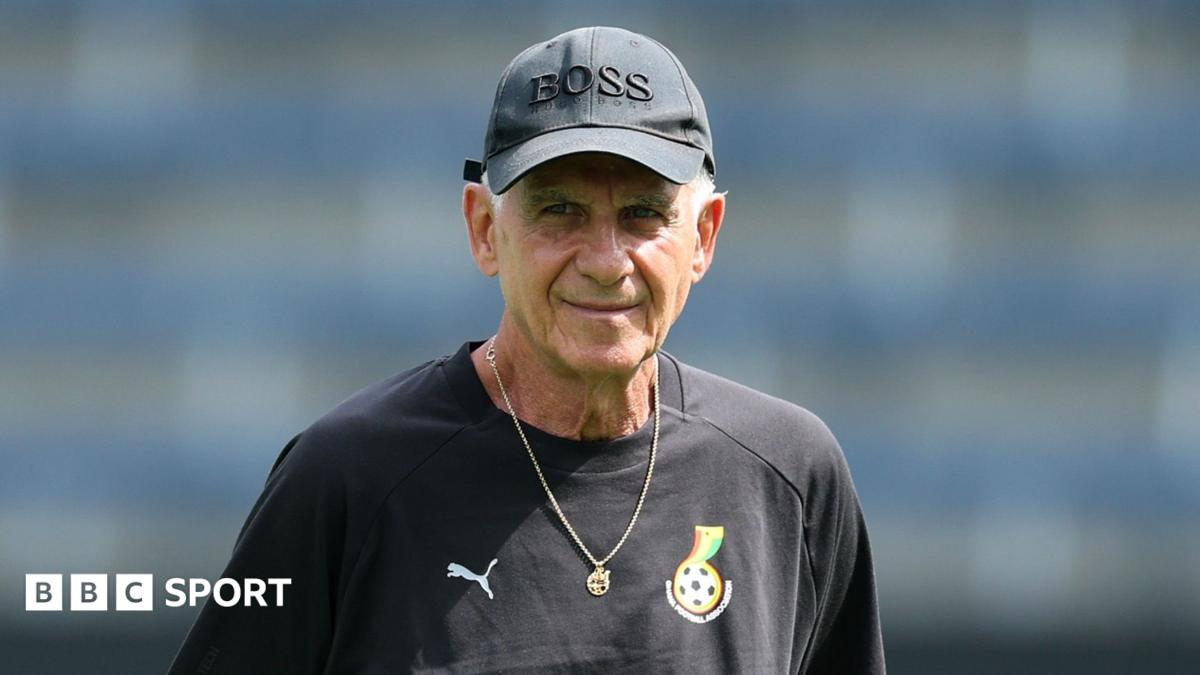
2026 World Cup: Belfast’s Mick McDermott’s journey from Belfast to becoming Ghana’s assistant coach

McDermott’s relationship with Queiroz goes back to 2011 and has spanned three different national teams with two spells at Iran as well as one at Qatar and now Ghana, but it was a mutual connection that got the ball rolling for the two to meet.

“Carlos was considering the Iran job in 2011 and my former head coach in the USL in America was Carlos’ long-term goalkeeper coach. I was already in the Middle East, working in Abu Dhabi for a club team and the conversations started. I met Carlos in Doha, we talked and myself and two other staff members joined Carlos and accepted the Iran job and that was the start of it,” he explained.

While he did not accompany Queiroz to Colombia or Egypt, instead taking over at the “mighty Glentoran” where he won an Irish Cup, McDermott did not hesitate in following him to Qatar and now to Ghana after a spell with League of Ireland First Division side Cobh Ramblers.

“Here we are again, another brilliant project with a brilliant football nation. It’s an opportunity I don’t think anyone can say no to, to work with the Ghana football team and Carlos again, it’s been brilliant.”

While many managers and their coaching staff have a few months to plan everything from travel to squad selection for the World Cup, Queiroz and McDermott did not have that luxury.

Appointed in April, they did not get to work with their full 26-man squad until the end of May, with just one full training session before a 1-1 friendly draw against Wales on 2 June and a flight to the US the next day.

“The logistics and travel were already in place, we tweaked them a little,” he said. “A big group of our players didn’t arrive until 30 May and we didn’t have a full training session until 31 May.

“We had two days, played Wales and flew the next day to the US. We had to submit our 26-man list before we even played Wales but the players have been brilliant to work with.”

Their last-minute preparations do not seem to have hampered things on the pitch, with Ghana beating Panama 1-0 in their opening Group L game in Toronto, courtesy of a 95th-minute winner from Caleb Yirenkyi.

McDermott has been impressed with how the squad has gelled off the pitch and their musical talents.

“When they are together, as you can see from social media, there is a bond and it’s new to me. I’ve been around the Middle East, Asia, Ireland and US and have had groups with good atmospheres but this, it’s hard to express it. I stand sometimes and just enjoy it,” he said.

“It was the night before we played Panama in the hotel and they have a tradition where the day before their first game after the training session they have a prayer and a song.

“The song went from the pitch and carried on to the 30-minute bus to the hotel and carried on to the hotel and once they got going they got going, it went on for an hour and a half. When you see the positive energy it gives them it’s nice. My foot started tapping!”

Source link

Egypt coach denies Salah rift before World Cup match against New Zealand | World Cup 2026 News

‘If he starts … or if he gets substituted, it’s fine – it is his role as a player,’ Egypt ‌coach Hossam Hassan says.

Egypt ‌coach Hossam Hassan has dismissed talk of unrest involving talisman Mohamed Salah, insisting there ⁠were no issues ⁠within the squad as they prepare to face New Zealand in their crucial World Cup Group G match at BC Place, Vancouver.

“Salah is an important player for our squad, and the 26 players who are here with me ‌are very important,” Hassan told reporters on Sunday.

“Every player who has worked with me knows I deal with them in a professional manner. I do not have favourites.”

Salah, 34, scored nine ⁠goals in the qualifying campaign and provided an assist for Emam Ashour in their opener with Belgium. He was substituted in the 76th minute of that 1-1 draw in Seattle, with ⁠highly-rated teenager Hamza Abdelkarim coming on.

Soccer Football - FIFA World Cup 2026 - Group G - Belgium v Egypt - Seattle Stadium, Seattle, Washington, U.S. - June 15, 2026 Egypt's Mohamed Salah holds up the captains armband as he is substituted as referee Ramon Abatti looks on REUTERS/Lee Smith
Salah walks off the pitch after getting substituted in the match against Belgium [Lee Smith/Reuters]

New Zealand also opened their campaign by sharing the points in a 2-2 draw with Iran in Los Angeles, leaving the group finely poised ahead of Sunday’s encounter.

Hassan insisted all was well in the Egyptian camp.

“Salah is a great player who helps his teammates. He has a lot of discipline and is a role model,” he said.

“If he starts … or if he gets substituted, it’s fine. It is his role as a player. Everyone knows that I am working for the benefit of the ⁠team and the national side.

“Rumours are being spread about stars, about ⁠players, about teams. But Salah is someone who is very disciplined,” he added.

“He trains with us. He’s the first player that would also say yes to my decisions as a technical director. So I think he will ⁠be very positive tomorrow.”

Egypt and New Zealand are both targeting their first-ever World Cup win to boost their chances of reaching the knockout ⁠stage. The Egyptians are appearing in their fourth finals.

“We ⁠want to present something very positive,” Hassan said.

“We want to show that we have talent, not as something new, but as something that the African national squads have always had as a tradition throughout generations of footballers in Africa, ‌for us and for international football.

“We drew in the first match, and we want to win and secure these points. This is our ambition for tomorrow. This is the ambition ‌of ‌the Egyptian people, for Egyptian football and for African football as well. We are representing all of these people, and we really hope to perform.”

Source link

Mexico coach Javier Aguirre answers critics by advancing

Before the World Cup, critics and fans of the Mexican national team debated whether Javier Aguirre’s third stint as head coach was the right decision. Two games later, the coach has led Mexico to the tournament’s knockout round.

Thursday’s 1-0 victory over South Korea at Guadalajara Stadium made the World Cup co-host the first in the tournament to advance while also clinching the top spot in Group A with one group play game remaining. After South Korea’s goalkeeper fumbled a ball, Luis Romo scored the goal that gave the Mexicans six points and pushed them to the top of the standings.

El Tri will close out the first round against Czechia (6 p.m.) at Azteca Stadium on Wednesday.

During his post-match news conference, Aguirre spoke less about the result and more about the journey that led him to this moment. At 67 and having coached Mexico in three World Cups, he explained that his experience allowed him to approach a match he described as eminently tactical.

Mexico goalkeeper Raul Rangel reaches back to stop the ball from entering his goal during his team's 1-0 World Cup win.

Mexico goalkeeper Raul Rangel reaches back to stop the ball from entering his goal during his team’s 1-0 World Cup win over South Korea Thursday.

(Silvia Izquierdo / Associated Press)

“I’ve always tried to get my team to play well and to help the players and the national team develop,” Aguirre said.

For the coach, advancing to the knockout round represents the culmination of more than three decades of work on the sidelines and the support of a group of players who rose to the occasion under the most demanding circumstances.

The coach also acknowledged that advancing to the next round has eased the tension surrounding the team after the doubts that existed before the World Cup. Without mentioning personal vindication, he noted that soccer tends to judge solely based on the most recent result.

“If you win, you’re the best; if you lose, you’re the worst,” Aguirre said.

Aguirre said he remains calm because he believes his approach to coaching hasn’t changed and that the team was rewarded Thursday night against South Korea in a match marked by limited space and a high degree of tactical discipline.

With qualification secured, Aguirre said he will not alter his soccer philosophy during Mexico’s final group stage match even though it no longer faces the pressure of securing a spot in the next round.

He said Czechia will enter the game with a different competitive need and a drive to advance, while Mexico will work to maintain a high level of performance that allowed it to record two consecutive wins and keep two clean sheets at the start of the tournament.

On the South Korean side, coach Hong Myung-bo avoided making excuses and focused his analysis on the play that decided the match. Although he explained that he had not yet reviewed the goal sequence in detail, he knew the team made a series of small errors in an area of the field where he had previously warned that losing possession could prove decisive.

Mexico goalkeeper Raul Rangel blocks a shot by South Korea's Son Heung-min during the World Cup match on Thursday.

Mexico goalkeeper Raul Rangel blocks a shot by South Korea’s Son Heung-min during the World Cup match on Thursday.

(Natacha Pisarenko / Associated Press)

The coach said that one of the central focuses of their preparation had been avoiding turnovers near South Korea’s box in the face of Mexico’s high press.

Myung-bo said that during the pre-match talk, he emphasized that the first 20 minutes would be crucial and believed his players had executed that part of the plan. He said that as the minutes passed, South Korea managed to create chances and was gaining strength until its critical turnover.

“After the momentum of the match shifted in our favor … both in terms of overall pressure and the play itself, we were able to create many opportunities,” Myung-bo said. “Although it ended up being a very frustrating match and we’re left with a bitter taste in our mouths over the lost possession, there’s no time to dwell on it. We have one last match ahead of us, so we’ll prepare well.”

Source link

Matt Bloomfield: Oxford United announce exit of head coach

Bloomfield had been out of work since he was sacked as Luton boss in October 2025 when he was appointed at Oxford at a time when they were 23rd in the Championship, three points adrift of safety.

He came in after Rowett had overseen a dismal spell of one win in ten matches.

Bloomfield began his managerial career at Colchester United before taking over from Gareth Ainsworth at Wycombe Wanderers in 2023.

After leading the Chairboys to the League One automatic promotion places amid the challenge of big-spending Birmingham City and Wrexham last season, he left the club to take over at Luton.

But Bloomfield was unable to prevent the Hatters from suffering back-to-back relegations to the third tier and was dismissed after an underwhelming start to the season, with the club 11th in the table.

Speaking after Oxford’s relegation was confirmed in April, Bloomfield said he was confident of keeping his job.

“I’ve enjoyed my time at the club. It’s obviously not been the outcome that we wanted for the season.

“We’ve been pleasantly content with some of the improvements we have made but ultimately we wanted to stay in the league.

“I’ve not given much thought to my job and the bigger situation and ultimately, as a manager or head coach, all you can do is focus on being the best you can be,” he said in April.

Oxford looked capable of pulling off a “great escape” in late February and early March when they won three games in a row to move up to 21st.

However, just two wins in the following eight matches saw them lose ground on the sides above them.

Relegation brought an end to a two-year spell in the second tier after they won promotion via the League One play-offs in 2023-24.

Source link

Gary O’Neil: Ipswich Town close in on Gary O’Neil as their new head coach

Ipswich are close to appointing Gary O’Neil as their new head coach.

The 43-year-old is poised to replace Kieran McKenna, who stepped down from the Portman Road post earlier this month.

Compensation with O’Neil’s current club Strasbourg is still to be agreed, but is not expected to be an issue for the Tractor Boys.

Tim Jenkins and Neil Critchley are also expected to move to Suffolk with ex-Bournemouth and Wolves boss O’Neil, having worked with him in France.

Former Manchester United boss Ole Gunnar Solskjaer was also in the running for the job this week.

BBC Sport reported Ipswich’s interest in O’Neil earlier this month and the Strasbourg boss has long been admired by the club’s hierarchy.

His French club finished eighth in Ligue 1 last season and reached the Europa Conference League semi-finals, losing to Rayo Vallacano. It was the first time Strasbourg had reached the last four of a European competition.

O’Neil played at Bristol City when current Ipswich chief executive Mark Ashton held the same role at Ashton Gate.

Strasbourg had initially been confident of keeping him following his January arrival, but O’Neil will return to the Premier League for the first time since leaving Wolves in December 2024.

Ipswich are looking for a new head coach after McKenna stepped down last week, despite leading them back to the top flight by finishing second in the Championship last season.

The 40-year-old took charge of the Tractor Boys in 2021 and led them to three promotions in the past four seasons, two of which have taken the club into the Premier League.

McKenna was linked with the Fulham job after Marco Silva’s departure, but quit Town to take a break from the game and spend more time with his family.

“I feel this is the right time for me to step aside,” he said. “I do so with great pride at the incredible progress we have made and with huge hope and optimism for the future of the club.”

Ipswich open their Premier League campaign at home to Sunderland on 22 August.

Source link

Cristian Roldan may be the last U.S. men’s soccer player to win a state title

Cristian Roldan and Haji Wright grew up less than three years and 30 miles apart, Roldan in Pico Rivera and Wright in Culver City. The odds that they would go on to become teammates on not one, but two, U.S. World Cup teams seem astronomical.

Yet despite starting at the same time and place and arriving together at the same destination, the two players followed completely different paths to get there.

Wright joined the Galaxy’s academy at 14 and signed with Schalke of the top tier German Bundesliga days after his 18th birthday. Roldan was still playing for El Rancho, when he was 17, making him the only member of the U.S. World Cup team to play four years at a public high school.

“I might be the last one,” Roldan said. “I hope not.”

Crescenta Valley's Salar Hajimirsadeghi and El Rancho's Cristian Roldan meet in unison for a header.

Crescenta Valley’s Salar Hajimirsadeghi and El Rancho’s Cristian Roldan meet in unison for a header.

(Tim Berger / Glendale News Press)

High school soccer was once the foundation of the sport in the U.S. Eighteen players on the 2002 World Cup team, the only American team to reach the tournament quarterfinals, played for their high school teams. By 2022, the only man on the roster who played four years for a public school was Roldan.

“I don’t wish my story, or how I ended up here, was any different,” Roldan said. “What I will say was it made it more difficult to be here, play[ing] four years in high school. But it makes my story special.”

His story becomes even more special with this World Cup, which opened for the U.S. in Inglewood, a 45-minute drive from his boyhood home, and will continue when the Americans face Australia on Friday in Seattle, where Roldan played two years at the University of Washington and 12 seasons as an all-star midfielder with the Sounders, winning two MLS titles.

“When we talk about people’s paths, Cristian’s is not the standard right now,” said older brother Cesar, an athletic trainer with the Galaxy. “Cristian did it mostly to be around his friends. He wanted to play with his buddies.

“That is not a standard way to make it into MLS. And forget about making [it] all the way to the national team.”

“Yeah, it’s different,” Cristian said with a smile. “Being able to play in your backyard, have friends and family there. It’s a celebration.”

And it may never be repeated.

Roldan, 31, is the third-oldest player on the U.S. team, so the MLS academy system was just getting started when he enrolled at El Rancho in 2010. But as the academy system and the Elite Club National League became larger and more powerful, they began to throw their weight around.

Academy and elite club teams essentially robbed prep soccer of its best players by forcing them to choose between their high school teams and elite club programs, demanding a year-round commitment and banning participation in other sports. When top players began opting for the academies, others had no choice but to follow if they wanted to be seen and scouted.

That also robbed U.S. soccer of one of the few advantages it has over European and South American countries, most of whom have nothing to rival the high school and college sports infrastructure where kids can play and develop for free.

The United States' Cristian Roldan sprints during a training session.

Cristian Roldan sprints during a training session Tuesday in Irvine ahead of the United States’ World Cup match against Australia on Friday.

(Andre Penner / Associated Press)

“That’s not available in Germany or England, or whatever,” said Brian Schmetzer, Roldan’s coach with the Sounders. “I like the fact that the United States is a big enough country where we can give kids opportunities to continue playing.”

Especially since the academy and elite club pathways aren’t open to everybody. Moving from a free neighborhood high school team to an academy can be expensive, erecting a “pay-to-play” barrier that often restricts those programs to wealthier families. Travel to games and practices can also be an issue. Since many high school-age players can’t drive, a parent has to accept the responsibility of toting them back and forth to team activities.

That leaves little time for work, which can pose an additional financial burden.

“My parents would have done whatever for us. So they would have made things happen,” Cesar Roldan said of Cristian. “But he really didn’t have any of those options. There was just not the opportunity.”

Paul Caliguiri, who played in two World Cups before retiring as the second-most-capped player in U.S. Soccer history, said the slow strangulation of high school soccer will ensure some talented players will be overlooked.

“There are a lot more qualified players that choose the path of high school soccer rather than the full-time academies,” he said. “The issue is that many of those players that don’t go to full-time academies when the opportunity presents is likely due to transportation.

“We need to have more full-time training offered to players without increasing the ‘pay to play’ cost.”

Dominic Picon, who coached all three Roldan brothers at El Rancho, agrees.

“We’re losing a ton of kids who never get seen,” he said. “There’s a lot of kids that just get lost in the shuffle simply because we have a very limited scope of how we find players. If you look at our three main sports — baseball, basketball and football — virtually all of them play high school sports. They all come through that pipeline.”

Roldan, the son of a Guatemalan immigrant father and a Salvadoran-born mother, said he never really considered any of those issues when he decided to play with the neighborhood kids in high school, just as his older brother Cesar had done.

“I looked up to my brother and I wanted to share a similar path as he did,” he said. “And I wanted to win a trophy for the city of Pico Rivera, which only has one high school.”

U.S. midfielder Cristian Roldan defends the ball from Senegal forward Habib Diarra.

U.S. midfielder Cristian Roldan defends the ball from Senegal forward Habib Diarra during an international friendly match on May 31.

(Scott Kinser / Associated Press)

He made good on that last pledge in his senior season. Playing with younger brother Alex, who was a junior, Roldan scored 54 goals and had 31 assists — what Picon calls “video-game numbers” — to lead El Rancho to 29 wins and a CIF Southern Section title. Individually, he was named the Gatorade national player of the year.

Alex would go on to play alongside Cristian with the Sounders and captain the Salvadoran national team. Picon said he knew the brothers were good. But he didn’t know how good.

“When you’re coaching them, they’re in high school,” he said. “You never look at them and say, ‘You know, these guys are going to be in the World Cup someday.’”

In fact, there was some doubt both would even play in college. Alex was headed to a junior college in Arizona before receiving a last-minute offer from Seattle University. And Cristian, despite his award-winning senior season, had very few firm offers from top schools, in part because he insisted on playing high school soccer and in part because he was small at 5-foot-7.

“What hurt him is playing at a public school,” Picon said. “His rise was improbable because of where he came from, but also when he did play in front of [college] coaches, I think his size was something that dissuaded coaches.”

Contrast that with Wright, whose exposure at the academy level helped him get stamped as one of the country’s top youth players, opening up professional opportunities before he was old enough to vote.

In the end, it wasn’t Roldan’s talent that got him a scholarship as much as it was the boldness of his mother Ana. When Washington coach Jamie Clark inadvertently sat down next to her at the Surf Cup showcase in San Diego, she urged him to have a look at her son.

He did, then called Picon the next week.

“He’s a legit player,” Picon remembers telling Clark. “He’s better than 99% of the academy players out there. It’s just because of where he plays, the city that he’s from.”

Cristian Roldan speaks to reporters during a team training session in Seattle on Thursday.

Cristian Roldan speaks to reporters during a team training session in Seattle on Thursday.

(Soobum Im / Getty Images)

Picon was right. In his first season at Washington, Roldan was the Pac-12 freshman of the year and after his sophomore season he turned pro. MLS stardom and two World Cup selections were on the horizon. And there was luck in that, the coach says.

But that good fortune started at home with parents who put their faith in public schools, then saw that faith rewarded.

“It’s the quintessential American story, right?” Picon offered. “You have immigrant parents. They come here and they put a lot of trust in the public school system. At the elementary level, the teachers were tasked with making sure they have a grasp of English. They did that.

“At middle school, they were tasked with getting them prepared for high school and they did that. All three were accepted into a four-year [college], their kids.

“Where Cristian and his brothers lucked out is having the parents that they did. They were the type of parents that any coach, high school or club, would want to have.”

Getting to the World Cup, then, isn’t always determined by the path you take. Sometimes the most important factors are how and where you started.

Source link

Derek McInnes: Rangers appoint Hearts head coach as manager after Danny Rohl joins Red Bull Salzburg

Rangers have appointed Derek McInnes as manager on a three-year contract after agreeing a compensation deal with Scottish Premiership rivals Hearts.

McInnes is the third boss at Ibrox inside a year and replaces Danny Rohl, whose move to Austrian side RB Salzburg was confirmed earlier on Wednesday.

The 54-year-old joined Hearts from Kilmarnock last summer and led the Tynecastle club to a second-placed finish, missing out on the title to Celtic on a dramatic final day, but edging Rangers out of the Champions League qualifiers.

The former Rangers midfielder turned down an approach from the Ibrox club in December 2017 in order to stay at Aberdeen but has now followed Tynecastle captain Lawrence Shankland in moving from Hearts.

“It is a real honour,” McInnes said. “The demands here are clear and our supporters rightfully have high expectations. It is up to me, my staff and my players to meet those expectations, and have this club performing as it should.

“There is a lot of hard work ahead, but already the preparations have begun and I am looking forward to meeting the current squad in the coming weeks and welcoming some new faces.”

Alan Archibald, Paul Sheerin and Craig Clark will assist McInnes.

While Rohl was head coach, McInnes will have the title of manager and was the frontrunner as soon as it emerged that the German was keen to leave for Salzburg.

Chairman Andrew Cavenagh said the Scot is “someone we have always rated highly” and is “exactly what this club needs at this moment in time”.

He added: “His deep Scottish and Rangers experience are important for us. He knows how to win in this league, and he is coming off an extremely strong season with Hearts.”

Rohl, 37, replaced Russell Martin as head coach in October and steered Rangers into a three-way title fight, but a post-split collapse yielded a third-placed finish behind Celtic and Hearts as the Ibrox club ended the campaign without silverware.

Cavenagh – who publicly backed Rohl at the end of the season – thanked him for his “service and commitment to Rangers”.

“He and his staff put in a significant amount of hard work during his time in charge, which we are greatly appreciative of,” he added.

Source link

Lakers promote Lawrence Tanter to special advisor for game presentation

The smooth and soothing voice that generations of Lakers fans grew so accustomed to when Lawrence Tanter was the longtime public address announcer has put down his microphone.

Tanter, known as the “Voice of the Lakers,” has retired from his game-day role, the team announced Tuesday, and he will become a special advisor for Lakers game presentation.

Tanter, 76, sat in his courtside seat as the public address announcer for 43 years at Lakers games, starting in 1982 when they played at the Forum and lasting until late March, when the team announced he would miss a game to attend to his health. Those with knowledge of the situation who are not authorized to speak publicly on the matter said he had a stroke.

“Lawrence Tanter has been an integral part of the Lakers gameday experience for more than four decades, setting the tone for countless memorable moments with his professionalism, energy and signature booming voice,” said Jeanie Buss, the Lakers’ governor. “Since the 1980s, LT has narrated every chapter of Lakers basketball, connecting generations of fans, players, coaches and staff while becoming a trusted and unforgettable part of the Lakers’ experience. I am incredibly grateful for everything he has given to this franchise.”

From the days of Kareem Abdul-Jabbar and Magic Johnson, to the Kobe Bryant and Shaquille O’Neal era and the current LeBron James and Luka Doncic days, Tanter was the voice that resonated.

Source link

L.A. museum highlights Jewish roots of most popular soccer styles

Béla Guttmann may be the most consequential soccer coach you’ve never heard of. But if it weren’t for Guttmann, you may never have heard of Pelé.

And Brazil may never have become the greatest soccer-playing country on Earth.

That’s because Guttmann changed the shape of modern Brazilian soccer — and changed the sport forever — when he imported the revolutionary 4-2-4 system from Hungary to Sao Paulo in 1957. A year later, Brazil won the first of five World Cups and the joga bonito was born.

But what Guttmann brought to Brazil isn’t nearly as interesting as how he got it there. That’s just one of the fascinating stories in “The Beautiful Game … The Untold Story,” the exhibit that will open the Holocaust Museum LA on Sunday at the Goldrich Cultural Center, a $70-million expansion that will double the size of the Pan Pacific Park museum’s campus to 70,000 square feet.

A soccer ball from the holocaust is among the items on display in the exhibit "The Beautiful Game … The Untold Story."

A soccer ball from the holocaust is among the items on display in the exhibit “The Beautiful Game … The Untold Story” at the Holocaust Museum LA.

(Eric Thayer/Los Angeles Times)

The exhibit was unveiled during a private reception on Saturday followed by a free preview day open to the public from 10 a.m. to 5 p.m. The grand public opening will take place in August.

The show’s launch coincides with eight local World Cup matches, which kicked off with the United States’ 4-1 win over Paraguay on Friday at SoFi Stadium, and it shines a light on the important but largely overlooked relationship between Jewish life and the global game, as well as how Jewish innovators like Guttmann shaped the modern rhythm, style and culture of the sport.

“It was in the same intellectual level as jazz, as art and everything modern and progressive,” journalist Allon Sander, who helped curate the exhibit, said of Jewish participation in European soccer in the years before World War II.

“The origin of the game and how it intersects with Jews and the Holocaust and the impact that these Jewish footballers and coaches had to shape the game and help popularize the sport is so fascinating,” added Beth Kean, the museum’s CEO. “And it’s an unknown history.”

Much of that story can be told through Guttmann, who was born in Budapest in the final year of the 19th century and developed into one of the sport’s first Jewish stars, representing Hungary in the 1924 Olympics and playing for nine teams in two countries before retiring to become a coach.

But none of that success mattered when the Hungarian government began introducing anti-Jewish laws in 1938, costing Guttmann his job and nearly his life when he was sent to a Nazi forced-labor camp, where he was tortured. Just days before he believed he would be shipped to Auschwitz, which meant certain death, he escaped alongside Erno Erbstein, another Jewish coach.

Erbstein revolutionized soccer in Italy before dying in 1949, along with the entire Torino team, when their plane crashed into a hilltop outside Turin. Four years ago, he was inducted into the Italian soccer hall of fame. Guttmann, meanwhile, who lost much of his family in the Nazi death camps, would go on to coach for 42 years in 14 countries, winning championships in six of them yet only staying in a single place for more than two years just once.

“He’s running away from his demons,” said Ronen Dorfan, a journalist and sports historian based in Budapest whose research was instrumental in putting the exhibit together. “His father was murdered, his sister was murdered. You never know how you survived in Budapest during the war so he had guilt feelings.”

A jersey worn by player Max Wozniak and a jersey from the 1930s are displayed in an exhibit.

A jersey worn by player Max Wozniak and a jersey from the 1930s are displayed in an exhibit called “The Beautiful Game … The Untold Story.”

(Eric Thayer/Los Angeles Times)

The exhibit was designed in three sections, the first devoted to the years before World War II, the second is about the Holocaust and the third is the postwar years. And while it details Jewish participation in, and influence on, global soccer, it also challenges the cliché that Jews were intellectuals, artists and laborers but not athletes.

“We are always trying to challenge stereotypes. Stereotypes that we might have about ourselves and even stereotypes that we believe about others,” said Jordanna Gessler, the museum’s vice president of education and exhibits who helped curate the show. “It’s crucial to help people find their place and their voice and really see the unity, the similarities between people.

“This is a story that was lost in time and we’re really bringing it out,” Gessler added. “To really have this conversation and encourage people to explore stories that they might not know.”

One thing people might not know is that in the 1920s and ‘30s, Europe’s best teams weren’t in England, Germany or France, but in Austria and Hungary, where they were led by Jewish players and coaches such as Hugo Meisl, Jozsef Braun, Arpad Weisz, Marton Bukovi, Gusztav Sebes and Gyula Mandi. Weisz and Braun were both killed by the Nazis.

A soccer ball from the 1974 World Cup is displayed at an exhibit called "The Beautiful Game … The Untold Story."

A soccer ball from the 1974 World Cup is displayed at an exhibit called “The Beautiful Game … The Untold Story.”

(Eric Thayer/Los Angeles Times)

The surge of antisemitism and fascism in Germany, Italy and Eastern Europe helped spread the influence of those revolutionary players and coaches around the world.

“With the rise of the Reich and the Holocaust, the coaches ran away,” Dorfan said. “And they ran to every corner of the world, to Brazil, to Argentina, to Portugal [and] provided coaches to Real Madrid, to Barcelona, to Benfica, to Flamengo.

“There isn’t one of these clubs that doesn’t owe its tactical development in the ‘40s and ‘50s to the Jewish coaches, which came primarily from Hungary.”

The primary tactical development was the shift from the popular but rigid 2-3-5 formation, which required immense physical endurance and tactical discipline, to the fluid 4-2-4, which spread the wingers to the touch line and allowed for improvisation and creativity on the attacking end, a formation pioneered in Budapest in the 1920s.

“They developed a more refined game of passing the ball, keeping it on the carpet rather than the English kick and run, and really put thought into tactical thinking,” Dorfan said.

Guttmann, who played or coached for more than two dozen teams in his career — including one, in Romania, that paid him in vegetables during the postwar period — brought the Hungarian approach to Brazil in 1957 when he coached Sao Paulo to a championship. After Vicente Feola, the manager Guttmann replaced at Sao Paulo, took over the national team a year later, he brought the formation with him, popularizing many of the tactics still used in modern soccer, such as fluid defensive wingers, overlapping full backs, the use of a withdrawn striker and an attacking midfield.

The soccer team at the Theresienstadt concentration camp's flag is displayed in a Holocaust Museum LA exhibit.

The soccer team at the Theresienstadt concentration camp’s flag is displayed in a Holocaust Museum LA exhibit called “The Beautiful Game … The Untold Story.”

(Eric Thayer/Los Angeles Times)

“He is the whole exhibition in one man,” Dorfan said of Guttmann.

“Obviously if we wouldn’t have had the Holocaust, those [coaches] wouldn’t be kept out of Europe, Europe would be much stronger, much more developed. [And] then the development of Brazil or the success of Brazil would be coming much later,” Sander said.

Dorfan spent the better part of two years tracking down many of the more than 100 trophies, uniforms, photos and trinkets that make up “The Beautiful Game” exhibit, a search that required determination, perseverance and more than a little luck. Many of the items, because of their ties to Jewish athletes and teams, were hidden during the war and presumed lost. Others resurfaced only through detective work that sent Dorfan following leads that spanned decades and crossed more than a dozen borders.

That also cost money. So Alan Rothenberg, the man who, as president of the U.S. Soccer Federation, first brought the World Cup to Los Angeles 32 years ago, stepped up to lead an effort that raised more than $1 million to fund the exhibit.

“The story really needs to be told, particularly with what’s going on right now with respect to antisemitism,” Rothenberg said. “It’s really important for people to realize what can happen. And soccer is a great vehicle to draw them in. The one main thing in the museum is bringing schoolkids in.”

The Nazis and their collaborators failed in their attempt to erase the history of Jewish soccer pioneers; in fact, they inadvertently popularized both the men — and women — and their ideas. But the sport also helped other Jews survive a dark period and Kean said that may be the most beautiful and uplifting part of “The Beautiful Game.”

“The main reason we decided to do this exhibition in the first place is because for years so many survivors, when they talk about their life before the war, so many of them talk about soccer. So many of them were passionate and fond of the sport,” she said.

“We knew the exhibit opening was going to coincide with the World Cup. L.A. is going to be on the world stage. This is a great opportunity for the museum to get these stories out.”

Source link

Kevin Rouet: Canada coach on his suspicion-raising Saracens stint

Too popular, too strong and a deep domestic league is a problem Rouet would love Canada to have.

“The fun part with the [Canada] girls being in PWR is the quality of games,” he added.

“If you look at the top eight in the PWR, even Bristol, who are last, have six wins.

“There are no easy games, and this is the value for the players definitely.

“But off the pitch, the [Canada] girls have to live as students. They are not well paid, Rugby Canada doesn’t provide them enough money and their visas don’t allow them to work on the side.

“So, PWR is very helpful, but it’s also not sustainable for them to do that for 10 years.

“Also the only reason this PWR is the best of the leagues is because there are players from six, seven, eight countries that play in England.

“Those young English players who aren’t centrally contracted, have to grind to get game time. That is not bad for them. It’s the same for the senior Canada players when they come to a PWR club.”

Those Canada players and their colleagues will get three shots at England, and revenge for their World Cup final defeat, this autumn. They meet the Red Roses in Exeter on 19 September, before home fixtures in Toronto and Ottawa on 17 and 24 October.

Canada will have big crowds, but, with players scattered across continents and Rugby Canada’s focus switching to the men’s side and Australia 2027, short preparation time for those games.

“That’s the reality of our programme – we have to just be confident, but also be mindful if we don’t beat England, that’s OK,” said Rouet.

For Saracens, expectations are higher. They finished the PWR’s regular season strongly.

Gloucester-Hartpury, the three-time defending champions, didn’t.

The ‘Circus’ is in danger of falling flat after defeats by Ealing Trailfinders and Bristol Bears in their final two games.

Saracens take on Exeter this Sunday in the semi-finals and Rouet and his team are determined to put on a show of their own.

“We have a duty to try to promote the women’s game and part of that is playing fast rugby that is exciting, fun and beautiful to watch,” he added.

“We have great players at Saracens, players who love to take initiative, take an option, read the game as well as respect the structure. They love to do that, maybe I just try to empower them to do so.”

He can build bridges, but Rouet also hopes to destroy dynasties.

Source link

New Kings coach Peter Laviolette looks to build pillars for success

When Kings’ new head coach Peter Laviolette took a tour around the Los Angeles area, he thought he was only going to get a one-bedroom home with a view of the water. His children, though, piped in: “Make sure you get a four-bedroom,” Laviolette remembered his three children saying.

During Laviolette’s time away from the sport, the 61-year-old traveled to Scotland and watched his son play in the East Coast Hockey League. The time away has given Laviolette time to rethink his coaching, and after 30 years of coaching, including 23 as a head coach in the NHL, he’s bringing a trident approach to reshape culture and win games. Centering a hockey family is one part.

“For me, there’s three real important pieces,” Laviolette said. “First, build a family inside the locker room, inside the organization. Secondly, to really work to try and build the culture to get players and organizations to think about the choices they make and how that can affect the culture. And then the third part is the actual game on the ice, just making sure that every day from the start of training camp we work at the game.”

Los Angeles hired Laviolette to a three-year contract after he spent a year away from the sport. Laviolette’s coaching experience stretches 1,594 games, the ninth-highest career total, with six teams: the Capitals, Flyers, Islanders, Hurricanes and Predators. Most recently, he was fired by the Rangers in 2025 after two years with the team.

His postseason success might be the biggest draw for the Kings, who have seen middling success in the years since their second Stanley Cup title in 2014. Los Angeles made the playoffs each year since the 2021-22 season, but the team did not advance past the first round.

Meanwhile, Laviolette is only the fourth coach in hockey to lead three teams to the Stanley Cup Final. He last won with Carolina in 2006, but he earned two President’s Trophies in 2017-18 and 2023-24 with the Predators and the Rangers.

Kings general manager Ken Holland, left, and Peter Laviolette hold up a jersey with the new coach's name on it.

Kings general manager Ken Holland, left, and Peter Laviolette pose for a photo during the new coach’s introductory news conference Wednesday at the team’s training facility in El Segundo.

(Eric Thayer / Los Angeles Times)

Still, Laviolette, despite his track record of first-year turnarounds, is joining a team in flux. The Kings fired coach Jim Hiller after the Olympic break. Interim coach D.J Smith helped guide the team to an 11-6-6 finish, aided in part by a trade for Rangers winger Artemi Panarin, whom Laviolette has also coached.

“I had a really good relationship with Artemi in New York,” Laviolette said. “He’s one of the most talented players I’ve ever coached, and I’m really happy to get to work with him again. He’s an amazing talent.”

Using the winger to go on the prowl is one of the small changes Laviolette plans to bring. The Kings have historically prioritized defense in a league that has shifted to attacking. Los Angeles fell to 30th in goals per game last season (2.68), the first time the Kings averaged fewer than three goals since the 2021-22 season. The team was also 28th in power-play percentage at 17%. Laviolette acknowledged that Los Angeles needed to change, highlighting that an attack-forward mindset has been a keystone of his coaching.

“I don’t think it should be irresponsible to defense,” he said. “But through my experiences, and even just watching the playoffs right now, this is an attack-oriented game, and you have to be willing to move.”

Where does Panarin fit?

“He has the ability to be a game-breaker and a difference-maker,” Laviolette said. “He’s not just a goal scorer. He’s not just a playmaker. He’s elusive. He’s shifty.”

The goal for next season is to score 250 times, according to Kings’ vice president and general manager Ken Holland. The team scored 220 last season.

“We’ve got to get back to scoring more goals,” Holland said. “Part of that’s going to be personnel driven, part of that’s going to be probably style‑of‑play driven, mentality, and certainly the head coach has a lot to do with it.”

As Laviolette meets current staffers and decides whom to bring in, Holland is managing the phones to reach out to assistant coaches and players. Smith has definitively moved on. Phil Housley, whom Laviolette described as an “excellent coach,” could be another potential candidate. Housley worked with Laviolette as one of the Rangers’ assistant coaches between 2023 and 2025.

Still, it’s hard to say the Kings will be a Cup contender with Laviolette. His teams tend to dramatically decline two or three seasons after his hiring. He struggles to develop younger players, instead relying on veterans to carry the weight. Laviolette will have to amplify players like Quinton Byfield and Brandt Clarke, each a talented 23-year-old with high ceilings.

The Kings’ success will rest in how well Los Angeles adapts to Laviolette’s coaching trident. The veteran coach, to his credit, projected confidence.

“When you put those three things together,” he said. “You can really become an unstoppable force.”

Source link

Kings set to hire Peter Laviolette as their next head coach

Peter Laviolette will be the next head coach of the Kings, a person with knowledge of the negotiations told the Associated Press on Monday.

The person spoke on condition of anonymity because the Kings hadn’t yet announced the results of their lengthy search for a permanent replacement for interim coach D.J. Smith, who replaced Jim Hiller in March.

The 61-year-old Laviolette is expected to get a three-year contract to take over his seventh NHL team. The Kings have made the playoffs in five consecutive seasons, but they’ve also endured five straight first-round exits under three head coaches and two general managers.

Laviolette is returning to the NHL after being fired by the New York Rangers in April 2025. He has also led the New York Islanders, Carolina, Philadelphia, Nashville and Washington during a 23-year head coaching career highlighted by a Stanley Cup championship with the Hurricanes in 2006.

Laviolette’s teams have reached the postseason in 11 of the past 14 seasons he finished behind a bench, and he also led the Flyers (2010) and the Predators (2017) to the Stanley Cup Final. His 1,594 career games coached are the ninth most in NHL history.

In his first West Coast NHL job, Laviolette is taking over a good team that is stuck in a profound rut, unable to become a Stanley Cup contender.

General manager Ken Holland fired Hiller shortly after the Olympic break in the coach’s second full season in charge, and the Kings went 11-6-6 after Smith stepped up from his assistant’s role. Smith, who was a candidate for the permanent job, got the Kings into the final Western Conference playoff spot — but Los Angeles was swept out of the first round by the Colorado Avalanche.

The Kings’ four previous first-round exits were all at the hands of the Edmonton Oilers, leading to the departure of general manager Rob Blake a year ago.

The Kings still haven’t won a playoff round since raising the Stanley Cup in 2014, but the roster has a solid core of talent despite the retirement of longtime captain Anze Kopitar.

Holland acquired high-scoring forward Artemi Panarin from the New York Rangers last winter, and high-scoring forwards Adrian Kempe, Quinton Byfield and Kevin Fiala are all returning.

The intense Laviolette became known for creating aggressive offensive attacks and making quick franchise turnarounds in his previous stops. He could be part of an organizational shift for the Kings, who have spent two decades as a philosophically defense-first team — to the regular detriment of their offense.

The Kings finished 29th in the NHL in scoring last season with just 220 goals, easily the fewest among playoff teams. They are in the bottom half of the NHL in scoring over the past five seasons despite making the playoffs every year.

Holland publicly wondered whether the Kings are too defensive-minded after they scored just five goals in their four-game sweep at the hands of the Avalanche, but he didn’t commit to a change in team philosophy.

Beacham writes for the Associated Press.

Source link

Iranian team wears #168 pins for airstrike victims ahead of World Cup

The shuttle of the Iran World Cup team between Mexico and the United States took root Sunday in Tijuana with an accessory.

The players arrived in Tijuana wearing gold-colored lapel pins on their jackets acknowledging victims of a missile strike on an elementary school that took place Feb. 28 at the outset of the war in their country.

The pins simply read “#168” — replicating the hashtag of the number of people killed in the daytime strike in Minab in southern Iran. Most of the victims were girls attending Shajareh Tayyebeh Elementary School.

The Iran delegation flew on a private jet from Turkey to Tijuana. Mehdi Taj, president of the Iran Football Federation, said two weeks ago that the training base would be in Mexico instead of Tucson.

FIFA has not given a reason for the change, although delays have occurred in processing U.S. visas for some Iranian players and other members of the delegation that allegedly have ties to the Revolutionary Guard.

Iran is preparing to play its three group-stage games in the United States, with the first scheduled June 15 against New Zealand at SoFi Stadium (called Los Angeles Stadium during the World Cup). Its second game, June 21 against Belgium, is also scheduled in L.A. and the third game will take place June 26 in Seattle against Egypt.

It is unclear whether FIFA — the governing body of the World Cup — would allow the pins to be worn by anyone on the sidelines during matches. That would include coaches and other team personnel in addition to players.

FIFA took no action in response to earlier displays of remembrance by the Iran players and has not commented on the legality of wearing the pins. FIFA regulations state that “equipment must not have any political, religious or personal slogans, statements or images.” The rule applies to players, coaches and officials on the sidelines during matches.

The Iran team twice acknowledged victims of the airstrike during the Iran national anthem before warmup matches in March. In the first, players held purple school backpacks decorated with bows. In the second, players held images of those who had died.

Before more recent warmup games, the Iran team stood with their right hands across their chests during the anthem. And earlier in March, some members of the Iran women’s soccer team remained quiet during the national anthem at an Asian Cup match, leading Iranian state TV to call them “wartime traitors.”

Video footage analyzed by investigative group Bellingcat appears to show a U.S. Tomahawk missile striking the school, which was adjacent to a compound associated with the Iranian Revolutionary Guard and barracks for its naval brigade. The United States has not accepted responsibility for the attack, although the military is investigating.

Upon arriving in Tijuana, Iran team captain Ehsan Hajsafi criticized FIFA about the delay in obtaining visas.

“First of all, we’re very happy that the team has finally arrived, and we’re delighted about that,” Hajsafi told reporters. “Thank God, the team’s condition is very good.

“With everything that happened, visas were eventually issued. Personally, however, I do have a complaint about FIFA. Why did it take so long? As far as I understand, visas were issued only to the players and a few members of the coaching staff.”

Ahead of the 2022 World Cup in Qatar, Hajsafi spoke boldly about the government crackdown on mass demonstrations in Iran.

“Before anything else, I would like to express my condolences to all of the bereaved families in Iran,” Hajsafi said. “They should know that we are with them, we support them and we sympathize with them. “We cannot deny the conditions — the conditions in my country are not good and the players know it also.”

The Associated Press contributed to this story.

Source link

The Times’ softball coach of the year: Katie Stith of JSerra

Katie Stith, the softball coach at JSerra High, can finally take a bow and become the most famous Stith in the family — at least for a couple weeks.

Imagine being the daughter of legendary club softball coach Mike Stith (OC Batbusters), then going into coaching. Katie did just that and has earned the spotlight after guiding JSerra to its first Southern Section Division 1 championship.

She has been selected The Times’ coach of the year for 2026.

It was her eighth season, and if you want to play in Division 1 in Southern California, you have to go through the gauntlet of powerhouses, from Norco to Orange Lutheran to Murrieta Mesa.

JSerra navigated a difficult regular-season schedule, then avoided upsets in the playoffs. The team finished 25-8 and had wins over Norco, La Mirada, Oaks Christian, Orange Lutheran and Garden Grove Pacifica — all prominent programs.

She was able to rely on pitcher Liliana Escobar and catcher Annabel Raftery in those pressure-packed moments from the first game to the last.

Source link

Former Chino Hills coach Steve Baik takes over at Calabasas

Steve Baik, who coached Chino Hills to an unbeaten basketball season in 2016 led by brothers Lonzo, LiAngelo and LaMelo Ball, is returning to high school basketball. Calabasas announced on Wednesday he will be its new basketball coach.

Baik, who left Chino Hills and then guided Fairfax to a City Section Open Division championship in 2019, has long been considered an outstanding coach. He recently has been living and helping develop high school and youth players in Tennessee. He will replace veteran coach Jon Palarz, who retired from coaching.

“He reached out to me,” Calabasas athletic director Thomas Cassidy said. “He’s in the process of moving back. In talking to him, he had a lot of respect for coach Palarz and felt it was a good place to come back and build a program and have success. He blew us away. I was hoping we could work it out. We were able to put it together.”

Now the question is whether LaVar Ball, the father of the Ball brothers who Baik worked with at Chino Hills in sometimes much-publicized ways, will make an appearance in the Calabasas gym.

Source link

Caitlin Clark, Stephanie White address ‘tense’ bench moment

Caitlin Clark says everybody making a big deal about a heated moment on the bench between her and Indiana Fever head coach Stephanie White has gotten it “blatantly wrong.”

“I know there’s a camera on me … but there’s a lot of people out there in the media or on TV that think they know a lot of things, and they’re just blatantly wrong,” the star point guard said on Monday. “It’s just another example of what everybody … want[s] to blow up and make something that is just … not in reality.”

Clark was addressing a moment that occurred during the Fever’s 100-84 loss to the Portland Fire on Saturday. The viral footage appears to show Clark and White having a heated exchange while the team is huddled on the bench. White then subs Clark out for Raven Johnson, having her take Clark’s seat, as they presumably continue to discuss their next play. Kelsey Mitchell and Makayla Timpson appear to try to calm Clark, who can be seen shaking her head while standing behind her coach.

As with many moments involving the 2024 WNBA Rookie of the Year, video capturing the exchange was widely circulated and discussed among fans and pundits online and on TV.

Clark dismissed the moment as just “two people being competitive, two people that really want to win” and pushed back against it being described as “a blow up.”

“I ride for Steph, I ride for these girls. Steph has my back more than anybody,” the two-time All Star said. “Nobody in … our locker room, or Steph, or our coaching staff, thought twice about it.”

Clark’s teammate Lexie Hull was also asked about the moment on Monday during an appearance on Yahoo Sports Daily, and the Fever guard indicated it wasn’t even a blip on the team’s radar.

“That’s part of the game,” Hull said after mentioning the team had been in some foul trouble. “There’s frustrations that rise, and decisions have to be made, and ultimately, this wasn’t something that carried on. This is, in the moment, something that happened, and not something that is talked about now in our locker room or talked about even later on in the game.”

White echoed her players’ sentiments Monday, saying the footage just captured her coaching.

“I was challenging a player,” White said. “It’s coaching. … My relationship with Caitlin is great. … She wants to be coached. I want her to help me be a better coach. We’re both competitive, we’re both stubborn, we’re more alike than different. Hopefully we continue to bring the best out of each other.”

White attributed the attention to Clark’s popularity and how “everything that she does gets clicks.” She also pushed back against attempts to frame these moments as “tense.”

“It’s not a new thing,” White said. “It happens in every sport … and it’s not a story.”

Clark, the 2024 No. 1 draft pick, first gained buzz for her three-point shooting during her college years at Iowa. While her popularity has carried over into her WNBA career, she has more recently been increasingly scrutinized for her demeanor and perceived disrespect toward coaches and officials rather than for her play. Her injury-plagued 2025 campaign and the Fever’s less-than-stellar start to the 2026 season haven’t helped. The Fever are currently 4-4 and ninth in the WNBA standings. The team went 20-20 in the regular season during Clark’s rookie campaign and 24-20 in 2025 (Clark played just 13 games).

“There’s immense amount of pressure, and sometimes that pressure can get you and frustrate you in different ways,” said Clark. “I want to win. This team wants to win, and I’m the point guard, so it’s on me to help this team and this franchise win.”


Source link

Marco Silva: Fulham head coach in advanced talks with Benfica

Benfica are looking to appoint a successor to Jose Mourinho, who has left the club and signed a three-year deal to become Real Madrid’s new head coach.

Mourinho, 63, took over at Benfica for a second spell in September and led them to third place in the Primeira Liga.

Silva joined Fulham in July 2021 from Everton and guided them back to the Premier League in his first season, following the club’s relegation to the Championship a year earlier.

The Cottagers finished 11th in the top flight last season, level on 52 points with Chelsea.

Source link

South Africa’s World Cup delegation departs for Mexico without coach | World Cup 2026 News

Bafana Bafana’s departure was delayed due to non-issuance of visas for several players and support staff.

The South African national team members have left for their World Cup training base in Pachuca, Mexico, in advance of their opening game against the tournament cohosts on June 11.

The delegation that left on Monday did not include assistant coach Helman Mkhalele, who has yet to obtain a United States visa.

Recommended Stories

list of 4 itemsend of list

The charter flight departed Johannesburg following a frantic 24 hours after the squad was originally scheduled to leave on Sunday, but was held back by a delay in obtaining visas in what was described as an administrative bungle by the South African Football Association (SAFA).

Mkhalele, a former international winger who played 66 times for Bafana Bafana, including at their World Cup debut in France in 1998, will have to travel later after his visa application was initially denied.

Blaming the US Consulate General in Johannesburg for the delay, SAFA president Danny Jordaan told the South African Broadcasting Corporation, “They refused the visa, but gave no reasons. It is very difficult to deal with the process where you get no information.”

“We don’t know [why it was denied], we are clutching in the dark, but we hope the matter will be resolved [soon]. All of the players are [on the flight] and 99 percent of the technical staff.”

South Africa are due to play Jamaica in a friendly on Friday before taking on Mexico in the showpiece opening match in Mexico City.

“Now we are very happy that we can go to Mexico,” South Africa coach Hugo Broos said. “The past days have been a little bit stressful with all the problems we had, but those problems are behind us now, and we can focus on what’s coming.”

“These 10 days go very fast. Once we get there, we will start working, focusing on the first game against Mexico, so time will pass very quickly. I think everybody is looking forward to starting the World Cup.”

South Africa are in Group A and will face Czechia in Atlanta on June 18 and South Korea in Monterrey, Mexico, six days later.

They are appearing in their fourth World Cup and looking to advance from the group stage for the first time.

INTERACTIVE-Football FIFA How teams are group World Cup 2026-1776670778

Source link

Spygate: Southampton owner Dragan Solak will not sack head coach Tonda Eckert

The EFL’s commission said it was “deplorable” of the club to have used junior staff members to “conduct the clandestine observations”.

Solak admitted that such a culture was “unacceptable”, but he blamed “a huge amount of misunderstanding, ignorance and arrogance, we have dysfunctions in the club, but we will actually make an effort for people to understand that whoever orders them to do something, that is putting them out of their comfort zone, they have every right to refuse”.

When asked about the analyst intern who had been sent to spy on opposition training sessions, and who had been caught doing so at Middlesbrough, Solak said: “I don’t see really this culture when somebody is really making junior staff do something they don’t want.

“I believe that our junior intern felt personally it’s wrong, and he didn’t feel right for doing this, and I think he should have expressed that stronger. I’m pretty sure that if [he had] come to us, the top management, actually it would be the seniors who would be punished, not him.

“I have a lot of pity. I’m sorry for what he had to go through. And we obviously would like him to stay in the club and we offered him a prolonged job with the club.”

When asked how he felt about the club staff other than Eckert who were aware of the spying, Solak said, “This whole thing was happening within the environment of our analysts. I think we have a couple of guys that are foreign analysts, so for them you could say probably that they didn’t have a clue that this was against the rules. And then we have probably five or six British analysts. How come they either didn’t know or they didn’t tell? I don’t know. But this is something that will be additional soul-searching for us. Tonda came out and said ‘it was my mistake. Ultimately I did wrong.’ And by this action he gave time to everybody below him not to take investigation or punishment, in a way. But I am definitely very focused that we come to the understanding of this because this is the only way it will never happen again.”

It has been reported that some of Southampton’s players want to leave and may even consider taking legal action against the club over lost promotion bonuses. The team beat Middlesbrough over two legs to reach the play-off final, before they were ejected from the competition.

Solak said: “Honestly, it’s on them to decide. I had a very open conversation with them, and they were actually very nice. And you could see that they are hurting. But through that, they still behaved as gentlemen. You go through things, but life is fair.

“If you are a player of Southampton that really has quality to play in Premier League, I’m pretty sure you’ll play in Premier League this season or the next.”

Source link

Arne Slot: Former Liverpool head coach writes emotional open letter after sacking

Arne Slot says he is leaving Liverpool “exactly where it belongs: among Europe’s elite” after he was sacked as head coach on Saturday.

The Dutchman, 47, won the Premier League title in his first campaign but was dismissed by the club’s hierarchy after the Reds finished fifth in the league this season, 25 points behind champions Arsenal.

Liverpool will open formal talks with former Bournemouth manager Andoni Iraola this week over becoming their new head coach.

In an emotional open letter published in the Liverpool Echo, external, Slot said fans made him feel welcome from the start and helped him on his path. “That is something I cherish,” he added.

“I leave with complete confidence in what lies ahead.

“The players who have given so much to this club, who have upheld its values and helped create so many unforgettable moments, have built foundations that will endure.”

Despite suffering 20 defeats in all competitions, Slot secured Liverpool‘s place in next season’s Champions League.

“Securing Champions League football was an important responsibility and one that ensures Liverpool can continue competing at the highest level next season and beyond,” he added.

“Change is part of football, but I know that this club will continue to make its people proud.

“When I first stood beneath that sign in the Anfield tunnel, I knew what this club demanded. I leave knowing we never stopped striving for it.”

Source link