climate progress

Super Bowl ads show the U.S. has abandoned green-energy transition

These days, almost every cultural or news event seems fleeting. But there’s one thing that feels nearly as momentous as it did 20 years ago: the Super Bowl.

From a personal point of view, I can say that despite basically divesting myself from football (I haven’t watched a non-Super Bowl NFL game in well over a decade, and haven’t played fantasy football for just as long), I still participate in what has become, essentially, a national holiday. Maybe that’s just it: In the ideologically fractured world of 2026, there’s something to be said for having at least one relatively universal experience.

You’re reading Boiling Point

The L.A. Times climate team gets you up to speed on climate change, energy and the environment. Sign up to get it in your inbox every week.

By continuing, you agree to our Terms of Service and our Privacy Policy.

In any case, such a uniquely shared media event inevitably reflects the cultural milieu of the moment. That’s why, for a while now, I’ve been tracking how many of the commercials that air during each year’s Super Bowl have some relation to the environmental issues that I’ve been covering for most of my career as a journalist. I started this project when I was an editor at Time magazine, and thought it merited revisiting this year. Here’s what I found.

During Super Bowl LX on Sunday, there were just two commercials that focused in a meaningful way on products that would advance a transition to a fossil-fuel-free economy. One was for the 2026 Jeep Cherokee Hybrid. The other was for a Chinese supercar made by a vacuum-cleaner company.

It wasn’t long ago that domestic manufacturers were marketing a future based on electric vehicles of all shapes and sizes. During the 2022 Super Bowl, the second year of Joe Biden’s presidency, seven different ads focused specifically on existing and new EV models. Those were in some ways the halcyon days of American EV manufacturing, following the passage of the Biden administration’s Inflation Reduction Act, which, in part, offered a $7,500 tax credit to anyone who bought a new electric car.

The second Trump administration quickly put an end to that; the credit was nixed as of Sept. 30 last year. That was just one of many moves Trump has made since retaking office to anesthetize the United States’ nascent green economy. Over the last year, the Trump administration has tried to shut down offshore wind energy projects while demanding the growth of the coal industry; reversed key policies that previously established legal precedent for the public health impact of greenhouse gases; and generally tried to undermine efforts by many states, California especially, to establish and regulate policies meant to make their infrastructure less dependent on fossil fuels.

So it’s no surprise that in 2026, the second year of Trump’s second presidency, there was just one Super Bowl ad for a domestically produced green product — and it wasn’t even entirely green. Indeed, it reflects a recent trend across the U.S.: Since the federal clean-vehicle tax credits expired in September, sales of purely electric vehicles have plummeted, while those of hybrids have continued to grow, according to the U.S. Energy Information Administration.

Tellingly, four different companies — Cadillac, Toyota, Volkswagen and Chevrolet — had ads that showed an EV but didn’t mention it. It’s become more something to hide than to promote.

Then there’s the one other green-energy ad this year, which, honestly, you could quibble with categorizing it as “green.” It’s a reportedly $10-million spot for an electric sports car, theoretically to be made by the Chinese company Dreame, which to date has primarily produced robotic vacuum cleaners. I say theoretical because it seems somewhat unlikely that an outfit that made its nut building knockoff Roombas will be selling an electric super car anytime soon. (As of writing, Dreame has not responded to emailed questions.)

Nevertheless, it is indicative of another trend: Tesla is down; BYD is up. U.S. car companies like Ford can’t seem to figure out how to transition to a gas-less (or, at least, less gas-forward) future, while many Chinese firms, some without any automotive heritage, such as the consumer-tech company Xiomai, are already driving laps around U.S. and European competitors in what is clearly the race for the future of global car-manufacturing dominance.

In 2025, more than half the cars made in China were EVs. And China is working to power those electric cars with renewable energy, while the U.S. is largely swimming against the tide. In 2025, China installed an estimated 315 gigawatts of solar and 119 gigawatts of wind capacity; the U.S. added an estimated 60 gigawatts of solar and 7 gigawatts of wind capacity in the same time.

Green tech doesn’t seem to have much cultural currency right now in the U.S., at least based on the Super Bowl ad lineup. What does, though, is artificial intelligence. There were at least eight different Super Bowl commercials for AI products, and many more that obviously used AI in their production.

Even setting aside the many intellectual-property and ethical issues they raise, there’s the reality that these AI tools rely on data centers that, in turn, require a huge amount of energy to operate — energy that should, ideally, be coming more and more from renewable sources.

Maybe it’s not all that sexy to advertise solar panels or wind turbines — but it also wasn’t that long ago that a pitch about talking to your hand-held computer to help with your scheduling would have seemed pretty lame.

More in climate and culture

One more thing about the Super Bowl: In this pretty cool video, Pearl Marvell, an editor at Yale Climate Connections, broke down the climate change references in Bad Bunny’s halftime performance.

In other sports+climate news, my colleague Kevin Baxter, reporting from Italy, wrote about the impact climate change is having on this — and future — Winter Olympics. The bottom line: Athletes are going to have to expect less fresh powder, and deal with more dangerous, icy conditions.

Last sports-related story of the week: My former colleague Sammy Roth recently wrote a nice profile of Jacquie Pierri, who plays for the Italian women’s hockey team and moonlights as a sustainable-energy engineer and climate activist. Italy plays the U.S. in the quarterfinals on Friday.

On a different note, on the podcast Zero, Akshat Rathi this week interviewed composer Julia Wolfe about how she uses classical music to work through, and communicate, her feelings about the climate crisis.

A couple of last things in climate news this week

California created a program meant to encourage the development of electric semi-trucks. But, as my colleague Tony Briscoe reported a few days ago, Tesla took advantage of it, claiming most of the money while failing to deliver and essentially bullying smaller manufacturers out of the space.

The Trump administration has indicated that it plans this week to rescind the so-called endangerment finding, a policy establishing the fact that greenhouse gases endanger public health, and that essentially acts as the legal underpinning for many climate regulations passed in recent years. Stay tuned — our reporters will have more on this as the story develops.

This is the latest edition of Boiling Point, a newsletter about climate change and the environment in the American West. Sign up here to get it in your inbox. And listen to our Boiling Point podcast here.

Source link

Death Valley is the latest battleground in fight over national park signage

“These are our homelands.”

“We are still here.”

The statements are objectively true: The Timbisha Shoshone have lived in what’s now popularly known as Death Valley for thousands of years. And they still live there, in a small village inside the national park that has about 30 full-time inhabitants.

In 2000, Congress officially recognized these two facts in the text of the hard-fought Homeland Act, which transferred nearly 7,800 acres of land, including the village site, back to the Timbisha Shoshone.

You’re reading Boiling Point

The L.A. Times climate team gets you up to speed on climate change, energy and the environment. Sign up to get it in your inbox every week.

By continuing, you agree to our Terms of Service and our Privacy Policy.

But federal officials have now taken issue with those seemingly innocuous sentences, according to Mandi Campbell, tribal historic preservation officer for the Timbisha Shoshone and a resident of the village.

The rationale? Orders from President Trump and Interior Secretary Doug Burgum directing the National Park Service to review interpretive materials for content that the administration feels “inappropriately disparages Americans.”

Only certain types of Americans, as it turns out: The executive order also has been cited in a lawsuit by the city of Philadelphia as the presumptive reason the NPS removed an exhibit on enslaved people from Independence National Historical Park.

Participants take time out during a march organized by the Timbisha Shoshone to mark the 25th anniversary of Homeland Act.

Participants take time out for a photo during a march organized by the Timbisha Shoshone to mark the 25th anniversary of the Homeland Act.

(Kim Stringfellow)

And it’s prompted Lowell National Historical Park in Massachusetts to stop showing films about women and immigrant textile mill workers, according to the New York Times, which also reported that plaques referencing climate change have been removed from Muir Woods National Monument in California and Fort Sumter and Fort Moultrie National Historical Park in South Carolina.

On top of that, Trump officials recently ordered the removal or editing of signs and other materials in at least 17 national parks in Arizona, Texas, Colorado, Utah, Montana and Wyoming, The Washington Post reports.

Back to Death Valley — a name that, by the way, members of the Timbisha Shoshone have never liked. Campbell told me that a celebration of the Homeland Act’s 25th anniversary that took place Friday at the national park’s Furnace Creek Visitor Center was supposed to include the unveiling of updates to its interpretive exhibit. The tribe had planned to place in a display case earrings and a medallion that members once gifted to former park Superintendent J.T. Reynolds to mark the passage of the act, along with some descriptive language, she said.

Ahead of the event, the Park Service submitted the additions to its parent agency, the Interior Department, for review. Campbell said that agency officials replied that not only could the new exhibit not include the new phrases “these are our homelands” or “we are still here,” but that similar language that’s been on display since 2012 would also be placed under review.

Interior Department spokesperson Elizabeth Peace said this is not true. “The Department has a long-standing history of working closely with tribal partners as part of exhibit development and review, and the park was never told they could not use that specific language or phrases,” she wrote in an email.

Peace went on to explain that although the new exhibit is under review pursuant to the executive and secretarial orders — both titled “restoring truth and sanity to American history” — the department hasn’t made any final decisions.

The review, according to Peace, is meant to ensure that parks tell “the full and accurate story of American history,” which includes addressing enslaved and Indigenous people, “informed by current scholarship and expert review, not through a narrow ideological lens.”

So, the 25th anniversary celebration went ahead without acknowledging the ongoing debate about the new exhibit.

There was a march from the village to the visitor center in which tribal members walked behind a banner that read, “We are still here,” which, Campbell said, was meant to echo a protest staged on Memorial Day in 1996 in which the Timbisha Shoshone demanded the restoration of their homelands after negotiations with the federal government broke down. That rally was widely credited with restarting the talks that eventually led to the passage of the Homeland Act.

Three decades later, the struggle continues. “Why do we still have to fight to be heard?” Campbell wondered earlier this week. “We weren’t even in history books. And we still can‘t tell our story. When do we get our chance?”

Despite the recent controversy, the tribe has a good relationship with the Death Valley-based NPS officials, Campbell said, and she’s confident they’ll be able to work through whatever happens next together.

After Friday’s march, tribal council members and park officials gave a series of speeches at the visitor center saluting their strong partnership and all the work that it’s taken to get to this point. Then they took pictures and ate cake.

More recent land news

If you’re a regular reader of this newsletter, you probably are aware of how lawmakers have been using the Congressional Review Act, which enables Congress to overturn recent federal rules with a majority vote, to revoke specific Bureau of Land Management plans that limit mining and drilling in specific places. This was unprecedented until last year but has since been used to throw out BLM plans in Alaska, Montana, North Dakota and Wyoming.

Now, a decision by the Government Accountability Office has cleared the way for Congress to throw out the BLM plan for Utah’s Grand Staircase-Escalante National Monument, which protects the land from mineral extraction, limits grazing and prioritizes conservation. Experts expect Republican Rep. Celeste Maloy or another Utah member of Congress to introduce a bill to do so this year, according to Caroline Llanes of Rocky Mountain Community Radio. If it passes, it would mark the first time the act has been used to roll back protections in a national monument.

Four former U.S. Forest Service chiefs are speaking out against the agency’s move to repeal the Roadless Area Conservation Rule. The 2001 rule protecting 58 million acres of national forests from road building and logging was supported by both political parties, and is needed to protect sensitive wildlife and maintain clean drinking water, argues an op-ed published in the Hill.

The Forest Service has revised its oil and gas leasing rules to “streamline” the permitting process by replacing parcel-by-parcel environmental reviews with a broader review that can sometimes cover millions of acres, reports Jake Bolster of Inside Climate News. Environmental groups told Bolster that the move will increase the likelihood that the agency misses sensitive habitat when deciding where to allow drilling.

Some environmental advocates are concerned about a new order from Interior Secretary Burgum that seeks to expand hunting and fishing access on federal public lands. “It flips conservation on its head and treats wildlife protection as the exception,” said Michelle Lute, executive director of nonprofit Wildlife for All. Others say the directive is more of a statement of values than something that will result in drastic changes on the ground. “It’s a nice nod to the hunting and angling community that acknowledges ‘we know these areas mean a lot to you,’” said Ryan Callaghan, president and chief executive of Backcountry Hunters & Anglers.

A few last things in climate news

Much has been made of a record-setting rainy season that’s helped lift California out of drought. But an extraordinarily warm January has left the snowpack across the Sierra Nevada and much of the Western U.S. far smaller than usual, Times water and climate change reporter Ian James writes. That means more hard times for the snowmelt-fed Colorado River, which provides water for farms and cities across seven states.

A federal judge recently ruled that a wind project off the coast of New York state can go forward — the fifth time a court has ruled against the Trump administration’s efforts to halt major offshore wind projects, write Jennifer McDermott and Alexa St. John of the Associated Press. Meanwhile, the administration has also been stymieing solar and wind energy projects on land by halting or delaying once-routine federal approvals, find Brad Plumer and Rebecca F. Elliott of the New York Times.

Peninsular bighorn sheep seeking to migrate back and forth across the California-Mexico border, as they’ve long done, are now being hampered by razor wire installed by U.S. Customs and Border Protection in the Jacumba Wilderness, according to our wildlife and outdoors reporter Lila Seidman. Similar scenarios are playing out across the Southwest, where the 1,954-mile border cuts through the habitat of more than 80 threatened and endangered species.

This is the latest edition of Boiling Point, a newsletter about climate change and the environment in the American West. Sign up here to get it in your inbox. And listen to our Boiling Point podcast here.

For more land news, follow @phila_lex on X and alex-wigglesworth.bsky.socialon Bluesky.

Source link

Advocates want $15M to help us coexist with wolves, bears and mountain lions

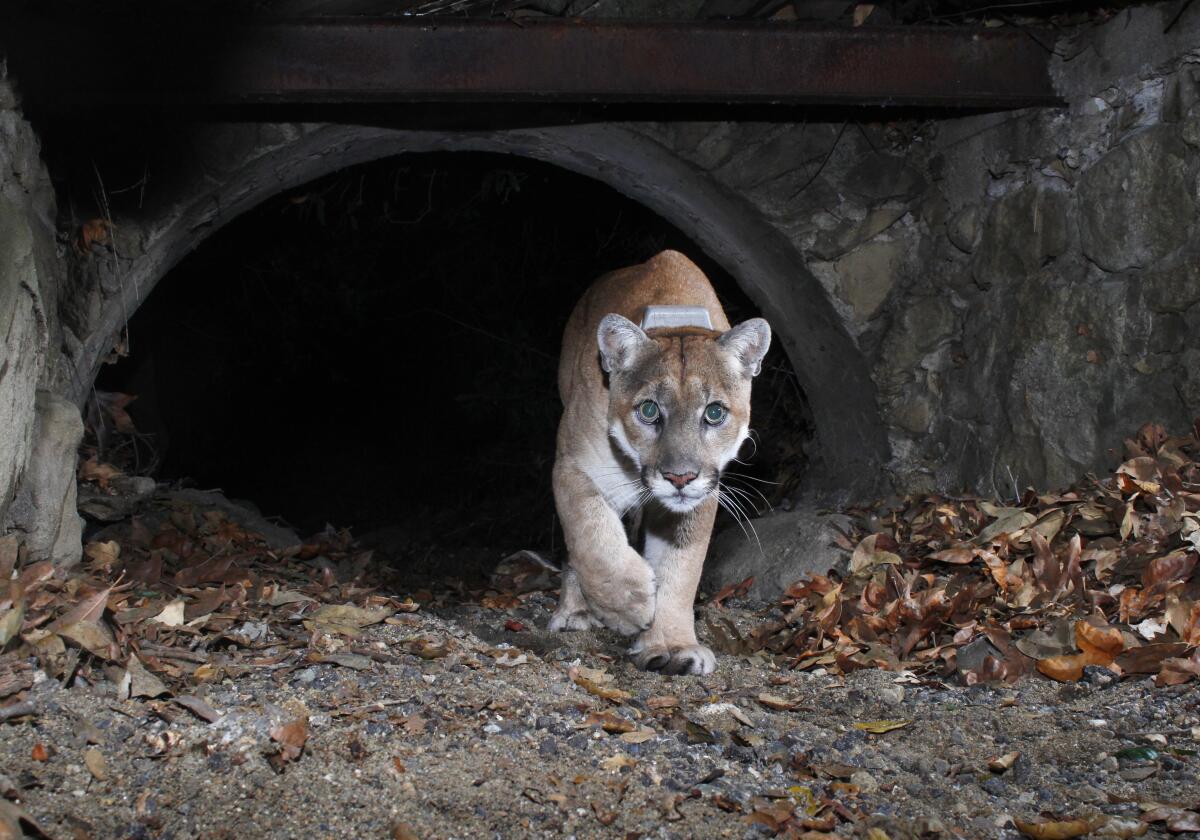
California once had specialists dedicated to resolving conflict between people and wolves, mountains lions and coyotes. But after funding ran dry in 2024, the state let all but one of them go.

The move came as clashes between us and our wild neighbors are increasing, as climate change and sprawl drive us closer together.

Now, a coalition of wildlife advocates is calling for the state to bring back, expand and fund the coexistence program, at roughly $15 million annually.

Sen. Catherine Blakespear (D-Encinitas) will soon introduce legislation that would create the program, her office confirmed. Nonprofits Defenders of Wildlife and the National Wildlife Federation are co-sponsors.

You’re reading Boiling Point

The L.A. Times climate team gets you up to speed on climate change, energy and the environment. Sign up to get it in your inbox every week.

By continuing, you agree to our Terms of Service and our Privacy Policy.

The money supporters want would be used to pay 50 to 60 staffers to focus on the Herculean task of balancing the needs of people and wildlife, as well as buy equipment like “unwelcome mats” to shock bears or fencing to protect alpacas from hungry lions.

Wildlife agencies acknowledge that education is key for coexistence, said Pamela Flick, California program director for Defenders of Wildlife, at a hearing Tuesday at the state Capitol dedicated to human-wildlife conflict. “But then staff time and resources don’t get allocated by agencies that are already chronically understaffed and underfunded.”

The hearing gave floor time to local law enforcement, representatives of affected regions and academics.

Since the funding expired, “I want to make it clear, the Department [of Fish and Wildlife] recognizes that we have potentially seen a gap in service, and folks have felt that,” Chad Dibble, deputy director of the department’s wildlife and fisheries division, said at the hearing.

Some aspects of the program live on — notably, a system that allows people to report run-ins with wildlife that may prompt the state to take action.

The same year the program fizzled, a mountain lion killed a young man and the state confirmed its first fatal black bear attack on an older woman. (Such attacks are very rare.)

Both tragedies unfolded in rural Northern California, with the fatal lion mauling occurring in El Dorado County.

Assemblymember Heather Hadwick — a Republican who represents El Dorado, as well as Lake Tahoe, which is ground zero for bear problems — called conflicts with predators her district’s biggest issue. “We’re at a tipping point,” she said.

Along with El Dorado, Los Angeles County, at the opposite end of the rural-urban continuum, leads the state for the highest number of reported wildlife “incidents.” These range from just spotting an animal to witnessing property damage.

Debates over how to manage predators can be fierce, but beefing up the state’s ability to respond is uniting groups that are often at odds.

A coalition that includes ranchers, farmers and rural representatives supports bringing back the conflict program, and also wants $31 million to address the state’s expanding population of gray wolves.

Most of that money would go to compensate ranchers for cattle eaten by wolves and for guard dogs, scaring devices or other means to keep them away from livestock.

The wildlife advocates support funding wolf efforts, but believe ranchers should be compensated only if they’ve taken steps to ward off the predators.

Asked his thoughts on it at the hearing, Kirk Wilbur, vice president of government affairs for the California Cattlemen’s Assn., a trade group, called it “a complicated question.”

“Ranchers should be doing something in the realm of nonlethal deterrence, and they are, but we have to be careful to make sure that our nonlethal solutions are not overly prescriptive,” he said.

The elephant in the room: The state’s budget is strained, and many are clamoring for a piece of the pie.

More recent wildlife news

Twenty starving wild horses stranded in deep snow near Mammoth Lakes recently survived an emergency rescue by the Forest Service, I wrote last week. Several died, including one after the rescue, from starvation and exposure. Some, beyond saving, were euthanized.

For some, the Forest Service acted exceptionally, but others questioned the handling of the situation. It’s the latest controversy for these horses. Wildlife advocates have long opposed relocating a large portion of the herd, which the feds say is necessary to protect the landscape.

Beloved bald eagle couple Jackie and Shadow welcomed not one but two eggs in their Big Bear nest in recent days. One arrived on Jan. 23, The Times reported, and, according to the Desert Sun, the second followed three days later.

If you need a pick-me-up, take a gander at a video of an Austrian cow using a long brush to scratch herself. It’s not just adorable; as noted by the Washington Post’s Dino Grandoni, it’s the first documented case of a cow using a tool.

Need even more awww? Read about sea turtle Porkchop’s recovery journey at Long Beach’s aquarium. She had a flipper amputated and a fishing hook removed from her throat, and could return to the wild in a matter of weeks.

Coyote mating season is here and that means you are likely to see more of the animals in your neighborhood, per my colleague Karen Garcia.

A few last things in climate news

More than a year after the Palisades and Eaton wildfires, contamination remains a top concern. A state bill introduced this week aims to enforce science-based guidelines for testing and removing contamination in still-standing homes, schools and nearby soil, my colleagues Noah Haggerty and Tony Briscoe report.

Highway 1 through Big Sur (finally) fully reopened after a three-year closure from landslides. As fellow Times staffer Grace Toohey writes, the iconic route is expected to face more challenges from the effects of climate change: stronger storms, higher seas and more intense wildfires.

Per Inside Climate News’ Blanca Begert, the Bureau of Land Management has revived an effort to open more of California’s public lands to oil extraction. Will it be successful this time?

This is the latest edition of Boiling Point, a newsletter about climate change and the environment in the American West. Sign up here to get it in your inbox. And listen to our Boiling Point podcast here.

For more wildlife and outdoors news, follow Lila Seidman at @lilaseidman.bsky.social on Bluesky and @lila_seidman on X.

Source link