June 26 (UPI) — A Federal Emergency Management Agency official who claims he was once teleported to a Waffle House has been ousted from the agency, unnamed sources familiar with the situation told media outlets Friday.
Gregg Phillips, who was appointed to lead the Office of Response and Recovery in December, was asked to vacate his position because of concerns about how he’s publicly perceived, anonymous sources told The New York Times, The Washington Post and CNN.
Phillips, the associate administrator for FEMA’s Office of Response and Recovery, posted on social media in April doubling down on his teleportation claim. He said it really happened and that it is connected to his Christianity.
“God will not be mocked,” Phillips posted on Truth Social. “People can debate me. Question me. Even ridicule what they don’t understand.”
He clarified that it happened while he was heavily medicated during cancer treatment.
“The word ‘teleportation’ was not mine,” Phillips posted on Truth Social. “It was used by someone else in the conversation reaching for language to describe something with no easy name. The more accurate biblical terms are ‘translated’ or ‘transported’ — not new ideas for people of faith.”
The Department of Homeland Security confirmed Thursday that Phillips is leaving the agency, saying he is taking leave for personal reasons. But sources told CNN the departure was not by his choice.
New DHS leadership was tired of his public image and clashes with department leadership, the sources said. David Arnold, a senior official who left FEMA earlier this year, will fill in as an acting leader of the Office of Response and Recovery.
The office has more than 1,000 employees and a budget of nearly $300 million. It’s critical to the mission of responding to disasters.
Phillips was known as a conspiracy theorist, particularly concerning election fraud. He said millions of noncitizens had voted in the 2016 election. Trump also boosted those claims.
Some agency staff were unhappy with his ouster, saying he wanted to help improve the agency.
“He showed interest in preserving the mission of the agency and helping us serve citizens,” one current agency official told The Post.
Another agency official told The Post that Phillips was one of the only political appointees who supported staff and would push back against leadership such as former Homeland Security Secretary Kristi Noem or Karen Evans, who briefly led FEMA.
White House Border Czar Tom Homan speaks during the Faith and Freedom Coalition 2026 Road to Majority Policy Conference at the Washington Hilton on Friday. Photo by Bonnie Cash/UPI | License Photo
Weekly insights and analysis on the latest developments in military technology, strategy, and foreign policy.
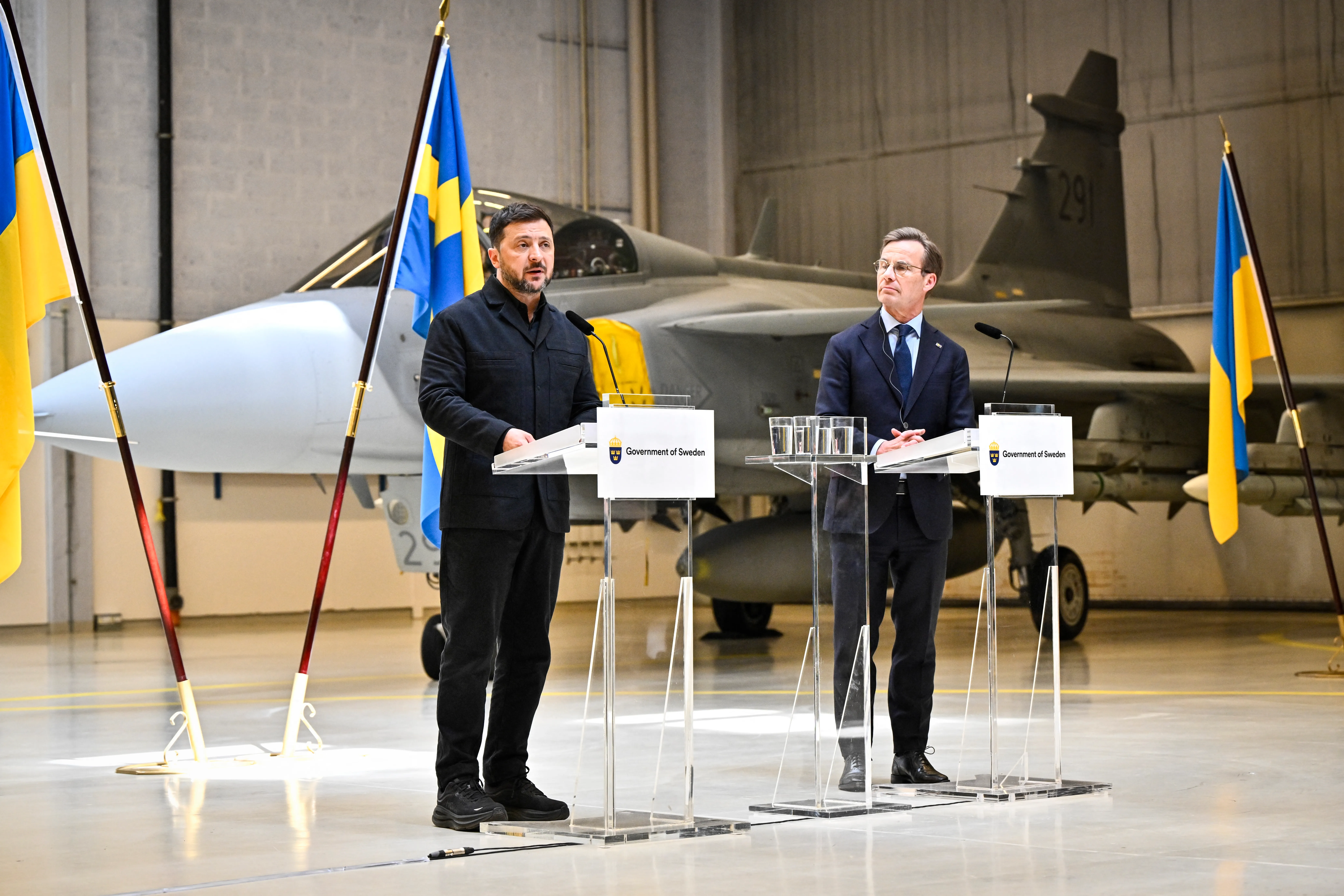
A timeline has been provided for the arrival of Saab Gripen fighters in Ukraine, with the first jets to be delivered early next year. Significantly, as well as getting another modern Western combat jet, Ukraine expects to receive highly capable Meteor beyond-visual-range air-to-air missiles, Ukraine’s President Volodymyr Zelensky has announced.
After meeting Zelensky in the city of Uppsala, Sweden today, Sweden’s Prime Minister Ulf Kristersson announced that his country will donate up to 16 Gripen C/Ds to Ukraine. These will be secondhand jets drawn from Swedish stocks, to expedite delivery. Handover of the jets in Ukraine will take place in early 2027, Kristersson added.
Ukrainian President Volodymyr Zelensky (left) and Swedish Prime Minister Ulf Kristersson address a press conference in Uppsala, Sweden on May 28, 2026. Photo by Christine Olsson/TT / various sources / AFP via Getty Images
According to Swedish officials, the training of Ukrainian pilots and technicians on the Gripen C/D is already underway and will be expanded this fall.
In the longer term, Kristersson confirmed that Ukraine plans to acquire an initial batch of up to 20 of the more advanced Gripen E/F versions. Writing on X today, Swedish Minister for Defense Pål Jonson said that the Gripen E/F would be financed with a $2.9-billion European Union loan. The long-term ambition remains 100-150 Gripen aircraft, he added.
Ukraine intends to purchase 20 Gripen E/F aircraft. In conjunction with the sale, Sweden will donate up to 16 Gripen C/D, including advanced ammunition. To replace the donated aircraft, new modern Gripen E/F will be procured for the Swedish Air Force. https://t.co/kPHjVDXnSbpic.twitter.com/IxEhsy2yvN
— Försvarsdepartementet (@ForsvarsdepSv) May 28, 2026
Despite it having a similar outward appearance to the Gripen C/D, the Gripen E (and the two-seat Gripen F version) is regarded as a completely new aircraft type — as you can read about here.
A two-ship formation of Gripen E (left) and Gripen C (right). Saab
“Ukraine has clearly identified the Gripen aircraft as a priority option for its air force in the long term and intends to purchase the newest version, the Gripen E,” Kristersson said. “Negotiations are ongoing, and we will be able to transfer these aircraft by 2030.”
In a press release, Saab reiterated that it has not yet signed any contract nor received an order relating to the Gripen E/F for Ukraine, meaning this transfer only exists as a statement of intent for now.
This is truly a historic day for cooperation between Ukraine and Sweden.
Today, there is a new support package from Sweden, and this support opens up a new level for us in saving the lives of our people – in protecting our cities and communities. This package, worth $2.7… pic.twitter.com/MANYC96byu
— Volodymyr Zelenskyy / Володимир Зеленський (@ZelenskyyUa) May 28, 2026
According to Saab, “The next steps for the Ukrainian and Swedish authorities will be to complete the negotiations regarding Ukraine’s acquisition of Gripen E/F, which is expected to take place in batches, and Saab will support this process.”
In the meantime, the Swedish government has also announced that it will replace the donated Gripen C/D aircraft in the Swedish Air Force inventory. “Dialogue regarding Sweden’s replacement of the donated capability will be initiated soon,” Saab said.
A pair of Swedish Air Force Gripen Cs. Saab
Last October, as we reported, Kristersson and Zelensky signed a letter of intent (LOI) including a potential export deal covering “likely between 100 and 150 fighter jets,” according to Kristersson. The LOI was signed at Linköping, the site of Saab’s manufacturing facility for the Gripen.
As for second-hand Gripens, Ukraine has repeatedly been linked with a possible transfer of secondhand Swedish Air Force Gripen C/Ds, and Zelensky previously said he would like to see the first of these delivered from 2026.
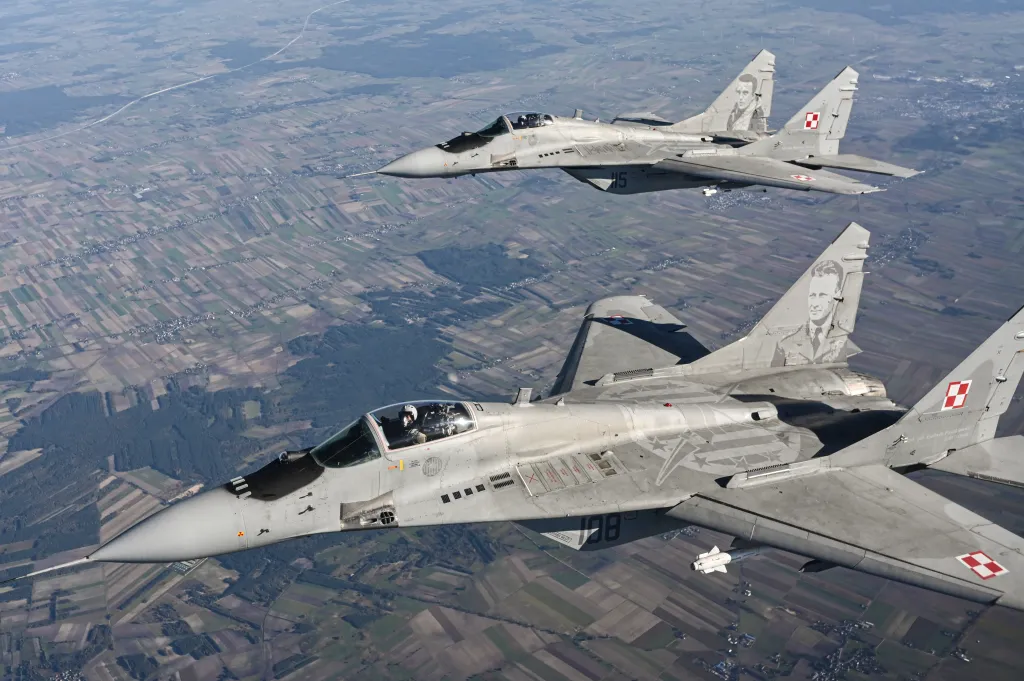
While the Gripen C/Ds are now set to arrive later than hoped, it remains a big deal for the Ukrainian Air Force. Although the service has already received Western-supplied F-16s and a smaller number of Mirage 2000s, the Ukrainian Air Force still relies heavily on its Soviet-era fighters. The MiG-29, in particular, has been continually adapted to carry new weaponry, both Western-supplied and locally developed, but these are aging jets and the fleet has been steadily reduced by attrition.
Perhaps the most important part of the Gripen transfer will involve the armament for the fighter.
Zelensky specifically mentioned that he expects the Gripen C/Ds to be armed with the Meteor missile.
Swedish Minister for Defense Pål Jonson said that the Gripen C/D “can be delivered with weapons such as IRIS-T, AMRAAM, and the long-range Meteor missile. This is about aircraft, weapons, skills and sustainment.”
Training of Ukrainian pilots and technicians is already underway and will expand this autumn.
Gripen C/D can be delivered with weapons such as IRIS-T, AMRAAM and the long-range Meteor missile. This is about aircraft, weapons, skills and sustainment. (2/8)
Earlier this year, the Ukrainian Ministry of Defense confirmed that the Meteor was one of the weapons being lined up for the next Swedish security aid package for Ukraine.
As we have discussed in the past, the Meteor would provide Ukraine with a class of air-to-air weapon that it badly needs to redress the balance against Russian fighter jets.
Undoubtedly, the Meteor is among the most capable air-to-air missiles in operational service anywhere in the world. Thanks to its ramjet propulsion, which can be throttled during different phases of flight, the Meteor is generally considered to be effective against certain types of targets out to around 130 miles.
Meteor
The Meteor also features an active radar seeker for the terminal phase and a two-way datalink that feeds it with in-flight updates as it flies out to its target and provides information to the pilot in the launch aircraft.
The most capable AMRAAM identified as being used by Ukraine is the AIM-120C-8, which is generally assumed to be able to hit targets at a distance of between 75 and 100 miles.
The wreckage of an AIM-120C-8 missile, apparently found in the aftermath of a Russian air attack on Dnipro, last month. via Dnipro Main News/Telegram
Of course, in practical applications, the range of both the Meteor and AMRAAM is affected by a whole range of factors, above all, the energy and altitude state of the launching aircraft and the target.
However, the Meteor could bring a significant shift to the airpower balance over Ukraine.
Russia has repeatedly exploited the long range of its R-37M air-to-air missile, known to NATO as AA-13 Axehead, typically launching them from jets flying outside the range of the missiles carried by Ukrainian fighters, as well as from most ground-based air defense systems.
A Russian Su-35S launches an R-37M air-to-air missile. Russian Ministry of Defense screencap
With a reported range of 124 miles against certain types of targets, the R-37M flies to its target on a lofted trajectory, controlled by an inertial navigation system with mid-course radio correction, and uses an active radar seeker for its terminal phase attack.
As TWZ had previously pointed out, Meteor is the best candidate for Ukraine to try and redress the balance in the air war when faced by the far-reaching R-37M and would finally put Russian aircraft at risk within their own missile ranges.
At the same time, the Meteor would give Ukraine a weapon that can target Russian jets delivering standoff munitions, again from outside the range of Ukrainian air defenses. Zelensky today said the missile “would stop Russian glide bomb attacks,” something that has been a huge problem for Ukrainian air defenses since this class of weapons was introduced.
A Russian UMPK-series glide bomb under the wing of a Su-34 Fullback strike fighter. Russian Ministry of Defense screencap
Designed during the Cold War to meet the Soviet threat, the Gripen was engineered for efficiency, durability, and ease of operation under wartime conditions. It was specifically designed to be serviced and rearmed by small teams — often including conscript personnel — while operating from dispersed locations such as roads and improvised airstrips instead of traditional air bases. The aircraft’s entire concept centers on maintaining combat operations in demanding environments, including prolonged cold-weather conditions.
A Swedish Air Force Gripen C at a remote base. Saab
“Gripen was built for a country that may have to fight outnumbered, under pressure and from dispersed bases,” Swedish Minister for Defense Pål Jonson said. “That makes it highly relevant for Ukraine: high readiness, rapid turnaround, modern weapons and the ability to operate under constant threat,” he added.
Overall, the Gripen is particularly compatible with the decentralized and highly mobile style of warfare Ukraine is currently practicing.
At the same time, it should be noted that even with the F-16, the Ukrainian Air Force has developed tactics and equipment to operate these jets from dispersed locations around the country. Even before the current conflict, Ukrainian fighters were training to make use of highways as alternatives to traditional runways.
A video shows vehicles intended to help with distributed operations of Ukrainian F-16s:
Project 61: an ecosystem for F-16s by Come Back Alive Foundation
Ukraine’s Saab 340 AEW&C can function as an airborne fighter control platform by detecting and tracking Russian targets, prioritizing threats, and directing fighters to intercept them. Through its datalink system, the aircraft can also transmit mid-course guidance updates directly to missiles in flight. As a result, fighter pilots may not even need to activate their own radar when engaging a target. Instead, the missile can be assigned a target before launch, fired, and then continuously guided by updates from the AEW&C aircraft throughout its flight.
The first evidence of the Saab 340 AEW&C being used over Ukraine emerged in March this year, but its activities have remained closely under wraps.
Russians are posting footage they claim shows likely a Swedish Saab 340 AEW&C long-range radar and control aircraft flying over Ukraine. pic.twitter.com/XkFZlok2B3
Taken together, the arrival of the Gripen and Meteor missile would represent one of the most significant upgrades yet for the Ukrainian Air Force. Beyond simply adding another Western fighter type, the package would introduce a highly survivable, dispersed-operating combat jet paired with one of the world’s most capable long-range air-to-air missiles and supported by Swedish AEW&C assets.
Even without the Meteor, the Gripen C/D could help Ukraine challenge Russia’s long-standing advantage in beyond-visual-range air combat while fitting naturally into the more decentralized operating model the Ukrainian Air Force has already been forced to adopt throughout the war. At the same time, it will provide valuable experience for crews and serve as a stepping stone for the future Gripen E/F.